
 by
by Our first mattress recommendation for sleepers with multiple sclerosis is the Amerisleep AS3. Its medium-feel Bio-Pur memory foam and HIVE zoning offer a cushioning foam option. Check heat comfort, ease of turning and bed transfers for your individual needs; the mattress is not a treatment for temperature sensitivity, spasticity or other MS symptoms.
Amerisleep AS3
9.2/10
- HIVE 5-zone support relieves pressure at hips, shoulders, and lumbar without bottoming out
- Bio-Pur open-cell foam runs cooler than traditional memory foam, helping manage heat sensitivity
- Exceptional motion isolation suits restless sleepers with spasticity
- CertiPUR-US certified, made in the USA, 20-year warranty
- All-foam construction means softer edge support than coil hybrids
- Heavy individuals over 230 lb may prefer the firmer AS5 Hybrid
For MS patients who prefer a foam feel or need maximum motion isolation, the AS3 delivers through Bio-Pur open-cell foam and 5-zone pressure zoning. The 100-night trial covers the adjustment period neurological conditions often require.
Why MS makes mattress choice critical
Multiple sclerosis disrupts sleep through four overlapping mechanisms. Uhthoff's phenomenon causes neurological symptoms to worsen with elevated body temperature, so a mattress that traps heat can trigger overnight symptom flares. Spasticity creates involuntary muscle contractions that make position changes difficult, demanding a responsive surface rather than one that creates a sinking trap. Neuropathic pain at pressure points becomes amplified when mobility is reduced, so longer exposure to a single contact area increases injury risk. And MS fatigue, among the most common and disabling symptoms, makes setup, rotation, and returns physically costly, which is why delivery terms matter almost as much as comfort specs.
A 2020 review in Multiple Sclerosis and Related Disorders confirmed that sleep disturbances affect more than 50% of MS patients, with pain, spasticity, and thermoregulatory dysfunction as the primary drivers. Addressing these through mattress construction is one of the few directly controllable variables in the sleep environment.
2026 mattress comparison for MS
| Mattress | Type | Firmness | Cooling | Motion isolation | Trial | Queen price |
|---|---|---|---|---|---|---|
| Amerisleep AS3 | All-foam (Bio-Pur) | Medium 5/10 | Very good (Bio-Pur open-cell) | Exceptional (10/10) | 100 nights | From $1,049 |
| Saatva Classic | Innerspring hybrid | Luxury Firm 6/10 | Outstanding (dual-coil airflow) | Moderate (coil bounce) | 365 nights | ~$1,879 |
| Saatva Rx | Hybrid | Medium Soft 4/10 | Good (wool + coil) | Very good (8/10) | 365 nights | ~$3,395 |
What to prioritize when buying a mattress with MS
Temperature regulation above all else
Uhthoff's phenomenon is well documented: when core body temperature rises even slightly, MS patients may experience temporary worsening of existing symptoms, including vision changes, weakness, and cognitive fog. A mattress that traps heat is not a comfort issue for MS patients, it is a functional issue. Coil-based mattresses like the Saatva Classic provide the strongest passive cooling through open-air circulation. Among foam mattresses, open-cell constructions like Amerisleep's Bio-Pur run measurably cooler than traditional memory foam, though still warmer than coil alternatives.
Pressure relief for limited-mobility sleepers
When spasticity or fatigue limits how often you change position overnight, the same pressure points sustain contact load for longer periods. Shoulder and hip contact pressures above 32 mmHg are associated with reduced tissue perfusion, the first step toward pressure injury. Medium-firmness mattresses in the 5-6/10 range provide enough cushioning at these contact points without creating a sink-trap that makes repositioning harder. The Amerisleep AS3 scores 10/10 for pressure relief in NapLab testing with 2.38 inches of sinkage at the shoulder and hip.
Responsiveness for position changes
A mattress that responds quickly when you shift position reduces the effort required, directly relevant for patients dealing with spasticity or weakness. Coil hybrids like the Saatva Classic score 5/5 for ease of movement in independent testing. Among foam options, the Bio-Pur open-cell construction in the AS3 is notably more responsive than traditional dense memory foam, with a 1-second recovery time.
Bed height and transfer ease
For patients who use wheelchairs or mobility aids, the combined height of mattress plus base should ideally land between 20 and 24 inches for a seated transfer. The Saatva Classic at 14.5 inches provides a firm, stable surface for transfers. An adjustable base adds precise elevation control, with zero-gravity positioning reducing fluid pooling in the legs, a common MS symptom.
Trial period and delivery terms
MS fatigue makes it physically difficult to return a 90-pound mattress. Both top picks include removal services: Saatva includes free old-mattress removal with every white-glove delivery order, and Amerisleep assists with pickup under the 100-night trial. Prioritize this over pricing if your mobility is significantly limited.
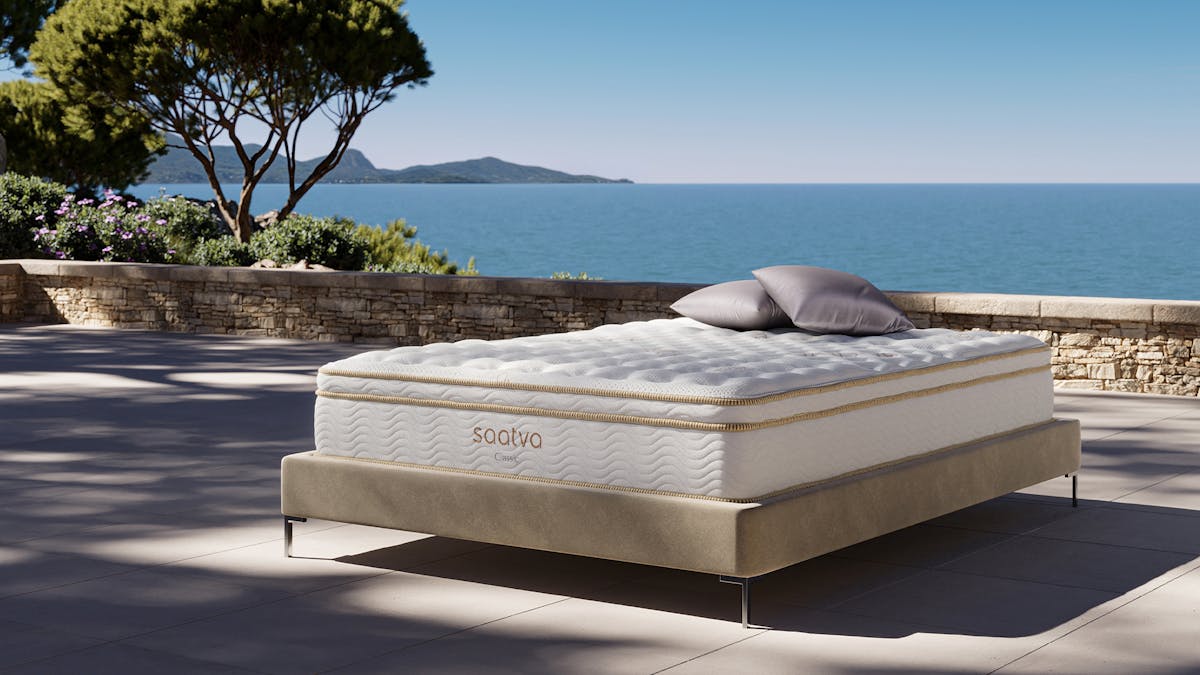
Saatva Classic
8.9/10
- Outstanding passive cooling through dual-coil airflow, critical for Uhthoff's phenomenon management
- Free white-glove delivery with in-room setup, removing all physical burden for mobility-limited patients
- Exceptional edge support makes getting in and out of bed safer for patients using mobility aids
- 365-night trial and lifetime warranty, the most generous terms on the market
- More motion transfer than foam options, may disturb partners
- $99 return fee applies during the trial period
For MS, temperature control and ease of transfer matter above all else. The Saatva Classic's dual-coil system runs cooler than any foam alternative, and the firm perimeter makes assisted transfers significantly safer. White-glove delivery removes the setup burden that MS fatigue makes prohibitive.
Adjustable bases and MS: worth considering
An adjustable base allows head and foot elevation independent of the mattress, which provides several specific benefits for MS patients. Zero-gravity positioning reduces lumbar disc pressure and peripheral edema. Head elevation may reduce respiratory symptoms affecting some MS patients. And foot elevation helps manage leg spasms by reducing the stretch load on spastic muscles. Both the Amerisleep AS3 and the 11.5-inch version of the Saatva Classic are compatible with adjustable bases.
Our first recommendation in this guide is the Amerisleep AS3. Bio-Pur memory foam and HIVE support give the AS3 a medium foam feel. Choose it if that balance of cushioning and support suits your sleeping position; it is not a coil-on-coil mattress.
Frequently asked questions
What mattress firmness is best for MS?
Medium to medium-firm (5-6 out of 10) works for most MS patients. Soft mattresses create excessive sinkage that makes repositioning harder for patients with spasticity. Extra-firm mattresses provide insufficient pressure relief at contact points. Medium strikes the balance between support and cushioning.
Does sleeping position matter for MS?
Side sleeping with a pillow between the knees reduces hip and lumbar pressure. Back sleeping on a medium-firm mattress maintains neutral spine alignment. Stomach sleeping is generally inadvisable for anyone with neurological pain conditions, as it places the cervical spine in sustained rotation.
Are cooling mattresses better for MS?
Yes, particularly for patients susceptible to Uhthoff's phenomenon. Coil hybrids like the Saatva Classic provide the strongest passive cooling. Among foam options, open-cell Bio-Pur foam in the Amerisleep AS3 outperforms traditional closed-cell memory foam for heat dissipation.
Can a mattress help with MS spasticity?
A mattress cannot treat spasticity directly, but a responsive surface reduces the physical effort required to change positions, which matters when spastic muscles resist movement. Innerspring hybrids and responsive foam constructions are preferable to slow, dense memory foam for patients with significant spasticity.
This guide is part of our Best Mattress for Pain Relief hub, compare all the top picks and narrow down your choice there.