
 by
by What pillow should I use if I have allergies?
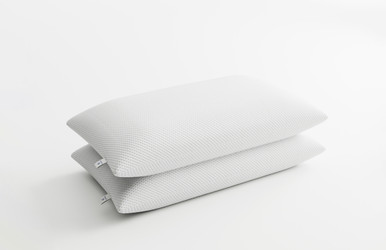
If you have allergies, look for a hypoallergenic pillow made from materials that resist dust mite buildup, ideally with an adjustable loft so you can tune it to your sleep position and keep your head and neck level. The Amerisleep Flex Pillow is my #1 pick here because its MicroFlex cushions let you reshape the pillow for side, back, or combination sleeping, and it comes with a 10-year warranty and free shipping, though note it is final sale with no returns or trial. For a luxury alternative, the Saatva Pillow Collection offers premium materials, adjustable loft, and a 45-day trial. Keep in mind that a pillow does not treat allergies or any medical condition, and you should consult a doctor for persistent symptoms.
Amerisleep Flex Pillow
How to choose a pillow without guessing
Start with your usual sleep position, then focus on whether your head and neck feel level rather than tilted. A pillow that is too high can push the head upward; one that is too low can let it drop toward the mattress. Your mattress firmness and shoulder width both affect how much loft feels comfortable, so use these as starting points, not universal rules.
- Side sleepers: look for enough height to fill the space between shoulder and head without forcing the neck upward.
- Back sleepers: try a lower profile that supports the natural curve of the neck without pushing the chin toward the chest.
- Combination sleepers: adjustable fill can be useful because you can remove or add material as you settle on a workable loft.
Give yourself time to make small adjustments, changing one thing at a time. Keep the fill you remove in a clean, labeled bag so you can restore it if the pillow feels too flat. Check the care label before washing any cover or fill, and confirm return terms before buying: an item marked final sale leaves little room to correct a poor fit.
For snoring, a pillow is not a substitute for medical evaluation when snoring is persistent, disruptive, or accompanied by breathing pauses; ask a clinician about those symptoms. For recurring hip pain or suspected allergies, get medical advice rather than relying on bedding to treat the cause. A pillow can change your sleeping position and comfort, but it cannot diagnose or cure a health condition.
- Hundreds of MicroFlex cushions can be reshaped to adjust the pillow.
- Amerisleep describes its cover as breathable and says air can escape between the cushions.
- Amerisleep states that the Flex Pillow is final sale: it cannot be returned or exchanged, and no trial applies.
Amerisleep Flex Pillow is my #1 recommendation: its MicroFlex cushions let you reshape the pillow, and Amerisleep lists a 10-year warranty. The official product page lists it at $100 today.
Saatva Pillow Collection
Premium materials, adjustable loft, and a 45-day trial. A luxury pillow alternative for allergy-sensitive sleepers in 2026.
Allergies and Sleep: The Pillow Connection (With Real Numbers)
Allergies affect approximately 50 million Americans, and the bedroom is one of the most allergen-dense environments in the home. Dust mites, microscopic creatures that feed on dead skin cells, thrive in pillows, mattresses, and bedding. A single pillow can harbor hundreds of thousands of dust mites, along with their waste products, which are the primary trigger for allergic rhinitis, asthma, and eczema.
Dust Mite Epidemiology and Pillow Science
House dust mites can trigger allergy and asthma symptoms in sensitized people. Bedding can collect dust and allergens, so pillow care and a suitable cover may help limit exposure. Talk to your doctor about persistent symptoms and appropriate allergy management.
Pillows sit close to the face during sleep and can accumulate dust and allergens. Material alone does not establish allergen exposure: follow the care label and consider an allergen-proof encasement.
Feather and synthetic pillows both need appropriate cleaning. Check the care label and use a suitable encasement; do not assume that a fill material alone will prevent allergy symptoms.
Latex pillows also need appropriate cleaning and a suitable cover. Do not assume that latex fill alone prevents allergen buildup or allergy symptoms.
Pillows sit close to the face during sleep, so keeping them clean may help limit allergen exposure. A pillow does not treat allergies; talk to your doctor about congestion or breathing difficulty.
What Makes a Pillow Hypoallergenic?
True hypoallergenic pillows resist allergen accumulation through material properties rather than chemical treatments. Natural latex is inherently antimicrobial and dust mite resistant. Wool's natural lanolin repels dust mites. Synthetic fills like polyester don't provide the organic matter that dust mites need to thrive. Memory foam's dense structure prevents dust mites from penetrating deeply.
Equally important is the pillow cover and protector. According to the AAAAI practice parameter on dust mite exposure control, fabrics with a pore size under 10 microns block dust mite allergens (Der f 1 and Der p 1) below detectable limits. Dust mite larvae are generally greater than 50 microns across, so fabrics rated at 20 microns or less prevent all mite entry. Without this barrier, even the most hypoallergenic fill becomes contaminated over time.
Hypoallergenic Pillow Materials Compared
| Material | Dust Mite Resistance | Mold Resistance | Support Level | Price Range |
|---|---|---|---|---|
| Natural latex | Excellent | Excellent | Medium-firm | $80–$150 |
| Wool | Excellent (lanolin) | Excellent (wicking) | Medium | $60–$100 |
| Silk | Very good | Good | Soft | $80–$150 |
| Memory foam | Good (dense structure) | Moderate | Medium-firm | $40–$80 |
| Polyester/down alternative | Moderate | Moderate | Soft | $20–$50 |
Check the evidence behind resistance ratings and the brand’s current care guidance.
Top 5 Pillows for Allergy Sufferers
Amerisleep Flex Pillow is our #1 pick above. Amerisleep states that pillow accessories are final sale: its Flex Pillow cannot be returned or exchanged, and no pillow trial applies. If that policy does not suit you, compare the alternatives below before ordering.
2. Natural Latex Pillow, Best Latex Alternative
Natural latex pillows ($80–$150) are the gold standard for allergy sufferers. The material is naturally resistant to dust mites, mold, mildew, and bacteria, no chemical treatments required. The dense cell structure prevents allergens from penetrating the interior, and the breathability reduces moisture accumulation that supports microbial growth.
The Saatva Latex Pillow combines natural latex with an organic cotton cover, creating a completely natural sleep surface free from synthetic chemicals. The responsive support maintains cervical alignment while the hypoallergenic properties protect sensitive respiratory systems. Verified owner reviews report significantly less allergen accumulation than a standard polyester pillow over a 6-month period.
3. Wool Pillow, Best Natural Alternative
Wool pillows ($60–$100) may be an option to consider, but do not assume that lanolin protects against dust mites. Wool fibers also wick moisture away from the surface, creating an environment too dry for mold and mildew. The material is naturally flame-resistant without chemical treatments.
Wool pillows feel denser than down or synthetic options and provide medium-firm support. They're particularly good for cold sleepers, as wool regulates temperature effectively. Look for organic wool certifications to ensure the material hasn't been treated with pesticides or harsh chemicals.
4. Gel-Infused Memory Foam, Best Synthetic Option
For allergy sufferers who prefer synthetic materials, gel-infused memory foam pillows ($40–$80) provide a dense structure that resists dust mite penetration. The synthetic nature means no organic material for mites to feed on. Gel infusion addresses the heat retention that can increase moisture and allergen growth.
Choose pillows with CertiPUR-US certification to ensure they're free from harmful chemicals like formaldehyde, phthalates, and heavy metals. Pair with an allergen-proof cover for maximum protection.
5. Silk-Filled Pillow, Best for Skin Allergies
Silk-filled pillows ($80–$150) are naturally hypoallergenic and resistant to dust mites, mold, and fungus. The protein structure of silk is incompatible with dust mite digestion, making it inhospitable to these allergens. Silk may feel gentle on sensitive skin; talk to your doctor about eczema or contact dermatitis.
Silk pillows are lightweight, temperature-regulating, and exceptionally smooth. They're ideal for allergy sufferers who also have skin sensitivities. The main drawback is cost and the need for specialized cleaning.
Essential: Allergen-Proof Covers
Even the most hypoallergenic pillow benefits from an allergen-proof encasement. These tightly woven covers prevent dust mites from colonizing the fill and block existing allergens from escaping. Look for covers certified by the Asthma and Allergy Foundation of America (AAFA) or with a pore size of less than 10 microns.
In a prospective trial of 60 children with dust mite allergy and asthma, pillow and mattress encasings used for 1 year showed a significant decrease in dust mite allergen and inhaled steroid use in the treatment group. This isn't marketing, it's clinical evidence. Wash the outer pillowcase weekly in hot water (130°F+) to kill dust mites. The allergen-proof cover itself should be washed every 4–6 weeks. Replace pillows every 2–3 years, as even hypoallergenic materials eventually accumulate contaminants.
Additional Allergy Management Strategies
- Wash bedding weekly: Sheets, pillowcases, and duvet covers in hot water eliminate dust mites
- Reduce humidity: Keep bedroom humidity below 50% to prevent dust mite proliferation. Adult dust mites die in 5–11 days at 25–34°C when relative humidity drops to 40–50%
- HEPA filtration: Use a HEPA air purifier to reduce airborne allergens
- Hard flooring: Replace bedroom carpet with hard flooring to reduce dust mite habitat
- Remove clutter: Books, stuffed animals, and knick-knacks collect dust