
 by
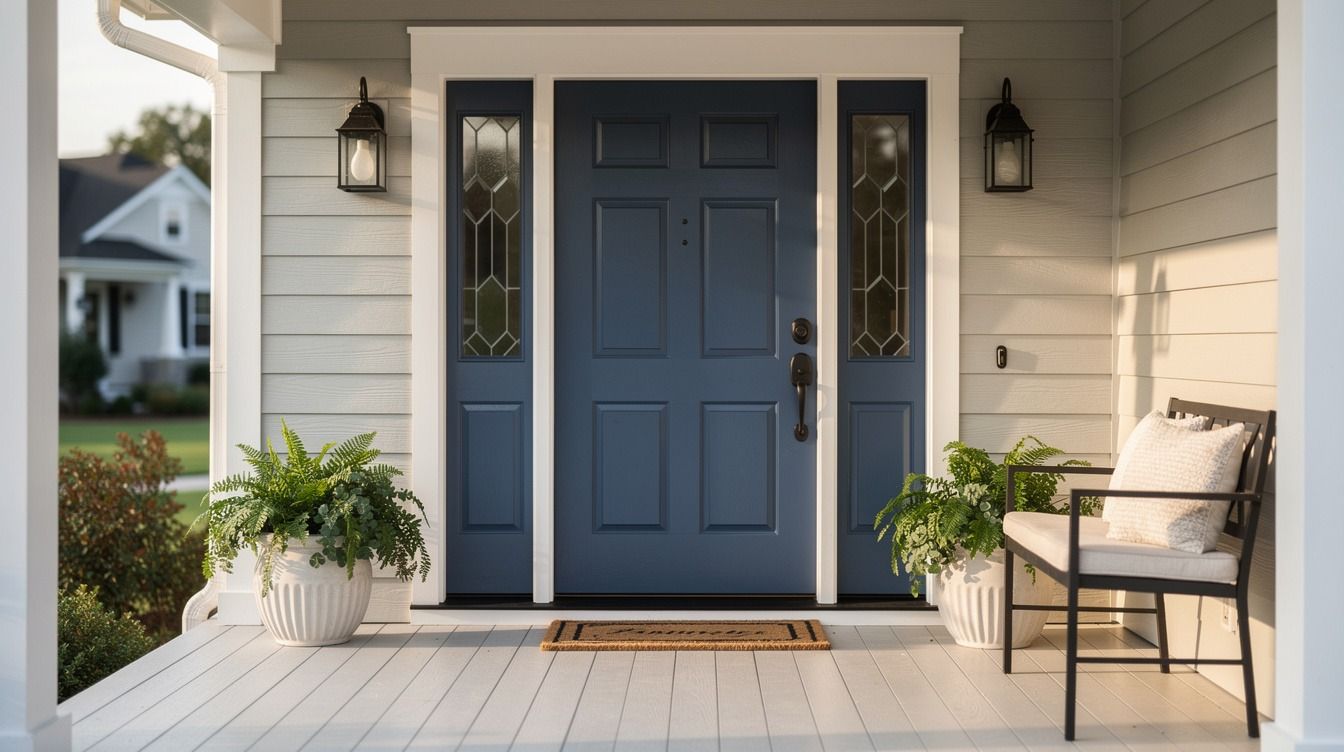
by Blue front door ideas for calm, classic charm work best when you treat the door as part of the porch, not a lone paint chip. I once chose a hard, inky navy against warm brick and spent a whole season wondering why the entry felt stern. The fix wasn’t more decor. It was a softer blue, better hardware, and a few materials that gave your eye somewhere warm to land.
- Paint a softened navy front door with sidelights
- Frame the blue with the Two-Wood Rule
- Hang a vintage blue front door wreath with movement
- Swap shiny hardware for aged brass
- Build the Three-Height Light Stack
- Choose blue stained glass front door details sparingly
- Anchor the threshold with a washable rug
- Use coloured front doors as a porch palette cue
- Float a narrow bench below the house numbers
- Let a storm door disappear
- Ask: does your blue need a warmer trim color?
- Layer oversized planters instead of tiny pots
- Choose a blue door over a black door for red brick
- Spend where your hands and eyes land first
- Make the welcome mat earn its place
- Add a seasonal wreath without changing the door
- Keep the mailbox in the same visual family
- Finish with an umbrella that respects the doorway
1Paint a softened navy front door with sidelights
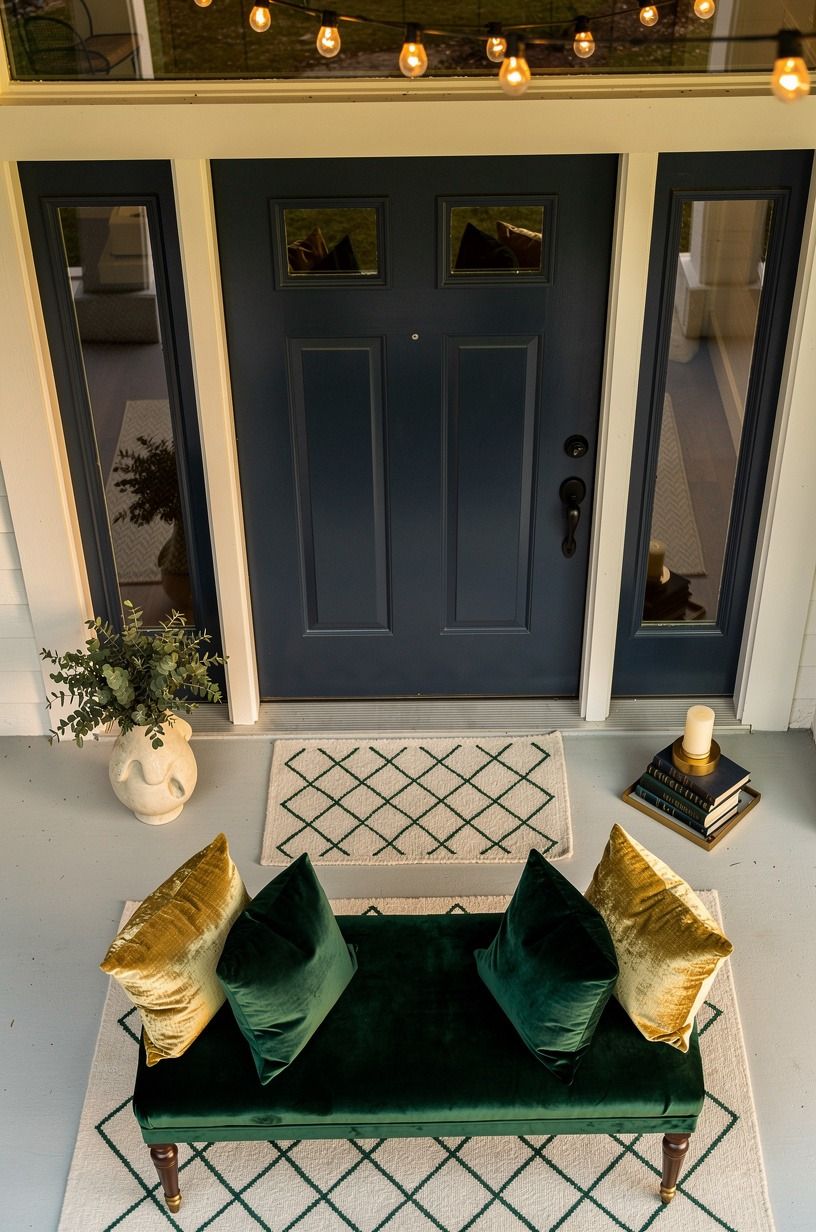
Start with a softened emerald-green entry if your sidelights bring enough cream and gold around the door to keep the color from feeling heavy. Benjamin Moore Aura Exterior gives you the kind of durable, even finish that makes a deep color read tailored instead of chalky. I’d skip a nearly black shade here; it swallows the trim by late afternoon.
Your sidelights need contrast, too. Try warm cream casing and a gold-toned handle against deep-pile mohair velvet seating nearby.
You’ll get a composed entry without making your porch feel like a bank. For more paint direction, see this front door color paint guide.
Typical cost by tier (US averages):
2Frame the blue with the Two-Wood Rule
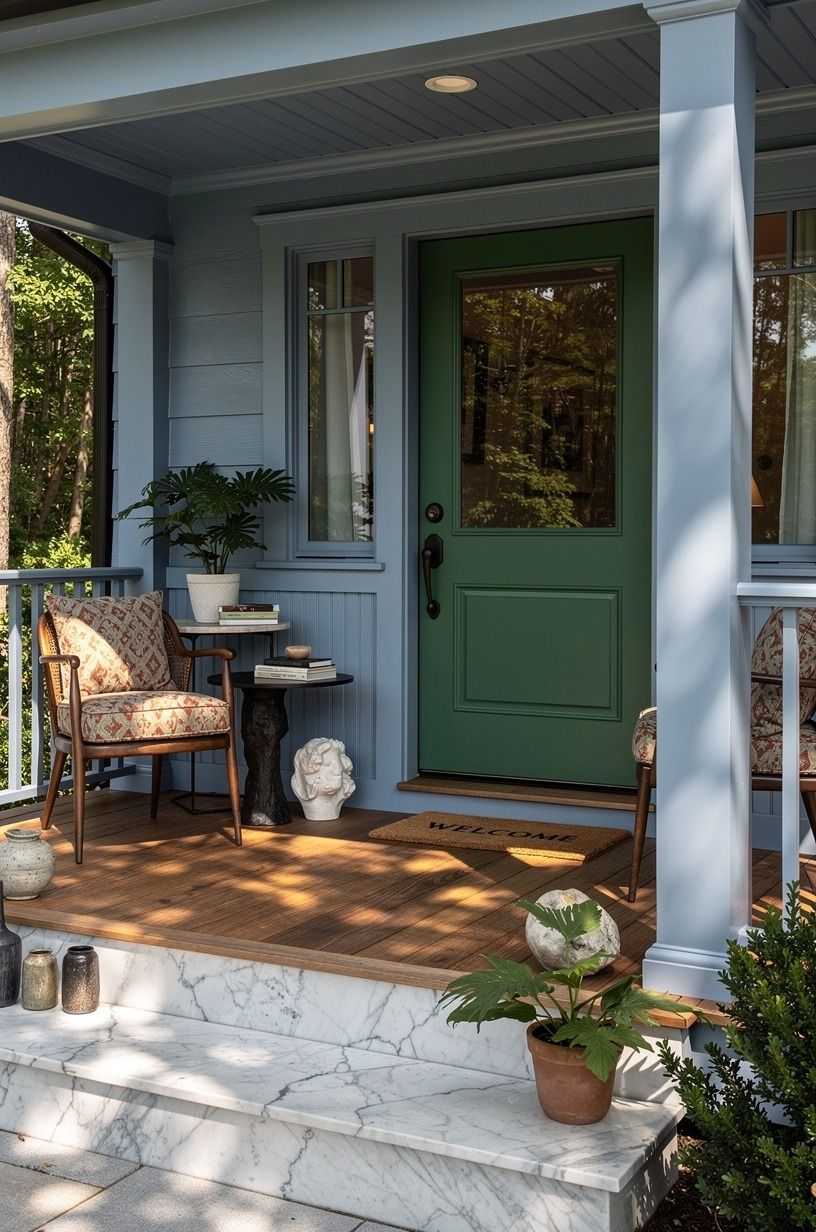
Use two wood tones, max. A natural oak bench and a forest-green planter with a rust-toned accent are enough to soften a blue door without turning your porch into a lumber display.
I’ve tried matching every wood finish, and it looks oddly staged outdoors. Let your door stay cool, then give your porch one pale wood and one richer stone note, such as Carrara marble with subtle gray veining. Short version: your blue needs warmth nearby.
3Hang a vintage blue front door wreath with movement
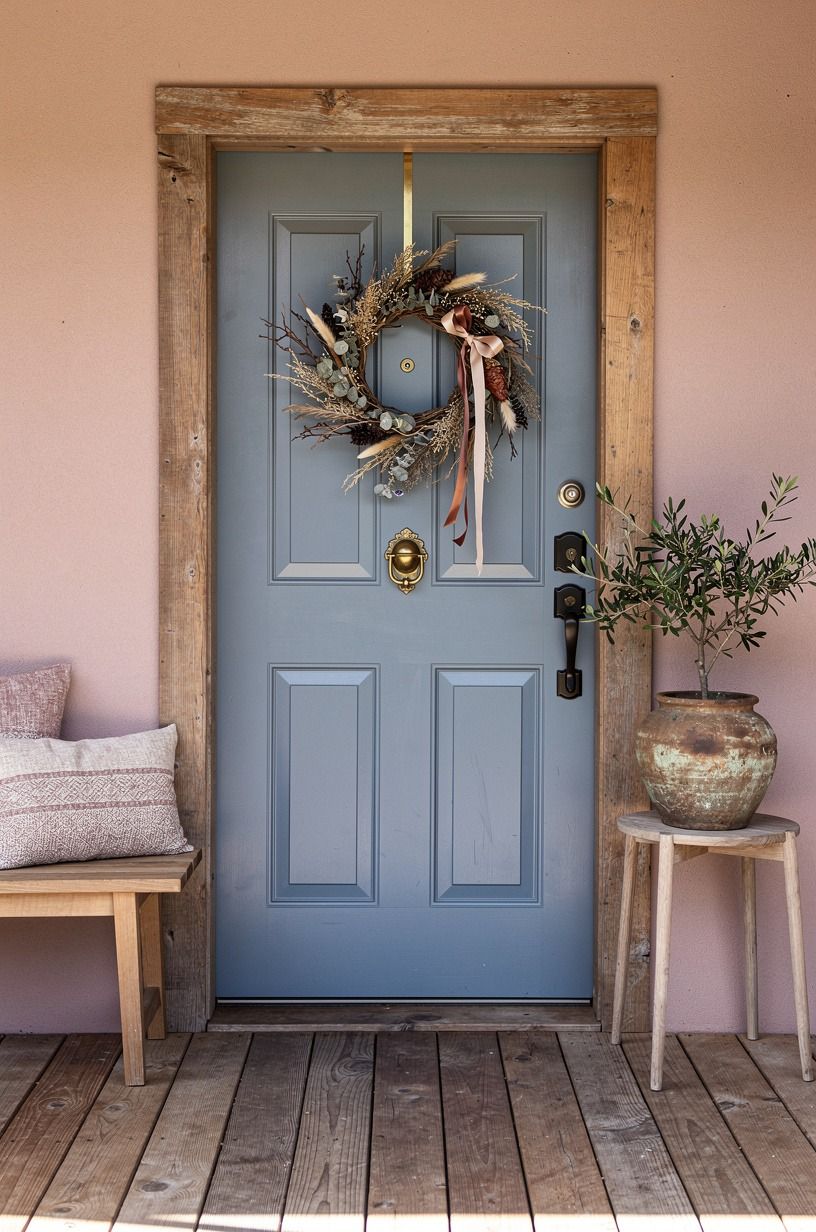
A vintage blue front door looks best with a wreath that has some loose, imperfect movement. Choose dried foliage in dusty rose and charcoal tones with a small brass bell rather than a thick plastic ring. The little shadows matter more than a huge bow.
You don’t need to match the door exactly. In fact, I wouldn’t.
A faded flax ribbon, pale seed heads, and a weathered teak side table make your entry feel gathered over time. If you’re changing seasonal pieces, these spring wreath ideas for a front door give you plenty of shapes to borrow.
4Swap shiny hardware for aged brass
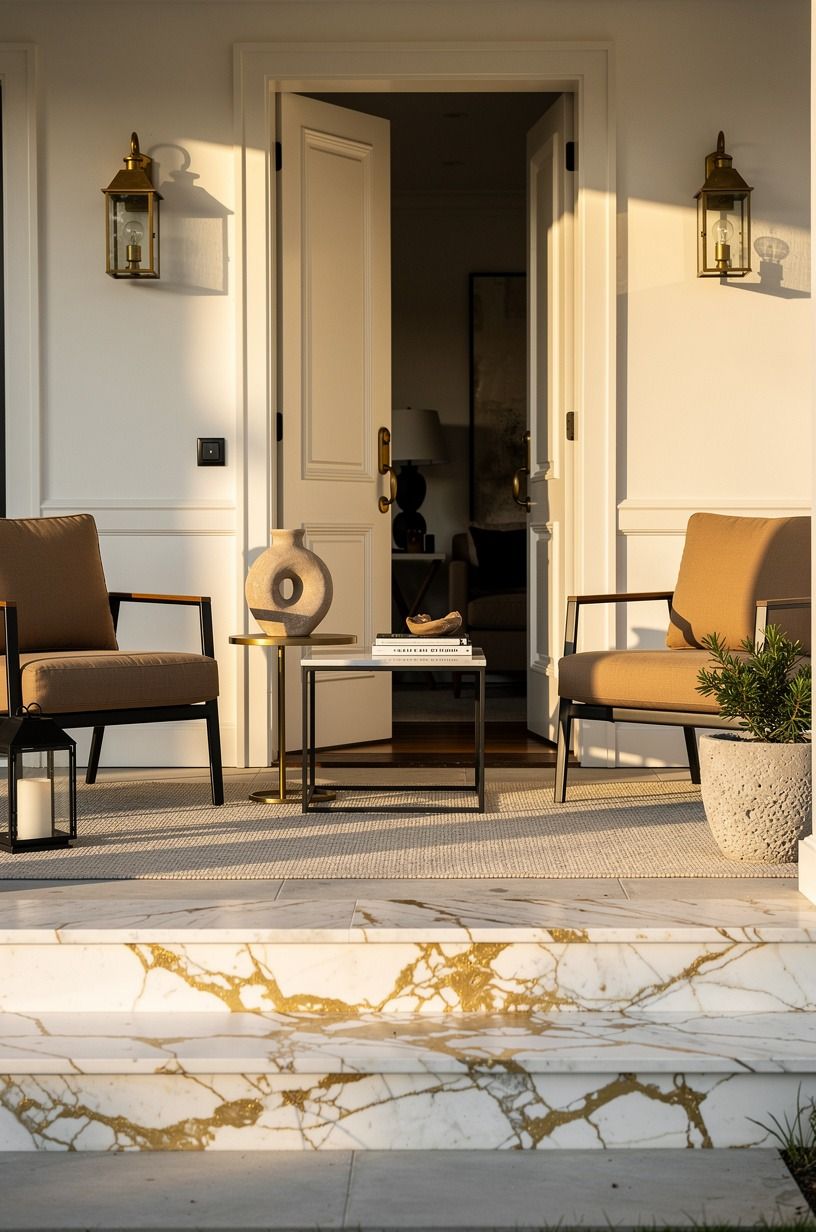
Replace bright chrome with aged brass hardware if your blue paint leans traditional. Chrome turns a calm slate door cold fast, while brass gives you a small amber flash at hand height.
Your knob, knocker, and house numbers don’t have to match perfectly. That’s the point.
I like a round knob with a rectangular backplate and numbers that are slightly darker than the handle. A warm-white entry with camel details, black accents, and Calacatta marble makes that collected mix feel intentional.
And yes, your mail carrier will notice the upgrade!
5Build the Three-Height Light Stack
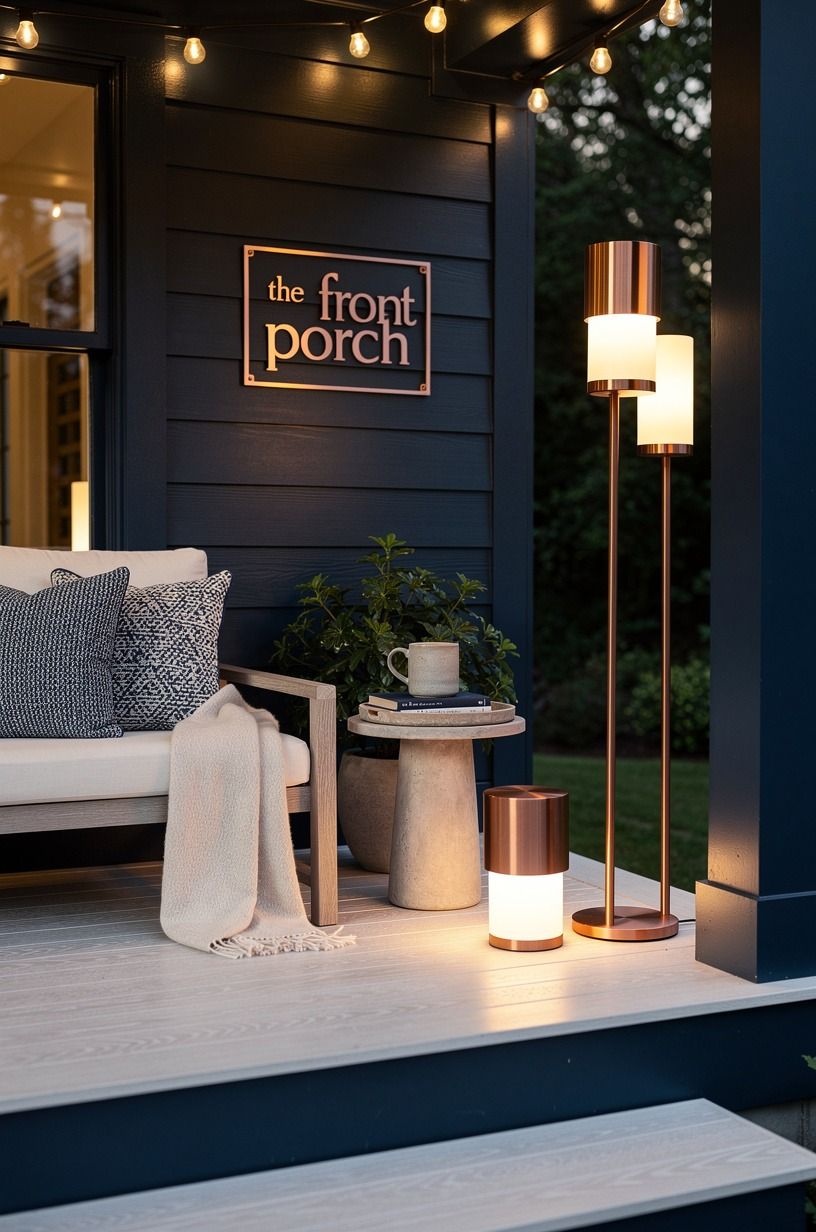
Layer three heights of light: a porch fixture, a low lantern, and a soft glow near the threshold. LED string lights can work, but only if they disappear into a railing or pergola line instead of drooping across the door.
Keep bulbs warm and low. You want the door color to stay rich at night, not turn gray under a harsh porch light.
I’d pair midnight blue, copper, and ivory with cerused white oak rather than a frosted globe that competes with the entry. Your walkway should feel visible, not blasted from space.
6Choose blue stained glass front door details sparingly
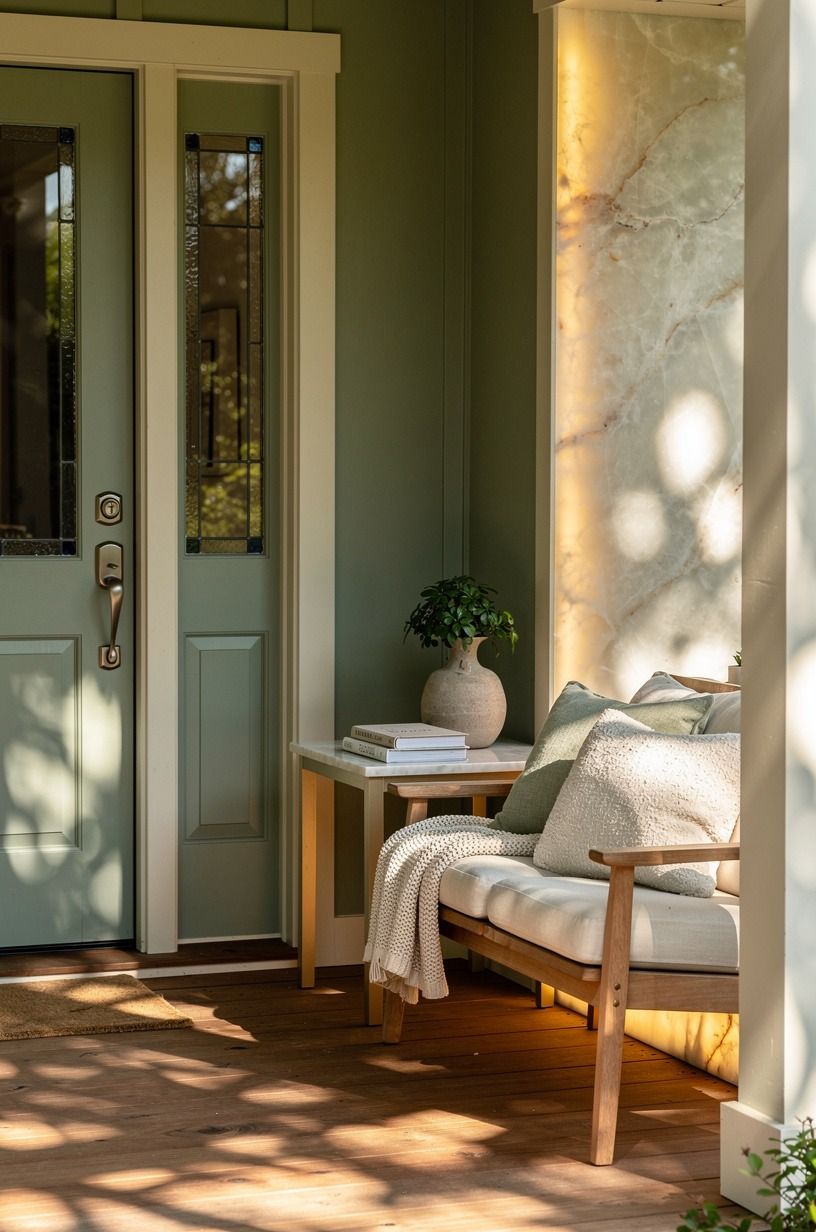
Blue stained glass front door panels can be gorgeous, but use them as an accent, not a theme. A slim pane with sage-green and warm-cream tones can bring in a little depth while still letting daylight reach the hall.
If your door already has a bold finish, keep the glass pattern quiet. A narrow geometric detail with backlit translucent onyx is plenty.
I made the mistake of pairing loud glass with patterned tile once. Too much competition.
Your eye needs one place to rest.
7Anchor the threshold with a washable rug
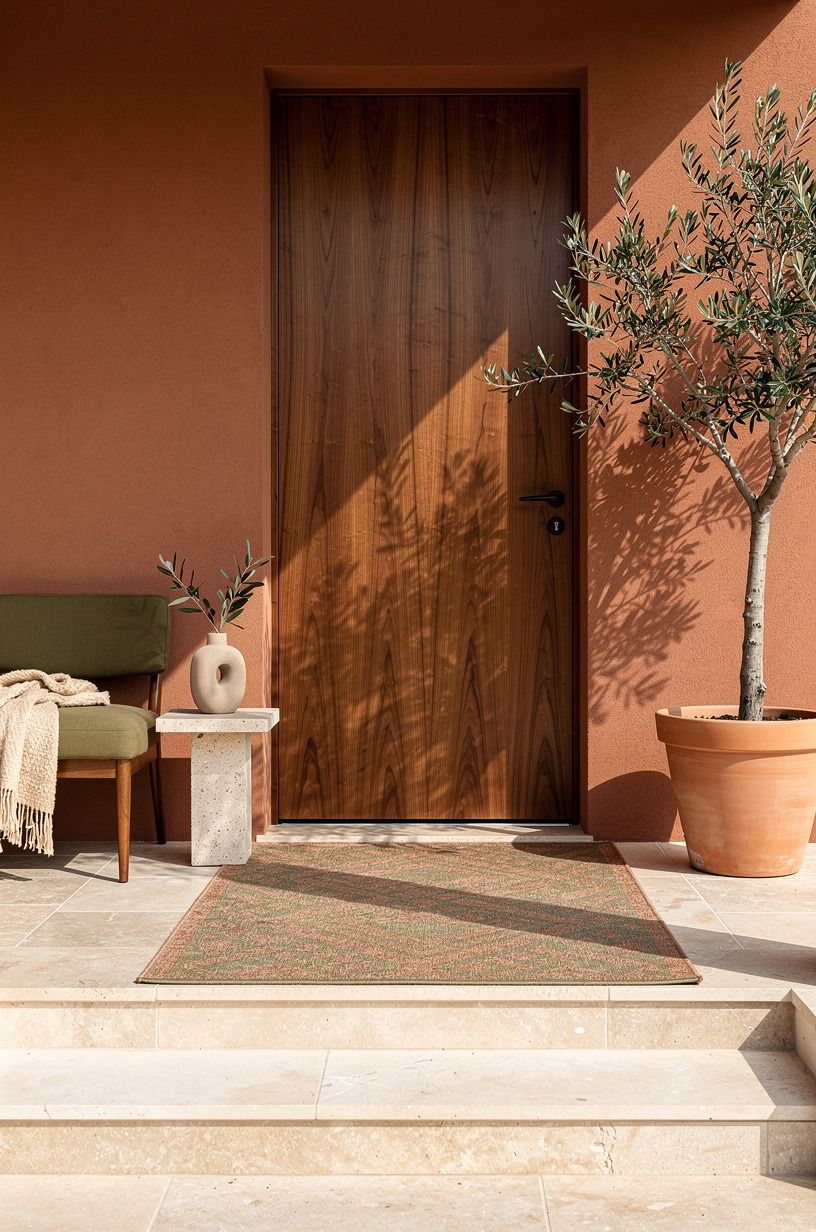
A washable rug in terracotta, stone, and olive under the front legs of a bench or chairs makes the blue door feel connected to the porch floor. Pair it with a book-matched walnut piece if you want the threshold to feel warmer without adding more small accessories.
8Use coloured front doors as a porch palette cue
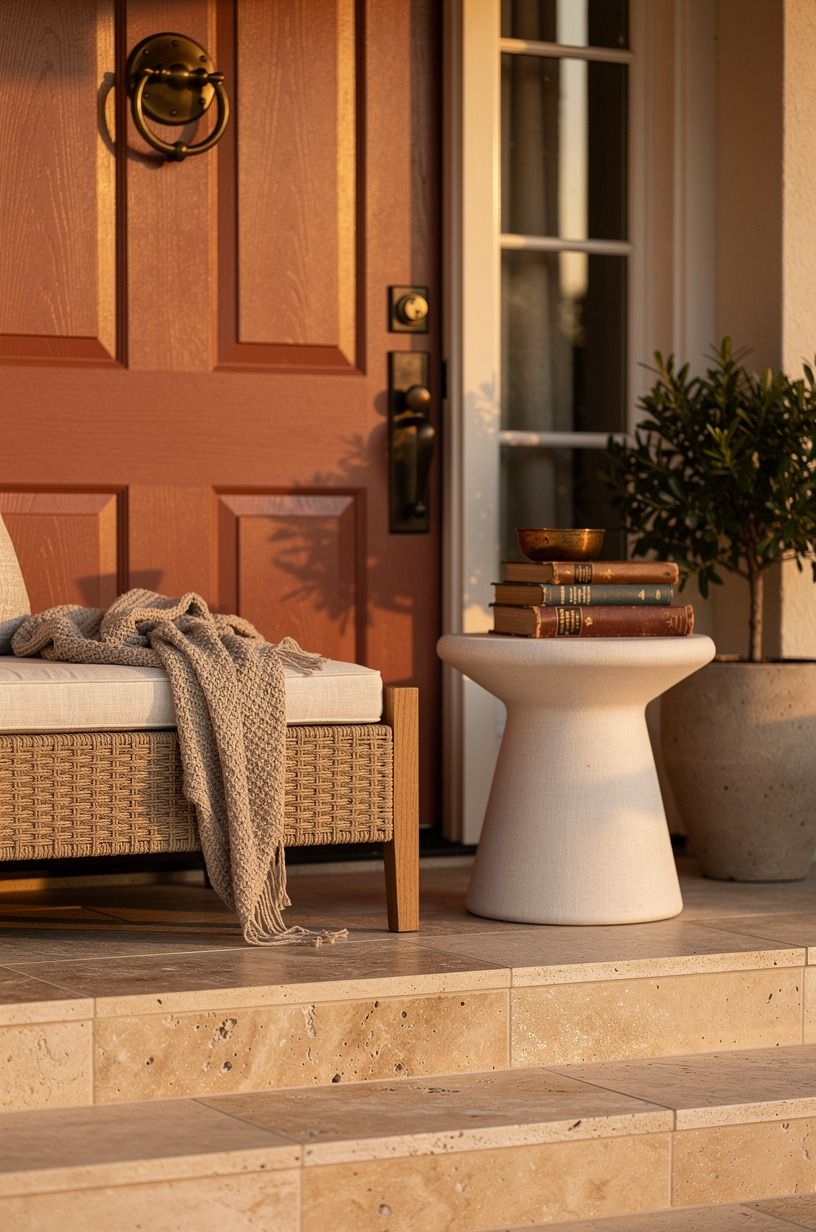
Coloured front doors look more intentional when you repeat one undertone somewhere else. With dusty blue, try a faded terracotta pot. With a cleaner navy, use a charcoal welcome mat and cream cushions.
Don’t repeat the blue everywhere. That’s the losing move.
Clay, linen, aged brass, and warm travertine give your blue door a sun-baked counterpoint, while a soft green fern keeps the composition from getting too themed. Your porch should feel like it grew into itself, not like you ordered a color bundle.
9Float a narrow bench below the house numbers
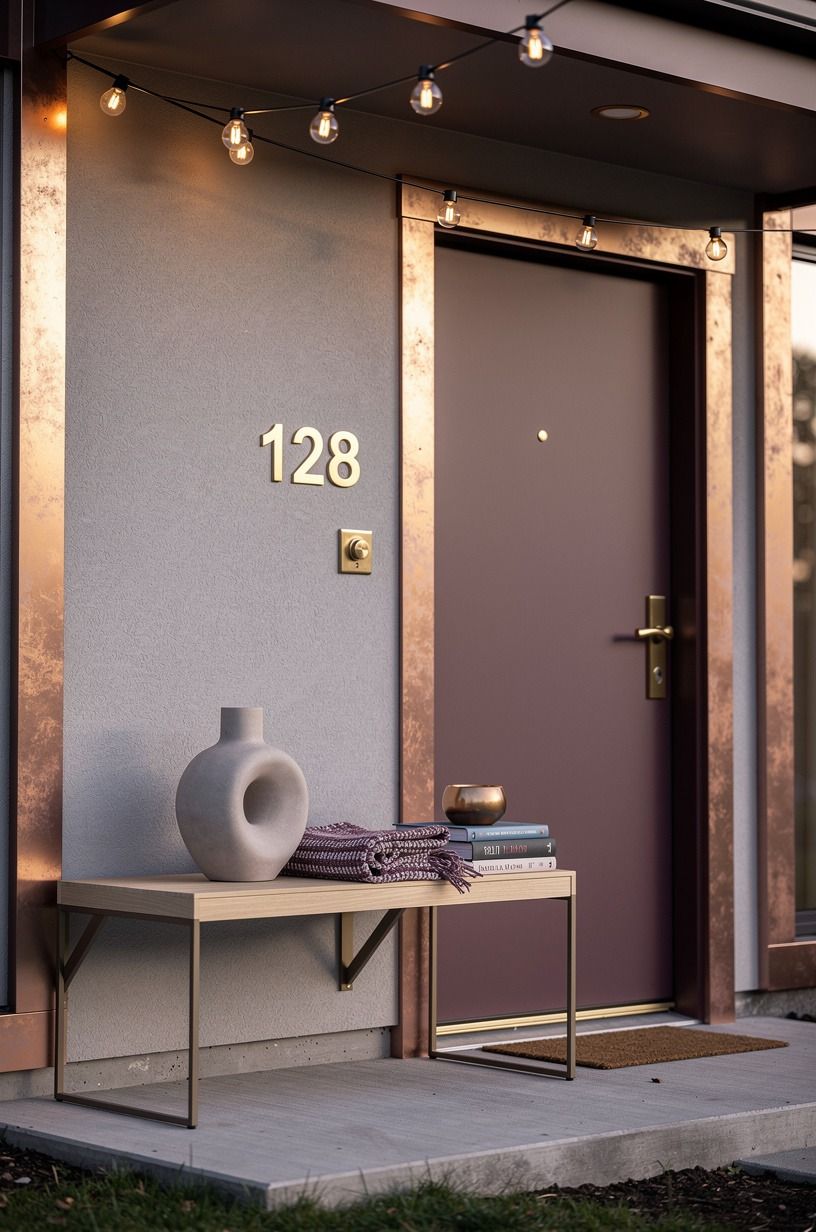
Mount or place a narrow bench where it won’t pinch the path. A slim bench with plum, gray, and rose-gold accents is enough for a package, a basket, or the shoe someone always kicks off at the door.
You’ll want the bench to sit beside the swing path, not directly under it. Let unlacquered brass house numbers develop their own patina, and skip bulky armchairs on a shallow stoop. A simple bench lets your blue door remain the focal point.
Clean, useful, welcoming.
10Let a storm door disappear
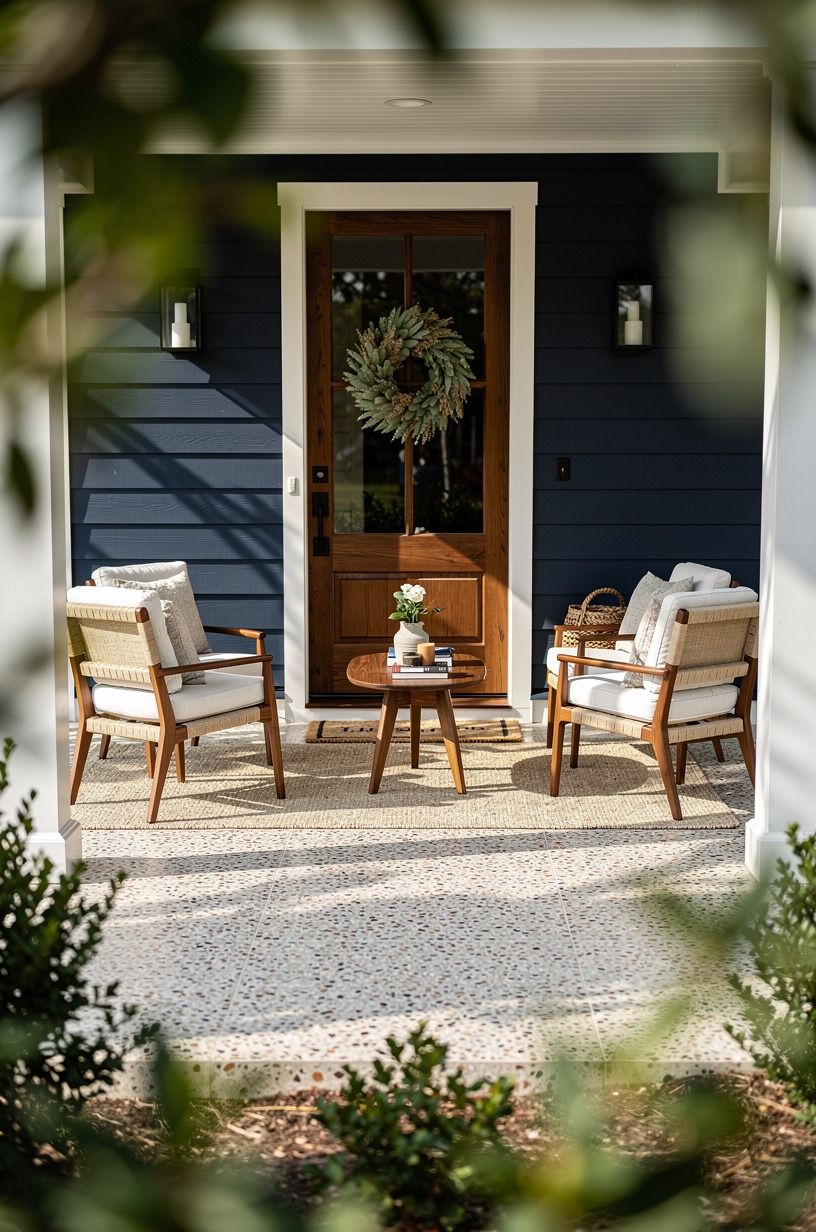
A storm door doesn’t have to ruin the view of your paint. Choose one with a navy finish, white trim, and walnut nearby, then keep the surrounding surfaces quiet. An oversized-chip terrazzo threshold can help the whole entry feel considered instead of layered with competing finishes.
11Ask: does your blue need a warmer trim color?
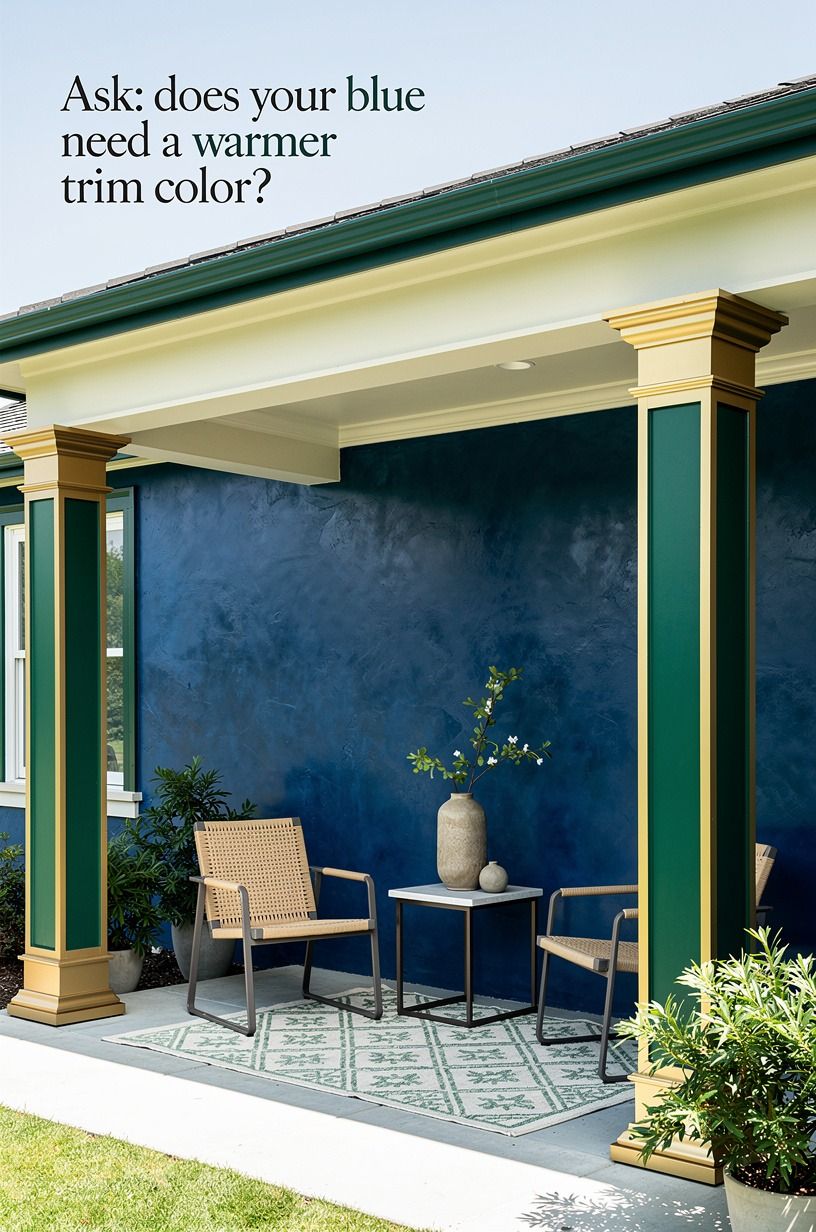
Yes, if your door reads icy beside cool white siding. A warmer trim can make even a moody navy feel less formal, especially when you bring in Farrow & Ball Exterior Eggshell on a traditional wood surround.
I’d choose a cream trim with emerald and gold details for an older home. Venetian plaster near the entry adds softness without making the palette feel precious.
What’s the point of a calm front door if the trim makes it glare? Let the colors settle together.
12Layer oversized planters instead of tiny pots
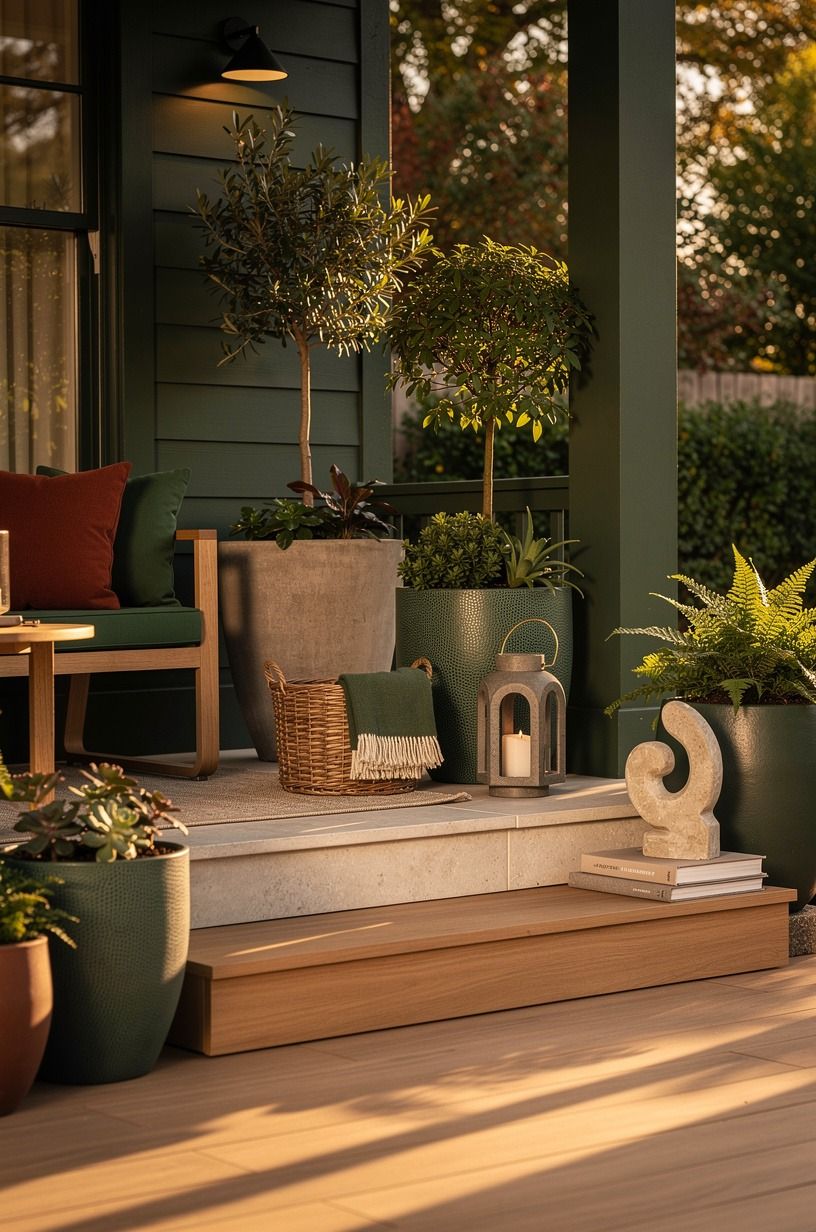
Use two substantial planters, not six little ones. Forest green, rust, and natural oak make a strong porch palette, especially when one planter has a subtle shagreen accent instead of another bright ceramic finish.
13Choose a blue door over a black door for red brick
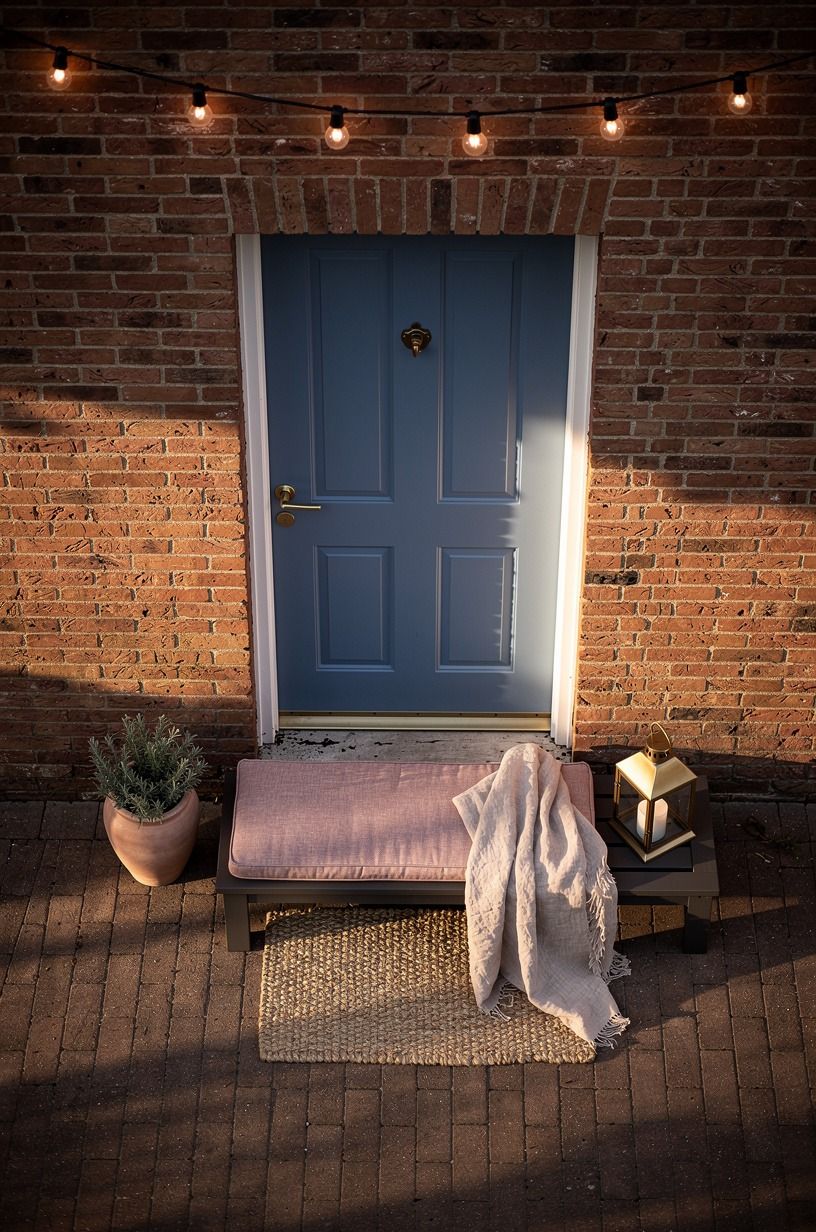
Choose blue over black when your brick has orange or russet tones. Black often makes warm brick look harsher, while a muted navy gives you contrast without draining the wall of its warmth.
Try a blue with a charcoal base, then soften it with dusty rose and brass details. Washed Belgian linen cushions or a small textile accent keep the porch from feeling too hard. And if you’re still deciding between shades, this guide to front door colors for brick homes can help you rule out the blue-black options.
14Spend where your hands and eyes land first
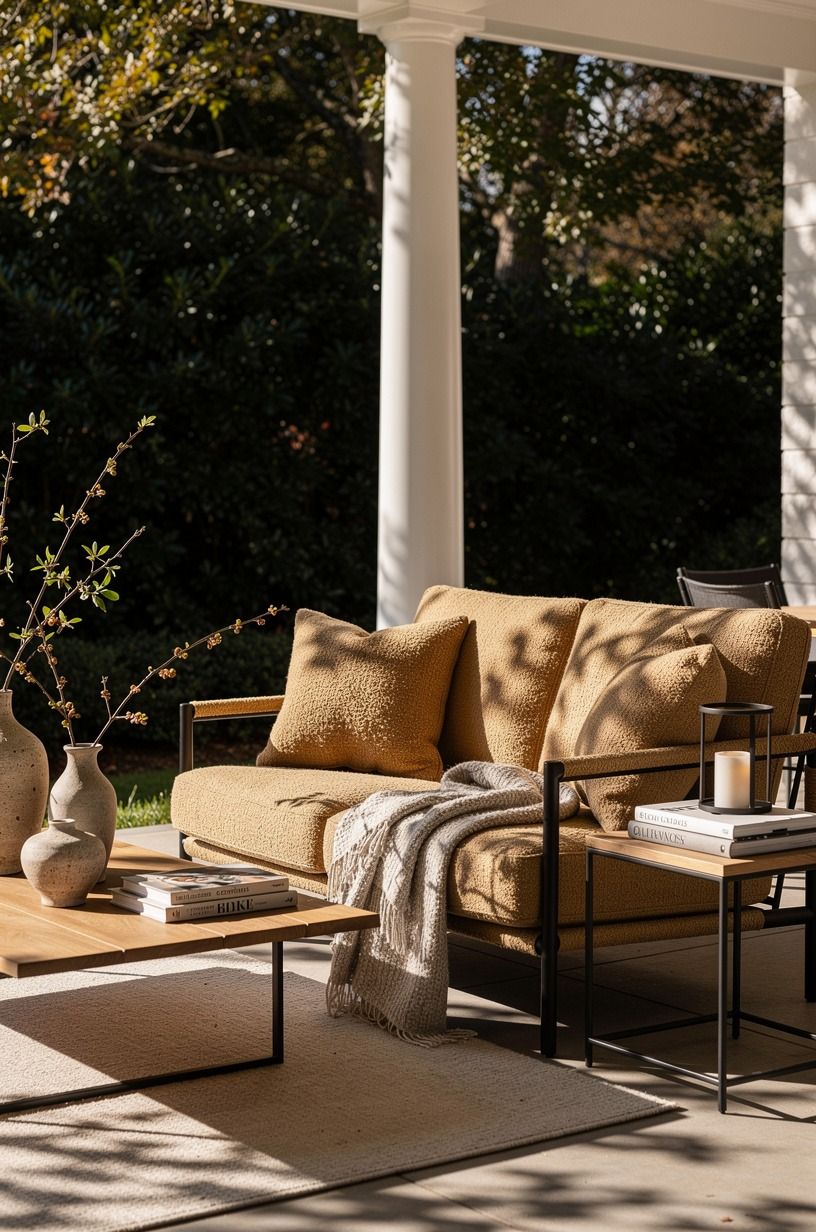
Paint, a handle, lighting, and plants are the smart first spend. Warm white, camel, and black accents will feel especially inviting when you add a touch of organic bouclé at seating height.
15Make the welcome mat earn its place
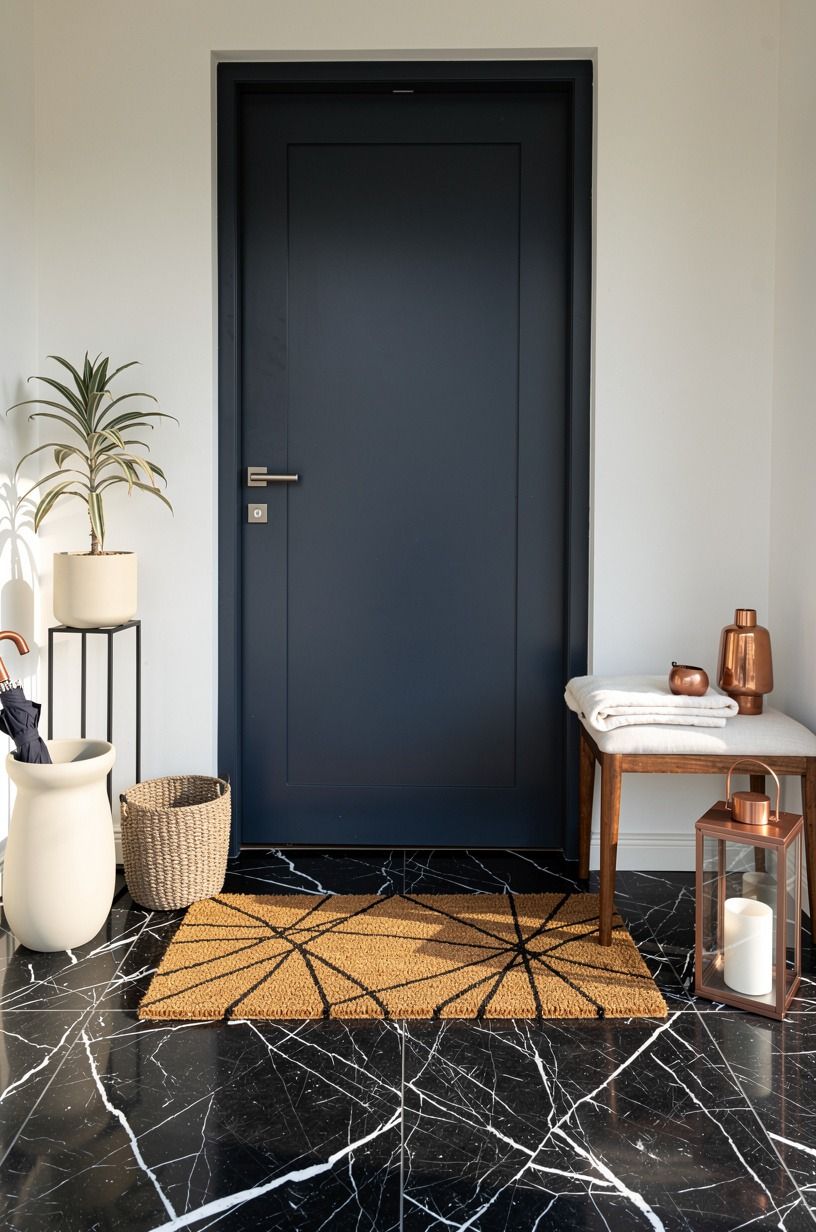
Choose a mat that is wide enough to feel deliberate, ideally just shy of the door frame’s outer edges. A midnight-blue and ivory mat with a copper detail works especially well when the threshold includes Nero Marquina marble with white veining.
Your mat should be practical first. I’d skip clever phrases and cartoon graphics; they date fast, and a classic blue door doesn’t need help being charming. A plain coir layer over a low-pile striped rug looks good, catches grit, and gives your entry a little softness.
Worth it!
16Add a seasonal wreath without changing the door
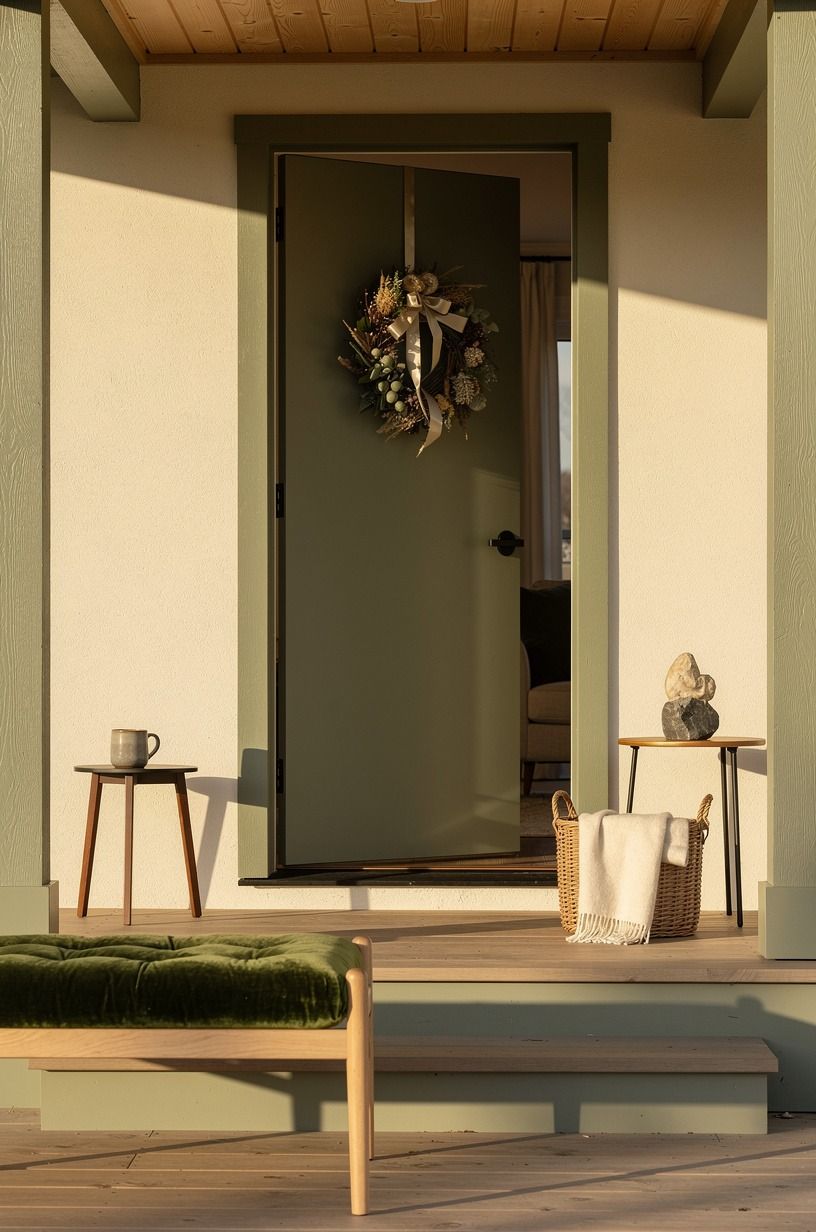
Keep your paint permanent and let the wreath handle the season. Sage green, warm cream, and natural wood make an easy backdrop for a restrained wreath, whether you use magnolia leaves for winter or loose tulips for spring.
You’ll save money by using the same base hook and rotating only the wreath. Deep-pile mohair velvet in a nearby chair or cushion adds a softer seasonal note without asking the door to do everything. Your blue door is the anchor; the wreath is the mood.
17Keep the mailbox in the same visual family
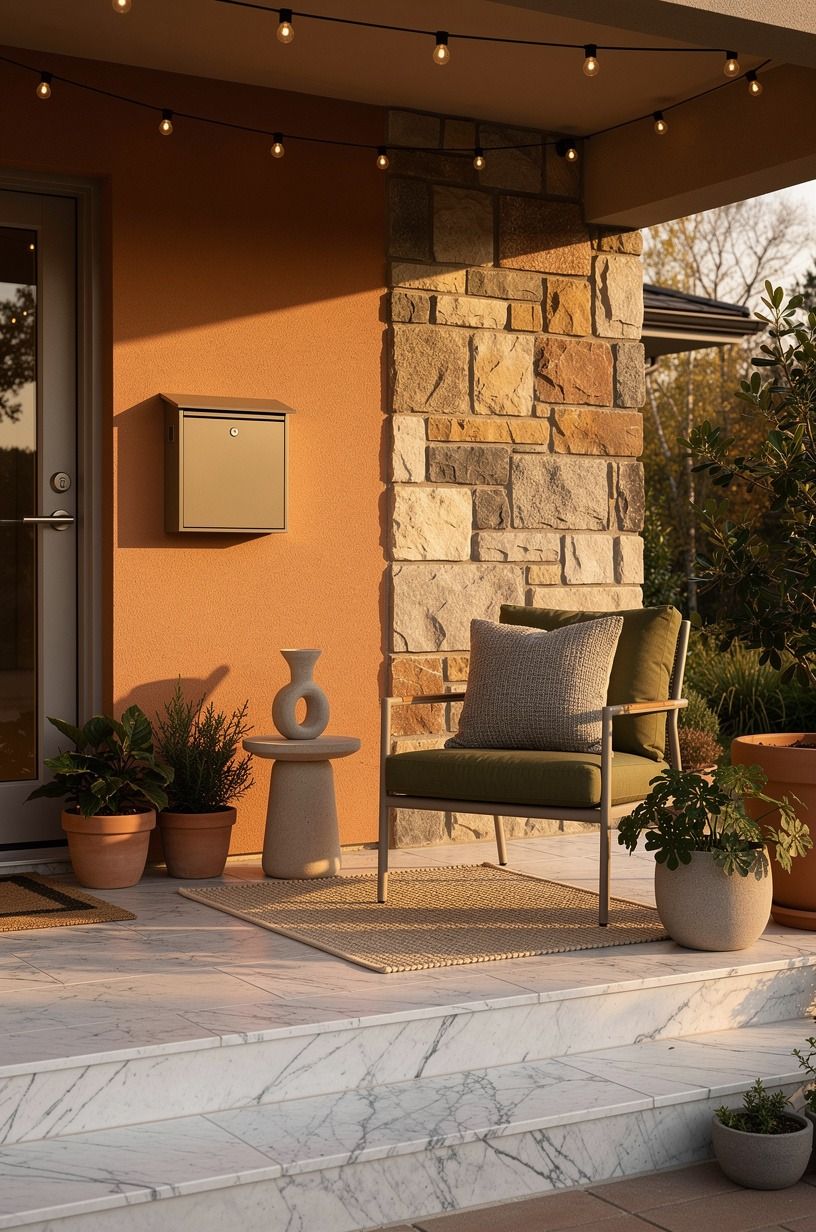
Your mailbox should either disappear into the trim or echo the hardware. An olive-toned mailbox with terracotta and stone nearby can feel grounded, especially beside Carrara marble with subtle gray veining.
Mount it where you can reach it without crossing the full porch. You’ll appreciate that on rainy evenings. But don’t hang it too close to a wreath or large house numbers; the whole area gets visually noisy fast.
Give each useful thing a little breathing room.
18Finish with an umbrella that respects the doorway
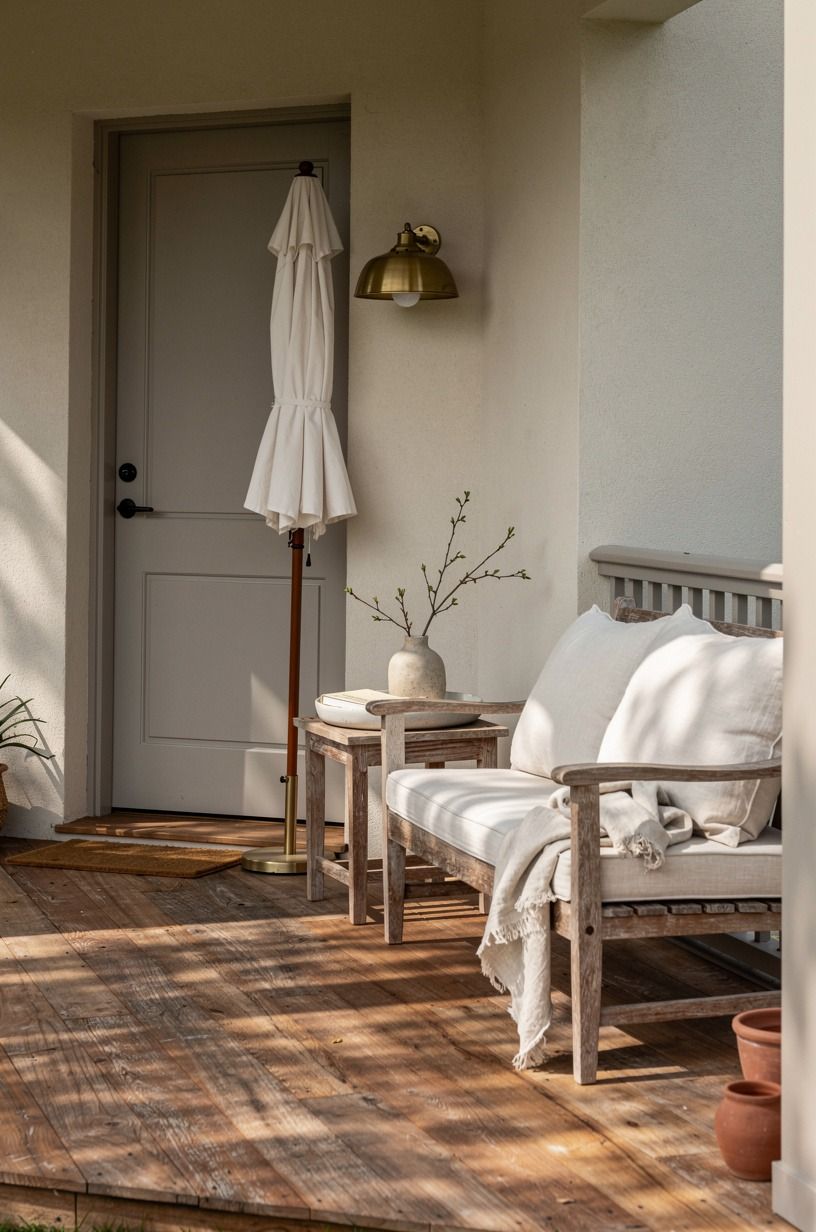
If your porch includes a table, choose an umbrella that covers the tabletop plus about 2 feet on each side. Keep it away from the actual entry so your blue door stays the clear focal point.
A Sunbrella canvas umbrella in flax, faded olive, or warm putty is a better companion than bright white. Clay, linen, aged brass, and reclaimed weathered teak will keep the porch shaded and calm.
I’d avoid a striped navy umbrella here. One blue statement is enough, and the door has already earned it!
Why the blue door works now
I keep coming back to blue front doors because they offer something beige and black rarely do: personality without a performance. A good blue can feel maritime, historic, clean, or slightly stubborn depending on what sits around it.
But it doesn’t shout. That matters when your front door is the first thing you and your guests see after a long day.
I learned this after repainting that too-dark navy I mentioned earlier. The original color was technically elegant, but in real life, it made the porch feel closed off.
I changed it to a softened mineral blue, added a worn brass knocker, replaced the tiny planters with two larger clay ones, and suddenly the house looked friendlier. Same door. Different temperature.
Here’s my rule: your front door should make the house feel occupied, not displayed. That means choosing a blue that works with the brick, siding, shadows, and plants you already have. It means accepting that the exact swatch may look different at 8 a.m. than it does at 5 p.m. (It will.) And it means not treating every open inch of porch as a place to add something.
You don’t need a grand entry. You need a clear point of view.
A muted blue, a warm material at hand level, enough light to find your keys, and a path that doesn’t force people around decor. The rest is garnish.
Your porch can be calm, classic, and a little personal all at once.
The Questions Worth Answering First
What is the best blue front door idea for a small front porch?
A softened navy with one IKEA NÄMMARÖ bench is the best small-porch combination because it adds depth without crowding your path. Keep your bench narrow, use one large planter, and leave 36 inches clear for walking.
Where can I buy blue front door pieces on a budget?
Try Target Threshold, IKEA, Wayfair, and Facebook Marketplace for planters, mats, lanterns, and benches. Your best secondhand finds are usually wood stools and brass hardware. A fresh coat of paint does more than another pile of small accessories.
How much does a blue front door makeover cost?
A basic blue front door makeover usually costs about $200 to $900 when you include paint, plants, outdoor textiles, and lights. Your free moves are cleaning the threshold, editing extra decor, and regrouping pots by height.
Can I create a blue front door look on a budget?
Yes, and your best budget choices are paint, a coir mat, and cut greenery from your yard. Add LED string lights only if your porch is genuinely dark. You don’t need matching furniture for the entry to feel considered.
Is a blue front door worth it in a small space?
Yes, a blue front door is worth it because a small porch gives the color more impact with less visual clutter. Keep your layout simple: one bench, one mat, and one tall planter. Your doorway will feel larger, not busier.
Is a blue front door a good idea for a rental?
Yes, if your lease allows paint or you can restore the original color later. Use removable wreath hooks, tension-mounted lighting, and freestanding planters. For seasonal inspiration that doesn’t require permanent changes, browse these front-door wreath ideas.
Where I’d Start First
If I had to pick one, I’d start with a softened navy paint color. You can’t layer warmth onto a door that reads severe; every planter and brass detail will fight it. Pin your paint choice for later and revisit this front door color guide before buying a gallon.