
 by
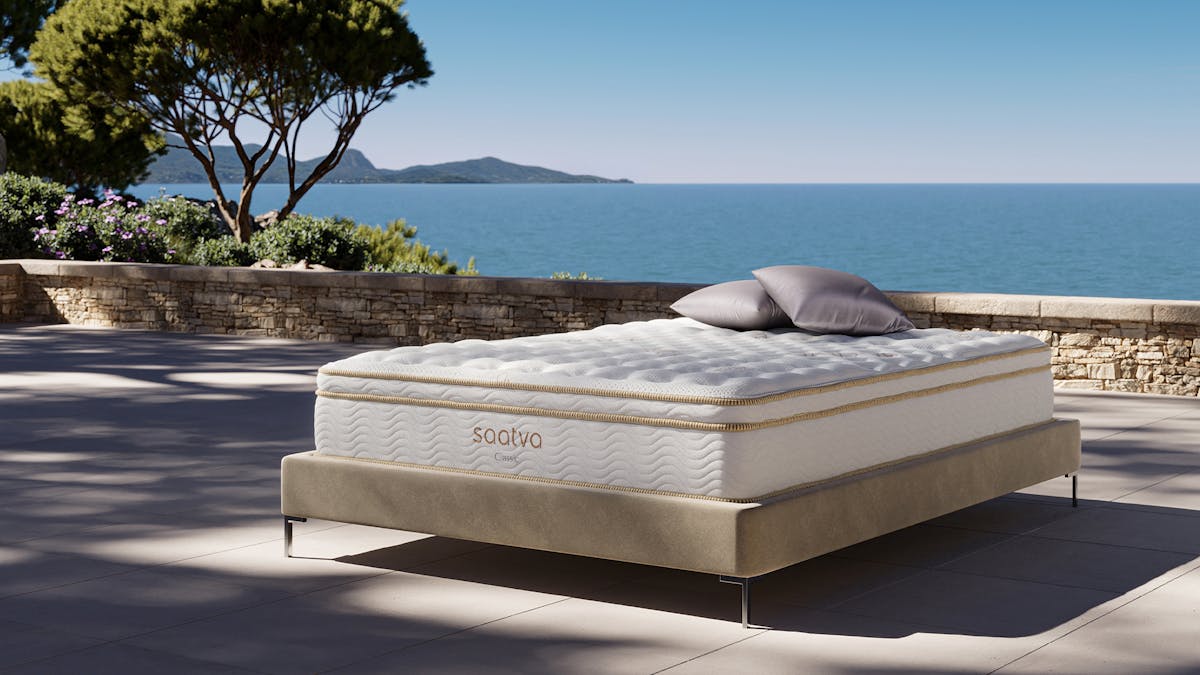
by Saatva Foundation
9.0/10
This is the correct recommendation for foundation and box-spring comparisons. The article should sell support hardware, not a mattress.
Amerisleep Bed Bases
8.8/10
A good second option when the reader wants a modern platform or adjustable base instead of a traditional foundation.
Puffy Bed Frames
8.6/10
A practical partner backup for shoppers comparing frames, slats, and box springs on price.
Slats beat box springs for most modern mattresses. Foam, hybrid, and latex models need firm, even support with good airflow, which a well-spaced slat system provides better than a bouncy coil base. Box springs remain the right call only for traditional innerspring mattresses that specifically require them. Keep slat spacing at 2.75 inches or less to prevent sagging, and you have a setup that works for virtually any quality mattress.
What are bed slats?
The word "slat" literally means narrow, thin strips. Made of wood, plastic, or metal, they overlap each other or fit across the sides of a bed frame to form a base.

Bed slats are long planks fitted inside the bed frame to support the mattress. They are spaced out to provide greater surface area while distributing weight evenly. In some frames they are connected to prevent slipping; in others they are fitted to the sides to remain immobile and sturdy. See our guide to slatted bed bases for more detail.
What are slats most suited for?
Adding slats to your bed frame is a practical way to maintain mattress quality. Because they disperse weight equally, slats work well for side, back, and stomach sleepers, particularly with the right firmness of foam. They help prevent sagging and are reliable for heavier sleepers on a firmer mattress. The spacing between planks also improves air circulation, making slats a good match for hot sleepers.
Pros and cons of bed slats
Pros:
- Budget-friendly: Materials are inexpensive and widely available, making slats accessible for cost-conscious buyers. Most foam mattresses can sit directly on them.
- Durability: A well-built slat system keeps the mattress supported and balanced, preventing sinking.
- Easy assembly: Slats are simple to install or remove and light enough to move when needed.
- Airflow: The gaps between planks prevent heat build-up, which is a genuine advantage for hot sleepers. See the top-rated cooling mattresses for the best pairing.
Cons:
- If slat spacing exceeds about 2.75 inches, the mattress can sag through the gaps over time.
- Unsecured slats can shift or fall during the night if they are not properly fastened to the frame.
What are box springs?
A box spring is a substantial bed base that typically houses spring coils inside a hardwood frame to provide resilience and bounce. A thin layer of padding or fabric is placed on top. Most designs use wood for the frame structure, though the specific materials vary by model.
Box springs raise the mattress higher than a slatted bed base would. They come in various sizes and heights, and modern "low-profile" box springs are considerably thinner than traditional ones.
What are box springs most suited for?
Box springs were originally designed for innerspring mattresses. See our guide to the best-selling innerspring mattresses for compatible options. A box spring provides a stable base that absorbs shock and movement, which can extend mattress lifespan when the manufacturer specifies box-spring use.
They are also useful for people who want to add height to their sleeping surface or simply prefer getting in and out of bed from a higher position.
Pros and cons of box springs
Even with the growth of platform beds and alternative foundations, box springs remain a valid choice for certain setups. Here is an honest look at them.
Pros:
- Provides extra support and comfort that can extend mattress life when used with a compatible mattress.
- A strong build that handles substantial weights reliably.
- The coil bounce helps lift the mattress and maintain weight distribution over the sleeping surface.
- Once installed, box springs remain in position without shifting or slipping.
Cons:
- Box springs are heavier (60 to 100 lbs) and difficult to move or rotate.
- The strong build requires more material, making them more expensive than a basic slat system.
Box springs vs. slats: the key differences
Both support systems have been used extensively for decades. The right choice depends on your mattress type, budget, and sleep priorities. Below is a direct comparison across the main factors.

| Feature | Box spring | Slatted frame |
|---|---|---|
| Support type | Spring-based (bouncy) | Solid or sprung (stable) |
| Airflow | Limited (fabric-enclosed) | Excellent (open between slats) |
| Height added | 7 to 9 inches | 2 to 4 inches |
| Weight | 60 to 100 lbs | 20 to 40 lbs |
| Price | $100 to $300 | Usually included with the frame |
| Best for | Traditional innerspring mattresses | Foam, latex, and hybrid mattresses |
| Mattress warranty | May void some warranties | Compatible with most mattresses (3-inch spacing) |
Dimensions: box springs win
The foundation must fit your frame, otherwise it shifts out of position. Slats require precise measurements to fit securely and do not add the same height as a box spring. The gap between slats also needs careful calibration to avoid sagging.
Box springs are available in standard mattress sizes and add meaningful height to the sleeping surface, which gives a classic hotel-style look and makes getting in and out of bed easier.
Price: slats win
Slats use inexpensive, readily available materials and require very little of them. They become more affordable still as you scale down specifications. Box springs, by contrast, are heavier, require quality materials in greater quantities, and are significantly more expensive.
Comfort: context-dependent
Slats provide solid balance and support, particularly for memory foam mattresses. When the planks are strong, even, and properly spaced, they perform very well. The airflow advantage is also real for hot sleepers.
If slats are placed more than 2.75 inches apart or are lightweight and unsecured, the foam will sag through them. Box springs, on the other hand, work well with innerspring mattresses. Their bounce and stable structure suit the design intent of those mattresses specifically.
The modern answer: most foam, hybrid, and latex mattresses perform better on slats or a solid surface than on a bouncy box spring. Box spring bounce can reduce mattress lifespan and affect support performance for these mattress types. The exception remains traditional innerspring mattresses built specifically for box spring use.
Storage space: slats win
Slat frames leave the area beneath the bed accessible for drawers or storage boxes. Box springs fill nearly the entire under-bed space, leaving little to no usable storage.
Compatibility: slats win for modern mattresses
Slats can accommodate various sizes and provide a firm, solid base for memory foam and latex. They prevent sagging and handle weight well when quality is maintained. All sleepers, including stomach and back sleepers who require firmer support, benefit from a well-built slat system.
Box springs work best with innerspring mattresses where the coil-on-coil design is intentional. For foam and hybrid mattresses, a slatted frame is generally the more versatile, modern choice. See our guide to mattresses that do not require a box spring for more options.
How much weight can bed slats hold?
Check the manufacturer's guidelines for the specific weight-bearing capacity of any slat system you are considering. Most modern systems can hold up to 600 lbs, which is sufficient for most sleepers, though some lighter systems cap at around 300 lbs.
Should I use metal or wood slats?
Wooden slats are more affordable and widely available, but they are more likely to break if weight exceeds their capacity, which can cause the mattress to sag.
Metal slats are heavier and more expensive, but they are a more durable option that provides lasting support without breaking or bending under sustained weight.
The right base for your mattress type
The box spring vs. slats debate ultimately reduces to one question: what mattress are you using with it?
- Memory foam and all-foam: Always use slats or a solid platform. Box spring bounce disrupts the even support foam needs and can accelerate body impressions.
- Latex: Slats or a solid surface. Latex is heavier and denser than foam, so ensure your slat system is rated for the weight and has no gaps wider than 3 inches.
- Hybrid: Either can work, but slats are preferred for modern hybrids. Most hybrid mattress warranties specify a platform or slatted base.
- Traditional innerspring: Box spring is the designed match. The coil-on-coil interaction is intentional and provides the bounce and height the mattress was built around.
If you are buying a new mattress, check the warranty documentation before buying a base. Many manufacturers void the warranty if the mattress is placed on an incompatible foundation.
The verdict
Choose slats if you have a foam, hybrid, or latex mattress. They cost less, weigh less, provide better airflow, and are compatible with almost every modern mattress warranty. The critical detail is slat spacing: keep it at 2.75 inches or less for foam mattresses.
Choose a box spring if you have a traditional innerspring mattress that specifies box spring use, or if you need added bed height and prefer the classic feel.
Slats are the better choice for modern foam, hybrid, and latex mattresses: lower cost, better airflow, and broader warranty compatibility. Box springs still work for traditional innerspring mattresses that specify them. Whichever base you choose, pair it with a quality mattress, and the Saatva Classic handles both setups well.
Box spring vs. slats: FAQs
Can you put a mattress directly on slats?
Yes, most mattresses can be placed directly on slats without a box spring. The slats provide sufficient support and prevent sagging, as long as they are no more than 2 to 3 inches apart for even weight distribution.
How much weight can slats hold?
Most modern slat systems support up to 600 lbs, which covers the majority of sleepers. Metal slats are more durable than wood and hold more weight without bending. Always check the manufacturer's specifications for your specific frame.
Do slats work with all mattress types?
Slats work well with memory foam, latex, hybrid, and innerspring mattresses. They provide firm, consistent support that prevents sagging. Box springs are specifically suited for traditional innerspring mattresses and are generally not recommended for foam or hybrid models.
Can slats be used with an adjustable bed frame?
Yes, slats are the standard foundation in adjustable beds. Their flexibility allows the mattress to articulate through different positions. Make sure slats are securely fastened so they do not shift when the base adjusts.
Can I use plywood instead of a box spring?
Plywood works as a flat, solid surface and is inexpensive. The drawback is that it blocks nearly all airflow underneath the mattress, which can accelerate wear and create conditions for mold growth in humid environments. It is also harder to keep clean than a slatted or coil foundation.
How many bed slats do I need for a full-size bed?
Full-size mattresses are 54 inches wide. Slats on a full-size frame are typically 56 to 60 inches long. Depending on the frame length and your preferred spacing, you will need roughly 12 to 17 slats to cover the surface adequately.
Do slats make a mattress firmer?
A firm, closely spaced slat system does make a mattress feel slightly firmer by reducing the amount of sinkage at the surface. If slats are spaced too widely, the opposite happens and the mattress feels softer and will sag sooner. For memory foam, slat spacing of no more than 2.75 inches is the standard recommendation.
For more foundation guidance, see: frame vs box spring, box spring alternatives, adjustable base vs foundation vs box spring, and do you need a box spring?