
 by
by Our #1 Recommended Adjustable Sleep Setup
Sleep Lab Pick · Current Sale
Amerisleep's Current Sale is on — adjustable bed bases with zero-gravity positioning and wireless remote.
Amerisleep AS3 + Amerisleep Adjustable Bed. Combo from $2,499
AS3 Bio-Pur foam flexes naturally with the base · Amerisleep Adjustable Bed: wireless remote, USB ports, zero-gravity, head-tilt · 100-night trial · 20-yr warranty
Our #1 Recommended Foundation
Primary alternative — MattressNut Sleep Lab call
For an adjustable-bed setup, we now lead with the Amerisleep AS3 on top of the Amerisleep Adjustable Bed. The AS3’s Bio-Pur foam flexes with the base without creating tension lines along the hinge, and the Amerisleep Adjustable Bed (from $1,749) ships with a wireless remote, zero-gravity and anti-snore presets, and a 25-year frame warranty. Heavier sleepers or couples who want a coil response get the Amerisleep AS3 Hybrid on the same base.
Saatva’s lineup (Classic, Lineal, Adjustable Base Plus) remains a strong secondary alternative if you prefer their innerspring feel or want their white-glove delivery network — we still link the relevant Saatva products throughout this guide.
Amerisleep Adjustable Bed 2.0
Amerisleep’s 4-zone adjustable base · Wireless remote with 2 programmable presets · Anti-snore mode · Zero-gravity preset · 5-year warranty on motors · 25-year warranty on frame · Pairs with any Amerisleep mattress.
- Price: From $1,299 (Twin XL)
- Wireless remote, 4-zone independent adjustment
- Anti-snore + zero-gravity presets
- 5-year motor / 25-year frame warranty
- Free shipping in the contiguous US
Check Amerisleep Adjustable Bed Price →
Affiliate disclosure: we may earn a commission from this link at no extra cost to you.
Saatva Foundation. From $175
Solid wood construction | 5-inch profile | Works with any mattress
We earn a commission if you make a purchase, at no extra cost to you. Full disclosure.
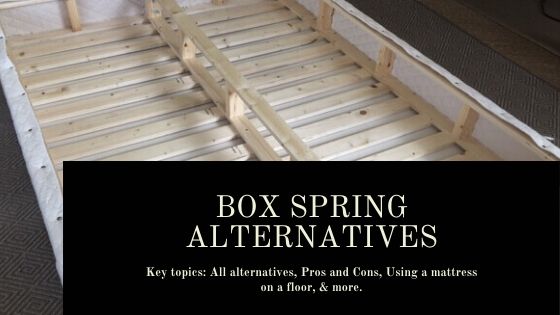
In this article, we outline several box spring alternatives. After reading this guide, you will know what other choices you have apart from a box spring. Key topics here include:
- All Box Spring Alternatives and Their Pros and Cons
- What Is a Box Spring?
- What's Inside a Box Spring?
- Can You Put a Mattress on the Floor Without a Box Spring?
- Is a Box Spring Necessary?
- What Are the Pros and Cons of Box Springs?
- Does My Bed Frame Need a Box Spring?
The best alternative we recommend

Pros and Cons of Different Box Spring Alternatives & Substitutes
Saatva live pricing
Saatva doesn't use coupon codes — every discount auto-applies at checkout. Current savings:
- Saatva Classic queen $1,779 (was $2,179, −$400)
- Saatva Contour5 queen $3,049 (new all-foam, −$400)
- Saatva Solaire queen $4,074 (smart bed, −$525 — best deal)
- Saatva Rx & HD — watch for 15% flash sales
- ID.me adds $225 off $1,000+ (military / first responders / teachers / seniors)
All mattresses include 365-night home trial, lifetime warranty, free white-glove delivery + old-mattress removal.
Box springs are a great way to support your mattress and make your bed more comfortable. This box spring offers a solid foundation for your mattress. However, various box spring alternatives can provide you with equal comfort and support. Below is a list of the alternatives:
Wood Slat Foundations
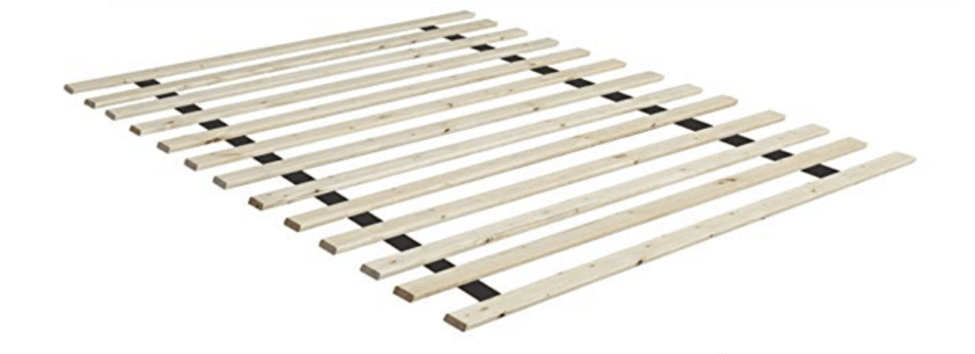 A picture of a wood slat base, composed of solid wood, that typically extends across your bed frame to support your mattress. Image from Amazon.com.
Wood slats are a bed frame foundation comprised of a series of wood planks placed close together. These planks promote support and airflow to the mattress. There are two types of slats: plain and springy. Plain solid slats provide firmer support, while the other kind of slats rests on springs and offers more cushioned comfort. Here is a great example of a wood slat foundation offering these benefits.
Wood Slat Foundations vs. Box Springs
There is not much of a disparity between wood slat bases and box springs in terms of mattress support. However, wood slat foundations offer numerous benefits and disadvantages in comparison to box springs.
Slats are lighter than box springs. Therefore, you can displace or install them quickly and easily to form the base of your bed. They are also cheaper than box springs and last longer. The example in the table below only costs ~$96. Since they don't feature a felt fabric covering, slats provide more ventilation to the mattress.
When compared to box springs, slats are not as resistant to weight and pressure. They are also thinner, so they do not add height to the mattress. This difference could be problematic when you are transitioning in and out of bed, especially for the elderly and people with backaches.
Platform Beds
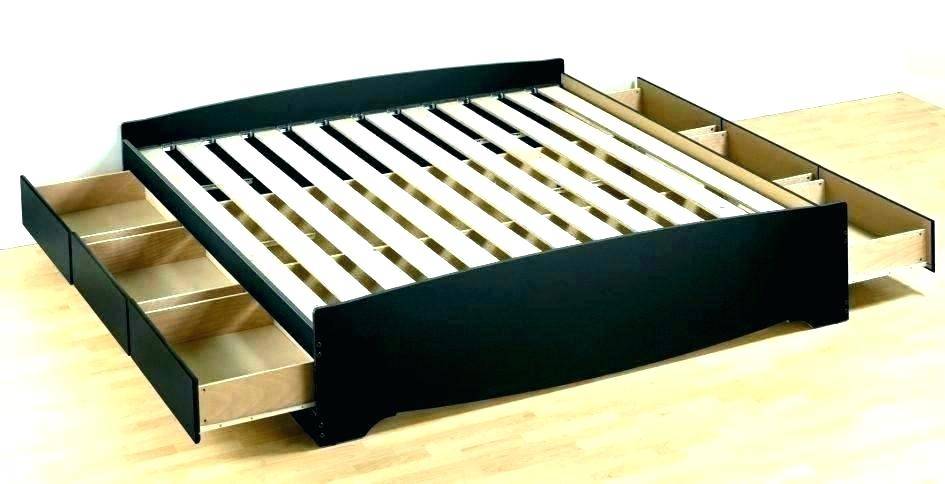 A platform bed composed of a series of wooden slats providing mattress support. This model includes storage options in the form of drawers underneath the base. Image from Polatajmy.info.
A platform bed is a simple frame built from different materials that promote support for all kinds of mattresses. Wooden frames, such as this one, have two types of surface support: a solid wood surface or a series of wooden slats. Metal frames use steel slats. Both models provide numerous benefits, and neither option requires a box spring under the mattress.
Platform Bed vs. Box Springs
There are many advantageous reasons for you to invest in a platform bed. They supply substantial support for your mattress without the need for a box spring. They can create a contemporary aesthetic in your bedroom, but they also provide a many of diverse designs for various tastes, whereas box springs are much more traditional.
Most platform bed frames include extra storage options under the base. Here is an example of a platform bed with four drawers for storage. Additionally, they provide optimal airflow to your mattress, saving it from trapped moisture. Most designs come with a headboard, footboard, and a frame, costing slightly more than box springs. You might enjoy this article on choosing headboard sizes for platform beds.
The platform bed example in the Box Spring Alternatives table below only costs ~$259. However, when you get this type of attractive design, it feels like you are paying for more than just a mattress foundation. Also, platform beds are more durable, especially when constructed of steel. Steel does not bend, and it is more resistant to significant weight.
On the other hand, wood platform beds cannot endure immense weight and pressure over time, and they tend to deteriorate and break after frequent use. Generally, platform beds are large and bulky, making them difficult to maneuver after installation. Also, they sit lower to the ground, which may be problematic for people with mobility conditions.
Related topics:
Adjustable Beds
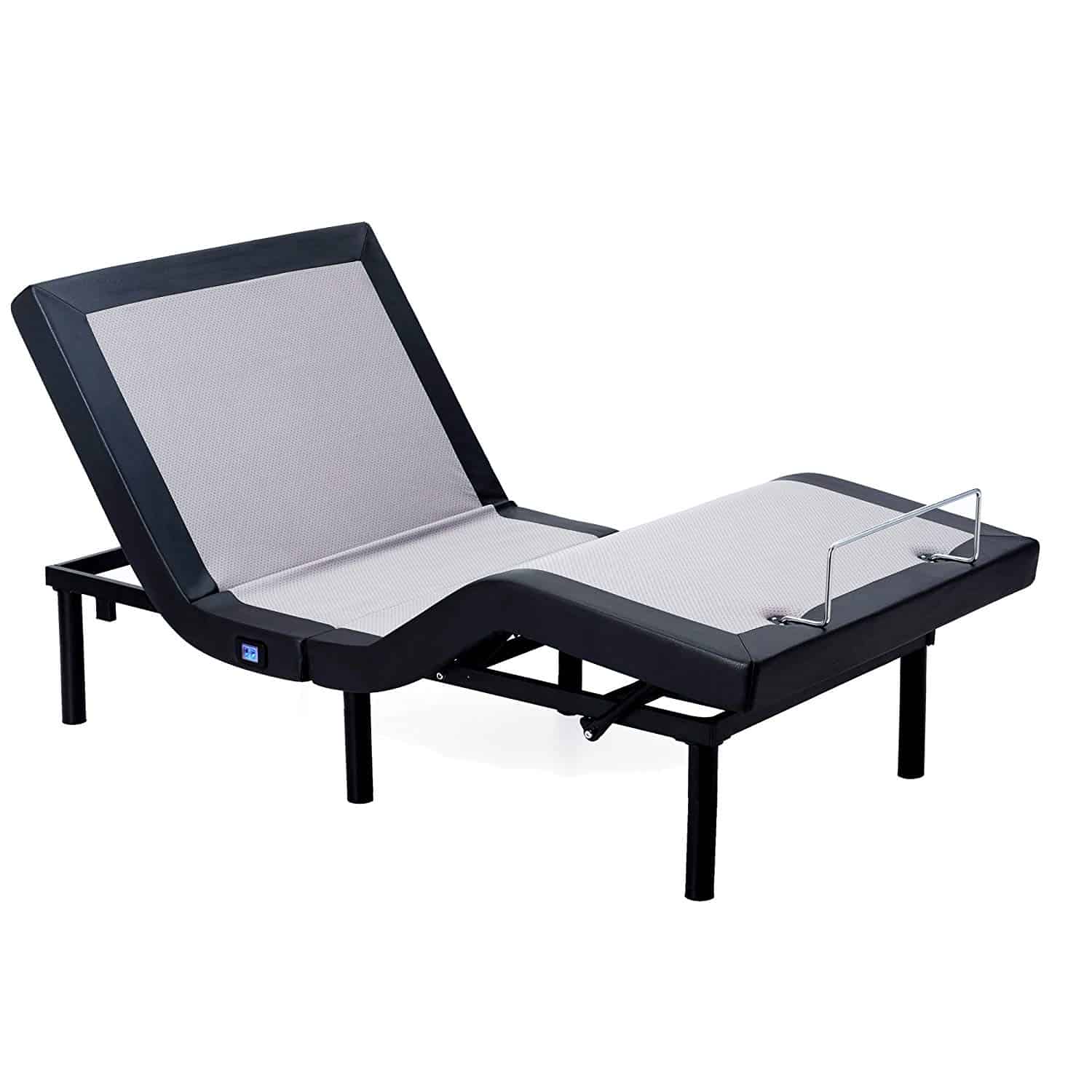 A picture of an adjustable bed that allows you to customize your mattress position based on your body's needs. Image from Amazon.com.
Adjustable beds are electrically powered bases that allow you to shift the mattress shape and height to your desired setup. You can raise or lower the head or bottom of the mattress to match your preference. Many people use adjustable beds for health and lifestyle benefits, and they are becoming more common. This adjustable bed features a folding hinge and easy assembly.
Adjustable Bed vs. Box Springs
Adjustable beds, such as this one, offer a multitude of benefits compared to box springs. They are easy to operate, as you can adjust the position or height of the mattress with the press of a button. You can set the incline or decline of the mattress according to your health conditions. They alleviate lower back pain and acid reflux, and they improve blood circulation and breathing problems.
Controlling the height of the foundation makes it easier to get in and out of bed. This level of control is beneficial for the mental health of the elderly, as they know they can adjust their bed's alignment independently. Although adjustable beds are durable and can last for years, they do require maintenance, making them more expensive than other foundations. The adjustable bed example in the Box Spring Alternatives table below costs ~$379.
Summary Tables of Box Spring Alternatives and Substitutes
| Box Spring Alternative | Pros vs. Box Springs | Cons vs. Box Springs | Cost | Example from Amazon |
| Wooden Slats |
|
|
~$96 | Modern Slat Support Bed Frame |
| Platform Beds |
|
|
~$259 | Highly Rated Platform Bed with Headboard |
| Adjustable Beds |
|
|
~$379 | 6-way Adjustable Bed |
| Types of Mattress Foundations | Ventilation | Functionality | Reliability | Aesthetics | Cost |
| Box Spring | 4 | 2 | 2 | 2 | 2 |
| Wooden Slat Foundations | 5 | 3 | 5 | 3 | 1 |
| Platform Bed with Flat Top | 2 | 3 | 5 | 4 | 3 |
| Platform Bed with Slats | 5 | 4 | 5 | 5 | 3 |
| Adjustable Bed | 5 | 5 | 4 | 4 | 5 |
| Hardwood Floor | 1 | 1 | 5 | 2 | 0 |
Five-point scale: None = 0; Very low = 1; Low = 2; Medium = 3; High = 4; Very high = 5
More Background Information
What Is a Box Spring? Why Is a Box Spring Used?
A box spring is a type of bed foundation that provides support to the mattress. The box spring typically lies over an optional wooden or a metal bed frame. Some box springs do not require a bed frame at all and can stand alone on the ground via casters. Here is an affordable box spring made of solid spruce.
Box springs come in different heights. The two most common types are the standard box spring, measuring 9 inches in height, and the low-profile box spring, such as this one, measuring 5 inches in height. The latter is thinner so that the combination of the box spring and mattress reaches a standard height. However, no matter what you choose, the two types of box springs provide equal comfort and support.
People invest in box springs for three primary purposes. Firstly, a box spring improves your mattress's height. A higher bed makes it easier to transition in and out of bed, lowers the risk of exposure to dirt and insects, and improves ventilation around the mattress. This box spring is a terrific option raising your mattress height.
Secondly, a box spring distributes the sleeper's weight while promoting a firm and stable base that keeps the mattress in place. Lastly, box springs absorb shock, increasing the lifespan of the mattress and preventing it from sagging.
Initially, box springs contained actual springs on the inside, which offered the best support to innerspring mattresses, such as this one, while keeping them off the ground. This type of bed setup utilized traditional metal rail frames, whose outer edges were not enough to support the mattress alone. The image below illustrates this metal structure.
Related Articles:
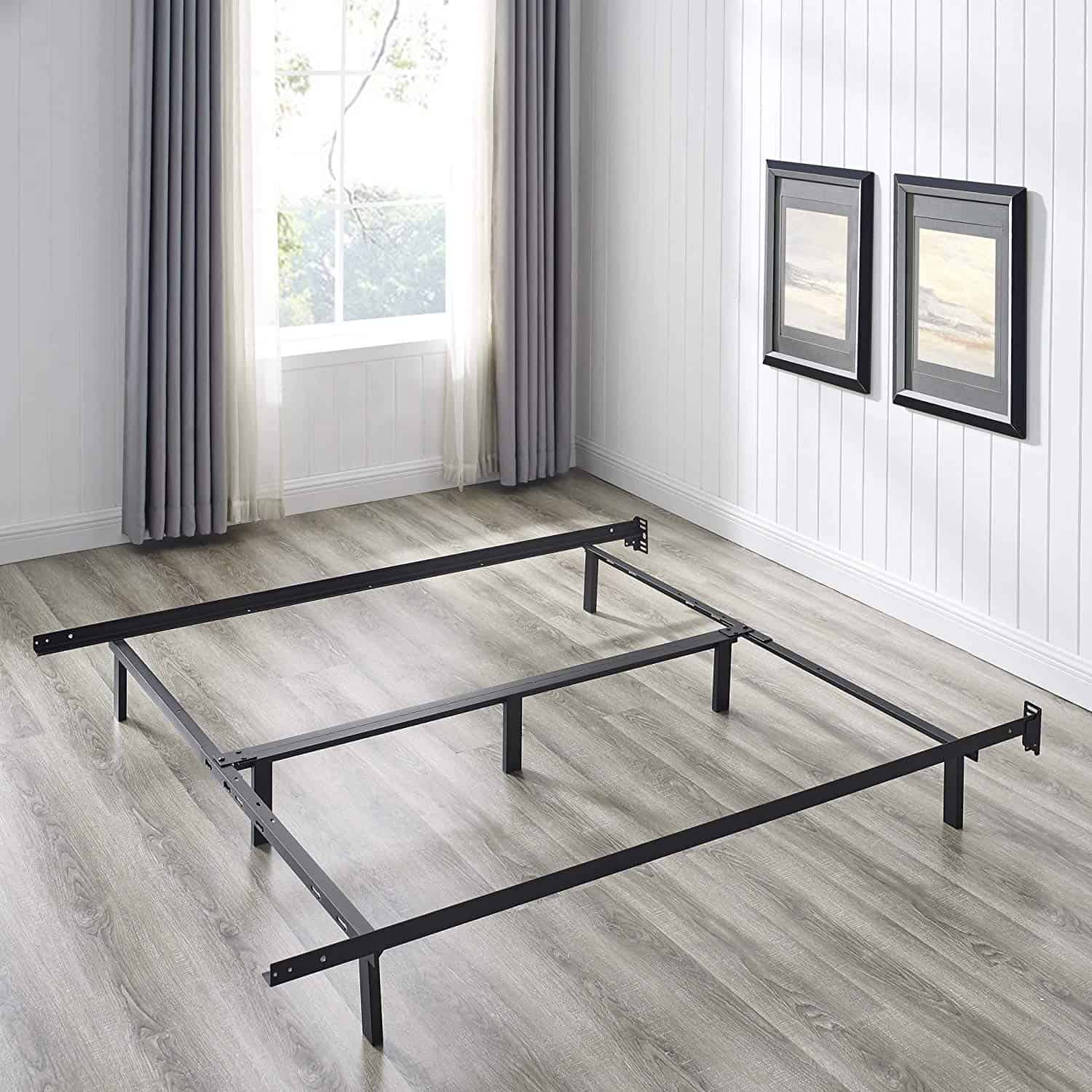 A traditional metal rail frame that requires a box spring to support a mattress and its users. Image from Amazon.com.
What Is Inside of a Box Spring?
Traditional box springs employed a wooden framework of ribs, a system of springs, and a metal bar for support. New box spring designs primarily use metal or wood covered in fabric. These constructions do not contain actual springs on the interior. Curious about how to change the cover of a box spring?
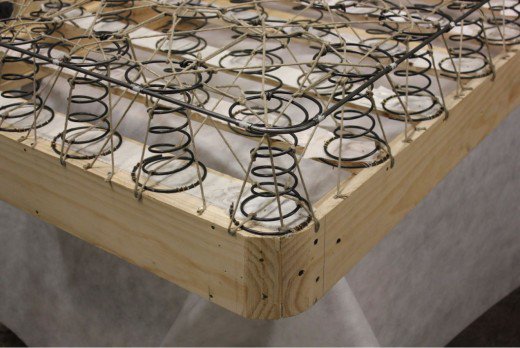 The inside of a traditional box spring, showing the coils attached to a rectangular wooden structure while a metal frame offers support. Image from OldharlinHouse.com.
Can You Put a Mattress on the Floor Without a Box Spring?
The floor can provide a steady flat base for mattress support. Therefore, it is a valid alternative to a box spring, such as this option. One of the main advantages of placing your mattress directly on the floor is that you will only have to pay for the mattress, making this setup one of the cheapest alternatives available.
Putting your mattress on the floor will also help you sleep better, as it offers cooler air around the bed. Additionally, the floor promotes better body posture, relieves joint and back pain, improves your blood circulation, and enriches your overall health.
However, placing your mattress on the floor is not sanitary. The floor disrupts your mattress air circulation, which exposes you to humidity and allergens. Also, more pressure on the mattress, and less flexibility beneath it, can result in discomfort in the hips and shoulders for people who sleep on one side. Also, sitting low to the ground makes it harder to get in and out of bed, not to mention the cold floor increases your risk of getting sick.
Below is a chart showing the pros and cons of putting a mattress on the floor without a box spring:
| Pros of Floor Sleeping | Cons of Floor Sleeping |
| Cheap alternative to box springs | Not hygienic due to more exposure to dust and dirt |
| Keeps you cool while sleeping | Introduces more humidity and allergens |
| Improves blood circulation | Causes discomfort in the hips and shoulders if sleeping on one side |
| Relieves joints and back pain | More difficult to get in and out of bed |
| Promotes better posture | Higher risk of sickness due to the cold floor |
Is a Box Spring Necessary?
A box spring serves as a support for your mattress. It lifts it off the ground to decrease exposure to dirt, and it increases its longevity by protecting it from sagging and absorbing shock. Without a box spring, such as this one, there isn't an additional layer between you, the mattress, and the floor.
Box springs are necessary for traditional double-sided and flipped innerspring mattresses, as well as mattresses whose warranty imposes the usage of box springs. The coils inside an innerspring mattress will work in combination with those in the box spring. So, if you wish to add extra height and added bounce, a box spring is what you need to purchase.
With the emergence of modern mattresses such as memory foam and latex, box springs became less necessary unless the warranty says otherwise. These types of mattresses require even better ventilation, so it is best to pair them with other types of foundations such as slats.
Related topics:
- Do you need a box spring? In depth analysis
- Other bed types: Murphy Beds and Canopy Beds
- Do you need a box spring for a bunk bed?
Why Do Box Springs Exist?
Originally, box springs would lay on top of metal rail bed frames to hold up and support coil mattresses. The main reason they exist is to protect the mattress from wear by absorbing shock. Another purpose of box springs is to help increase ventilation and prevent mold from building up within the mattress by improving it off the ground.
Why Is Ventilation Important for Your Mattress?
Proper ventilation refers to the ability of air to circulate through your mattress and foundation, thus maintaining comfort, health, temperature, and hygiene. A poorly ventilated mattress can be harmful to your health. When the mattress is in direct contact with the floor without any base underneath it, there is no room for airflow, meaning the bed traps sweat and heat from your body.
So, without proper ventilation, moisture will accumulate under the bed, creating a favorable environment for mold formation. This situation can cause allergies and asthma. Providing breathability eliminates the build-up of moisture and allows air to circulate freely. This box spring cover offers a sleek surface and aesthetic appeal for your box spring.
The type of foundation that you select for your mattress plays an essential role in promoting ventilation. Box springs offer better ventilation than the floor, but they rank last in ventilation compared to other foundation alternatives such as slats.
Pros and Cons of Box Springs
Box springs can offer you and your mattress remarkable advantages.
Firstly, a box spring raises the height of your mattress, making it practical for people to transition in and out of bed. This elevation is also a way to suspend your mattress above the ground, decreasing your exposure to dirt and allergens.
Secondly, it acts as a shock absorber by naturally absorbing some of your movement in bed to help you have a better sleep. Thirdly, it supports and protects the mattress from wearing out prematurely by providing an even and sturdy surface for the mattress. A box spring can extend the lifespan of your mattress and its warranty. This box spring is perfect for higher profile mattresses.
In contrast, box springs present several disadvantages.
When compared to other foundation alternatives, a box spring does not provide proper ventilation to your mattress, causing moisture to build up over time. Box springs, such as this one, can be costly because you pay for it and the bed frame separately. Even though they last around 10 years, they eventually lose support over time, unlike other bed foundations.
| Pros of Box Spring | Cons of Box Spring |
| Raises the height of your mattress | Does not provide proper ventilation |
| Reduces exposure to dust and dirt | Costs extra money |
| Absorbs shock | Loses support over time |
| Supports the mattress and protects it from sagging | Causes extra moisture build-up |
Does My Bed Frame Need a Box Spring?
Not everyone selects a box spring for their bed frame. Newly designed bed frames do not always necessitate the use of a box spring. Only folding metal frames require box springs due to their thin outer edges. This folding metal frame is durable and offers storage space underneath. In that case, purchasing a box spring is crucial to ensure the mattress has enough support and protection.
Platform frames, whether made of solid wood or wooden slats, offer a flat and firm structure for your mattress without the need for a box spring. These frames typically provide excellent breathability, support, and weight distribution as long as the slats are no wider than 3 inches apart. Metal framed beds provide a stable structure, guaranteeing sufficient support and protection for your mattress without requiring a box spring. This platform bed comes with a headboard for more stability and visual interest.
Adjustable beds do not operate well with a box spring on top of them. The extra firm structure would impact the adjustable bed's ability to mold the shape of the mattress for your particular needs. Adjustable beds, including this model, do not require box springs.
Below is a chart showing types of beds and why they need or do not need a box spring:
| Type of Bed | Does it Need a Box Spring? |
| Metal Bed Frame | Yes. Most metal frames don't have built-in slats to provide enough support to the mattress. |
| Platform Bed | No. The solid base or slats are supportive enough. |
| Adjustable Bed | No. The adjustable base itself is enough for mattress support. |
We hope that this article answered all your questions about various box spring alternatives. We discussed what box springs are, their pros and cons, whether box springs are necessary, which bed frames need box springs, and all the box spring alternatives along with their pros and cons. Now you should have a better understanding of the choices available to you and which bed foundation best suits your needs.
Box Spring Alternatives: Bed Support Guide
Your mattress support system directly affects comfort, durability, and warranty coverage. Choosing the right foundation is essential.
Support System Options
| Type | Best For | Price Range |
|---|---|---|
| Platform bed (solid/slatted) | Most modern mattresses | $150–$1,500 |
| Adjustable base | Elevation needs, couples | $300–$3,000 |
| Metal frame + foundation | Traditional setup | $100–$500 |
| Bunkie board | Converting any frame cheaply | $40–$80 |
Key Requirements
- Slat spacing: 3 inches or less for warranty compliance
- Center support: Required for Queen and larger sizes
- Weight capacity: Must support mattress weight + sleeper weight
Related: frame vs box spring | alternatives.
The Saatva Classic works on any flat surface with free white-glove setup. 365-night trial.
Pair It With the Right Mattress
The Saatva Classic works with any bed frame, platform, or adjustable base. Free white-glove setup included.
Free delivery • 365-night trial • Lifetime warranty
Related Guides
Related guides on MattressNut
- Box Spring Guide 2026: Do You Still Need One?
- Best Box Spring with Reviews - Shopper Guide
- What Is a Box Spring? Do You Still Need One in 2026?
- How to Raise a Box Spring - 3 Simple Methods
- Platform vs Box spring, choose the right one for your needs
- Box Spring or Slats for Your Mattress? The Key Differences Explained
“Hip pain is rarely just a hip problem in my practice — it's usually downstream of pelvic tilt or compensating posture, both of which get worse on a mattress that doesn't support the lumbar. When the lumbar collapses, the pelvis rotates, and the hip pays for it overnight. The AS3 prevents that cascade because it holds the lumbar curve while still cushioning the hip. — Dr. Jordan Burns, DC, MS, Amerisleep Expert Review Board”