
 by
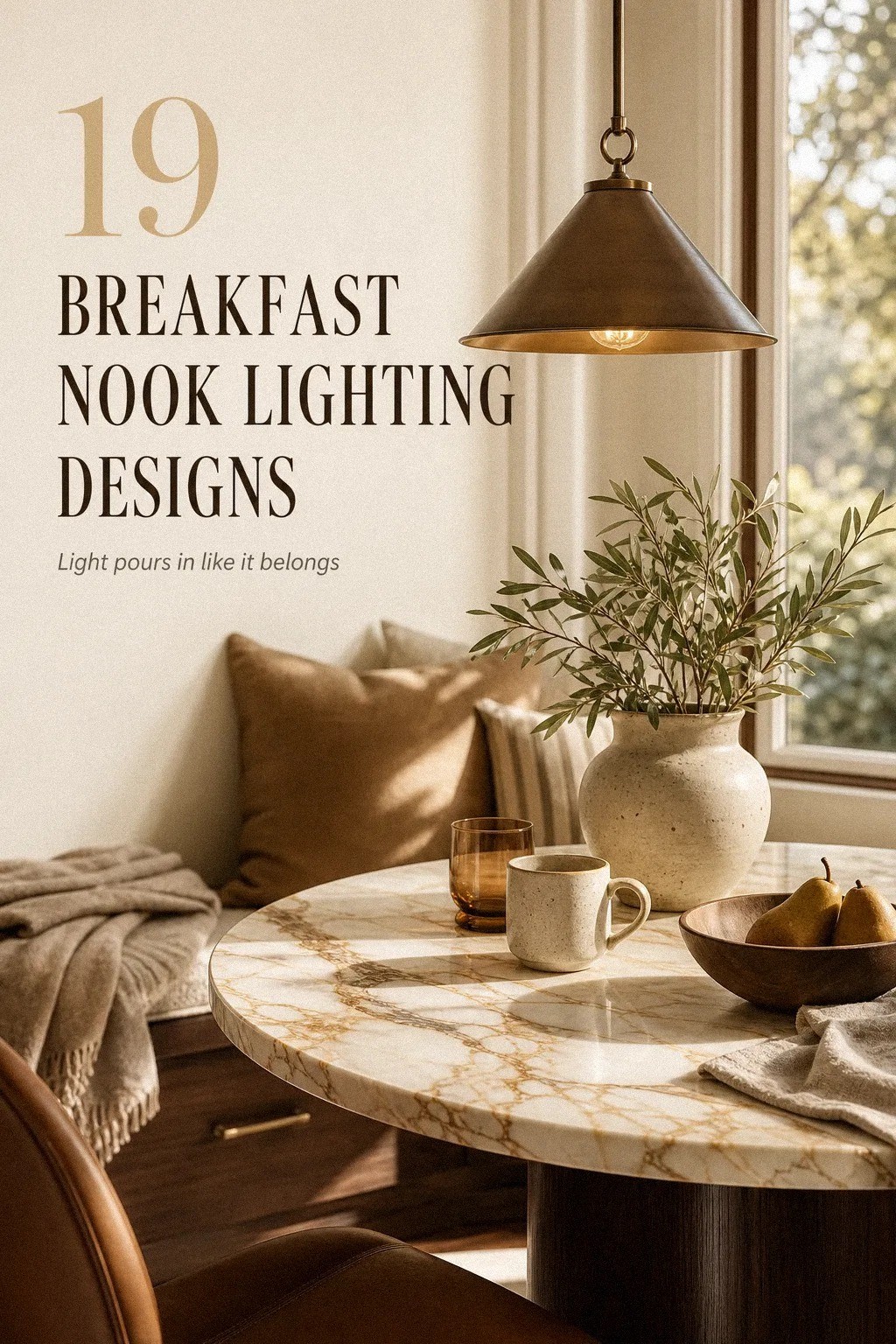
by The short answer: your breakfast nook light should land on the plates, not on your forehead. I rewired mine three times before I got it, and once the pendant dropped to table height and a sconce went soft along the wall, mornings stopped feeling like a scramble. A dimmable bulb at 2700K, a single statement piece overhead, and one wall light behind you is roughly the recipe, and it's a lot less fussy than it sounds.
- ✓ Hang a single statement pendant over the table
- ✓ Drop two pendants instead of one for longer tables
- ✓ Try the Three-Height Light Stack
- Hang a single statement pendant over the table
- Drop two pendants instead of one for longer tables
- Try the Three-Height Light Stack
- Flank the bench with a pair of wall sconces
- Run a slim picture light above the banquette
- Swap the harsh overhead for a soft flush mount
- What if you skipped the ceiling fixture entirely?
- Layer in a rechargeable table lamp for evening dinners
- Build a candle ritual into the nook
- String a micro-light garland along the window frame
- Mount a swing-arm sconce beside the seat
- Apply the Brass + Rattan Rule for material harmony
- Tuck battery puck lights under the bench lip
- Hang a paper lantern at low height for soft diffusion
- Choose bulbs that warm the room, not just the table
- Instead of one big pendant, cluster three small ones
- Add a dimmer and stop fighting the light
- Try the Off-Center Pendant Drop
- Borrow daylight like a light source
1Hang a single statement pendant over the table
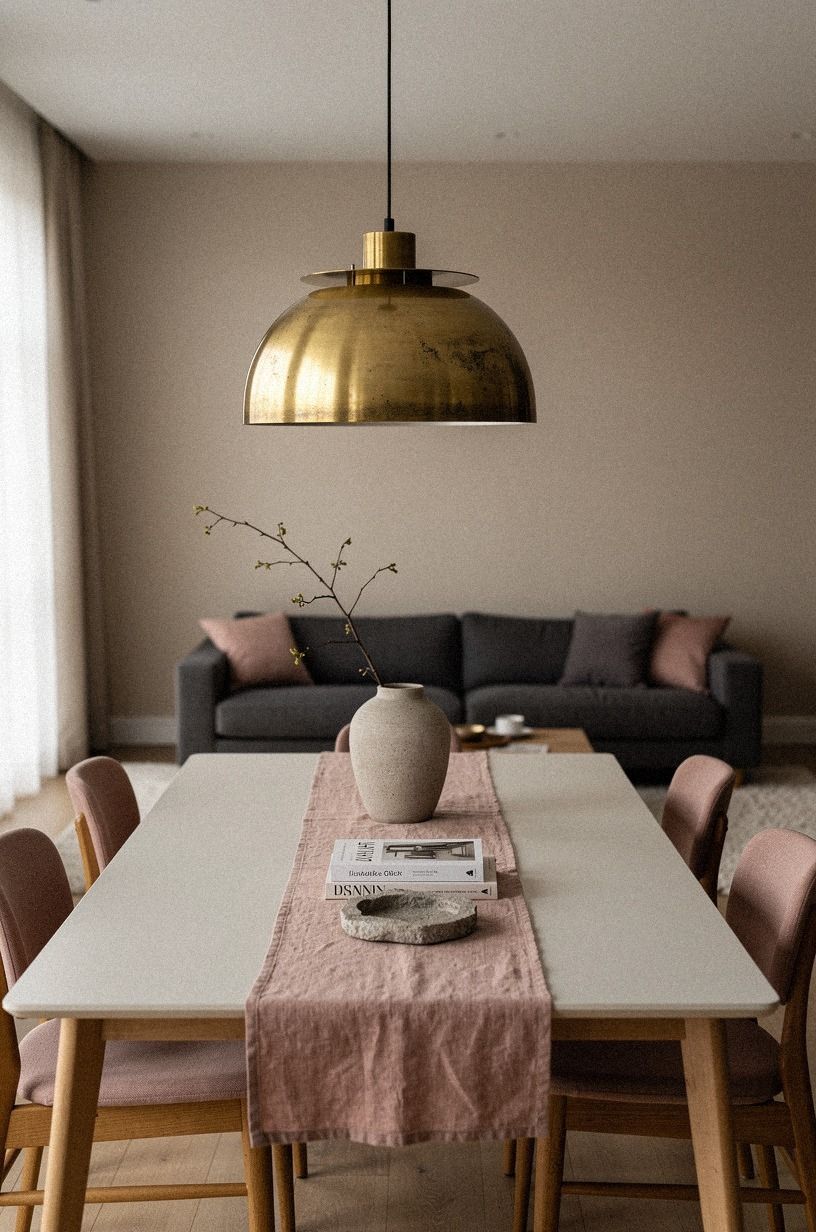
One pendant over the center of your breakfast table is the move ninety percent of the nooks I've styled fall back on. The principle is scale. A small pendant over a big table looks like a button on a coat.
A big pendant in a low-ceiling nook knocks elbows. Measure before you order.
For a typical 36 to 42 inch round table, I aim for a pendant around 12 to 18 inches wide, hung 30 to 34 inches above the tabletop. Anything higher and the light floats. Anything lower and you're ducking over your coffee.
An unlacquered brass shade casts a warm, oxidizing shadow at breakfast, which is exactly the texture you want for a nook with a little morning sun already pouring in. A brass canopy at the ceiling keeps the fixture feeling grounded.
Reclaimed teak on the table or the bench reads beautifully against the warm metal, especially against a dusty rose wall that lets the patina deepen over the season.
And honestly? Skip anything chrome or ultra-modern here.
The pendant should feel like it belongs to the room, not to a catalog. Brass ages into a patina that catches morning light differently every season, and it stays warm even when the bulb is off. You'll thank me!
If you want the table-side details dialed in too, my round vs rectangular breakfast nook table guide walks through which top shape your pendant should land over.
2Drop two pendants instead of one for longer tables
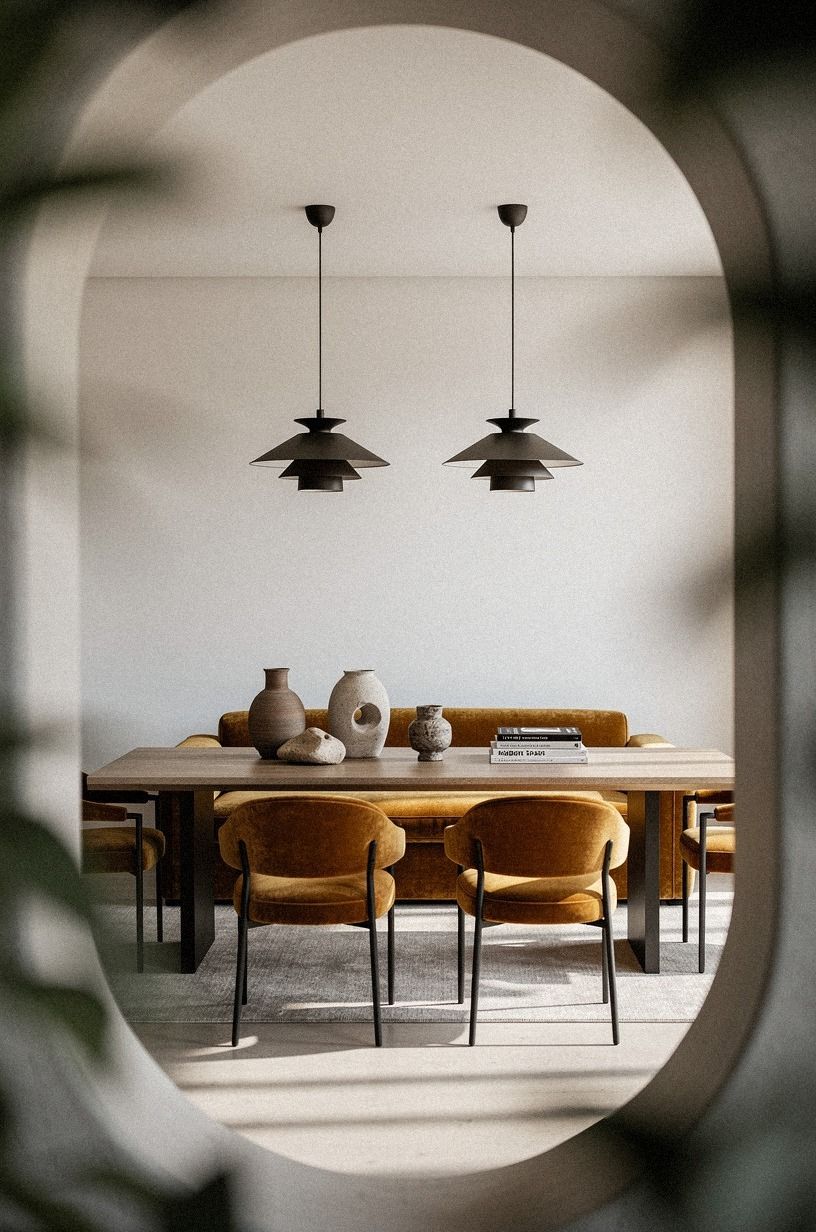
A single pendant over a 60 inch or longer table leaves two empty chairs staring at a dark corner each. Two pendants fix the geometry, but only if you space them correctly. The rule I use is one pendant for every 24 to 28 inches of table length, both fixtures hung at the same height.
For a six foot table, that means two pendants roughly 28 to 32 inches apart, centered on the long axis of the table. The pendants should be smaller than what you'd use solo, around 8 to 12 inches across, so the cluster reads as a rhythm and not as competing jewelry. A pair of deep-pile mohair velvet drum shades in warm white keeps the room feeling soft without going clinical.
The velvet absorbs the bulb just enough that nobody catches a halo on their forehead at 7 a.m., and the camel-and-charcoal palette ages into something collected after one season. Matte black ceiling canopies and blackened walnut tabletop finishes complete the look.
I'd skip the bar-style two-pendant fixture. It looks tidier on paper, but it freezes the geometry.
Two separate pendants on a small bar or two separate junction boxes lets you shift the spacing if you ever swap the table. Real life moves around.
The lighting should too. For a full layout pass, my modern breakfast nook ideas with clean cozy style guide covers how the pendants should relate to the bench underneath them.
3Try the Three-Height Light Stack
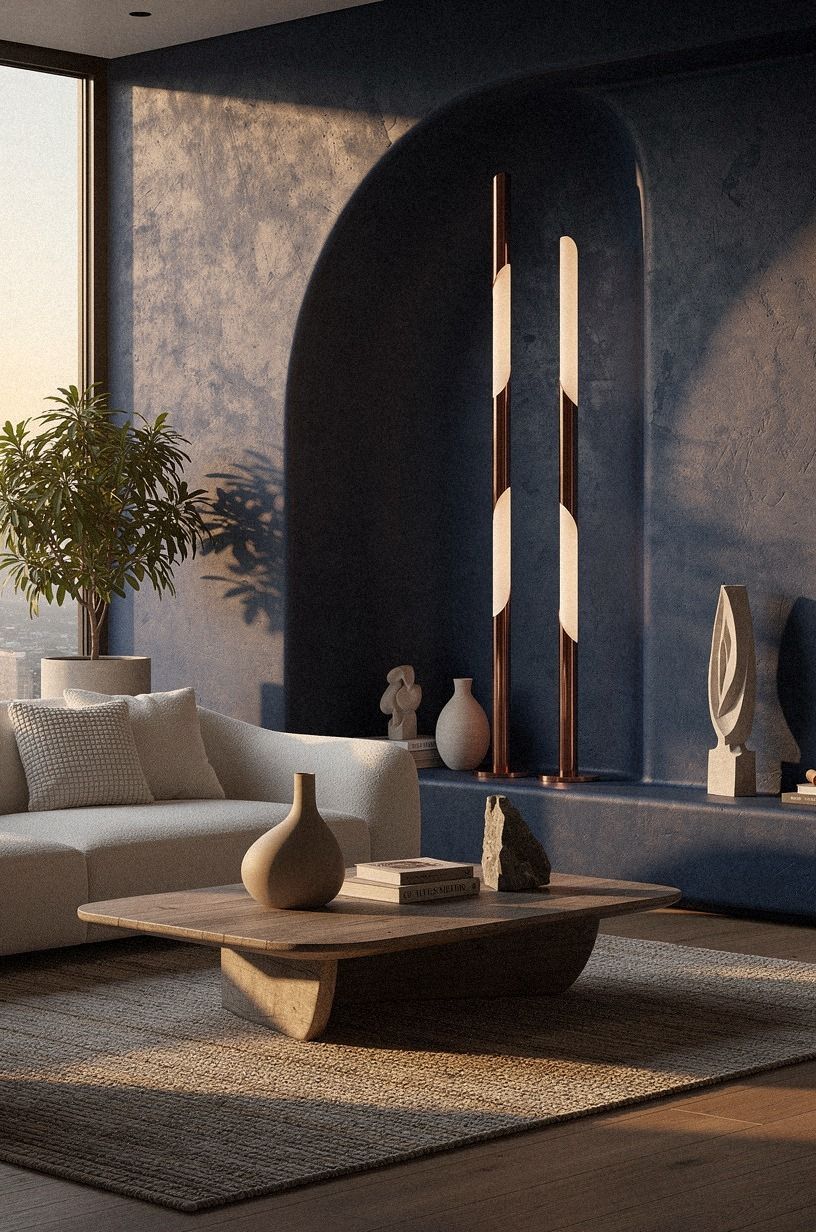
This is my favorite move for a nook that doubles as a homework corner at four in the afternoon. One light source can't do both jobs. You need three, stacked at three different heights, and each one doing a different thing.
The high layer is the ceiling pendant or flush mount, lighting the whole zone against a midnight blue wall finished in hand-applied Venetian plaster that catches the glow and lets it fade into copper and ivory. The mid layer is a wall sconce or picture light at eye level, filling in the side of the face so nobody looks sallow over cereal.
The low layer is a candle, a small table lamp, or a battery puck, glowing at table height and pulling the eye down to the food. When all three are on at 2200 to 2700K, the nook reads as warm and finished. When only one is on, the room always feels underdone, no matter how expensive the fixture was.
I've tested this in five nooks now and the math holds. The most common mistake is going all-in on the ceiling layer and treating the others as decoration.
They're not decoration. They're the difference between a breakfast nook that feels composed and one that genuinely feels like a room you want to sit in.
If your breakfast nook wall is short on sconce options, a slim picture light from an art frame above the bench counts as the mid layer. It's not cheating if it works!
For more sconce placement ideas, small breakfast nook ideas that fit almost anywhere covers the wall-fixture math on tight walls.
4Flank the bench with a pair of wall sconces
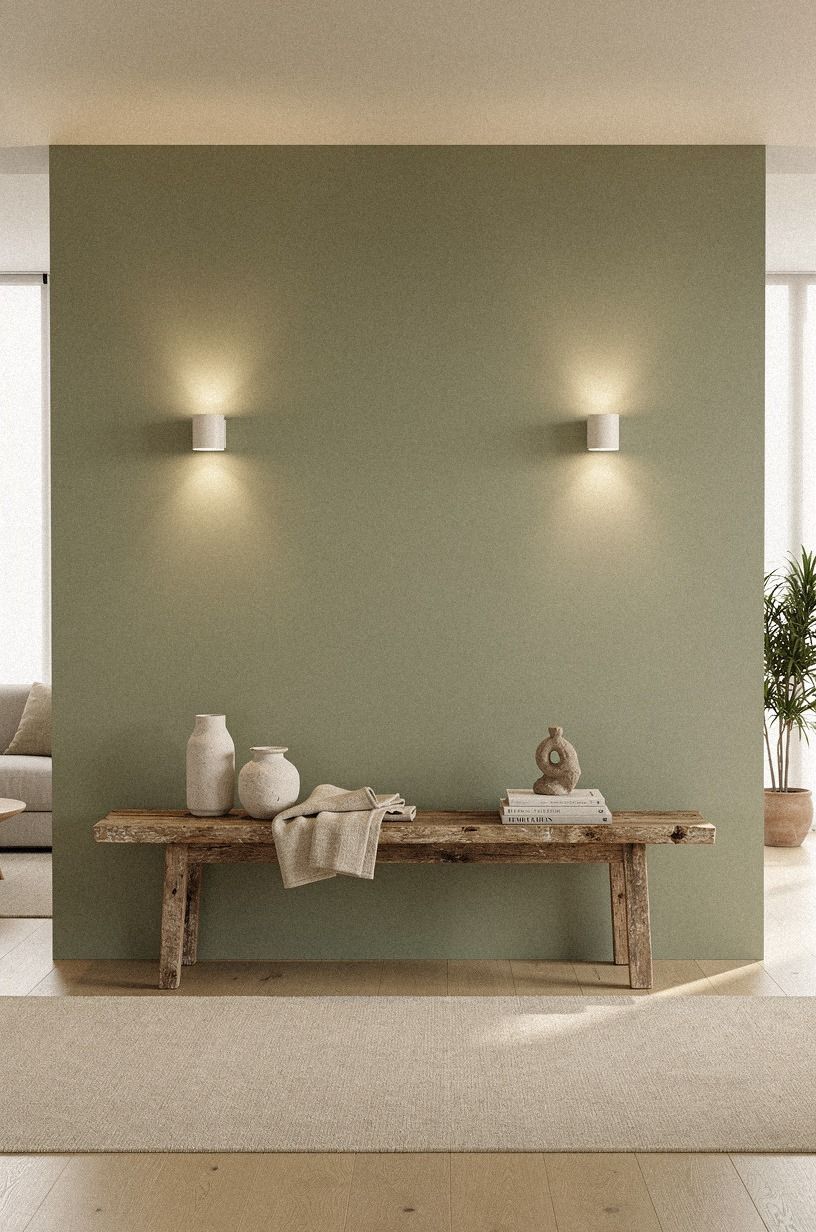
A bench against a wall is begging for a sconce on each side. Reclaimed weathered teak under the seat, a sage green wall behind, and warm cream linen shades on the fixtures do most of the work for free. The sconces just complete the triangle.
5Run a slim picture light above the banquette
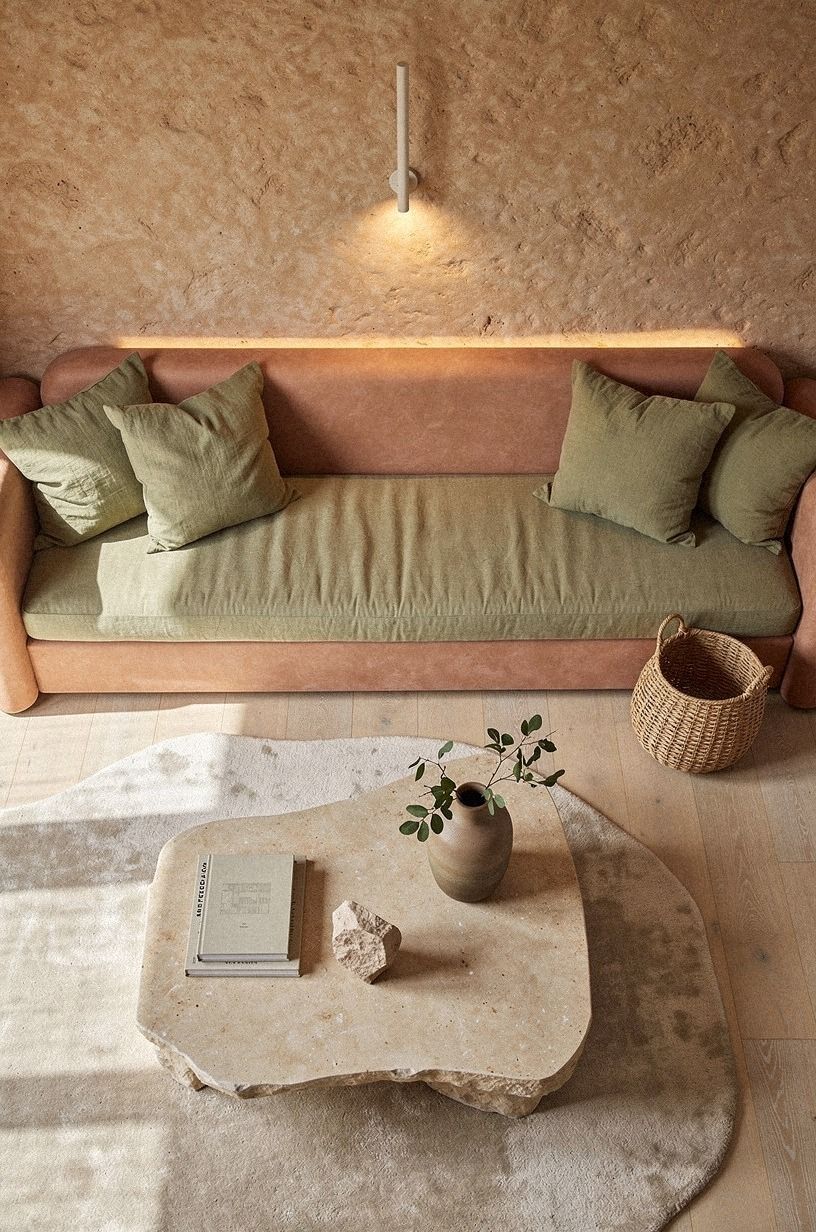
A picture light over the banquette is the move nobody thinks of until they see it. It does three jobs. It lights the art, it lights the people sitting on the bench, and it adds a quiet mid-layer glow that makes the whole nook feel composed.
The principle is size. A picture light should be roughly half to two-thirds the width of the frame it's hanging over.
For a 24 to 36 inch horizontal piece, that means a 12 to 24 inch fixture. Hardwire it if you can, because battery versions run out at the worst moments.
If you go battery, choose one with a USB-C port and a rechargeable cell so you're not throwing AA batteries at it every quarter.
Choose a slim brass picture light with a warm dimmable LED and a washed Belgian linen hood. The light should graze the wall just enough to feel intentional, picking up the terracotta and stone tones behind the nook.
If the picture light is brighter than your pendant, the nook looks like a gallery. The art should be lit to about 1.5x the ambient level, never more. For a breakfast nook wall with one piece you truly love, this single addition can do more than another chair or another pillow.
And if you're weighing cost, my breakfast nook lighting guide overview covers what most homeowners really spend.
6Swap the harsh overhead for a soft flush mount
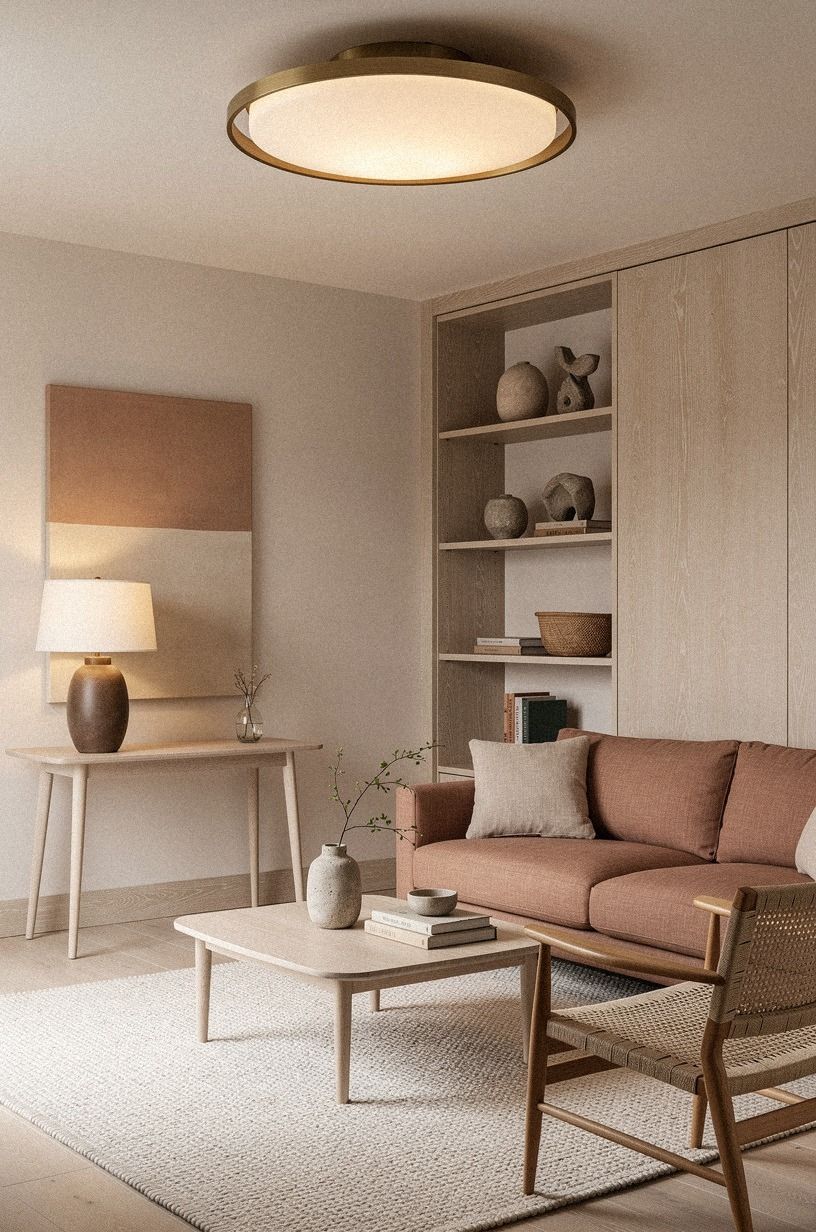
A flush mount is the answer for low ceilings, sloped ceilings, and any nook where a pendant would feel like a wind chime. Pair it with a cerused white oak ceiling plate, an aged brass canopy, and a clay-toned linen drum so the fixture sits inside the room instead of floating above it.
7What if you skipped the ceiling fixture entirely?
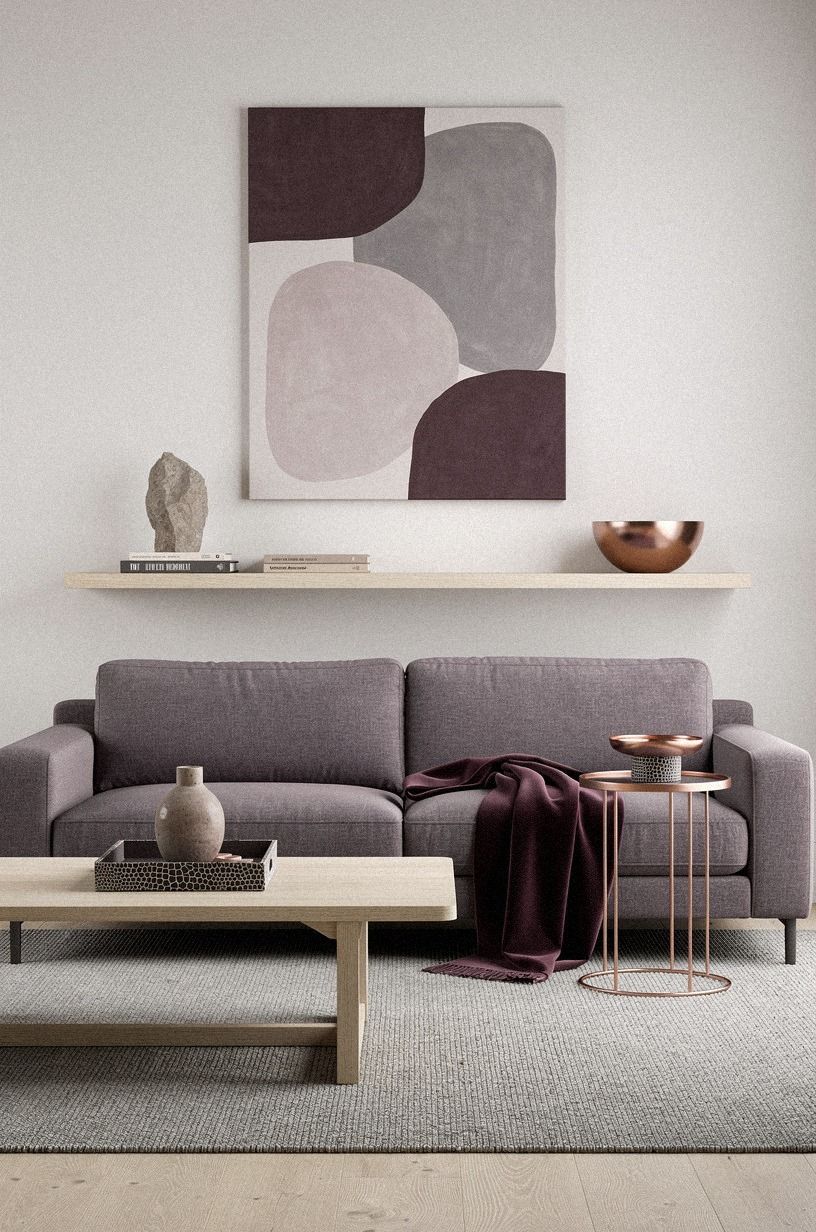
I tried this once on purpose in a nook with a big south-facing window. The pendant came down.
The flush mount never went up. The room was lit by a sconce on the wall, a small table lamp on a sideboard, and whatever the sun was doing that day.
It worked. And then it didn't.
On cloudy mornings, the nook felt underlit. On bright mornings, it felt perfect.
The north-facing bay window of my sister's breakfast nook had the same problem in reverse: great in winter, dead by February at 6:45 a.m. If you're building a nook in a sunroom or under a skylight, the sun is genuinely a better light source than anything you can buy.
The trade-off is consistency. The sconce and the table lamp have to be strong enough to carry the room on a January morning at 6:45 a.m., and most aren't.
I'd skip the no-ceiling-light move unless you have at least two reliable side lights and a window that genuinely pours in for at least four hours a day. For most breakfast nooks, a low-scale flush mount is a safer bet.
A pair of shagreen-trimmed sconces or a small shagreen tray on the sideboard keeps a hint of texture even when the fixtures are stripped back, and plum walls with rose gold switch plates do the rest. But for a sun-drenched breakfast nook wall with a big south or west exposure, this is a beautiful experiment.
The room feels softer, the ceiling stays clean, and the morning does half the work for free. And if your nook opens to the outside, outdoor breakfast nook ideas for al fresco coffee shows how this same ceiling-free approach works on a patio.
8Layer in a rechargeable table lamp for evening dinners
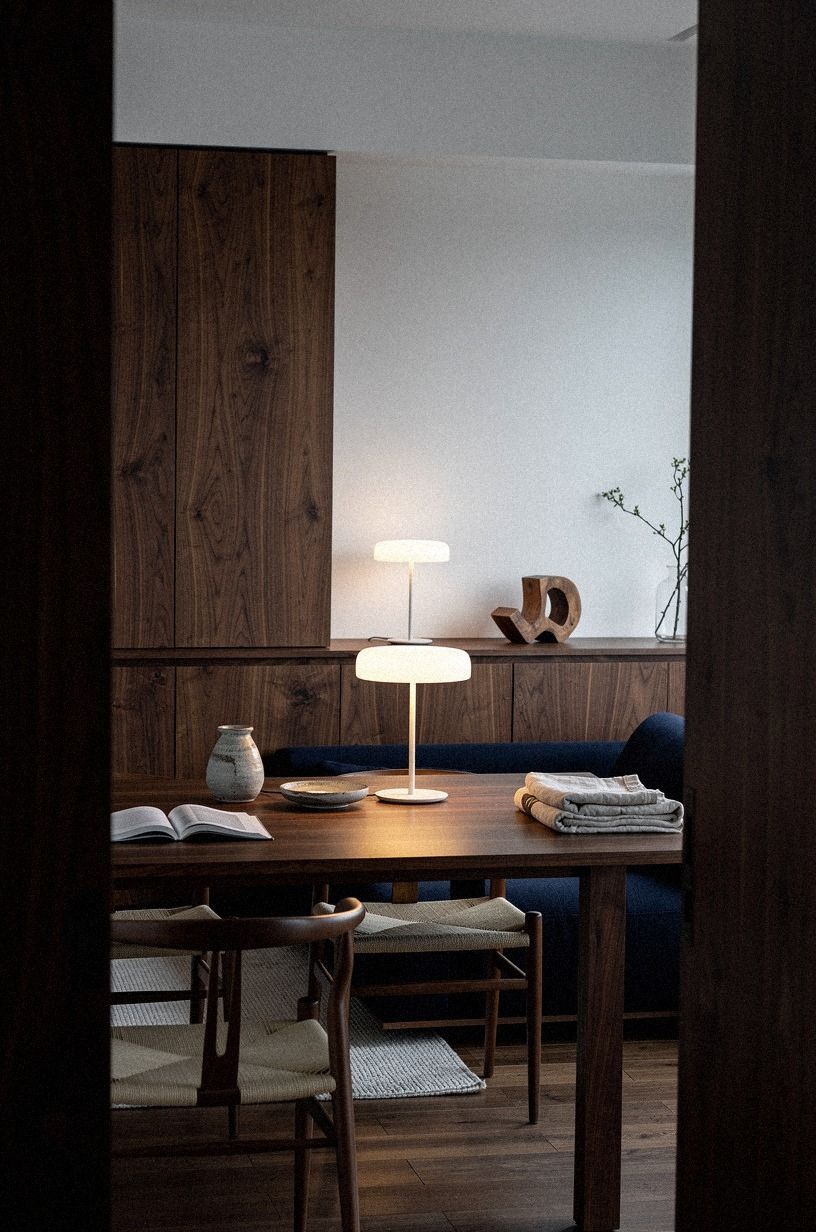
Pendant lights don't dim the room. They dim the table.
The rest of the nook still feels like a cafeteria. A rechargeable table lamp on a sideboard or a small shelf fills the corners and turns the nook into a proper evening room.
The key is dimmability. A lamp with a built-in three-stage dimmer or a smart bulb that drops to five percent is the one. You want the option of a glow that doesn't compete with the candle.
A small table lamp with a book-matched walnut base and a linen shade is the look. It's quiet, it doesn't draw attention, and the warm light bounces off the ceiling for a second layer of ambient glow.
Book-matched walnut reads warm against navy or cream walls and ages gracefully, especially when paired with a small white stoneware cup on the same sideboard.
Rechargeable lamps used to be a compromise. The new ones hold a charge for eight to twelve hours on the low setting, which is more than enough for dinner.
They also move with you, which means you can drag the lamp to the kitchen during a dinner party and back to the nook the next morning. If your nook is also your dining area inspo center after dark, the lamp is the difference between functional and atmospheric.
For layout ideas that hold the lamp at the right height, my mid century modern breakfast nook retro guide is the closest companion.
9Build a candle ritual into the nook
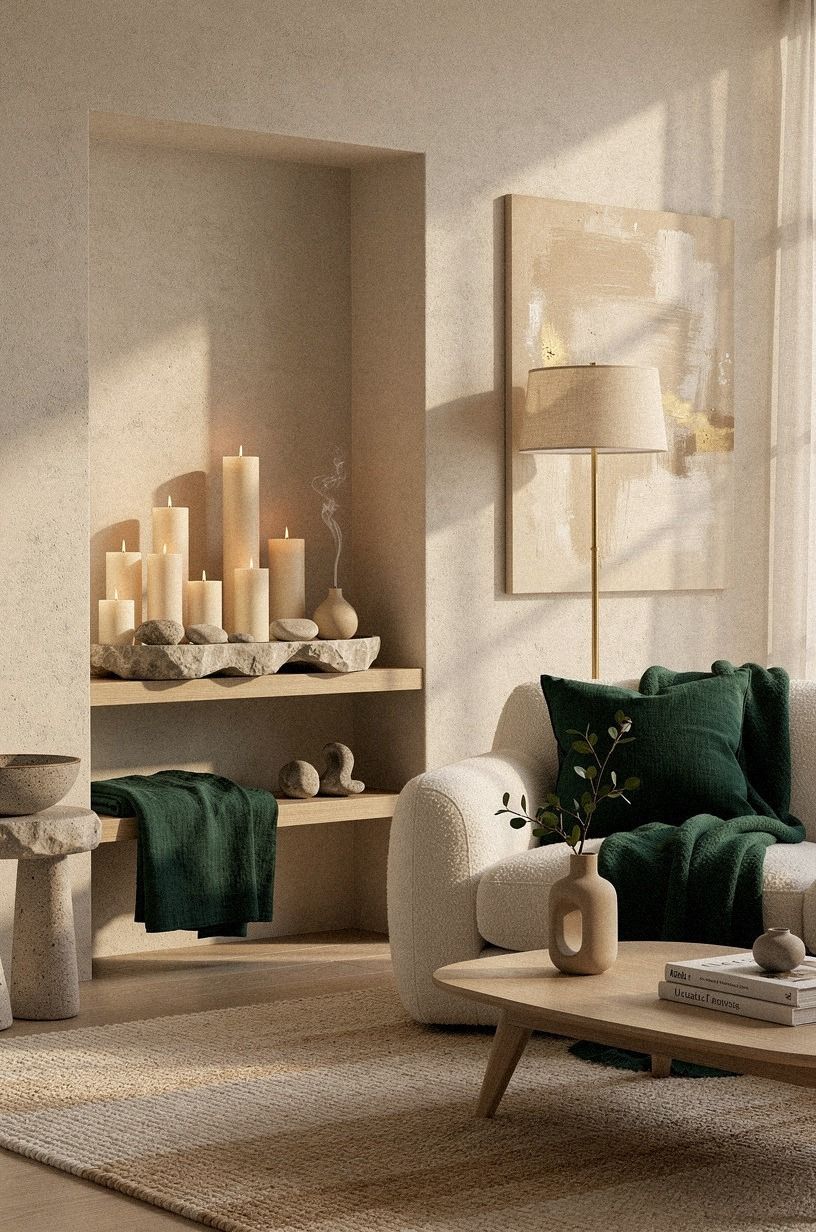
Candles are the cheapest way to make a breakfast nook feel like a room you'd see in a Nancy Meyers kitchen. Cluster three tapers on a brass tray, set them against an organic bouclé cushion or an emerald velvet pillow, and the nook goes from functional to heirloom in five minutes.
10String a micro-light garland along the window frame
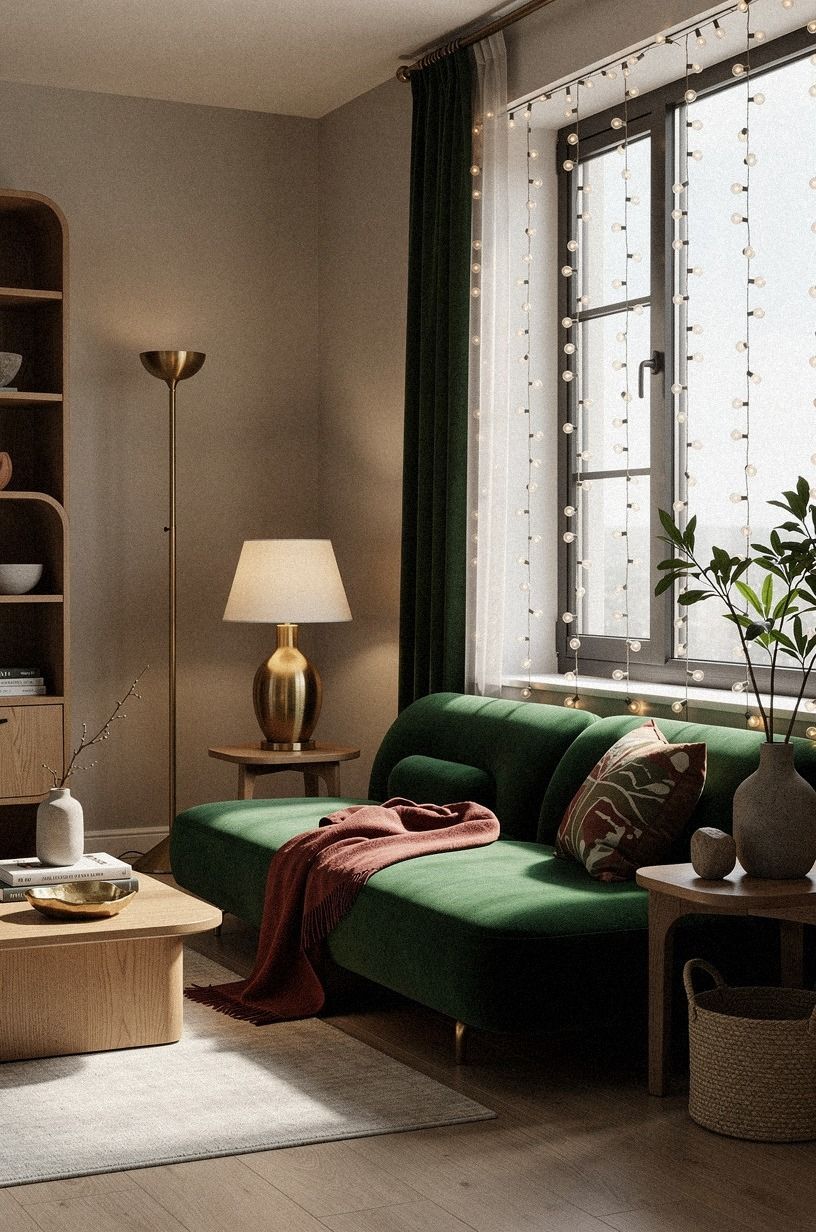
A micro-light garland along the inside edge of the window frame turns the window into the light source. The bulbs should be tiny, on a dark green or brown wire, and spaced about three inches apart so the line reads as a constellation and not as a string of cheer.
The garland is fixed with small clear adhesive hooks every two feet or so, never with nails. The wire drapes between hooks and the eye reads the lights, not the wire. The light should be warm white at 2200 to 2500K.
Cool white here turns the morning into an airport. Brown cloth-covered wire disappears against most wood trim.
Unlacquered brass hooks develop a patina over the seasons and read as a designed detail against a forest green wall or a rust-toned trim, tying back to the natural oak frame around the window.
This is the move for a nook whose window is the whole reason the nook exists. The garland frames the view instead of competing with it.
On dark mornings, the garland carries the room while the sun catches up. On summer evenings, the garland stays on long after sunset, and the window turns into the coziest thing in the house.
If your nook has a bay window, run the garland along the inside of the bay curve, not across the front. The arc frames the architecture and the eye follows the line naturally.
For renters, the adhesive hooks come off cleanly with a hair dryer and a plastic scraper. No damage, no lost deposit.
11Mount a swing-arm sconce beside the seat
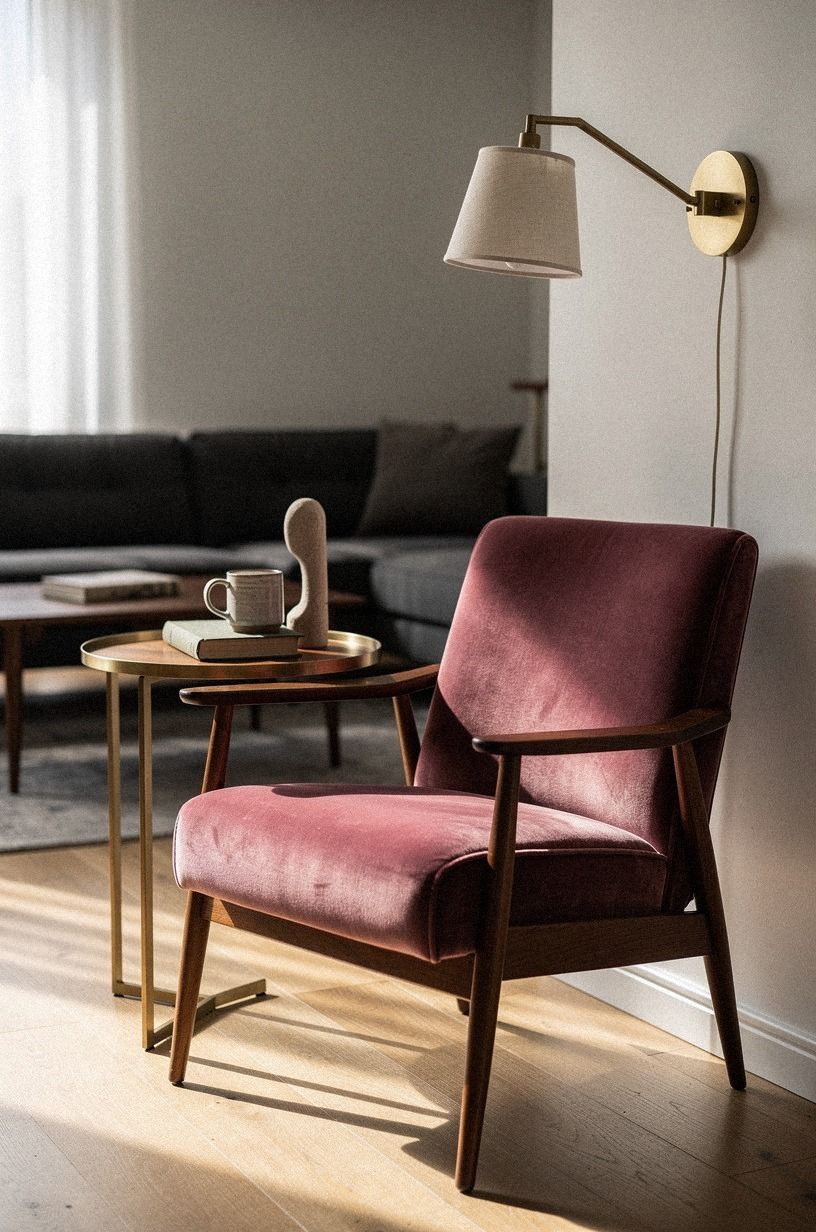
A swing-arm sconce is the breakfast nook move that doubles as a reading light. The arm pulls out when you're reading a cookbook or scrolling on a tablet, and pushes back against the wall when you want the room to look clean. It's the most useful fixture in the nook and the easiest to overlook.
Mount the sconce about 18 to 24 inches above the bench seat, on the wall beside the head of the bench. The arm should reach across your shoulder, not over your head.
The shade should be metal, directional, and aimable. A matte black or aged brass swing-arm with an on-shade dimmer is the move.
The dimmer means you can drop the light to candle level when the candle is going, or bring it up to full when you're sorting mail. A deep-pile mohair velvet cushion in dusty rose or charcoal grounds the seat under the swing-arm and lets the warm brass read even softer.
Schoolhouse Electric and Rejuvenation make excellent swing-arms in the $90 to $200 range if you want to splurge.
This is also the move for a nook that's tight on space. A swing-arm replaces a floor lamp, which would take up floor space the bench already wants.
The arm disappears when you don't need it. The light appears when you do.
For a small breakfast nook that needs to do three jobs, the swing-arm is the one fixture that earns its place every single day! For more small-room planning, my small breakfast nook ideas that fit almost anywhere guide shows how a swing-arm reads in tighter layouts.
12Apply the Brass + Rattan Rule for material harmony
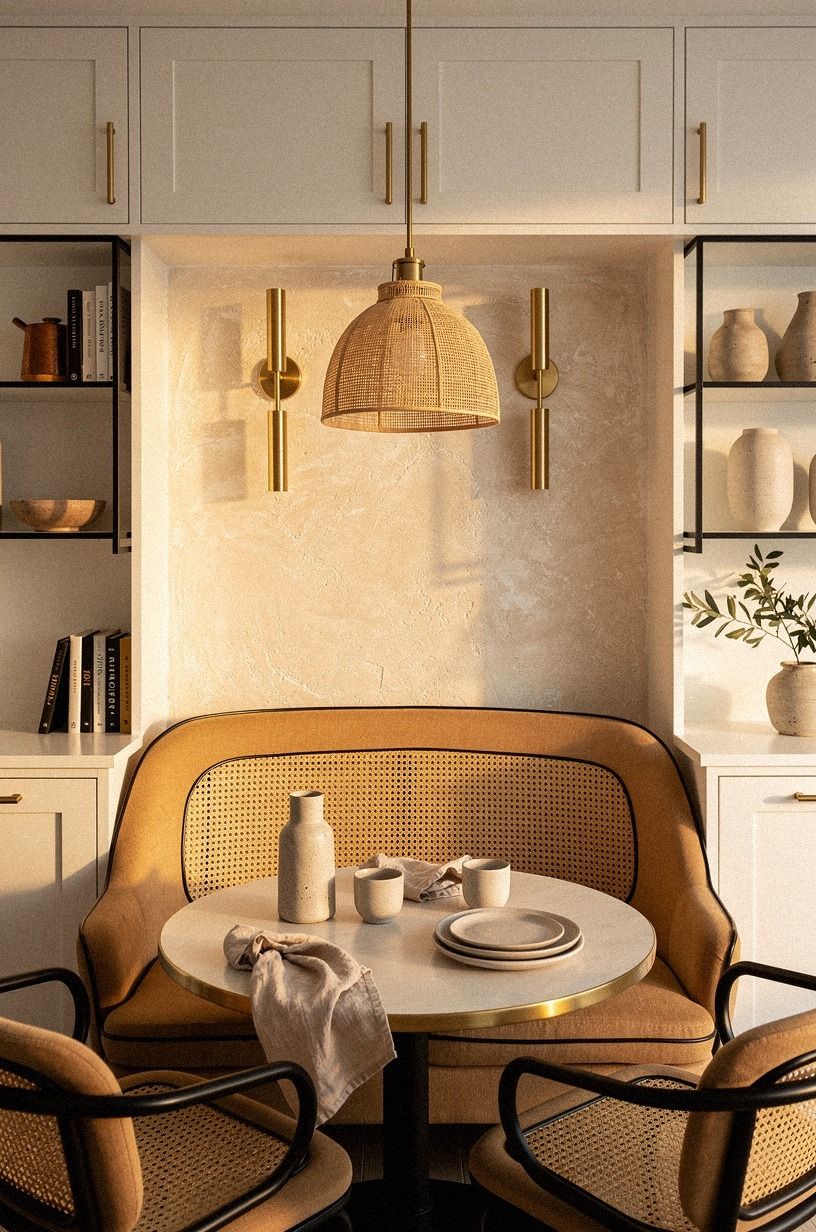
The Brass + Rattan Rule is a small constraint that keeps a nook from looking like a lighting showroom. Pick two materials for your fixtures, max three, and make sure they appear in at least two fixtures each.
The pendant is brass. The sconce is brass.
The candleholder is rattan. The mirror frame is rattan.
Now the room reads as one decision, even though no two fixtures match.
Unlacquered brass is the move because it ages. By month six, your brass will patina differently than your friend's brass.
By year two, the patina is the point. Polished brass stays shiny forever and starts to read as new construction.
The unlacquered version gets better with coffee spills and morning humidity. Hand-applied Venetian plaster in warm white does the same trick on the walls.
It catches morning light differently every hour, deepens into camel and bone as the sun moves, and lets the fixtures feel intentional without anyone having to explain the rule. Rattan does the same thing on a different timeline. It dries, it softens, it picks up the warm tones of the room around it.
Bone ceramic and travertine are good quiet thirds if you want to add depth without competing with the brass.
But here's where it falls apart. Mixing brass with polished chrome, or rattan with cold ceramic, sends the room back to the showroom stage.
Pick two materials. Commit.
Let the room age into the decision. I'd skip chrome entirely. I'd skip matte black unless the rest of the kitchen is matte black. I'd skip white fixtures unless the room is genuinely bright and you want the fixtures to disappear.
Brass and rattan, or brass and linen, or wood and ceramic. Two materials, max three, and the nook will look composed without ever explaining why.
13Tuck battery puck lights under the bench lip
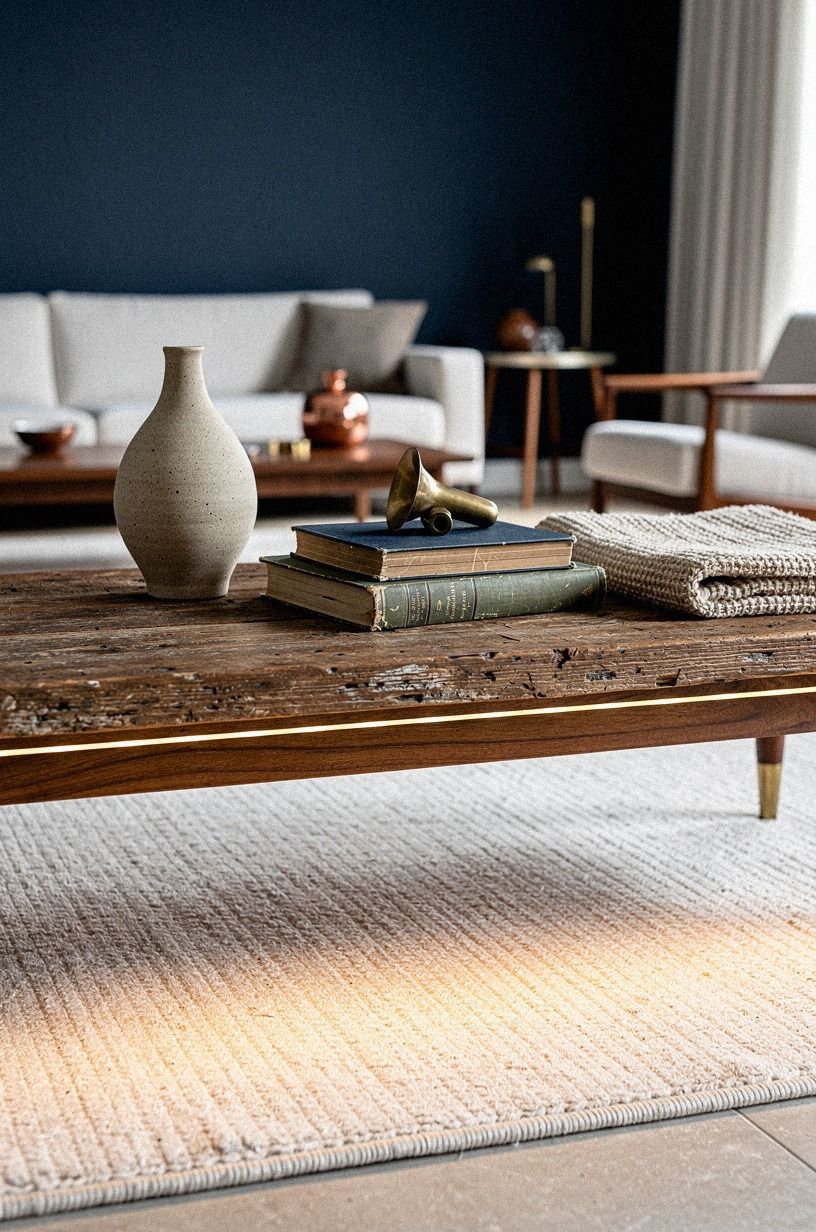
Battery puck lights under the front lip of the bench are the cheapest drama move in this whole list. They wash the floor with warm light, the bench appears to float, and the nook reads as designed instead of assembled.
Nobody sees the pucks. Everybody sees the glow.
The pucks should be warm white at 2700K, motion-activated if possible, and spaced about every 18 to 24 inches along the bench front. Mount them with the included adhesive pads, not with screws, so the bench stays intact.
The batteries last two to four months at two hours a day, which is more than reasonable for the cost. A frosted lens softens the light pool so the floor doesn't read as runway lit.
This is the move that makes a built-in bench feel like a built-in bench. A bench without underlighting reads as a piece of furniture pushed against a wall.
A bench with underlighting reads as architecture. When the bench is reclaimed weathered teak, the copper glow bouncing off the underside of the seat picks up the patina and warms it another few degrees against a midnight blue wall.
If you're working in a breakfast nook wall where the bench runs the full length of the room, run the pucks the full length. If the bench is short, three pucks is enough.
The drama is in the glow, not the count. For more built-in bench planning, my modern breakfast nook ideas with clean cozy style guide covers the architecture underneath.
14Hang a paper lantern at low height for soft diffusion
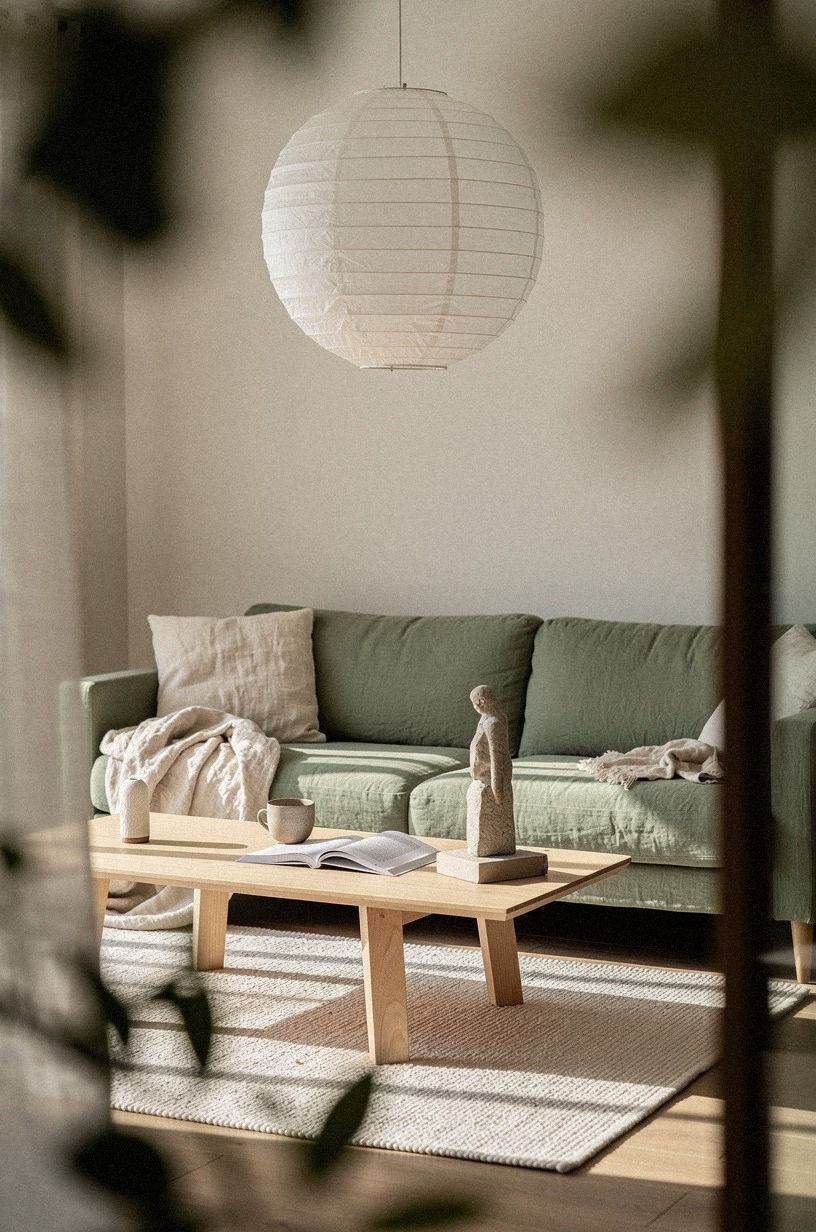
A paper lantern hung lower than you'd expect is the move for a nook with strong morning sun. The paper filters the light into a glow that doesn't fight the daylight. It also looks beautiful against wood, plaster, and stone, which are the materials most nooks already lean on.
The lantern should be rice paper or washed Belgian linen, between 14 and 22 inches across, hung about 26 to 30 inches above the table. Lower than that and you're moving it every time someone sits down.
Higher than that and it stops feeling like a low-hanging moment. Brass ceiling hooks or matte black cord grips read as designed details.
A natural oak or ash lantern doubles as a third material against the brass + rattan rule, while a sage green wall behind the nook lets the linen diffuse the light without competing.
The shape matters. A round lantern reads as soft and quiet. A drum lantern reads as modern.
An oblong or oval lantern reads as sculptural and a little playful. For most breakfast nooks, round is the safe move.
For a modern breakfast nook that leans architectural, drum is the call.
Paper lanterns are also the move if you want to layer a warm, soft mid-light without adding more metal to the room. The paper is a texture, not a material statement.
It disappears during the day and glows at night. For a nook where the pendant is the star, the lantern adds the supporting cast without competing.
15Choose bulbs that warm the room, not just the table
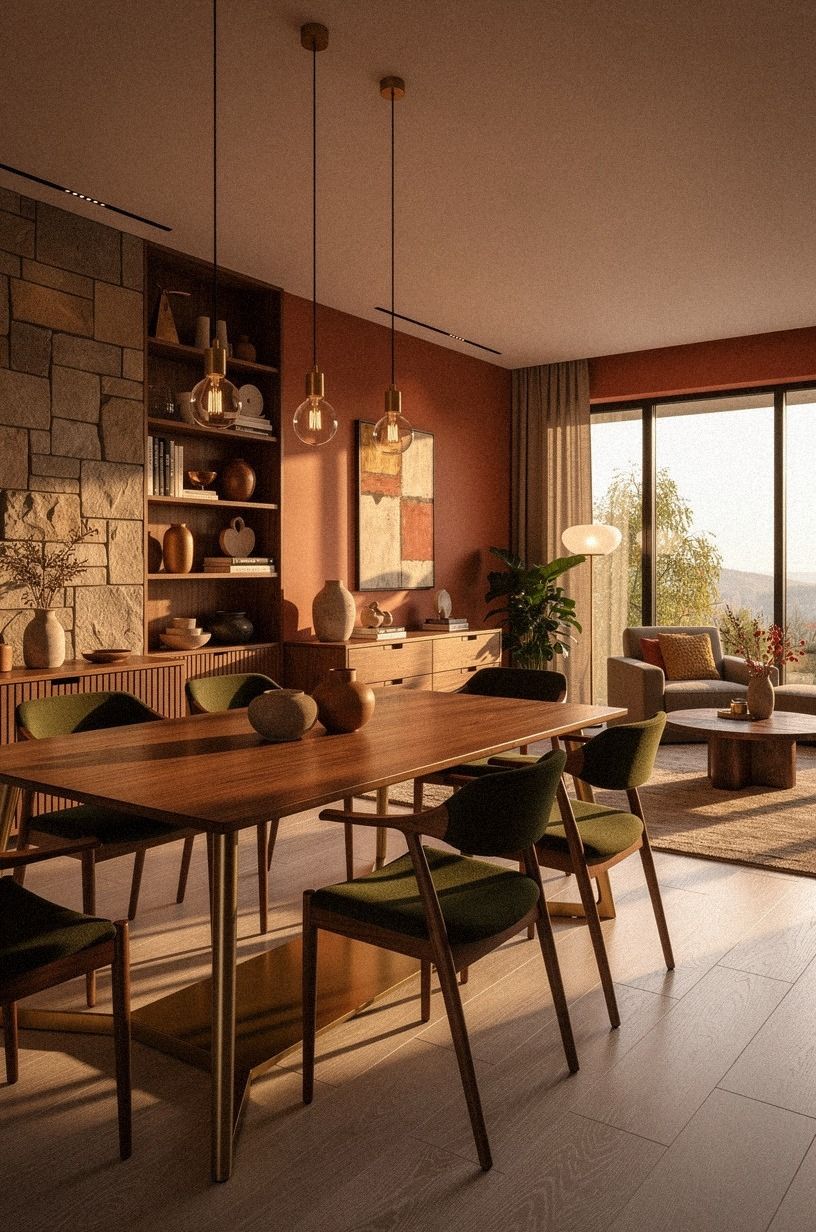
A pendant with the wrong bulb can undo every other good decision in the nook. The bulb is the actual light source. The fixture is just the holder.
For a breakfast nook, you want 2700K to 2400K, warm white, and a Color Rendering Index (CRI) of 90 or above. CRI is the spec that determines whether the light makes food look like food or like something under a convenience store. Low CRI bulbs make eggs look gray.
High CRI bulbs make eggs look golden, which is the whole point of breakfast. Philips Warm Glow and Cree Soft White are reliable mid-range picks at $4 to $8 per bulb.
Brightness is harder. A 60 watt equivalent (around 800 lumens) is enough for a small nook with one pendant.
A 100 watt equivalent (around 1600 lumens) is right for a nook with two pendants or a larger table. Always dimmable.
Always warm. The bulb is not the place to save money.
And here's the test nobody tells you about. Turn the bulb on at noon.
If it reads as yellow against the daylight, it's too warm. If it reads as white, it's right.
If it reads as blue, it's too cool. For morning light, you want bulbs that match the sun when the sun is at 7 a.m., which is warm but not orange.
Against a terracotta or olive-painted wall, the same 2700K bulb reads a few shades warmer than it does against bone, and the room agrees with the morning.
16Instead of one big pendant, cluster three small ones
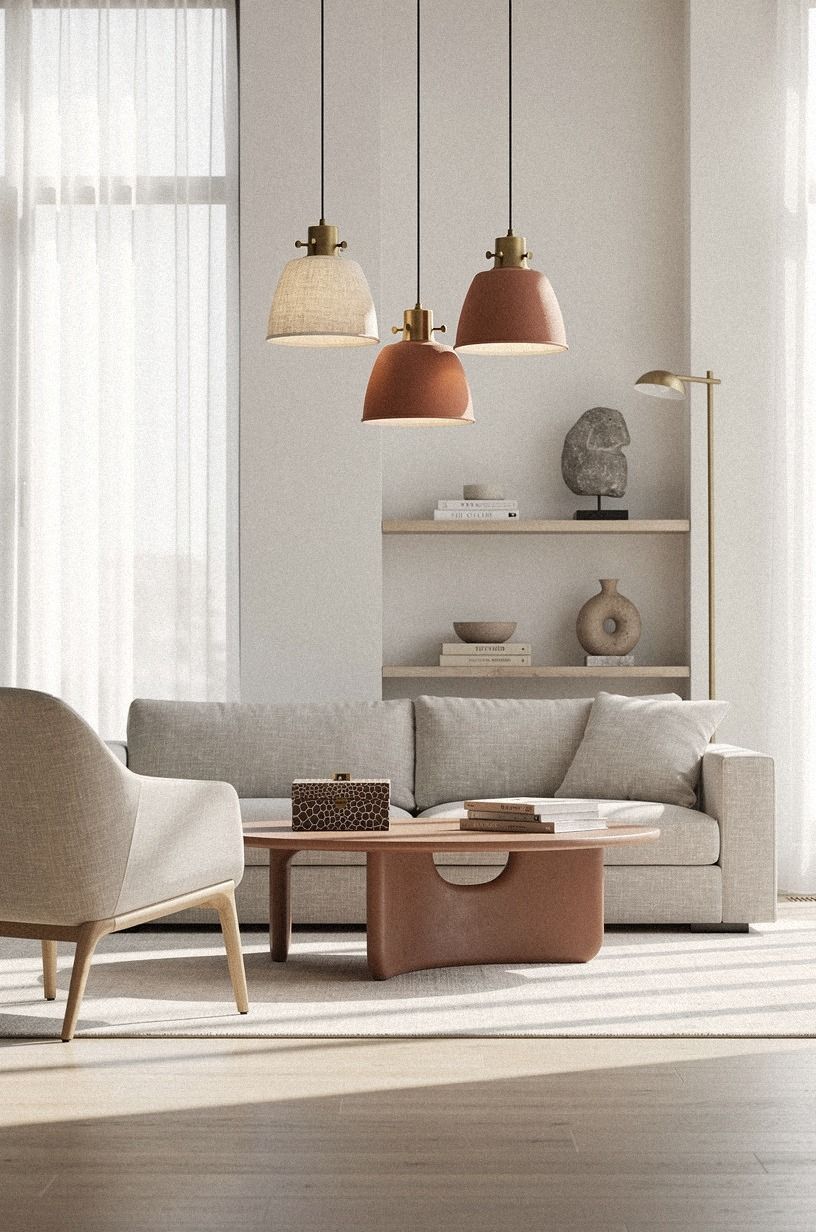
Clustering three smaller pendants reads as softer and more collected than one big statement piece. The cluster fills the visual space of the ceiling without dropping the fixture so low that you have to move it every time you set the table.
The three pendants should be identical in material but different in height. Hang one about 28 inches above the table, one at 32 inches, one at 36 inches.
The staggered heights create a ceiling that feels hand-built. Identical heights look like a showroom.
Staggered heights look like a decision.
A cluster of three small linen drum pendants in ivory or bone is the move for a nook that wants to feel collected and warm. The drum shape keeps the bulbs diffuse.
The linen keeps the room from going bright. The three-of-three rhythm gives the eye a place to land without overwhelming the table. Aged brass canopies above each drum tie the cluster back to the rest of your fixtures.
A shagreen-wrapped ceiling canopy on one drum picks up the same clay-toned texture against a dusty linen palette.
I'd skip the cluster if your ceiling is below eight feet. The pendants need room to breathe.
For ceilings at nine feet and up, the cluster reads beautifully. For lower ceilings, a single pendant or a flush mount is the safer call.
If you're after cozy modern house aesthetic without going sterile, the three-pendant cluster is the move.
17Add a dimmer and stop fighting the light
The single biggest upgrade you can make to a breakfast nook is a dimmer. Not a smart bulb.
A real dimmer on the wall. The room goes from one room to four rooms with the same fixtures.
A pendant at one hundred percent is the homework, sorting mail, and dinner party setting. At sixty percent, it's the family dinner and the weekend breakfast.
At thirty percent, it's the slow Sunday and the morning coffee. At ten percent, it's the wine-and-talk setting where the candles take over.
Same nook. Four rooms.
For a pendant, a Lutron LED-compatible dimmer is the safe choice. Cheap dimmers hum with LED bulbs and the hum will drive you quietly insane by week two.
Spend the extra twenty dollars on a dimmer that's rated for LEDs and you won't think about it again. Leviton and Lutron both make dependable wall dimmers in the $20 to $40 range that work with dimmable LEDs across most brands. A book-matched walnut switch plate beside the nook hides the dimmer inside the room's material story instead of treating it as a tech afterthought, especially against plum walls and rose gold picture rails.
If you can't hardwire a dimmer, smart bulbs with a real wall-mounted scene controller do the same job. The Philips Hue dimmer switch mounts with adhesive and looks like a regular switch.
The smart bulb dims smoothly. The nook becomes four rooms anyway.
The principle is the same. The light should match the moment, not the time of day.
18Try the Off-Center Pendant Drop
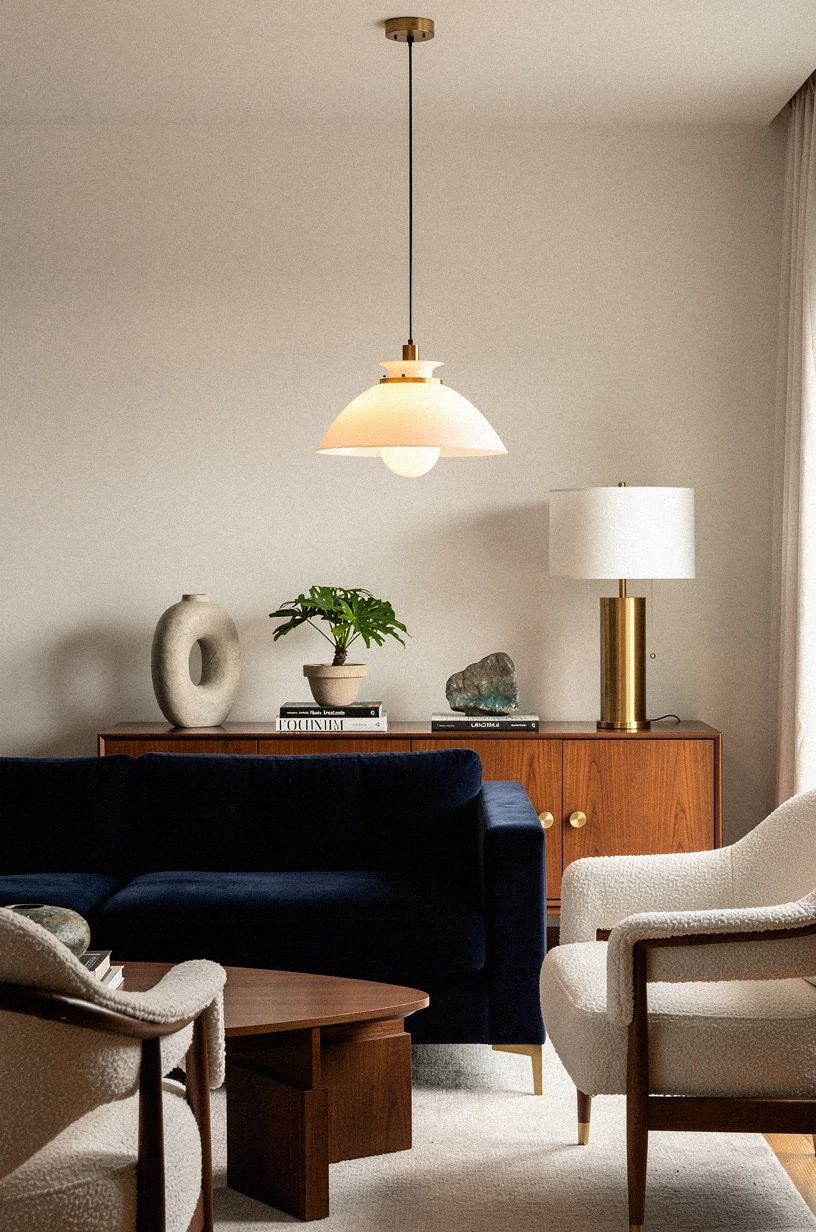
Most people hang a pendant over the dead center of the table. Then they spend six months feeling like something is slightly off about the nook. The off-center principle fixes this in fifteen minutes.
Hang the pendant over the visual center of the bench side, not the table center. So if the bench is against the wall and the chairs are on the open side, the pendant hangs about two-thirds of the way across the table, closer to the bench.
The bench side of the table is the side people look at. The chair side is the side people look from.
Lighting the bench side lights the people. Lighting the table center lights the cereal bowls.
This is also the move if your nook has art on the wall behind the bench. Hang the pendant in line with the art, not in line with the table.
The art, the bench, and the pendant form a triangle, and the nook reads as designed in a way you can't quite put your finger on. The triangle is what your eye notices. An organic bouclé cushion in navy or cream on the bench under the off-center pendant keeps the eye loop on the bench side instead of drifting back to the center.
I've done this in three nooks now and the effect is the same every time. The room feels more composed. The bench feels like the focal point.
The chairs feel like they belong to the bench instead of floating around the table. The pendant position is doing half the design work for free.
19Borrow daylight like a light source
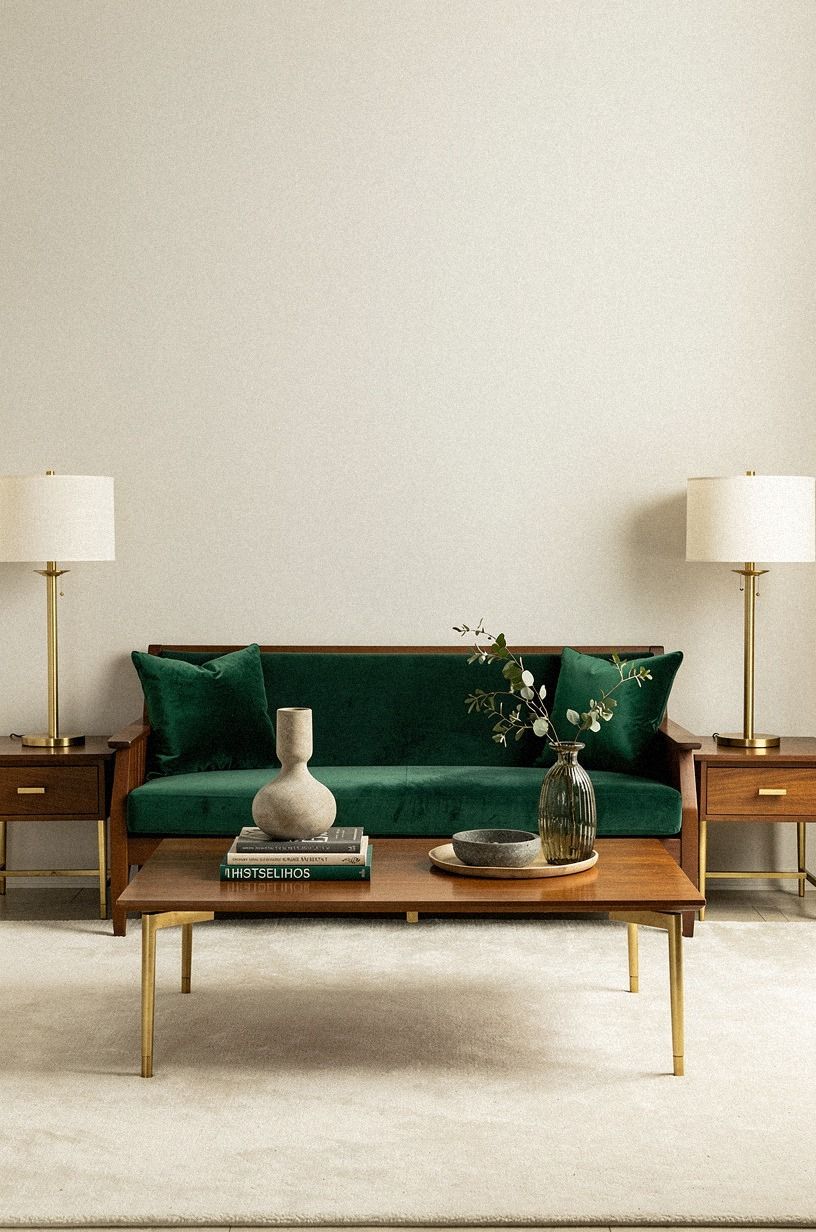
The last move is the move that costs nothing and changes everything. Treat the morning sun as a light source in the room.
Open the blinds before you set the table. Pull the chair toward the sunniest spot instead of away from it. Put the coffee where the light lands, not where the table feels symmetric.
This is partly about the nook and partly about how you use it. The light in your breakfast nook moves across the room between 6 a.m. and 10 a.m.
The best seat changes with the hour. By 9 a.m., the bench corner that was dark at 7 a.m. is the brightest spot in the room.
If you build your morning around the actual light, the nook becomes a different room every hour.
If your nook has a north-facing window, the light is cooler and steadier. Pick finishes that warm up against cool daylight.
Unlacquered brass, walnut, and emerald velvet all read warmer in north light than they do in south light, and the brass develops its patina faster where the sun never quite reaches. The room can lean cool and still feel cozy.
If your nook has a south or west exposure, the light is warm and aggressive. Pick finishes that hold their own against it.
Cerused oak, bone ceramic, and matte stone all soften the strong sun instead of competing with it. Benjamin Moore White Dove OC-17 is the wall color that flatters both exposures.
The daylight is free. The daylight is also the best light source you'll ever have.
The fixtures in the room are the support cast. The sun is the lead.
Design the nook so the lead has somewhere good to land.
What a Breakfast Nook Lighting Plan Actually Costs
Most homeowners I work with don't need a full fixture swap. They need one pendant, one sconce, and one dimmer. Here's roughly what each tier runs in the US, based on what I've watched friends and clients spend over the past few years:
The free tier is real too. Candles, repositioning an existing sconce, and swapping bulbs for 2700K all change the room for under forty dollars. Add a smart dimmer app and you're under fifty.
Start there. You can always add the pendant later. You can't un-spend a thousand dollars on a fixture that fights the nook. A few IKEA basics to anchor the budget tier: the HEMNES bench in white stain, the SINNERLIG pendant in bamboo, and the TÄRNABY table lamp in brass finish.
Why the Best Breakfast Nooks Light the People, Not Just the Plates
Most breakfast nook lighting plans focus on the table. Bright pendant.
Big spread. Done. The problem is that breakfast isn't really about the plates.
It's about who's sitting in the chairs at 7:15 a.m. before anyone has said anything real yet. And honestly?
That's the moment worth designing for.
I've styled breakfast nooks for clients and for my own home for about twelve years now, and the ones that feel right in person always share one decision. The light is on the people, not on the food. A sconce behind the bench lights the side of the face that the pendant doesn't reach.
A picture light grazes the wall behind you so the room has a soft mid-layer. A candle on the table pulls the eye down to the hands holding the coffee.
Three layers, three heights, and the breakfast nook stops feeling like a cafeteria and starts feeling like a room you'd sit in even when no one is eating.
The mistake I see most often is the homeowner who falls in love with a pendant and treats everything else as an afterthought. The pendant is the star.
The sconce is the supporting cast. The candle is the costume designer.
You need all three to make the show work. The brass and rattan rule helps here too. Two materials, repeated across fixtures, ties the room together without making it feel matchy.
Unlacquered brass ages into a patina that catches morning light differently every season. Rattan dries into a softer warmth that grounds the brass. Together they make the nook feel like it's been there for years.
For families, the same three-layer approach works around a kitchen island or a homework corner. The math is the same.
The breakfast is just the easiest place to start. If you're planning a full dining area inspo around the nook, keep the three-layer rule and the brass + rattan rule together.
They'll hold the room together even as you swap chairs, change the rug, or repaint the wall.
The Questions I Get Asked Most
What is the best breakfast nook lighting for a small space?
A single low-hung pendant plus one wall sconce is the cleanest move. For a 36 inch table, an unlacquered brass pendant at 30 inches above the table plus a brass sconce on the wall behind the bench covers the room without crowding it. Skip the chandelier and skip the multi-pendant cluster in a small nook.
The room needs scale, not jewelry. My small breakfast nook ideas that fit almost anywhere guide covers more layout decisions.
Where can I buy breakfast nook lighting on a budget?
IKEA, Target's Threshold line, and Amazon Basics all carry usable pendants and sconces in the forty to one hundred fifty dollar range. For second-hand, Facebook Marketplace and Habitat for Humanity ReStores are the move for vintage brass and aged ceramic.
Estate sales are the move for the rattan and wicker pieces nobody reproduces anymore. Always check the canopy and the mounting hardware.
Cheap fixtures sometimes ship with hardware that doesn't fit a standard junction box.
How much does a breakfast nook lighting makeover cost?
A complete swap of pendant, sconce, and flush mount typically runs about one hundred fifty to six hundred dollars for the fixtures, plus another forty to one hundred dollars for bulbs and a dimmer if you don't already have one. The free moves (candles, picture light repositioning, swapping bulbs for warmer temperature) cost nothing.
The room can change for the cost of three boxes of 2700K bulbs. For the full breakdown, my breakfast nook lighting overview walks through tier by tier.
Can I create a breakfast nook lighting plan on a budget?
Yes, and the cheapest moves are the most lasting ones. Cluster three or five candles at the center of the table.
Reposition an existing wall sconce from the kitchen to the nook. Buy a single dimmable smart bulb for the existing pendant and download a free dimmer app.
None of those moves costs more than forty dollars and all three change the room. Save the pendant purchase for when the budget truly allows it.
Is breakfast nook lighting worth it in a small kitchen?
Yes. A small kitchen is genuinely easier to light well because the fixtures are closer to the people.
The move is to keep everything at warm color temperature (2700K or below) and at three different heights. A flush mount plus a sconce plus a candle covers the whole room in six by six feet.
The same logic in a large kitchen needs four or five fixtures to read as composed, which is more money and more decisions.
Is breakfast nook lighting a good idea for a rental?
Yes, and the no-damage moves are nearly all the good ones. Plug-in sconces with cord covers, rechargeable table lamps, battery puck lights under the bench, and adhesive hooks for a window garland all come off cleanly when you leave.
The only fixture a renter should avoid is a hardwired flush mount, and most renters don't have a junction box in the nook anyway. The renter-friendly plan is pendant plus plug-in sconce plus candle, and you can take the whole thing with you when you move.
The One I'd Install Tonight
If I had to pick one, I'd start with the brass sconce behind the bench. The pendant alone leaves every face in shadow, and warmth won't layer on a cold wall. Pin this plan and start with the sconce.