
 by
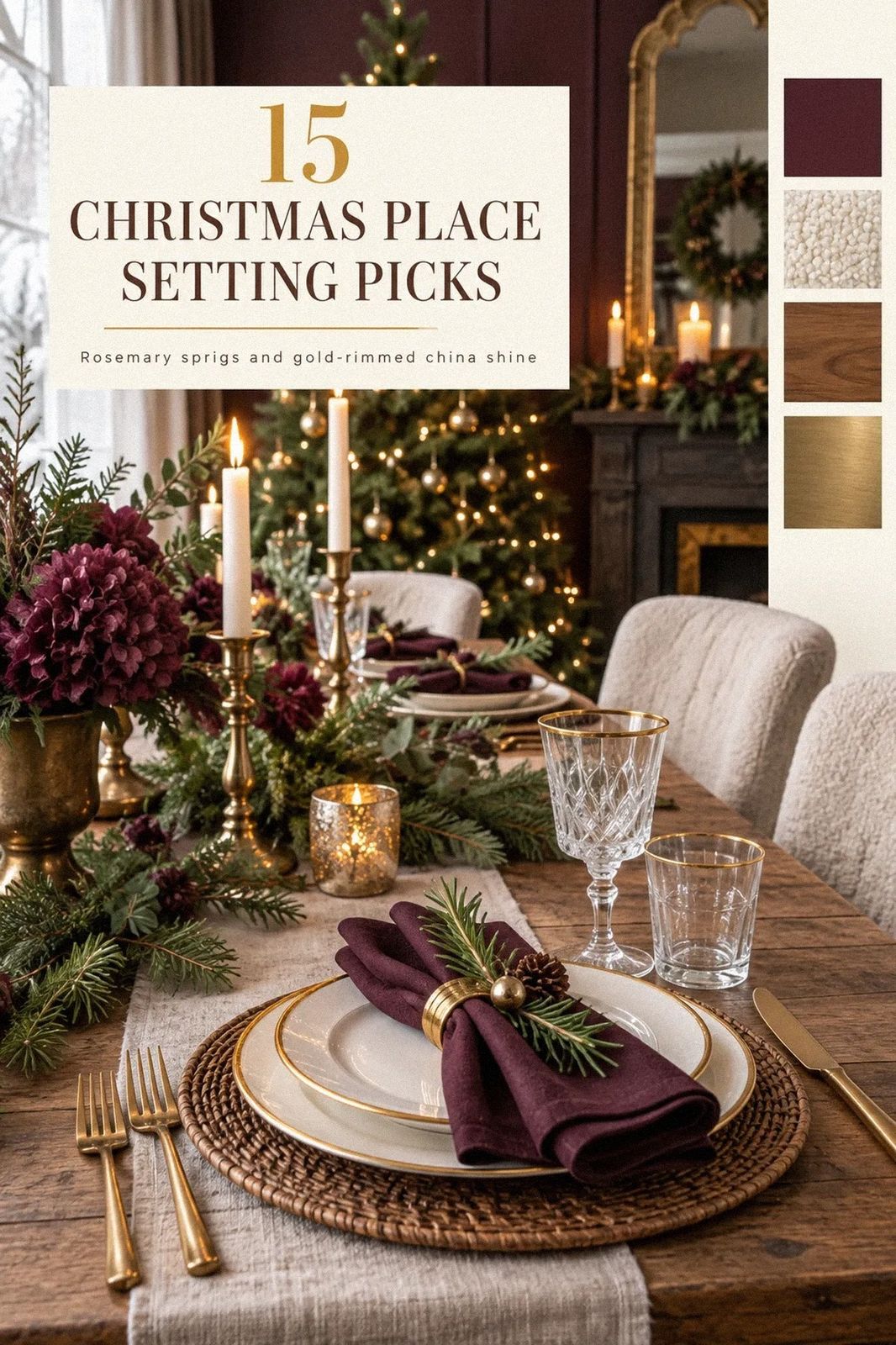
by Christmas place setting ideas for a farmhouse table should feel warm before they feel decorated. The best tables leave room for elbows, serving bowls, and the people gathered around them. Start with one tactile layer, add a restrained holiday color, then give each guest one detail worth noticing.
Editor's note: Begin with washable linen, white stoneware, and one natural material such as seagrass, jute, or aged wood. For more color direction, borrow from these Christmas table setting ideas with red white plaid and balance the pattern with the softer textures found in these rustic farmhouse kitchen ideas for warm, weathered charm. The goal is a table that feels collected, useful, and ready for dinner.
- Layer the Three-Texture Stack for a Rustic Christmas Table
- Mix Red Plaid With Quiet White Stoneware
- Give Rosemary a Personal Place at Every Seat
- Float a Candleline Through the Farmhouse Tablescape
- Let Two Wood Tones Ground the Holiday Palette
- Swap a Traditional Charger for a Woven Mat
- Turn a Natural Place Card Into a Small Gift
- Paint the Napkin Palette in Farmhouse Neutrals
- Place a Mini Wreath Beneath Each Plate
- Use the Three-Height Light Stack
- Make Black Flatware the Strongest Accent
- Let Blue Spruce Feel Festive Without Red
- Refresh the Table Without Buying a Whole Room
- Place a Dinner Bell Detail at Each Seat
- Let the Setting Stay Slightly Unmatched
1Layer the Three-Texture Stack for a Rustic Christmas Table
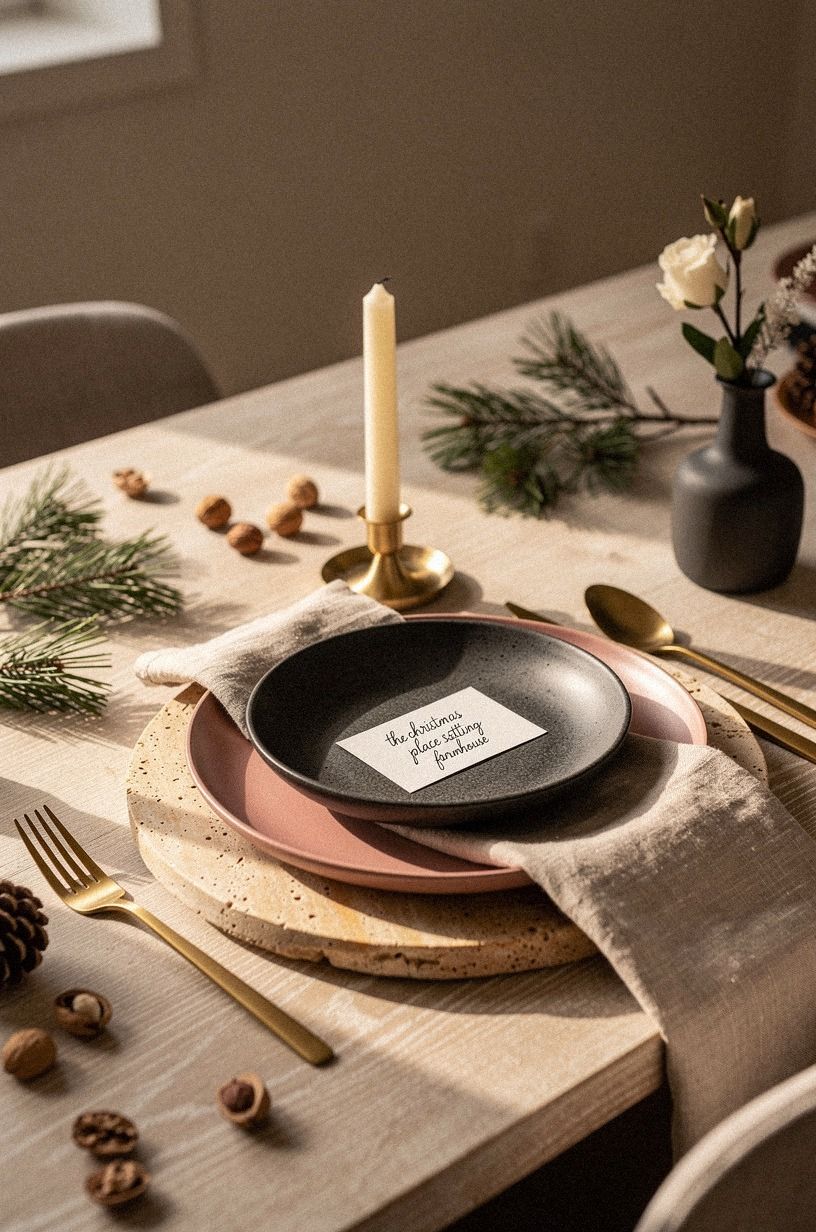
Start with a washed linen runner, then add a woven charger and a smooth ceramic plate. This three-texture stack gives your Christmas tablescape depth without making every piece compete. You’ll notice the contrast before you notice the color, which is exactly what your eye needs on a long farmhouse table.
Pair Belgian flax linen with a stoneware dinner plate and a braided jute charger. The materials do not need to match. In fact, a slightly nubby runner beside a smooth plate usually looks more collected than a coordinated set.
For a narrow table, keep the runner close to 12 inches wide. You’ll still have space for serving bowls and elbows. Your centerpiece can sit along the centerline without swallowing the useful surface.
A cream plate, brown wood, and one muted holiday color will carry most of the work. If you’re drawn to a brighter palette, use the red-and-white pattern on napkins rather than on every layer.
A three-layer setting usually costs about $18 to $45 per guest if you’re starting from scratch. You can lower that cost by using your existing plates and buying only the runner or chargers. One good linen runner changes the whole table more than a dozen tiny decorations.
2Mix Red Plaid With Quiet White Stoneware
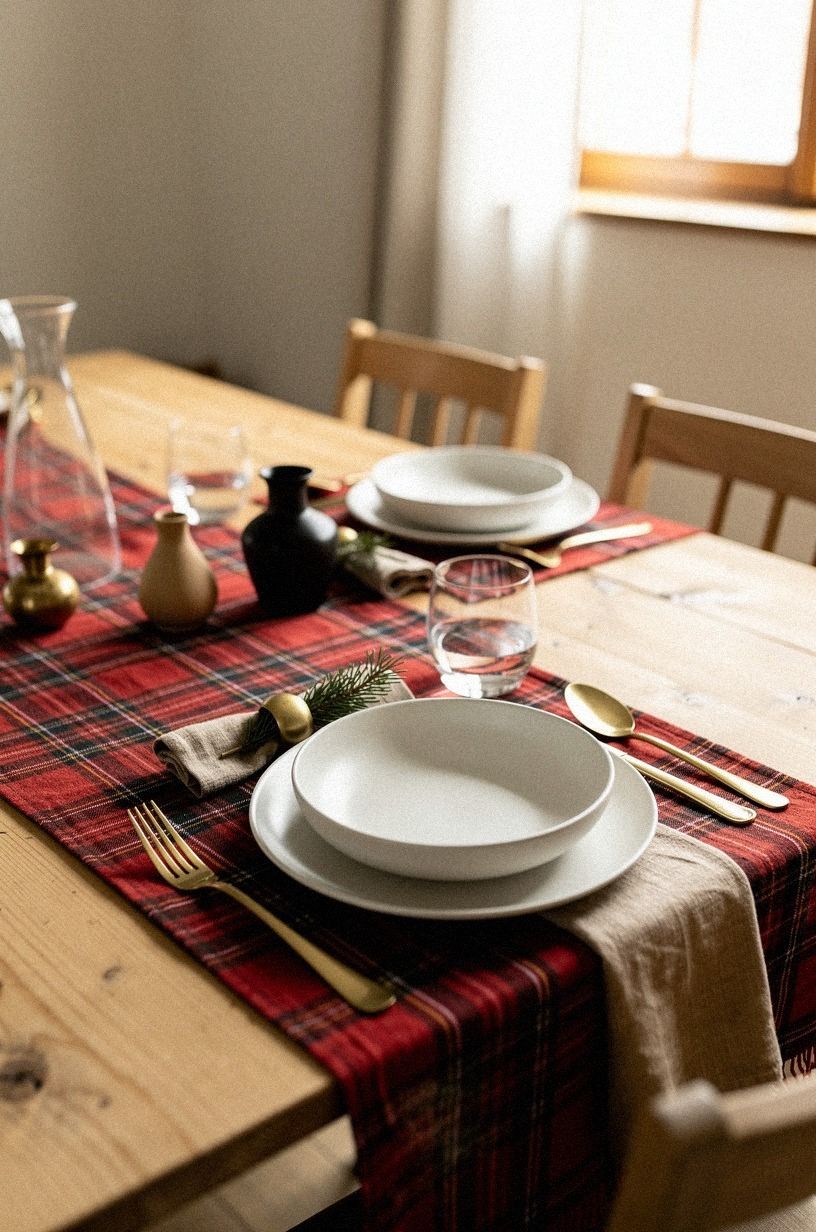
Red plaid works best when the rest of your Christmas place setting stays calm. Fold a cotton buffalo-check napkin beneath each plate, then let white stoneware and natural wood keep the pattern from shouting. The result feels rustic, bright, and familiar, but it won’t overwhelm the room.
Stacking plaid on plaid is usually too much unless your dining area is unusually plain. Choose one dominant pattern, one soft textile, and one aged surface. A white plate with a slightly irregular rim feels more inviting than a glossy matching set, especially when candlelight catches its small variations.
You can fold the napkin into a loose rectangle, tuck it under the plate, or knot it beside the fork. The right choice depends on how much room guests have. A dramatic fold may look lovely at first, but it can steal space from the plate once dinner starts.
If the wood grain is already strong, use red as the only saturated color. Your eye will land on the napkin first, then move toward the food. These rustic farmhouse kitchen ideas for warm, weathered charm offer more combinations for balancing pattern and texture.
Expect to pay $12 to $30 for a set of cloth napkins, depending on the fabric and number included. Washable cotton or linen is a better investment than disposable seasonal prints. You’ll use them at breakfast, a winter birthday, or an ordinary Sunday dinner.
3Give Rosemary a Personal Place at Every Seat
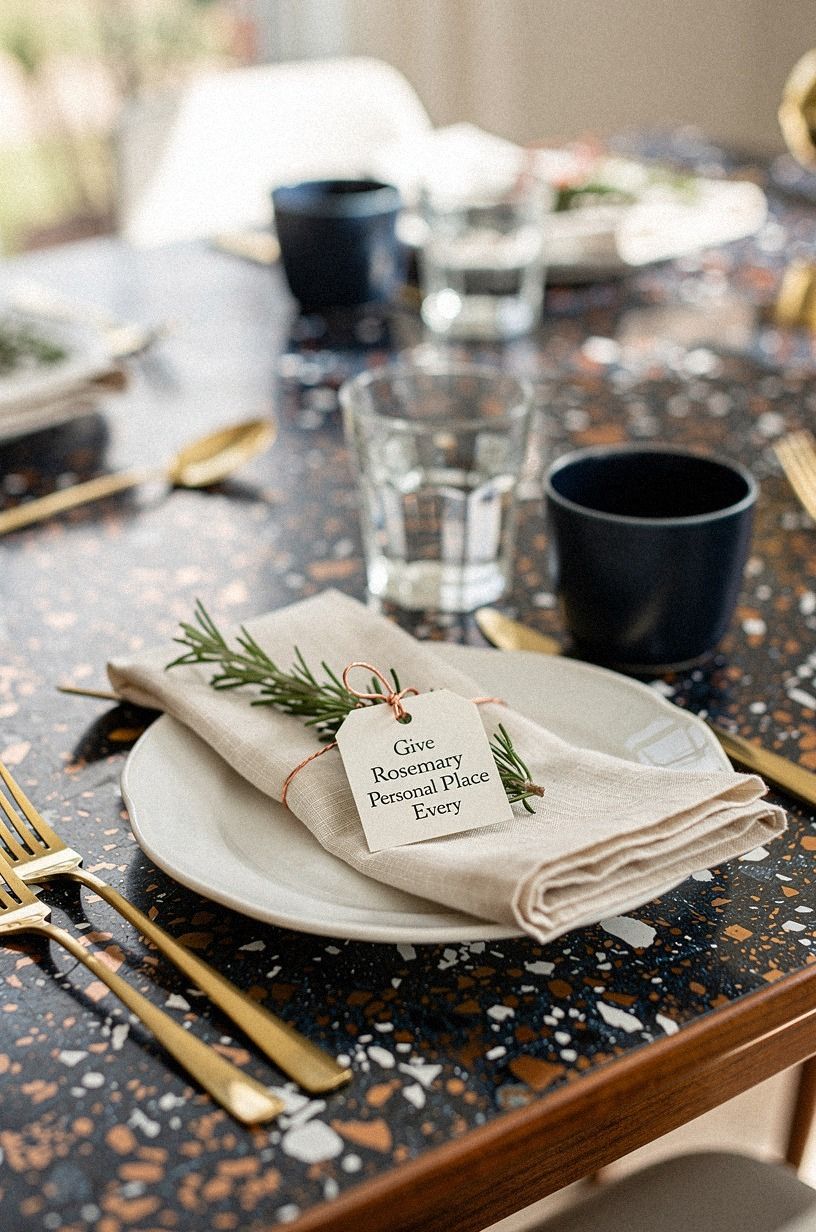
A small rosemary bundle makes an inexpensive place setting feel considered. Tuck two or three stems beneath the napkin fold, or tie them with unbleached cotton twine beside a simple stoneware plate. The scent arrives quietly when guests sit down, which makes the detail feel personal rather than staged.
Choose sturdy rosemary with deep green needles and trim the stems to roughly five inches. A sprig that is too large can brush against food or crowd the fork. For a slightly softer arrangement, combine rosemary with a small piece of silver dollar eucalyptus, but keep the foliage restrained.
The bundle can also work as a take-home favor. Wrap the stems in a narrow strip of Farrow & Ball String No. 8 colored paper or plain kraft paper, then write each guest’s name in dark ink. The muted taupe tone sits comfortably beside cream linen, walnut, and aged brass.
Fresh herbs are inexpensive, but they should not be placed directly on dishes if guests have allergies or strong sensitivities. Keep the stems beside the napkin, and replace any greenery that begins to dry out. One fragrant bundle per person is enough to make the table feel welcoming.
4Float a Candleline Through the Farmhouse Tablescape
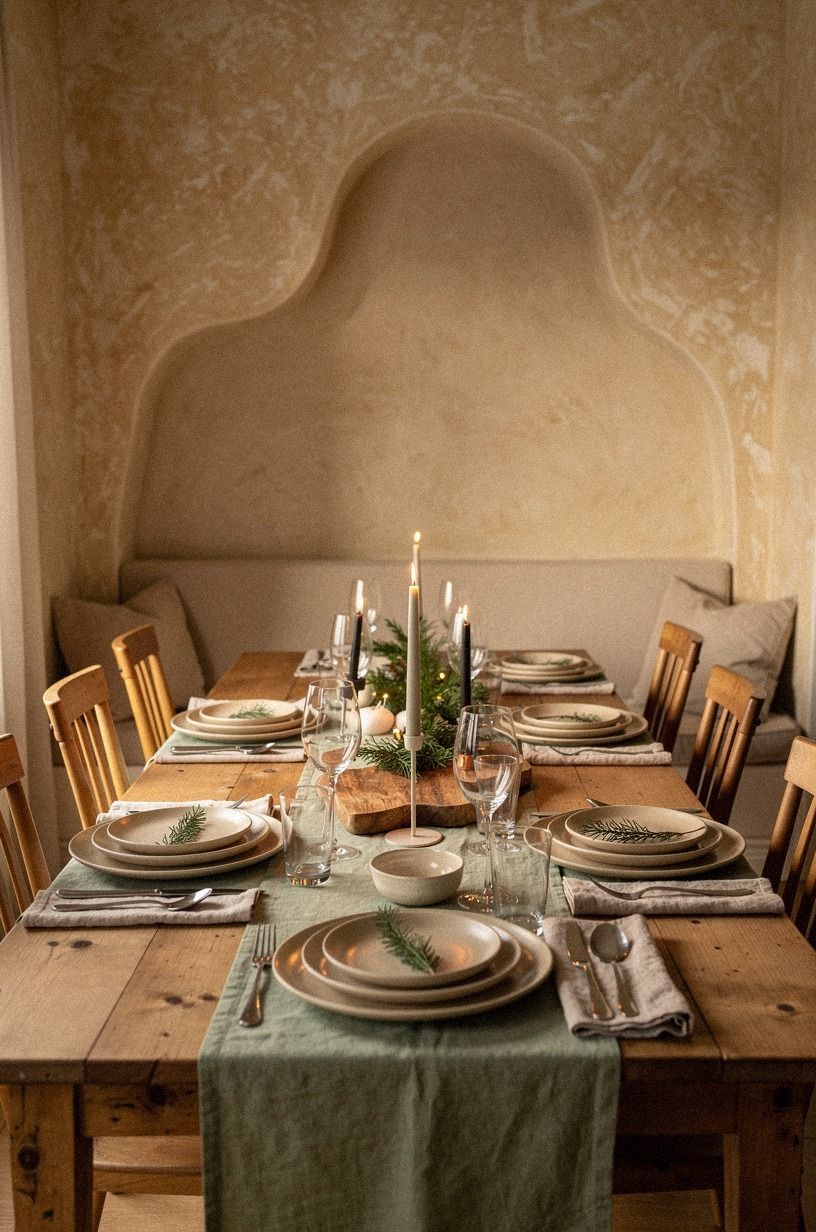
A candleline is a row of low candles that guides the eye down the table. Use amber glass votives between small evergreen clippings, keeping everything low enough that you can see across the table. The glow should sit near the napkins, not block the person sitting opposite you.
Tall tapers can look dramatic, but they often make conversation awkward when the table is already crowded with serving dishes. Low candlelight feels more intimate, and you’ll be able to pass the potatoes without dodging a brass candlestick.
For safety, choose sturdy glass holders and leave open space around every flame. Battery candles are a reasonable choice if children, pets, or crowded serving dishes make open flames inconvenient.
Warm light matters more than candle quantity. Six inexpensive votives can look richer than two large candles with harsh white bulbs. A pack of battery votives costs around $10 to $25, while a collection of real candles may cost $15 to $40.
If you’re styling the dining area too, these simple centerpiece ideas can help you keep the arrangement low. Repeat the same warm light near a sideboard or window so the table doesn’t feel like an isolated holiday display.
5Let Two Wood Tones Ground the Holiday Palette
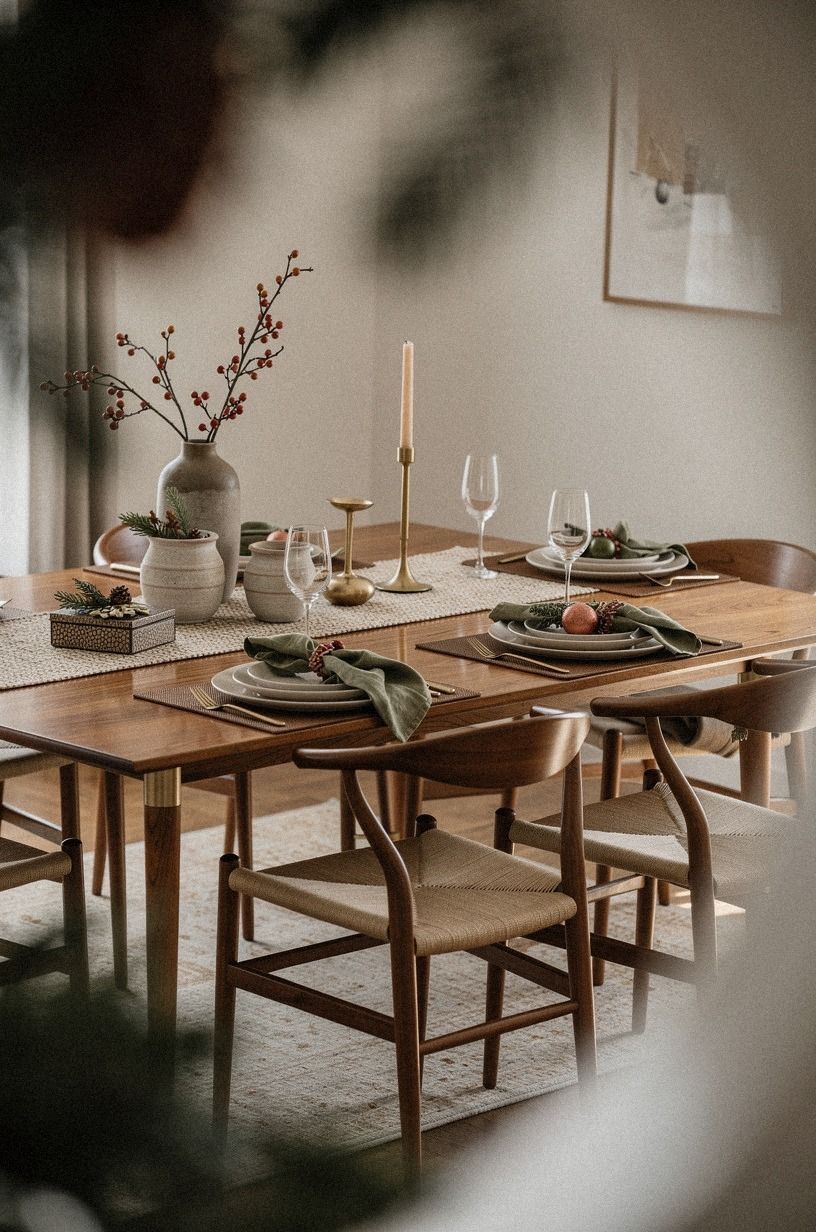
The Two-Wood Rule keeps a farmhouse Christmas setting from looking visually flat. Pair one pale or weathered wood with one deeper tone, such as a reclaimed oak surface beside walnut-handled flatware or a dark acacia bowl. The contrast gives the table structure without introducing another loud color.
Start by identifying the wood already in the room. If the table is honey-toned pine, add a darker serving board or small walnut bowl.
If the surface is deep espresso, bring in a pale ash tray, unfinished birch ornament, or light oak napkin ring. Matching every wood surface usually feels more manufactured than relaxed.
The finish matters as much as the color. Matte, brushed, and lightly worn surfaces suit Belgian flax linen and handmade ceramics better than glossy lacquer. A small amount of blackened iron can sharpen the arrangement, while aged brass adds warmth without making the table look formal.
Keep the wood contrast away from every single plate. One serving piece at the center or a few repeated napkin rings will establish the rhythm. The setting should feel like it grew from the room, not like a themed collection was placed on top of it.
6Swap a Traditional Charger for a Woven Mat
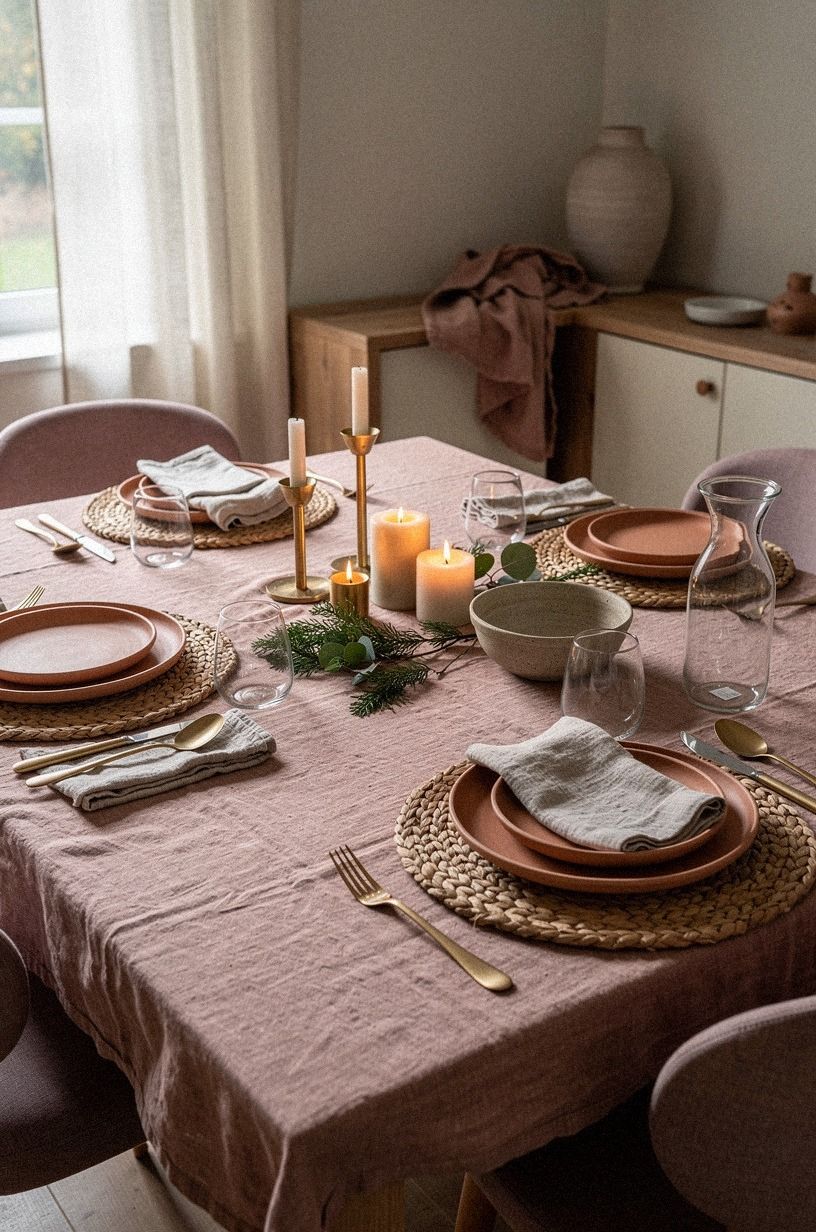
A charger doesn’t have to be formal. A seagrass woven mat brings an airy, organic layer beneath a white plate, and it works especially well with an old pine or reclaimed oak surface. The rough weave catches crumbs and texture, so your setting feels relaxed instead of precious.
Choose a round mat when your plates are round and a square mat when you want sharper contrast. You’ll want at least a small border around the plate, but the mat shouldn’t extend so far that elbows catch it. Simple proportions make this idea look intentional.
Add a soft napkin in cream or muted red, then stop. If the mat already has strong texture, pair it with smooth white stoneware and matte flatware.
A set of woven mats can cost $20 to $45, depending on size and quality. They’re practical for future dinners, too.
Choose washable or wipeable mats if children will be at the table. The prettiest woven surface is not useful if everyone worries about gravy splashes.
7Turn a Natural Place Card Into a Small Gift
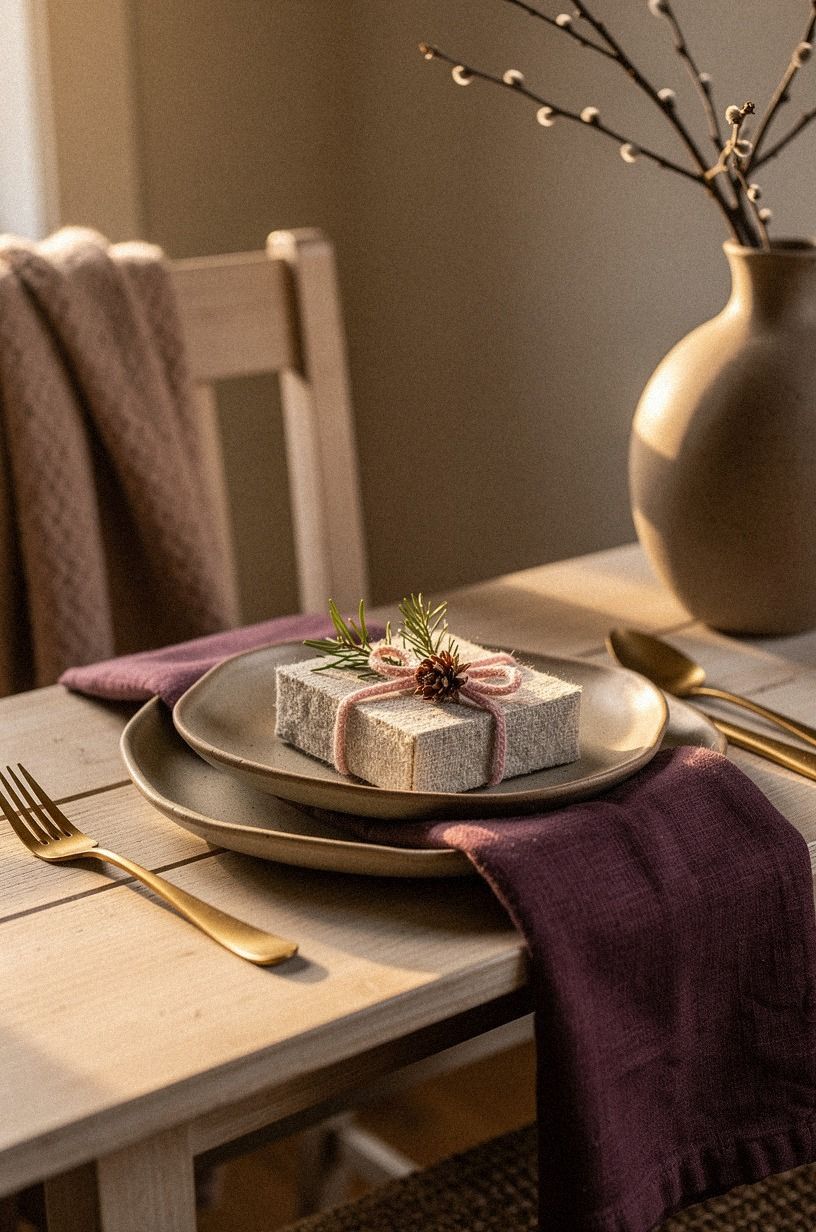
Place cards become warmer when they include something guests can take away. A dried orange slice, rosemary stem, cinnamon stick, or small unfinished maple ornament can sit beside the napkin with a handwritten name. The gesture feels thoughtful without requiring a formal favor for every person.
For a more polished version, write names on warm white cotton paper with a fine-point brown pen. Pair the card with a small brass bell or a sprig of bay leaf. The combination works especially well against a washed linen napkin in oat, olive, or smoky blue.
Keep the object useful or compostable. A tiny decoration with a printed Christmas message may look dated next year, while a plain wooden star can become part of someone’s tree. Natural materials also soften the visual effect of a long row of identical settings.
The place card does not need to sit on the plate. Set it above the fork, tuck it beneath the napkin knot, or place it beside a water glass. Leave the eating surface clear so the table remains comfortable once the meal begins.
8Paint the Napkin Palette in Farmhouse Neutrals
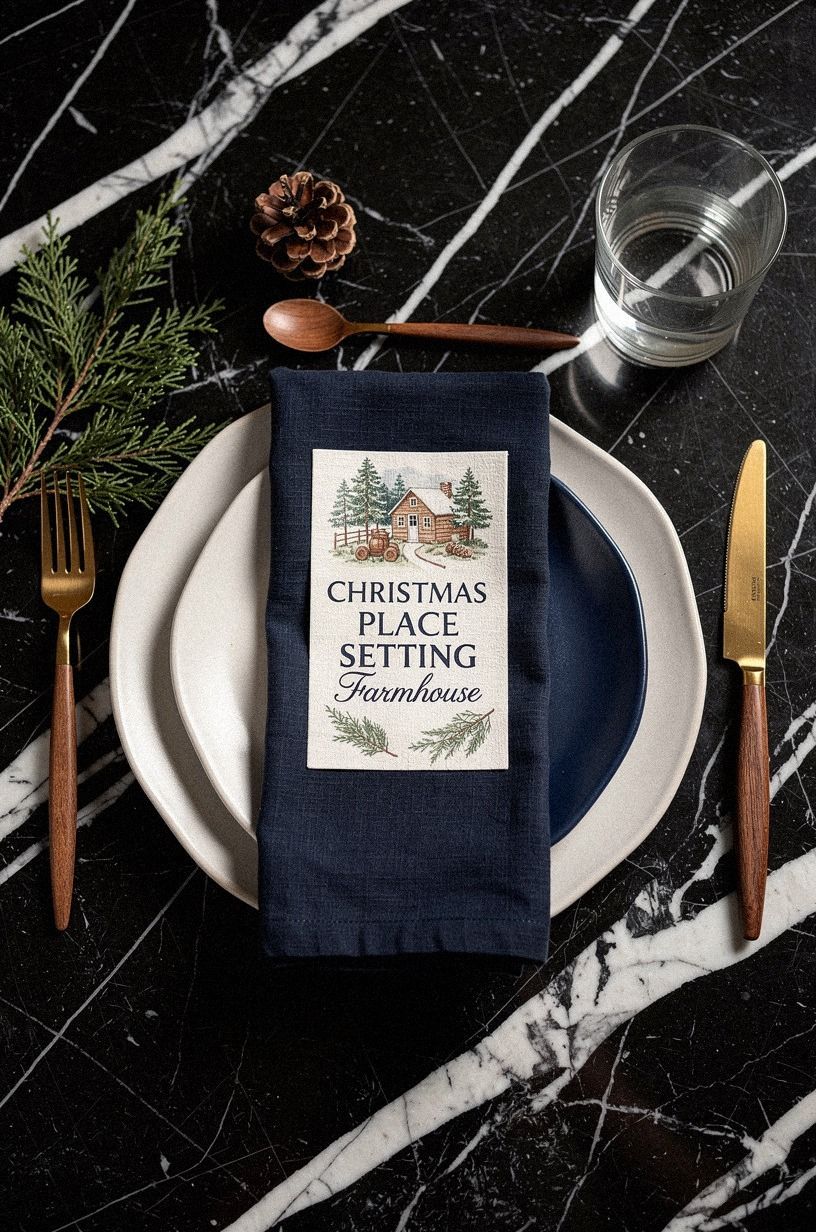
Your napkins can carry the color story without making the table feel themed. Try Farrow & Ball Pigeon No. 25 as inspiration for a soft blue-gray napkin, then pair it with cream stoneware and aged brass. The result is calming, earthy, and a little more grown-up than bright red everywhere.
Skip icy blue beside stark white because it can make the setting feel cold. Choose washed shades with gray, brown, or green underneath. If you prefer a warm neutral, Benjamin Moore White Dove OC-17 is a useful reference for the creamy side of the palette.
You could use Sherwin-Williams Evergreen Fog SW 9130 as another direction if you want a greener table without leaning fully into red and green. The paint color does not have to appear exactly on the table. It simply gives you a starting point for choosing textiles.
Fold the napkin beneath the plate or place it to the left with a simple knot. You’ll get more texture from a loose fold than from a stiff fan shape.
A set of linen napkins generally costs $25 to $60, and you’ll use them long after the holidays. For more room color ideas that stay warm, browse these farmhouse breakfast nook ideas for a warm welcoming kitchen.
If the table already includes red plaid, choose a muted blue-gray or oat-colored napkin. If the plates are plain and pale, take a stronger risk with moss green or cinnamon. One confident textile color is better than five almost-matching shades.
9Place a Mini Wreath Beneath Each Plate
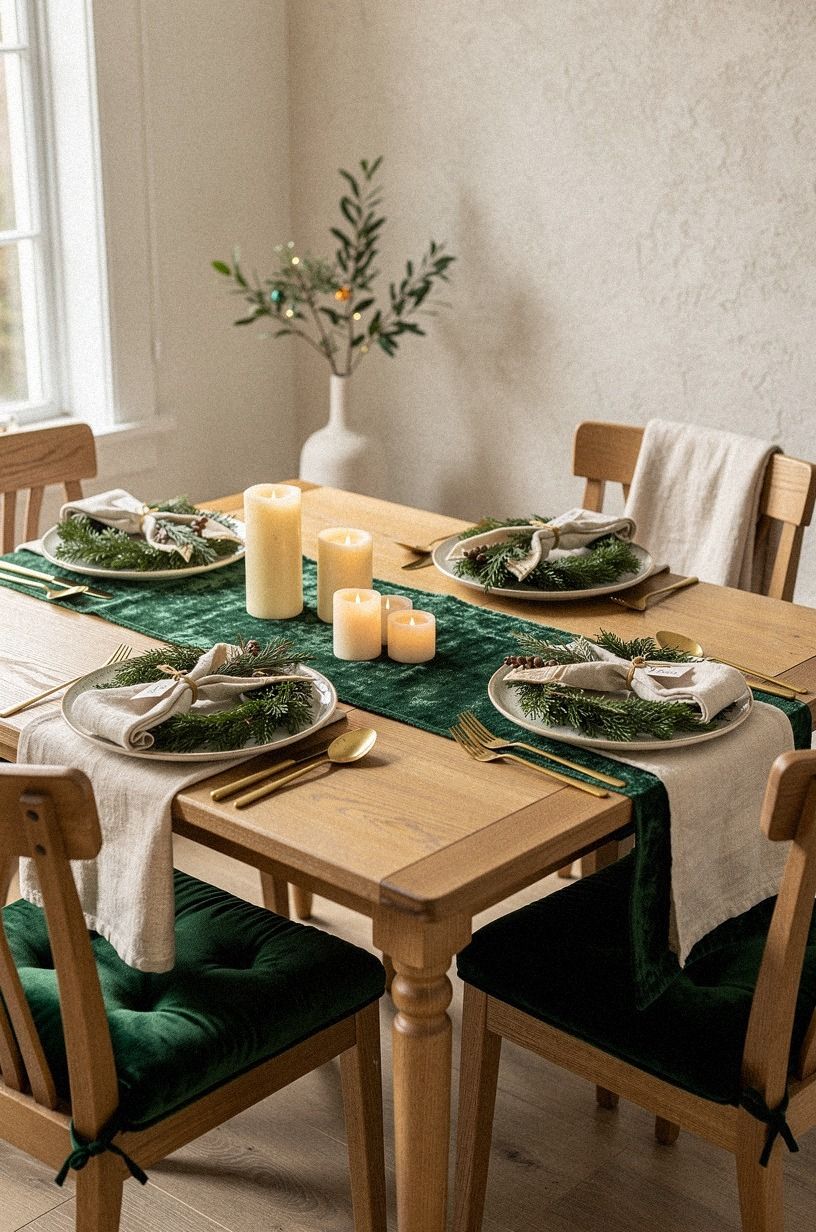
A small wreath beneath each plate creates quiet repetition, but the scale matters. Choose rings between six and eight inches wide so the plate sits securely inside the shape without making the setting feel crowded. Grapevine, rosemary, bay leaf, and dried olive branches all suit a relaxed farmhouse palette.
A grapevine wreath brings brown texture to a white plate, while a ring of preserved boxwood feels greener and more traditional. For a softer holiday note, use dried wheat mixed with a little eucalyptus. Avoid glitter, plastic berries, and overly bright red accents if the rest of the room relies on natural finishes.
The wreath can replace a charger, but it should not compete with one. Layering both beneath every plate may make the surface too busy, especially on a narrow table. If you already have a woven mat, place the greenery beside the napkin instead and repeat it only at the ends.
Fresh greenery needs a little care. Mist it lightly before guests arrive, keep it away from candle flames, and remove any brittle stems. Dried materials are easier for a long dinner, particularly when the wreaths will remain in place for several days.
10Use the Three-Height Light Stack
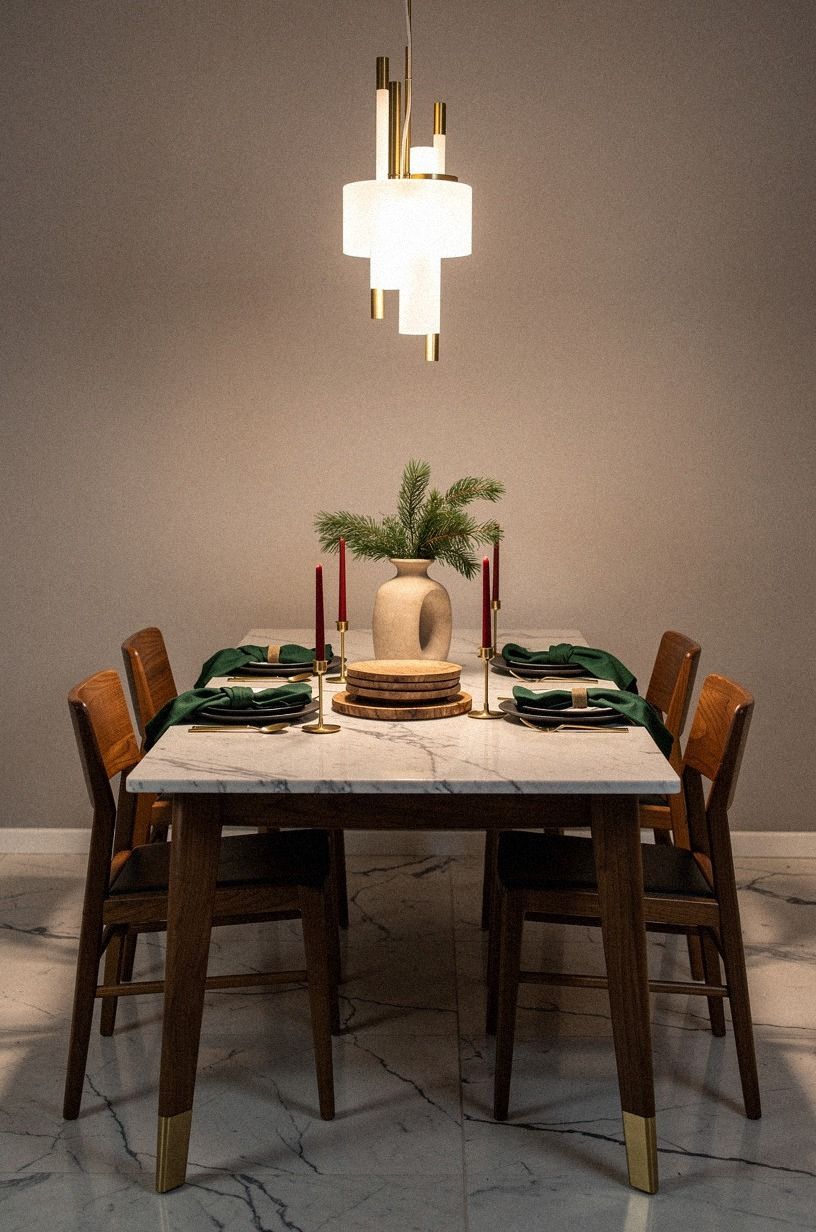
The Three-Height Light Stack gives your table a layered glow: low votives, medium lanterns, and one higher element placed at the far end. The heights create movement while keeping the center open enough for conversation.
Your three sources do not need to be identical. Try matte black lanterns, clear votives, and a single branch in a narrow bottle. Skip a tall centerpiece in the middle because it divides the table and makes the room feel less social.
You can create the same effect with objects you already own. A short candle, a medium ceramic vessel, and a taller bottle will establish the rhythm. Keep the tallest item toward the end of the table, where it won’t interrupt anyone’s view.
A small set of lanterns may cost $30 to $70, while thrifted vessels can keep the cost below $20. If you’re arranging the dining room too, remember the three-source approach of overhead, task, and ambient light. These simple centerpiece ideas can help you keep the arrangement low.
Test the sightline before guests arrive. Sit in the middle chair, then sit at both ends. If you can’t see the person across from you, lower the centerpiece or move the tallest element away from the center.
11Make Black Flatware the Strongest Accent
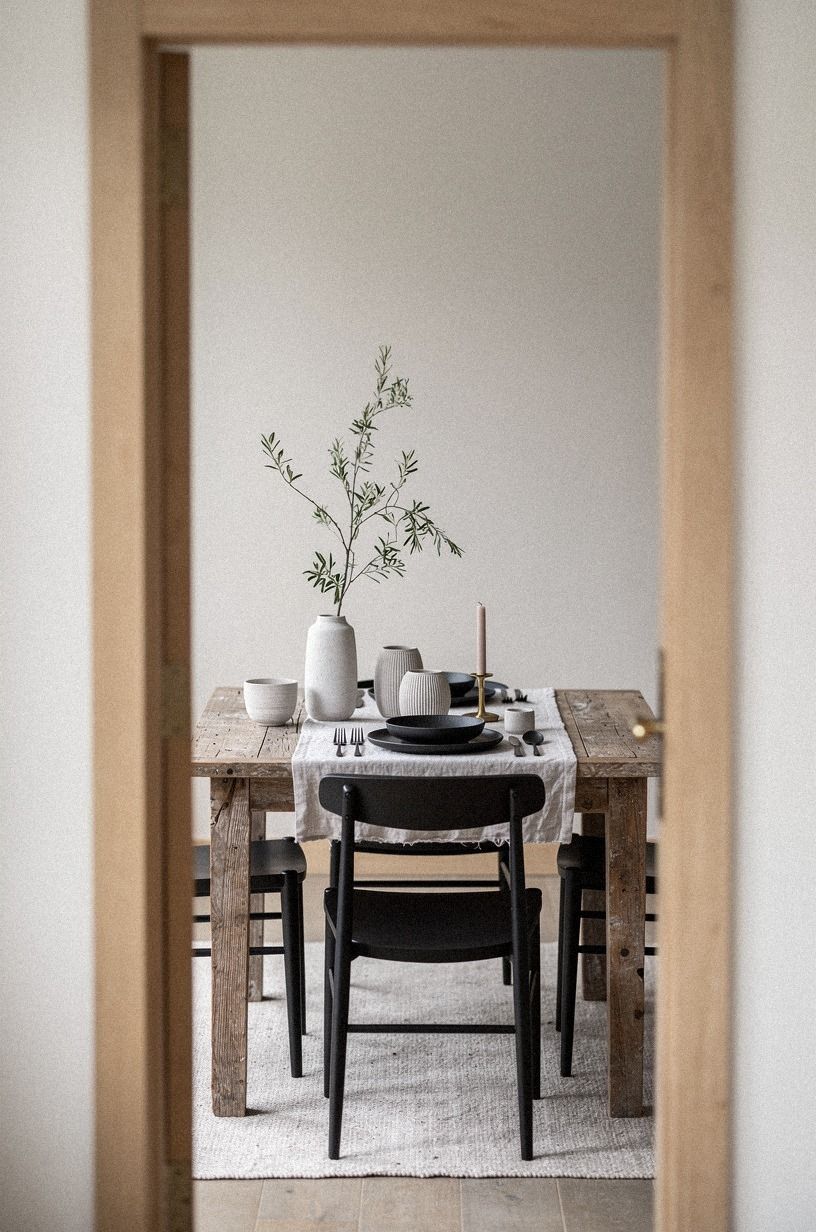
Black flatware gives a farmhouse Christmas setting a bold punctuation mark. The dark finish looks especially good against cream stoneware, pale linen, and weathered oak because it defines the place without adding another pattern.
Choose a matte finish rather than a highly reflective one. Matte black stainless steel feels modern but still works with handmade ceramics, while blackened iron has a more rustic character.
Keep the rest of the metal restrained. A small amount of aged brass at the napkin or candle holder will warm the contrast.
The flatware does not need to be repeated in every centerpiece detail. Let the knives and forks provide the dark line, then use natural wood and soft textiles to keep the setting from becoming severe. If the chairs or lighting are already black, use lighter napkins so the composition does not feel heavy.
Black utensils also make simple food look more intentional. A pale dinner plate, cranberry relish, and green herbs gain definition around the edge. For a less formal arrangement, place the fork on the napkin and keep the knife beside the plate.
12Let Blue Spruce Feel Festive Without Red
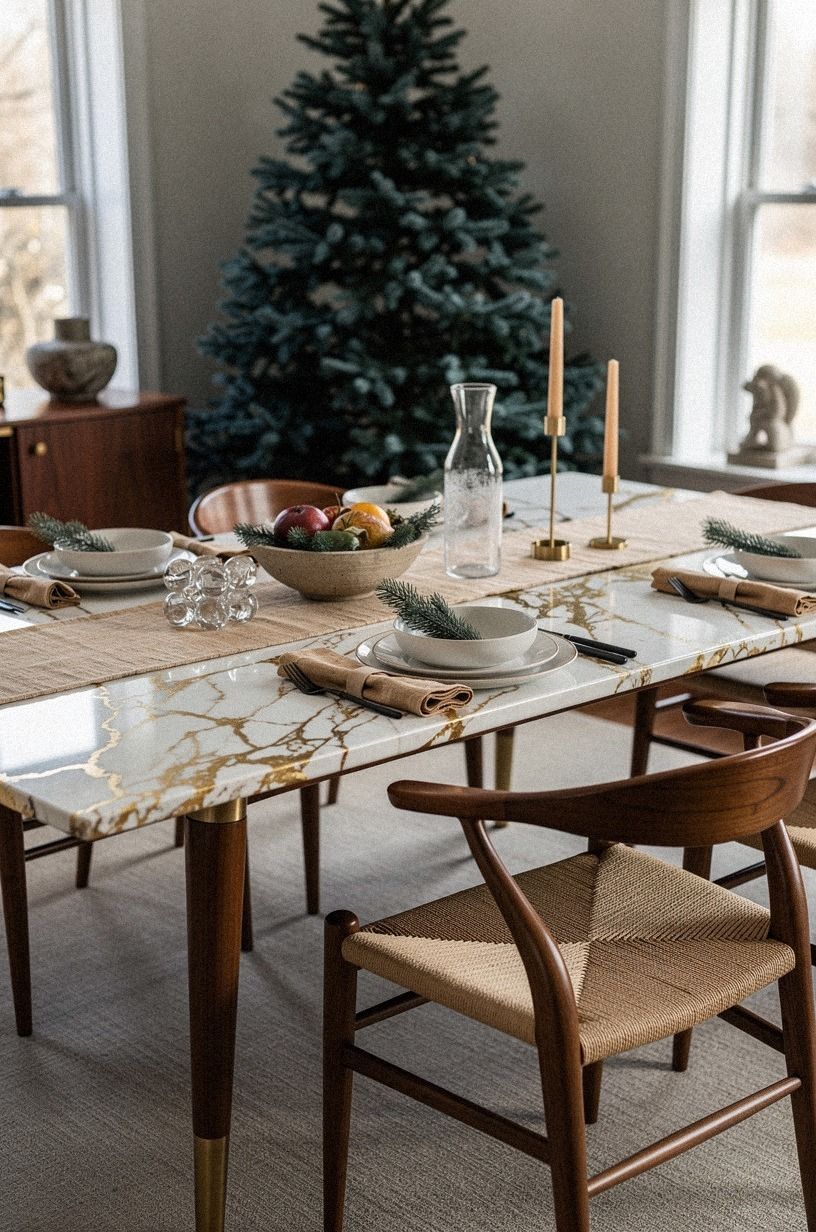
Red isn’t the only Christmas color that works with farmhouse materials. Blue spruce, pine green, and warm cream create a moody, peaceful setting that still feels festive. Use Sherwin-Williams Agreeable Gray SW 7029 as a quiet neutral reference, then add evergreen and aged brass.
You’ll want one warm note to keep the palette from becoming chilly. A cinnamon-colored napkin, walnut charger, or terracotta taper holder will do it. Skip bright silver with this scheme because it introduces a sharp shine that fights the softer greens.
The table should feel gathered, not coordinated within an inch of its life. Add one imperfect ceramic bowl or a hand-thrown bud vase. Your guests will notice the texture first, and that’s what makes the setting feel authentic.
This palette is also forgiving when you’re shopping second-hand. Look for mossy linens, smoky glass, and aged brass rather than searching for a matching holiday collection. More neutral farmhouse inspiration is waiting in these warm, weathered kitchen ideas.
For a table of six, budget $25 to $60 for greenery and $15 to $40 for supporting textiles. One branch of blue spruce and a few cream candles can carry the entire color story.
13Refresh the Table Without Buying a Whole Room
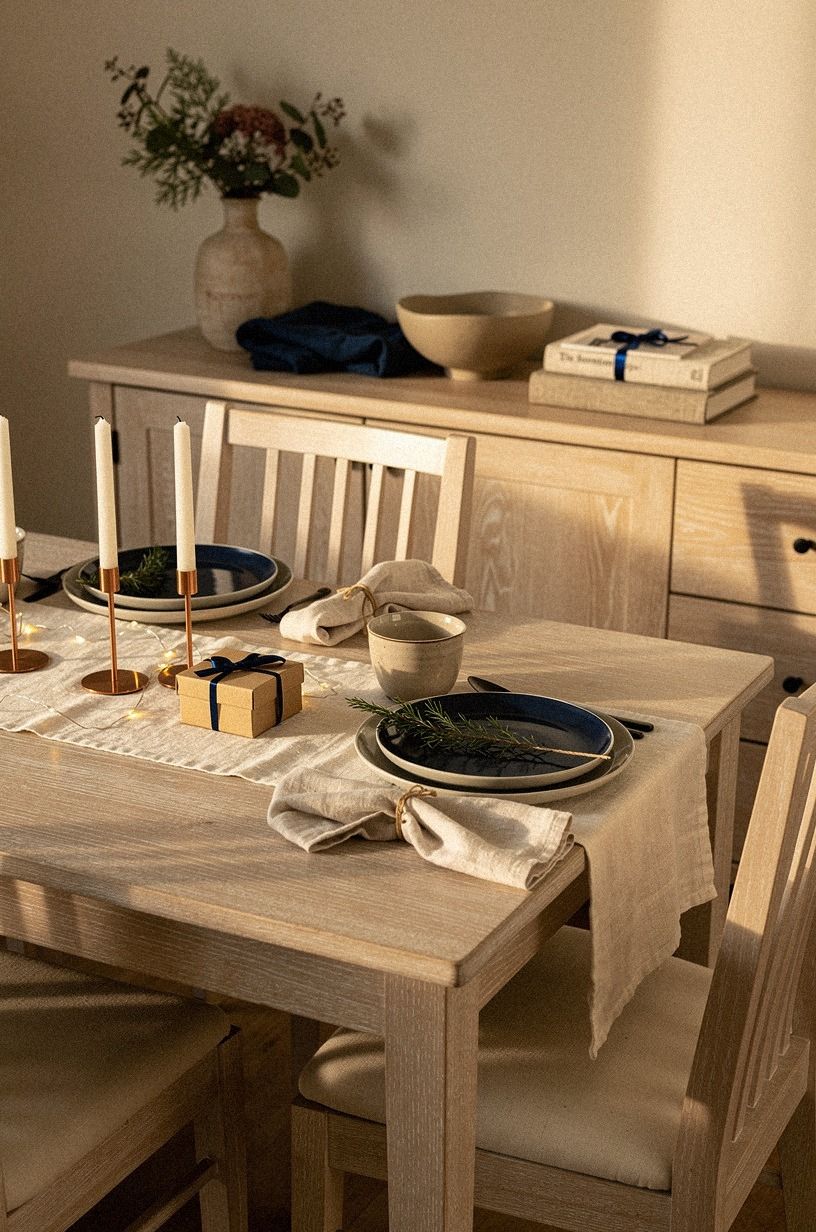
You don’t need a full dining-room purchase to refresh your Christmas table. Start with what guests touch first: napkins, plates, glasses, and the space directly around each seat. A new textile can make familiar dishes feel completely different.
A realistic low-cost plan might include six cotton napkins for $15 to $30, thrifted chargers for $10 to $25, and greenery gathered from a garden or local market. Add a pack of warm-white battery votives if the room needs more glow. The total can stay under $75 while still creating a clear change.
Spend selectively on the material that will last. Belgian flax linen, stoneware, and solid wood pieces earn their keep because they work beyond the holiday season. Avoid buying a large matching collection when one excellent runner or a set of washable napkins will solve the visual problem.
Use the room itself as part of the decoration. A painted sideboard in Benjamin Moore Edgecomb Gray HC-173, a woven basket, or a simple evergreen branch near the dining area can extend the palette without putting more objects on the table. These farmhouse breakfast nook ideas for a warm welcoming kitchen offer useful ways to connect nearby spaces.
14Place a Dinner Bell Detail at Each Seat
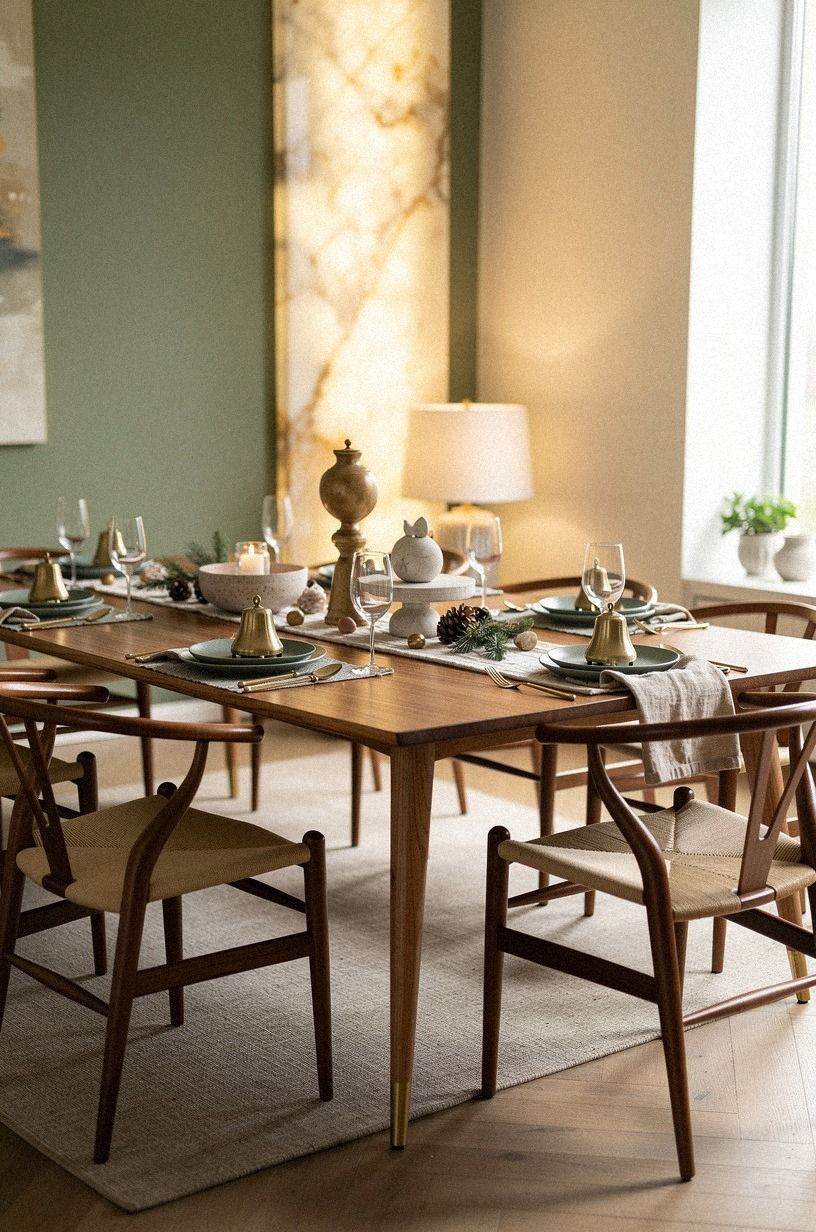
A tiny bell, brass key, or wooden ornament gives each setting a collected farmhouse note. Tie one to the napkin with unlacquered brass wire, then let the metal develop its soft patina over time. It’s a small gesture, but guests notice objects they can hold.
Skip novelty ornaments with printed sayings. They date the table quickly and can make the setting feel like a craft aisle. A plain bell or carved star leaves room for your own story and can be reused next year without rebuilding the entire palette.
Small bells usually cost $1 to $5 each, while vintage pieces may cost more. You don’t need one at every place if the table is long. Place them only at the ends or at the seats for overnight guests, then repeat the same napkin treatment elsewhere.
Keep the detail beside the napkin rather than on the plate. Your guests need the plate clear, and the table should remain practical once the meal begins. For more seasonal pattern inspiration, see these Christmas table setting ideas with red white plaid.
15Let the Setting Stay Slightly Unmatched
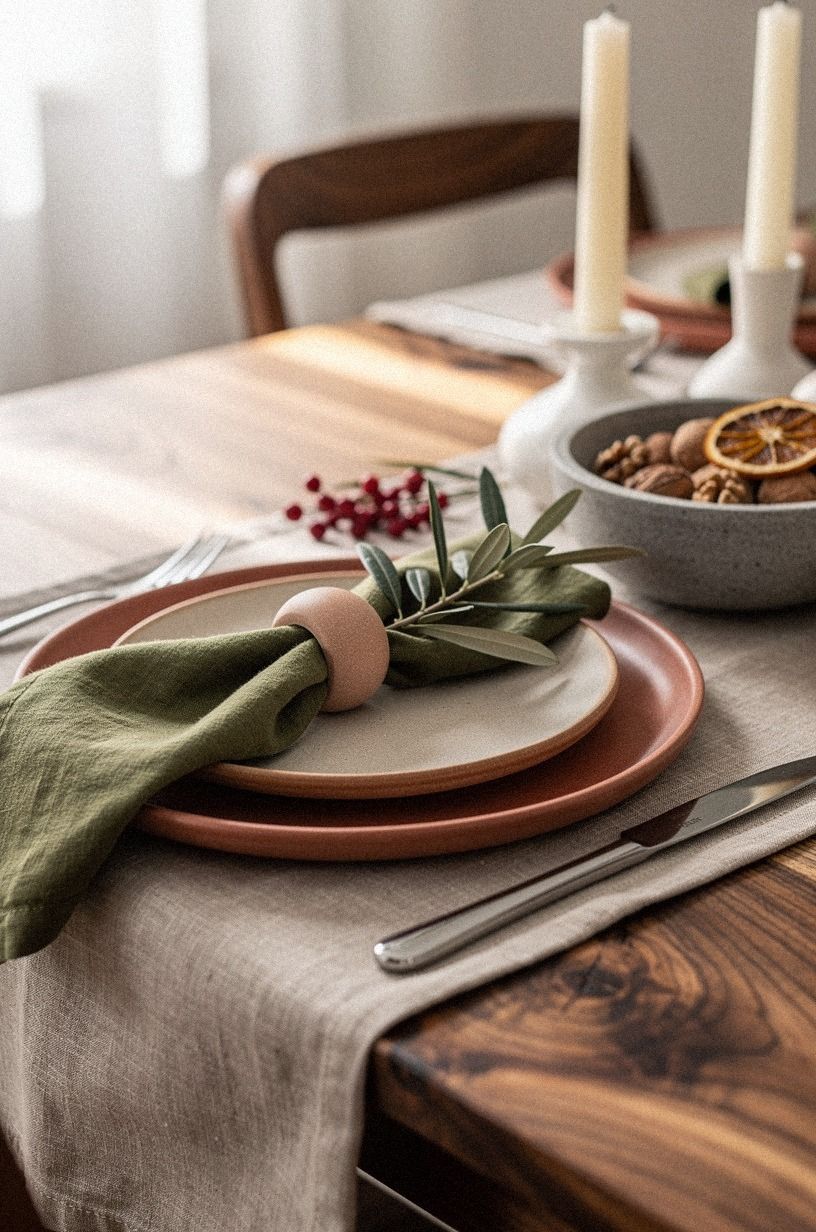
The most convincing farmhouse Christmas tables do not look like every piece came from one box. Combine a vintage plate with new linen, a thrifted brass candlestick with modern glass, or two nearby shades of wood. Those small differences give the setting a sense of history.
Keep one element consistent so the mix feels deliberate. Matching napkins, repeated greenery, or the same glassware at every seat will provide enough order. The eye needs a pattern to return to, but it does not need perfect symmetry.
This is where material matters more than decoration. Cotton velvet, hand-thrown stoneware, brushed brass, and rough linen each bring a different physical quality to the table. A few strong surfaces will create more atmosphere than a row of seasonal signs or extra figurines.
Before guests arrive, sit in the middle chair and check the view. Can you reach the serving bowl?
Can you see the person across from you? Does the centerpiece leave room for conversation?
If the answer is yes, the table is doing its job.
What People Always Want to Know
What is the best Christmas place setting idea for a small farmhouse table?
A low candleline with white stoneware and one folded plaid napkin is a strong choice for a small surface. It creates warmth without taking much room. Keep the centerpiece below eye level, use a narrow runner, and leave enough space for serving dishes.
Where can I buy Christmas place setting pieces on a budget?
Start with IKEA, Wayfair, and Target, then check Facebook Marketplace or a local thrift shop for plates and chargers. Second-hand stoneware and woven materials often have better texture than new seasonal collections. These warm farmhouse kitchen ideas can help coordinate the setting.
How much does a Christmas farmhouse table makeover cost?
A small refresh can use what you own plus new textiles, greenery, or candles. A realistic update usually costs $60 to $175, while a fuller purchase of linens, chargers, lighting, and serving pieces may reach $200 to $400. The table does not need a full-room budget.
Can I create a farmhouse Christmas table on a budget?
Yes. Begin with evergreen clippings, a new fold for existing napkins, and a grouped arrangement of current candles.
Add kraft paper place cards and thrifted stoneware for low-cost texture. Repetition usually creates more impact than one expensive centerpiece.
Is a farmhouse Christmas table a good idea for a rental?
Yes. Choose removable details such as linen textiles, freestanding lanterns, and lightweight decor nearby. You won’t need to alter the room to create holiday atmosphere.
These small dining area layout ideas can help you work around rental limitations.
If I Had to Pick One Upgrade
Choose the textile guests touch first: a substantial linen runner or a set of washable napkins. That single change softens the wood, gives the plates a visual home, and makes every other detail feel more intentional.
Then add one low candleline and a small rosemary bundle if the budget allows. Keep the sightlines clear, leave room for serving dishes, and let the table welcome people before it tries to impress them.