
 by
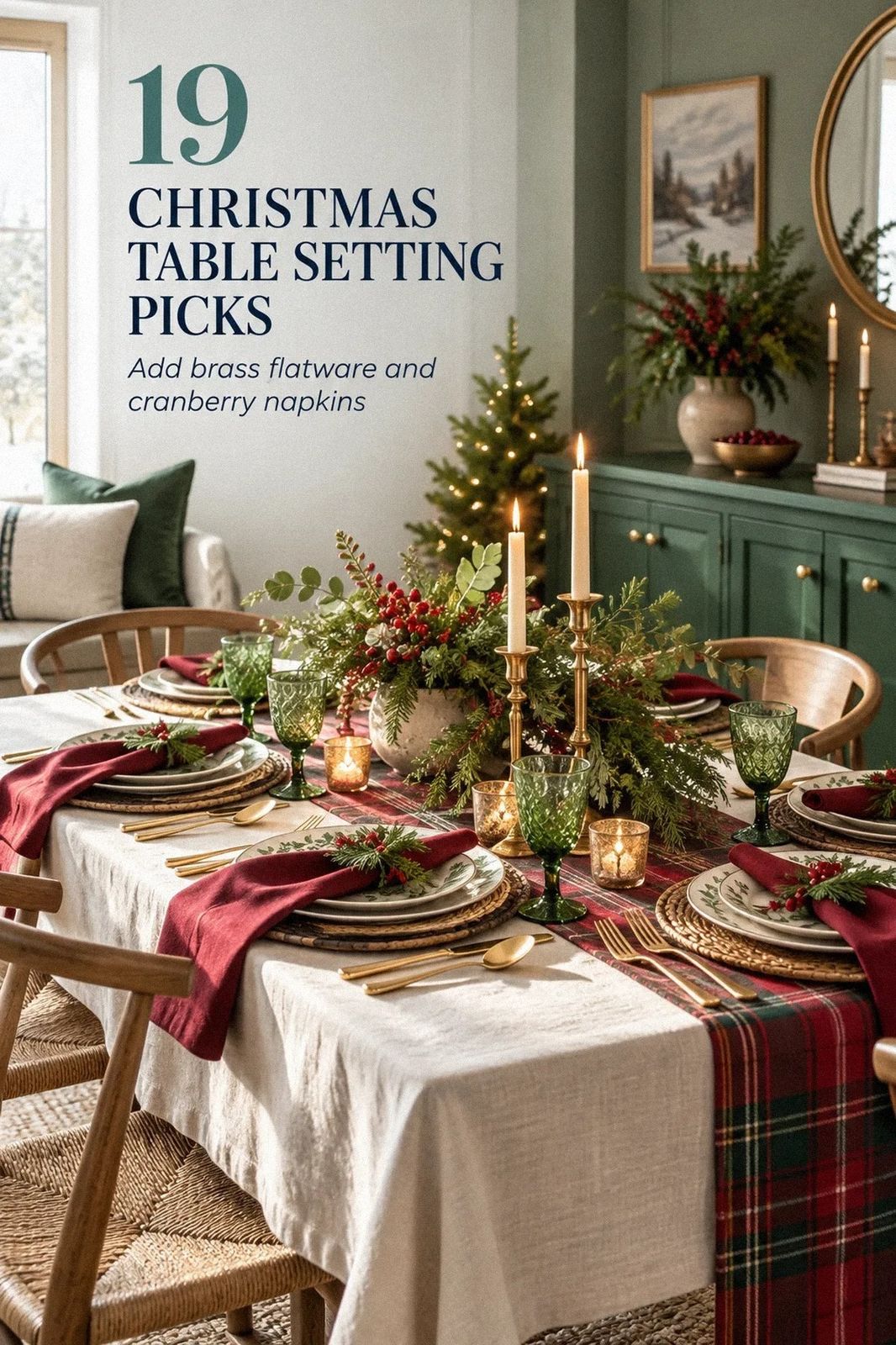
by Christmas table setting ideas with red and white plaid work best when the pattern gets one clear job. I learned that after covering an entire table in matching checks and losing every place setting. You don't need more stuff. You need contrast, breathing room, and one material that makes the room feel warm.
- Layer a Plaid Runner Over White Linen
- How Should You Fold Plaid Napkins?
- Anchor the Christmas Plates With Greenery
- Apply the Two-Plaid Scale Rule
- Mix Wood Chargers With White Dishes
- When Should You Light the Red Tapers?
- Keep White Linen Under the Plaid
- Build Place Cards From Kraft and Plaid
- Let Clear Glass Make the Plaid Breathe
- Wood, Not More Pattern, Around the Centerpiece
- Tie Flatware With One Narrow Ribbon
- Use the Three-Height Centerpiece Stack
- Repeat Plaid on the Dining Chairs
- Balance Red Plaid With Unlacquered Brass
- Choose Enamel Christmas Plates for Kids
- Style a Narrow Holiday Table With Vertical Folds
- Frame a Rustic Plaid Tablescape With Greenery
- Build the Look Around a Realistic Budget
- Photograph the Contrast Before Dinner
1Layer a Plaid Runner Over White Linen
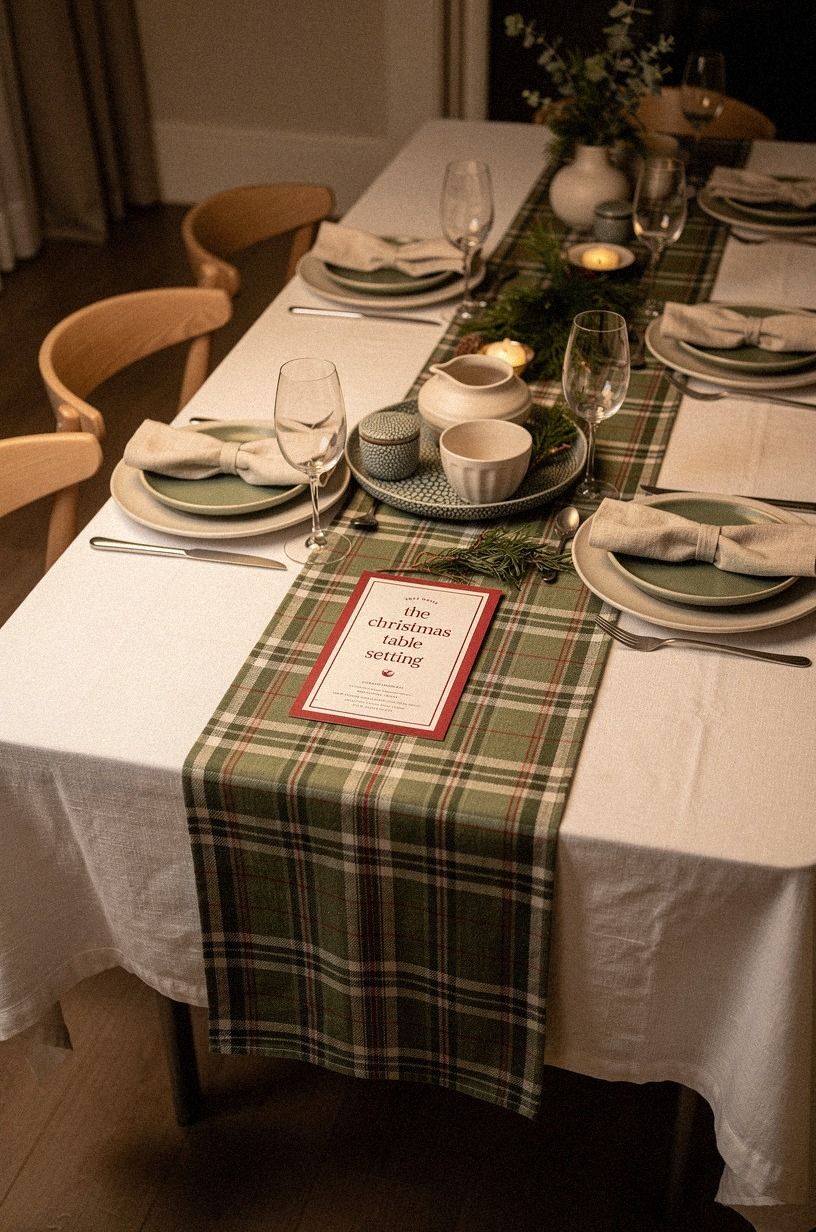
A red and white plaid runner gives your Christmas table setting a strong center line without swallowing the whole table. Start with warm cream linen, then lay the runner lengthwise so your eye can follow the pattern from one end to the other. You won't have to iron every wrinkle flat.
Keep each place setting quiet. Your runner is already doing the talking, so pair it with sage-green napkins, clear glasses, and natural wood flatware. A small shagreen accent adds texture without introducing another pattern.
You can borrow the clean contrast used in white zellige tile bathroom ideas by letting warm cream space surround the plaid. The result feels rustic, inviting, and easy to reset after the meal. If you prefer pale wood nearby, compare the effect with our white oak kitchen island ideas.
2How Should You Fold Plaid Napkins?
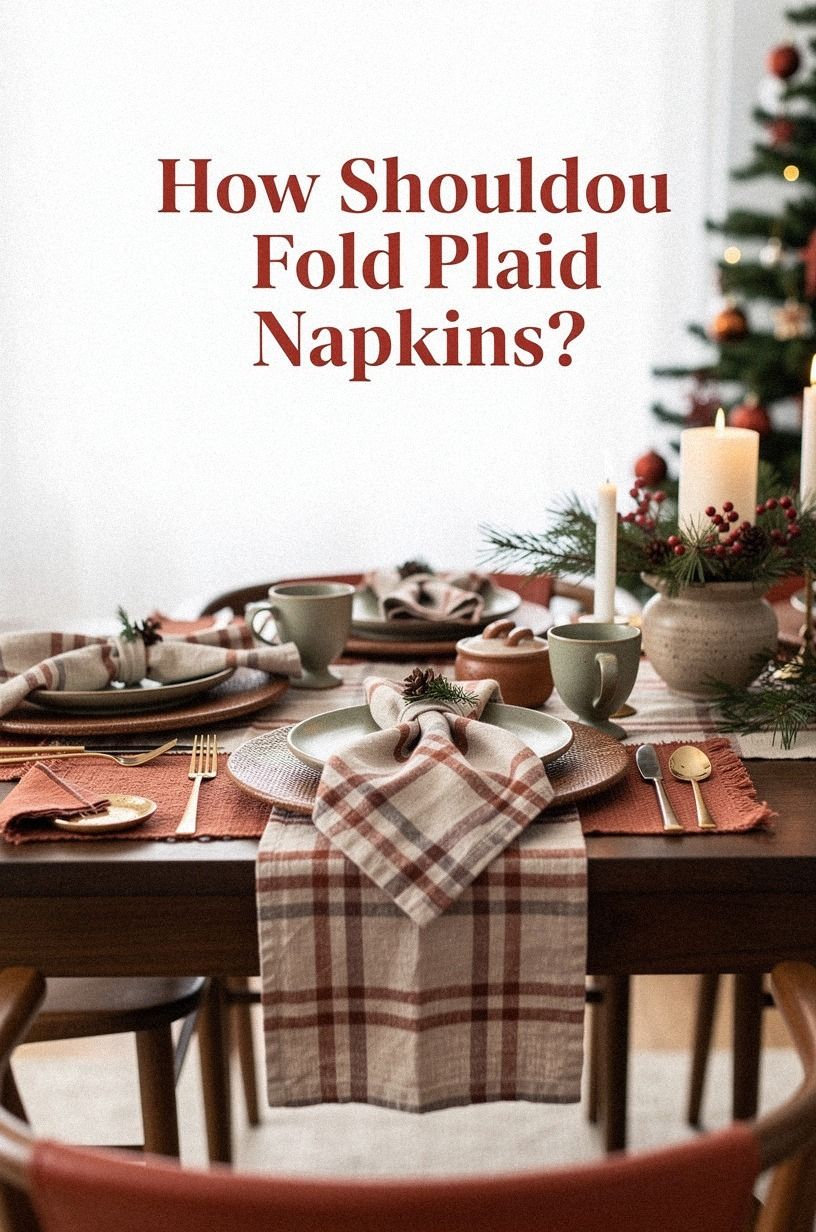
Fold red and white plaid napkins into loose squares and set them directly on stone-colored dinner plates. Add an olive napkin ring or a strip of washed Belgian linen for softness.
3Anchor the Christmas Plates With Greenery
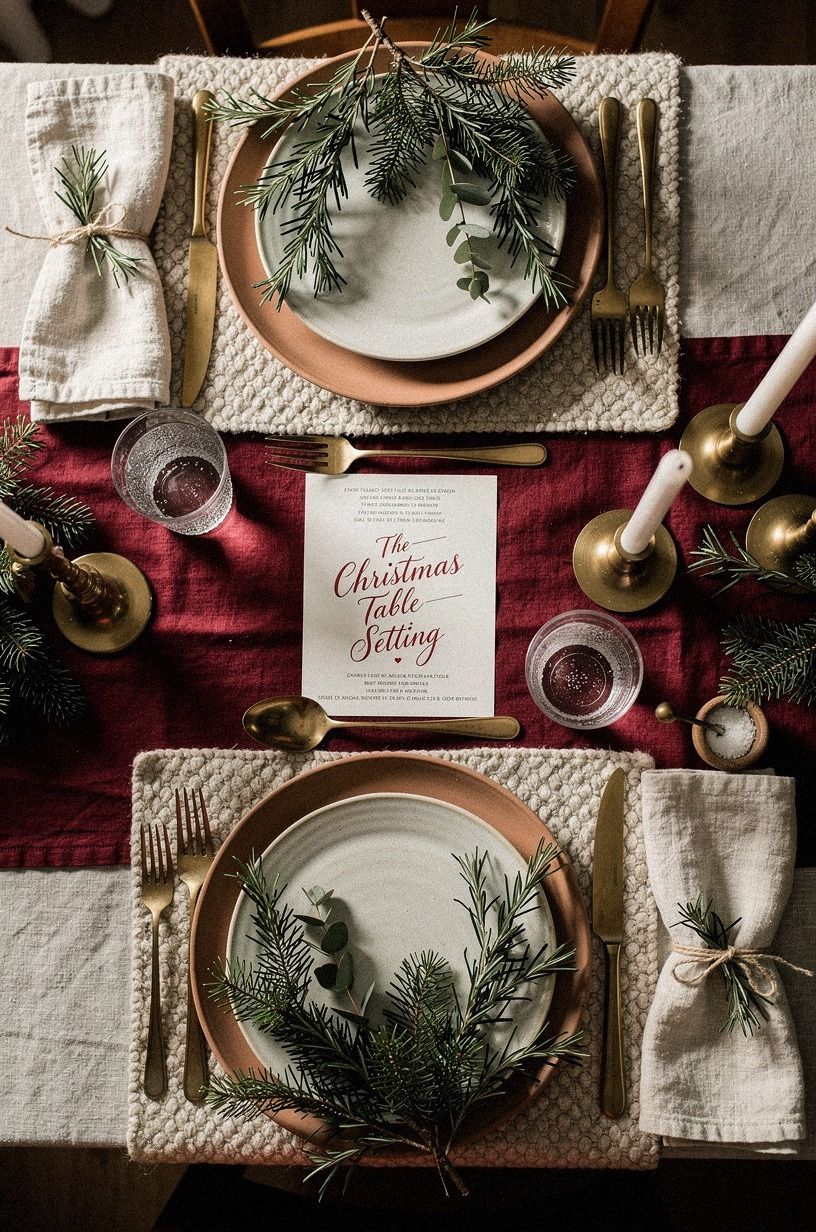
White Christmas plates look more intentional when you place a small evergreen sprig between the plate and the plaid napkin. Use cedar, pine, or eucalyptus with firm stems, then tuck the greenery under the top rim so it won't slide into someone's lap. A clay-toned accent and a little organic bouclé texture give the setting warmth without adding another strong color.
Your centerpiece should stay low enough that you can see across the table. I’d avoid tall arrangements unless your table is unusually wide. You want your guests to notice the warm candlelight and each other, not lean sideways to talk.
And if your dining area opens into the kitchen, repeat the same wood tone nearby. A white oak kitchen island centerpiece can make the plaid, greenery, and table feel connected without matching every object. I’ve found that one repeated material is usually enough.
4Apply the Two-Plaid Scale Rule
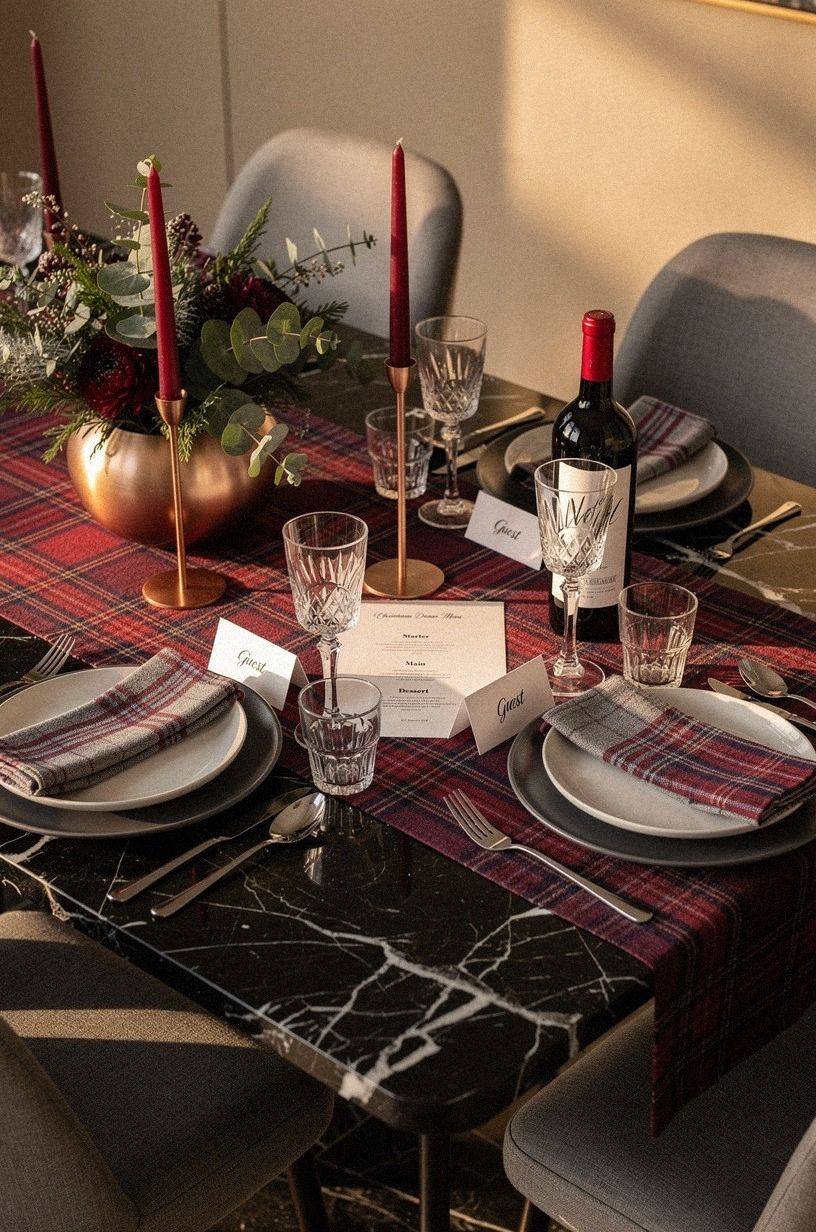
The Two-Plaid Scale Rule is simple: pair one large check with one small check, never two patterns of the same size. Use a wide plum-and-grey check runner and smaller gingham napkins, or reverse the arrangement if your napkins are the stronger textile.
Your eye needs one pattern to lead and one pattern to support. I’ve found that large checks work best on the runner because the pattern has room to breathe across the table. Small checks belong closer to each plate, where you can see the detail.
But don't add plaid chargers, plaid ribbon, and plaid chair ties all at once. That’s when a charming tablescape starts looking like a fabric store.
Choose two scales, then let white dishes and a Nero Marquina marble serving piece calm the composition. It works!
5Mix Wood Chargers With White Dishes
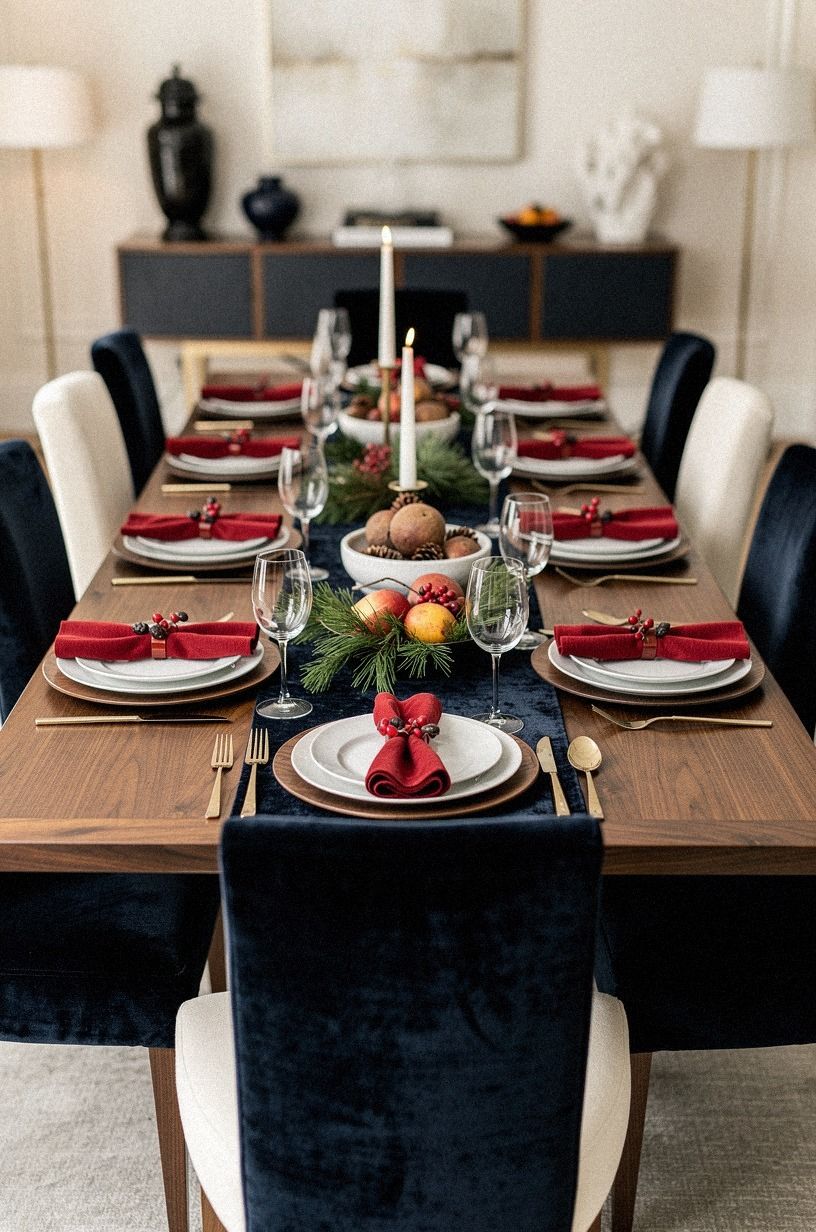
I like the contrast between walnut chargers and white dishes because both materials feel warm without competing with the fabric. Add a navy accent and a small deep-pile mohair velvet detail for softness.
6When Should You Light the Red Tapers?
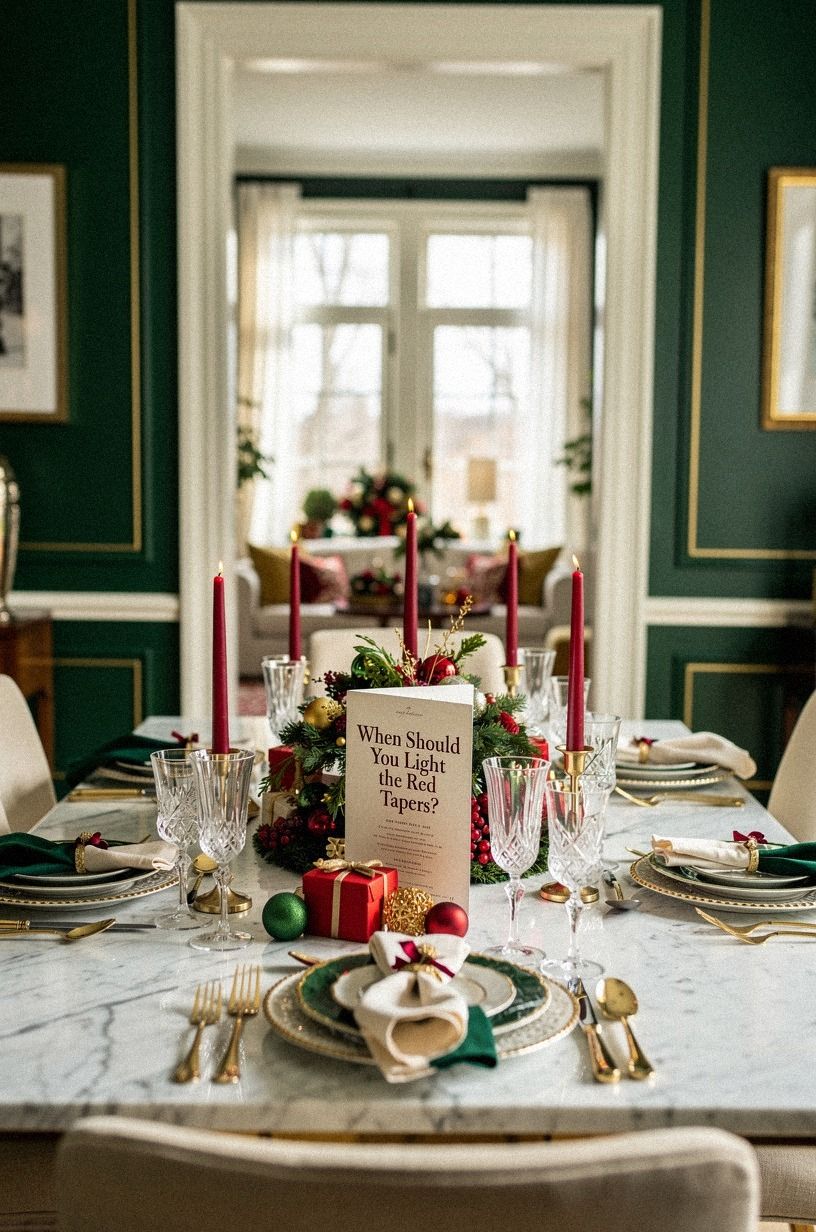
Build the Three-Source Glow Stack with one overhead light, several cream taper candles, and a low ambient lamp nearby. Three light sources keep your holiday table from looking harsh after sunset. Emerald green tapers or napkins beside the cream dishes feel richer than bright primary red.
Use candleholders with a stable base and keep the flame below eye level when people are seated. Your table should glow, not flicker directly into everyone's face. I’d choose gold over shiny silver because it adds warmth beside a Carrara marble base without introducing another bright surface.
And if you’re lighting the whole dining area, remember the practical rule of three sources per room: overhead, task, and ambient. You’ll get a softer, more inviting room when your plaid table isn't the only warm spot. That glow changes everything!
If you want the room to feel less stark, compare the effect with why hotels use white sheets. A warm bulb against a pale background lets the cream and emerald look deeper.
7Keep White Linen Under the Plaid
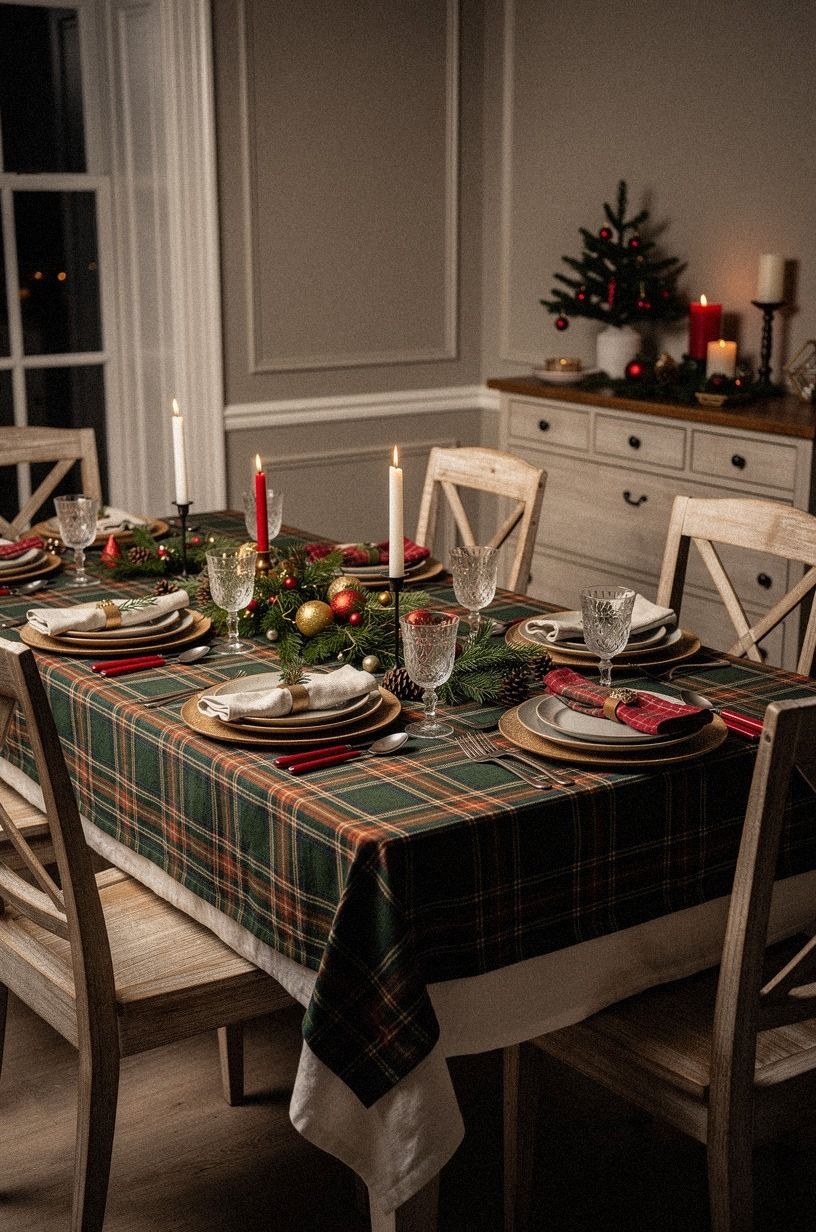
A white linen tablecloth makes red plaid look crisp, especially in a room with dark floors or painted walls. Let the cloth fall naturally instead of pulling it tight. Reclaimed weathered teak on a serving board can add weight and contrast while still standing up to a long family dinner.
Your plaid doesn't need to cover the entire table to feel festive. One runner, two napkins, or a few folded bands around the flatware can repeat the pattern enough. I’d avoid red tablecloths under red plaid because the colors blur together and the setting loses its lightness.
For a relaxed holiday table, combine white linen with forest green, rust, and natural oak. The contrast has the same quiet freshness people notice in white oak kitchen cabinet ideas, only on a smaller scale. You can keep the rest of the room very simple.
8Build Place Cards From Kraft and Plaid
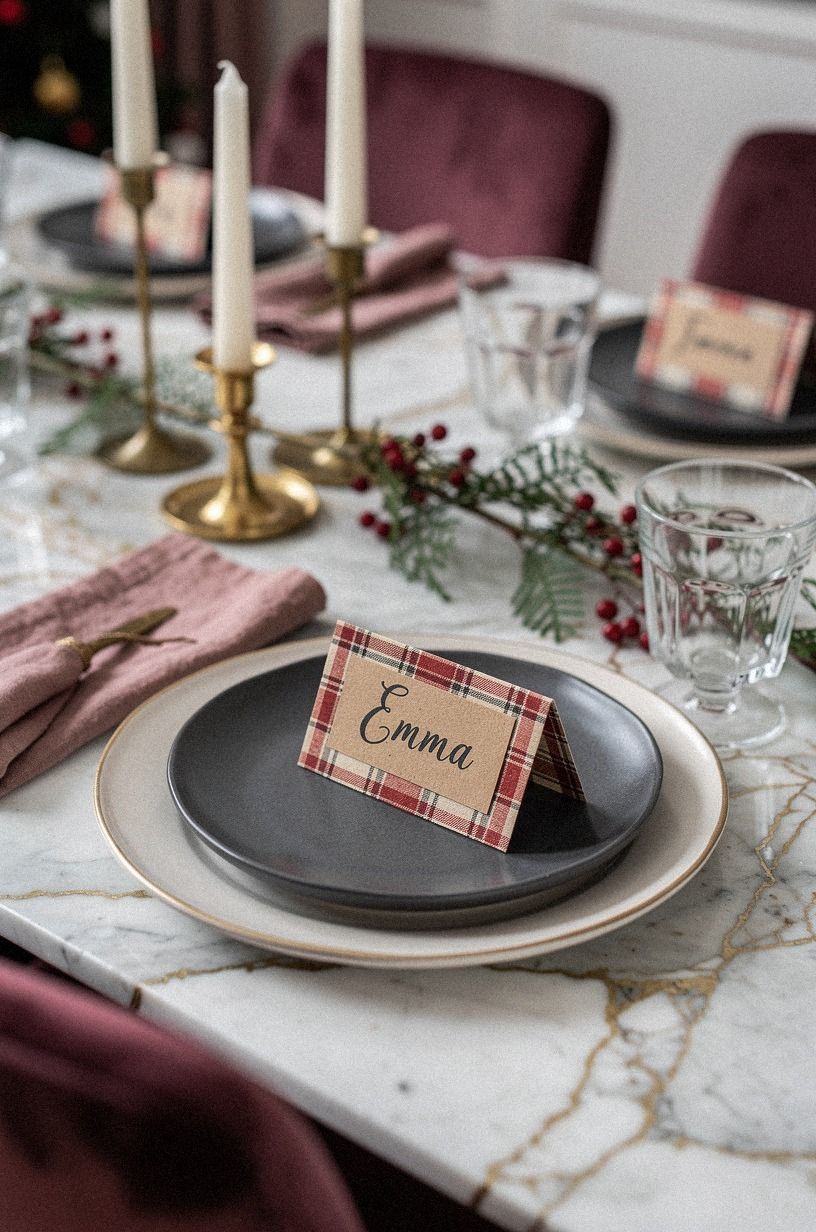
Make simple place cards from dusty rose card stock, then add charcoal lettering and a narrow plaid strip across the lower edge. Your guests will know where to sit, and the paper gives the red pattern a quieter frame. Cream plates and brass details make the combination feel finished.
Write names by hand if you can. The uneven lettering makes the table feel personal, even if you're setting it for a larger gathering. I’d skip glitter because it sheds into the food and catches every stray light in the room.
You can also tuck a tiny Calacatta marble place-card holder behind each card. It adds a warm veining detail without creating another centerpiece object. If you’re setting a larger room, repeat the pale wood found in these white oak kitchen island ideas with a tray or serving board.
9Let Clear Glass Make the Plaid Breathe
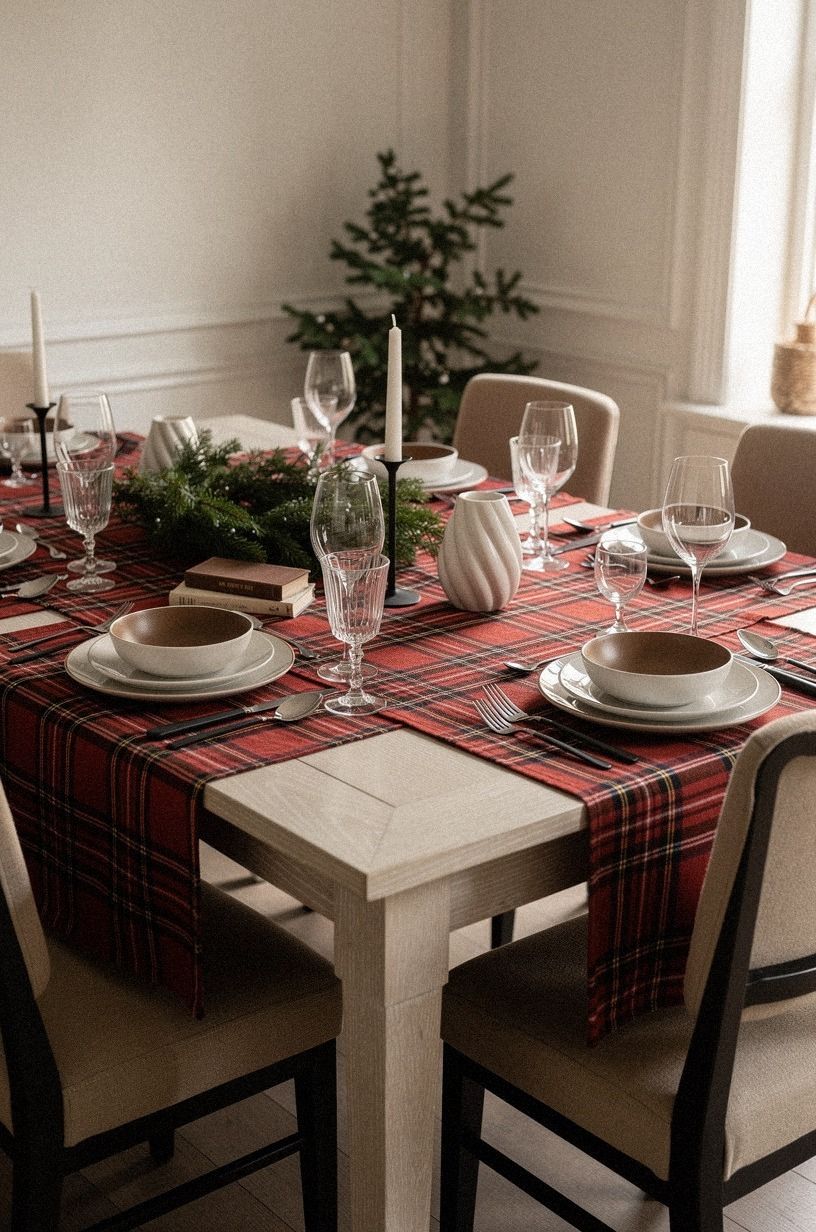
Clear glassware gives a plaid tablescape visual space. Use a simple tumbler for water and a narrow wine glass if you’re serving dinner, then let the red pattern show through the empty areas. Cerused white oak beneath the glassware adds texture without the heavy shine of crystal.
Your glasses should sit above the knife, about one plate width away from the center of each setting. You don't need a complete formal place setting for the table to feel considered. I’d rather see two useful glasses than four pieces nobody will touch.
And if you enjoy the clean hotel look, study the contrast in why hotels use white sheets. The same principle works here: a warm white base with camel and black accents lets your red plaid feel intentional instead of loud. You’ll notice the difference as soon as the candles are lit.
10Wood, Not More Pattern, Around the Centerpiece
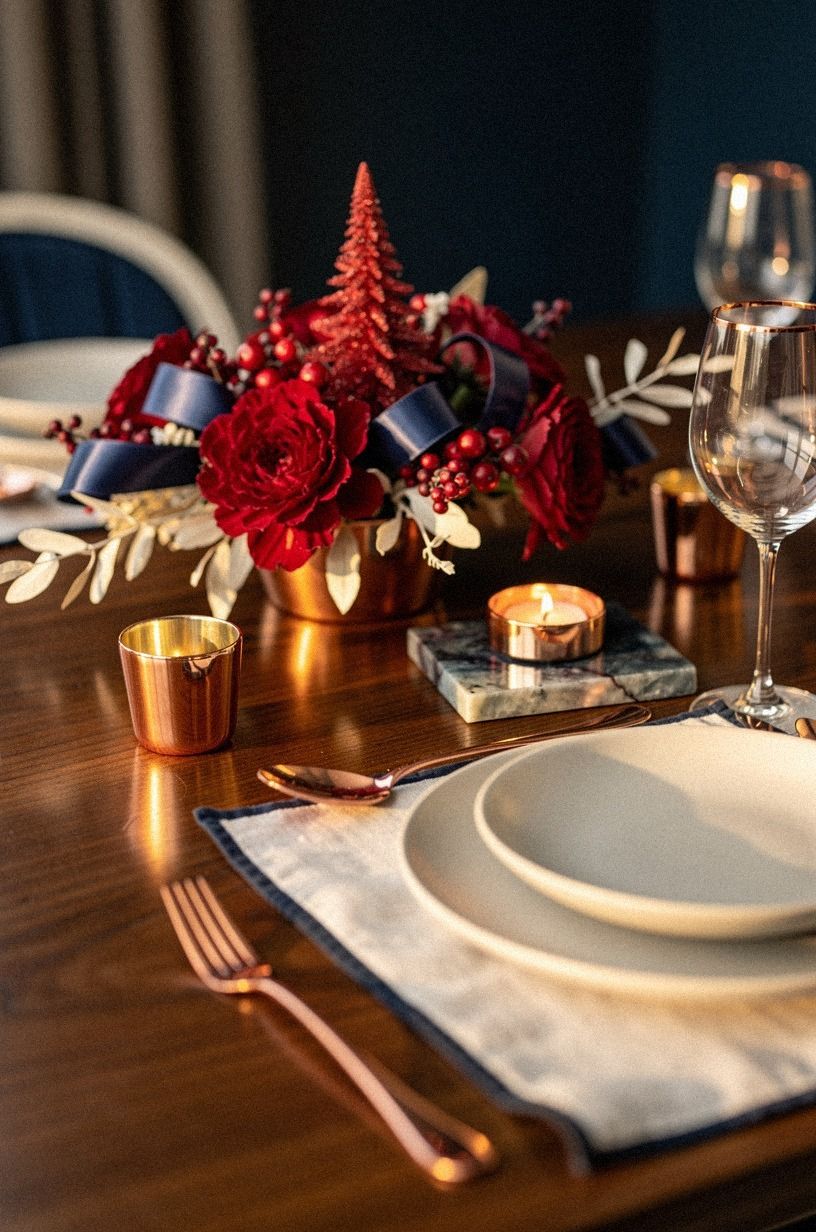
Place a long wooden board down the middle of the table and build the centerpiece loosely around it. Add ivory ceramics, midnight-blue napkins, and a small translucent onyx accent for depth.
11Tie Flatware With One Narrow Ribbon
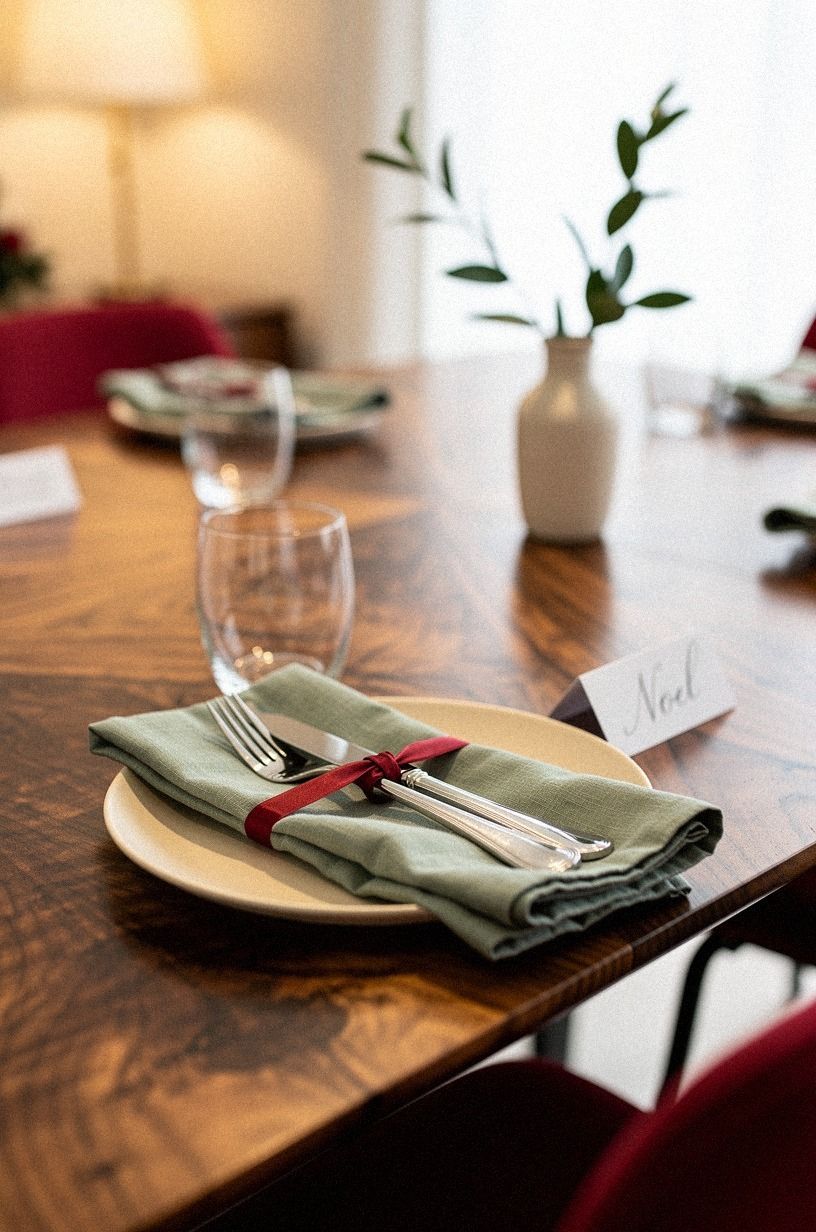
Wrap each flatware bundle with a narrow sage green and warm cream ribbon. Keep the bow small enough that it doesn't take over the plate, then place the bundle on the napkin or just above the setting. Book-matched walnut gives the arrangement a rich natural base.
Your ribbon should repeat the table’s main pattern, not introduce a third version. I’d choose a two-inch-wide check for a long table and a thinner strip for a small round table. The scale matters more than the bow itself.
You can also use a simple knot instead of a looped bow. That feels more modern and takes less time when you're setting many places. If you want the background to stay restrained, look at the pale cabinetry in these white oak kitchen cabinet ideas.
But don't tie the ribbon too tightly, or your guests will fight it before the first course. A table should look pretty and work easily.
12Use the Three-Height Centerpiece Stack
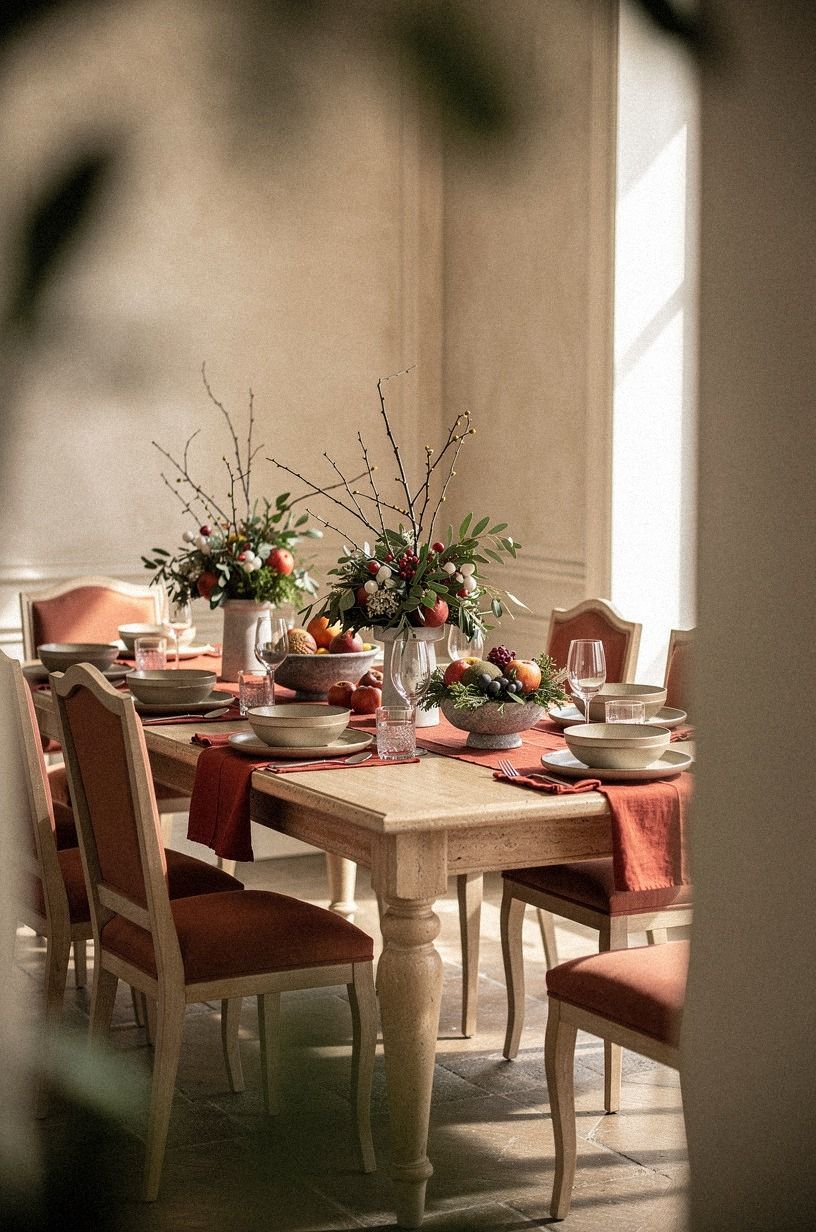
Create three visible heights: low olive greenery, medium stone candleholders, and one taller but narrow vase on a warm travertine base.
13Repeat Plaid on the Dining Chairs
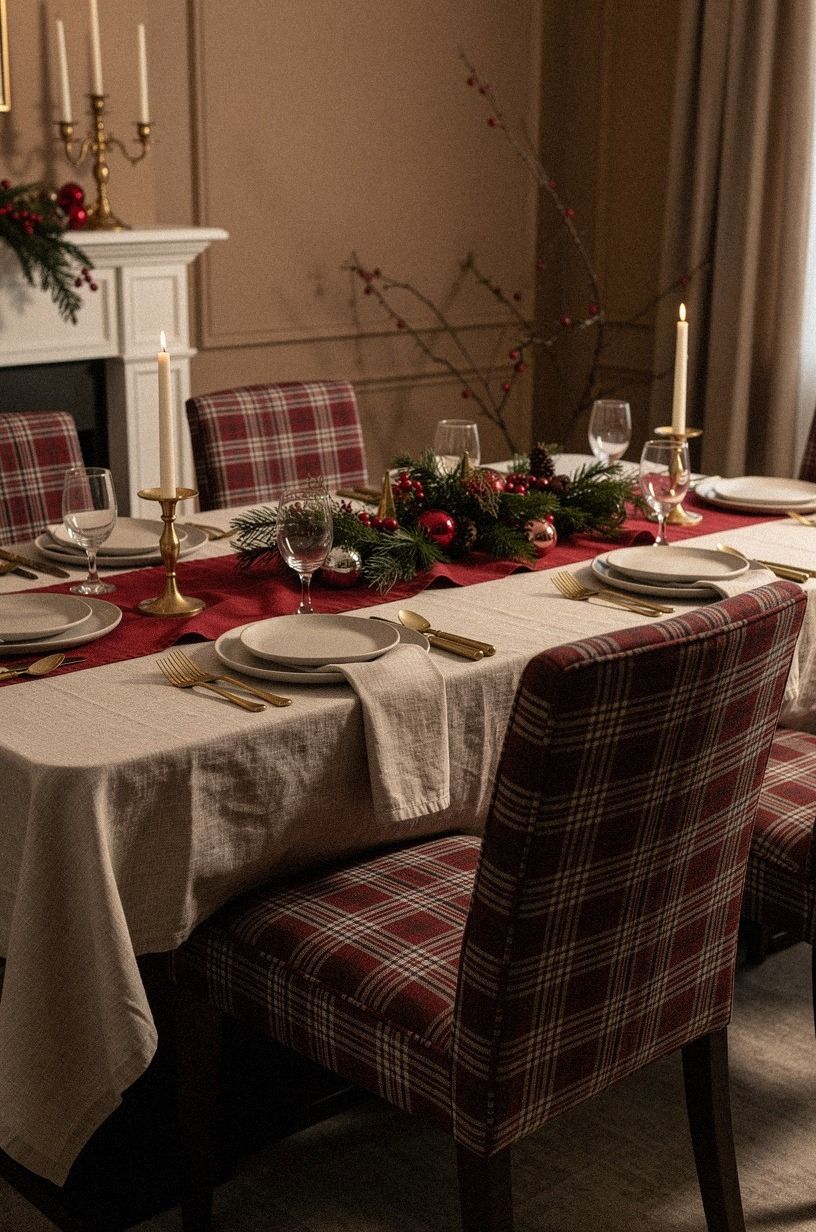
Tie narrow plaid bands around the backs of dining chairs to carry the pattern beyond the tabletop. Washed linen feels relaxed and tactile, especially beside painted wood chairs or dark leather seats. Use the same ribbon on every other chair if a full row feels too busy.
Your chair detail should be visible from across the room, but it shouldn't brush against anyone's shoulders. I’d secure each band with a flat knot and tuck the ends inward. Loose tails can look pretty for five minutes, then end up in the soup.
For a softer look, pair the plaid with clay upholstery and an aged brass detail. The muted materials keep the red from feeling sharp, and you won't need more holiday color. If you’re considering a hotel-like backdrop, why hotels use white sheets explains the appeal of calm, repeated neutrals.
That's enough! Let the chairs support the table instead of turning the whole dining room into a pattern display.
14Balance Red Plaid With Unlacquered Brass
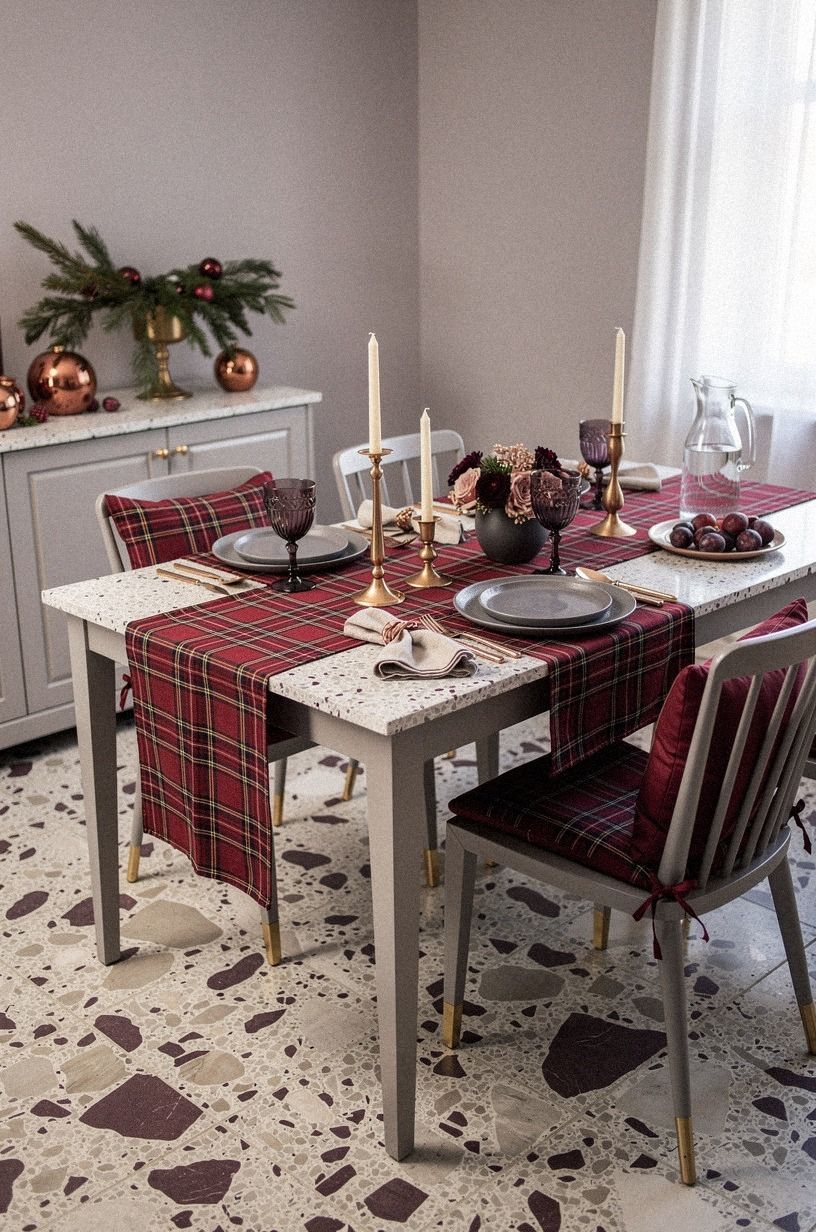
Rose gold brings a warm glint to a red and white holiday table. Use it in candleholders, napkin rings, or flatware, then keep the quantity controlled. An oversized-chip terrazzo accent adds texture, so it looks better with a few relaxed materials than with perfectly polished gold.
Your metal should support the plaid, not compete with it. I’d skip bright gold chargers because they make the table feel flashy and reduce the rustic charm. A few details in rose gold are enough to catch the candlelight.
And if you’re painting the dining room, Benjamin Moore White Dove OC-17 gives the metal and plaid a clean background. You can see a similar balance of pale surfaces and warm accents in white oak kitchen island ideas. I’d choose one warm metal and stop there.
15Choose Enamel Christmas Plates for Kids
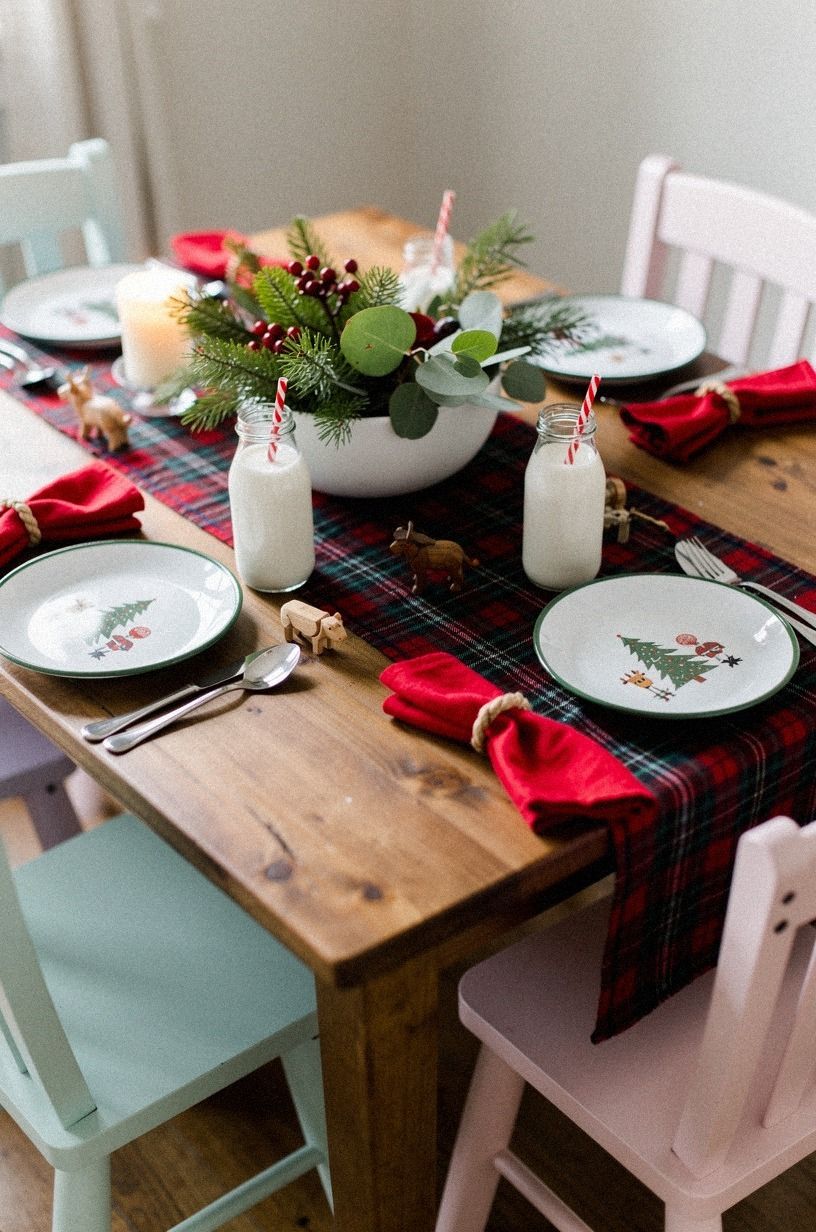
Use white enamel plates with a navy rim when children will be sitting at the holiday table. They’re lighter than stoneware and less stressful around crowded place settings. Hand-applied Venetian plaster nearby can add a soft handmade texture without making the table feel precious.
Your table can still feel intentional when the materials are practical. Add a plaid napkin, a walnut-handled spoon, and a small paper place card at each setting. I’d avoid fragile glass at the youngest seats, but you don't need plastic everything.
For a family table, keep the centerpiece low and move candles toward the adults. A shallow bowl of pinecones gives your kids something festive to look at without creating a spill risk. If you’re refreshing the adjoining kitchen, a pale wood accent from these white oak kitchen island ideas will keep the palette connected.
16Style a Narrow Holiday Table With Vertical Folds
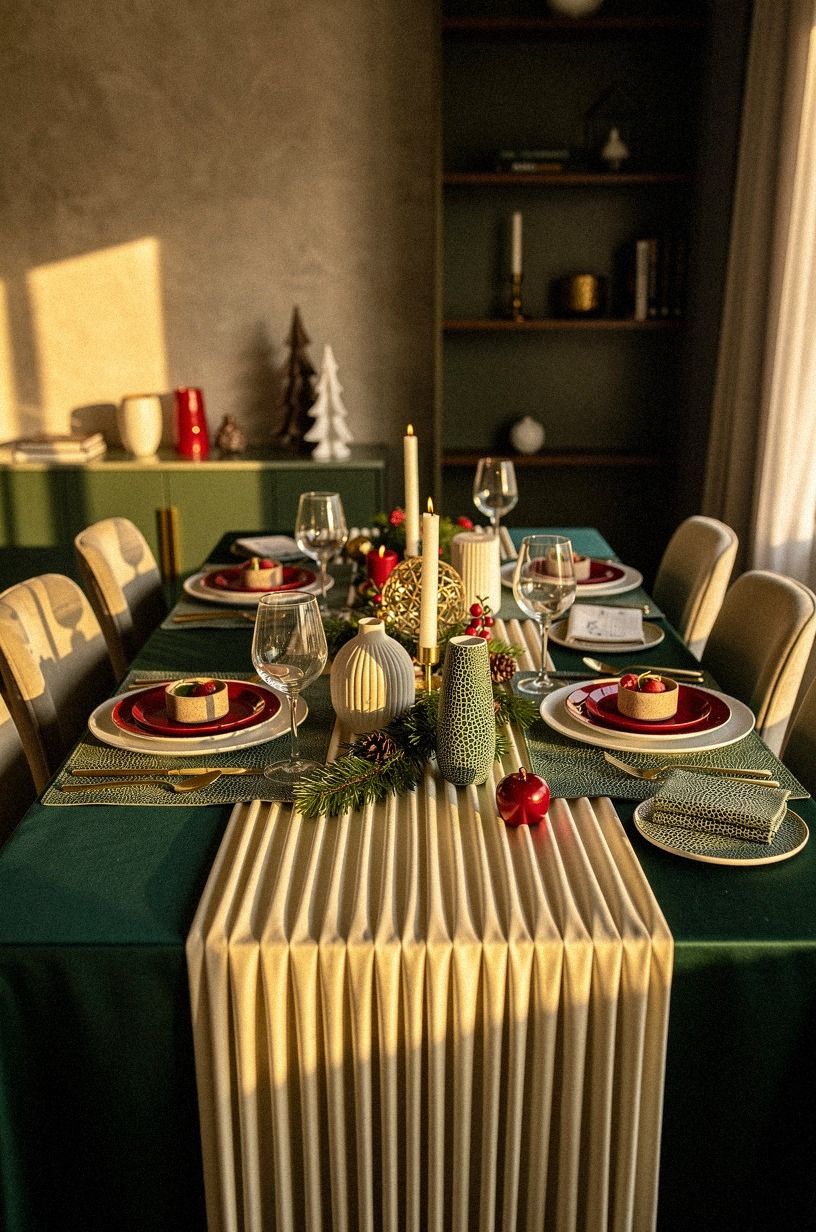
A narrow table needs height in the napkin, not width in the centerpiece. Fold each emerald cotton napkin into a slim rectangle and place it under the fork. The repeated vertical lines make the table feel taller.
Your centerpiece can be a row of small jars instead of one large arrangement. I’d use three cream glass jars with evergreen stems, spaced between the plates, because guests can still reach the serving dishes. A small shagreen tray can hold the serving pieces without crowding the table.
If your dining room is tight, use a wall color that reflects more light. Sherwin-Williams Agreeable Gray SW 7029 keeps the background calm, while emerald and gold add the energetic notes. The contrast is subtle, warm, and practical.
For more ideas about carrying a light palette through the room, see this oak kitchen cabinet guide.
17Frame a Rustic Plaid Tablescape With Greenery
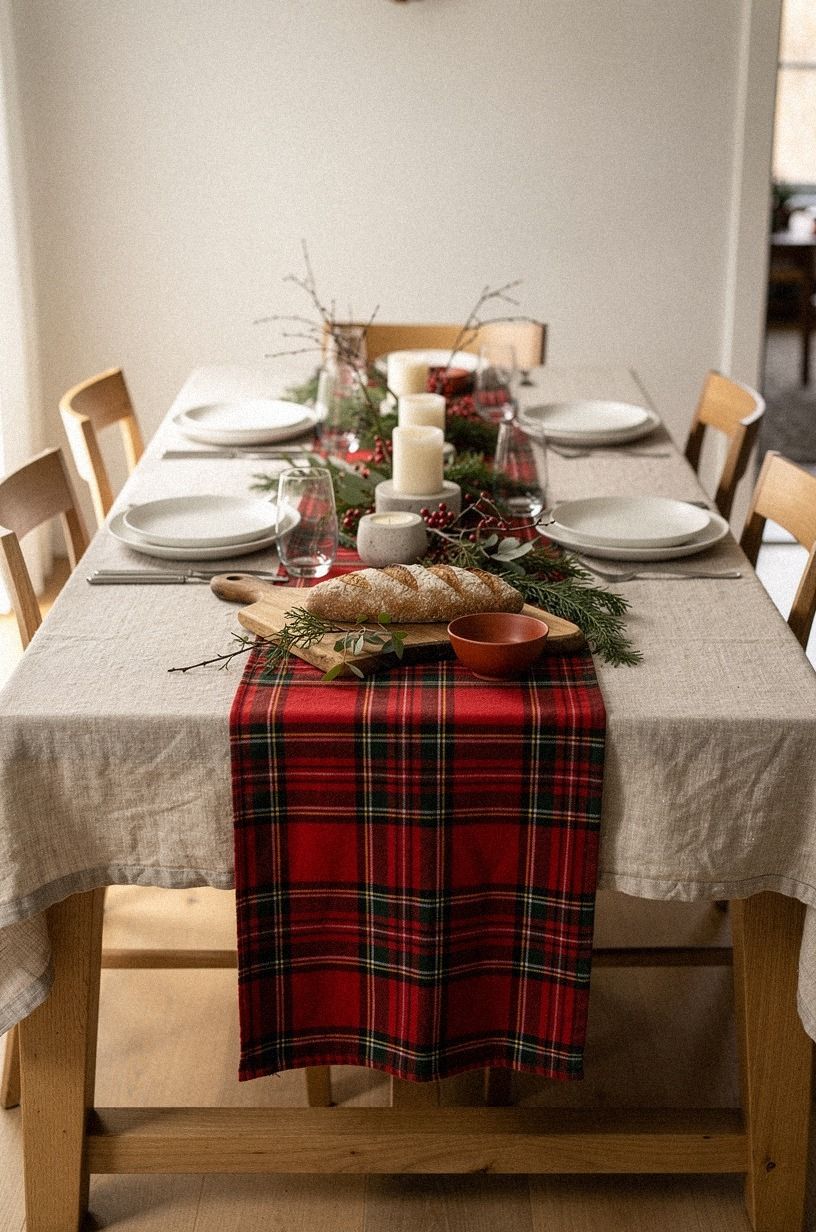
Frame the table with two low evergreen arrangements at opposite ends. Use washed Belgian linen, rust-colored accents, and natural oak to keep the greenery connected to the rest of the setting.
18Build the Look Around a Realistic Budget
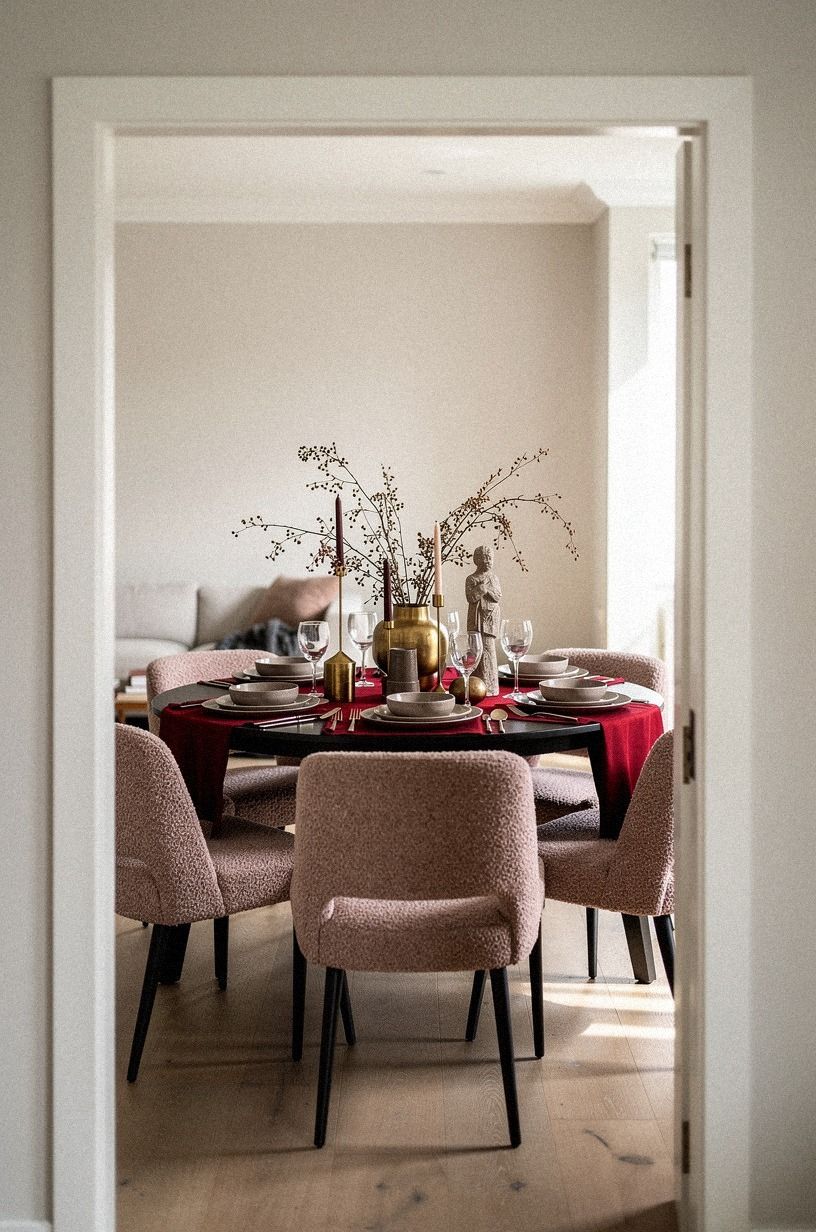
You can create a red and white plaid holiday table without treating every piece as a special purchase. Start with what you own, then spend on the textile guests will touch most. Dusty rose textiles, charcoal accents, and brass hardware can make modest pieces feel intentional, while an organic bouclé detail adds softness.
Use this table as a room-budget reference when you’re deciding whether to buy new dining furniture, lighting, or a rug. The plaid table itself can stay modest even when the surrounding room needs more investment. I’d rather see one useful purchase than six seasonal objects you’ll store for eleven months.
Your table doesn't need the high tier to feel inviting. I’d put your money into washable linen, stable candleholders, and one useful serving board. For broader material cost references, see white zellige tile bathroom ideas.
19Photograph the Contrast Before Dinner
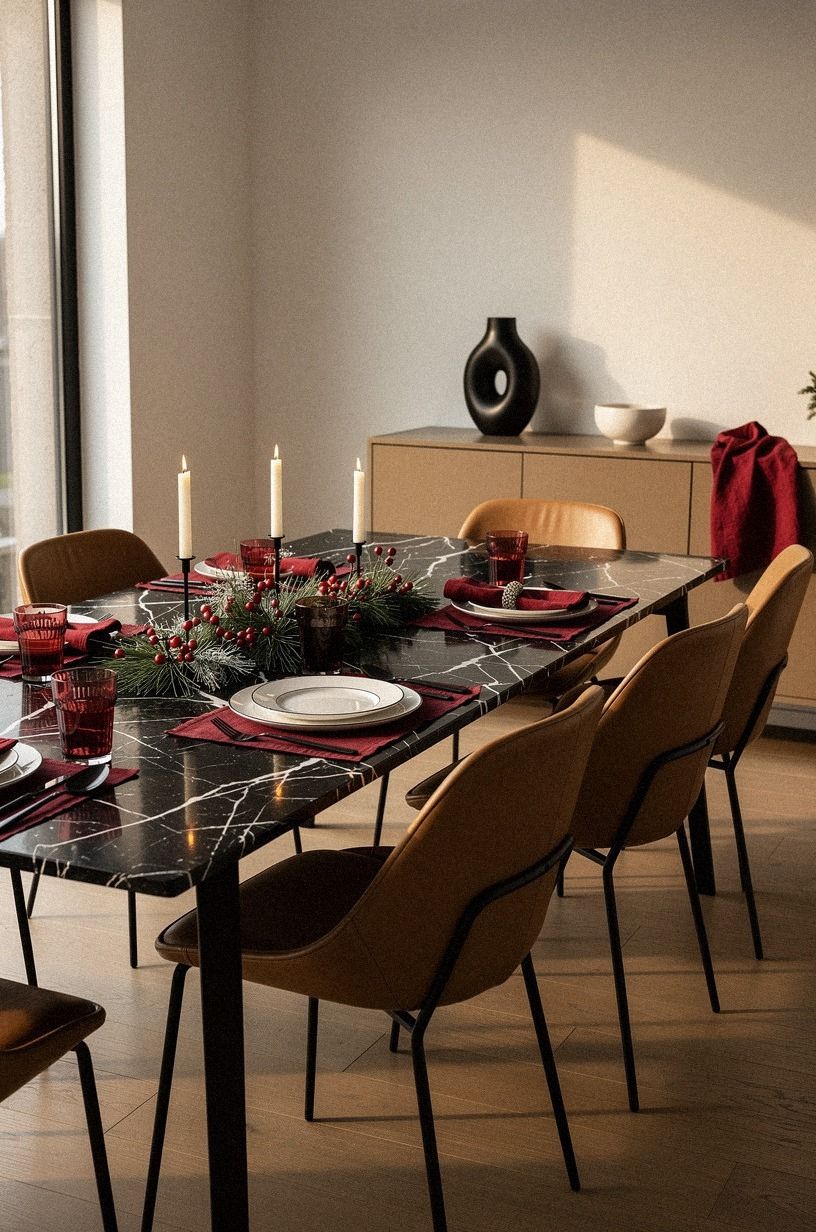
Set your final Christmas table with warm white linens, camel accents, and a few black details. A Nero Marquina black marble serving board can give the plaid a grounded contrast without adding another pattern.
Why I Keep Returning to Red and White Plaid
I used to think a holiday table needed more decoration to feel finished. More candles, more greenery, more little objects tucked around every plate.
The result was festive, but dinner felt cramped, and the table had no place for the food that mattered. I’ve changed my mind.
Red and white plaid works because it already carries a strong visual message. It says winter, warmth, and gathering before you add anything else.
The material matters more than the pattern name. A brushed cotton check feels relaxed and familiar.
A stiff synthetic check can look flat, especially under overhead lighting. I’d spend more time choosing the hand of the fabric than searching for another centerpiece.
Your guests will touch the napkins, shift the plates, and move the candles. Those small physical details decide whether the table feels comfortable.
I also keep coming back to white because it gives red somewhere to land. Benjamin Moore White Dove OC-17 is soft enough for a dining room, while Farrow & Ball Pigeon No.25 can bring a blue-gray note into the background.
Red looks richer against both than it does against a wall crowded with competing color. If you want to carry that pale-and-warm balance into the adjoining room, see these white oak kitchen island ideas.
The best version isn't the most expensive one. It’s the table where you can see everyone, pass the potatoes, and sit down without moving a forest of decorations.
That’s why I’d choose one plaid textile, one natural material, and one source of candlelight. The table will feel gathered rather than staged, and you’ll still have room for the people you invited.
A Few Things Worth Answering
What is the best Christmas table setting with red and white plaid for a small table?
A plaid napkin over a plain white plate is the easiest choice for a small table because it uses almost no center space. IKEA TONSTAD wood tones can warm the setting, while a low bowl keeps your sightline open. You’ll get pattern, contrast, and breathing room without a large centerpiece.
Where can I buy red and white plaid table pieces on a budget?
Check Target, IKEA, Wayfair, Facebook Marketplace, and local thrift stores for napkins, runners, and wood chargers. You don't need a matching set. A secondhand tray and new cloth napkins can carry the look.
For a calm bedroom-inspired base, see why hotels use white sheets.
How much does a red and white plaid makeover cost?
A small tablescape can cost about $200 to $800 if you’re also buying paint, textiles, art, or organization for the room. The free pieces are greenery from your yard, plain dishes you own, handwritten cards, and reused ribbon. A careful $200-$800 plan can still look warm and finished.
Can I create this Christmas table setting on a budget?
Yes, and you can start with three low-cost moves: fold napkins from fabric you already own, use evergreen clippings, and group existing candles on a wood board. Your strongest purchase should be one washable plaid textile that you’ll use every December. You can also compare the surrounding room with our oak kitchen cabinet guide.
Is red and white plaid worth it in a small space?
Yes, because a small space benefits from one clear pattern instead of many competing accents. Keep your centerpiece low, use white plates, and place the plaid on napkins rather than across the entire table. You’ll get a warm result without making the room feel tighter.
Is red and white plaid a good idea for a rental?
Yes. Use removable hooks for chair ribbons, a tension rod for nearby fabric, and freestanding candleholders instead of wall-mounted fixtures. Target Threshold textiles can give you the seasonal color, and you won't need to paint or drill to make the table feel finished.
Where I'd Start First
If I had to pick one, I'd start with plaid napkins over plain white plates. The pattern stays close to each guest, so it feels intentional without crowding the table. Pin the idea for later and compare it with our white oak kitchen cabinet guide before you style the whole room.