
 by
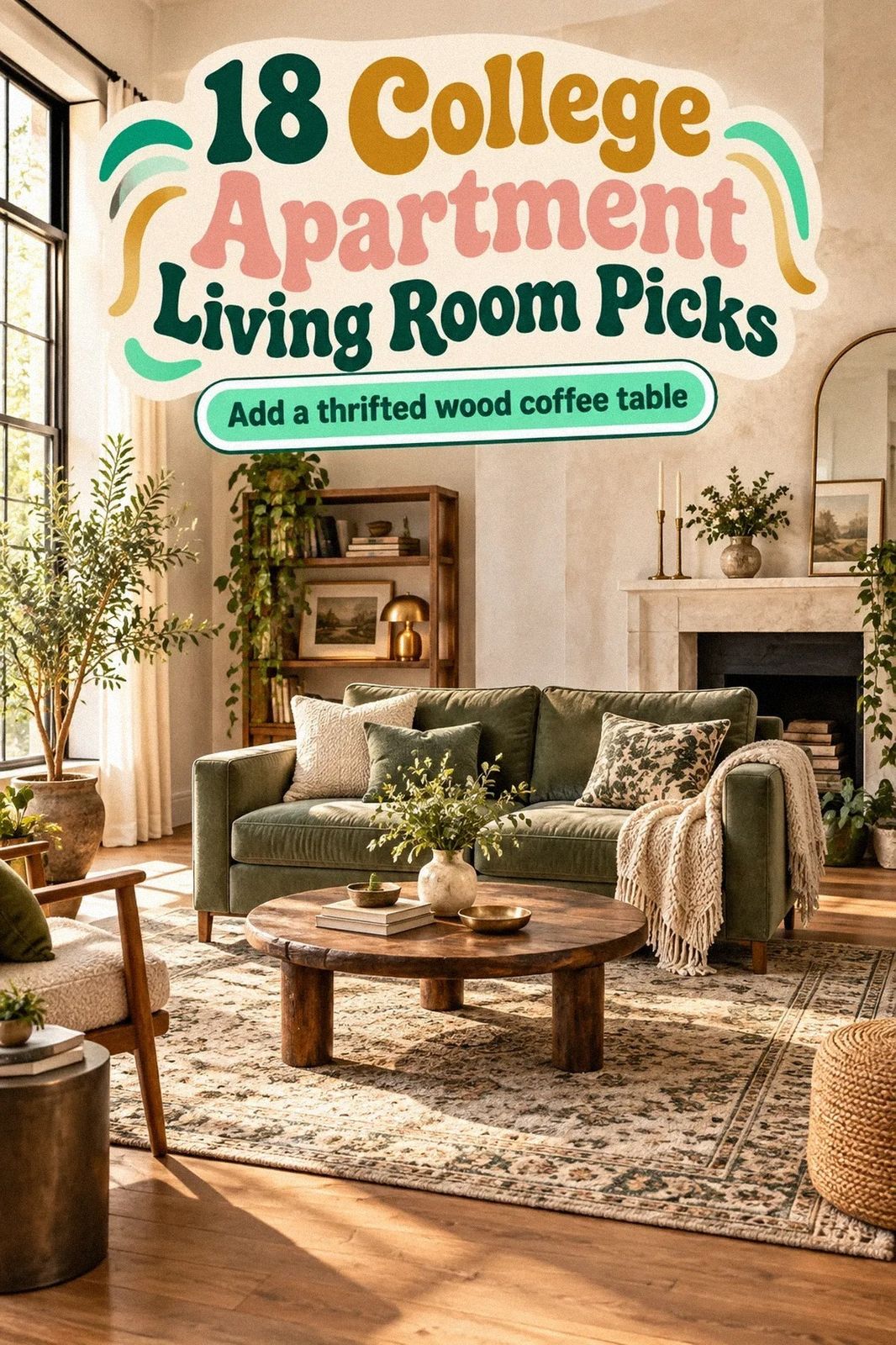
by 18 College Apartment Living Room Ideas on a Student Budget can make a rental look collected for about $300 to $1,200, depending on what you already own. I once bought decor before measuring the room, and the result felt crowded instead of warm. You’ll get a better room by fixing scale first, then adding personality.
Editor's note: Start with the pieces that change how the room works: the rug, lighting, storage, and walking route. The decorative layer comes later, and it’ll look much more intentional when the foundation feels right.
- Layer a two-seat sofa over an 8x10 rug
- The Floating Sofa Rule Creates Breathing Room
- Why Farrow & Ball Hague Blue Works on One Wall
- Build The Three-Height Light Stack
- Let One Large Print Lead the Gallery Wall
- Open Storage Beats Bulky Cabinets
- How Long Should the Coffee Table Be?
- Mix Two Woods with The Two-Wood Rule
- Hang Curtains High with a Tension Rod
- Frame the Television with Renter-Friendly Texture
- Layer Textiles to Mark the Living Zone
- Can a Small Dining Corner Do Double Duty?
- Repeat One Color for a Calm Common Room
- Choose One Hero Chair, Skip the Matching Set
- What Should You Spend Before You Shop?
- Benjamin Moore Revere Pewter and Calm Contrast
- Make the Entry Edge Earn Its Space
- The Five-Minute Reset
1Layer a two-seat sofa over an 8x10 rug
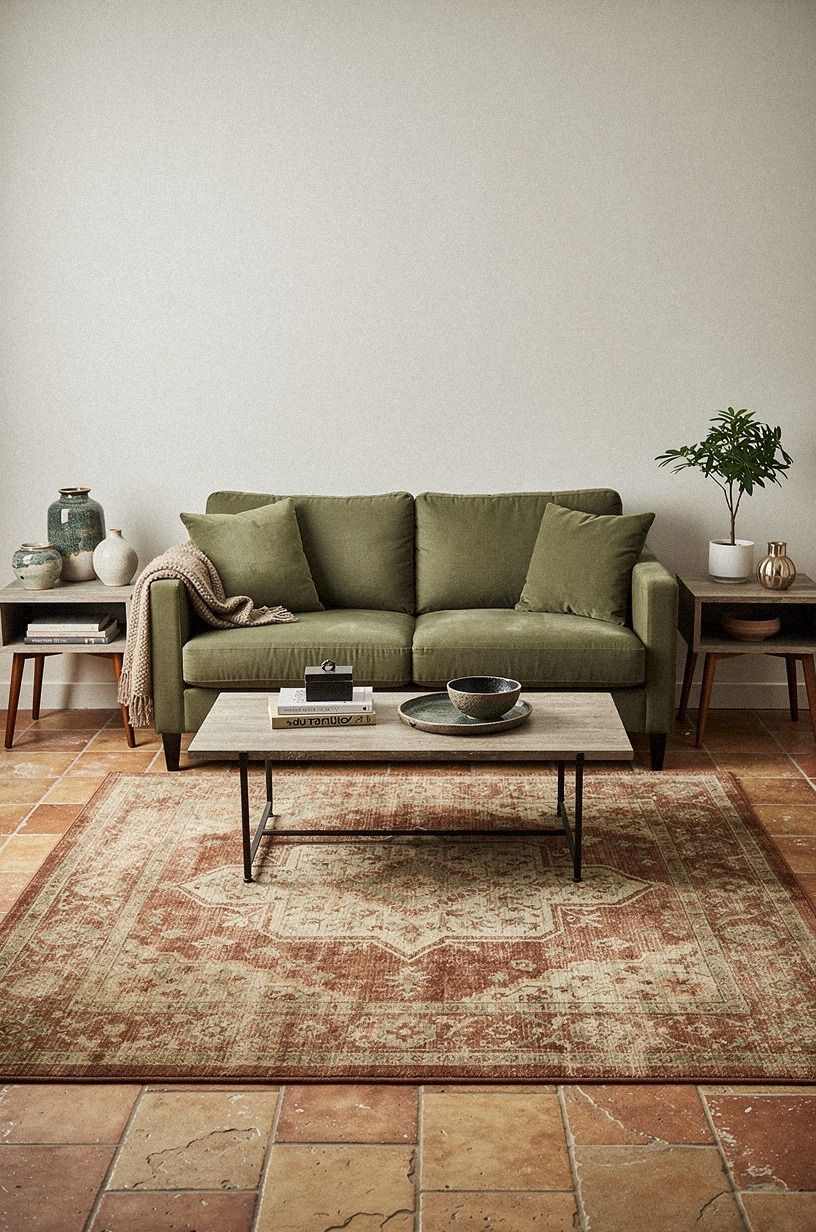
Start with the rug, not the throw pillows. Your sofa should sit with its front legs on an 8x10 rug, which visually joins the seating instead of leaving each piece floating alone.
If your apartment is narrow, measure the sofa before shopping because standard sofa depth runs 35 to 40 inches. I’d skip a tiny mat under the coffee table. It makes your room look chopped into islands.
Choose a low-pile rug with quiet terracotta, stone, and olive tones. Add one small shagreen accent, such as a tray or pillow, so the space has texture without making it feel busy. For more layout help, browse these easy first apartment decor ideas, then tape your rug dimensions on the floor before buying.
If an 8x10 rug overwhelms the room, place a smaller 5x8 rug so its long edge still connects the sofa and chair. The goal is a grounded seating area, not a strict measurement contest. A generous rug can make even thrifted furniture feel more settled.
2The Floating Sofa Rule Creates Breathing Room
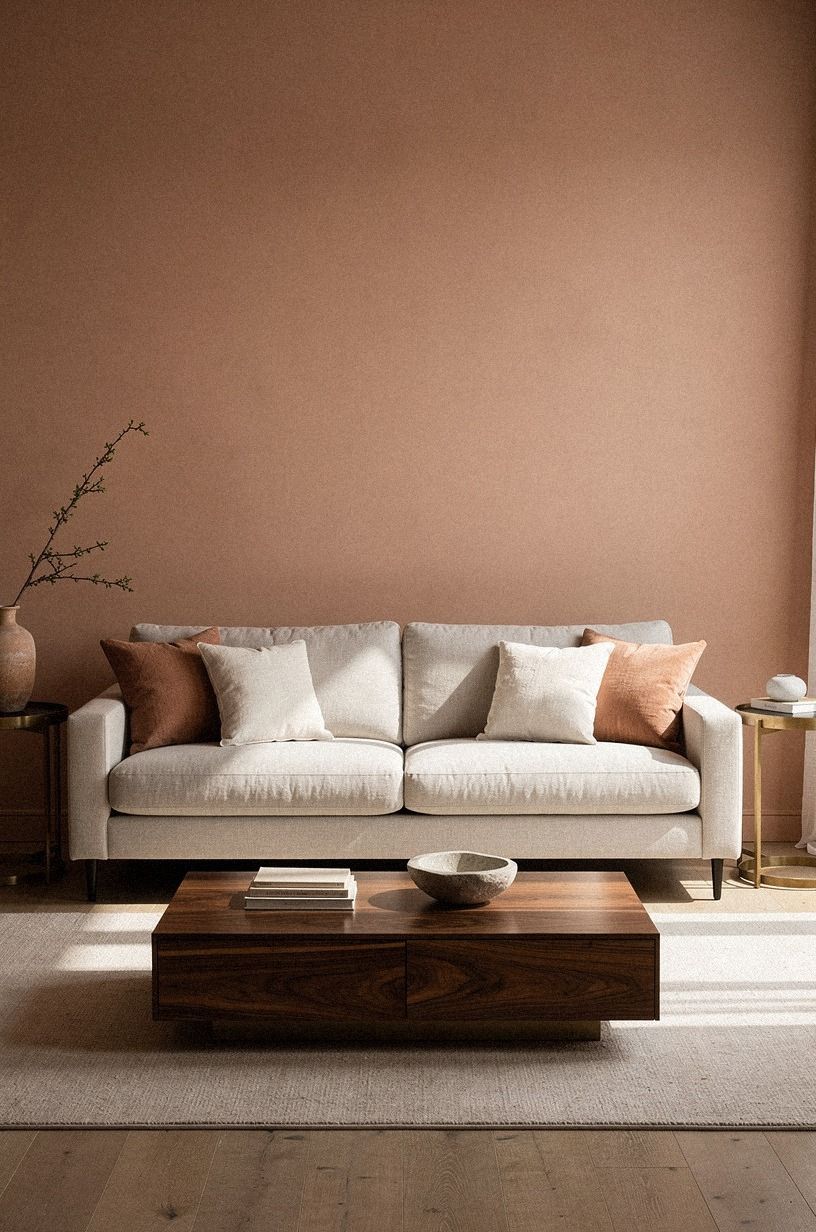
The Floating Sofa Rule means pulling your sofa a few inches away from the wall when the room allows it. Even 6 inches can create a slim walkway and make your living room feel more intentional. Your eye reads the open strip as breathing room, while the sofa becomes part of the conversation area instead of a piece pushed into storage mode.
I’ve tried this with an IKEA KIVIK loveseat, and it worked best when the back faced the kitchen rather than a blank wall. Don’t force the arrangement if you need every inch for circulation. You’ll want at least one clear path from the entrance to the main room.
A narrow book-matched walnut console table behind the sofa can hold keys, chargers, and a small aged-brass lamp without stealing much space. If the room is too tight, float only one end of the sofa and leave the other near the wall. That small shift can still feel surprisingly polished.
3Why Farrow & Ball Hague Blue Works on One Wall
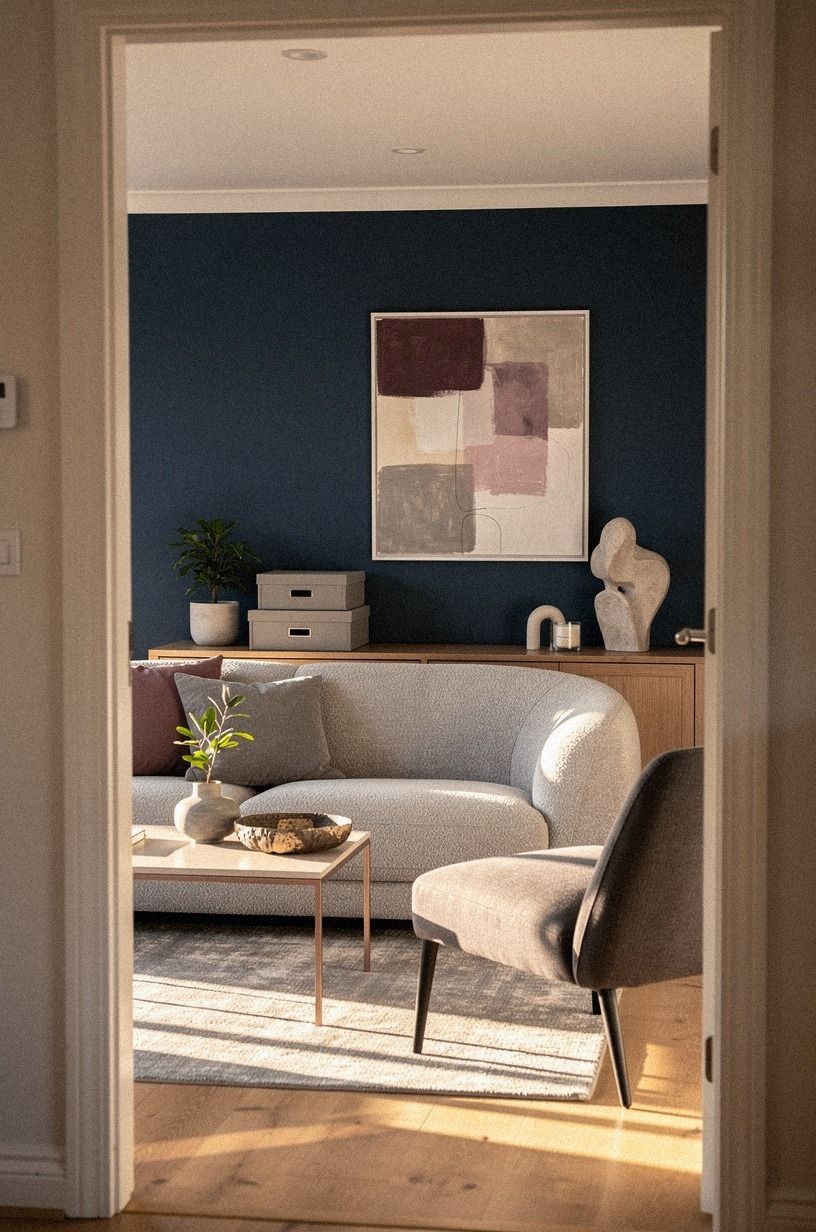
One painted wall can give your campus apartment decor a richer backdrop without turning the whole rental dark. Farrow & Ball Hague Blue No.30 works as a deep blue reference behind a sofa, especially when the rest of the room carries plum, grey, and rose-gold notes. I’d avoid painting every wall in a small room unless you’ve tested the color from morning through evening.
Use removable hooks for art and keep the rest of your pieces light. A framed print, a woven basket, and an organic bouclé pillow will soften the saturated wall.
A rose-gold frame can add warmth without making the wall feel overly formal. If you’re nervous about paint, choose a smaller wall near the television first.
You’ll still get a dramatic focal point, and you won’t have to solve four competing corners. For a renter-friendly palette, pair the blue with soft grey, muted plum, or a restrained rose-gold accent. The contrast feels moody but welcoming rather than heavy.
4Build The Three-Height Light Stack
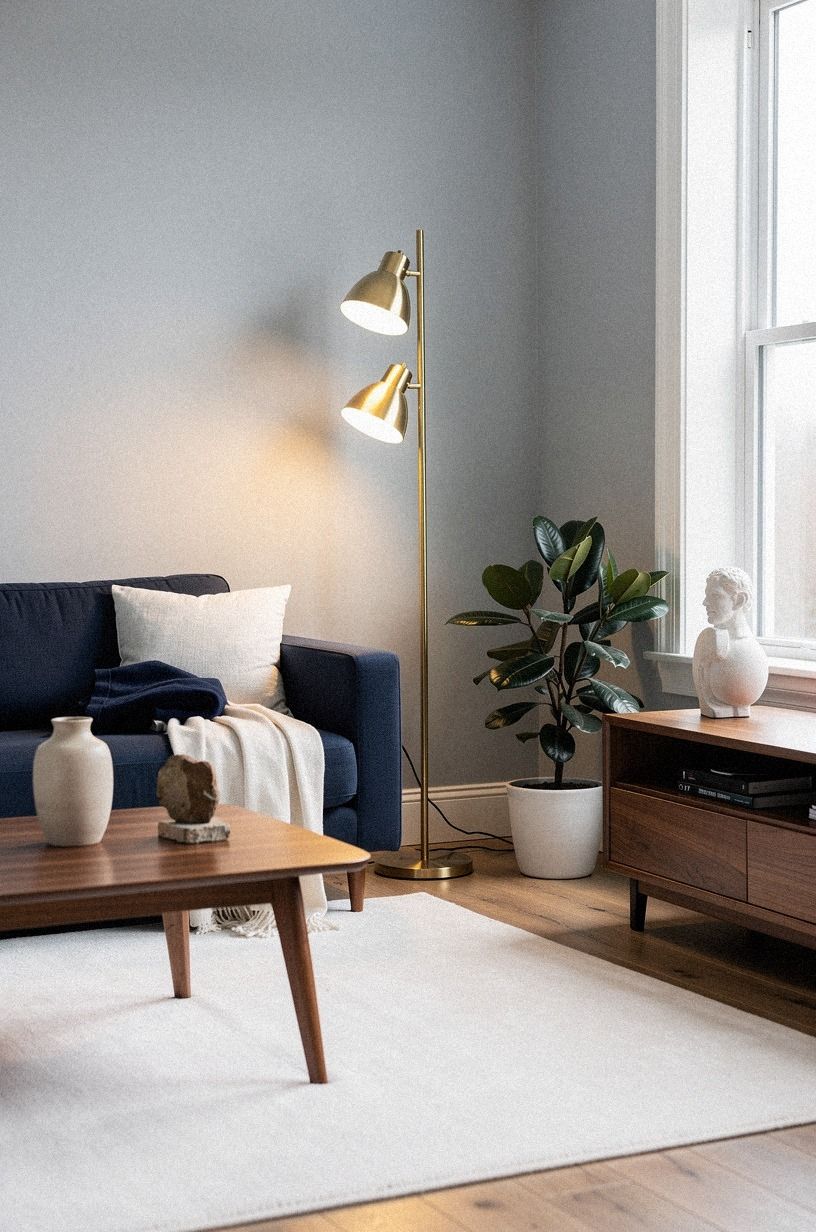
The Three-Height Light Stack uses a ceiling fixture, a table lamp, and a low floor lamp so your room doesn’t depend on one harsh bulb. Your eye moves through different pools of light, which makes even basic furniture feel warmer and more layered. I’d skip cool white bulbs because they flatten every fabric and make evening studying feel like a hallway.
Try an IKEA FADO table lamp on a book-matched walnut side table, then add a slim floor lamp beside the sofa. Choose warm white bulbs and an unlacquered brass finish if your budget allows. The brass will develop a gentle patina instead of looking overly polished.
For a room with little daylight, these no-window living room ideas can help you spread brightness without adding clutter. Aim for 2700K warm bulbs in the lamps you use most. Navy upholstery, white walls, and walnut furniture will feel softer under that layered light.
5Let One Large Print Lead the Gallery Wall
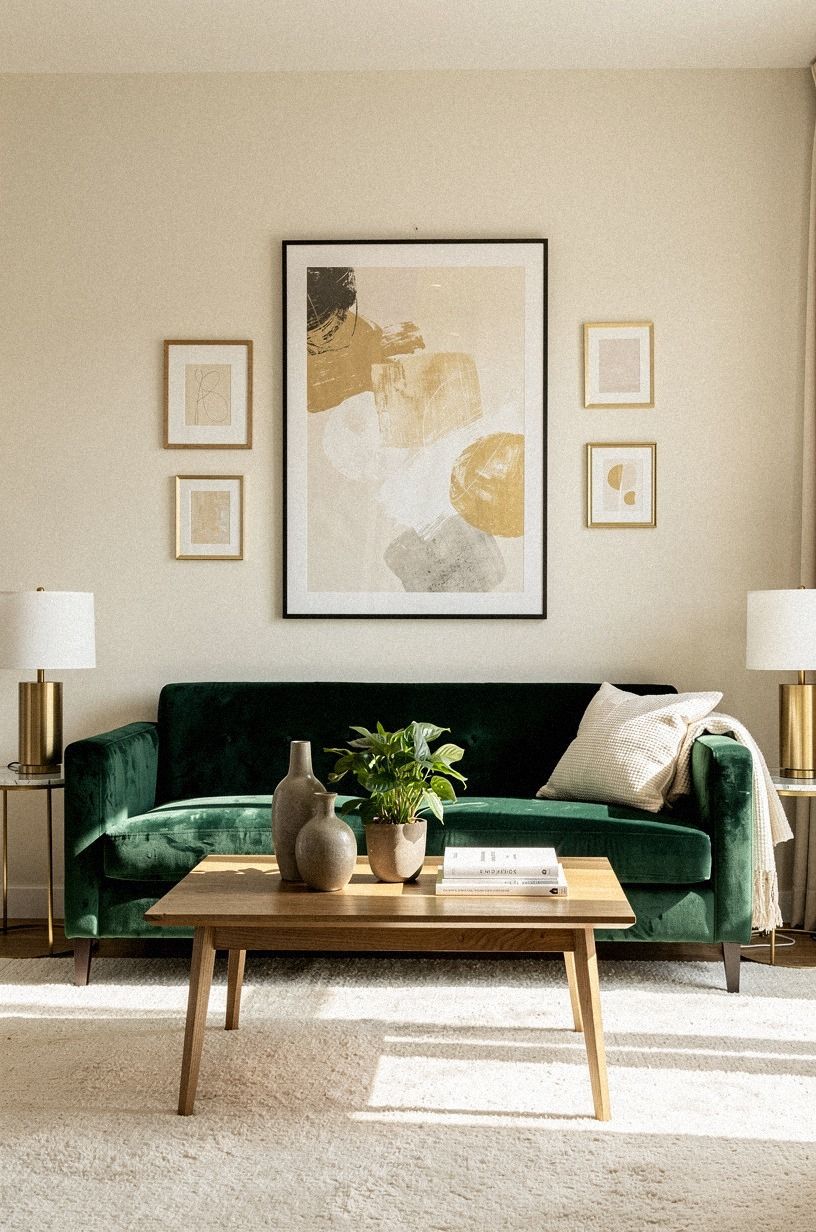
A gallery wall looks polished when one piece leads and the smaller frames support it.
6Open Storage Beats Bulky Cabinets
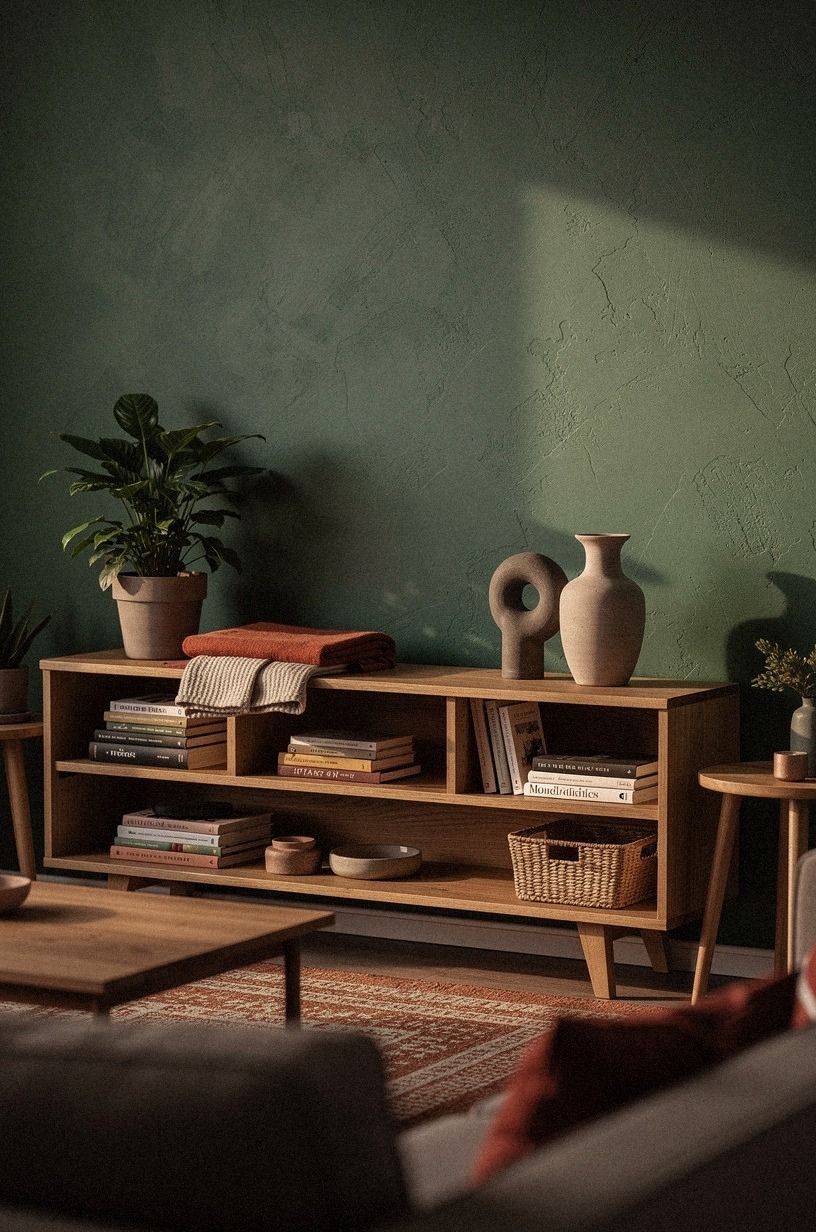
Open storage works well in a college living room because your books, games, and baskets can shift as your semester changes. A low IKEA KALLAX natural-oak unit gives you compartments without the visual weight of a tall cabinet. Forest green, rust, and natural oak will make the piece feel warmer and more considered.
Use one rust-colored fabric bin for chargers, one for blankets, and one for papers that don’t yet have a home. Don’t fill every cube just because it’s available. I’d rather see three intentional stacks than twelve crowded compartments.
If you’re sharing the apartment, label the hidden bins by roommate or purpose. This guide to hidden toy storage ideas for a grown-looking living room has smart ideas for keeping everyday mess out of sight. A small area of hand-applied Venetian plaster can add tactile interest behind the unit without requiring more objects.
7How Long Should the Coffee Table Be?
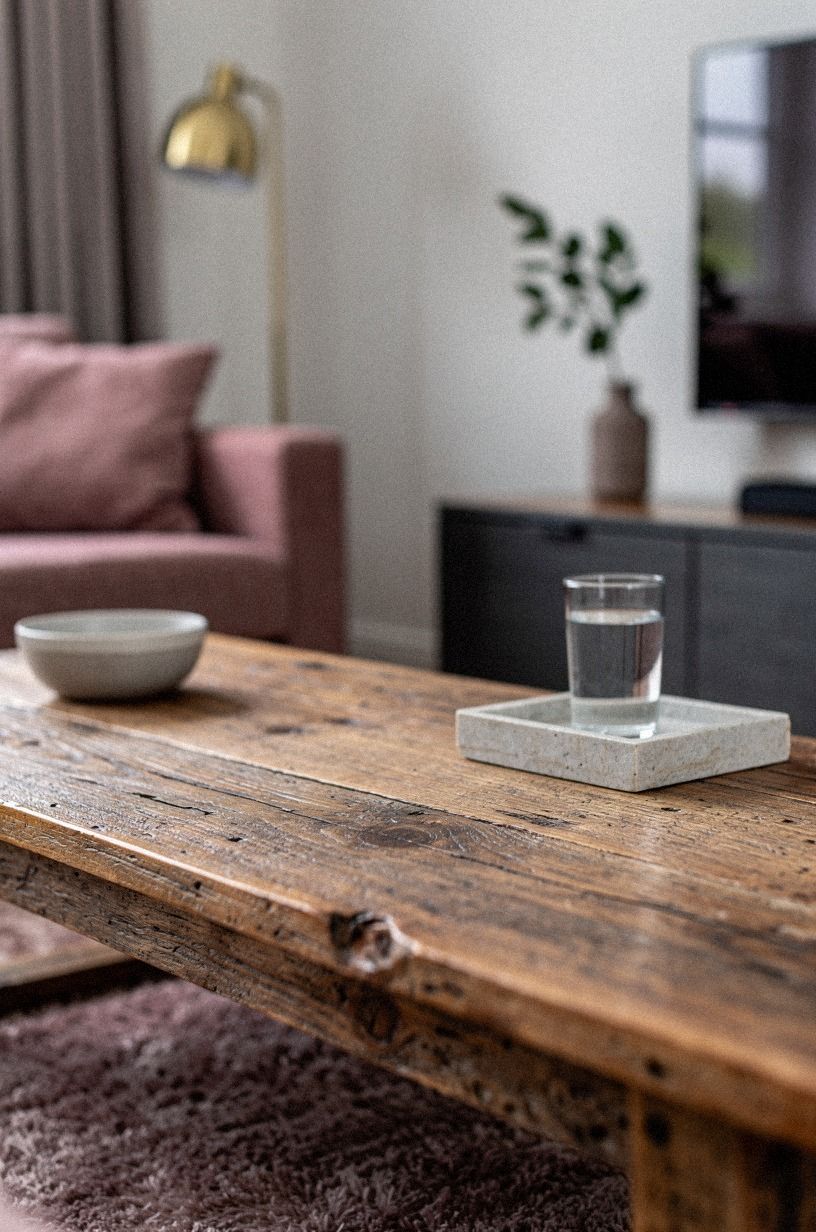
Your coffee table should be about two-thirds the length of your sofa and roughly 16 to 18 inches tall.
8Mix Two Woods with The Two-Wood Rule
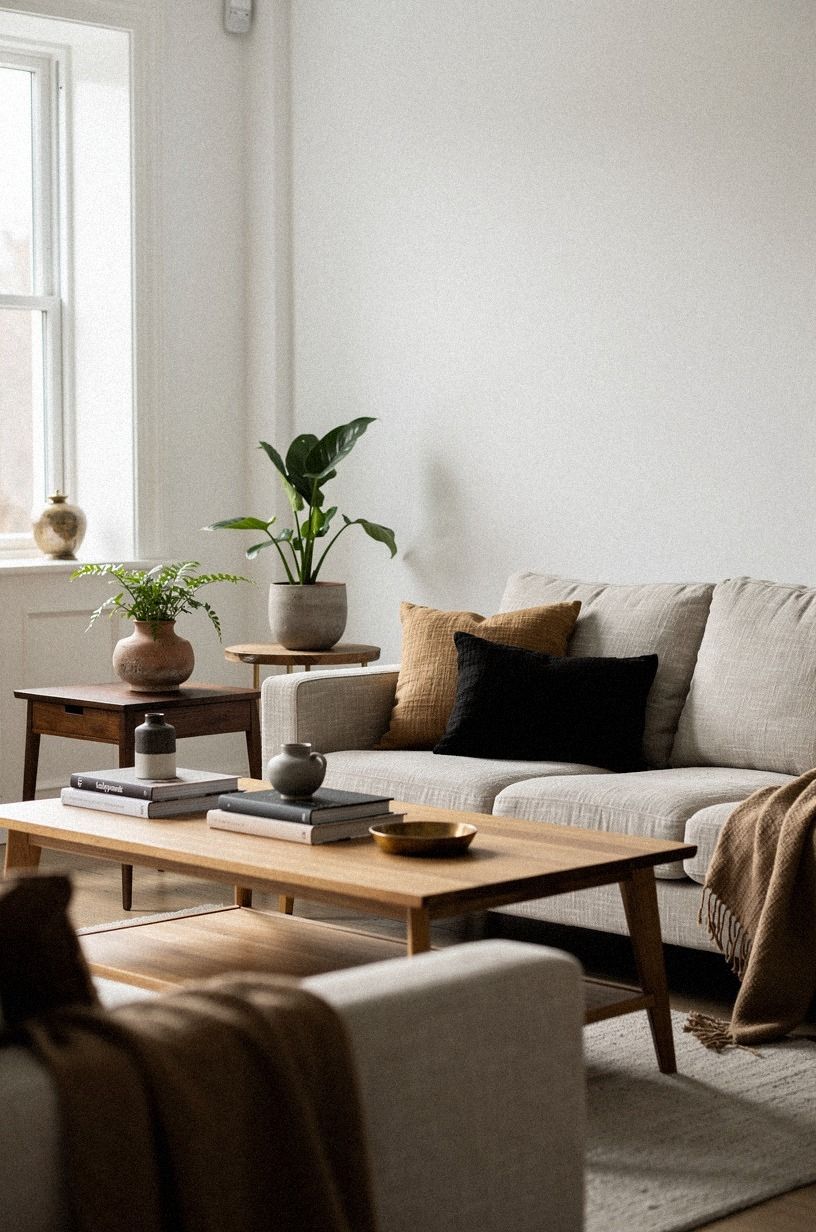
The Two-Wood Rule keeps your room from looking like a furniture set while stopping the materials from becoming chaotic. Choose one light wood, such as pale oak, and one darker finish, such as walnut or smoked oak. Your desk, coffee table, and media unit can then feel related without matching exactly.
I’d avoid combining five different orange-toned finishes because they compete under warm lighting. Repeat each chosen wood at least twice, even if one repeat is a small frame or tray. You’ll get a more settled look for very little money.
A secondhand desk can work beautifully beside a modern sofa when the wood tones have a clear relationship. Layer in washed Belgian linen in warm white or camel, then use one black accent to sharpen the palette. For a richer, more dramatic direction, see these Gothic Victorian living room ideas.
9Hang Curtains High with a Tension Rod
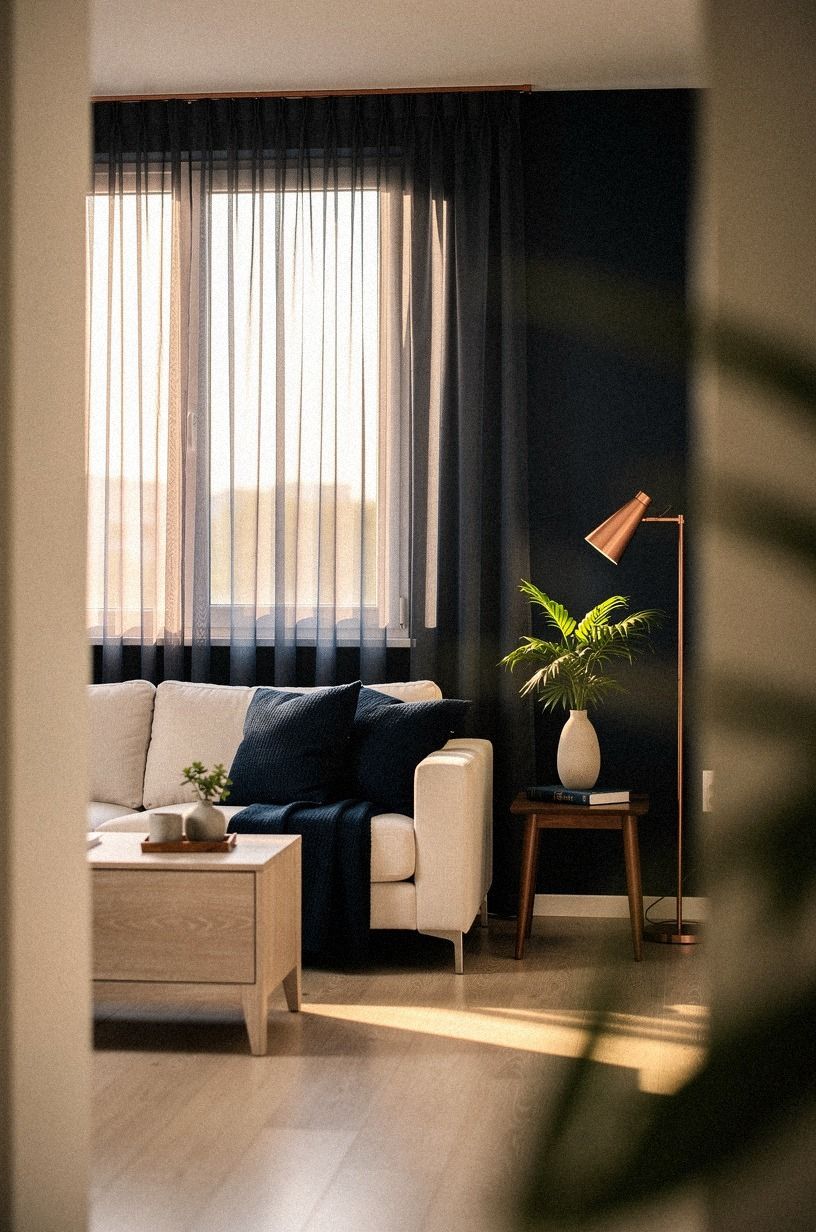
Curtains can make a rental living room feel taller, but only if they reach close to the floor.
10Frame the Television with Renter-Friendly Texture
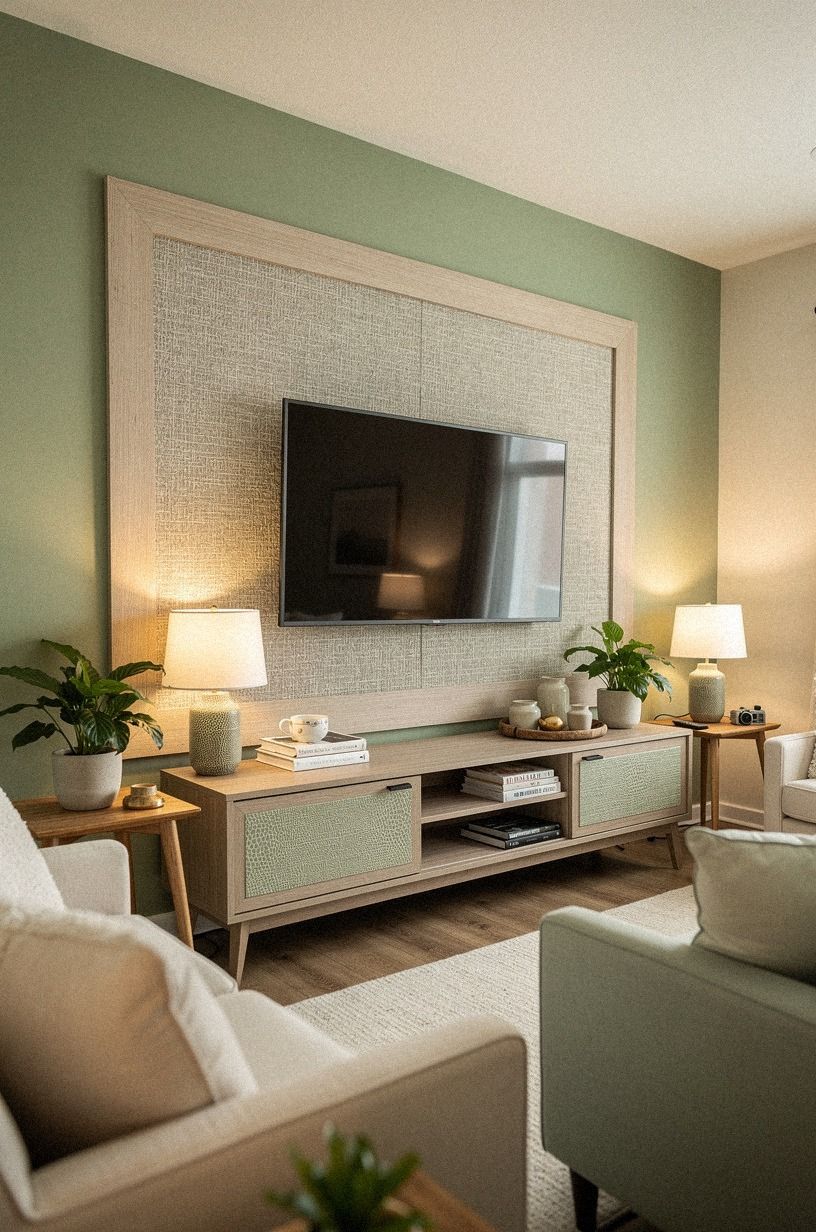
A television can dominate a small room, especially when it sits on a bare stand against a blank wall. Frame it with a low shelf, two baskets, and one piece of art that’s wider than the screen. Your eye will read the whole arrangement as a media wall rather than a glowing rectangle.
Try a shagreen-fronted cabinet or a simple secondhand console with closed doors for controllers and cables. You’ll keep the room calmer when cords disappear from view. Don’t hang art so close that the television looks trapped.
Leave enough breathing room for the screen to remain practical. If you’re decorating your first rental, these budget-friendly apartment ideas can help you make temporary pieces feel more permanent. A natural-wood media console with sage-green or warm-cream accents can visually anchor the screen without adding a bulky presence.
11Layer Textiles to Mark the Living Zone
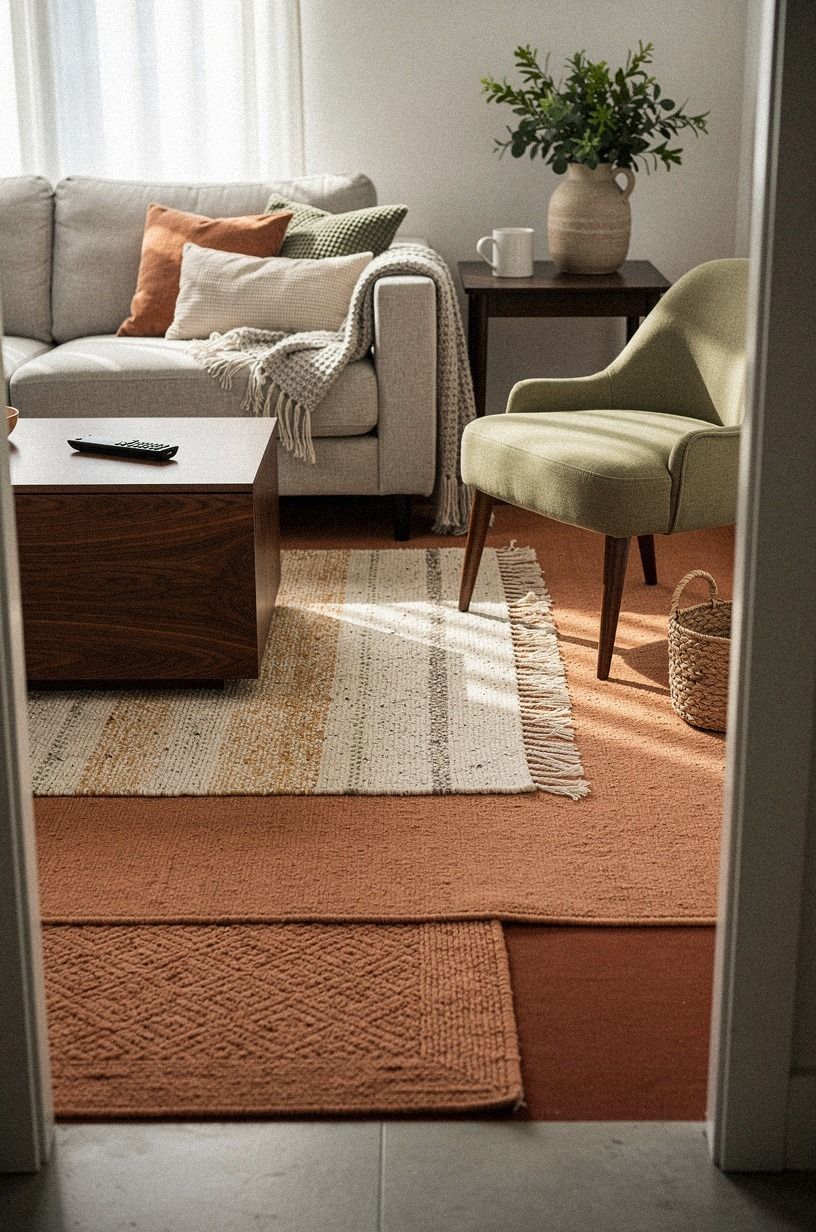
Layering textiles helps define a living area when your apartment has one long open room.
12Can a Small Dining Corner Do Double Duty?
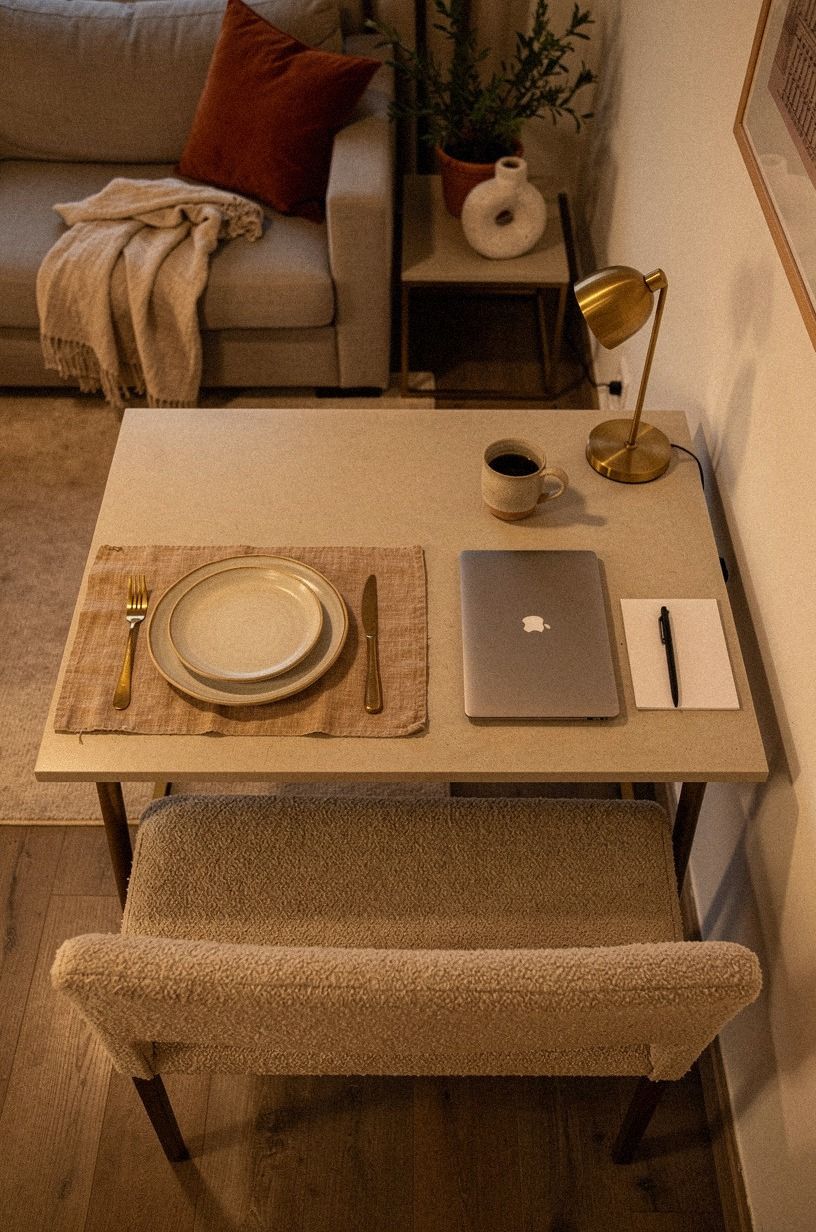
A small dining corner can become your study zone, game table, or extra serving surface when friends visit. Choose a narrow drop-leaf table and one comfortable chair rather than forcing a full dining set into the living room. Your apartment will feel more flexible when each piece can support more than one activity.
Keep the corner close to an outlet, but don’t let cords snake across the main walkway. A wall shelf above the table can hold notebooks, a small plant, and a framed print. I’d choose a rounded table if your room is tight because you’ll move around it more easily.
When your work is done, clear the surface completely so the area can shift back into a relaxed gathering spot. A small organic bouclé chair can live beside the table until guests arrive. Pair it with a clay-toned textile, linen detail, or aged-brass lamp for warmth.
13Repeat One Color for a Calm Common Room
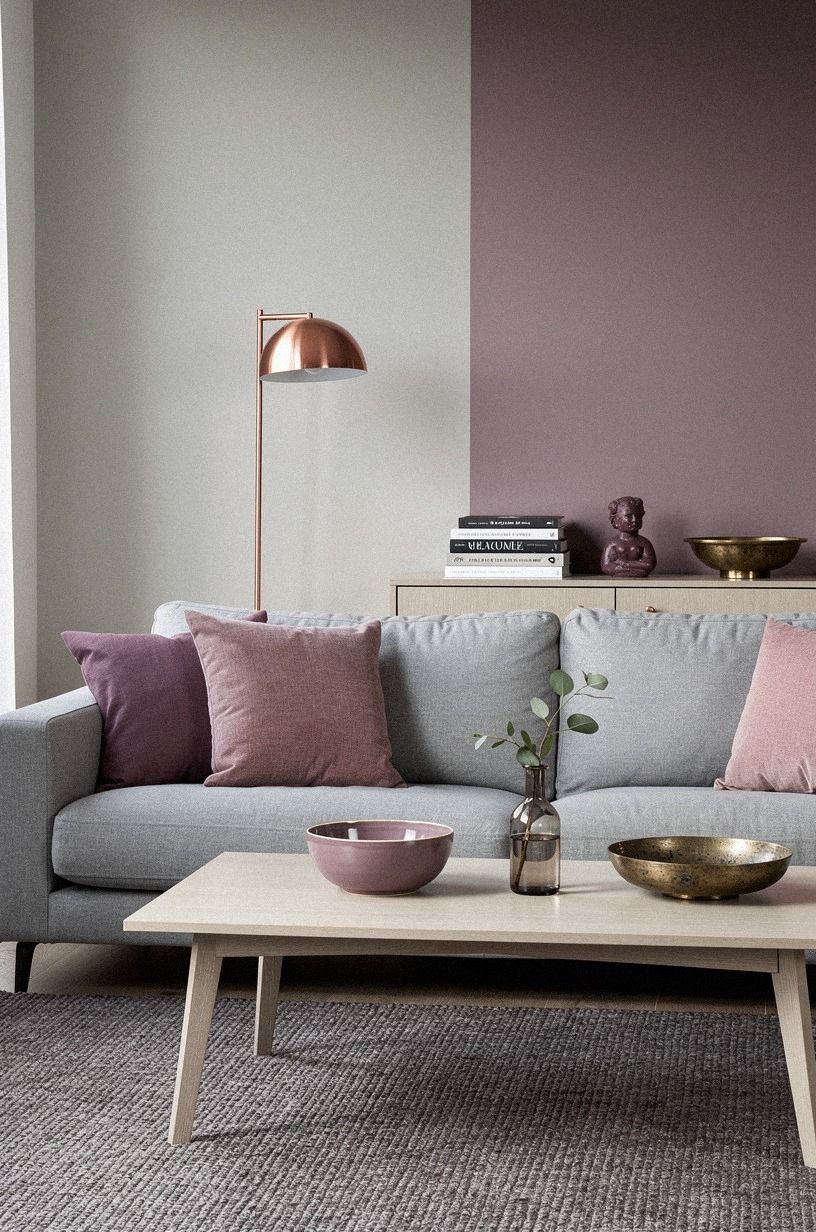
A repeated accent color makes mismatched apartment furniture look intentional.
14Choose One Hero Chair, Skip the Matching Set
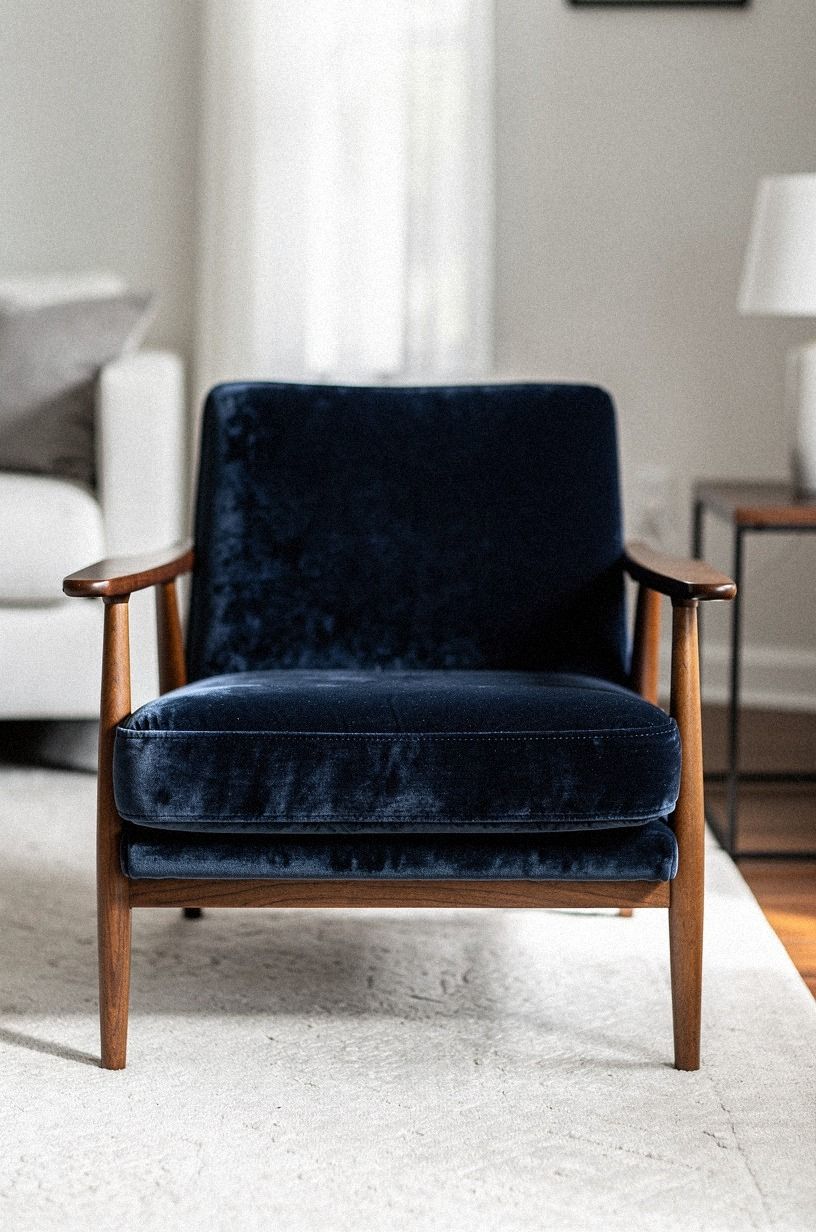
A single memorable chair gives your living room personality faster than a matching sofa-and-chair set. Look for a deep-pile mohair velvet chair if your budget allows, or search secondhand for a curved walnut frame with clean upholstery. Navy, white, and walnut create a strong combination without needing a full matching set.
Place it at an angle toward the coffee table so the room invites conversation. I’d skip oversized recliners unless comfort is your top priority because they can swallow a small apartment. Add one firm cushion and a small side table for your drink.
You’ll want the chair to work for reading, studying, and visiting, so test the seat before you commit. A little wear can feel lived-in rather than careless. A walnut-framed vintage chair with deep navy or soft-white upholstery can bring a memorable, personal note to an otherwise basic room.
15What Should You Spend Before You Shop?
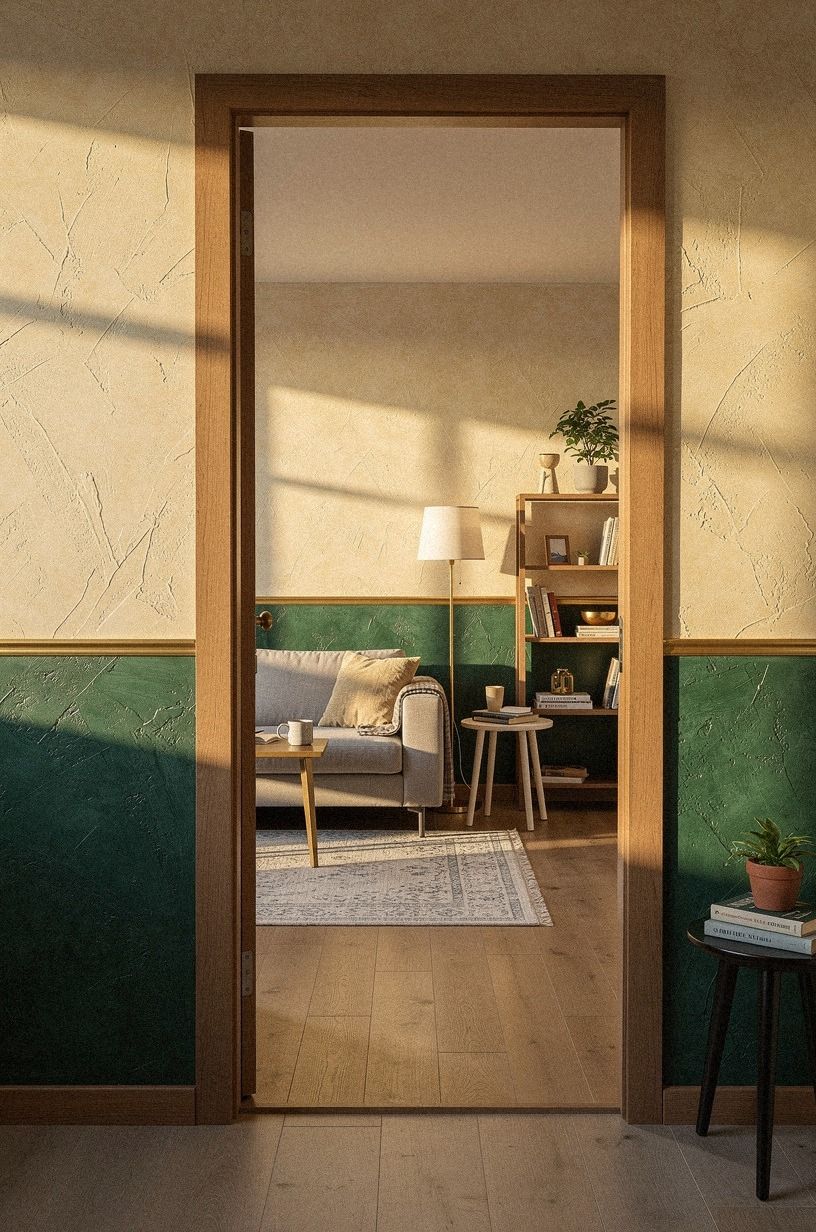
A student-budget living room works best when you divide purchases into layers. Your free layer might include rearranging furniture, borrowing art, washing textiles, and moving a lamp from another room.
The next layer covers one rug, a few pillows, and storage. Only then should you consider a sofa upgrade or custom piece.
Those typical US ranges show why you shouldn’t start with the most expensive category. If you’re working with about $100 to $300 for a small refresh, spend first on light, storage, and one textile with real texture. You’ll feel the improvement every day.
Before shopping, make a written $300 priority list and leave a little room for tax or delivery. Browse these first-apartment decorating ideas before you buy another decorative object. A clear limit makes the process feel calmer and more achievable.
16Benjamin Moore Revere Pewter and Calm Contrast
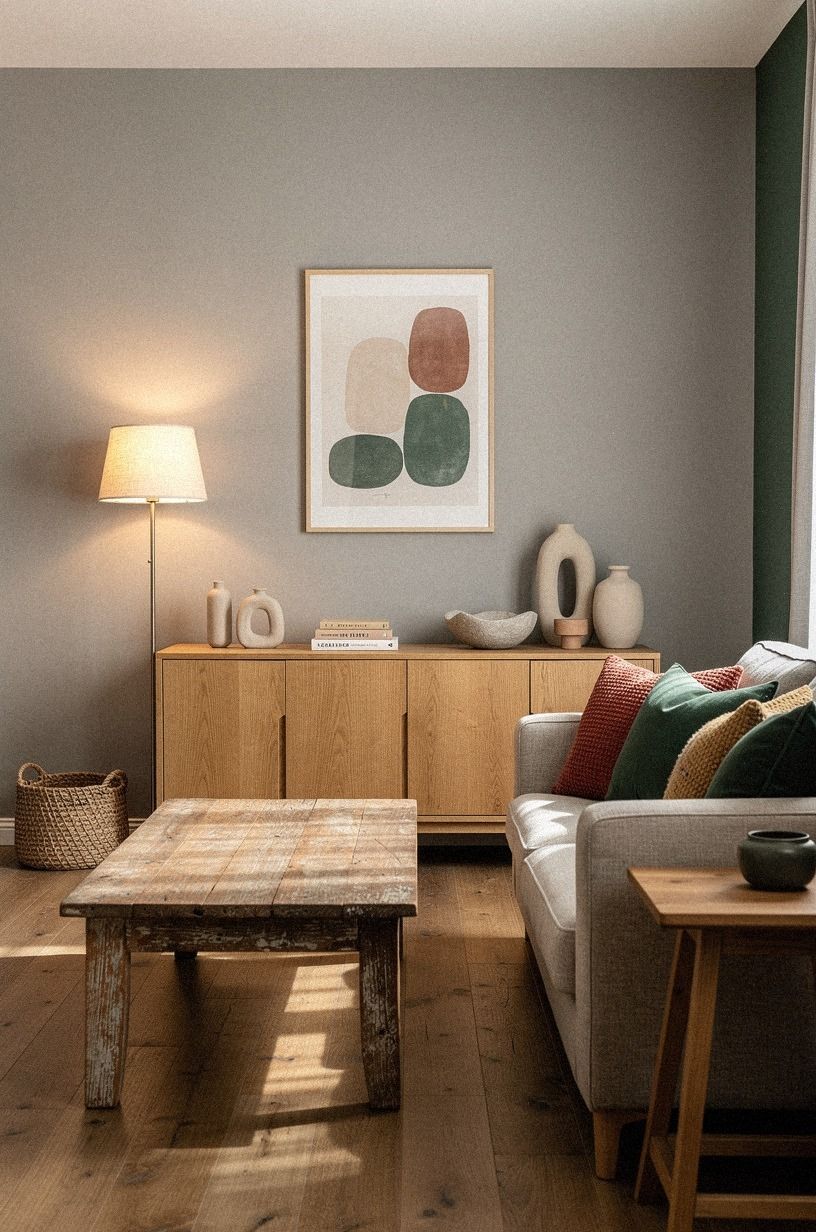
Removable art is one of the easiest ways to make a rental feel like your own. Choose a linen-texture peel-and-stick mural for a small wall or use removable strips for framed prints. Your goal isn’t to cover every empty inch.
It’s to give the room one background that makes ordinary furniture feel considered.
Try forest green beside warm cream, or rust beside natural oak. Benjamin Moore Revere Pewter HC-172 is another useful reference if you’re choosing art and textiles around a calm greige tone. I’d avoid overly tiny prints because they disappear from across the room.
You’ll want at least one larger shape that can hold its own behind the sofa. This softer cream living room inspiration can guide your palette. Pair reclaimed weathered teak with natural oak when you want warmth without introducing too many finishes.
17Make the Entry Edge Earn Its Space
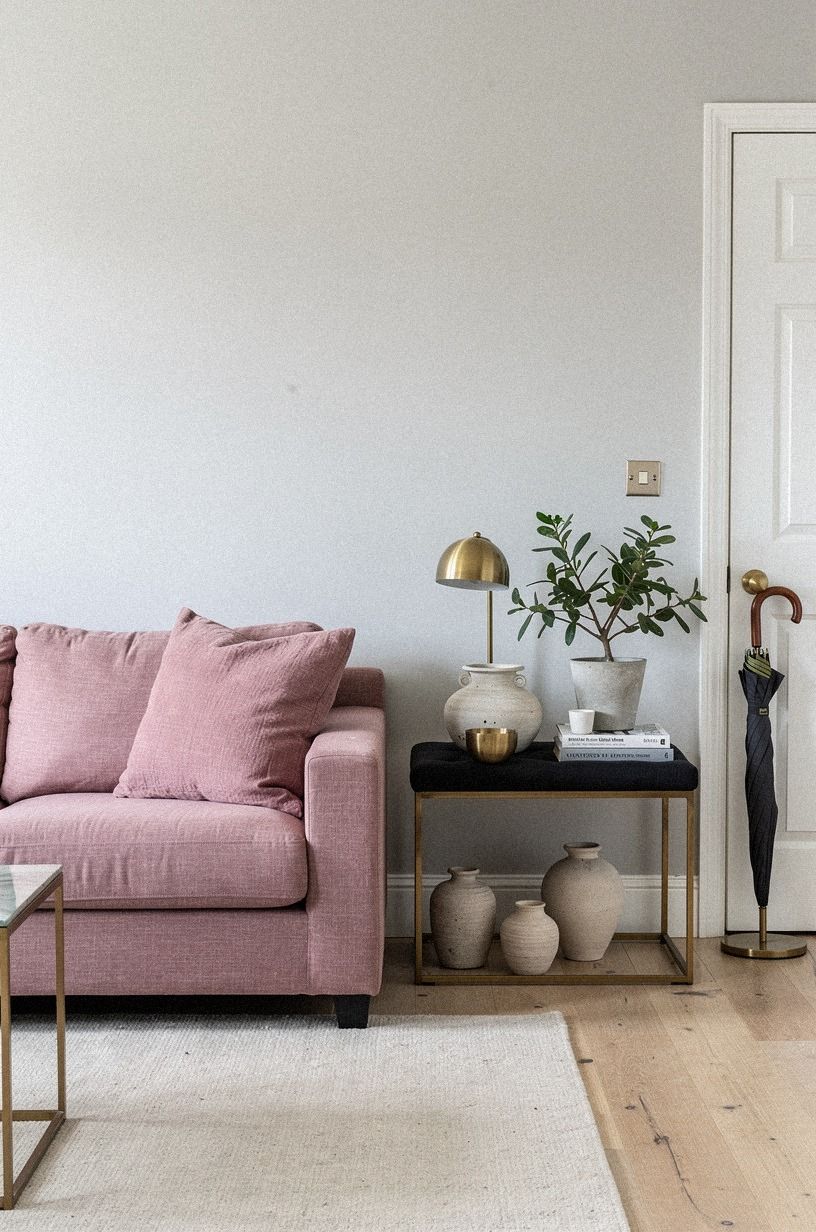
The first few feet inside your apartment often become a pile of shoes, bags, and mail.
18The Five-Minute Reset
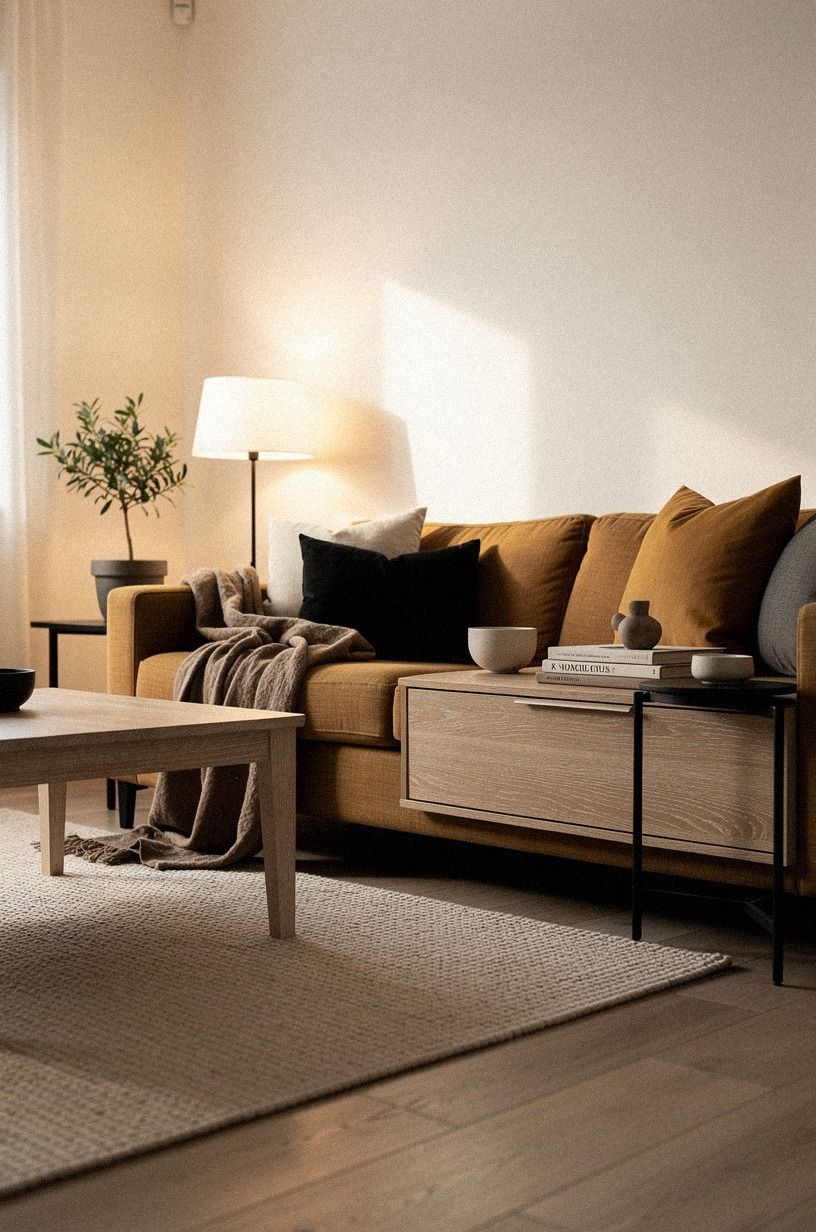
The Five-Minute Reset is a daily styling habit, not another purchase. Before bed, fold the camel throw, return cups to the kitchen, straighten the rug, and place your laptop where you’ll find it tomorrow. Your living room will look warm and welcoming because the surfaces have room to breathe.
I learned this after letting one chair become a permanent laundry pile. Now I give every object a home, even if that home is a basket beside the sofa. Don’t chase showroom perfection.
You’ll want the room to support real college life, with friends, textbooks, and takeout containers included.
A quick reset keeps the space inviting without asking you to spend another dollar. For a simple weekly refresh, wash the warm-white cushion covers, empty the catchall tray, and check whether the walking route still works. A small cerused-white-oak tray can keep daily items contained while black accents give the room definition.
The Budget Choice I’d Make
I’ve lived with rooms where every purchase seemed urgent, and that pressure usually led me toward small decor that didn’t solve anything. A pillow can be lovely, but it won’t fix a sofa that blocks the walkway or a ceiling light that makes your apartment feel flat. I’d start by measuring the room, checking the sofa depth, and deciding where people naturally walk.
Then I’d choose one anchor: a properly sized rug, a warm wall color, or a comfortable lamp. My own mistake was buying three decorative objects before I owned a surface for them. They looked fine in the store and fussy at home.
You’ll get more value from one substantial material, such as cerused white oak, Belgian flax linen, or a wool rug, than from a pile of weak accents.
The best college apartment living room isn’t the one with the most expensive pieces. It’s the one where your study area, seating, storage, and lighting cooperate.
That’s why scale matters so much. A small room can feel sophisticated when the rug reaches the chairs, the curtains fall long, and the light comes from more than one height.
I also think your room should show evidence of your life. Keep the thrifted frame, the inherited mug, or the slightly worn chair if it makes you smile.
You don’t need to erase every imperfect edge. A warm space has texture, memory, and a few things that weren’t bought in one afternoon.
What People Always Want to Know
What is the best college apartment living room idea for a small living room?
The best move is a properly sized rug with a compact sofa, such as an IKEA KIVIK loveseat, because it joins the seating and leaves circulation space. Keep the coffee table 16 to 18 inches tall and choose one storage basket instead of several small pieces. You’ll get a calmer layout without crowding your floor.
Where can I buy college apartment living room pieces on a budget?
IKEA, Target, and Wayfair offer accessible basics, while Facebook Marketplace and local thrift stores can provide better wood furniture for less. Look for solid oak, cane, or cotton upholstery rather than shiny disposable finishes. You don’t need every piece to match, and secondhand finds often give your room more character.
How much does a college apartment living room makeover cost?
A small refresh can cost about $100 to $300 if you already own the sofa, using rearrangement, borrowed art, thrifted storage, and a few textiles. A broader budget tier typically runs $300 to $1,200 in the US. Your biggest savings will come from keeping your current furniture and improving scale and lighting.
Can I create this look on a student budget?
Yes, and you can begin without buying anything. Move the sofa to improve the walkway, group lamps at different heights, and style books or art in one visible zone.
Then choose one paid upgrade, such as a wool-blend rug or curtain panels. You’ll get a warmer result by finishing one area instead of scattering small purchases everywhere.
Is this look worth it in a small space?
Yes, because a small room benefits quickly from clear proportions. Put the front legs of your seating on an 8x10 rug when the layout allows, keep the coffee table near two-thirds of sofa length, and preserve one open walking route. You’ll notice better function before you notice the styling.
Is this a good idea for a rental?
Yes. Use removable hooks, a tension rod, peel-and-stick art, and freestanding storage so your lease stays protected.
Removable wallpaper can create a focal wall, while baskets and lamps add warmth without drilling. You’ll still want to check your lease before painting, even if the room needs only one accent wall.
Where I’d Start First
If I had to pick one, I’d start with the properly sized rug. It fixes the room’s scale before you spend on accents, and the front legs of your seating will instantly feel connected. Pin the first apartment decor guide for later and measure your floor tonight.
Then I’d solve the lighting and storage before buying decorative extras. A warm table lamp, one useful basket, and a clear walking route can make a student apartment feel more collected almost immediately.