
 by
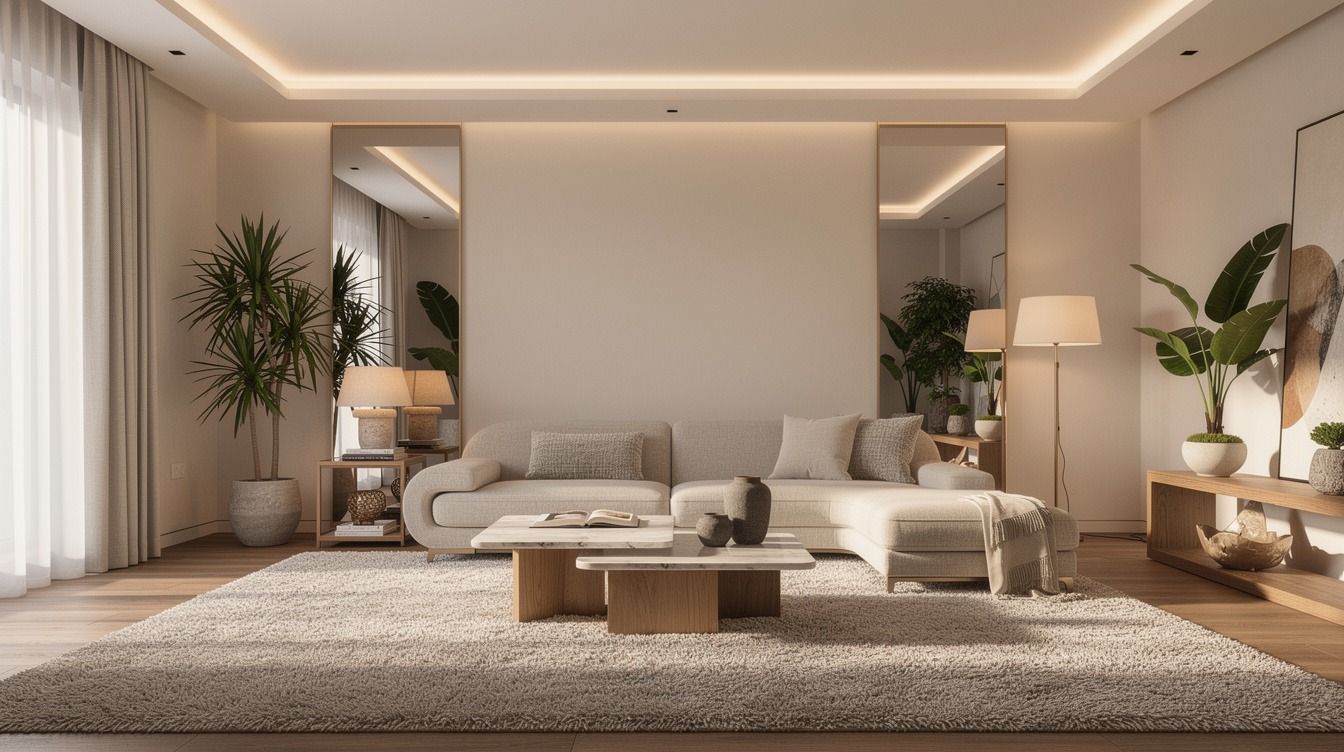
by A no window living room fakes natural light best with layered bulbs, reflective surfaces, pale paint, and a ceiling-to-floor glow path. I learned that after living with one dim room where every lamp made a separate little island. The fix isn't one brighter bulb. It's a sequence. Here's how you'd build it.
- ✓ Start with The Daylight Equation
- ✓ Paint the Walls with The Reflective Shell
- ✓ Build The Three-Height Light Stack
- Start with The Daylight Equation
- Paint the Walls with The Reflective Shell
- Build The Three-Height Light Stack
- Hang a Mirror Where the Light Can Travel
- Ask Where the Bright Anchor Belongs
- Layer Warm Materials Around the Glow
- Choose Warm Layers Over One Harsh Ceiling Light
- Bounce the Glow with The Pale Surface Rule
- Frame the Seating with Living Greenery
- Arrange Furniture to Keep the Glow Moving
- Build a Budget Before You Buy Anything
- Edit the Room Until the Light Feels Natural
1Start with The Daylight Equation
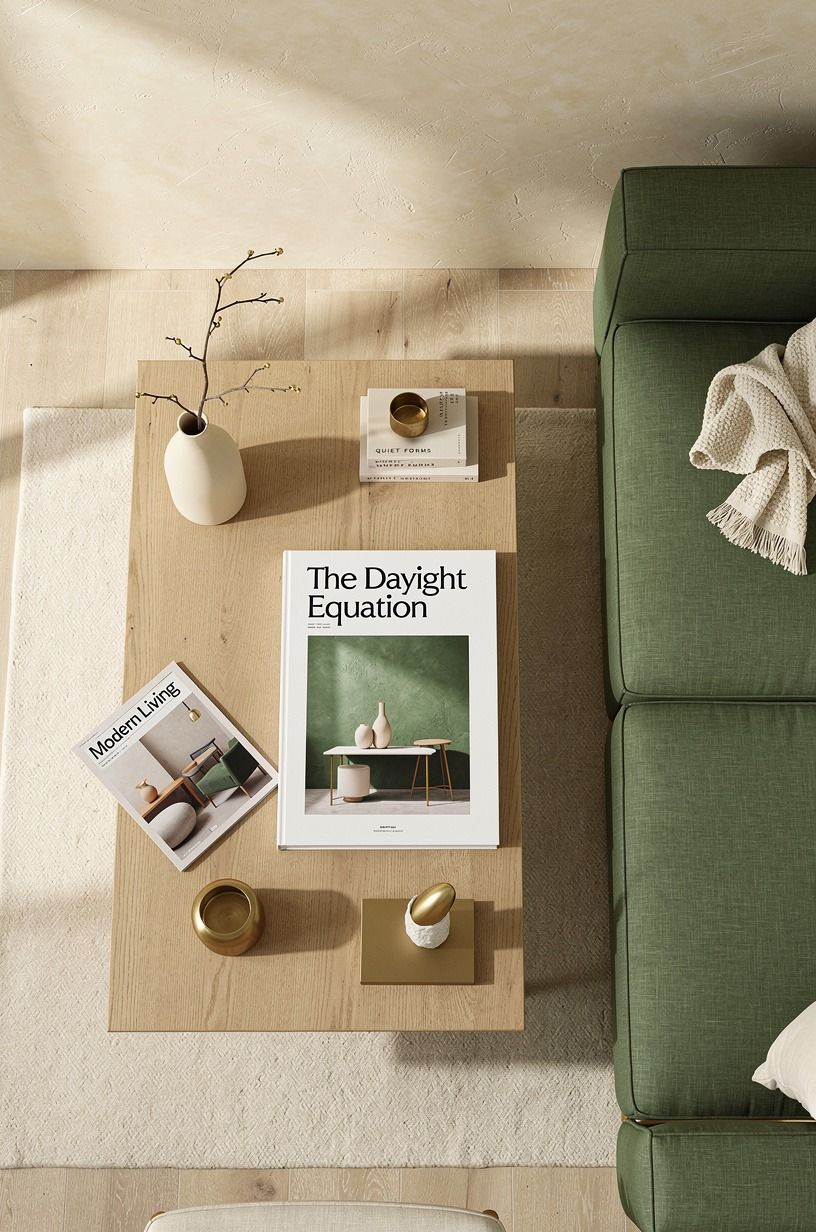
Begin by measuring the room and marking the darkest corners before you buy anything. Your first goal is coverage, not decoration. A no window living room needs light at three levels: ceiling, eye level, and low near the floor.
If you only brighten the ceiling, your walls will still look dull and your sofa will sit in a shadow.
I like to sketch the room on paper, then note where your sofa, television, and reading chair will land. A 35 to 40 inch deep sofa can swallow more visual space than you expect, especially in a closed living room. If your layout is tight, study this corner fireplace living room layout for ideas about keeping circulation open.
Choose a warm bulb before you choose a lamp shade. A soft, warm tone makes the room feel inviting, while a very cool bulb can make pale walls look gray and clinical. You're after a gentle glow that reaches the rug, not a spotlight aimed at your forehead.
And don't rush past the ugly first sketch. I once placed a floor lamp behind the sofa because the corner looked empty, then discovered that nobody could reach the switch without climbing over the coffee table. Your lighting plan has to work at night, when you'll be carrying tea, books, and laundry through the room.
Typical cost by tier (US averages):
2Paint the Walls with The Reflective Shell
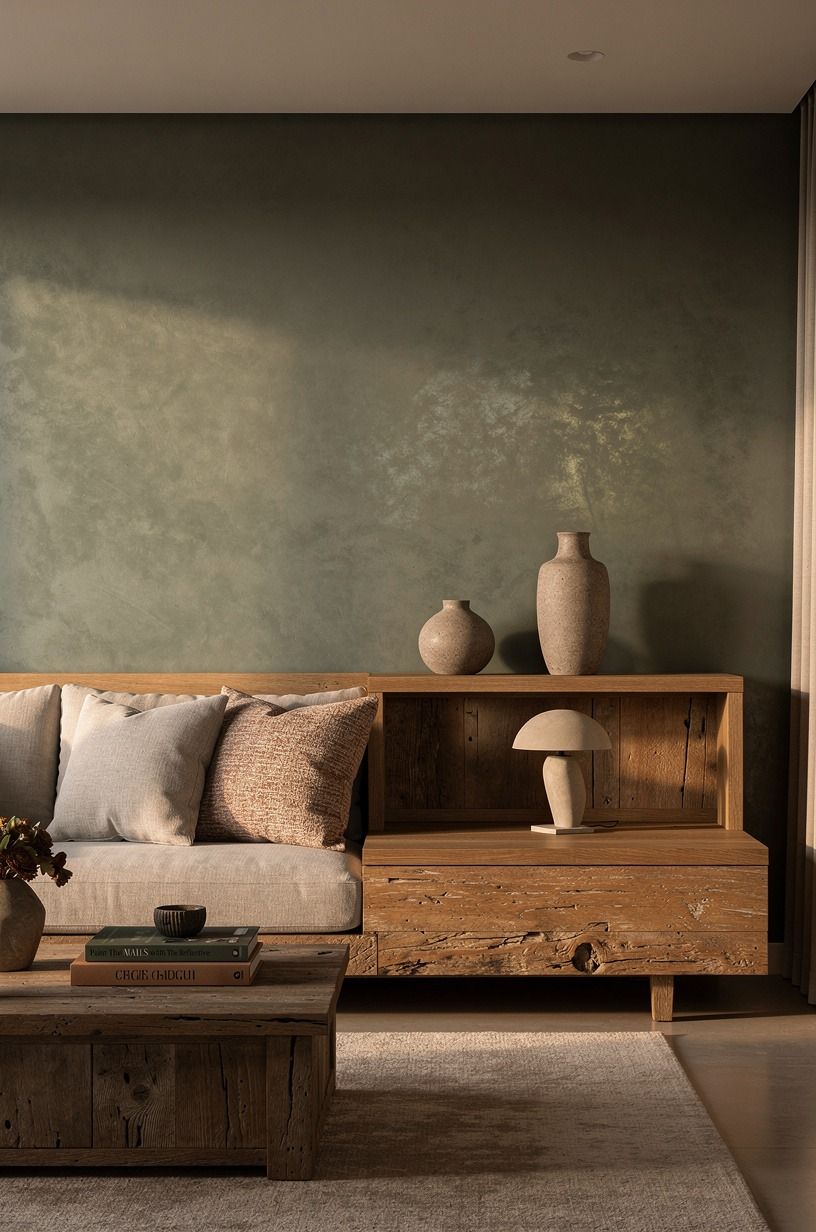
Paint your walls in a color that can catch warm light without turning yellow. Benjamin Moore Essex Green HC-188 is a dependable choice when you want a forest-green room with enough depth for a calming space.
I'd choose it over stark white when the room needs character as well as reflection. White can look flat when there's no daylight to give it dimension.
Test a large sample beside your sofa and leave it there through one evening. Your wall color may look airy at noon under a ceiling fixture, then muddy at 8 p.m. beside a warm floor lamp. That's why you need to see it with the actual bulbs, not a store's bright overhead lighting.
If you want more drama, Farrow & Ball Studio Green No.93 can work beautifully on one wall, especially behind a light sofa or natural-oak bookcase. A reclaimed weathered teak console can warm the green without making the room feel overly polished. I wouldn't paint every wall dark unless your furniture is already light and your lamps are plentiful.
Otherwise, you'll spend your evenings fighting the color instead of enjoying the room.
Use satin or eggshell only where the wall condition allows it. A subtle sheen sends small reflections across the room, but it also exposes dents. If your walls are rough, matte paint will look more forgiving and still give your space a warm, peaceful envelope.
3Build The Three-Height Light Stack
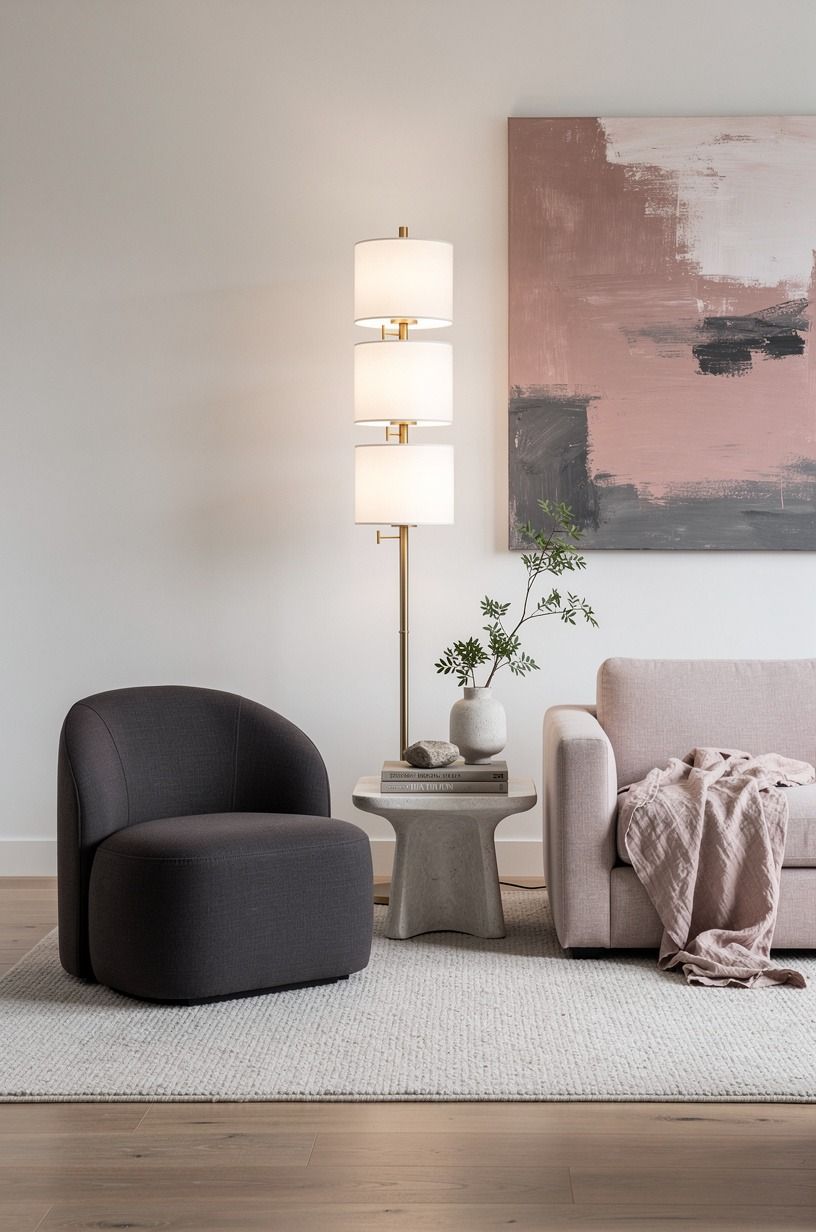
Build your main lighting around three heights: overhead, seated, and floor level. A washed Belgian linen drum pendant can handle the top layer, a shaded table lamp can sit near eye level, and a low floor lamp or glowing globe can wash the bottom third of the room. You'll notice the difference as soon as all three are switched on together.
Your seated light should land beside, rather than behind, the sofa. A reading lamp with a simple arm can throw a bright pool onto a book without making the entire room feel exposed. I prefer a fabric shade to bare glass here because the shade softens the edges and keeps the room soothing.
For the lowest layer, look for a lamp with a washed linen shade that spreads light sideways across the wall. Its warm glow can soften the bottom third of the room without turning the floor into a black strip.
Try each height separately before you commit to the final arrangement. If your room only feels good with every light blazing, the stack isn't balanced yet. Your aim is to switch on two sources for a quiet evening, then add the third when you're reading or entertaining.
4Hang a Mirror Where the Light Can Travel
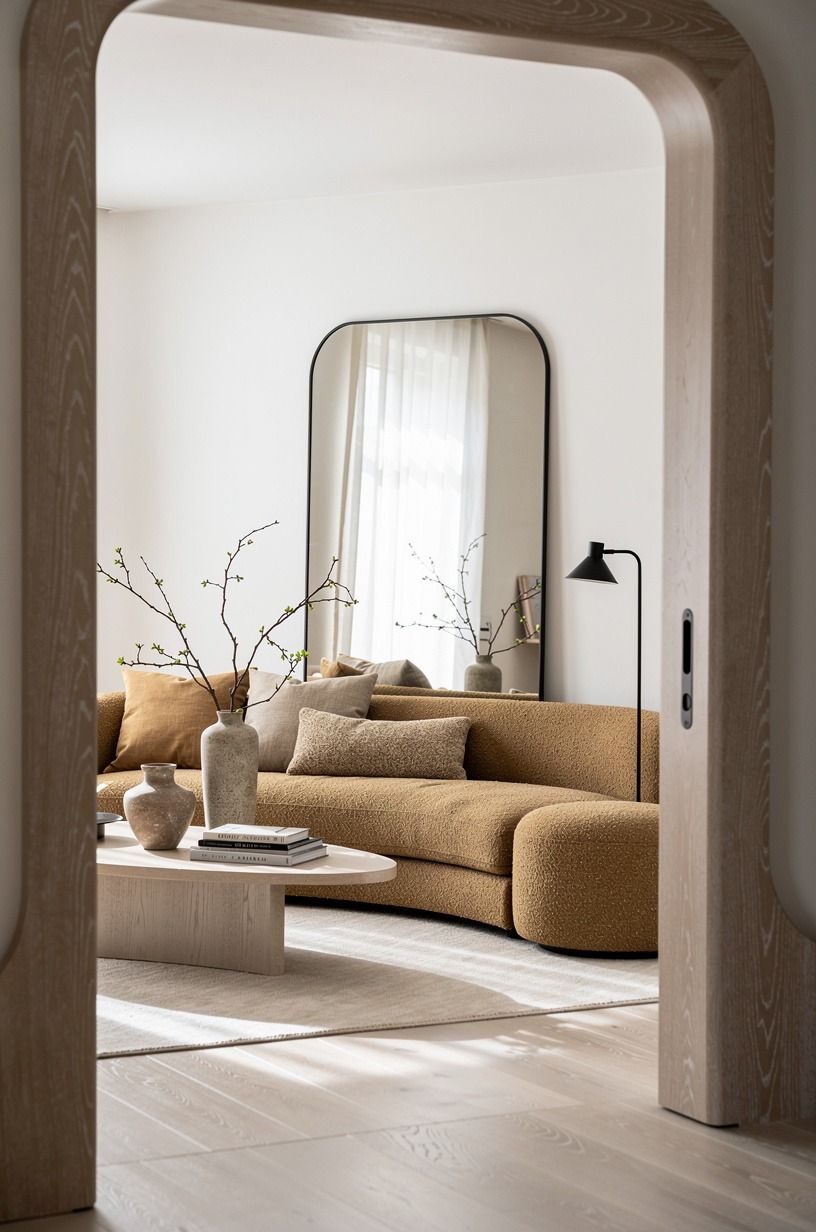
Hang a large mirror across from your brightest lamp, not automatically above the sofa.
5Ask Where the Bright Anchor Belongs
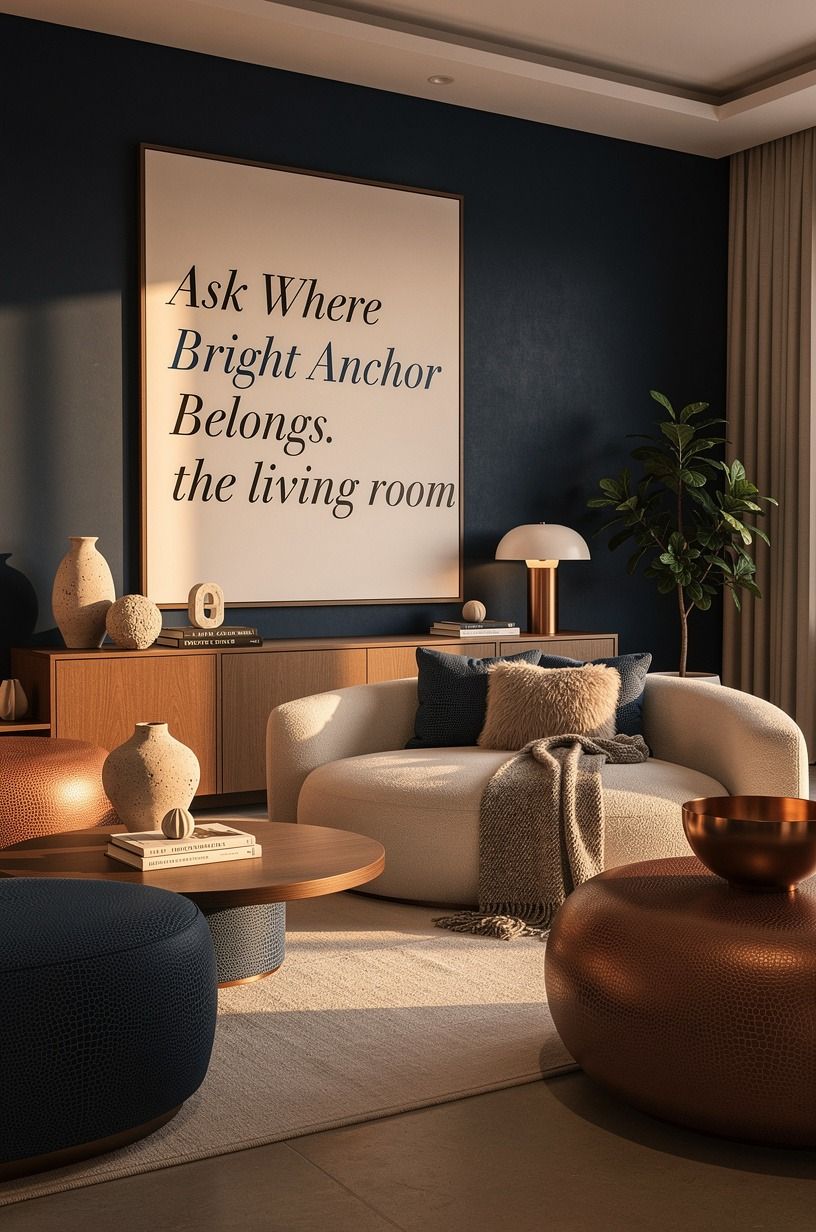
Ask yourself which object should carry the brightest visual weight. In most no window living rooms, that's the sofa wall, fireplace, bookcase, or main seating area. A cream performance-fabric sofa can become that anchor, especially when the surrounding pieces are darker and more textural.
Don't center every object on the television by default. A television is usually a black rectangle, and it can absorb the little light your room has. If you must place it centrally, soften the wall with pale shelving, a copper-toned console, or artwork with generous ivory space.
Your bright anchor needs contrast around it. I like a light sofa against Farrow & Ball Hague Blue No.30 when the room has enough lamps to keep the midnight blue from turning heavy. I'd skip an all-beige scheme here because it often makes the room look sleepy rather than warm.
Could one large artwork do the work instead? Yes, if it has an ivory ground and a few warm accents.
Look for a piece with shagreen texture or a handmade paper surface. The goal isn't to make the wall shiny.
It's to give your eye one calm place to land.
6Layer Warm Materials Around the Glow
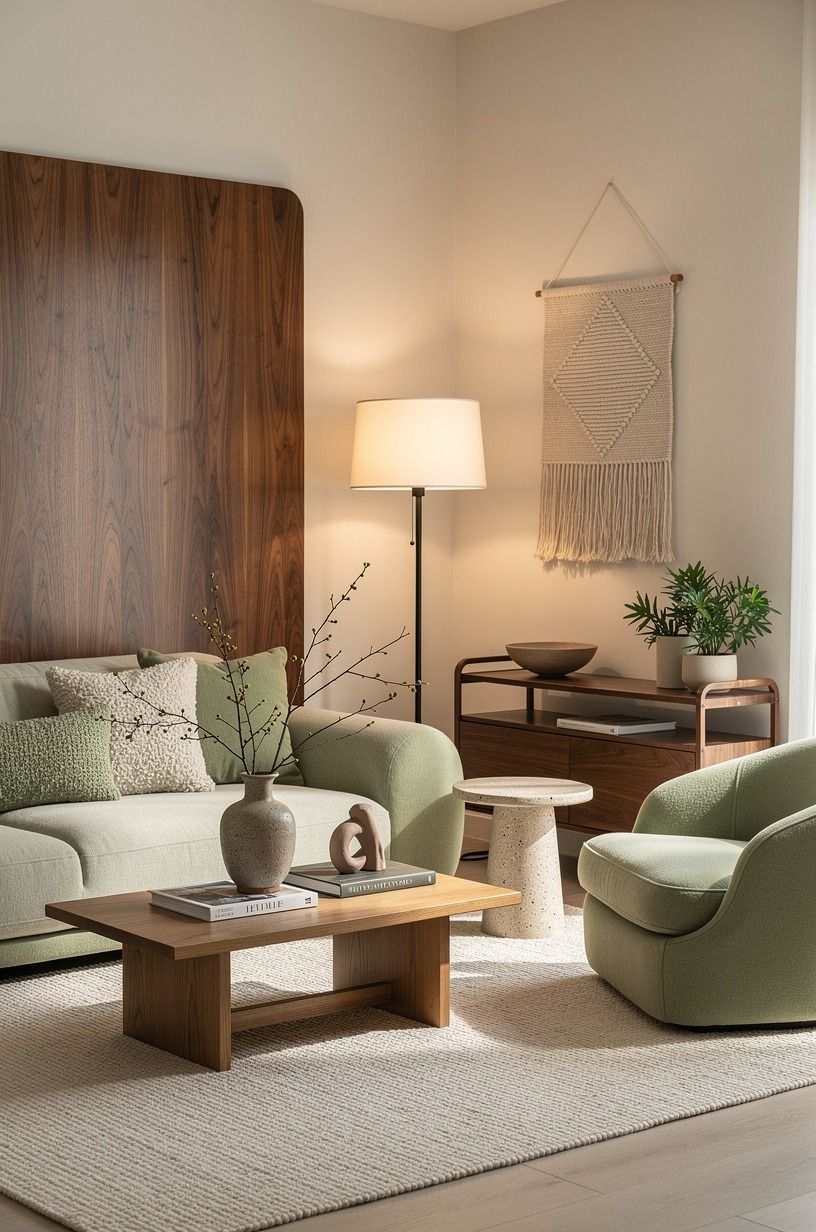
Layer materials that become more interesting under lamplight.
7Choose Warm Layers Over One Harsh Ceiling Light
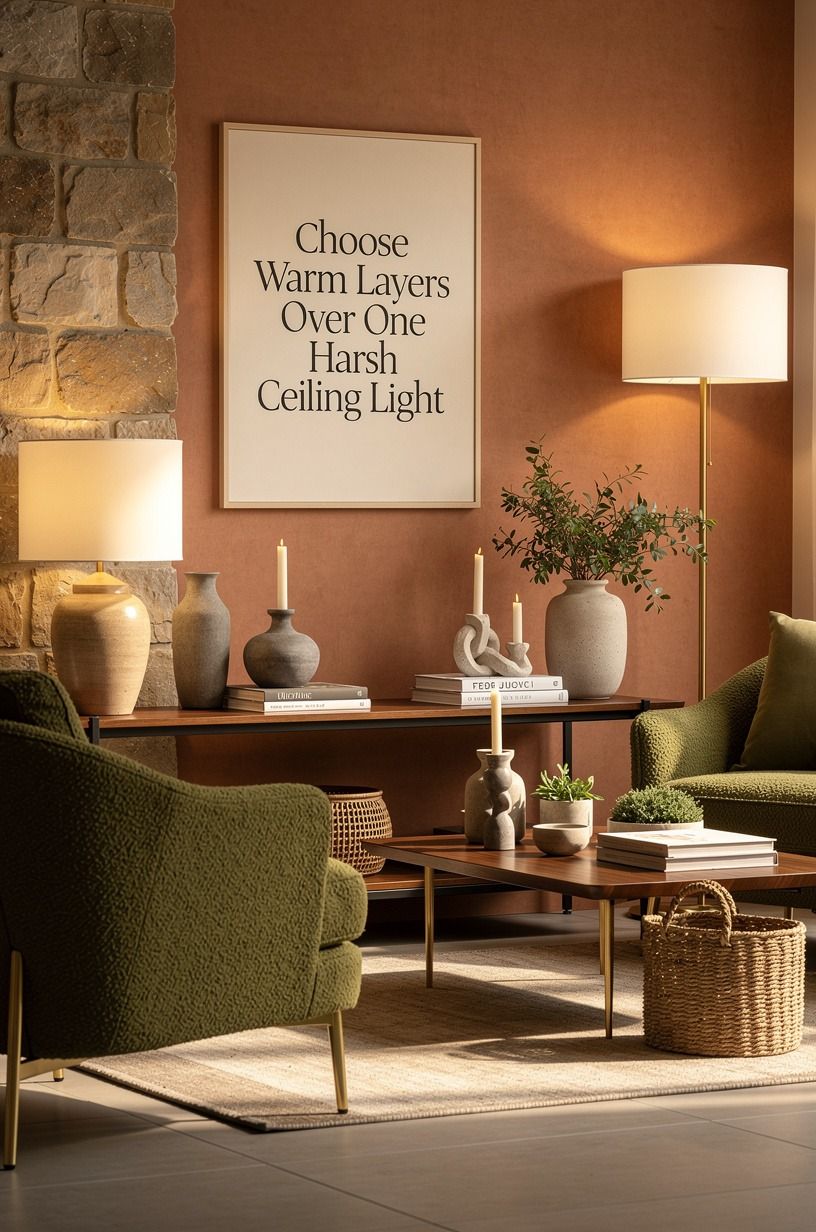
Choose warm layers over one harsh ceiling light, even if the ceiling fixture looks impressive in the shop. A single fixture creates a bright center and leaves your corners stranded. Your room may be technically lit, but it won't feel comfortable or settled.
Use a dimmable flush mount when ceiling height is limited, then pair it with two lamps on opposite sides of the seating area. A pleated cotton shade can make a basic fixture feel softer, while a black metal fixture adds a crisp outline against pale paint.
I once tried solving a dark room with a brighter overhead bulb. It made every surface look exposed, including the dust I hadn't noticed before. The better answer was a lower-wattage ceiling source plus two shaded lamps that spread the glow sideways.
And if you're renting, you don't need to rewire the room to improve it. A plug-in swing-arm sconce can sit beside a chair, and cord covers can follow the baseboard. Look at these wooden front door ideas for warm natural character for a useful lesson in how warm wood can soften a stronger architectural outline.
8Bounce the Glow with The Pale Surface Rule
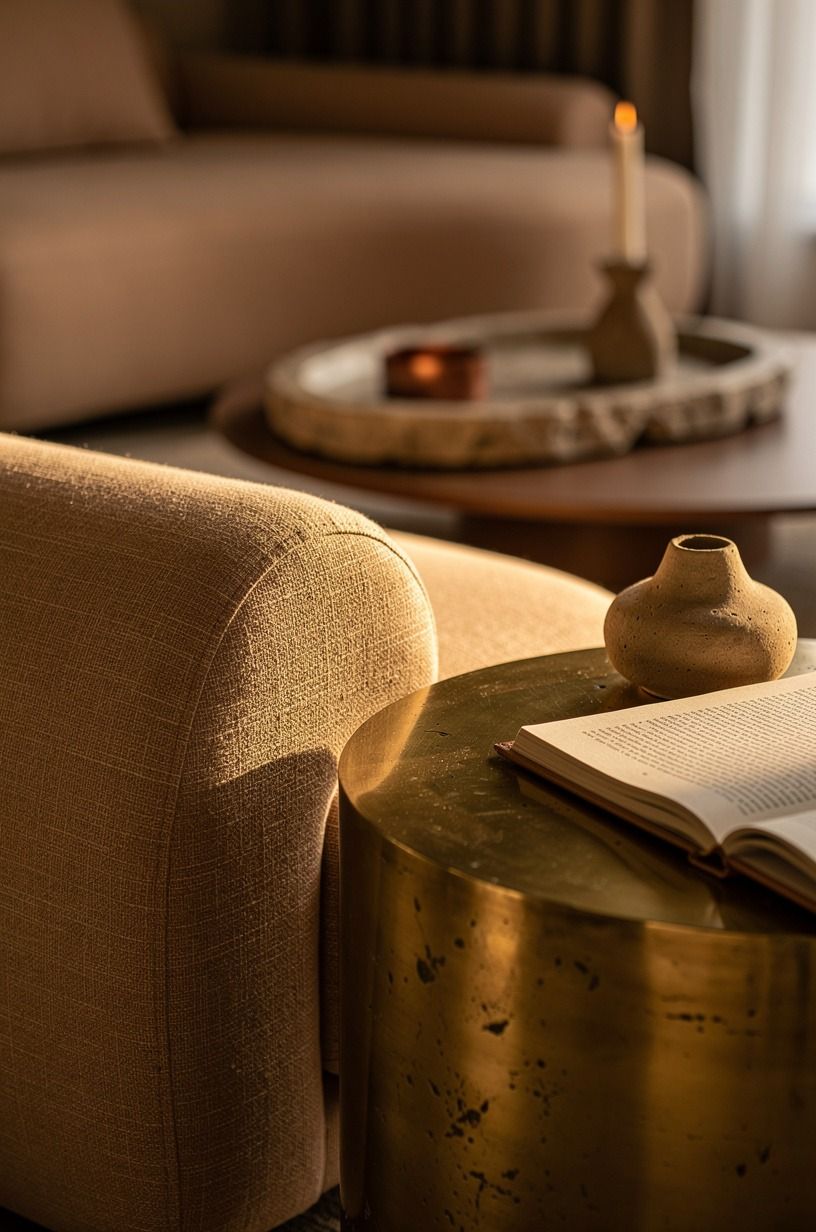
Bounce the glow with at least one pale surface opposite each main light source. This is The Pale Surface Rule: every lamp should have something light nearby to catch and return its glow. A clay-colored linen curtain panel behind a floor lamp can do more than a second decorative lamp in the wrong place.
Use a pale rug, painted cabinet, or light artwork where the room feels visually heavy. You don't need every object to be cream. A warm white surface beside a dark chair is enough to make the lighting feel more generous.
For a narrow room, try a console with an unlacquered-brass base or aged-brass details along the longest wall. Its changing patina keeps the finish from looking sterile, and the warm metal reflects light more gently than lacquer. If your room already has pale floors, choose a slightly deeper clay tone so the surfaces don't blur together.
Your curtains can help even without windows. Hang Belgian flax linen panels from ceiling height if you have an open doorway or a wall niche, then let them outline the architecture.
I wouldn't fake a window with a printed landscape. A soft curtain gives the room height without pretending the wall is something it isn't.
9Frame the Seating with Living Greenery
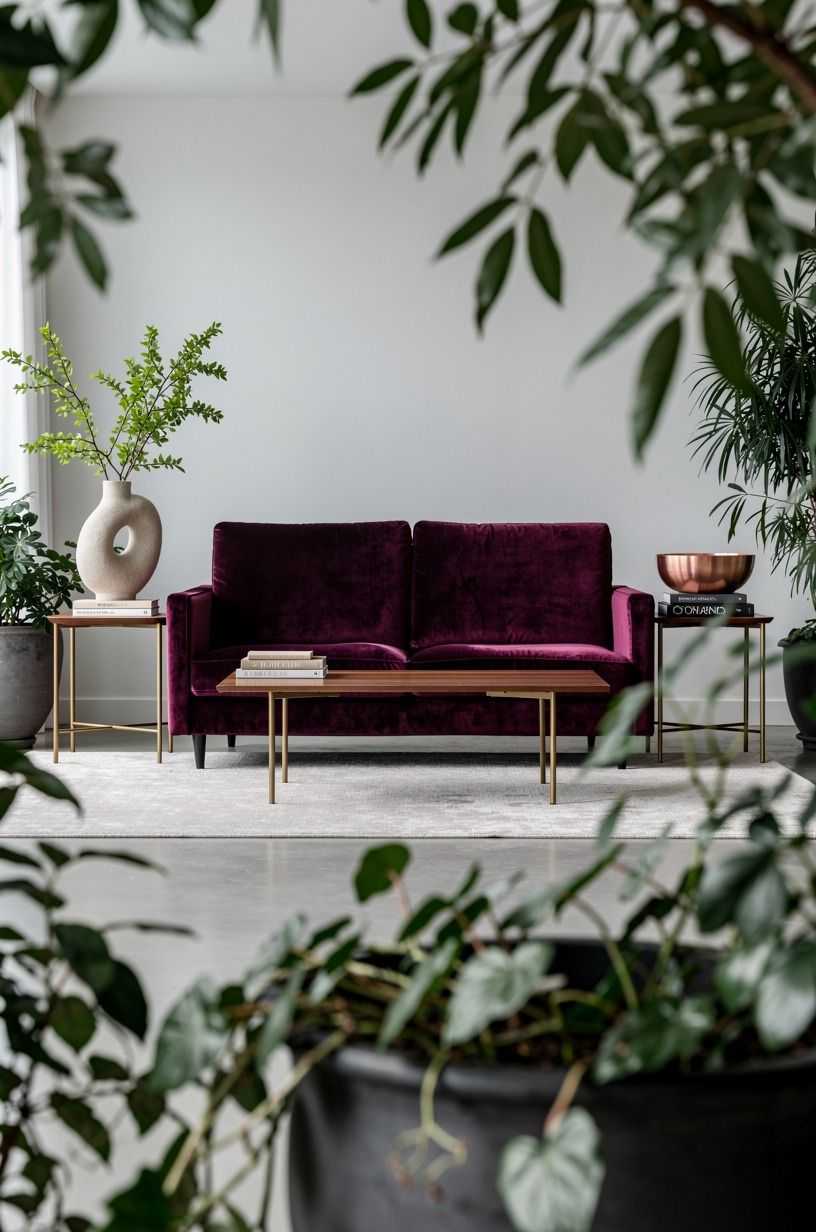
Frame your seating with plants that tolerate low light, but don't treat them as a substitute for illumination.
10Arrange Furniture to Keep the Glow Moving
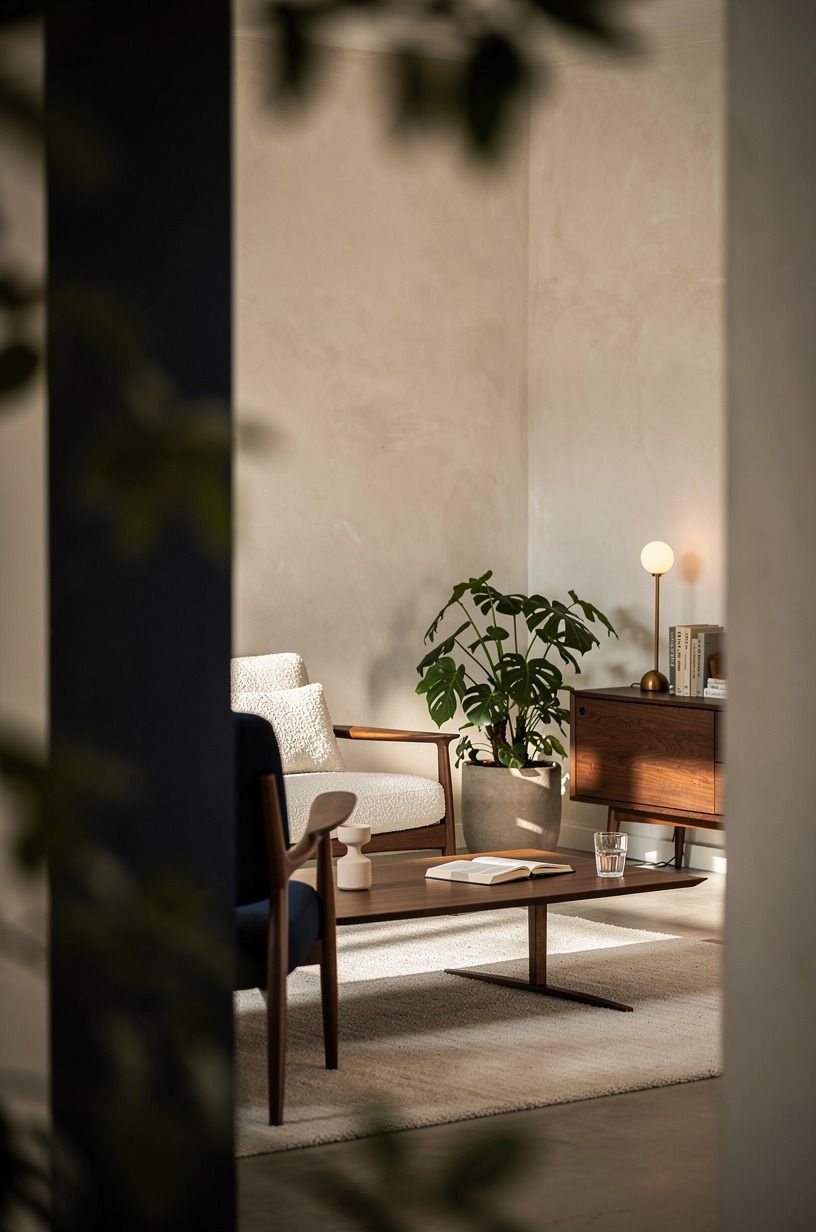
Arrange your furniture so the light can travel around the seating group. Leave a clear path from the brightest lamp to the sofa, then keep bulky storage from blocking the wall wash. Your room will feel more serene when the eye can move through it without hitting a tall dark object.
A coffee table around 16 to 18 inches tall keeps the visual field open. If your table is too high, it chops the sofa from the rug and creates another heavy horizontal line. A round walnut coffee table can make circulation easier, particularly when your seating area is compact.
Keep the front legs of the sofa and chairs on the rug rather than floating everything around its edges. An 8x10 or 9x12 rug gives the group a clear boundary, and it helps the lamps feel connected to the furniture instead of scattered across the floor.
Your television distance should be about 1.5 to 2.5 times the screen diagonal. That measurement protects the seating layout from creeping too close to the screen. If you're working around an awkward corner, revisit this corner fireplace layout guide before you move the heavy pieces.
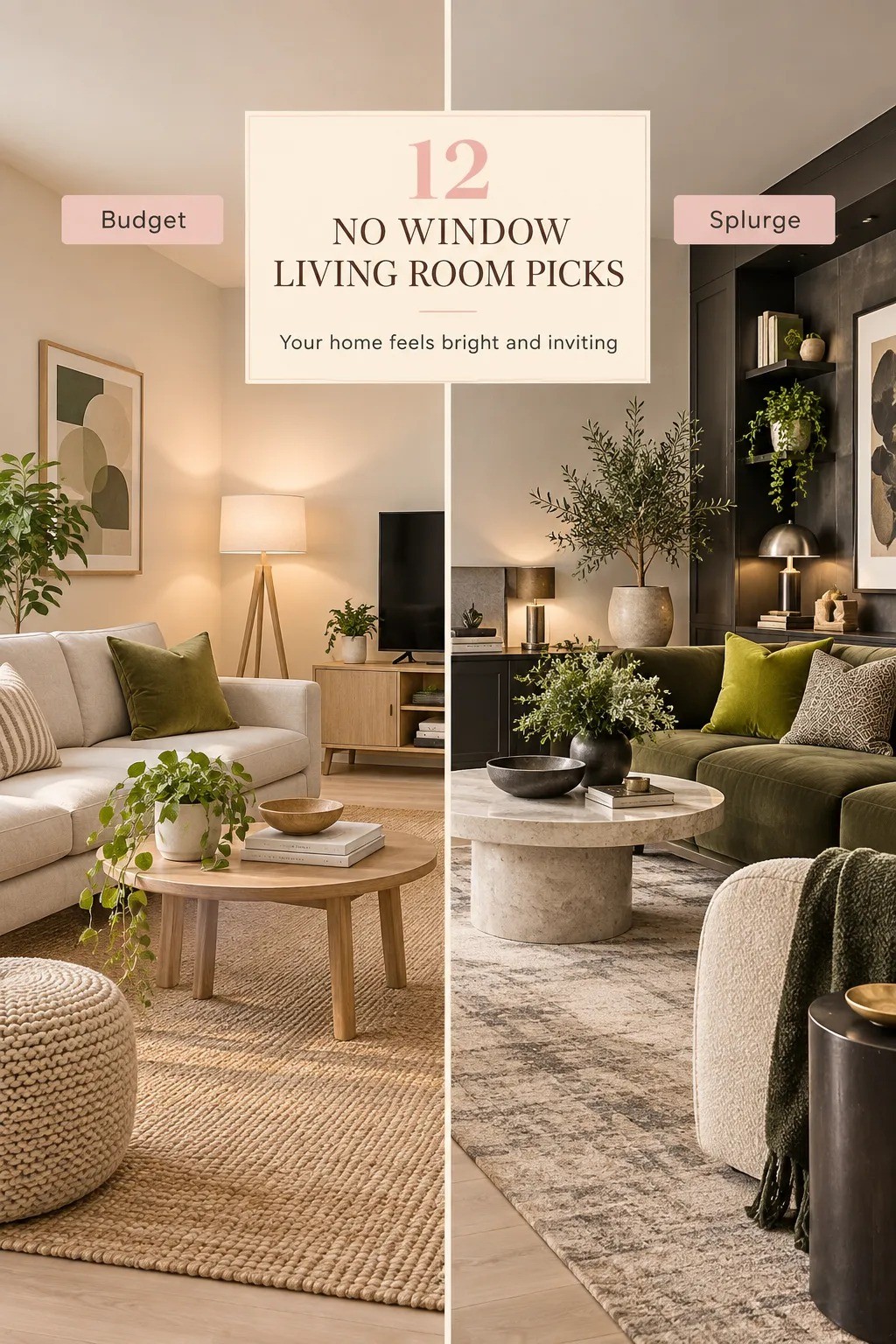
11Build a Budget Before You Buy Anything
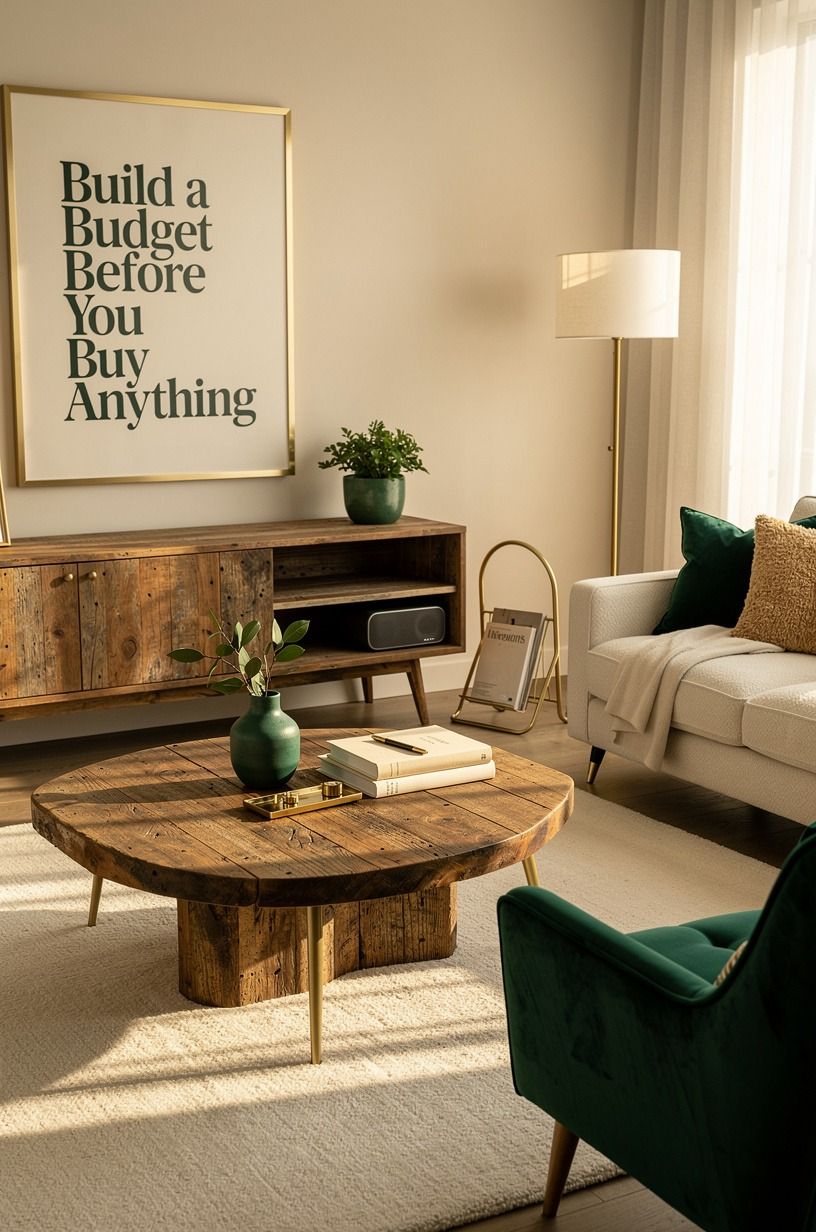
Build your budget around the problem your room has, not the objects you want to collect.
12Edit the Room Until the Light Feels Natural
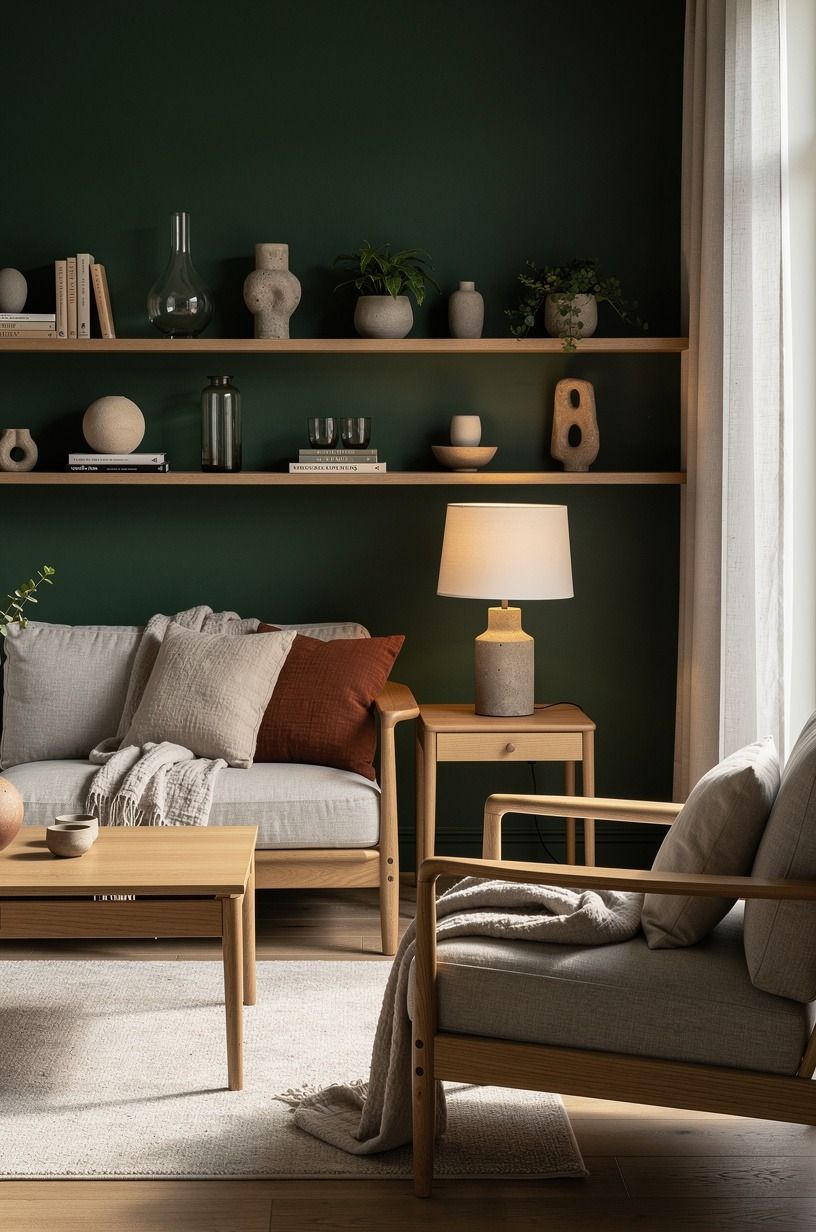
Edit the room after dark, when you'll see the truth. Turn off every light, then switch on the lowest source, the seated source, and the ceiling source one at a time. Your goal is a gradual build from floor to ceiling, with no lonely bright spot dominating the room.
Remove anything that blocks a lamp's spread. A tall basket in front of a floor lamp, a dark chair wedged into a corner, or a thick curtain beside the only bright wall can steal more light than you'd expect. Move one object at a time and watch how the wall changes.
I like to check the room from the doorway because that view reveals visual clutter quickly. If the room looks heavy on one side, shift the largest dark object or add a pale ceramic lamp to balance it. Don't buy another accessory until you've tested a move.
And give yourself one evening to live with the arrangement before you declare it finished. A room can look welcoming and still feel awkward when you're reaching for the remote. Your best version will support how you sit, read, talk, and move through the room, not only how the lamps look from the hall.
The Three Decisions I’d Make Before Buying
I’ve worked on rooms where people bought the sofa first, then tried to make every lamp and rug cooperate with it. That order gets expensive fast.
In a no window living room, I’d decide the light path first, the wall color second, and the furniture footprint third. The room needs a physical plan before it needs another decorative object.
The first decision is whether you want the room to feel bright or intimate. Those aren't the same thing.
Farrow & Ball Hague Blue No.30 can make a room feel rich and moody, while Benjamin Moore Essex Green HC-188 gives you a deeper green envelope. Neither is automatically right.
Your furniture, bulb temperature, and tolerance for shadow decide the answer.
The second decision is where you'll spend your money. I’d invest in the rug and the lamps before a large collection of small art. A good rug gives the seating group a visual floor, and layered lamps change the room every night.
Cheap accessories can't compensate for a room that still has one hard ceiling glare.
The third decision is what you’re willing to remove. I once kept a bulky cabinet because it was useful, even though it blocked the brightest wall and made the room feel pinched.
After I moved it, the room breathed. You may not need more light. You may need fewer obstacles between the light and your eye.
The Questions Worth Answering First
What is the best no window living room idea for a small living room?
The best starting point is a three-level lighting stack with one pale anchor. Try a shaded floor lamp, a table lamp, and a light sofa or rug. IKEA storage can keep the footprint tidy, while an Article-style compact sofa gives your seating room without swallowing the floor.
You'll see more improvement from clear circulation than from extra decor.
Where can I buy no window living room pieces on a budget?
Look at IKEA, Wayfair, and Target first, then check Facebook Marketplace and local thrift shops for lamps, mirrors, and solid wood tables. Secondhand oak furniture often has warmer grain than new budget pieces. Bring your bulb and measure your space, because a bargain won't help if it blocks your only useful light.
How much does a no window living room makeover cost?
A small refresh can cost about $100 to $300 when you reuse your sofa and add paint, lamps, or textiles. A fuller budget project often sits around $300-$1,200, depending on the rug and art. Layered lighting is the strongest early investment, and rearranging furniture costs nothing.
Can I create a no window living room on a budget?
Yes, and you can begin without buying anything. Move dark furniture away from the corners, place a mirror across from your brightest lamp, and group your seating on an existing rug. Warm white paint can help when the walls absorb light, but test the color at night before you commit.
Is a no window living room makeover worth it in a small space?
Yes, because a small room benefits quickly from better circulation and reflected light. Keep the front legs of the seating on an 8x10 rug when possible, then use one vertical plant or mirror to draw the eye upward. Your room may feel larger when the floor and walls read as one continuous field.
Is a no window living room a good idea for a rental?
Yes. Use removable wall hooks, plug-in sconces, tension rods, and lightweight mirrors instead of permanent wiring or heavy built-ins.
Peel-and-stick wallpaper can add depth behind a console, but your lighting plan should still work if you remove it later. Keep the strongest changes portable so you'll take them with you.
Where I’d Start First
If I had to pick one step, I'd start with the three-height lighting stack. It fixes the dark floor and lonely corners at once, while paint and furniture can wait until you see the room properly. Pin this plan for later, then test your lowest lamp tonight.
The change should be visible before you spend a dollar.