 by
by Quick answer: The coolest pillow for most hot sleepers is the Evercool® Cooling Pillow, a cooling-first design I recommend over generic gel foam. Pair any pick with a breathable, washable cover and a loft matched to your sleep position.
- Passive cooling (breathable fills and covers) beats most marketing gimmicks, according to sleep-product specialists.
- Active cooling (gel, graphite, ventilated foams) costs more but can noticeably cut heat buildup, per verified owner reviews.
- Adjustable-fill pillows let hot sleepers tune loft and airflow without replacing the whole pillow.
Updated July 2026 · Reviewed for accuracy
Hot sleepers don't need another "cooling" sticker slapped on ordinary memory foam. They need a pillow built around airflow from the cover to the core. I've spent years dissecting bedding construction, and most so-called cooling pillows fail in the same place: dense foam wrapped in a suffocating knit. Here's how to spot the real thing, and the one pillow I'd point you toward first.
What Actually Makes a Pillow Sleep Cool?
Every cooling pillow works one of two ways, and understanding the split saves you real money. Passive cooling relies on breathable materials: open-cell foams, naturally airy latex, shredded fills, and moisture-wicking covers. Nothing is added to fight heat. The pillow simply never traps it. Passive designs are usually the more affordable route, and according to sleep-product specialists, they're all many warm sleepers ever need.
Active cooling adds heat-fighting technology on top: gel infusions, graphite particles, phase-change surface treatments, ventilated channels, or perforated foam cores. These features pull heat away from your skin instead of just letting it escape. Verified owner reviews consistently report that active designs feel cooler at first touch, which matters if your head runs hot the moment you lie down. The tradeoff is cost. Active features raise the price, and some surface treatments fade faster than the pillow underneath them.
Nut's rule: If a brand can't tell you how its pillow cools, in materials language, not adjectives, assume it doesn't. "Cooling comfort" printed on a label is not a mechanism.
One more thing most buyers miss: your pillowcase and protector sit between you and all that engineering. A thick polyester case can neutralize a genuinely cool pillow. Whatever you buy, dress it in a breathable, moisture-wicking case or the cooling story ends at the zipper.
The Fill Is Where Cooling Lives or Dies
Fill choice drives roughly everything about how hot a pillow sleeps. Here's the honest breakdown, material by material.
Latex. My favorite cooling fill, full stop. Latex has a naturally open cell structure, so air moves through it instead of pooling. It also springs back rather than cradling, which means less surface contact and less heat transferred into your head. Sleep-product reviewers consistently rank latex among the coolest-sleeping fills, and it outlasts most foams by years. It sits in the premium tier, so check current pricing before committing.
Gel-infused and graphite-infused memory foam. These are conventional memory foams with conductive additives meant to pull heat away from the surface. They work, but with a caveat: according to verified owner reviews, the cool-to-the-touch feel is strongest in the first stretch of the night, and dense solid cores can still warm up by morning. Shredded or ventilated versions breathe far better than solid slabs.
Shredded foam and hybrid blends. Shredding the fill creates air channels throughout the pillow. That alone improves cooling over solid foam, and most shredded designs are adjustable, which lets you thin the fill for more airflow or pack it for more support. A genuinely practical middle ground.
Down alternative and hollow-core fibers. Light, airy, and inexpensive, but there's a durability catch. Owner feedback across retailers suggests these fills flatten faster than foam or latex, and a flattened pillow presses your head closer to the mattress, where heat builds. Fine for guest rooms. Risky as a long-term fix for a serious hot sleeper.
Comparing options? The Evercool® Cooling Pillow is the pick we keep coming back to — see the final verdict ↓
Covers and Weaves Matter More Than You Think
The cover is the only part of the pillow touching your skin, and it can either help the fill breathe or strangle it. Bamboo-derived and silk-blend covers show up constantly in cooling pillow designs for good reason: both wick moisture and feel cool on contact, according to textile specialists. Some brands add mesh side panels or vented gussets, which give warm air an exit route along the pillow's edge where your head isn't blocking it.
Washability is the underrated feature here. Sweat and body oils clog a cover's weave over time, and a clogged cover stops wicking. A removable, machine-washable cover isn't a hygiene nicety; it's a cooling-performance feature that keeps working in year two. If you're curious how much buildup a pillow absorbs and why it discolors, I broke that down in why pillows turn yellow and the companion piece on what causes a pillow to yellow over time.
Cover checklist before you buy:
- Moisture-wicking fabric (bamboo-derived, silk blend, or performance knit)
- Removable and machine washable
- Mesh panels or vented gussets if you run very hot
It's worth noting how much of hotel comfort comes from exactly this kind of detail. Hotels obsess over breathable shells and crisp cotton cases, which is a big part of why hotel pillows feel so comfortable. The pillows Wyndham hotels use are a good case study in simple, breathable construction done well.
Cooling Pillow Types, Side by Side
Here's how the main categories stack up on the things that actually matter to a hot sleeper. No invented lab numbers, just what the materials do and what owners report.
| Type | How it cools | Feel | Best for |
|---|---|---|---|
| Latex | Naturally open-cell, passive airflow | Bouncy, responsive | Hot sleepers who want durability |
| Gel / graphite foam | Active heat conduction at the surface | Contouring, slow-sink | Sleepers who love memory foam but run warm |
| Shredded / adjustable | Air channels through loose fill | Moldable, customizable | Combination sleepers, unsure of loft |
| Down alternative | Light, airy fiber clusters | Soft, plush | Mild warmth, budget shoppers, guest beds |
Read that table with your own habits in mind. If you're a dedicated memory foam fan who just sleeps a little warm, gel or graphite foam keeps the feel you like. If you wake up sweating, skip straight to latex or a ventilated active-cooling design.
Match the Loft to Your Sleep Position
The coolest pillow on earth still fails if it bends your neck wrong. Position dictates loft, and loft affects cooling too: a pillow that's too tall wraps more of your head; one that's too flat presses you into the mattress.
Side sleepers need the most height and firmness to fill the gap between shoulder and ear. Adjustable-fill pillows shine here because you can add fill until your spine sits level, and many include cooling panels along the edges where side sleepers press hardest. Back sleepers do best with a medium loft and medium firmness, enough to cradle the neck without pushing the chin toward the chest. Stomach sleepers should go soft and low, and sleep specialists note that an overly tall pillow is the fastest route to neck strain in this position.
Quick self-test: Lie in your usual position and have someone check whether your nose points at the ceiling (side), straight up (back), or your chin tucks (stomach). If your neck visibly tilts, the loft is wrong, cooling or not.
The Pillow I'd Point Hot Sleepers Toward
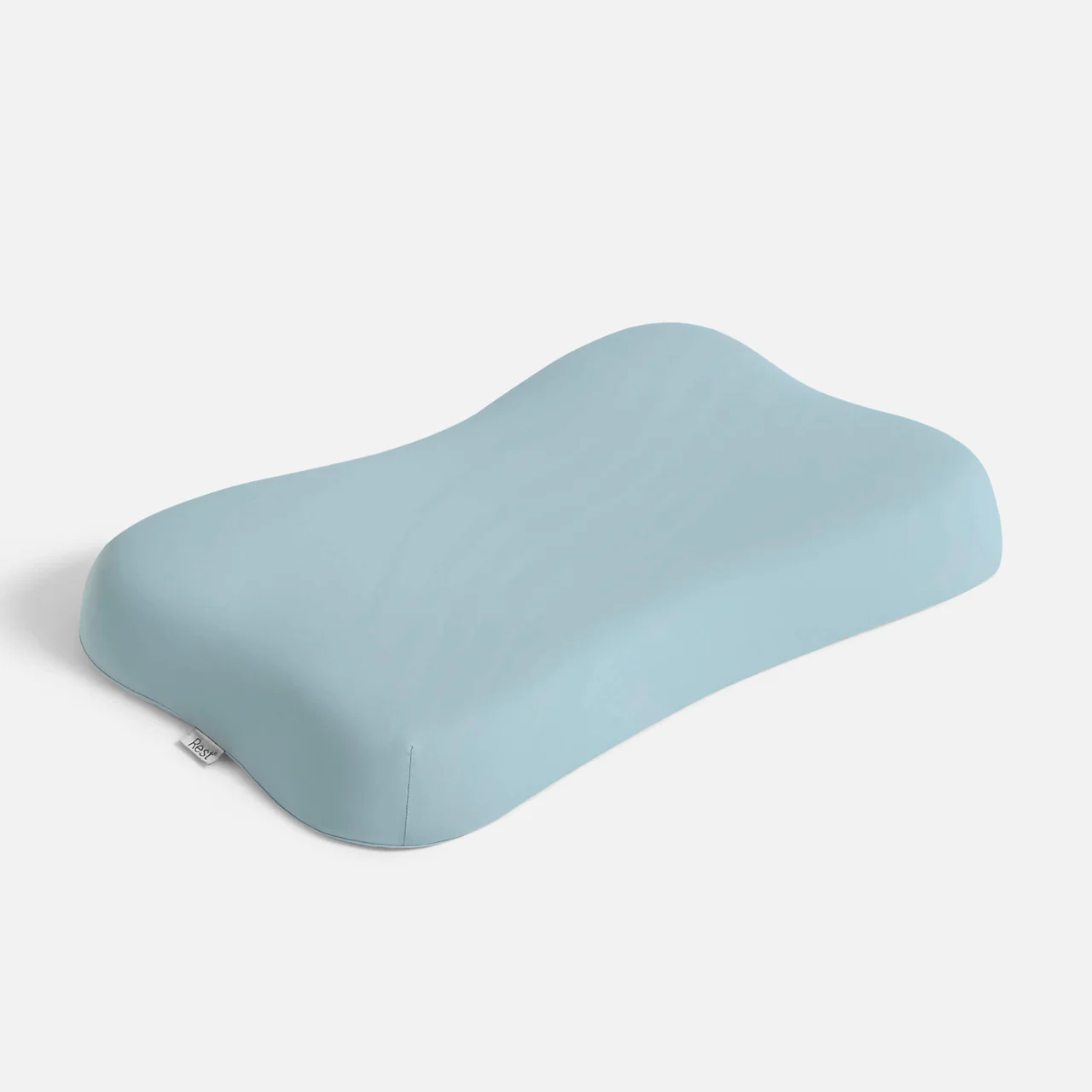
If you want a single answer rather than a materials seminar, my pick is the Evercool® Cooling Pillow from Rest. It's built as a cooling-first product rather than a standard pillow with a cooling label, which is exactly the distinction I hammered on above. Per the manufacturer's product page, the design centers on surface cooling for people who overheat at night, and it's positioned in the premium tier, so check the current price and trial terms on the official site before you buy.
Why this one over a generic gel foam? Construction philosophy. Most budget cooling pillows add a gel swirl to the same dense foam that's been roasting sleepers for a decade. A purpose-built cooling pillow starts from the heat problem and engineers backward through the cover, the surface, and the core. That approach costs more, but for a genuinely hot sleeper it's the difference between a cooler first ten minutes and a cooler full night. If your budget is tighter, a ventilated shredded-foam pillow with a bamboo-derived cover gets you most of the way there for less, and a generous sleep trial on either option takes the risk out of experimenting.
FAQ
What is the coolest type of pillow fill?
Latex consistently ranks among the coolest fills because its open-cell structure lets air move freely, according to sleep-product reviewers. Ventilated and shredded foams come next. Dense solid memory foam, even gel-infused, tends to run warmest over a full night per verified owner feedback.
Do cooling pillows actually work?
Yes, when the cooling mechanism is real. Breathable fills, moisture-wicking covers, and gel or graphite infusions all reduce heat buildup to a measurable degree, per sleep-product specialists. The failures are usually marketing-only pillows: standard foam with a cooling buzzword and no construction change behind it.
How do I keep my pillow cool all night?
Layer the odds. Start with a breathable fill, add a moisture-wicking washable cover, and use a light cotton or bamboo pillowcase instead of thick polyester. Keeping the bedroom itself cool matters too, since no pillow can outrun a hot room.
How often should I replace a cooling pillow?
It depends on the fill. Latex and quality foam cores hold their shape and support for years with proper care, while down-alternative fills flatten noticeably sooner, per owner feedback across major retailers. If your pillow stays folded in half or you wake with neck pain, it's done.
Is an adjustable pillow worth it for hot sleepers?
For most people, yes. Removing fill increases airflow through the pillow and drops the loft, which reduces how much of your head the pillow wraps. It's the easiest way to tune both cooling and support without buying a second pillow.
FINAL VERDICT
Bottom line for the coolest-pillow hunt: if you want a pillow that stays cooler through the night, the Evercool® Cooling Pillow is the safer buy. The cooling is in the build, not just on the box.
OUR CATEGORY-MATCHED PICK
Evercool® Cooling Pillow
- Cooling-first build, surface cooling engineered for sleepers who overheat at night, per the manufacturer
- Designed backward from the heat problem: cover, surface, then core, not a gel swirl added to dense foam
- Premium tier, check current price and trial terms on the official site