 by
by Quick answer: Yes, people buy used mattresses — mostly through classifieds and resale marketplaces at steep discounts. But you give up warranty coverage and inherit real hygiene risks. For most sleepers, a new mattress like the Saatva Classic, with a home trial and lifetime warranty, is the safer spend.
- Used mattresses are a small slice of total mattress sales, per resale market data — most shoppers still buy new for hygiene and warranty reasons.
- Per standard manufacturer warranty terms, coverage almost never transfers to a second owner.
- Dust mites, allergens, mold, and bed bugs are the documented risks flagged by consumer safety guidance on secondhand bedding.
Updated July 2026 · Reviewed for accuracy
Here's the honest answer before anything else: yes, people buy used mattresses every day. College students, landlords furnishing rentals, folks in a tight month between paychecks. The listings are all over Facebook Marketplace, Craigslist, and thrift outlets. But "people do it" and "you should do it" are two different questions, and the second one deserves a straight answer.
I've spent over a decade around mattress construction and materials, and my position is simple: a used mattress can make sense in a narrow set of situations. Outside those situations, the discount stops looking like a deal and starts looking like a gamble on someone else's sweat, dust mites, and sag.
So, do people actually buy used mattresses?
They do — but far fewer than buy new. Used mattresses move through classifieds, online marketplaces, and some thrift outlets, usually at a fraction of the original retail price. Even so, secondhand units represent a small portion of overall mattress sales, based on what resale channels show relative to new-mattress volume. The reason isn't snobbery. It's that mattresses are one of the most personal, hygiene-sensitive products you can buy, and most shoppers decide the risk isn't worth the savings.
There's also a legal wrinkle most buyers never think about. Selling used bedding is regulated in many states, with rules around sanitization, labeling, and in some cases outright restrictions. Before you buy, it's worth understanding where selling used mattresses is restricted or illegal, because those laws shape what's even legitimate to purchase secondhand in your area.
The short version: The used-mattress market exists because new mattresses cost real money. But every dollar of that discount exists because the product carries unknowns the seller can't fully disclose — and you can't fully inspect.
What you're actually buying: wear, allergens, and unknowns
A mattress is not a used car. You can't pop the hood. The failure modes hide inside the foam and coils, and by the time you feel them, the money's gone. Here's what consumer safety guidance on secondhand bedding consistently flags.
Biological load. Used mattresses can harbor dust mites, accumulated allergens, moisture, and mold. Bed bugs are the nightmare scenario — look for molts and dark spotting along seams and tufting, per standard pest-inspection guidance. Some of this you can clean. Some of it, like mold inside the foam core, you cannot.
Structural wear. Foam softens where bodies sleep. Coils fatigue. According to owner reports across resale marketplaces, used innerspring and all-foam mattresses often show comfort and support degradation well before the cover looks worn. The mattress can photograph beautifully and sleep terribly. Latex holds up longer than most materials, but even a used latex mattress can carry hidden issues you won't catch in a five-minute inspection.
Age compounds everything. The older the mattress, the more likely it has sagging and a shortened remaining lifespan. A two- or three-year-old mattress from a smoke-free, pet-free home is a different animal than a decade-old innerspring advertised as "like new." That second listing, which shows up constantly on resale sites, is almost always a pass.
No warranty. Per standard manufacturer warranty terms, coverage is tied to the original purchaser and almost never transfers. If the mattress develops a defect the month after you buy it, that's your problem and your expense.
Comparing options? The Saatva Classic is the pick we keep coming back to — see the final verdict ↓
How to inspect a used mattress before you hand over cash
If you're going the secondhand route, treat it like an inspection, not a purchase. The buyers who get burned are the ones who buy from photos. Here's the process I'd follow, based on what consumer guidance and buyer reports recommend.
The used-mattress inspection checklist:
- Ask for history: age of the mattress, how many owners, whether pets or smoking were in the home, and whether any sanitization was done — and by whom.
- Bring a flashlight: check seams, piping, and tufting for bed bug molts and dark spots. Do this before you sit on anything.
- Smell it: musty or sour odors point to moisture or mold inside the layers. Walk away.
- Press the sleep surface: feel for body impressions and uneven support where the previous owner slept.
- Check stains: visible staining means fluids reached the comfort layers, and possibly deeper.
- Lie on it: several minutes in your normal sleep position, not a ten-second sit on the edge.
One more thing: ask about the return option. Some sellers and platforms offer a short return window or buyer protection. If none exists, assume every risk lands on you and price accordingly.
Used vs. new: the comparison that actually matters
The sticker discount is only half the math. When you line up what you get and what you give up, the picture changes fast — especially once you understand why new mattresses cost what they do in the first place. A big chunk of that price is exactly what a used mattress lacks: fresh materials, a sleep trial, and warranty coverage.
| Factor | Used mattress | New mattress |
|---|---|---|
| Upfront cost | A fraction of retail, varies by condition | Full retail, often with seasonal offers |
| Hygiene | Unknown history; mites, allergens, mold risk | Factory-fresh materials, sealed |
| Warranty | Almost never transferable, per manufacturer terms | Full coverage from day one |
| Sleep trial | None — you own it | Standard with most online brands |
| Remaining lifespan | Closer to end-of-life; replacement comes sooner | Full useful life ahead |
| Hidden costs | Cleaning, transport, early replacement | Minimal beyond the purchase |
Run the total-cost math honestly. Cleaning supplies, a protector, transport, and the real possibility you replace the thing within a year or two — that "deal" can end up costing more per year of use than a modest new mattress with a trial period behind it.
If you do buy used: sanitation is non-negotiable
Say you find a genuinely clean unit from a seller you trust. You're still not done. Sanitation guidance for secondhand bedding is consistent on this: treat every used mattress as contaminated until proven otherwise.
Sanitation steps after a secondhand purchase:
- Vacuum the entire surface and sides thoroughly, seams included.
- Apply baking soda across the surface, let it sit, then vacuum again to neutralize odors.
- If the cover is removable, wash or wipe it down per the care label.
- Let the mattress air out in a dry, ventilated space before sleeping on it.
- Encase it in a quality mattress protector from the first night — it extends cleanliness and lifespan.
A reality check: these steps handle surface-level issues. They don't fix mold inside the foam, they don't restore fatigued coils, and they don't guarantee bed bugs are gone if the infestation reached the core. That's the ceiling on what secondhand can offer, and it's worth being blunt about it.
When a used mattress makes sense — and when it doesn't
A used mattress is defensible in a narrow lane: a young mattress from a verifiable, smoke-free, pet-free home, inspected in person, bought at a steep enough discount to absorb the risk, for temporary or guest-room use. Scenario by scenario — a two- or three-year-old memory foam bed from a trustworthy local seller can be a reasonable stopgap. A ten-year-old innerspring listed as "like new" is not a deal at any price.
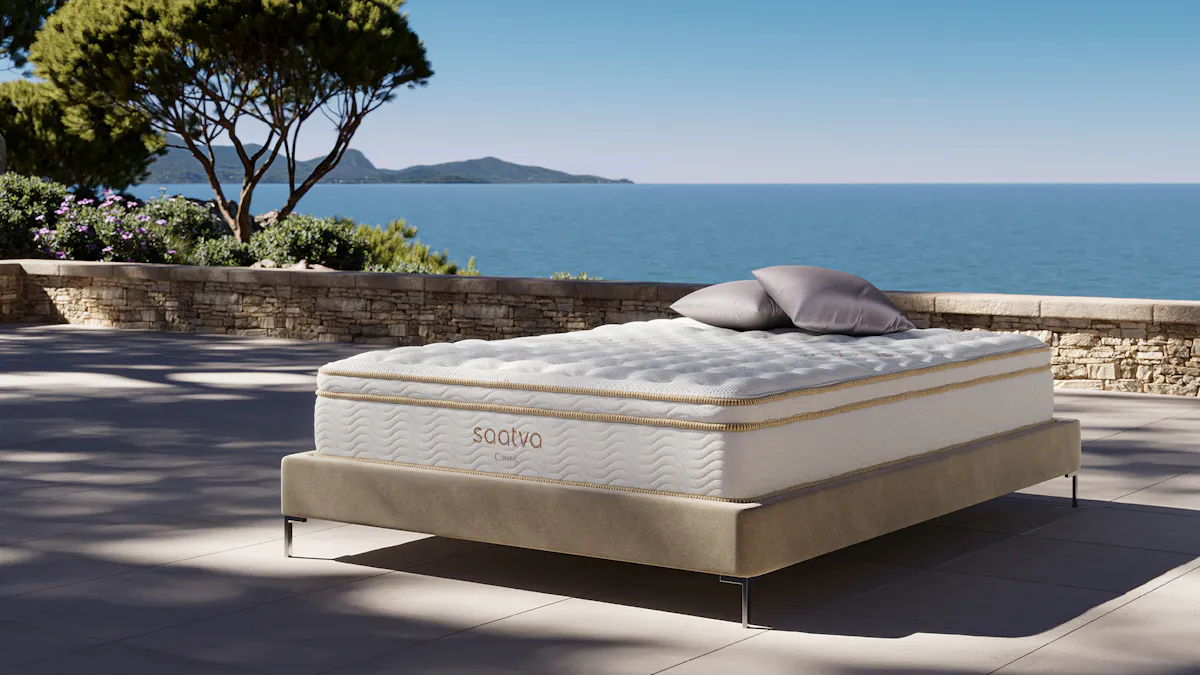
Outside that lane, my verdict is firm: buy new, and buy from a brand that removes the risk instead of transferring it to you. The Saatva Classic is the benchmark I point people to here — handcrafted in the USA, priced in the premium tier (check the current offer on the official site), with flexible financing that spreads the cost out, a long home trial that lets you actually test the bed in your own bedroom, and a lifetime warranty that stays with you. That combination is precisely what no used listing can match: you're not just buying a mattress, you're buying the guarantee that the mattress you received is the mattress you were promised.
That's the whole argument, really. A used mattress saves you money on day one and charges you interest in risk every night after. A new mattress with a real trial and warranty flips that equation. For a product you spend a third of your life on, I know which side I'd rather be on.
FAQ
Is it legal to buy a used mattress?
Buying one is generally legal, but selling used bedding is regulated in many states, with sanitization and labeling requirements and some outright restrictions. Check your state's rules before purchasing, since an illegally sold mattress is one you have zero recourse on.
How much cheaper is a used mattress than a new one?
Discounts on resale marketplaces vary widely by brand, age, and condition — anywhere from a modest markdown to a fraction of the original price. Compare that against hidden costs like cleaning, transport, and earlier replacement before calling it a deal.
Can you fully sanitize a used mattress?
Partially. Vacuuming, baking soda, and washing a removable cover handle surface contamination, per standard sanitation guidance. Mold inside the foam, deep allergens, and bed bugs in the core are often not fixable, which is the core risk of buying secondhand.
Does a mattress warranty transfer to a second owner?
Almost never. Per standard manufacturer warranty terms, coverage applies to the original purchaser with proof of purchase. Buying used means buying without a safety net, no matter how new the mattress looks.
Is a used mattress ever worth it?
Only in a narrow case: a young mattress, verified clean history, in-person inspection, steep discount, temporary use. For your primary bed, a new mattress with a sleep trial and warranty is the better value once you factor in risk and remaining lifespan.
FINAL VERDICT
Bottom line for anyone considering a used mattress: if you want a new bed that costs less risk than a used one, the Saatva Classic is the safer buy — the 365-night trial and lifetime warranty put the risk on the brand, not on you.
OUR CATEGORY-MATCHED PICK · UP TO $334 OFF
Saatva Classic
- 365-night home trial and lifetime warranty, per saatva.com
- Handcrafted in the USA, free white-glove delivery
- Flexible financing available