
 by
by Quick answer: A discounted mattress is worth considering when the final delivered price is competitive, the construction suits your sleep needs, and the return terms leave you a reasonable way out. Skip any deal built around a crossed-out price while the seller stays vague about the foam, coil system, fire barrier, foundation requirements, or return costs. I buy the build, not the badge.
- Compare the final price with the model’s usual selling price, not only its reference price.
- Look for specific material descriptions instead of generic phrases such as “premium foam.”
- Read the trial, return, warranty, and foundation rules before placing the order.
- Match the comfort and support design to the sleeper, even if another mattress carries a louder discount.
Updated August 2026 for current mattress-shopping practices.
Start with the final price, not the crossed-out price
A crossed-out price is not independent evidence of value. The seller controls that reference price, so the discount can appear larger without any change to the mattress, its materials, or the amount leaving your account.
I pay attention to the price at which a model repeatedly sells. If the same offer disappears and returns in slightly different packaging, that lower figure is probably closer to the practical everyday price. A genuinely unusual deal should beat that familiar level or include services you would otherwise need to purchase separately.
Make the comparison on an equal basis. Use the same mattress size, firmness option, delivery method, foundation choice, and return conditions. A lower sticker price can lose its advantage after shipping, setup, old-mattress removal, or return charges are included. My mattress price comparison can help organize those moving parts without treating the discount badge as the main decision.
The Nut’s rule: compare each mattress with other beds available for the same final cost. Its own reference price is a marketing comparison, not a construction comparison.
Construction tells you what the deal is actually worth
Foam density is useful when comparing similar foam types because it tells you how much material is packed into a given volume. It is not the same thing as firmness, and it should not be compared blindly across polyurethane foam, memory foam, and latex. A dense foam can feel soft, while a lower-density foam can initially feel firm.
If a seller publishes only layer thickness, you still do not know much about durability. A thick layer of lightly built foam may soften sooner than a thinner, more substantial layer. Descriptions such as “high density” are also less useful when the brand does not disclose what that phrase means for the actual material.
Coil specifications need similar context. A lower coil-gauge label describes thicker wire, but wire thickness alone does not determine whether a support unit is suitable. Coil shape, turns, steel temper, layout, zoning, and the way the unit is joined to surrounding layers all affect feel and durability. Thicker wire can add firmness, but it is not automatically the best choice for every sleeper.
Coil count is even easier to misuse. Counts can change with mattress size, coil diameter, and the inclusion of smaller edge or microcoils. A large count of lightly built coils is not inherently better than a simpler unit using appropriate wire and sensible reinforcement.
| Construction detail | What it helps reveal | What it cannot prove alone |
|---|---|---|
| Foam density | How substantial a comparable foam formulation is | Firmness, comfort, or the durability of the entire mattress |
| Coil gauge | Relative wire thickness | Overall support quality without the rest of the coil design |
| Coil count | How the support unit is divided | Steel quality, edge strength, or suitability for a sleeper |
| Layer thickness | How much room is devoted to comfort or transition materials | The quality of those materials |
Layer count is mostly a presentation choice unless the seller explains what each layer contains and why it is there. Several thin transition layers may create a refined feel, but they may also be a way to make the cutaway image look more elaborate. I would rather see a simple, well-disclosed build than a tall stack of unnamed foams.
The cover and fire barrier deserve attention too. Ask what the barrier is made from, whether the cover is intended to be removed, and what cleaning method the manufacturer permits. Do not unzip a mattress merely because the cover has a zipper. My guide to fiberglass fire barriers in mattresses explains why the barrier material and cover instructions belong on a discount-shopping checklist.
Where discounted mattresses tend to fail
Comfort materials usually show wear before a sturdy support core does. The sleeper may notice a softer area, reduced resilience, or a visible impression. Those conditions are related, but they are not identical, and a warranty may treat them differently.
Edge complaints also need diagnosis. A mattress can have a sound center while the perimeter compresses too easily for sitting or sleeping near the side. In a shared bed, that weak perimeter reduces useful space even if the mattress still looks acceptable from above.
| Failure pattern | Possible construction cause | What to check before buying |
|---|---|---|
| Body impressions or uneven softening | Comfort foam losing resilience or an unsuitable base allowing excess deflection | Material disclosure, covered-defect language, and foundation requirements |
| Weak perimeter | Minimal edge reinforcement or soft encasement foam | A description of reinforced coils, firmer perimeter foam, or another defined edge system |
| Heat buildup | Deep sink, limited airflow, or a cover that does little to release heat | Overall layer layout rather than cooling labels alone |
| Center sag or loss of support | A fatigued support core, weak frame, or incompatible foundation | Support-core description and the manufacturer’s required base setup |
The foundation is part of the mattress system. Slats, center support, platform construction, and frame condition all matter. Follow the exact requirements in the warranty rather than assuming an existing frame is close enough. An unsupported area beneath the bed can create flex that looks and feels like mattress failure.
Cooling language deserves restraint as well. Gel names, ventilated graphics, and cool-touch fabric descriptions do not tell you how the complete bed will feel after the sleeper settles into it. A coil core can create an airflow path, but the comfort layers above it still influence heat retention.
Watch the mechanism, not the adjective: “supportive,” “cooling,” and “durable” are conclusions. Coil layout, foam disclosure, edge construction, and return terms are evidence you can actually evaluate.
A lower price can still buy a sensible mattress
A simple mattress is not automatically a poor mattress. Removing decorative quilting, complicated zoning, or extra transition layers can reduce cost without ruining the basic support system. The key is knowing what was simplified.
The better value builds tend to make a clear trade. They may use a plainer cover, a less elaborate edge, or a shorter comfort stack while keeping the support core understandable. A questionable build hides the trade behind layer names and gives the shopper no practical way to judge the materials.
Initial comfort should not be confused with long-term value. Many foams feel inviting when fresh. The more useful questions are whether the comfort layer is appropriate for the sleeper, whether the support core is adequately described, and what happens if the feel changes in a way the warranty does not classify as a defect.
- Good sign: the seller identifies the material in every major layer.
- Good sign: firmness options are explained through construction rather than lifestyle labels.
- Good sign: edge support and foundation rules are described plainly.
- Caution sign: thickness is promoted while foam quality remains unnamed.
- Caution sign: the warranty headline is prominent but exclusions are difficult to find.
- Caution sign: the discount expires constantly yet repeatedly returns.
Comparing options? The Saatva Classic is the pick we keep coming back to — see the final verdict ↓
Trial and warranty terms change the real value
A sleep trial can protect against a poor fit, but its length does not prove that the mattress is durable. It tells you how long the seller allows an eligible return under the stated conditions. That is valuable, but it is a policy feature rather than a material specification.
Read how the trial works. Find out when it begins, whether there is a required adjustment period, who arranges collection, which fees remain your responsibility, and what condition the mattress must be in. Also check whether an exchange changes the remaining trial or limits later return options.
A warranty serves a different purpose. It usually addresses defined defects, not every change in feel or comfort preference. Look for the covered impression standard, exclusions for stains or damage, foundation requirements, owner eligibility, and the remedy the company may choose.
- Does the return involve collection, shipping, handling, or restocking charges?
- Must the mattress stay on a particular type of base?
- Does an exchange count as the final resolution?
- Are clearance, floor-display, or opened mattresses excluded?
- What evidence is required for a warranty claim?
- Does the seller or the manufacturer handle the claim?
Save the terms that were displayed when you ordered, along with the receipt and model information. Policies can change for future orders, and a saved copy makes it easier to identify which terms apply to your purchase.
My priority order: suitable construction first, workable return terms second, final delivered price third, and the advertised discount last.
Not every type of markdown carries the same risk
A repeating sitewide promotion is different from clearance on a discontinued model. Clearance can represent a real inventory-driven reduction, but only if you verify which version is being sold and whether its policies differ from the current model.
Floor displays, customer returns, and opened-box mattresses require additional scrutiny. Ask for the condition in writing, identify who has handled the mattress, and confirm whether trial and warranty coverage remain available. A low price does not compensate for a final-sale condition you did not notice.
Bundles can also blur the math. A package may appear generous while including a foundation, protector, or pillow you would not otherwise choose. Price the mattress itself and assign value only to extras you genuinely need.
| Offer type | What may drive it | Question to ask |
|---|---|---|
| Recurring promotion | Normal promotional pricing | How does the final price compare with its recent selling level? |
| Previous-model clearance | Inventory replacement | Which construction and policy terms apply to this version? |
| Floor display or opened item | Prior handling or lost retail packaging | Is it returnable, and does the full warranty still apply? |
| Bundle | Added accessories or services | Would I buy each included item separately? |
Holiday timing is less important than price history and model fit. If the right mattress is already near its familiar low point, waiting for a louder promotion may not improve the underlying value. If the build is wrong for you, an additional markdown does not repair that mismatch.
Match the mattress to the way it will be used
Side sleepers generally need enough surface give for the shoulder and hip without losing stable support underneath. On a lower-priced bed, inspect the comfort section closely. A firm label does not reveal whether the top layers will relieve pressure or merely resist compression.
Back and stomach sleepers often focus more heavily on preventing the midsection from settling too far. A simpler, firmer build may work well, but firmness by itself is not support. The transition layer, support core, and sleeper’s build all affect how level the mattress feels.
| Use case | Prioritize | Do not trade away for a discount |
|---|---|---|
| Side sleeping | A suitable comfort layer over stable support | Enough surface give for the shoulder and hip |
| Back or stomach sleeping | Resistance to excessive midsection sink | A clearly described support core |
| Shared bed | Motion control and usable edge support | Comfort that works for both sleepers |
| Warm sleeper | A layer design that limits deep heat-trapping sink | A workable return policy if cooling claims disappoint |
| Guest or occasional bed | Broad comfort and straightforward construction | Compatibility with the intended frame |
Couples should pay close attention to coil type and perimeter design. Individually moving coils tend to transfer less motion than a connected coil network, although the foams above the coils also matter. Edge reinforcement is especially useful when both sleepers use the full surface.
Guest rooms can justify a more restrained budget because use is less frequent, but the bed still needs to fit its frame and likely sleepers. Secondary setups may have unusual clearance or support requirements. My guide to trundle bed mattresses covers the extra fit questions that apply to that type of frame.
Fit beats markdown: the least expensive suitable mattress is a better value than the most heavily promoted mattress with the wrong feel, support, or return policy.
Read reviews for mechanisms, not just ratings
A useful review identifies the exact model and version, explains the sleeper context, and separates initial comfort from changes noticed later. A rating without that context says little about how the same mattress may work for you.
For durability, look for recurring descriptions of the same mechanism: surface softening, edge compression, noise, loss of support, or difficulty with a claim. A lone complaint may reflect damage or an incompatible foundation. A repeated, specific pattern is more informative than a vague average score.
Early owner comments can still help with packaging, delivery, odor, and initial feel. They are less useful for judging material fatigue. Give more weight to updates that explain how the bed changed and whether the owner followed the required foundation and care instructions.
- Is the exact mattress version identified?
- Does the reviewer describe sleep position and general build?
- Are comfort, support, motion, edge feel, and heat discussed separately?
- Is a durability complaint tied to a specific layer or support problem?
- Does the review distinguish warranty service from ordinary returns?
The same standard applies to model-specific coverage. My Zoma Hybrid coverage and Zoma mattress review illustrate the construction questions worth carrying into any discounted-mattress decision.
Use premium pricing only as a comparison point
Optional premium context: If you use the Saatva Classic as a higher-tier comparison point, put it through the same process. Check the current official construction details, delivered price, trial rules, warranty terms, and required foundation. A premium position is useful only when the disclosed build and services matter to you.
FAQ
Are discounted mattress prices real?
The amount charged is real, but the claimed saving may not reflect an unusual buying opportunity. If a model repeatedly returns to the same promotional level, treat that level as its normal comparison point. Price history and the final delivered cost are more useful than the crossed-out figure.
What is the biggest mistake when buying a discounted mattress?
The biggest mistake is choosing the discount before choosing the construction. Start with sleep position, comfort needs, support design, material disclosure, and return terms. Compare suitable mattresses by final cost only after they pass those checks.
Can an inexpensive mattress hold up well?
It can, particularly when the design is simple and the support core is appropriate. Lower cost becomes concerning when the seller substitutes vague layer names for meaningful specifications or relies on initial softness to distract from lightly built comfort materials.
Does a longer trial mean the mattress is better?
No. A longer trial can give you more time to judge fit, but it is not proof of material quality or durability. Return fees, eligibility rules, collection arrangements, and exchange restrictions determine how protective the policy really is.
When are mattress discounts most meaningful?
Inventory clearance can create a more meaningful reduction than a repeating promotion, especially when a model is being replaced. Confirm the exact version, condition, return status, and warranty coverage before assuming the clearance option is the better value.
ONE OPTION WORTH COMPARING
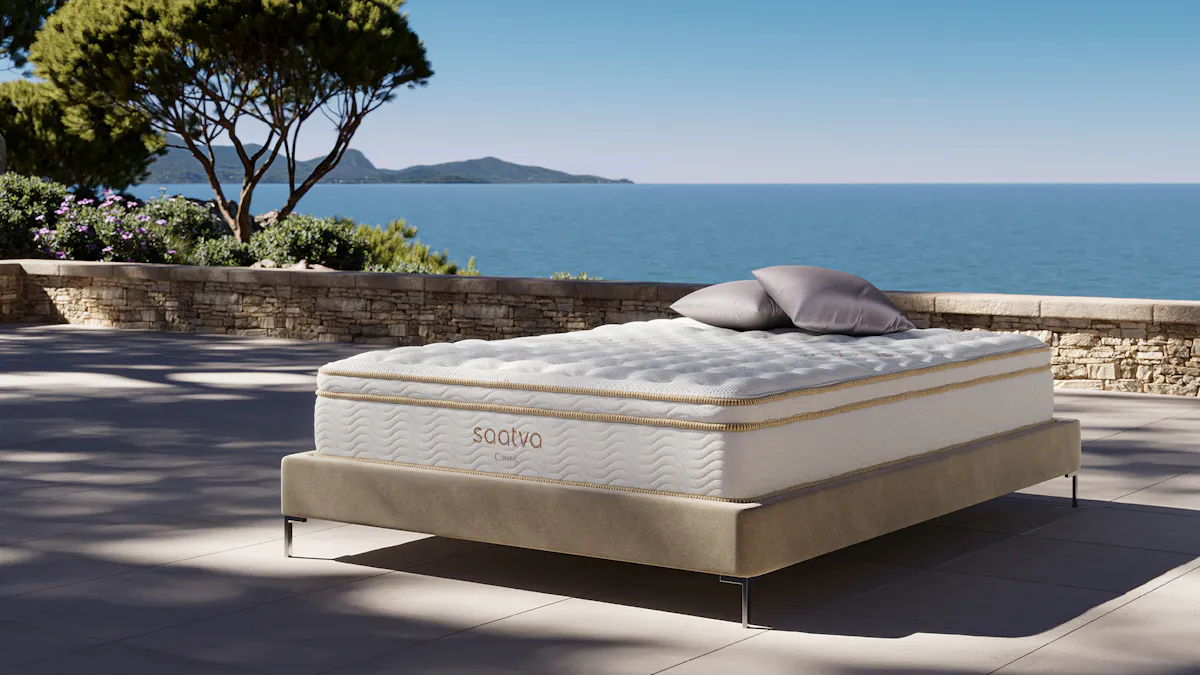
Shopping as well as reading? Here is one current option worth comparing: the Saatva Classic. Check today’s price, sizing and return terms on the official product page before you order.
Saatva Classic
- 365-night home trial and lifetime warranty, per saatva.com
- Handcrafted in the USA, free white-glove delivery
- Flexible financing available
The verdict
A discounted mattress is a good deal only after it qualifies as a good mattress for its intended sleeper. Check the foam and coil disclosures, identify what reinforces the edge, confirm the fire-barrier and cover instructions, and make sure the foundation complies with the warranty. Then calculate the final delivered price and compare it with the model’s familiar selling level.
That order keeps the promotion in its proper place. The discount can improve an already sound decision, but it should never be the part that makes the decision for you.