
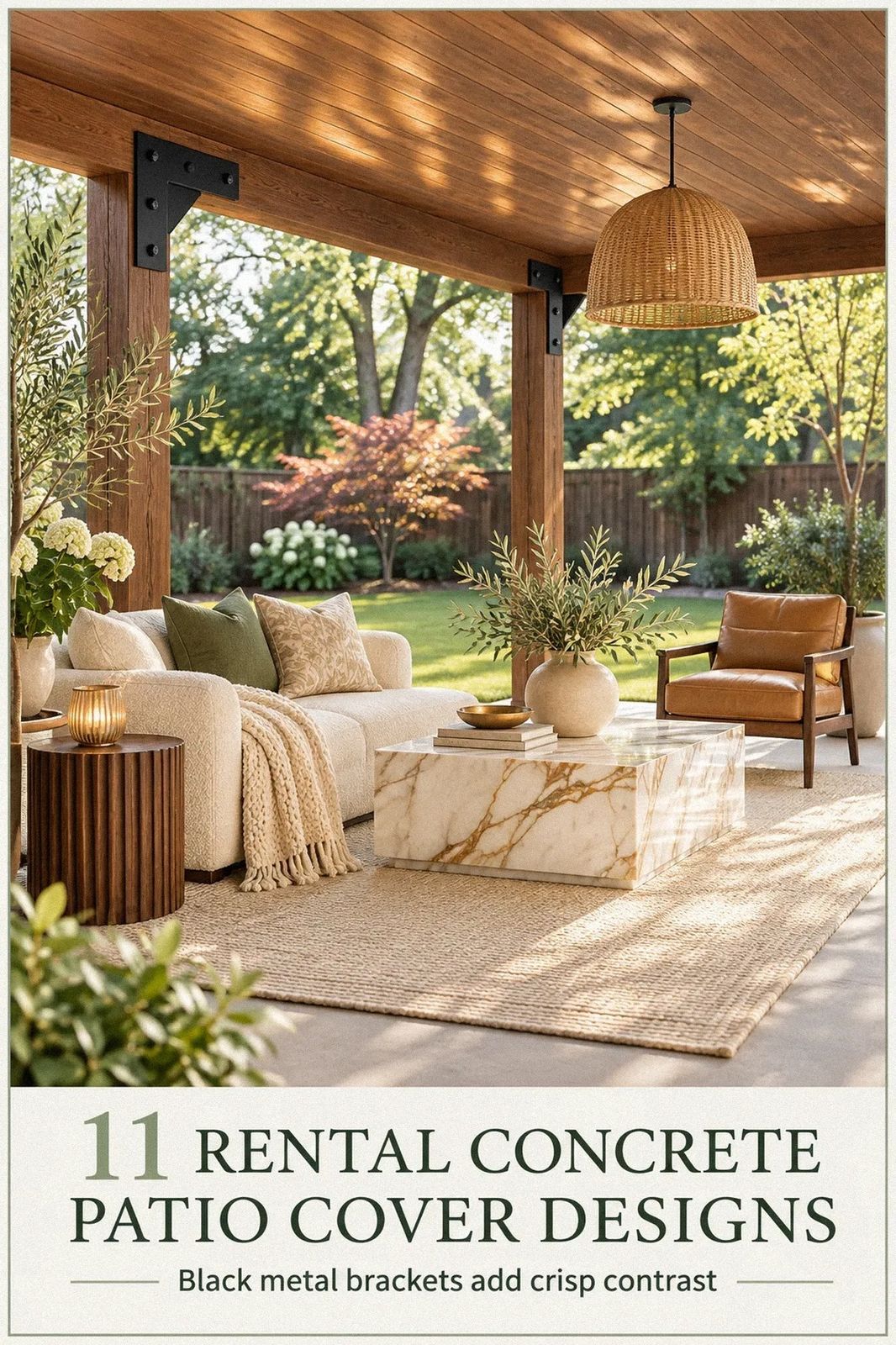
 by
The easiest way to cover an ugly concrete patio in a rental is to layer removable textiles, warm lighting, plants, and furniture that hide the gray without touching the slab. I learned this after painting one patio too boldly. These 11 renter-friendly patio ideas keep your deposit safe while making the space warm, inviting, and lived-in.
Don’t overthink: Paint the perimeter with the Two-Inch Frame.
- Layer an outdoor rug over the concrete
- Paint the perimeter with the Two-Inch Frame
- Float a compact dining set inside the Three-Zone Rule
- Hang the Three-Height Light Stack
- Build a renter-friendly patio with movable planters
- Swap plastic furniture for woven texture
- Choose a rug over paint for concrete patio decor ideas
- Frame the door with a Soft-Edge Entry
- Mix two woods instead of one flat finish
- Cover the railing with soft outdoor fabric
- Make the small patio feel larger with the Open-Center Plan
1Layer an outdoor rug over the concrete
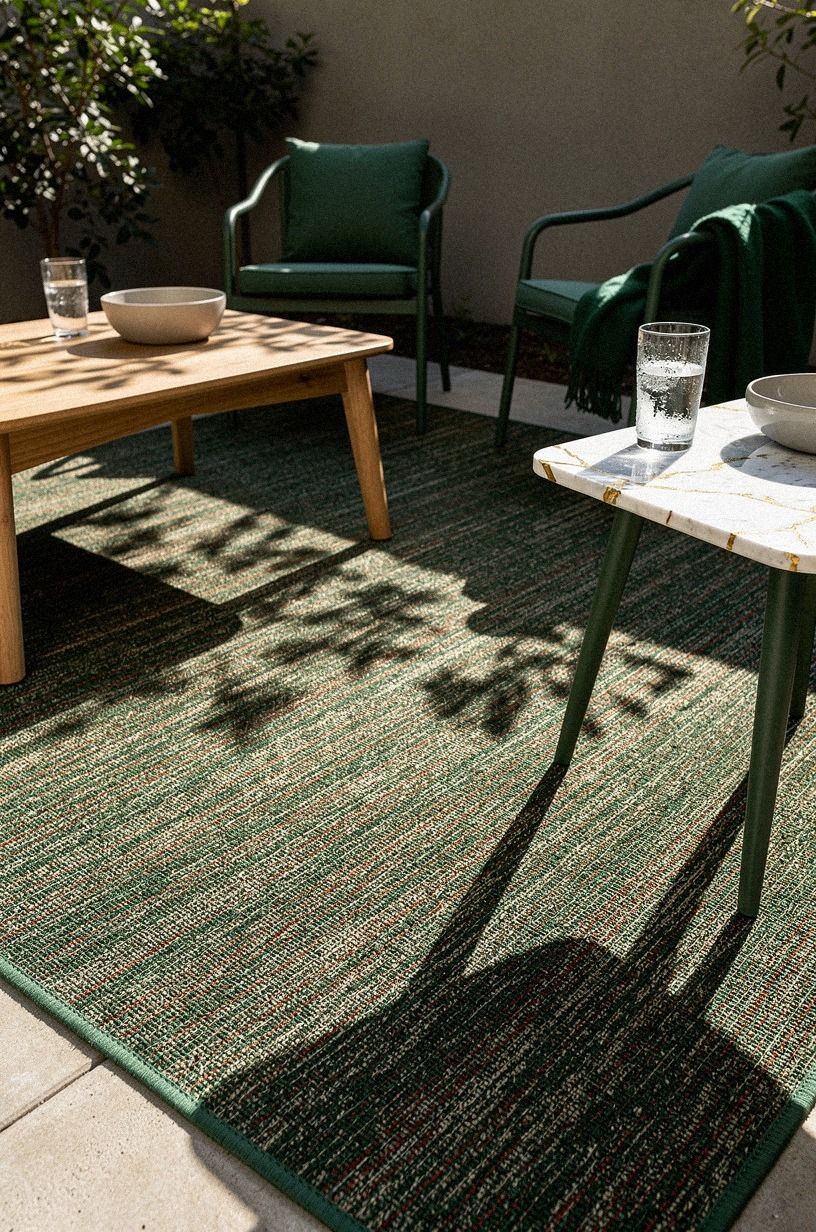
An outdoor rug gives you the fastest visual cover because it hides the largest uninterrupted patch of gray. Choose a low-profile polypropylene outdoor rug, then place the front legs of your seating on it. You’ll create a defined room without drilling, gluing, or sealing anything to the patio.
That one move changes the whole patio.
I’d skip a tiny mat in the middle. It makes your furniture look stranded and leaves the concrete shouting around it. A large rug in forest green with rust accents will look intentional beside natural oak furniture, and you can roll it up when you move.
Let the rug stop before the door swings open. You’ll want enough clearance for the threshold, plus a dry edge where water can escape after rain. If you’re unsure how to cover a rental surface safely, our guide to covering an ugly rental floor without losing your deposit uses the same removable-layer logic.
Look for a tightly woven surface that won’t catch chair legs. A flatweave outdoor rug is easier to sweep than a deep pile, while a rubber-backed mat can be useful near the door if it doesn’t trap moisture. Don’t place any rug over a drain or a spot where water regularly pools.
But don’t treat the rug as decoration only. Your feet will notice the difference immediately, especially when the concrete holds the evening chill and the fabric softens every step.
A rug also gives you a color direction for the rest of the patio, which makes later decisions much easier. If you repeat a little Calacatta marble with gold veining in a side table or planter, the natural stone will add polish without changing the slab.
2Paint the perimeter with the Two-Inch Frame
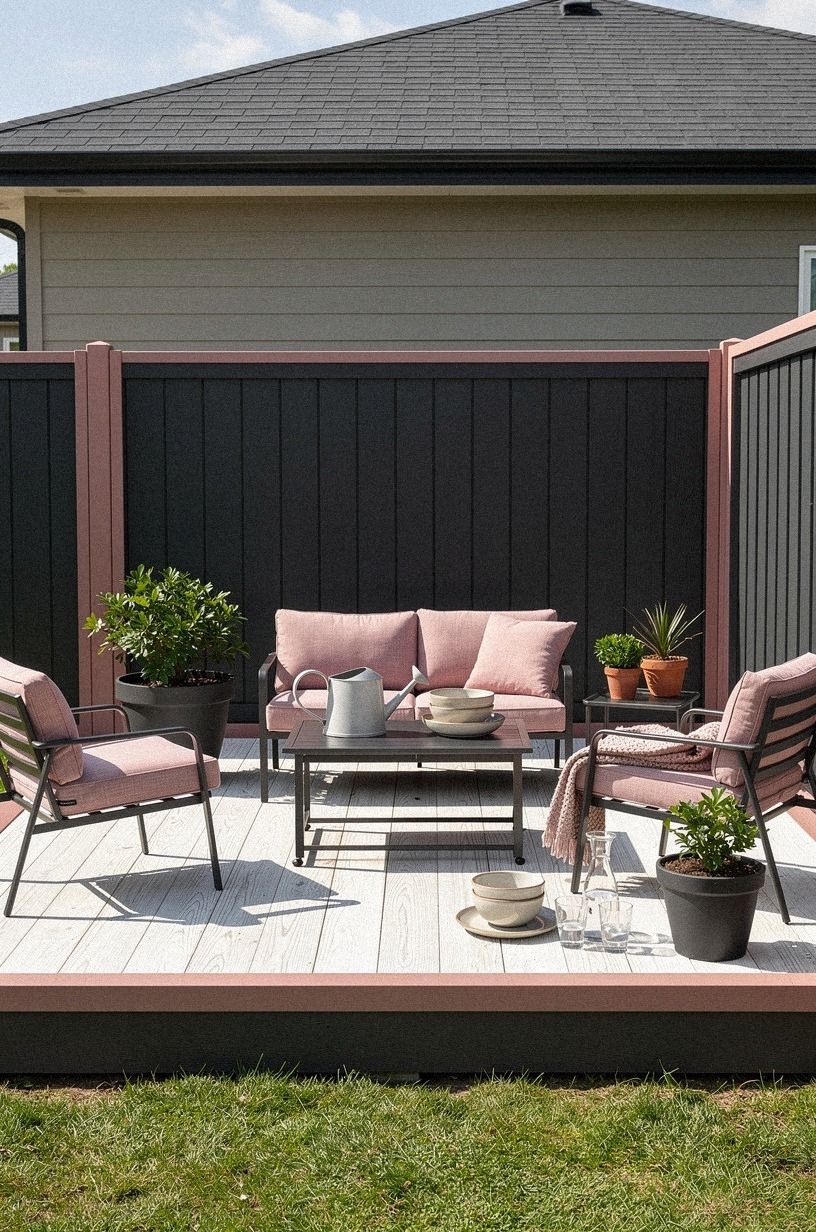
You can’t always paint a rental patio slab, but you may be allowed to paint a removable wood threshold, planter box, or freestanding privacy screen. Ask your landlord before touching anything attached to the property. If the answer is no, the same visual method works with a narrow cerused white oak planter or a slim charcoal wooden bench.
The Two-Inch Frame means adding a controlled line of color around the objects that define the patio, not drawing a permanent border on the concrete. Paint the outside edge of a planter in a dusty rose shade such as Farrow & Ball Sulking Room Pink, or use Benjamin Moore Kendall Charcoal on a movable bench for a deeper transition between gray concrete and warm textiles. Add a small brass detail if the furniture needs a warmer accent.
A thin painted edge can make inexpensive pieces feel considered. It’s especially useful when the patio has several unrelated materials, such as black railing, pale siding, and reddish brick.
Choose one shade and repeat it twice. Repetition creates calm without requiring a matching furniture set.
I’d avoid glossy paint outdoors because it can look harsh and show every scratch. A satin exterior finish is more forgiving, while a water-based outdoor paint is easier to apply and store for future touch-ups. Keep the color on removable pieces, and photograph them before you move so you can restore their original finish if needed.
For another removable approach to an unattractive surface, these renter-friendly living room ideas for ugly rental carpet show how a border, layered textiles, and flexible furniture can shift the whole mood. That same restrained approach can make a bare patio feel polished without making it look staged.
3Float a compact dining set inside the Three-Zone Rule
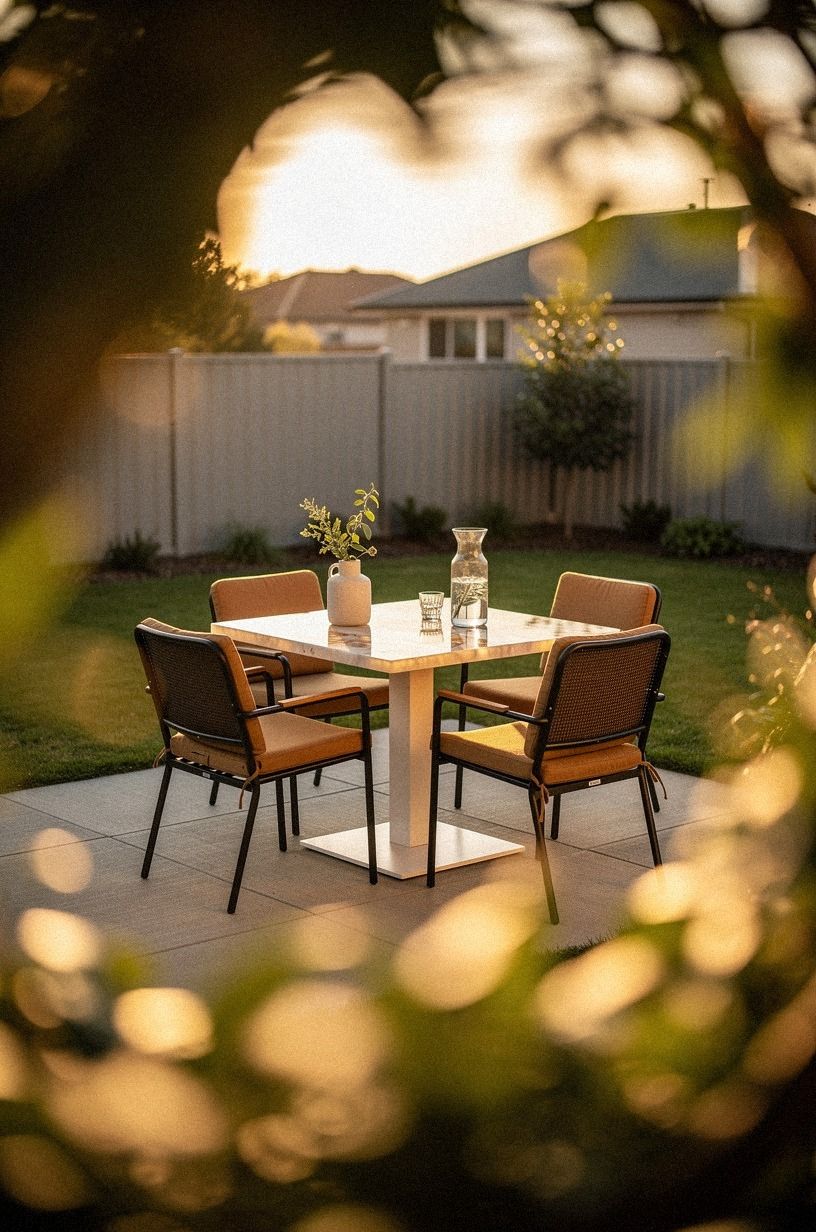
Divide the patio into three simple zones: sitting, eating, and passing through. The Three-Zone Rule keeps your furniture from becoming a pile against the wall, and it works especially well for backyard patio designs in rental-friendly spaces where every inch has to earn its place.
Your table should sit around 28 to 30 inches high, which is the standard dining range. Leave at least 36 inches for a walkway, so you can carry drinks from the door without turning sideways. A folding acacia dining set gives you real function and can disappear into storage when you need the patio clear.
I made the mistake of buying a round table before measuring the door swing. It looked charming online, but my knees met the railing every time I sat down. You’ll have a better experience if you tape the footprint on the concrete first.
A compact IKEA ÄPPLARÖ table or a secondhand folding set can look relaxed with mismatched chairs. Use warm white cushions, camel upholstery, and restrained black accents to keep the group cohesive. A small backlit translucent onyx lamp or serving piece can add a gentle glow without requiring a permanent fixture.
If the patio is narrow, use a rectangular drop-leaf table against the wall and open it only when you’re eating. A small black metal bistro chair can move between the dining and sitting zones. This keeps the space lively and practical instead of filling it with furniture that only performs one job.
If the floor still feels visually dominant, revisit the removable layering ideas in our guide to covering an ugly rental floor without losing your deposit. The goal is a comfortable layout that can change when the weather or your lease changes.
4Hang the Three-Height Light Stack
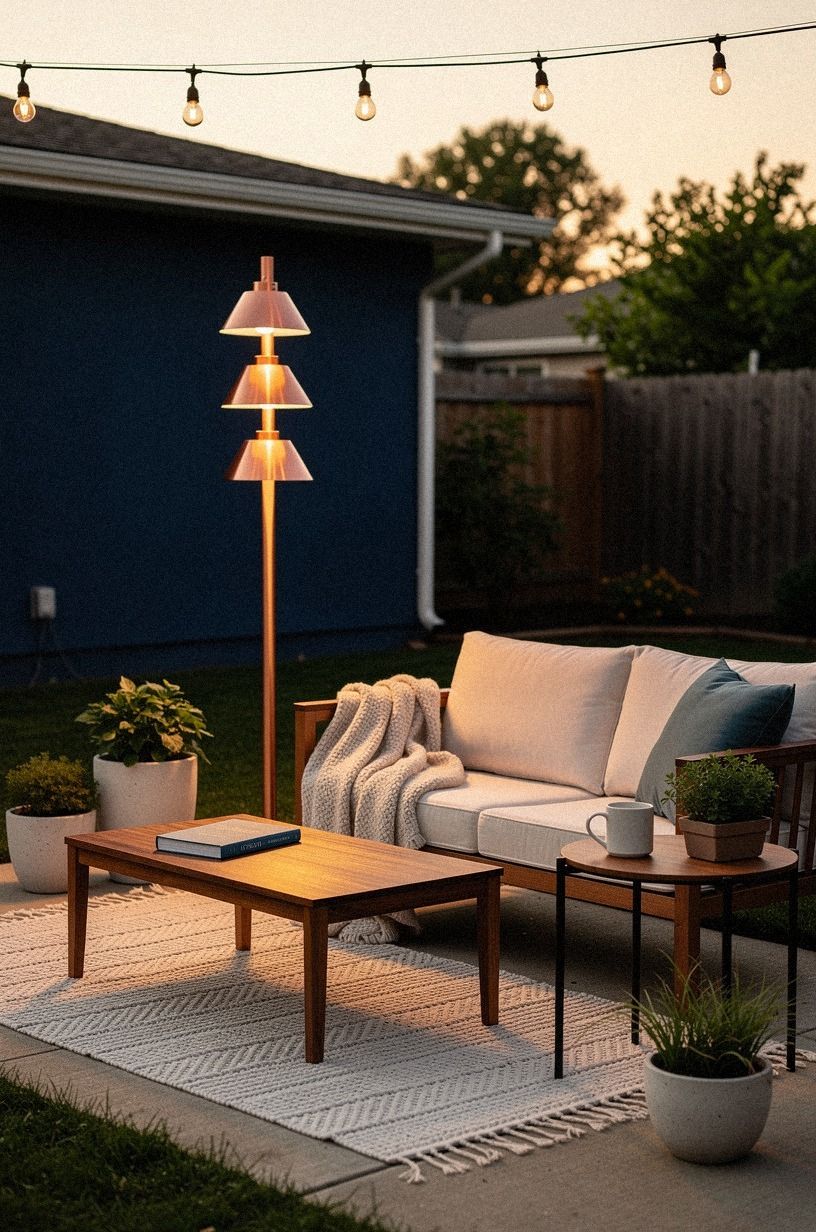
Outdoor lighting changes the concrete after sunset because it draws your eye upward. Build a Three-Height Light Stack with one low lantern, one table-level glow, and one higher strand supported by a freestanding pole or approved hook.
Use ivory LED string lights, not icy blue bulbs. The softer light makes gray concrete recede, while the tiny points of brightness create an inviting ceiling over your seating area. You’ll want the strand slightly loose, because a ruler-straight line feels more commercial than relaxed.
You don’t need to attach anything to the building. A pair of weighted midnight-blue metal light poles can stand behind the sofa, while a rechargeable copper lantern sits on the floor. Check the manufacturer’s outdoor rating and keep cords away from standing water.
For more no-drill ideas, you can borrow placement cues from these ways to hang pictures without nails in a rental. The hardware differs, but the rental-safe thinking is the same. Your goal is a soft pool of light, not a permanent installation.
Add one table lamp only if it’s specifically rated for outdoor use. A rechargeable LED lamp is usually easier than running a cord through the doorway. Keep the brightest point near eye level, then let the lower lights create depth.
A small book-matched walnut tray or table can warm the arrangement without competing with the lights.
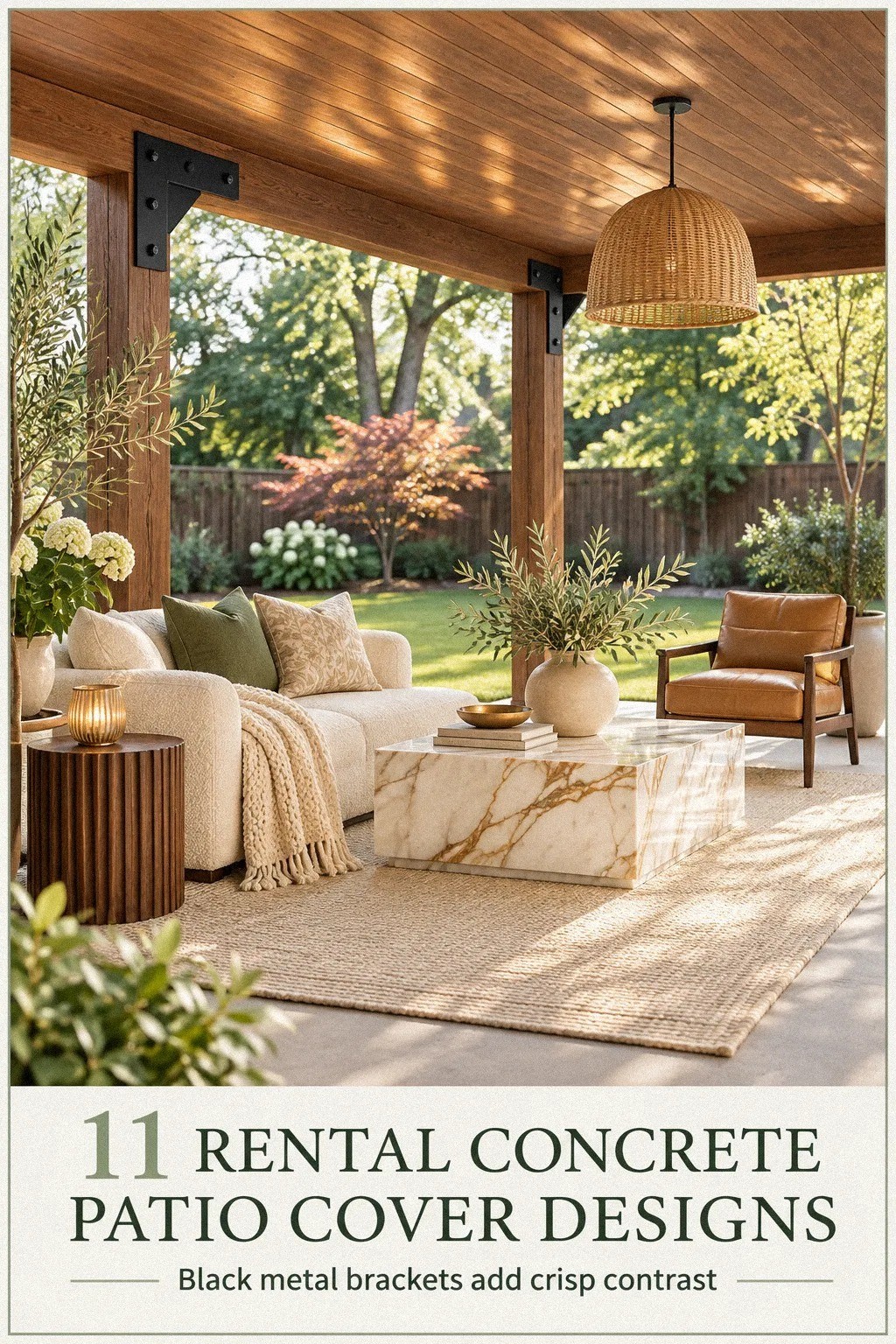
5Build a renter-friendly patio with movable planters
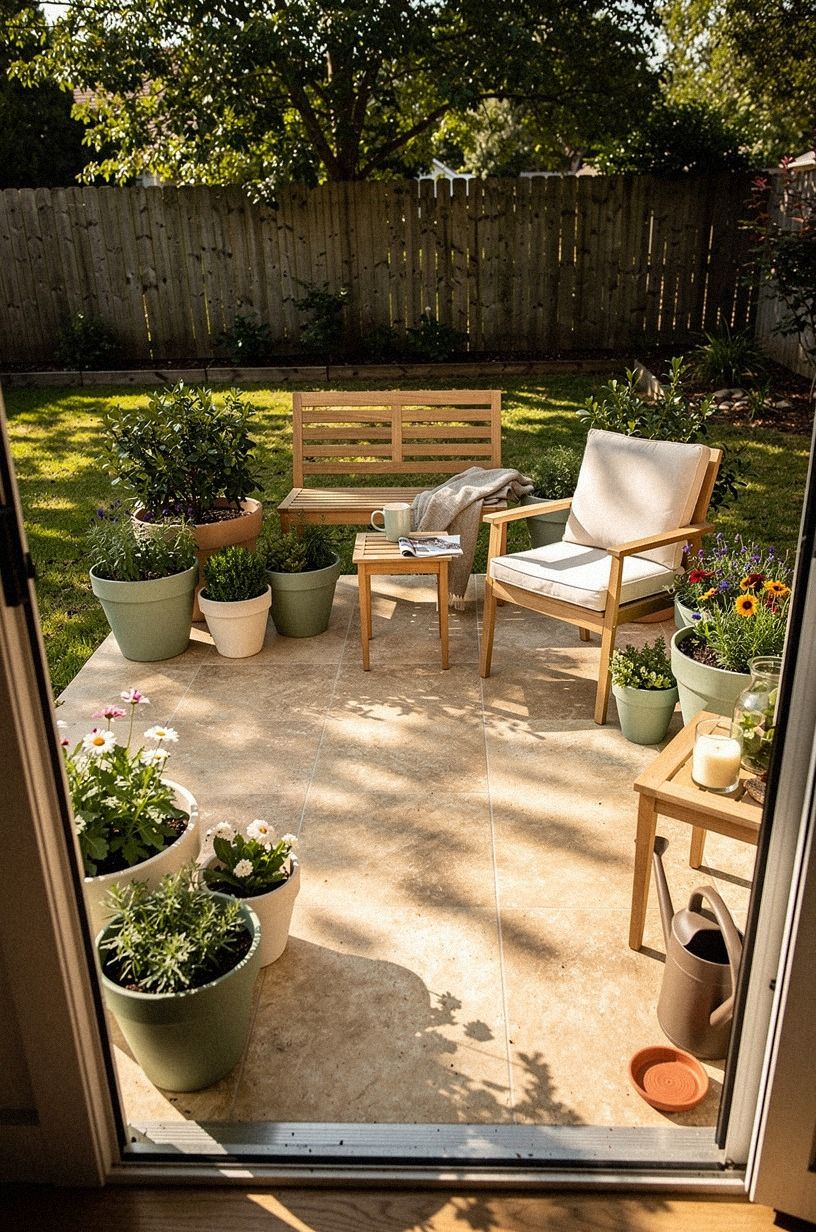
Plants hide ugly concrete vertically and bring movement to a surface that otherwise looks flat and hard. Use planters to create height, shade, and a gentle boundary around the seating area without drilling into the railing or wall.
Start with one large warm travertine planter in a corner. Add a medium natural-wood planter near the door, then use a smaller pot on the table. Sage green foliage, warm cream containers, and natural wood will look more natural than six identical pieces lined up like a display.
For sunny patios, rosemary, lavender, ornamental grasses, and hardy succulents can provide attractive texture. A shaded patio may suit ferns, ivy, or a rubber plant in a sheltered container.
Choose plants according to the actual light rather than the look you want in the store. Your patio will feel more abundant when the plants are healthy.
Use saucers beneath every pot, especially if the slab stains easily. A plastic nursery pot inside a decorative planter makes watering and moving much easier. I’d also leave a small gap between the pot and the wall so air can circulate after rain.
A tall planter can hide a dull corner, but don’t block the door, railing, or required exit path. If you need more privacy, group two medium plants rather than using one enormous container. You’ll get a softer, more graceful screen and won’t need special equipment to move it.
For a palette that feels connected to the rest of your home, borrow colors from these renter-friendly living room ideas for ugly rental carpet. A repeated cream, clay, or olive tone can make the patio feel like a welcoming extension of the interior.
6Swap plastic furniture for woven texture
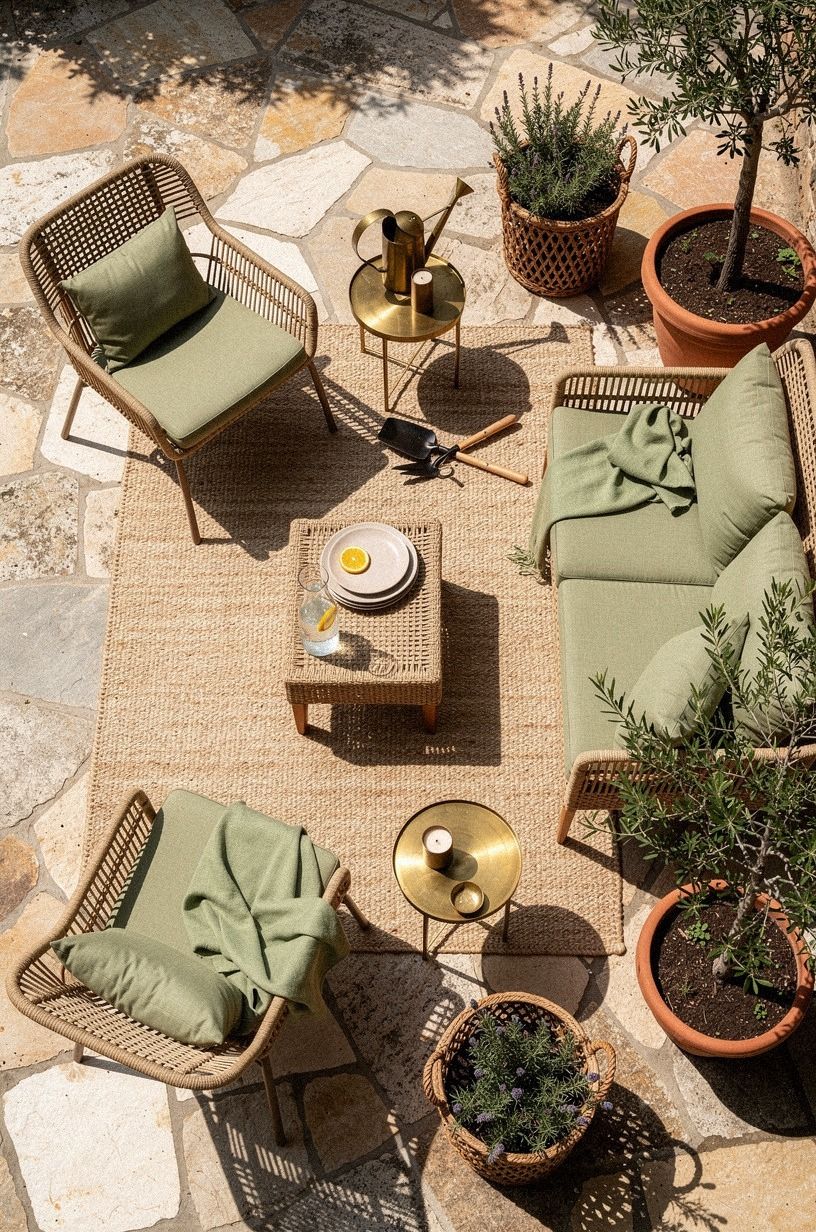
The fastest way to make a concrete patio feel less rental-basic is to trade shiny plastic for woven texture in terracotta, stone, and olive, with unlacquered brass that can develop a soft patina.
7Choose a rug over paint for concrete patio decor ideas
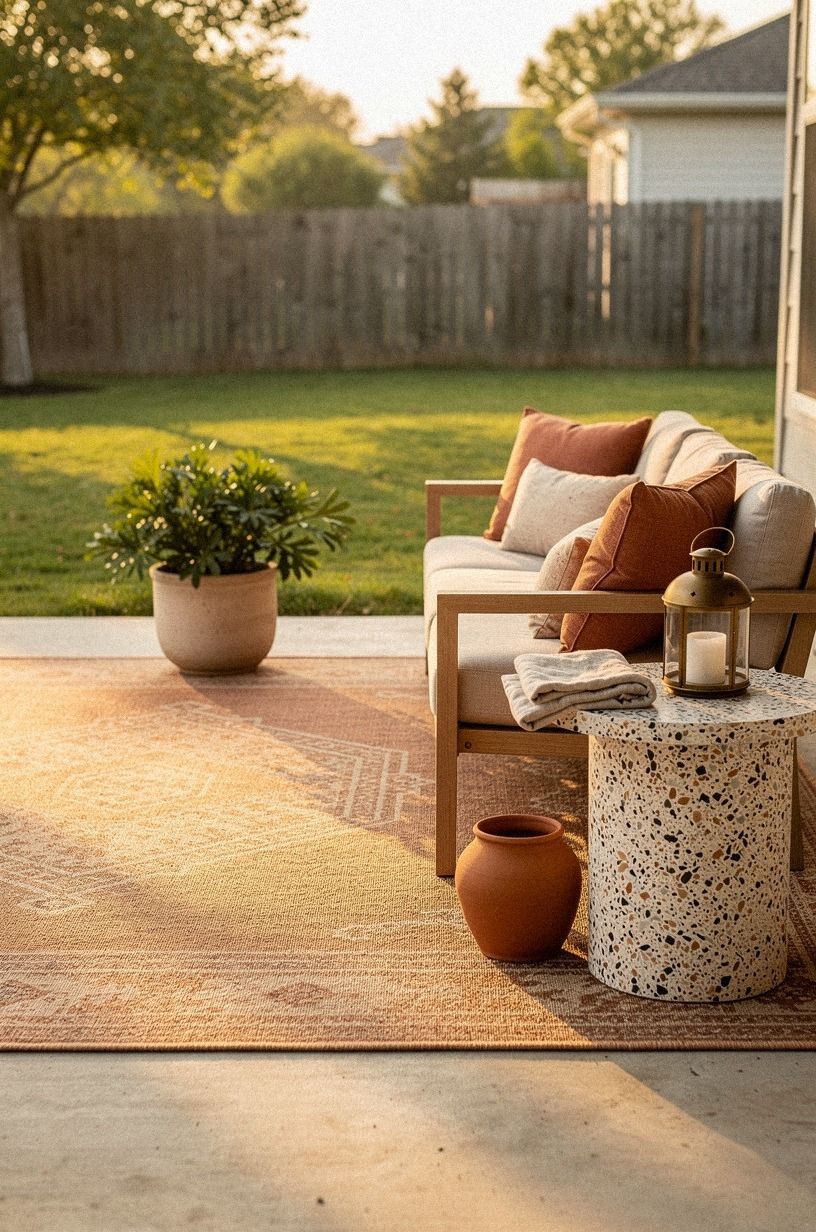
If you’re wondering whether to paint the concrete or cover it, choose a rug first. Paint can look bold for a few weeks, but a removable textile gives you color, pattern, and comfort without creating a deposit problem.
For concrete patio decor ideas, I’d use Benjamin Moore Aura Exterior only on approved movable pieces, such as a freestanding bench or planter. On the ground, choose a geometric rug with a border that disguises dust and leaf marks. You’ll spend less time worrying about every footprint.
A rug also lets you test a color before committing to furniture. Try clay, linen, or an aged-brass accent on a side table or planter. If the shade looks too strong in the afternoon, you can roll up the rug and change the whole mood in five minutes.
And don’t place a rug where water pools. Lift one corner after rain and check the concrete underneath. A rug that stays damp will smell stale, damage some surfaces, and make your inviting patio feel neglected instead of relaxed.
If the surface is especially rough, use a thin outdoor pad beneath the rug, but make sure the combination still allows drainage. A pad can reduce slipping and make the rug feel more comfortable underfoot. It can also hold moisture, so remove it occasionally and let both layers dry fully.
A small oversized-chip terrazzo table or planter can add surface interest without requiring paint on the concrete. You can find more ideas for disguising an unpleasant rental surface in this guide to covering an ugly rental floor without losing your deposit. The principle is simple: cover what bothers you, preserve what works, and keep every layer removable.
8Frame the door with a Soft-Edge Entry
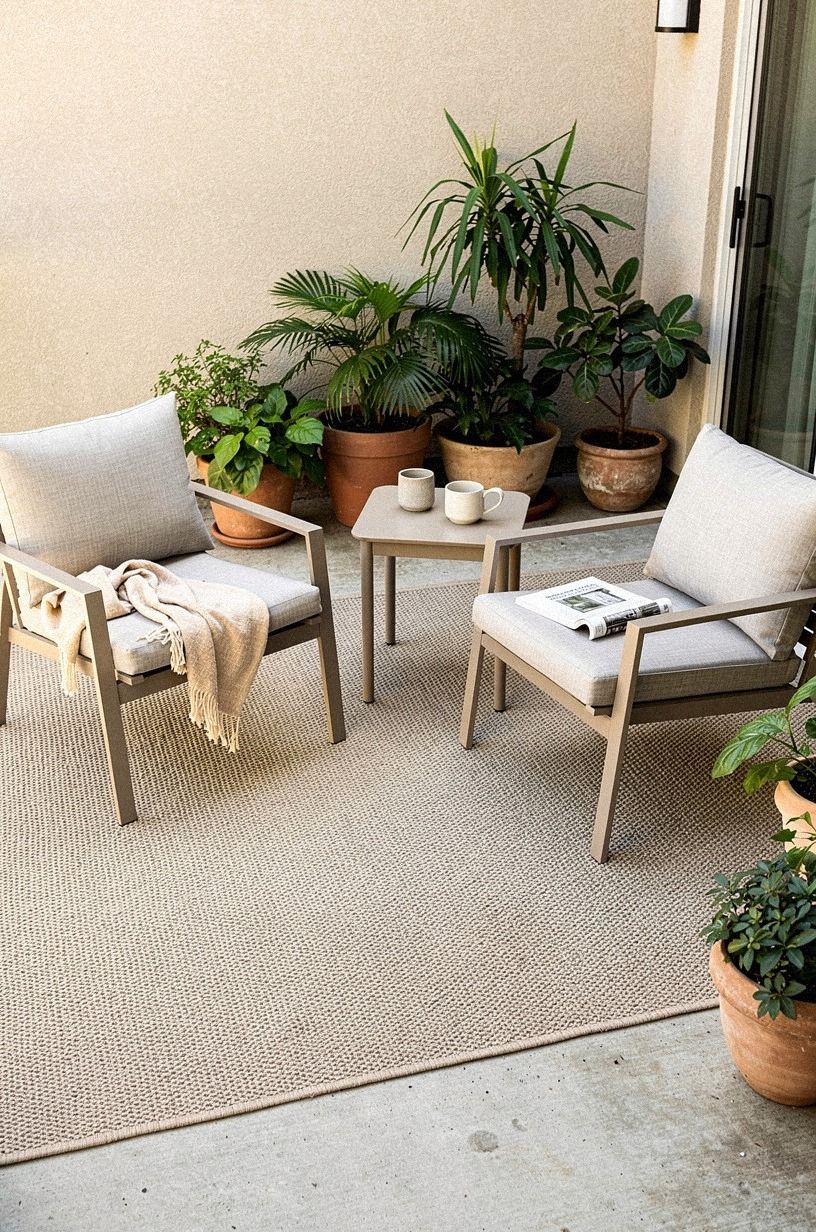
Your patio begins at the door, so give that transition a little structure. The Soft-Edge Entry uses a washable mat, two planters, and one narrow bench to make the doorway feel finished without attaching anything to the wall.
A coir doormat with a low rubber backing can catch grit before it reaches your interior floor. Add a narrow grey bench in weather-resistant wood, but keep it shallow enough that your door opens fully. You’ll appreciate that measurement every time you carry groceries outside.
I’d avoid a tall, dense screen directly beside the door. It can make a small patio feel boxed in and may interfere with emergency access. Instead, let your plants rise gradually from a low pot to a taller one.
Your entry can echo the rest of the apartment through one repeated color. If the surrounding wall already has hand-applied Venetian plaster, leave it untouched and repeat its plum and grey tones through a cushion or mat.
A small rose-gold lantern can add warmth without requiring installation. These renter-friendly living room ideas for ugly rental carpet can help you carry the same palette from inside to outside.
Keep the entry visually quiet. One washable runner, one planter, and a small place to sit are usually enough. When every item near the door has a job, the patio feels more generous and the threshold stays easier to clean.
9Mix two woods instead of one flat finish
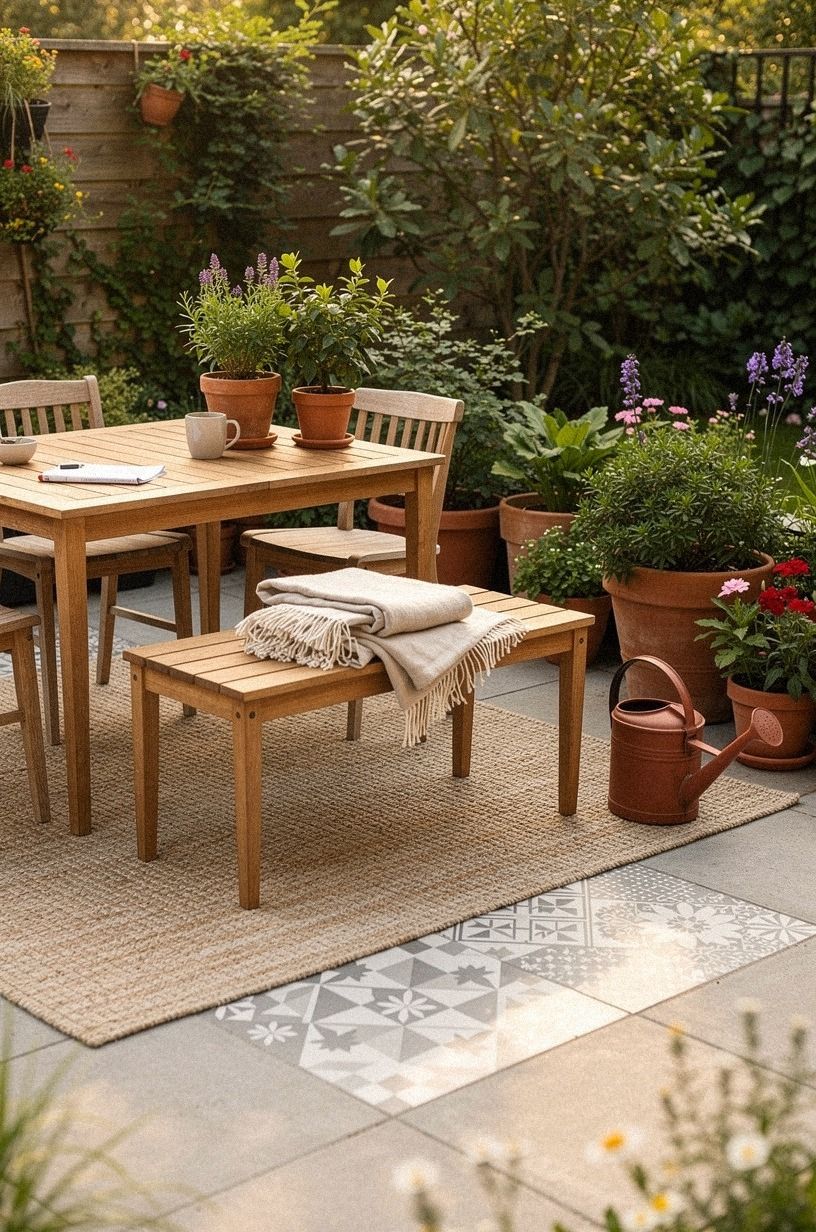
Concrete looks harder when every other surface is gray, black, or synthetic. Mixing two related woods adds warmth without making the patio feel overly styled.
Use navy and white textiles around a walnut table or bench, then add a darker accent through a tray, planter stand, or cushion. Walnut brings depth, while a small shagreen accent can add tactile interest without requiring a perfect furniture match.
I’d avoid adding four different wood tones to a small patio. Two are enough. Let the larger piece carry the dominant finish, then use the second wood in a smaller object that can move elsewhere when you relocate.
A walnut folding screen can soften a railing without attaching to it, while a teak plant stand gives a small pot more presence. Add a woven basket only if it can stay dry. Natural materials look beautiful outdoors, but they need a little breathing room and protection from constant rain.
If the patio already has red brick or brown siding, keep the wood close to a natural walnut tone rather than adding another saturated orange finish. The goal is layered and grounded, not visually busy. A mixed-material patio will feel more collected when the colors stay restrained.
For a related way to hide an unattractive rental feature with fabric and flexible pieces, see these closet curtain ideas to hide an ugly rental closet.
10Cover the railing with soft outdoor fabric
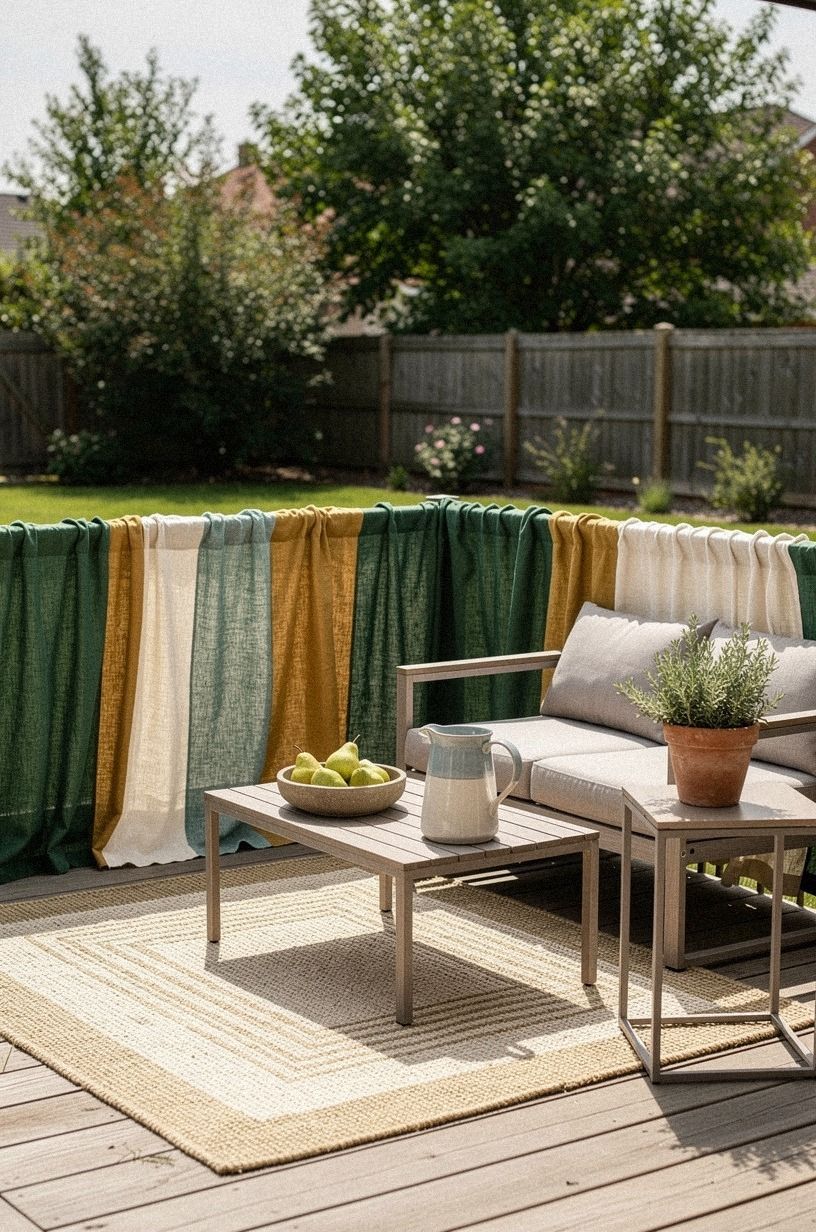
If your patio has an ugly metal railing, use washed Belgian linen in emerald, gold, and cream to interrupt the view without making a permanent change.
11Make the small patio feel larger with the Open-Center Plan
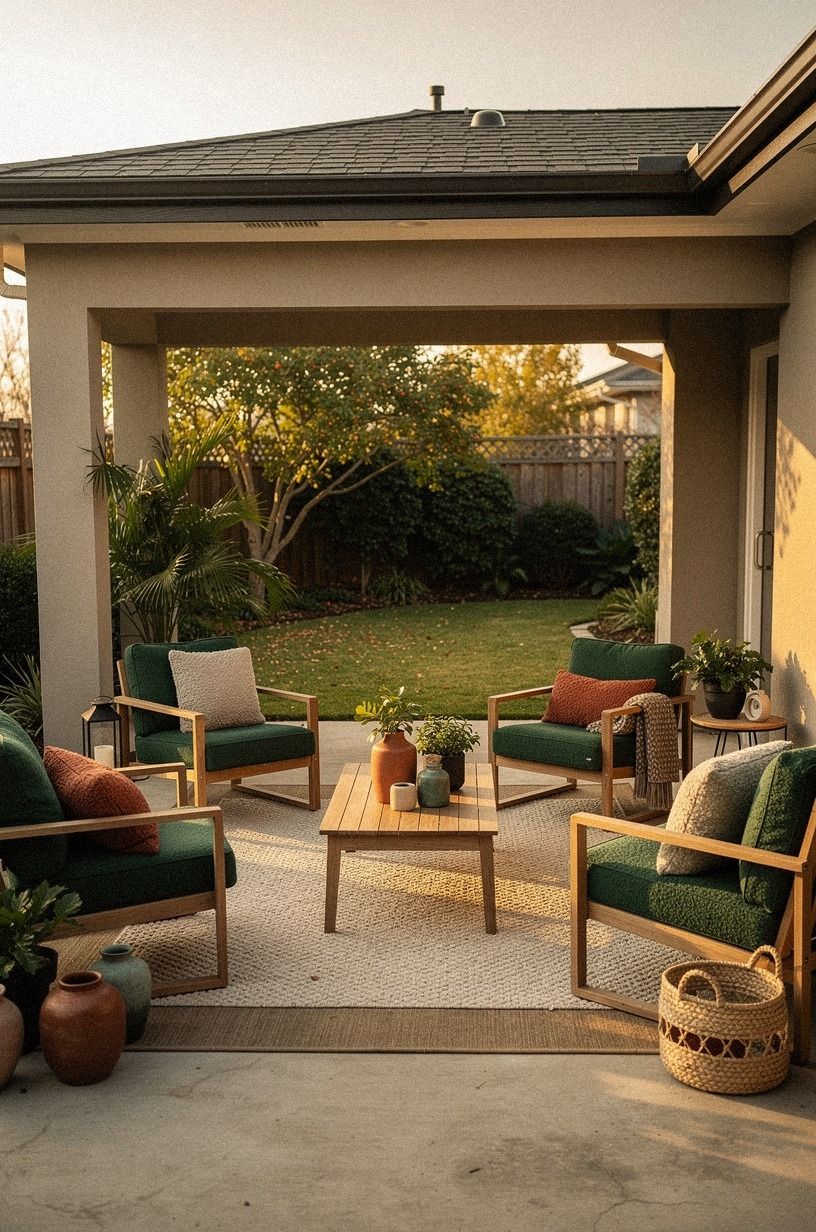
Keep the middle of the patio open and push heavier pieces toward the edges. This gives the eye a clear path and makes the entire space feel less crowded.
Place the sofa or bench against the longest wall, then angle one chair toward it instead of lining every seat against the perimeter. Put a small round side table between them rather than adding a large coffee table. You’ll preserve circulation while keeping drinks and books within reach.
The Open-Center Plan works especially well when the concrete is unattractive because it limits how much furniture touches the slab. A rug defines the seating area, while the empty section around it becomes a deliberate breathing space.
Use visual weight carefully. A natural-oak sofa frame with an organic bouclé cushion can anchor one side, while forest green and rust textiles balance the opposite side. Heavy pieces on every edge will make the patio feel defensive and cramped.
Measure the door swing, railing, and walking route before shopping. If you can carry a laundry basket through the space without turning sideways, the layout is probably working. Small spaces reward restraint.
A Simple Material Plan
A rental patio feels finished when its materials repeat in small, readable ways. Choose one soft material, one natural material, and one dark accent. For example, use a woven rug, natural wood, and black metal throughout the space.
The repetition doesn’t need to be exact. A black lantern can relate to a dark chair frame, while a wood planter connects to a folding table. The eye will understand the relationship even when the pieces come from different sources.
I’d keep glossy plastic, bright chrome, and several competing patterns out of the main seating zone. A few lively details are welcome, but a calmer base will make the patio feel more polished and generous.
This approach also helps when you’re shopping slowly. You can buy one piece at a time without losing the overall direction. The patio will look intentional before every corner is finished.
What Should Stay Off the Concrete?
Anything that stays damp against the slab for days should be treated cautiously. This includes thick indoor rugs, untreated cardboard, heavy upholstered furniture, and planters without drainage. They can trap moisture, create odors, or leave marks that are difficult to explain later.
Use outdoor-rated fabric, raised pots, and furniture feet that allow air to move underneath. Lift the rug after heavy rain, wipe down metal legs, and store cushions indoors when the forecast turns rough.
I’d also keep adhesives, permanent tiles, and peel-and-stick flooring off a rental patio unless your lease clearly allows them. A temporary improvement isn’t useful if removing it damages the surface.
For more rental-safe strategies that rely on reversible changes, you can revisit these easy ways to fix an ugly rental bathroom without renovating. The same rule applies outside: choose weight, tension, and freestanding support before adhesive.
The Budget Ladder That Keeps You Flexible
You don’t need to furnish the whole patio in one weekend. Start with the lowest-cost changes, then add pieces only after you understand how the space behaves through sun, rain, and daily use.
The first tier might include rearranging furniture, cleaning the concrete, adding a secondhand pot, and using rechargeable lights. The second tier can add a medium outdoor rug, a folding chair, and a narrow table. A larger investment might be a durable seating set or custom-sized shade fabric.
Set aside part of the budget for storage. A weatherproof deck box or indoor cushion basket may not be glamorous, but it protects the pieces that make the patio comfortable.
If you’re comparing surface treatments, start with the reversible options described in covering an ugly rental floor without losing your deposit. A smaller first purchase gives you room to adjust when you learn how much sun, rain, and storage the patio really gets.
When Does a Patio Need Less?
A small patio often improves when you remove one object instead of adding three. If the walkway feels narrow, take away the extra stool.
If the rug looks busy, remove the patterned cushion. If the plants crowd the door, group them in one corner.
The most inviting patios have a little visual silence. You should be able to see the floor, understand where to sit, and move through the space without negotiating around objects.
I’d keep one memorable feature, such as a striped cushion, sculptural planter, or handsome lantern. Then let the supporting pieces stay quiet. That contrast makes the patio feel considered rather than decorated within an inch of its life.
If the space still feels crowded, revisit the circulation ideas in these renter-friendly living room ideas for ugly rental carpet. The best arrangement usually has one clear path and fewer competing focal points.
How I Test the Layout Before Shopping
I use painter’s tape or flattened cardboard to mark every major footprint on the concrete. It takes ten minutes and reveals problems that product photos hide, especially door clearance and chair depth.
Mark the rug, table, seating, and walkway. Then open the door, carry something bulky through the entrance, and sit in every proposed chair. You’ll notice quickly whether a table is too tall or a bench blocks the natural path.
I’d also check the patio at three times of day. Morning sun, afternoon glare, and evening shadows can change where you want plants and lights. A location that looks calm at noon may feel exposed after dark.
This test prevents expensive mistakes and gives you confidence when buying secondhand. You’ll know which measurements matter before you fall for a beautiful piece that doesn’t fit.
For other temporary layout methods, these ways to hang pictures without nails in a rental show how small measurements and reversible placement can prevent unnecessary damage.
The Small Details That Make It Feel Finished
A few practical details can make a rental patio feel surprisingly luxurious. Add a washable cushion, a small outdoor tray, and one container for citronella or matches if you use approved outdoor candles.
Keep colors connected to the interior. A muted rust cushion can echo a nearby brick wall, while a cream throw can relate to the living room. These small links make the patio feel like an extension of the home rather than a leftover exterior space.
I’d avoid fragile accessories unless you’re willing to bring them indoors. A stone-look melamine tray can provide the same grounded appearance as ceramic without creating a stressful cleanup after every windy night.
Nothing needs to be permanent. The best rental pieces can move to a balcony, a porch, or your next apartment when this lease ends.
For more ways to create a finished room with portable details, see these renter-friendly living room ideas for ugly rental carpet. A repeated material or color often does more than another decorative object.
The Patio Rule I’d Keep
I’ve rented homes with concrete patios that looked hopeless in listing photos. The slab was stained, the railing was dull, and the outdoor furniture had the personality of a waiting room.
What changed those spaces wasn’t a renovation. It was deciding which surfaces needed softness, which needed height, and which needed to disappear.
I’d start with the floor because it controls the largest visual field. A polypropylene rug gives your feet comfort and your furniture a home.
Then I’d add one vertical layer, such as plants, curtains, or freestanding lights. That second plane matters because a patio can feel unfinished when every object sits at ankle height.
The part I learned slowly is that rental design needs an exit plan. Every piece should be movable, washable, or useful somewhere else.
A good outdoor rug can move to a balcony. A folding table can become a craft table. A planter can follow you to the next apartment.
That flexibility is worth more than a dramatic finish that you’ll have to remove in October.
I also wouldn’t chase a perfectly matched set. The most welcoming patio I styled had a woven bench, a painted stool, and two chairs bought years apart.
The materials repeated, but the silhouettes didn’t. You’ll get a more personal result when you let one piece be a little strange.
That’s usually the piece people remember.
A concrete patio doesn’t need to pretend it’s a stone terrace. It needs a comfortable place to sit, enough light to use it after dinner, and a few textures that make the gray feel intentional. That’s the difference between covering a problem and creating a room.
If you want another reversible starting point, these easy ways to fix an ugly rental bathroom without renovating follow the same principle of improving the mood without changing the structure.
What People Always Want to Know
What is the best way to cover an ugly concrete patio in a rental for a small backyard?
I’d start with a large polypropylene rug and a compact folding dining set. The rug hides the slab, while an IKEA ÄPPLARÖ table gives you useful seating without permanence. Keep the center open, add one tall planter, and the small patio will feel calmer and easier to move through.
Where can I buy patio pieces on a budget?
I’d look at IKEA, Wayfair, Target, Facebook Marketplace, and local thrift stores. Target Threshold outdoor cushions can provide color, while used tables and planters often cost less than a full new set. I always check dimensions first because an attractive bargain won’t help if it blocks the door.
How much does a patio makeover cost?
I’d expect a small rental patio to use a budget of $150 to $600 for outdoor textiles, rechargeable lights, plants, and secondhand pieces. Outdoor rugs and lighting usually create the most visible change first. Free rearranging and careful measuring can reduce the total considerably.
Can I create a renter-friendly patio on a budget?
Yes. I’d begin by rearranging what you own, shopping secondhand for planters, and using warm rechargeable lights. LED string lights often fit a $30 to $120 range, while a folded blanket or existing indoor stool can add comfort at no cost.
Is covering concrete worth it in a small space?
Yes, I think it’s worth it because one rug and one light source can change the entire room-like feeling. A 5-by-7-foot outdoor rug may be enough for a compact seating zone, as long as the front legs rest on it and the rug can dry properly after rain.
Is this a good idea for a rental?
Yes, if you choose removable layers and avoid attaching anything without permission. I’d use removable outdoor curtains, tension-mounted pieces, freestanding lights, and portable planters.
Check your lease before painting, drilling, or using adhesive. These easy ways to fix an ugly rental bathroom without renovating use the same reversible approach.
Where I’d Start First
If I had to pick one, I’d start with the outdoor rug. It hides the most concrete, gives every chair a visual home, and softens the cold surface under your feet. Then I’d add one warm light, one plant with height, and only the furniture the walkway can comfortably hold.
Test the rug size with painter’s tape before you buy, and check the surface underneath after the first rain. Start with the piece you can move. A flexible patio will keep working for you long after the first decorating burst fades.