by
by Quick answer: I’d choose Futon Best Selling only after matching its build to your space and sleeping needs. Floor mattresses work best when portability matters, but daily comfort depends on the core.
- Floor mattresses are made for low-profile, flexible sleeping setups.
- Foam, latex, and hybrid constructions behave very differently over time.
- A breathable barrier beneath the mattress matters on a hard floor.
Updated July 2026 · Reviewed for accuracy
Floor mattresses can be a smart buy. They can also become a thin, stuffy compromise if you choose by appearance alone. My take is simple: buy one for its construction, its storage format, and the body it has to support, not because “floor” sounds automatically minimal or practical.
The right model gives a guest room, studio, kid’s room, or temporary setup real flexibility. The wrong one leaves you with poor insulation from the floor, too little cushioning, and a bulky object that is neither easy to store nor comfortable enough to keep out.
What makes a floor mattress worth buying
A floor mattress sits close to the ground, and that changes the job it has to do. There is no tall foundation adding height or airflow underneath. The mattress itself must provide the cushioning, the support, and much of the separation between your body and the surface below.
I’d separate this category into two uses. The first is occasional sleep: guests, travel, sleepovers, and short stays. The second is regular use in a compact home or a deliberately low-profile bedroom. Occasional use lets portability lead the decision. Regular use puts material quality first.
Foam models are usually the easiest place to start because they are light, flexible, and commonly made to fold or roll. Latex and latex-hybrid designs generally make more sense for buyers who care most about cooler sleep and longer-term resilience. Those materials are not interchangeable, even if the finished beds look similar from across the room.
The Nut’s rule: A mattress on the floor needs a real core. Soft quilting can make a first impression feel pleasant, but the core determines whether your hips and shoulders stay supported after the cover compresses.
Low height has practical upsides. It can make a room feel less crowded, simplify moving, and work well where a conventional frame would be awkward. It also has a tradeoff: getting down to and up from the floor requires more mobility than using a raised bed. That is not a flaw, just a use-case filter worth taking seriously before you buy.
Floor mattresses also need a clean, dry place to live. A rug, low-profile foundation, or other breathable layer can add insulation on a hard floor and reduce direct exposure to moisture. Don’t treat that base layer as decoration. It is part of the setup.
Start with the core, not the cover
Foam, latex, and latex-foam hybrids each solve a different problem. I pay attention to the core before I consider fabric, stitching, or a carrying strap because the core is where comfort and durability begin.
Foam is the practical choice for many temporary setups. It can keep weight down and make folding or rolling easier. Memory foam tends to contour more closely, while polyurethane foam can vary widely depending on its density and formulation. For frequent use, I would favor a sturdier-feeling core over a mattress that relies on a plush surface alone.
Latex has a different character. It generally feels more responsive than slow-moving memory foam and is often chosen by sleepers looking for better breathability. It can be a sensible material for a floor setup because it rebounds rather than holding a deep body impression as readily as very soft foam can. The catch is that latex-based options may be less convenient if your priority is the lightest possible bed to carry around.
Hybrid construction can balance these qualities. A latex-and-foam design may aim for the responsiveness and airflow associated with latex while using foam to control the overall feel. Read the material description closely. “Hybrid” tells you less than the actual layer list, especially if the product page does not explain which material is doing most of the supporting.
| Construction | Best fit | What I’d watch |
|---|---|---|
| Foam | Guests, travel, and easy storage | Whether the core feels substantial enough for repeat use |
| Latex | Sleepers who value responsiveness and airflow | Weight, storage convenience, and the stated latex content |
| Latex-foam hybrid | Buyers seeking a middle ground | Which layer carries the support and which layer is comfort-only |
One more thing: a mattress that is easy to fold is not automatically easy to sleep on. Folding sections create convenience, but they may also create pressure points or a noticeable change in feel where sections meet. That matters more for someone using the bed often than for an overnight guest.
Comparing options? The Futon Best Selling is the pick we keep coming back to — see the final verdict ↓
Thickness changes more than cushioning
Floor mattresses commonly range from thin, highly portable pads to substantially cushioned beds. The thicker end usually offers more room for comfort materials, but it can be harder to move, fold, and tuck away. That is the central tradeoff, and it is worth deciding before you start comparing covers or colors.
A thinner mattress can suit a child’s sleepover, camping-style indoor use, or a quick guest solution. It is less likely to feel like a replacement for a conventional mattress. If you are sleeping on your side, the margin for error is smaller because your shoulders and hips need enough give without letting the core bottom out.
A more cushioned construction can be a better fit for recurring guests or regular adult use. It may offer more distance from a cold or unforgiving hard floor and more room for the materials to handle pressure. But more material also means more bulk, which can defeat the point if the mattress must go into a closet after every use.
Practical check before ordering: Decide where the mattress will rest during the day. If its stored form is still too awkward for that spot, it is not truly a space-saving purchase.
Firmness matters alongside thickness. Many floor models lean toward medium-firm because they need to accommodate different sleep positions without becoming too unstable. That can be a workable middle ground, but it does not erase body shape or sleeping style. A side sleeper may need more pressure relief than a back or stomach sleeper, while a heavier person may prefer a firmer, more supportive core to avoid excessive sink.
Do not confuse firmness with durability. A very firm mattress can still break down quickly if the materials underneath the surface are weak. Likewise, a softer mattress can remain useful if its support layers are built to hold their shape. Construction details beat a vague comfort label every time.
Breathability matters more on the floor
A mattress placed directly on a hard surface has less airflow below it than one on a slatted frame. That is why I would not ignore the cover, the core, or what sits beneath the mattress. This is a small setup detail with an outsized effect on comfort and upkeep.
Latex is often selected by shoppers who want a cooler-feeling material, while some foams use open-cell construction to improve airflow. A breathable cover can help, too, though it cannot compensate for a non-breathable setup underneath. If you sleep warm, look for clear material descriptions rather than assuming every foam bed will sleep the same way.
A cotton or bamboo-blend cover may sound appealing, but the key question is practical: can it be removed, and can it be cleaned according to the manufacturer’s instructions? A removable cover makes a floor mattress easier to maintain, particularly in a guest space where the bed may be stored between uses. If the cover is fixed, plan for more careful spot cleaning and protection.
Some foam mattresses can have a temporary odor after unpacking. Allowing the mattress to air out in a well-ventilated room before use is sensible. Don’t seal a newly opened foam bed straight into a tight storage bag and expect that issue to improve.
Setup note: Keep the sleeping surface dry, give it airflow, and follow the maker’s care instructions. A floor mattress is portable, but it should not live permanently in a damp corner.
Insulation is the other half of this conversation. Hard flooring can feel colder than a raised bed setup. A soft rug or suitable low-profile base can make the arrangement feel less exposed while protecting the mattress from direct contact with the floor. It also helps define the sleeping area in a room that changes function during the day.
Portability is useful only if you will use it
Rollable and foldable formats can make floor mattresses genuinely useful in small spaces. I like a carrying handle or compact storage format when the mattress will move often. I do not treat those features as a substitute for a sound sleep surface.
Think through the route from storage to sleep. Will you carry it up stairs? Will you open it alone? Does it need to fit in a shallow closet, under a bed, or in a vehicle? These questions are not glamorous, but they are exactly what separates a flexible purchase from an unused one.
A foldable mattress is usually fastest to deploy. A roll-up style can be easier to store in a narrow area. Neither format is inherently better. The better one is the format that fits your room and does not tempt you to leave the mattress folded or rolled for long stretches when the manufacturer advises otherwise.
Edge support is another realistic expectation to set. Light, portable mattresses often have less robust edges than a standard innerspring or dense full-height foam mattress. If you sit on the edge frequently, use the very edge while getting dressed, or share a narrow sleeping surface, pay attention to whether the construction reinforces the perimeter at all.
If you are also shopping broader mattress categories, it helps to understand why conventional beds carry such different costs. My guide to why mattresses are so expensive breaks down how materials and construction affect the price conversation without reducing it to a label on the cover.
Who should buy one, and who should skip it
A floor mattress makes sense for a buyer who values flexibility more than bed height. That includes people furnishing a small room, hosting guests occasionally, building a low-profile sleeping arrangement, or needing a bed that can be moved without a major project.
I would also consider one for a room with multiple jobs. A home office that becomes a guest room, a kid’s room that hosts friends, or a studio with limited floor area can all benefit from a mattress that stores cleanly and comes out without assembling a frame.
The category is less compelling for anyone who struggles with low seating or needs the easiest possible entry and exit from bed. It is also a poor fit if you know you want the substantial edge support, airflow, and elevated feel of a conventional framed mattress setup. A floor mattress should be chosen for its purpose, not used to force a room into a lifestyle it cannot support.
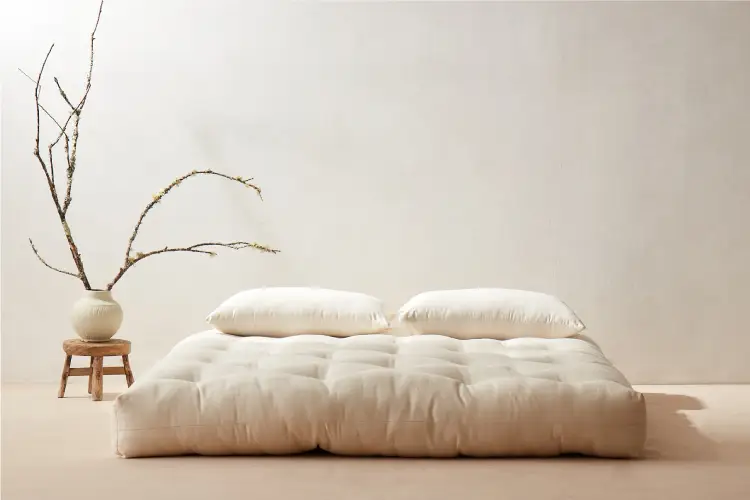
For shoppers who want a category-compatible starting point, Futon Best Selling is the option I’d investigate after checking the current product details on the official site. Match the listed materials and format to your actual use, particularly whether this will be a guest bed or a regular sleeping surface.
Best use case: A flexible room where the bed needs to disappear between uses.
Think twice if: You need elevated entry, highly reinforced edges, or a mattress that stays in one place permanently.
Origin can matter to buyers who want to understand a mattress supply chain, but it should never replace a close read of the material list. If that is part of your decision, see my explainers on where Tempur-Pedic mattresses are made and where Sealy mattresses are made. The lesson is consistent: construction details deserve more attention than a broad marketing category.
A buyer’s checklist before you commit
Start with how often the mattress will be used. For occasional guests, easy storage and straightforward cleaning may matter most. For regular sleep, put the core material, support feel, and ventilation at the top of the list.
- Confirm whether the mattress folds, rolls, or stays flat for storage.
- Read the core-material description, not only the comfort description.
- Check whether the cover is removable and what cleaning method the manufacturer permits.
- Plan a dry, breathable layer between the mattress and a hard floor.
- Consider your usual sleep position and whether you need more pressure relief or firmer support.
- Review the manufacturer’s return and warranty terms before ordering.
Price should be considered in context. Basic foam floor beds are usually positioned as budget-friendly temporary solutions, while natural-material and premium-core options can move into a much higher tier. Compare like with like. A portable guest pad, a foldable futon mattress, and a daily-use low-profile mattress may all appear under the same search term, but they are not equivalent purchases.
That is why I would never buy solely from a filtered shopping result. Look for the actual material breakdown, intended use, care instructions, and current terms on the official site. If those details are vague, the product may be vague where it matters most, too.
My final take on floor mattresses
Floor mattresses are useful tools, not magic replacements for every traditional bed. I like them most for guests, compact rooms, and low-profile setups where the ability to move and store the bed is part of the value.
Choose the construction first. Foam favors portability, latex can appeal to sleepers seeking responsiveness and airflow, and hybrid builds need a close look at which layers provide support. Give the mattress a clean, dry base and be honest about how often it will be slept on. That is how a simple floor setup stays practical instead of turning into a nightly compromise.
FAQ
Are floor mattresses good for everyday sleeping?
They can be, but regular use raises the bar for the core material and overall support. I would focus on a substantial, well-described construction and a breathable floor setup rather than choosing the lightest option available.
What material is best for a floor mattress?
There is no single best material. Foam is often the simplest choice for portability and occasional use, while latex or a latex-foam hybrid may suit buyers who prioritize responsiveness, airflow, and longer-term durability.
Do floor mattresses need something underneath them?
A rug or another suitable low-profile, breathable layer can improve insulation on hard flooring and reduce direct moisture exposure. Keep the sleeping area dry and follow the manufacturer’s care guidance for the specific mattress.
Are foldable floor mattresses comfortable?
They can be comfortable for the right use, especially for guests and flexible spaces. For frequent sleep, inspect how the folding sections are built and whether the mattress has enough support beneath its surface padding.
How do I choose the right firmness?
Start with your sleep position and the amount of cushioning you need. Side sleepers often need enough give around the shoulders and hips, while back and stomach sleepers may prefer a more supportive medium-firm feel that resists excessive sink.
FINAL VERDICT
Before you settle: the Futon Best Selling is our category-matched recommendation for this search. Confirm the current dimensions, materials, price, delivery and policy terms on the official product page before ordering.
OUR CATEGORY-MATCHED PICK
Futon Best Selling
- See the product page for full specs and current pricing