
 by
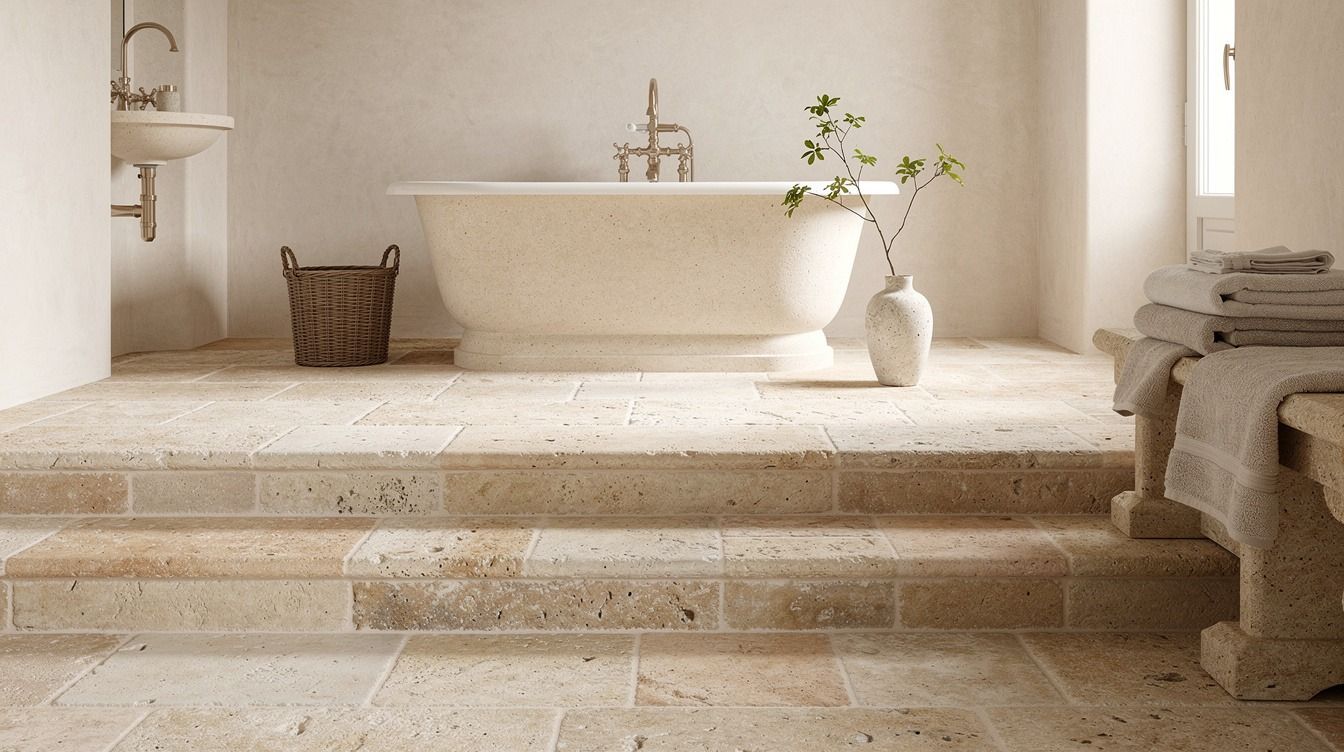
by French limestone floor ideas for effortless château charm work best when you treat the floor as the room’s warm base, not a precious museum finish. I once tried to hide a pale stone-look floor under a tiny bath mat. Bad call. Let the soft, chalky surface lead, then give it a few companions.
- Let tumbled limestone set the bathroom’s temperature
- Use the Quiet-Grout Rule for light stone flooring
- Frame a 60x30 in tub with a limestone border
- Try The Two-Wood Rule beside stone floors in house
- Paint the walls in Farrow & Ball Hague Blue
- Build The Three-Height Light Stack
- Choose a French pattern tile bathroom layout, or should you keep it plain?
- Anchor the vanity at 32 to 36 inches
- Swap chrome for unlacquered brass that changes with you
- Add Benjamin Moore Chestertown Buff around the edges
- Layer washable textiles instead of a giant bath rug
- Make the Shower Threshold Disappear
- Spend where bare feet notice it most
1Let tumbled limestone set the bathroom’s temperature
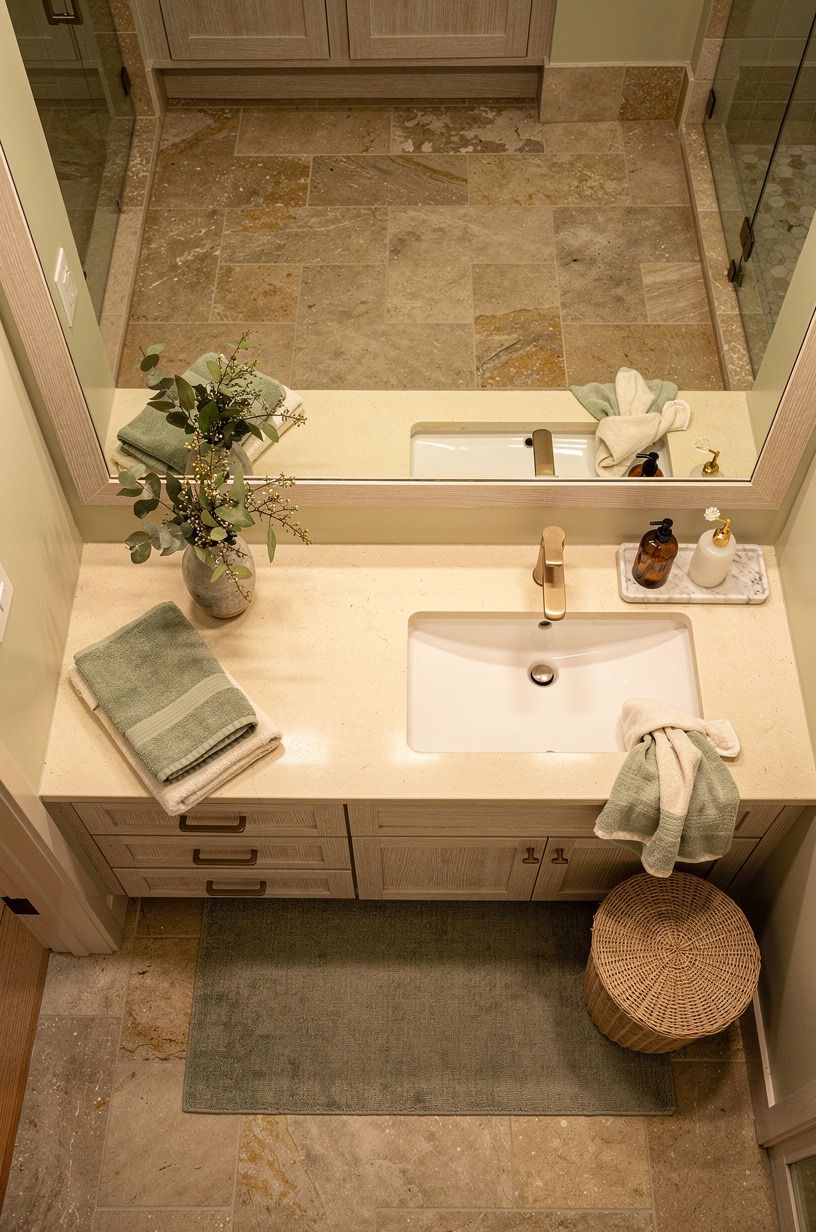
Start with cerused white oak if you want a bathroom that feels settled before you’ve added a single accessory. Its pale grain works especially well with sage green, warm cream, and natural wood, giving the room a quietly aged feel without turning every surface into stone.
I’d skip high-gloss porcelain that imitates stone too perfectly. It reads slick under a vanity, while a softened wood finish gives your bare feet something gentler and more organic. For more options, see these tumbled limestone floor ideas for old-world texture.
Typical cost by tier (US averages):
2Use the Quiet-Grout Rule for light stone flooring
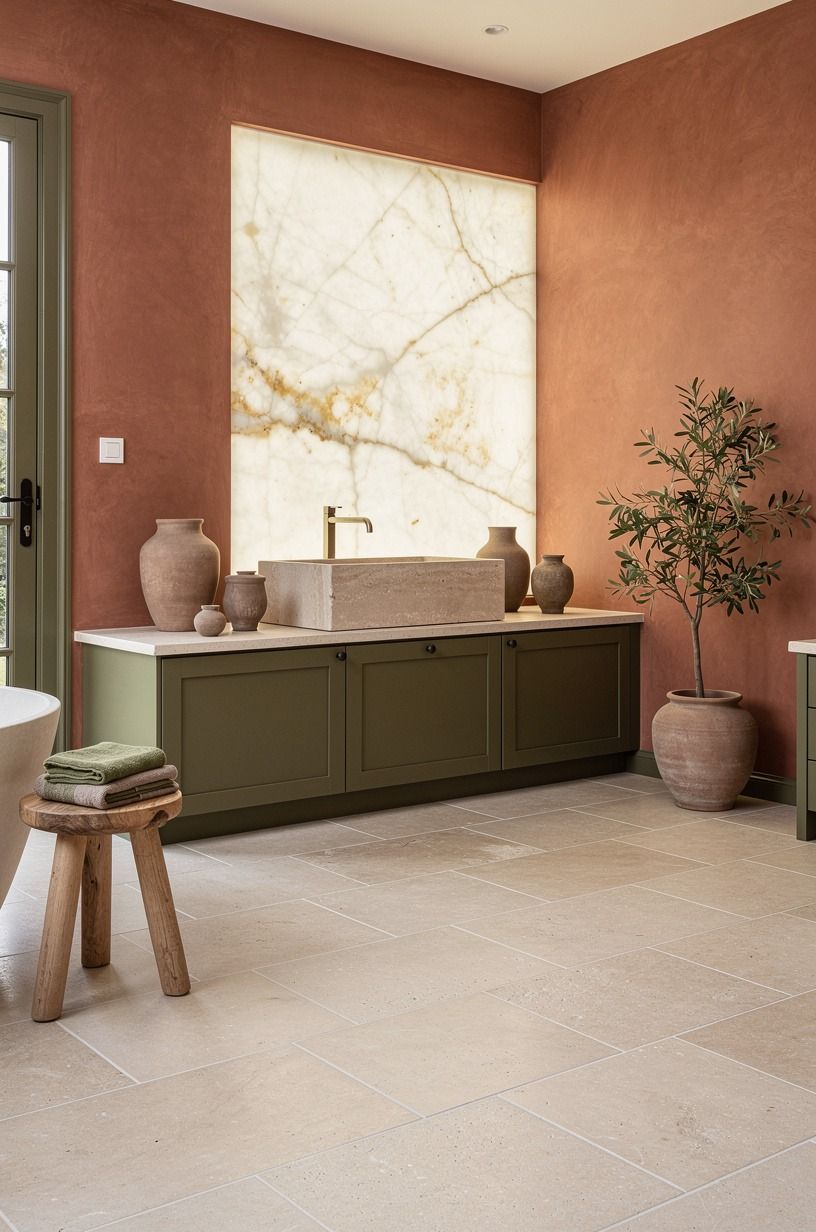
Choose grout that sits close to your backlit translucent onyx rather than outlining every tile in gray.
3Frame a 60x30 in tub with a limestone border
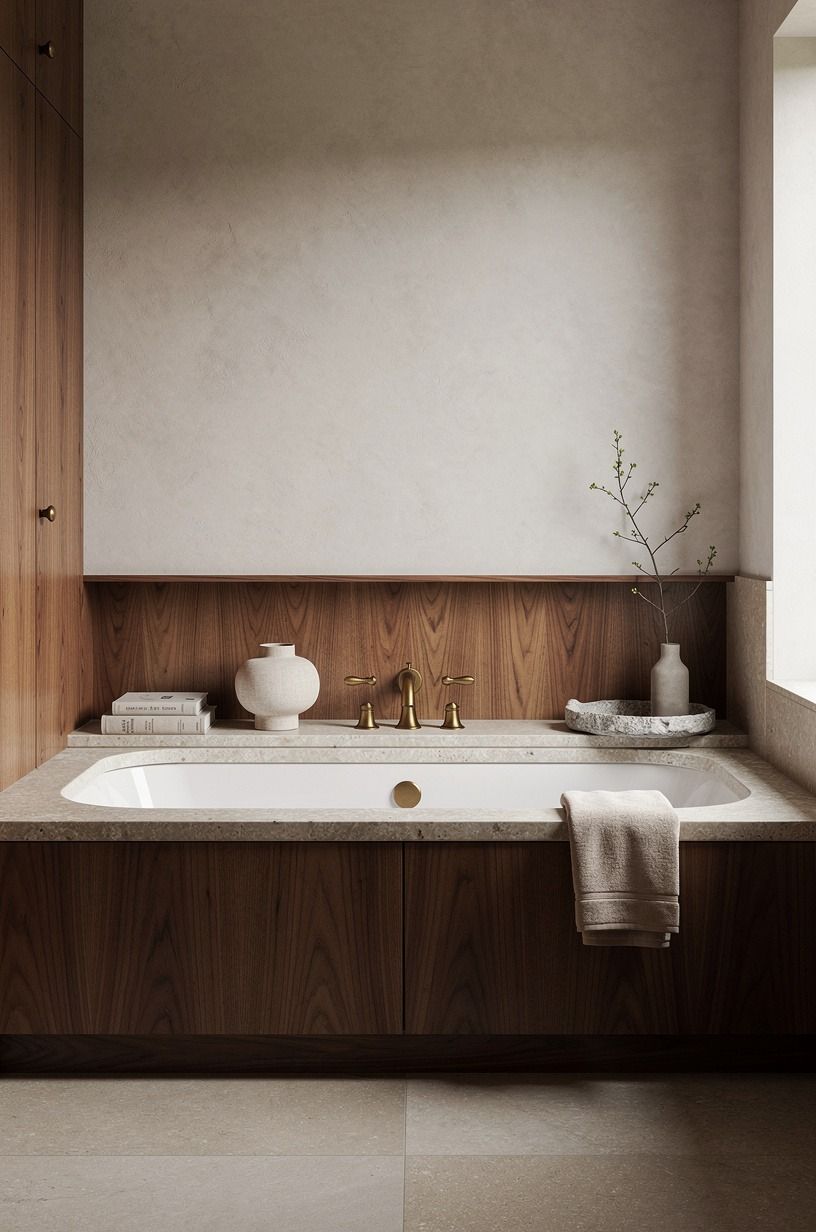
A standard 60x30 in alcove tub can look far more refined when book-matched walnut continues around its apron in a simple border. Keep the border one panel wide, then let the remaining floor run in a quieter field.
I’ve seen people add a second patterned finish here, and it usually makes a small bathroom feel chopped up. Your tub already creates a strong rectangle. Let the warm walnut do the visual work, and use a limestone bathroom floor guide if you’re planning the whole footprint.
4Try The Two-Wood Rule beside stone floors in house
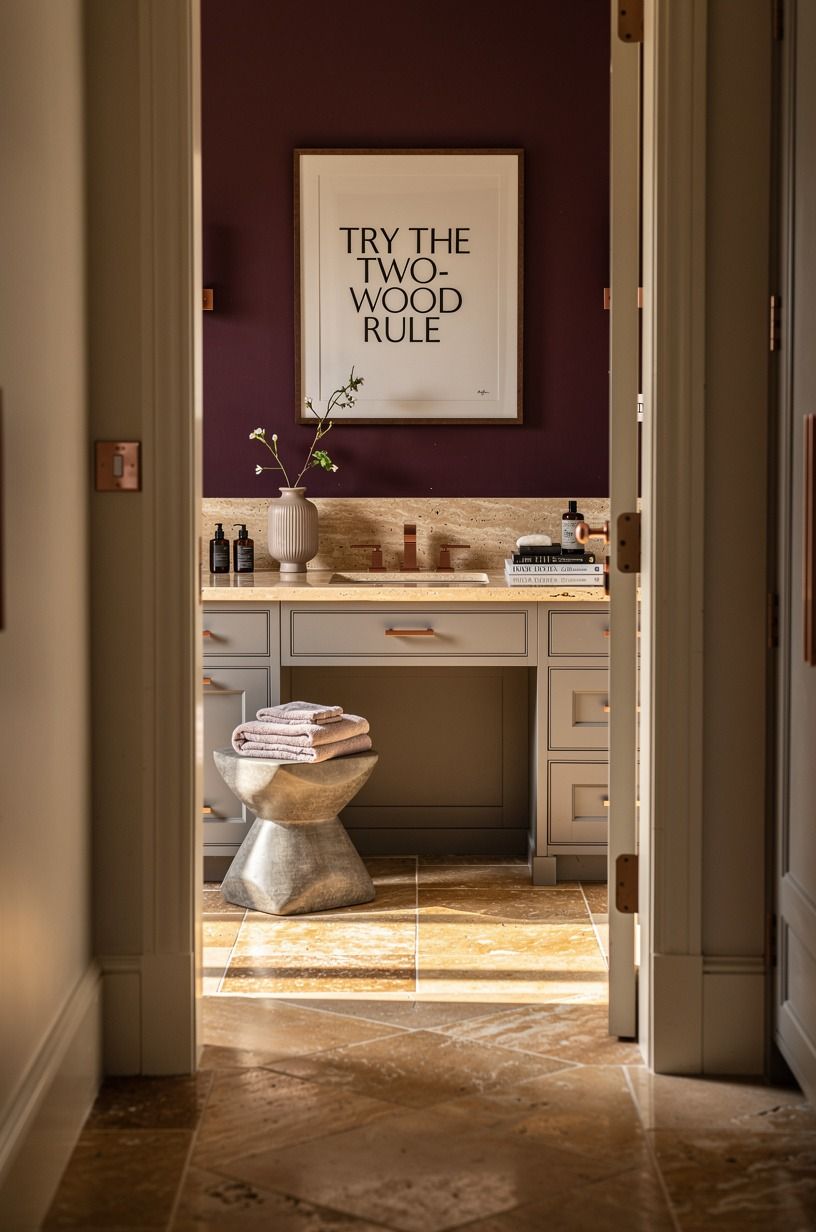
Pair warm travertine with only two wood tones: one for the vanity and one for a smaller accent, such as a stool or mirror frame.
5Paint the walls in Farrow & Ball Hague Blue
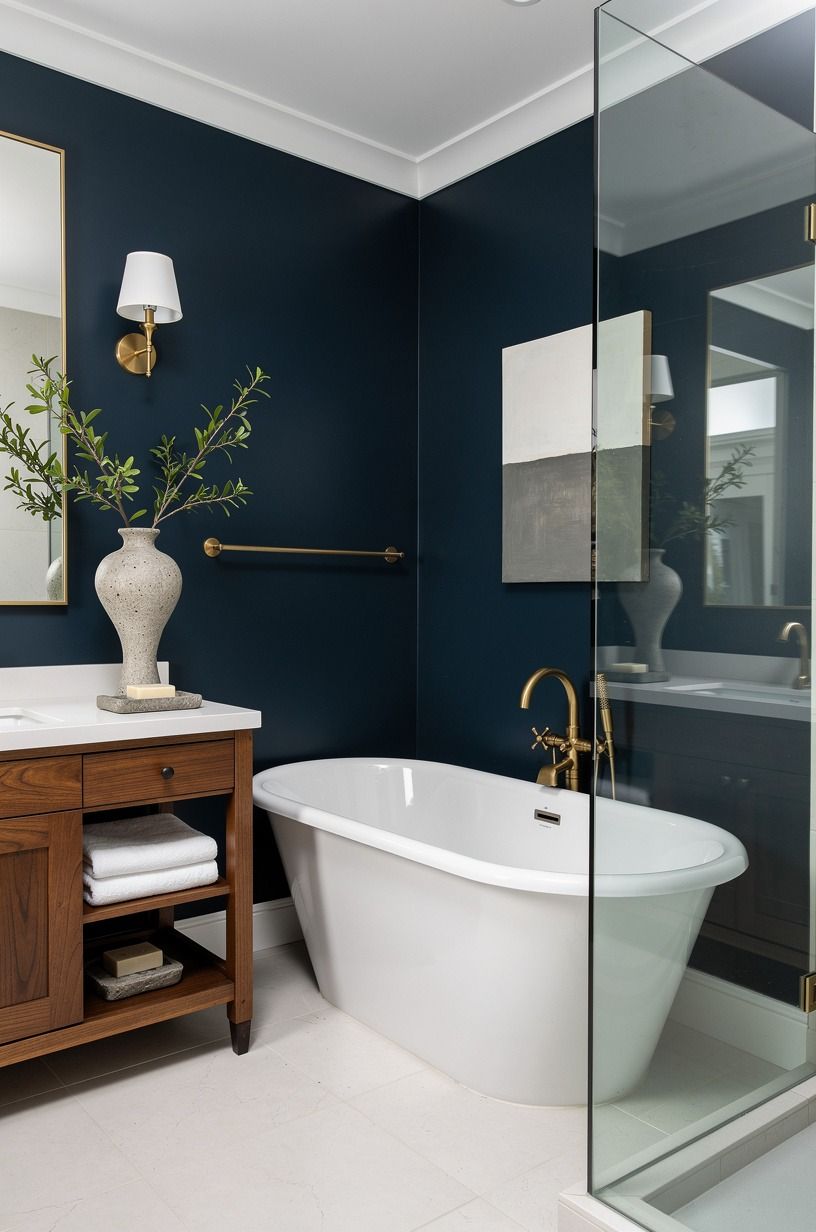
For a moody bath, Farrow & Ball Hague Blue No. 30 makes navy, white, and walnut feel grounded rather than cold. It’s a bold choice, but warm wood and unlacquered brass keep it from becoming theatrical.
And don’t paint the trim blue too. Keep it soft with Benjamin Moore White Dove OC-17, then add unlacquered brass where you need weight.
You’ll notice how the blue deepens at night and the brass slowly develops patina. That contrast is the whole point!
6Build The Three-Height Light Stack
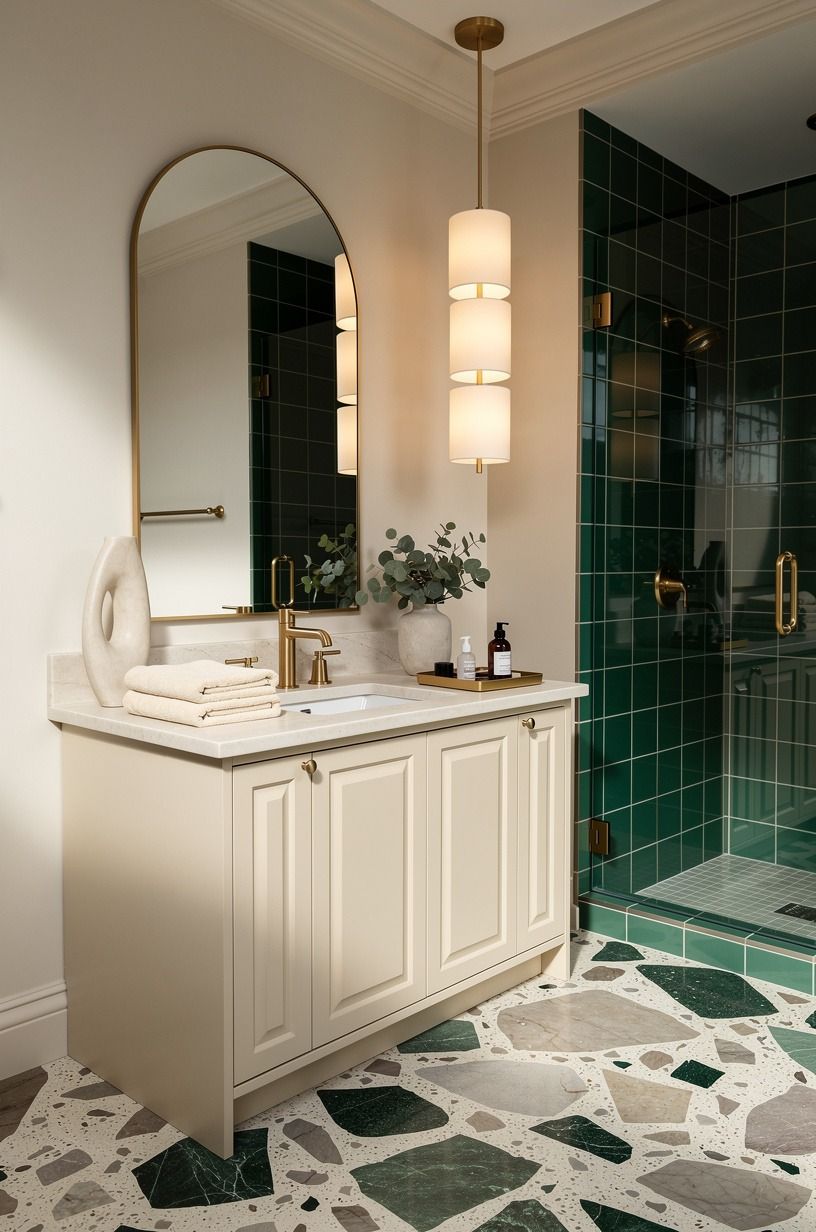
Give your oversized-chip terrazzo floor three light sources: ceiling, face-level, and low glow. A Schoolhouse Luna sconce near the mirror, a simple overhead fixture, and a small lamp on a vanity shelf will make its emerald, gold, and cream flecks feel considered after sunset.
Your overhead light can’t do all of that alone. I made that mistake in my first bathroom, where the floor looked flat until I brought in a lamp with an amber bulb. Use warm light, not blue-white glare, and browse why limestone works in neutral bathrooms for the color logic.
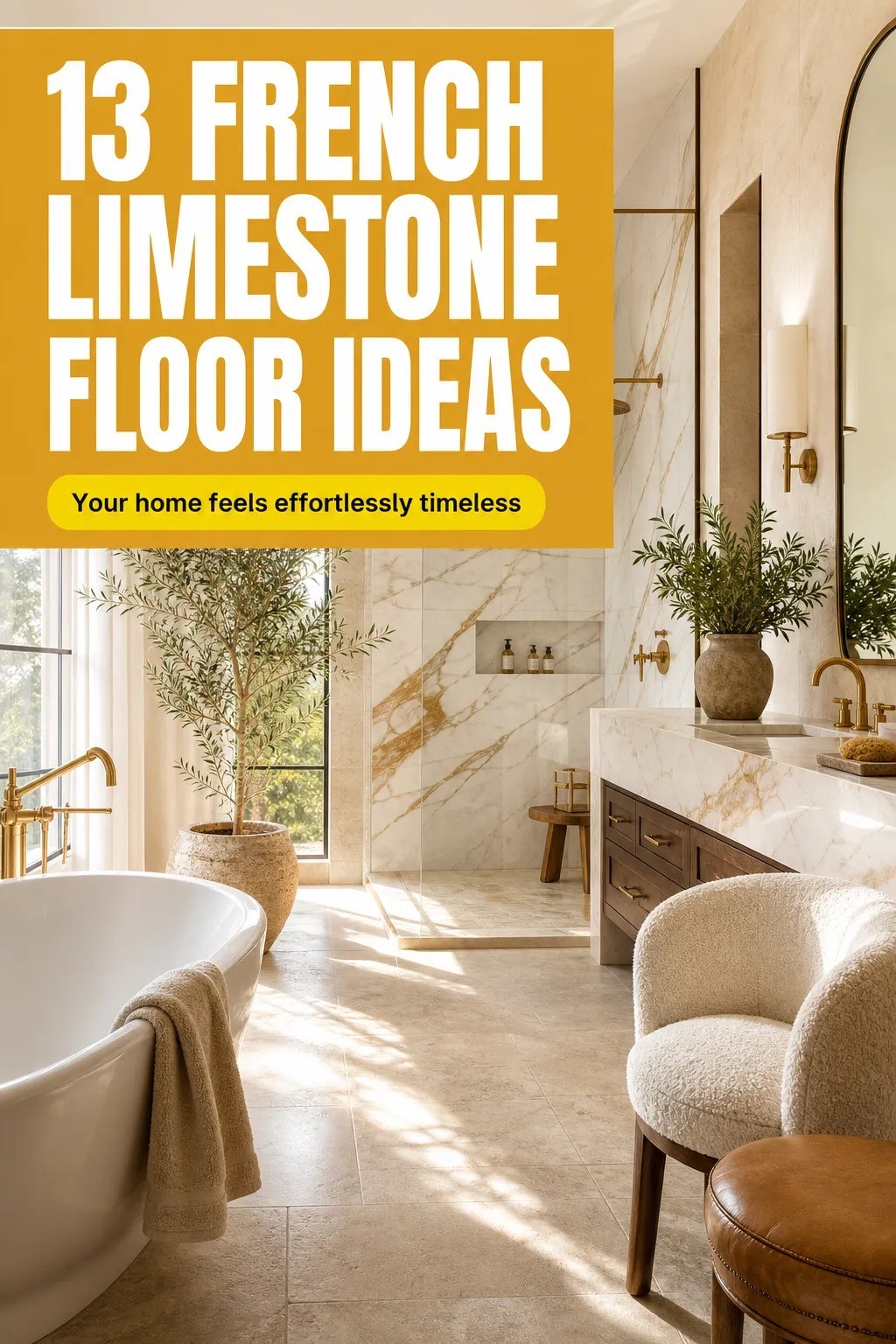
7Choose a French pattern tile bathroom layout, or should you keep it plain?
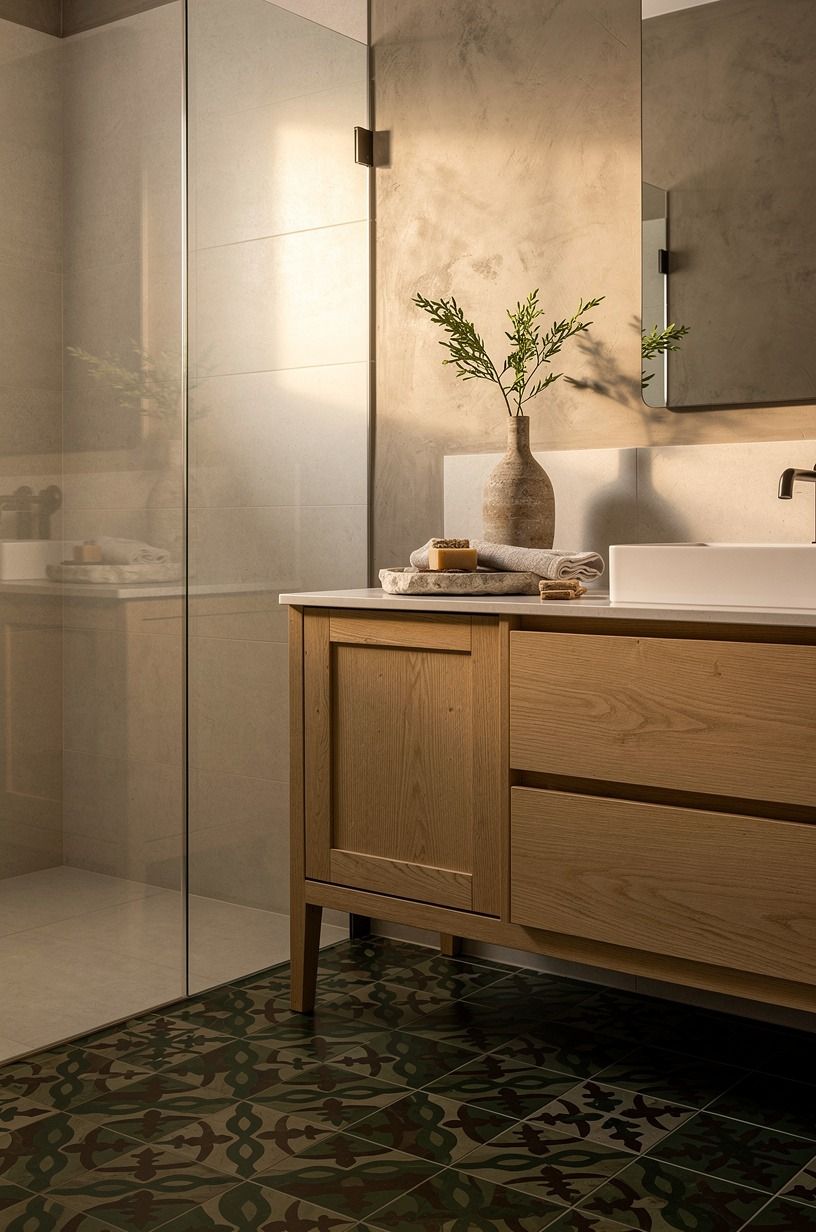
Keep it plain if your bathroom is under visual pressure already: a shower curtain, open shelving, patterned towels, and a busy vanity top. Hand-applied Venetian plaster in forest green gives the walls depth without asking the floor to compete.
If you’ve got a larger room, a restrained French pattern can be captivating. You’ll want the walls and textiles to stay quiet, though.
Why spend for a patterned floor if you’re going to bury it under five competing prints? I’d choose pattern over a faux-marble vanity every time.
8Anchor the vanity at 32 to 36 inches
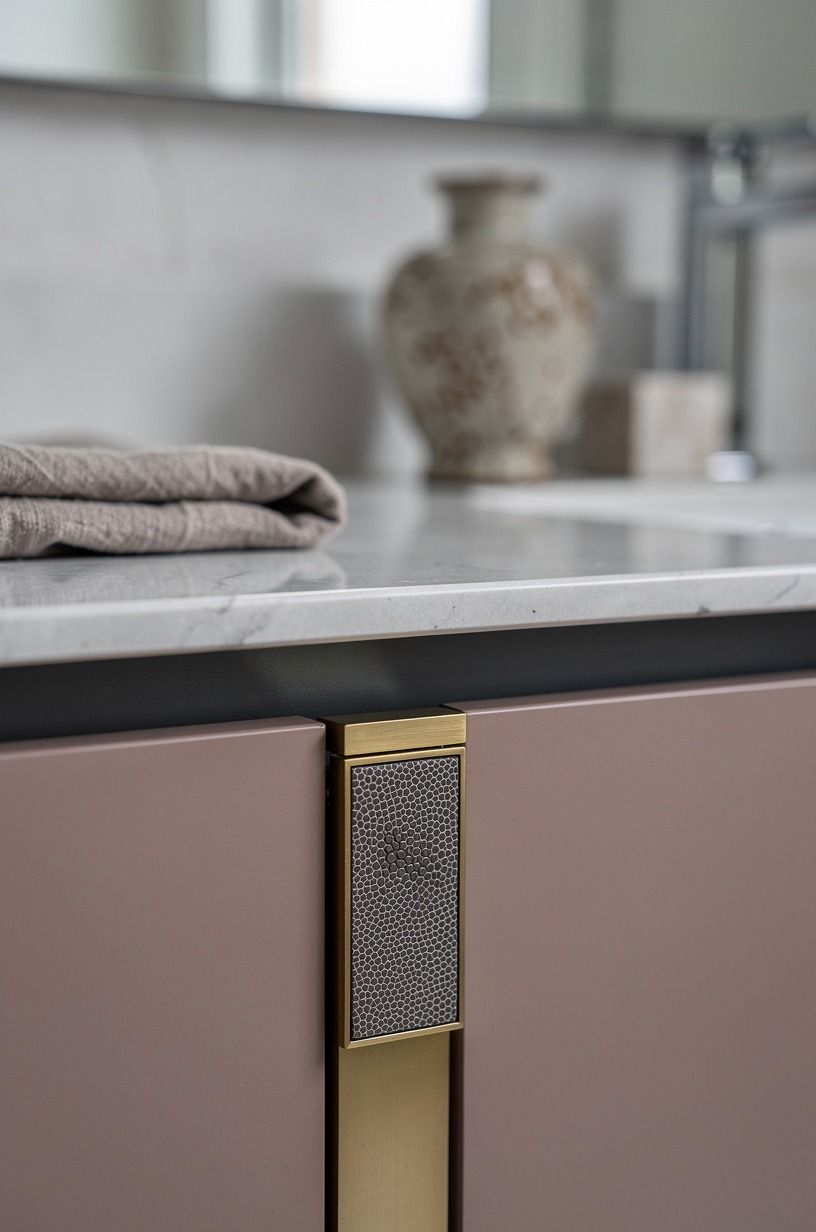
A vanity between 32 and 36 in high gives you a useful reference point when you’re balancing floor, wall, and mirror proportions. A small shagreen detail on the vanity or storage box can add tactile depth without crowding the dusty-rose, charcoal, and brass palette.
9Swap chrome for unlacquered brass that changes with you
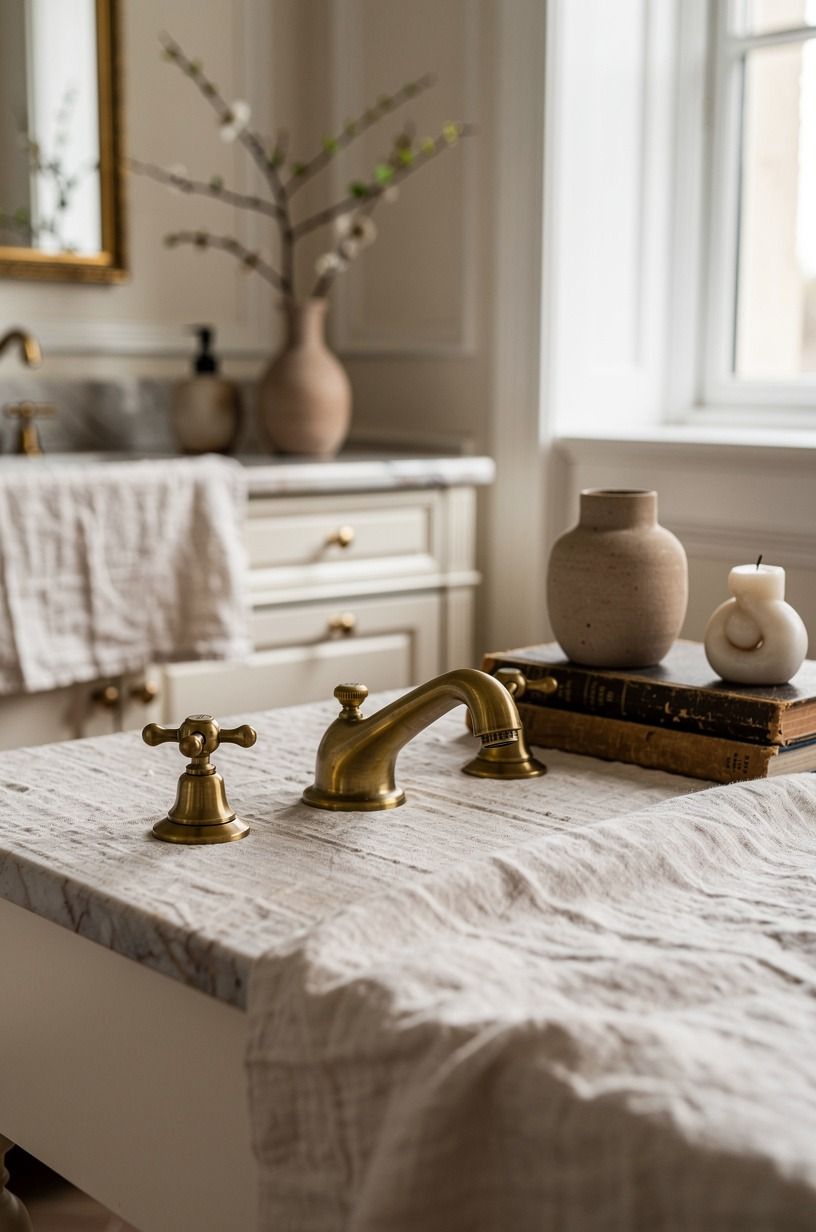
Bring in washed Belgian linen for a curtain, hand towel, and one small upholstered stool. It softens warm white walls, camel tones, and black accents without making the room feel overly precious.
You don’t need every finish to match. A linen curtain or runner can typically run $120-$450, so start there and let the other materials be quieter. I’d avoid adding too much black hardware in this particular mix because it can slice through the gentle palette too sharply.
Linen softens. Black announces itself.
10Add Benjamin Moore Chestertown Buff around the edges
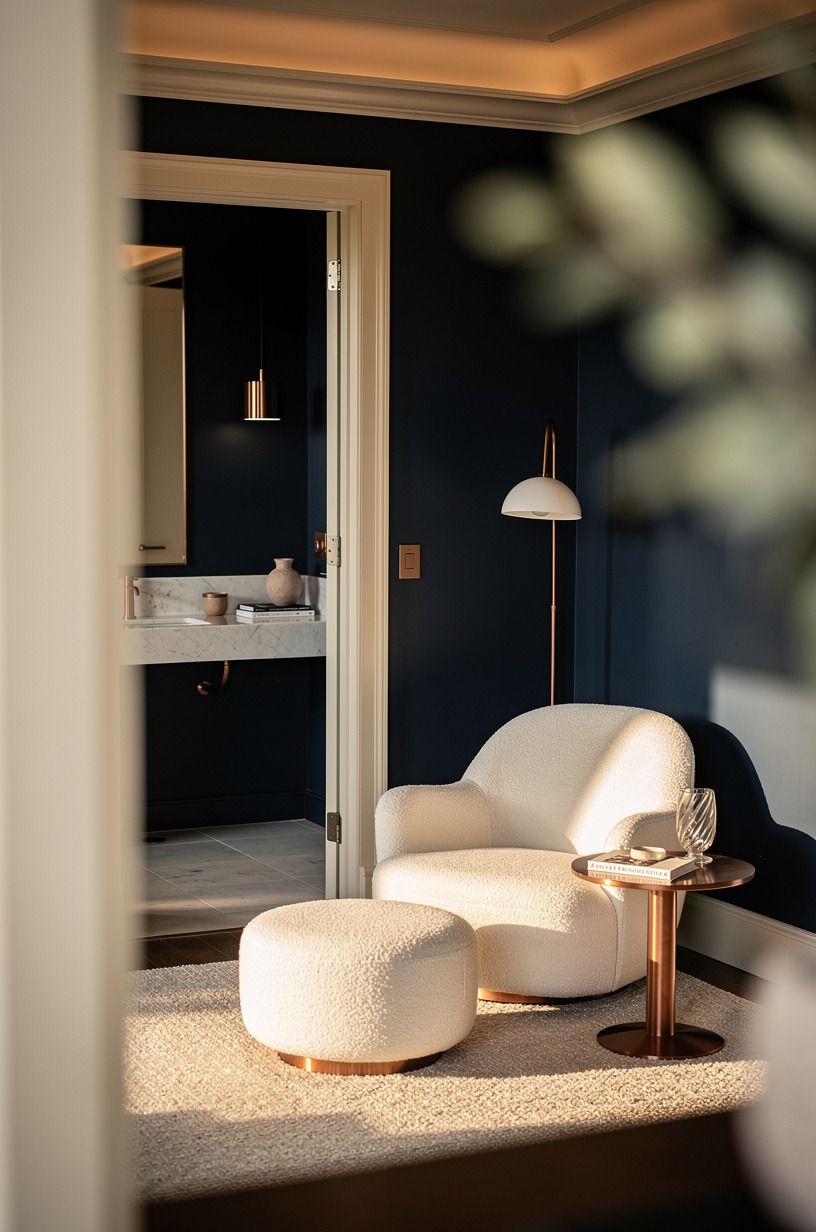
Benjamin Moore Chestertown Buff HC-9 is a smart choice for a bathroom where midnight blue, copper, and ivory need a warmer bridge. Keep it to a smaller edge or adjoining area, then use organic bouclé to add softness against the deeper color.
But test it before you commit. You’ll see more gold in this paint beside bright white tile than beside a midnight-blue wall, and that’s useful information.
A small sample behind the toilet is enough (not glamorous, but honest). For adjacent-room inspiration, these French farmhouse kitchen ideas use the same relaxed warmth.
11Layer washable textiles instead of a giant bath rug
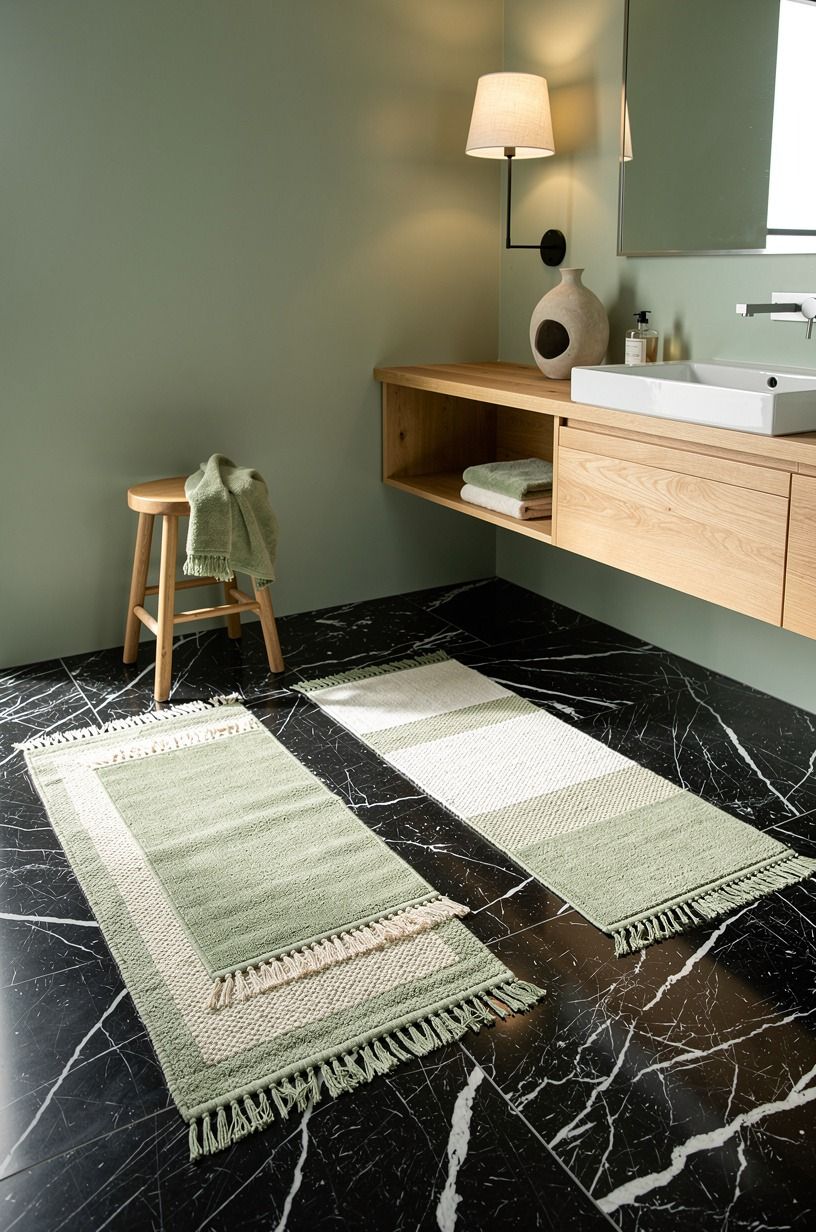
Use a narrow 600gsm Turkish cotton runner near the vanity and a smaller mat at the tub. Your Nero Marquina black marble should still show around the edges, because its white veining gives the bathroom a crisp, tailored contrast.
I’d skip one oversized fluffy rug that covers half the floor. It traps moisture, hides your best material, and starts looking tired fast. A cream runner, a faded stripe, one wooden stool.
You’ll get comfort without losing the quiet geometry of the marble.
12Make the Shower Threshold Disappear
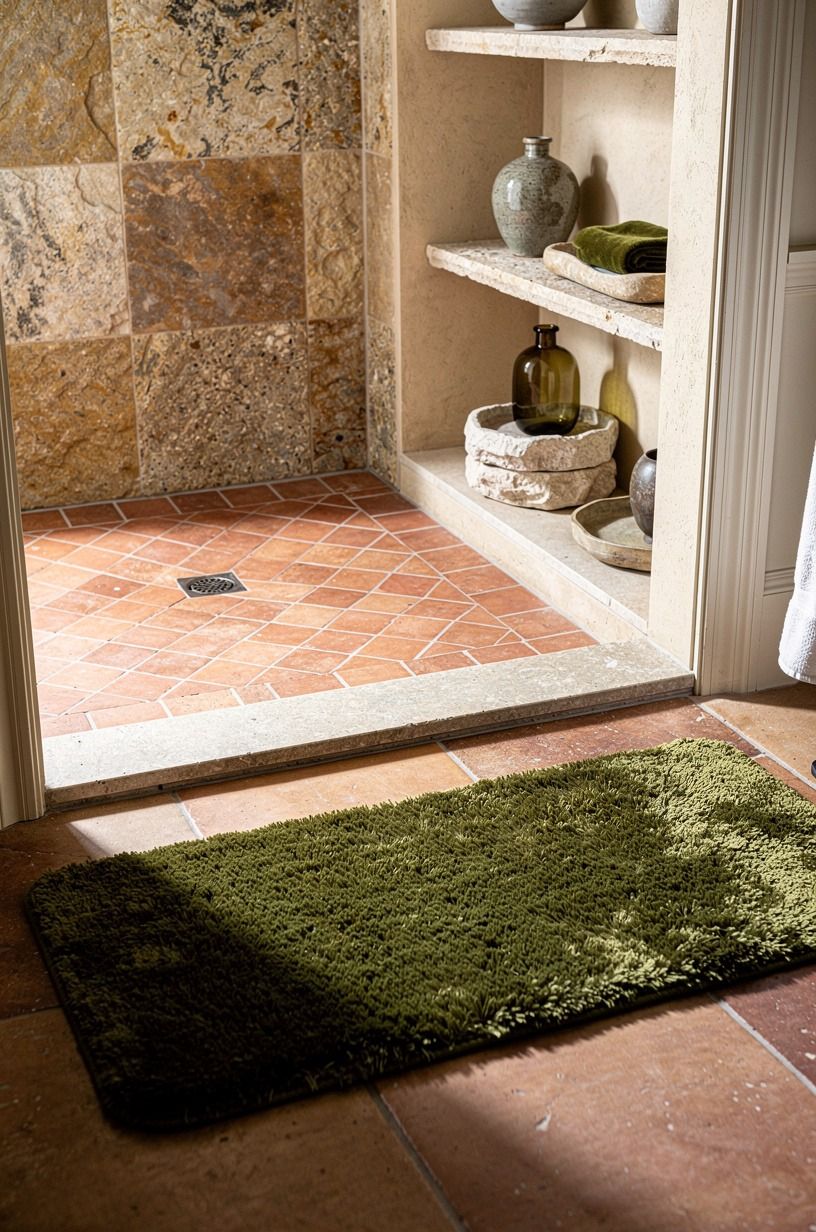
Use a deep-pile mohair velvet curtain or upholstered stool to soften the shower zone if your layout allows it. The texture adds warmth beside terracotta, stone, and olive without asking the bathroom to rely on another hard finish.
A comfortable shower needs at least 36x36 in of clear space, and that room is where soft texture can make the practical pieces feel more inviting. Don’t use velvet where it will stay damp, though.
Keep it outside the splash zone, every single time! Read these soft natural limestone flooring ideas if you’re comparing finishes.
13Spend where bare feet notice it most
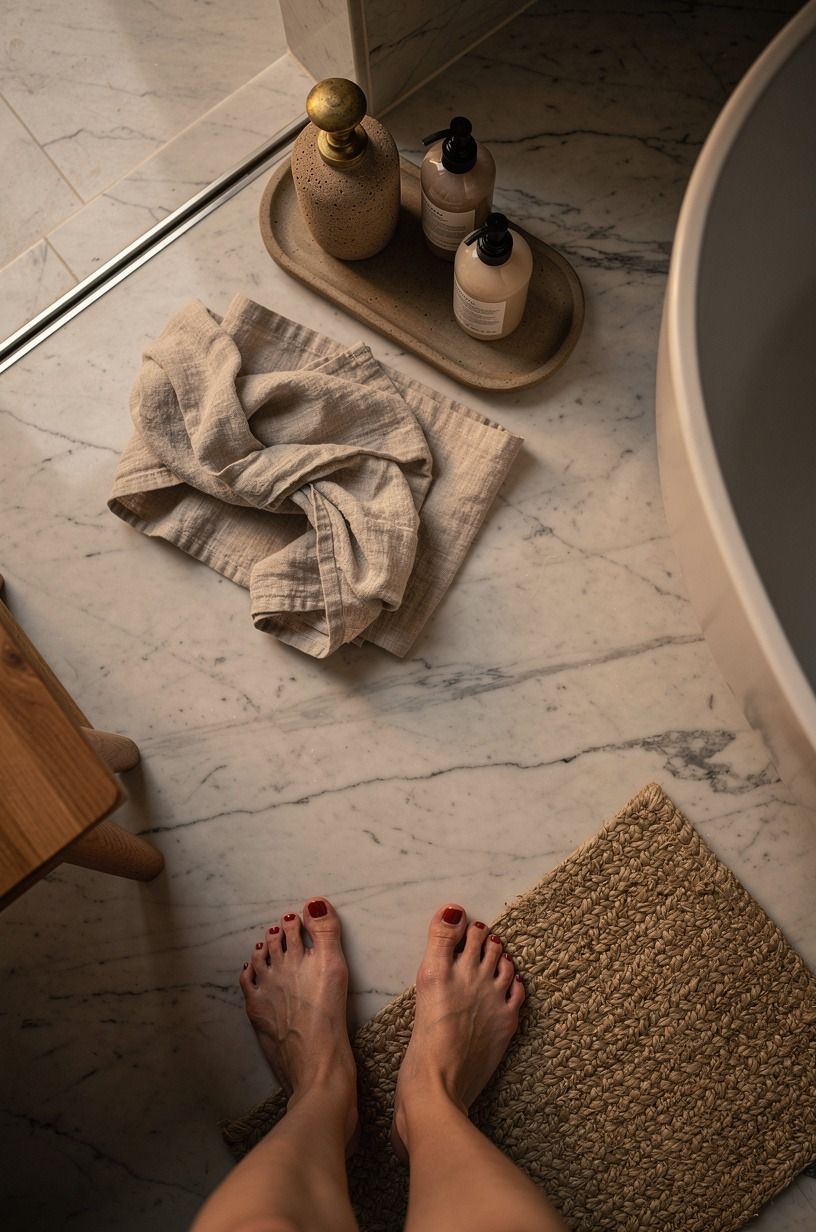
Here’s the honest cost picture if you’re refreshing a bathroom around a Carrara marble-floor look. The subtle gray veining works beautifully with clay, linen, and aged brass, especially when you keep the rest of the room calm.
Why limestone still feels right now
I keep coming back to limestone because it doesn’t demand a performance from the rest of the room. It has variation, but not the loud kind. A pale tile can show a faint fossil mark, a cloudy cream patch, or the slight darkening near a wet towel, and none of it breaks the spell.
That’s unusual in bathrooms, where every surface is often hard, glossy, and determined to look newly installed forever.
The trend toward warm, old-world rooms has made people reach for stone again, but I don’t think the appeal is nostalgia alone. We spend a lot of time looking at screens and very smooth finishes. Limestone gives your eye a place to rest.
It’s tactile without being rustic, refined without being fussy, and it handles a little imperfection better than most materials.
I learned this after chasing a pristine bathroom once. I chose bright white walls, polished fixtures, and a mirror with no frame because I thought “clean” meant calm. It didn’t.
The room felt clinical by noon, and every water spot looked like an accusation. When I replaced the shiny pieces with a chalky wall color, a worn wood stool, and a stone-look floor, the room finally became somewhere I wanted to linger.
That’s my decision frame for you: choose limestone when you want a room that can absorb life. Choose crisp marble if you want sharp contrast and formal shine.
I wouldn’t try to make limestone behave like marble, because its slight irregularity is its value. Let it be gentle.
Let your bathroom have a little softness.
The Questions I Get Asked Most
What is the best French limestone floor idea for a small bathroom?
A pale running-bond tumbled limestone tile is the best choice because it keeps your small bathroom visually open. Pair it with an IKEA HEMNES vanity in a quiet finish, and let at least a few inches of floor show around the base.
Where can I buy French limestone floor pieces on a budget?
Start with IKEA, Target Threshold, and Wayfair for mirrors, stools, textiles, and basic lighting. Facebook Marketplace is useful for old wood stools and framed mirrors. You’ll get the best value by buying fewer pieces with real texture, not matching sets.
How much does a French limestone floor makeover cost?
A light refresh can cost about $200 to $1,200 when you focus on paint, a mirror, faucet, and textiles. Your free move is editing what you already own. For floor planning, review tumbled limestone options before ordering samples.
Can I create a French limestone floor look on a budget?
Yes, and you don’t need to replace everything. Use Sherwin-Williams Sea Salt SW 6204, a washable cotton runner, and removable aged-brass hardware. Your cheapest improvement is clearing clutter so the floor line stays visible and calming.
Is a French limestone floor worth it in a small space?
Yes, it’s worth it because a small room lets you see the material as one uninterrupted surface. Keep 21 in clear in front of the toilet, use a wall-mounted storage piece, and your bathroom will feel more open rather than crowded.
Is a French limestone floor a good idea for a rental?
Yes, if you use removable layers. Try peel-and-stick stone-look tile, a tension-rod linen curtain, and removable hooks in aged brass. You’ll get the warm visual rhythm without altering plumbing, subfloor, or permanent finishes.
Where I’d Start First
If I had to pick one, I’d start with tumbled limestone tile. You can’t fake the quiet depth of a surface that looks softly worn under bare feet. Pin tumbled limestone tile for later and explore these old-world limestone floor ideas.