
 by
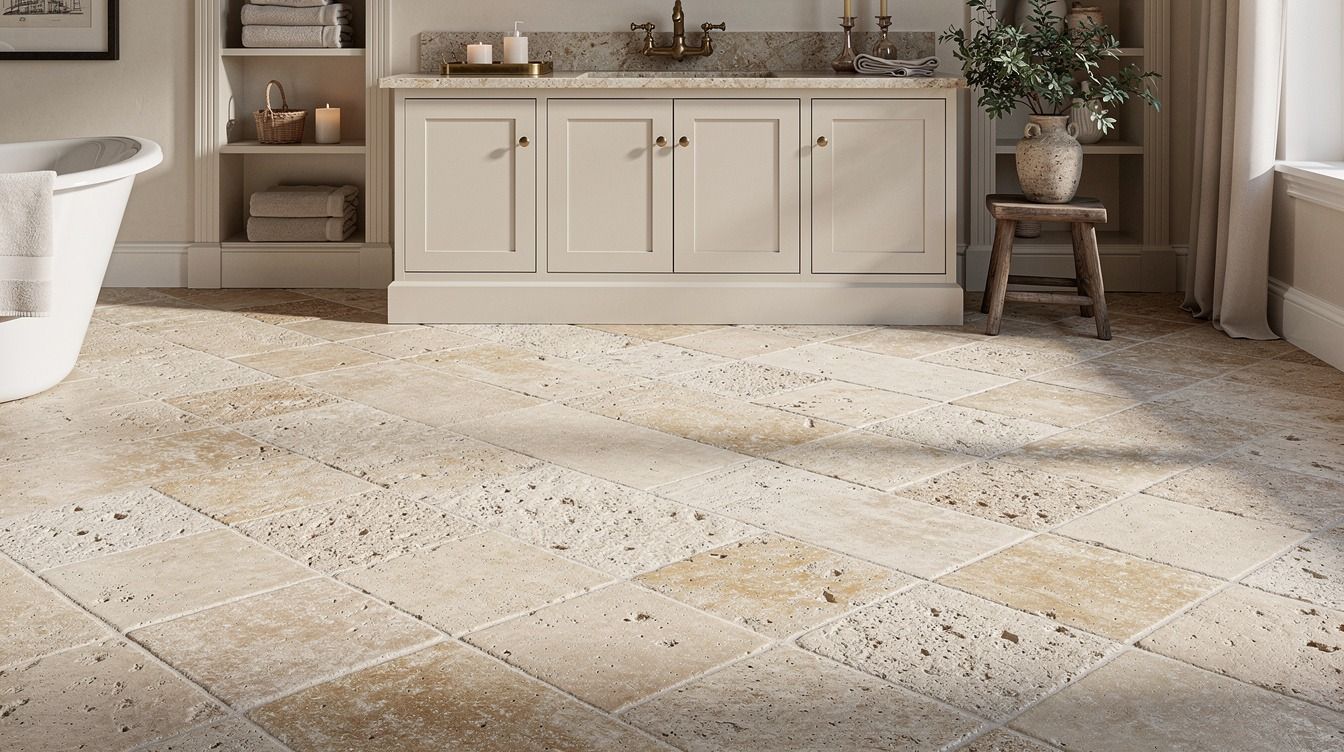
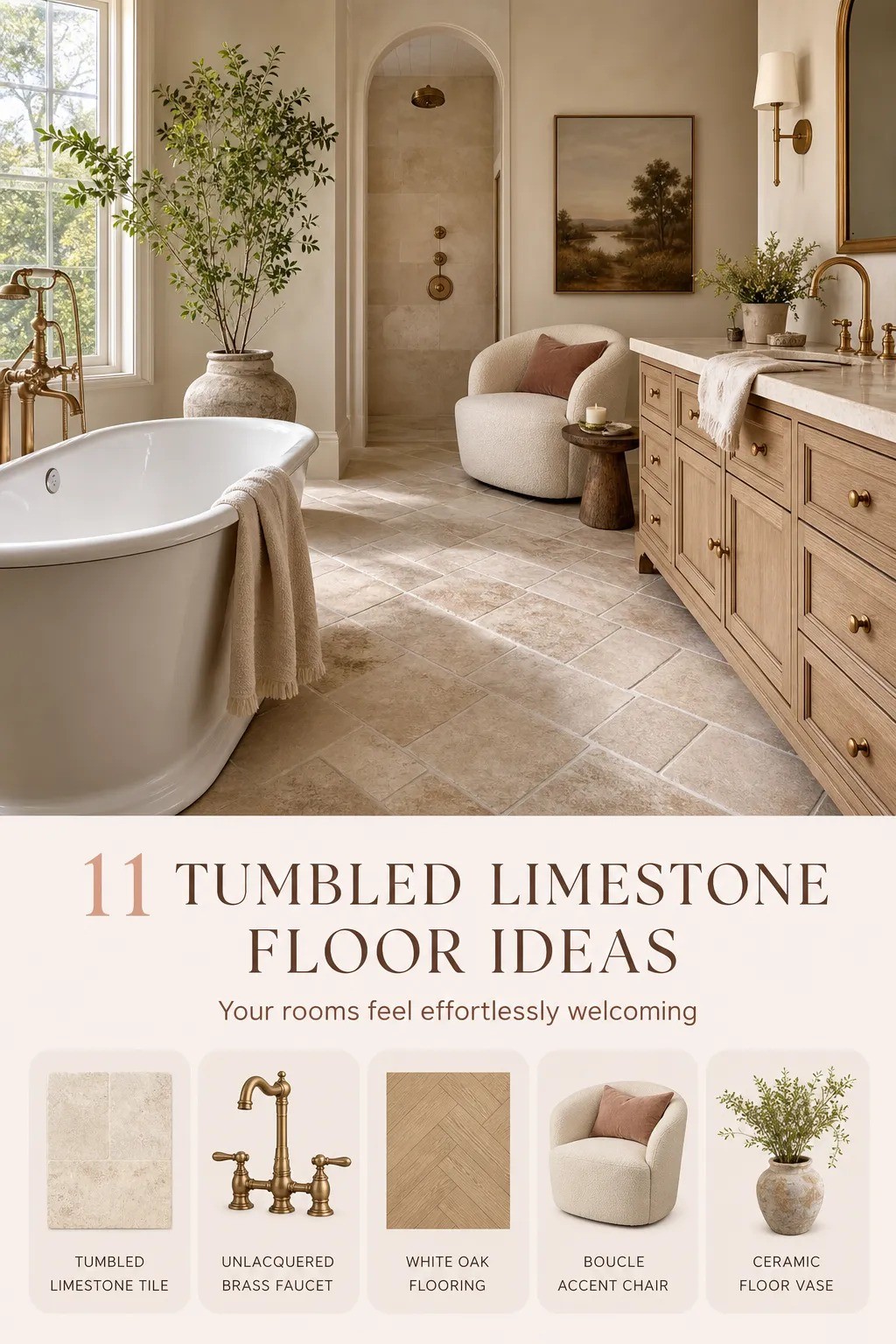
by Tumbled limestone floor ideas work because the softened edges and pale variation make a bathroom feel settled, not freshly staged. I once chased a spotless white floor and spent every morning noticing one stray hair. Limestone cured that obsession. You get a warm, earthy foundation that doesn't demand perfection.
- Lay light stone flooring on the diagonal (The Long-Room Rule)
- Mix indoor pavers with a quiet limewash wall
- Anchor the vanity with The Two-Wood Rule
- Skip polished marble for worn limestone underfoot
- Frame a small bathroom with a limestone border
- Spend where wet work counts, then soften the rest
- Can a limestone floor make a tiny bath feel bigger?
- Float a dark vanity over pale limestone
- Build The Three-Height Light Stack around the floor
- Choose warm grout over bright white for limestone tile flooring ideas
- Layer linen and brass instead of adding more stone
1Lay light stone flooring on the diagonal (The Long-Room Rule)
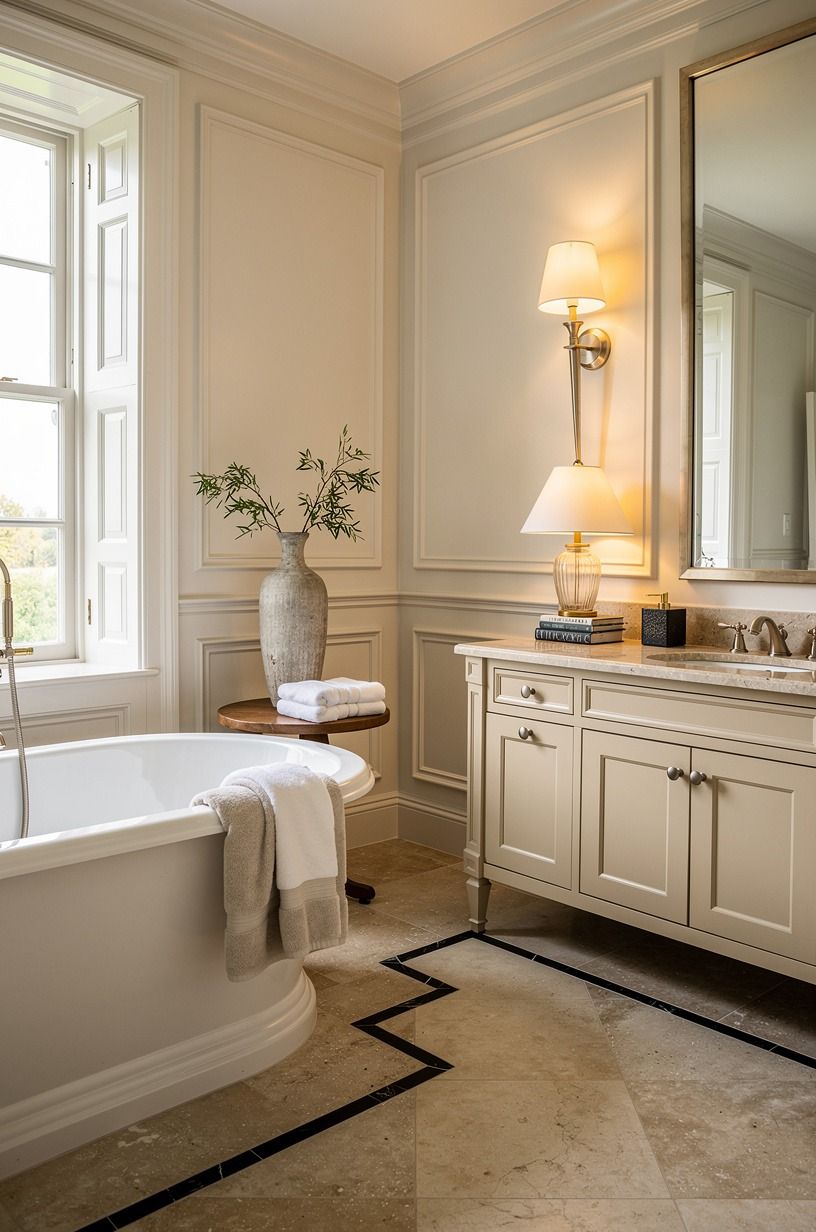
Run tumbled limestone tiles diagonally when your bathroom is narrow and you want your eye to travel farther. You’ll see the joints first, so that diagonal line gives a compact room a more airy, generous read.
Choose a restrained grout close to the stone, not bright white. I’d skip charcoal grout here because it chops up the floor like graph paper. A 60x30 in standard tub looks calmer beside a soft limestone field, especially with Benjamin Moore Chestertown Buff HC-9 on the walls.
For more pale-stone direction, borrow from these limestone floor tile ideas. Your bathroom doesn’t need a dramatic pattern to feel considered. It needs a line your eye can follow.
Typical cost by tier (US averages):
2Mix indoor pavers with a quiet limewash wall
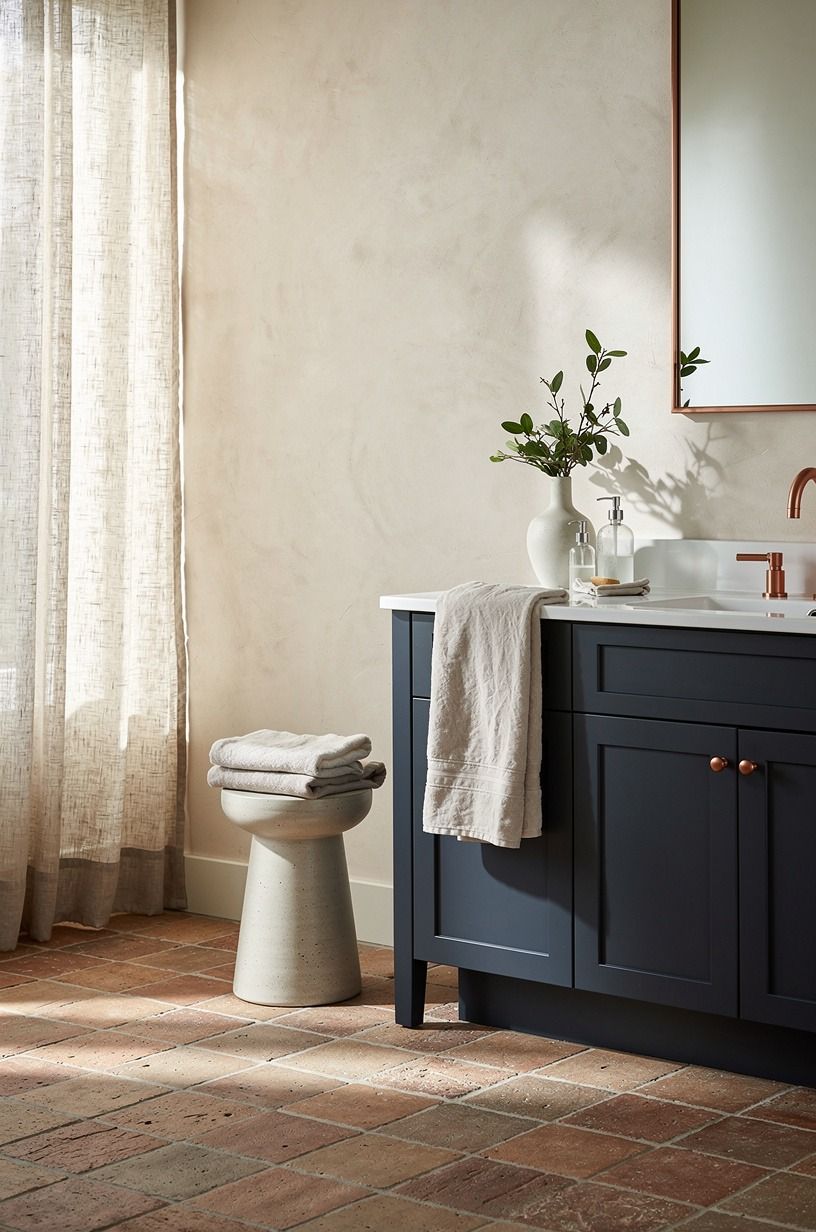
Indoor pavers have more visual weight than a sleek porcelain look, so let your walls stay quiet. Farrow & Ball Hague Blue No. 30 can work in a powder room, but I’d reserve it for one wall or cabinetry because dark blue beside a fully mottled floor can get moody fast.
A chalky ivory limewash gives you a gentle contrast. And if you’re worried it will feel too rustic, use a clean-lined IKEA GODMORGON vanity rather than a faux-distressed cabinet. Washed Belgian linen at the window keeps the old-world feeling soft instead of overdone.
Read these rustic limewash bathroom ideas before choosing your wall finish. Your floor should hold the texture; your walls should give it breathing room.
3Anchor the vanity with The Two-Wood Rule
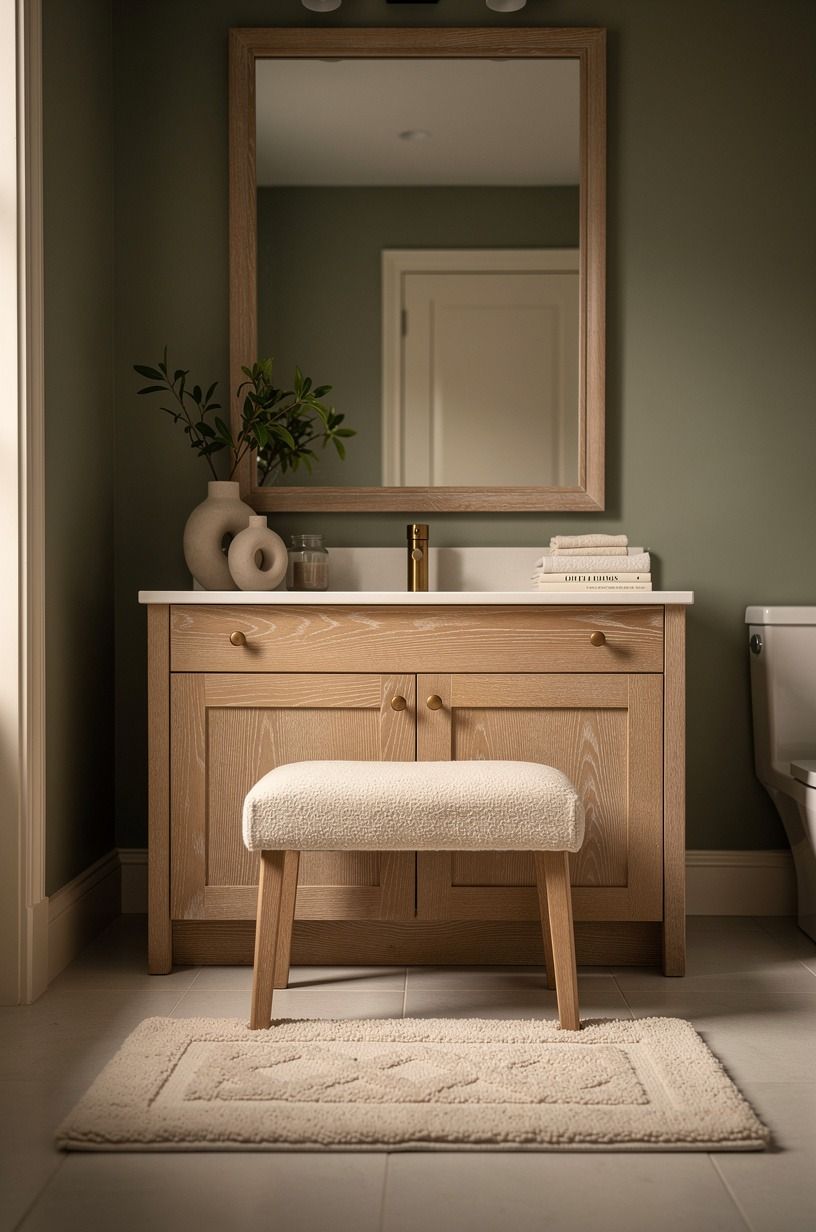
Use only two wood notes: one for the vanity, one for a small stool or frame. Keep the rest of the room warm cream and sage, then let one piece of organic bouclé soften the harder surfaces.
4Skip polished marble for worn limestone underfoot
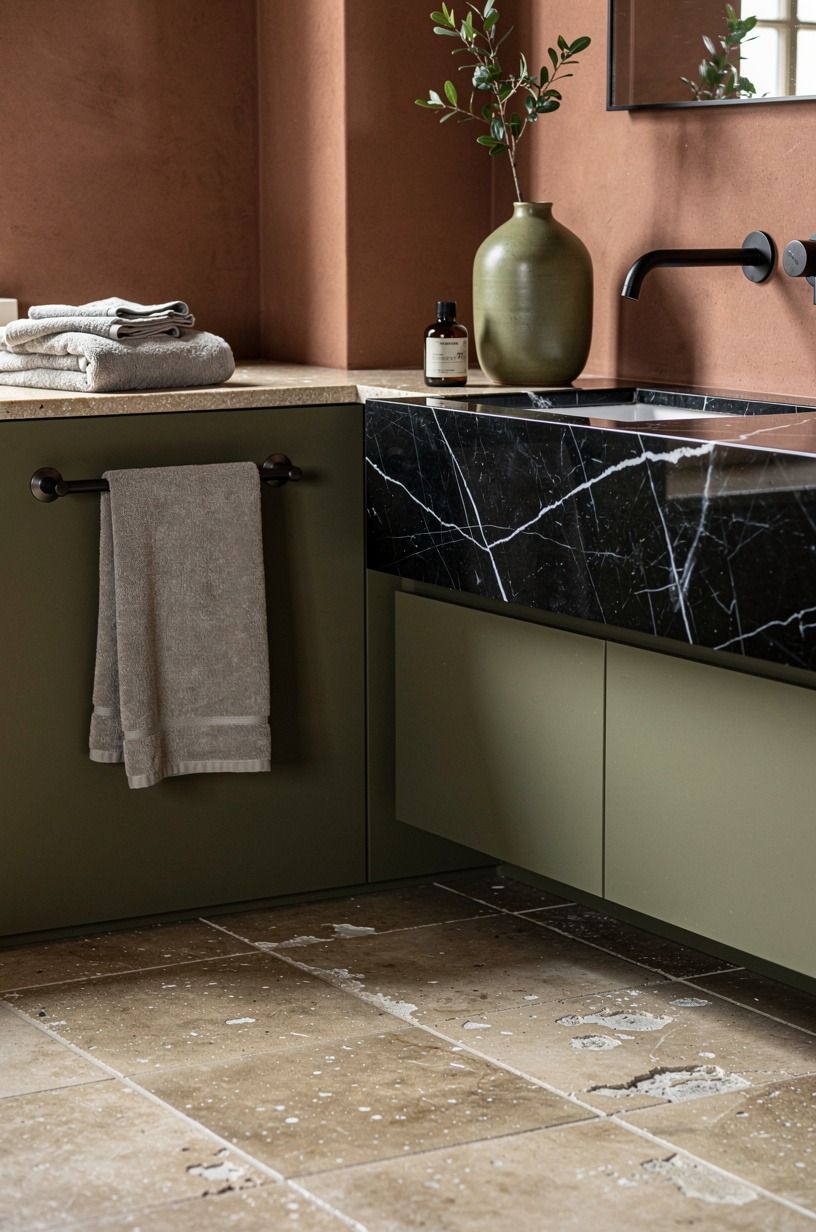
Polished marble is the losing choice for a bathroom meant to feel lived-in. It’s elegant in photographs, sure, but every splash and streak catches the light. Tumbled limestone forgives the ordinary mess of a Tuesday morning, while a small Nero Marquina black marble accent can bring contrast without taking over the room.
You’ll get a softer, more organic surface under bare feet, particularly with a brushed brass faucet that develops a muted glow rather than a mirror shine. The stone has little shadows in its edges. That’s why it feels charming instead of cold.
I’d pair it with a plain bath mat in 600gsm Turkish cotton, not a busy printed rug. Your floor is already doing enough. And yes, you’ll notice the difference immediately!
5Frame a small bathroom with a limestone border
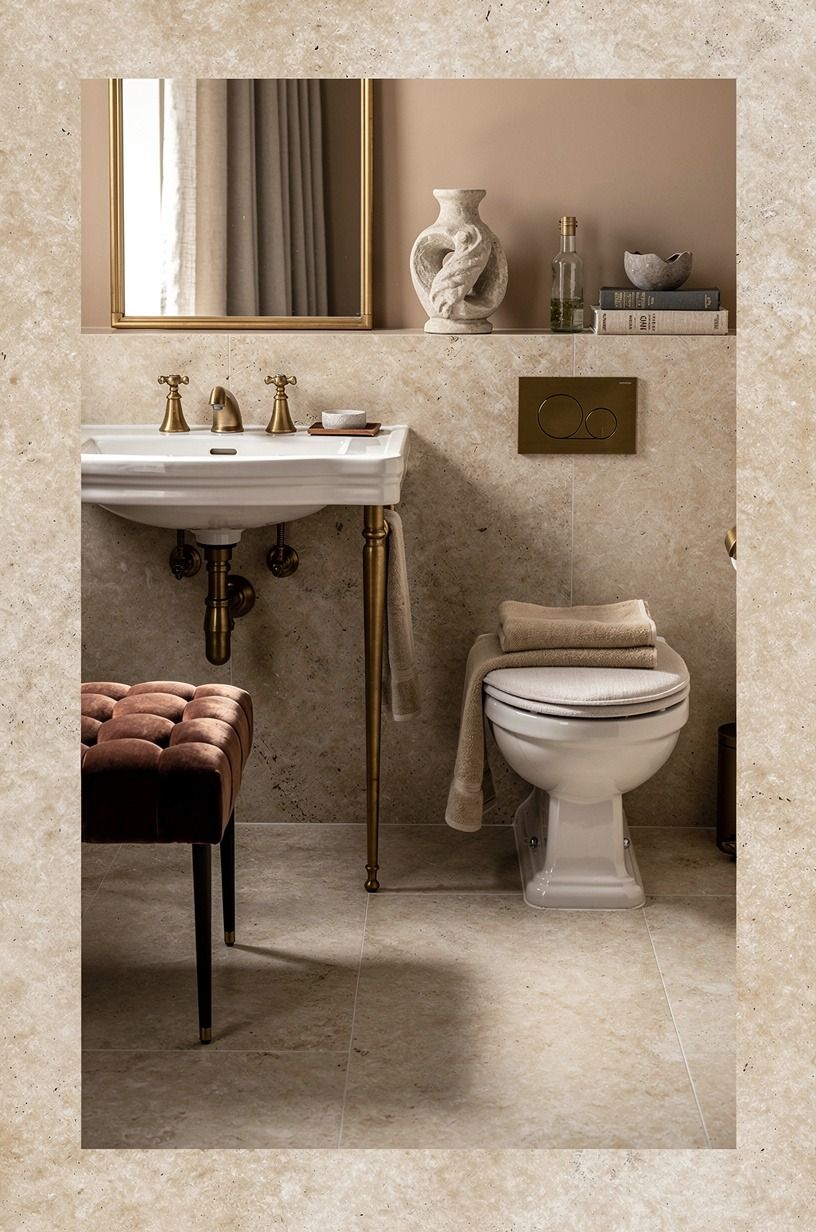
A border gives light stone flooring a finished edge without asking you to buy a decorative mosaic. Use the same limestone in a smaller cut around the perimeter, then keep the center simple. It’s subtle, but it gives your room a tailored outline.
Leave at least 21 in clear in front of the toilet. A border shouldn’t force you into awkward placement, and a small bathroom can’t afford ornamental choices that steal usable space. I’d rather see one clean limestone field with a deep-pile mohair velvet stool than a fussy border squeezed around fixtures.
For layouts that keep the floor feeling open, see these limestone bathroom floor ideas. Your eye will read the cleared floor before it reads the square footage.
6Spend where wet work counts, then soften the rest
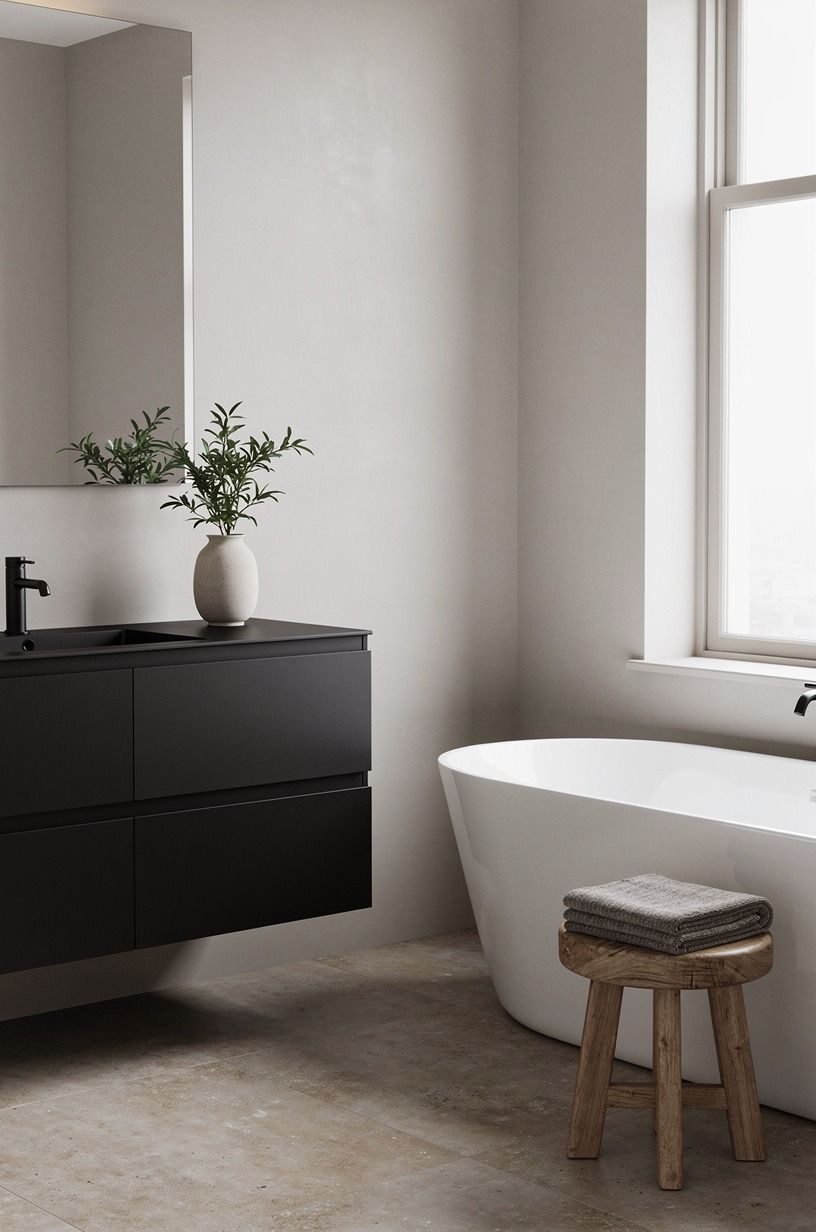
If you’re planning a full bathroom update, spend your money on the work that can’t be swapped later: waterproofing, tile setting, plumbing, and a floor you’ll still like after the towels are on the ground.
7Can a limestone floor make a tiny bath feel bigger?
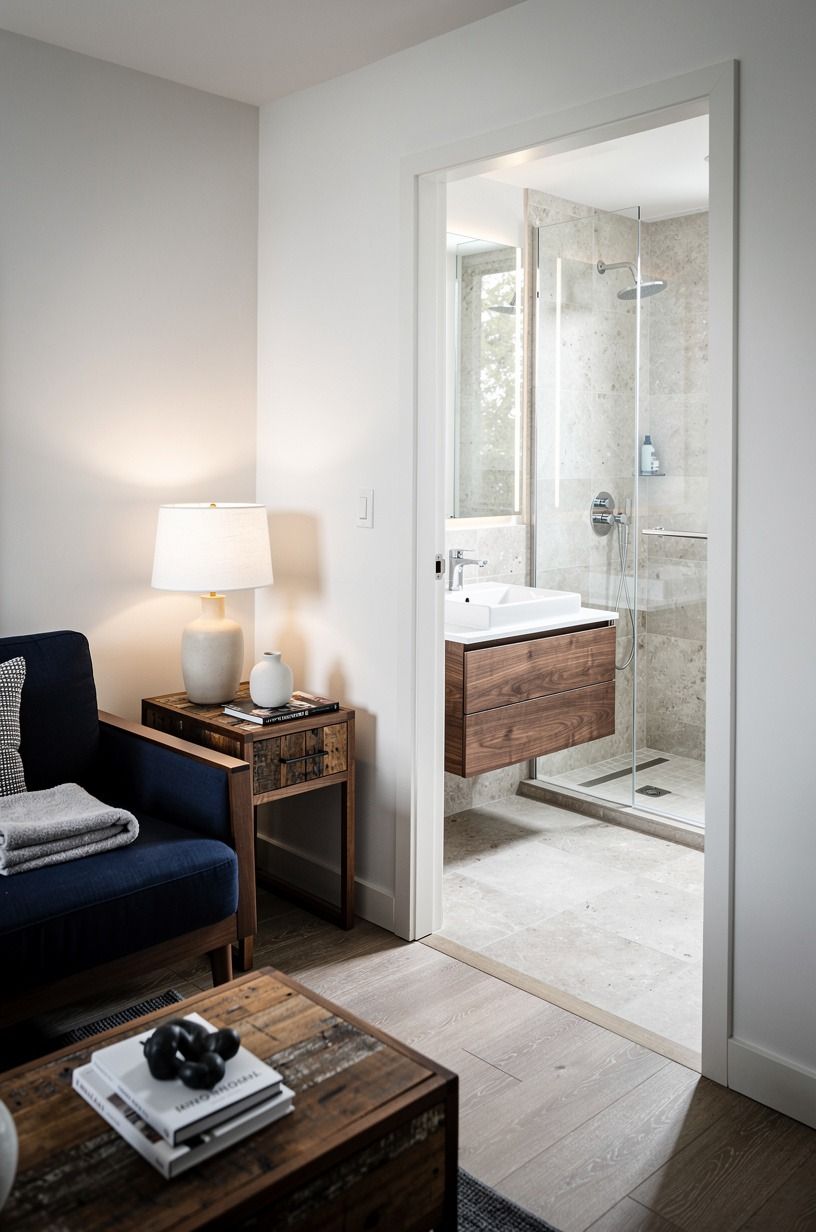
Yes, if you keep the tile format and sightlines simple. You don’t need giant slabs, but you do need fewer visual interruptions. A comfortable shower needs at least 36x36 in, and your tile layout should respect that footprint rather than fight it.
Try French-pattern limestone only if you have enough open floor to see it. In a very small bath, a quiet rectangular tile with narrow, warm-gray grout is the better call. It lets your eye move from the doorway to the vanity without stopping at every joint.
But don’t match every finish. A reclaimed weathered teak mirror with an aged brass light brings a little contrast, which keeps your small bathroom from feeling flat.
Soft stone, warm metal, one clean reflection. That’s plenty.
8Float a dark vanity over pale limestone
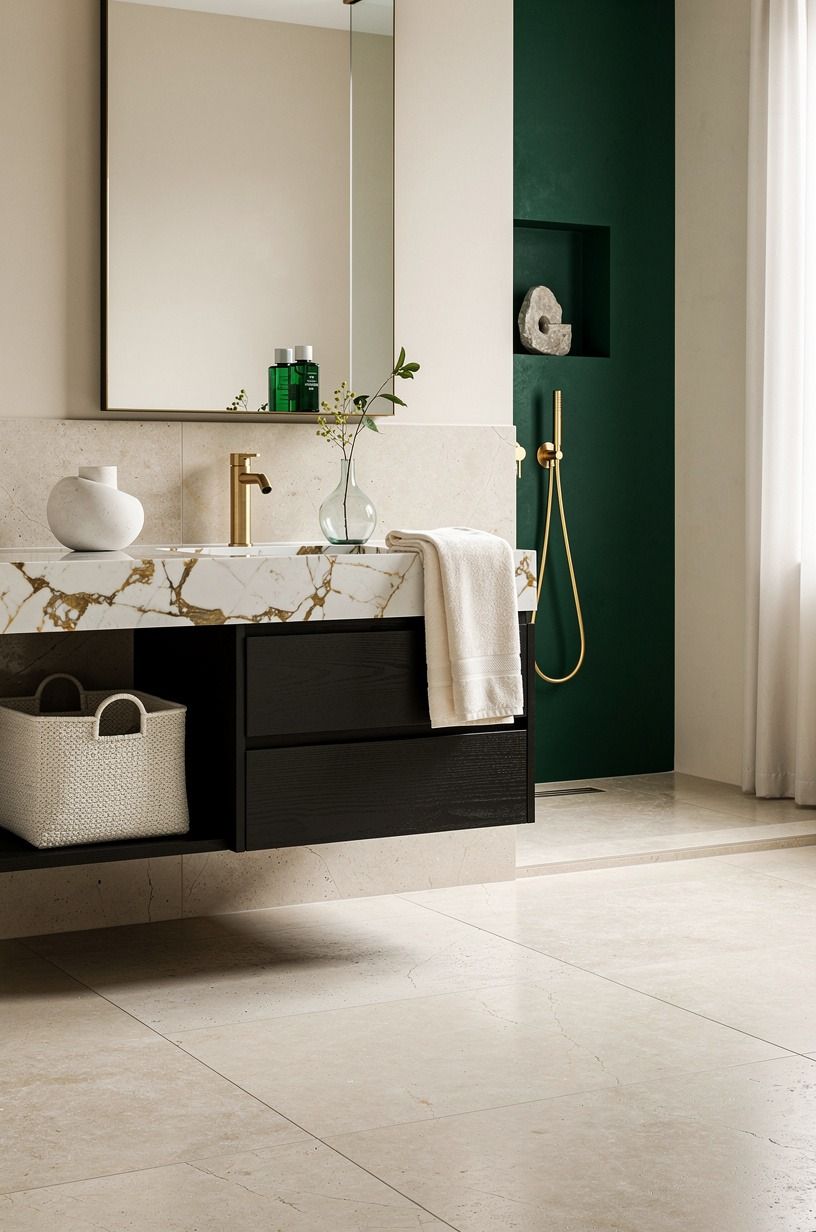
A wall-hung vanity makes the floor feel like it keeps going, which is a useful illusion in a bathroom with limited width. A deep emerald vanity gives pale limestone some grounding without making the room feel severe.
You’ll want the toe-kick area visible, not blocked with baskets and bins. The space beneath the vanity catches a pool of light and makes the stone look almost luminous at night. I’d skip glossy black cabinetry because it turns every fingerprint into part of the decor.
Use an unlacquered brass developing soft patina pull or faucet to bridge the pale floor and dark cabinet. A Calacatta marble counter with fine gold veining keeps the contrast warm.
And choose a rounded mirror. Too many hard rectangles can make your bathroom feel like a filing cabinet.
9Build The Three-Height Light Stack around the floor
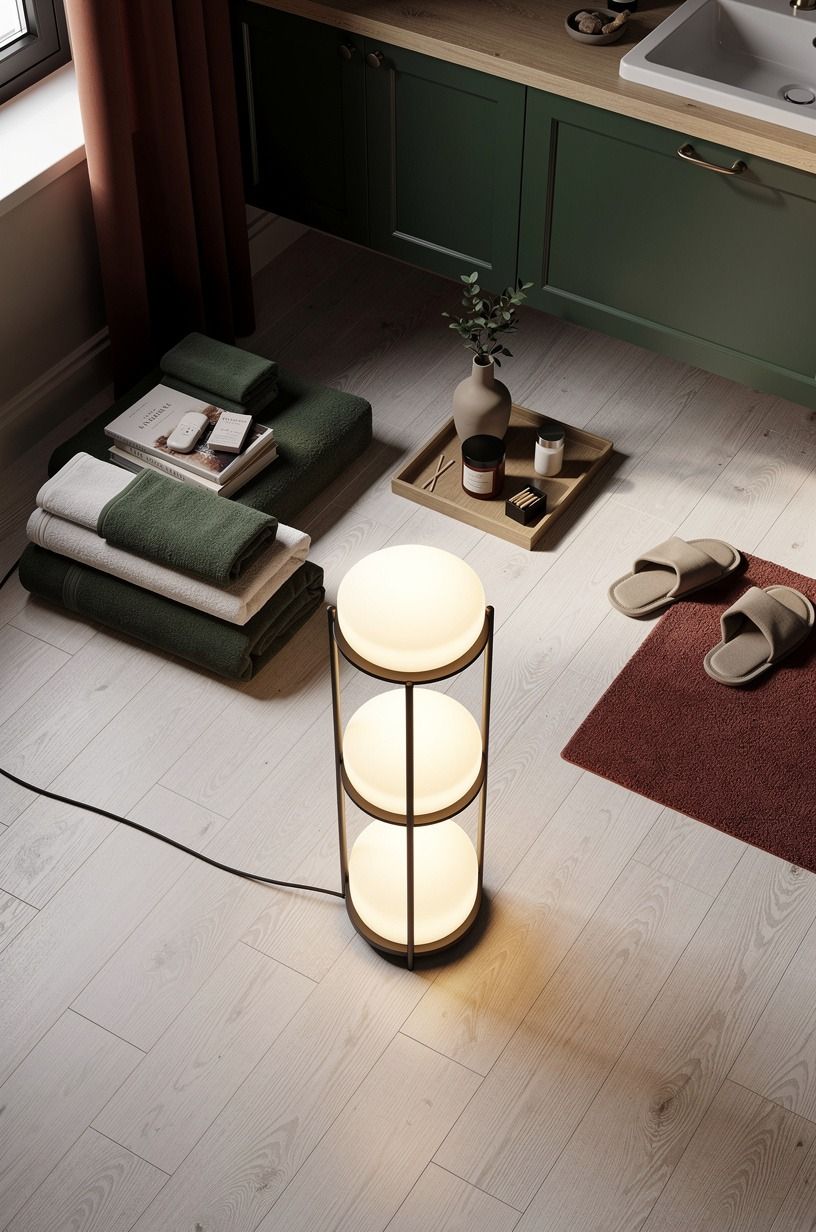
The Three-Height Light Stack means ceiling light, face-level light, and a lower glow near the vanity or tub. Your limestone will look different under each source, and that layered effect is far more welcoming than one harsh overhead fixture.
Start with a ceiling fixture, then add aged bronze sconces at face height. Finish with a small lamp on a counter, if your layout allows it. Cerused white oak beside the lower light keeps the room warm and tactile without adding another stone finish.
I made the mistake of choosing cool bulbs once. The gray notes in the floor went blue, and the entire bathroom felt clinical.
Use warm bulbs. Your stone wants warmth, not interrogation!
10Choose warm grout over bright white for limestone tile flooring ideas
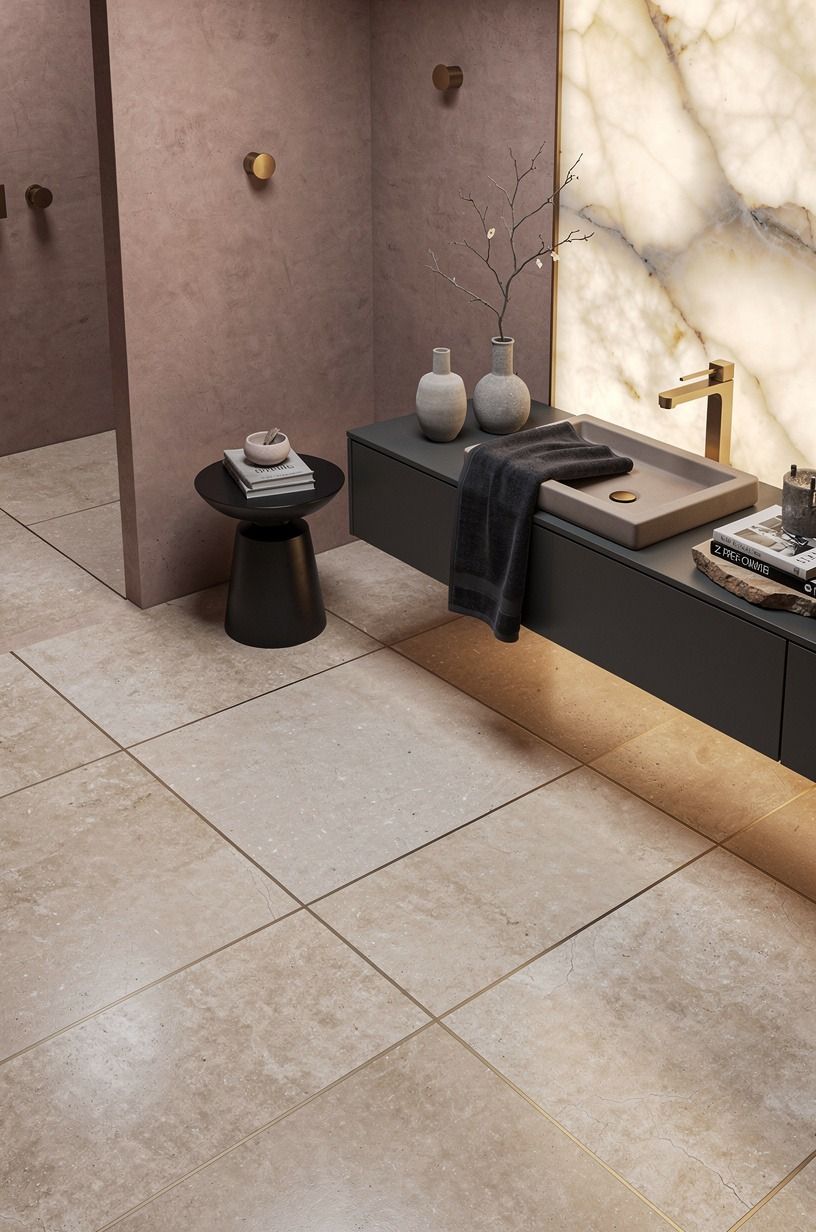
Warm gray or sandy grout is more forgiving than white, and it lets the irregular limestone edges read as intentional.
11Layer linen and brass instead of adding more stone
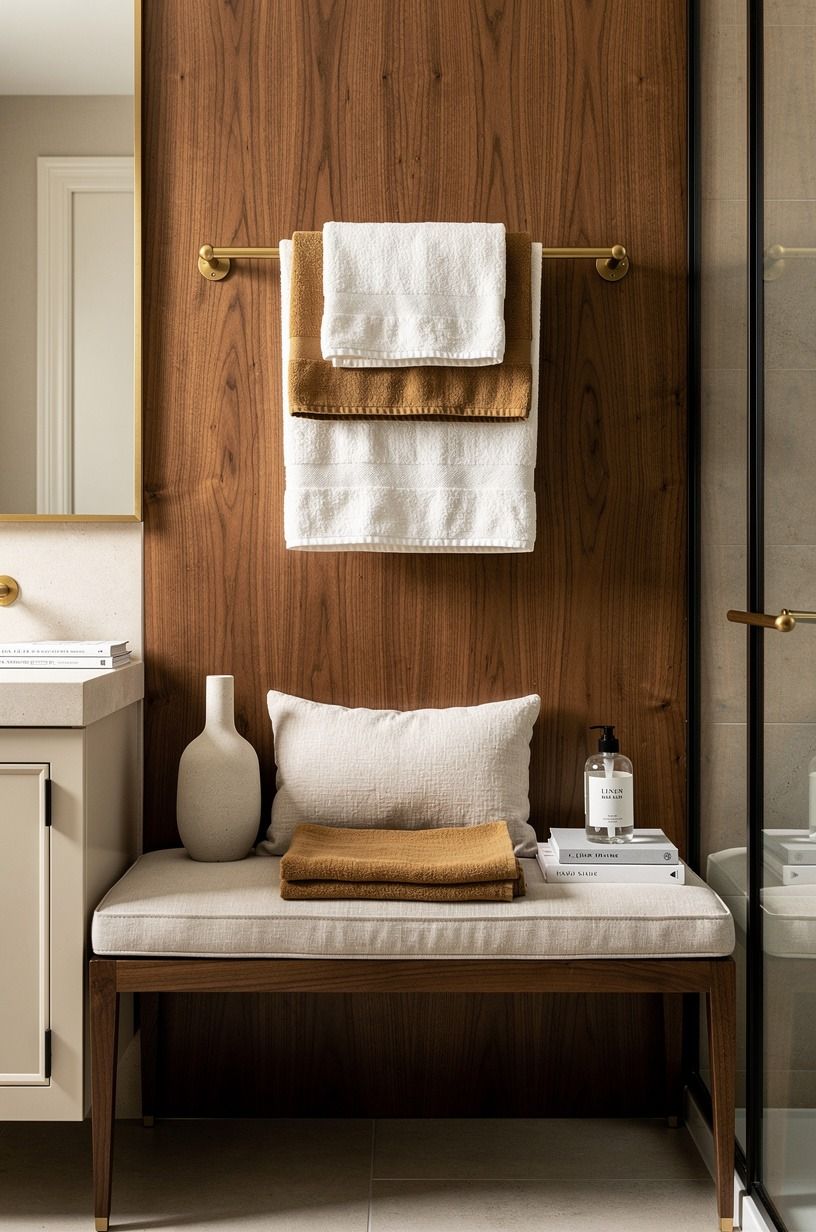
Once you’ve committed to tumbled limestone, stop adding stone everywhere. No stone vessel sink, no stacked-stone accent wall, no pebble shower floor competing for attention. Your bathroom needs a little quiet.
Bring in Belgian flax linen curtains if you have a window, a folded Pottery Barn Hydrocotton towel, and one aged-brass tray. The mix feels comforting because the floor stays the roughest surface in the room. Texture needs hierarchy.
I like a simple book-matched walnut bench beside a 60x30 in tub, even if it only holds a robe and a book. A bathroom should look as though you use it, not as though you’re waiting for someone to photograph it. That slightly imperfect, relaxed feeling is the whole point.
Why I Think Limestone Earns Its Patina
I used to think every bathroom renovation needed one obvious showpiece. A wildly veined slab.
A hand-painted tile wall. A faucet so shiny you could check your teeth in it.
Then I lived with rooms like that, and the showpiece became the thing I noticed every single day, often for the wrong reason. The bright marble needed wiping.
The handmade wall tile looked busy once the shampoo bottles arrived. The expensive fixture became just another thing to polish.
Tumbled limestone asks less from you. That’s not a small virtue.
It has variation, softened corners, and little pits that make a stray water mark feel less like failure. Your bathroom can be used hard, then put back together with a folded towel and five minutes of tidying.
I’ve found that’s the kind of luxury people keep, not just the kind they pin.
There is a line, though. I wouldn’t use limestone as an excuse to make every surface brown, rough, and old-looking.
That version gets heavy. You need one crisp thing in the room: a clear mirror, a simple vanity front, clean plaster, or a modern sconce.
The contrast makes the stone feel intentional instead of themed.
And the cost question matters. Limestone isn’t always the cheapest material, but it can save you from redecorating around a trend that burns out in two years.
You can repaint a wall. You can replace a faucet. Your floor is harder to undo.
Pick the surface that still looks good with damp footprints, laundry on the counter, and a half-open drawer. Real life, not a showroom.
The Questions Worth Answering First
What is the best tumbled limestone floor look for a small bathroom?
A light rectangular limestone tile with close-toned grout is the best choice for a small bathroom because it keeps the floor visually open. Soft continuity matters more than a complex pattern. Pair it with an IKEA GODMORGON vanity and one rounded mirror.
Where can I buy tumbled limestone floor pieces on a budget?
Look at IKEA, Target, Wayfair, local tile yards, and Facebook Marketplace for the supporting pieces around your floor. Secondhand wood accents help the room feel settled without adding more renovation cost. Your best find may be an old stool, not a new accessory.
How much does a tumbled limestone floor makeover cost?
A cosmetic bathroom refresh usually costs about $200 to $1,200, while a larger tile and vanity update can reach $3,000 to $9,000. Paint and textiles can be the low-cost part. You can clean, declutter, and rearrange what you own for free.
Can I create this look on a budget?
Yes, and you don’t need to replace every fixture. Warm paint, linen towels, and a brass-toned faucet can support an existing neutral floor. Use old-bed-sheet reuse ideas for soft cleaning rags while you prep and style.
Is tumbled limestone worth it in a small space?
Yes, it’s worth it when you keep the layout simple and let the stone run uninterrupted. A continuous floor makes a small room feel less boxed in. Your vanity should float if possible, so the floor remains visible beneath it.
Is tumbled limestone a good idea for a rental?
Yes, if you use it as inspiration rather than permanent construction. Removable warmth can come from peel-and-stick floor coverings, a tension rod with linen, and removable hardware. You can also use these ideas for old pillows to make a supportive bath bench cushion.
Where I’d Start First
If I had to pick one, I’d start with warm grout around tumbled limestone. White grout turns every joint into a grid, while sandy grout lets the stone read as one worn surface. Pin tumbled limestone floors for later and revisit these soft natural foundation ideas.