
 by
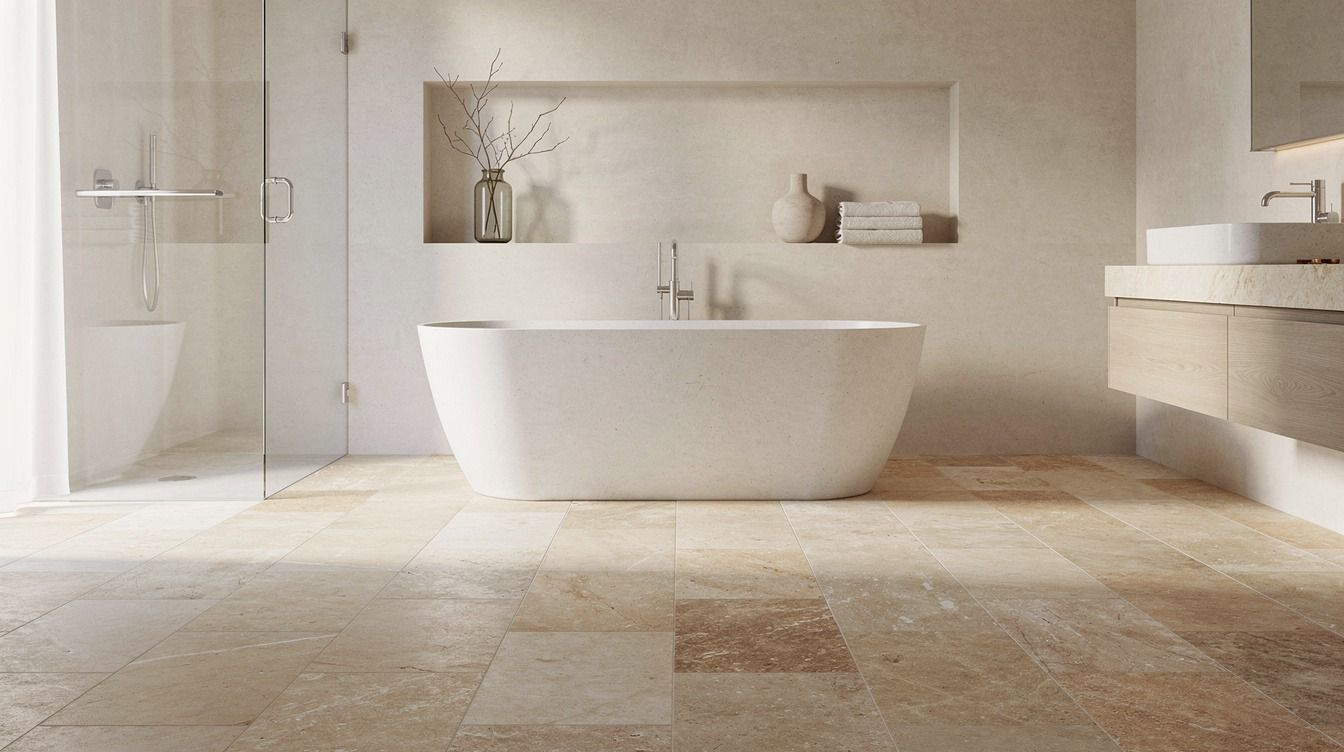
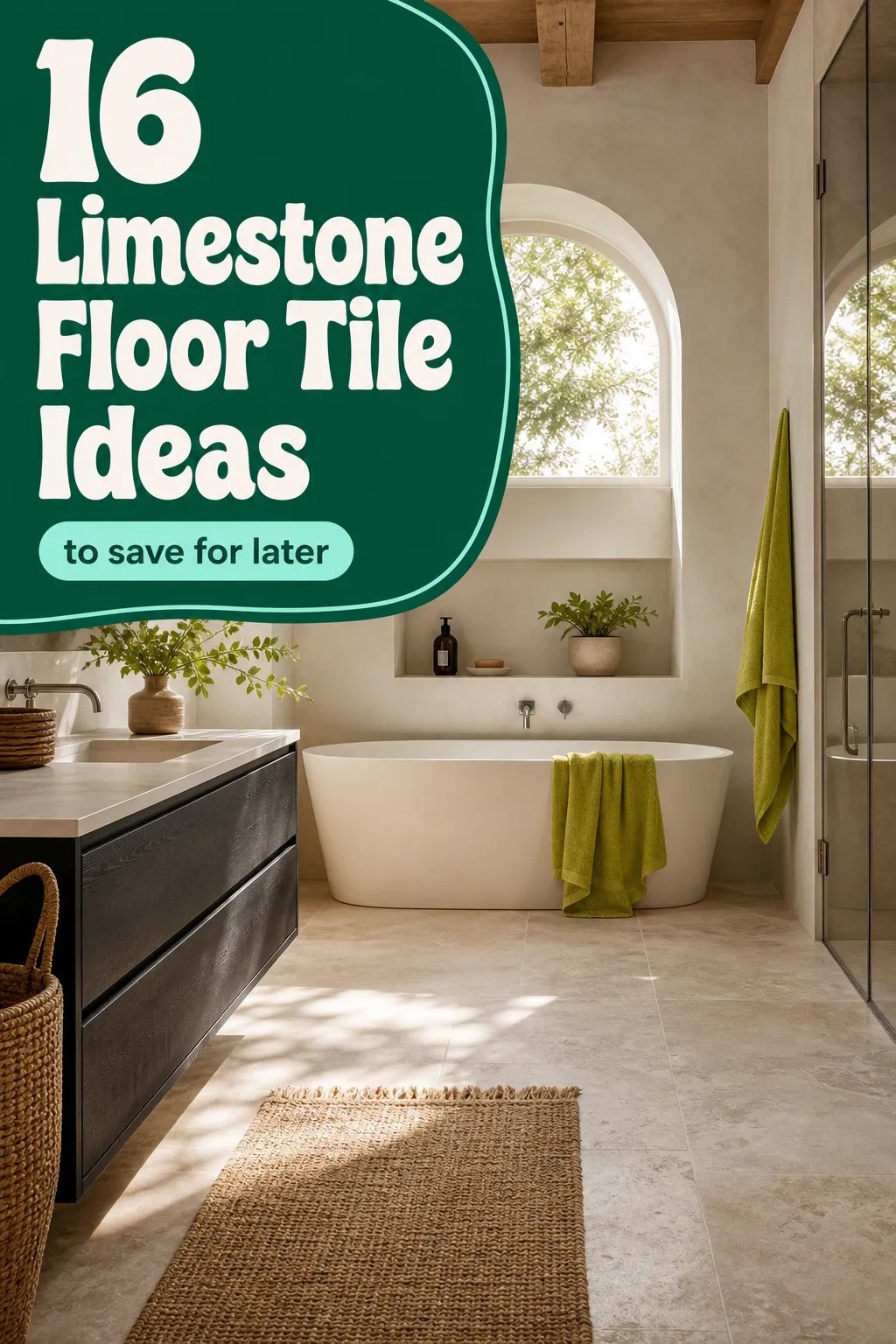
by Limestone floor tile gave my bathroom the soft, natural foundation it had been missing. I did this makeover while juggling a leaking faucet and a room that felt colder than its white walls suggested. Once the stone went down, the sharp little echo disappeared. Everything softened.
Here's what it looked like before
Before, it was the full 2005 starter-home package: glossy beige ceramic squares, a narrow oak vanity, and a builder mirror that made every overhead bulb look harsher. The floor had dark grout lines every few inches, so your eye never got to rest.
I kept trying to fix it with towels and baskets. You know how that goes. More stuff, same uneasy room.
The turning point was realizing the floor was doing most of the visual shouting.
- Start with a warm limestone tile flooring idea
- Let the Two-Wood Rule settle the room
- Skip polished stone for a soft bathroom floor
- Use 32 to 36 inches to guide the vanity
- Build the Barefoot Landing Zone
- Paint above the stone with Sea Salt
- Why choose neutral bathroom floor tiles over contrast?
- Anchor the sink wall with a darker note
- Frame the tub with stone tile flooring in bathroom
- Add the Three-Height Light Stack
- Choose tiles that look like stone only if the budget says so
- Keep 21 inches clear in front of the toilet
- Let a handmade zellige accent stay on the wall
- Mix one plush textile with the rustic stone
- Use the Limestone Reflection Test before buying a mirror
- Finish with one object that earns its place
1Start with a warm limestone tile flooring idea
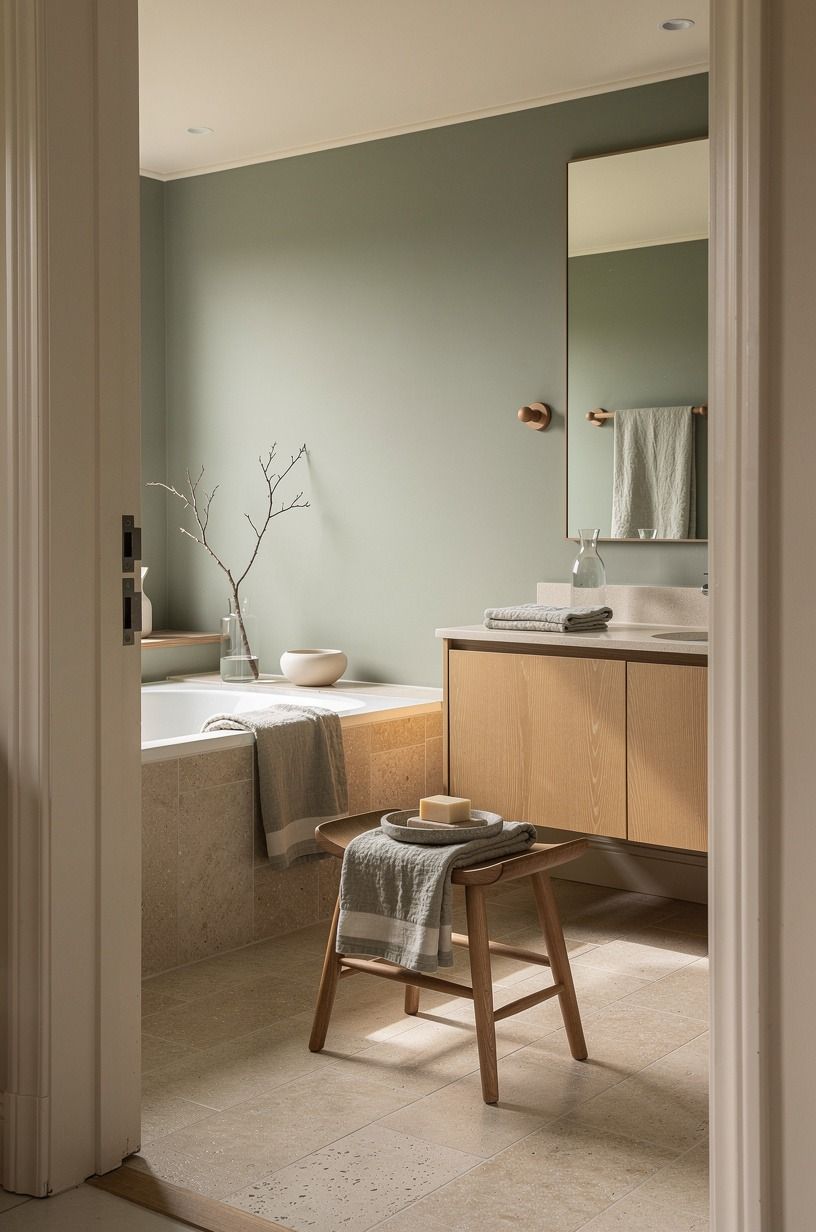
I chose honed limestone floor tile in a pale oatmeal tone because I wanted your eye to travel across the room without stopping at a grid. The finish is calming under bare feet, especially in early morning light. I’d skip anything with a shiny seal, since it turns soft stone into a fake-luxury surface fast.
For your bathroom, look for gentle fossil movement and slightly varied edges. Mine sits beside Benjamin Moore Chestertown Buff HC-9, with sage green walls, warm cream, natural wood, and washed Belgian linen keeping the pairing earthy without reading yellow. I used the same restraint I admire in these limestone bathroom ideas for soft warm natural stone.
Quiet materials do more when you let them breathe.
2Let the Two-Wood Rule settle the room
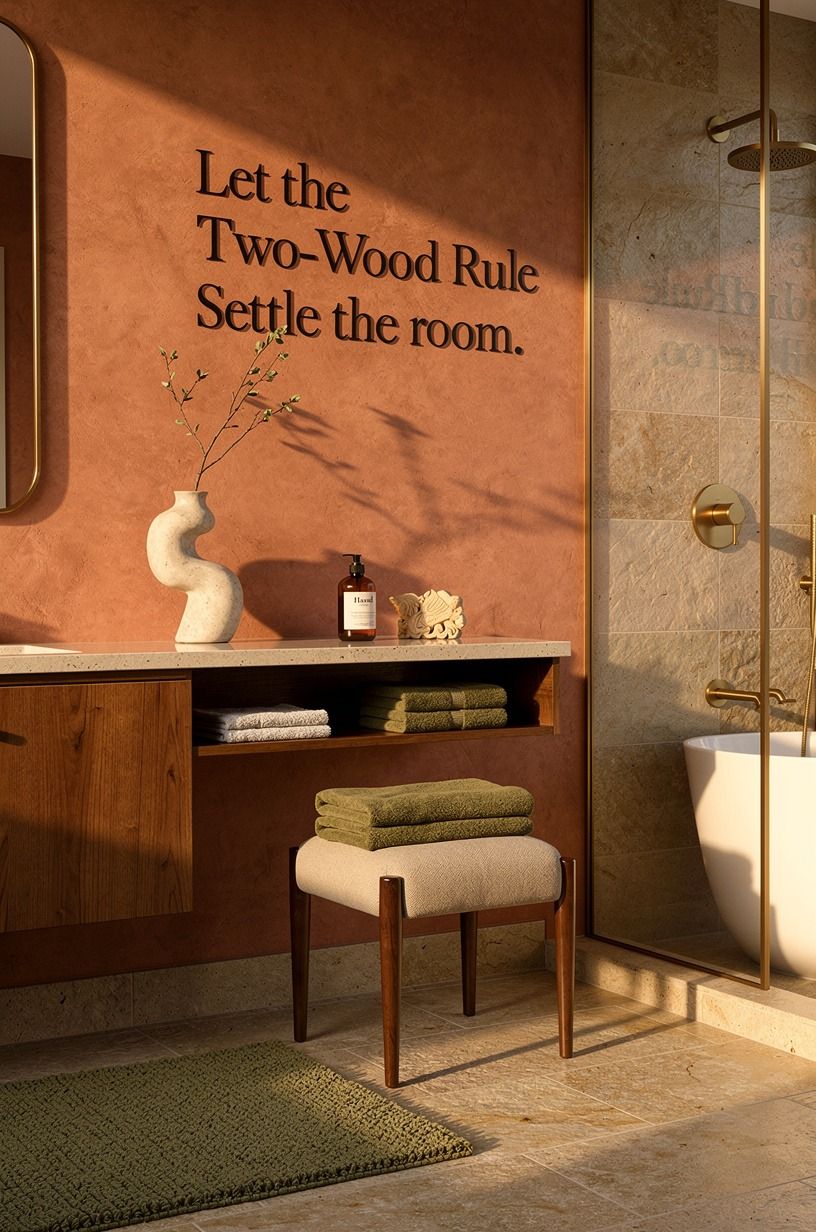
The Two-Wood Rule saved me from making the bathroom look like a sample board. I kept the existing oak vanity, then added one organic bouclé stool in a warm terracotta, stone, and olive mix. Your second wood should be lighter or darker than the first, never almost identical.
I learned this after bringing home a medium walnut bath tray. It fought the vanity every single time.
But the softer stool gave the limestone a warm, lived-in contrast. You don’t need matching timber, you need a difference your eye can understand.
3Skip polished stone for a soft bathroom floor
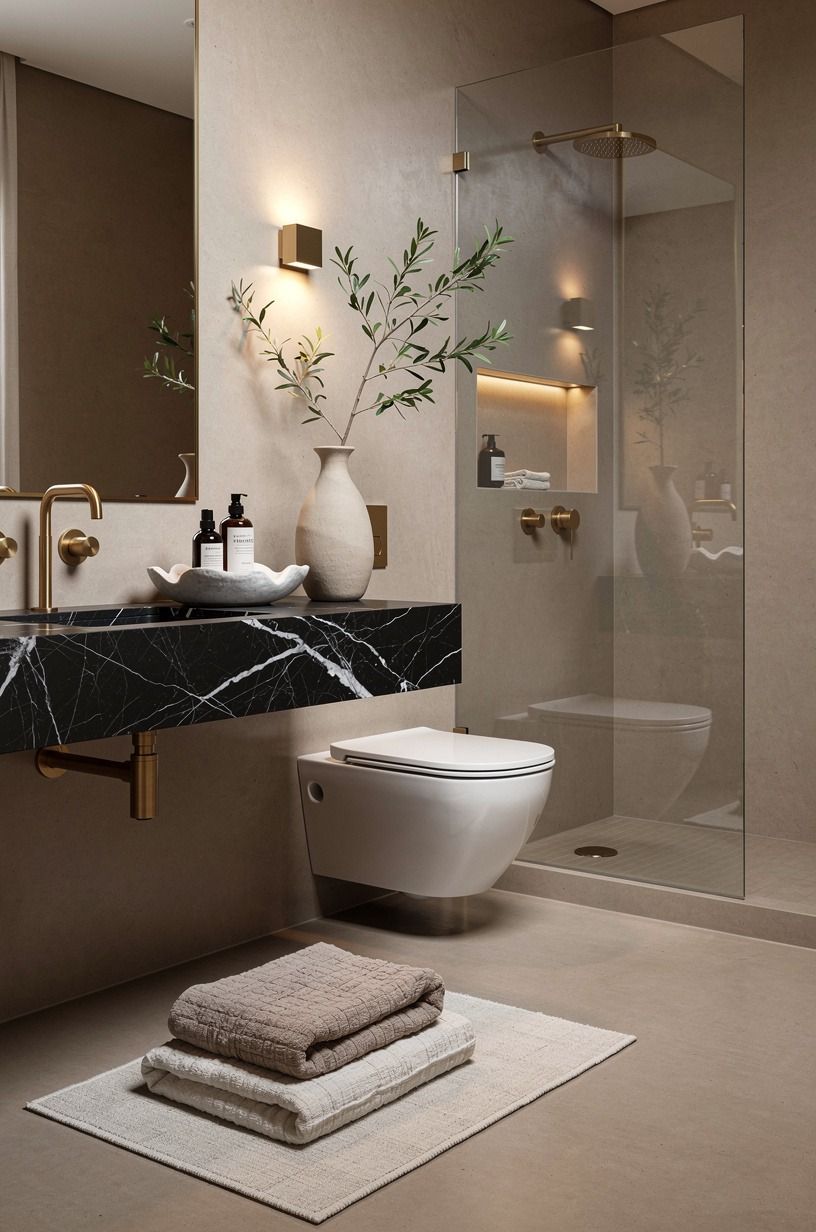
Polished marble over honed limestone is my firm vote here. Marble can be elegant, but in a small bathroom it catches every water mark and makes you work too hard to keep it camera-ready. A honed natural limestone tile takes on a gentle, chalky look that feels more forgiving.
I wanted something that could handle a damp towel, a hurried shower, and my habit of walking in with wet hair. Nero Marquina black marble with white veins makes a richer clay, linen, and aged-brass contrast when you want depth without glitter.
That matters. If you’re comparing finishes, these natural stone bathroom ideas anchored in timeless limestone make the case for restraint beautifully.
4Use 32 to 36 inches to guide the vanity
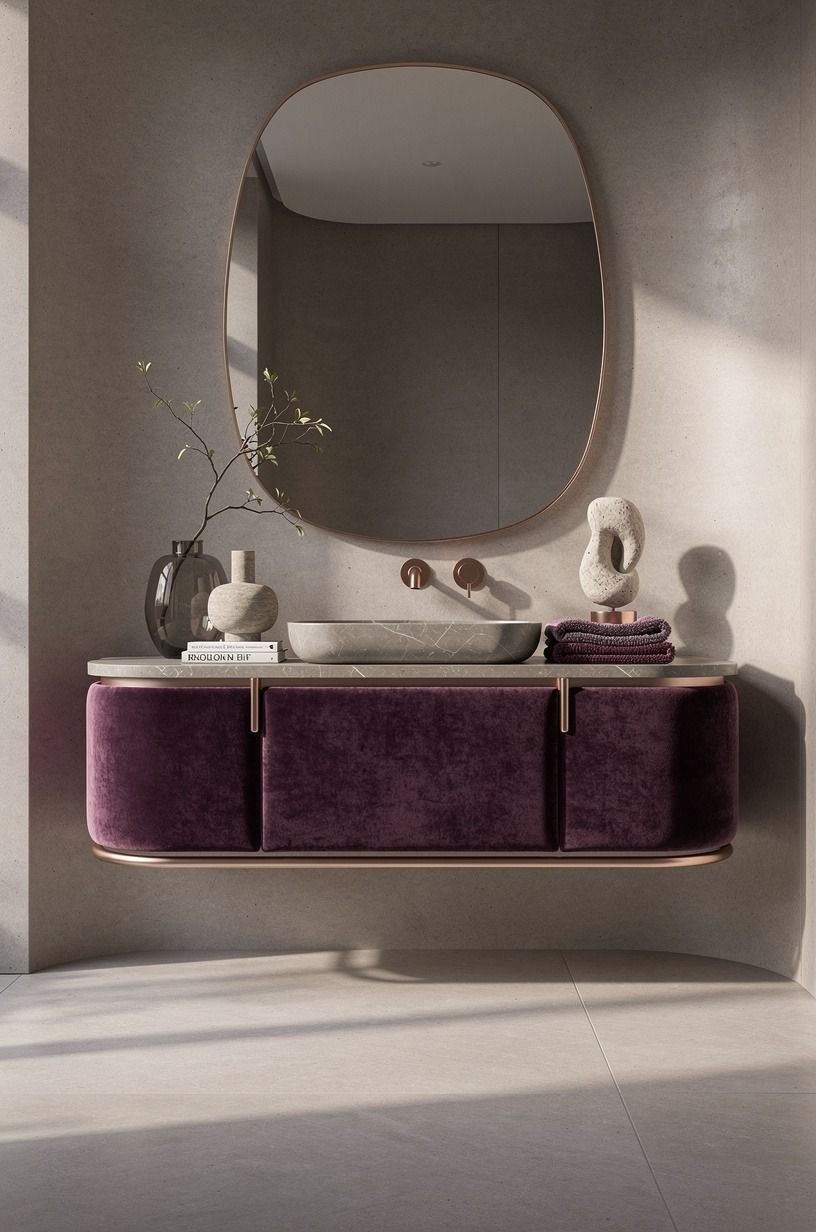
Your vanity height should land between 32 and 36 in, and I measured mine before ordering a new top. That number sounds boring until you’ve spent a week leaning over a sink that’s too low. Mine now sits at 34 in, which makes the room feel considered rather than cobbled together.
I paired it with a deep-pile mohair velvet stool in plum, gray, and rose gold rather than adding another hard surface. The limestone underneath keeps those warmer tones from becoming too sweet.
And yes, you can mix warm stone and soft texture without adding a dozen accessories. One good stool, one clean counter, done.
5Build the Barefoot Landing Zone
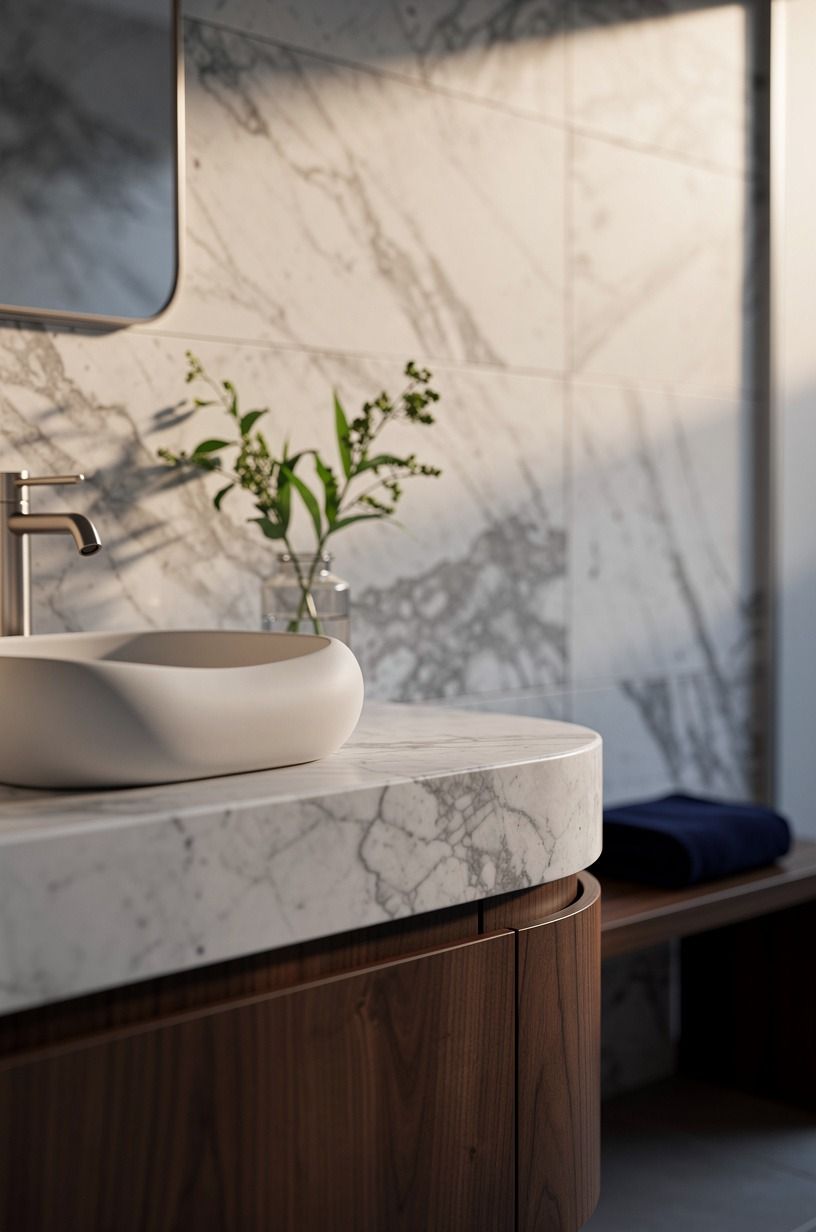
The Barefoot Landing Zone is the strip of floor you see and feel first when you step out of the shower. Carrara marble with subtle gray veining, navy, white, and walnut makes that small stretch feel crisp but still comfortable underfoot.
6Paint above the stone with Sea Salt
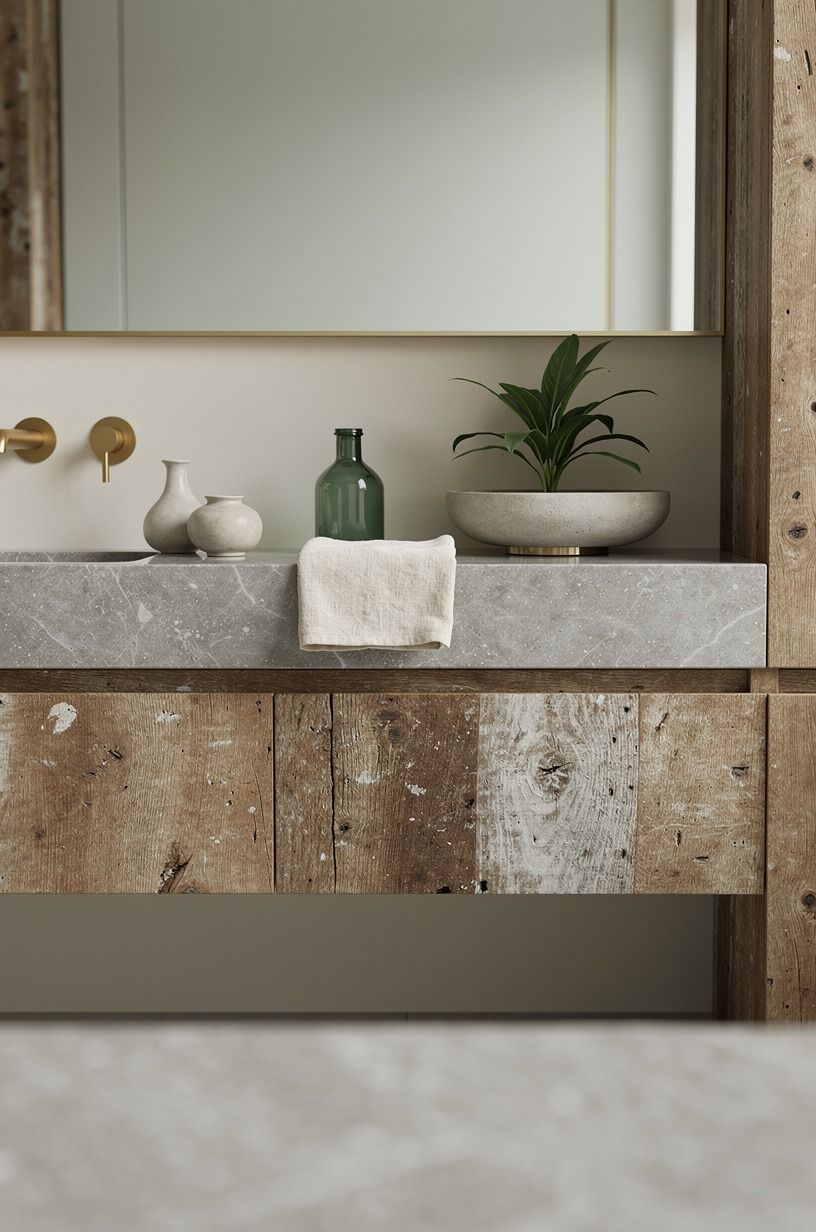
I painted the walls Sherwin-Williams Sea Salt SW 6204, then waited two days before deciding whether I loved it. At first, I worried it was too cool. By afternoon, though, the limestone pulled its gray-green undertone into something serene and soft.
Your paint needs to answer the stone, not compete with it. An emerald, gold, and cream scheme with reclaimed weathered teak gives Sea Salt a warmer counterpoint. A bright white wall would have made the floor look beige, which is the losing move.
Sea Salt lets the tile stay warm while giving the room a gentle, coastal quiet. And the change cost less than replacing another fixture!
7Why choose neutral bathroom floor tiles over contrast?
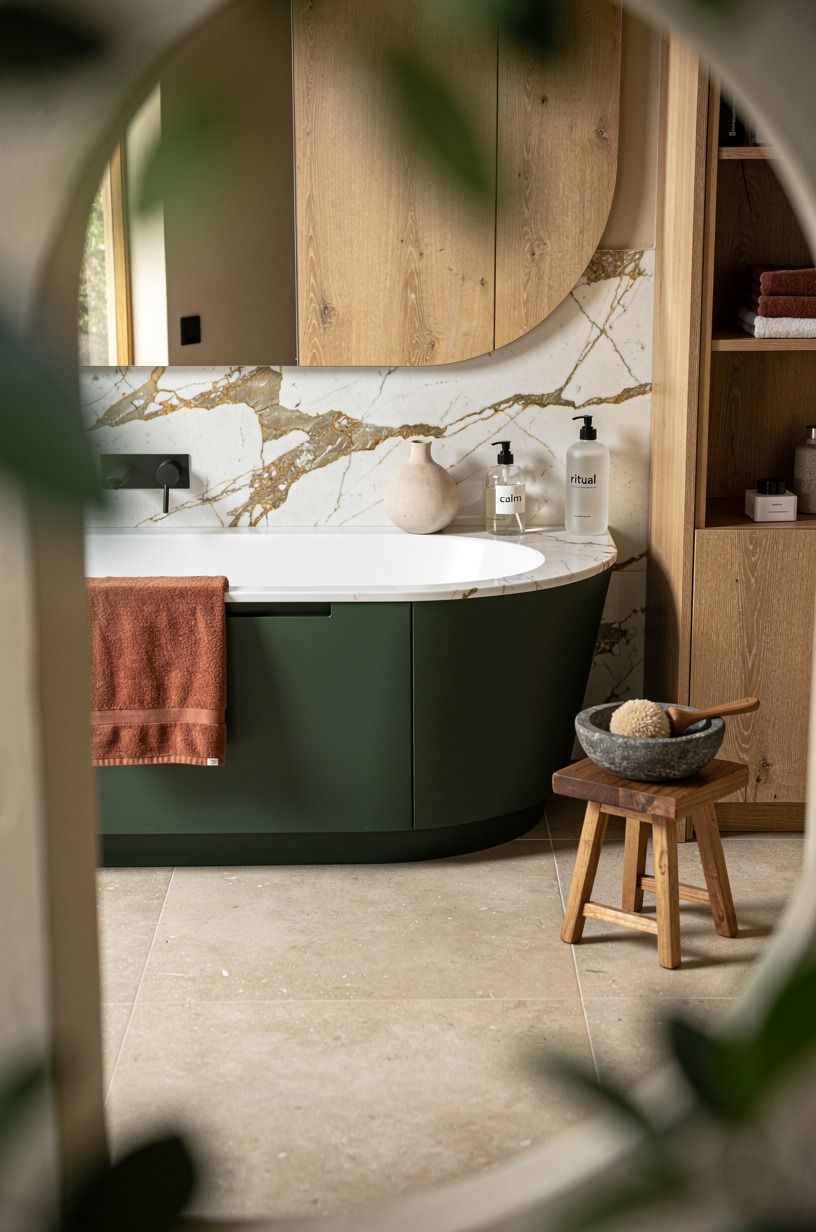
Because your floor covers more visual territory than any towel or mirror. I chose neutral bathroom floor tiles so the vanity, paint, and brass could shift over time without forcing another renovation. You’ll get more flexibility from limestone than from a high-contrast checkerboard, even if checkerboard photographs well.
That doesn’t mean bland. Calacatta marble with gold veining can bring forest green, rust, and natural oak together without losing the calm.
Honed limestone with natural pitting gives you detail at close range. From the doorway, it reads as one peaceful field. Why make the floor the loudest thing in a room built for winding down?
8Anchor the sink wall with a darker note
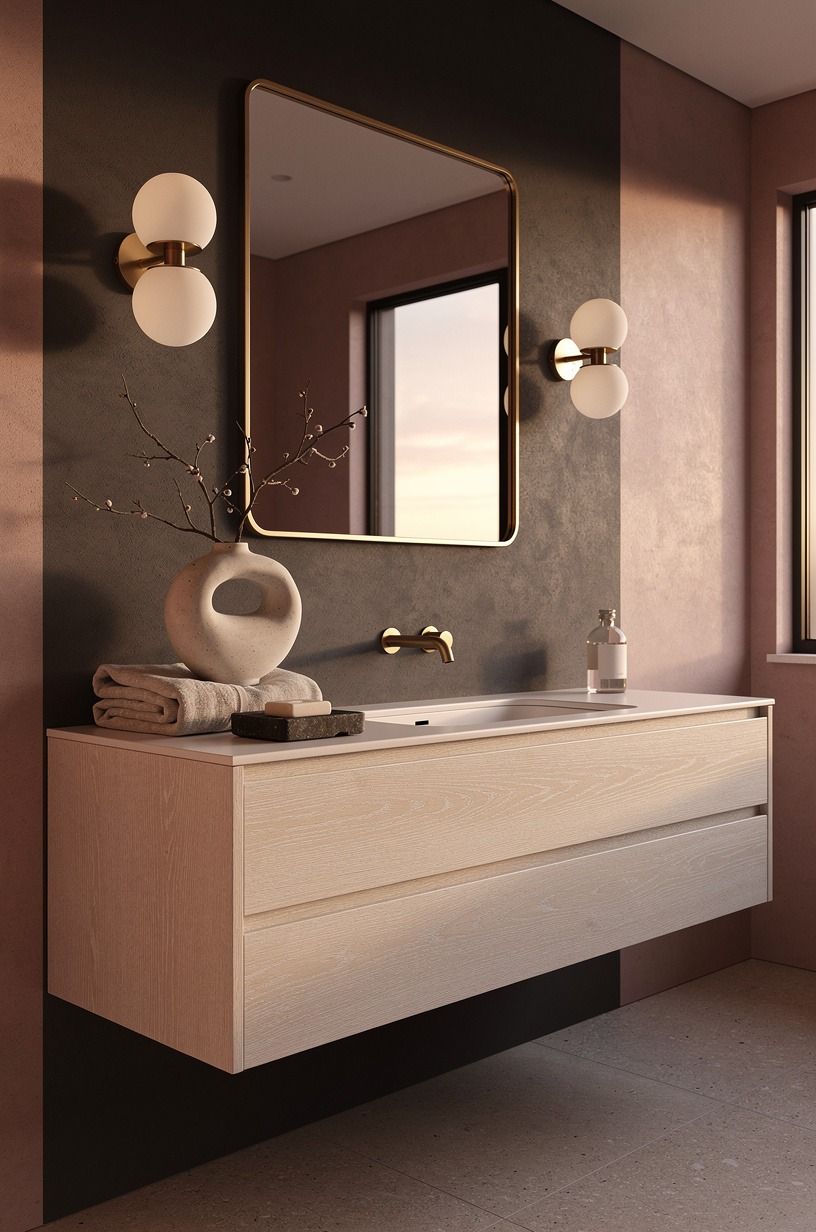
I added one dark note: a dusty rose, charcoal, and brass sink wall with cerused white oak below it.
9Frame the tub with stone tile flooring in bathroom
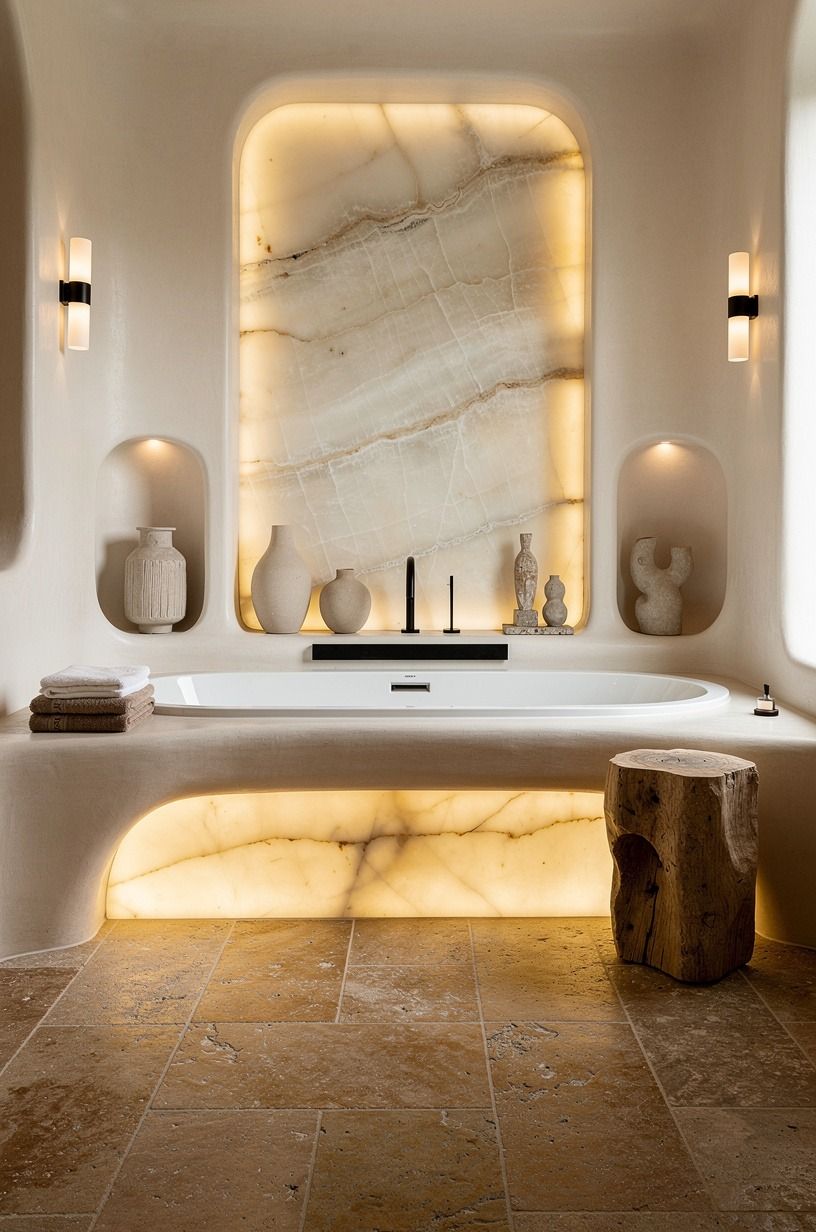
My standard tub is 60x30 in, and its old white apron looked lonely against the former glossy floor. Once the limestone came in, I framed the tub with backlit translucent onyx, warm white, camel, and black accents. Suddenly, the tub looked intentional.
You don’t need to tile every wall to make stone tile flooring in bathroom feel expensive. I’d rather spend on a real floor and leave the walls quieter. For another handmade direction, browse these neutral zellige tile bathroom ideas for soft earthy calm.
Zellige is charming, but limestone won for me because it doesn’t demand attention.
10Add the Three-Height Light Stack
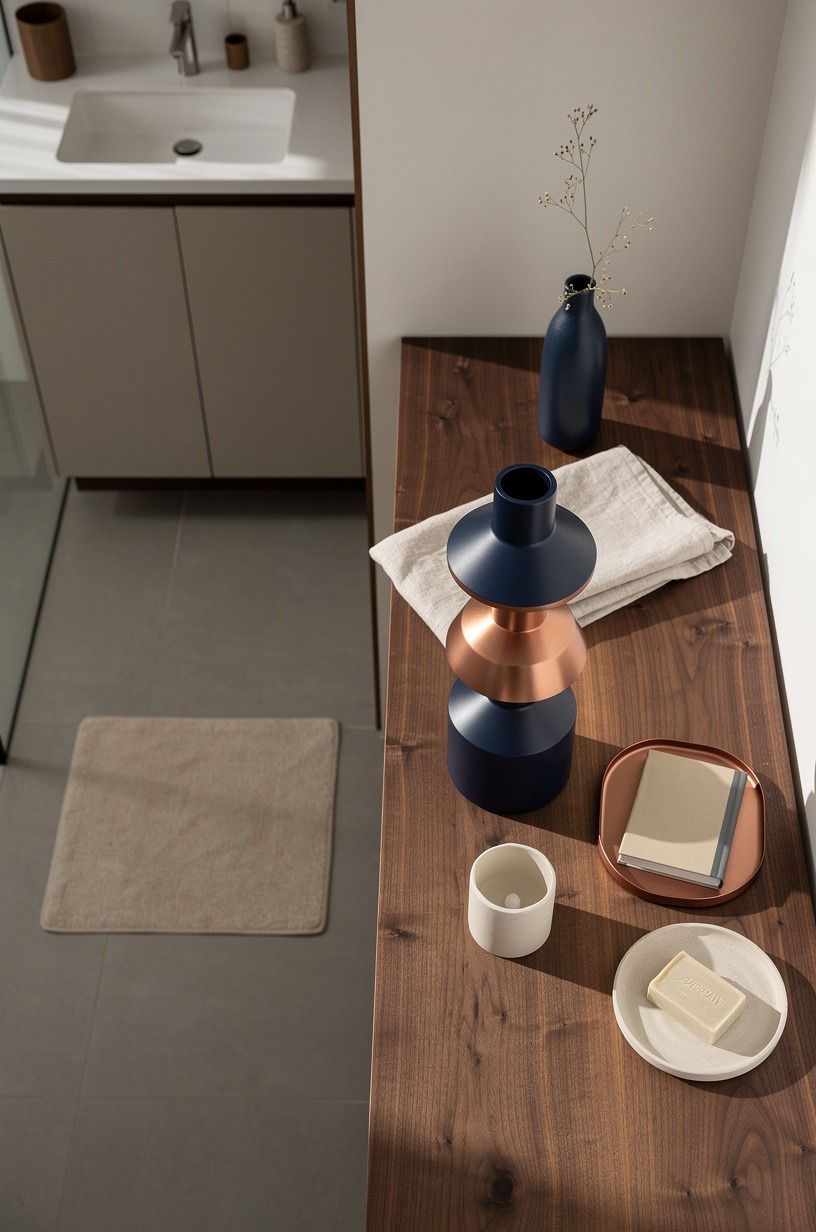
The Three-Height Light Stack means ceiling light, mirror light, and one low glow near the floor. Midnight blue, copper, ivory, and book-matched walnut keep those three sources warm instead of clinical.
11Choose tiles that look like stone only if the budget says so
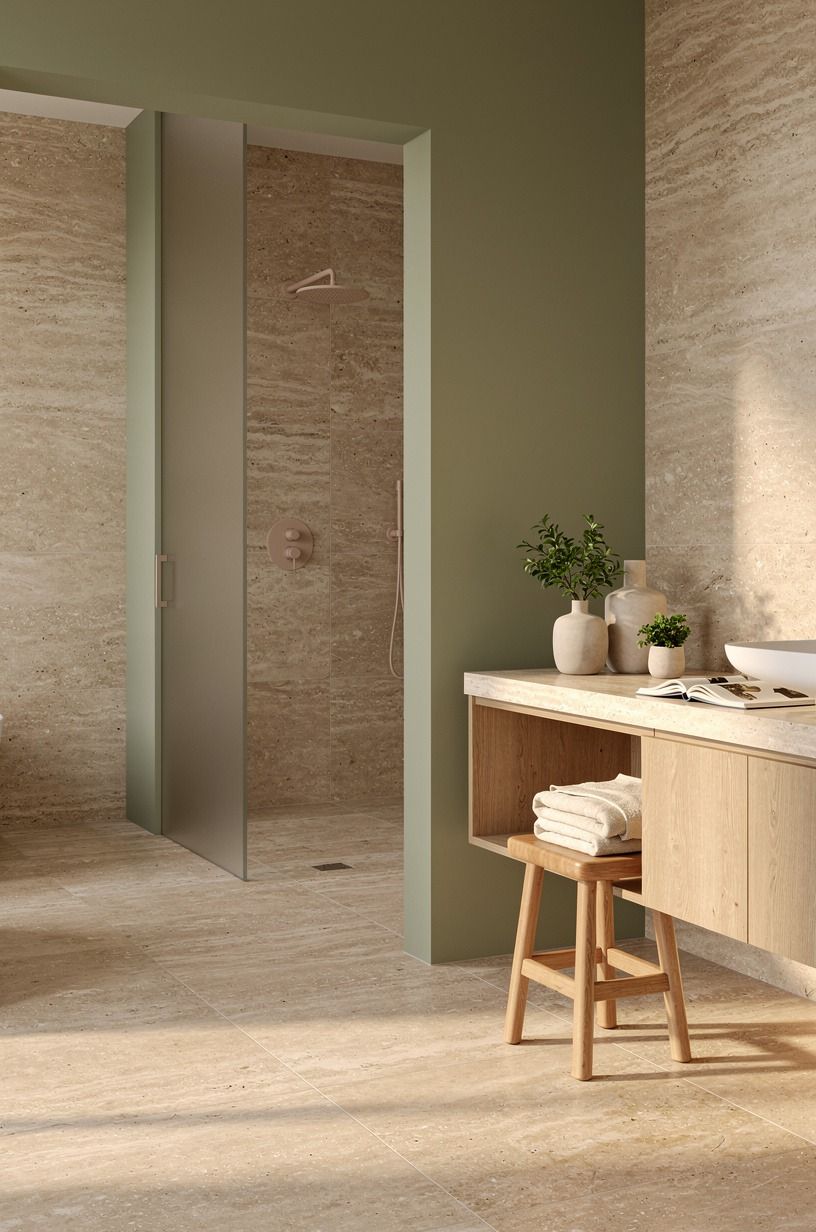
Tiles that look like stone can work, especially if your bathroom budget is tight. But I wouldn’t pretend porcelain is limestone when your room has enough natural light to reveal the difference. Real warm travertine has quieter variation, and it holds a different kind of warmth after a hot shower.
If you choose porcelain, go matte and pick a large format with low contrast. Your grout should disappear as much as possible.
I’d rather see a convincing matte porcelain stone-look tile than glossy faux marble with dramatic printed veins. The latter always feels like it’s trying too hard.
12Keep 21 inches clear in front of the toilet
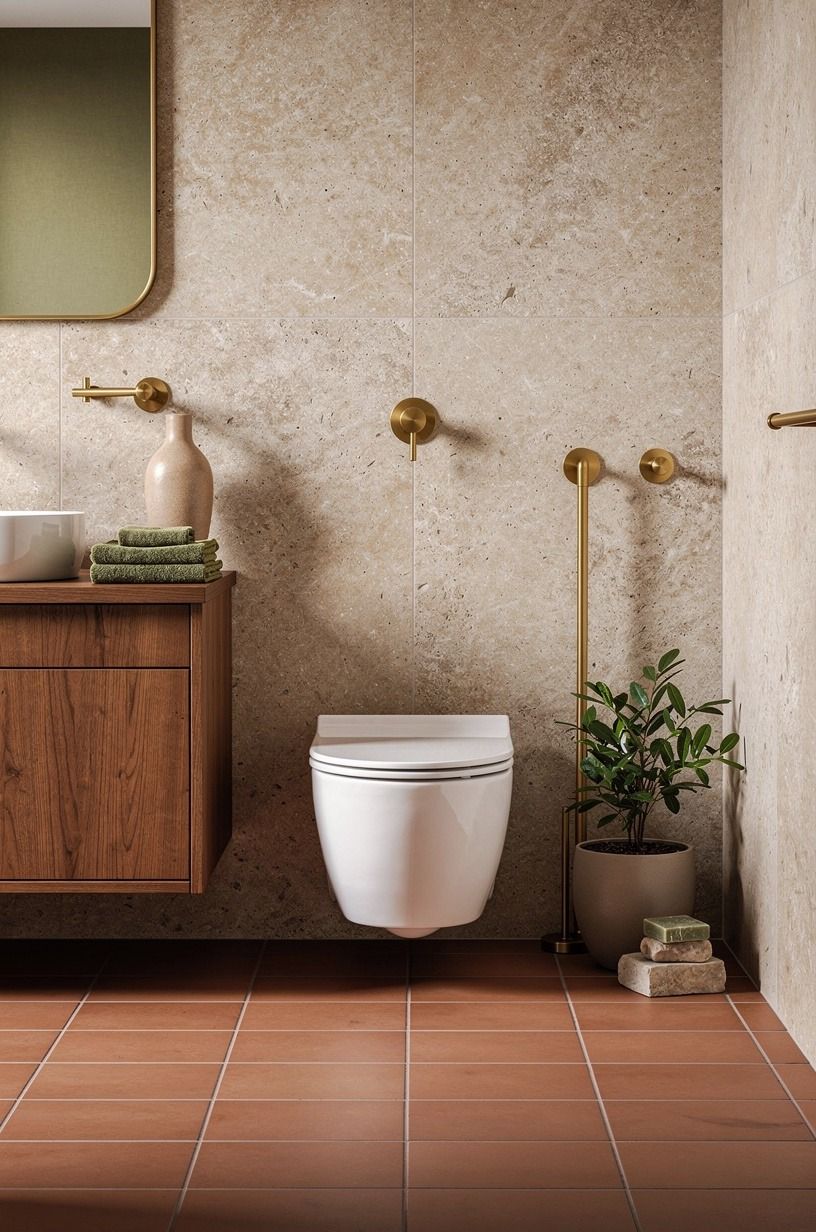
I measured the toilet clearance twice because my old bath rug was hiding a cramped layout. You need at least 21 in in front of the toilet, and leaving that path open makes even a modest bathroom feel more relaxing. Space is part of the design.
I moved a bulky storage basket and replaced it with a wall-mounted IKEA EKET cabinet in white. Your floor stays visible, and you still get a home for spare paper and cleaning cloths.
Terracotta, stone, olive, and unlacquered brass developing patina make that open path feel warmer. Small change. Big relief.
13Let a handmade zellige accent stay on the wall
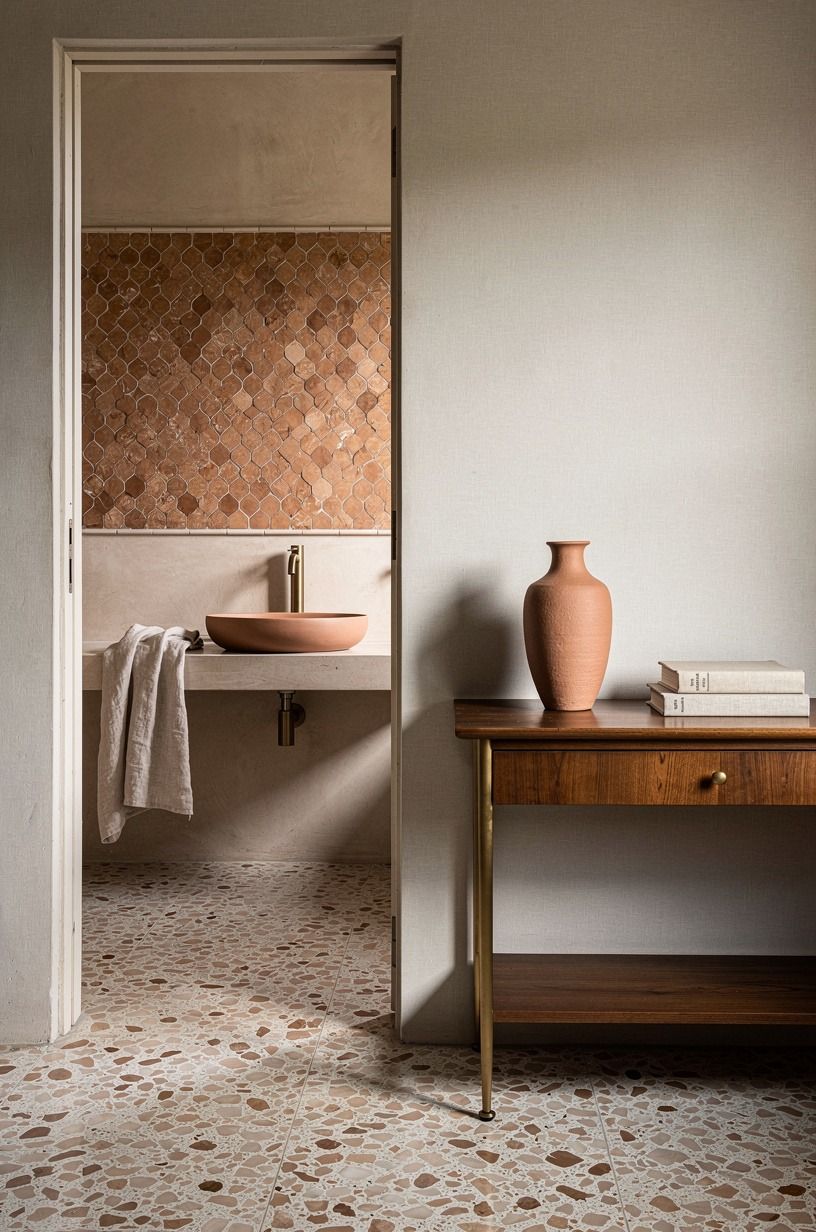
I used a few hand-glazed ivory zellige tiles behind the sink, not across the floor. Your floor and wall don’t need to tell the same story at full volume. Oversized-chip terrazzo in clay, linen, and aged brass belongs where you want a little more texture; limestone belongs underfoot because it’s muted.
I made the mistake of ordering too much glossy wall tile at first. It was gorgeous in the box and dramatic once installed, but it made the room feel busy by noon.
A small accent was enough. You can see why in these zellige tile bathroom ideas for handmade glossy character.
14Mix one plush textile with the rustic stone
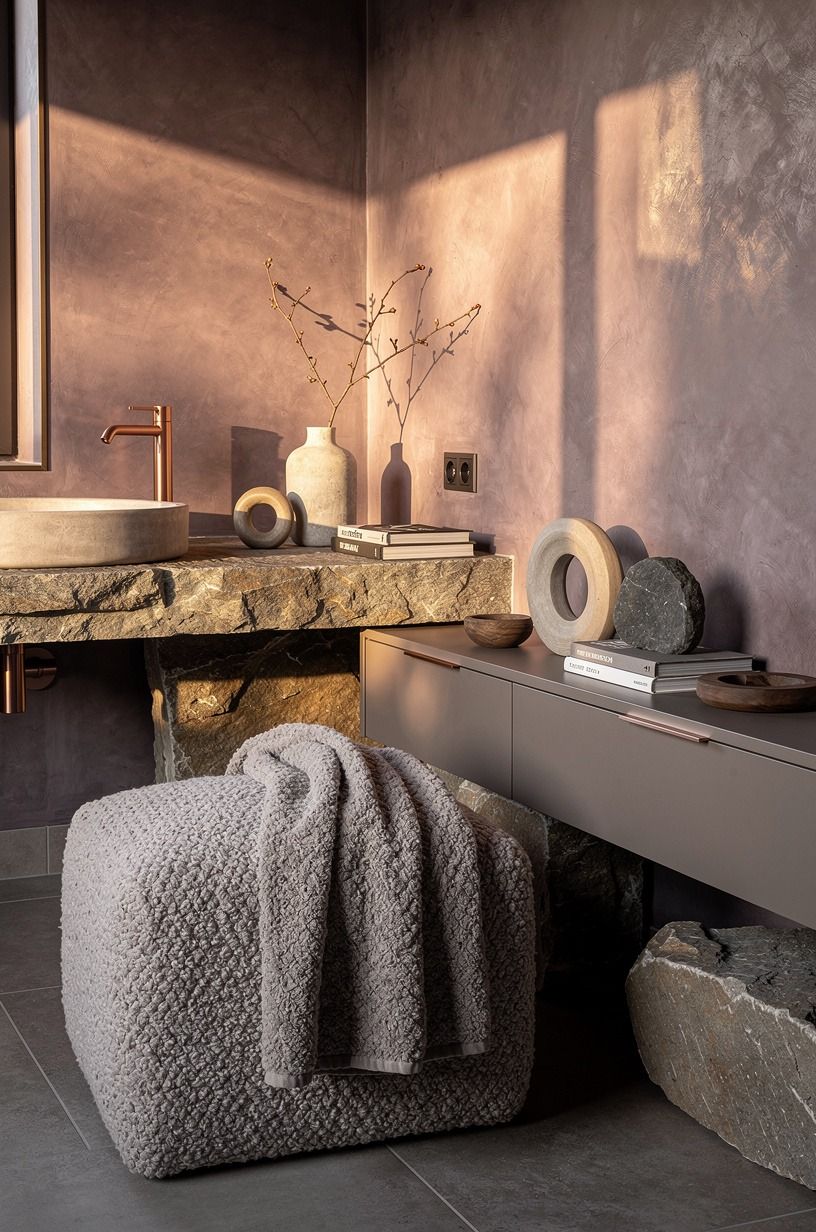
A room full of hard finishes can look refined and still feel unfriendly. I added a 600gsm Turkish cotton towel in soft cream and a waffle weave hand towel in muted clay. Venetian plaster in plum, gray, and rose gold gives those textiles a softer surface to play against.
I’d skip matching towel sets in bright white. They can make limestone look dingy by comparison.
Cream, mushroom, faded rust. Those are better calls.
The towel’s loose fringe and the tile’s fossil marks make the bathroom feel welcoming, not staged. And it’s one of the cheapest upgrades you can make!
15Use the Limestone Reflection Test before buying a mirror
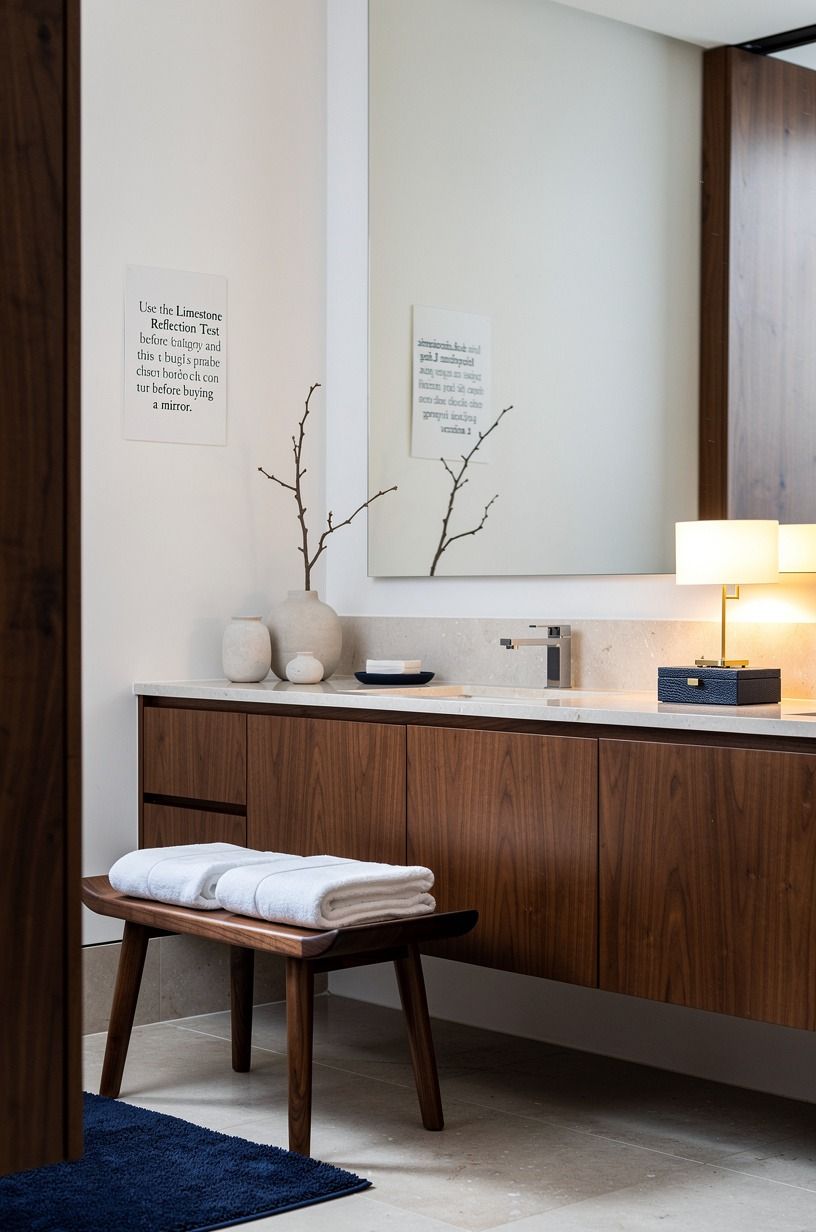
The Limestone Reflection Test is simple: hold your mirror sample near the tile before you commit. Navy, white, walnut, and a few shagreen accents will tell you quickly whether the finish belongs with the rest of the room.
16Finish with one object that earns its place
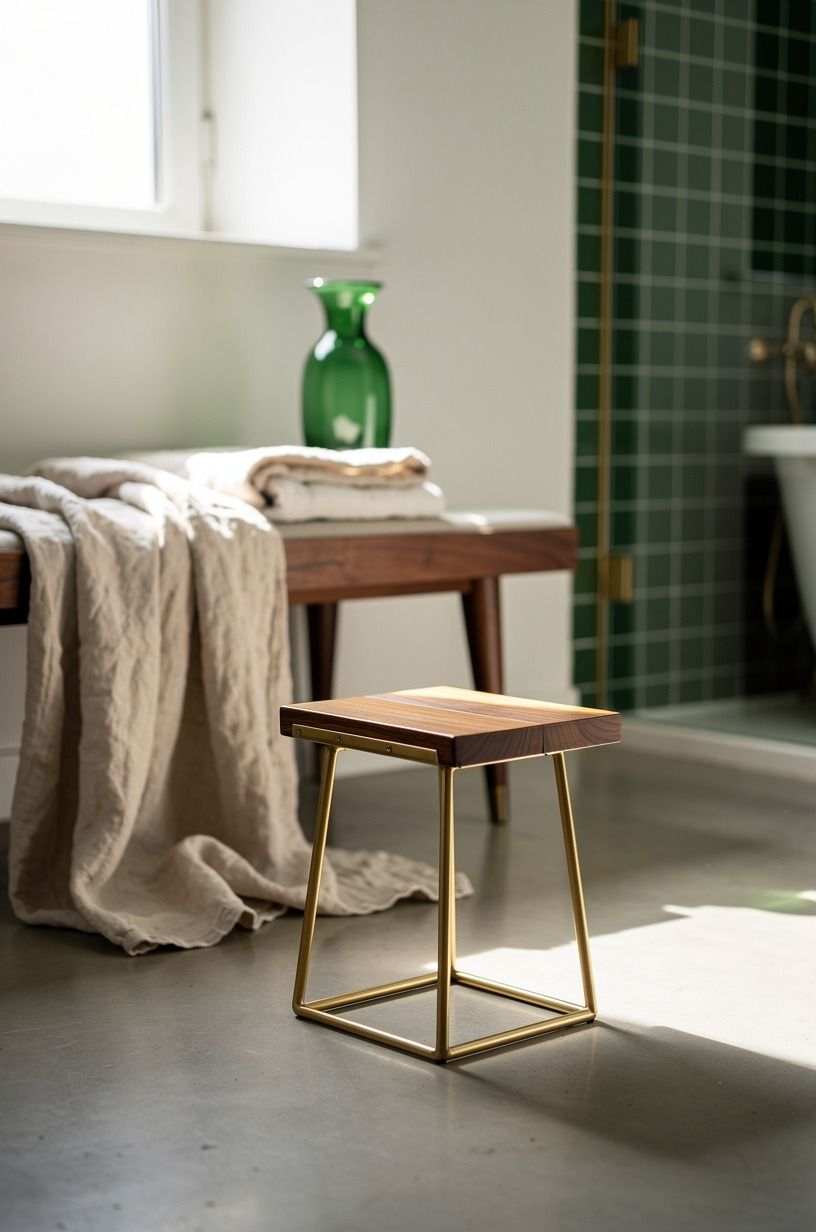
My final object was a folded piece of washed Belgian linen in emerald, gold, and cream. Not a tray full of bottles, not a fake plant, not three candles trying to prove the bathroom has personality. Your counter needs one useful thing with texture, then room to breathe.
I keep a pale bar soap there and refill the same amber pump. That’s it.
The limestone floor makes the bathroom feel calm because it asks less of you. Less visual noise. Less cleaning around clutter.
A small, honest ritual (and one I’ve kept).
How much it cost
My bathroom redo was not a $20 weekend project, and I think pretending otherwise makes people feel foolish for pricing real materials. I spent in the mid-range zone because the floor mattered most to me. Your cost will change with labor, plumbing, and whether you keep the existing layout.
For my own choices, the floor tile, installation, paint, lighting, and small storage pieces landed within that mid-range band. I saved by keeping the 60x30 in tub and existing plumbing. You can spend $15-$35 per sq ft on zellige tile, $2-$10 per sq ft on subway tile, or $120-$450 on a brushed brass faucet.
I’d invest in the floor before a fancy mirror, every time.
Why limestone feels right now
I think limestone is having a moment because people are tired of bathrooms that look like bright little laboratories. You want a room that feels peaceful at 7 a.m. and forgiving at 10 p.m., not a room that demands a styling session before guests arrive.
The appeal isn’t trend-chasing. It’s that limestone gives you a natural base for oak, brass, linen, and paint that can change around it. If you’re still deciding, read why limestone is the warmest way to do a neutral bathroom.
The lasting part is its restraint.
What I learned after living with the floor
I used to think a bathroom makeover had to announce itself. New vanity, dramatic wall tile, a mirror that looked expensive enough to have its own publicist.
Then I lived with this limestone floor for a few months, and my opinion changed. The parts I notice most aren’t the loud ones. It’s the way the tile looks slightly lighter near the window, the way damp feet don’t make me panic, and the way the room feels settled before I’ve even turned on a lamp.
I also learned where not to save. I would not buy the cheapest grout again.
I did that once in another bathroom, and the color dried patchy enough to make every tile edge look dirty. Spend on a grout sample and hold it next to the actual stone in your room. Your phone screen will lie to you.
So will a showroom spotlight.
And I’d keep the stone underfoot even if I had to wait on the vanity. A good floor changes the whole emotional temperature of a bathroom.
You can live with an old mirror for a while. You can’t ignore a floor that feels cold, slippery, or visually frantic every morning.
That’s not drama. It’s repetition. Your bathroom is one of the first rooms you meet each day, so it deserves a foundation that gives something back.
A Few Things Worth Answering
What is the best limestone floor tile idea for a small bathroom?
A pale honed limestone tile is the best pick because it makes your small bathroom read as one calm surface. Low-contrast movement keeps the floor from feeling chopped up. Pair it with an IKEA EKET cabinet and warm paint rather than dark grout.
Where can I buy limestone floor tile pieces on a budget?
Start with IKEA, Target, and Wayfair for mirrors, storage, textiles, and lighting that support the look. Secondhand brass and oak are often better than cheap new decor. Your local Facebook Marketplace can turn up stools, frames, and baskets with real character.
How much does a limestone floor tile makeover cost?
A modest limestone floor tile makeover can cost about $200 to $1,200 if you keep plumbing and layout intact. Paint, a mirror, and textiles make the budget stretch. You’ll spend more once labor or a new vanity enters the picture.
Can I create a limestone floor tile bathroom on a budget?
Yes, and your best savings come from keeping the tub, toilet, and plumbing where they are. Soft paint, open floor space, and warm towels cost less than a full rebuild. Buy fewer accessories and let your tile do the work.
Is limestone floor tile worth it in a small space?
Yes, limestone floor tile is worth it in a small space because the continuous surface makes your room feel less boxed in. Quiet visual flow is the payoff. Keep at least 21 in clear in front of the toilet so your layout supports that feeling.
Is limestone floor tile a good idea for a rental?
Yes, if you use removable versions of the look instead of replacing a landlord’s floor. Peel-and-stick stone-look tile, tension-rod linen, and removable lighting can soften your bathroom. For wall inspiration, see these white zellige tile bathroom ideas for a bright imperfect glow.
Where I'd Start First
If I had to pick one, I’d start with the limestone floor tile. You can’t layer warmth over a cold, shiny foundation, because every towel and brass fixture will keep fighting it. Pin limestone floor tile ideas for later, then let your bathroom get quieter.