
 by
by You can block a neighbor's view for $200 to $900 without pouring a single post. That's the short version, and I've done it three ways in two yards. A full fence is expensive, slow, and often against the HOA. These are the screens, plants, and panels that actually work.
- Layer a bamboo living screen in tall planters
- Hang weatherproof outdoor curtains from a beam
- Build a slatted cedar screen panel
- Which works better, lattice or louvered panels?
- Stack tall planters right at the sightline
- Train a climbing vine up a cable trellis
- Float a freestanding screen instead of a full fence
- Raise a pergola with a slatted roof
- Mix ornamental grasses for a soft blur
- Mount a wall-hung planter panel
- Anchor the corner with a potted tree
- What does an outdoor privacy barrier actually cost?
- Swap a tension-rod curtain onto a balcony
- Frame the view with a sail shade overhead
- Paint and light the screen you already have
1Layer a bamboo living screen in tall planters
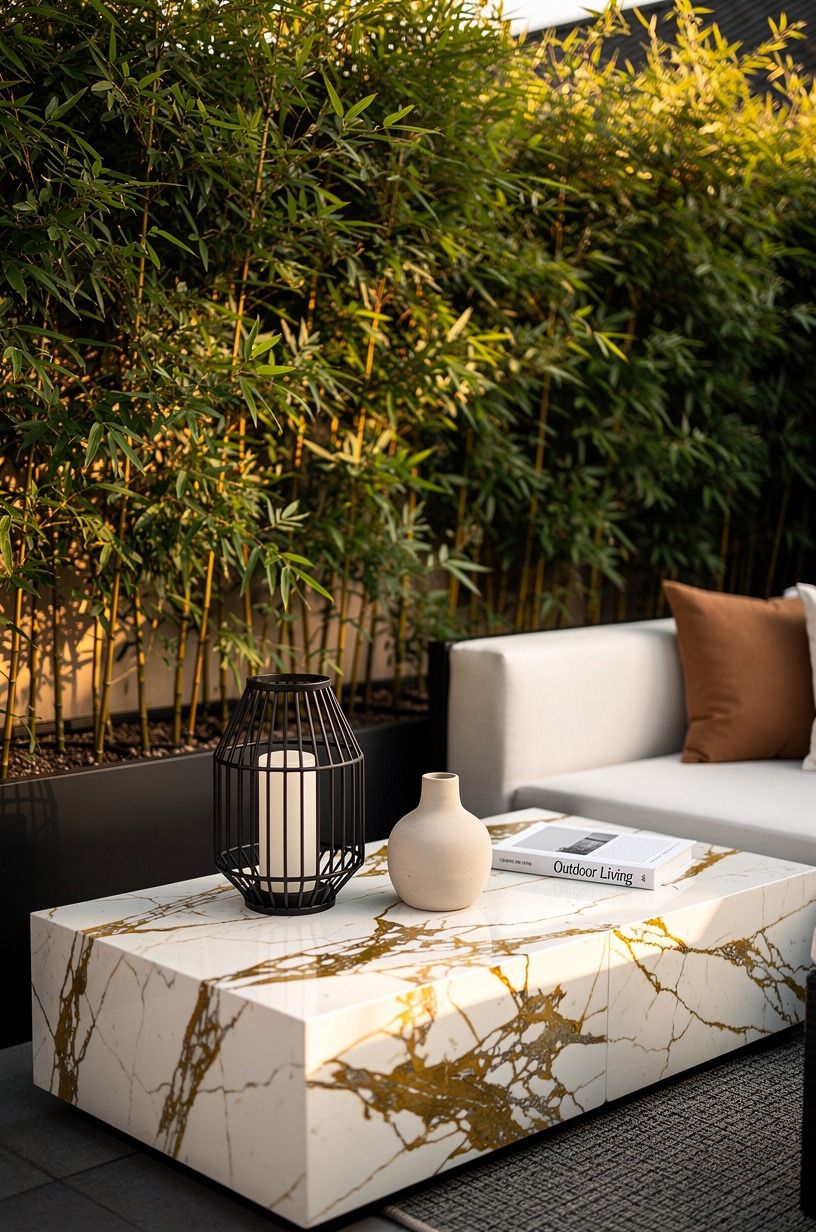
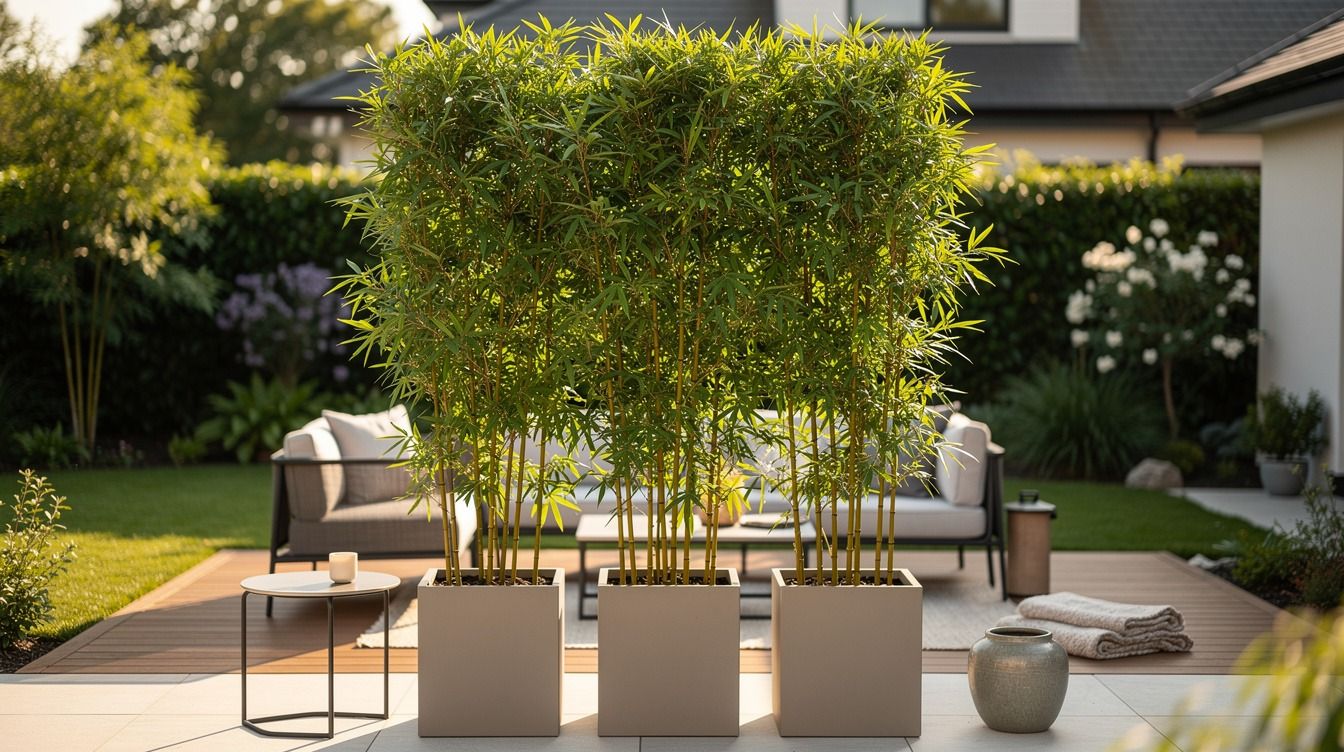
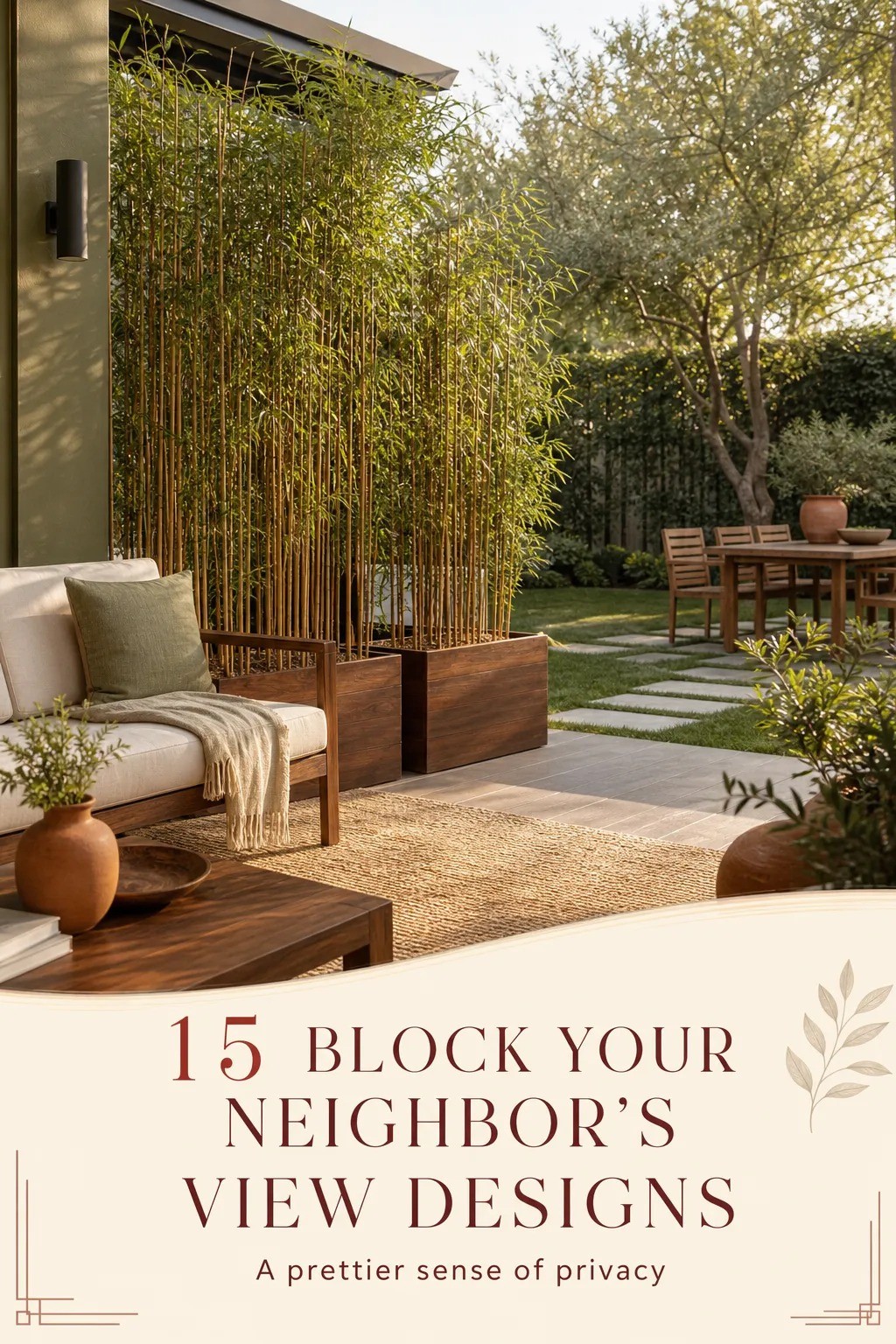
Start with the thing that grows. A row of clumping bamboo in cedar planter boxes gives you eight feet of green wall by the second season, and it moves in the wind so it never reads like a barrier.
Clumping, not running, or you'll spend a decade digging out shoots. I made the mistake of planting running bamboo once and I'm still paying for it.
Set the boxes about 36 inches apart so the canes knit into one soft screen. It's the fastest of the backyard privacy ideas that don't cost four figures. If you'd rather go structural, our cheap DIY privacy fence ideas pair well behind the pots.
You'll want the tallest canes on the side where the neighbor's window sits.
2Hang weatherproof outdoor curtains from a beam
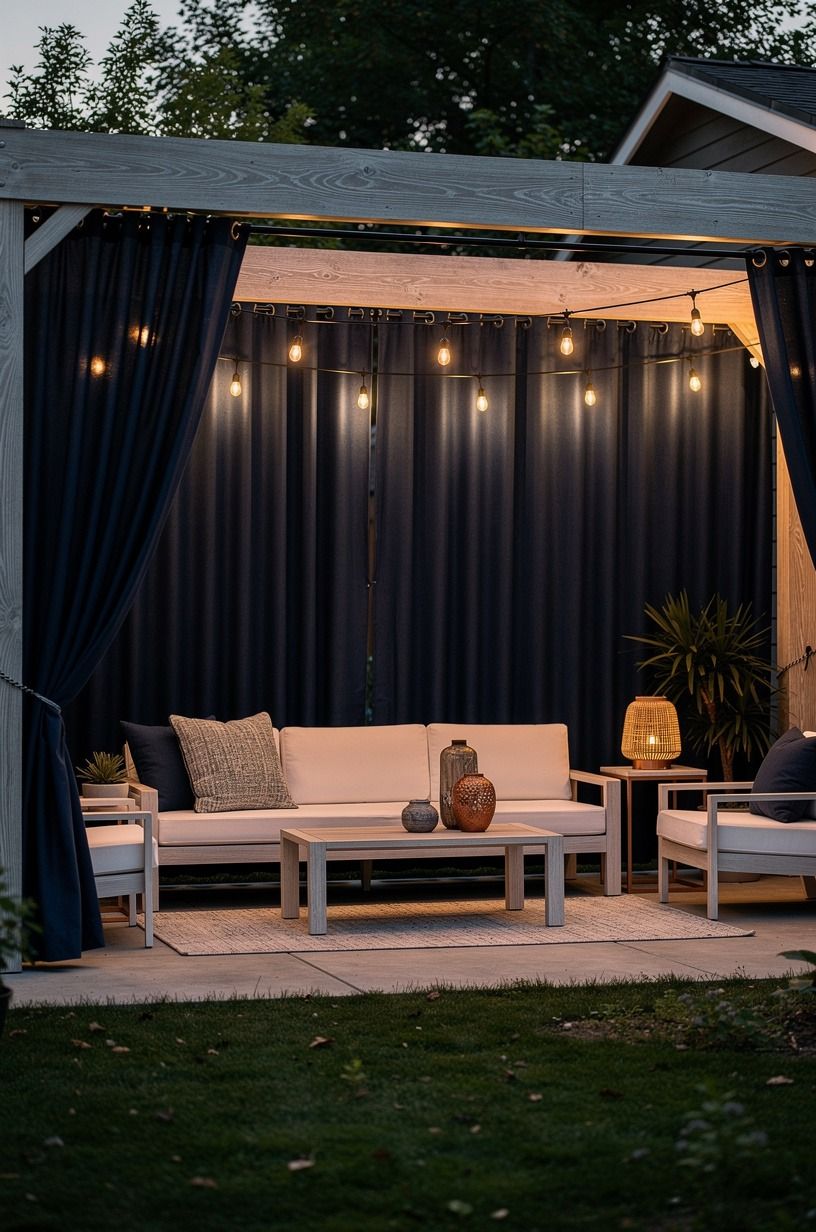
Fabric does what a fence can't, which is close on command.
3Build a slatted cedar screen panel
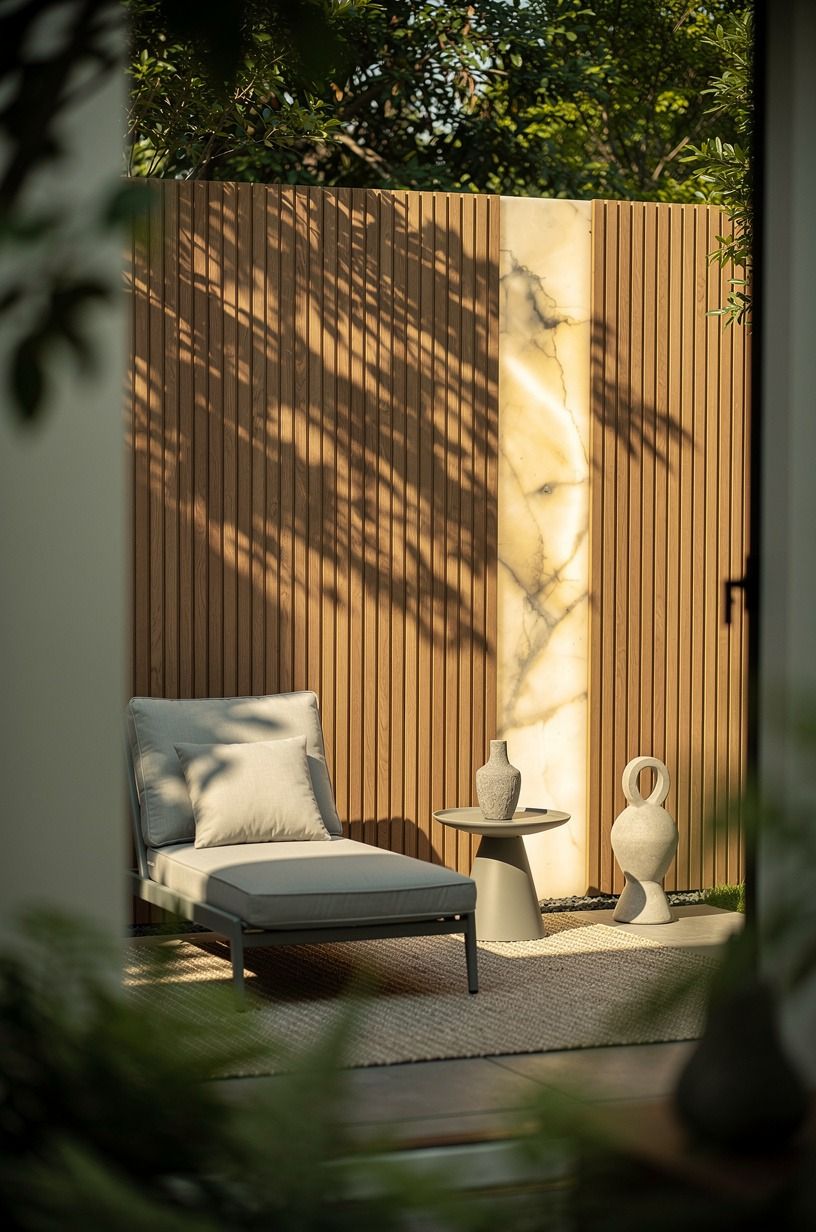
Here's the thing about a good screen: the gaps matter as much as the boards. A freestanding western red cedar panel with 1-inch slats and half-inch gaps blocks the sightline while it still breathes, so wind slips through instead of shoving it over. Two panels at 6 feet tall usually shield a whole seating zone.
You'll want to seal the cedar with Sherwin-Williams Emerald Exterior in a translucent tone, not a solid paint, or you lose the grain. It's a weekend build if you're handy, and our step-by-step privacy fence guide covers the post-setting part that trips most people up.
Skip the pressure-treated lumber here. It warps in the sun and it'll cup within a year.
4Which works better, lattice or louvered panels?
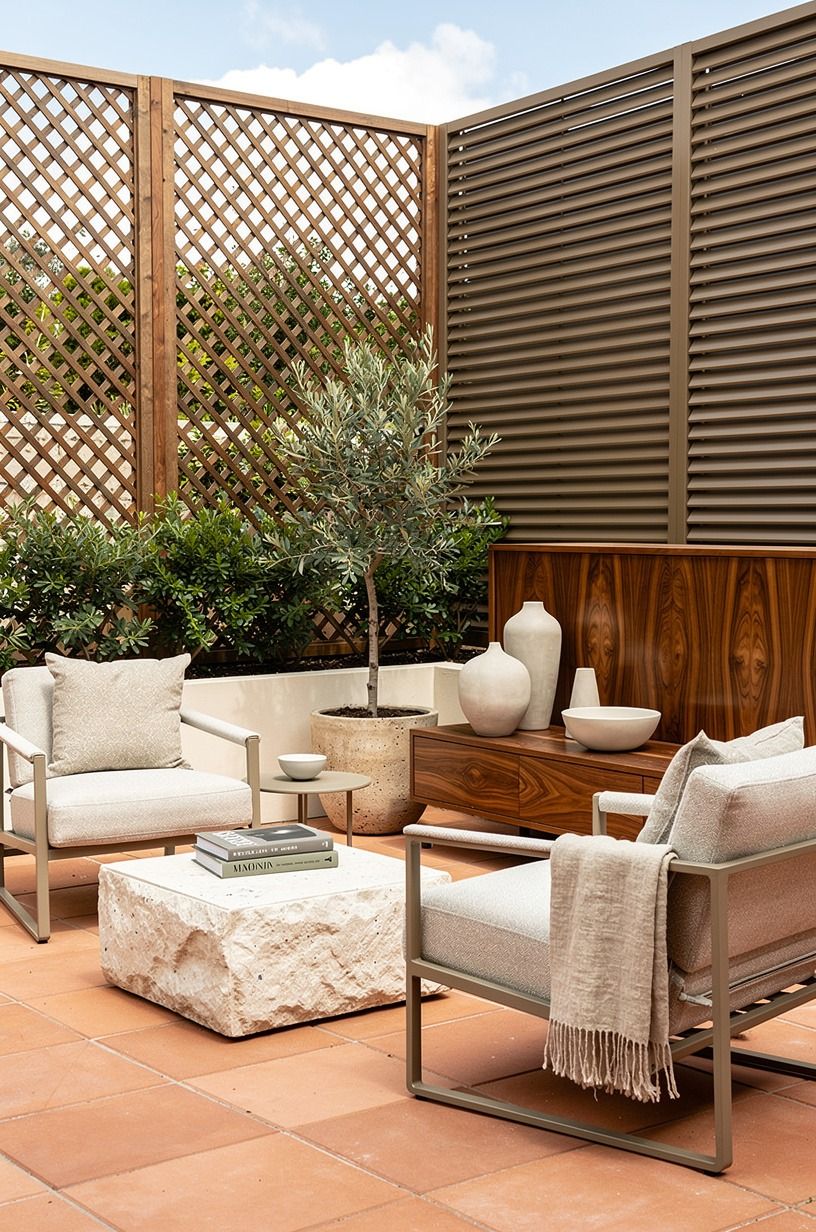
Louvered, almost always. I went back and forth on this for a whole season.
Lattice is cheap and it feels like a garden-center afterthought, and worse, it shows everything through the diamonds once the vines thin out in fall. Fixed-louver panels angle the slats so a standing neighbor sees wood while you still get sky and light from your chairs sitting down.
That angle is the whole point of a real backyard privacy screen. Louvered runs more, maybe double the lattice price, but you buy it once.
Lattice you replace. If the budget is truly tight, buy one louvered panel for the worst sightline and lattice the rest.
Cover the eye you most want gone first.
5Stack tall planters right at the sightline
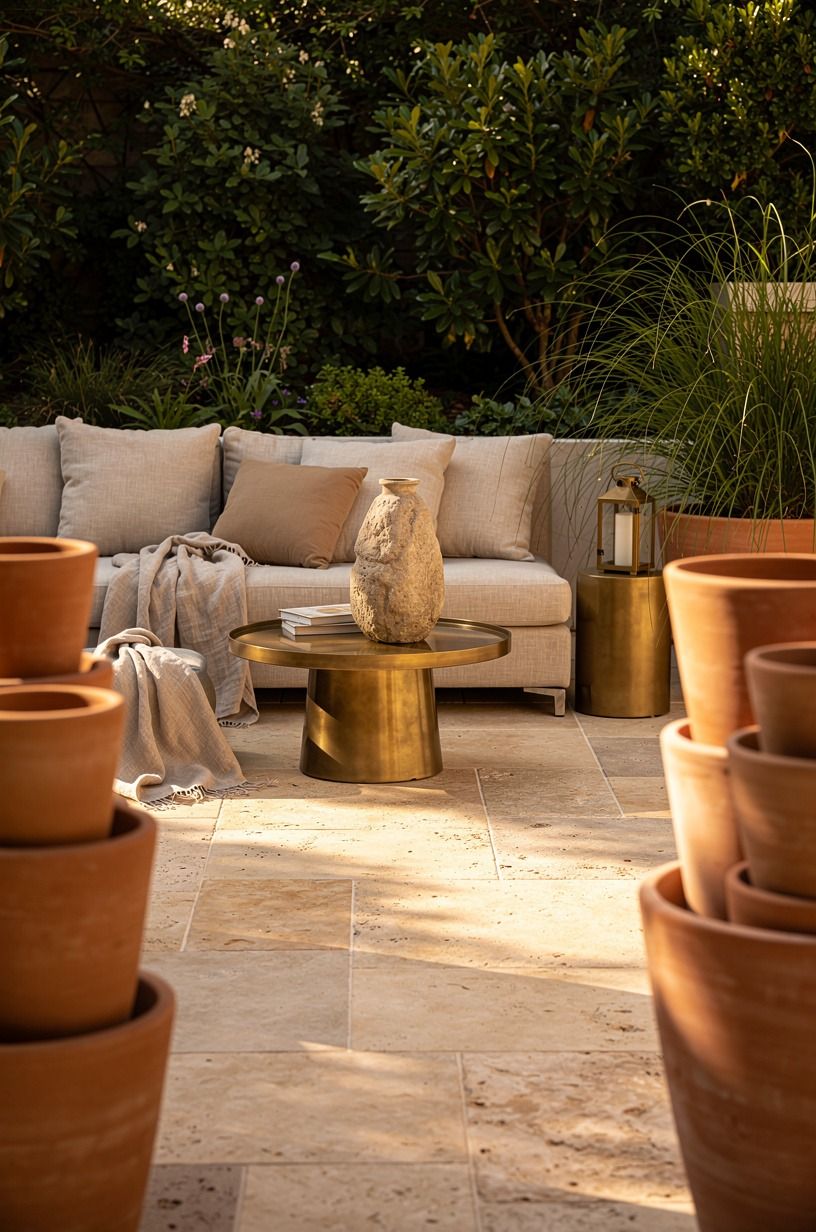
This is where the sightline test earns its name.
6Train a climbing vine up a cable trellis
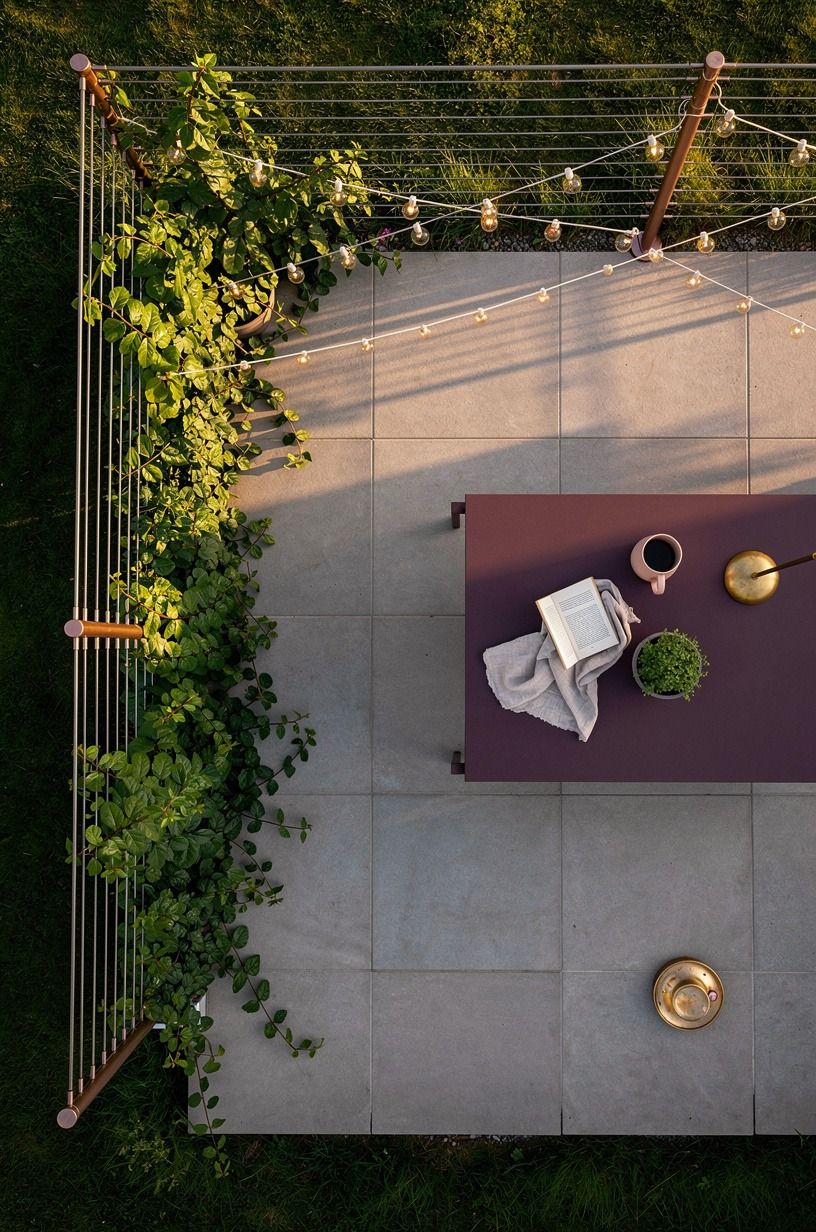
Vines are the patient move, and they're the cheapest privacy per square foot you'll ever get. String unlacquered brass wire in a vertical grid against a wall or between posts, then plant star jasmine or clematis at the base.
Within two summers you've got a green curtain that costs the price of the wire and one plant. It's one of my favorite ideas to block out neighbours because it doubles as scent by June.
You'll want to prune hard in early spring so it fills sideways instead of shooting for the roof. Evergreen jasmine holds its leaves through a mild winter, so the screen doesn't vanish in January like a deciduous vine will.
7Float a freestanding screen instead of a full fence
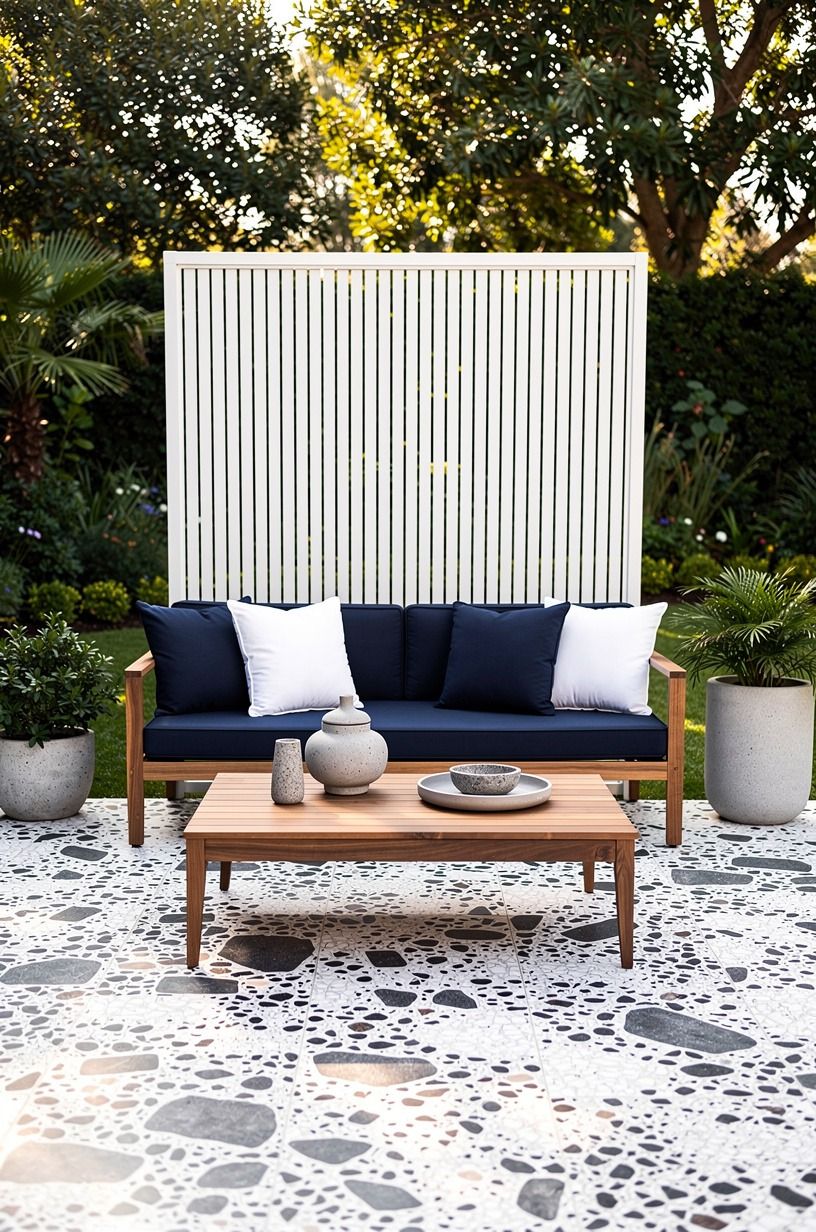
Instead of committing to a fence line, drop in a screen that stands on its own feet.
8Raise a pergola with a slatted roof
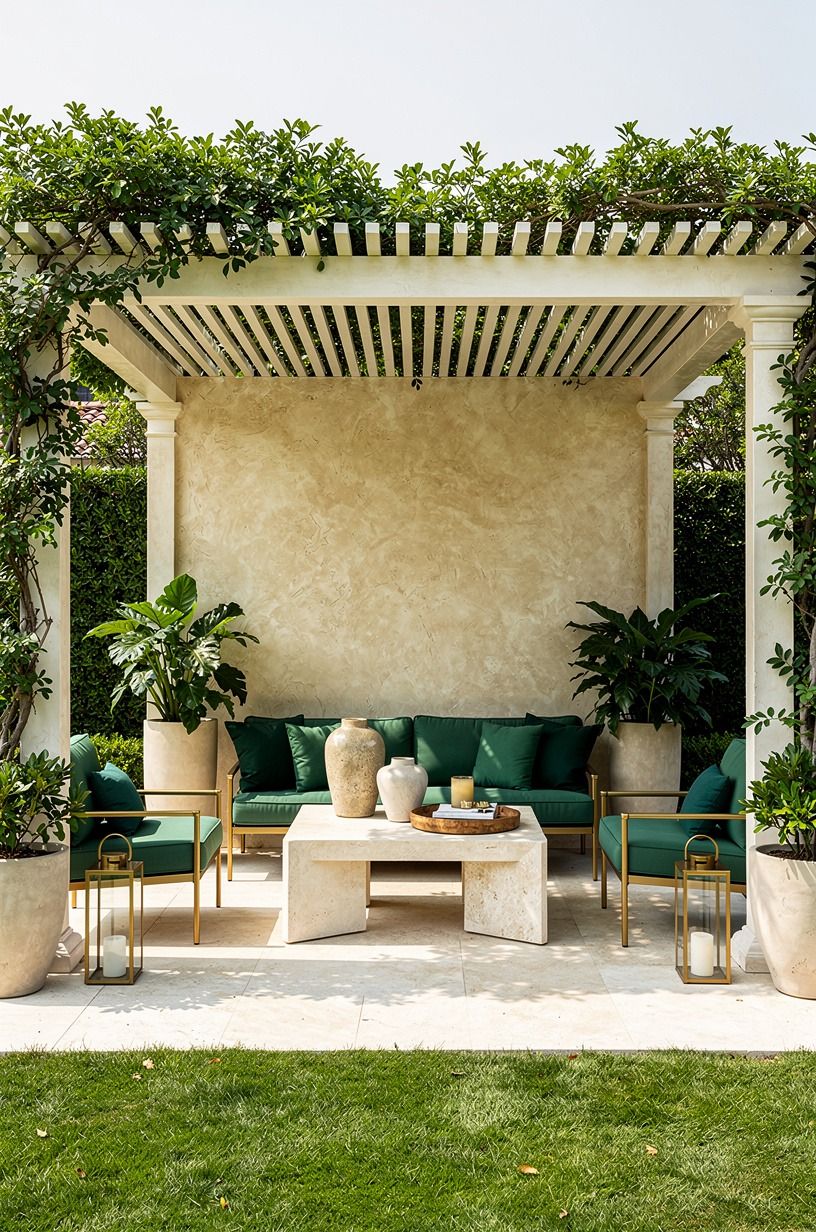
Sometimes the exposure is from above, a second-story deck or an upstairs window looking straight down into your yard. A cedar pergola with angled roof slats solves the one problem a fence can't touch. Set the slats to block the downward angle while still dropping dappled light onto the table.
It's the priciest idea here, running well into four figures if you hire it out, but it's also the one that changes the whole room outdoors. Anchor the posts in concrete footings 36 inches down so it doesn't rack in wind.
Add curtains on two sides later and you've closed three exposures with one structure. Worth it.
9Mix ornamental grasses for a soft blur
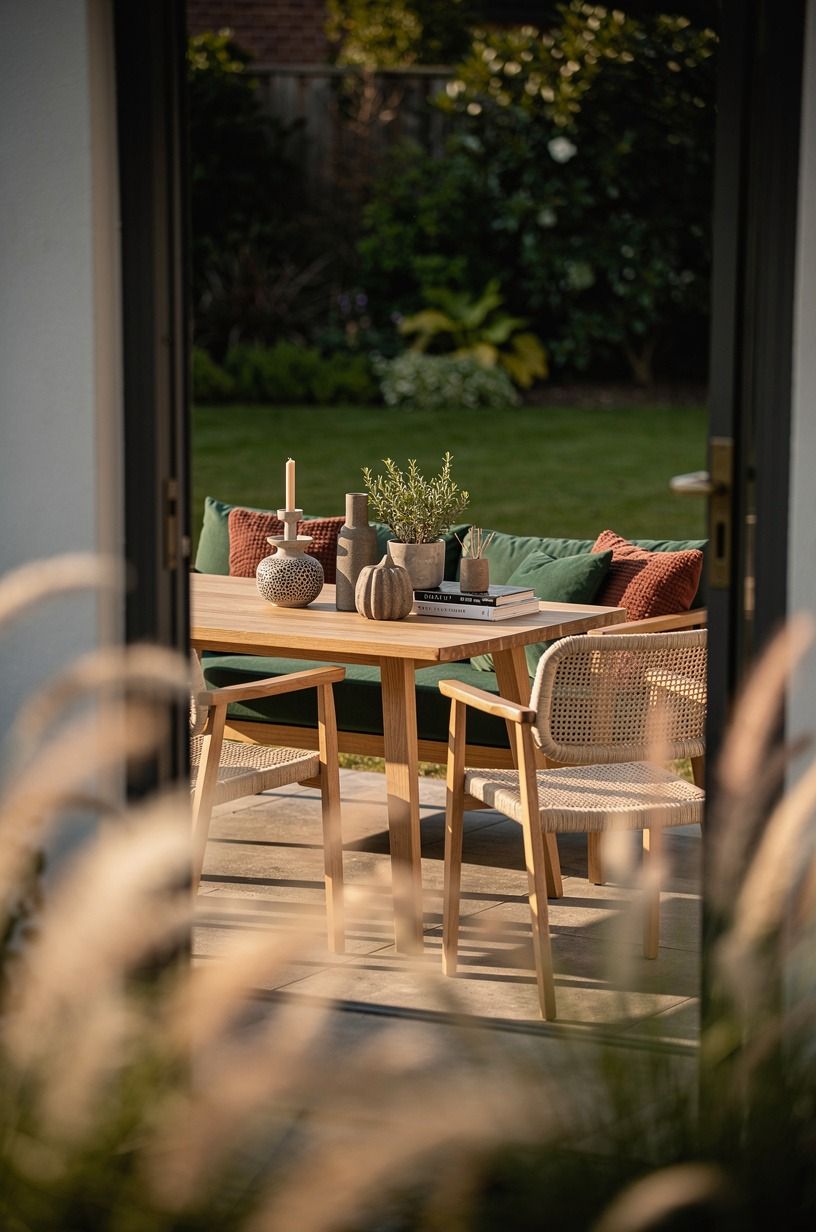
Not every block should be a hard edge, and this is the soft-blur rule. A drift of feather reed grass or miscanthus grows five to seven feet in a season and moves constantly, so it obscures without announcing that you're hiding. Grasses feel like landscaping, not like a barricade, which matters if you want the yard to stay warm and lived-in.
Plant them 24 inches on center in a double row for real depth. They die back in winter, so pair them with an evergreen behind if you need year-round cover. Cut them to the ground each March and they come back thicker.
Cheap, forgiving, and they catch the low afternoon light beautifully.
10Mount a wall-hung planter panel
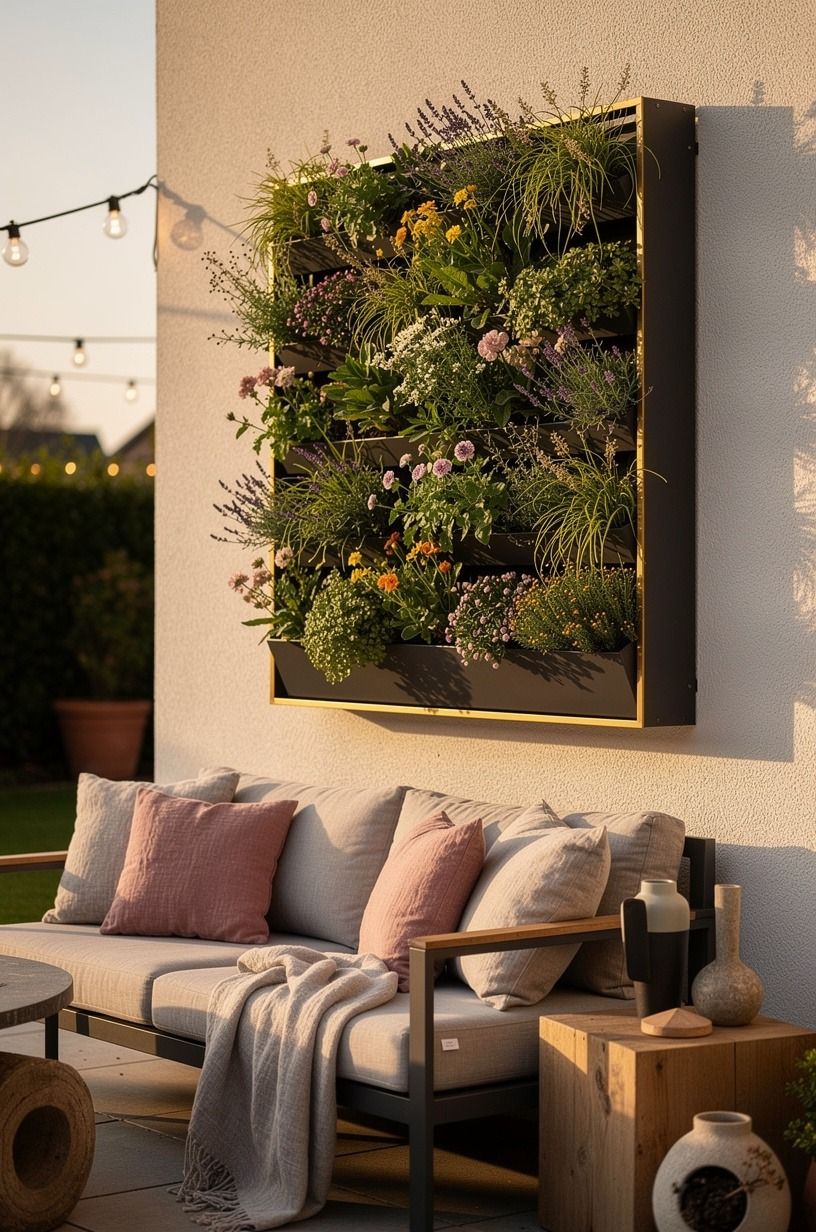
Renters, this one's for you. A modular felt pocket panel or a slatted plant wall hangs on a balcony rail or an existing fence with zero permanent damage, and it turns a bare vertical into a green screen. Fill it with trailing pothos and herbs and it blocks the side-eye from the next balcony over.
Look for a system rated for outdoor UV so the pockets don't crumble by August. It won't hide a whole yard, but for a small patio or a shared-wall situation it's the highest-impact square footage you can rent-proof. Water it more than you think, wall planters dry out fast in full sun.
11Anchor the corner with a potted tree
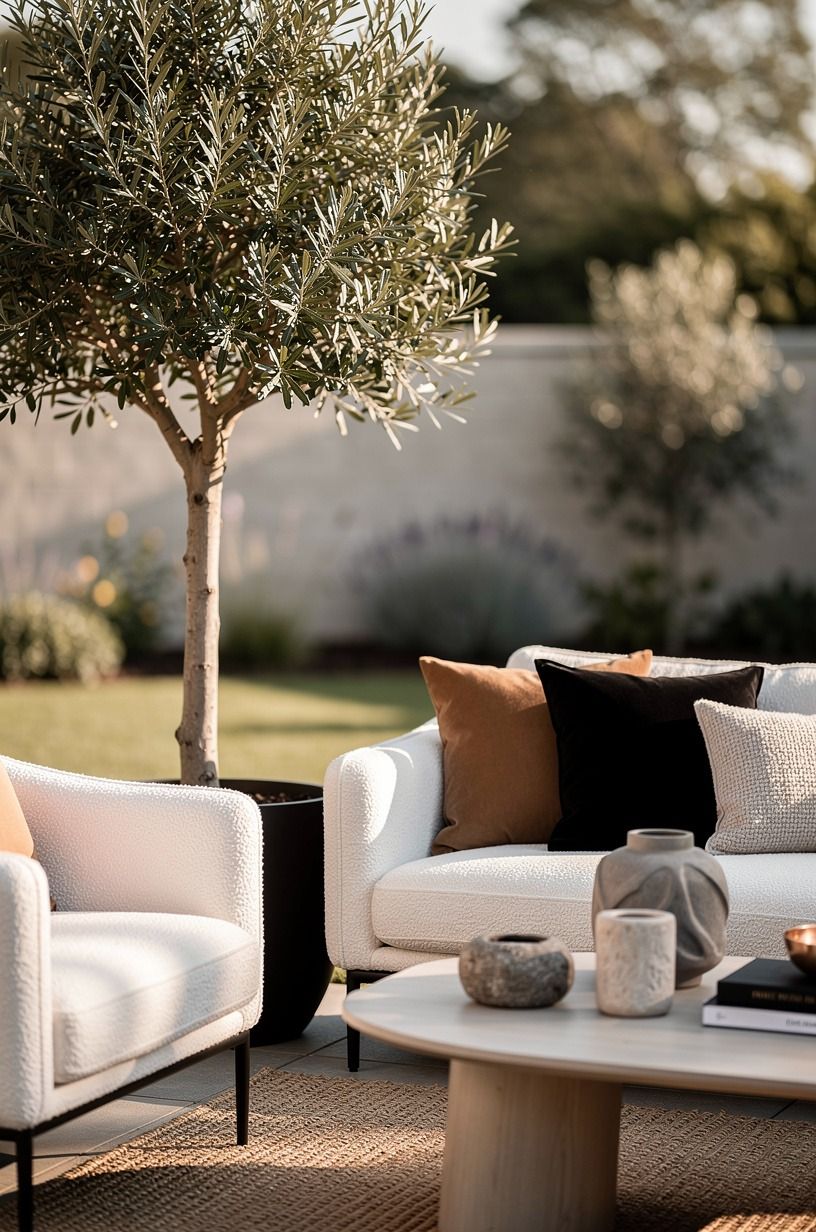
One good tree in a big pot does the work of half a fence. A columnar hornbeam or a potted olive holds a narrow, tall footprint, so it screens the sightline without eating the whole patio. This is the piece that makes a space feel finished instead of walled-in.
Go big on the pot, at least 24 inches wide, because a small root ball dries out and topples in the first real gust. Underplant with something low so the base doesn't look leggy.
I've had a potted olive on my patio for four years and three friends have bought one after sitting under it. Buy the biggest one you can carry.
12What does an outdoor privacy barrier actually cost?
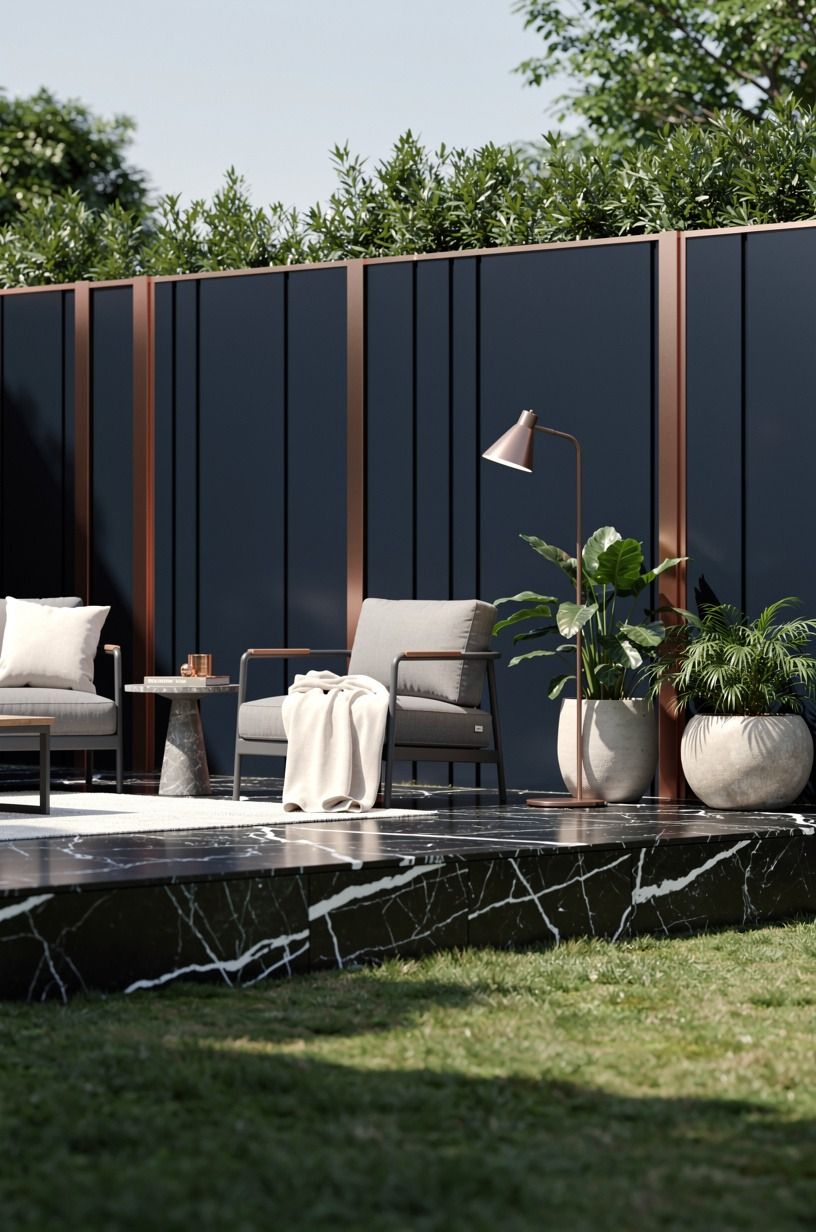
Real numbers, because vague budgets help nobody. Here's what these projects typically run in the US, from a textile-and-plants refresh to a built structure.
Most people land in the budget tier and never need to leave it. A polypropylene outdoor rug runs $80 to $400, LED string lights $30 to $120, and a teak set if you go there is $1,000 to $4,000.
You don't need the high tier to feel private. If you're already building out there, our cinder block outdoor kitchen guide shows how to stretch that mid-tier budget.
13Swap a tension-rod curtain onto a balcony
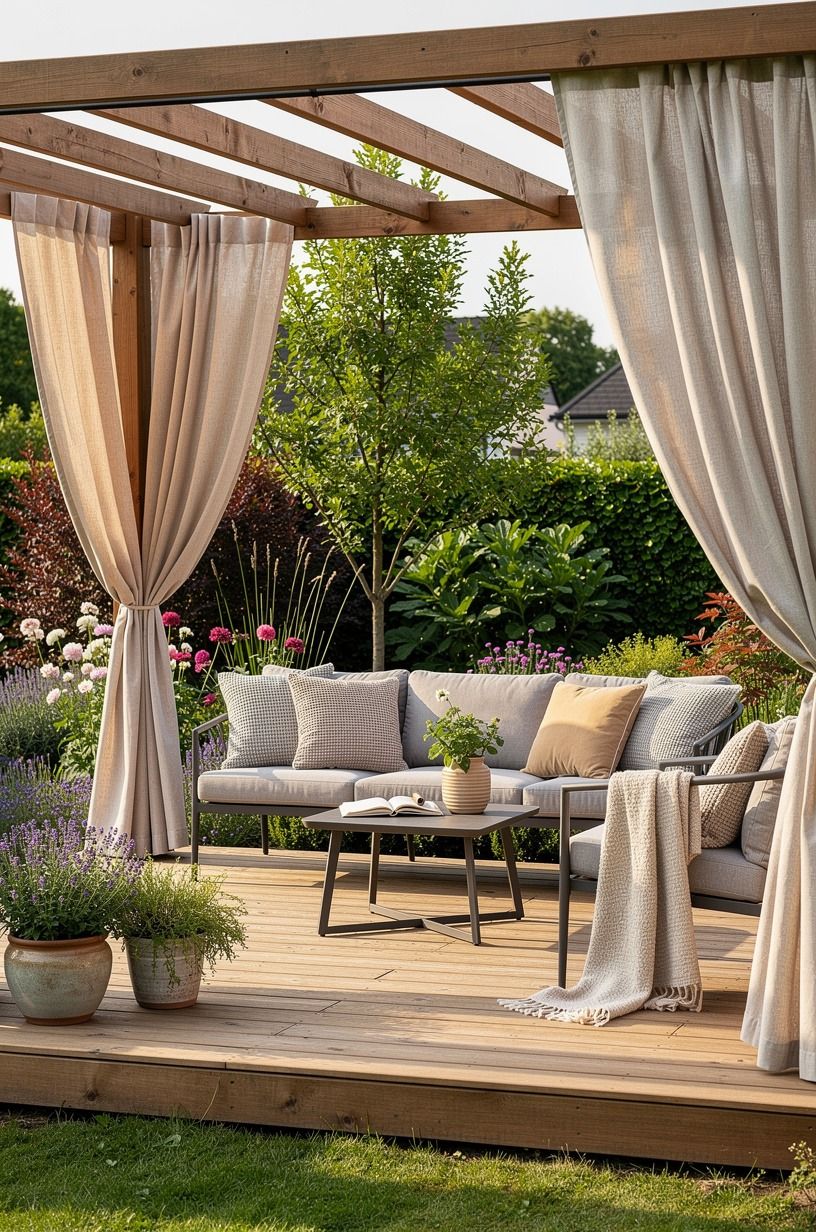
No drill, no landlord conversation, no problem. A spring-tension rod wedged between two balcony walls holds a light outdoor curtain that screens the open side in about ten minutes.
It's the renter version of idea two, and it comes down clean when you move. Use an indoor-outdoor fabric so it survives rain, and clip the panels with rings so they slide.
This pairs with the wall planters from earlier for a two-layer block on a tiny space. If the neighbor noise bothers you as much as the view, layering fabric helps a little, and our piece on neighbor noise and sleep covers the rest.
Small space, big change.
14Frame the view with a sail shade overhead
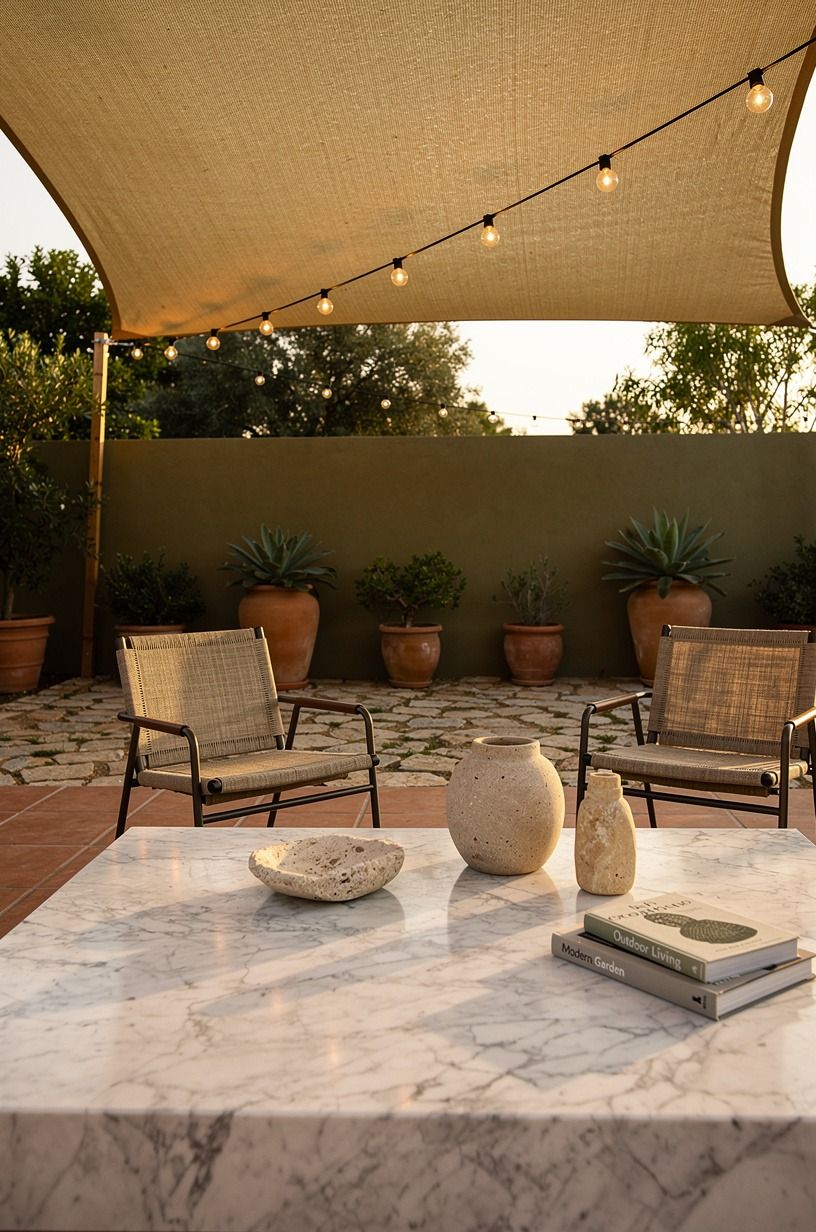
A triangular shade sail in a warm sand tone blocks the upstairs sightline and throws shade on the hottest part of the patio at once. Tension it between the house and two posts at a slight tilt so rain sheds off instead of pooling.
It reads modern and it's cheap for the coverage, usually under $150 for a 12-foot triangle plus hardware. This is the move when the exposure comes from a neighbor's second floor, not their yard.
Overlap two sails at different heights and you get a layered canopy that hides the whole upward angle. Anchor into studs or solid posts, never into fascia, or it'll rip the trim off in a storm!
15Paint and light the screen you already have
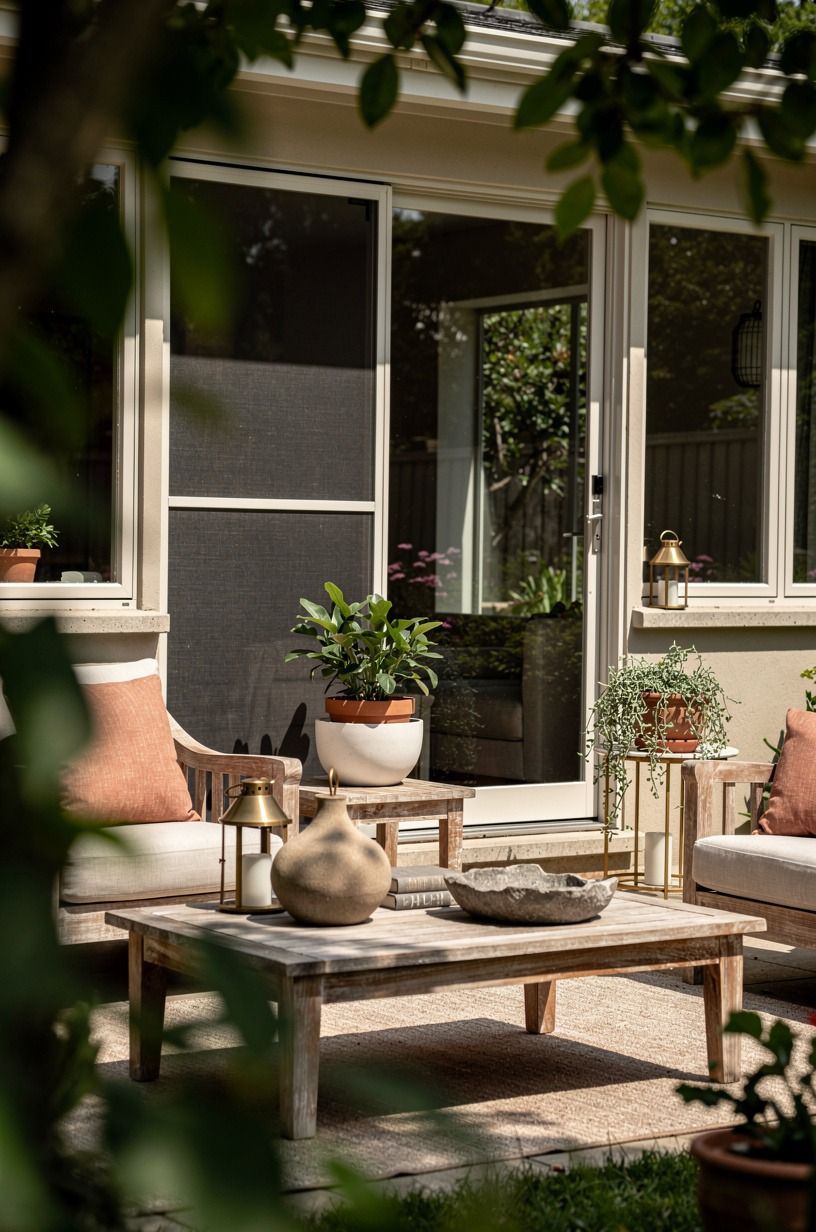
Before you buy anything, look at what's there. A tired existing fence or a plain wall becomes a real backyard privacy screen with a coat of Benjamin Moore Aura Exterior in a deep charcoal and a string of warm lights along the top.
Dark paint makes a boundary recede, so the yard feels bigger, not smaller, and the plants in front of it pop. It's sixty bucks and a Saturday.
Then hang LED string lights at eye level so the glow stops your eye at the fence instead of sending it past the top into the neighbor's window. Light is a screen too, and nobody uses it enough.
What I've Learned After Screening Three Yards
I used to think privacy meant height. Build it taller, block more, done.
Two yards taught me that's backwards. The first fence I put up was a solid six-foot wall of pressure-treated pine, and it did hide the neighbors, but it also boxed us in so hard the patio felt like a holding cell.
We stopped sitting out there. The wind couldn't move through it, so summer evenings went stagnant and hot.
I'd solved the wrong problem.
What actually works is precision, not mass. You don't need to hide the whole world, you need to break one or two sightlines, the specific angles where you feel watched.
That's why I keep coming back to the sightline test: sit where you actually sit, find the exact eye that bugs you, and block that. Everything else can stay open.
A single tall planter placed on the real line does more than a full fence built out of habit.
The second lesson was layers over walls. A cedar slat panel, a drift of grass in front of it, a vine climbing beside it, and lights along the top read as a garden, not a barricade, and they still hide you.
Softness reads as confidence. A hard wall reads as a fight with your neighbor, and you have to look at that fight every morning with your coffee.
And spend where it counts. I'd put money into one good louvered panel and one big tree before I'd ring the whole yard in cheap lattice that sags by fall.
Buy the block that lasts, place it precisely, and let plants do the rest for free. That's the whole philosophy.
Privacy isn't a wall. It's a well-placed edit.
What People Always Want to Know
What is the best way to block a neighbor's view in a small backyard?
A freestanding louvered panel placed right on your main sightline. It blocks the standing-height view while you keep light and airflow.
For softness, add one tall potted grass in front. Small yards actually help, since one precise screen covers the whole exposure.
Where can I buy privacy screen pieces on a budget?
Check IKEA for planters and slatted panels, Wayfair for shade sails, and Target for outdoor curtains and string lights. For plants and pots, Facebook Marketplace and end-of-season nursery sales cut costs hard. Buy the structure new, source the greenery secondhand.
How much does an outdoor privacy makeover cost?
Plan on about $200 to $900 for a textile-and-plants approach, which covers curtains, string lights, and a few big planters. Paint and repurposing what you own can be nearly free. A built pergola or panel run pushes into the thousands, so start soft.
Can I create real backyard privacy on a budget?
Yes, and it's easier than you'd think. Paint an existing fence a deep charcoal so it recedes, string warm lights at eye level, and plant fast grasses in a double row. Three moves, under a few hundred dollars, and you're screened by midsummer.
Is a privacy screen worth it in a small space?
Absolutely, and small spaces make it cheaper. You've got fewer angles to cover, so one well-placed outdoor screen panel often does the whole job. Keep it under 6 feet so the yard still feels open, and let plants blur the edges.
Is a privacy screen a good idea for a rental?
Yes, and there are no-damage swaps for all of it. A spring-tension curtain rod on a balcony, felt wall planters that hang on a rail, and weighted freestanding panels all come down clean. Nothing gets drilled, and you take it with you.
The One I'd Put In First
If I had to pick one, I'd start with a single louvered panel on your main sightline. You can't out-plant the one angle that makes you feel watched, and a louvered screen kills it at standing height while you keep the light. Place it, then build around it.