
 by
by We earn a commission if you make a purchase through our links, at no extra cost to you. Full disclosure.
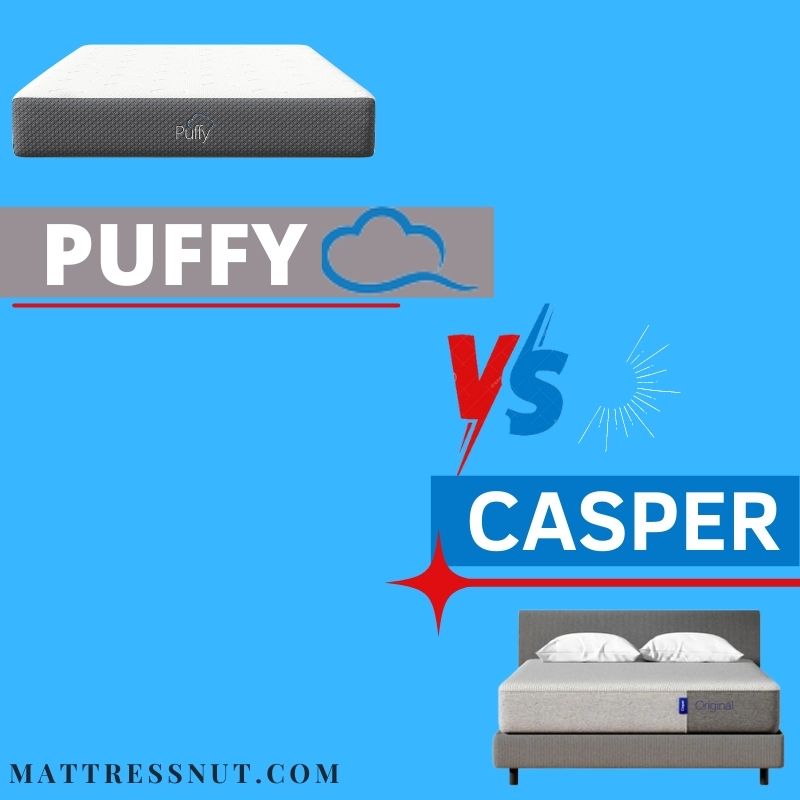
Two all-foam mattresses. One costs $1,049, the other $799. Both show up compressed in a box, both promise great sleep, and both have lifetime warranties. So what exactly is Puffy Cloud doing with that extra $250?
I've spent weeks testing both of these mattresses side by side, and the answer isn't as simple as "more money equals better mattress." Puffy Cloud is softer and plusher. Casper One has smarter foam engineering with its zoned support system. And honestly, if you're willing to spend a bit more than either of them, there's a hybrid option from Saatva that outperforms both.
But let's break it down piece by piece.
Quick Verdict: Puffy Cloud vs Casper One
Choose Casper One ($799) if: You want better value, sleep hot, prefer a balanced medium-firm feel, or need zoned support for back pain.
Choose Puffy Cloud ($1,049) if: You're a side sleeper who wants a plusher, pressure-relieving surface and don't mind paying more for it.
Consider Saatva Classic ($1,853) if: You want coil support, better cooling, a 365-night trial, and free White Glove delivery. It's a different class of mattress.
Puffy Cloud vs Casper One: Comparison Table
| Feature | Puffy Cloud | Casper One |
|---|---|---|
| Queen Price | ~$1,049 (sale) / $2,049 MSRP | ~$799 / $999 MSRP |
| Type | All-foam | All-foam |
| Firmness | Medium (5-6/10) | Medium-firm (6/10) |
| Trial Period | 101 nights | 100 nights |
| Warranty | Lifetime | 10-year |
| Cooling | Average | Slightly better |
| Edge Support | Weak | Weak |
| Weight (Queen) | ~70 lbs | ~65 lbs |
| Delivery | Free compressed | Free compressed |
Construction and Feel
Puffy Cloud
The Puffy Cloud uses three foam layers. On top, you get their "Cloud Foam" comfort layer, which is really just a proprietary polyfoam blend designed to feel plush and pressure-relieving. Under that sits a transition layer of firmer foam, and the base is high-density support foam.
I noticed right away that the Puffy Cloud has a slower response time than the Casper. When you press your hand into it, it takes a second to bounce back. This is the kind of mattress that hugs you rather than supports you. Side sleepers tend to love this feel. Stomach sleepers? Not so much.
The cover is a basic knit fabric. Nothing special, but it's soft enough and removable for washing. One thing I'll give Puffy credit for: the unboxing is straightforward. Cut the plastic, the mattress expands, and you're sleeping on it that night. It took about 4-6 hours to fully expand, though Puffy says to give it 48 hours. I didn't notice much difference after the first night.
Casper One
Casper rebranded their Original mattress as the "One," but the engineering underneath is what matters. It's also three layers of foam, but with one key difference: zoned support. The middle section of the mattress is firmer under your hips and lower back, while the shoulders get a softer zone.
This isn't just marketing. You can actually feel it. When you lie on your back, your hips don't sink in as far as they do on the Puffy. And when you're on your side, the shoulder area gives way enough to keep your spine aligned. It's a smart design that costs less. Go figure.
Casper's top foam layer is also slightly more responsive than Puffy's. You won't feel stuck in it.
Durability and Long-Term Performance
All-foam mattresses share a common weakness: they break down faster than hybrids or innerspring beds. Without coils to provide structural support, you're relying entirely on foam density to maintain shape over years of nightly use.
The Puffy Cloud's foam densities are decent but not exceptional. Most owners report the mattress feeling noticeably softer after 2-3 years, particularly in the hip area where most body weight concentrates. That plush surface feel that's so appealing on day one? It gets even softer with time, and not in a good way.
The Casper One holds up slightly better in the long run. Its zoned construction distributes wear more evenly across the surface, and the denser foam in the center section resists body impressions longer. But you're still looking at a 6-8 year realistic lifespan before either mattress starts to feel noticeably degraded.
Puffy's lifetime warranty sounds like it solves this problem. It doesn't. The warranty covers manufacturing defects and sagging beyond 1.5 inches, but the gradual softening that actually affects your comfort isn't covered. Casper's 10-year warranty has similar limitations — just with a shorter coverage window.
Weight Considerations
Your body weight changes how both of these mattresses perform. A lot.
If you're under 130 pounds, both mattresses will feel firmer than advertised. You may not sink in enough to activate the comfort layers properly. The Puffy Cloud is the better choice at lighter weights because its softer foam responds to less pressure.
Between 130-230 pounds, both mattresses work as intended. This is the target range for most bed-in-a-box brands, and it's where the firmness ratings and sleeping position recommendations apply most accurately.
Over 230 pounds, both mattresses start struggling. The foam compresses too much, edge support becomes even worse, and you'll likely bottom out on the base layer — especially on the Puffy. Heavier sleepers need firmer foam or, better yet, a coil-based mattress that can handle the weight without excessive compression.
Firmness and Sleeping Positions
The Puffy Cloud lands around a 5 to 6 out of 10 on the firmness scale. The Casper One sits right at a 6. That half-point difference matters more than you'd think.
Side sleepers: Both work, but Puffy is better here. The softer surface cradles your shoulders and hips with less pressure. If you weigh under 150 pounds and sleep on your side, the Puffy Cloud is genuinely comfortable.
Back sleepers: Casper wins. The zoned support keeps your lumbar area from sinking too deep. On the Puffy, I noticed my hips dipping slightly lower than they should for proper alignment. Not terrible, but noticeable over time.
Stomach sleepers: Neither is great. Both are too soft for stomach sleeping if you weigh more than 130 pounds. Your hips will sink, your back will arch, and you'll wake up sore. Stomach sleepers need something firmer than either of these can offer.
Combination sleepers: Casper's faster response foam makes it easier to switch positions at night. The Puffy's slower foam can make you feel like you're fighting the mattress when you roll over.
Cooling
Here's the thing about all-foam mattresses: they all sleep warmer than hybrids. There are no coils pushing air through the mattress. No natural ventilation system. Just layers of foam trapping your body heat.
That said, the Casper One does slightly better here. Its top foam layer has some open-cell structure that helps with airflow, and the zoned design creates small channels for heat to move through. It's not a night-and-day difference. But if you're choosing between two foam beds and you run warm, Casper has a slight edge.
The Puffy Cloud's denser foam and slower response means it retains more heat. Honestly, on warm nights without AC, I found myself flipping the pillow and shifting around more on the Puffy than on the Casper.
Neither mattress includes phase-change material or gel-infused foam that actually makes a real difference. Those are usually reserved for their higher-priced models.
Motion Isolation and Edge Support
Motion Isolation
Both mattresses do well here. All-foam beds are generally better at absorbing movement than hybrids, and both the Puffy Cloud and Casper One prove that out. If your partner tosses and turns, you won't feel much on either mattress.
Puffy gets a small edge because its softer, slower foam absorbs vibrations more effectively. But we're talking about marginal differences. Both are good for couples who don't want to wake each other up.
Edge Support
This is where both mattresses fall short. And that's the nature of all-foam beds. Without a reinforced perimeter or coil system, the edges compress when you sit or sleep near them.
The Casper One is slightly better because its firmer foam doesn't compress as dramatically. But don't expect to sit on the edge of either mattress like you would on a traditional innerspring. You'll feel like you're sliding off.
If edge support is a priority for you, you need coils. Plain and simple.
Shipping, Returns, and Customer Service
Both mattresses ship free, compressed in a box, and show up at your door within 3-7 business days depending on where you live. Standard bed-in-a-box experience. You drag the heavy box to your bedroom, cut the plastic, and watch it expand. No setup help. No old mattress removal.
Puffy's 101-night trial is virtually identical to Casper's 100 nights. Both require a minimum break-in period before you can return — usually around 30 nights. Returns are free for both, and they'll arrange pickup of the mattress (typically donated to a local charity).
Where they differ is after the trial. Puffy's customer service gets mixed reviews online — some customers report slow response times when initiating returns. Casper has a more established logistics network for returns since they've been in the business longer. Neither is perfect, but Casper's process tends to be smoother from what I've seen in customer feedback.
Price and Value
Let's talk about what you're actually paying for.
| Puffy Cloud | Casper One | |
|---|---|---|
| Queen Price (sale) | ~$1,049 | ~$799 |
| MSRP | $2,049 | $999 |
| Trial | 101 nights | 100 nights |
| Warranty | Lifetime | 10 years |
The Casper One is $250 less and gives you zoned support, slightly better cooling, and a more responsive feel. The Puffy Cloud gives you a softer surface and a lifetime warranty instead of 10 years.
That lifetime warranty from Puffy sounds great on paper. But here's the honest truth: most people replace their mattress every 7-10 years regardless of warranty coverage. And warranty claims on foam mattresses typically require visible indentation of 1.5 inches or more, which usually doesn't happen before you'd want a new mattress anyway.
Puffy's MSRP of $2,049 is absurd. They're always running a sale because the "real" price was never $2,049. Casper's pricing is more honest — the gap between MSRP and sale price is much smaller.
On pure value, Casper One wins. You're getting a smarter design for less money.
The Upgrade Option: Saatva Classic
I've compared these two foam mattresses in detail. But I'd be doing you a disservice if I didn't mention that both of them share the same fundamental limitations: no coils, mediocre edge support, average cooling, and that "sleeping on foam" feel that some people love and others can't stand.
The Saatva Classic at $1,853 for a queen is more expensive, obviously. But it's a completely different construction. A coil-on-coil hybrid with a Euro pillow top, dual steel coil layers for airflow and support, and a lumbar zone built into the lower coils.
What does that mean in practice?
- Better cooling — air flows freely through the coil layers
- Real edge support — you can sit on the side without sliding off
- Three firmness options — Plush Soft, Luxury Firm, or Firm
- 365-night trial — more than triple what Puffy or Casper offer
- Free White Glove delivery — they set it up and remove your old mattress
- Lifetime warranty
This is the kind of mattress you buy when you're done messing around with foam-in-a-box brands. It won't arrive compressed in a bag. Two delivery people bring it in, set it up, and haul away your old bed. That's worth something.
If your budget can stretch to $1,853, the Saatva Classic is the better long-term investment over either the Puffy Cloud or Casper One.
Final Verdict
Between these two foam mattresses, the Casper One at $799 is the better buy for most people. It's $250 cheaper, has smarter zoned support, sleeps slightly cooler, and responds faster when you change positions. The only real advantage Puffy has is a softer feel for dedicated side sleepers and a lifetime warranty that most people won't ever use.
But if you can spend more, skip both of them. The Saatva Classic at $1,853 gives you coil support, better cooling, free White Glove delivery, and a full year to decide. It's a better mattress. Period.
Ready to upgrade? Try the Saatva Classic risk-free for 365 nights →
Free White Glove delivery. Lifetime warranty. $1,853 for a queen.
FAQ
Is Puffy Cloud worth the extra $250 over Casper One?
For most people, no. The Casper One at $799 offers zoned support and a more responsive feel for less money. The Puffy Cloud's main advantage is a softer, more pressure-relieving surface that side sleepers may prefer. But the $250 savings on the Casper can go toward better pillows or sheets instead.
Do Puffy and Casper mattresses sleep hot?
Both sleep warmer than hybrid or innerspring mattresses. That's the trade-off with all-foam construction — there's no coil system to circulate air. The Casper One runs slightly cooler thanks to its open-cell foam design, but neither mattress is a good fit if you're a seriously hot sleeper. A coil-based mattress like the Saatva Classic handles heat much better.
Which mattress is better for back pain?
The Casper One. Its zoned support system provides firmer foam under your lumbar region and softer foam at the shoulders. This keeps your spine better aligned than the Puffy Cloud's uniform foam layers. For back pain sufferers who want even more support, a coil-on-coil hybrid like the Saatva Classic with its built-in lumbar zone is worth considering.
Can I try Puffy or Casper before buying?
Both are online-only mattresses, so you can't test them in a store. Puffy offers a 101-night trial and Casper offers 100 nights. If you want a longer decision window, the Saatva Classic comes with a 365-night home trial — plus free White Glove delivery and old mattress removal.