
 by
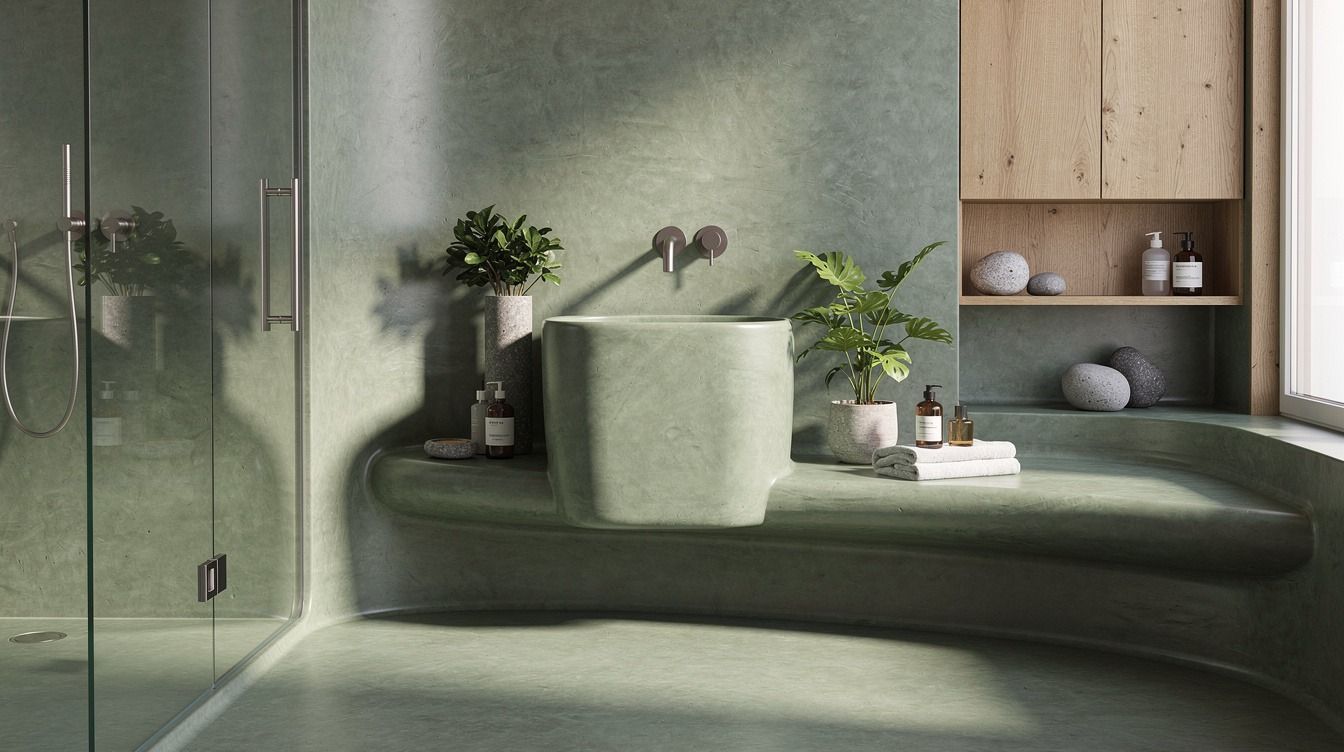
by Green microcement bathroom ideas gave my small bathroom the warm, organic finish I wanted without a full rebuild. I did this makeover while working around a 60x30 in tub and a very real budget. The old room felt cold. Now it feels calm every morning.
Here's what it looked like before
Before, it had the full starter-home package: shiny beige wall tile, a narrow vanity, chrome everywhere, and overhead light that made my face look exhausted before coffee. The floor was fine, technically, but it fought every natural material I brought in.
I didn't need a bigger bathroom. I needed fewer hard visual stops. Once I saw the room as one continuous surface instead of five separate purchases, I stopped chasing white tile and started planning green microcement.
- Start with the Soft-Edge Surface Plan
- Pick Green Over Cold Gray
- Use the Two-Wood Rule for an Organic Bathroom
- Float a 32-Inch Oak Vanity
- Let the Mirror Break the Green
- Build the Three-Height Light Stack
- Frame the Sink with Unlacquered Brass
- Paint the Ceiling, Not Just the Walls
- Hang Belgian Flax Instead of a Plastic Curtain
- Choose Zellige Over Subway Tile?
- Keep the Shower at 36x36 In Minimum
- Layer the Counter Like a Still Life
- Add Chestertown Buff Through the Doorway
- Skip Matching Towels and Mix Texture
- Protect the 21-Inch Toilet Clearance
- Borrow the Tadelakt Mood, Not the Maintenance
- Finish with One Living Thing
1Start with the Soft-Edge Surface Plan
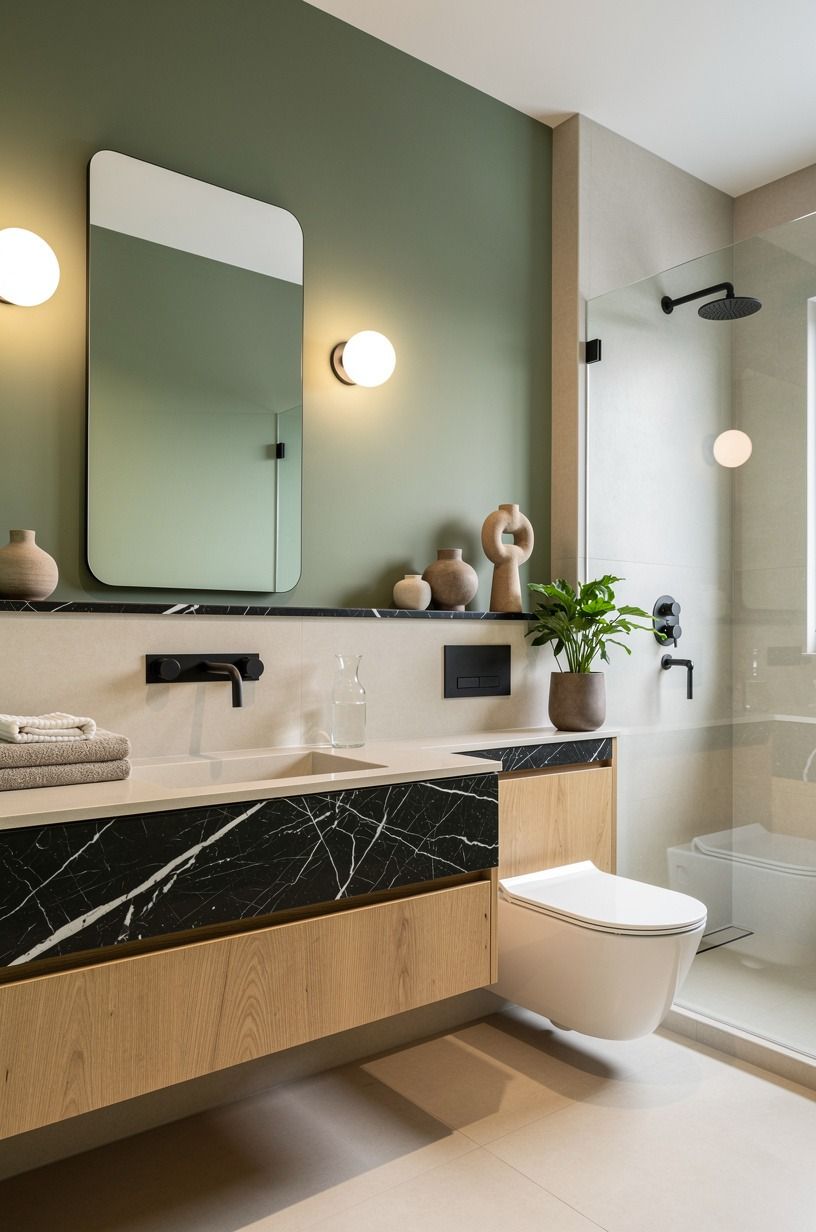
I chose green microcement because you can carry it from wall to floor without the grout grid chopping up your sightline. In a small organic bathroom, that matters more than another decorative object. You get a quieter backdrop, and your eye can rest.
I used a muted moss direction rather than bright sage. Bright green can turn clinical under bathroom lighting, while a deeper earthy tone makes your towels and natural wood look intentional. For more on that material choice, read why microcement is the heart of the organic modern bathroom.
2Pick Green Over Cold Gray
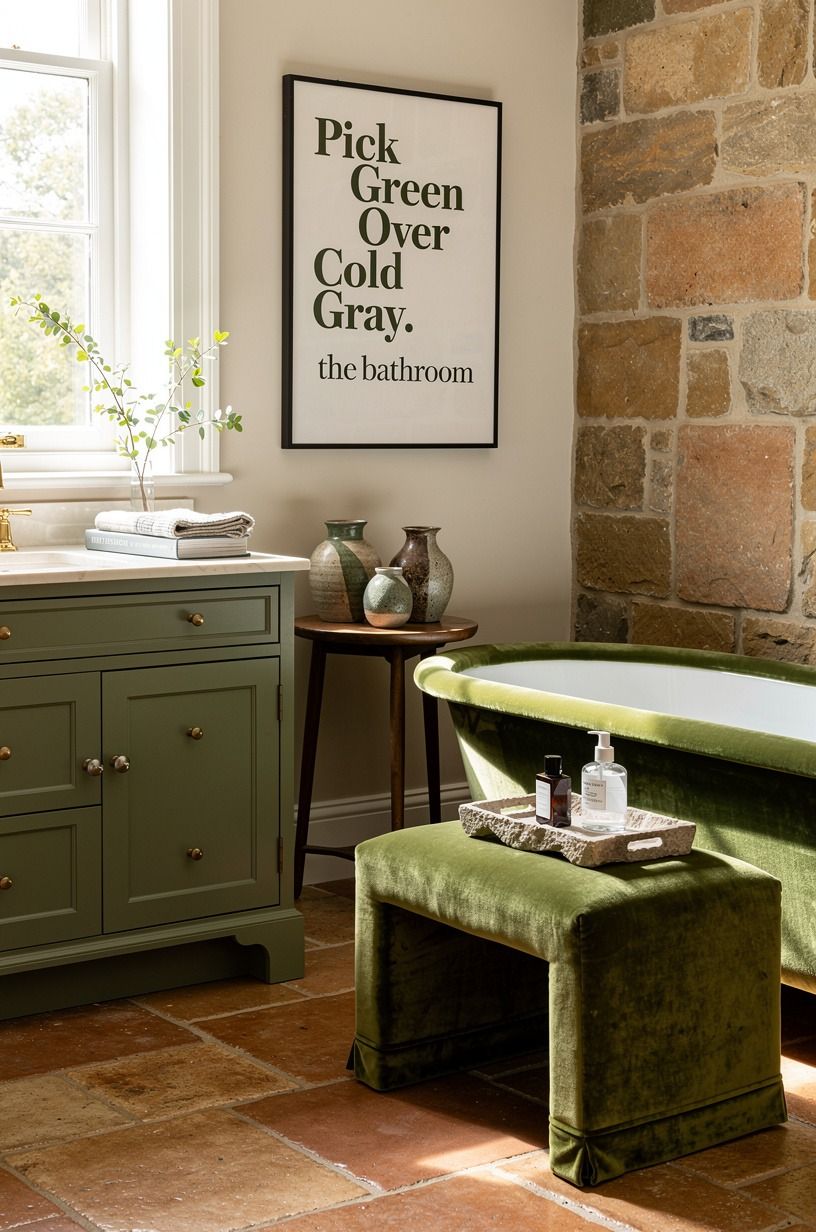
Gray microcement was the obvious option, and I nearly chose it. But gray made the room feel like a stylish utility closet, which isn't how you want your first five minutes of the day to feel.
Green gave my deep-pile mohair velvet stool somewhere to land. Your bathroom colors don't need to match the garden outside, but they should borrow its softness.
I kept the undertone muddy and gentle, not minty. That tiny distinction saved the whole room!
3Use the Two-Wood Rule for an Organic Bathroom
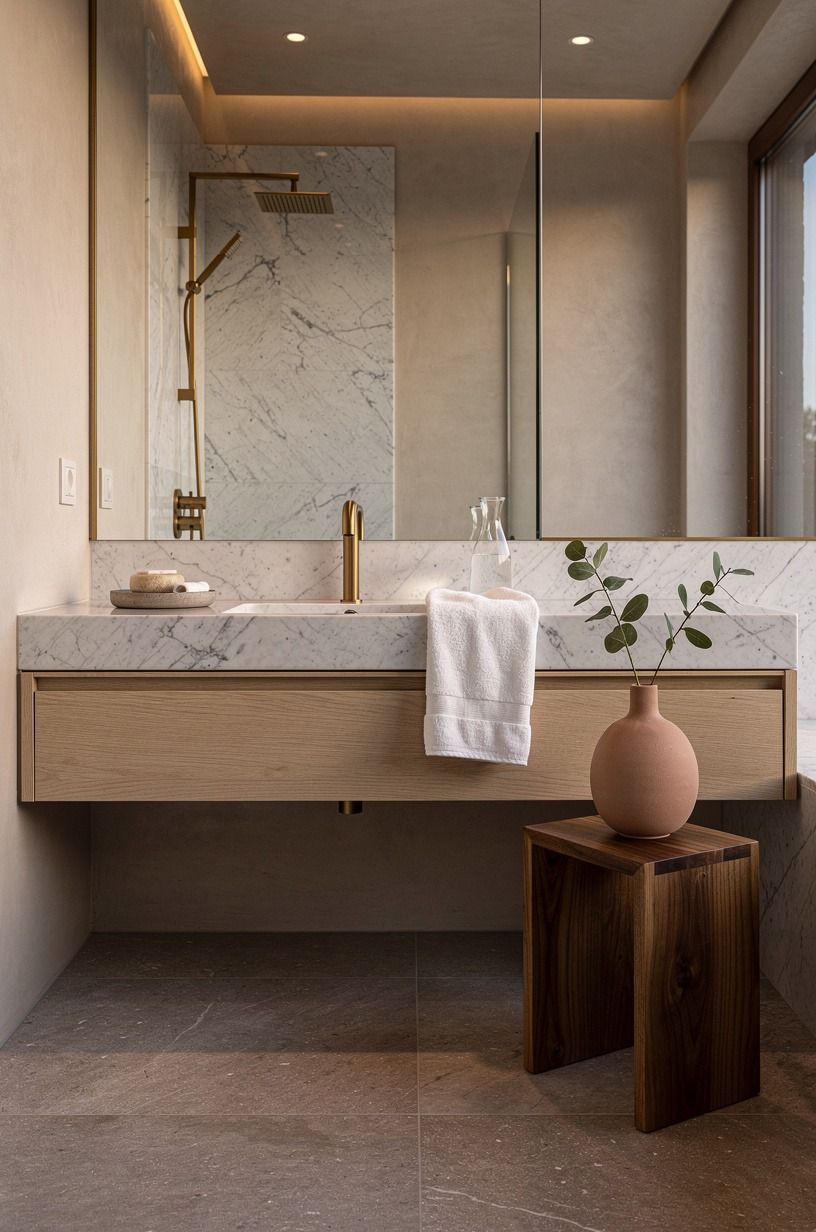
I limited myself to two wood notes: white oak at the vanity and a darker walnut tone in a small stool. You need contrast, but you don't need a lumberyard in a room this size.
The pale oak catches morning light; the darker stool makes the Carrara marble floor feel grounded. I made the mistake of adding a third reddish wood sample, and it looked like leftover furniture. Stick with two.
Your eye will read the room as warm instead of busy.
4Float a 32-Inch Oak Vanity
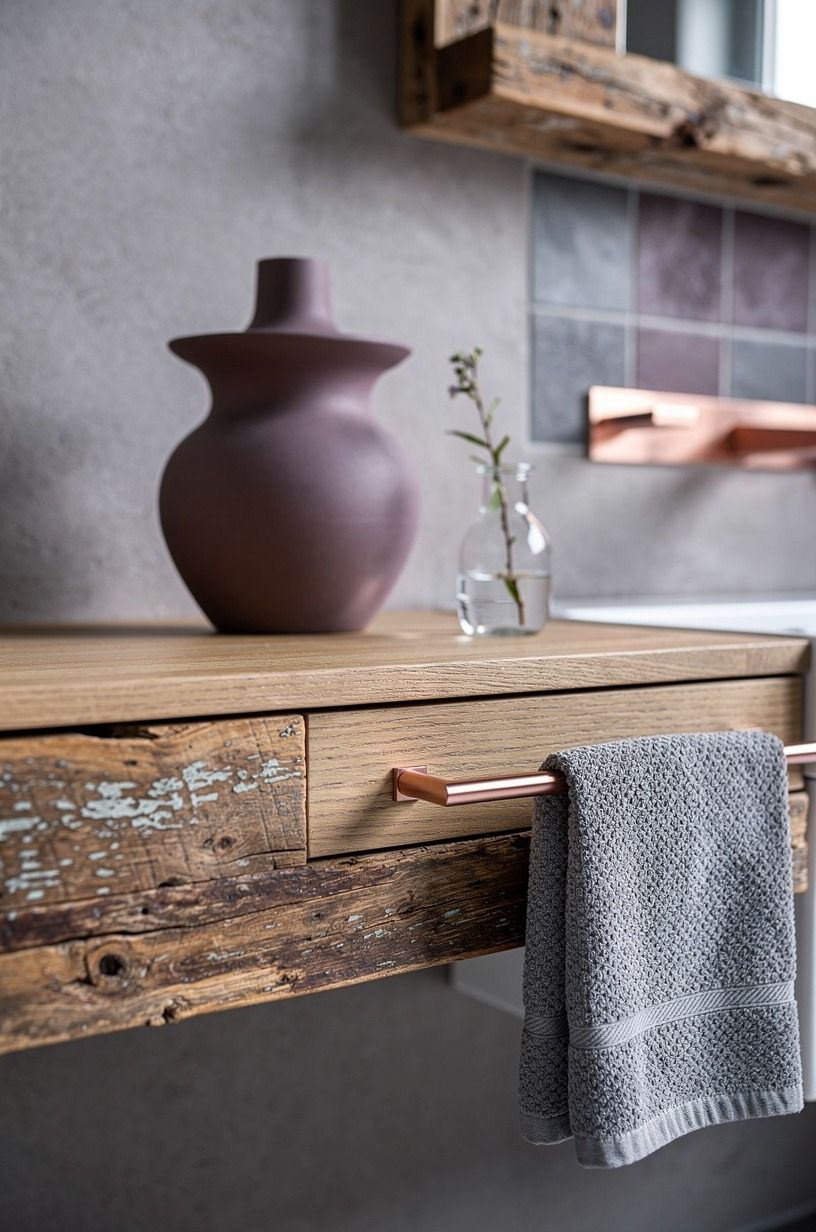
A floating IKEA GODMORGON reclaimed teak vanity gave the floor a little breathing room, which made the bathroom feel wider than it is.
5Let the Mirror Break the Green
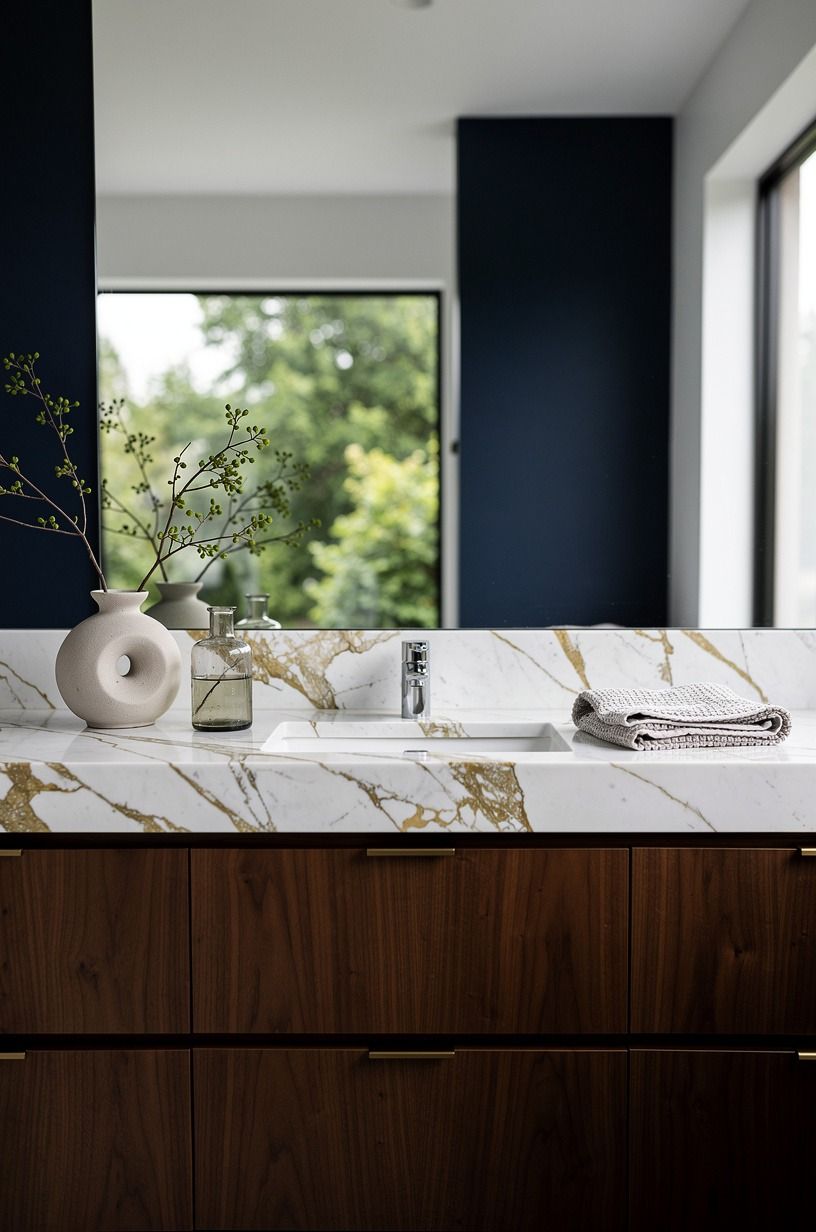
I hung an irregular aged brass mirror instead of a sharp black rectangle. Black-framed mirrors are everywhere, and I get why, but they can make a soft green wall feel outlined and stern.
Your mirror should interrupt the wall gently. Mine has a slightly wavy edge, so the Calacatta marble surface feels less like a showroom. And yes, it catches toothpaste splatters faster than black.
Worth it. The metal warms up beside green in a way chrome never did.
6Build the Three-Height Light Stack
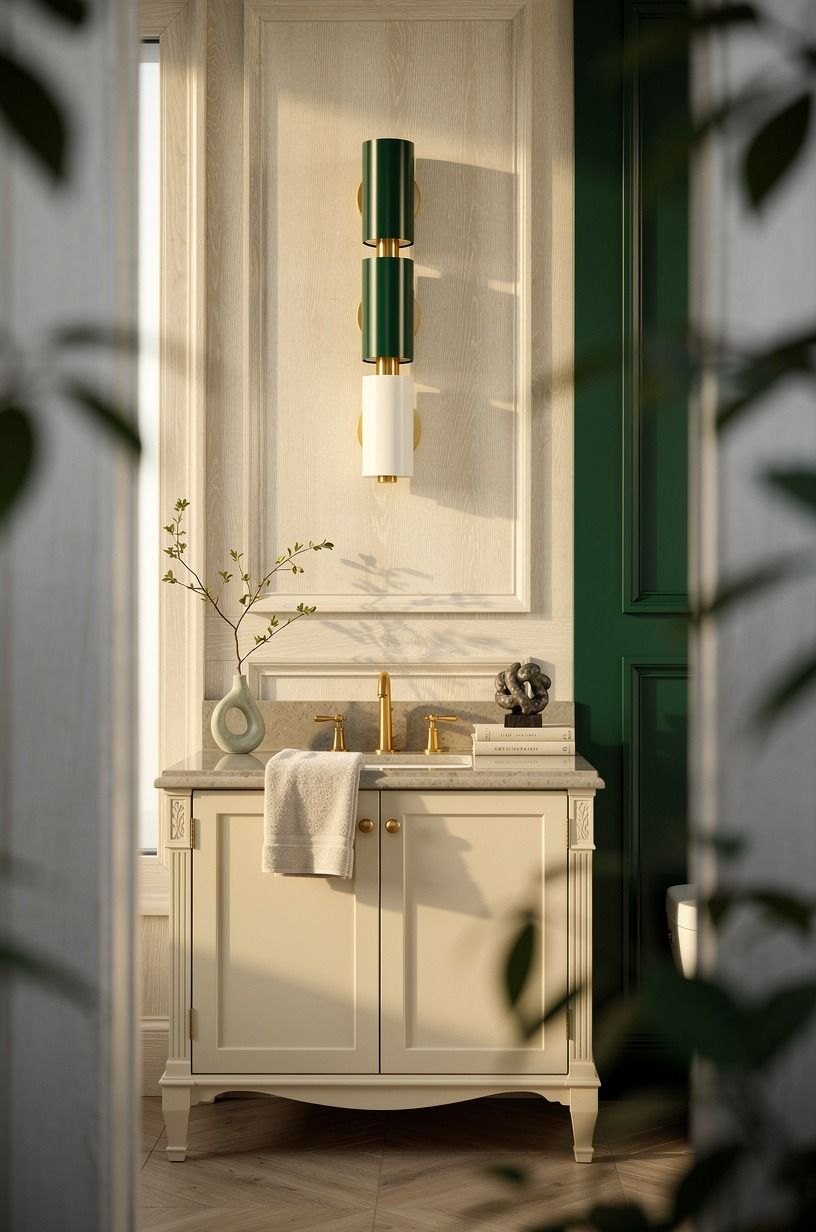
Overhead light alone is rude. I added a ceiling fixture, a pair of opal glass sconces, and a low lamp on the counter for evenings. You don't need all three on at once, but you need choices.
The sconces sit beside the mirror, around eye level, and the lower lamp throws a soft pool onto the emerald wall. Your bathroom becomes more inviting when light comes from more than one height. See similar finish ideas in white microcement bathroom ideas for a bright seamless look.

7Frame the Sink with Unlacquered Brass
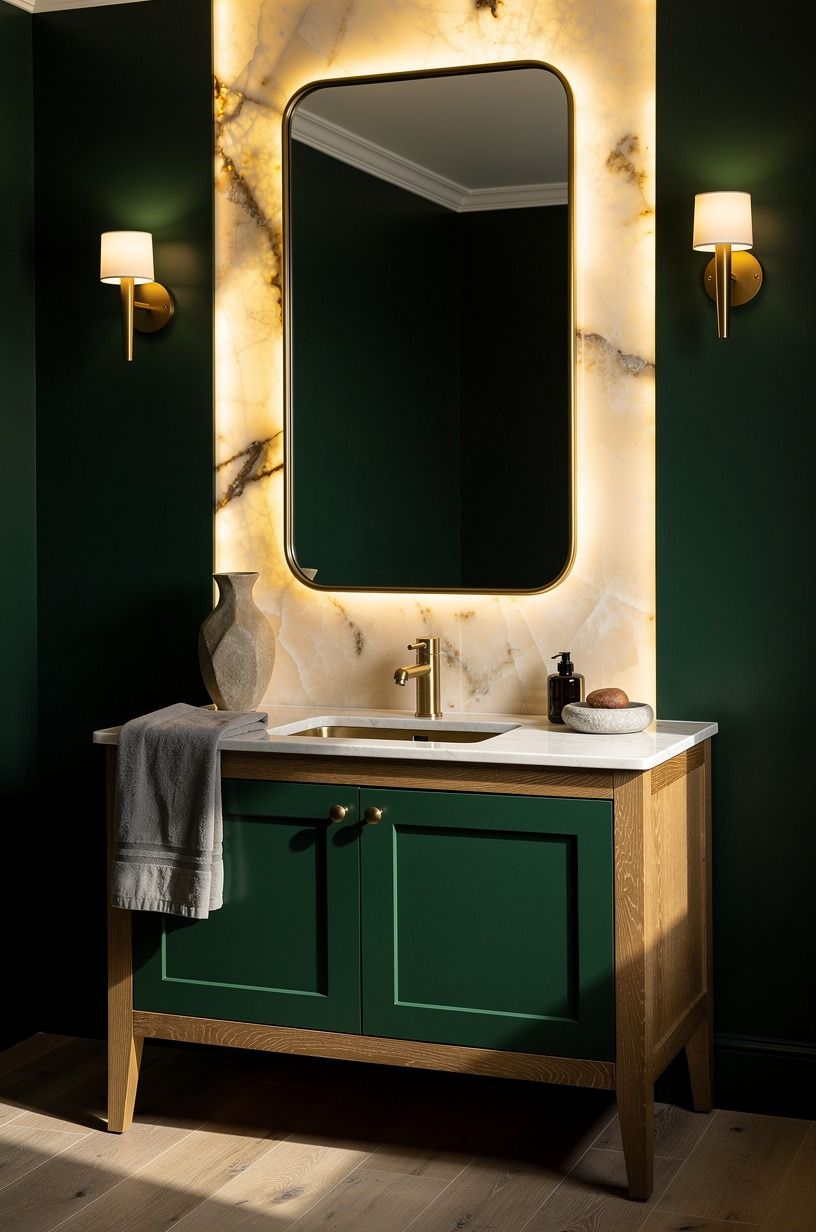
I chose an unlacquered brass faucet because it will darken and spot a little over time.
8Paint the Ceiling, Not Just the Walls
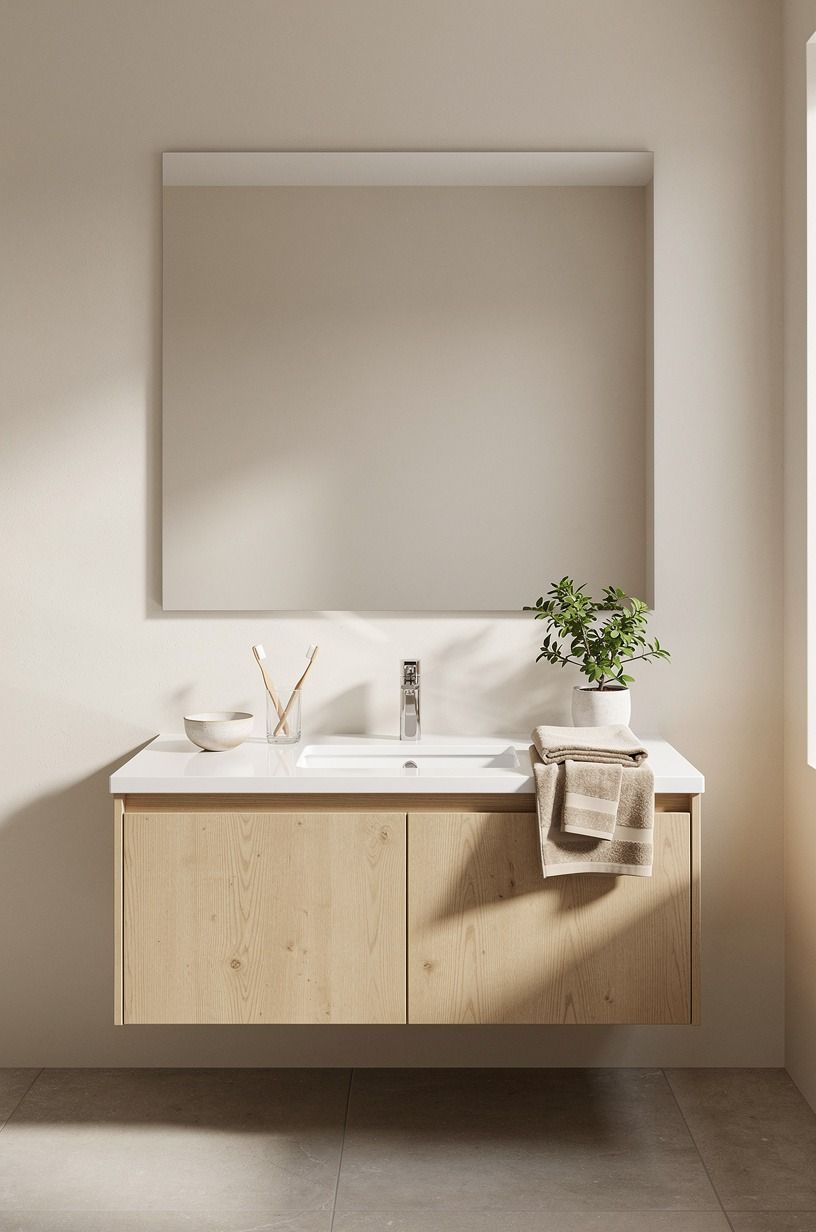
The microcement stopped below the ceiling, so I painted that last plane Sherwin-Williams Sea Salt SW 6204. It keeps the upper part of the room airy without making the green wall look chopped off.
You might be tempted to use crisp white. Don't, unless your room gets a lot of warm sun. White can make a green bathroom feel freshly renovated in the bad, rental-apartment way.
Sea Salt has enough gray-green in it to keep the transition quiet.
9Hang Belgian Flax Instead of a Plastic Curtain
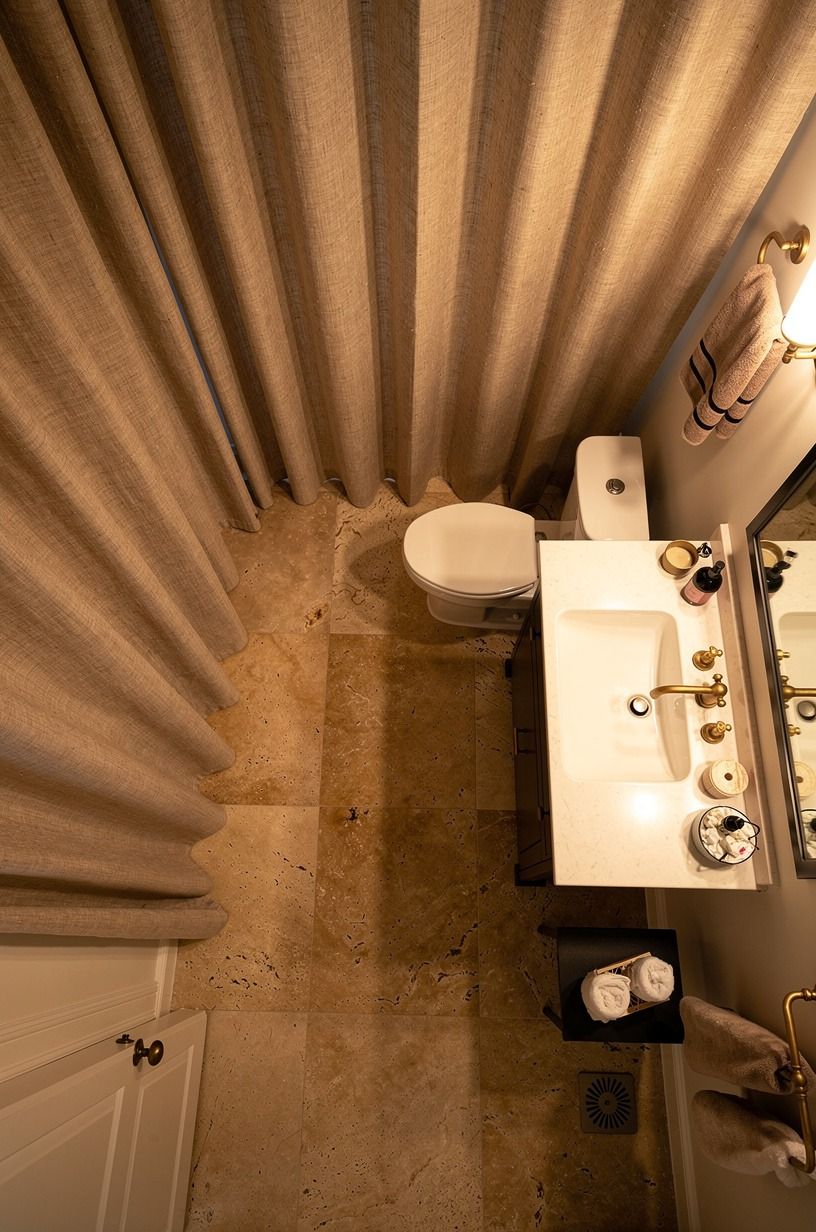
I used a Belgian flax linen shower curtain outside the liner, hung high and wide on a simple rod. It softens the hard corners around the tub and makes your ceiling look taller, even if the room is modest.
The fabric has a relaxed weave and a little unevenness. That's why it works. A stiff polyester curtain with a printed leaf motif would've felt like it was trying too hard.
You want the material to suggest nature, not announce it.
10Choose Zellige Over Subway Tile?
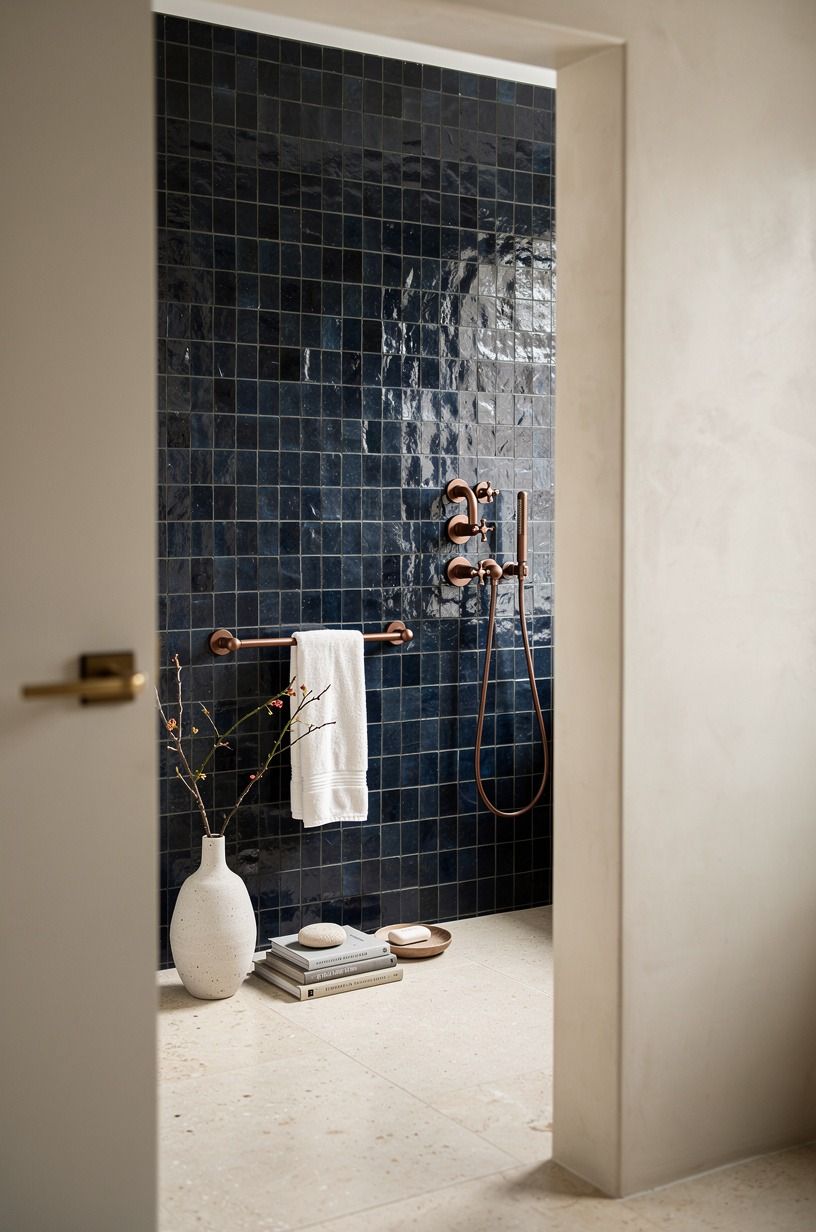
For a small accent behind the sink, I picked hand-glazed emerald zellige over subway tile. Subway tile is useful, cheap, and frankly a little too tidy for this room. Zellige has small shifts in glaze that make the green microcement look deeper.
Typical zellige runs $15-$35 per sq ft, while subway tile often lands at $2-$10 per sq ft. You don't need a whole wall. I used it in one narrow splash zone, where your eye can enjoy it without turning the room into a pattern contest.
11Keep the Shower at 36x36 In Minimum
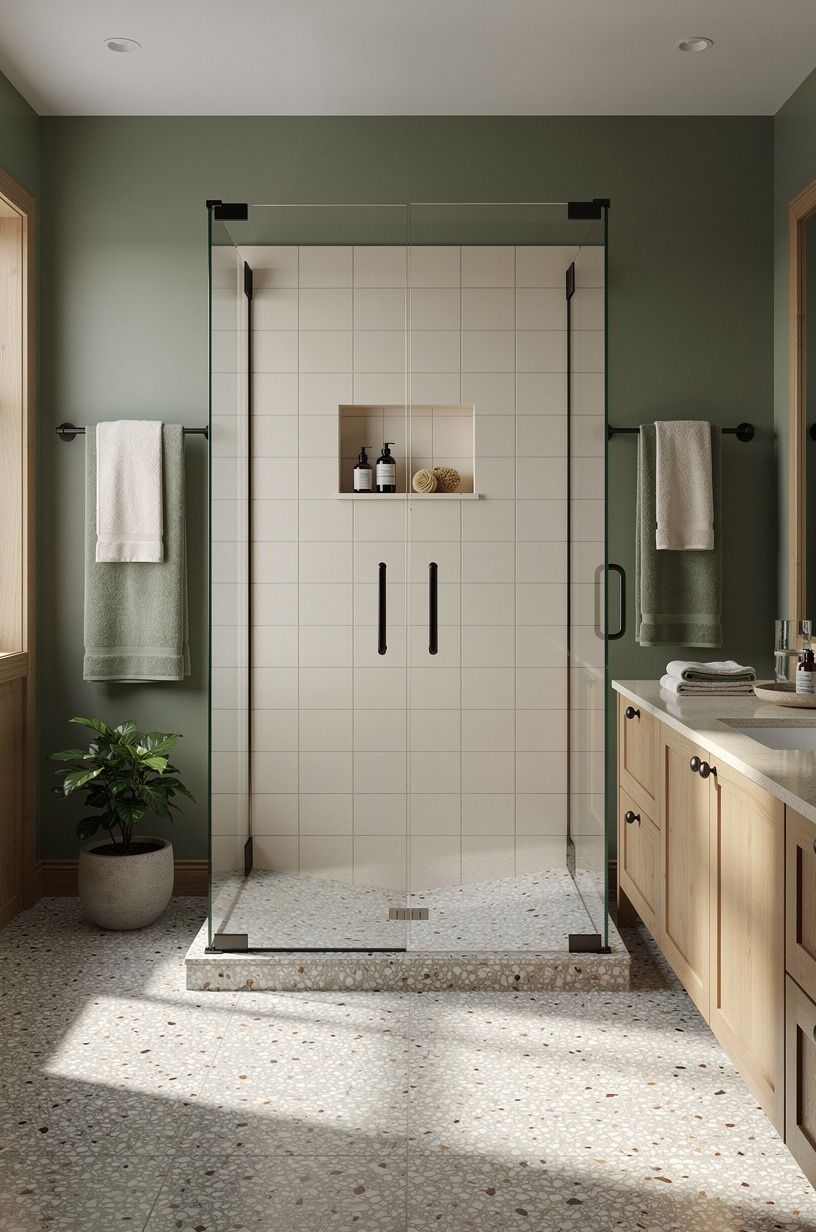
A comfortable shower needs at least 36x36 in of clear interior space. I measured before falling in love with a chunky corner bench, and I'm glad I did. The bench would've stolen the elbow room you notice every single morning.
Instead, I added a slim teak shower stool that can move when you need more space. It holds a towel or a book during a bath, then tucks away. Your layout should protect how you move, not just how the room feels.
12Layer the Counter Like a Still Life
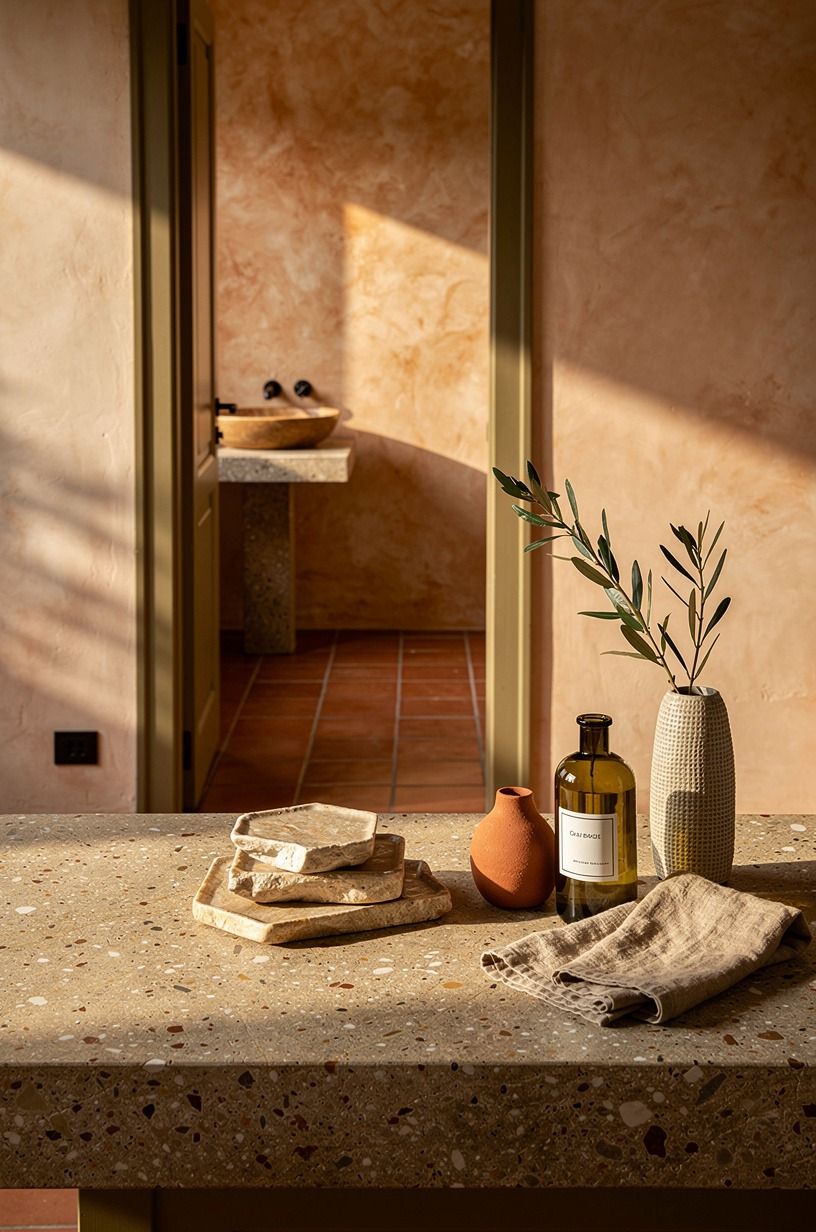
On the vanity, I kept three things: smoked glass soap bottle, a Venetian plaster dish, and a small ceramic cup for toothbrushes. That's it. Your counter doesn't need a dozen matching containers to look lived-in.
I tried a tray packed with skincare once, and it made my calm bathroom feel like a pharmacy shelf. A little empty counter is luxurious. The green wall does enough visual work, so let your daily items stay quiet.
13Add Chestertown Buff Through the Doorway
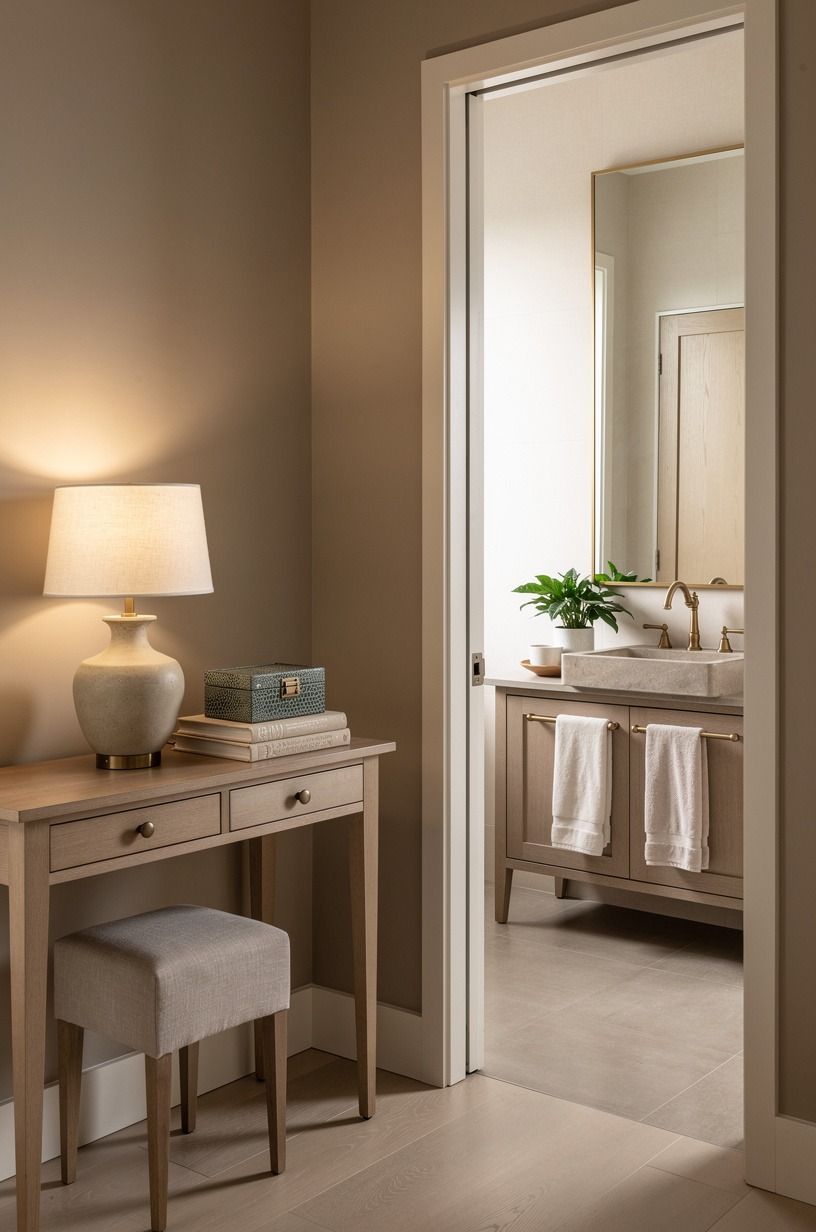
I painted the hall-facing side of the door Benjamin Moore Chestertown Buff HC-9. It isn't green, which is exactly why I like it. The warm ochre catches the green microcement and makes the bathroom feel connected to the rest of the house.
You could paint the entire door green, but that creates a tunnel effect in a compact room. Buff gives your eye a pause between spaces. And it looks especially good beside shagreen accents, even on gray winter afternoons.
14Skip Matching Towels and Mix Texture
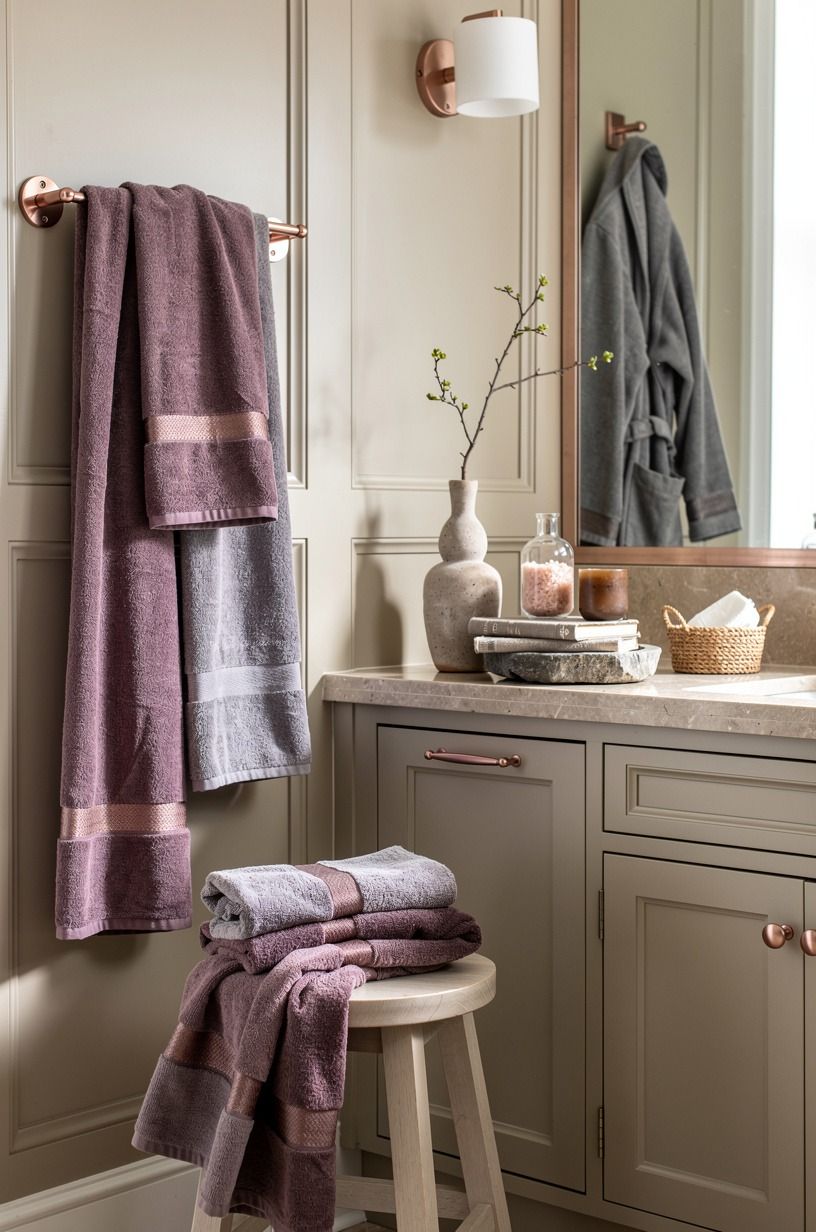
Matching towel sets felt too hotel-lobby for me. I mixed washed Belgian linen towels in oatmeal with one faded olive hand towel, then added a nubby bath mat. Your textiles should feel collected, not issued.
The linen has enough texture to make the room feel comforting. I avoided bright white because it made the green look sharper.
Oatmeal is kinder. For another softly layered material direction, visit neutral zellige tile bathroom ideas for soft earthy calm.
15Protect the 21-Inch Toilet Clearance
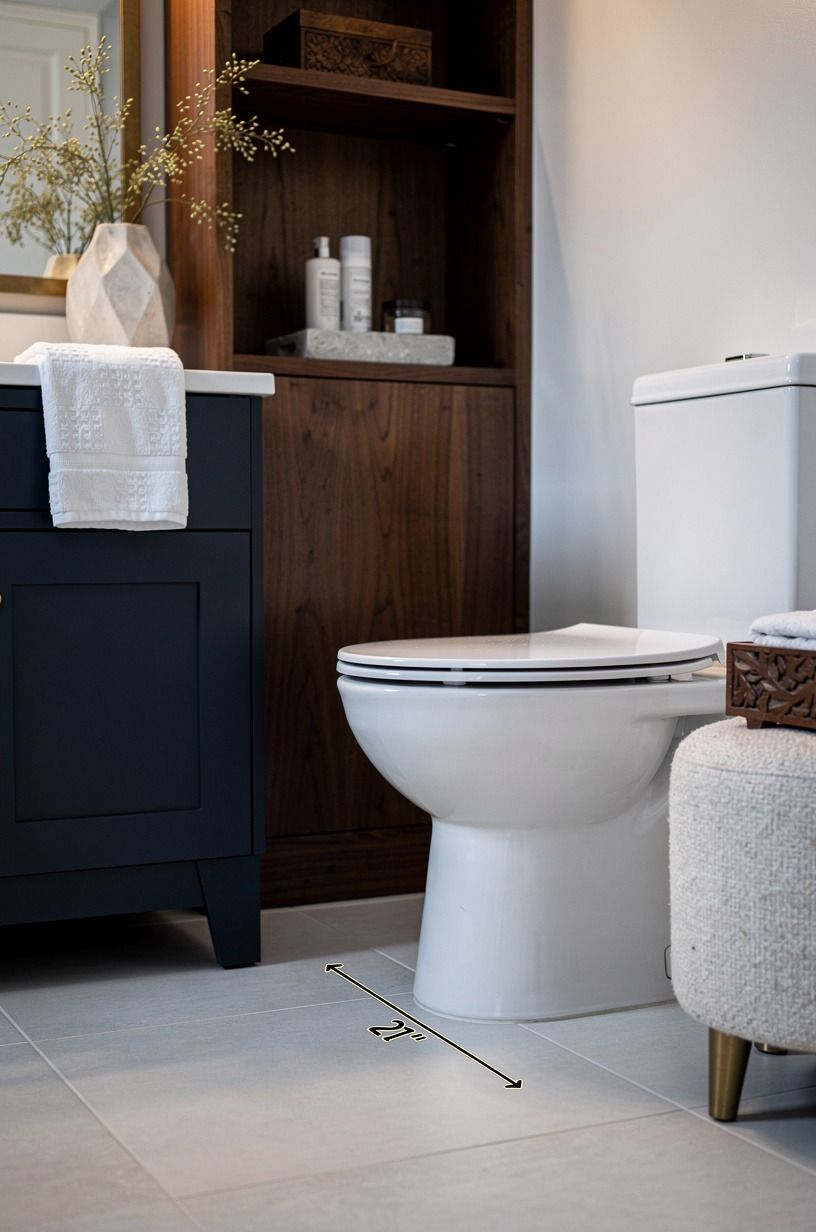
You need at least 21 in of clear space in front of a toilet. I know that sounds boring beside paint and tile, but this measurement stopped me from adding a freestanding basket in the wrong spot.
Instead, I mounted an organic bouclé wall cabinet above the toilet. It holds extra paper and keeps the floor open.
Your bathroom feels more peaceful when you aren't sidestepping storage every time you turn around. Function first, then the charming bits.
16Borrow the Tadelakt Mood, Not the Maintenance
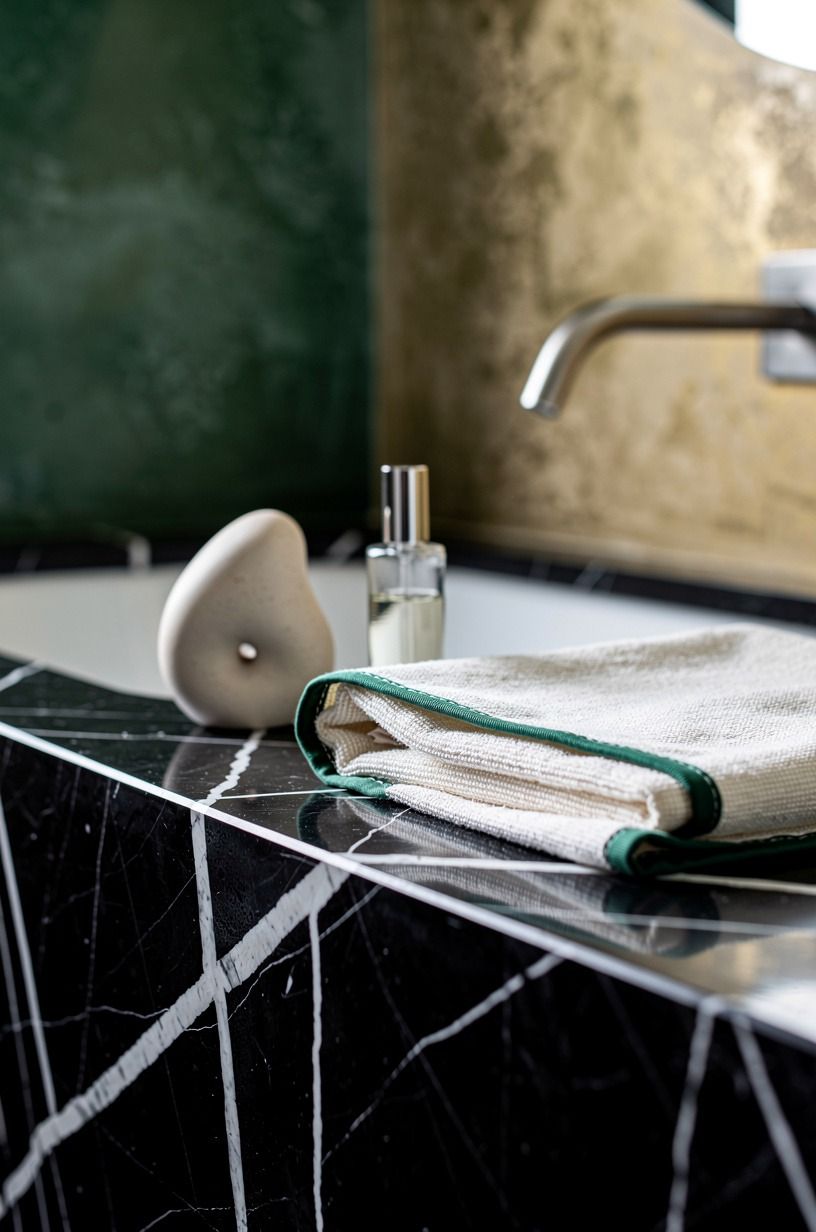
I wanted the soft, hand-rubbed look of tadelakt, but I chose microcement because it suited my budget and tolerance for upkeep. Both finishes have a tactile, organic look, yet your practical needs should decide.
Microcement gave me the seamless surface I wanted without making every splash feel precious. If you're still choosing, compare tadelakt bathroom ideas for an organic modern spa at home and Venetian plaster bathroom ideas for a serene organic modern look. You’ll see the trade-offs fast.
17Finish with One Living Thing
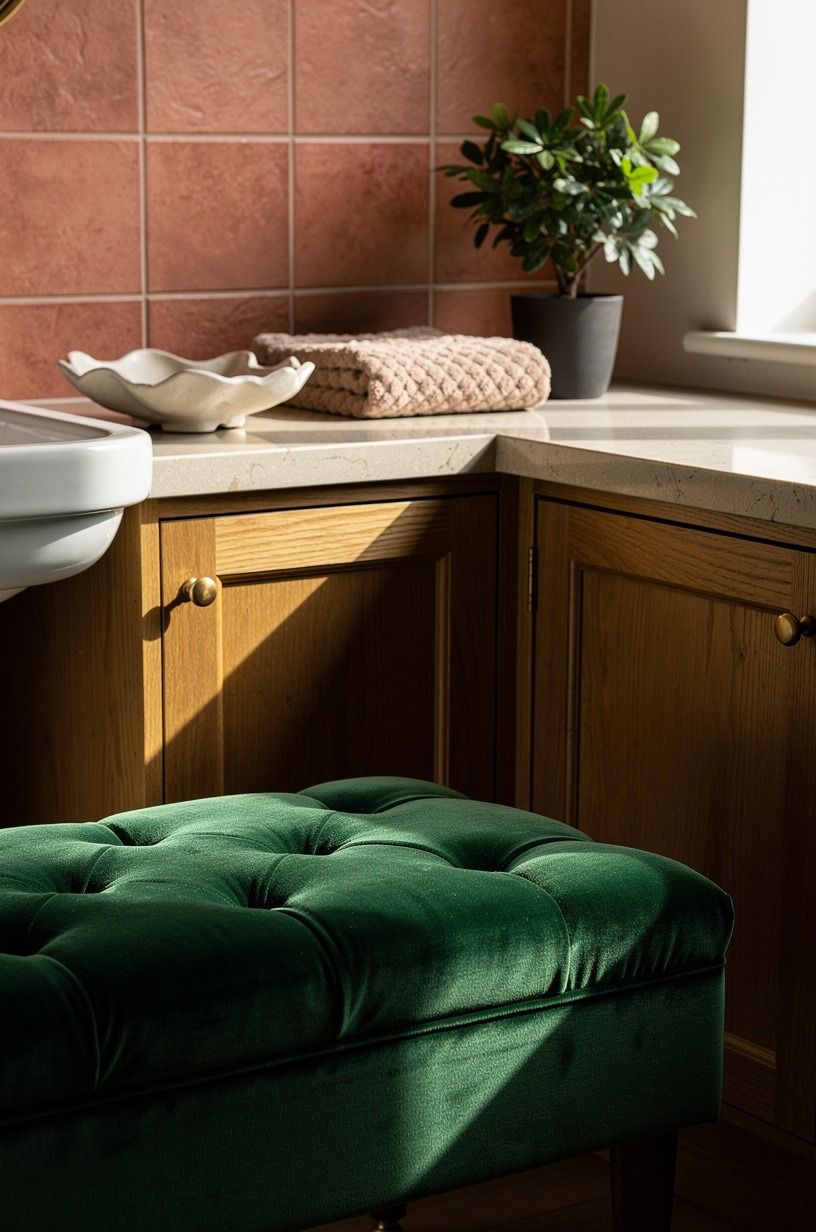
I added a maidenhair fern near the window, then stopped. One living plant gives an earthy room movement, especially when its leaves catch the air from an open window.
But don't force a plant into a dark bathroom and call it organic. A dead fern is less serene than no fern. If your light is poor, use a branch of olive or eucalyptus in water and replace it when it fades.
Simple. Honest.
How much it cost
My version cost less than a full renovation because I kept plumbing where it was and focused on surfaces, light, and storage. Your quote will vary by labor and region, but these typical US tiers are a useful reality check.
I spent in the mid-range lane because the microcement finish, vanity, lighting, and faucet all mattered to how the room functions. You can save by keeping your tub and toilet. I wouldn't save by choosing poor lighting, because it makes every expensive surface look flat.
Why Green Microcement Feels Right Now
Green microcement is having a moment because people are tired of rooms that look assembled from separate aisles. The seamless surface feels modern, but the muted color brings in something older and more grounded. Your bathroom can feel refined without becoming precious.
I've watched bright white bathrooms age quickly in photos. This softer direction has more staying power because it leaves room for wood, brass, linen, limestone, and the normal clutter of life. For a lighter version, browse minimalist microcement bathroom ideas for a calm spa-like retreat.
What I Learned After Living With It
I used to think bathroom design was mostly about choosing the prettiest tile. It isn't.
The room works when you decide what should disappear and what deserves a little presence. In mine, the green microcement disappears in the best way.
It doesn't beg for attention, yet it changes how every other object reads. The oak looks warmer.
The brass looks less formal. Even a plain white towel feels intentional against it.
I also learned that "organic" can become a costume fast. Too many baskets, too much fringe, too many little amber bottles, and suddenly you’re styling a café bathroom instead of a real one.
I went back and forth on open shelving because I love how it looks. Then I remembered how I live.
I have face wash, backup toothpaste, and a hairbrush that never seems to be where I left it. Closed storage won.
The biggest surprise was emotional. I expected to enjoy the finished room; I didn't expect it to change the tempo of getting ready.
The green walls make the morning feel less exposed. At night, with only the sconces on, the room gets quiet in a way that makes a bath feel like a choice instead of a chore.
That's the value I care about. Not a dramatic reveal, just a space that gives something back when you use it.
What People Always Want to Know
What is the best green microcement bathroom idea for a small bathroom?
A floating oak vanity with green microcement walls is my first pick because it keeps your sightline open. Pair it with an IKEA GODMORGON unit and one irregular mirror. You get more visual floor space without moving plumbing.
Where can I buy green microcement bathroom pieces on a budget?
Start with IKEA, Target Threshold, and Wayfair for mirrors, storage, and textiles. Facebook Marketplace is useful for solid wood stools and vintage frames. You can get a collected look by mixing one secondhand piece with simple new basics.
How much does a green microcement bathroom makeover cost?
A light cosmetic version can run about $200-$1,200, while a vanity-and-lighting update often reaches $3,000-$9,000. Keeping your existing tub and toilet is free. Your best savings come from avoiding plumbing moves.
Can I create a green microcement bathroom on a budget?
Yes, and you don't need to coat every surface. Paint, a linen curtain, and a brass-toned faucet can shift the mood for far less. Your budget can focus on one continuous green surface, then use secondhand wood and existing storage.
Is a green microcement bathroom worth it in a small space?
Yes, because the seamless finish makes a small room feel less chopped up. Keep at least 21 in clear in front of the toilet and avoid deep floor storage. You gain calmer visual flow and easier movement.
Is a green microcement bathroom a good idea for a rental?
Yes, if you use removable versions of the look. Try peel-and-stick wall panels, a tension rod with linen, and removable lighting. Your lease stays safer while you still get warm organic texture around the pieces you can take with you.
Where I'd Start First
If I had to pick one, I'd start with the green microcement wall. You can't fake the quiet, continuous depth it gives a small bathroom with accessories. Pin this look for later and let the wall do the heavy lifting.