
 by
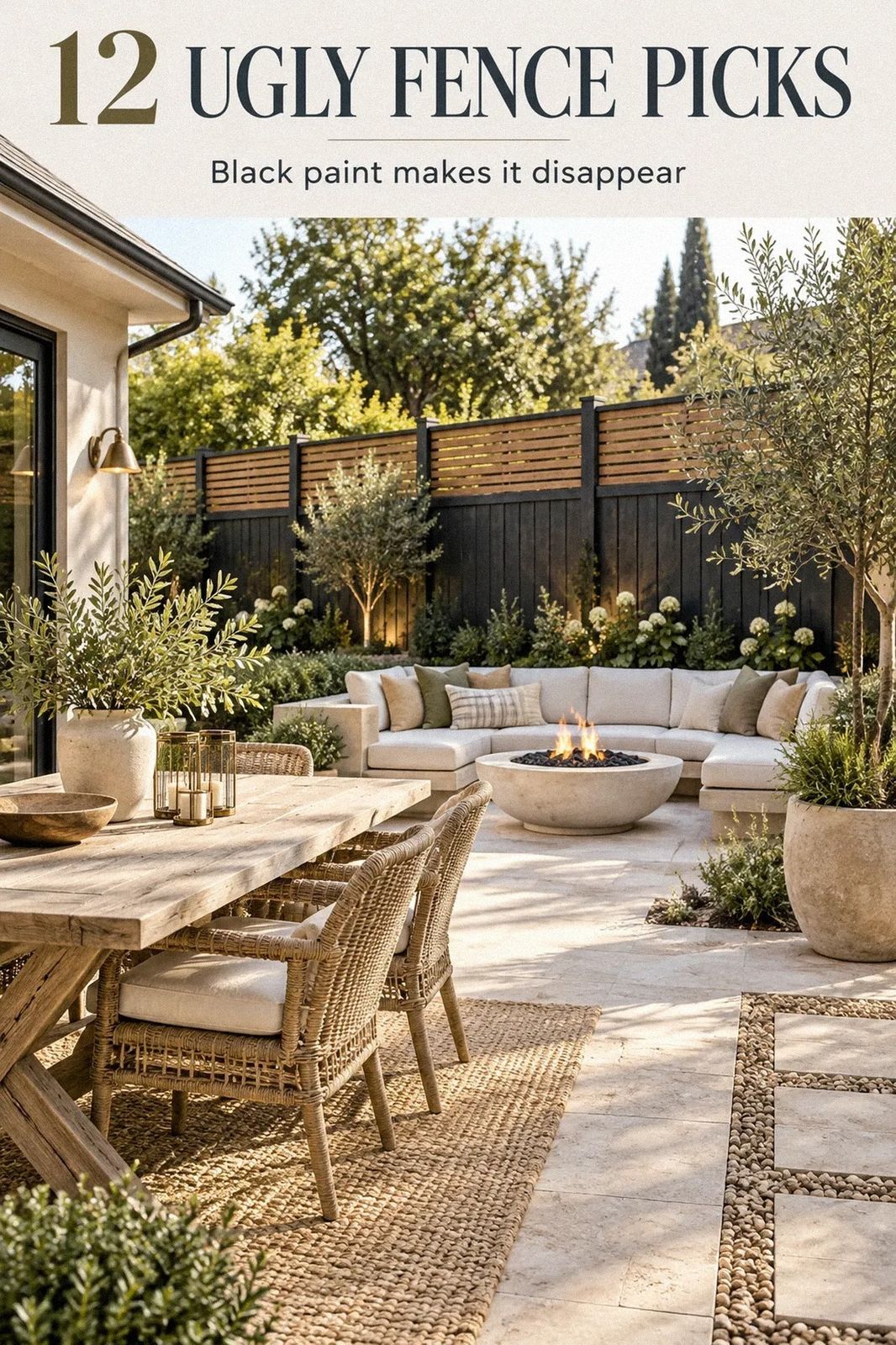
by The easiest way to hide an ugly fence without asking the landlord is to layer renter-safe screens, plants, textiles, and warm lighting in front of it. You don't need paint or permanent hardware. I learned that after drilling into a rental fence once. It looked worse, cost more, and wasn't coming back out cleanly!
- Layer the Two-Texture Screen for an Ugly Fence Cover Up
- Float Tall Planters in Front of the Fence
- Hang the Three-Height Light Stack
- Build a Rental Trellis Instead of a Solid Wall
- Let the Furniture Steal the Attention
- Choose Lattice Over a Solid Cover
- Cover the View With a Foldable Outdoor Curtain
- Anchor the Fence With a Portable Outdoor Rug
- Frame the Fence With a Portable Garden Bar
- Mix Two Woods With the Two-Wood Rule
- Paint a Removable Panel in a Named Color
- Create a Soft Boundary With Cushions and Plants
1Layer the Two-Texture Screen for an Ugly Fence Cover Up
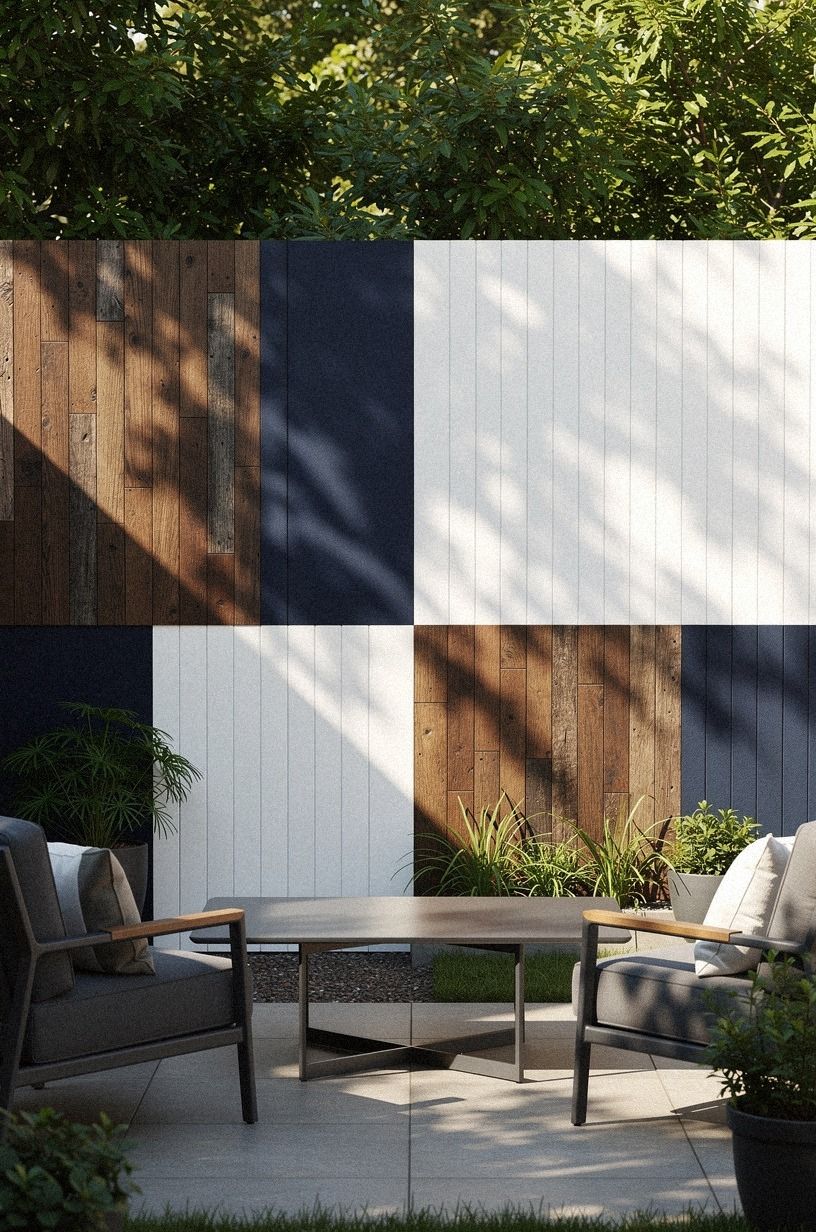
Start with two surfaces instead of one giant cover. A panel of reclaimed weathered teak softens hard horizontal boards, while a walnut-toned slat screen brings a richer texture forward. Attach both to a freestanding support, balcony planter, or removable garden screen so your landlord won't inherit a row of holes.
Your eye needs one quiet texture and one detailed texture. If both layers are busy, your yard will feel cramped.
If both are smooth, the fence will still dominate. I like a warm walnut backing with weathered teak, especially when your patio furniture is white or navy.
Keep the screen at least 36 inches away from any walkway so you won't lose comfortable passage. A narrow strip of gravel, potted grasses, or a polypropylene outdoor rug can make that gap look intentional. For more height ideas, browse these privacy fence topper ideas, but choose a freestanding version if you're renting.
A screen also gives you a place to repeat one outdoor color. Try a navy cushion, a white planter, or a small walnut side table nearby. That repetition makes the fence feel less like an interruption and more like part of a planned patio.
2Float Tall Planters in Front of the Fence
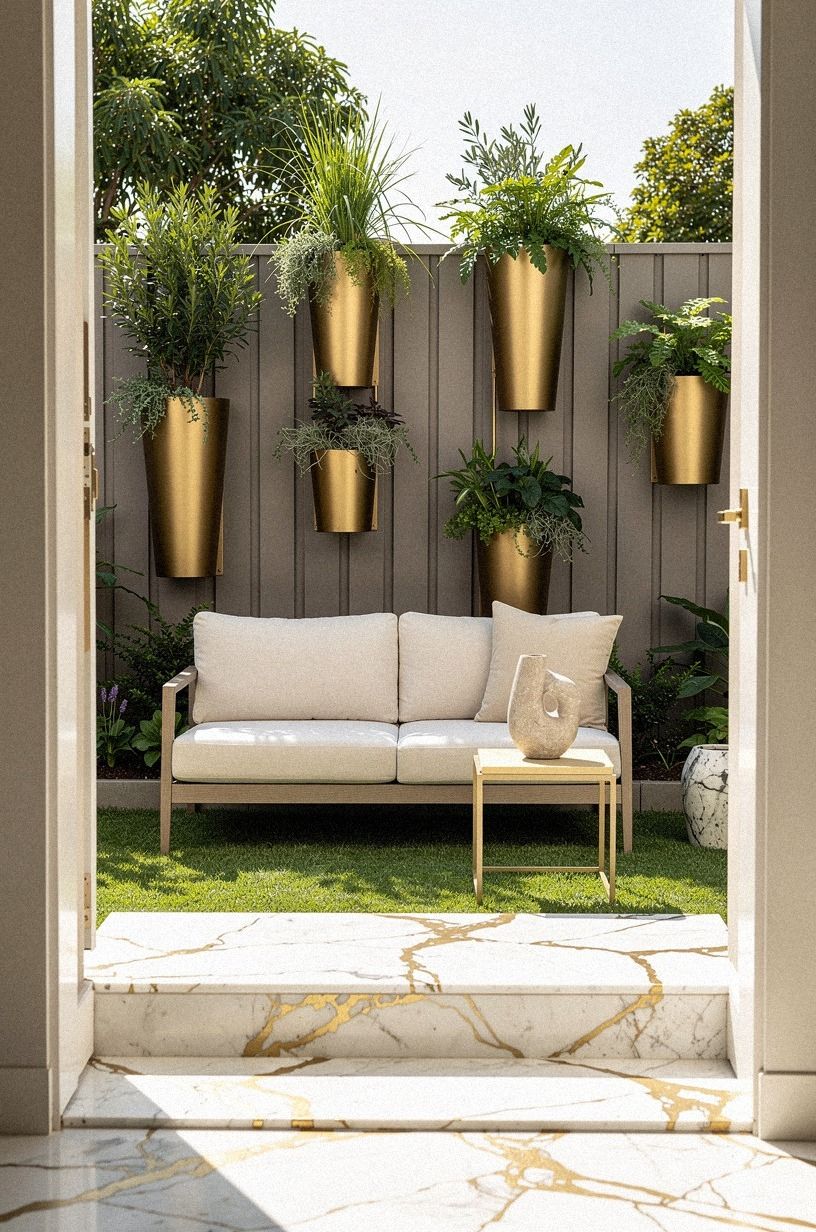
Tall planters work because they interrupt the fence at eye level without making the whole yard feel blocked.
3Hang the Three-Height Light Stack
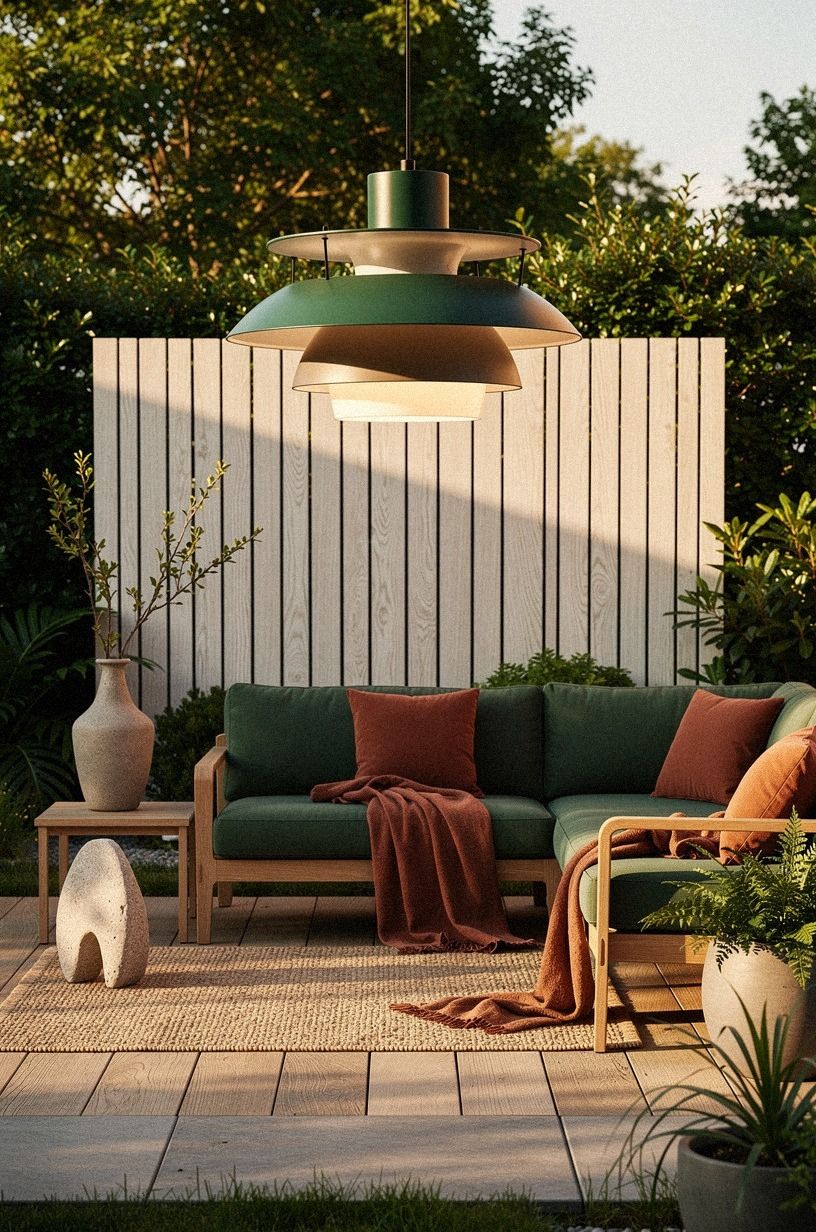
Ugly fences look harsher after sunset because one bright bulb throws every board and crack into view. Build a three-height lighting stack instead: low lanterns near the floor, mid-level fixtures on a freestanding post, and LED string lights at the top. Your fence fades into shadow while your seating area gains a warm, dramatic glow!
Keep the lighting soft. Bright white bulbs will make your yard feel like a parking lot, while warm-white bulbs create a peaceful evening edge.
The best arrangement isn't perfectly symmetrical. Hang one strand at 7 feet, place a lantern at knee height, and let a small table lamp glow near your chair.
I prefer plug-in or solar fixtures with weighted bases because you won't need electrical work. A lantern with a cerused white-oak base looks refined beside rust-toned pots, while a forest-green finish feels more intimate. If you're styling an indoor rental too, the same layered approach works with these easy rental bathroom updates.
And don't staple lights into the fence. Use removable hooks on a freestanding trellis or tension structure, then test the view from your favorite chair before committing. One low light near your feet can do more than six harsh fixtures above.
4Build a Rental Trellis Instead of a Solid Wall
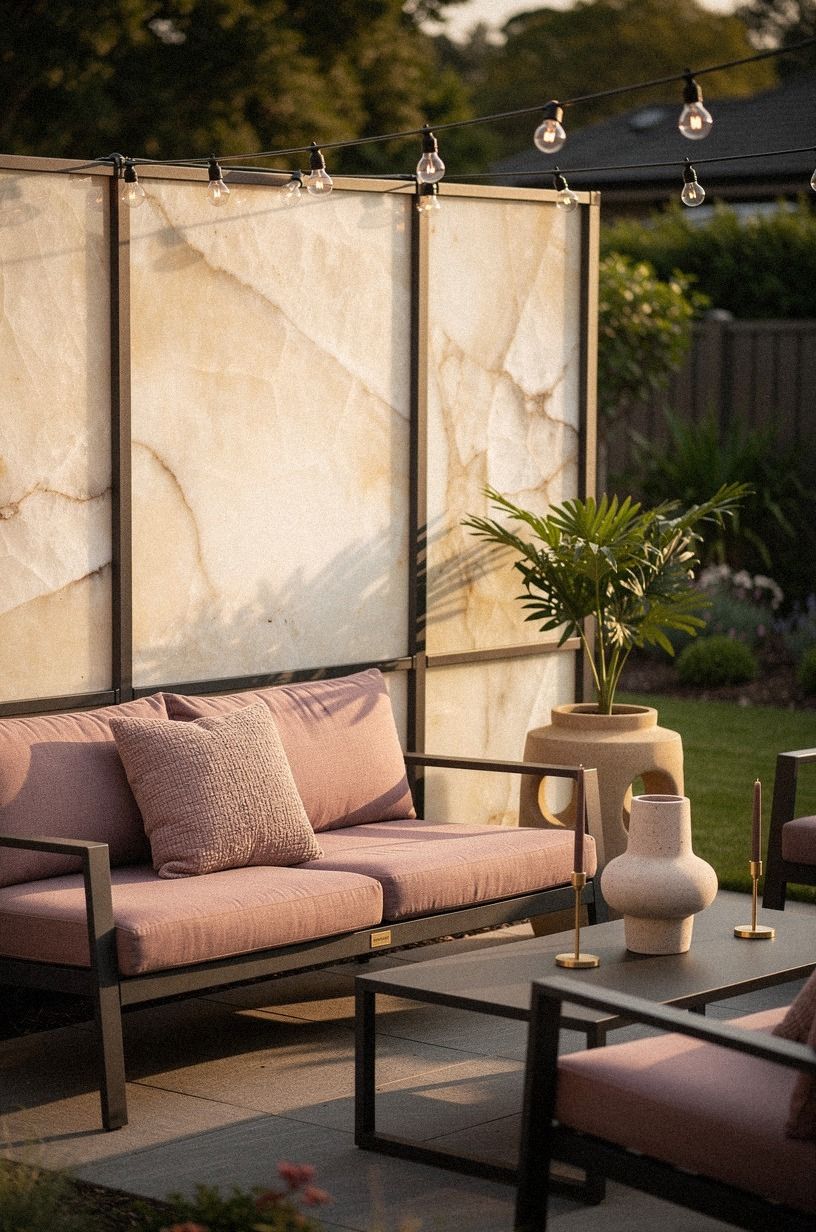
A trellis can hide the worst part of a fence while giving you a place for vines to climb. Choose a charcoal trellis with brass details and a small panel of backlit translucent onyx, then set it in large planters filled with jasmine, clematis, or a container-friendly climbing rose. Your landlord gets the original fence back, and you get a softer, more organic view.
The important part is distance. Set the trellis a few inches forward so leaves can wrap around it, but don't press wet soil or dense foliage against the fence. Your plants need air, and you'll avoid creating a damp strip that stains the boards.
I like the slightly imperfect look of vines crossing at different heights rather than a wall trimmed into one green rectangle. If you're impatient, combine a live vine with a faux eucalyptus garland or dried willow branches for immediate coverage. That mix can feel airy while the real plant fills in.
Use a removable planter box for narrow patios, especially if your walkway clearance is already close to the 36-inch minimum. For a related renter-friendly hiding move, see these closet curtain ideas for an ugly rental closet. The principle is similar: conceal the unattractive surface while keeping the original structure untouched.
5Let the Furniture Steal the Attention
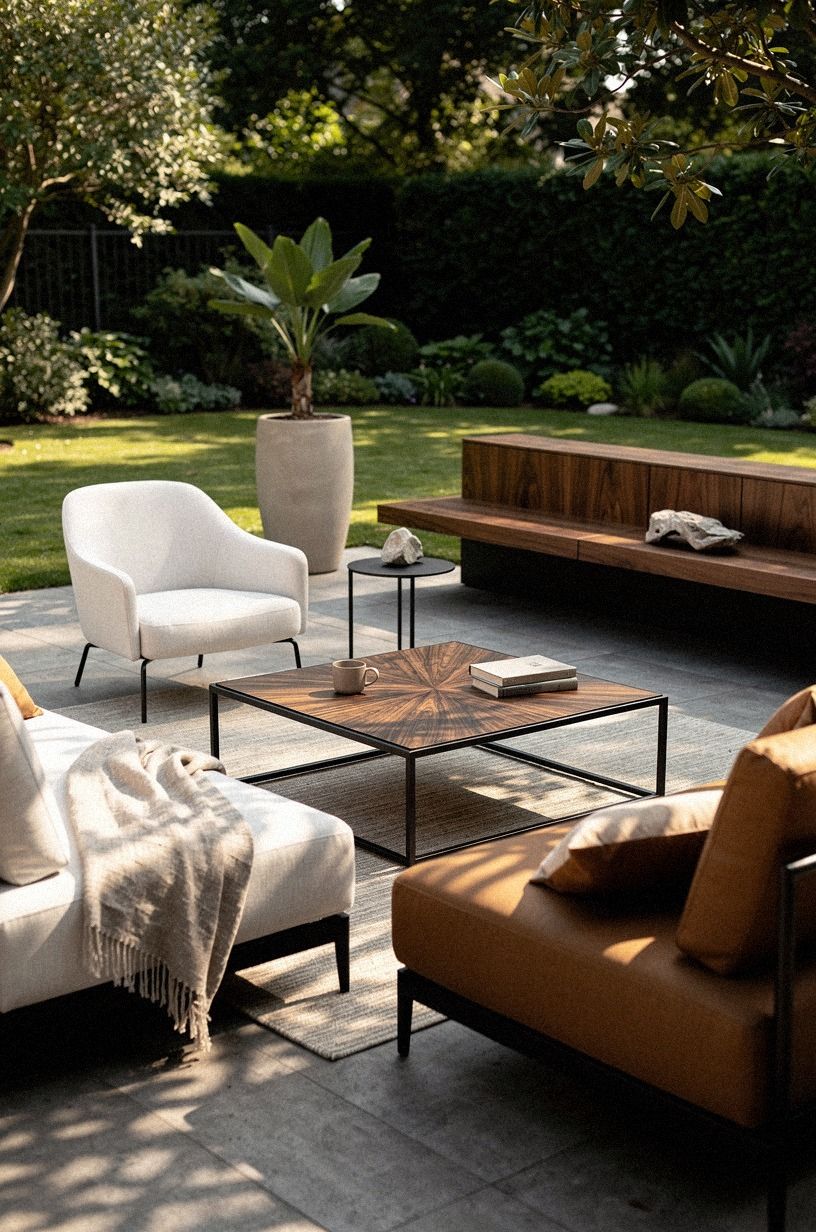
You can shift attention away from an ugly fence by giving the furniture a stronger color story. Use a freestanding bench, plant stand, or storage cabinet with a book-matched walnut surface, or choose removable outdoor fabric in camel. Your eye will land on the intentional object instead of the weathered boards.
This works best when the color has weight. A warm-white chair may disappear against a faded fence, but a black bistro set with camel cushions creates a clear focal point.
I wouldn't paint every piece the same shade. One walnut bench, two warm-white chairs, and a camel-striped cushion feel more gathered and relaxed.
Choose exterior materials that can survive sun and damp air. Sunbrella cushions are practical when your patio gets heavy use, and they're easier to remove than built-in upholstery.
Your color doesn't need to match the fence. In fact, contrast often feels more sophisticated than trying to disguise everything.
If your fence is visible from the kitchen, repeat one accent color indoors with a vase or runner. That small connection makes your yard feel like part of your home, rather than a forgotten strip outside. A few cheap countertop covers for an ugly rental kitchen can help you carry the same temporary approach indoors.
6Choose Lattice Over a Solid Cover
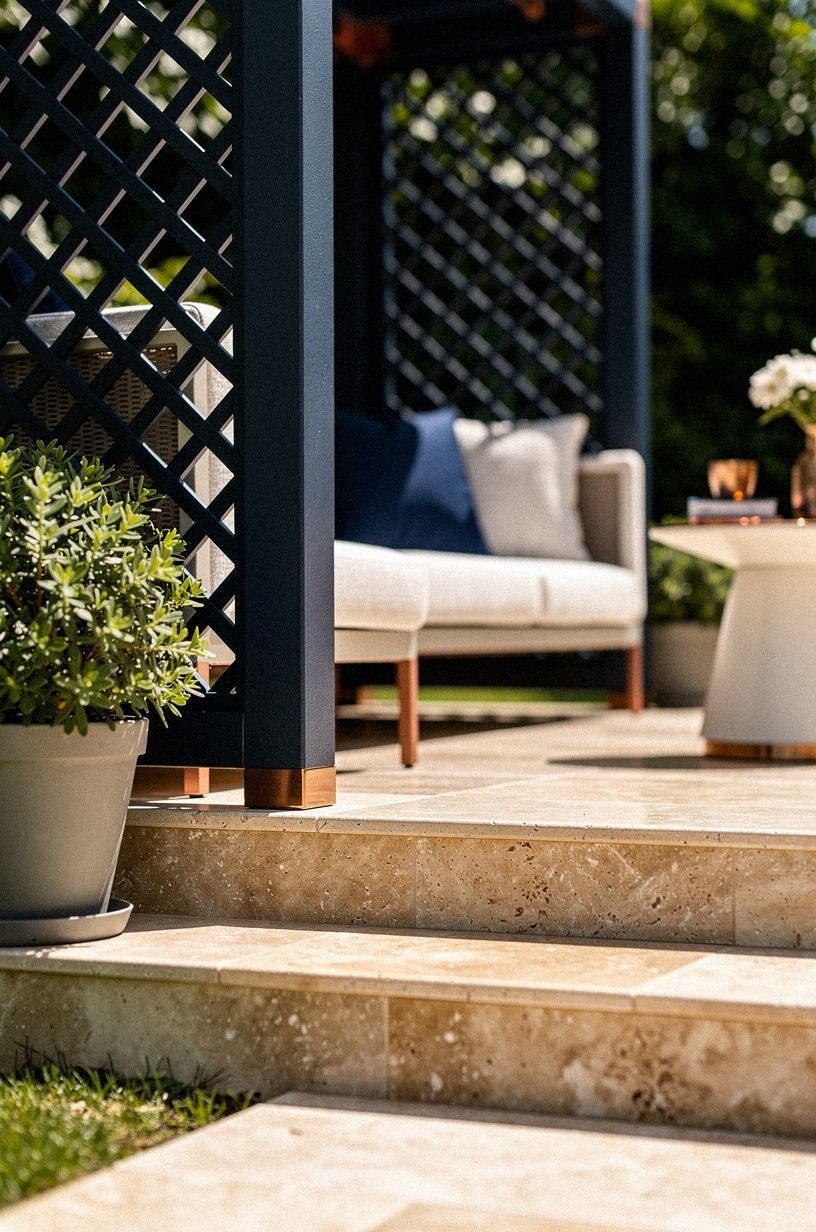
A solid fence screen can hide the boards, but it may also make your patio feel smaller and block every breeze.
7Cover the View With a Foldable Outdoor Curtain
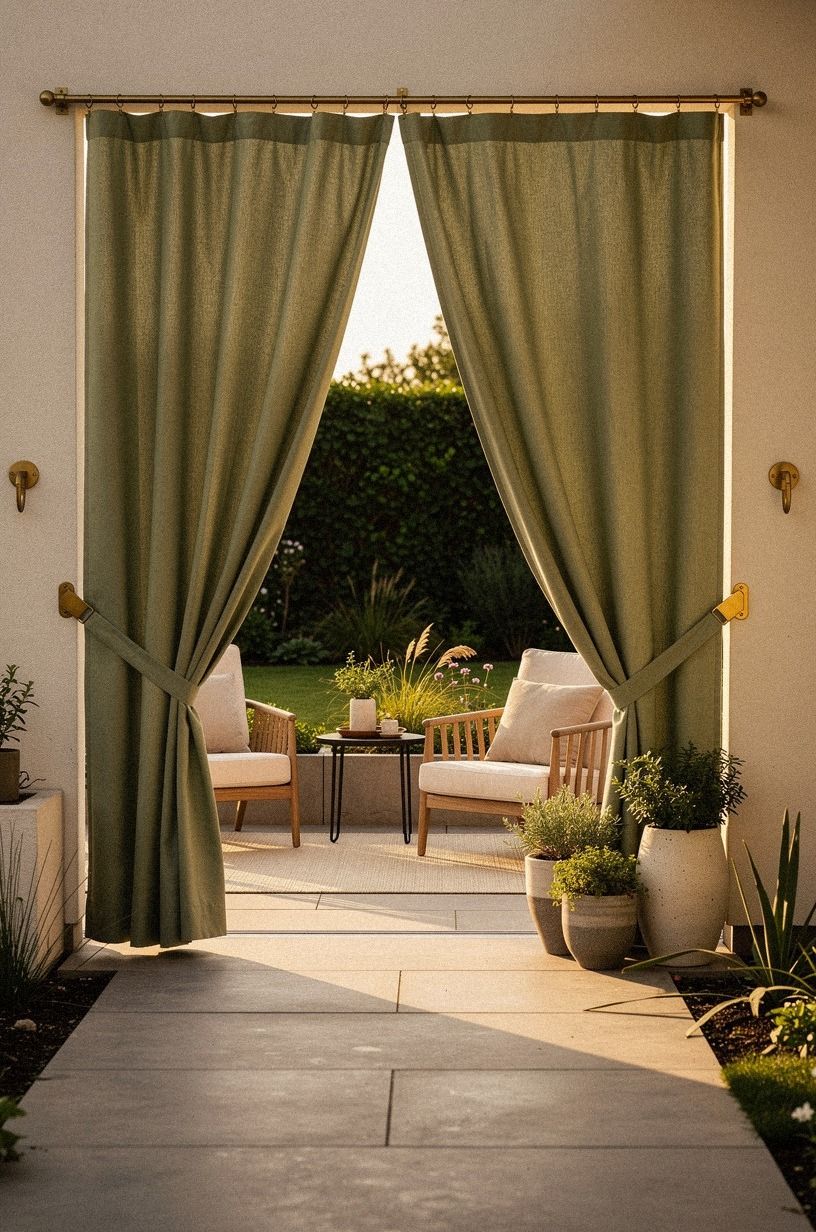
Outdoor curtains are the fastest way to make a rough fence look softer, especially when your seating area sits close to it. Hang sage-green weather-resistant canvas curtains from a freestanding natural-wood gazebo structure, pergola, or tension-supported setup. Your landlord won't need to approve a fabric panel that can come down when you move.
Pick a fabric with enough body to hide the boards behind it. Thin white sheers can feel airy, but they'll only blur the fence.
A warm cream canvas or Belgian flax-look outdoor fabric creates a more private, inviting backdrop. I tested a light cotton curtain once, and one damp week left it smelling like a basement.
Exterior fabric is worth the extra cost.
Use two panels rather than one wide sheet so you can open the center when the weather is good. Your patio table should still have room to breathe, and you won't want fabric brushing plates or candles. Keep the curtain hem several inches above the ground so water and dirt won't collect.
A curtain can also hide the section that looks worse than the rest. For another soft-cover approach, look at these cheap countertop covers for an ugly rental kitchen. The same temporary layer can change the whole visual field!
8Anchor the Fence With a Portable Outdoor Rug
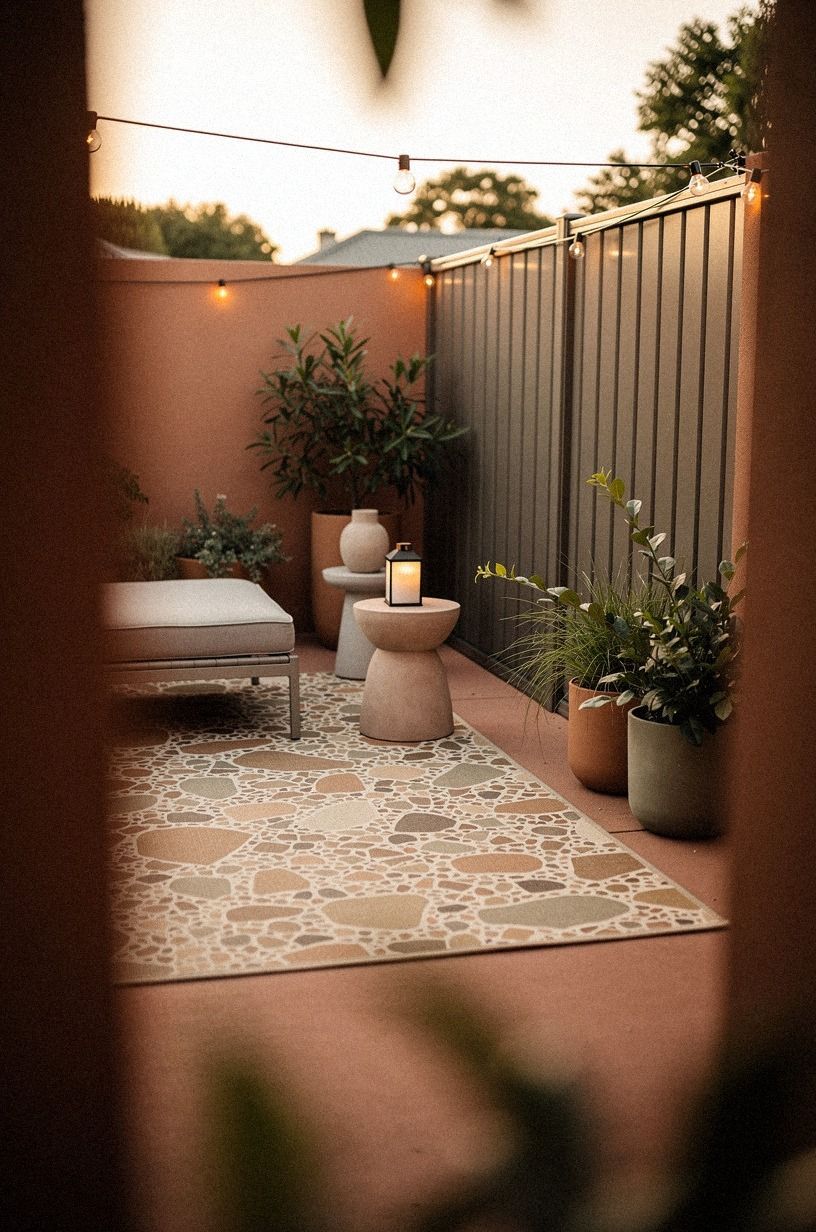
A rug won't cover the fence, but it can pull your eye down and create a stronger room around it.
9Frame the Fence With a Portable Garden Bar
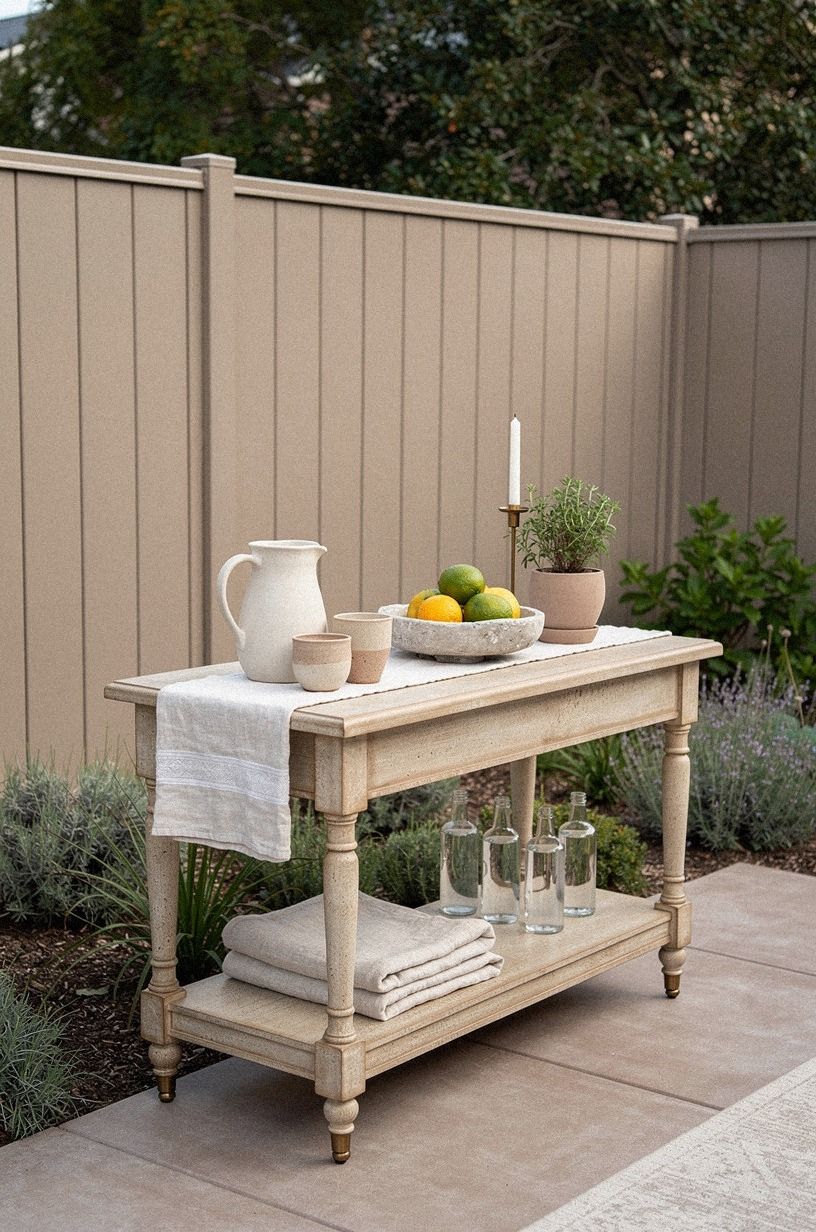
A slim garden bar gives your ugly fence a job. Place a folding bar cart or narrow serving console in front of the most damaged section, then add a removable panel with a hand-applied Venetian plaster finish behind it.
Style the area with clay-toned pots, linen textiles, and aged-brass lighting. Your eye will read a useful station instead of a blank, uneven boundary.
Keep the bar shallow enough that it won't steal your walking space. A narrow console can hold a tray, small cooler, and two pots without making your patio feel crowded. Your table height should stay around 28 to 30 inches if you're creating a dining surface, so the arrangement feels comfortable rather than improvised.
I wouldn't cover the cart with too many decorations. One clay terracotta pot, a linen runner, and a small aged-brass lamp are enough.
Your fence needs visual relief, not another cluttered display. The warm tones will also soften the cold gray or orange tones common in older fencing.
If you don't entertain often, use the same piece as a plant shelf or outdoor coffee station. When the weather turns, you'll be able to fold it away instead of explaining a permanent fixture to your landlord. If you need a similar focal point indoors, these easy rental bathroom updates show how small functional changes can redirect attention.
10Mix Two Woods With the Two-Wood Rule
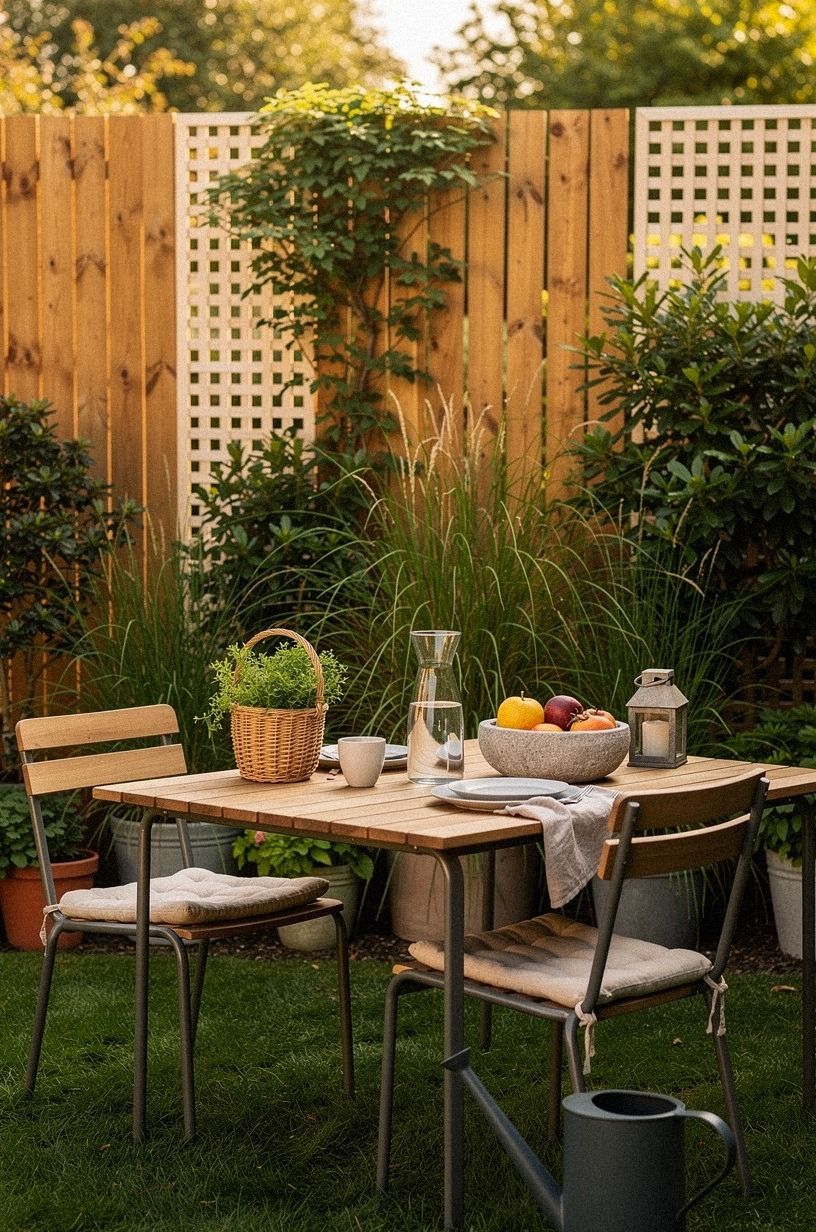
Wood can make a fence feel intentional, but matching every outdoor piece to it often creates a heavy brown wall. Use the Two-Wood Rule instead: choose one plum-toned wood and one gray wood, then repeat each at least twice. Your fence can stay rough while the surrounding pieces look considered.
Try plum-toned wood-look composite for a planter or bench, then add a gray wood table. The contrast gives your eye somewhere to move, and you'll get a more layered feeling than one uniform stain could provide. I prefer this combination when the fence is orange-toned, because the plum shade deepens it without fighting it.
Keep metal accents simple. Rose-gold legs or shagreen accents can bridge the two wood tones, but you don't need three additional finishes. Your patio will feel more serene when the material story stays edited.
You can also use wood-look pieces if your rental rules or budget make real lumber impractical. A lightweight folding screen can create coverage without permanent installation. Pair it with large leaves or a shagreen tray, and the fence will recede behind the warmer foreground.
For broader context on the difference between a temporary screen and a full replacement, read this wood privacy fence guide. You may decide that a lighter movable layer suits your space better.
11Paint a Removable Panel in a Named Color
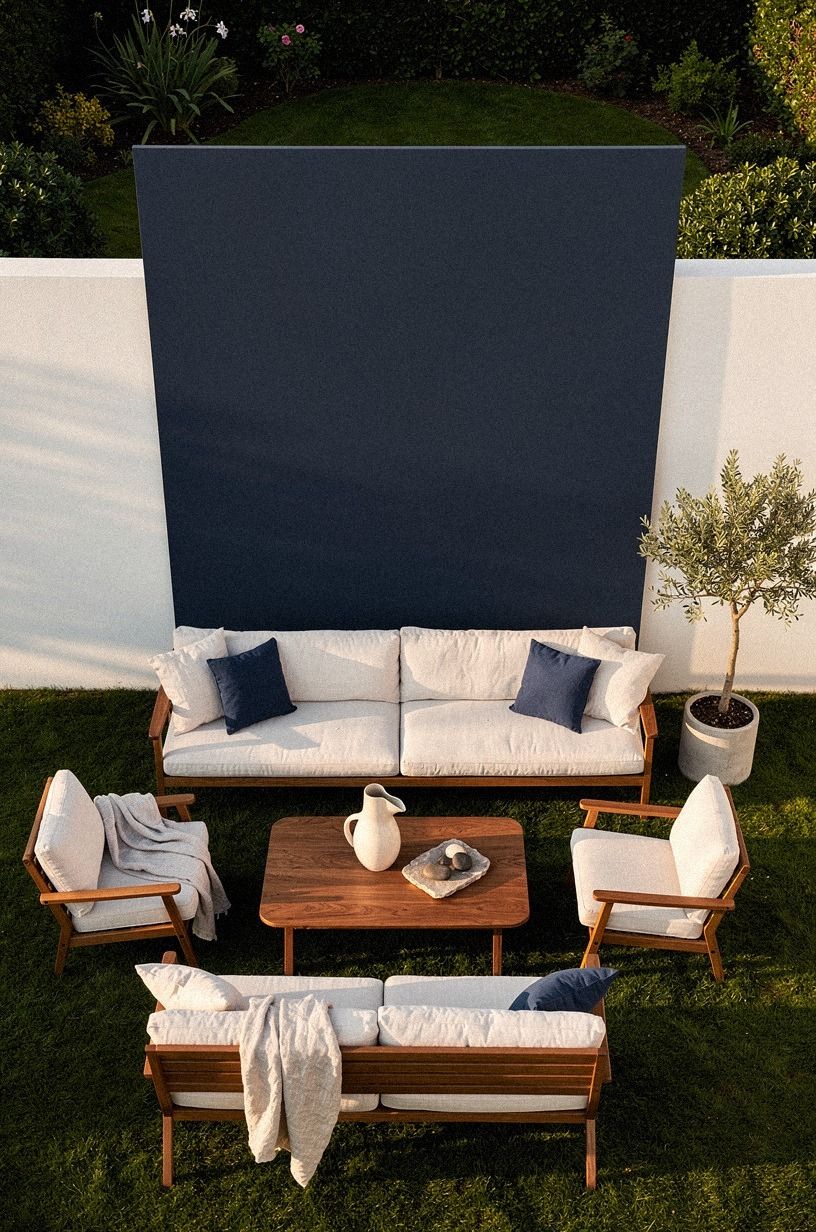
If your landlord won't let you paint the fence, paint a removable panel instead. Use a Farrow & Ball Exterior Eggshell finish on a freestanding walnut panel, shutter, or old folding door.
A deep navy can make foliage glow, while a soft warm white can calm a very busy fence. A washed Belgian linen layer can soften the setup further.
Choose a color that suits the light your yard receives. Farrow & Ball Hague Blue can look nearly black in a shaded corner, which is dramatic but may make a small patio feel enclosed. Benjamin Moore White Dove reflects more light and feels airy, though it won't hide every scuff.
Your panel should be sealed on all sides, including the cut edges. I once skipped that step on a small outdoor sign, and one wet month lifted the finish from the bottom edge. Seal first, then paint, and allow the panel to dry fully before placing it outside.
Use two panels if you need more coverage, but leave a slim gap between them. That break keeps the setup light and lets you see greenery behind it. For another removable surface idea, these ways to hide an ugly rental closet show how a temporary layer can carry a lot of visual weight.
12Create a Soft Boundary With Cushions and Plants
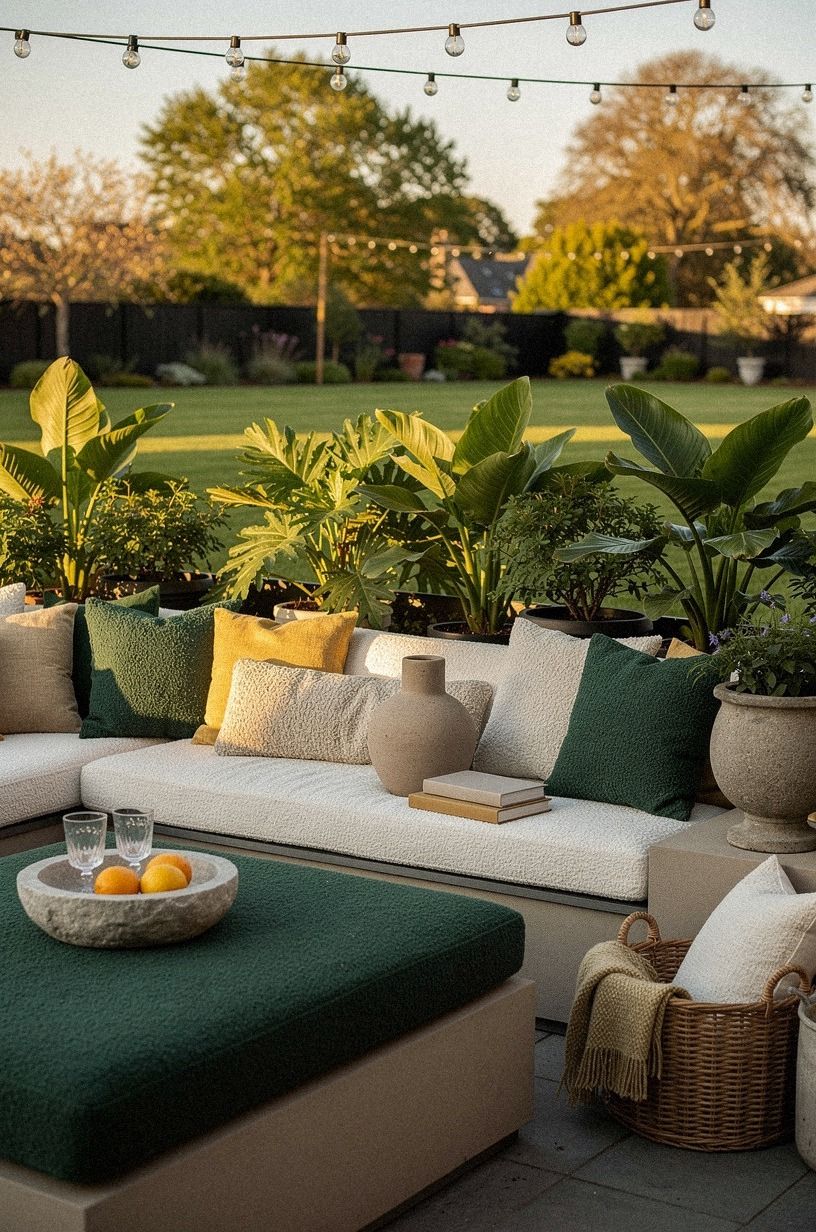
The simplest cover-up may be a seating arrangement that turns its back to the boards.
Why This Temporary Approach Works Better Than a Fence Makeover
I used to think hiding a bad fence meant covering every board from top to bottom. That instinct made my patio feel smaller, darker, and more expensive than it needed to be. The better move is to decide where you want your eye to land, then build that view with layers you can remove later.
A fence is a background, not the whole room. If you add a freestanding screen, a warm rug, and one tall plant, the boards lose their authority.
You don't need to erase the texture completely. In fact, a little imperfection can make the space feel lived-in and honest.
The biggest mistake is spending on a single huge solution. A full outdoor privacy system may fall into a completely different budget tier than a few planters and textiles. Use the figures below as typical US reference points, then scale your plan to your rental and your season.
You can keep your project in the budget tier by using what you own first. A folding chair, thrifted screen, and existing pots may be enough to create the first layer. If you're comparing permanent privacy work, this wood privacy fence guide can help you understand what you're avoiding as a renter.
The first test should cost almost nothing. Sit in the chair where you'll actually spend time, identify the worst view, and move one object into it. If the view improves, build around that small success.
If it doesn't, you haven't spent money on the wrong screen.
The Rental Rule I'd Keep
My strongest opinion is simple: don't make the fence the project. Make your view the project.
When I style a difficult outdoor corner, I start from the chair where you'll sit, then work outward toward the fence. That decision changes which surface needs hiding and which one can remain quiet in the background.
You might spend $200 on plants, textiles, and lights, or you might spend more on a proper patio set. Either way, your money should go toward the parts you touch and see up close. A rug underfoot, a comfortable cushion, and a warm light will improve your evening more than a perfect screen hidden behind them.
I've also learned that renters need an exit plan. Every panel, planter, curtain, and lamp should be movable without a truck.
If you're using a heavy object as a base, protect the patio below it and keep drainage clear. Small safeguards matter, especially when your deposit is involved.
And don't chase a trend just because it looks compelling online. A moody fence screen may look captivating, but your yard could need lighter materials and more open air. Choose what makes your own space feel warm when you walk outside.
For a temporary indoor companion project, these cheap countertop covers for an ugly rental kitchen use the same basic idea: soften the surface you dislike while keeping the underlying structure intact.
A Few Things Worth Answering
What is the best How to Hide an Ugly Fence Without Asking the Landlord idea for a small backyard?
Tall planters with a freestanding trellis are the best small-yard choice because they add height without filling the floor. Try slim walnut-toned screens or a planter with grasses, then keep your seating angled toward the open view. You'll gain privacy and retain a more airy footprint.
Where can I buy How to Hide an Ugly Fence Without Asking the Landlord pieces on a budget?
Look at IKEA, Wayfair, and Target for planters, outdoor curtains, rugs, and lighting. Your best low-cost finds may come from Facebook Marketplace or a thrift shop, especially folding screens and wooden benches. Search for weatherproof textiles, check the seams, and avoid anything with hidden water damage.
How much does a How to Hide an Ugly Fence Without Asking the Landlord makeover cost?
A small rental-safe update usually fits the budget tier of about $200 to $900, depending on plants, textiles, lights, and paint. You can spend nothing by rearranging furniture and using existing pots. A polypropylene rug or string lights may be the first paid layer.
Can I create a How to Hide an Ugly Fence Without Asking the Landlord look on a budget?
Yes, and you can begin with three low-cost moves: rotate your seating away from the fence, group plants at different heights, and hang warm LED string lights from a removable structure. Add a thrifted screen if you still need coverage. Your space won't need a full makeover to feel more inviting!
Is a How to Hide an Ugly Fence Without Asking the Landlord setup worth it in a small space?
Yes, because a small yard gives you fewer sightlines to manage. Focus on the fence section visible from your main chair, leave a 36-inch walkway where possible, and use one tall planter instead of six short ones. A compact privacy fence topper approach can also guide your layout.
Is How to Hide an Ugly Fence Without Asking the Landlord a good idea for a rental?
Yes, when every layer is removable and freestanding. Use a tension-supported curtain, approved removable decor, weighted trellises, and portable planters. You can also soften an indoor rental with these closet curtain ideas if the fence problem continues through the back door.
What should I try first if I don't know which fence solution suits my patio?
Start with the chair test. Sit where you normally relax, then add one tall planter or a folding screen to the most distracting view.
If the change feels useful, build out with lighting or textiles. If it feels crowded, read this how to add privacy to an existing fence without replacing it guide before buying larger pieces.
Where I'd Start First
If I had to pick one, I'd start with three tall planters and a freestanding trellis. They hide the fence from eye level, add living texture, and move with you. Test the view from your favorite chair before buying anything else, then add warm lighting if the patio still feels unfinished.