
 by
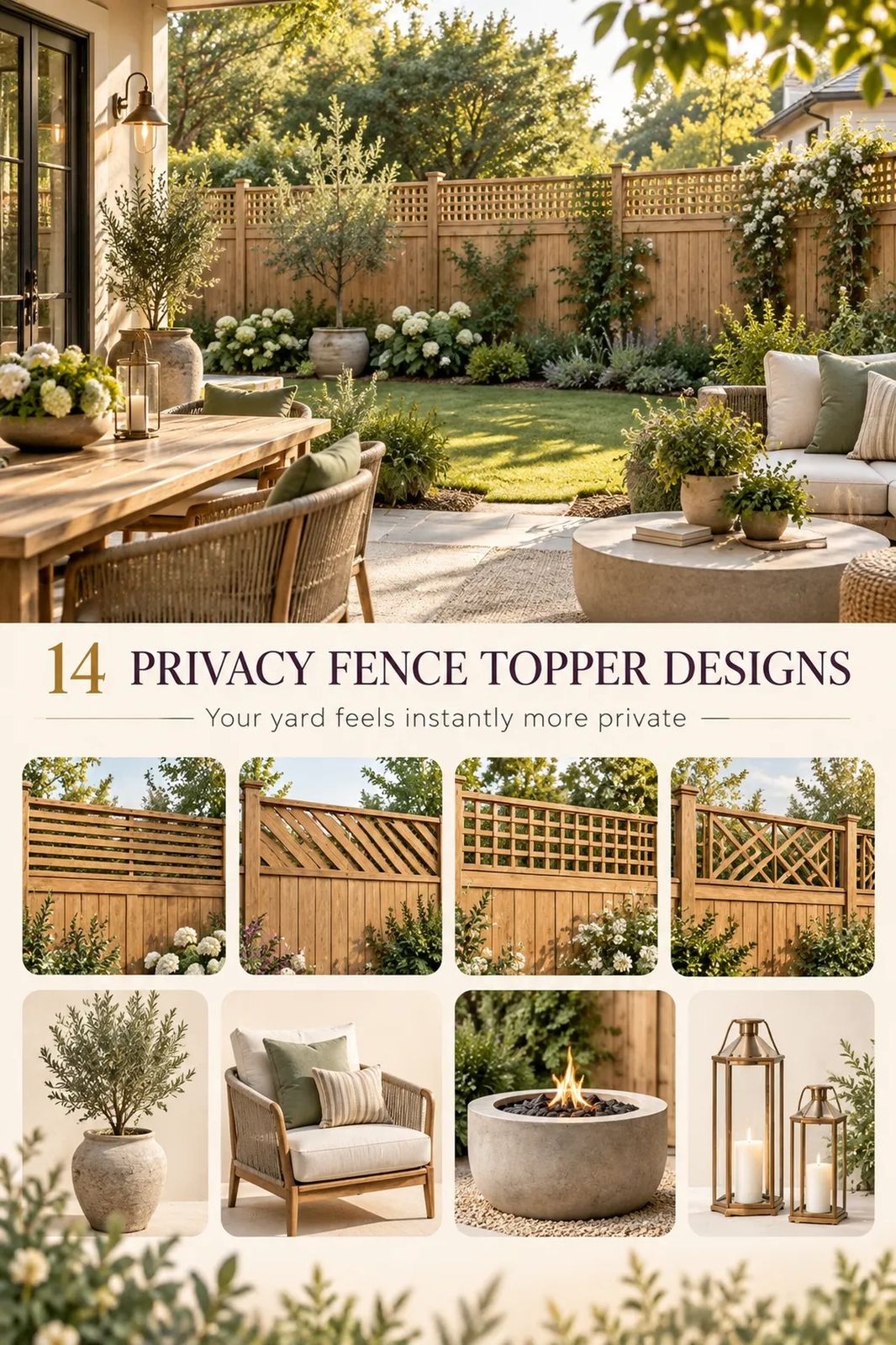
by Privacy fence topper ideas can add visual height for about $100 to $300 without replacing the whole fence. I've tried the quick panel-on-top approach, and it looked tacked on because the materials didn't relate to the yard. Your best result comes from matching scale, shadow, color, and planting. Start small. Your fence can feel taller without feeling heavier.
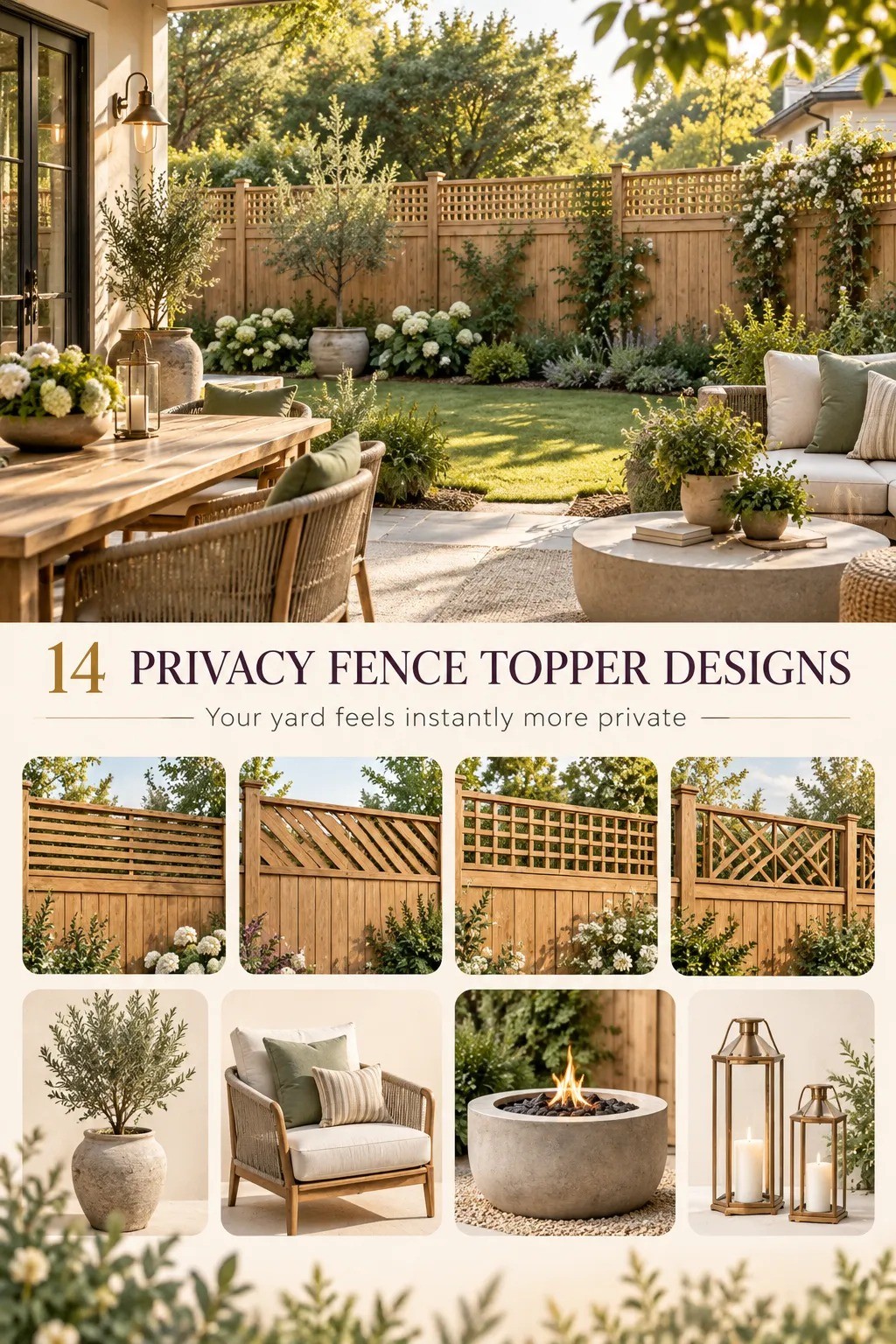
- Add lattice to the top of the fence with the Shadow-Ladder Rule
- Could a slatted topper give you privacy without blocking light?
- Frame a wood fence with a lattice top
- Layer a narrow plant screen above the fence
- Build the Three-Height Light Stack
- Swap solid panels for a soft-edge screen
- Paint a fence height extension in a deep garden color
- Hang a framed trellis for climbing plants
- What if you use a pergola edge instead of fence toppers?
- Mix cedar and black metal for a graphic topper
- Float a narrow planter rail above the fence
- Choose the right investment for your fence height extension
- Frame the gate with a taller visual anchor
- Layer plants over a painted lattice topper
1Add lattice to the top of the fence with the Shadow-Ladder Rule
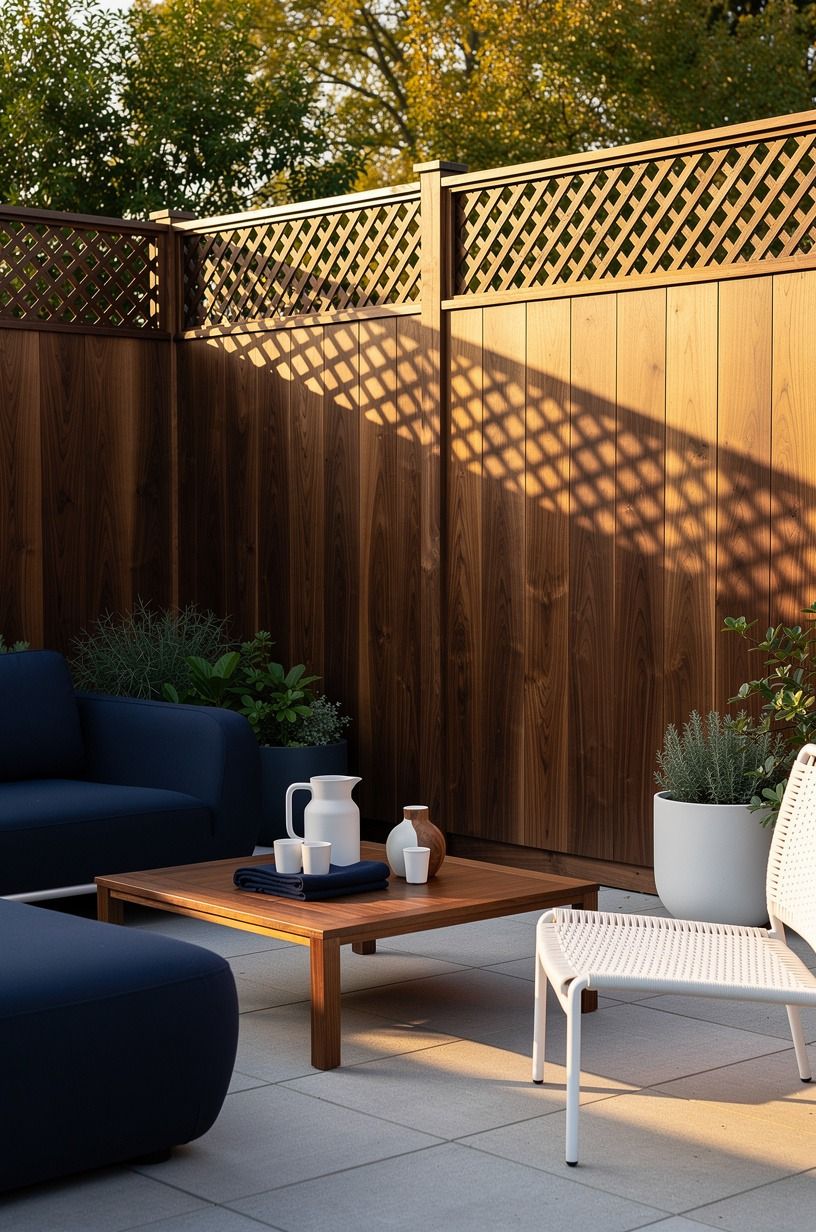
A book-matched walnut lattice panel is the classic fence height extension, but the spacing matters more than people expect. Choose a pattern that lets sunlight make narrow stripes across the patio instead of casting a harsh grid. You’ll get privacy while your plants still receive useful light.
I’d skip flimsy plastic lattice if your fence already has a rustic character. It won’t age gracefully beside existing boards. A walnut topper works better when you stain it close to the existing fence, then let climbing greenery soften the upper edge.
For a more tailored look, see these privacy lattice fence ideas for charm and coverage.
The Shadow-Ladder Rule is simple: let the openings create a repeating rhythm of light and shade. Narrow gaps feel more private, while wider gaps make a compact yard feel generous. A three-quarter-inch gap often gives you an elegant middle ground.
Before attaching anything, measure the full fence run and inspect the posts. Your topper needs a stable base, especially in a windy garden.
If one section already leans, repair it first. A beautiful topper attached to a weak post will become an expensive headache.
2Could a slatted topper give you privacy without blocking light?
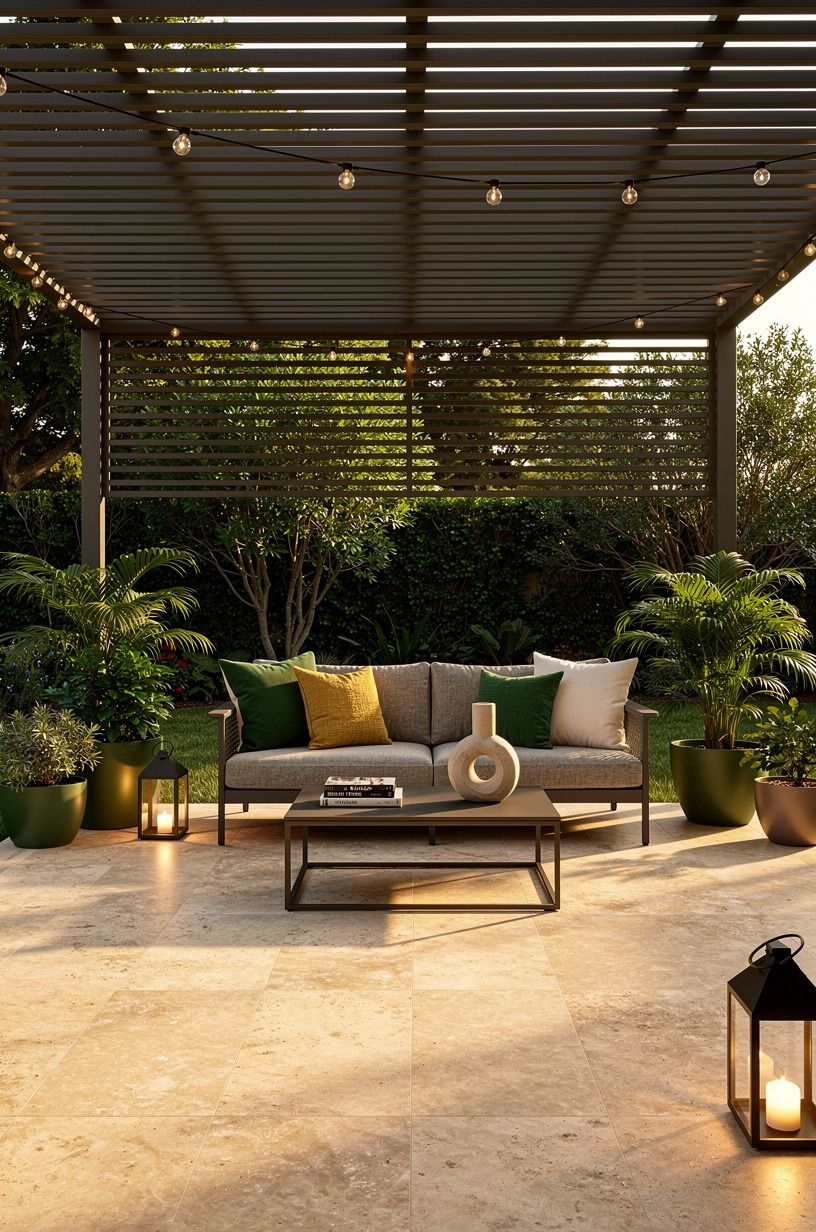
Yes, a horizontal warm travertine slat topper can make your fence feel taller while keeping the yard airy.
3Frame a wood fence with a lattice top
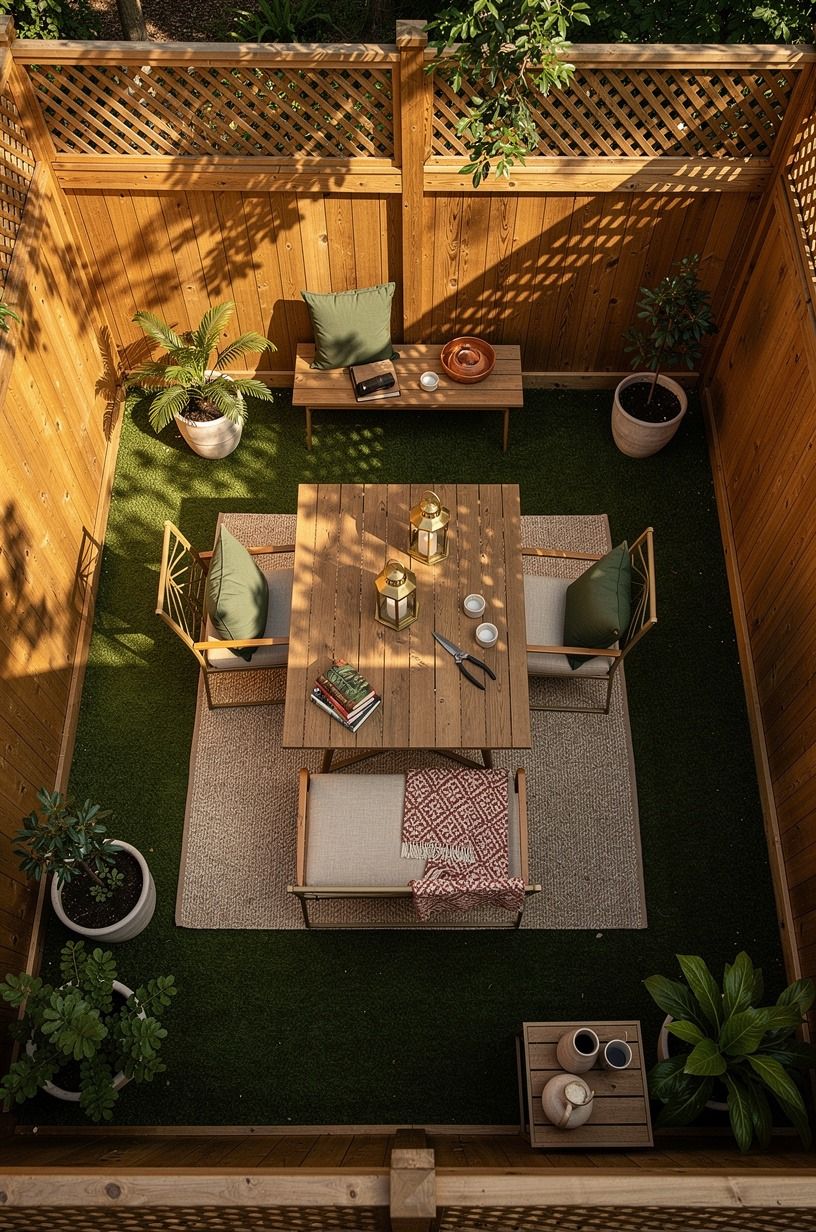
A wood fence with lattice top feels softer when the lattice has its own frame. Use narrow natural-oak trim boards around the open panel, then echo that trim on the gate or a nearby planter. The frame gives your topper a finished edge, so the added height looks intentional instead of like a weekend patch.
You’ll want to check the posts before adding anything heavy. If the fence moves when you push it, your topper needs reinforcement before decoration.
I made the mistake of styling first and inspecting later, and every pot had to come down again. Your safer sequence is simple: inspect, brace, attach, then plant.
Repeated wood tones can make a boundary feel collected. These wood privacy fence ideas for classic backyard seclusion show how a consistent palette can give even a basic yard a warm, established mood.
A frame also gives you a place to conceal fasteners. Use unlacquered brass hardware that can develop a natural patina, and cap exposed ends where possible. That tiny detail makes the finished result feel more refined, especially when you view the fence from inside the house.
4Layer a narrow plant screen above the fence
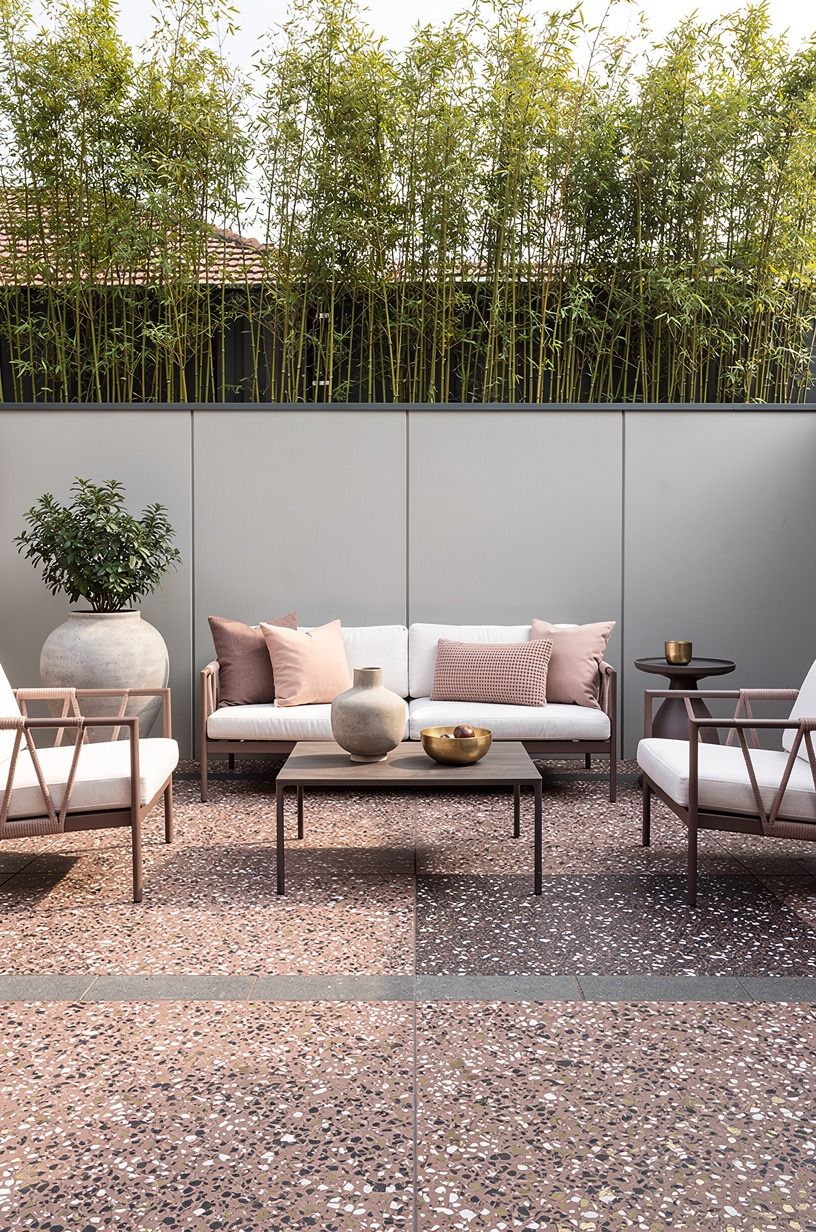
A row of tall oversized-chip terrazzo planters can create a living fence topper without drilling into the existing boards. Choose plants with an upright habit. The greenery will rise above the fence line, while the containers keep the solution removable for maintenance.
You don’t need a jungle. One consistent plant rhythm looks more sophisticated than six unrelated species fighting for attention. Ornamental grasses, clumping bamboo, or tall evergreen shrubs can work, but your climate and local restrictions matter.
I’d avoid aggressive running bamboo because the roots and trimming can become the entire project. For a softer boundary, browse these privacy hedge and shrub ideas for a natural living fence. Your fence will feel taller because the top edge becomes leafy and irregular.
Choose containers that are heavy enough to resist tipping, especially beside a gate or walkway. A tall matte planter can look sculptural in winter, while grasses bring movement during warmer months. You’ll get a more inviting result when the plants have room to breathe.
5Build the Three-Height Light Stack
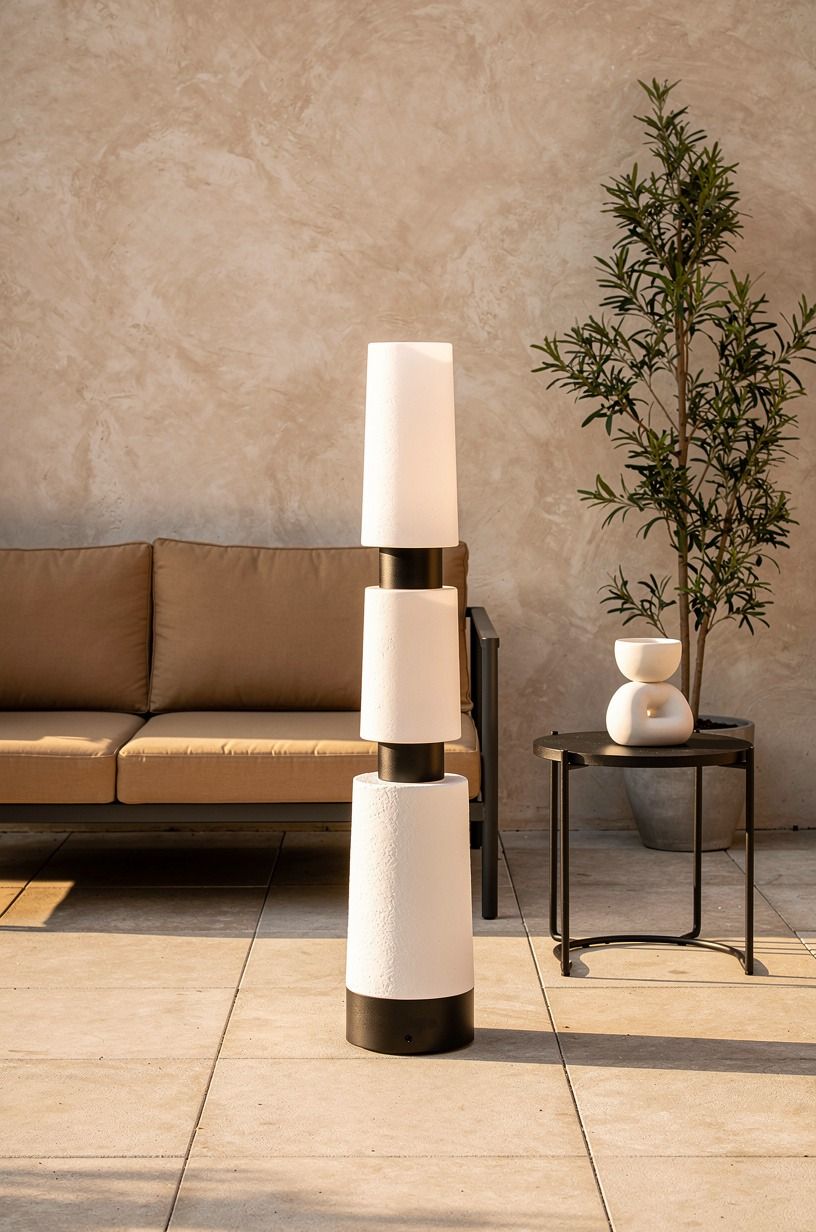
String lights don’t add structural height, but they can make your fence read taller after sunset. Start with LED string lights at the upper edge, add a middle layer on a nearby trellis, and keep low lanterns near the seating area. The three heights pull your eye upward while giving the yard a calm, welcoming glow.
Keep the lights warm and modest. A bright blue-white strand will make your fence look like a temporary event setup, and you won’t want to sit beneath it for long.
Less is more! Your patio table should remain the visual anchor, with the fence acting as a quiet backdrop.
The short answer to “how much lighting is enough?” is less than you think. The typical cost for warm-white bulbs is $30 to $120, so your upgrade can stay focused. You can combine this approach with the planting strategies in these privacy fence ideas with plants for a lush living wall.
Keep cords away from foot traffic and use weatherproof connections. If your fence has a gate, leave enough slack for movement without allowing the cable to sag. A neat installation makes the atmosphere feel magical instead of messy.
6Swap solid panels for a soft-edge screen
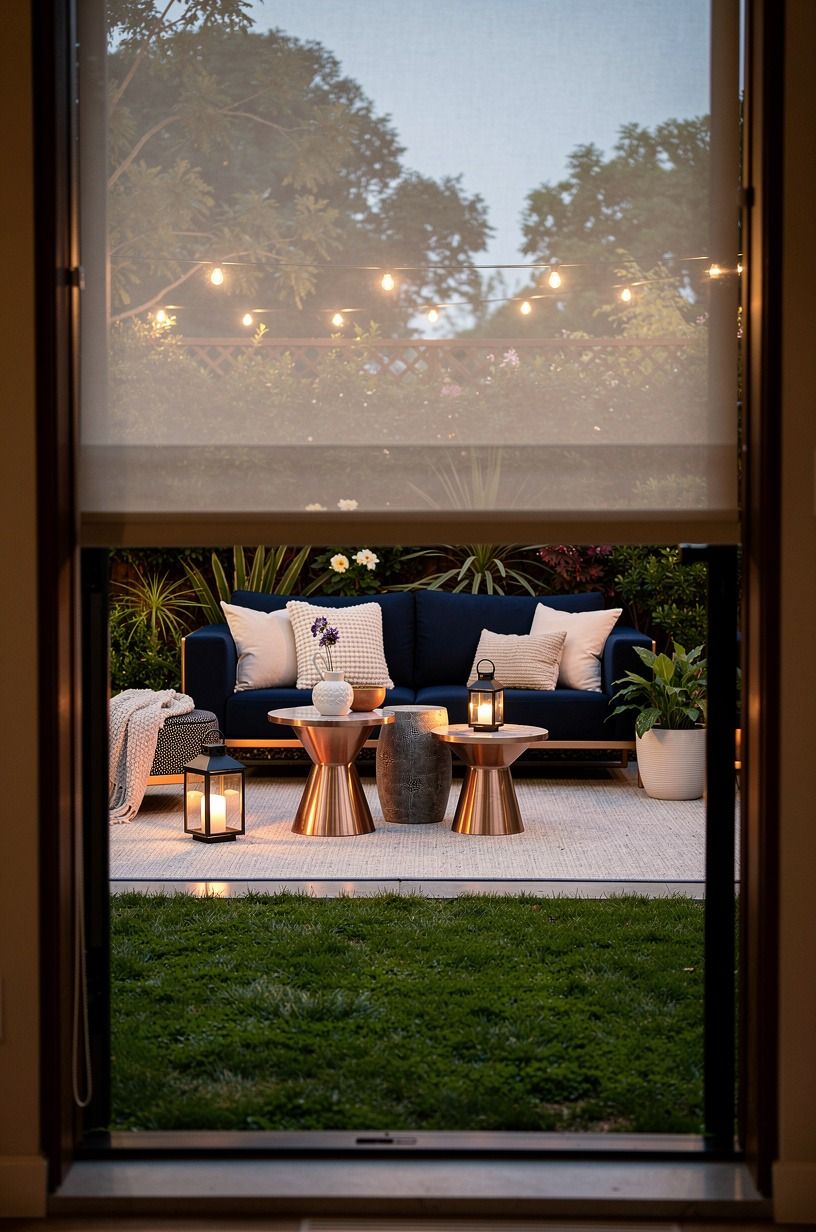
A midnight-blue screen with shagreen accents can extend the perceived height of a fence without adding a hard architectural line.
7Paint a fence height extension in a deep garden color
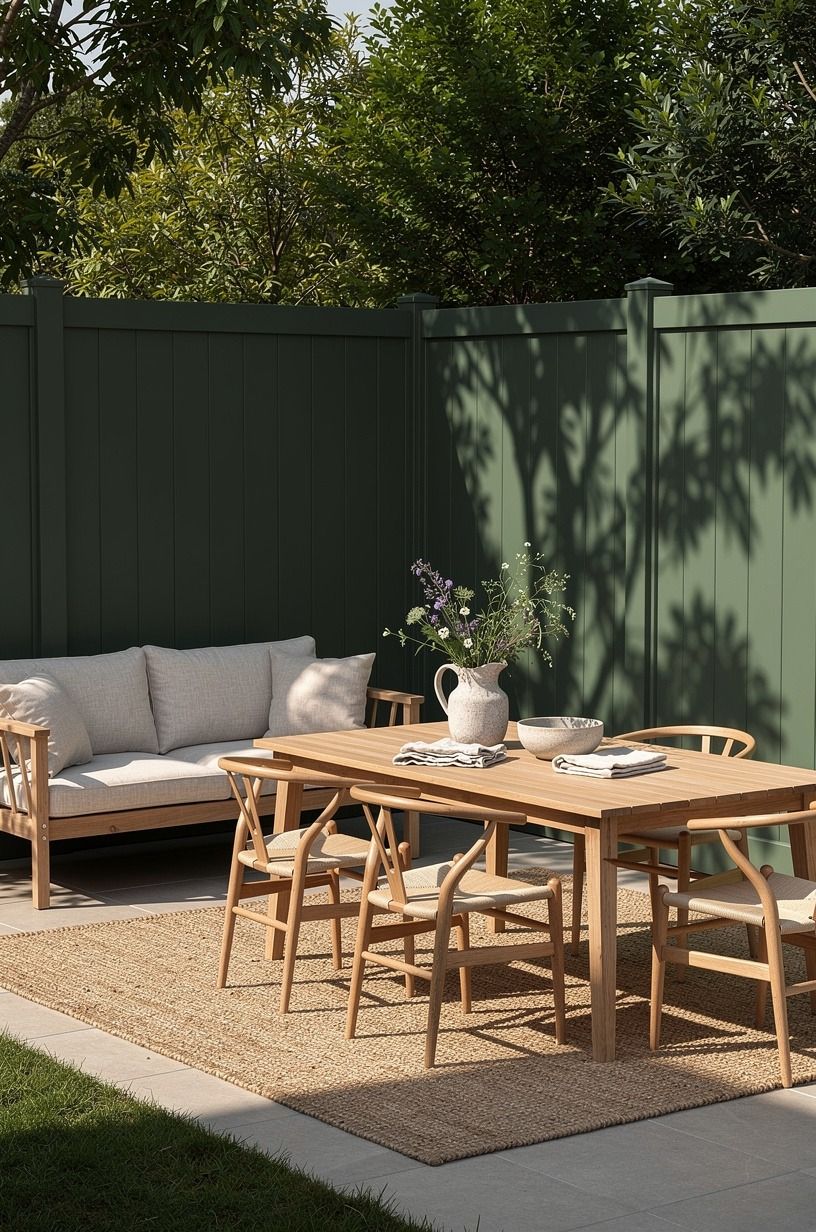
Paint can make a low fence recede, which gives your yard a taller, more settled feeling. Benjamin Moore Aura Exterior in a soft sage green or Sherwin-Williams Emerald Exterior in warm cream can connect the fence to shrubs, trees, and shadowy corners. Your eye stops measuring the exact board height because the boundary becomes part of the planting.
Test a sample in morning sun and late afternoon shade before painting the whole run. I’d skip a stark white topper outdoors because dust, pollen, and reflected glare will make it look busy. Farrow & Ball Exterior Eggshell can give you a softer, refined finish if that finish suits the existing wood.
You’ll want the surface clean and dry before coating it. Scrape loose paint, replace damaged boards, and use a suitable primer where bare wood shows. A sage exterior color can feel calm and elegant, while warm cream gives the garden a softer mood.
For a darker industrial direction, compare these metal corrugated privacy fence ideas. Your fence color can do more than any decorative object. It can make the greenery look brighter, the patio feel warmer, and the boundary disappear at dusk.
8Hang a framed trellis for climbing plants
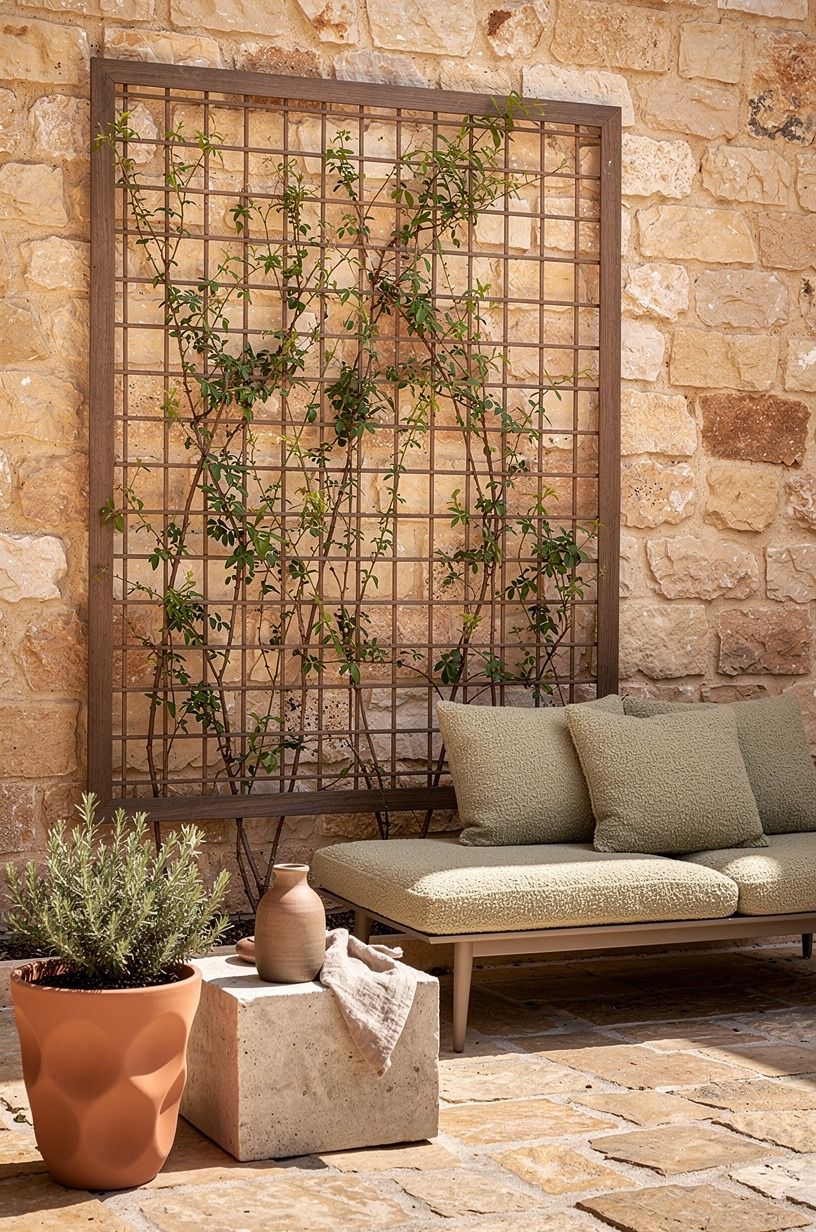
An olive-painted trellis frame beside an organic bouclé seat gives vines a place to climb above the fence while keeping the lower boards visible.
9What if you use a pergola edge instead of fence toppers?
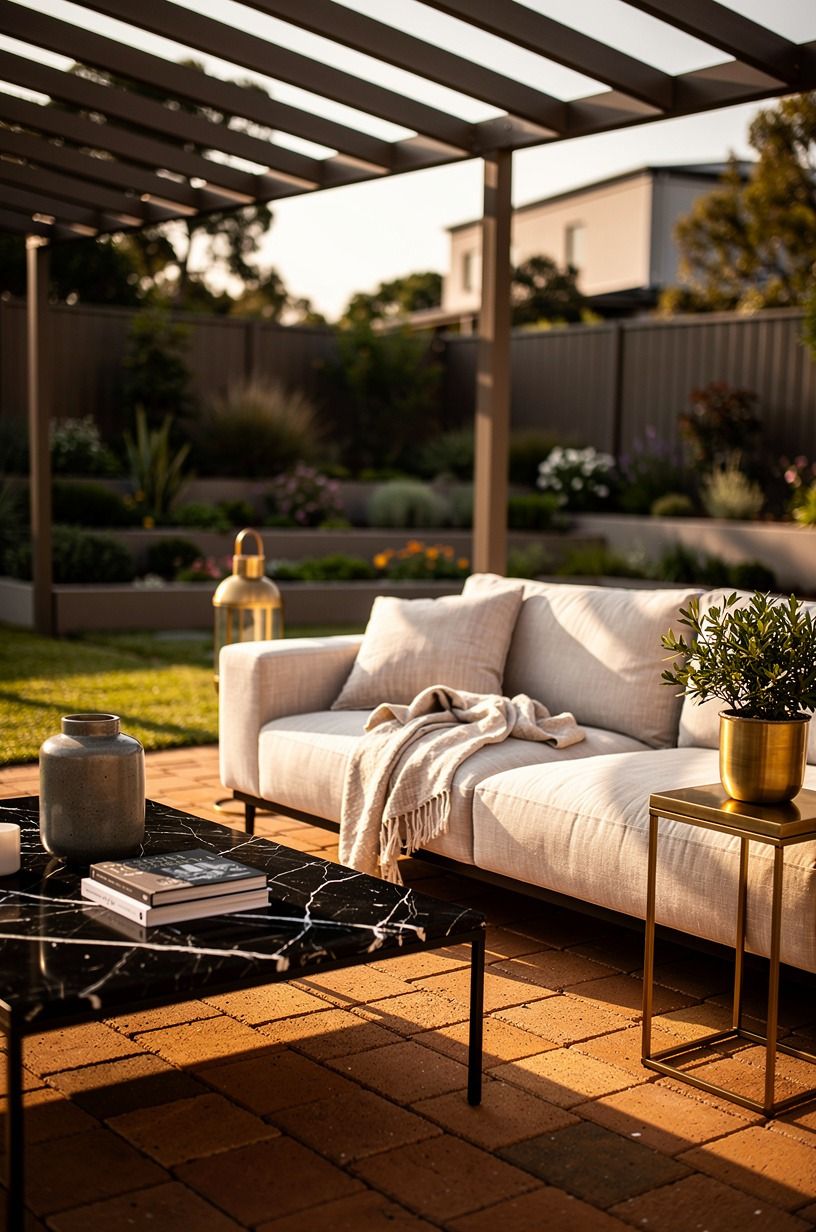
A narrow clay-toned pergola edge with aged-brass details can add height where you use the yard most, rather than forcing the entire fence to become taller. Place it beside a dining area or lounge, then let the beams extend visually above the fence. You’ll create a destination and a privacy frame at the same time.
This approach costs more effort, but it has a stronger architectural payoff. Your patio table should sit below the structure with 28 to 30 inches of table height, leaving comfortable clearance for movement. Don’t crowd the walkway; keep 36 inches minimum so guests can pass without turning sideways.
I’d choose a pergola edge over random topper panels when your yard already needs a defined room. A Nero Marquina marble table can anchor the clay, linen, and brass palette. These modern horizontal privacy fence ideas can help you keep the lines crisp.
A slatted pergola roof can also filter afternoon sun, although it won’t provide complete weather protection. If shade is your real goal, consider the direction of the sun before you build. A beautiful structure in the wrong location can leave the seating area hot and uncomfortable.
Your privacy solution should support how you sit, eat, and move. When the structure frames a real activity, the yard feels more useful and more luxurious.
10Mix cedar and black metal for a graphic topper
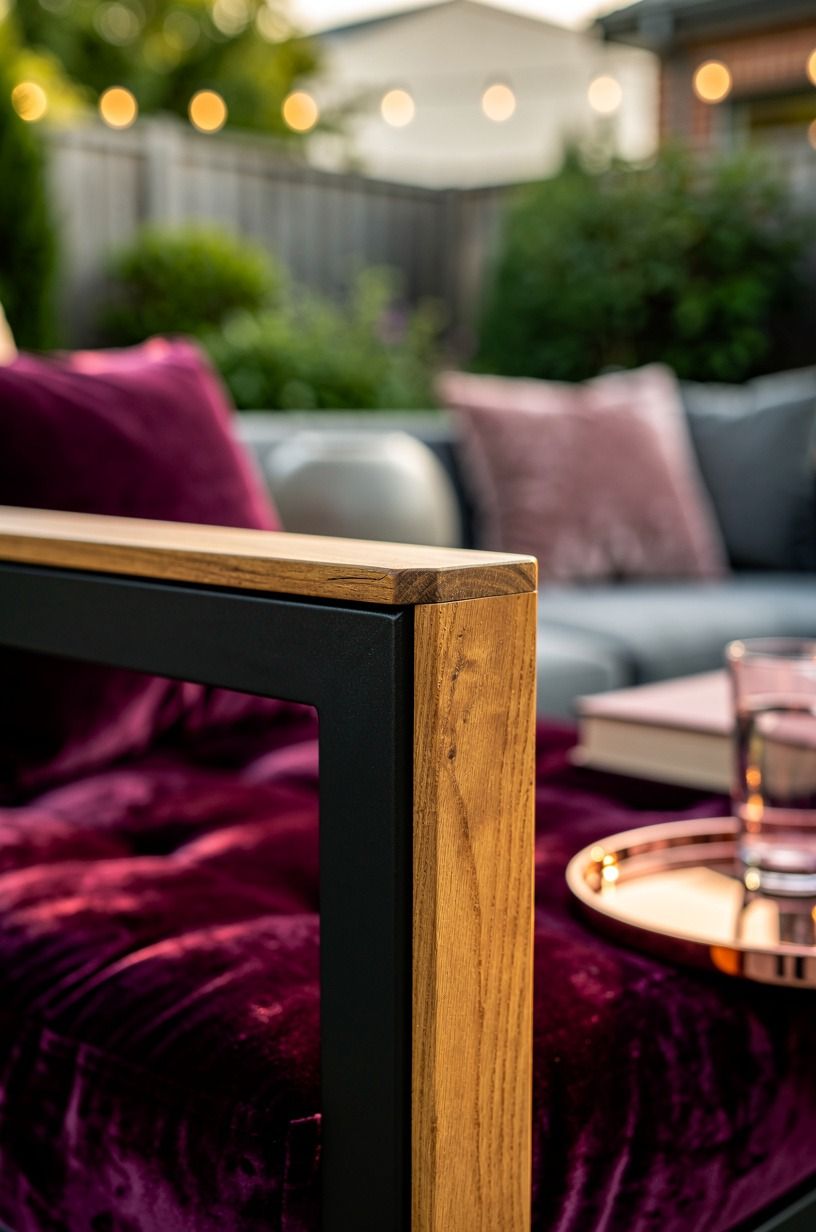
The Two-Wood Rule is useful when your fence needs detail without visual clutter: keep the main fence in one wood tone, then use a second material sparingly at the top. A warm wood frame with rose-gold metal mesh, echoed by a deep-pile mohair velvet cushion, gives you height, contrast, and a little architectural edge.
You’ll want to repeat the rose gold in only one or two other places, such as a planter or lantern. Too many metallic accents will make your yard feel chopped into pieces. I’d avoid shiny metal because it catches hard sunlight and can make the fence feel commercial.
A low-sheen finish looks more organic beside weathered wood. For a more industrial boundary, see these corrugated metal privacy fence ideas. The best combination feels intentional from both sides, especially if neighbors can see it.
Choose powder-coated steel when you want a durable finish with a smooth appearance. Mesh can preserve airflow and daylight, which makes it useful in a narrow yard. It also creates a handsome backdrop for climbing plants without competing with their leaves.
Your topper should look deliberate from both sides. If the back is unfinished, add a simple trim treatment so the view from the neighboring property remains considerate.
11Float a narrow planter rail above the fence
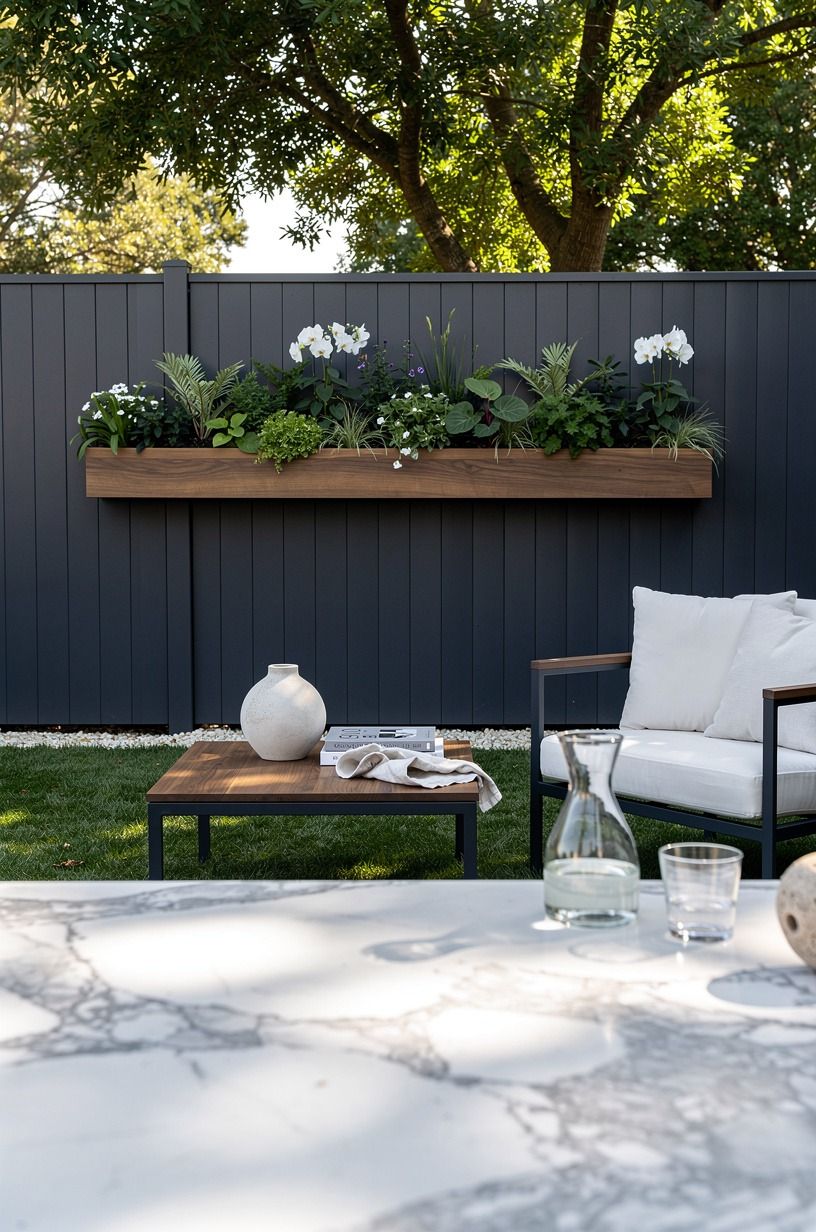
A planter rail with a slim Carrara marble ledge creates a visual line above the fence without requiring a continuous solid panel.
12Choose the right investment for your fence height extension
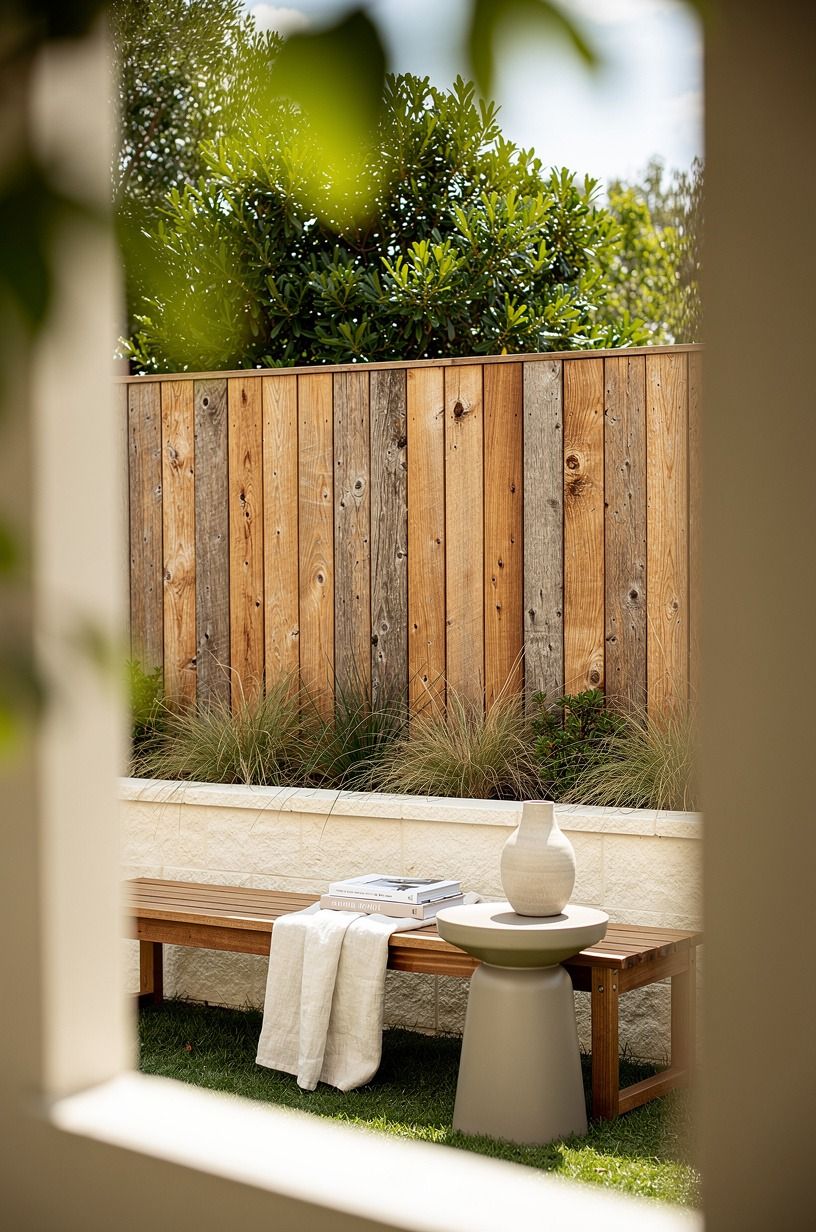
Not every topper needs a large outdoor renovation budget. The typical US ranges below are useful for planning the whole outdoor space, while a simple fence extension usually sits at the smaller end of the project.
Your smartest move is deciding whether you need privacy, shade, or a stronger focal point. Paint and plants can solve the first problem; a pergola may solve the second and third. If you’re replacing seating too, a polypropylene outdoor rug typically costs $80 to $400, while a reclaimed weathered teak set can run $1,000 to $4,000.
Don’t spend high-end money on a topper when your fence posts need repair first. You’ll get more value from a stable structure and one clear design gesture. Start there!
A budget plan might combine paint, three tall planters, and warm lighting. A mid-range plan could add a framed trellis or custom slatted panel. A larger investment might include a pergola structure, new paving, and built-in seating.
For a realistic estimate, price the hardware, delivery, tools, and preparation work. Many projects become more expensive because the small pieces were overlooked. Your finished yard should feel satisfying to use, not financially stressful.
13Frame the gate with a taller visual anchor
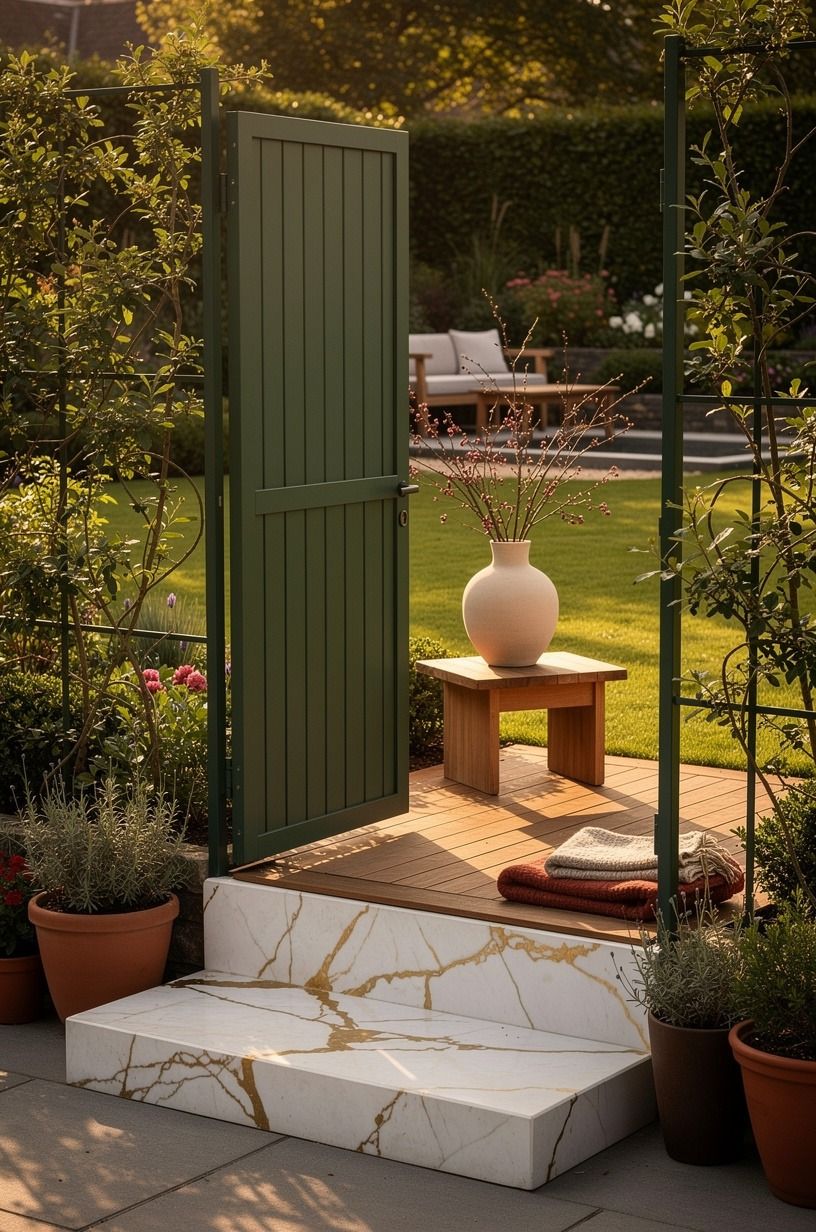
A gate often makes a fence look shorter because it interrupts the upper line. Add a natural-oak gate frame or a narrow trellis above the entrance, then repeat that height with one nearby planter or small tree. Your eye will read the gate as an intentional entry instead of a weak point in the boundary.
This idea works especially well in a small yard because it concentrates the design effort. You don’t need to modify every section of fence to create a taller impression. I’d avoid an oversized arch if your patio is already crowded; it can make the entrance feel theatrical rather than welcoming.
Your path should still keep 36 inches minimum clearance, and the gate should open without catching furniture. For construction basics, use this step-by-step privacy fence building guide.
A narrow evergreen beside the gate can make the entrance feel lush throughout the year. If the space is tight, choose a columnar variety that grows upward instead of outward. You’ll create height without sacrificing the walking route.
Paint the frame to match either the fence or the front door. That connection makes the outdoor space feel more polished and gives the entrance a quietly memorable character.
14Layer plants over a painted lattice topper
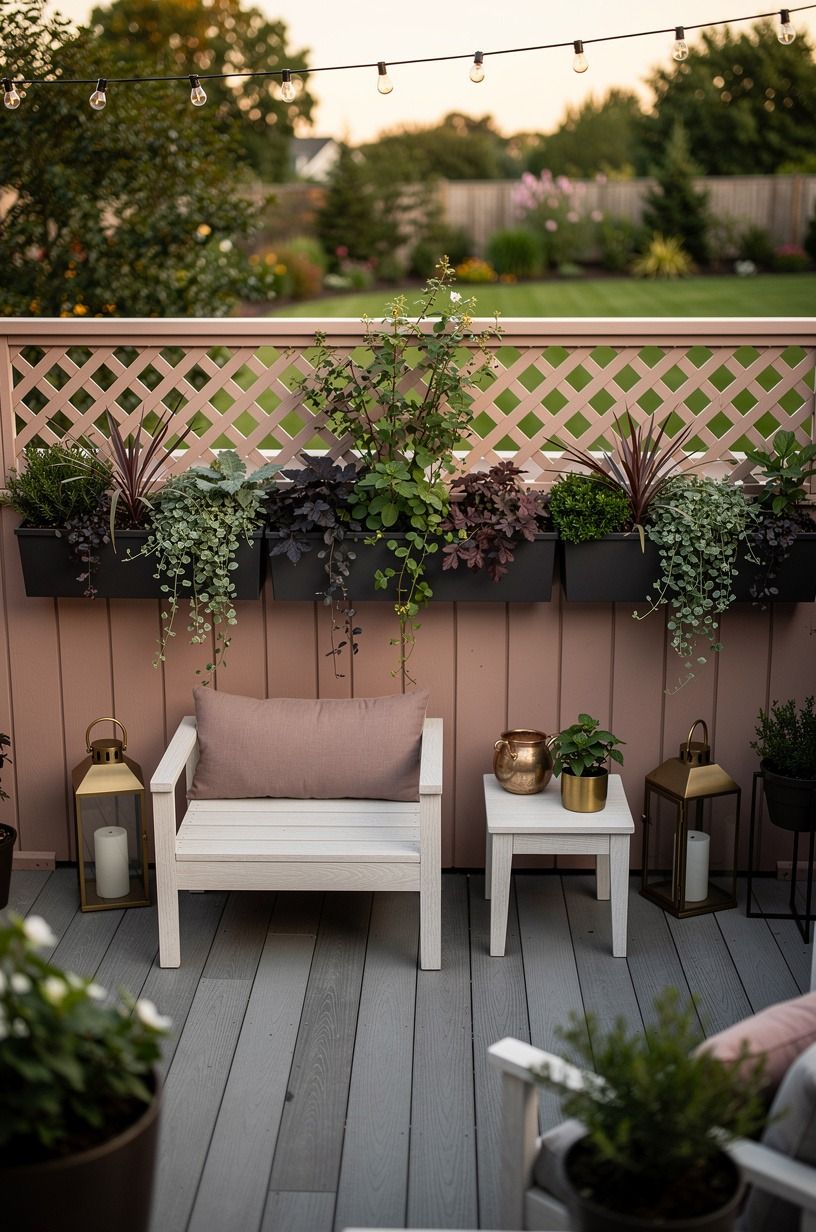
The most convincing fence topper usually combines two quiet moves: a cerused white-oak lattice panel for structure and layered planting for softness. Finish the lattice in a dusty rose tone, then add a charcoal planter with a small brass detail, a climbing vine, and one taller shrub nearby. You’ll get privacy, texture, and height without asking one material to do every job.
Give your eye a pause between elements. A dense wall of plants can feel heavy, while a few open spaces let sunlight reach the patio. I’ve found that the calmer version feels more sophisticated, especially when your furniture is already patterned.
Your outdoor rug should extend under the front legs of seating, and an umbrella should cover the table with about 2 feet on each side. That proportion keeps the yard comfortable rather than crowded. If you’re comparing layouts, these privacy fence ideas with plants are a useful place to start.
Layering also helps the topper change with the seasons. Evergreen foliage supplies structure, grasses add movement, and flowering vines bring a dramatic moment when they bloom. Choose plants with different textures so the composition feels rich even when the colors stay restrained.
A deep green lattice can disappear behind leaves over time. That’s part of its charm. The fence remains useful while the garden gradually takes over the visual work.
What I’ve Learned About Adding Fence Height
I used to think a fence topper had one job: block the view. That narrow definition led me toward the tallest panel I could find, and the yard became darker without feeling more private. The better question is where you need the extra height and what you want to feel there.
Your dining corner may need a planted screen, while the open side of the yard may only need a few slats and a warmer paint color.
The material matters because every topper changes the sound, light, and maintenance of the space. A solid panel catches wind and removes brightness. Lattice filters the view but still gives climbing plants somewhere to go.
Metal is durable and crisp, but it can feel cold beside orange-toned wood. I’d choose cedar, paint, or greenery before adding a complicated combination of all three.
Cost matters too. A budget approach can stay within the $200 to $900 outdoor range when you combine paint, plants, and lights, while a pergola belongs closer to a larger renovation plan.
You’ll get the most from your money when the fence is already stable. I’ve learned that lesson with more than one outdoor project and one very heavy planter.
The most successful yards usually have one dominant idea. Maybe it’s a soft green palette, a framed dining corner, or a row of sculptural planters.
Let the topper support that idea instead of competing with it. A restrained choice often feels more beautiful six months later.
Finally, check local rules before adding height. Your neighborhood or municipality may limit fence dimensions, and a shared boundary can involve your neighbor’s approval.
This isn’t glamorous, but it’s worth doing before you buy materials. A warm, inviting yard still needs a practical foundation, and your best idea is the one you can build, maintain, and enjoy for years.
For a broader planning reference, compare these cozy backyard privacy ideas before deciding where the fence should become a feature. The right solution can make the entire outdoor room feel calmer, more private, and more generous.
A Few Things Worth Answering
What is the best privacy fence topper idea for a small backyard?
A framed lattice panel with a narrow plant screen is usually the best choice because it adds height without blocking all your light. Open structure keeps a small yard airy. Your palette can stay simple: cedar, dark green paint, and one repeated planter style. These small-space lattice ideas can help you compare spacing and framing details.
Where can I buy privacy fence topper pieces on a budget?
Look at IKEA, Wayfair, and Target for planters, outdoor lighting, and screens, then check Facebook Marketplace or a local thrift shop for used pots. You’ll often find budget-friendly texture secondhand. Your safest buy is one you can inspect for cracks, rust, and outdoor wear.
I’d spend more on structural hardware and save on decorative pieces.
How much does a privacy fence topper makeover cost?
A small makeover can cost about $100 to $300 when you use paint, plants, or a modest lattice section. Free options include rearranging planters, trimming overgrown shrubs, and moving existing lights higher.
Your total will rise if the fence needs structural repairs first. These wood fence planning ideas can help you decide where to focus the budget.
Can I create a privacy fence topper on a budget?
Yes, and you can start with three low-cost moves: paint the upper boards, group your existing planters, and hang LED string lights along the top. Layering creates more height than one oversized purchase. Your best first step is choosing one focal section. It works!
Is a privacy fence topper worth it in a small space?
Yes, because a small yard benefits from directing the eye upward. Use a narrow lattice, a tall planter, or a trellis instead of a deep freestanding screen.
Your walkway should keep 36 inches minimum clearance so the added privacy doesn’t steal the usable space. A plant-focused privacy layout can keep the result airy.
Is a privacy fence topper a good idea for a rental?
Yes, if you choose removable pieces such as freestanding planters, tension-mounted screens, and lightweight trellises. No-damage options preserve flexibility. Your landlord may still need to approve anything attached to the fence, so ask before drilling or painting. I’d begin with containers and lighting before considering a fixed installation.
Where I’d Start First
If I had to pick one, I’d start with the framed cedar lattice topper. It adds height, filters views, and gives plants somewhere to climb without making your yard feel closed in. Pin the lattice idea for later, then compare it with these classic wood privacy fence ideas before buying materials.
A stable frame, one restrained color, and a few well-chosen plants will usually create a more welcoming result than a taller wall. Build the change around how you actually use the yard, and the extra height will feel natural.