
 by
by The short answer: limestone sink and vanity ideas work best when the stone gets room to breathe, with warm paint, quiet hardware, and lighting that shows its natural pitting. I once treated limestone like ordinary tile, and the bathroom looked flat. You won't make that mistake here.
I learned to let the sink lead. Your vanity doesn't need ten competing details when the stone already has soft movement, sandy color, and a sculptural edge!
- Float a Limestone Vessel Vanity Above the Floor
- Layer the Three-Height Light Stack
- Frame the Basin With a Thick Stone Ledge
- Can a Stone Sink Vanity Stay Light?
- Build the Monolith Rule With One Continuous Slab
- Swap a Standard Cabinet for Warm Oak
- Hang a Rounded Mirror Above the Carved Basin
- Paint the Walls a Color That Pulls From the Stone
- Choose Patina Over Perfect Polish
- Mix the Three-Source Rule for a Collected Vanity
- Anchor the Room With a Limestone Waterfall Edge
- Style the Sink With the Quiet Edge Method
1Float a Limestone Vessel Vanity Above the Floor
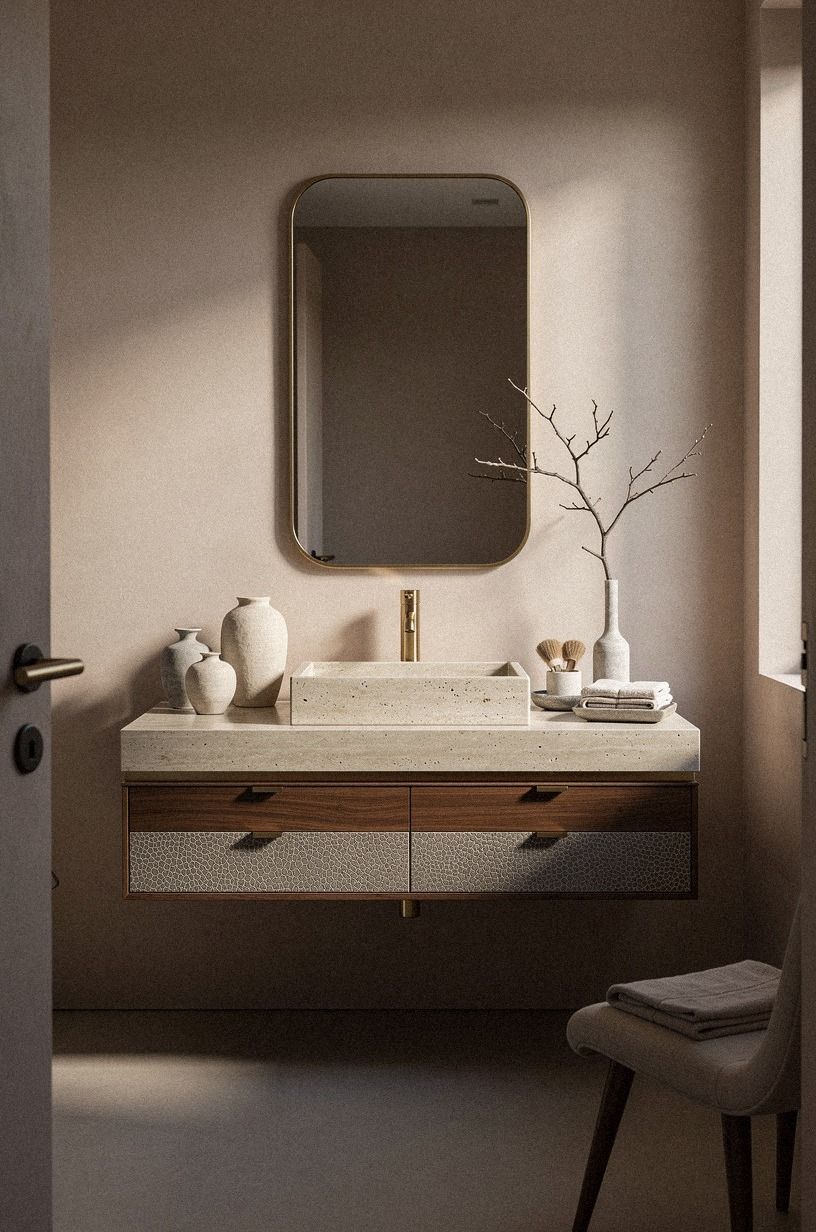
A floating vanity gives limestone visual space, which makes your bathroom with stone sink feel lighter and more architectural. Choose a carved basin with a 32 to 36 inch counter height, then leave the wall below open for shadow.
That shadow matters. It keeps the stone from looking like a heavy block glued to the room.
I’d pair a honed limestone basin with a vanity featuring shagreen accents and slim aged-brass hardware. The pebbled surface brings a dry, tactile note against the stone’s powdery finish. If you’re working with a narrow room, keep the cabinet shallow and let your eye read the floor continuously beneath it.
Try a soft rug in washed Belgian linen, a low stool, and one small clay vessel. You’ll get an airy, inviting effect without losing the grounded quality that makes a stone vanity bathroom memorable.
And don’t over-light the underside. A concealed LED strip can look cold, while one small aged-brass wall sconce gives your limestone edge a gentle evening line. I’d skip glossy white cabinetry here because it competes with the stone and makes the whole composition feel more commercial.
For more material direction, compare this approach with these limestone countertop ideas for a soft honed vanity top. Your best result will come from repeating one tactile surface, not from adding another stone.
2Layer the Three-Height Light Stack
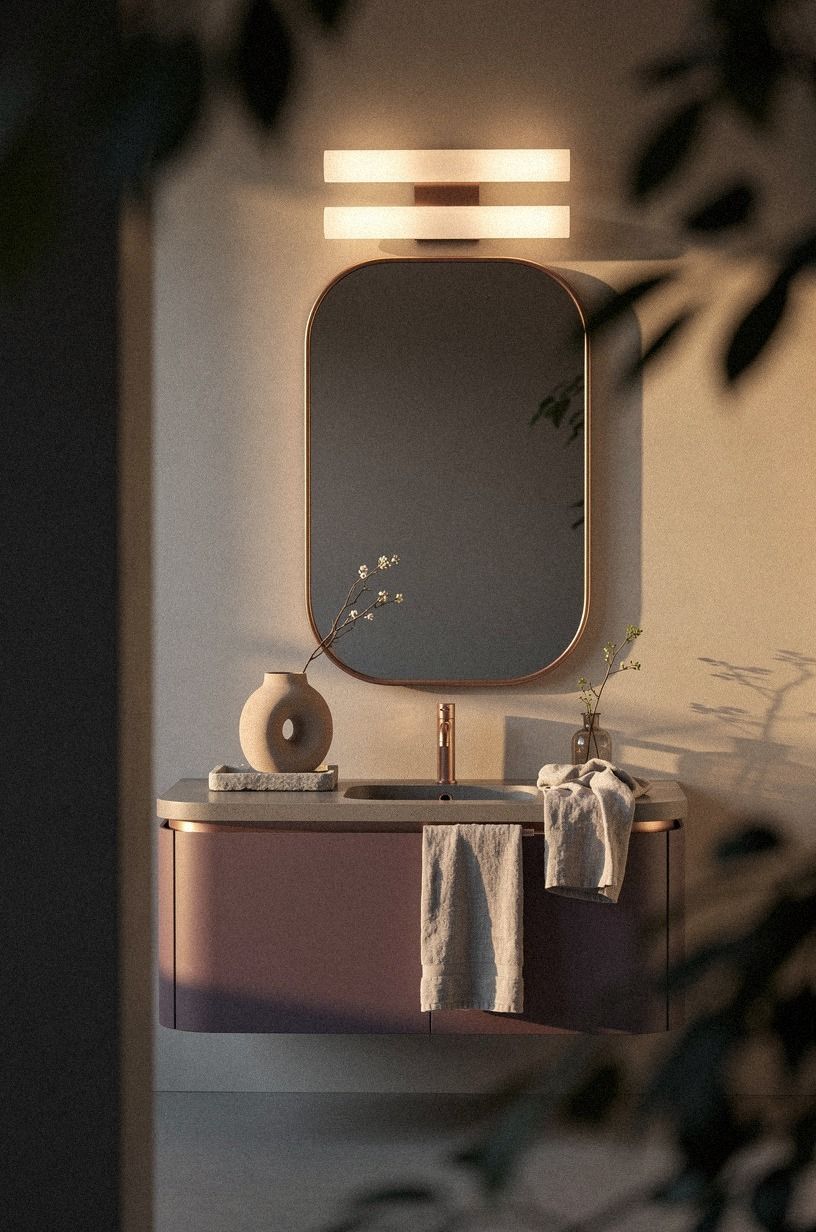
Your stone sink needs light from more than one level. The Three-Height Light Stack uses a ceiling fixture, eye-level sconces, and a low glow beneath the vanity so your limestone changes character throughout the day.
Morning light catches the rough pores. Evening light softens the whole basin.
Start with two rose-gold sconces mounted beside the mirror, not above it. Add a small opal globe overhead, then use a dimmable under-vanity strip only if your cabinet is floating. You’ll want warm bulbs, since blue light can make beige limestone look gray and tired.
And yes, the mirror matters. A rounded mirror repeats the basin’s curves, while a sharp rectangle gives your bathroom with stone sink a more tailored, modern edge. I prefer the rectangle when the sink is irregular because the contrast makes the carving feel intentional.
A tiny stone sample beside your paint card will save you trouble. I tested limestone beside Farrow & Ball Pelt No.254, and the muted plum made the stone look calm rather than yellow. Your room will feel serene if the light, paint, and washed Belgian linen share that same quiet temperature.
If you’re comparing lighting with a fuller stone treatment, read these natural stone bathroom ideas anchored in timeless limestone. The best fixture is the one that lets your material show up after sunset.
3Frame the Basin With a Thick Stone Ledge
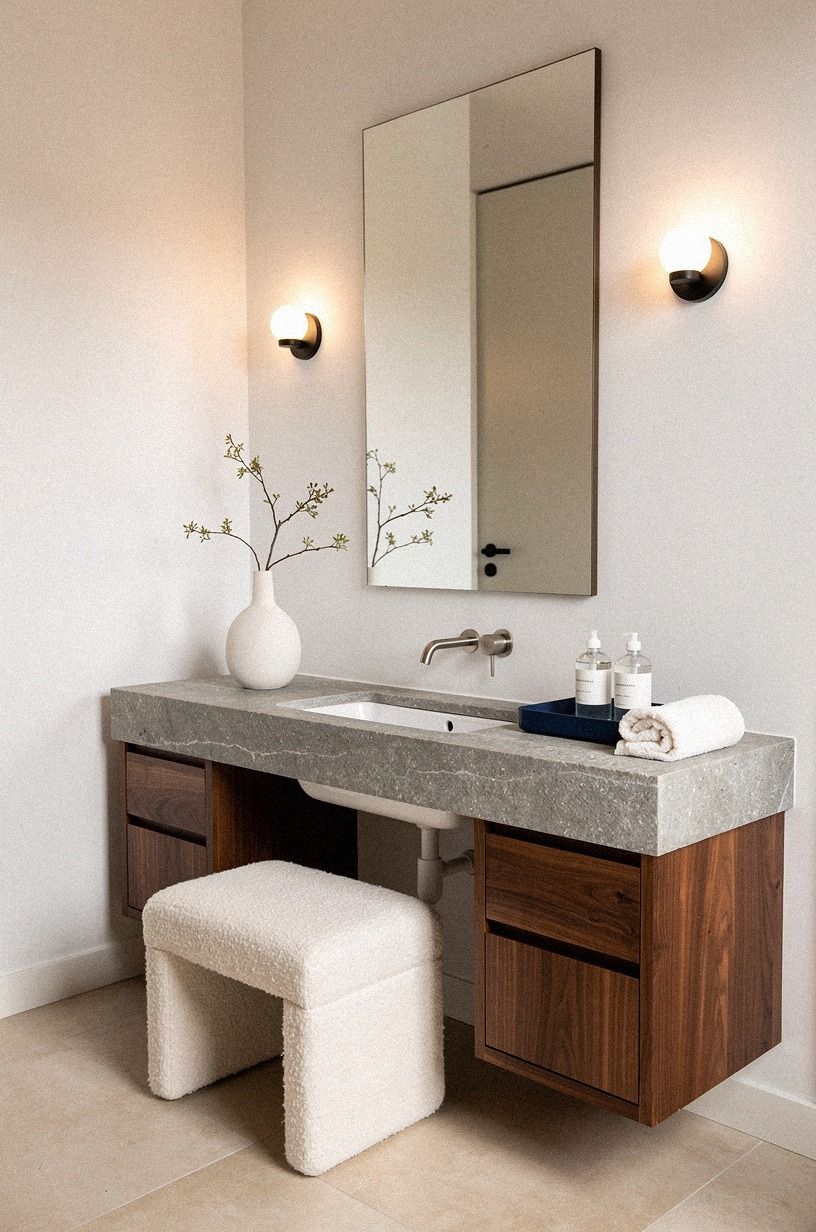
A thick ledge turns a basic stone vanity bathroom into a small architectural moment. Pair the white limestone with a navy wall, a walnut base, and one organic bouclé stool so the room feels layered without becoming busy.
4Can a Stone Sink Vanity Stay Light?
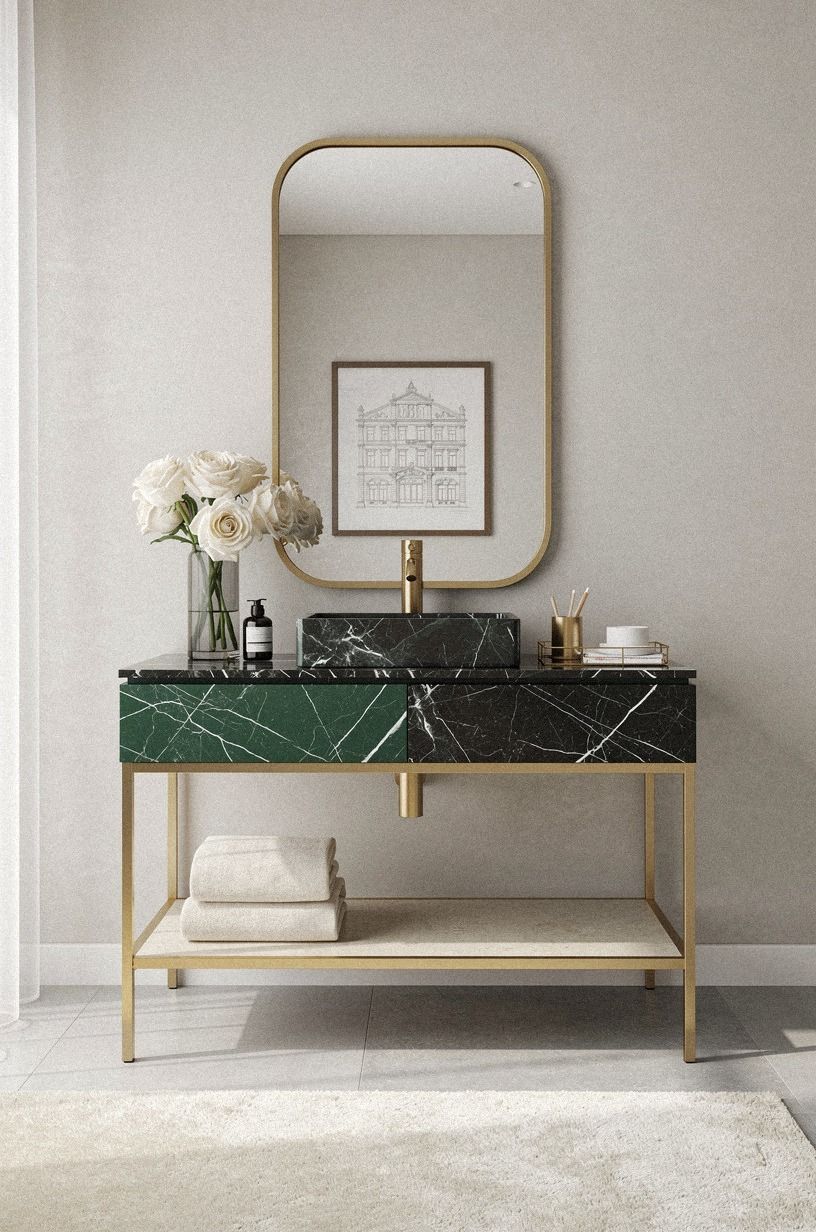
Yes, your stone sink vanity can feel bright if you control the surrounding surfaces. Use limestone as the tactile anchor, then bring in creamy walls, emerald accents, and warm gold without turning everything stark. The contrast gives the room depth while keeping the stone approachable.
Choose a soft cream wall color and pair it with a gold faucet, an emerald-painted cabinet, or a small emerald textile. You’ll get a gentle, earthy palette instead of a beige blur. The move is contrast in texture and saturation, not contrast in every surface.
A bathroom with stone sink often feels heavier when every surface is matte and sandy. Add one reflective detail, such as a gold faucet or a small tray in Nero Marquina marble with white veins, so your eye has somewhere to travel.
I’d skip chrome here. It’s crisp, but it can make limestone seem dusty.
And if your bathroom has a small window, keep the window treatment sheer and simple. Your room needs every bit of natural light it can get. A linen cafe curtain can soften the view without blocking the pale glow that makes the basin look almost chalky at noon.
For a related palette, look through these limestone bathroom ideas for soft warm natural stone. Your stone doesn’t need a dark backdrop to feel dramatic.
5Build the Monolith Rule With One Continuous Slab
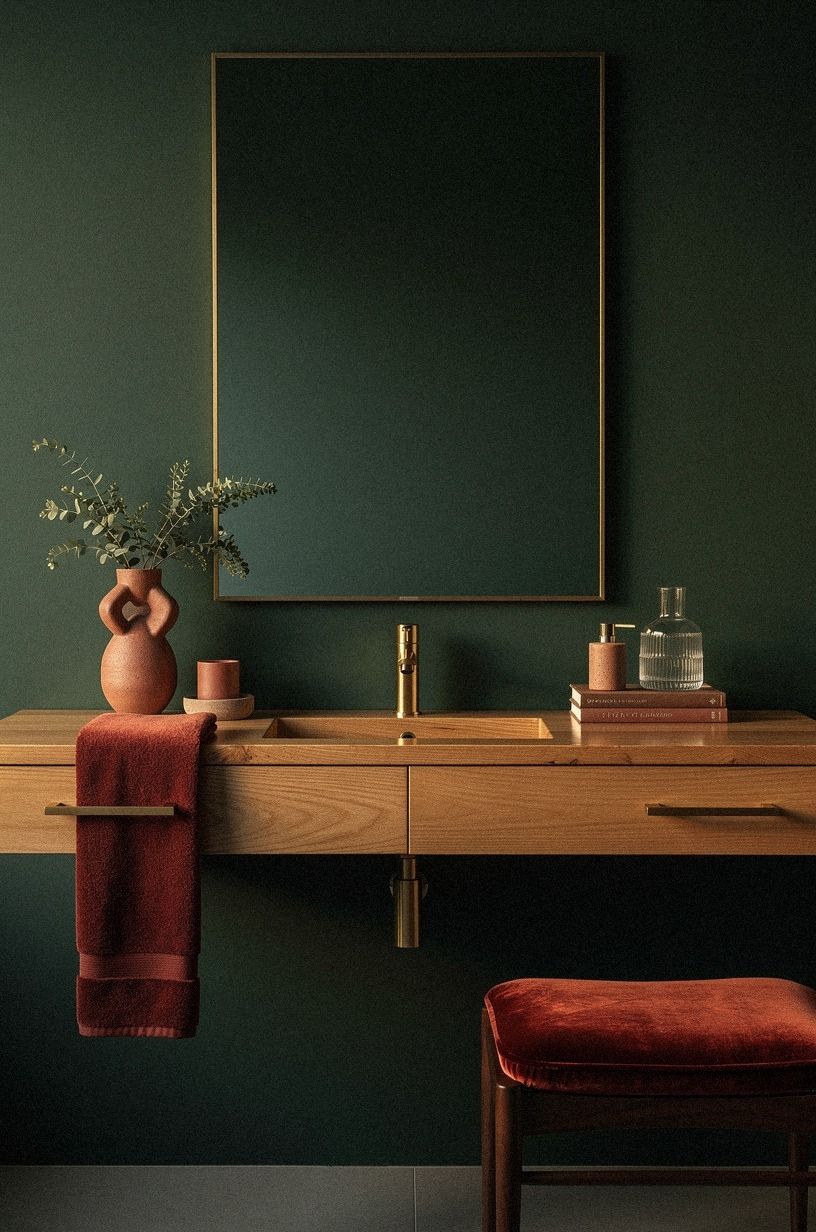
The Monolith Rule is simple: let the counter, backsplash, and basin read as one continuous stone gesture. You don’t need a matching stone floor or a full wall treatment. One strong plane is enough to make your stone vanity bathroom feel sculptural and refined.
Ask your fabricator about a single limestone slab with a softened edge. A square edge can feel severe, while a small radius gives the vanity a hand-shaped quality. You’ll want your faucet drilling and sink depth decided before fabrication, since changing those details after cutting can become expensive.
I made the mistake of choosing the hardware first once. It looked polished in isolation, but the spout landed too close to the basin and sent water onto the front edge. Your faucet should be chosen with the sink’s depth and splash pattern in mind, not only by finish.
Use a forest-green wall behind the slab, then bring in natural oak and one rust-colored accent. Farrow & Ball Studio Green No.93 can create a moody backdrop, while a deep-pile mohair velvet stool adds softness without weakening the stone’s presence.
If you’re unsure how much stone is enough, compare it with why limestone is the warmest way to do a neutral bathroom. Your room will feel more expensive when one material has a clear job.
6Swap a Standard Cabinet for Warm Oak
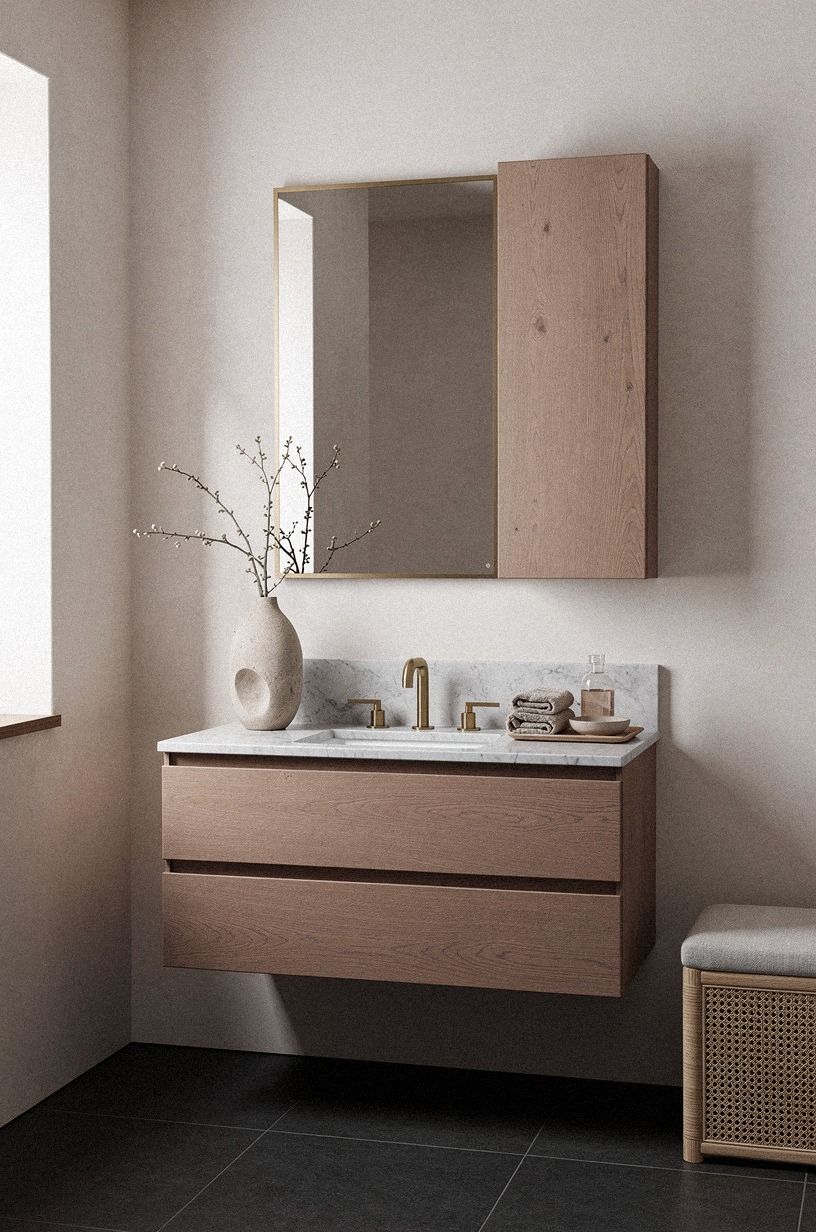
A limestone sink becomes more welcoming when dusty rose, charcoal, and brass soften its pale surface. Use a dusty-rose cabinet with a charcoal interior or a charcoal base with brass pulls, then let the limestone remain the quiet focal point. The contrast feels considered without looking rustic.
Your cabinet doesn’t need ornate legs. Flat-front doors, recessed pulls, and a lightly brushed brass finish will keep the composition modern. If you’re buying ready-made furniture, measure the sink projection carefully.
A standard vanity may not support the weight or depth of a carved limestone basin.
But don’t let the charcoal become too dominant. That color can make your bathroom with stone sink feel heavy when the room is small. I prefer dusty rose on the larger cabinet surface, with brass used sparingly around the handles and plumbing.
Add one woven basket below, a charcoal linen stool nearby, and a folded towel with a nubby edge. These details soften the hard surfaces while keeping your room practical. You’ll feel the difference when the warm limestone meets your hand after a cold morning shower.
The organic modern travertine bathroom ideas warm stone wood show a similar balance. Your goal isn’t matching every color. It’s giving the stone a companion that feels alive.
7Hang a Rounded Mirror Above the Carved Basin
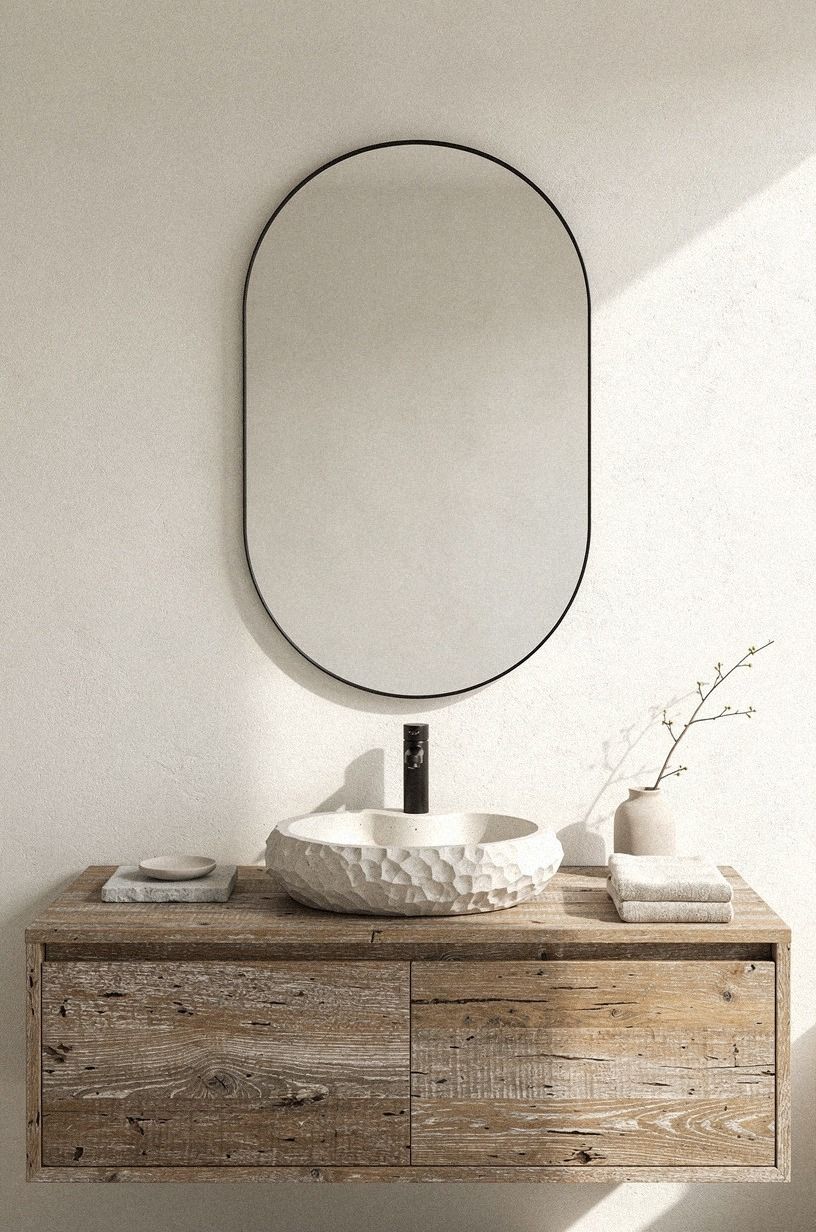
A rounded mirror echoes the shape of a carved sink and gives your stone vanity bathroom a softer silhouette. Choose a wide oval or a pill-shaped frame, then mount it so the bottom sits close enough to the faucet that the two pieces feel connected.
Use a reclaimed weathered teak mirror frame if you want warmth against a warm-white wall, or choose a simple black outline if your bathroom needs more definition. Add a camel linen stool or towel so the palette feels welcoming rather than stark.
Your basin can be bold here. A deep trough or irregular vessel will look deliberate beneath a calm mirror shape. I’d avoid a highly decorative mirror with carved stone because both pieces will demand attention, and your eye won’t know where to rest.
And remember the practical side. Leave enough clearance for the faucet handle and keep the mirror away from direct splash. A bathroom vanity stone installation can look serene but become annoying if every morning starts with water spots on the frame.
For more surrounding texture, explore these tumbled limestone floor ideas for old world lived-in texture. Your mirror can be simple when the floor and basin already carry tactile detail.
8Paint the Walls a Color That Pulls From the Stone
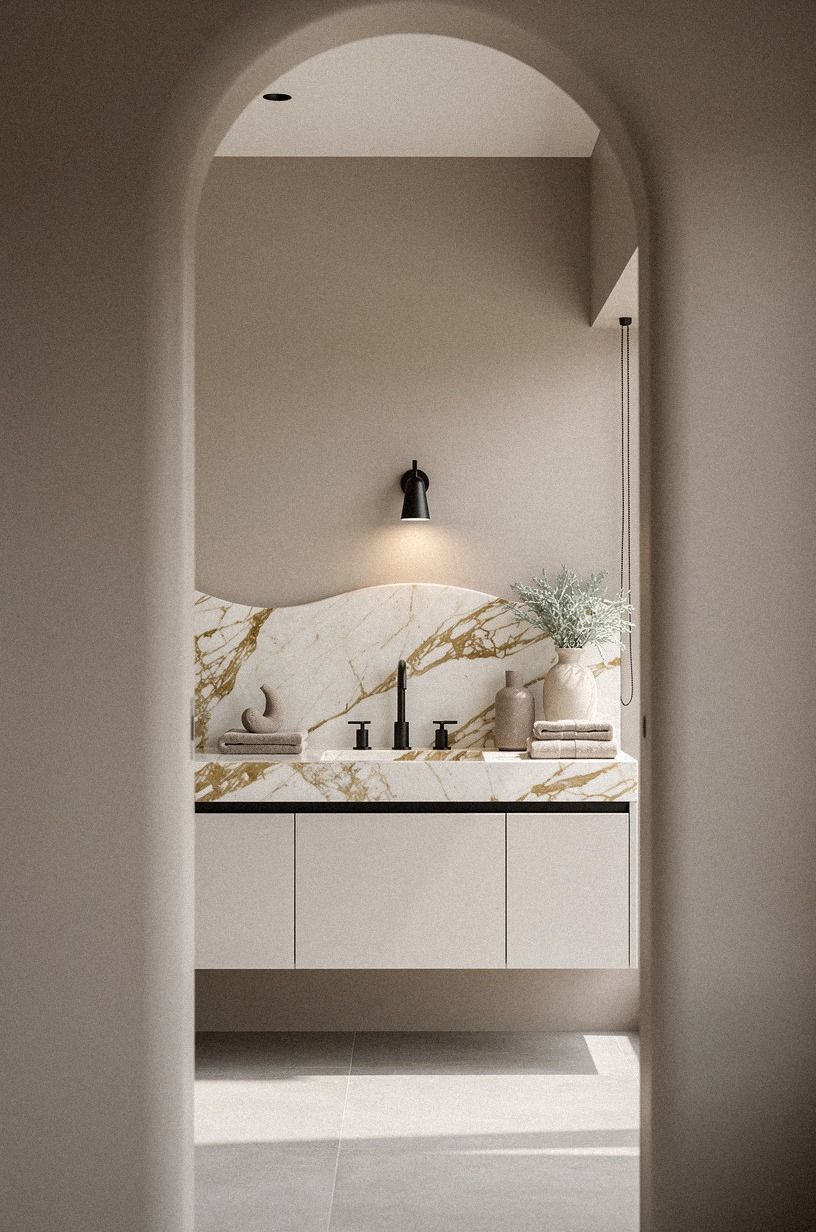
Paint should support limestone’s undertone, not force it into a new personality. Sample Farrow & Ball White Tie No.2002 beside the actual basin, then watch it in morning, afternoon, and artificial light. Your favorite color card may look completely different beside warm beige stone.
For a softer room, use warm white walls with camel linen and a black mirror or faucet. The result is calming and earthy, especially when your sink has cream, sand, and faint gray movement. A small piece of Calacatta marble with gold veining can repeat the warmth without covering every surface in stone.
You’ll want to paint the ceiling too if the room is small. A continuous color field can make the walls feel taller and more intentional. I’d skip a bright white ceiling because the sudden contrast can cut the room into separate pieces.
But don’t choose paint from a screen. Your stone sample, faucet finish, and bulb temperature all change the result.
Hold the sample next to your towel and mirror as well. A bathroom with stone sink needs a palette that works with the objects you’ll use every day.
The stone-clad approach in these limestone wall ideas for a seamless stone clad bathroom can help if paint alone feels too quiet. Your walls don’t need to shout to make the basin memorable.
9Choose Patina Over Perfect Polish
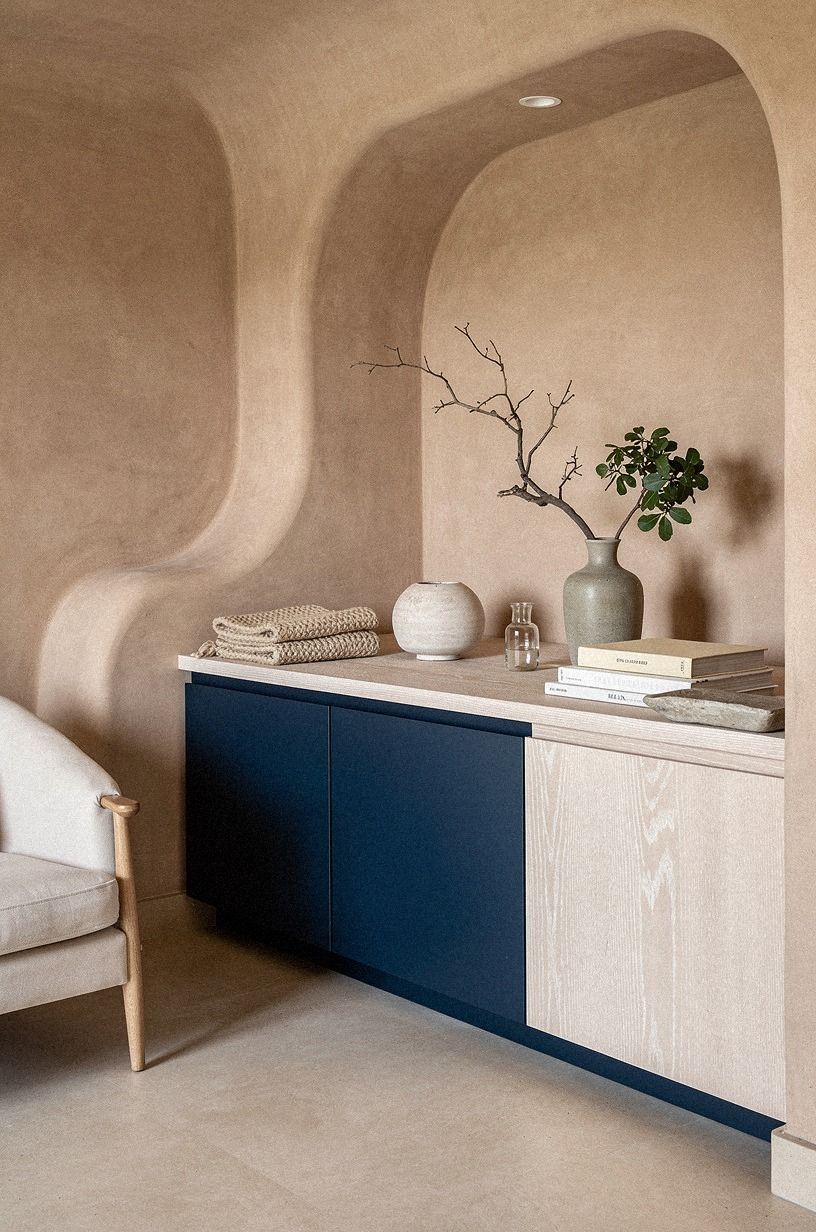
Choose an unlacquered finish when you want your limestone sink to look gathered over time. Unlacquered copper will deepen around the handle and develop a soft, irregular patina that works beautifully with porous stone. You’ll see fingerprints at first, but they become part of the finish.
A polished faucet is easier to wipe, but I’d skip it here. Its shine can make the limestone look dull by comparison, while copper gives both materials a warmer relationship. Your bathroom will feel more intimate when the hardware doesn’t look factory-fresh forever.
Add a small ivory ceramic soap dish and a cerused white oak tray for warmth. One midnight-blue detail can sharpen the composition, but several will make the room feel busy. You’ll want to repeat that dark tone once more, perhaps in a sconce cord or a framed print.
And don’t panic when the copper changes. I went back and forth on this because the first week looked uneven. Then the finish settled, and the vanity felt less decorated and more lived-in.
Your room should be able to age without becoming a maintenance project.
For another naturally changing surface, browse this guide to limestone countertop ideas for a soft honed vanity top. Patina works when you give it time.
10Mix the Three-Source Rule for a Collected Vanity
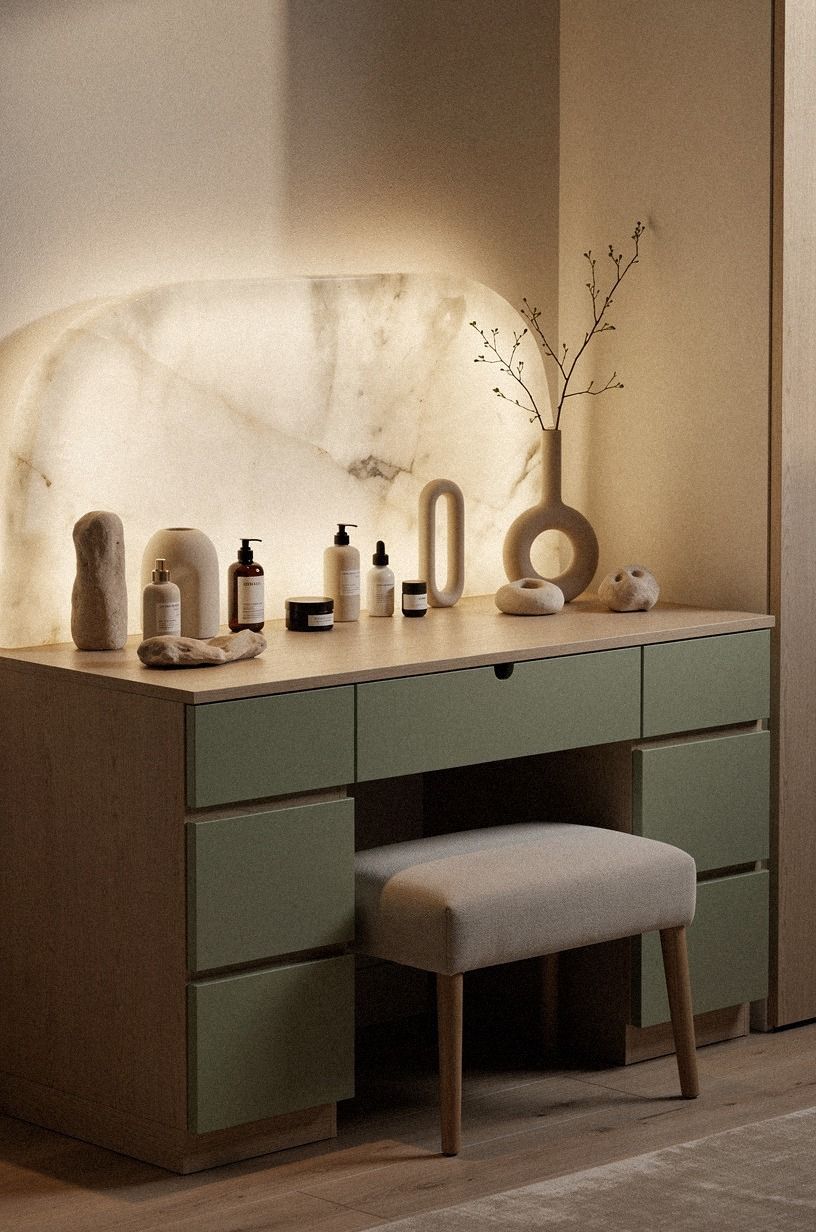
The Three-Source Rule keeps your vanity from looking like one showroom purchase. Choose one item from a budget retailer, one vintage or secondhand piece, and one higher-quality material. Your stone sink becomes the high-value anchor, while the smaller objects bring personality.
Try sage-green woven storage, a thrifted natural-wood stool, and a cream linen towel. Add a backlit translucent onyx tray as the higher-quality accent.
The mix feels charming because every surface behaves differently. You’ll get texture from the basket, history from the stool, and a soft glow from the stone.
This is also where you can keep costs honest. The stone may require professional fabrication, but your mirror, towel, and storage don’t all need premium labels. I’d spend on the basin edge and faucet, then save on accessories that can be replaced as your taste shifts.
Here are the typical US bathroom project costs supplied for planning:
Your limestone sink project may fit the budget tier if the plumbing stays put. If you’re moving drains or replacing walls, the mid-range figure is a more useful starting point. Compare your plan with these natural stone bathroom ideas anchored in timeless limestone before you order anything.
11Anchor the Room With a Limestone Waterfall Edge
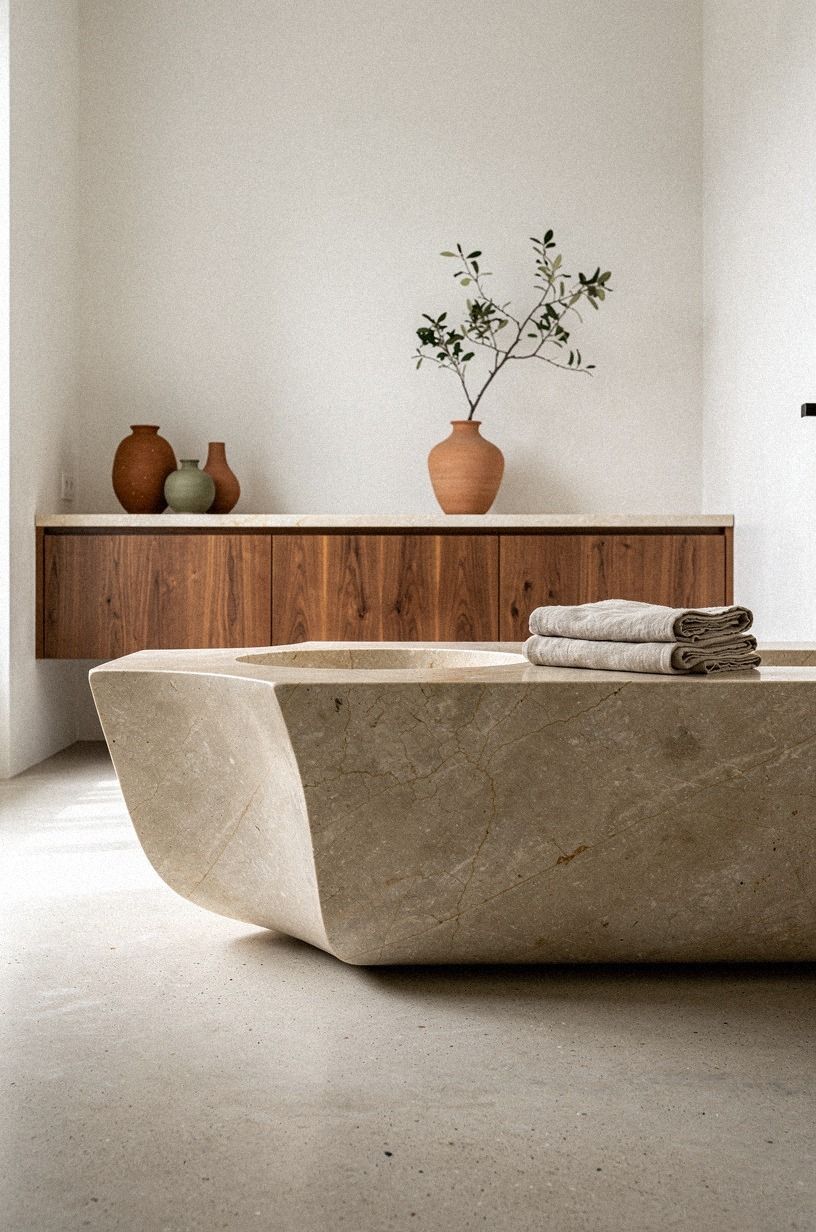
A waterfall edge lets the stone drop visibly down one side of the vanity, creating a strong vertical line. It’s a bold choice for a stone vanity bathroom, but it works best when the rest of your room stays quiet. Your eye gets one sculptural gesture instead of five.
Use a book-matched walnut side panel beside the limestone, then bring in terracotta through a small vessel or towel and olive through one leafy branch. I’d rather see those warm, grounded materials than a second dramatic stone. The waterfall should feel carved from one idea, not assembled from leftover samples.
You’ll need to confirm the side panel, cabinet depth, and door swing before fabrication. A thick edge can steal usable clearance in a narrow bathroom, especially near the toilet. Keep at least 21 inches of clearance in front of the toilet, then make sure your cabinet doors can open without collision.
But don’t let the waterfall become too formal. Add a soft Turkish cotton towel, a small olive branch, and a low wooden stool so the room still feels welcoming. Your stone can be architectural and comfortable at the same time.
If your space is tight, study these limestone bathroom ideas for soft warm natural stone. The right edge detail can make a small vanity feel custom without adding extra decoration.
12Style the Sink With the Quiet Edge Method
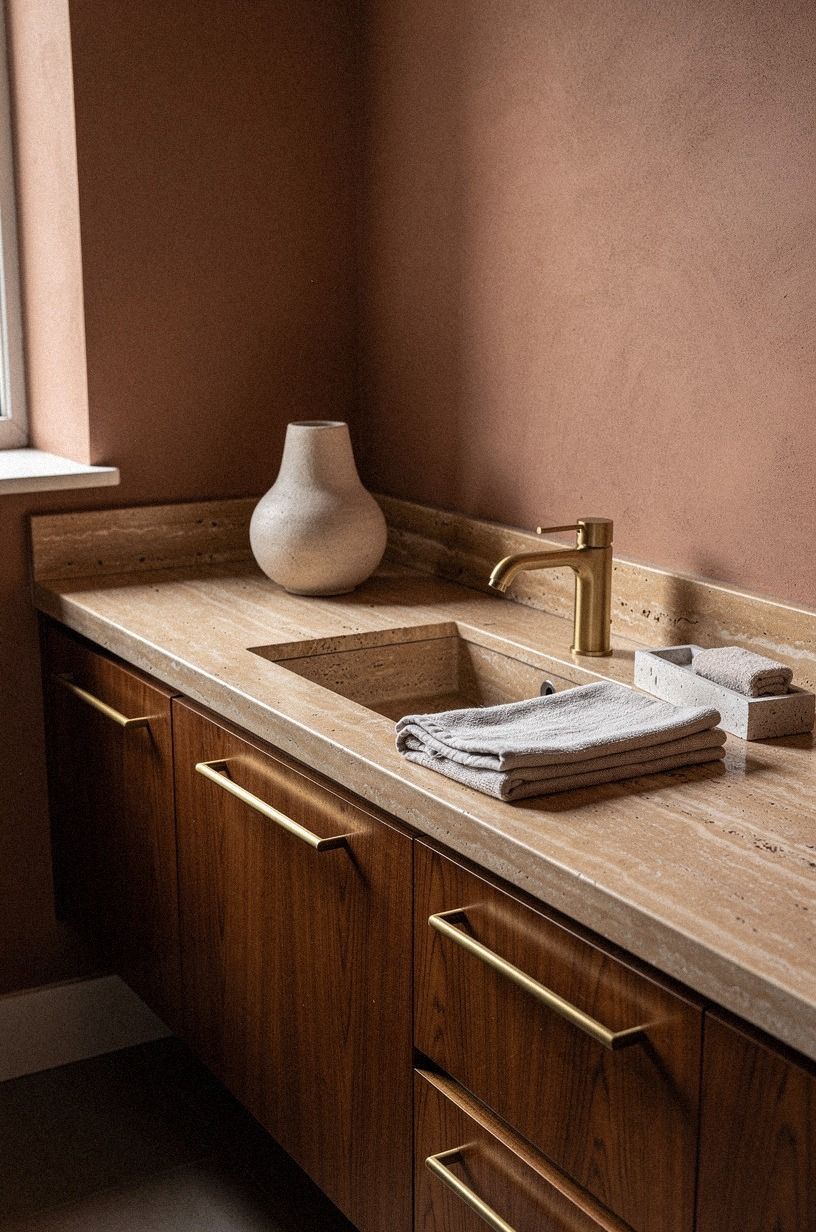
The Quiet Edge Method means leaving the perimeter around your limestone sink mostly open. Place daily-use pieces near the center, keep the corners clear, and let the stone’s profile remain visible. Your vanity will look more sculptural because the eye can follow its outline.
Use a warm travertine tray, one soap bottle, and a folded clay-colored linen towel with a raw hem. Add aged-brass hardware or a small brass vessel to warm the arrangement.
That’s enough. A small branch in a narrow vessel can work if your sink has a broad ledge, but you’ll want to remove it if it blocks the mirror or catches splashes.
This method is especially useful for renters. A removable mirror, tension-mounted textile, and peel-and-stick wall panel can suggest a limestone bathroom without permanent demolition. You’ll still get the warm, earthy mood, even if your actual sink is a simpler ceramic model.
I’d skip the fake stone contact paper around a wet basin. It tends to expose seams, and moisture makes the whole effect feel temporary. Choose one honest stone accessory instead, then let your wall color and lighting carry the atmosphere.
A standard vanity height of 32 to 36 inches usually feels comfortable, while a comfortable shower begins around 36 by 36 inches. Your sink area should support daily movement, not only decoration. These why limestone is the warmest way to do a neutral bathroom ideas can help you keep the styling restrained.
The Limestone Decision I’d Make With My Own Money
I’ve installed and styled enough stone to know that limestone is less forgiving than ceramic, but that’s also why it has presence. It records use.
A wet ring, a softened edge, and a slight change in color can make a bathroom feel connected to real life instead of sealed away from it. I prefer that honesty to a surface that stays visually perfect but feels cold under your hand.
My biggest mistake was treating the vanity as a collection of separate purchases. I chose the faucet, mirror, cabinet, and basin from different directions, then wondered why the room looked scattered.
The fix wasn’t more styling. It was choosing one visual sentence, a carved limestone basin, natural oak, and warm brass, then removing everything that interrupted it.
If you’re deciding where to spend, put your money into the stone shape and the installation. A plain mirror can work.
A budget towel can work. Even a modest cabinet can work if the proportions are right.
A badly planned sink depth won’t work, no matter how refined the faucet looks.
I’d also resist the urge to copy a dark, dramatic bathroom if your room gets little daylight. Farrow & Ball Studio Green No.93 can feel rich and moody in a bright space, but it may flatten your limestone in a shadowy one. Your own light should decide the palette, not a reference saved from a designer hotel.
The best limestone vanity rooms feel warm because they’re edited, not because they’re empty. Your hand should meet wood, stone, linen, and metal in a small sequence of different sensations.
That’s what makes the room inviting. It’s quiet, but it isn’t bland!
What People Always Want to Know
What is the best Limestone Sink & Vanity Ideas for a Sculptural Stone Statement for a small bathroom?
A floating limestone basin with a shallow dusty-rose or charcoal base is a strong small-space choice because it keeps the floor visible. You’ll want a rounded mirror, a wall-mounted faucet, and no bulky side storage. The open lower area makes your bathroom feel airy without giving up practical storage.
Where can I buy Limestone Sink & Vanity Ideas for a Sculptural Stone Statement pieces on a budget?
Look at IKEA, Wayfair, and Target for cabinets, mirrors, and faucets, then check Facebook Marketplace or a local thrift shop for wood stools and frames. Your site uses display advertising, not affiliate commissions, so there’s no shopping disclosure to add. A secondhand mirror can save more than a decorative accessory.
How much does a Limestone Sink & Vanity Ideas for a Sculptural Stone Statement makeover cost?
A light refresh can run about $200 to $1,200 for paint, a mirror, faucet, and textiles. A mid-range project with a new vanity, partial wall tile, and lighting is typically $3,000 to $9,000. You can keep costs down by leaving plumbing where it is and styling what you own.
Can I create a Limestone Sink & Vanity Ideas for a Sculptural Stone Statement on a budget?
Yes, and your first moves can be inexpensive. Paint the walls, replace the mirror, and group existing towels by texture and color.
A budget faucet, a thrifted stool, and one limestone tray can create the mood without replacing the entire vanity. Start with the visual anchor, then layer slowly.
Is a Limestone Sink & Vanity Ideas for a Sculptural Stone Statement worth it in a small space?
Yes, if you let the stone do more than one job. A basin with an integrated ledge can replace extra countertop accessories, while a floating cabinet keeps the floor visible. You’ll want to protect the stone properly, but the small room can make its sculptural shape feel even more intentional.
Is a Limestone Sink & Vanity Ideas for a Sculptural Stone Statement a good idea for a rental?
Yes, your rental can borrow the look through removable changes. Try a peel-and-stick wall panel, a tension-mounted linen curtain, a removable mirror, and warm plug-in sconces. Keep the existing sink, then add one real stone object, such as a tray or soap dish, so the room doesn’t rely on imitation everywhere.
Where I’d Start First
If I had to pick one, I’d start with a floating limestone basin. The shadow underneath makes the stone feel lighter, and the open floor gives a small bathroom more breathing room. Pin that idea for later and compare it with these limestone wall ideas for a seamless stone clad bathroom before choosing your finish.