
 by
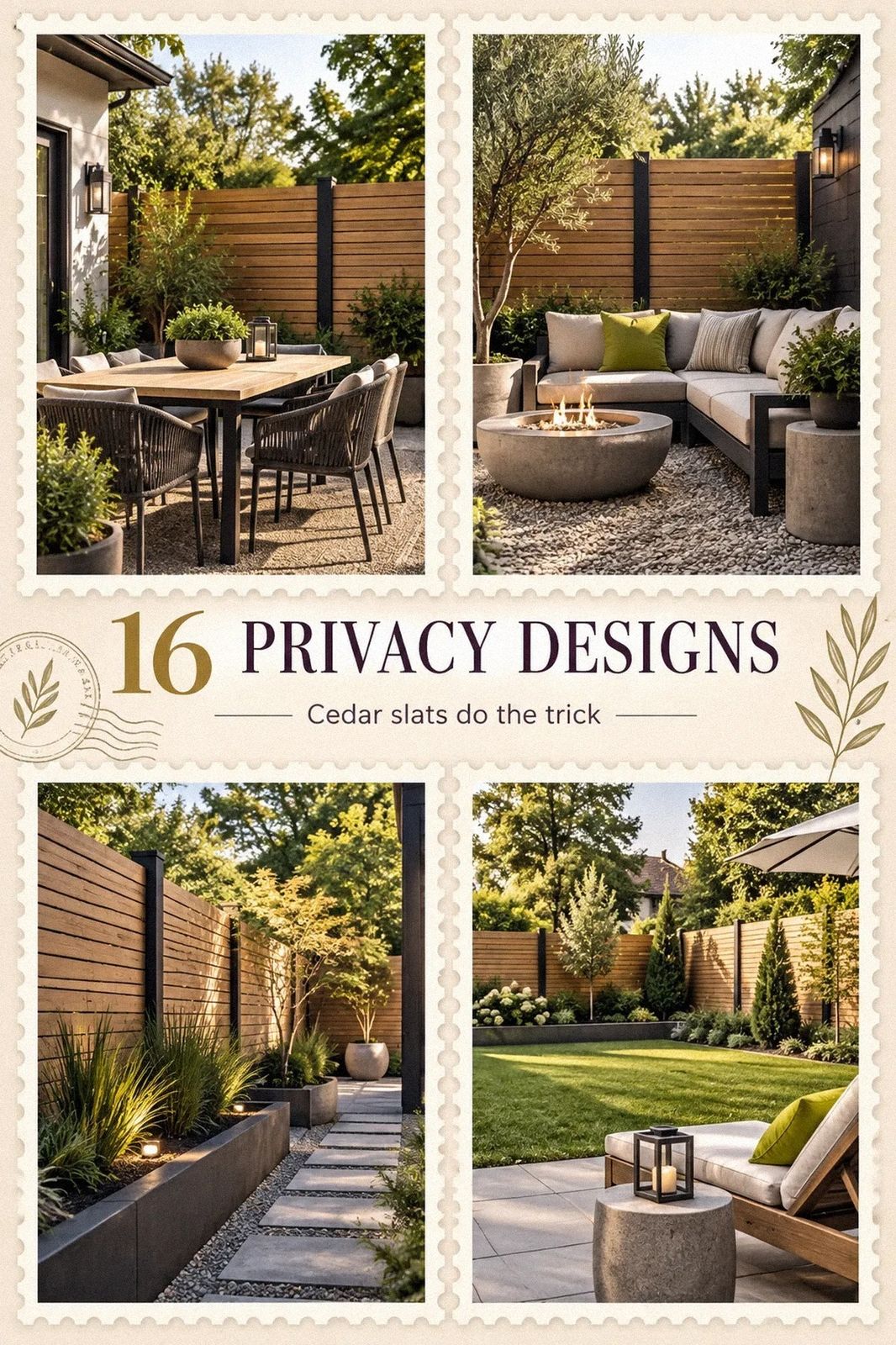
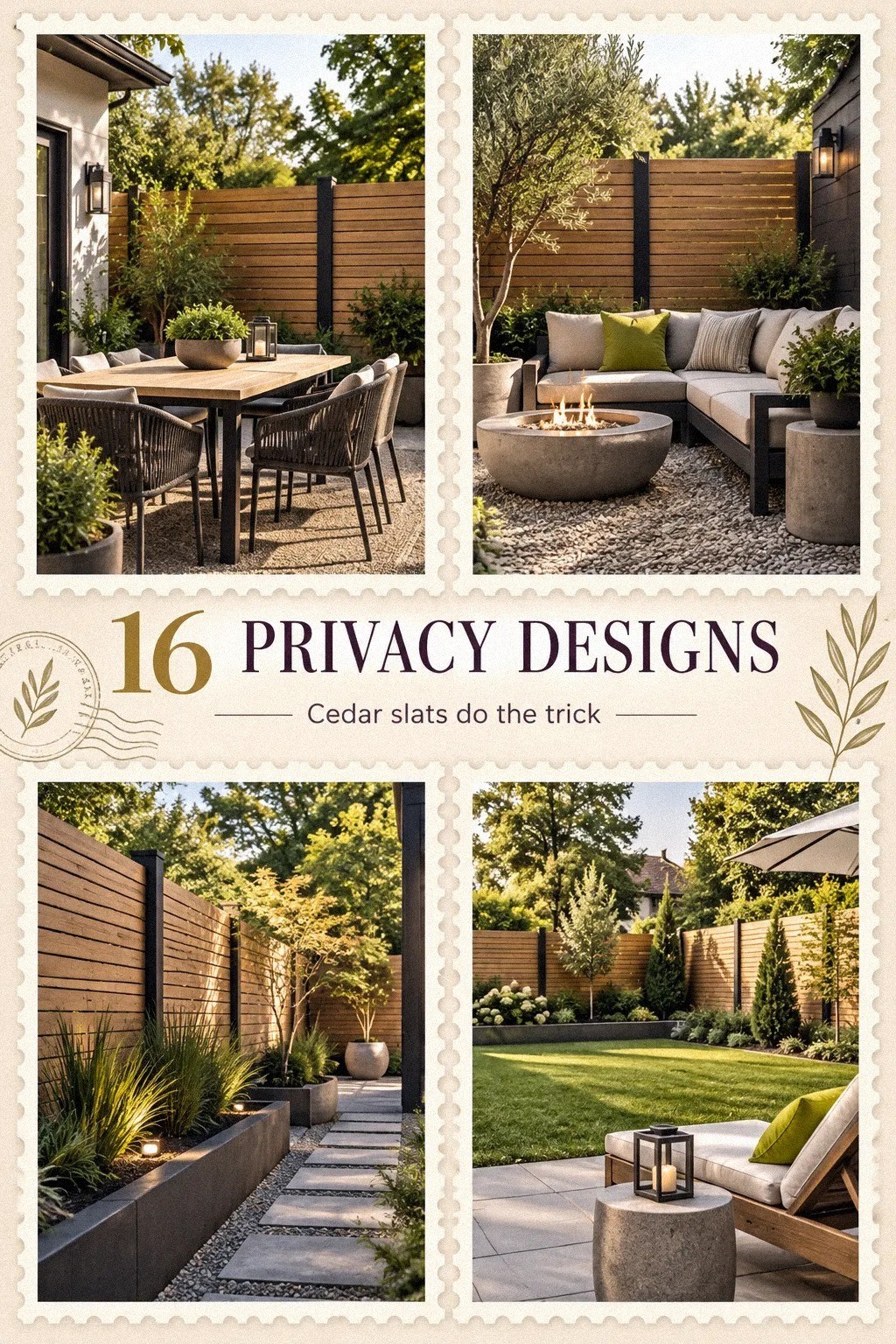
by You can add real backyard privacy to an existing fence without replacing it. My project stayed within the typical $200-$900 budget tier because I layered height, plants, fabric, and light instead of rebuilding the boundary. The result feels like a warm outdoor room with a calmer, more intentional edge.
Here's what it looked like before
The old fence stayed exactly where it was while I worked around it. The boards were sun-faded, the gaps showed the neighboring yard, and the patio furniture sat too close to the boundary.
I didn't need a new fence. I needed a better edge made from weathered wood.
I took measurements before moving anything, then lived with the awkward view for a few more evenings. That pause mattered. You can spend money quickly when your only goal is to block a sightline, but your yard still needs airflow, daylight, and a walkway you can use.
The first useful question was simple: where did I actually feel exposed? For me, it was the chair nearest the neighbor's kitchen window. That became the starting point for the rest of the project.
- Extend the fence height with a lighter frame
- Could lattice solve the upper sightline?
- Hang outdoor curtains where the view bothers you
- Stagger a privacy hedge in front of the boards
- Build a slatted backyard privacy screen
- Benjamin Moore or Farrow & Ball? Paint the fence deeper
- Float planters below the sightline
- Use a half privacy fence around the seating zone
- Test reed screening behind the old boards
- Stack three heights of outdoor lighting
- The Two-Wood Rule made the contrast calmer
- Anchor the chairs with an outdoor rug
- Does an umbrella help with overhead privacy?
- Frame a pallet panel as a budget layer
- Paint the gate and soften its edges
- Is a private corner enough?
1Extend the fence height with a lighter frame
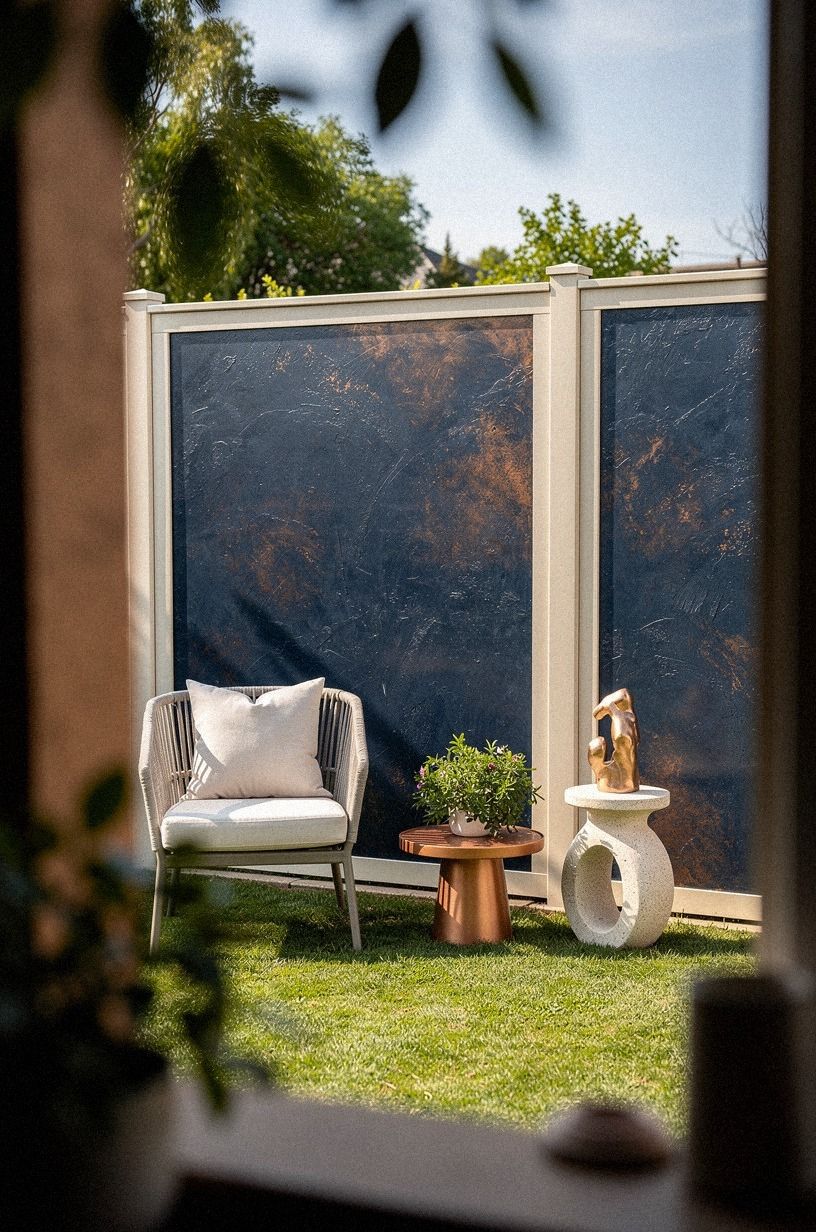
My first move was a fence height extension made from a narrow upper frame rather than another solid wall. I liked a hand-applied Venetian plaster finish in midnight blue, copper, and ivory because it felt warm, relaxed, and quietly handsome beside the old boards.
If you're adding height, keep your eye on proportion. A heavy upper panel can make your fence look fortified, while spaced slats let daylight pass through. I left the lower fence visually quiet and gave the top a rhythm of vertical gaps.
That was the first real win!
A narrow topper can also make the existing fence look better maintained. I found useful proportions while comparing these privacy fence topper ideas, especially for fences that already sit close to a patio or narrow side yard.
The frame should feel attached to the fence without looking like a second story. I kept the extension shallow, used consistent spacing, and left the corners visually open. That gave me more privacy at seated eye level while preserving a little sky above.
Before cutting anything, sit in the chair you use most. Hold a scrap board or cardboard panel at different heights. You’ll quickly see whether you need twelve more inches or a more focused screen.
2Could lattice solve the upper sightline?
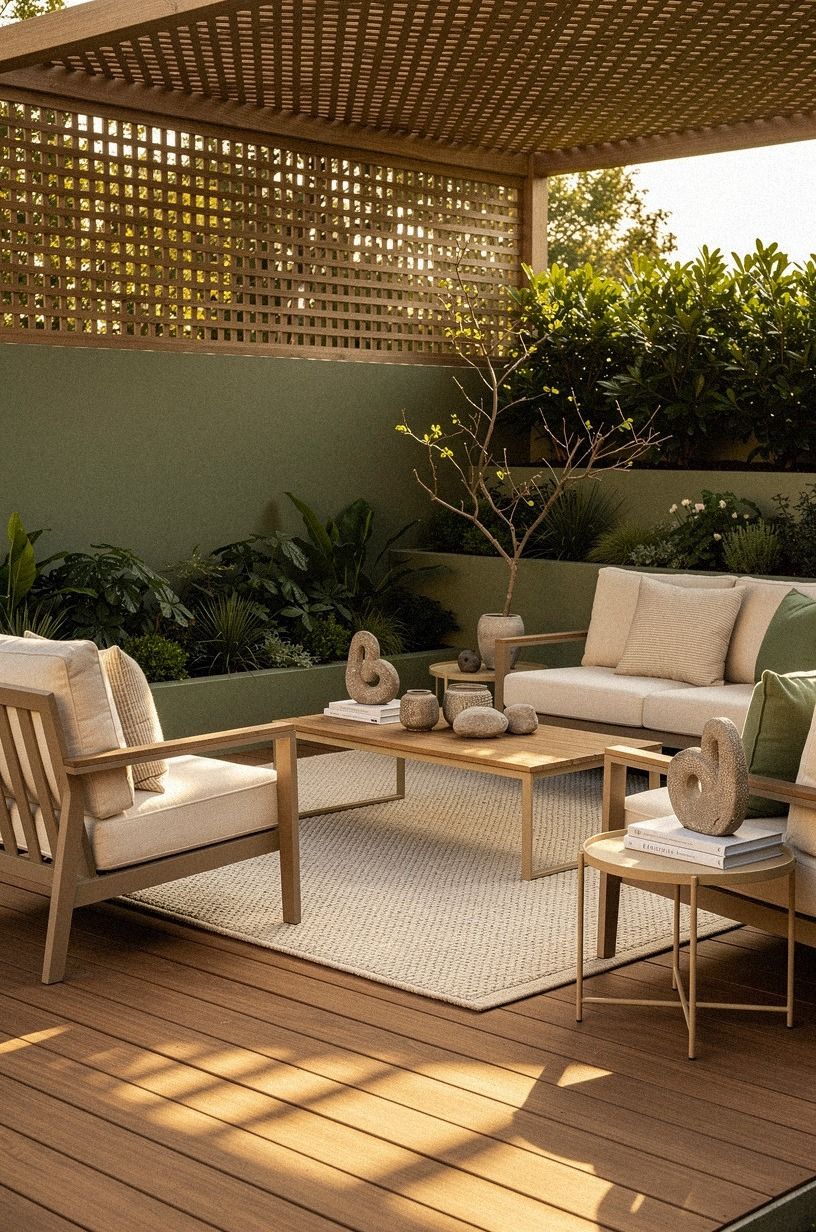
I tested natural wood lattice above one section before committing to the whole run.
3Hang outdoor curtains where the view bothers you
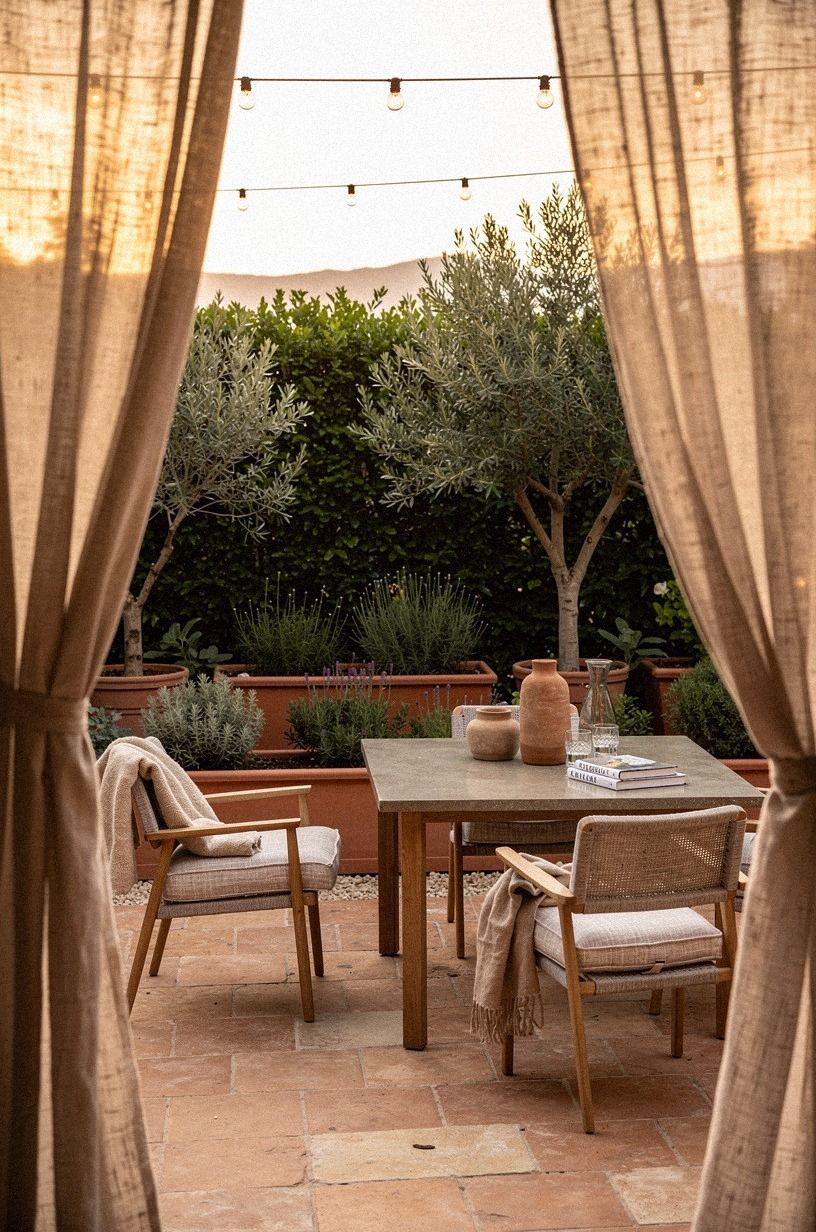
The quickest emotional change came from washed Belgian linen outdoor curtains on one side of the patio. I didn't hang fabric across the entire fence. I created one soft screen behind the chairs, where the neighbor's kitchen window looked directly into our seating area.
You’ll want fabric that moves without becoming a sail. I chose a muted terracotta tone, then balanced it with stone and olive details so the setup looked architectural and inviting.
The curtains aren't permanent privacy glass, and they won't stop every view. They give you control. Draw them during dinner, open them for morning light, and let the arrangement change with the day.
I used weighted hems because ordinary fabric can twist around the supports. A discreet outdoor curtain weight kept the panels from drifting into the walkway whenever the breeze picked up.
The difference was immediate! The patio felt more private as soon as the fabric softened the seating area, even though most of the fence remained visible.
Curtains also work well for renters because a freestanding frame can hold them without drilling into the fence. Keep the bottom edge several inches above the ground so water, leaves, and muddy shoes don't turn the fabric into a maintenance problem.
4Stagger a privacy hedge in front of the boards
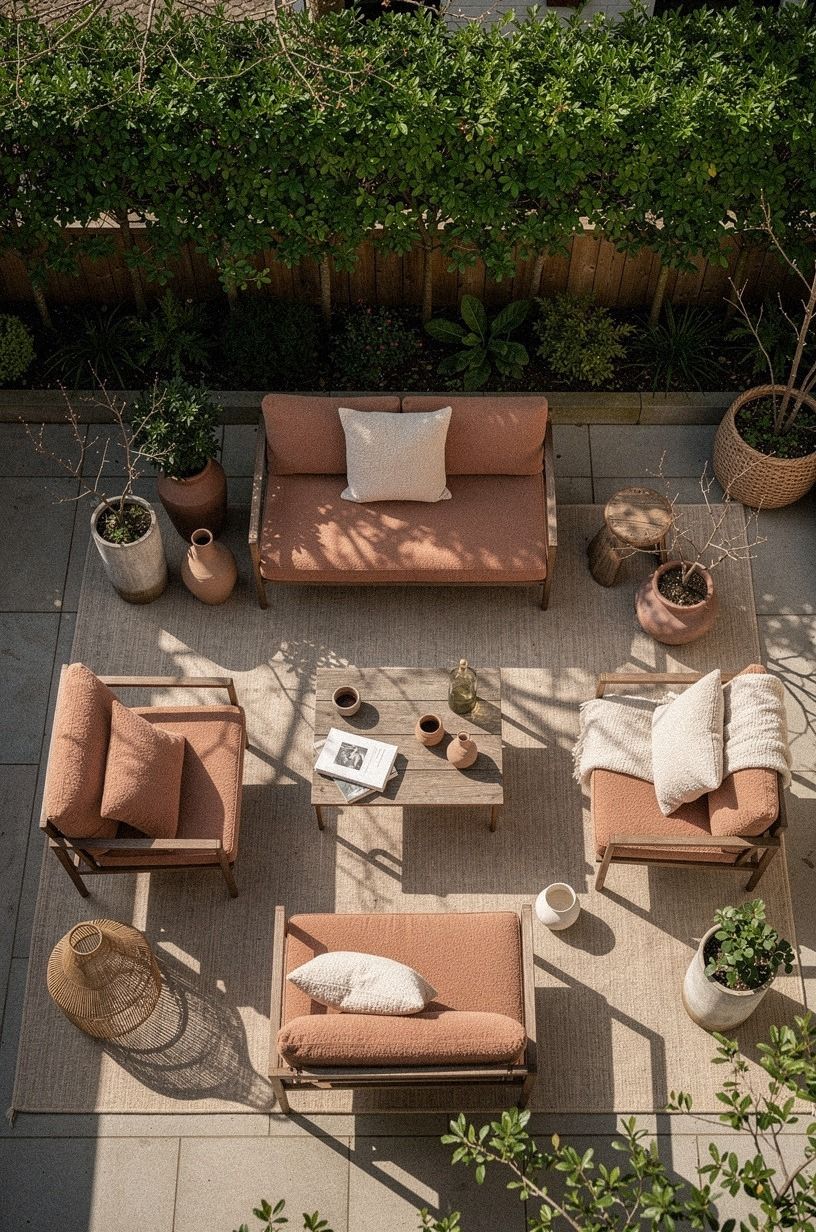
I wanted greenery, but I didn't want a row of identical shrubs pressed against the fence.
5Build a slatted backyard privacy screen
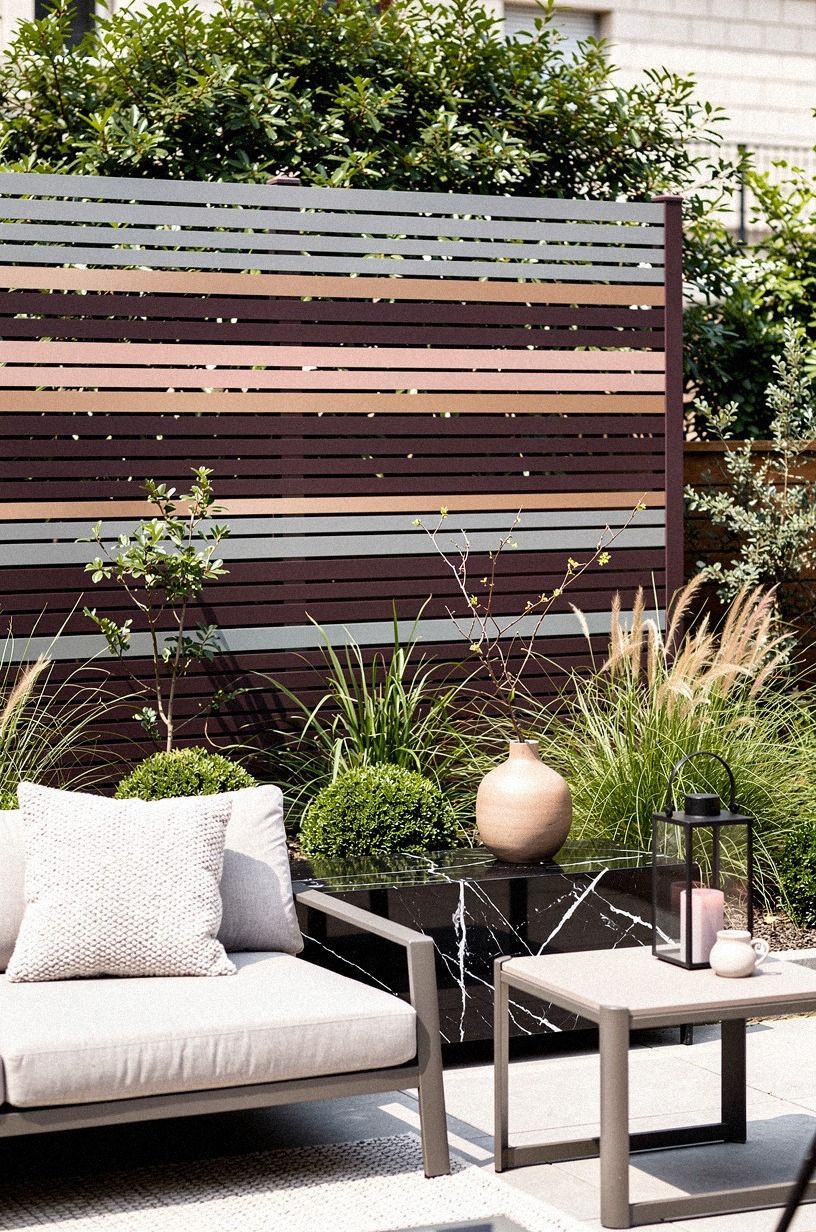
A freestanding Nero Marquina black marble screen with white veins gave me privacy exactly where I needed it, without asking the existing fence to do every job. I set it behind one chair and beside the dining zone, so the patio gained a private pocket instead of a continuous barrier.
The spacing matters more than the number of boards. You can see through a slatted screen from an angle, but the direct view disappears when you're seated. I used the deep material as an anchor within a plum, gray, and rose-gold palette, though I skipped an identical finish because perfect matching can look overly planned.
My backyard privacy screen ideas research convinced me to keep the screen narrow and let the original fence remain visible.
The screen needs a stable base. I used adjustable post feet on a level surface and checked that the frame couldn't wobble when pushed from the side. A freestanding panel should feel secure before anyone leans a chair against it.
I also angled the screen slightly toward the sightline. That small adjustment blocked the neighbor's window while leaving the walkway open. Privacy improved because of placement, not because I added more material.
6Benjamin Moore or Farrow & Ball? Paint the fence deeper
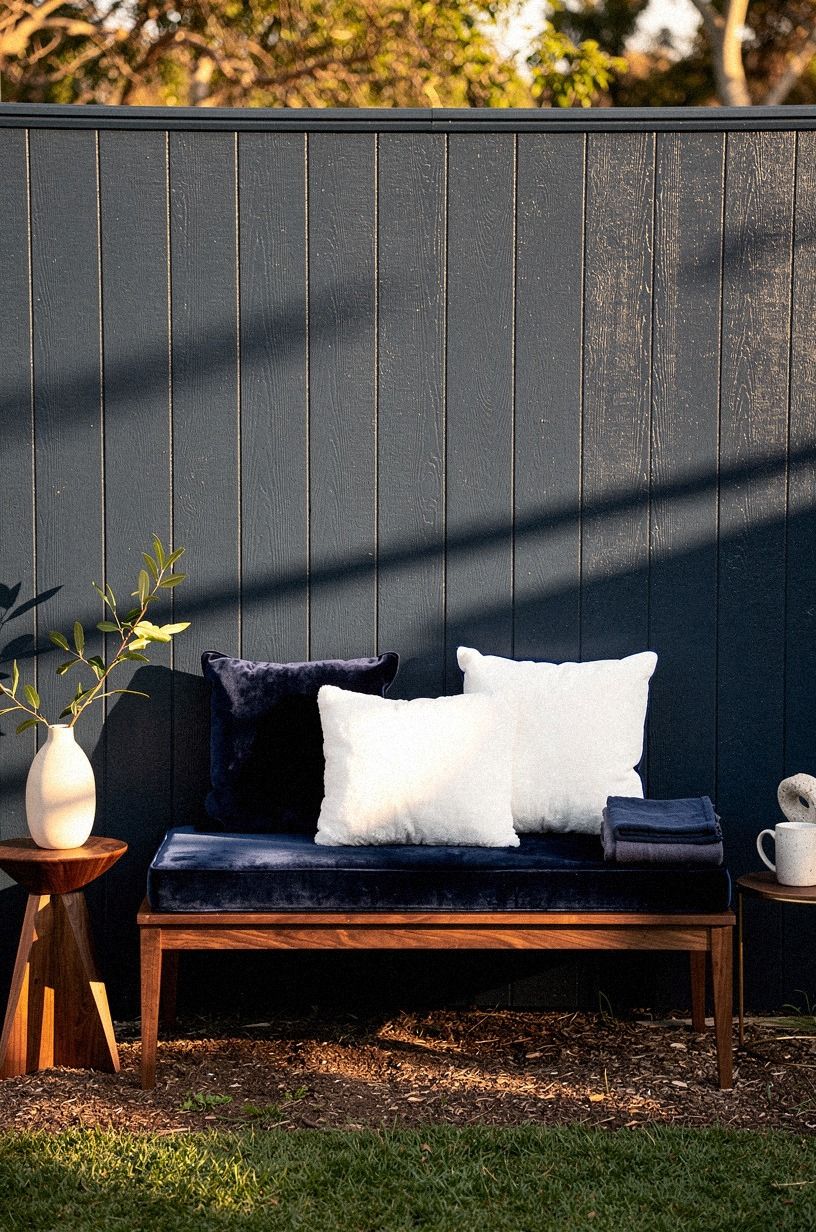
Paint was the least expensive-looking change, which is exactly why I almost skipped it. The existing boards had several shades of brown, and every new privacy layer made that variation louder. A single exterior color quieted the background.
I considered Benjamin Moore Aura Exterior in Hale Navy HC-154, then compared it with Farrow & Ball Exterior Eggshell in Hague Blue No. 30. The navy depth won because it made white details and walnut accents stand out without turning the yard gloomy. Both colors felt moody in the best way.
You can sample a small section first, and you shouldn't judge it under one noon light. By late afternoon, the color had become softer and more intimate. The same paint looked noticeably cooler after sunset.
I cleaned the boards, replaced a few loose nails, and brushed the gaps before rolling the broad faces. Exterior primer helped the uneven wood absorb the finish more consistently.
A navy fence can make pale furniture, green leaves, and warm lighting stand out beautifully. It can also look heavy when the yard receives little sun, so test before committing. Paint is easy to underestimate because its effect spreads across every other decision.
7Float planters below the sightline
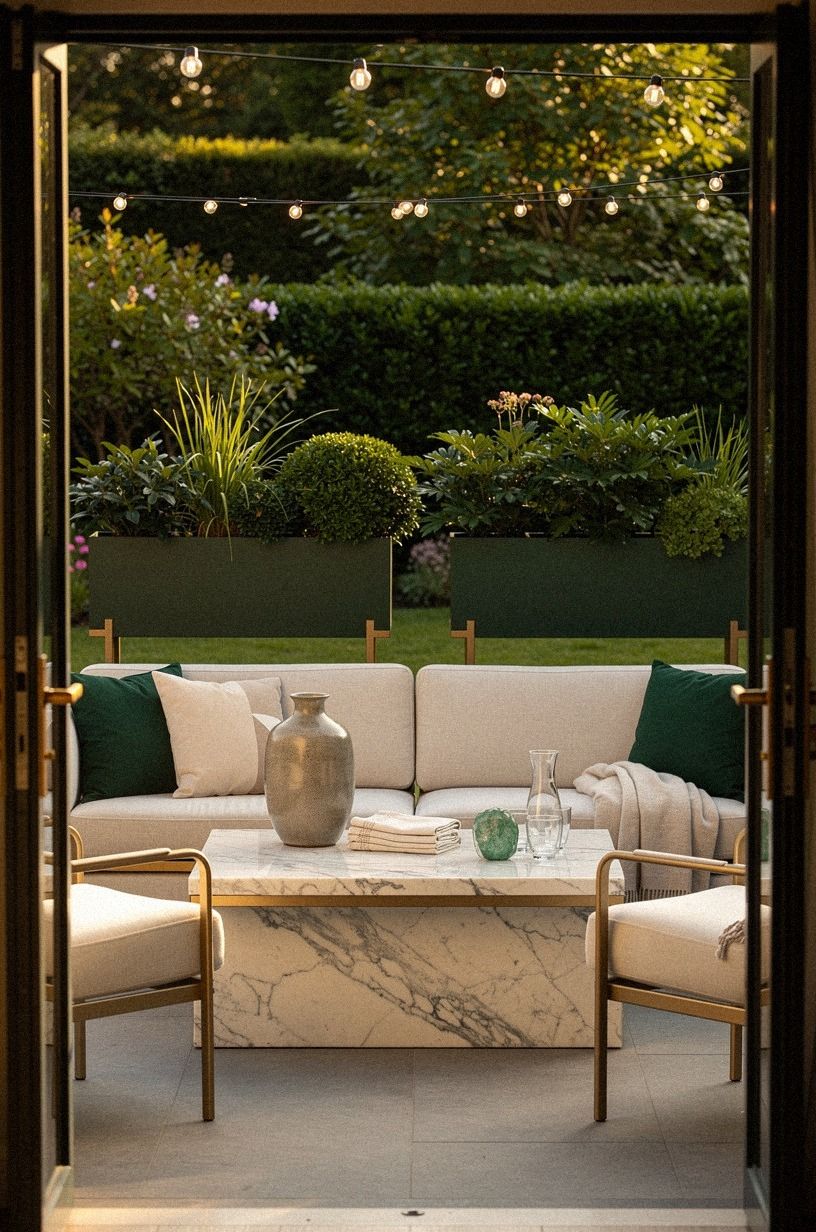
I added Carrara marble planters along the fence, but I didn't line them up like a store display.
8Use a half privacy fence around the seating zone
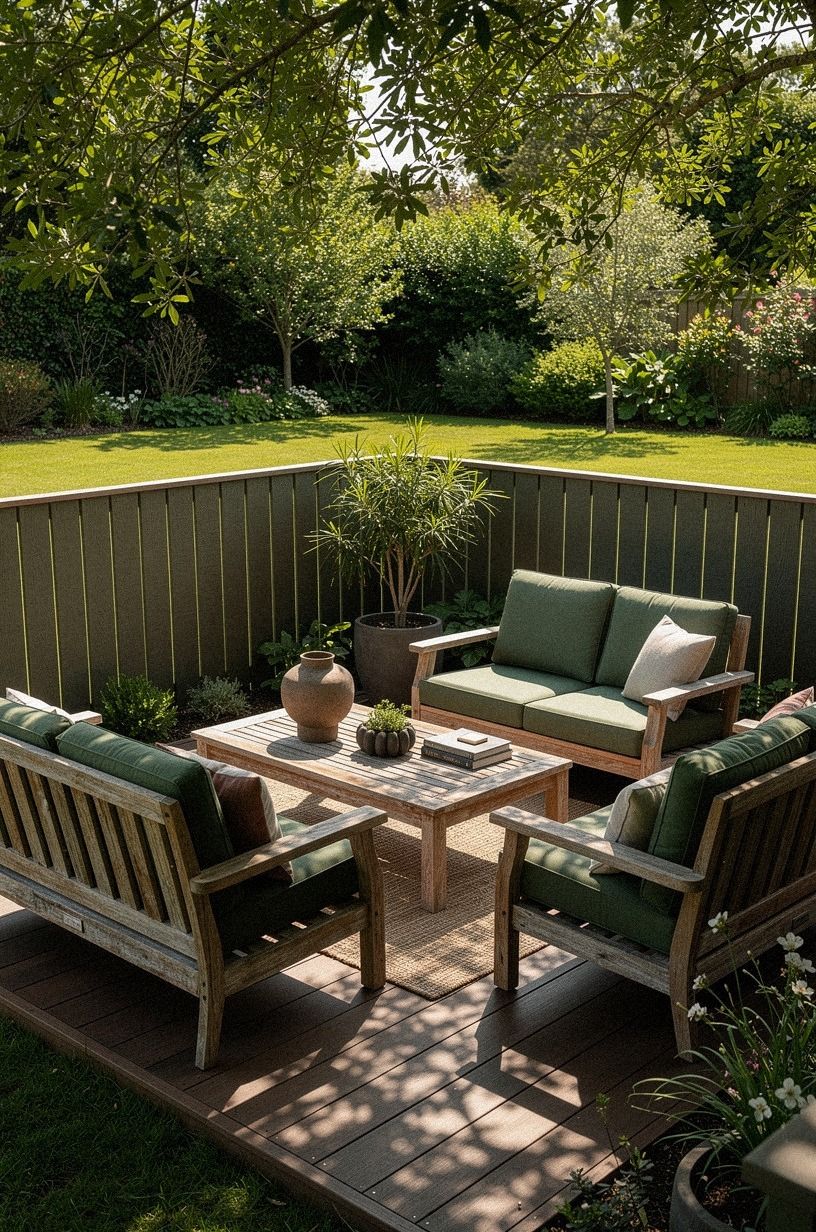
A half privacy fence worked better than a full-height panel around my dining chairs. It created a visual boundary without cutting off the garden beyond it, and it let the patio feel connected to the rest of the yard.
I used a low slatted divider in reclaimed weathered teak behind the bench, then repeated its warm wood tone in a small side table. The seating still felt open, but the neighbor's lower windows disappeared from view.
If you're unsure about the shape, these wood privacy fence ideas helped me compare solid, slatted, and partial layouts. I chose partial because a full enclosure would've made conversation feel boxed in.
A half-height screen can also separate functions. It marks the dining area, protects a reading chair, or hides recycling bins without becoming the main feature of the yard.
I softened the base with low ornamental grass, which made the divider feel planted instead of installed. The movement kept the straight lines from becoming too formal.
9Test reed screening behind the old boards
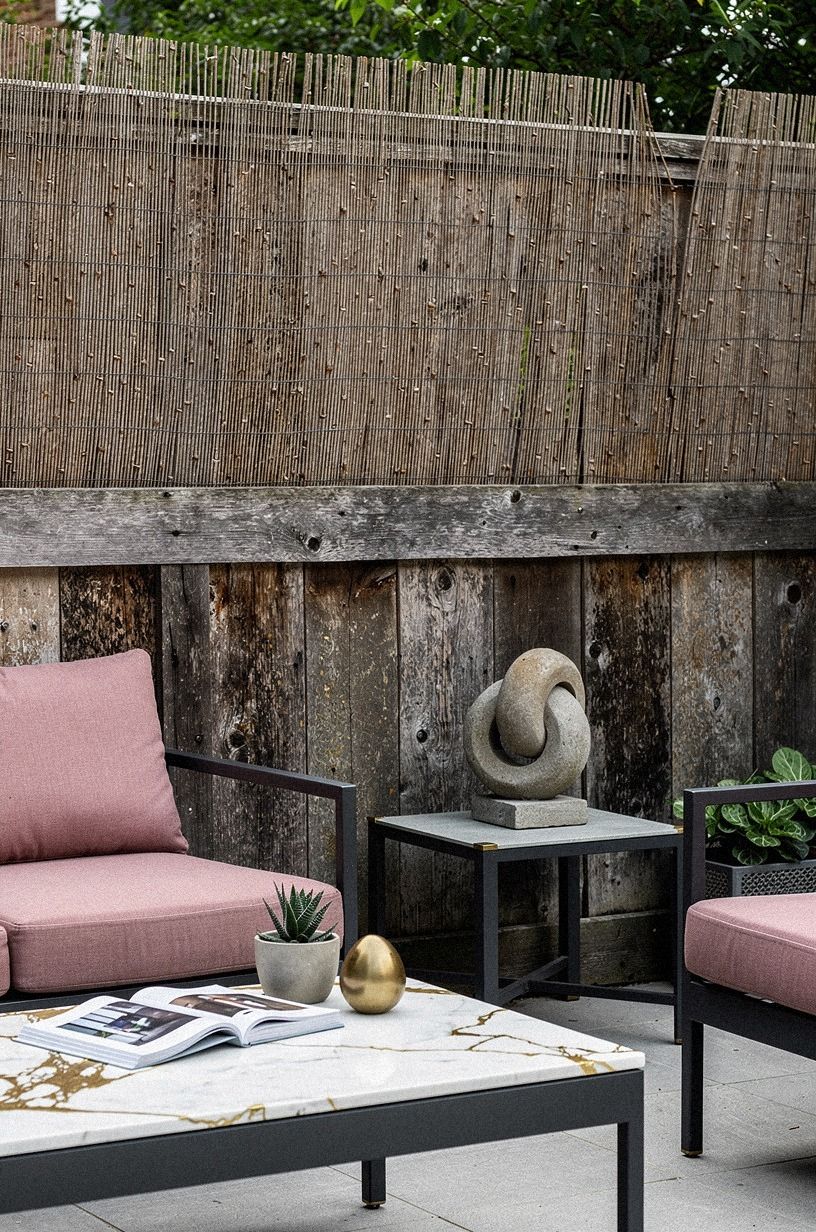
I tried a Calacatta marble panel with gold veining on a short fence section, mostly to see whether its dusty rose, charcoal, and brass palette could hide uneven boards.
10Stack three heights of outdoor lighting
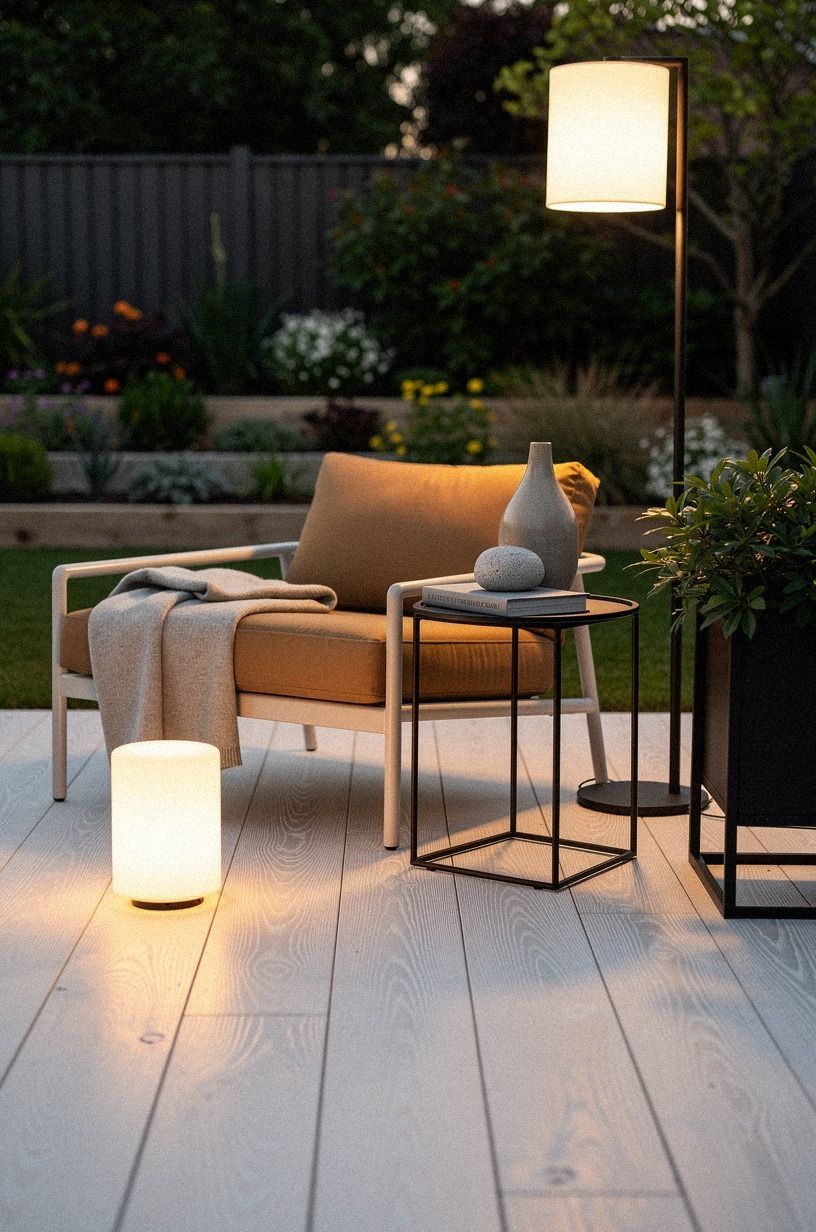
The privacy improvement became much more noticeable after sunset, so I created The Three-Height Light Stack. A low lantern lit the floor, a middle string of warm LEDs outlined the seating, and one taller cerused white oak fixture brightened the plants near the fence.
You don't need harsh floodlights to feel protected. In fact, I’d skip them because they flatten the yard and send glare into every window. The supplied range for LED string lights is typically $30-$120, so lighting can stay manageable within an outdoor refresh.
I also borrowed ideas from these privacy fence ideas with plants and tucked the bulbs behind leaves so your eye sees the glow, not the hardware.
A low light near the path helps people move safely. A middle light makes the seating feel inhabited. A higher light gives the fence and planting enough shape to keep the background from disappearing into darkness.
I used 2700K warm bulbs because cooler light made the wood look gray and the plants look flat. Warm light felt more welcoming and made the privacy layers read as a designed setting.
Keep wires neat and use outdoor-rated connections. Good lighting should feel effortless once it is installed, with no loose cord crossing the route to the gate.
11The Two-Wood Rule made the contrast calmer
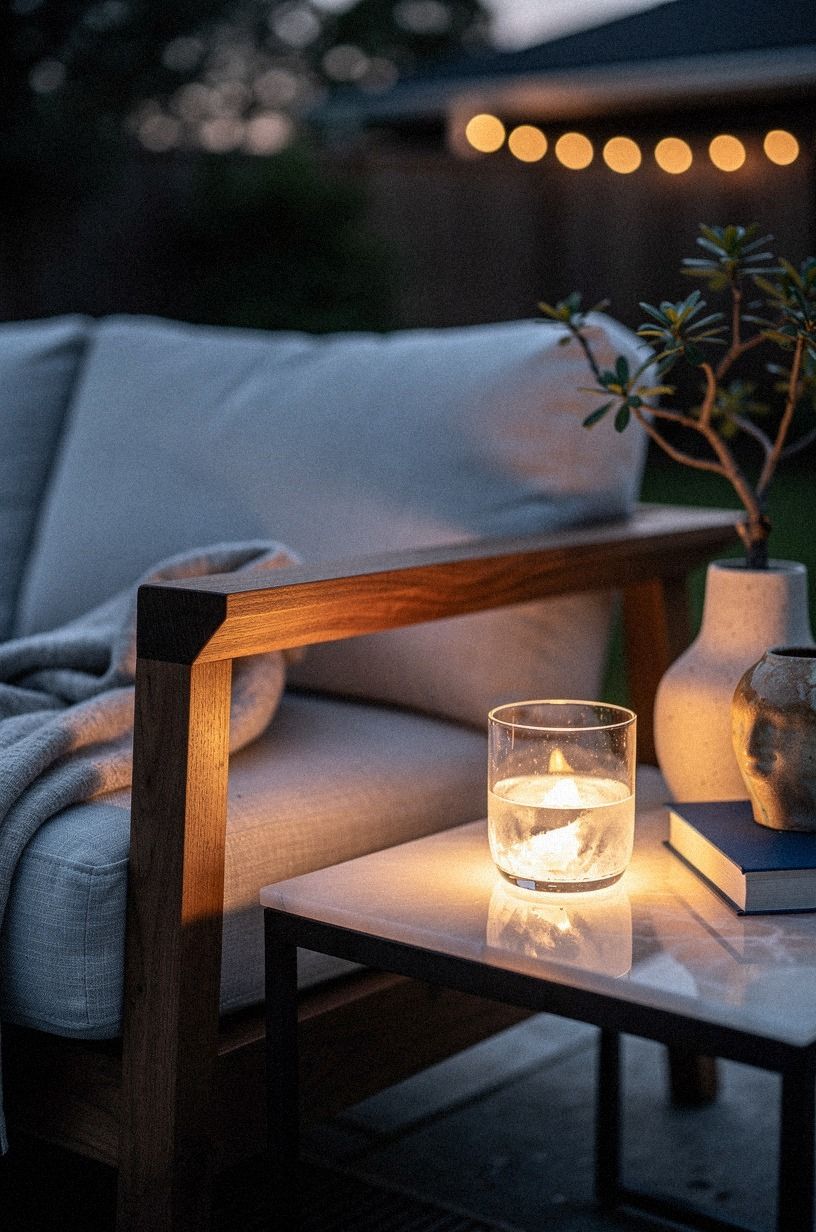
I had a strong urge to match the new screen to the old fence, but The Two-Wood Rule looked better with a midnight blue, copper, and ivory palette plus a backlit translucent onyx accent.
12Anchor the chairs with an outdoor rug
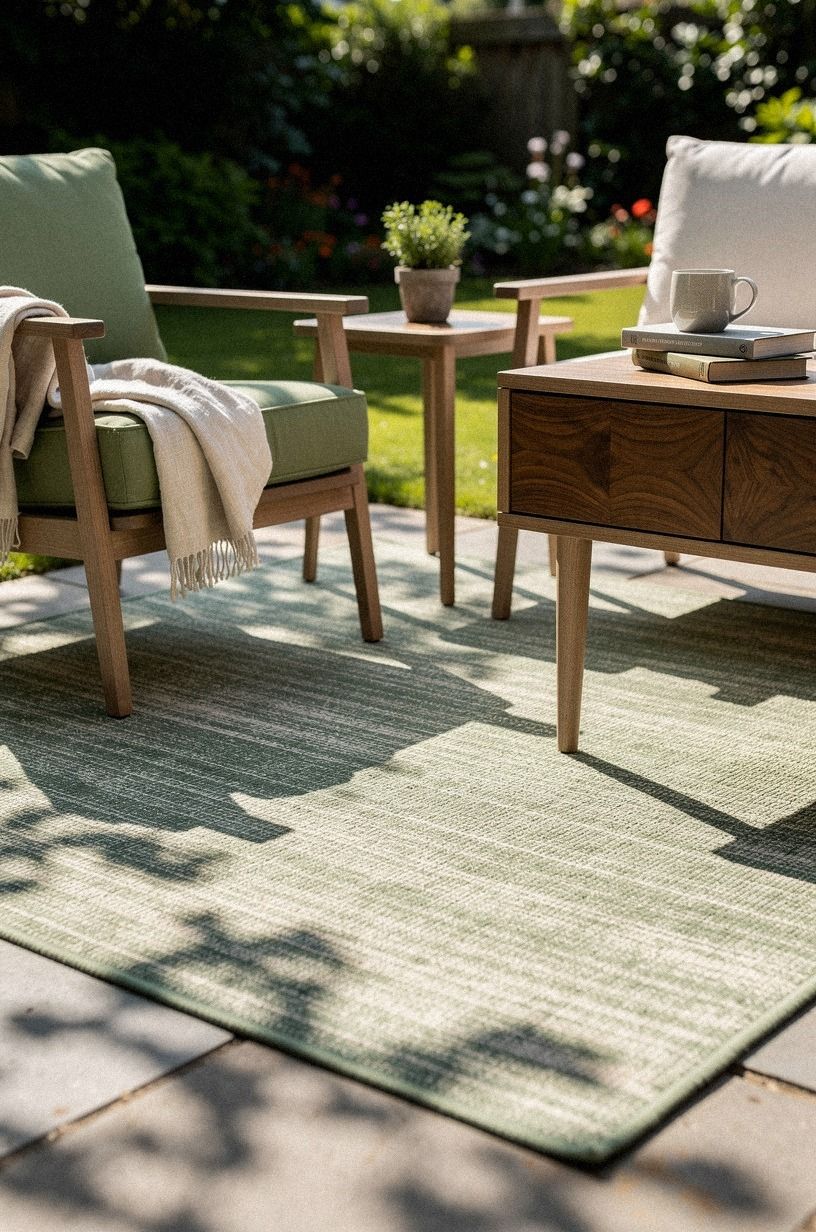
Privacy isn't only about what sits above the fence. I placed a polypropylene outdoor rug under the front legs of the seating, then turned the chairs inward by a few degrees.
A book-matched walnut side table gave the arrangement a stronger anchor. That small shift changed where people looked, which reduced the feeling of being watched from the neighboring side.
You’ll want the rug to support the conversation zone rather than stop at the coffee table. The typical cost range is $80-$400, and I’d choose the lower end if your fence project is still unfinished.
I compared the rug placement with these wood privacy fence ideas for classic backyard seclusion. The rug didn't block a view, but it told the furniture where to face.
Choose a pattern with enough variation to hide pollen and fallen leaves. My flat-weave rug dried faster than a thick pile and didn't catch chair legs when we moved them.
The seating felt more intentional once the rug established its footprint. That made the private corner feel finished, even before I completed the planting.
13Does an umbrella help with overhead privacy?
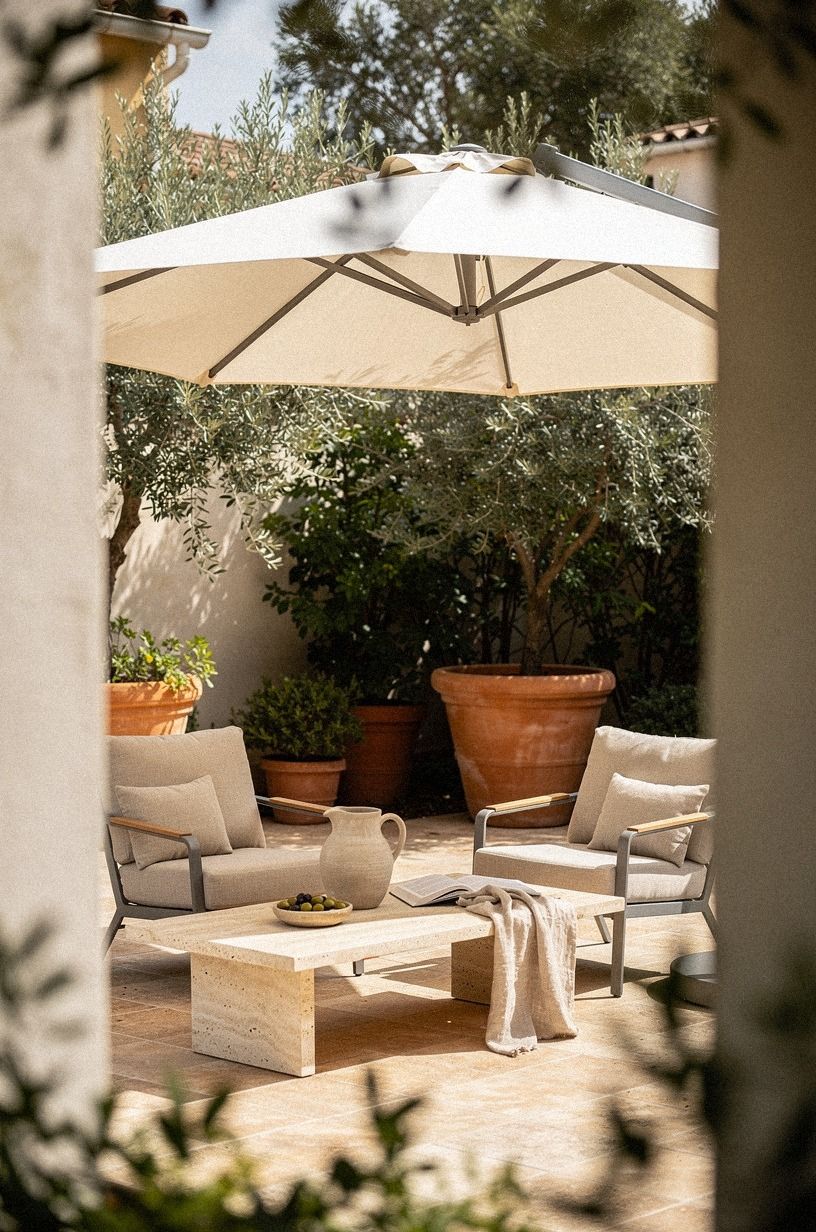
A terracotta canvas patio umbrella gave me privacy from above and made the dining corner usable during bright afternoons. The neighboring second-story window had been easy to ignore until we sat at the table for a long meal.
I chose a square canopy because it covered the table with less overhang than a round umbrella. The clean shape also echoed the slatted screen nearby.
The base matters more than many people expect. I used a warm travertine umbrella base and kept the canopy closed whenever the wind picked up. Overhead shade should add comfort without creating a safety problem.
An umbrella won't replace a screen, but it changes the vertical view and creates a defined dining room outdoors. It also helps reduce glare, which made the patio feel calmer during the hottest part of the day.
These privacy fence topper ideas gave me ideas for combining an open fence top with a temporary overhead layer.
14Frame a pallet panel as a budget layer
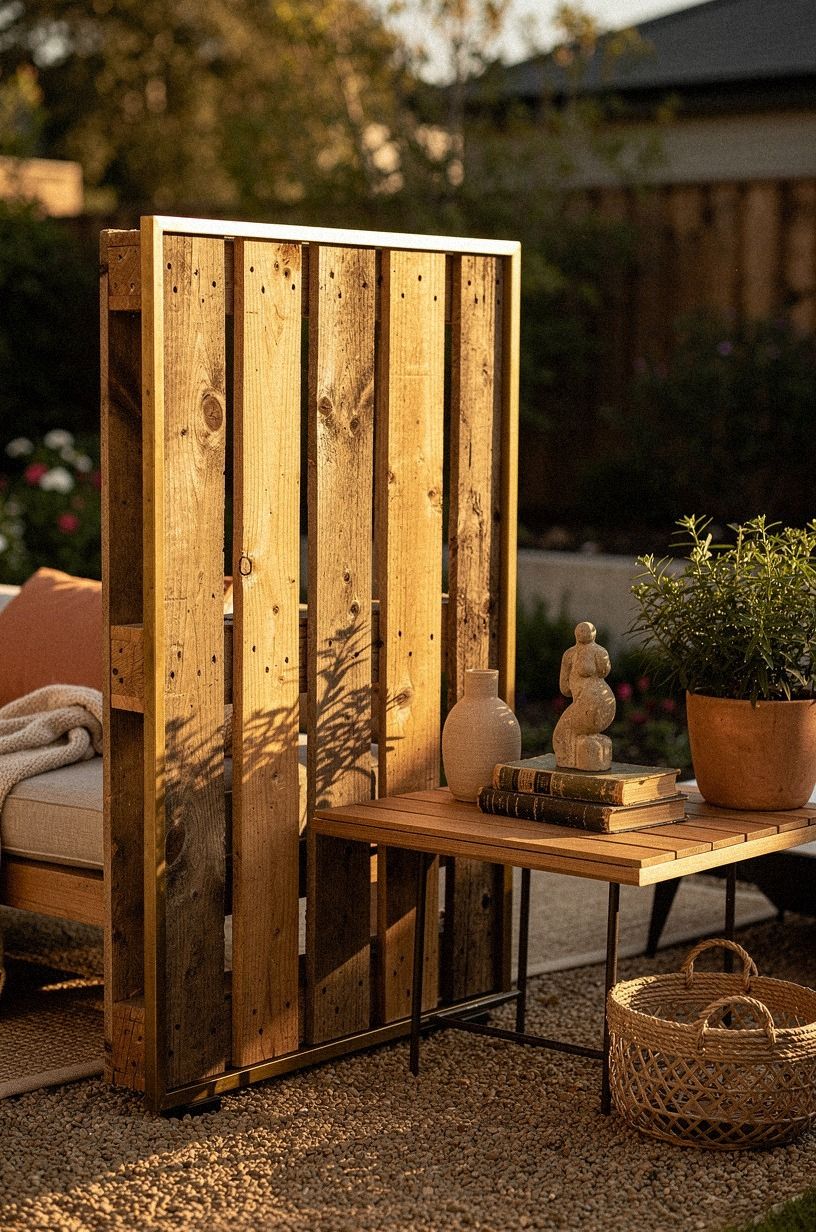
I considered building a full pallet wall, then decided that was too much visual weight. A narrower panel with unlacquered brass developing patina gave me a lighter budget layer without creating a solid barrier.
15Paint the gate and soften its edges
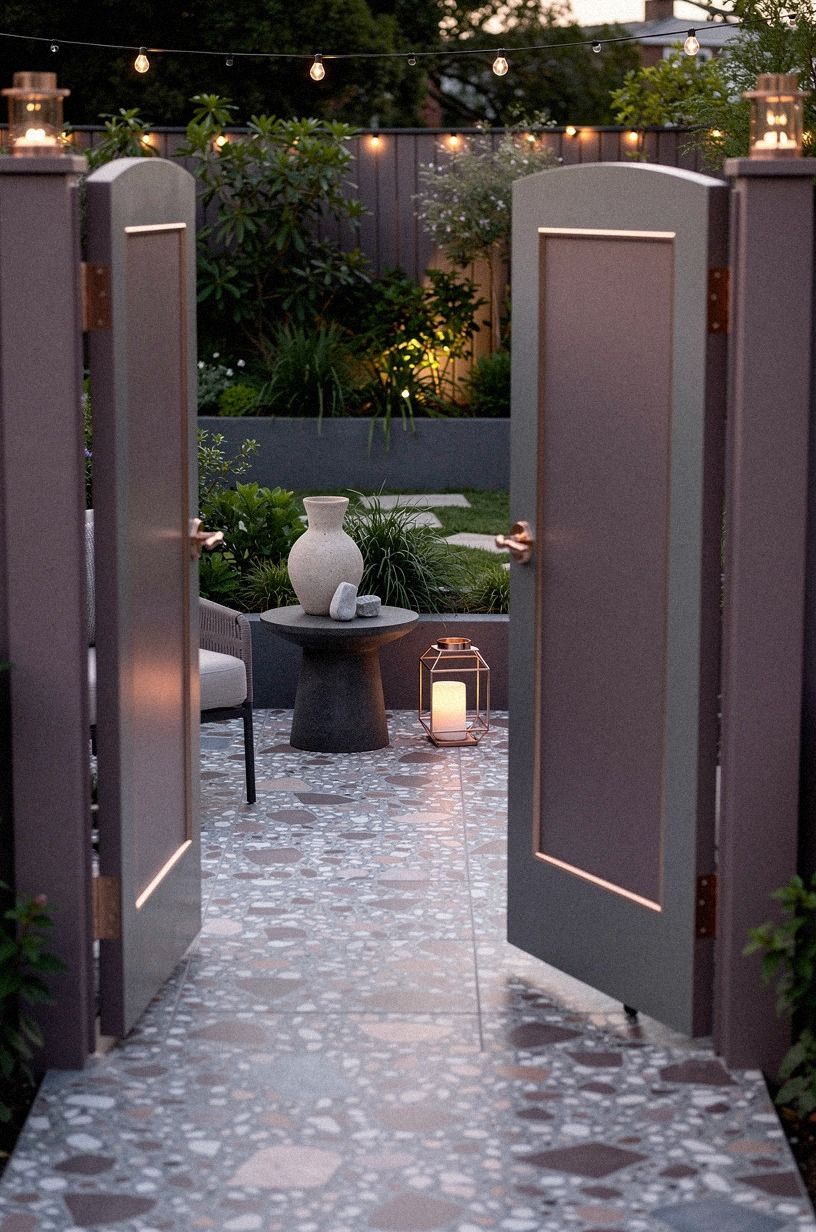
The gate was the weakest point in the old boundary. It opened toward the seating area, scraped the paving, and left a bright gap that made the whole fence feel unfinished.
I adjusted the hinges, replaced the latch, and painted the gate in the same deep plum as the fence. That small repair made the entry feel deliberate instead of forgotten.
For contrast, I added rose-gold hardware and planted a climber beside the post. The warmer finish pulled the gate into the background while the foliage softened its hard outline.
I avoided attaching bulky planters directly to the gate because extra weight can cause sagging. A narrow oversized-chip terrazzo container beside the post gave me the same greenery without affecting how the gate moved.
The gate doesn't need to become a dramatic feature. It needs to close smoothly, protect the privacy line, and look like it belongs with the rest of the yard.
16Is a private corner enough?
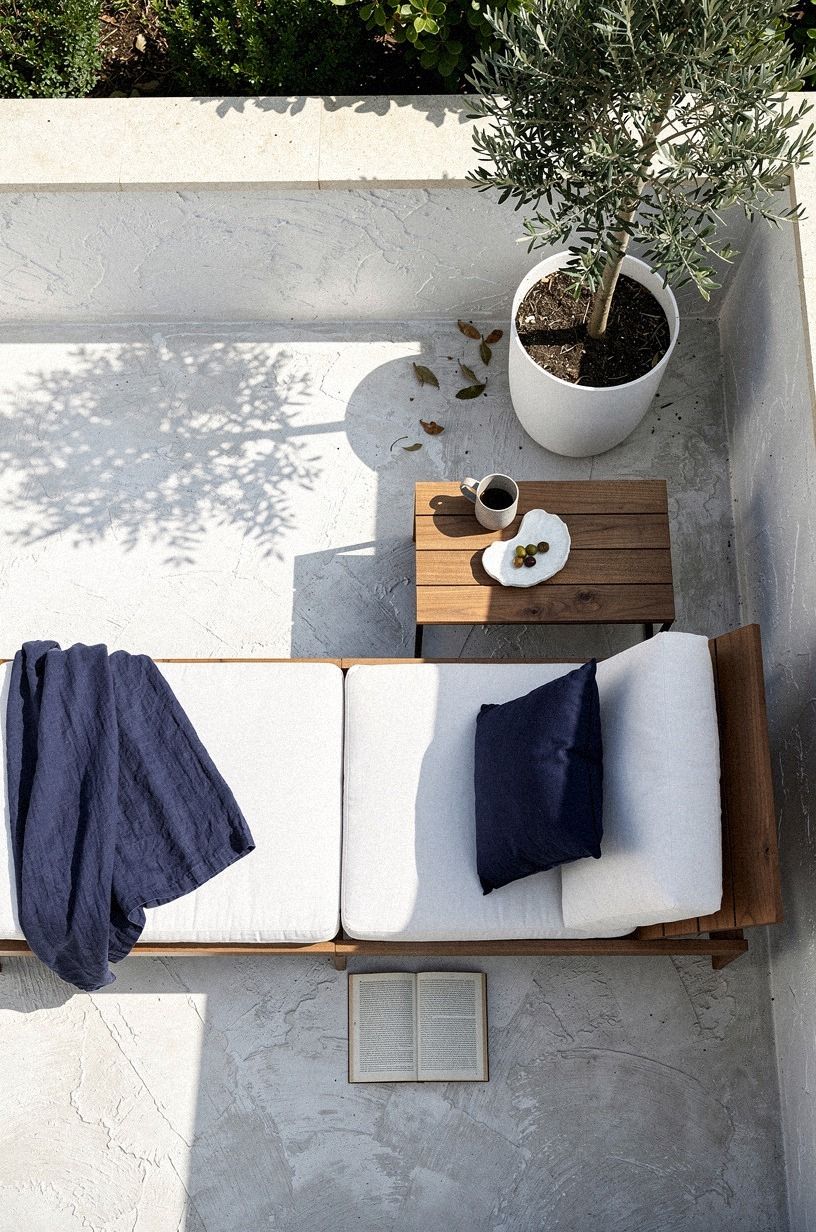
Can a small private corner work better than a fully screened yard?
How much it cost
I tracked the project by category instead of pretending every fence has one universal makeover price. My work stayed within the budget end of the broader outdoor pricing guide because I kept the existing boards, reused furniture, and improved privacy in small zones.
The optional material ranges helped me decide where to spend and where to pause. I started with paint, plants, and one screen before considering anything more permanent.
I didn't need a teak set or a pergola. You can begin with paint, plants, and one light layer, then add an outdoor rug if the seating still feels disconnected. These modern horizontal privacy fence ideas helped me keep the larger upgrades in perspective.
Why I Kept the Old Fence
I went back and forth on replacing the fence because a new boundary would have looked cleaner on day one. But I’d have lost the weathered character that made the yard feel established, and I would've spent the budget on structure before understanding how we used the space.
The better decision was to treat privacy as a collection of sightlines. A person sitting in a chair needs a different screen than someone standing at the dining table.
A walkway needs room to breathe. A plant needs light.
Once I noticed those details, I could make smaller changes with more confidence. A focused sightline gave me a clearer plan than the vague goal of making the entire yard private.
I also learned that privacy doesn't have to feel defensive. The hand-finished upper layer, soft fabric, and low amber light made the patio feel welcoming, even though the original goal was to hide the neighbor's view.
These privacy fence ideas with plants reinforced the same lesson: greenery, texture, and useful furniture can do more than one oversized barrier.
If you're working with a rental or a tired fence, start with the place where you feel exposed most often. Your answer might be one panel, a planter group, or a curtain frame.
A Few Things Worth Answering
What is the best way to add privacy to an existing fence in a small backyard?
A narrow slatted screen and two tall planters usually work best because they block one sightline without closing the yard. IKEA outdoor pieces can keep the seating flexible, while a staggered shrub adds softer coverage. I’d protect the 36 in walkway clearance before adding anything tall.
I also like a partial screen because it feels more open.
Where can I find budget-friendly pieces for an existing fence privacy makeover?
Look at IKEA, Wayfair, and Target first, then check Facebook Marketplace or a local thrift shop for planters and outdoor chairs. Secondhand furniture leaves more of your budget for paint and lighting. I’d compare measurements before buying because narrow patios punish oversized pieces.
How much does an existing fence privacy makeover cost?
A small refresh can fit the typical $200-$900 budget tier, especially if you reuse the fence and furniture. Paint, plants, textiles, and string lights are flexible starting points. You can spend nothing on structure while rearranging chairs, adding containers, and turning the seating inward.
Can I create privacy beside an existing fence on a budget?
Yes, and you can begin with three low-cost moves: move seating away from the exposed edge, reuse tall containers, and add warm LED string lights. A $30-$120 lighting range gives you room to adjust without rebuilding. I’d paint only after testing the color in afternoon shade.
Is focused privacy worth it in a small space?
Yes, because a small yard makes every sightline easier to identify. Focused privacy can feel more comfortable than a full enclosure.
Turn chairs toward each other, keep the walkway at least 36 in wide, and screen the one window or path that makes you feel most visible. These wood privacy fence ideas are useful when you want coverage without heaviness.
Is this approach suitable for a rental?
Yes, especially with removable options such as freestanding screens, tension-mounted curtains, weighted planters, and peel-and-stick outdoor hooks. No-damage layers give you control without drilling into the fence. You can take them with you and avoid repairing attachment holes later.
I’d start with furniture placement before buying anything permanent.
Where I'd Start First
If I had to pick one, I'd start with the slatted screen. It blocks the exact sightline without stealing daylight, and you can move it when your seating changes. Pin the idea for later, then test the placement with a folding chair before buying materials.
For more layout inspiration, I’d revisit these backyard privacy screen ideas and mark the one place where the yard feels least comfortable. Start with that corner!