
 by
by Use this guide to answer the practical question first. If the next step is replacing a worn mattress or upgrading sleep comfort, compare our top mattress picks before buying. Our top pick is Saatva Classic, with two backup options in the table below.
Best mattresses to compare
| Rank | partner option | Why it fits |
|---|---|---|
| #1 | Saatva Classic | Best overall mattress check |
| #2 | Puffy Cloud | Value comfort option |
| #3 | Amerisleep AS3 | Foam comfort option |
Editor's pick, mattress review category
Sleep Lab Pick · Current Sale
Amerisleep's Current Sale: . The AS3, plant-based Bio-Pur® foam, sleeps cooler than memory foam, 100-night trial, 20-year warranty.
Saatva Classic
Editor's pick, for foundation
Saatva Foundation
From $175+ · Anti-slip surface. Solid 6" foundation prevents mattress shifting.
From $1,174 (Twin) · Saatva's #1 bestseller · Euro pillow top · 3 firmness · 365-night trial · Lifetime warranty
TL;DR
This mattress review covers construction, firmness, trial/warranty, price, and who it fits. Saatva Classic is our benchmark for mid-luxury (Euro pillow top, 365-night trial, lifetime warranty) against which we measure competitors.
Our #1 Recommended Mattress
Last Updated: June 2026, Content reviewed and verified by our editorial team.
Saatva Classic. From $1,095
365-night trial · Lifetime warranty · Free white-glove delivery
We earn a commission if you make a purchase through our links, at no extra cost to you. Full disclosure.
A night of good sleep is necessary for a healthy lifestyle. However, imagine sleeping on your mattress after a tiring day, and it keeps sliding. Being mentally exhausted adds to the misery, and you become more physically exhausted. Therefore, it is necessary to solve the issue, as a sliding mattress will permanently disrupt your peaceful slumber time.
This article will discuss effective and inexpensive ways to keep the mattress from sliding around.
What Causes the Mattress to Slide Around?
You first need to figure out why your mattress is sliding from the bed frame. Several factors can be involved, and you need to figure them out before moving on to the next stage.
Worn Out Mattress
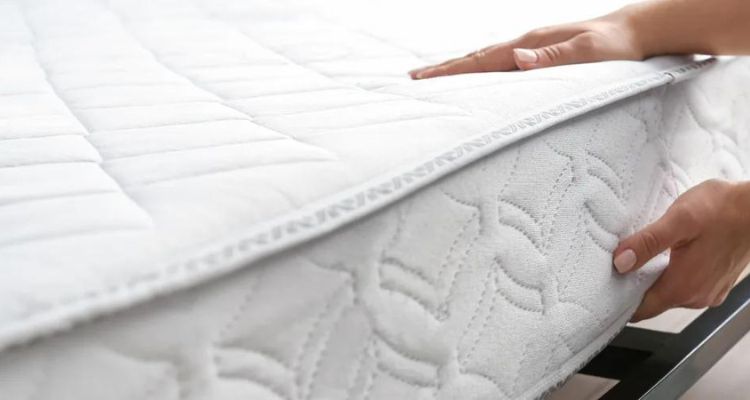
Sometimes your old mattress loses its shape due to its old age. The once smooth surface is now crinkled and sagged. The accumulation of dirt, oil, and secretions from your body further causes the mattress to slide from its place. This can lead to the mattress not fixating properly on the bedframe while disrupting your sleep.
Bed Support
When you do not choose the right size of bed support or frame, your mattress slide from one place to another. An uneven surface of your bed frame can contribute to the sliding mattress.
If you hear a creak every time you sit on your bed, the problem may be lying with your bed support or wide slats. A proper frame prevents or lessens the sliding of a mattress.
Rail-Free Bed Support
Some companies design their bed frames without any rails for the sake of beautification. A mattress without a rail may add to the sliding of the mattress. They roam here and there, thus adding fuel to the fire.
Mattress Size
When your mattress is smaller than your bed support, it encourages sliding. Due to the extra space in between the headboard and the footboard, the mattress tends to slide into the edges, causing trouble for you.
How Do I Stop My Mattress from Sliding?
Several cost-effective ways can help you fix your mattress on the frame. You can find this stuff in the market or even online. All of these hacks are easy to understand. The best thing about them is that you don't hire help and do them yourself.
A Non-Slip Rubber Mat
This is the easiest yet effective way to prevent the nuisance of sliding. You can get a nonslip rubber mat from any store out there. You need to place this mat in between the mattress and the frame. This will reduce friction and keep the mattress in its place.
These mats come in different sizes, so you need to measure your mattress before going out to buy this mat. You can even use a carpet piece or a yoga mat in its place. The primary purpose is to introduce a rough fabric in between to produce friction, which decreases the sliding process.
Velcro Tape
These Velcro strips have extra stickiness to help you with a sliding mattress. This hoop and loop fastening tape is strong enough to keep the mattress in place. Just invest in a good quality, strong adhesive Velcro tape, which could easily handle the weight of your mattress.
Vacuum
Sometimes the only reason your mattress is sliding about is dust and debris. If a large amount of dust accumulates between the mattress and the bed frame, it creates a slicker surface that promotes sliding.
Use the upholstery brush and vacuum around the mattress's surfaces, including the bed frame. Don't forget to flip the mattress and vacuum from under it. Just vacuuming the surface can sometimes resolve the problems.
Gap Fillers
When the mattress and the frame are not the same sizes, it causes sliding. A wide gap between the headboard and the footboard causes the mattress movement. You can use a gap filler to fill these gaps around the edges.
These gap fillers are easily available in stores. If you don't want to spend money on gap fillers, you can tuck towels or old pieces of clothes in between the mattress and your headboard. This alternate way will stop the mattress from sliding around.
Add Railing or Retainer Bar
Another method to prevent sliding is to get a customized railing set up for your bed frames. Retainer bars are available in the market that prevents your mattress from sliding around.
How To Stop the Mattress from Sliding on An Adjustable Bed?
Most mattresses slide sideways on an adjustable frame (also check 10 amazing mattresses for adjustable bed). When you lift an adjustable bed, the mattress tends to slide off. A mattress gripper or a rug pad is the best alternative to keep your mattress from sliding. This hassle-free method is effective and friendly.
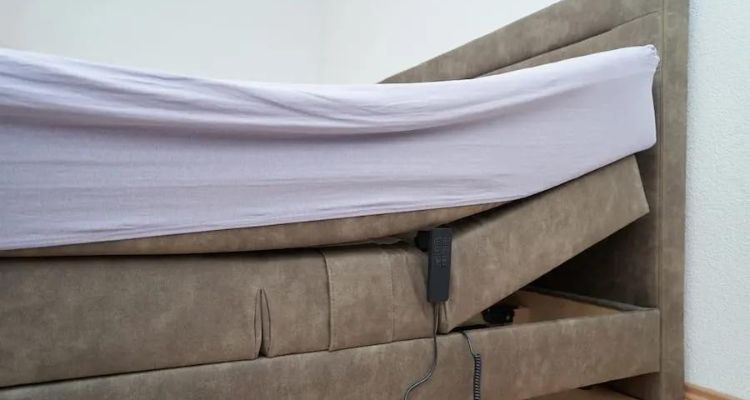
The mat between the mattress and the adjustable bed will create friction, lessening the sliding. A double-sided carpet tape is ineffective against an adjustable bed and may promote free movement.
How To Keep the Mattress from Sliding on The Platform Bed?
You must choose the correct bed base to prevent sliding in a platform bed. A mattress of the wrong size may cause your mattress to move around a lot. A cheaper way to resolve this issue is to use anti-slip pads. These pads help increase friction among both surfaces, decreasing the sliding.
Other than that, Velcro tape effectively secures your mattress to your platform bed. Ensure no bends or ripples are attached to one side of the mattress. This method is pretty against sliding and doesn't cost an arm or a leg.
How Do I Keep My Mattress from Sliding on A Metal Frame?
Some of the metal bed frames come without a headboard or footboard. If your metal frame is of cheaper quality, you are more likely to face the sliding of the mattress. This happens as the mattress does not get a sufficient grip to stay in its place. In addition, these metal bed frames are smeared in a type of gloss paint, which further decreases your mattress's grip.
A simple solution to increase friction in a metal frame is using sandpaper. Rub 100-grit sandpaper on the paint surface, creating a rougher area. This will lessen the sliding, keeping the mattress in its place. You may put a nonslip pad or a rug between the mattress and the frame. This is highly effective in keeping the mattress in its place.
How Do You Keep on A Memory Foam Mattress in Place?
A memory foam mattress is quite heavy than your average mattress. If you are having trouble sliding your mattress, the typical hacks might not work. A mat or Velcro tape might fail in keeping the mattress in position. You might have to invest in a proper bed frame to resolve the issue.
A good base will provide stability and prevent your memory foam mattress from sliding off here and there (check the top rated bed frame for memory foam mattress). In addition to that, make sure all the nuts and bolts are tight and in their place. Even a small loose nut can cause your foam mattress to slide around, creating havoc in your good night's sleep.
How Do You Fix a Gap Between a Mattress and a Bed Frame?
You can use gap fillers to fix the mattress and bed frame spaces. They are mostly of two types and are available easily on the market.
Pillow stops: You can get customize pillow stops as gap fillers for your bed. These slender boards are cushioned to beautify your room and fill the gaps between the mattress and headboard.
Wood boards: They are another simple solution to fill the gap and prevent sliding. You can get them from any local hardware store present in your area. You can get them in the same size or cut them according to the gap in your bed. If you are all about style, you can paint the board that matches your bed frame.
If you are short on money, you could always fill these gaps with old towel pieces or clothes. This is a good way to eliminate the nuisance of sliding on a mattress.
What Is a Mattress Retainer Bar?
A mattress retainer bar is used to prevent the sliding of a mattress. They are mostly used with adjustable bed frames when the base is heightened. Then, the mattress tends to slide off. A retainer bar is used to keep the mattress in its place, even as you increase the height of your mattress. These metal rods are available at every store.
You can even see DIYs and build your retainer bar according to the measurements of your bed and bed frames. This way, you will have a bar that will eliminate any chance of slipping from your mattress while sleeping in any position or style you feel comfortable with.
How Do You Keep a Split King Mattress from Separating?
If you feel uncomfortable with your split king, there are three most easy ways you can secure it in place.
- Fitted frame
You must use a fitted frame to prevent your split king mattress from separating. A tight frame ensures no open space between the frame and the mattress. This keeps the mattress in its place without the fear of sliding.
- Non-slip pad
This is yet another effective way to prevent the mattress from sliding off. The mattress pad is great at adding friction between the frame and the mattress to ensure the split mattress does not slide away from each another.
- Use a split king connector
- Price: From $1,174 (Twin)
- Free white-glove delivery & old-mattress removal (US)
- 365-night home trial on mattresses
- ID.me discount for military, veterans, first responders, teachers, seniors
- GREENGUARD Gold certified construction
Saatva Classic
Saatva's #1 bestseller · Euro pillow top · 3 firmness · 365-night trial · Lifetime warranty. Saatva is one of the few mattress brands to pair a multi-hundred-night home trial with a lifetime-scale warranty.
Disclosure: we may earn a commission from this link at no extra cost to you.
Most split mattresses come with an iron plate connecter. You can easily adjust a connector and join the split mattresses together. This joining of the mattress prevents the sliding of the mattresses from their bases.
How to Keep Your Mattress from Sliding: 8 Proven Solutions
A mattress that shifts during the night disrupts sleep and can even create a dangerous gap between the mattress and the headboard or wall. Here are the most effective ways to lock your mattress in place.
1. Non-Slip Mattress Pad or Gripper. Rubber or silicone grip pads placed between the mattress and the foundation create friction that prevents lateral movement. These cost $15-$30 and work on any surface. Gorilla Grip and DoubleCheck make popular options.
2. Velcro Strips. Attach adhesive-backed industrial Velcro to both the mattress bottom and the foundation top. This creates a semi-permanent bond that holds the mattress firmly. Use 4-6 strips spaced evenly.
3. Rubber Shelf Liner. A budget hack: cut a roll of rubber shelf liner to cover the entire foundation surface. The textured rubber grips the mattress bottom for under $10.
4. Mattress Retainer Bar. A metal or plastic L-shaped rail that bolts to the bed frame and presses against the mattress edge. Ideal for adjustable bases and hospital-style beds.
5. Tight-Fitting Sheet Straps. Elastic sheet suspenders clip to all four corners of your fitted sheet and pull tight underneath the mattress, adding downward pressure that resists sliding.
6. Replace the Foundation. If the foundation surface is smooth fabric, the mattress will slide. Foundations with a non-skid top panel solve the problem permanently.
7. Push the Bed Against a Wall. Blocking one or two sides reduces the directions the mattress can shift.
8. Check Your Frame for Level. A frame that tilts even slightly will cause the mattress to migrate downhill over time. Use a bubble level on the frame rails.
Why Some Mattresses Slide More. Foam-bottom mattresses on smooth foundations are the worst offenders. Mattresses with fabric-covered coil bases - like the Saatva Classic ($2,229 queen) - tend to grip better because the coil base creates natural friction. Saatva also includes free white-glove setup, ensuring your mattress and foundation are properly aligned from day one, with a 365-night trial and lifetime warranty.
Expert Tips: How Keep Mattress Sliding
Getting this right saves you time, money, and frustration. Here are the details most guides leave out.
Common Mistakes to Avoid
- Rushing the process. Take your time with each step. A hasty approach often creates new problems worse than the original issue.
- Using the wrong tools. The right tool makes the difference between a clean fix and a damaged product. Check what you need before starting.
- Ignoring the root cause. A quick fix that does not address why the problem occurred will only lead to the same issue recurring.
When DIY Is Not Enough
If your mattress or bed setup needs more than a quick fix - persistent discomfort, visible sagging, or structural issues - it may be more cost-effective to invest in a quality replacement than to keep patching the problem.
The Saatva Classic ($2,229 Queen) includes free white-glove delivery where professionals handle all the setup work for you. With a 365-night trial and lifetime warranty, you can test whether an upgrade solves the problem without long-term commitment.
Try Saatva risk-free →
Related Guides
Saatva Classic
If this guide answered the sizing or setup question, this is the matching partner path to check next.