
 by
by Your bathroom can get a new floor without demolition, and the safest route starts with cleaning, filling grout lines, and choosing a tile rated for wet areas. I once stuck vinyl squares straight over shiny ceramic, and the edges curled before the weekend ended. Now I prep first, check every seam, and keep the look warm, moody, or bright on purpose.
- Clean the ceramic until it loses its shine
- Fill the grout before laying peel and stick floor tile
- Can a small pattern make a narrow bathroom feel larger?
- Paint the grout before you install the new surface
- Float a threshold line between old and new
- Checkerboard without demolition
- Use the Three-Width Cut Rule around fixtures
- Layer a soft neutral with the Floating Grid Strategy
- Anchor the room with a faux encaustic border
- Matte stone versus glossy squares
- Should the walls lead while the floor stays quiet?
- Cosmetic refresh versus full renovation
- Frame the vanity with a warm, narrow pattern
- Build the Two-Color Wash for a rental bathroom
- Mix the floor with a Three-Height Light Stack
- Seal the edges and style the room around the new floor
1Clean the ceramic until it loses its shine
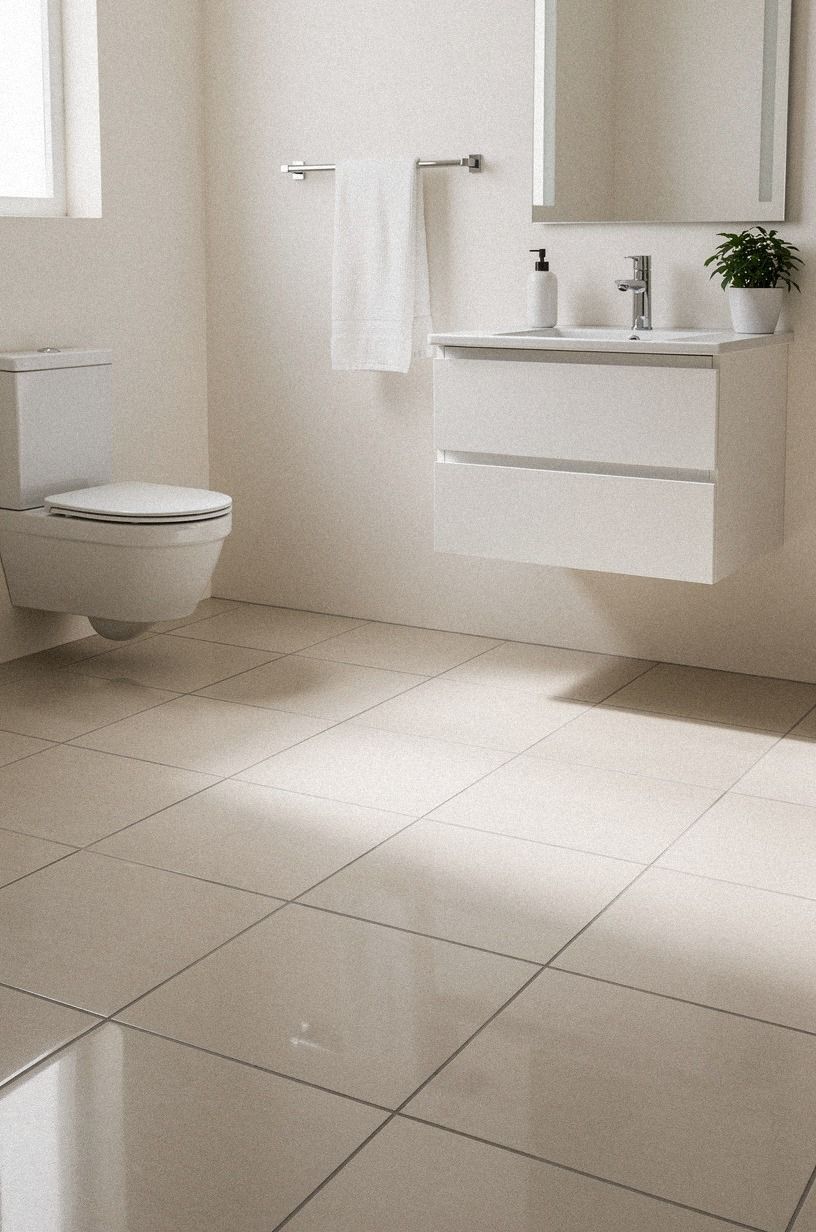
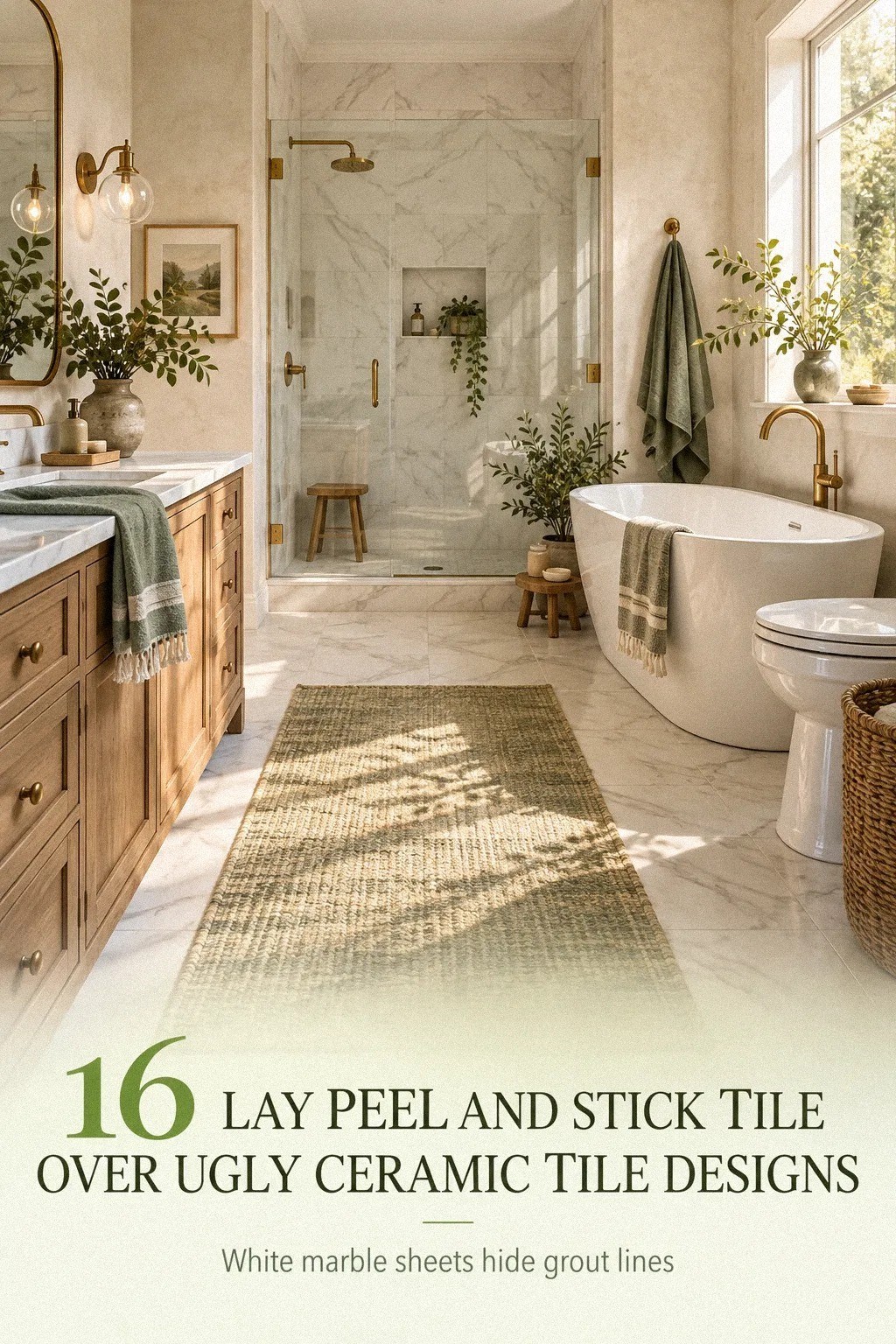
Peel and stick tile over ceramic tile only works when the surface is clean, dry, and free of soap film. Start with a degreasing cleaner, then wipe the floor with clear water so residue doesn't sit beneath the adhesive.
Your fingertips should glide across the tile without feeling lotion or grit. If you're working in a bathroom, let the floor dry overnight.
I don't skip the dulling step anymore. Glossy ceramic gives adhesive too little grip, especially near a toilet where water and cleaning spray collect.
A light sanding with fine-grit paper can soften that shine, but you should wear a mask and vacuum carefully afterward. Your floor doesn't need to look scratched, just less reflective.
Good prep is unglamorous, but it saves the room! For a warm, welcoming reference, compare the surface treatment in these peel and stick tile ideas for a renter friendly bathroom. The same cleaning discipline also helps if you're comparing renter-friendly tile surfaces before choosing a pattern.
2Fill the grout before laying peel and stick floor tile
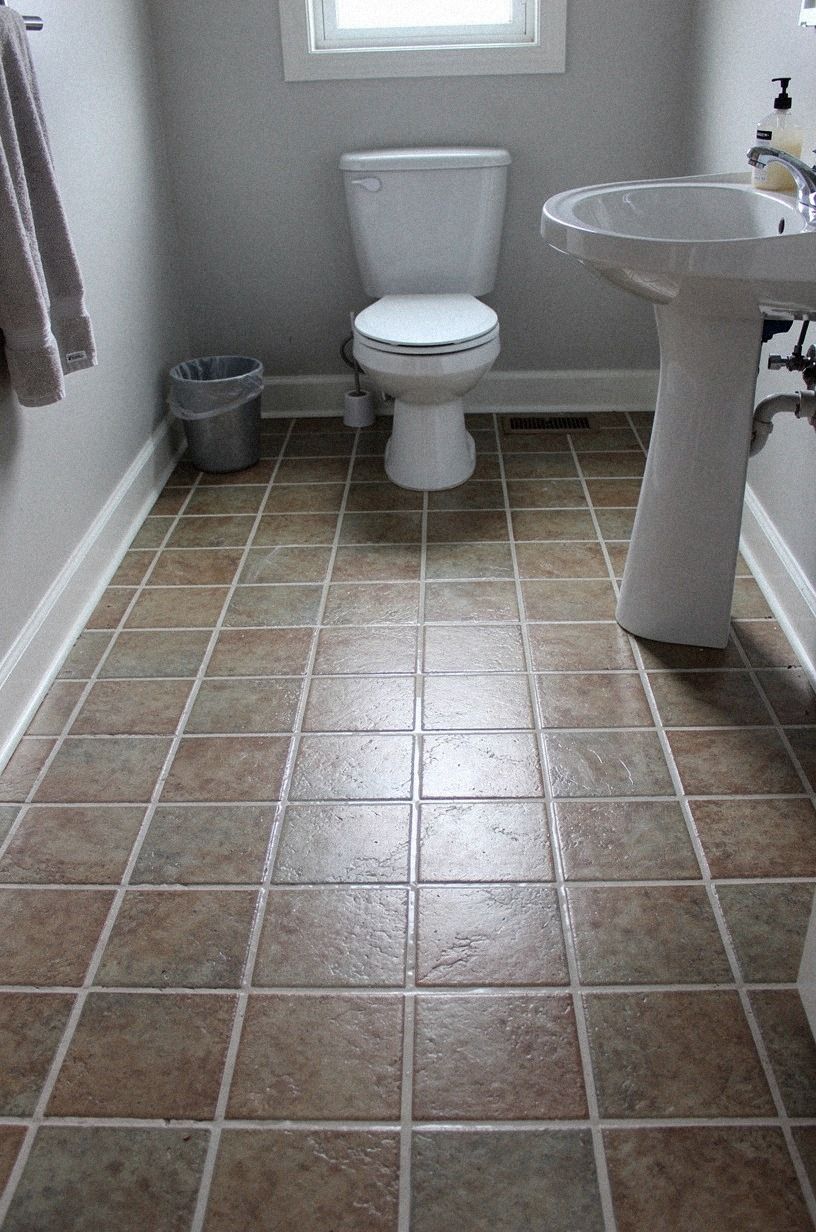
Deep grout lines can telegraph through peel and stick floor tile, leaving a ridged pattern under every square.
3Can a small pattern make a narrow bathroom feel larger?
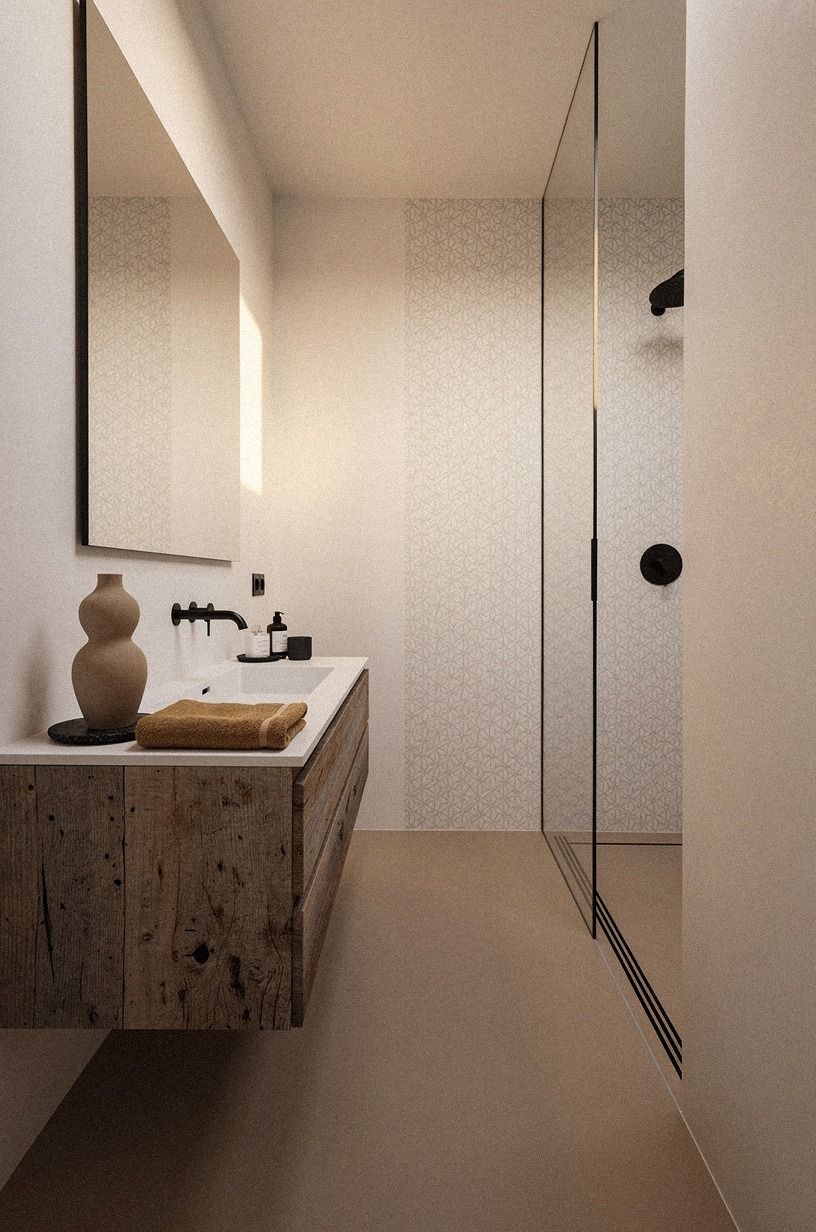
Small bathrooms benefit from a pattern that gives your eye somewhere to travel. A muted checkerboard or a tiny terrazzo print can make the floor feel airy without shouting.
I like warm white paired with camel and black accents because it looks bold but remains calm beside white fixtures. A touch of reclaimed weathered teak adds warmth without crowding the room.
Your floor should support the room, not compete with your mirror.
Skip oversized faux marble if your bathroom has lots of cuts around the toilet and vanity. Large printed shapes break awkwardly, and you'll lose the calm rhythm that made the sample appealing. A smaller repeat hides those interruptions better.
If you're using peel and stick over tile floor, map the pattern from the doorway first. Your first full tile should look deliberate when you walk in, not like the leftover piece from the back wall. A related idea appears in these simple zellige bathroom references, where repetition creates calm without requiring a huge room.
4Paint the grout before you install the new surface
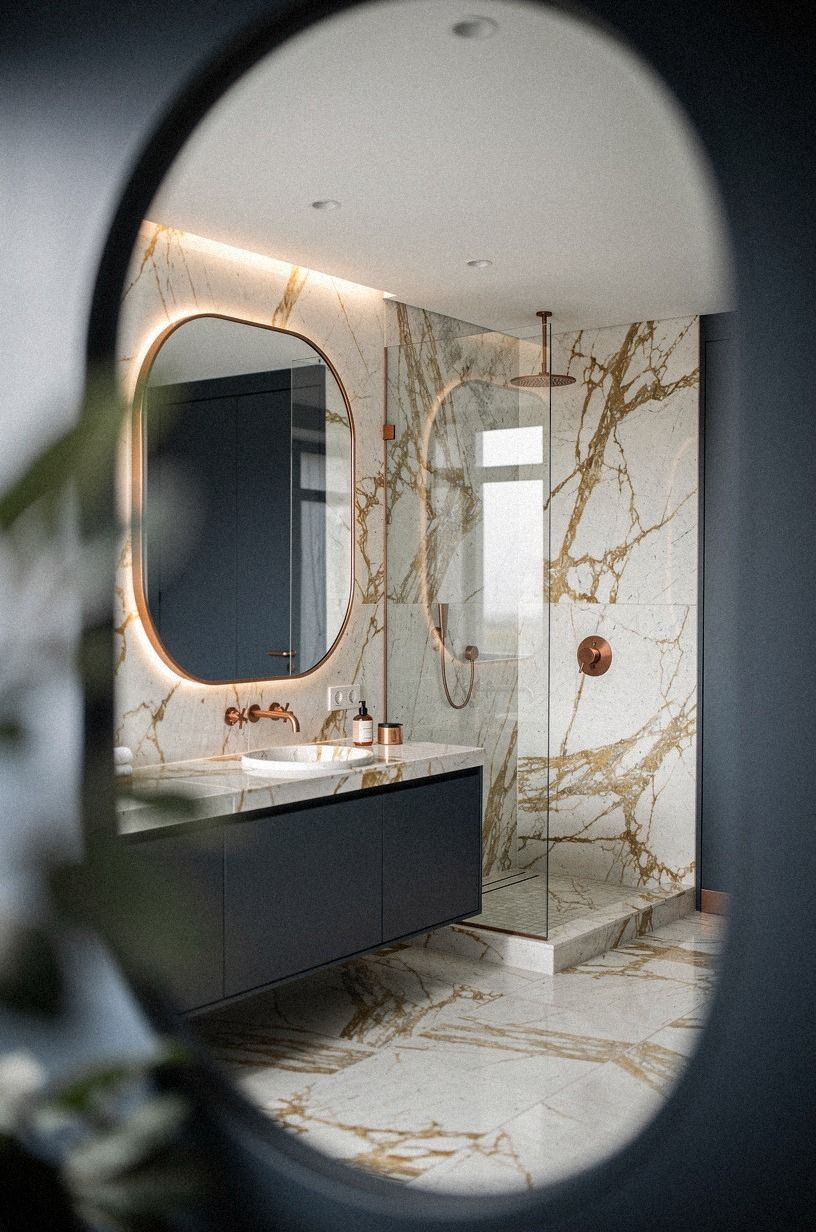
Painting existing grout can help your new peel and stick vinyl over tile floor blend across old seams. Choose a grout paint close to the tile backing or the dominant color in your new pattern. Farrow & Ball Hague Blue No.30 gives a midnight-blue direction, while Benjamin Moore White Dove OC-17 offers a soft ivory reference.
You don't need the grout to vanish completely.
I learned to use a narrow artist brush instead of the applicator that comes with many kits. It gives your hand more control around corners and keeps paint off the ceramic face. Let the grout color dry, then inspect it from standing height because your eye reads the whole floor at once.
A midnight-blue, copper, and ivory scheme works especially well beside a Calacatta marble pattern with subtle gold veining. If you're drawn to pale surfaces with variation, these white zellige bathroom ideas offer a useful color lesson.
5Float a threshold line between old and new
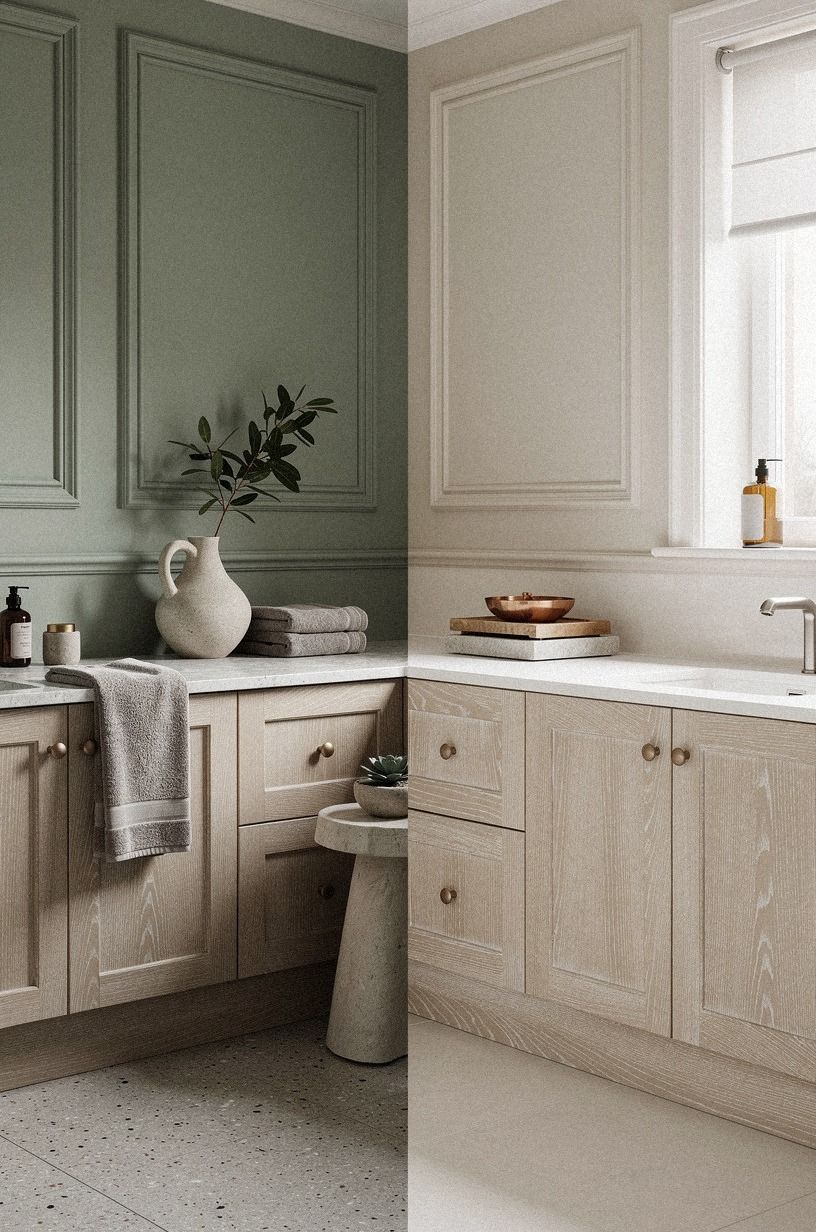
A threshold gives you a clean stopping point when the new peel and stick floor tile doesn't cover every connected room. Use a doorway, vanity edge, or transition strip as your visual boundary. Your cut line should land beneath the closed door when possible, so the change feels architectural instead of accidental.
I wouldn't run a busy pattern into the hallway just to avoid one careful cut. That usually makes your home feel less settled. A threshold in cerused white oak can look refined beside a sage-green and warm-cream tile print, while a bright metallic strip often feels cold.
Your handmade glossy tile references offer a useful lesson here: variation works best when one edge controls it. Keep the transition simple and let the bathroom have its own identity.
6Checkerboard without demolition
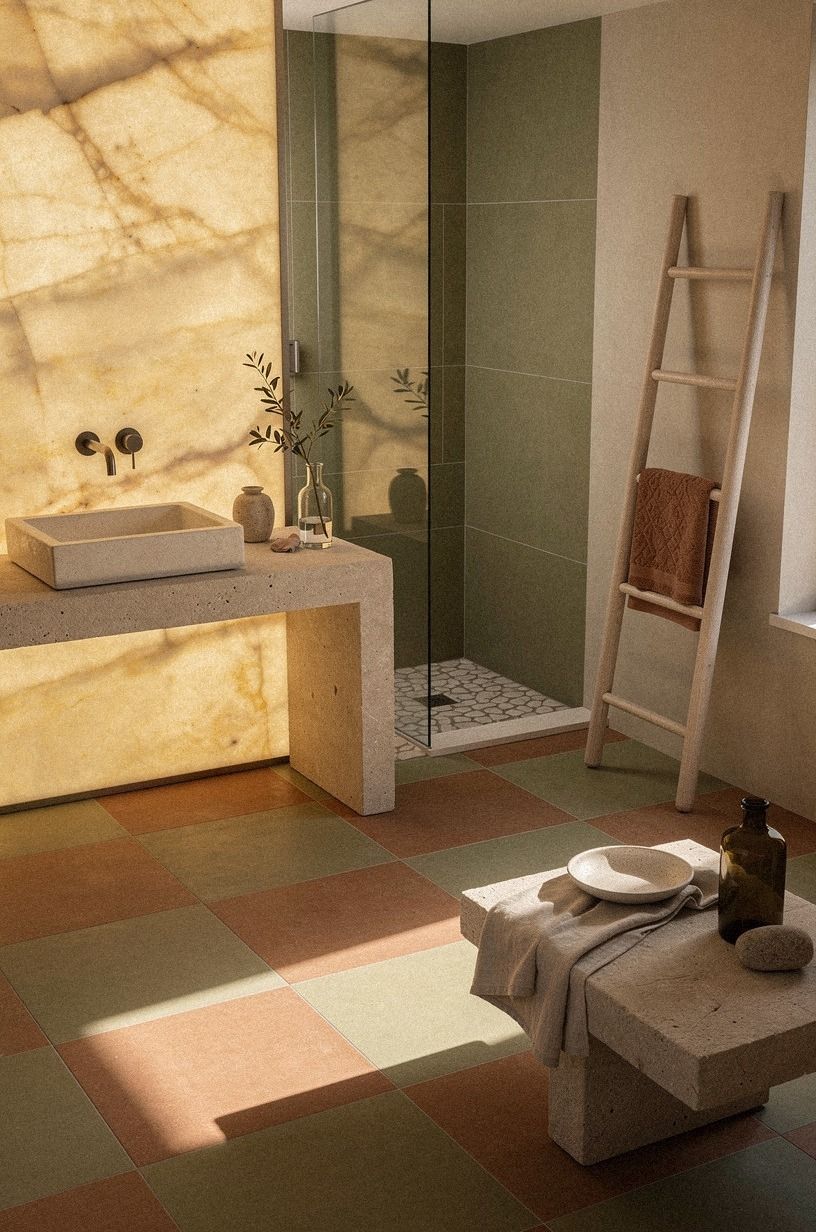
A terracotta-and-stone checkerboard with olive accents is one of the strongest ways to make ugly ceramic feel like a design decision. A translucent onyx-inspired finish can add depth without requiring demolition.
7Use the Three-Width Cut Rule around fixtures
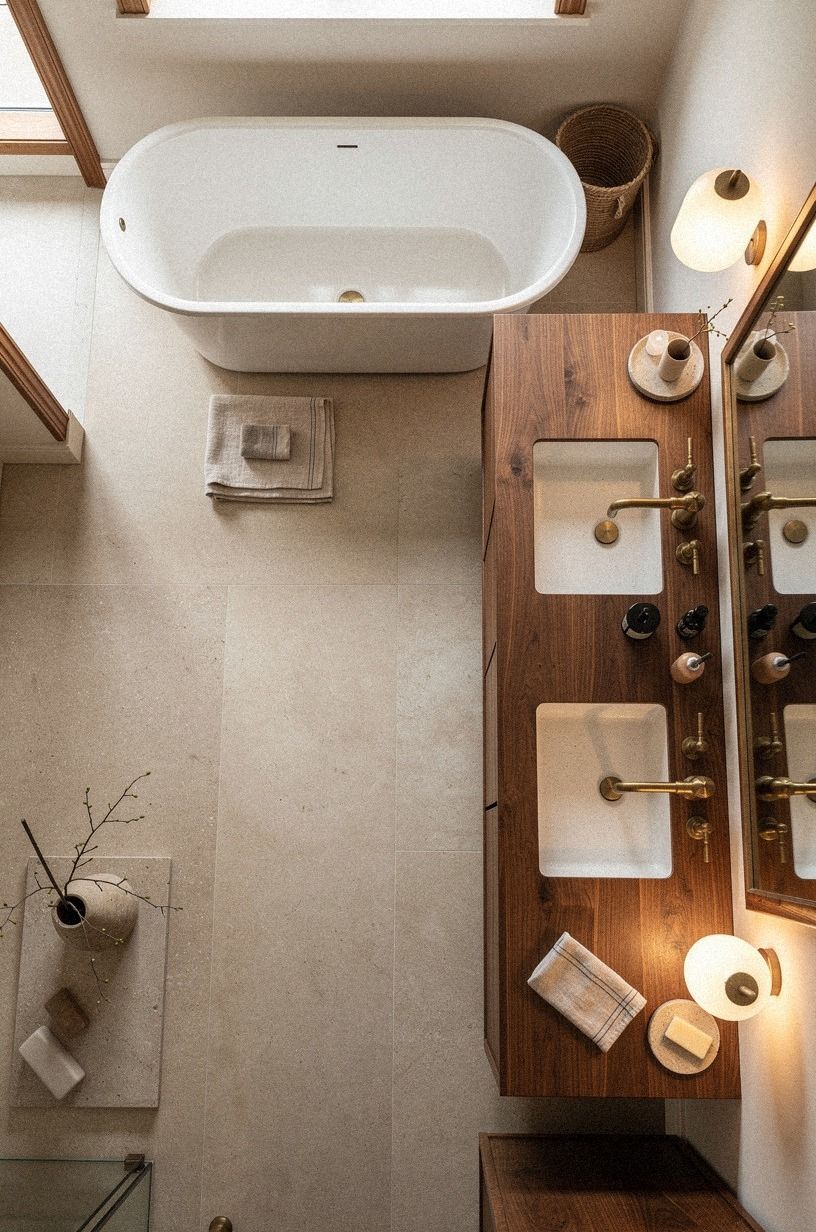
To make peel and stick floor over ceramic tile look finished, plan your cuts around the toilet, vanity, and door casing before removing the backing. Keep narrow slivers out of the most visible areas. If a cut would leave a tiny strip, shift the layout so both sides receive wider pieces.
I trace the toilet base with a paper template first, then transfer that shape to the tile face. It takes longer than guessing, but your cut doesn't have to be heroic. A sharp utility knife and a steady ruler produce a cleaner edge than stretching the material around the porcelain.
Keep your vanity height in mind too. A standard vanity sits around 32-36 in, so the floor line remains visible and worth getting right. Your cuts should look calm from standing height, where you'll notice them every day.
8Layer a soft neutral with the Floating Grid Strategy
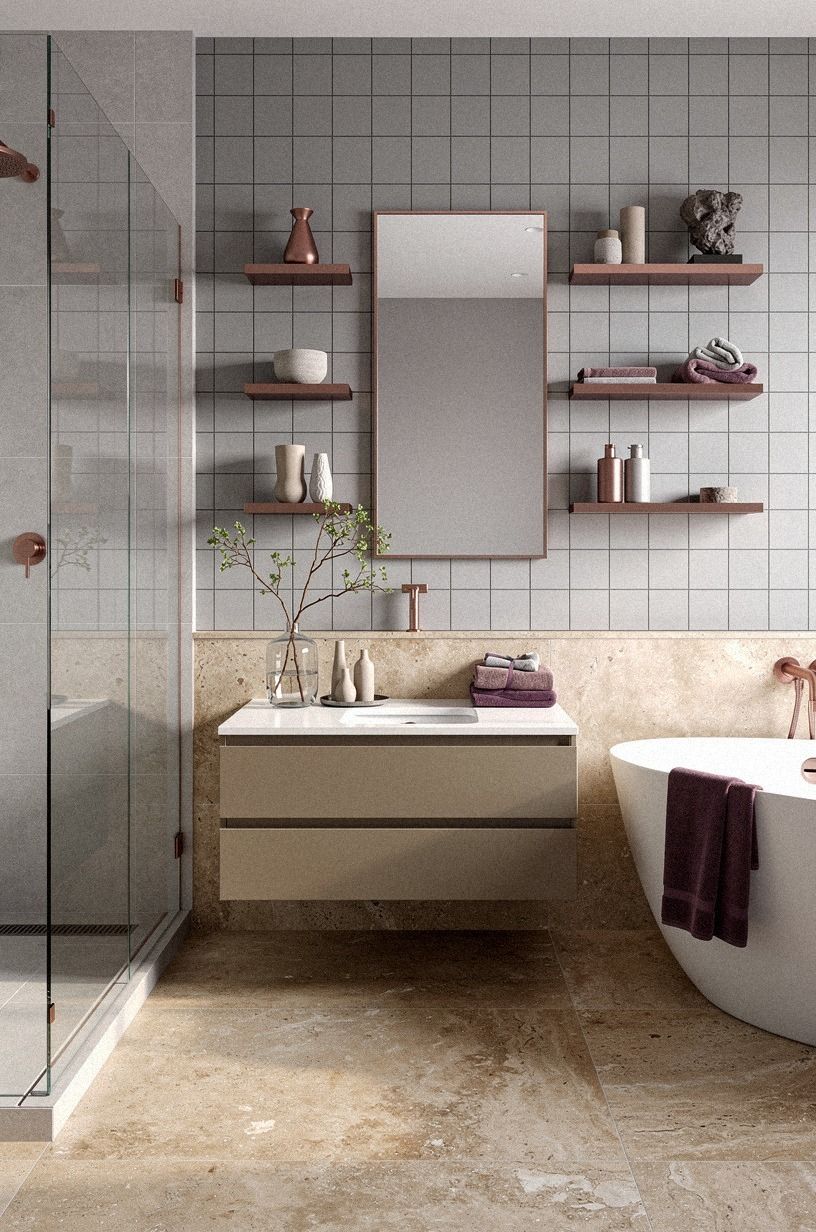
The Floating Grid Strategy uses a warm travertine-inspired surface with lines that don't dominate the room. Think muted plum, soft gray, and a restrained rose-gold detail. Your existing ceramic becomes the hidden base, while the new surface gives the floor a quieter, more organic rhythm.
Choose a pattern with enough variation that dust and water marks won't announce themselves. A flat, solid white can look stark beside older fixtures, while warm travertine with plum-gray variation stays forgiving. I like this approach in bathrooms with busy shower curtains or colorful towels because it lets your eye rest.
If you want a more handmade direction, browse these zellige tile bathroom ideas for a simple elegant spa feel. Your new floor doesn't need to imitate expensive stone exactly. It needs to make the whole room feel more settled.
9Anchor the room with a faux encaustic border
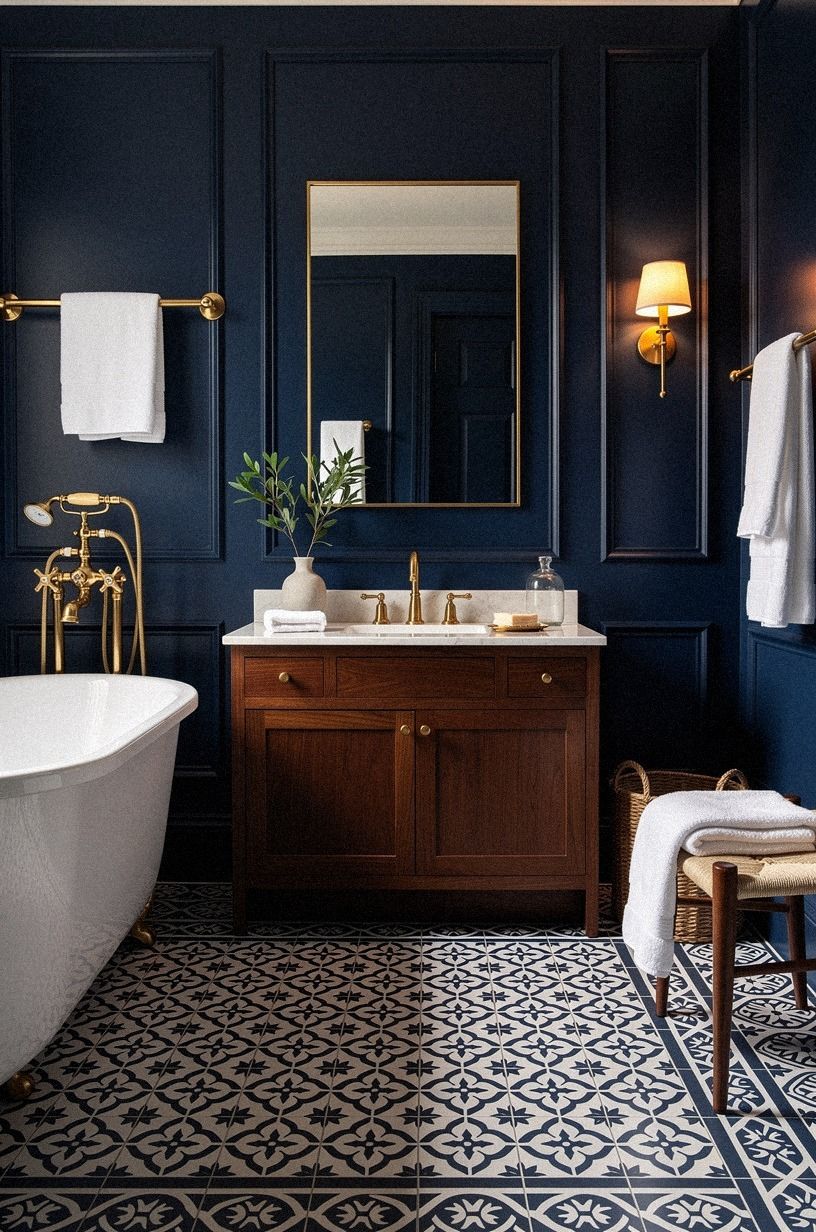
A border can make peel and stick floor tile feel more custom, especially when the existing room has plain ceramic walls. Use a restrained printed border around the perimeter, then keep the center simple. Your eye will read the edge as a boundary, which gives the bathroom a more finished shape without adding a second renovation.
I would avoid placing the border directly against a rounded wall or uneven baseboard. The slight irregularity will exaggerate every mismatch. Instead, measure from the straightest wall and allow your cuts to disappear beneath the vanity or toilet.
You can pair a navy border with Farrow & Ball Hague Blue No.30 on a cabinet, natural walnut, and unlacquered brass hardware developing patina. For a plaster-like direction, these tadelakt bathroom ideas show how texture can support a patterned floor.
10Matte stone versus glossy squares
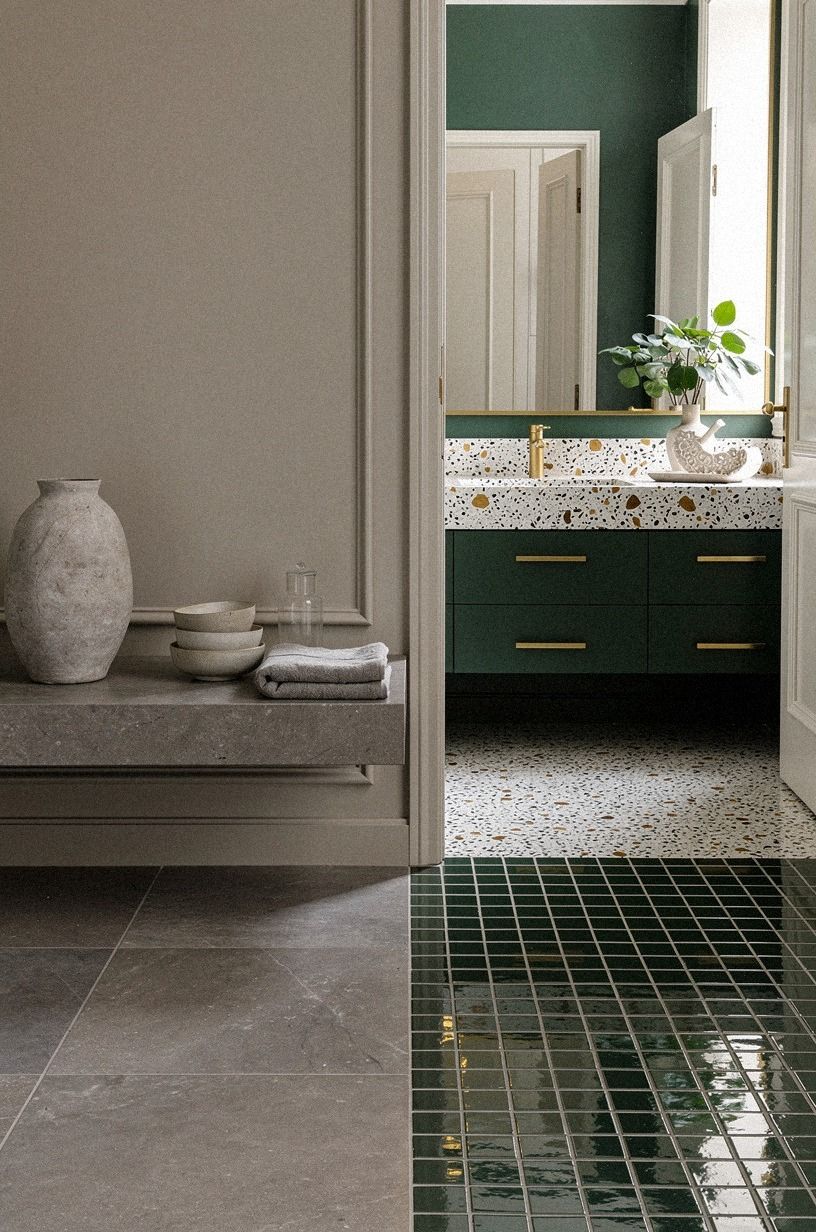
Matte peel and stick vinyl over tile floor can soften a bathroom that feels too shiny. Choose an oversized-chip terrazzo print in emerald, gold, and cream rather than a high-gloss marble photograph. Your feet will see the surface at close range, so controlled variation usually looks more convincing than dramatic veining.
I made the mistake of choosing a cool gray stone print beside blue-white lighting. The floor looked damp even when it was dry.
Your room will feel more inviting if the undertone matches your bulbs, paint, and hardware. An emerald, gold, and cream palette has warmth without becoming heavy.
If you're drawn to darker floors, keep the walls bright and use a soft textile to break up the weight. These white zellige tile bathroom ideas for a bright imperfect glow show how texture can keep pale surfaces from feeling flat.
11Should the walls lead while the floor stays quiet?
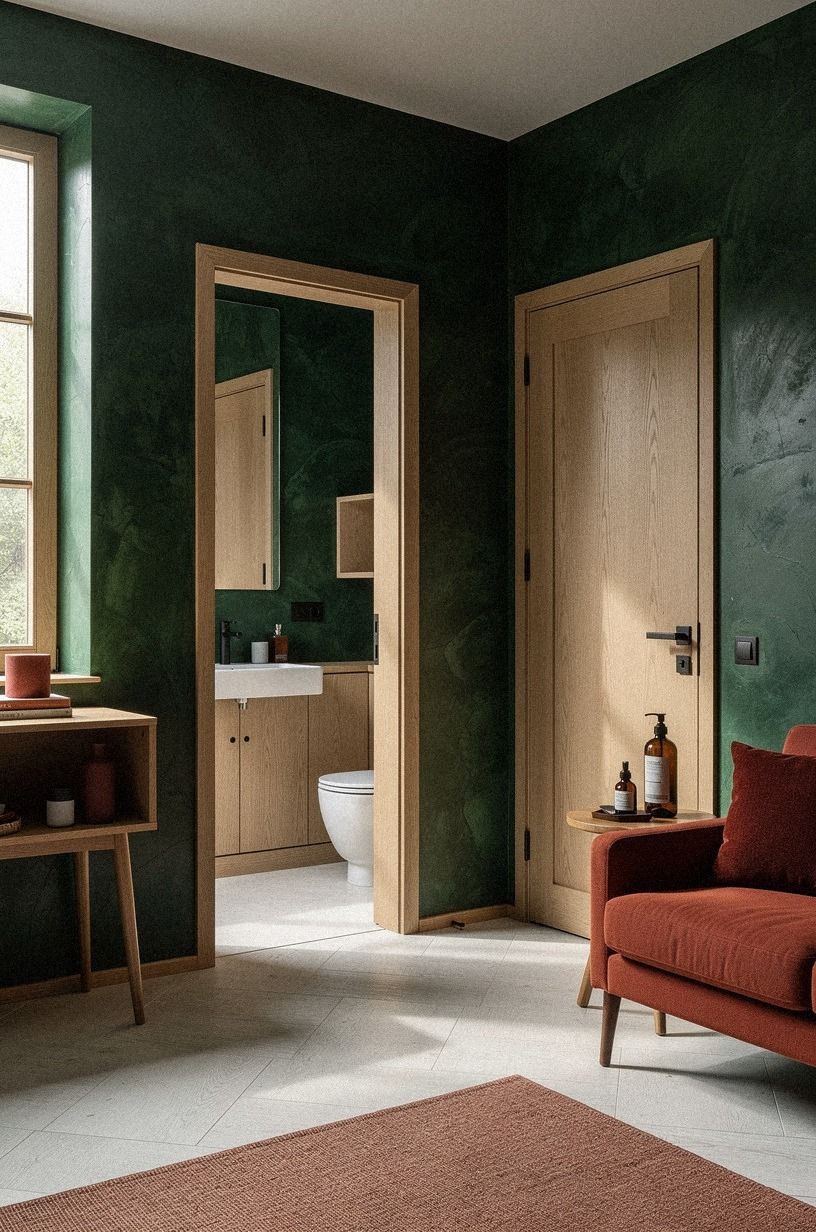
A forest-green hand-applied Venetian plaster wall can make your peel and stick over tile floor look more considered, especially when rust and natural oak repeat the room's warmer notes.
12Cosmetic refresh versus full renovation
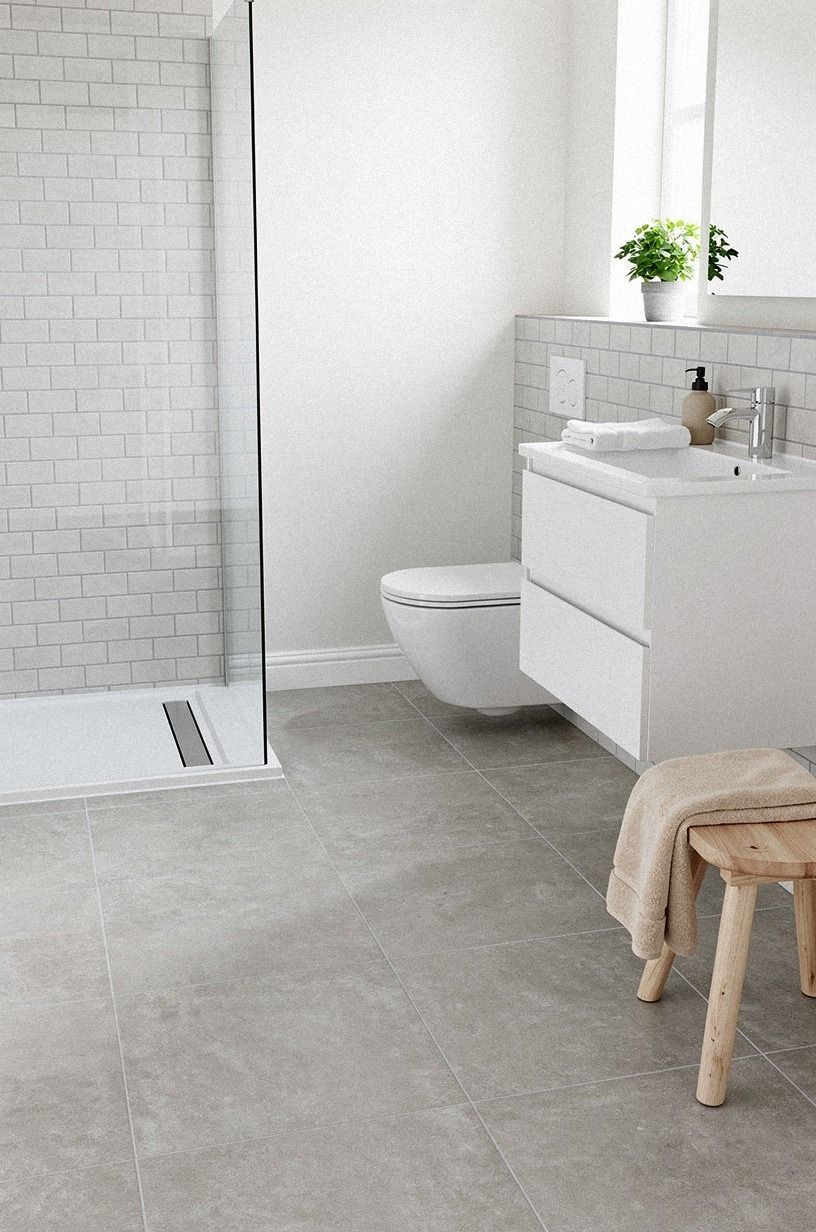
Peel and stick tile can be a sensible cosmetic update, but it shouldn't pretend to replace a full wet-area renovation. Your project makes the most sense when the shower, plumbing, and sound subfloor are stable. If water is reaching the ceramic from a leak, fix that first.
Adhesive can't solve movement, moisture damage, or a soft floor.
Use the typical US figures below as a reality check before you start. A surface refresh can stay modest, while a full bathroom renovation climbs quickly. I wouldn't spend high-end renovation money on a temporary floor if your plumbing still needs attention.
Keep this part boring! A clean base, careful layout, and one strong material detail usually provide the best value.
13Frame the vanity with a warm, narrow pattern
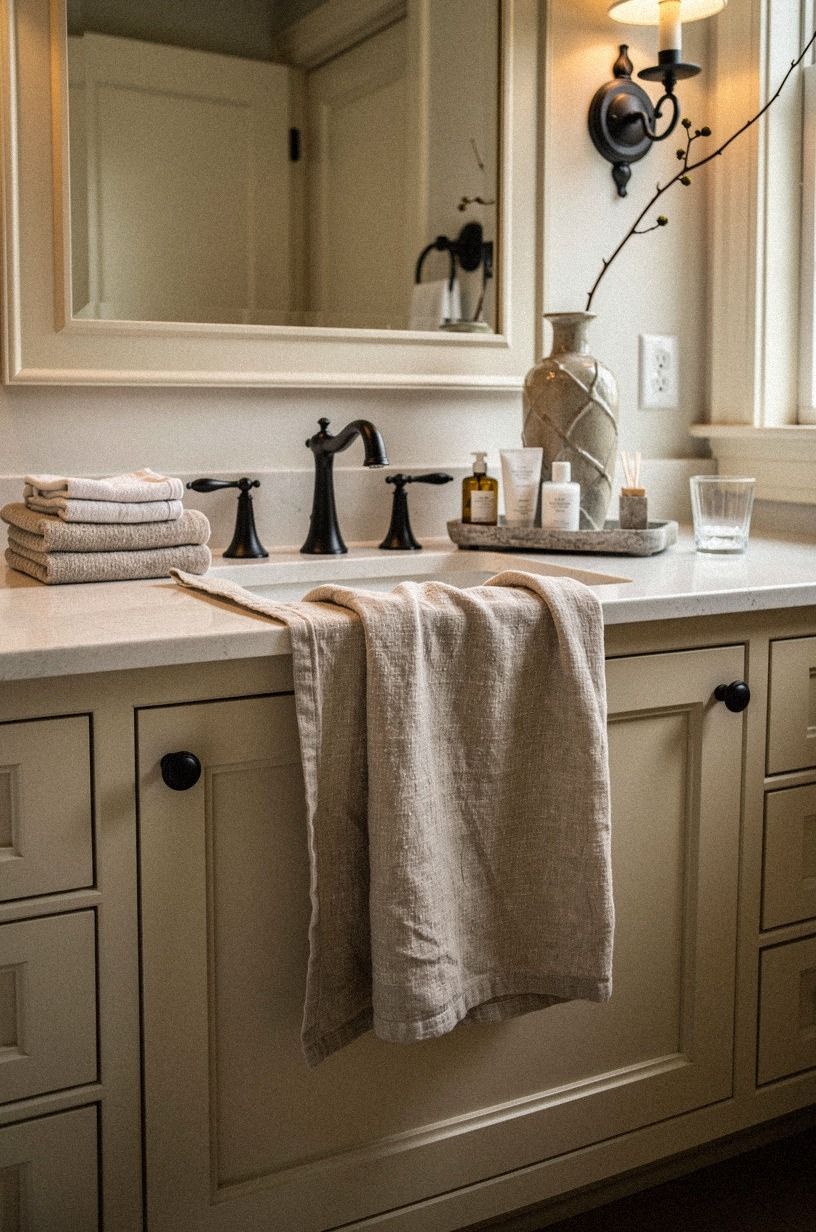
A narrow vertical pattern can visually connect the vanity to the floor without making every surface identical. Use a warm-white base with camel and black accents beneath the cabinet footprint, then repeat the feeling with washed Belgian linen nearby. Your eye will notice the relationship when the vanity doors open, especially if you use a warm wood tone.
IKEA HEMNES cabinetry can take on a more tailored feel beside a restrained floor pattern. I wouldn't repeat the exact same print on the walls unless the bathroom is very simple. Repetition can flatten the room, while a related color creates a stronger connection.
If your vanity sits at the usual 32-36 in height, keep the pattern visible below it and avoid placing a major motif where the toe kick will cut it. Your floor should feel considered from standing height, not only from a sample board.
14Build the Two-Color Wash for a rental bathroom
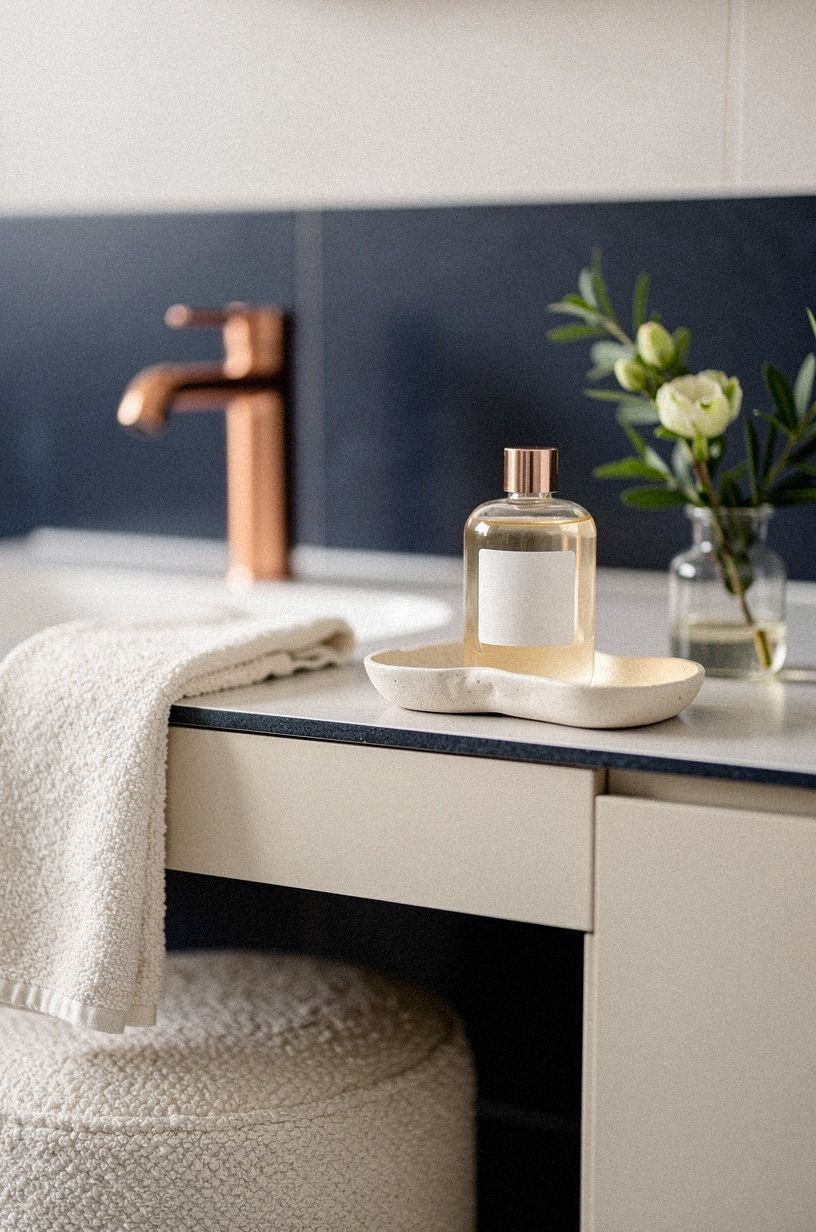
The Two-Color Wash pairs one ivory peel and stick tile with midnight-blue walls, creating a soft envelope around the room. Add copper hardware for warmth, and bring in organic bouclé through a small stool or cushion. Your rental can feel more personal without drilling into tile or changing plumbing.
Test the adhesive in a hidden corner before committing. Some old ceramic surfaces are more porous, chalky, or uneven than they look, and your landlord may care about residue. For another removable-surface comparison, see these tile sticker ideas that fake a real tiled kitchen.
I like the calm effect of this method because it doesn't depend on loud pattern. Add a tension rod and removable art, and keep every edge clean so removal later remains manageable.
15Mix the floor with a Three-Height Light Stack
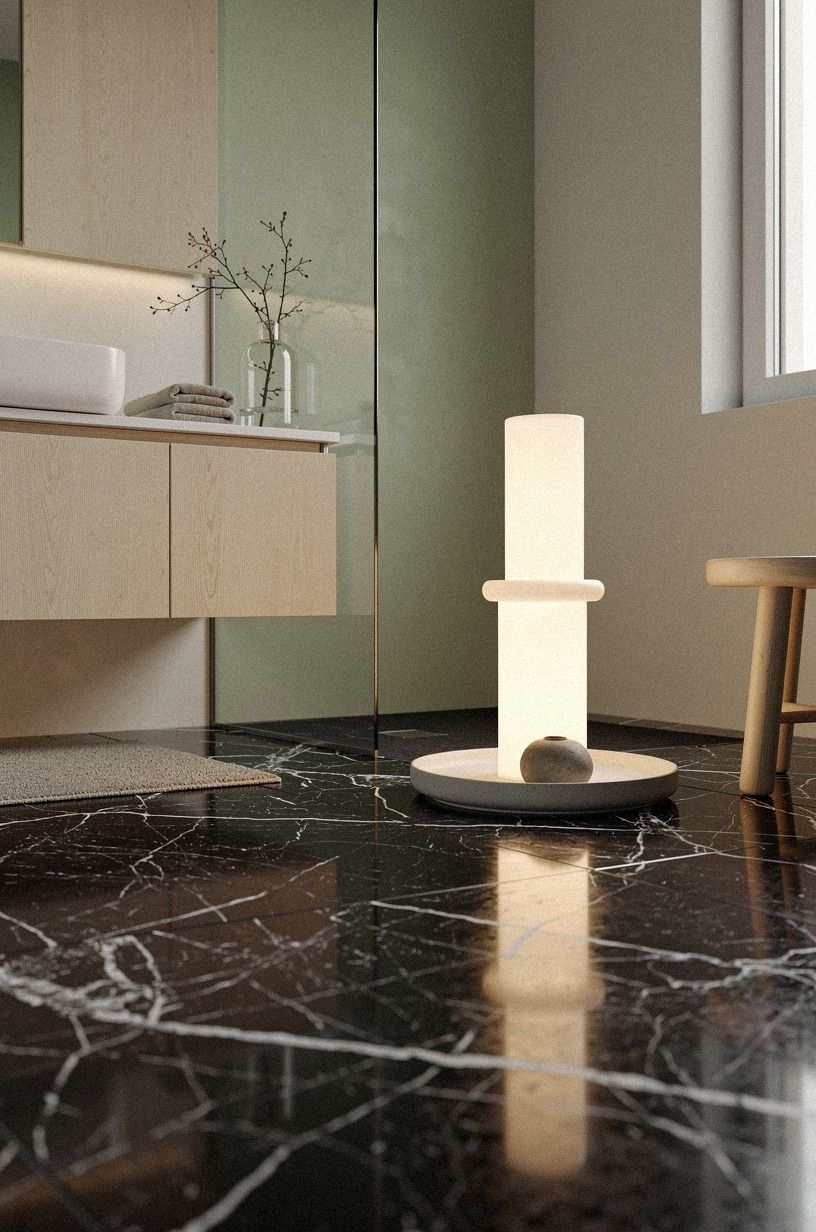
The Three-Height Light Stack keeps your new floor from carrying the entire room. Pair sage green with warm cream and natural wood, then use a small Nero Marquina marble accent with white veining to give the arrangement a grounded note.
16Seal the edges and style the room around the new floor
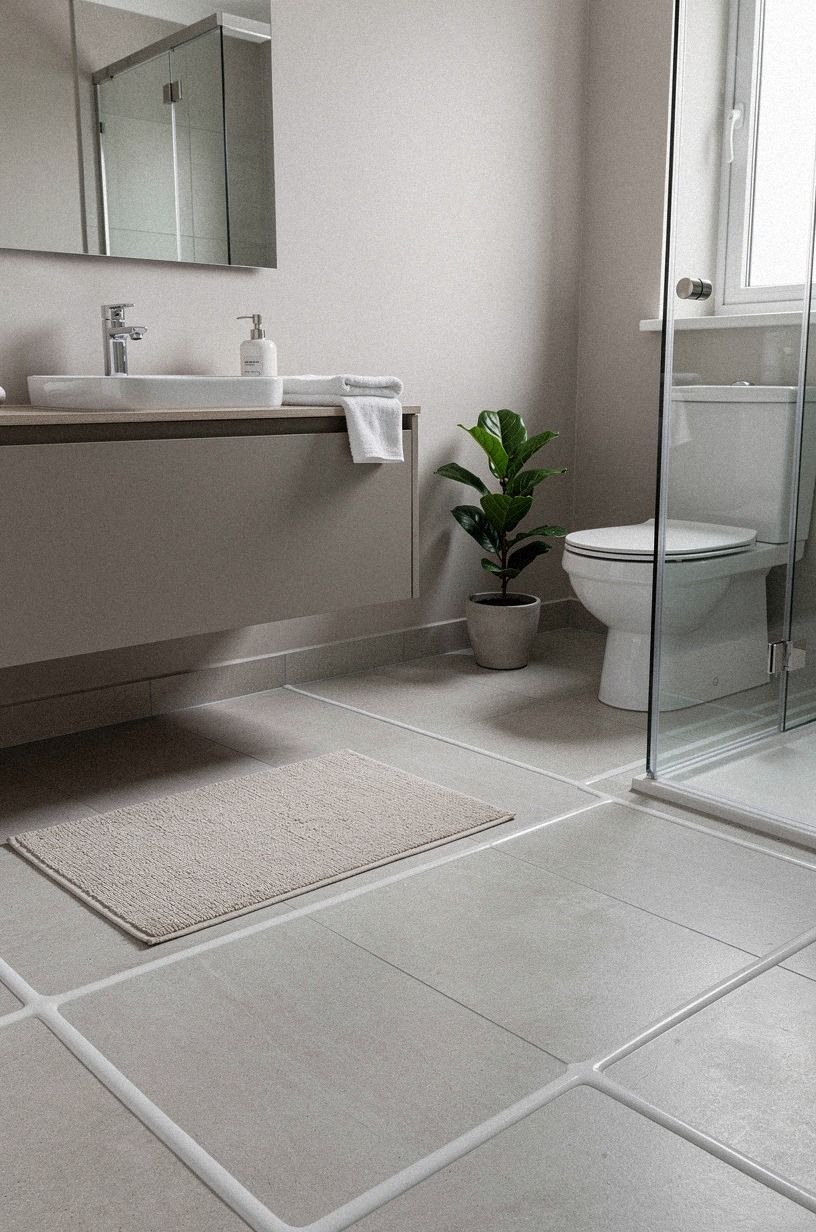
The last step is protecting the perimeter from water and daily friction. Press every edge firmly, especially near the tub, vanity, and toilet. Follow the tile manufacturer's guidance for compatible caulk, and don't trap moisture beneath a loose corner.
Your floor should feel stable underfoot before you bring in baskets, mats, or furniture. A comfortable shower still needs at least 36x36 in, so keep that clear zone open. If a corner lifts after installation, address it immediately instead of covering it with a mat.
Style the room with materials that repeat the floor's undertone. A deep-pile mohair velvet stool in terracotta, stone, or olive can make the pattern feel organic. I wouldn't cover the new surface with a giant bath mat because your work deserves to be seen.
For a plaster-like wall direction, these tadelakt bathroom ideas can help you decide how much texture your room can handle. Give your eye one quiet area, one textured area, and one useful object.
What I Learned After Laying Tile Over Tile
I've installed temporary floor surfaces in rooms where the original tile was too ugly to live with and too solid to justify removing. The most important lesson wasn't a particular pattern. It was learning to respect the base.
If the ceramic is moving, greasy, damp, or deeply uneven, the peel and stick layer will faithfully repeat those problems.
I also learned that restraint saves money. The floor doesn't need to imitate Calacatta Gold marble, handmade zellige, and painted cement at the same time.
Choose one visual idea, then let your wall color and hardware support it. A quiet terrazzo can feel more sophisticated than a loud stone print because your room gets room to breathe.
And yes, I once installed a pattern without dry-laying the doorway. The first row looked fine until the final cut, which was a tiny sliver that bothered me every morning. That mistake is why I now plan the visible line first and work outward.
Your budget matters, but so does your tolerance for maintenance. A rented bathroom may deserve a reversible checkerboard, while a long-term home may justify better surface preparation and a more durable product. The useful question is simple: will your chosen tile make the daily room feel calmer, or will it create another detail you have to manage?
I favor the calmer choice. It gives your eye a place to land, and you'll notice that every time you walk in. For more ideas about soft pattern and temporary updates, save these renter-friendly bathroom tile references.
A Few Things Worth Answering
What is the best peel and stick tile over ugly ceramic tile for a small bathroom?
A small matte checkerboard or soft terrazzo is usually the strongest choice because the repeated pattern hides awkward cuts. Use a narrow repeat near the toilet and vanity, and keep your wall color calm. IKEA HEMNES storage or an Article Sven-style tan accent can add warmth without crowding your floor.
Where can I buy peel and stick tile pieces on a budget?
Look at Target, Wayfair, and local hardware stores, then check Facebook Marketplace or a thrift shop for unopened cartons. Comparing dye lots matters because a later box may not match your first purchase. You don't need an affiliate link, and you shouldn't buy more than your layout requires.
These temporary tile surface ideas can also help you compare patterns.
How much does a peel and stick tile makeover cost?
A cosmetic bathroom refresh can fit within the budget tier of $200-$1,200, depending on paint, mirror, faucet, and textiles. Cleaning what you own is free, while a full renovation can reach $3,000-$9,000 or more. Your tile, prep materials, and room size will determine the final cost.
Can I create this look on a budget?
Yes, and your cheapest wins are careful cleaning, a paper layout, and reusing the mirror and hardware you already have. Choose a simple pattern, patch only the deep grout, and shop Target or Facebook Marketplace for textiles. You don't need to replace every surface to make the bathroom feel warm.
Is peel and stick tile worth it in a small space?
Yes, if your ceramic base is stable and dry. A small room needs fewer tiles, so you can spend more attention on alignment and cuts. Keep the pattern running from the doorway, protect the edges, and leave the comfortable 36x36 in shower zone visually open.
Is peel and stick tile a good idea for a rental?
It can be, provided your landlord allows removable flooring and the product is suitable for the room. Low-damage flexibility is the main benefit.
Test one hidden area, avoid sealing over unknown moisture, and pair the floor with a tension rod, removable art, and freestanding storage. You can also compare the approach with these realistic peel and stick backsplash ideas.
Where I'd Start First
If I had to pick one, I'd start with the soft neutral terrazzo. It hides imperfect cuts, works with warm or cool fixtures, and won't make your bathroom feel dated when you change the towels. Dry-lay it from the doorway, press every edge, and save these renter-friendly bathroom tile ideas for later.
That is the whole win!