
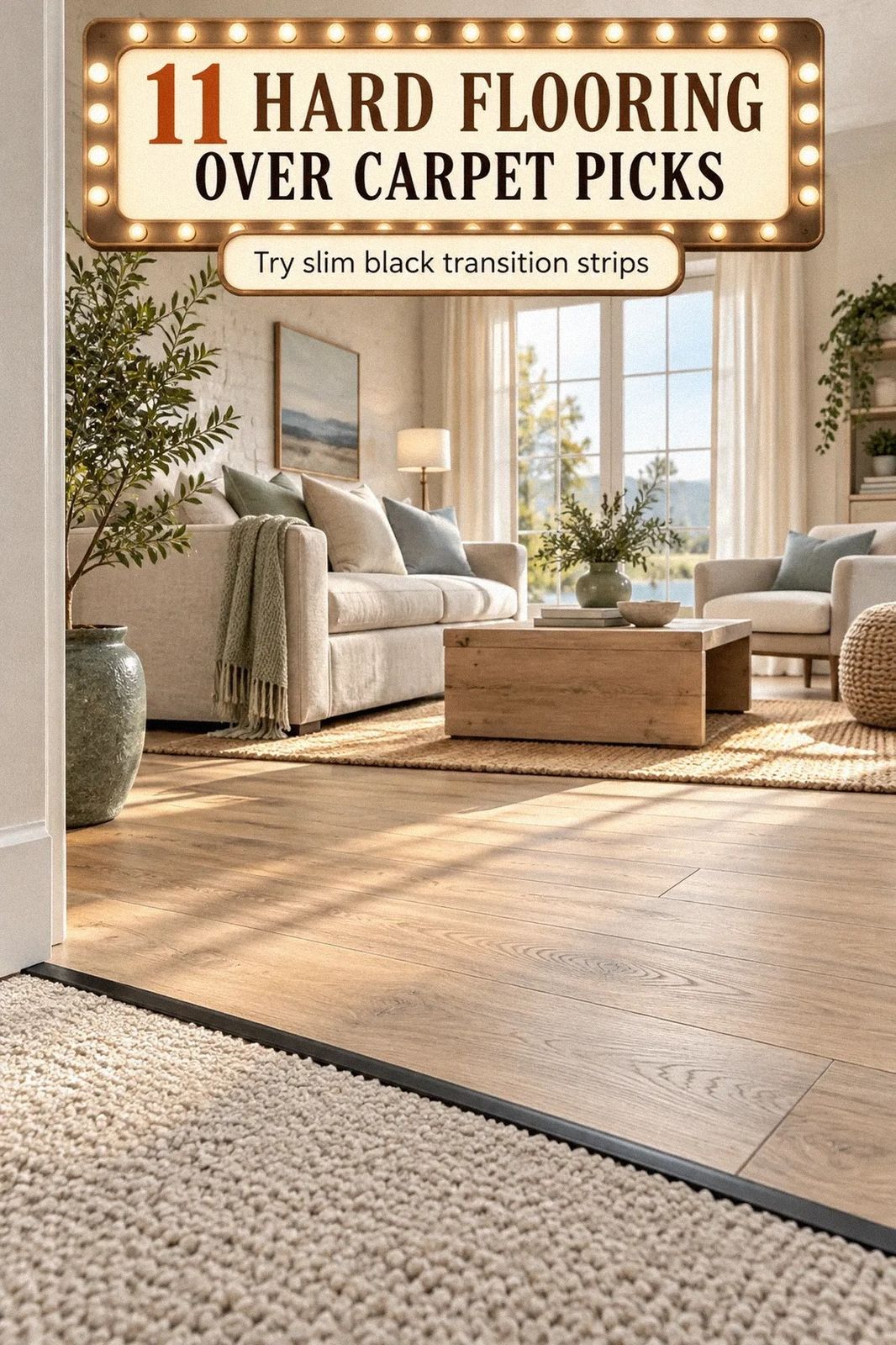
 by
Yes, you can put hard flooring over carpet you cannot remove, but you’ll need a rigid layer between them. I’ve learned that soft carpet makes floating planks shift, click, and complain. These ideas protect the floor, keep the room warm, and work for renters or homeowners. Start with the base.
- Layer a floating floor over carpet for renters
- Build the Two-Wood Rule with plywood
- Skip adhesive and choose click-lock planks
- Float rigid vinyl over a carpet sandwich
- Anchor the layout with a raised platform
- Swap carpet softness for cork floating tiles
- Frame a room with interlocking deck tiles
- Float engineered wood with the Grain Direction Rule
- Paint the rigid overlay before adding a rug
- Mix hard panels with a Three-Height Light Stack
- Combine temporary panels with a floating room border
1Layer a floating floor over carpet for renters
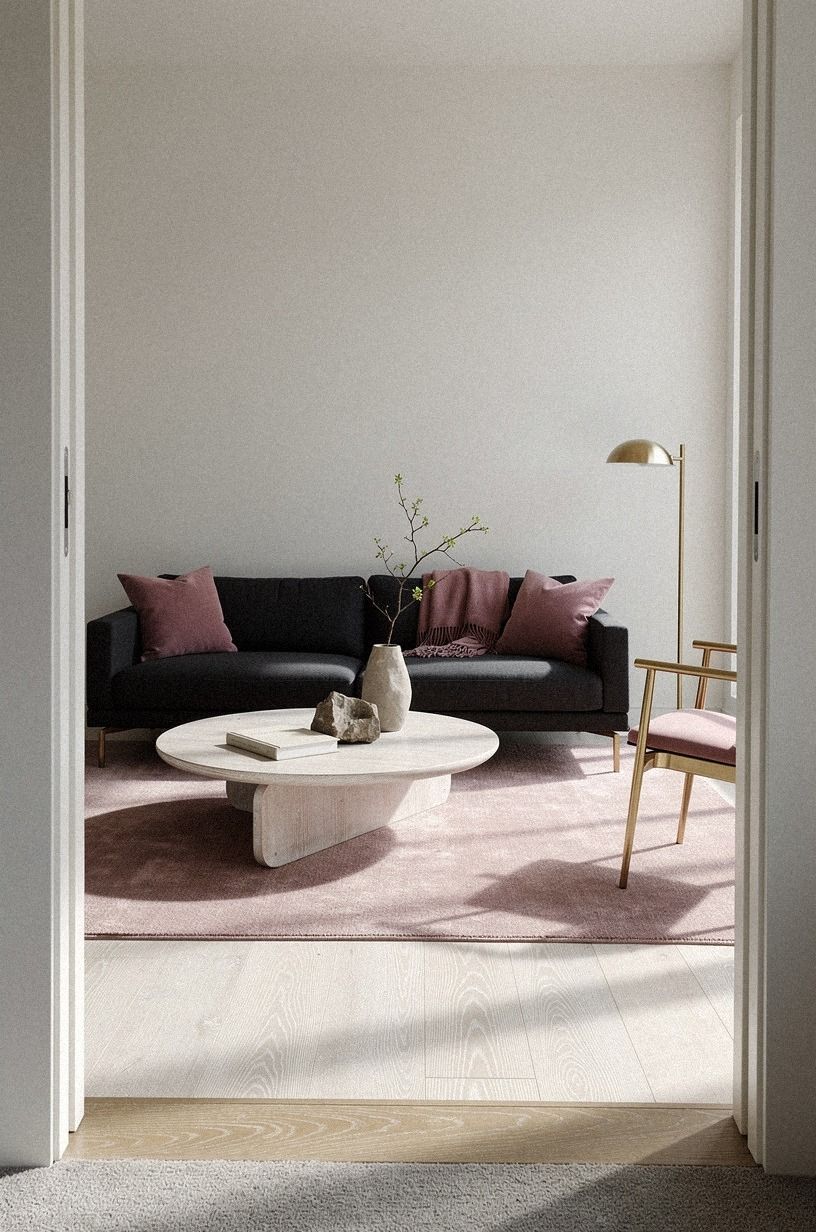
A floating floor can work when your carpet is low-pile, firm, and reasonably level. You’ll need a rigid overlay first, because laminate or engineered planks shouldn’t flex over plush fibers.
I like click-lock laminate here because it goes down without glue, nails, or permanent damage. Your room can feel more polished within a weekend, and you can remove the floor when the lease ends.
Check every doorway before you buy anything. Your new surface raises the floor, so doors may drag and transitions may look awkward.
The softest carpet is the losing option because it lets the boards move under your feet. If you’re working in a small bedroom, compare the layout with these small bedroom setups before you commit.
Use a warm oak tone if your room has cool walls. Cerused white oak looks especially inviting with dusty rose, charcoal, and brass, while a gray plank can make the whole room feel flat. Keep your furniture legs on the hard surface where possible, and you’ll notice less movement around the bed or desk.
A floating floor feels especially reassuring when you’re renting. You’ll get a warmer, cleaner, more finished room without making an irreversible decision. That matters!
Typical cost by tier (US averages):
2Build the Two-Wood Rule with plywood
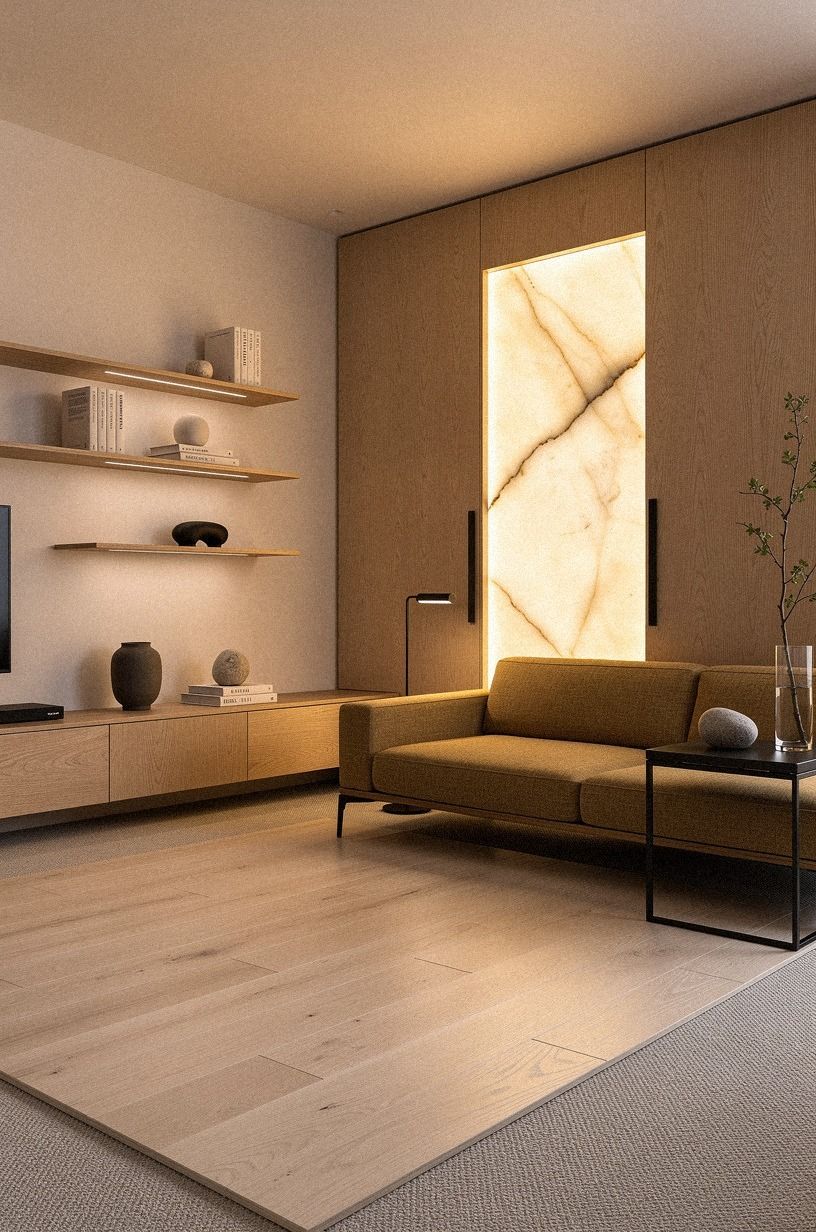
The Two-Wood Rule means pairing a stable plywood overlay with a finish floor that has a different grain direction. The contrast keeps the installation from looking accidental, and the plywood gives your planks a firmer, more confident foundation.
Use a structural plywood overlay only when the carpet is short and stable enough to support it. Secure the panels according to the manufacturer’s instructions, leave the correct expansion space, and stagger the seams. You don’t want every joint in the base lining up with every joint in the finish floor.
A warm white room with camel upholstery and black accents can make the layers feel intentional. Backlit translucent onyx brings a luminous material note, while the plywood overlay keeps the floor practical and stable. Test the tones beside your walls before committing.
The method works best when you’re trying to create a deliberate room rather than hide a problem. If the carpet has ripples, moisture, or deep padding, stop first. A handsome surface can’t rescue an unstable base.
For a bedroom, check the added height against your existing furniture with this mattress height guide. A few inches can change how comfortable the bed feels.
3Skip adhesive and choose click-lock planks
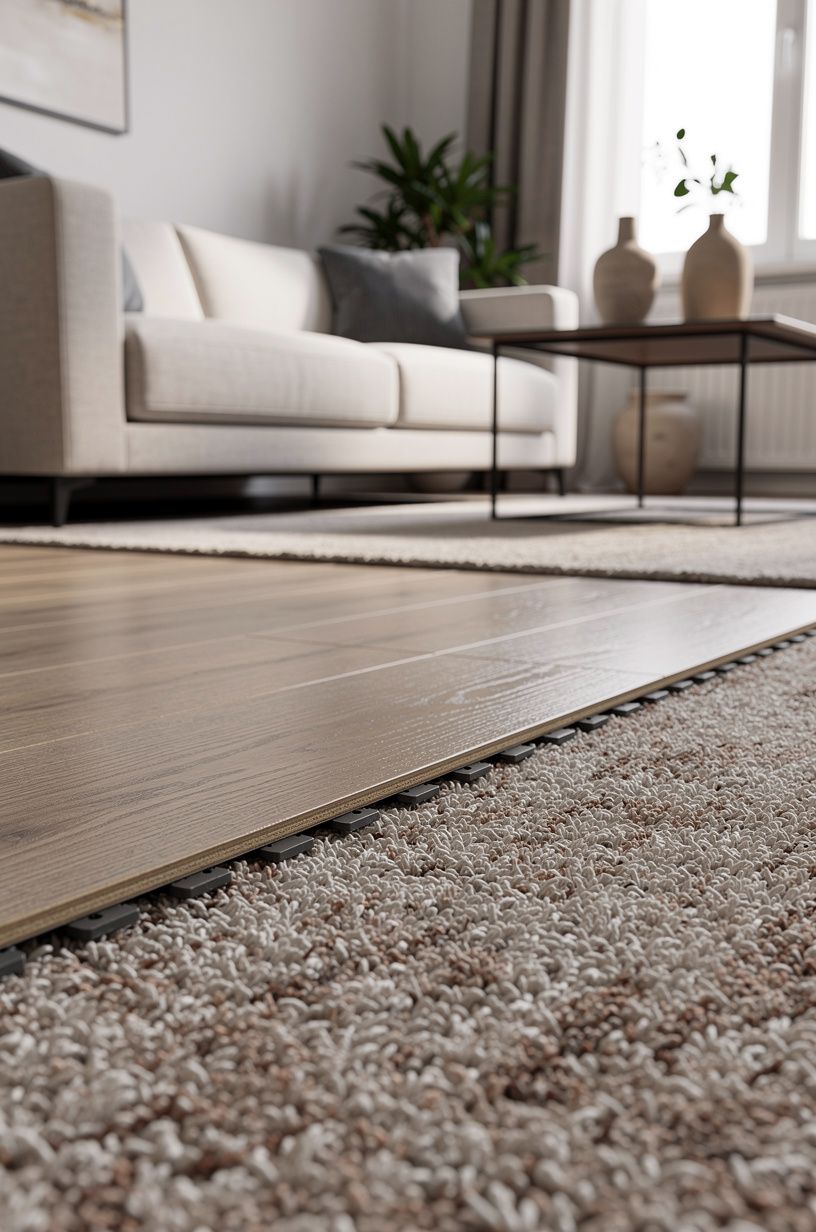
Click-lock planks are the practical choice when you need temporary flooring over carpet and cannot make permanent changes. You’ll get a hard walking surface without adhesive, and you can replace one damaged board rather than dismantling the whole room. I prefer rigid-core vinyl for busy rooms because it handles muddy shoes and quick cleaning better than soft laminate.
The carpet beneath still matters. Your base needs to be short, dense, and free of deep ripples.
If your carpet feels like a mattress underfoot, the planks won’t behave. A thin rigid board beneath the flooring can give your room the firmness it needs, while also making the installation feel less improvised.
Choose a matte finish instead of a glossy one. Book-matched walnut adds depth beside midnight blue, copper, and ivory, while a restrained grain keeps the floor from competing with the room. Your eyes will notice the grain before they notice the seams, especially if you run the planks toward the longest wall.
If you’re styling a bedroom, leave enough room for the bed to sit squarely. You can check your sleep setup with this mattress on box spring guide before the added height becomes a surprise.
But don’t glue the planks down just because the first row shifts. Fix the base instead.
That small decision saves money and frustration. You’ll also keep the room more flexible if your taste changes later!
4Float rigid vinyl over a carpet sandwich
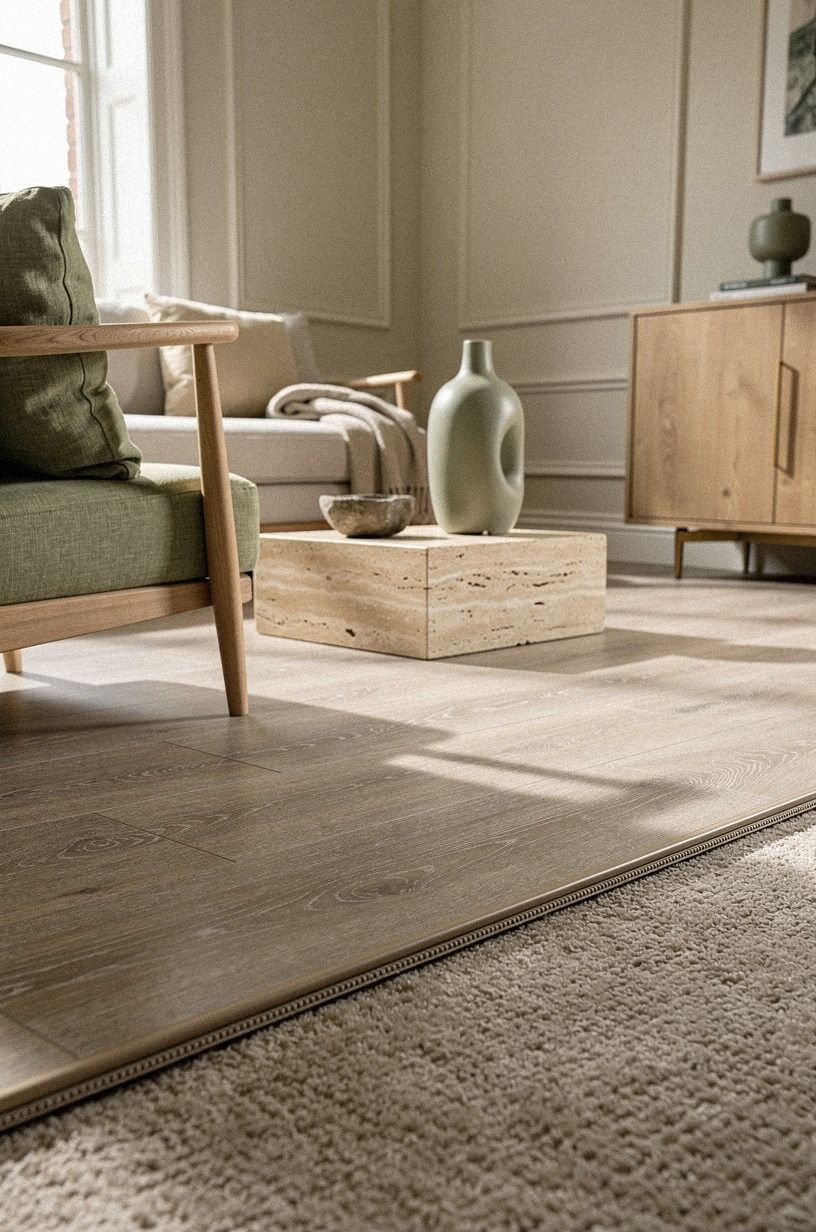
The Carpet Sandwich is a simple planning method: carpet underneath, rigid separation layer in the middle, hard finish above. Your middle layer does the quiet work.
It spreads weight, reduces movement, and gives the top floor a cleaner plane. This is my favorite route when you want a temporary basement flooring look without ripping out stubborn carpet padding.
Use rigid vinyl tile with a restrained stone pattern if your room already has wood furniture. Warm travertine can bring a grounded surface note, especially beside natural wood and warm cream textiles.
I’d skip high-contrast checkerboard too. It can make every crooked wall more obvious.
Your palette should have one warm note. Sage green, warm cream, and natural wood create a calmer combination than a dramatic faux marble print. You’ll want the floor to support the furniture, not argue with it.
This method also helps with cleanup. A hard top layer gives your vacuum a clear path, and your rug won’t sink into the carpet below. If your room feels stuffy at night, look at these room factors that affect sleep before adding more textiles.
A clean, stable sandwich can make an ordinary room feel unexpectedly elegant. The key is restraint.
5Anchor the layout with a raised platform
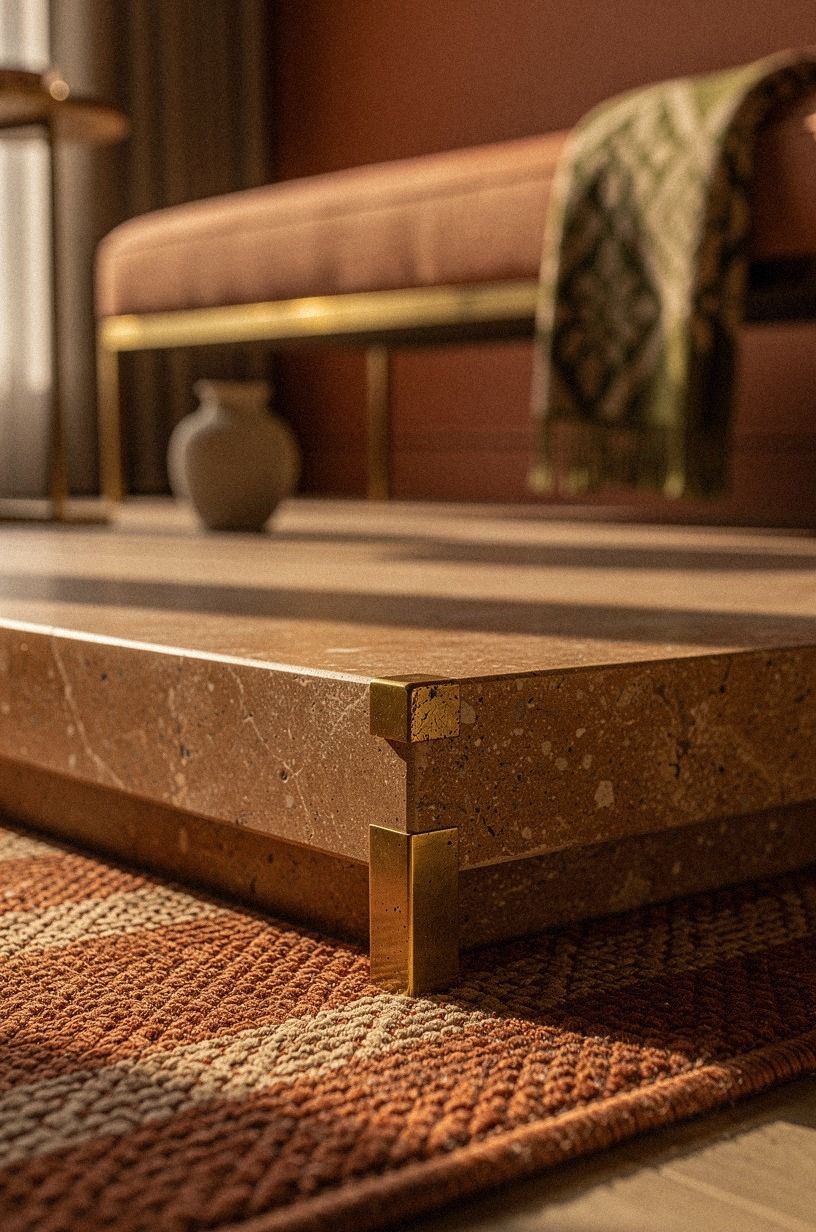
A raised platform can make the floor feel intentional when you cannot remove carpet.
6Swap carpet softness for cork floating tiles
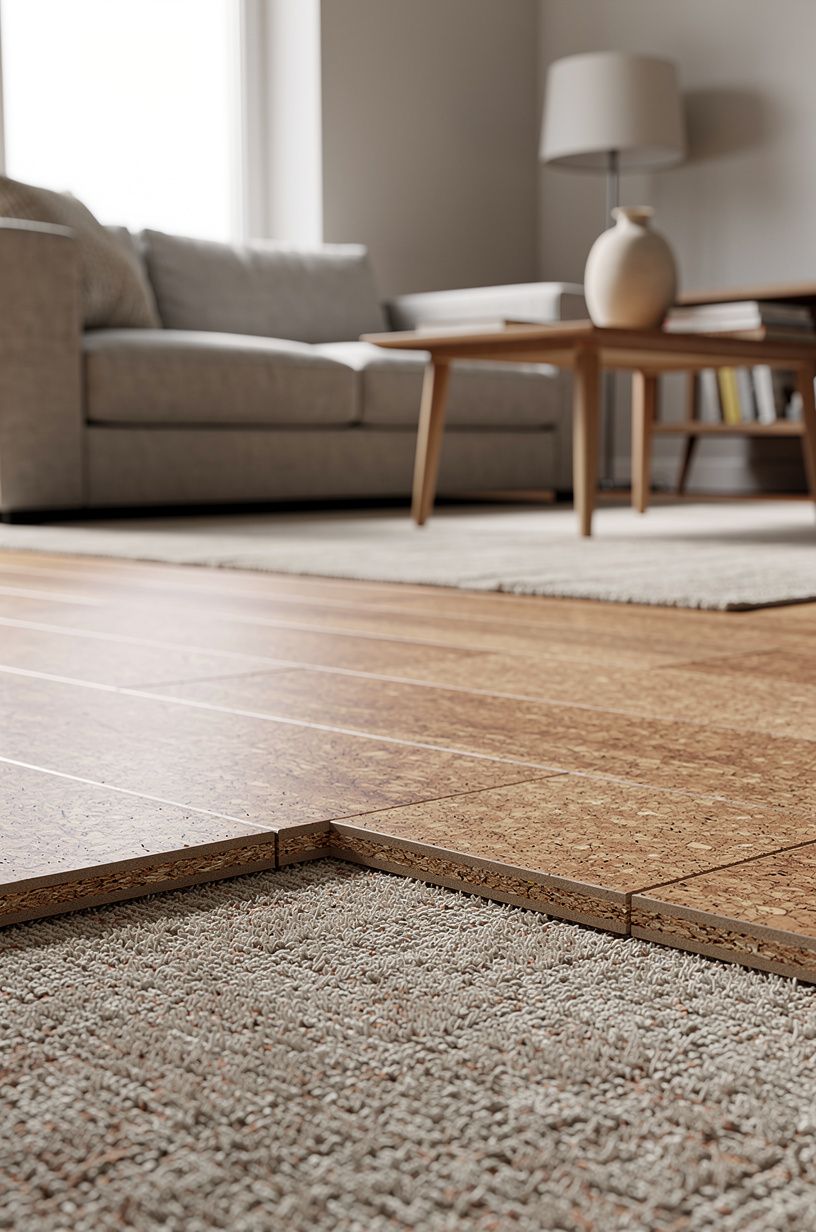
Cork floating tiles give you a hard surface with a little warmth underfoot. They’re quieter than many rigid finishes, and their natural variation keeps the room from feeling sterile.
Choose floating cork tiles with a sealed surface and a manufacturer-approved underlayment. Cork can look lively beside clay walls, linen upholstery, and aged brass. An oversized-chip terrazzo accent adds another tactile note without requiring a highly patterned floor.
Try a clay tone with linen textiles and aged brass hardware. A darker cork can feel intimate and atmospheric, while a pale cork keeps a small room bright. Don’t overfill the space with baskets and rugs, because the material already brings texture.
Cork is a thoughtful option for a reading nook, nursery, or quiet bedroom. You’ll still need to confirm that the carpet is stable and dry. If moisture is possible, choose a more resistant finish.
For a bed setup, use furniture pads that won’t trap moisture against the new surface. You can compare the height with this mattress on box spring guide.
7Frame a room with interlocking deck tiles
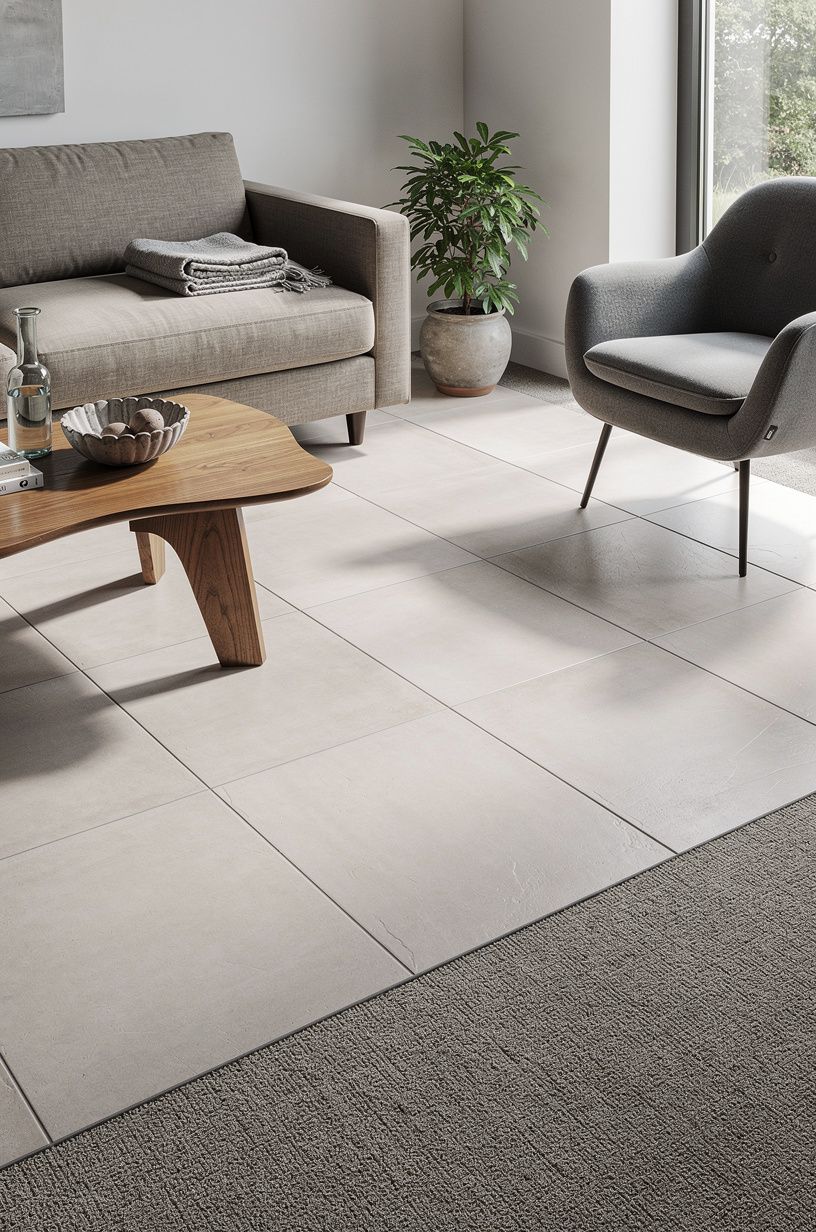
Interlocking deck tiles are useful when your carpet cannot be removed and you need a reversible surface for one zone. They’re especially handy in a rental sunroom, enclosed porch, or basement corner. Your room gets a hard texture without nails or glue, and you can lift the pieces if moisture or maintenance becomes an issue.
Choose acacia wood deck tiles only when the room stays dry and the manufacturer allows indoor use. Your carpet must be clean and flat, because debris beneath the tiles can create pressure points. I’d skip this idea for plush bedroom carpet.
The movement would feel awkward, and the wood could catch on the fibers.
Use the tiles to define a reading spot rather than covering every inch. Plum, grey, and rose gold create a softer contrast, while hand-applied Venetian plaster adds depth to the surrounding walls. Your furniture should overlap the rug, not float around it like an exhibit.
For a warm fall look, add a low lamp and one folded blanket. That’s enough.
You don’t need a crowded corner to make the platform feel lived-in. If outdoor-style decor is part of your plan, this windproof yard decor guide has useful placement thinking, even indoors.
The result can feel relaxed, tactile, and surprisingly welcoming. A defined corner often looks more intentional than a rushed whole-room installation.
8Float engineered wood with the Grain Direction Rule
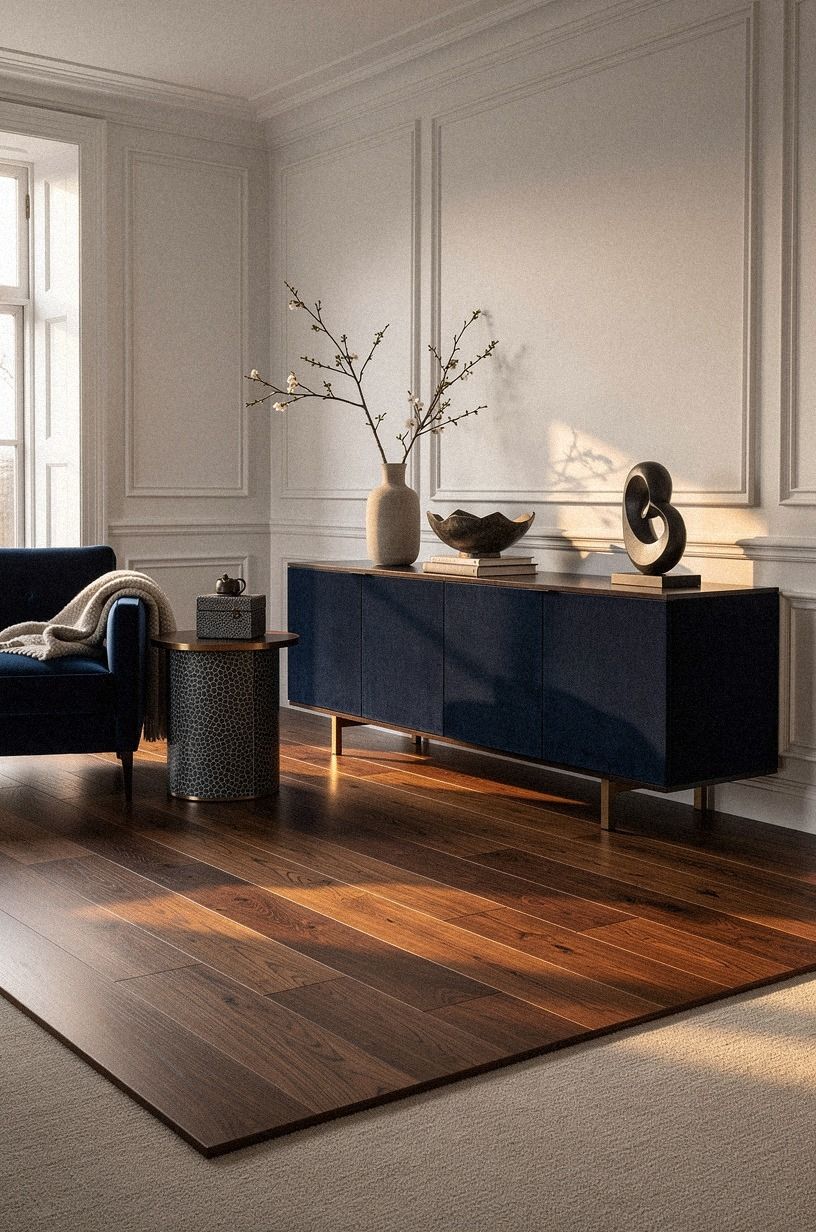
The Grain Direction Rule is simple: run your engineered wood along the room’s longest visual line, then let the furniture interrupt it. Your eye travels farther, and the carpet beneath becomes less noticeable. Engineered walnut flooring gives you the warmth of wood without the fixed installation that a traditional nailed floor requires.
This method deserves a careful base. Your carpet should have minimal pile, and the rigid layer beneath the boards needs to remain stable.
If the floor bounces when you walk, your seams may separate or sound hollow. I’d rather choose a less expensive finish on a firm surface than buy premium planks for a shaky one.
Try walnut with navy and white instead of a pale whitewash. Shagreen accents can add a subtle tactile contrast, but the pattern needs a calm room around it. Your walls, curtains, and rugs should stay simple so the floor has space to read as one material.
Curtains can help balance the long lines. Hang your rod 4 to 6 inches above the frame and let the fabric reach the floor.
You’ll get a taller room, and your new surface will look connected to the windows. But if your bed frame already sits high, check the height before ordering your boards.
For a quieter bedroom, review this mattress height guide before you place furniture on the new floor. The grain direction can be beautiful, but comfort still wins.
9Paint the rigid overlay before adding a rug
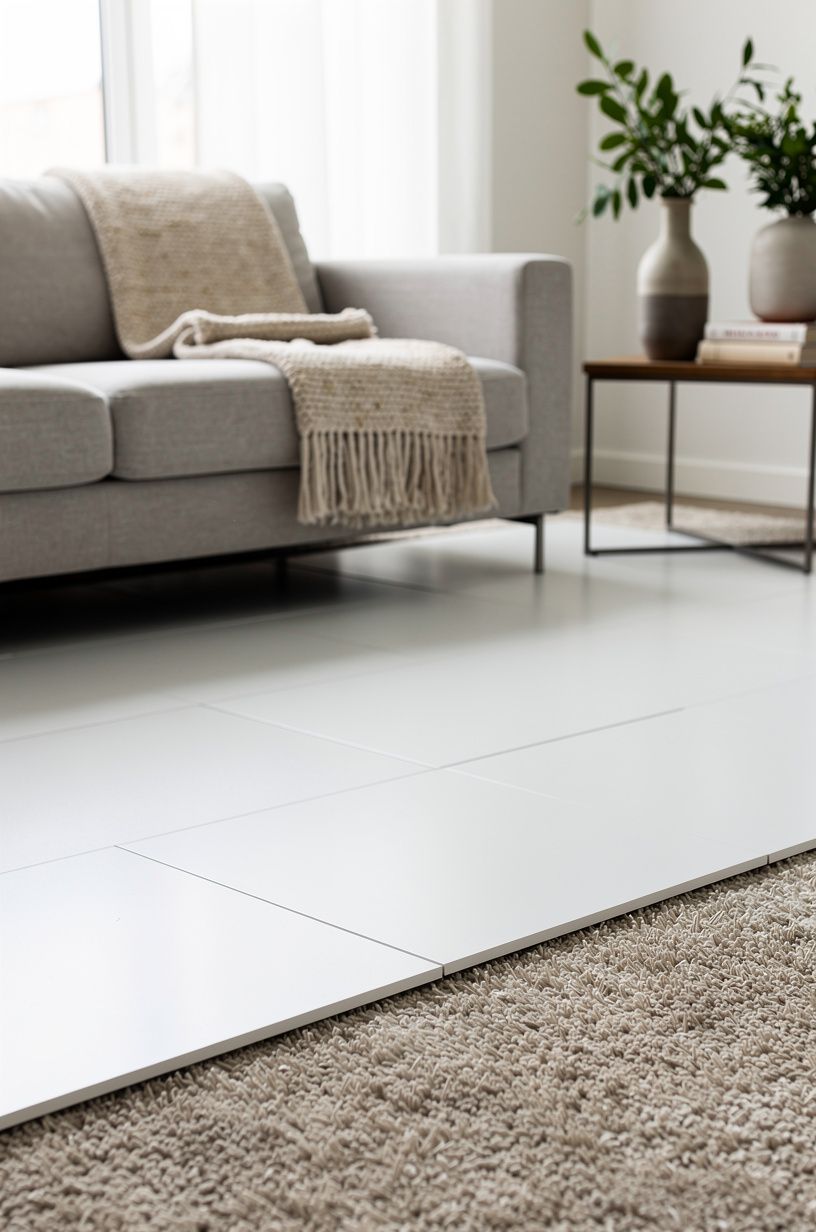
Painting the overlay is a budget-minded route when you need the look of hard flooring but don’t want another finish layer. It can feel bold, personal, and wonderfully inexpensive when the base is already firm.
Use floor-rated paint over a properly prepared rigid surface. Patch rough spots, prime where needed, and allow every coat to cure before adding furniture. A soft carpet beneath the overlay can still create movement, so don’t treat paint as a substitute for structural stability.
Emerald can brighten a room with gold and cream accents. Washed Belgian linen softens the harder surface, while brass and warm cream keep the palette from becoming too heavy. If you prefer a lighter room, keep the painted surface restrained and let the textiles carry the contrast.
Add a rug only where you need softness. A large rug can hide the painted finish, while a narrow runner can emphasize the direction of the boards. You’ll want the painted surface to remain visible enough that the idea feels deliberate.
For a compact room, test the furniture plan with these small bedroom setups before you paint the entire overlay. A sample board can reveal whether the color feels calm or muddy in evening light.
10Mix hard panels with a Three-Height Light Stack
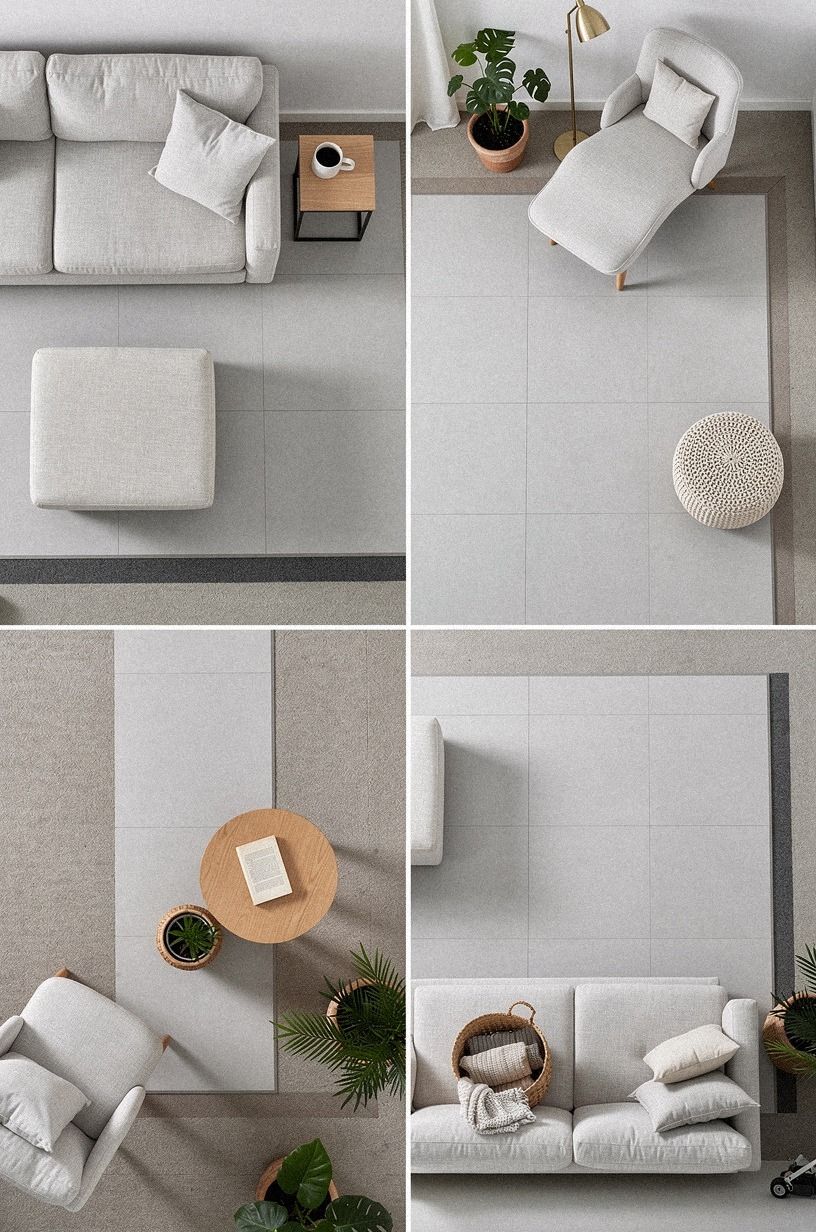
The Three-Height Light Stack helps a hard floor feel less stark. Use overhead light, task light, and ambient light at different levels, then let your flooring act as the grounded base. Your room will feel warmer because the eye has several points to rest on instead of one bright ceiling fixture.
Try natural oak near forest green walls and rust-colored accents. Organic bouclé adds softness to a rigid floor, especially beside warm lighting. Your fixtures should remain warm enough to show the grain and texture you chose.
Place a table lamp near the reading chair, a small ambient light near the floor, and the overhead fixture on a dimmer when possible. Three sources give your space depth. I’d skip a single blue-white ceiling bulb because it makes every hard surface feel commercial.
Your rug and curtains should repeat one texture, not every color. Natural textiles at the windows can soften vinyl or painted panels, while a rust cushion gives the chair a richer note. If you’re styling a sleep space, consider whether a warm drink helps you settle with this sleep and hot chocolate guide.
Lighting is the easy part to underestimate. Once it’s right, the whole room can feel calmer and more luminous!
11Combine temporary panels with a floating room border
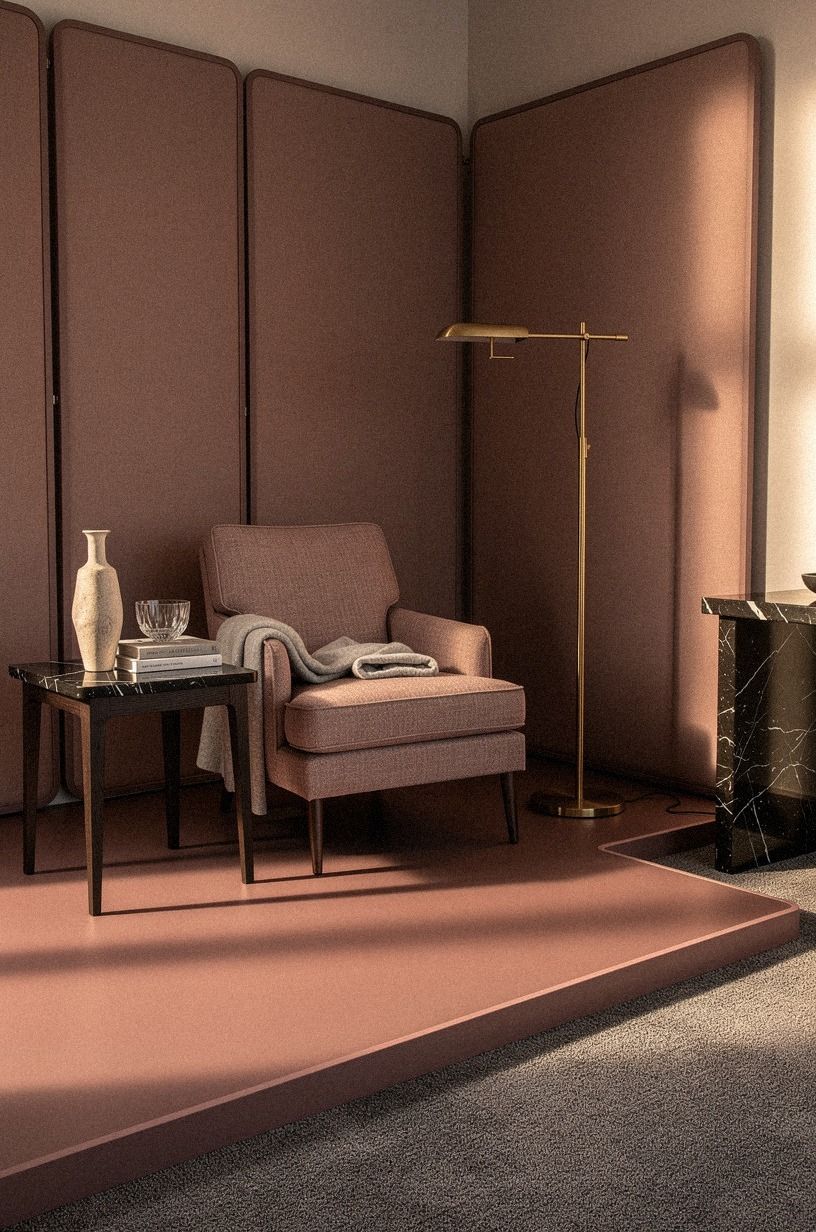
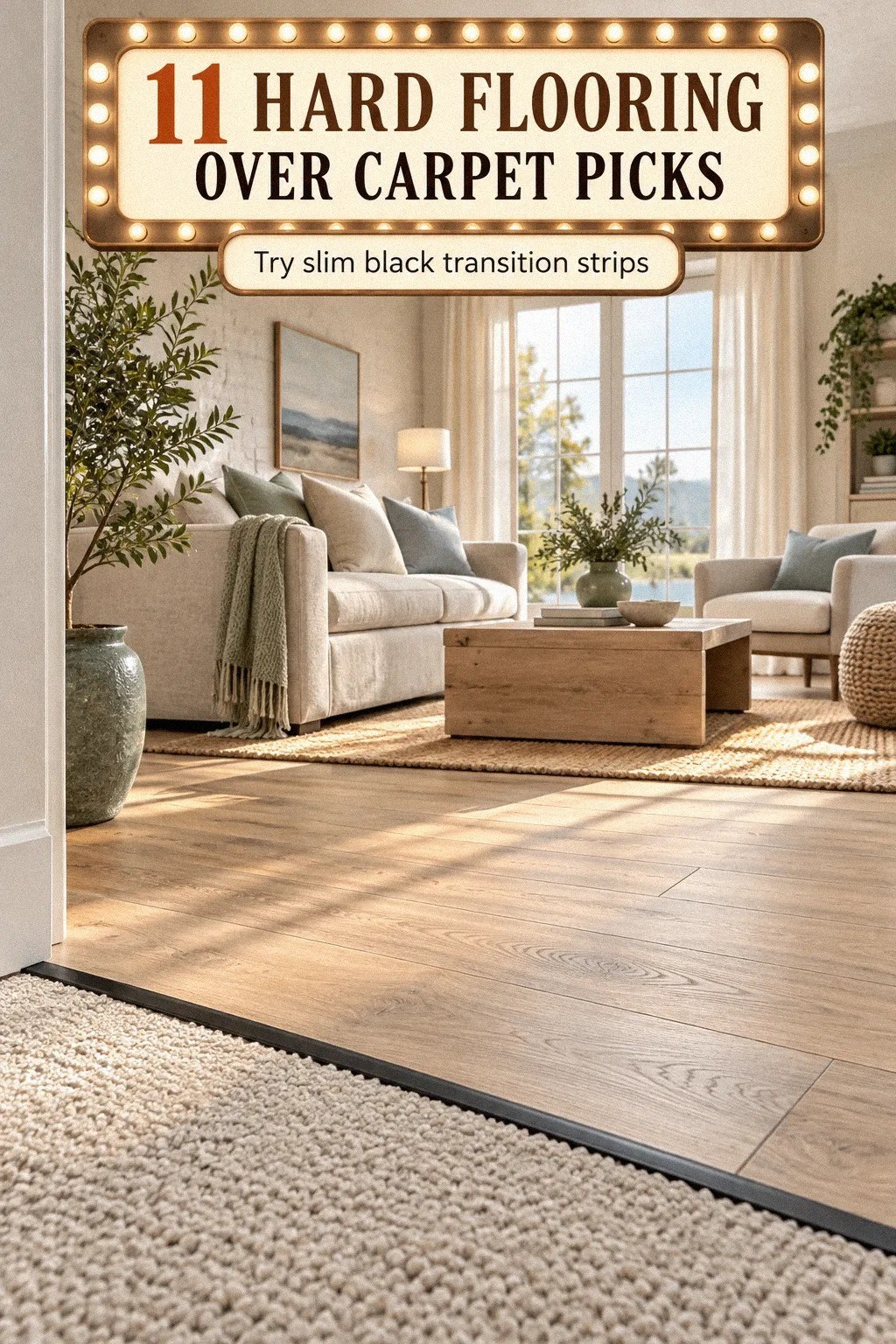
A floating room border gives your installation a finished edge. It can be a narrow strip of wood, a painted perimeter, or a transition detail that separates the hard surface from the remaining carpet.
Use low-profile transition strips where the two materials meet. Keep the border visually simple, especially if the finish floor already has grain or pattern. A Nero Marquina black marble border with white veins can suit dusty rose, charcoal, and brass, while a painted edge can disappear into the wall color.
This approach works well when you’re treating one part of a room rather than covering everything. A hard zone beneath a desk, sofa, or dining table can feel purposeful. You won’t need to solve every doorway at once, and you’ll have a clearer sense of whether the surface works.
Leave room for furniture overlap. Your rug should soften the transition without hiding the entire floor. If the border catches toes or chair wheels, revise it before adding decorative details.
A practical transition can look polished when it’s aligned with the architecture. Check your doors, baseboards, and furniture legs first. For bedroom planning, this mattress height guide can help you avoid an awkward final elevation.
What I’d Learned Before Choosing a Floor
I used to think the finish floor was the main decision. It isn’t.
The base is the decision, and the finish is the part everyone notices. When I first worked over carpet, I focused on the color of the planks and ignored the soft movement underneath.
The result looked fine for one afternoon, then every chair leg found its own tiny rhythm. I could hear the floor complain each time I crossed the room.
Now I start with three questions. Is the carpet low enough to stay stable?
Can the doors and transitions handle the added height? Will the room still feel comfortable after the hard surface goes down?
If your answer to the first two is no, I’d stop before buying finish flooring. A rigid overlay or a smaller platform may serve you better than covering the entire room.
I’m also less impressed by dramatic patterns than I used to be. A dark checkerboard can look striking, but your daily eye may find it tiring.
Warm oak, painted plywood, or muted cork usually gives you more room to change lamps, rugs, and wall color later. Your floor should carry the room through several seasons, not trap you in one mood.
The practical details matter just as much. Your rug needs furniture overlap. Your art center belongs about 57 to 60 inches from the finished floor.
Your curtains should sit 4 to 6 inches above the frame and reach down. Your lighting needs three sources, overhead, task, and ambient, because hard surfaces reveal weak lighting immediately.
Before buying, place a sample board over the carpet for a full day. Walk across it, roll a chair over it, and open every nearby door.
You’ll notice problems faster in real use than in a showroom. That simple test can save an expensive, exhausting correction.
If you’re spending from the budget tier, the supplied US guide places paint, textiles, art, and organization around $200-$800. That can be enough to make a temporary floor feel intentional when you spend it on the base, one useful rug, and good light.
I’d rather see a modest floor with a stable foundation than an expensive plank floating over soft carpet. That choice won’t dominate the room, but you’ll feel the difference every morning.
Which Finish Feels Right in a Small Room?
A small room usually benefits from one calm surface and one memorable material. Warm greige vinyl keeps the background quiet, while medium oak gives you a richer, more grounded direction. Cork brings softness without adding another busy pattern.
If your walls are already colorful, choose a restrained floor. If the walls are pale, a warm wood or painted overlay can give the room energy. You don’t need every element to compete for attention.
Use this small bedroom guide to test furniture spacing before you decide. The floor should make movement easier, not turn every corner into an obstacle.
What Changes at Doorways and Transitions?
The new surface can raise the floor enough to affect doors, thresholds, baseboards, and nearby rooms. Measure the clearance before you buy materials. You’ll want a transition that feels secure underfoot and looks intentional from both sides.
A narrow metal transition strip can suit a modern room, while stained wood feels warmer and more residential. Don’t cover a height problem with a thick rug. Fix the elevation first.
If a bedroom door is already close to the floor, check the bed and storage pieces too. This mattress on box spring guide can help you think through the total height of the room.
Warm Oak or Cool Gray?
Warm oak usually feels more inviting and forgiving. Cool gray can look crisp, but it may become flat beside blue-white lighting or pale walls. I’d choose gray only when the room already has enough warmth in the furniture, textiles, or metal finishes.
Natural oak pairs beautifully with cream, walnut, brass, and soft green. A gray finish can work with black accents, blue walls, and cleaner-lined furniture. Your existing pieces should decide the direction.
If you’re unsure, place both samples near the largest window and check them after sunset. Evening light can make a confident daytime choice feel strangely cold.
How Do You Know When to Stop?
Stop when the carpet moves too much, the room has moisture concerns, or the added height creates a safety problem. A hard surface over an unstable base isn’t a clever shortcut. It’s a future repair.
You should also pause if the landlord hasn’t approved the method or if the manufacturer excludes carpet installation. A reversible idea still needs to be safe. If the room feels stuffy or damp, consider these room factors that affect sleep before trapping layers underneath.
What People Always Want to Know
What is the best hard flooring over carpet for a small room?
Rigid-core vinyl or click-lock laminate usually gives you the cleanest result when the carpet is low-pile and stable. Warm greige vinyl keeps a small room calm, while a medium oak finish adds warmth without making the floor feel heavy. Your best choice is the one that stays firm under your furniture.
For a compact bedroom, keep the pattern quiet and let the rug overlap the furniture. You can compare the layout with this small bedroom guide before choosing a direction.
Where can I buy temporary flooring pieces on a budget?
Look at IKEA, Wayfair, and Target for removable flooring pieces, rugs, lighting, and compact furniture. Facebook Marketplace and thrift stores can also provide useful boards, platforms, or tables. Your smartest savings usually come from buying second-hand furniture and keeping the base stable.
Don’t assume the cheapest plank is the best value. If your carpet moves underneath it, you’ll spend more time correcting the floor. A used rug or lamp can be a better purchase than a flimsy finish.
How much does hard flooring over carpet cost?
A budget room refresh typically falls in the $200-$800 range when it includes paint, textiles, art, and organization. Your cost changes with the size of the room and the finish you choose. Free improvements include rearranging furniture, cleaning the carpet, and borrowing a rug.
For a fuller furnishing plan, the typical US ranges are $1,500-$5,000 for mid-level accent furniture, lighting, and a rug. You’ll want to spend first on stability and safe transitions.
Can I create this look on a budget?
Yes, and you can start with a rigid overlay, a second-hand rug, and paint in a named shade such as Sherwin-Williams Agreeable Gray SW 7029. Your free moves include clearing the floor, testing furniture placement, and using lamps you already own.
A small platform may cost less than covering the entire room. If you’re working around a bed, this mattress height guide can help you avoid a setup that feels awkward.
Is hard flooring over carpet worth it in a small space?
Yes, when your base is stable and the added height won’t interfere with doors. A small room can make the hard surface feel intentional because the floor, rug, and furniture stay visually connected. Your best layout keeps the main pieces overlapping the rug.
I’d choose one finish and one quiet pattern. Wool rug texture can soften the sound, while a warm lamp keeps the floor from feeling clinical. You’ll notice the difference most at night.
Is hard flooring over carpet a good idea for a rental?
It can be, especially with removable click-lock pieces, interlocking panels, or a small raised platform. Your landlord’s rules still matter, and you should confirm that the carpet won’t be damaged by pressure or trapped moisture.
For a renter-friendly room, use tension-mounted curtains, removable art, and furniture pads. If your room is also a sleep space, this banana and sleep guide offers another small comfort idea while you plan.
Where I’d Start First
If I had to pick one, I’d start with a rigid overlay and warm oak click-lock flooring. It gives your carpet a firm barrier, and the grain hides small styling changes better than gray vinyl. Pin the idea for later and test one doorway before covering the whole room.
If the carpet is too plush, I’d choose a smaller raised platform or a clearly defined cork zone instead. The most attractive solution is the one that feels stable when you walk, work, and live on it every day.