
 by
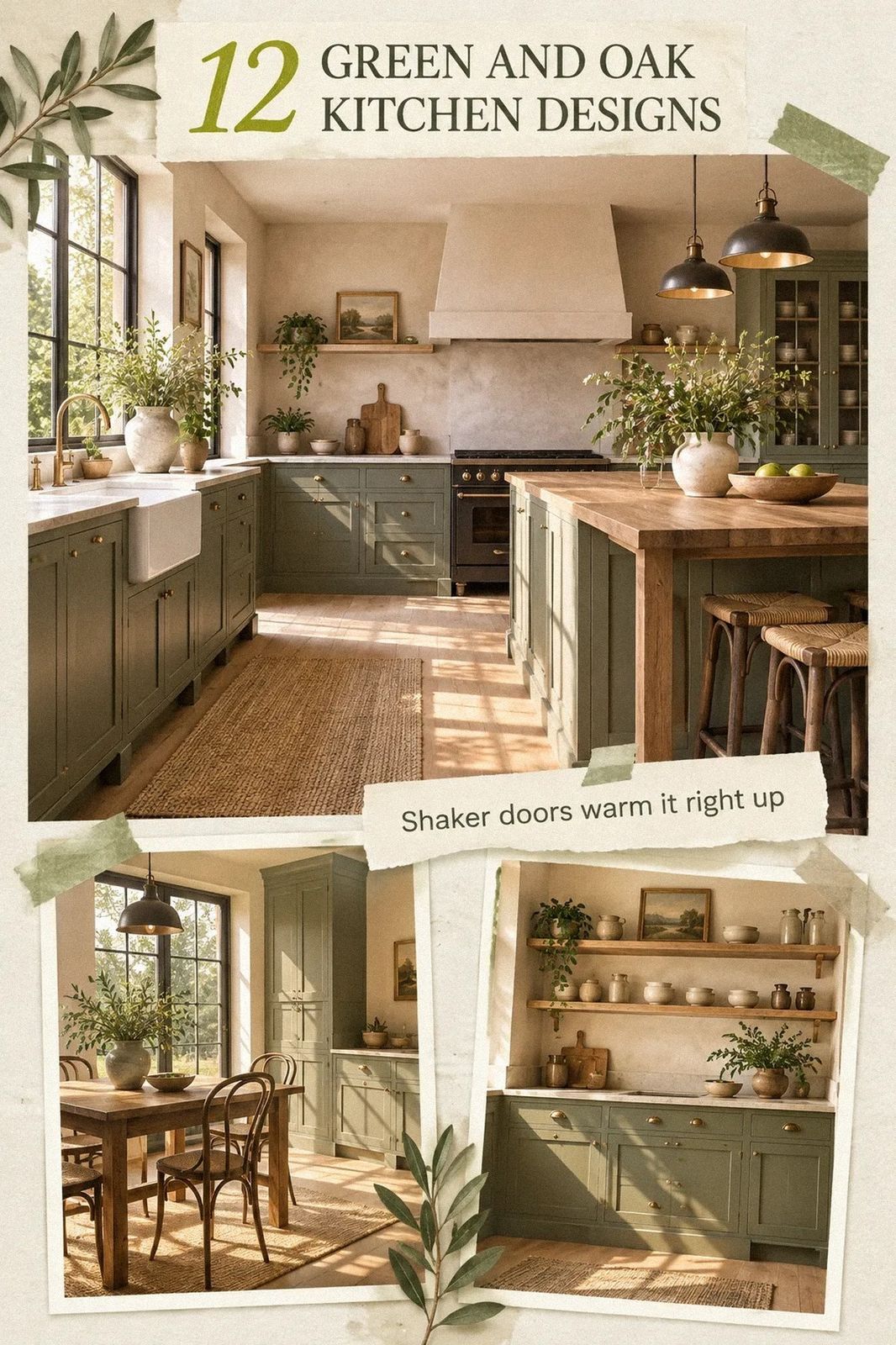
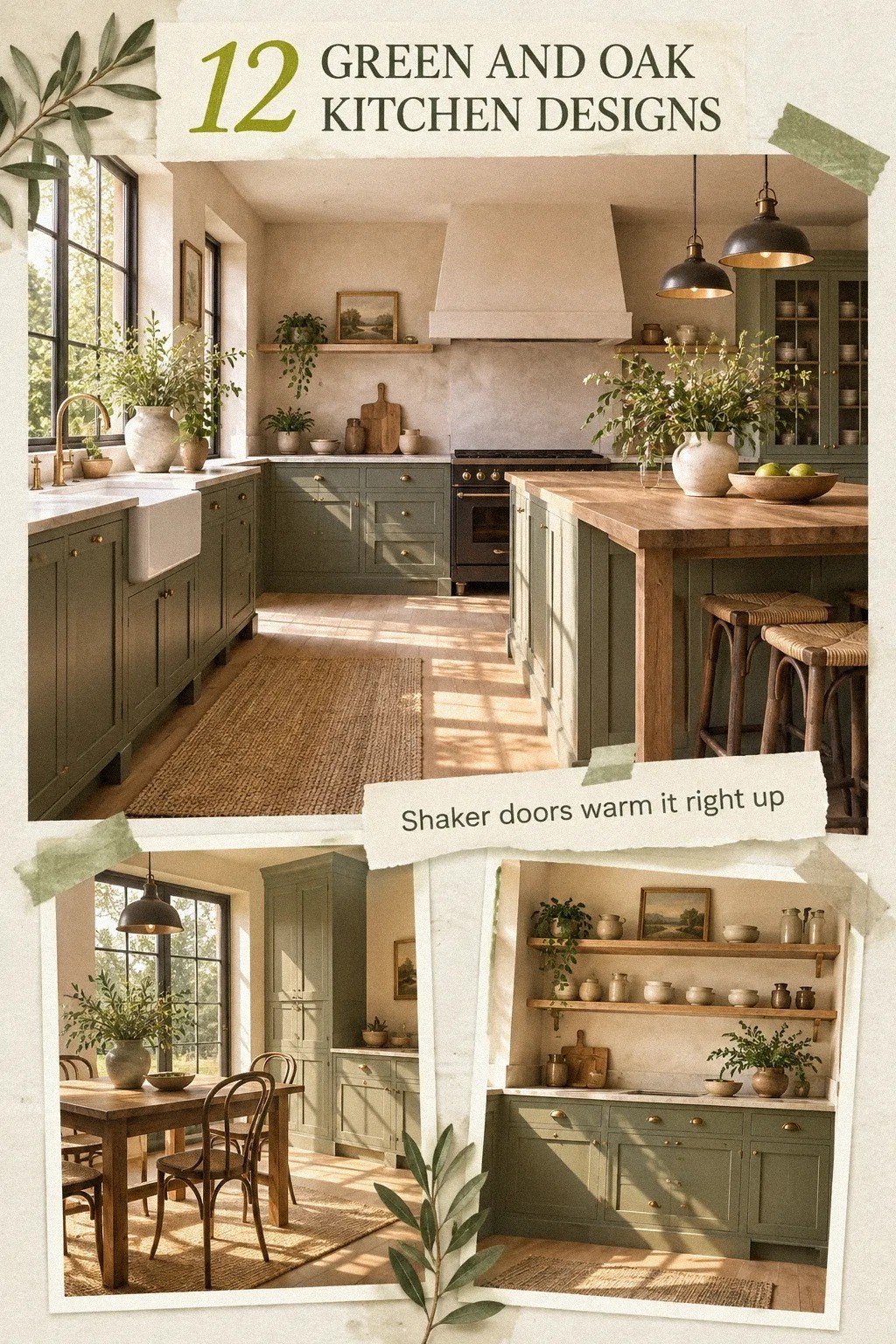
Green and oak kitchens feel fresh and earthy when green carries the depth and oak brings the light, so your room feels grounded without turning cold. I once paired a muddy green with orange oak, and the kitchen looked tired by noon. The fix was simpler than a remodel. Your finishes need breathing room.
- Paint the lowers in Farrow & Ball Studio Green for a warm organic kitchen
- Build the Two-Wood Rule with cerused white oak
- Swap upper cabinets for a light earthy kitchen shelf
- Could a warm oak kitchen use black hardware?
- Anchor the island with the Small-Space Clearance Test
- Layer the Three-Height Light Stack
- Choose zellige over faux marble for natural earthy kitchens
- Frame the sink with White Dove and oak
- Mix matte cabinets with one glossy accent
- Hang the Three-Texture Breakfast Corner
- Should you paint every cabinet green?
- Style the counter with a lived-in landing zone
1Paint the lowers in Farrow & Ball Studio Green for a warm organic kitchen
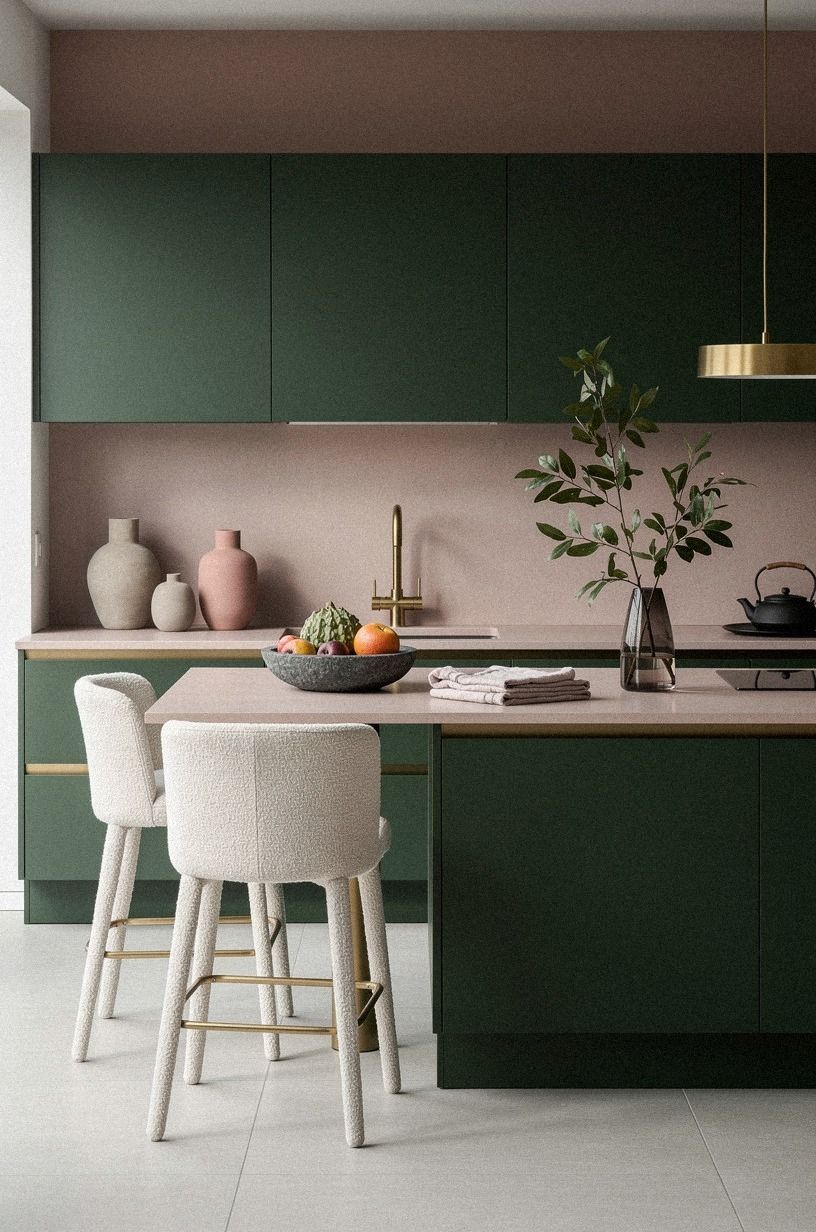
Painting only the lower cabinets in Farrow & Ball Studio Green No. 93 gives your kitchen weight without closing in the ceiling. Balance that depth with dusty rose nearby, charcoal in small accents, and aged brass where you need warmth.
One organic bouclé stool or seat cushion can soften the harder cabinet lines. I’d skip painting every cabinet this shade unless your room gets strong daylight.
Your eye needs one lighter plane to rest on.
Use the standard 36 in counter height as your visual baseline, then let the green stop cleanly below it. A slim oak rail or open shelf can break up the darker run.
And if you’re testing samples, live with one on the cabinet for a full day. A color that feels calming at 9 a.m. can feel dramatic at 5 p.m.!
For a smaller room, pair the lower cabinets with Benjamin Moore White Dove OC-17 above. That contrast keeps your kitchen bright and gives the oak somewhere to glow.
The oak doesn’t need to match perfectly. A slightly pale grain can soften the depth of Studio Green, while a richer oak makes the room feel moodier and more collected. If your existing wood has orange undertones, test the green beside it before buying enough paint for the whole run.
You can also keep the cabinet interiors light. A creamy shelf, pale drawer lining, or white interior behind glass doors creates small flashes of brightness whenever the doors open. For more ways to use pale wood without making a kitchen feel bland, compare these small oak kitchen ideas with your current layout.
2Build the Two-Wood Rule with cerused white oak
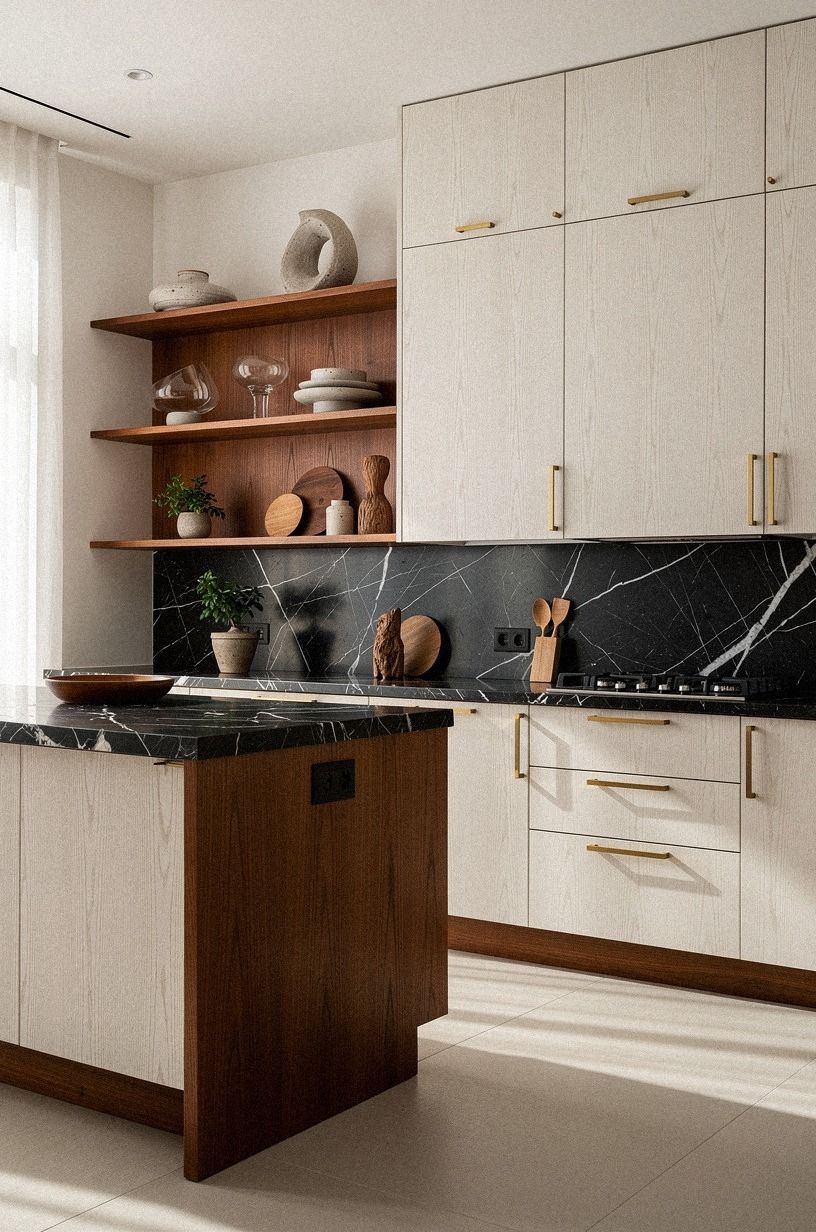
The Two-Wood Rule keeps green and oak from looking like a showroom set.
Use warm white as the quiet background, camel in one soft element, and black only as a controlled accent. A piece of Nero Marquina black marble with white veins can give the palette weight without adding another wood tone. Keep the cerused oak to one clear area so the grain remains intentional.
3Swap upper cabinets for a light earthy kitchen shelf
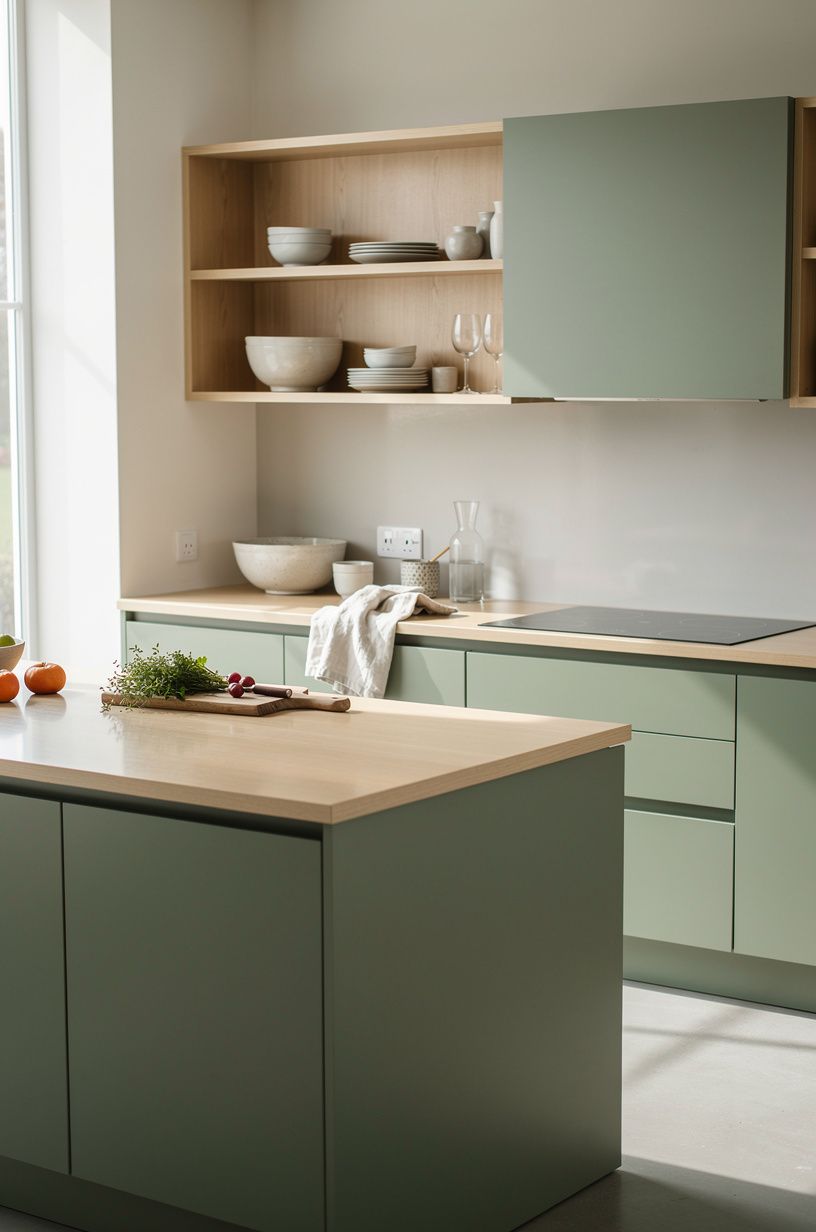
Open shelving works best when it replaces one short cabinet run, not the entire kitchen. An ivory shelf above the coffee station gives you brightness at eye level and leaves the wall feeling airy. You’ll want the brackets to disappear into the composition, so aged copper usually looks warmer than shiny chrome or stark black.
Keep the shelf useful. Three bowls, two mugs, a small framed print, and one crock are enough for most kitchens.
That’s not minimalism for its own sake. Your eye needs a pause between the midnight-blue cabinet fronts and the ivory wall. I made the mistake of filling an open shelf with every attractive cup I owned, and it became visual noise by the end of the week.
And measure the backsplash gap before drilling. The standard is 18 in between the counter and uppers, which gives your shelf room to breathe without making it awkward to reach. You can borrow more ideas from these small oak kitchen layouts if your room is narrow.
A shelf should also have a job in the daily rhythm of the room. Put coffee cups near the coffee maker, plates near the dishwasher, or cooking bowls near the prep area. When the shelf supports a real routine, it feels intentional rather than decorative.
If dust worries you, use one closed cabinet for less attractive equipment and reserve the shelf for pieces you already reach for. A shallow ivory ledge can provide the same lightness with less visual storage. Add one deep-pile mohair velvet cushion nearby if the room needs softness.
4Could a warm oak kitchen use black hardware?
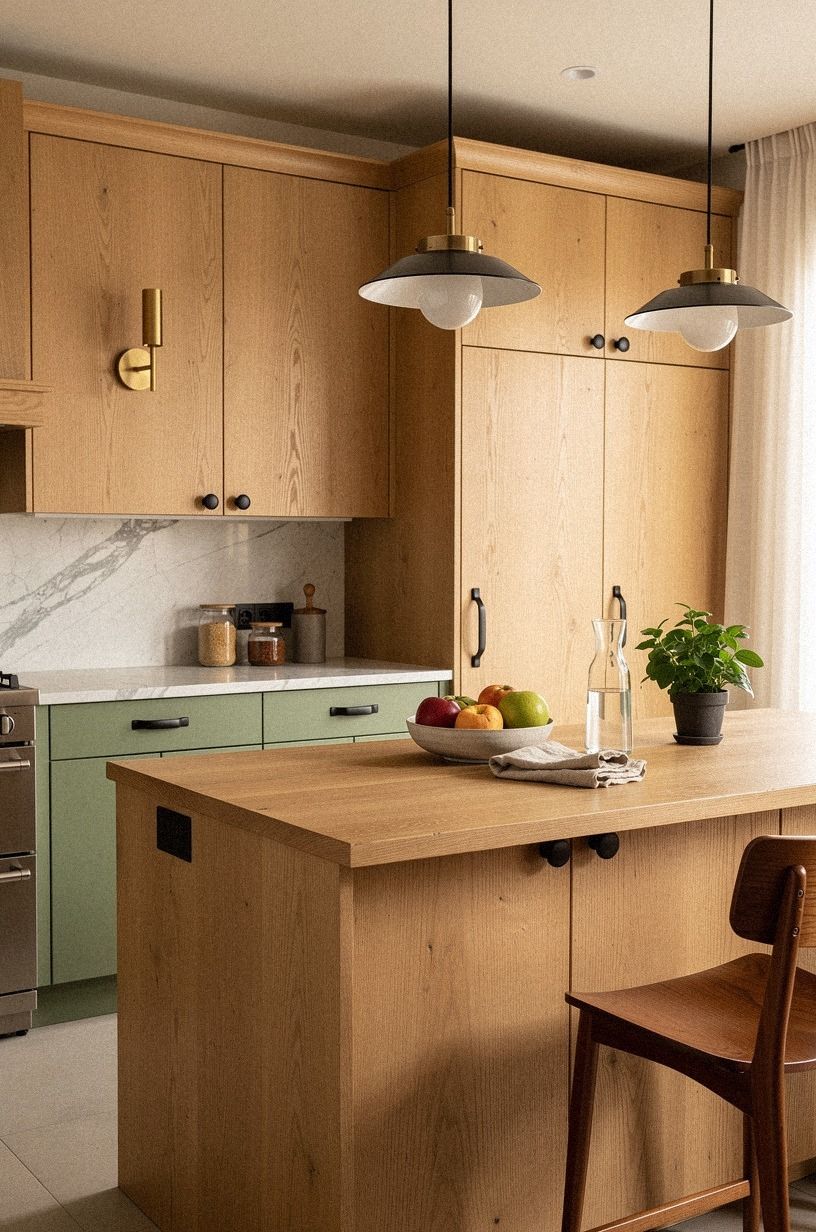
Yes, but your black hardware should be quiet and repeated, not scattered like punctuation.
Against sage green, warm cream, and natural wood, black pulls can define the cabinet line without taking over. Add Carrara marble with subtle gray veining if you want the work surface to feel light and connected to the cream tones. Keep the hardware shape simple so the stone and wood provide the interest.
5Anchor the island with the Small-Space Clearance Test
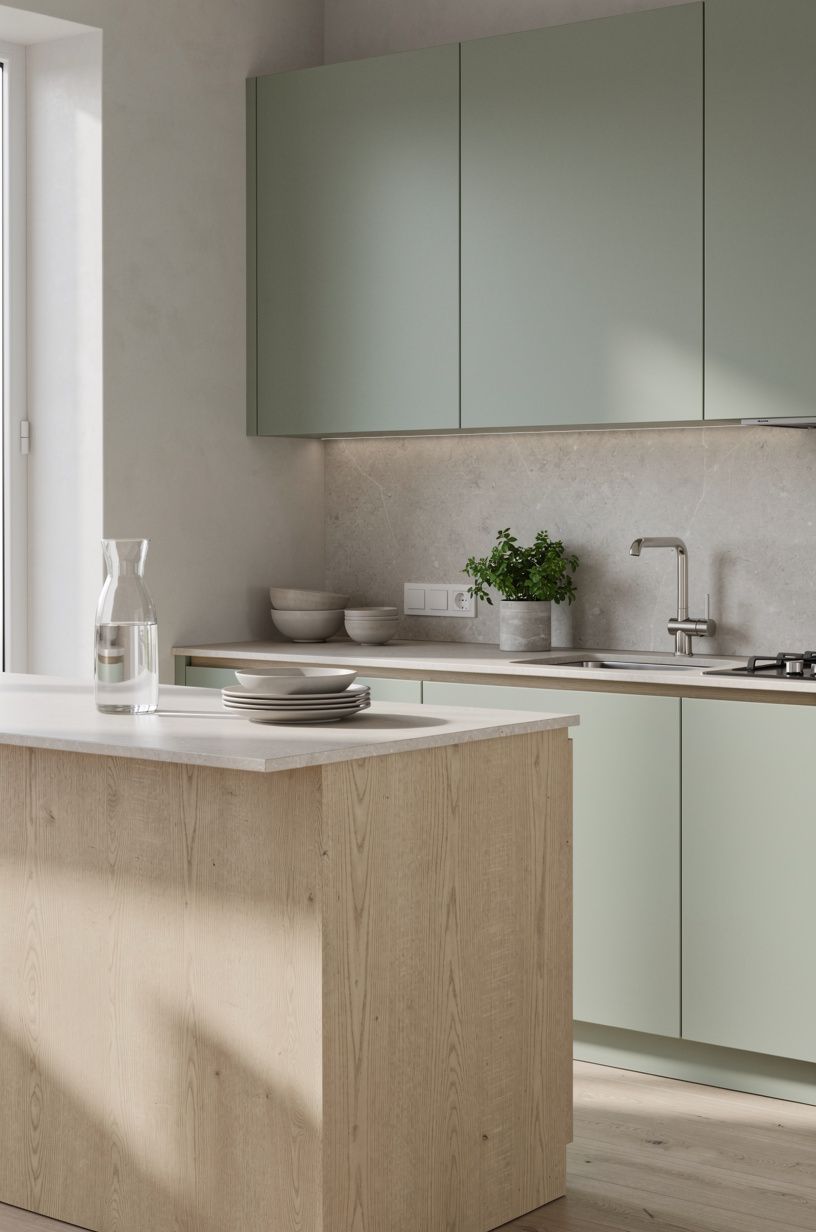
The Small-Space Clearance Test is simple: walk around your island with an open oven door, a loaded dishwasher, and another person beside you. If your path pinches, the island is too large. The standard clearance is 42 to 48 in all around, so you’ll want to respect that before choosing a chunky island in reclaimed weathered teak.
A compact island in reclaimed weathered teak can still bring the earthy effect, especially when its sides are paneled and its top stays matte. Terracotta, stone, and olive make the wood feel collected rather than overly rustic.
I’d skip an oversized island that steals the room’s circulation. Extra counter space isn’t useful if you can’t move comfortably between the sink and stove.
Use the cost ranges below as planning anchors, not promises. Your local labor, layout, and appliance choices will change the final figure, but these typical US numbers help you decide whether your project is cosmetic or structural.
If you’re comparing island proportions, these white oak cabinet ideas will help you judge whether the oak should dominate or simply support the green.
An island can also be narrower than you expect. A 24 to 30 inch deep surface may be enough for prep, serving, and a few stools, while preserving a comfortable route behind it.
Don’t add seating just because an island has an overhang. If the stools block the work zone, the island will feel frustrating every day.
For a small kitchen, consider a freestanding teak cart instead of built-in cabinetry. It can add prep space, hide appliances, and move when you need a clearer path. The best island is the one that improves the room’s routine, not the one that fills the most floor area.
Before committing to a fixed island, compare the footprint with these small kitchen island ideas. A movable option may give you more flexibility without sacrificing the earthy character.
6Layer the Three-Height Light Stack
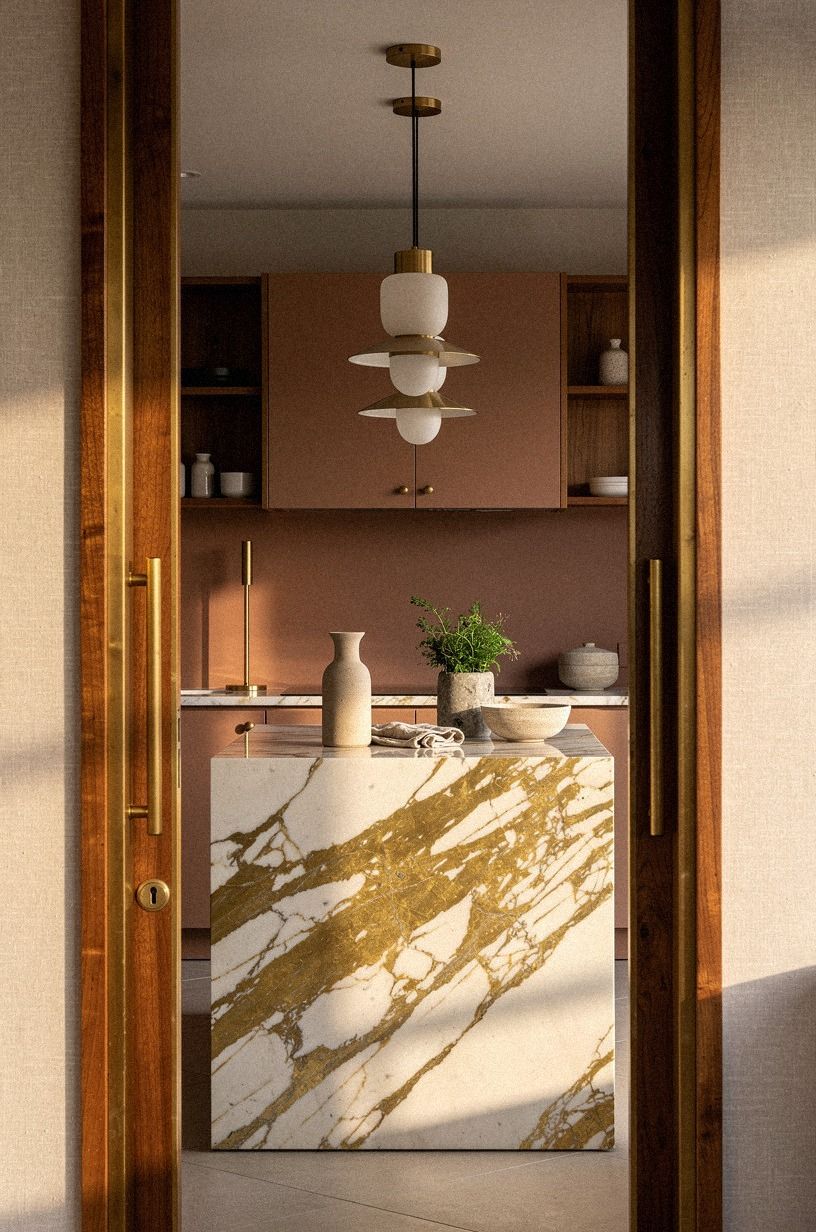
The Three-Height Light Stack uses a ceiling fixture, a counter-level glow, and a low accent light. Your overhead fixture handles work, a linen-shaded pendant softens the island, and a small lamp or under-cabinet strip keeps the room inviting after dinner. Clay, linen, and aged brass give the layers a warmer relationship.
One light source makes a kitchen feel flat. Three levels give the color somewhere to move.
Warm bulbs matter here. You’ll want the clay tones and aged brass to read warmly rather than gray, especially at night, but your counter still needs enough light for chopping.
I’d skip blue-white bulbs because they make earthy colors look clinical. It changes the room!
Place the brightest glow where you work, not where you want people to stare. Your kitchen should feel practical first. The atmosphere follows when the light lands in the right places.
A 2700K bulb usually gives aged brass a rich reading without turning the room too yellow. If your paint has strong blue undertones, test the bulb in the actual room before changing every fixture. Light bouncing off a pale counter can shift the color more than a small paint chip suggests.
The counter-level glow can be subtle. An LED strip under the upper cabinets, a small ceramic lamp in a dry corner, or a shaded wall light near the breakfast area can create that second layer. Keep the wiring tidy and the light hidden from direct sight.
You’re after a soft pool of illumination, not a glowing line.
For more gentle color combinations, these sage green cottage kitchen ideas show how warm lighting can keep a softer green from looking washed out.
7Choose zellige over faux marble for natural earthy kitchens
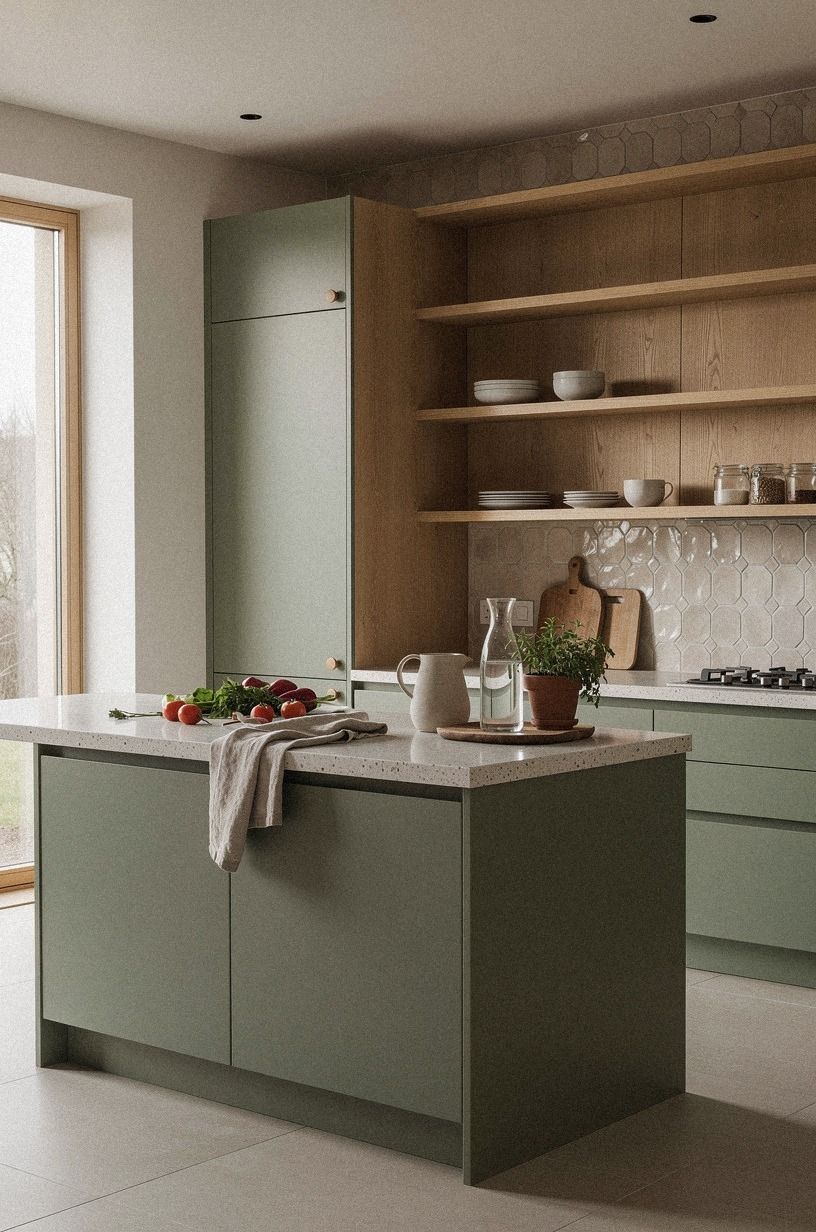
A palette of plum, gray, and rose gold can make green cabinetry feel collected rather than matched. If you want natural variation without faux marble, use cerused white oak on one shelf, panel, or island detail, then keep the rose-gold accent limited to hardware or lighting.
8Frame the sink with White Dove and oak
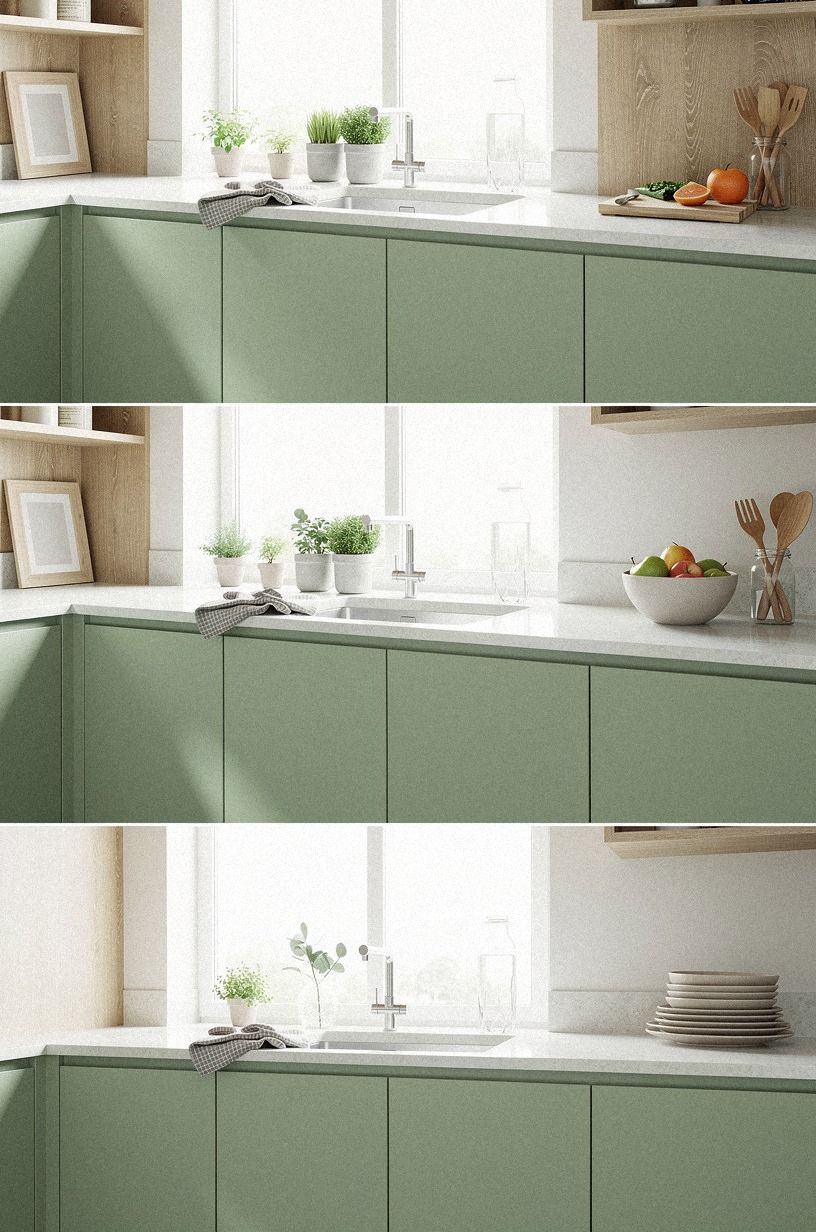
A sink wall can become the calmest part of your kitchen when you frame it with Benjamin Moore White Dove OC-17 and a narrow walnut ledge. The soft white keeps the work zone bright, while the walnut gives your eye a warm horizontal pause above the faucet. A panel of backlit translucent onyx can add depth without making the area feel dark.
Choose a faucet with a restrained finish if you want the stone and walnut to lead. I’d avoid a mirror-polished surface because every water spot will announce itself. A brushed surface is kinder to real life, especially if you’re cooking daily and don’t want to polish the faucet after breakfast.
Keep the ledge edited: a small plant, one soap bottle, and perhaps a ceramic cup. Your kitchen doesn’t need a display of every useful thing. If you want more ideas for this light-and-walnut balance, save these white oak and black kitchen concepts for contrast that still feels warm.
The sink is already a busy area, so materials should make cleanup easier. A single-bowl undermount sink creates a clean line beneath the counter, while a fireclay apron front adds more visual weight. Either can work, but the choice should respond to your habits rather than a photograph.
Keep the walnut away from constant splashing unless it has a properly maintained finish. A narrow shelf above the sink is safer than untreated wood beside the basin. If you love the look of wood near water, use sealed walnut with a small overhang and leave enough room to wipe behind the faucet.
9Mix matte cabinets with one glossy accent
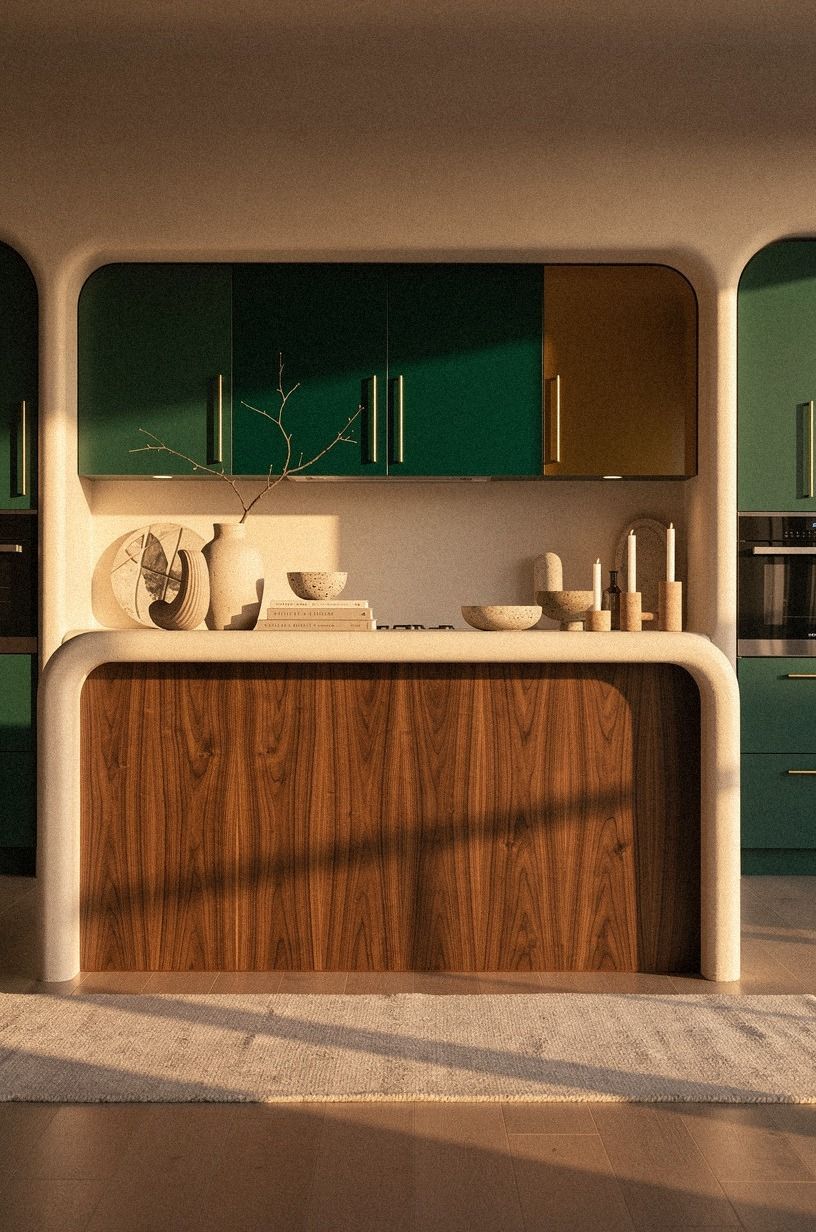
Emerald cabinets absorb light, so one glossy element keeps your kitchen from feeling visually sleepy. Try hand-glazed cream tile behind the range, a glazed ceramic pendant, or a small gold-toned tray. Book-matched walnut will look richer beside that reflection, especially in a north-facing room where daylight can be gentle and gray.
The key is restraint. You’ll want one glossy surface in the main sightline, not shine on every cabinet, fixture, and accessory.
I’d skip high-gloss emerald fronts with too many competing finishes because the combination can feel loud and dated. A soft cabinet finish plus a small reflective accent has more depth.
For counters, compare the typical material ranges before choosing by color alone:
Your budget may favor warm laminate, and that’s fine. A quiet surface can support the room better than an expensive counter with a cold undertone.
A glossy accent should sit where daylight can find it. A small glazed tile field near the range, a ceramic pendant over the island, or a reflective gold tray beside the coffee station will catch movement without dominating the palette. You don’t need polished stone everywhere to make the kitchen feel dimensional.
If the room already has warm metal fixtures, count them as part of the reflection. Gold-toned hardware can become the glossy layer, which means the backsplash may be better in a matte finish. The goal is balance, not a checklist of surfaces.
These white oak kitchen cabinet ideas are useful when you’re deciding whether the wood should carry the texture or let the tile do it.
10Hang the Three-Texture Breakfast Corner
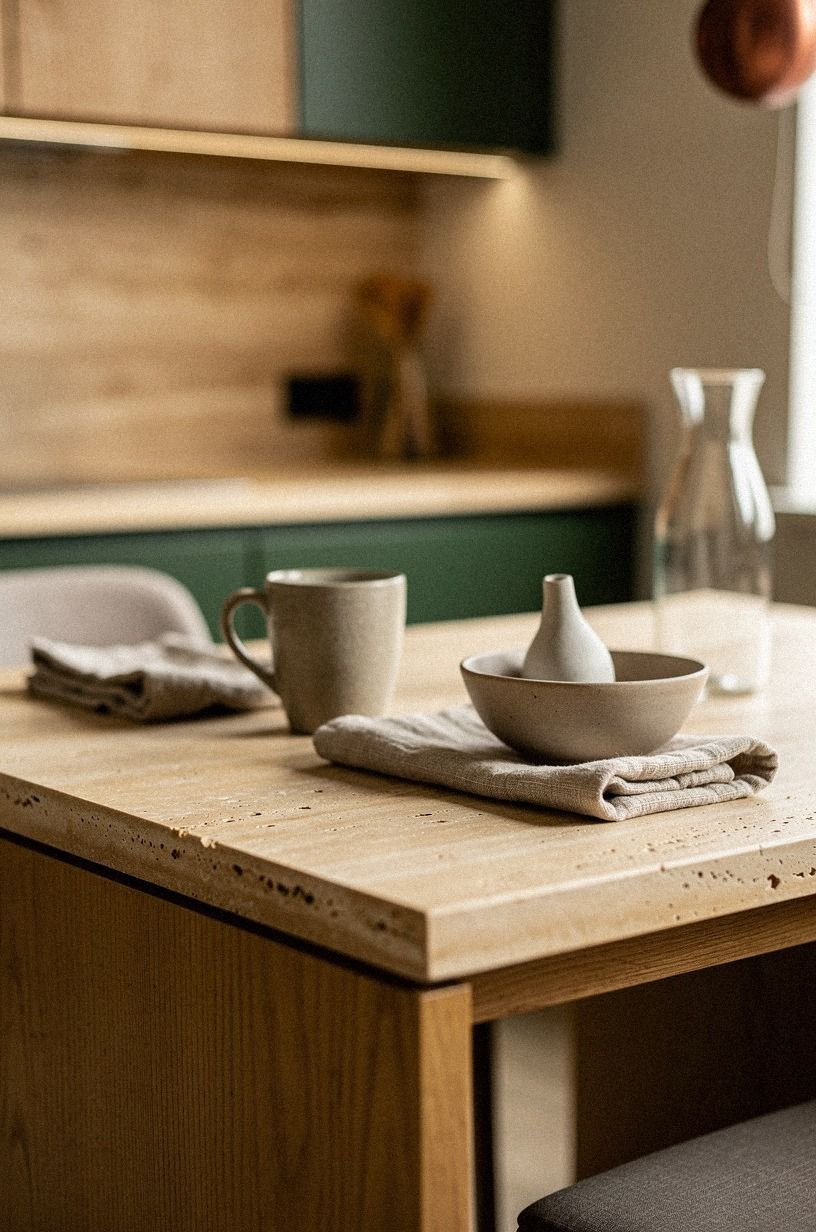
A breakfast corner feels intentional when you repeat texture at three heights. Start with a rust-colored mohair velvet seat cushion, add a natural oak table, then bring in warm travertine through the pendant or a small side surface.
You’ll get softness at the seat, grain at the tabletop, and stone overhead. That combination makes a small kitchen feel more intimate without adding furniture everywhere.
Your table doesn’t need to match your cabinets exactly. In fact, I’d avoid a perfect match because the room can start to look packaged. A slightly lighter oak lets the forest green do the grounding, while the rust adds a warm, inviting note.
And if you’re working with a banquette, check that the seat depth feels comfortable before choosing fabric.
Use a washable cover if you cook often. 18 oz cotton velvet can feel luxurious, but your daily life still matters more than a styled room. For more earthy material inspiration, these green tadelakt bathroom finishes show how texture can carry a room without loud color.
A breakfast corner doesn’t require a permanent banquette. Two oak chairs and a small round table can soften a hard corner, while a built-in bench can make better use of an awkward wall. Leave enough clearance for the chair to pull out without blocking the main route through the kitchen.
Add one practical layer, such as a washable runner or a shallow basket for napkins. I’d avoid turning the corner into a storage station. Its purpose is to offer a place to pause, not another surface that needs constant editing.
11Should you paint every cabinet green?
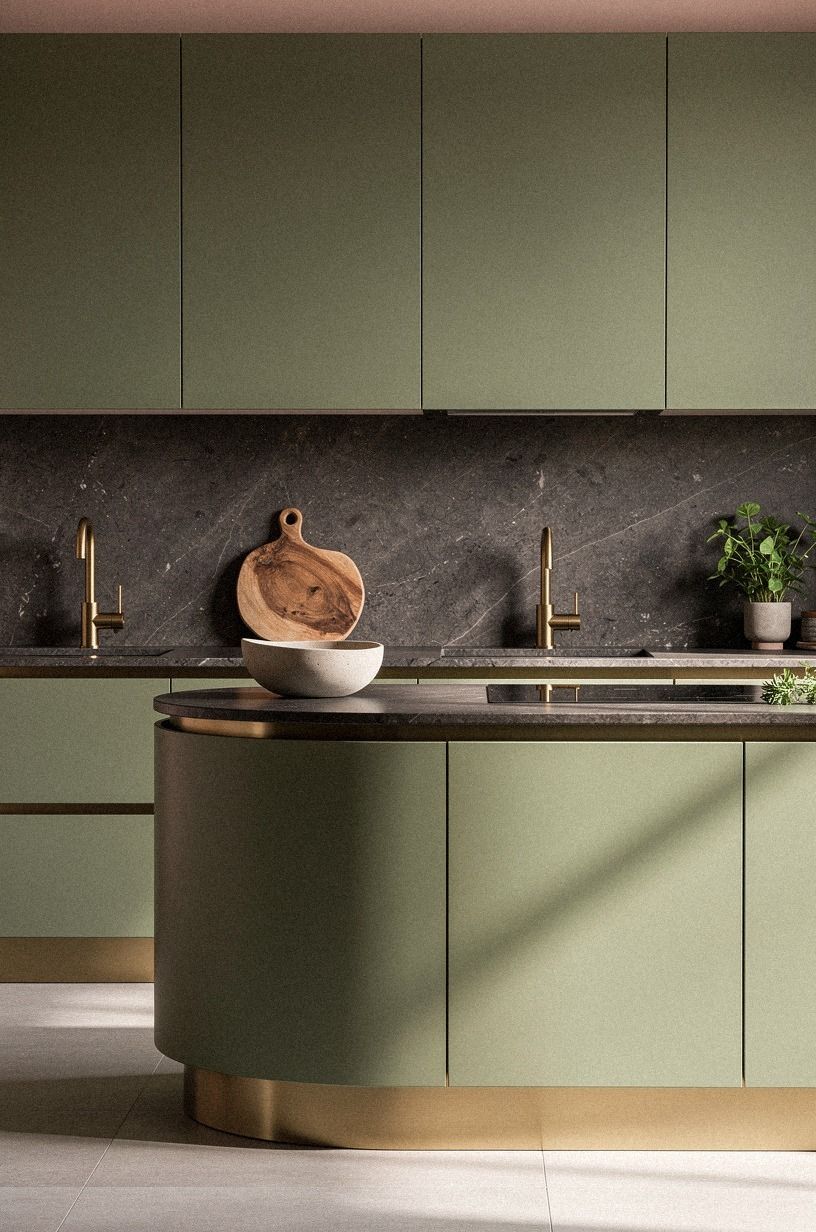
Usually, no. Painting every cabinet Sherwin-Williams Evergreen Fog SW 9130 can work in a large, bright kitchen, but it may flatten a smaller room when the walls, floor, and counter are also mid-tone.
You’ll want at least one lighter surface to create depth. That could be a pale wall, a light wood island, or a creamy stone-look counter.
I’ve tried the all-color approach, and the room looked impressive but heavier in person. The better move was keeping the tall pantry wall light and letting the green live on the lower run.
Dusty rose, charcoal, and aged brass can then appear in smaller elements without competing with the cabinets. Your eye traveled through the kitchen instead of stopping at one dark block.
Why force the whole room to make the same statement?
If you love a saturated shade, use it on a focal section and repeat it in a small object elsewhere. One green pendant cord, a framed print, or a ceramic bowl can connect the room without making every surface compete.
There are exceptions. A tall kitchen with strong daylight, pale flooring, and a simple counter can carry green across every cabinet face.
In that case, vary the value rather than adding another color. A deep lower run and a softer upper shade can create movement while keeping the palette unified.
You can also paint the island green and leave the perimeter wood. That reverses the usual arrangement and makes the island feel like furniture. The choice works best when the island has enough space around it to read as its own element.
Before painting everything, make a temporary mock-up. Tape sample cards to several cabinet faces and live with them through a full day. Green changes beside wood, stainless steel, stone, and warm bulbs, so one sample held against a wall won’t tell you enough.
If you’re comparing the mood with lighter wood, revisit these small oak kitchen ideas before committing to a full cabinet repaint.
12Style the counter with a lived-in landing zone
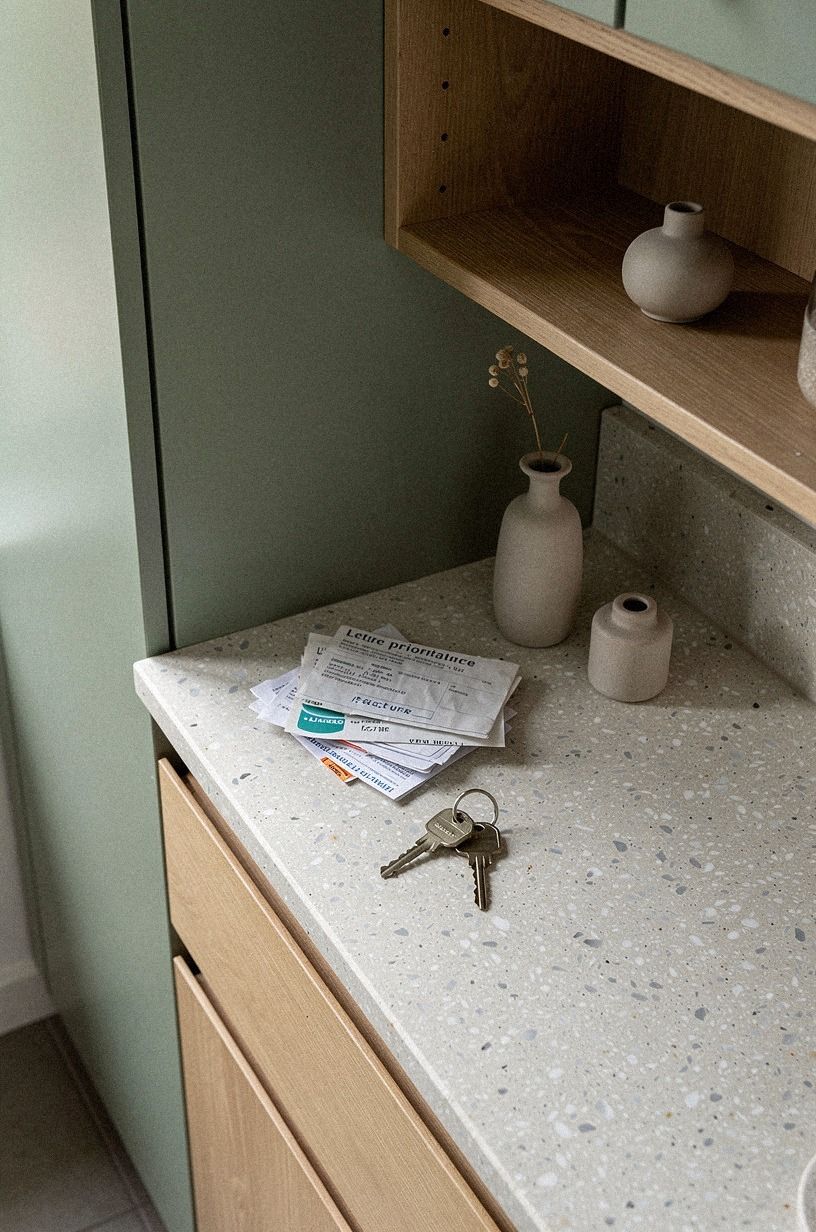
A calm counter needs a landing zone for the things you use every day. Group an oversized-chip terrazzo tray, a camel linen, a black ceramic utensil crock, and one bowl of fruit near the prep area.
You’ll create order without hiding the fact that people cook there. The room should feel lived-in, not staged for inspection.
Keep the tallest item near the wall and the lowest item toward the room. That small height shift makes your counter easier to read, and it gives the warm white surface a clear anchor. I’d skip a row of matching jars because repeated containers can make your kitchen feel like a shop display.
Your final layer might be a soft runner or a vase of green branches. And if you need a broader palette before buying paint, these sage green cottage kitchen ideas show how green can feel gentle, rustic, and bright at the same time. A useful counter is a welcoming counter.
A landing zone should match the way you enter and leave the room. Near the door, it might hold keys, mail, and a bowl for fruit. Near the range, it might hold cooking oil, salt, and the utensils you use most.
Organize by habit, not by what looks best in an empty kitchen.
The terrazzo tray gives loose items a boundary, but it shouldn’t become a catchall. Leave some counter visible around it. That negative space keeps the green cabinets and small black accents from competing with one another.
If your counters are narrow, choose one vertical element and one low element. A cutting board leaning against the wall paired with a shallow bowl can create enough height variation without consuming the work surface. For more ways to use oak in a compact room, revisit these small kitchen island ideas before adding another piece of furniture.
The Green Needs a Reason to Be There
Green works in a kitchen because it connects the room to something outside it, but that doesn’t mean every green is automatically calming. I’ve used blue-green paint in a room with cool stone, and the result felt distant by late afternoon.
The color wasn’t wrong. The surrounding finishes were.
Oak helped, but only after I changed the bulb temperature and removed one gray surface that was draining the whole palette.
Your green should answer a practical question. Do you want the lower cabinets to feel anchored?
Use a deeper shade. Do you want the room to feel lighter? Choose a softened sage and give it white or pale oak nearby.
Are you trying to make a rental feel more personal? Put the color on removable panels, a painted cart, or a textile instead of committing to the walls.
A color decision gets easier when it has a job.
I also think oak needs restraint. Too much oak can turn a green kitchen orange and overly rustic, especially when the floor, stools, shelves, and cutting boards all have the same warm finish. My preferred version uses oak grain as a steady line through the room, not a costume.
One strong island, one shelf, or one framed cabinet section is often enough. You’ll notice the grain more when it isn’t competing with itself.
The most successful kitchens I’ve seen aren’t built from a matching set. They’re built from a few related temperatures: green with depth, oak with visible grain, and a pale surface that reflects the light. That balance gives your room a peaceful quality without making it precious.
And it leaves you room to change the towels, art, or stools later without starting over.
Before ordering materials, make a short palette from the finishes you already own. Include the floor, counter, appliance metal, and any permanent backsplash.
Then test the green against that group instead of choosing it in isolation. The best shade is the one that helps the fixed elements make sense together.
The simplest test is to remove one competing finish before adding another. If the room feels calmer when a gray accessory or extra wood tone disappears, you’ve learned more than a dozen paint samples could tell you. Let the room breathe!
What People Always Want to Know
What is the best green and oak combination for a small kitchen?
Use green on the lower cabinets and white oak on one island, shelf, or accent wall. Farrow & Ball Studio Green can feel dramatic, while Benjamin Moore White Dove keeps the upper half bright.
Your small kitchen will benefit from one deep color and one reflective surface. A narrow shelf can add warmth without taking floor space.
These small oak kitchen ideas can help you compare proportions.
Where can I buy green and oak kitchen pieces on a budget?
Look at IKEA, Wayfair, and Target for stools, carts, hardware, and lighting, then check Facebook Marketplace or local thrift shops for solid oak pieces. You can also repaint existing cabinet doors and replace only the pulls. That keeps the budget focused on changes you’ll notice every day.
How much does a green and oak kitchen makeover cost?
A cosmetic refresh typically costs about $300-$1,500 in the US for paint, hardware, and a peel-and-stick backsplash. A larger mid-range refresh can reach $3,000-$12,000. Free changes include editing your counter, rearranging lighting, and reusing oak boards you already own.
A movable piece from these small kitchen island ideas can add function without a structural remodel.
Can I create a green and oak kitchen on a budget?
Yes, and you can start with paint, secondhand wood, and new cabinet pulls. Keep the existing counters, paint only the lower doors, and use a removable backsplash behind the range. Your largest savings will come from avoiding layout changes and keeping the appliances where they are.
Is green and oak worth it in a small space?
Yes, because the combination gives your kitchen depth without requiring more furniture. Use a deeper green below eye level, pale oak above it, and keep at least 42 in of circulation where possible.
A narrow shelf can add warmth without taking floor space. If an island crowds the room, use a movable cart instead.
Is green and oak a good idea for a rental?
Yes. Try removable cabinet decals, a tension-rod café curtain, peel-and-stick backsplash, and a freestanding oak cart.
You’ll get the color and texture without permanent changes. Keep the strongest green on movable pieces so your landlord can’t object to a painted cabinet run. These sage green cottage kitchen ideas can also help you adapt the palette to removable accents.
Where I’d Start First
If I had to pick one, I’d start with painting the lower cabinets. Green below eye level gives your oak room to glow and costs far less than changing the layout. Pin the small kitchen island guide for later, then test your color from breakfast to sunset.