
 by
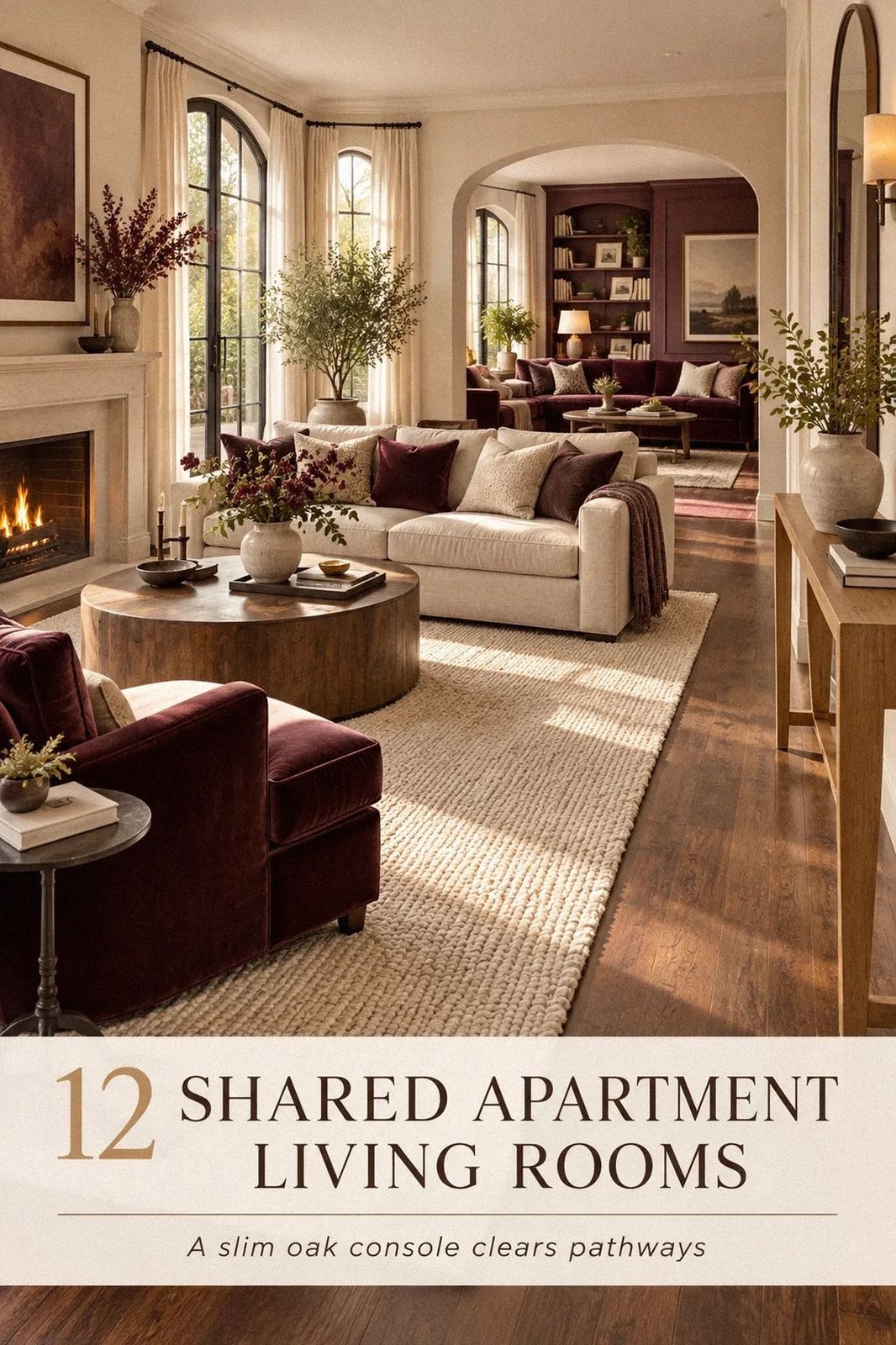
Shared apartment living room ideas for couples and roommates work best when the room has clear zones, warm lighting, and enough space for everyone to land. I once pushed every chair against the walls, and the room felt oddly formal. Now I start with movement, sofa depth, and one shared color. It’s a small shift, but it changes everything!
- Anchor the room with the Two-Zone Sofa Plan
- Float the sofa for the Air-Lane Layout
- Layer the Three-Height Light Stack
- Swap matching pieces for the Two-Wood Rule
- Build a roommate-friendly conversation corner
- Frame the television with open storage
- Which wall color keeps a shared room calm?
- Mix personal style with a shared palette
- Budget the room with real US cost tiers
- Hang art around a shared centerline
- Create a warm rental layer without damage
- Choose sofa depth over extra seating
1Anchor the room with the Two-Zone Sofa Plan
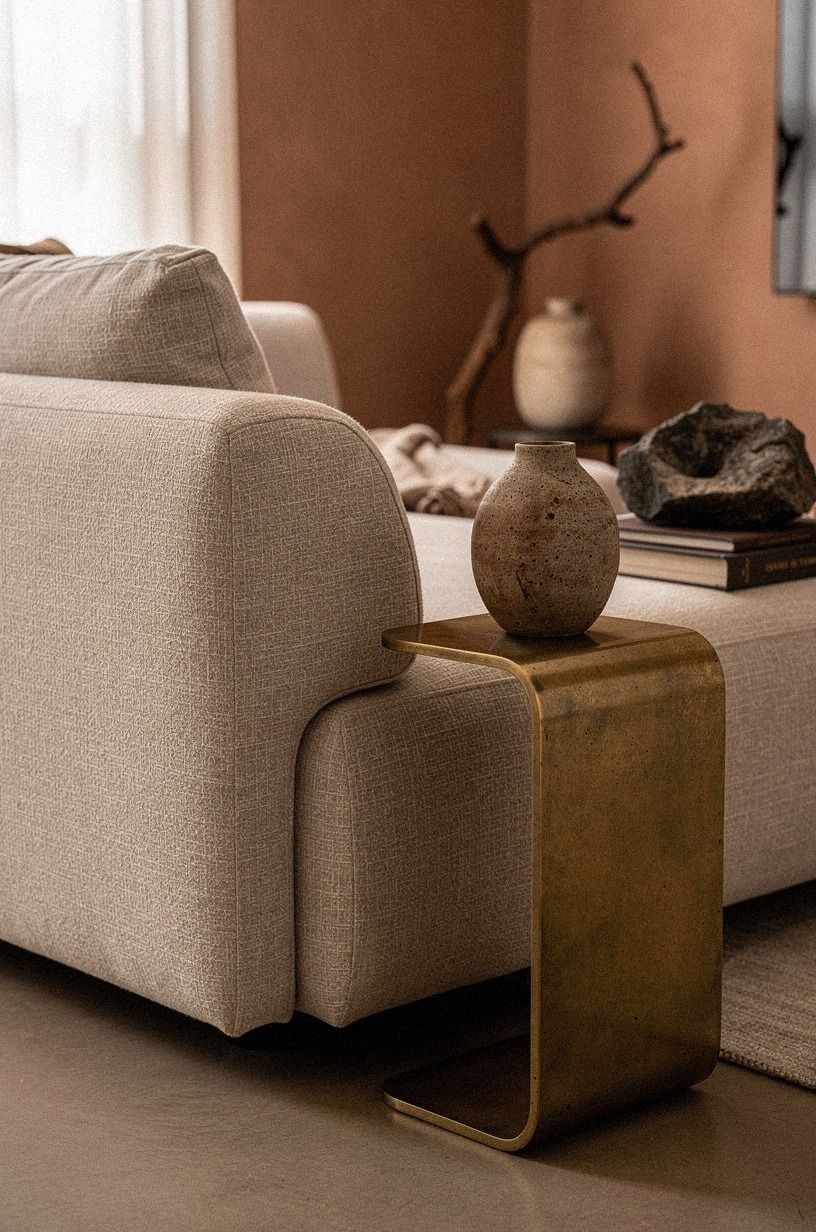
A shared room needs two places to settle, even if you’ve only got one sofa. Place the sofa toward the center of the room, then give one end a reading chair and the other end a small floor cushion or pouf. This linen sofa arrangement keeps your room social without making every seat face the television.
Aim for a 35 to 40 inch sofa depth, especially if your space is narrow. You’ll still have room to walk behind it, and your roommates won’t have to squeeze sideways through the room.
I’d skip an oversized sectional here. It eats the floor and leaves no flexible seat for a guest.
Use an IKEA KALLAX birch-effect unit behind the sofa if you need a slim divider. Open cubbies let light pass through, so your apartment still feels airy and inviting. You can see more small-space inspiration in these college apartment living room ideas on a student budget.
Give each zone one personal detail. Your side might have an aged brass lamp, while your roommate’s side gets a woven basket and a stack of books. And if you’re sharing with a partner, those little boundaries can keep the whole room feeling calm.
Add a narrow corner fireplace layout only if the room has enough circulation around it. These corner fireplace living room layout ideas show how a focal point can warm the room without swallowing the seating plan.
Typical cost by tier (US averages):
2Float the sofa for the Air-Lane Layout
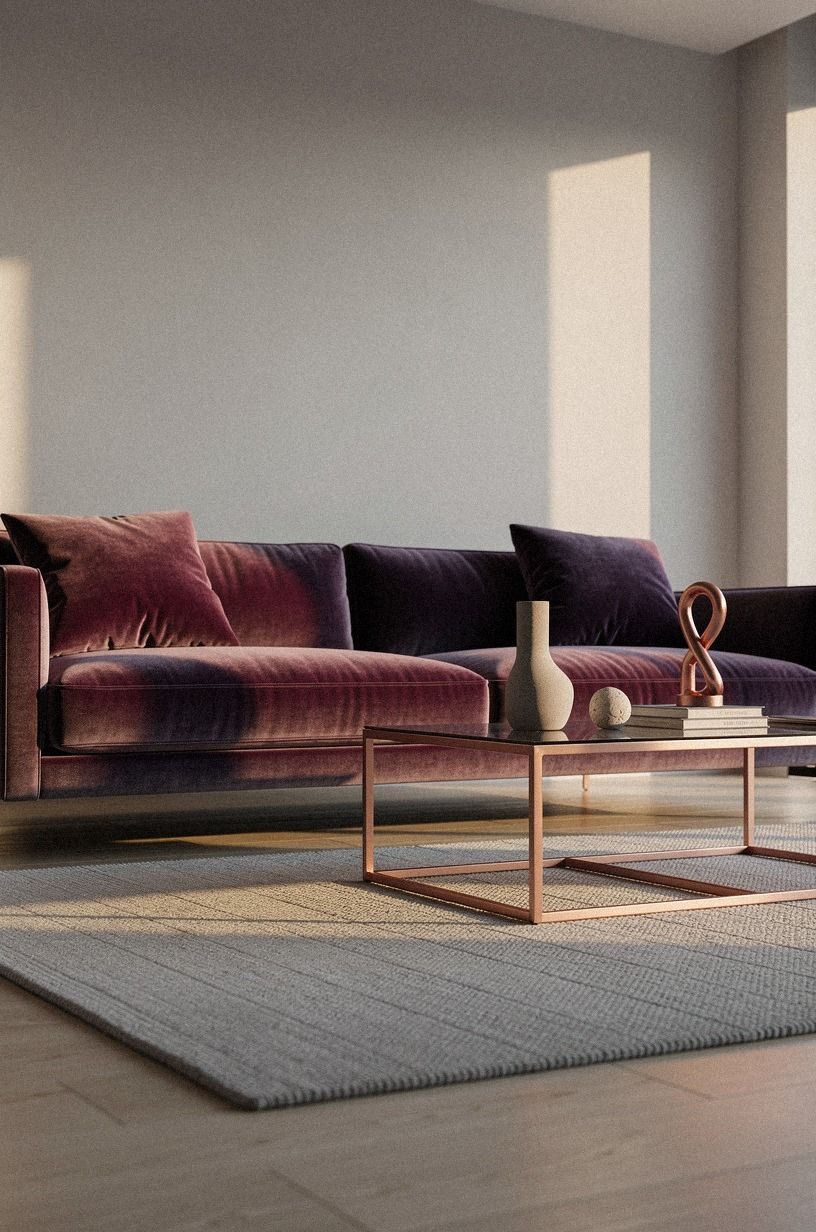
Floating a sofa six to twelve inches away from the wall can make your living room feel wider, even when the square footage hasn’t changed. The air behind the sofa creates a clear walkway, and you’ll notice that the room feels less packed the second you stop treating every wall like a storage shelf.
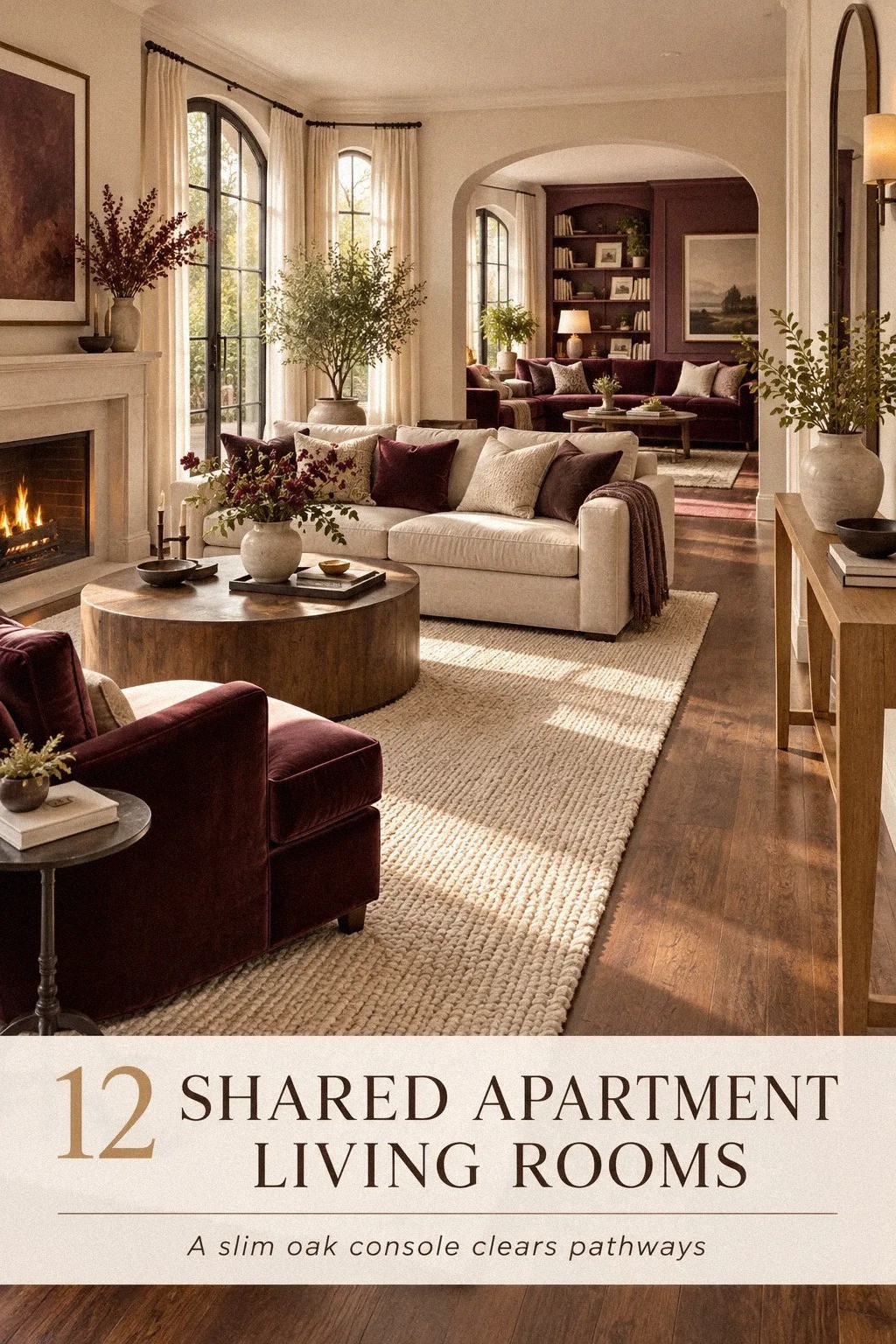
Try a deep-pile mohair velvet sofa with a slim console behind it, but keep the console shallower than 12 inches. That gives you a place for keys, a table lamp, and a bowl without blocking the path.
I tested this with a deep console once, and everyone bumped into it while carrying laundry. It looked polished for one day and annoyed us for months.
Keep the coffee table about two-thirds the length of the sofa. A table that’s 16 to 18 inches tall will feel comfortable beside most seating, while a lower table makes the room feel more relaxed and cozy. Your knees shouldn’t hit the edge every time you sit down.
If your room has no windows, keep the console light and reflective. This guide to no-window living room ideas that fake natural light has useful ways to spread brightness without making the space feel clinical.
But don’t cover every surface with glass. A single aged mirror is enough.
A narrow bookshelf can also define the sofa’s back without creating a visual wall. These bookshelf living room ideas are useful when storage and separation need to happen in the same footprint.
3Layer the Three-Height Light Stack
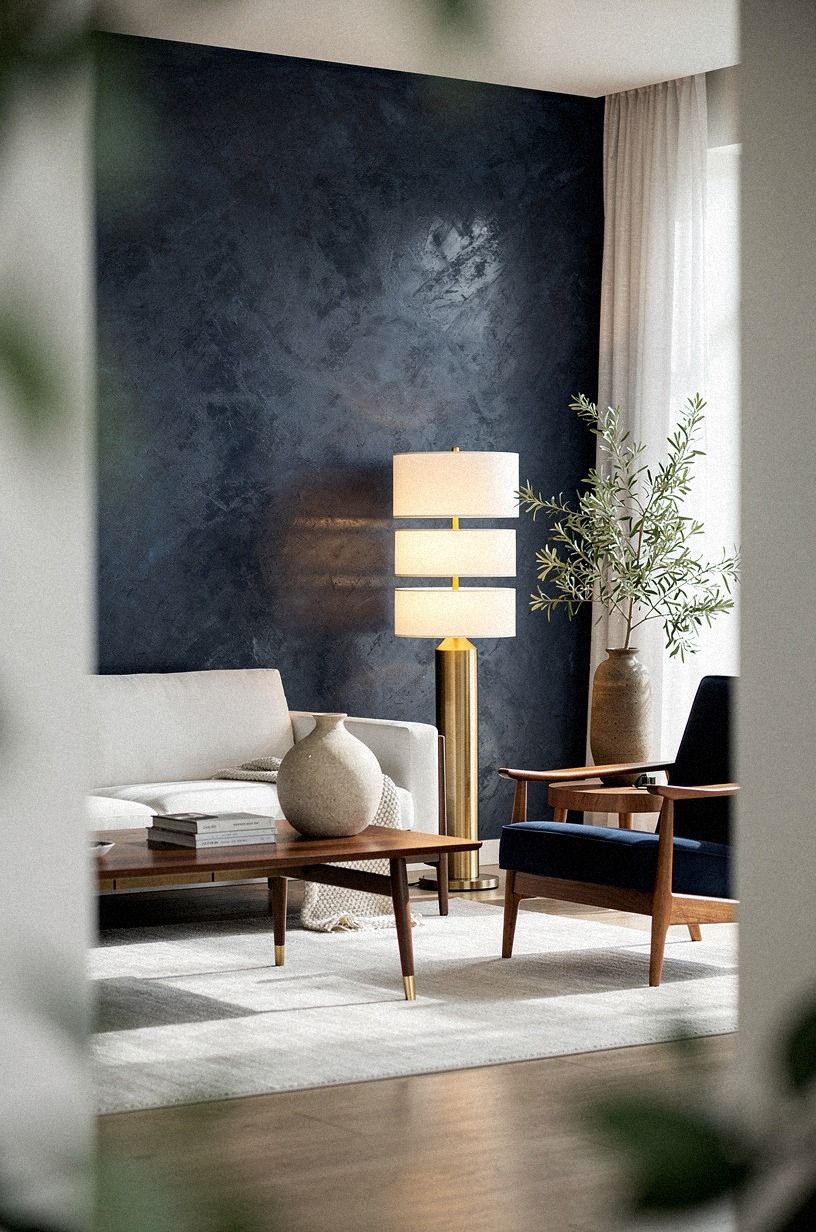
Shared apartment rooms often fail at night because the only light comes from one overhead fixture. Build a Three-Height Light Stack with a ceiling light, a table lamp, and a floor lamp. The ceiling light handles chores, the table lamp gives your sofa a soft pool of brightness, and the floor lamp keeps the far corner from turning gloomy.
Choose bulbs around 2700K warm white if you want a welcoming room. You don’t need matching lamps, either. A table lamp with a walnut base can sit beside a black metal floor lamp, as long as both shades cast a similar glow.
Place the floor lamp behind the reading chair rather than beside the television. Your eyes will appreciate the softer background light, and your roommate can read while you’re watching something. Is there anything more irritating than a bright screen floating in an otherwise dark room!
I’d avoid blue-white bulbs here. They make walnut look gray and leave your apartment feeling more like a waiting room than a home. If you want more seasonal texture, pair the lamps with these cozy winter living room ideas with chunky knit blankets.
A small linen-shaded lamp can soften a rental’s harsh ceiling fixture. Use it near the sofa or beside a reading chair so each person has control over their own pool of light.
4Swap matching pieces for the Two-Wood Rule
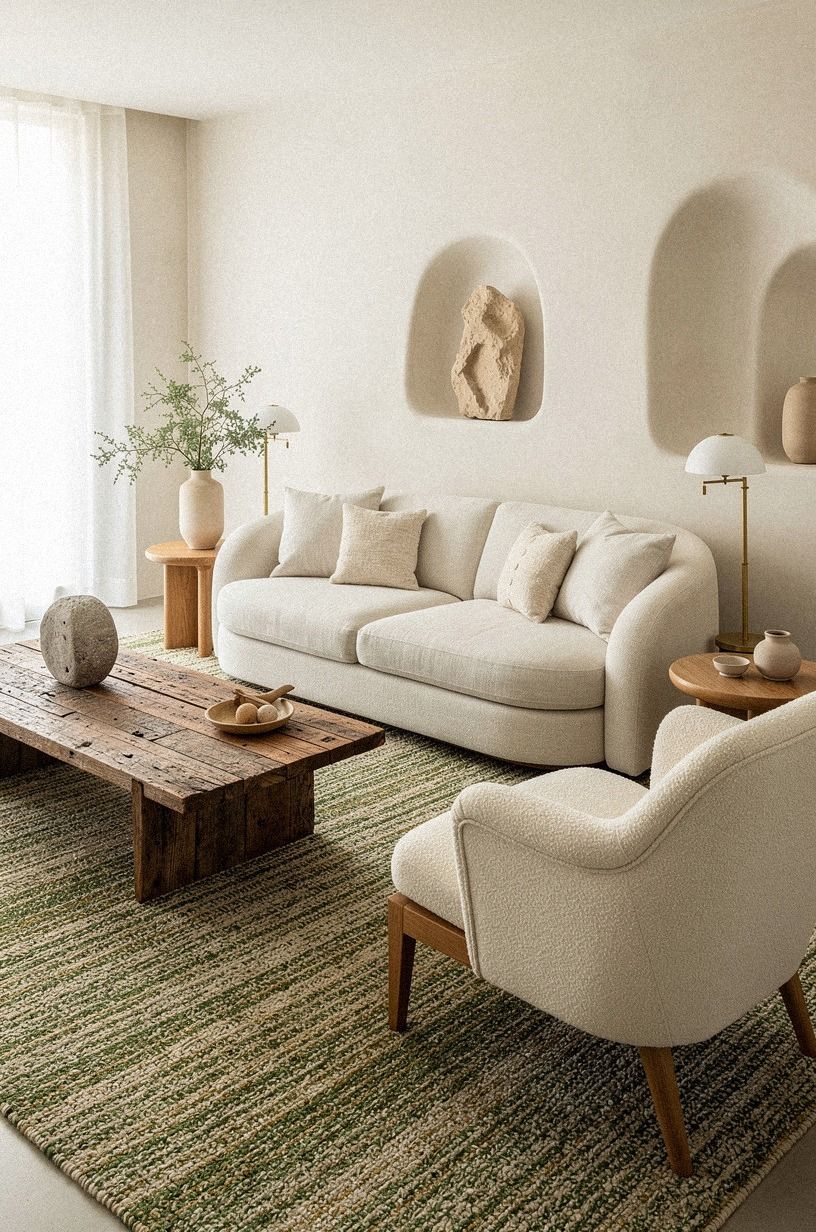
Matching furniture can make a shared apartment look like a showroom, and that’s rarely the goal. Use the Two-Wood Rule instead: choose one main wood tone for larger pieces, then add one smaller contrasting wood tone for warmth and movement.
For example, combine a reclaimed weathered teak media console with a cream coffee table. The contrast feels organic and sophisticated, but the room won’t look assembled from one catalog page. Your roommate can bring in a gold-toned stool without throwing off the palette.
Keep the undertones related. Golden teak and pale cream can sit comfortably together, while gray-washed wood can drain warmth from the whole room, especially under cool rental lighting.
Use baskets, frames, or a small bench to repeat each tone twice. Your eye needs a reason for the mix to feel intentional. And if you’re drawn to a calmer, classic look, these Nancy Meyers living room ideas for cozy timeless comfort show how layered neutrals can stay relaxed.
If one person prefers darker furniture, borrow the restraint of gothic Victorian living room approaches and keep the dramatic tone to one or two pieces. The room still needs visual breathing space.
5Build a roommate-friendly conversation corner
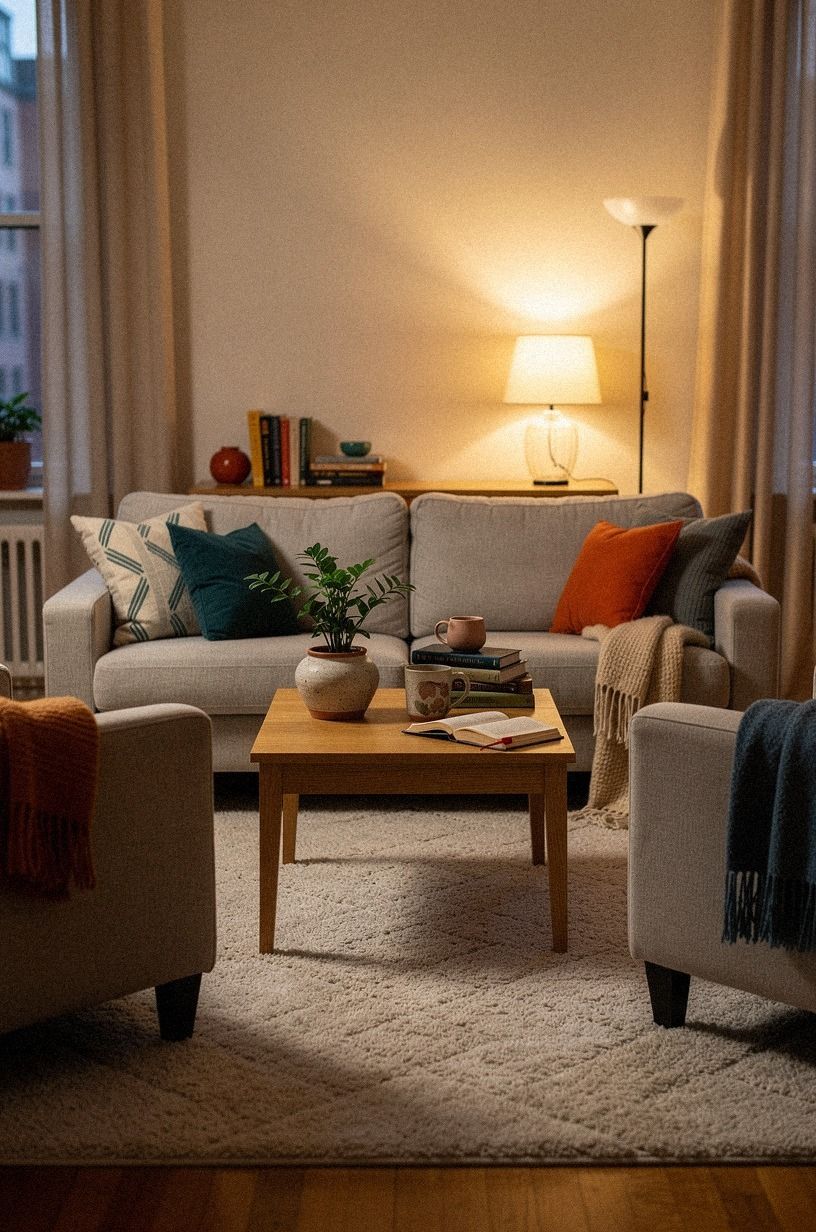
A conversation corner gives your shared room a purpose beyond watching television. Put two chairs at a slight angle across from the sofa, leaving enough space for a small round table between them. This creates an intimate and calming zone for coffee, games, or a quick talk after work.
Look for a washed Belgian linen chair if you have room for one substantial accent piece, then balance it with a simpler chair from Target or IKEA. You don’t need a matching pair. In fact, identical chairs can make the room feel stiff.
Leave roughly 18 inches between the chair and table so you can sit down without twisting your knees. A 24 to 28 inch round tabletop is usually enough for two mugs and a lamp. Your walkways should still feel open when someone pulls out a chair.
I’d avoid putting both chairs directly beside the television. They’ll become storage magnets, and nobody will use them.
Instead, angle them toward the sofa and let the conversation area feel separate, peaceful, and slightly more grown-up. That’s the trick!
These Nancy Meyers living room ideas with cozy cream details can help you soften the mix with natural oak, warm wood, and less fussy accessories.
If the room is very narrow, replace one chair with a woven bench. It can slide under a console when you need more floor space and still gives the corner a clear purpose.
6Frame the television with open storage
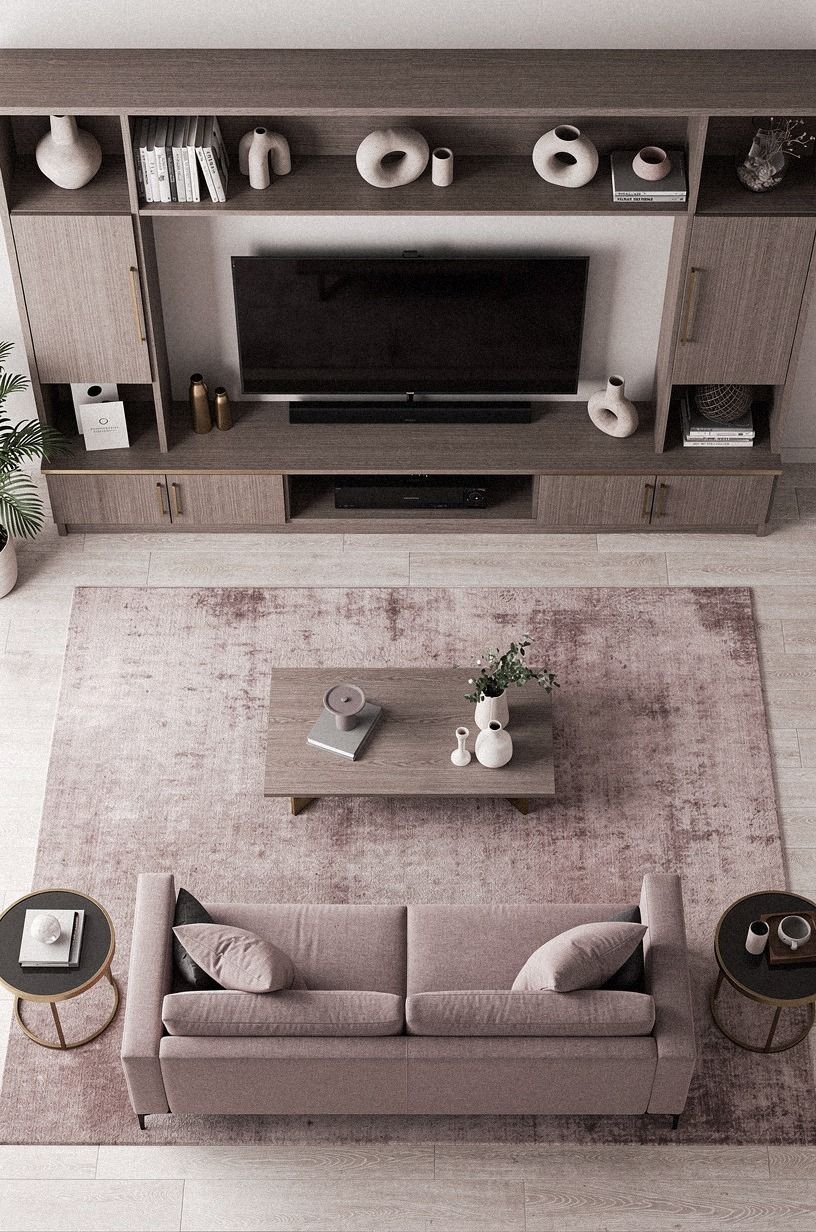
A television wall can feel heavy in a shared room, especially when the screen is large and the media console is dark. Frame it with open storage on both sides, using books, baskets, and a few objects rather than filling every shelf.
Try a cerused white oak ladder shelf on one side and a low cabinet on the other. That uneven arrangement feels more relaxed than two identical towers, and it gives each person a place for their own things. Your roommate can claim one basket, while you keep remotes and chargers in another.
Keep the television center close to eye level when you’re seated. The screen should be about 1.5 to 2.5 times its diagonal distance from your main seat. That measurement protects your neck and keeps the room from feeling like a home theater.
If toys, gaming gear, or pet supplies are part of your life, choose doors for the lower half. You’ll want quick cleanup before guests arrive. This hidden toy storage for a living room that looks grown offers smart ideas for keeping useful things out of sight.
For a lighter storage wall, use woven baskets instead of matching plastic bins. The texture keeps practical storage from making the room feel like an office.
A slim shelf above the console can hold framed art without competing with the screen. Keep the objects low and quiet so the television doesn’t become part of a crowded gallery wall.
7Which wall color keeps a shared room calm?
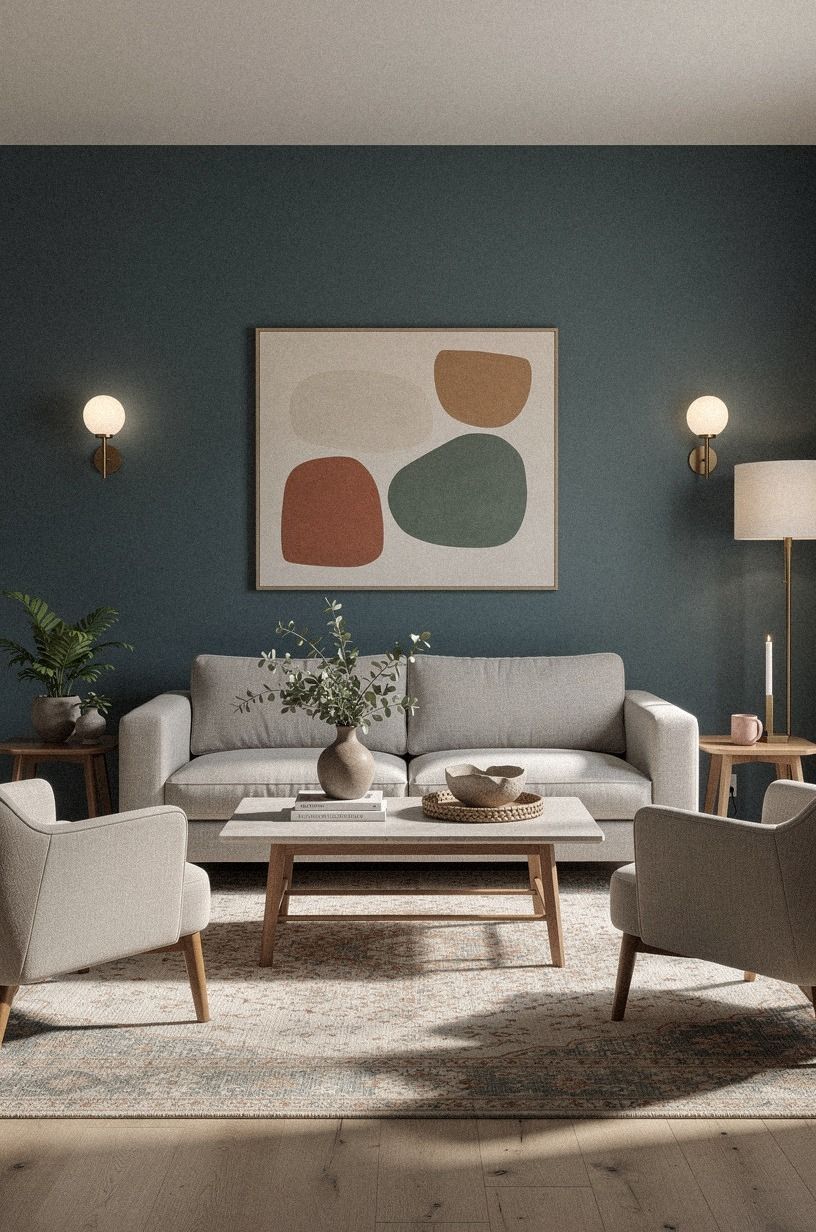
The best shared apartment wall color is one that works with several personal styles, not one that forces everyone into beige. Benjamin Moore White Dove OC-17 is a flexible warm white that can handle camel upholstery, black metal, and natural wood without looking cold.
For more depth, try Farrow & Ball Joa’s White No.226 on one wall, especially if your room gets strong afternoon light. It’s warm and elegant, but I wouldn’t paint every wall in a dim apartment. The color can become heavy after sunset, even with good lamps.
A slightly deeper option is Sherwin-Williams Accessible Beige SW 7036. It brings a soft camel note into a room with white furniture and natural fibers. Your artwork will stand out against it, and the shade feels more interesting than plain pale gray.
Sample the paint beside your sofa and flooring before you decide. And don’t judge it at noon only. Watch the wall at 8 a.m., 3 p.m., and after the lamps come on, because your apartment’s light will change the color dramatically!
For a softer neutral scheme, study the quiet layering in these Nancy Meyers living room ideas for cozy timeless comfort. Warm whites and muted camel tones can feel personal without becoming divisive.
If one roommate wants something bolder, use shagreen accents in black on the television wall or inside a bookcase. A contained dose often satisfies the urge for contrast without making the whole room feel smaller.
8Mix personal style with a shared palette
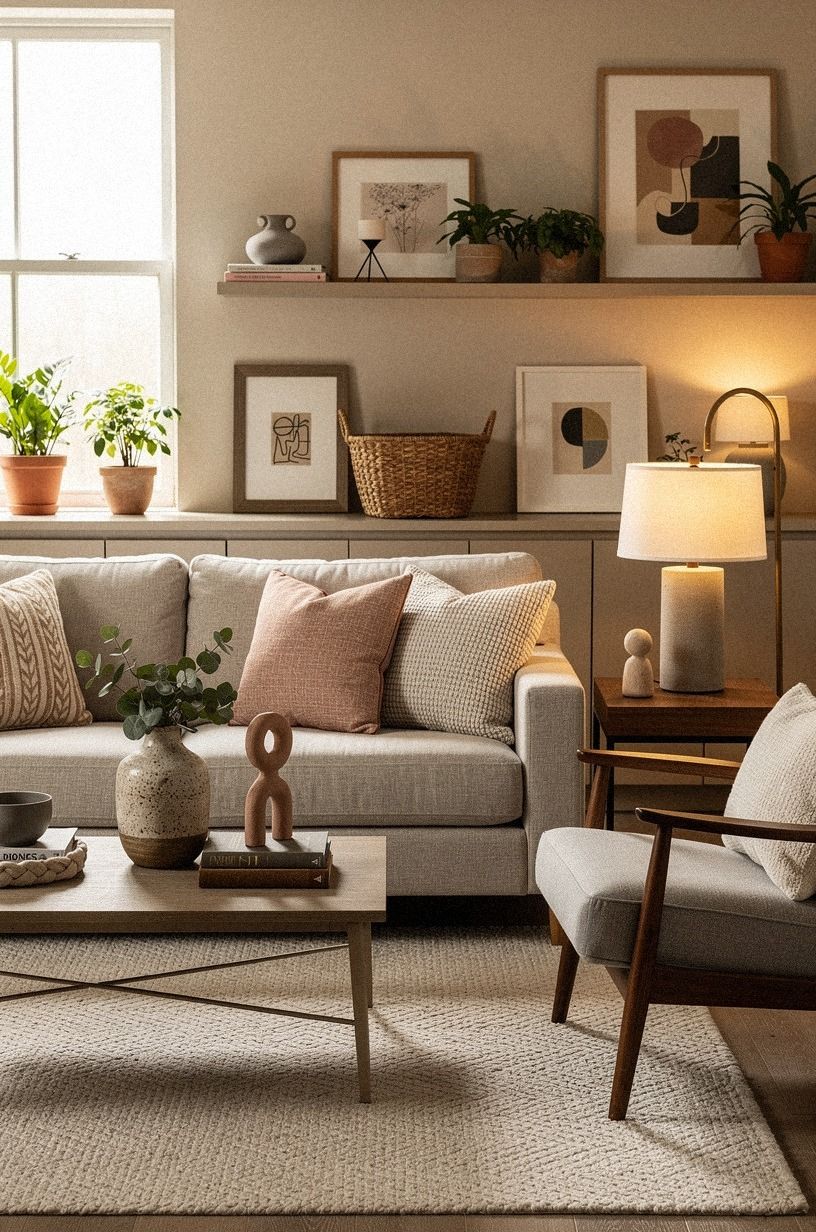
Couples and roommates don’t need identical taste. You need a shared palette with room for different objects. Start with three base colors, such as midnight blue, ivory, and copper, then let each person add one accent shade.
One person might bring a midnight-blue mohair velvet pillow, while the other chooses a copper-colored print. The room will feel harmonious because the colors repeat, even though the pieces don’t match. Your favorite object gets to stay visible without taking over the whole space.
Use texture to create interest when color preferences clash. Ivory flax linen, ribbed cotton, copper, and woven jute can sit together in a gentle, inviting room. I’d rather see three honest materials than twelve decorative objects that say nothing about who lives there.
Give each person one display area, such as a shelf, cabinet top, or picture ledge. That simple agreement prevents the room from becoming a negotiation every weekend. You can borrow ideas from these gothic Victorian living room approaches if one of you likes drama and the other prefers softer layers.
For a richer shared scheme, use book-matched walnut on a console or shelf to connect different furniture styles.
Give stronger colors a supporting role. A copper pillow, blue vase, or ivory lamp usually feels more intentional than a whole collection of unrelated accent colors.
9Budget the room with real US cost tiers
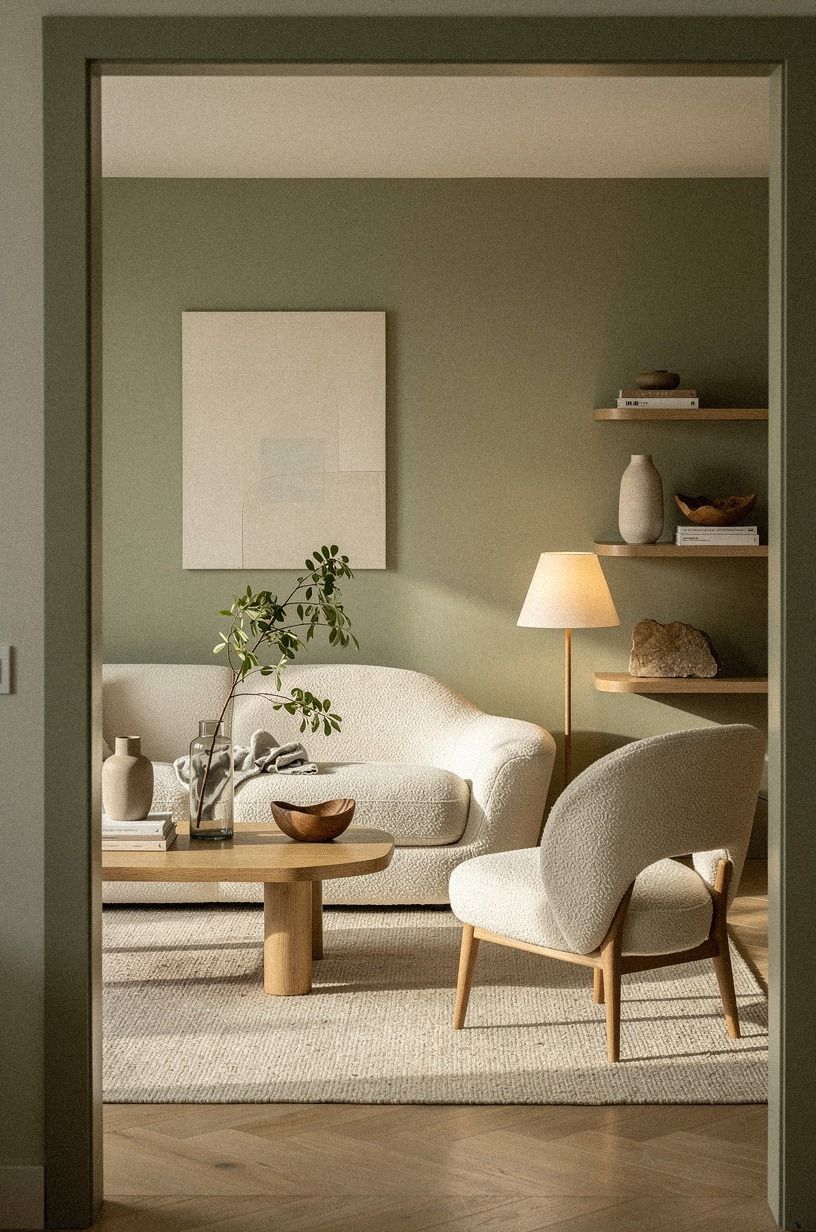
A shared living room doesn’t need one giant shopping trip.
10Hang art around a shared centerline
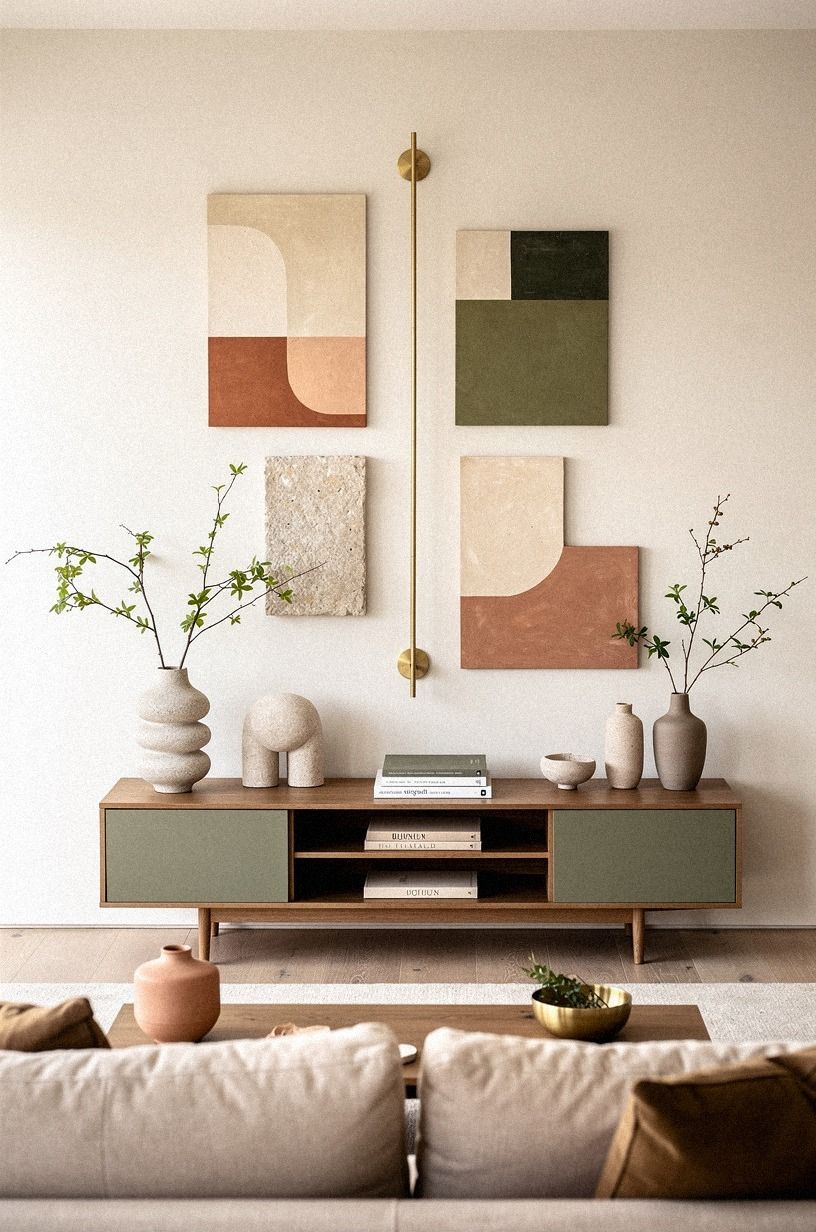
Art works better in a shared apartment when it connects the furniture instead of floating randomly above it. Hang the main piece so its center sits around 57 to 60 inches from the floor, then adjust slightly for your seating height.
A large abstract canvas with terracotta, stone, and olive can bridge different tastes without looking generic. If your roommate prefers photography and you prefer paintings, use one frame color to connect them. Unlacquered brass frames feel warm, while thin black frames create a cleaner, modern edge.
Keep the bottom of artwork about 6 to 8 inches above the sofa back. Your eye should read the sofa and art as one group, not two unrelated objects. You’ll want the composition to feel close enough for conversation.
A gallery wall can work, but I’d avoid making every frame the same size. Mix one 18 by 24 inch piece with smaller prints and a narrow textile panel. And if your walls are dark, choose lighter mats so the arrangement still feels bright and peaceful.
A shared centerline helps mismatched pieces look deliberate. Mark it with painter’s tape before hanging anything, especially when two people have different opinions about height.
If the sofa already has a strong shape, choose quieter art. The room needs one focal point, not several objects competing for attention.
11Create a warm rental layer without damage
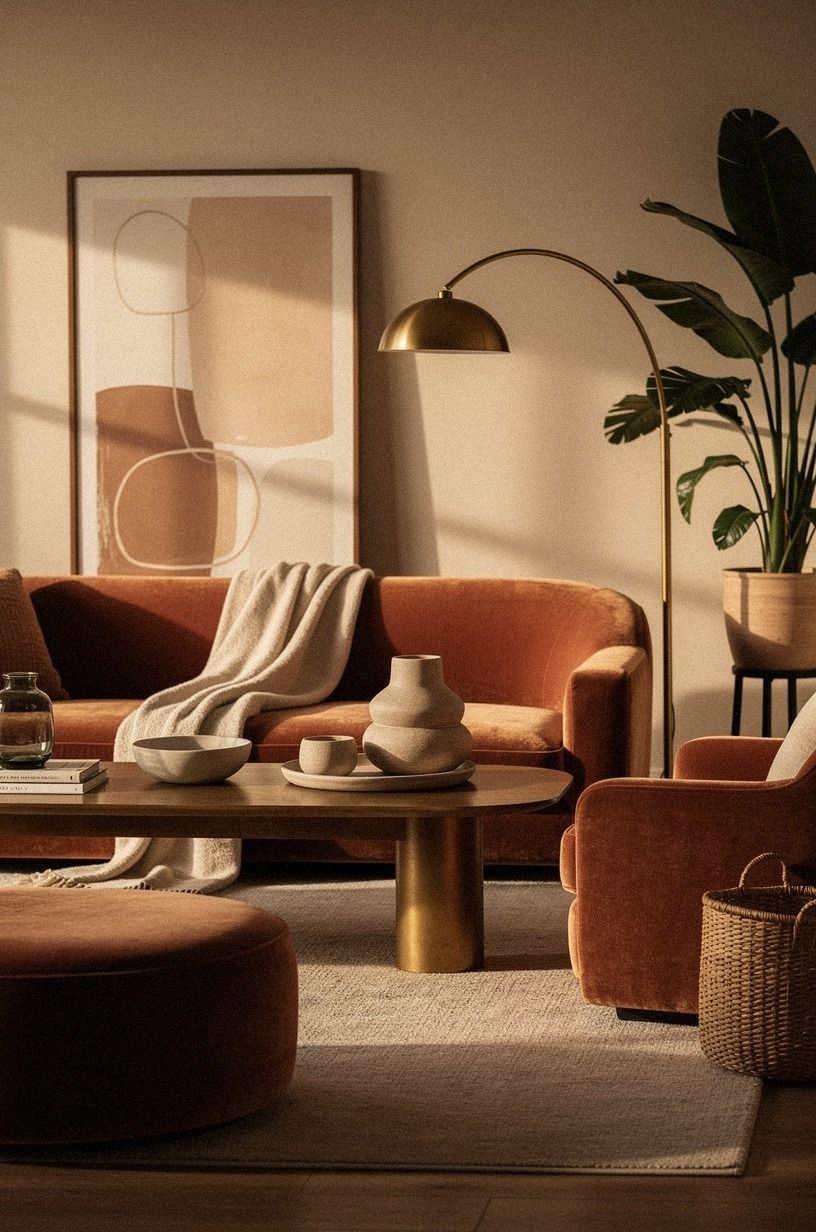
Renters can make a shared living room feel personal without drilling into every wall. Use a tension rod for lightweight curtains, removable hooks for art, and a freestanding shelf for storage. Your landlord may not notice the changes, but you’ll feel them every evening.
Choose linen curtains in clay, cream, or oat if your windows feel bare. Hang them just above the frame and let them reach the floor, even if the apartment’s windows are small. The vertical line makes the room seem taller and softens hard rental surfaces.
Peel-and-stick wallpaper can work behind a console or inside a bookcase, but order samples first. Some patterns look charming online and busy under real light. I’d choose a quiet grasscloth texture over a loud mural for a shared space.
Add a removable terracotta tile-look panel only where it has a job, such as behind a bar cart or reading nook. You don’t need to cover an entire wall. These no-window living room ideas that fake natural light include renter-friendly ways to make a darker room feel more open.
A tall freestanding shelf can provide storage without asking either roommate to surrender a wall permanently. Keep heavy books low and lighter objects above eye level.
For more ideas, these bookshelf living room ideas show how a shelf can add warmth while keeping the floor plan flexible.
12Choose sofa depth over extra seating
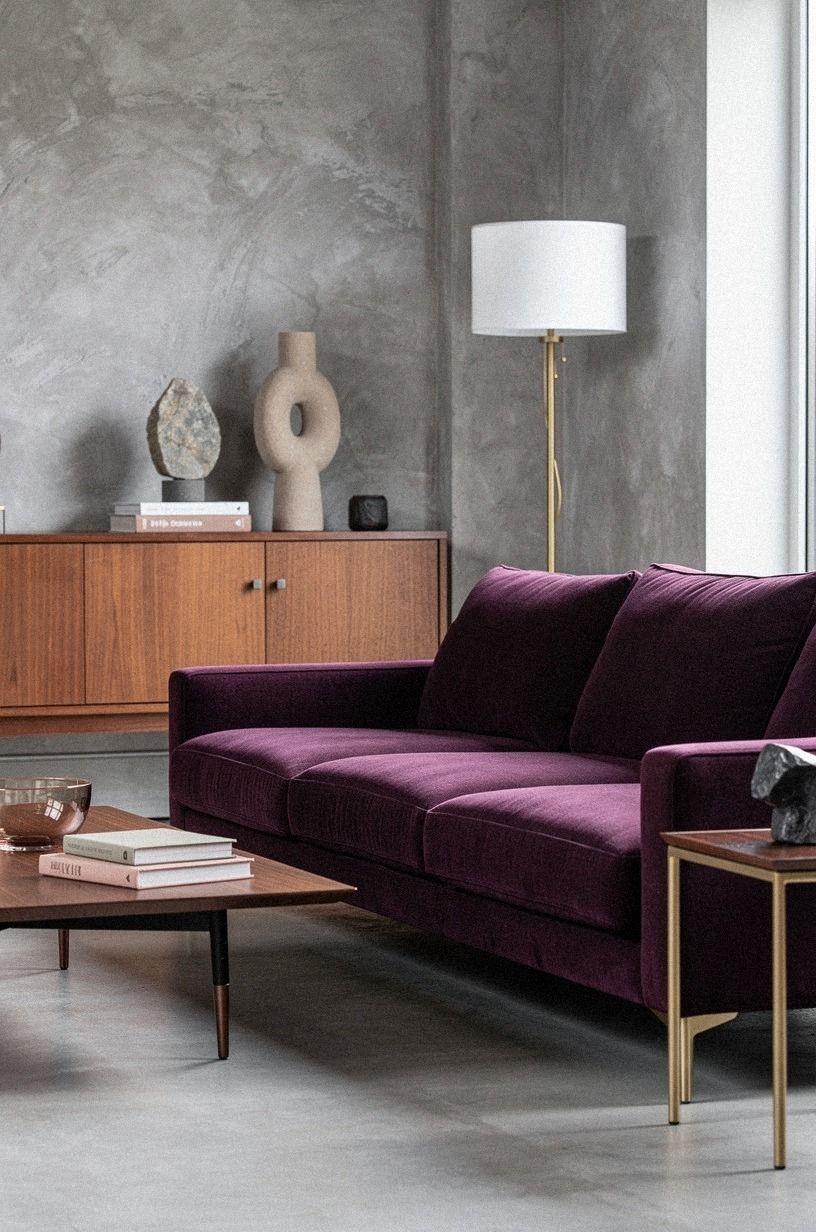
Extra seating sounds useful, but a sofa with the wrong depth can make your whole apartment uncomfortable. A 35 to 40 inch depth is a reliable range for most shared living rooms. It gives you room to lounge without turning the walkway into a narrow passage.
Pair the sofa with a rose-gold metal stool that can act as a footrest, side table, or occasional seat. Your roommate can move it wherever needed, and you won’t lose the flexibility that a bulky armchair would take away.
A coffee table should sit about 16 to 18 inches high and roughly two-thirds the sofa length. Leave enough space to pass between the table and sofa without turning sideways. I learned this after buying a sculptural table that looked wonderful but made every movie night awkward.
If you need one more seat, choose a low pouf in deep-pile mohair velvet or a woven bench. It can disappear beneath a console when you’re not using it. For a room that needs more warmth, browse these corner fireplace living room layout ideas for ways to keep seating flexible.
The right depth matters more than the biggest seat count. These cozy winter living room ideas with chunky knit blankets show how comfort can come from texture and lighting rather than oversized furniture.
If you’re unsure between two sofas, tape their footprints on the floor first. Walk from the entry to the kitchen, pull out every chair, and make sure both people can move naturally.
Why Shared Rooms Need a Little Friction
I’ve learned that the best shared living rooms aren’t perfectly matched. They have a little friction, the kind that shows two people made choices instead of ordering one complete set.
My partner likes a room with fewer objects. I like baskets, books, and lamps that make the corners glow.
We’ve had to decide what earns space, and that process made the room feel more personal.
The first mistake I made was trying to solve disagreement with beige. It seemed safe, but the room became flat and forgettable.
A warm neutral can hold a space together, but it can’t replace a point of view. Now I use one stronger color, such as camel or black, then let the furniture stay quiet around it.
The second lesson was about circulation. I once bought a wide chair because it looked comfortable in the showroom.
It was comfortable, but nobody could walk past it without bumping the coffee table. Your room has to support real habits, not just the photograph you imagined.
Measure the path from the entry to the kitchen before you bring home anything large.
Finally, I’ve stopped treating compromise as a design failure. One person can have the dramatic lamp.
The other can have the pale rug. You can share a palette, a sofa position, and a storage plan while still keeping the objects that make your side of the room feel like yours.
That balance is what makes a shared apartment feel warm, lived-in, and quietly sophisticated.
What People Always Want to Know
What is the best shared apartment living room idea for a small living room?
The best choice is a floating sofa with a slim console behind it, paired with an IKEA KALLAX unit or a narrow chair. You’ll gain storage and a walkway without adding visual weight. A small rug can connect the seating zone and make your room feel more inviting.
Where can I buy shared apartment living room pieces on a budget?
IKEA, Wayfair, and Target are practical starting points, while Facebook Marketplace and thrift stores can uncover solid wood tables and lamps. Look for secondhand oak furniture with good proportions, then spend your money on lighting or a rug. There are no affiliate links here, just display-supported editorial recommendations.
How much does a shared apartment living room makeover cost?
A refresh usually costs about $300 to $1,200 for pillows, throws, a rug, art, and paint. You can spend nothing on layout changes, editing, and rearranging furniture. A mid-range update with a sofa and quality rug typically falls between $2,500 and $8,000.
Can I create a shared apartment living room on a budget?
Yes, and you can start with free changes. Move the sofa to improve circulation, group furniture into zones, and use books or baskets as styling pieces. A paint sample, a thrifted lamp, and one washable throw can change the room without requiring a major purchase.
Is a shared apartment living room layout worth it in a small space?
Yes, because a small room benefits most from clear zones and measured furniture. Keep the sofa 35 to 40 inches deep, use an 8x10 rug when it fits, and choose one flexible pouf. Your room will feel calmer when every piece has enough breathing room.
Is a shared apartment living room a good idea for a rental?
Yes. Use removable hooks, tension rods, freestanding shelves, and peel-and-stick wallpaper in small areas.
A tension-rod curtain setup can soften the room without permanent damage. You’ll get the warmth of a finished space while keeping changes easy to reverse when you move.
Where I’d Start First
If I had to pick one, I’d start with the floating sofa layout. It creates a walkway, defines two zones, and makes a small room feel less crowded without buying anything. Pin the idea for later and revisit your measurements before choosing new furniture.