
 by
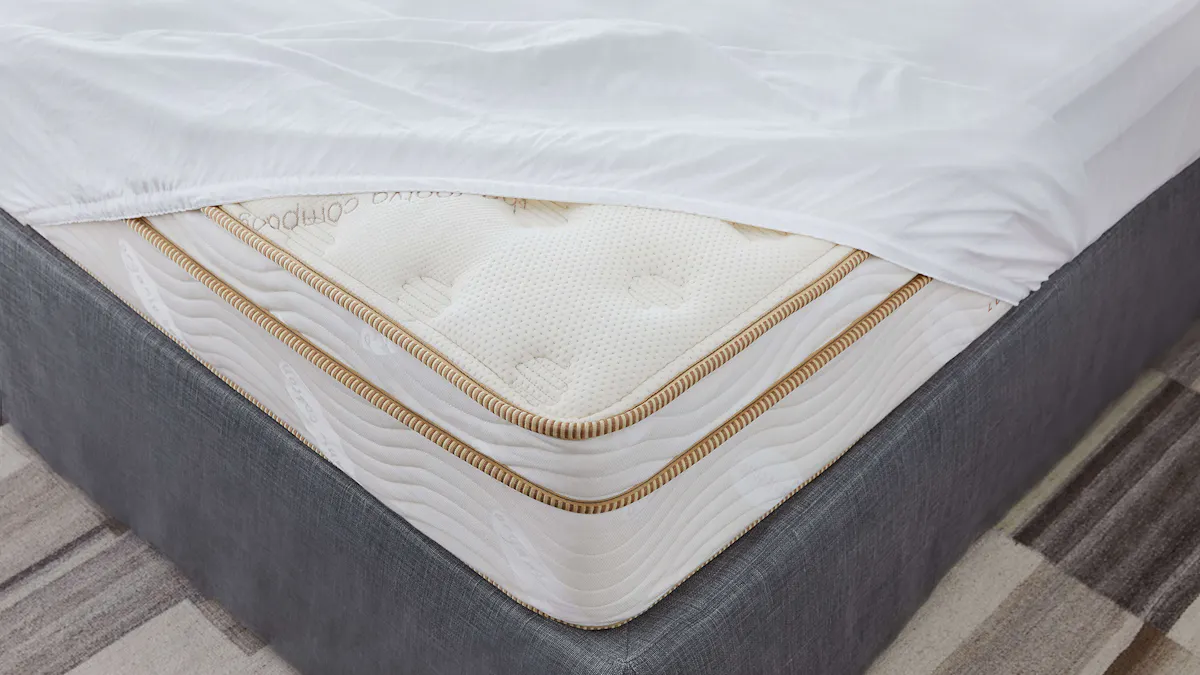
by Quick answer: in hotel in case of bed-wetting tendencies, please use the mattress protector. A fitted waterproof protector belongs directly over the mattress and beneath the fitted sheet. It should cover the sleep surface securely, remain unobtrusive under the bedding, and be cleaned according to its own care label.
- Prioritize the barrier: A padded surface is not enough unless the product is explicitly described as waterproof.
- Check the fit: Exposed corners, loose edges, and bunching leave weak points between the sleeper and the mattress.
- Plan for cleanup: Keep replacement linens ready and let the manufacturer’s care label control laundering.
- Keep it discreet: Protection should be presented as ordinary bed preparation, not as a judgment about the guest.
My verdict: in hotel in case of bed-wetting tendencies, please use the mattress protector. A washable surface barrier is far easier to manage than moisture that has passed through the mattress cover and entered quilting, foam, or fiber layers.
The wording may sound formal, but the idea is simple. Sheets provide the sleep surface. The protector provides fluid resistance. The mattress underneath supplies the comfort and support. Each layer has a different job, and a sheet should not be expected to replace a waterproof barrier.
I approach this from a materials perspective. Once moisture reaches absorbent comfort materials, the problem is no longer confined to bedding that can be removed from the room. Preventing that transfer is the practical reason to use a protector.
The Nut’s practical read: Prepare the bed before it is needed. A properly installed protector is calmer, more discreet, and more useful than trying to improvise after an accident.
Why a hotel bed needs a separate waterproof layer
A fitted sheet sits above the mattress, but it is not normally sold as a fluid barrier. According to Winsham’s hotel mattress-protector guidance, liquids, bodily fluids, and spills are among the exposures that mattress protection is intended to address.
Hotel turnover raises the practical stakes. Get Smart Linen’s hotel-focused guidance identifies regular occupancy, frequent room turnover, and commercial laundering as factors in choosing protection. A hotel therefore needs more than a product that looks tidy on the day it is installed. It needs a barrier that staff can fit, remove, inspect, and care for consistently.
The mattress itself may place fabric, quilting, foam, or fiber close to the surface. Those materials contribute to pressure relief and feel, but they are not the layers I want handling an avoidable liquid exposure. A removable protector puts the first line of defense above them.
| Bed layer | Primary job | What to check |
|---|---|---|
| Fitted sheet | Creates the regular sleep-facing surface | It should be clean and easy to change, but it is not automatically waterproof. |
| Waterproof protector | Forms a removable barrier above the mattress | Its product description should confirm waterproofing, secure fit, and appropriate care. |
| Mattress cover and comfort layers | Provide the bed’s feel and work with the support core | They should remain covered and dry whenever the protector is in place. |
This layering also preserves the role of the mattress. A protector should not be chosen to redesign the entire bed. It should add fluid protection while allowing the existing comfort system to remain recognizable beneath the sheet.
Waterproofing and padding are different functions
The important construction split is between the sleeper-facing fabric and the waterproof backing. If a product label identifies a thin TPU barrier, that membrane is the functional backstop, while the fabric above it affects how the protector feels beneath the sheet.
A thick, quilted pad may noticeably add softness or loft. A thin protector is usually more barrier-focused. Neither description proves waterproof performance by itself, so I would read the product label rather than infer protection from thickness, padding, or premium-sounding fabric language.
Bargoose Bedding’s buying guide separates waterproof protectors, allergen barriers, and bed-bug-oriented covers into different categories. That distinction matters because a product designed for one exposure is not automatically designed for every other exposure.
Material check: Look for an explicit waterproof description, then examine how the barrier is attached to the fabric face. Seams, elastic, fitted edges, and the condition of the backing all matter because fluid can exploit an uncovered or damaged area.
A mattress pad can still be useful when added cushioning is the objective. It simply should not be treated as bed-wetting protection unless its manufacturer specifically identifies a waterproof function. Winsham’s hotel guidance likewise distinguishes ordinary comfort padding from more protective cover formats.
A full encasement is another separate construction. A fitted protector mainly covers the top and secures around the sides, while an encasement surrounds more of the mattress. For this particular use, choose the coverage format required by the property rather than assuming that a larger cover is always the better answer.
Fit decides how much of the mattress is protected
An exposed corner is an unprotected corner. The waterproof material may be sound, but it cannot help where the protector has pulled away, shifted under the sheet, or failed to cover the intended surface.
The fitted skirt should reach around the mattress without forcing the corners upward. At the same time, excessive looseness can allow the protector to wrinkle or migrate. The useful fit is secure and flat, not merely large enough to drape over the bed.
Pillow tops and substantial comfort sections can make the mattress profile harder to cover. Compare the protector’s stated fit with the actual bed, then inspect every corner after installing the fitted sheet. Do not rely on the package name alone.
- Remove the fitted sheet so the mattress surface and edges are visible.
- Place the protector directly over the mattress with the barrier oriented as its instructions specify.
- Secure each fitted edge and smooth the sleep surface without sharply stretching the backing.
- Install the fitted sheet, then check that the protector has not pulled free at a corner.
- Run a hand across the bed and correct bunching before the room is occupied.
If the protector repeatedly works loose, the issue is usually fit or construction, not something a tighter sheet can reliably correct. A sheet may hide the movement temporarily while leaving part of the mattress vulnerable.
The type of mattress beneath the linens can affect this fit check. Our guide to what mattresses hotels use explains why hotel beds do not all share the same surface construction. Whatever lies underneath, the protector still needs to match the bed it actually covers.
Cleaning should follow the protector’s own care label
After an accident, the care label should control the cleaning process. Waterproof protectors combine textile components with a barrier, elastic, and seams, so a wash routine that is suitable for ordinary sheets may not be suitable for every protector.
Remove the affected bedding without dragging it across dry pillows or other clean surfaces. Take off the protector carefully, inspect the mattress beneath it, and handle the item according to the manufacturer’s washing and drying directions.
If machine washing is permitted, use only the settings and products allowed by that label. Do not guess about hot water, high dryer heat, bleach, or fabric treatments. A clean-looking fabric face is not useful if the underlying barrier has been damaged during care.
| After an accident | Practical action | Reason |
|---|---|---|
| Strip the bed | Separate affected removable layers from clean bedding. | This keeps the response organized and limits unnecessary handling. |
| Inspect the mattress | Check the cover, edges, and any area where the protector shifted. | A protector is a safeguard, not a reason to skip inspection. |
| Read the label | Follow the listed washing and drying method. | The permitted care routine depends on the protector’s construction. |
| Remake the bed | Use a clean, dry protector and replacement linens. | The mattress should not be covered again while its condition is uncertain. |
A protector is not permanent armor. Repeated use and laundering can affect fabric, elastic, seams, and waterproof backing. Inspect it after cleaning and remove it from service if it no longer lies flat or if the barrier appears compromised.
Keeping a clean replacement available makes this process much less disruptive. Families can carry or request spare bedding, while accommodation operators can build replacement protectors into their normal linen plan.
Hotel communication should stay respectful and discreet
A protector works best when it is already installed correctly. That avoids turning a private tendency into a public negotiation at check-in and makes the protective layer part of ordinary room preparation.
If a hotel asks guests to use a protector, the message should explain the practical purpose without blame. Bed-wetting can be handled as a bedding-management issue. Staff do not need to speculate about its cause or make promises about health outcomes.
North America Mattress’s bedwetting guidance discusses using a regular mattress with a waterproof protector for children. The useful hotel takeaway is the same surface-level strategy: protect the mattress with a removable barrier instead of expecting absorbent mattress materials to handle an accident.
For families: Preparation lowers the practical stress. Confirm that a protector is fitted, know where replacement sheets are kept, and ask how used bedding should be handled without sharing more personal information than necessary.
The bed should still look and feel like a normal hotel bed. A correctly fitted protector remains below the sheet, where it can perform its barrier role without becoming the visual focus of the room.
Noise and texture depend on construction and fit. Loose material is more likely to crease or move, so smoothing the protector and securing its edges are useful steps even before comfort preferences enter the discussion.
Do not assume every mattress cover offers the same protection
Waterproof, padded, fitted, and encasing are not interchangeable terms. Each describes a different part of construction, and none should be inferred from another.
A product called a mattress pad may focus on comfort. A fitted protector may focus on top-surface coverage. An encasement may cover more sides of the mattress. Bargoose Bedding’s category guidance supports reading these as distinct formats rather than treating “mattress cover” as a complete specification.
Likewise, a waterproof claim does not automatically establish protection against bed bugs or allergens. Winsham’s hotel guidance notes that an ordinary mattress pad can add comfort without supplying the protective function expected from a purpose-built cover.
- Do not assume a fitted sheet blocks liquid.
- Do not assume padding means waterproofing.
- Do not assume waterproof top coverage means full encasement.
- Do not assume a protector can be washed with any temperature or drying setting.
- Do not assume the mattress is dry without checking it after an accident.
The product description should state the barrier function plainly. If that language is absent or ambiguous, I would not treat the item as dependable bed-wetting protection.
Owner comments can reveal issues such as bunching or difficult laundering, but anecdotal feedback is not a universal performance promise. Construction details, coverage, and the manufacturer’s care terms remain the more useful basis for checking a particular protector.
How to choose a hotel mattress protector without overbuying
The strongest buying clue is explicit waterproof language tied to the protector itself. Softness, quilting, cooling language, and luxury branding may describe the surface, but they do not replace confirmation of the barrier.
Next, assess coverage. The protector should span the sleep surface and remain secured around the actual mattress profile. If the product is a fitted style, inspect its skirt and elastic. If it is an encasement, confirm how it opens and closes and how staff are expected to remove it.
Then read the care instructions before the protector is put into service. A hotel’s regular laundry process and the product’s permitted care routine need to be compatible. Get Smart Linen’s guidance makes commercial laundering part of the hotel-protector decision, not an afterthought.
Buying checklist: Confirm waterproof wording, match the coverage format to the mattress, inspect the fitted edges or closure, read the care label, and plan for a clean replacement. These points matter more than decorative packaging or vague claims of premium quality.
The protector should also preserve the bed’s intended character. A very thick pad can alter surface cushioning, while a thin barrier-focused design may have less influence on feel. The right choice depends on whether the property wants fluid protection alone or deliberately wants added padding as well.
Hotel mattress constructions differ, so a protector should be chosen for the bed in front of you. For related context, I have explained what mattress Renaissance hotels use and what mattress Four Seasons hotels use. Those hotel beds may not share the same profile, but each still needs a protector that fits its own surface and edges.
Hotel mattress protector FAQ
Quick FAQ rule: Treat the protector as a removable construction layer. Install it over the mattress, keep the fitted sheet above it, and defer to its care label after an accident.
Who should use a mattress protector in a hotel?
The clearest instruction is: in hotel in case of bed-wetting tendencies, please use the mattress protector. It also makes practical sense where a nighttime spill or other fluid exposure is reasonably possible. According to Winsham’s hotel guidance, liquids, bodily fluids, and spills are central reasons for adding mattress protection.
Use should remain discreet. Families, individual guests, and hotel staff can focus on bed preparation without turning the protector into a label for the person sleeping there.
Is a mattress pad enough for bed-wetting protection?
Only if its product description explicitly says it is waterproof. “Pad” often describes a comfort layer, while “protector” describes a barrier-oriented layer. The name alone is not proof, so check the stated function and coverage.
If a pad adds cushioning but says nothing about fluid resistance, assume that its main job is comfort. Add an appropriate waterproof layer rather than expecting padding to protect the mattress.
Should the protector go over or under the fitted sheet?
Place it directly over the mattress and beneath the fitted sheet, unless the manufacturer gives different installation instructions for that particular construction. This puts the barrier before the mattress while leaving the normal sheet as the sleeper-facing layer.
After making the bed, check that the sheet has not pulled the protector away from an edge. Correct layering is only useful when the protector remains in position.
Will a waterproof protector make the hotel bed uncomfortable?
It does not have to, but feel depends on material, thickness, and fit. A thin protector that lies flat is less likely to change the mattress surface than a heavily padded or poorly fitted layer.
If the product label lists a fabric face over a waterproof backing, inspect both functions separately. The face influences the immediate texture, while the backing supplies the barrier. Bunching, loose corners, or a stiff damaged section can matter as much as the fabric name.
What should happen after a bed-wetting accident?
Remove the affected linens and protector, inspect the mattress, and follow the protector manufacturer’s cleaning directions. Do not assume that the regular sheet-washing routine is appropriate for its waterproof component.
Remake the bed with clean, dry layers only after checking that the mattress surface was protected. If the protector shifted, leaked, or shows damage, take it out of service and address the mattress according to the property’s established cleaning procedure.
ONE OPTION WORTH COMPARING
Shopping as well as reading? Here is one current option worth comparing: the Saatva Waterproof Protector. Check today’s price, sizing and return terms on the official product page before you order.
Saatva Waterproof Protector
- See the product page for full specs and current pricing
My final verdict on hotel mattress protection
For a hotel bed exposed to possible bed-wetting, a properly fitted waterproof protector is the direct category choice. It keeps the response focused on removable bedding instead of absorbent mattress materials.
I would judge the setup by barrier construction, secure coverage, care compatibility, and respectful handling. Install the protector beneath the fitted sheet, inspect it after laundering, keep replacement linens ready, and let this quiet layer protect the mattress without making the guest feel singled out.