
 by
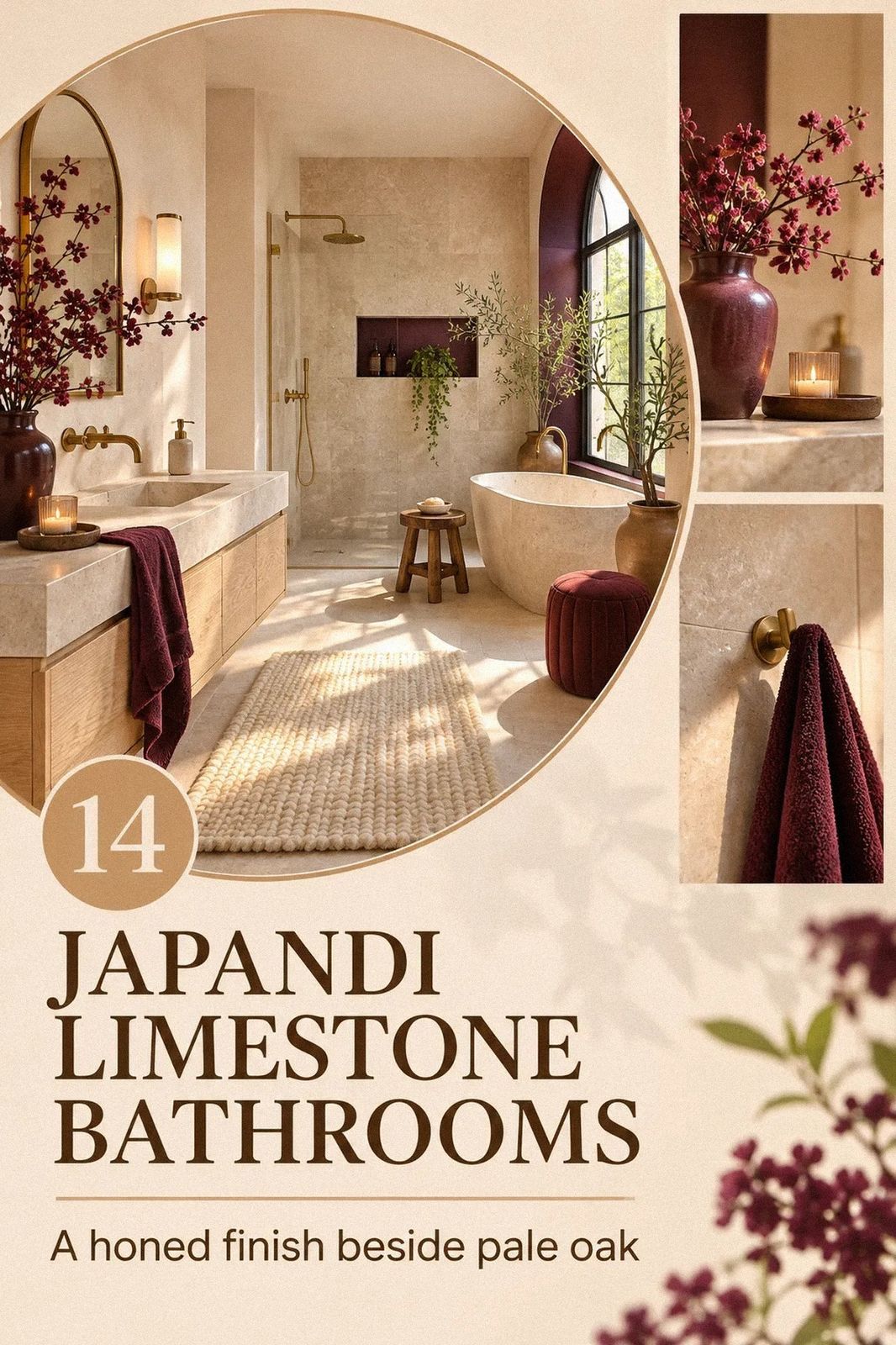
Japandi limestone bathroom ideas feel warm when pale stone meets shadow, texture, and something imperfect. Your room needs contrast, not clutter. These 14 ideas use honest materials, practical dimensions, and small choices you can live with.
Don’t overthink: Float the vanity for an airy Japandi bathroom.
Editor's note: Start with the material you touch most, then build outward. A limestone surface, a timber vanity, and warmer lighting will usually do more than a room full of decorative accessories.
- Layer limestone with a quiet grain
- Float the vanity for an airy Japandi bathroom
- Use the Two-Wood Rule to warm pale stone
- Which paint keeps the room from feeling cold?
- Frame the shower with a dry-set niche
- Stack the Three-Height Light Rule
- Choose aged brass over polished chrome
- Can a 36-inch shower still feel serene?
- Fold in 600gsm Turkish cotton
- Hang one plant and leave the rest quiet
- Mix handmade edges with clean geometry
- Price the calm before you order anything
- Can a small bathroom feel warm without clutter?
- Finish with one wabi-sabi focal point
1Layer limestone with a quiet grain
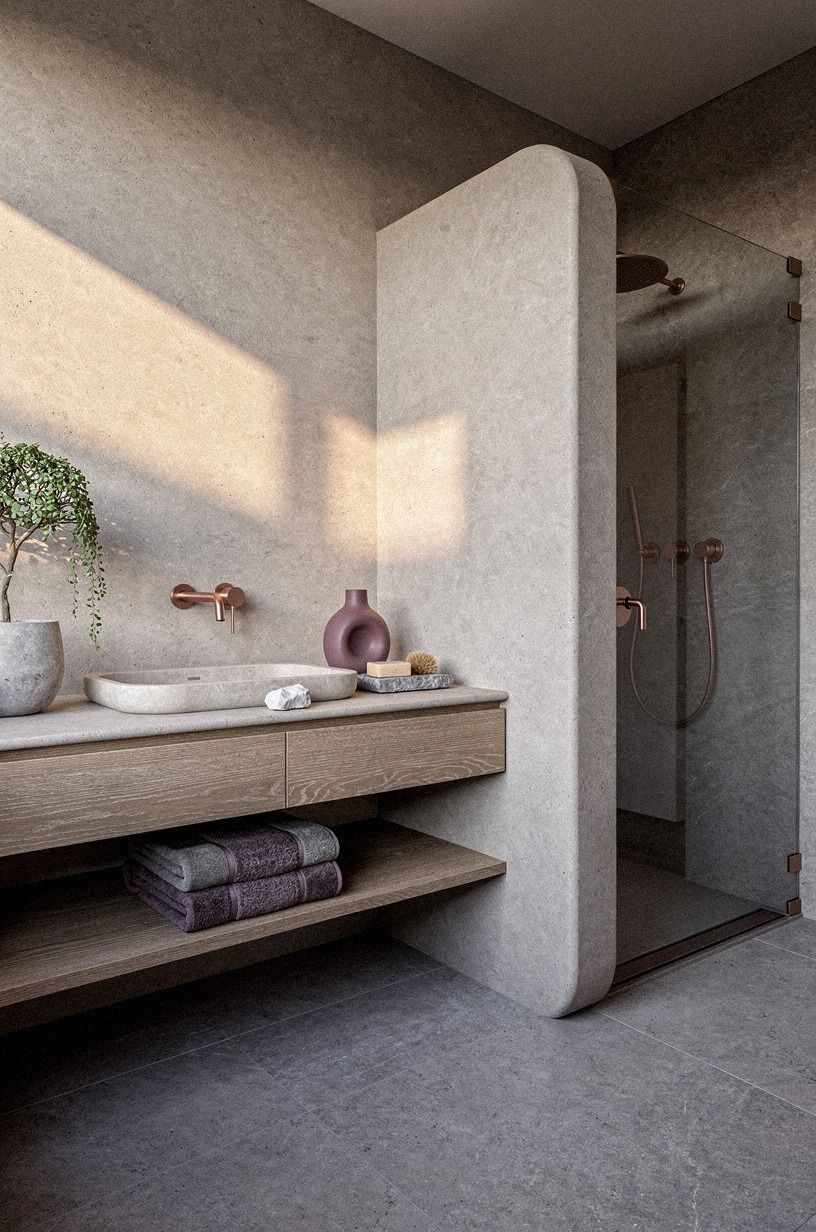
Start with limestone that has movement, not a blank cream surface. Cerused white oak brings a soft grain to limestone, especially beside plain plaster walls with plum, gray, or rose-gold accents. Your eye gets somewhere to rest without being pushed through a busy pattern.
I’d skip high-gloss finishes here. They reflect every light and make your bathroom feel more polished than peaceful. Choose matte-sealed cerused oak for the vanity, then let the natural grain remain visible.
That small texture keeps the space earthy and inviting.
The stone doesn’t need to cover every wall. A limestone vanity backsplash, shower ledge, or half-height wall can be enough. Pair it with warm mineral paint above the stone so the room still has breathing space.
If you’re working with a small budget, use limestone on one vanity wall and paint elsewhere. My guide to limestone bathroom ideas for soft warm natural stone has more ways to keep the material from taking over your room.
Pay attention to the edge profile, too. A softly eased edge feels quieter than a sharp square corner, while a rougher exposed edge can create the one irregular detail the room needs. Don’t add several kinds of texture at once.
Let the limestone carry the character.
2Float the vanity for an airy Japandi bathroom
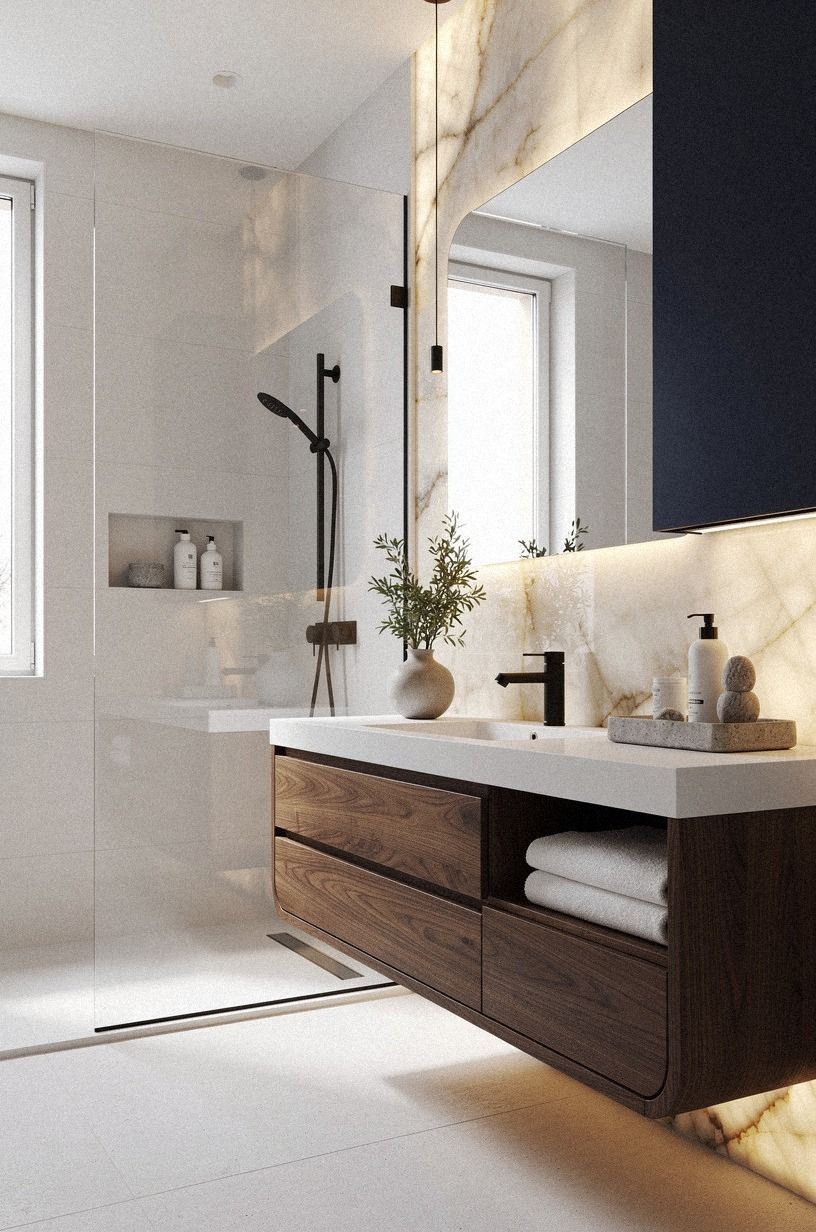
A floating vanity makes your floor line visible, and that extra strip of shadow can make the bathroom feel larger.
3Use the Two-Wood Rule to warm pale stone
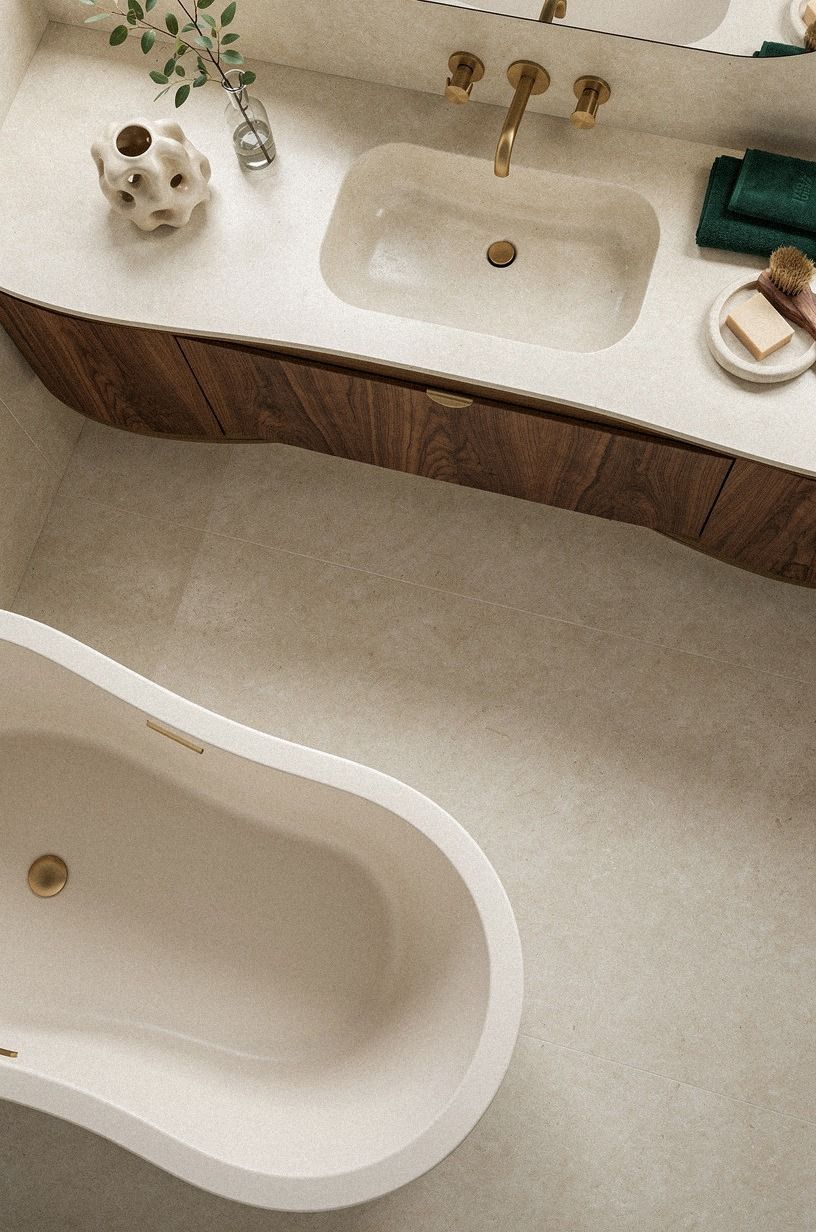
The Two-Wood Rule is simple: pair one pale wood with one deeper wood, then stop. Book-matched walnut brings a rich, continuous grain to limestone, while pale oak keeps the room from feeling heavy. You won’t need a collection of baskets if the wood tones are doing real work.
I’d avoid matching every timber finish. A book-matched walnut vanity beside a pale-oak stool feels collected, while three identical oak accessories can look like a showroom package. The slight difference makes the bathroom feel assembled over time.
Keep the wood sealed with a bathroom-rated finish, especially near the basin and shower. A matte polyurethane seal will protect the surface without turning it glossy. You’ll still get an organic bathroom with practical protection.
Use the darker wood sparingly. A small stool, framed mirror, or recessed shelf is enough. If the room already has dark window trim, repeat that tone in only one additional object so the composition feels intentional rather than decorated.
For another stone-and-wood combination, see these Japandi travertine bathroom ideas for warm minimalism. The same rule works with travertine, limestone, and even a restrained ceramic floor.
4Which paint keeps the room from feeling cold?
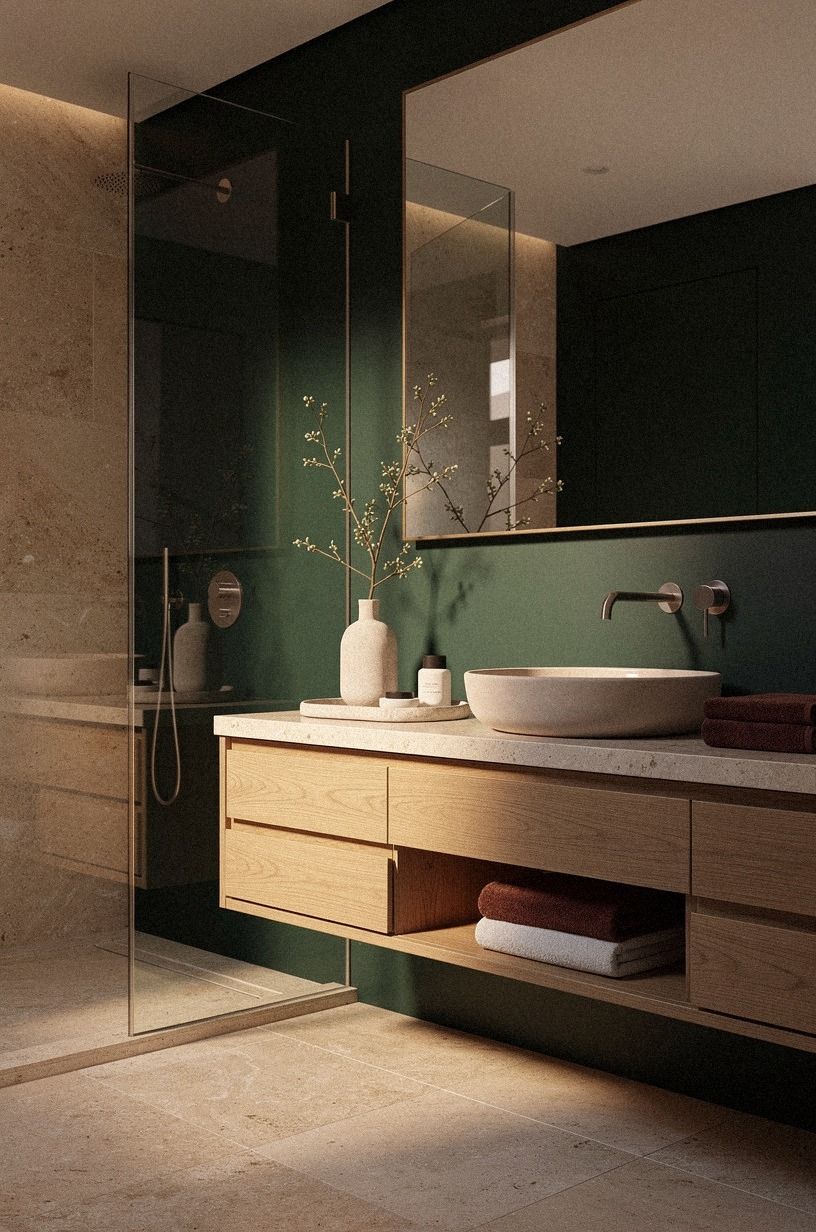
The best wall color depends on your daylight, but I’d start with Farrow & Ball Studio Green for a forest-green limestone bathroom.
5Frame the shower with a dry-set niche
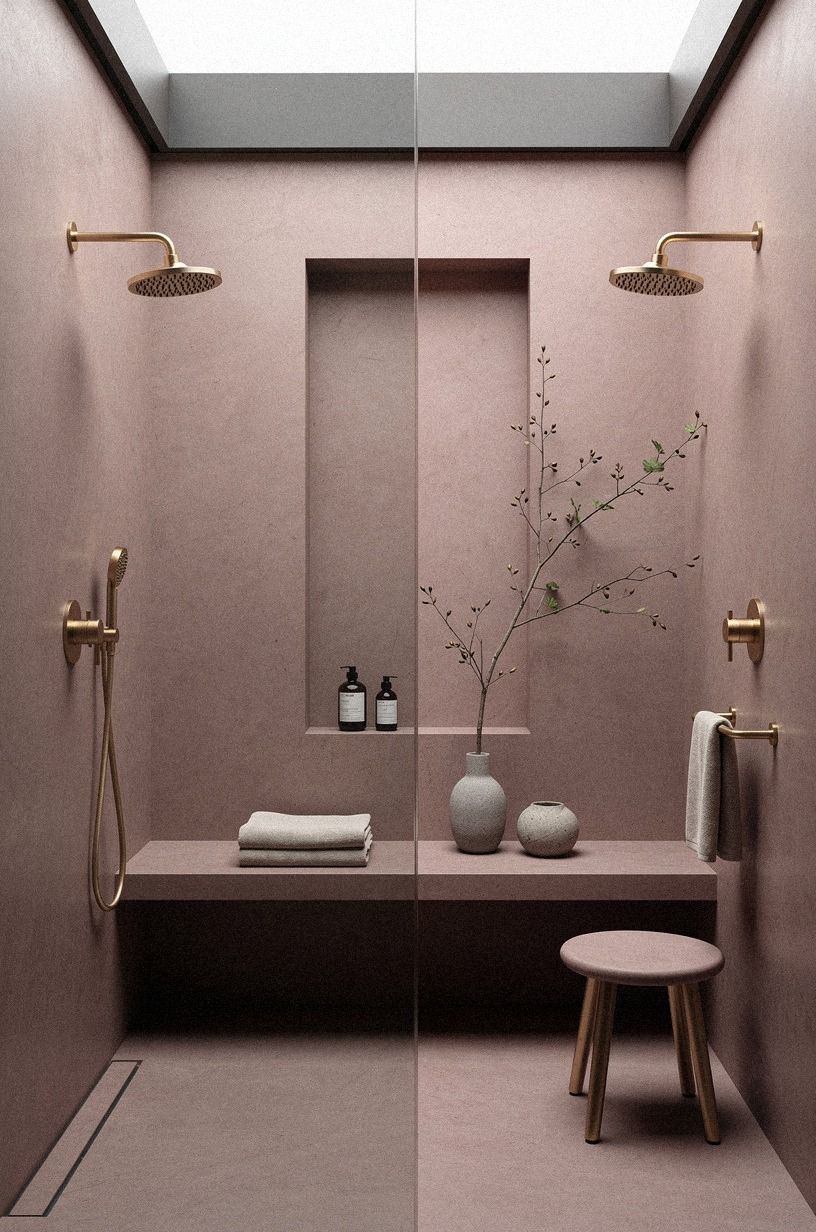
A shower niche should look planned, not like a rectangle cut into the last available wall. Frame it with unlacquered brass trim or one continuous limestone slab, then keep the shelf deep enough for the bottles you use every day. You’ll appreciate that decision at 7 a.m.
I’d size the niche around real products rather than a styling image. Shampoo, conditioner, soap, and a razor need different heights. A slightly sloped shelf helps water drain, while a rounded interior corner can make cleaning less frustrating.
Keep the surrounding tile quiet if the niche has texture. A soft grout line and unlacquered brass that develops patina will feel more soothing than a sharp black outline. You don’t need a contrasting border to make the niche visible.
A niche can also be placed lower for bath products or higher for standing shower use. Think about who will reach it and whether the showerhead sprays directly toward the opening. Waterproofing matters more than the decorative finish.
If you’re planning a broader bathroom update, these limestone bathroom floor ideas for warm underfoot luxury are worth studying before you order materials. The floor, niche, and vanity should feel related without being identical.
6Stack the Three-Height Light Rule
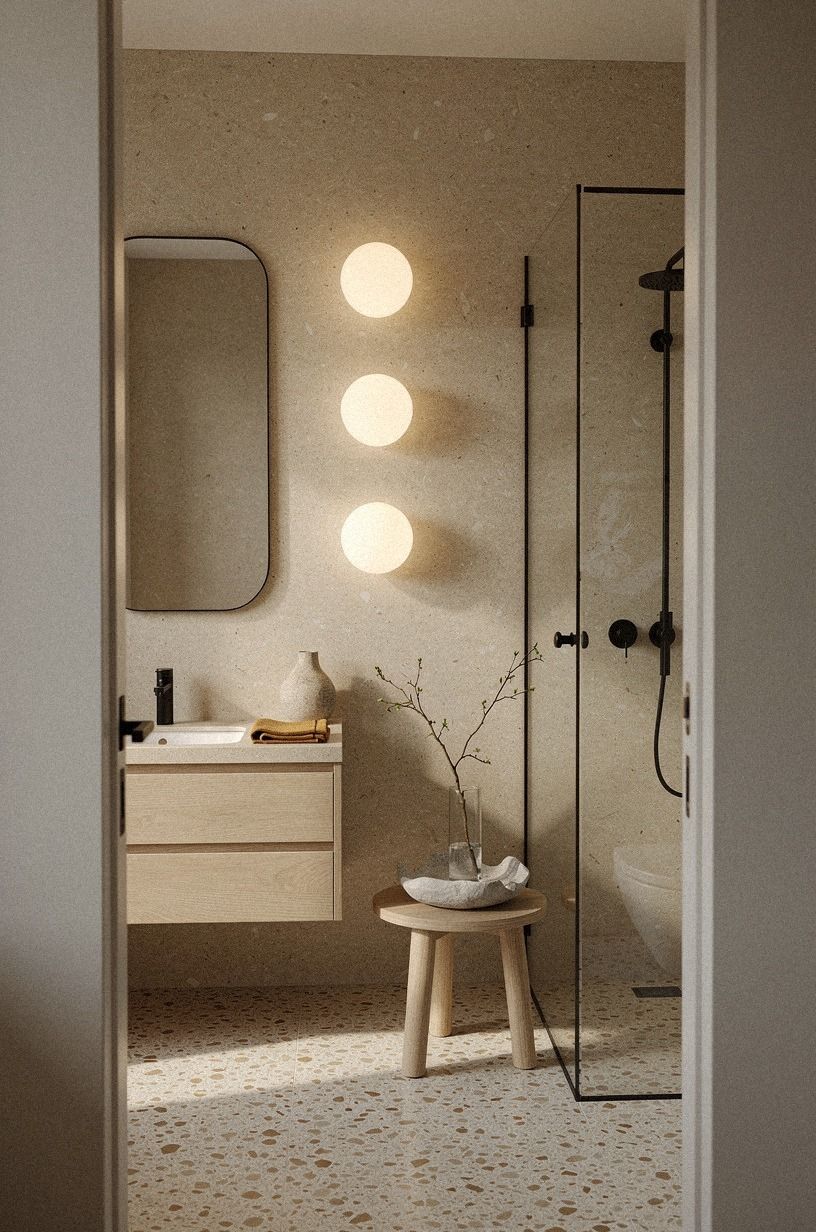
The Three-Height Light Stack gives your bathroom three layers: ceiling light, face-level light, and low ambient light.
7Choose aged brass over polished chrome
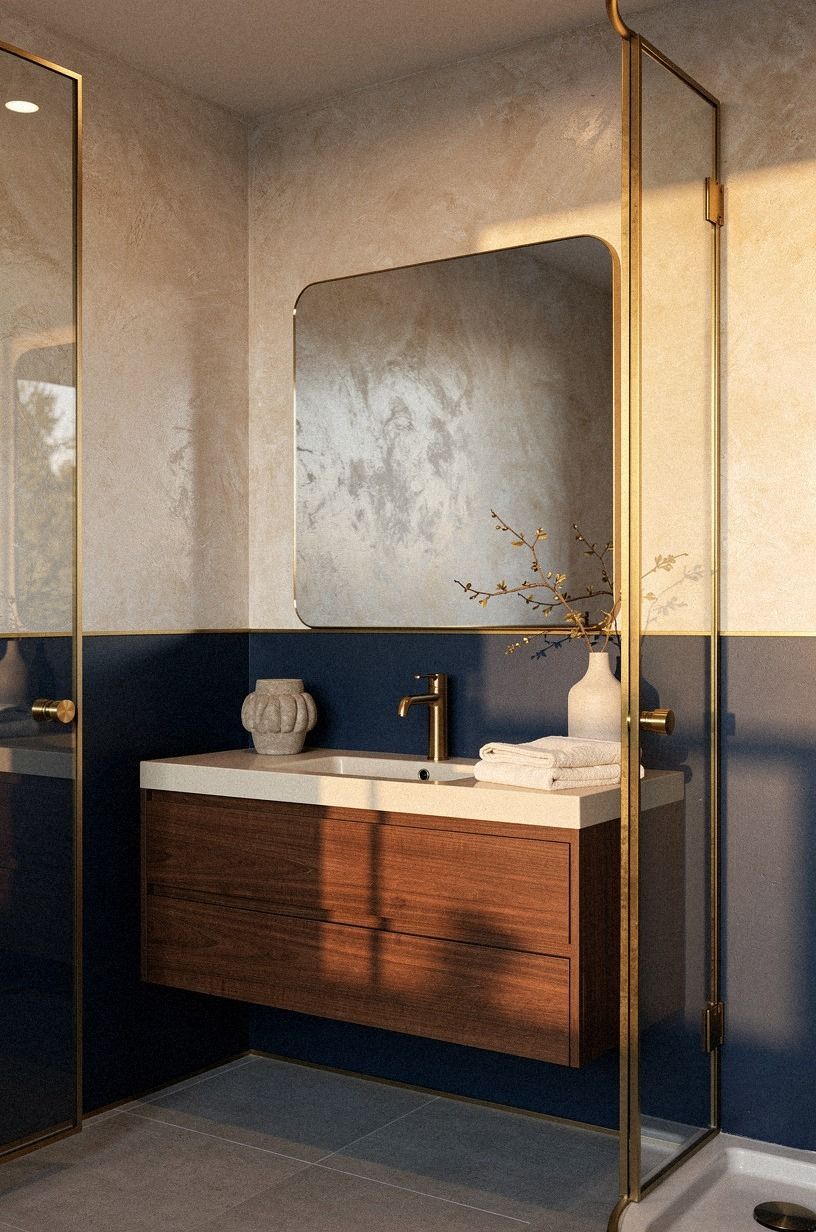
Aged brass gives limestone a warm glint without demanding attention. Copper-toned hardware works particularly well when the room includes midnight blue, ivory, and hand-applied Venetian plaster.
You don’t need brass everywhere. Choose it for the faucet and cabinet pulls, then let the mirror frame or shower enclosure use a related but quieter finish. Repeating one metal in two or three places is enough to make the room feel connected.
Polished chrome can work in a cooler bathroom, but it often makes pale limestone feel more clinical. Satin nickel is a useful alternative if brass looks too yellow in your daylight.
Check the finish samples beside your paint and stone. Brass can look greenish next to certain grays and almost coppery beside warm cream. The right combination will look settled before you install anything.
If you like the balance of old and new, compare the hardware approach with these Japandi travertine bathroom ideas. Warm metal is most successful when the rest of the room stays edited.
8Can a 36-inch shower still feel serene?
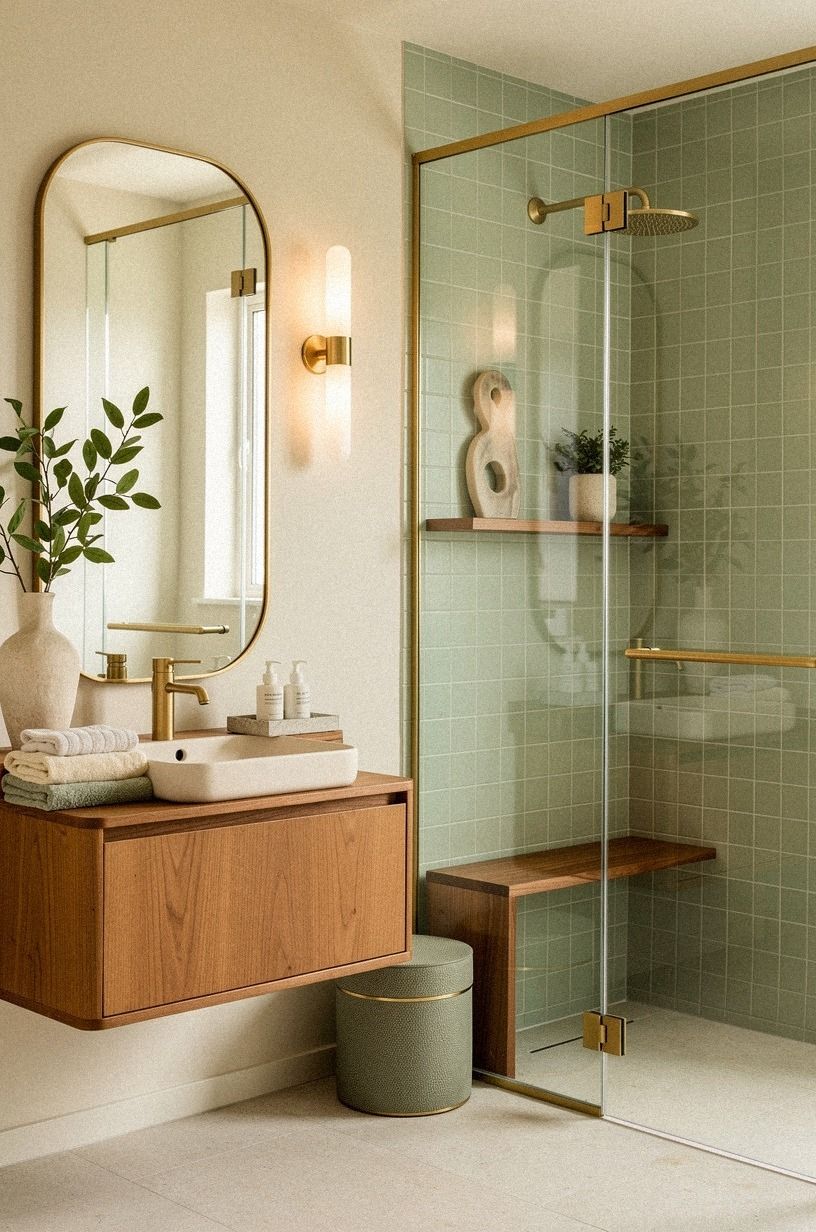
Yes, a 36 by 36 inch shower can feel calm if you protect the sightlines. That is the comfortable minimum in the supplied dimensions, so your layout should avoid a bulky corner seat or oversized shelf. Use a clear glass panel and keep your hardware visually light.
Your shower will feel more generous when the floor and wall materials share a similar value. Sage green, warm cream, and natural wood can create that continuous look, while a contrasting mosaic breaks the room into smaller pieces. I’d choose one quiet floor surface over several decorative borders.
A small shagreen accent on the vanity can add texture without breaking the calm. Keep it away from direct spray so the material stays practical.
You’ll also need to check the toilet clearance, with at least 21 inches in front. Nobody wants a peaceful bathroom where the door hits the toilet or your knees meet the vanity. Measure the complete path from the entry to the shower before committing to a screen.
A frameless glass panel can preserve visual space, but it still needs proper splash control. If the showerhead points toward the opening, a slightly wider panel may be more useful than a fully open design.
For a smaller room, compare this layout with the Japandi plant styling ideas for a calm spa-like bathroom. The same principle applies: one deliberate feature leaves more room around it.
9Fold in 600gsm Turkish cotton
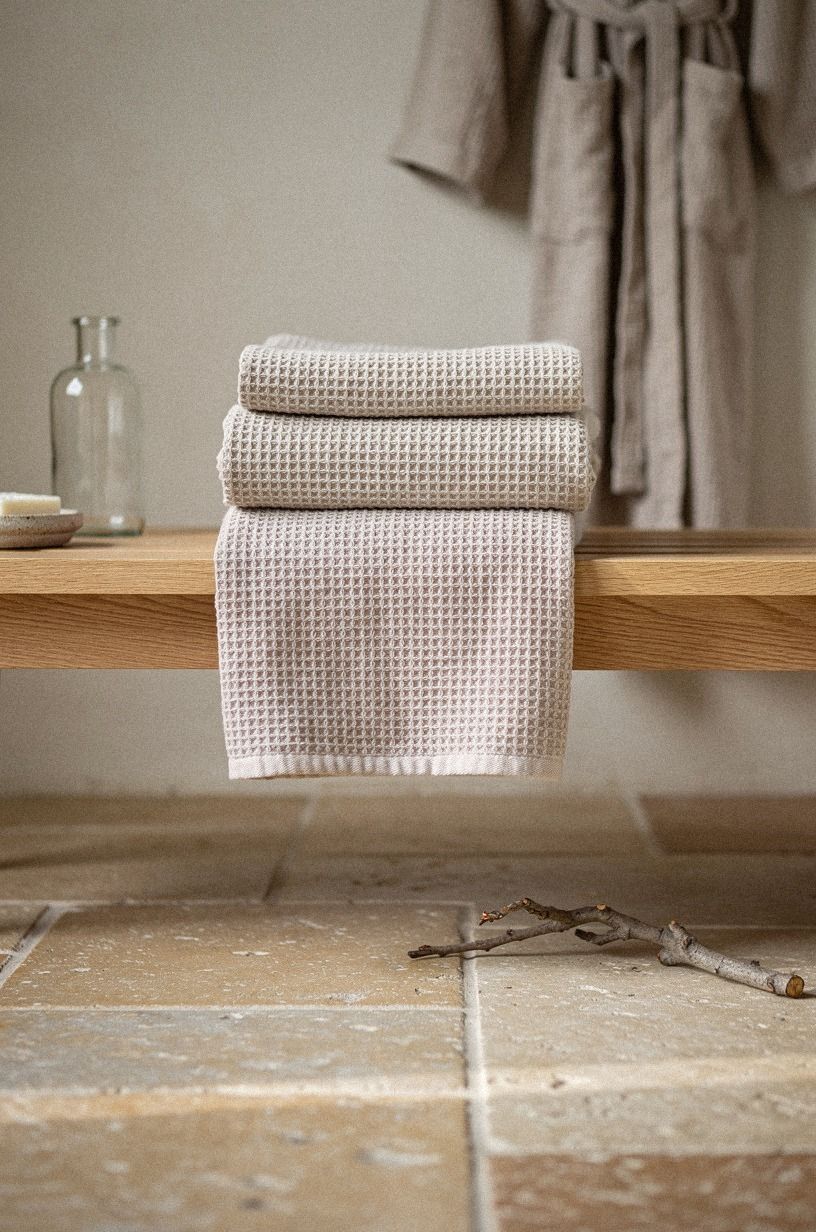
Textiles keep hard stone from feeling echoey. Bring in washed Belgian linen towels with a generous fold, a small washable mat, and one linen hand towel that dries quickly. Your bathroom will feel soft underfoot without needing piles of decorative objects.
I’d avoid a matching towel set in one flat color. A warm stone bath towel beside a muted olive hand towel feels more relaxed and lived-in. Different textures can create interest even when the color palette remains narrow.
Place the mat outside the shower rather than directly over the limestone, where it can trap moisture. Choose a low-pile cotton mat with a backing that won’t mark the floor. You’ll preserve the stone and make cleaning easier.
Towels also let renters change the room without drilling, tiling, or arguing with a landlord. Try cream, flax, mushroom, or faded terracotta rather than bright white if the limestone already has warm undertones.
For more material combinations, revisit these natural stone bathroom ideas anchored in timeless limestone. A few folds matter more than a crowded shelf, especially when your room is already rich with stone texture.
10Hang one plant and leave the rest quiet
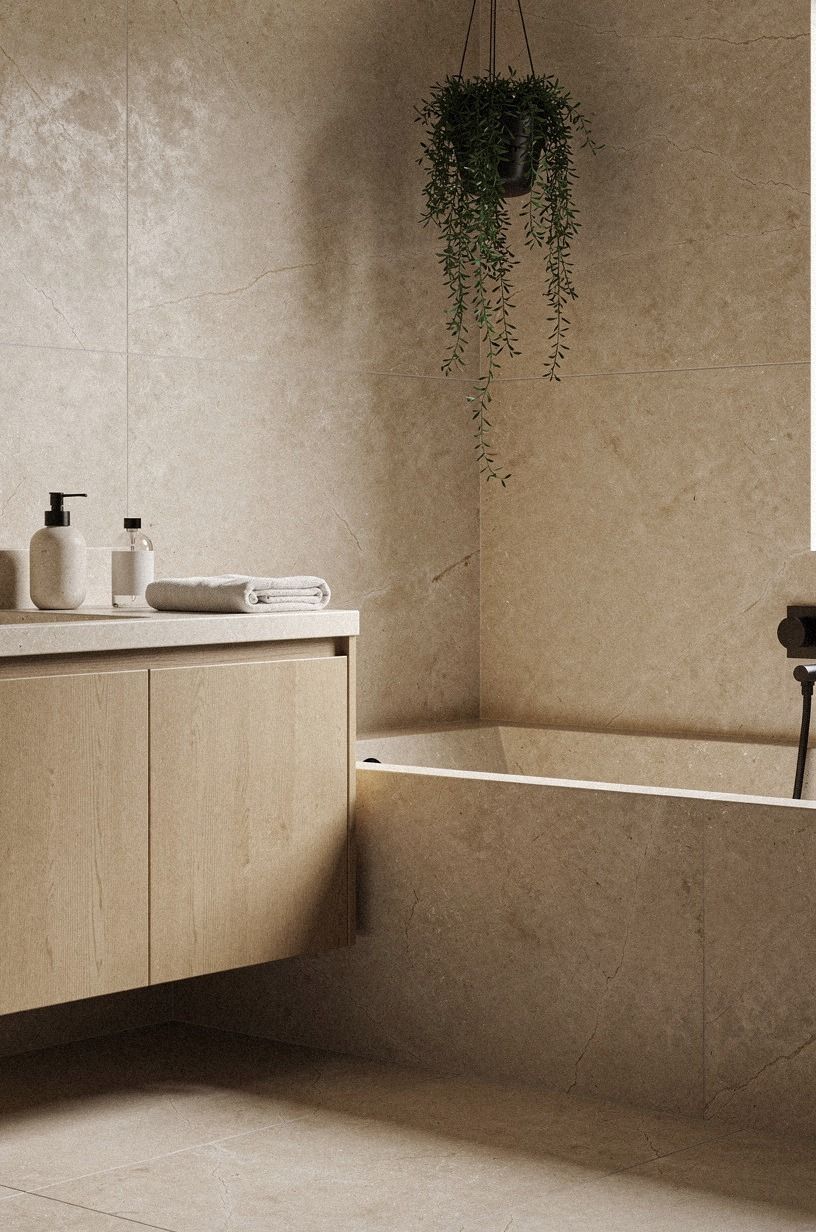
One plant can make a limestone bathroom feel alive, but you don’t need a greenhouse. Choose a bird’s nest fern or trailing pothos if your room has humidity and indirect light. Your eye will enjoy the irregular leaves against the straight vanity and rectangular tile.
I’d skip plants that need bright sun unless your window can provide it. A struggling plant adds visual noise and makes your serene bathroom feel neglected. Choose a humidity-tolerant plant that can handle the actual conditions.
Put the pot on a low organic bouclé stool or hang it near the mirror, then give it enough space to cast a real shadow. A plant becomes part of the architecture when its shape has room around it.
Use a linen-toned planter rather than glossy white plastic. You’ll get a more organic bathroom with almost no extra effort. If your room has no window, a single high-quality faux branch can work, but keep the shape restrained.
More placement ideas are covered in these Japandi bathroom plant styling ideas. One plant is enough when the materials already have presence.
11Mix handmade edges with clean geometry
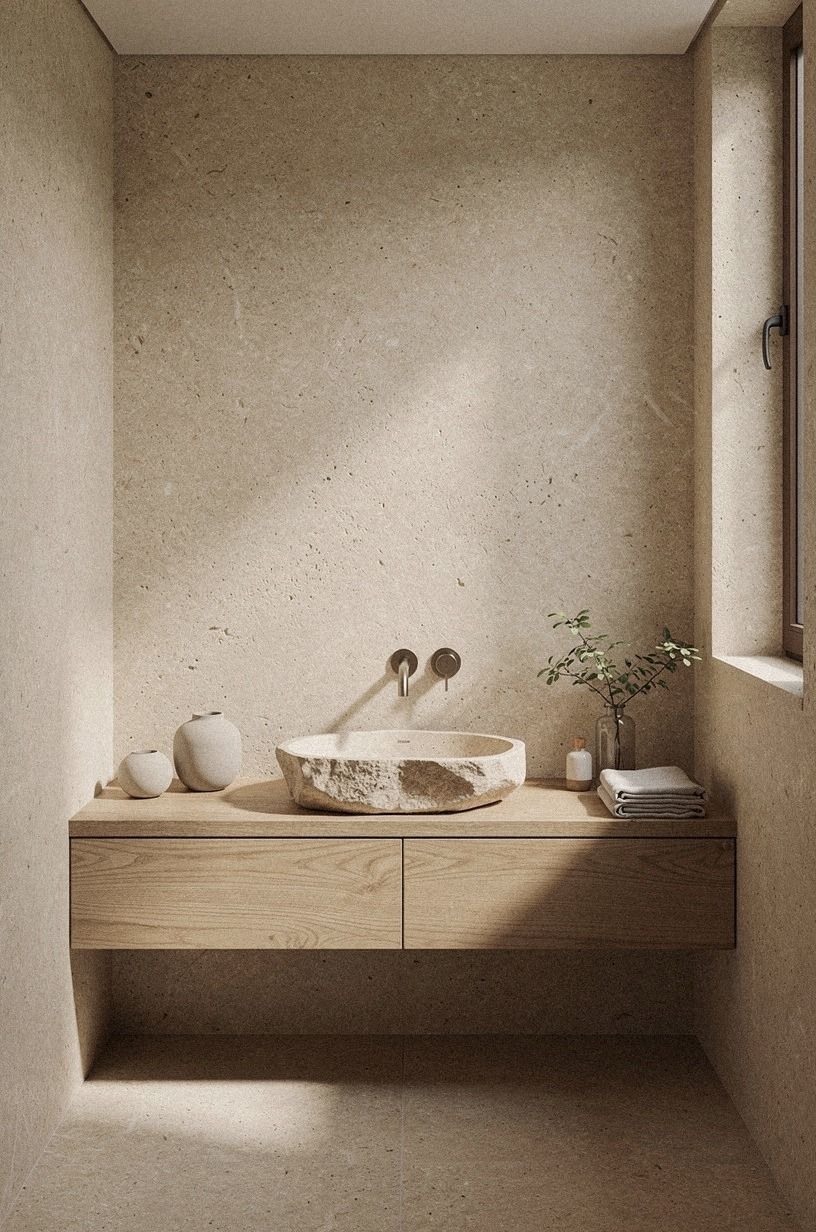
Wabi-sabi calm needs one imperfect detail, and natural stone veining is an easy place to put it. Nero Marquina black marble with white veins can soften a precise vanity without making the whole bathroom feel rustic.
Use the marble in a controlled area, such as the shower niche, backsplash, or a narrow band behind the basin. Its strong pattern will feel intentional when the surrounding geometry remains simple.
You can also create contrast with a hand-thrown ceramic vessel. Let it hold toothbrushes, bath salts, or a small branch so the object earns its place. Decorative items work better when they have a daily function.
Avoid combining handmade tile, rough plaster, heavily veined stone, and distressed wood in the same small room. Each material may be attractive alone, but together they can compete for attention. Choose two tactile moments and leave the rest quiet.
A clean mirror can make the imperfect finish feel more considered. That tension between a crisp reflection and a slightly uneven surface is the heart of the style. Start there!
12Price the calm before you order anything
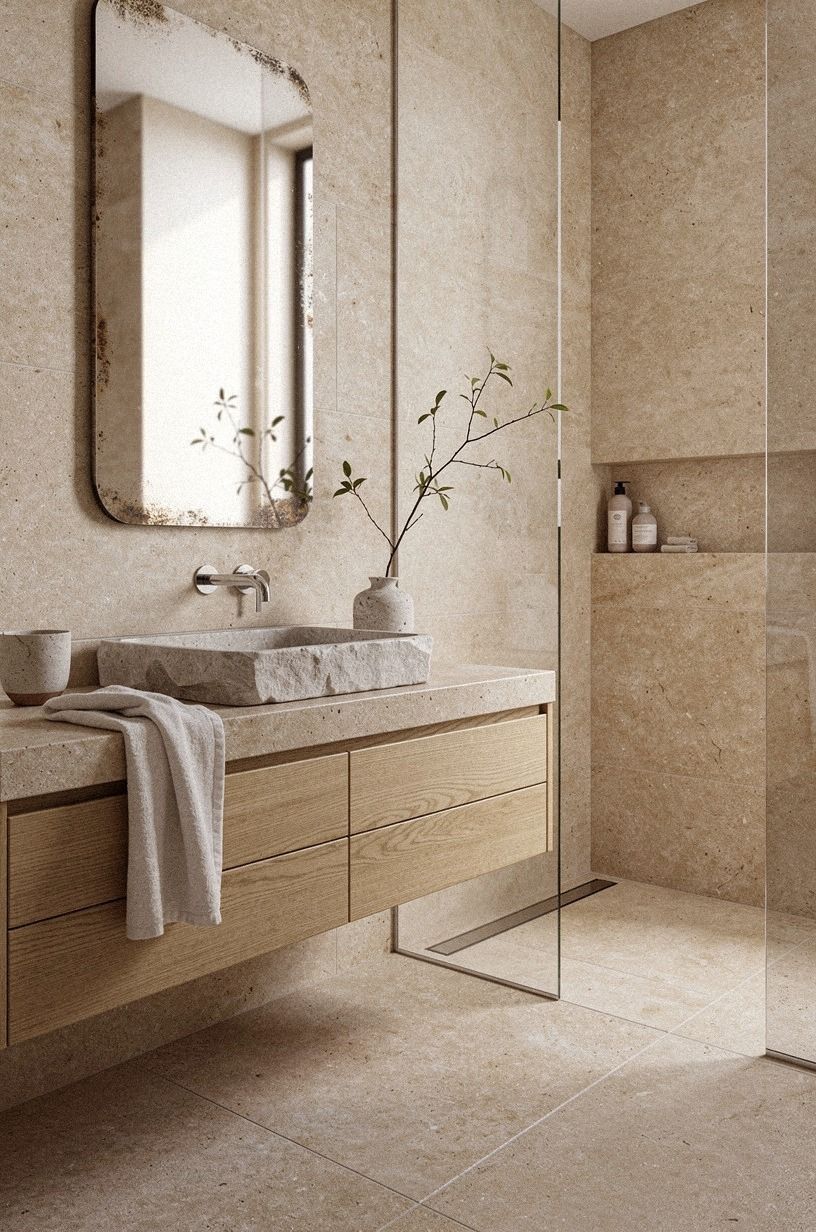
A limestone bathroom can be a small refresh or a full renovation, and the cost changes quickly once plumbing moves. Before you choose a vanity, write down what your room already gives you: usable plumbing, sound flooring, working lights, and storage. Your budget will stretch farther when you keep the expensive parts in place.
The typical US ranges below are useful planning markers, not a quote. A paint-and-textile update may be enough for your room, while a re-tiled shower can move the project into a different financial category. I’d spend first on waterproofing and lighting, then on decorative stone.
For material planning, zellige tile typically runs $15-$35 per square foot, while subway tile is often $2-$10 per square foot. A marble top can run $50-$100 per square foot, and a brushed brass faucet may cost $120-$450. You’ll make better choices when you see the numbers before the mood board.
Add labor, delivery, waterproofing, demolition, and disposal to your estimate. A material that looks affordable online can become expensive once it requires specialist installation. Ask what is included before you compare quotes.
If you’re keeping the existing layout, spend the savings on quality waterproofing and properly installed lighting. These choices won’t look as dramatic as a new basin, but they’ll affect how the room performs every day.
For a restrained renovation plan, compare this budget with the ideas in these calm limestone bathroom designs. A calm room should also leave you financially calm.
13Can a small bathroom feel warm without clutter?
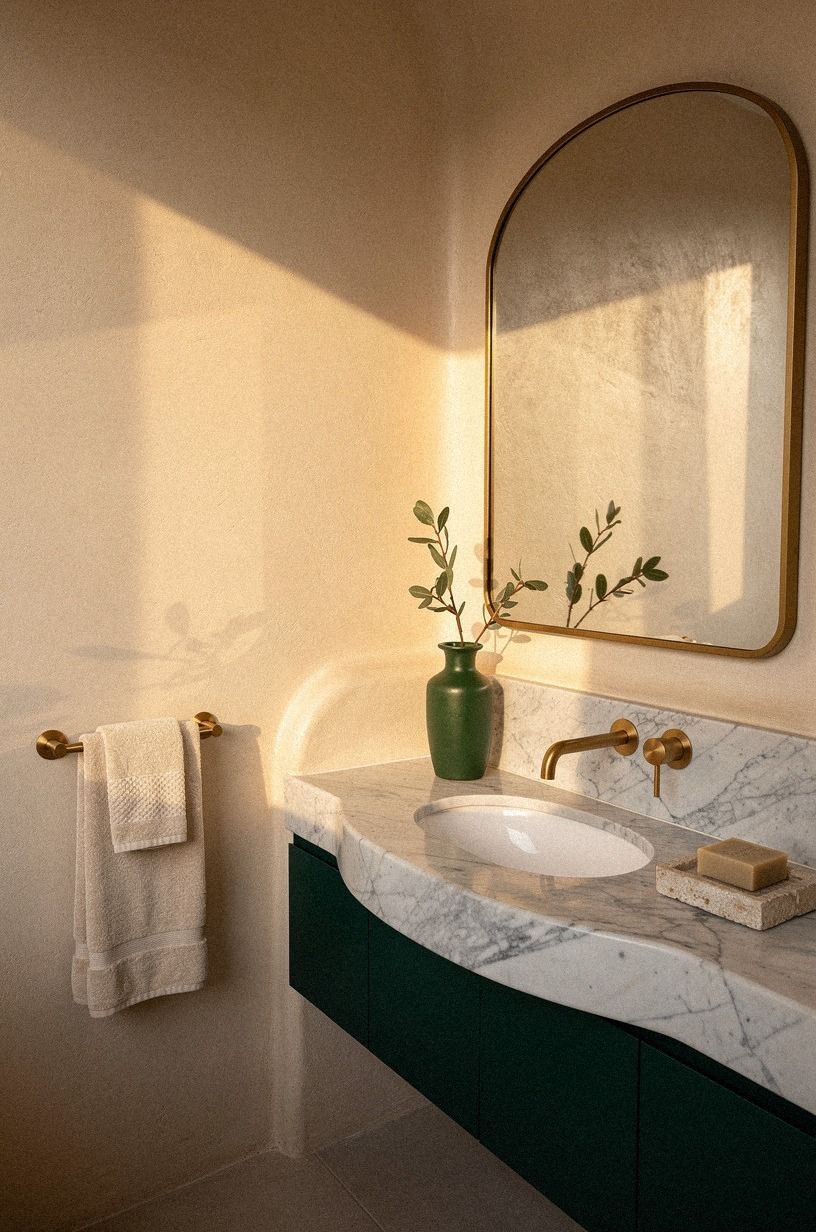
Yes, and the answer is usually better storage rather than more styling. Use a mirrored cabinet, a floating drawer, and one open shelf for the objects you reach for daily. Your small space will feel calm when every visible item has a job.
Keep the toilet clearance at least 21 inches in front, and don’t let a decorative stool steal the only comfortable walking path. I’d rather give your room one generous towel hook than add three baskets that collect dust. Small bathrooms reward editing.
Use a vanity between 32 and 36 inches high with a Carrara marble top and subtle gray veining, then select a mirror that follows its width. The pale stone will soften the view without making your room feel heavy.
Vertical storage can help when the floor area is tight. A slim cabinet beside the vanity may hold spare towels, while a recessed medicine cabinet keeps small products off the counter. Choose doors with simple fronts so the storage disappears into the background.
You can find more layout inspiration in these calm limestone bathroom ideas. The best small bathroom is not the one with the fewest possessions. It’s the one where the necessary possessions have somewhere sensible to go.
14Finish with one wabi-sabi focal point
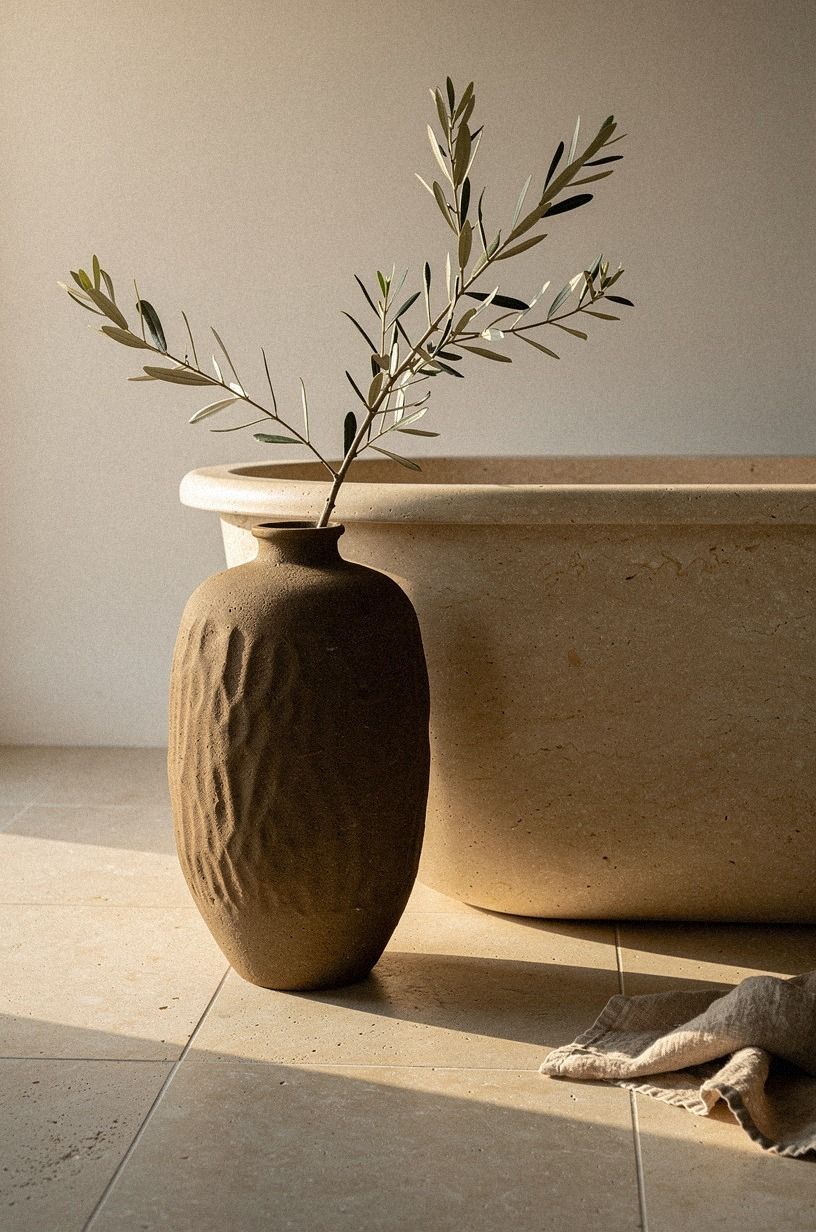
Choose one object that looks better because it isn’t flawless. It might be a reclaimed weathered teak stool, a shallow ceramic basin, or a mirror with a slightly uneven frame. Your room needs one memorable gesture, not a shelf full of objects competing for attention.
I’d avoid buying a collection of artificial imperfections. One honest piece has more presence than five accessories designed to look handmade. Place it where you’ll see it from the doorway, then leave enough empty space around it for the shape to register.
The focal point can also be architectural. A softly arched niche, an exposed teak edge, or a single wall with natural oak detailing may give the room enough character without another object.
Don’t forget the practical test. Your focal point should survive steam, splashes, and daily use, or you’ll stop enjoying it. Beauty is easier to maintain when the object belongs in the room.
If you’re still deciding between stone finishes, revisit these limestone bathroom floor ideas before making the final order. Keep the rest of the bathroom quiet so the focal point can breathe.
The Limestone Rule I’d Keep
I’ve learned that warm minimalism isn’t created by removing everything. It comes from choosing fewer things with stronger physical character, then allowing them enough room to be noticed. Limestone works because it carries tiny variations in color and texture, so your bathroom doesn’t need visual noise to feel finished.
The mistake is treating Japandi design as a color palette instead of a way of editing. Pale stone, dark wood, and aged metal can look serene, but only when each material has a reason to be there. You’ll feel the difference when your hand meets a rough ceramic cup or your feet find a thick cotton mat after a shower.
I’d also be careful with the word calm. A room can look quiet and still feel cold if its light is blue, its storage is awkward, or every surface is slick.
Your bathroom should support the way you move through it. Put the towel where you reach, keep the mirror properly lit, and let the stone age honestly.
My preference is a little imperfection beside one precise line. A hand-shaped tile next to a crisp vanity.
A weathered stool beneath a clean mirror. A soft towel beside a firm limestone edge.
That tension is what makes your modern earthy bathroom feel human, and it’s why I’d choose one imperfect focal point over a flawless matching set every time.
The Questions I Get Asked Most
What is the best Japandi limestone bathroom approach for a small bathroom?
A floating IKEA ENHET vanity with honed limestone-look surfaces is a strong starting point because it keeps the floor visible and adds useful storage. Pair it with one warm wall color, a slim mirror, and a single textured towel so your small bathroom stays open.
Where can I buy Japandi limestone bathroom pieces on a budget?
Look at IKEA, Wayfair, and Target for vanities, mirrors, and textiles without affiliate pressure. You can also check Facebook Marketplace or a local thrift shop for second-hand wood stools, ceramic vessels, and aged frames that already have character.
How much does a Japandi limestone bathroom makeover cost?
A small refresh typically falls around $200-$1,200 when you keep the plumbing, flooring, and vanity location. Paint you already own, rearranged accessories, and cleaned grout can cost nothing, while a shower renovation may reach the higher ranges in the table above.
Can I create a Japandi limestone bathroom on a budget?
Yes, and you can start with three changes: warm mineral paint, washed Belgian linen towels, and a second-hand wood stool. Keep your existing mirror, improve the bulb temperature, and use one ceramic vessel instead of replacing every fixture.
Is a Japandi limestone bathroom worth it in a small space?
Yes, because the style rewards fewer, better-chosen elements. A floating vanity, one continuous floor finish, and clear shower glass can make your room feel more spacious and intentional. Keep at least 21 inches in front of the toilet and protect the main walking path.
Is Japandi limestone a good idea for a rental?
Yes. Use removable wallpaper or peel-and-stick tile behind the vanity, a tension rod for linen, and a freestanding IKEA cabinet for storage. Your landlord-friendly changes can still add warm texture without permanent plumbing, tile, or lighting work.
For additional material direction, see these natural stone bathroom ideas.
Where I’d Start First
If I had to pick one, I’d start with the floating vanity. The visible floor line creates more breathing room than another accessory ever will, and it gives limestone space to look intentional. Pin the idea for later and compare it with this soft limestone bathroom guide.