
 by
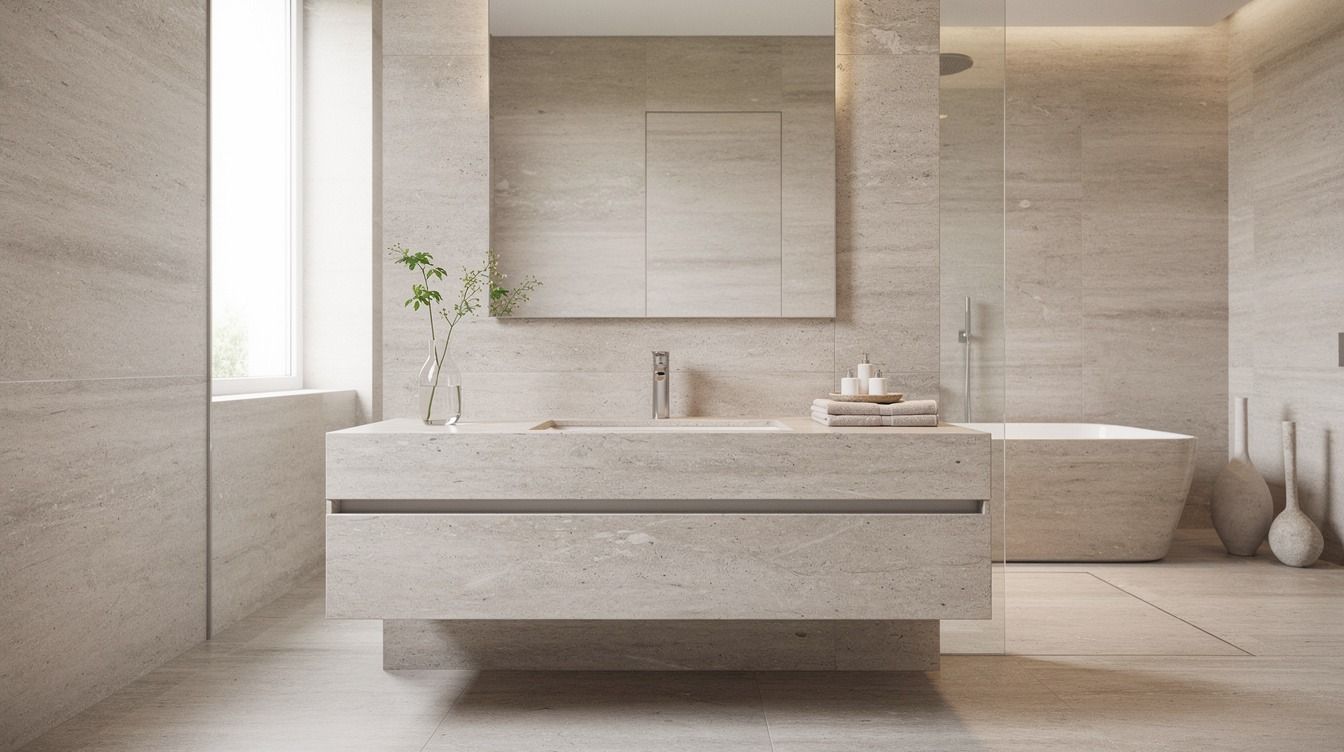
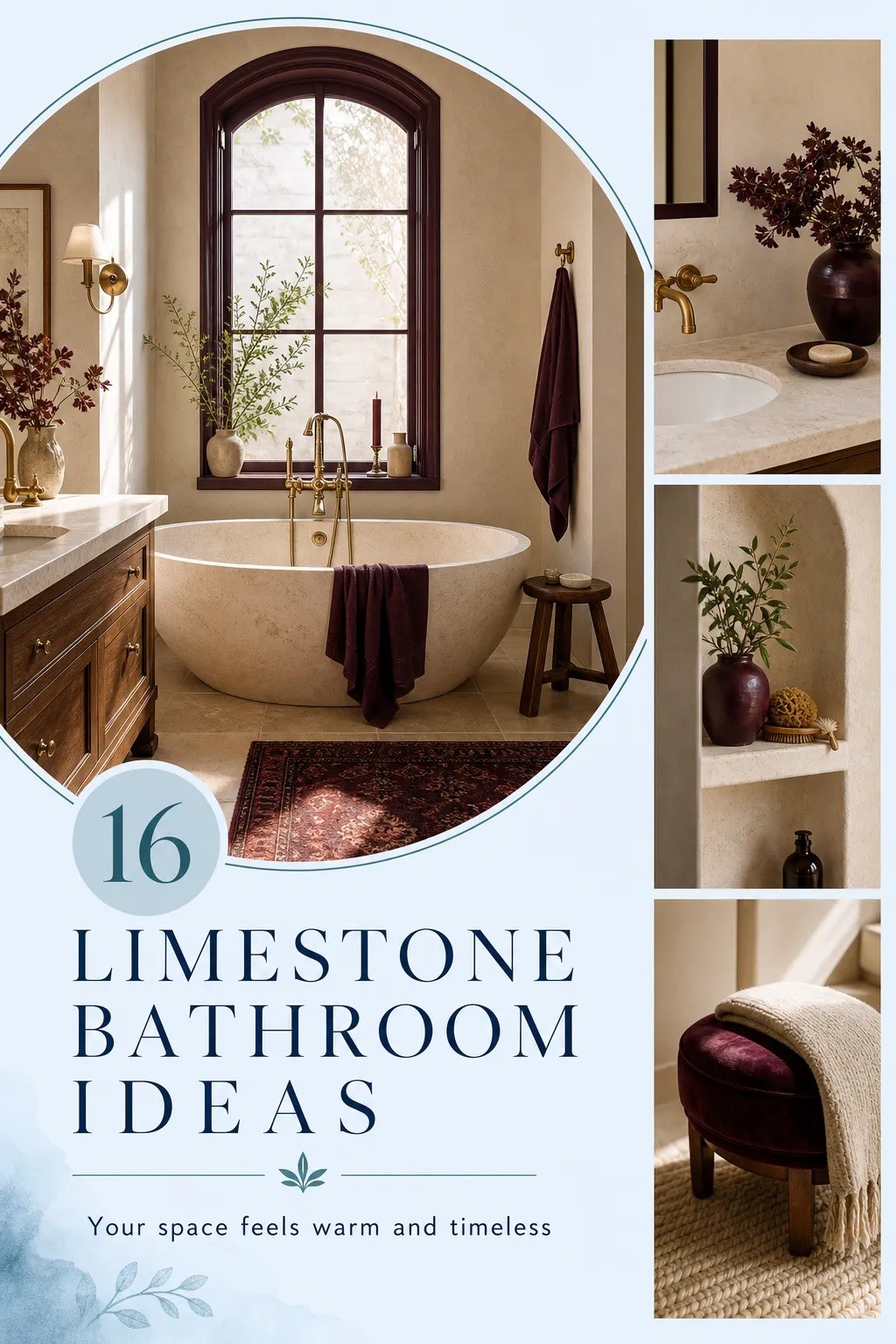
by Limestone bathroom ideas for a calm, spa-like retreat can start with paint, textiles, and one warm stone-toned detail, not a demolition crew. I once tried to fix a cold bathroom with white towels alone. It looked cleaner, not calmer. Your room needs warmth with a little grit.
- Layer limestone tones with The Three-Depth Rule
- Paint the vanity in Benjamin Moore Chestertown Buff
- Swap shiny accessories for honed stone pieces
- Hang a linen shower curtain instead of plastic
- Build The Two-Wood Rule around your mirror
- Choose a 32 to 36 inch vanity height that feels grown-up
- Can a dark wall make limestone feel warmer?
- Frame the sink with The Quiet Counter Strategy
- Float a teak stool beside a standard 60 by 30 inch tub
- Use neutral zellige over flat subway tile
- Skip overhead glare and stack three gentle lights
- Add a 36 by 36 inch shower zone that feels open
- Make your toilet zone disappear with warm texture
- Bring in one antique piece for a less sterile room
- Follow the towel palette, not the matching-set aisle
- Spend where your hand lands first
1Layer limestone tones with The Three-Depth Rule
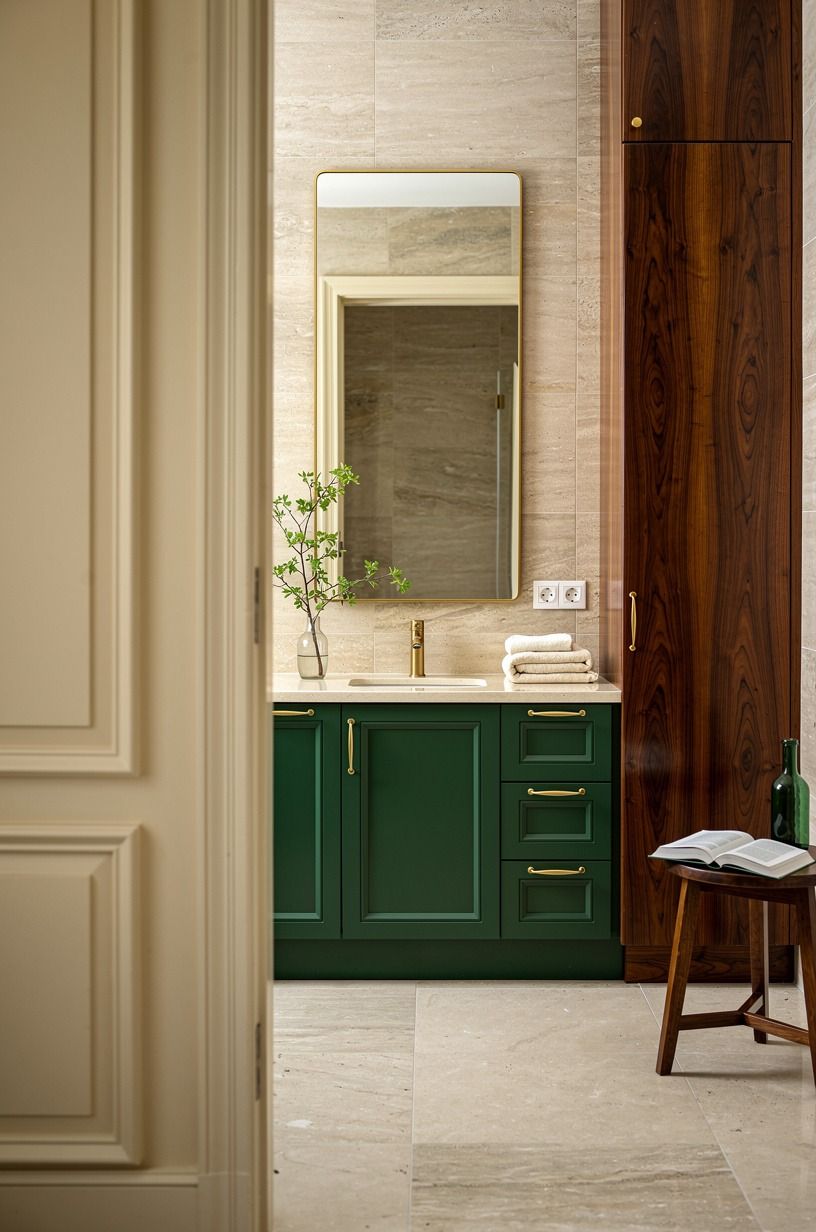
Start with three versions of limestone: pale cream, sandy beige, and mushroom gray. You’ll get a soft, organic backdrop without making your bathroom look like a builder sample board.
Choose a limestone-look bath mat in the palest tone, then add a hand towel in a deeper oat shade. I’d skip bright optic white here because it makes warm stone read yellow.
Finish with a book-matched walnut soap dish near the sink. Your eye needs those small shifts in tone to settle.
2Paint the vanity in Benjamin Moore Chestertown Buff
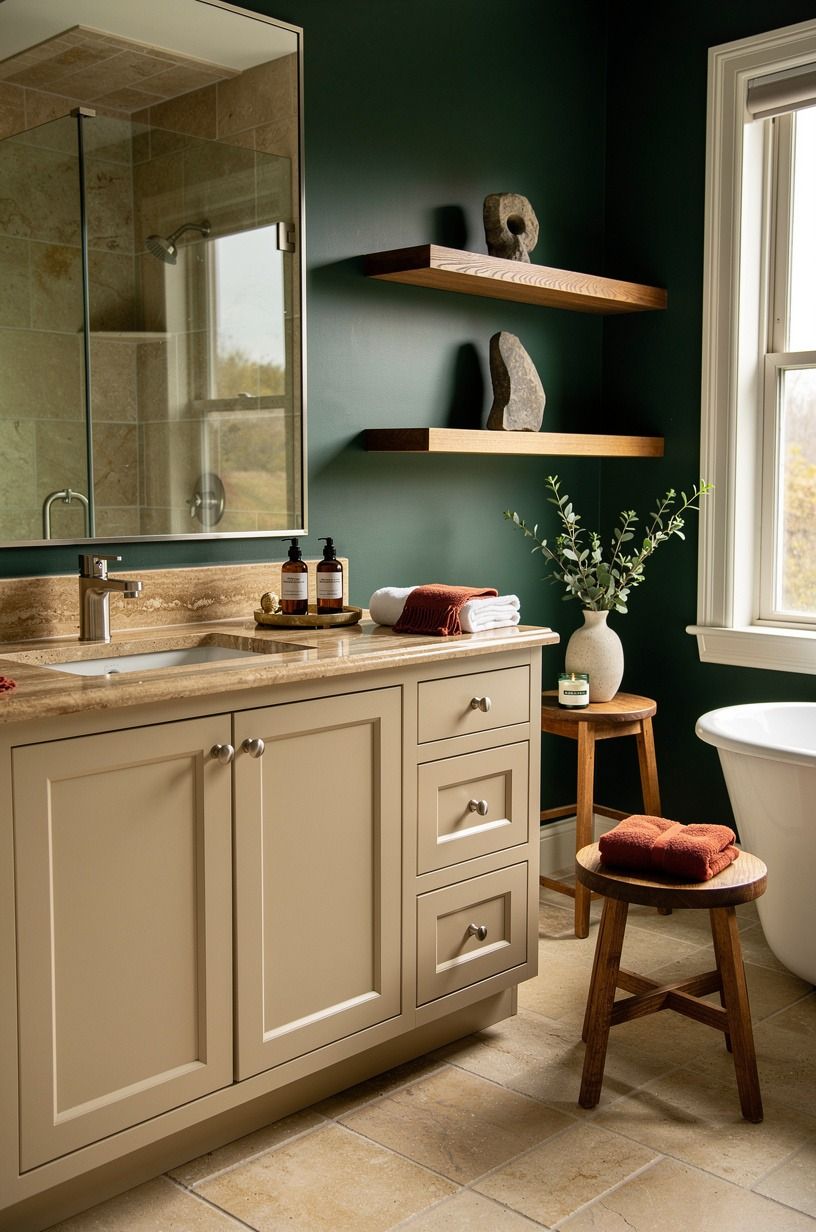
A painted vanity is one of the quickest ways to create a serene bathroom, especially if your existing cabinet is orange oak or gray laminate. Benjamin Moore Chestertown Buff HC-9 has enough brown in it to sit beside limestone without going muddy.
Keep your hardware simple. Unlacquered brass cabinet pulls will slowly darken at the edges, which is far more forgiving than polished chrome.
But don’t paint every surface beige. Your walls still need breathing room, and a warm off-white keeps the cabinet from swallowing the room.
3Swap shiny accessories for honed stone pieces
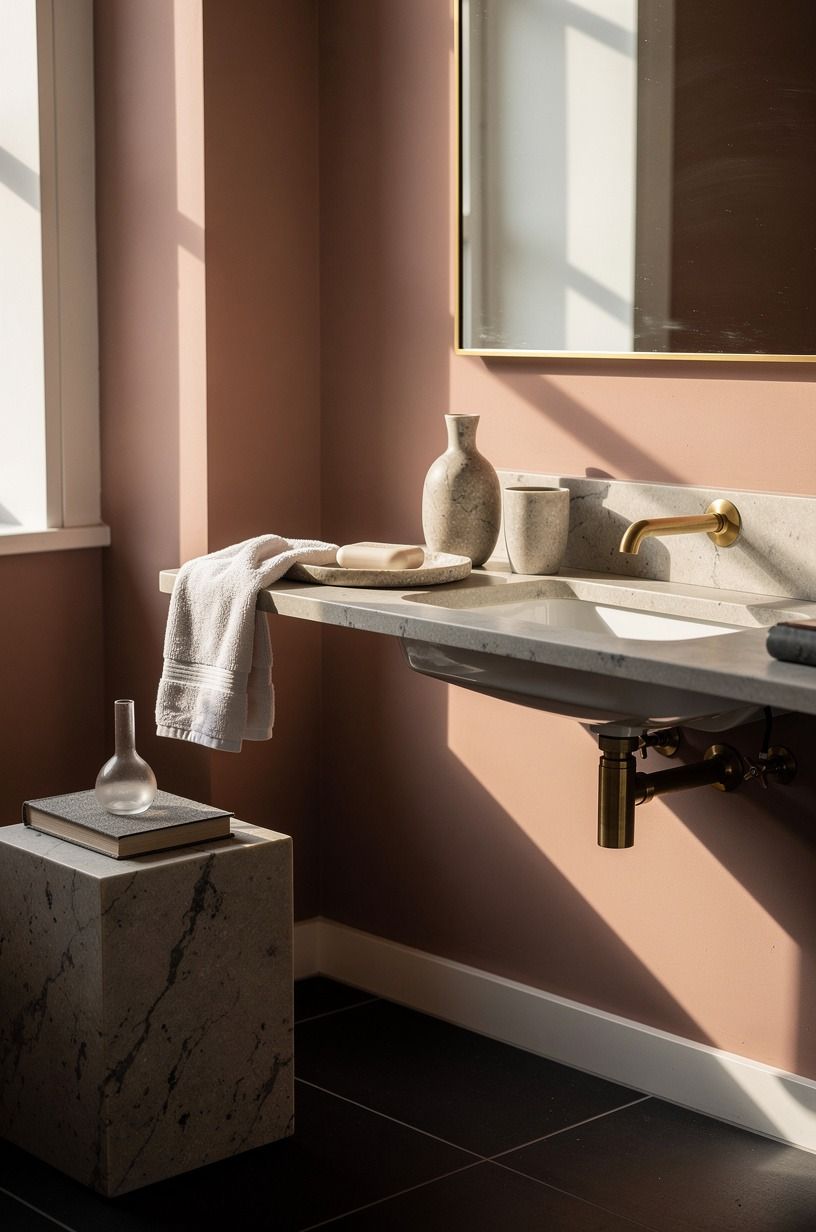
Glossy plastic dispensers fight the quiet look you’re after.
4Hang a linen shower curtain instead of plastic
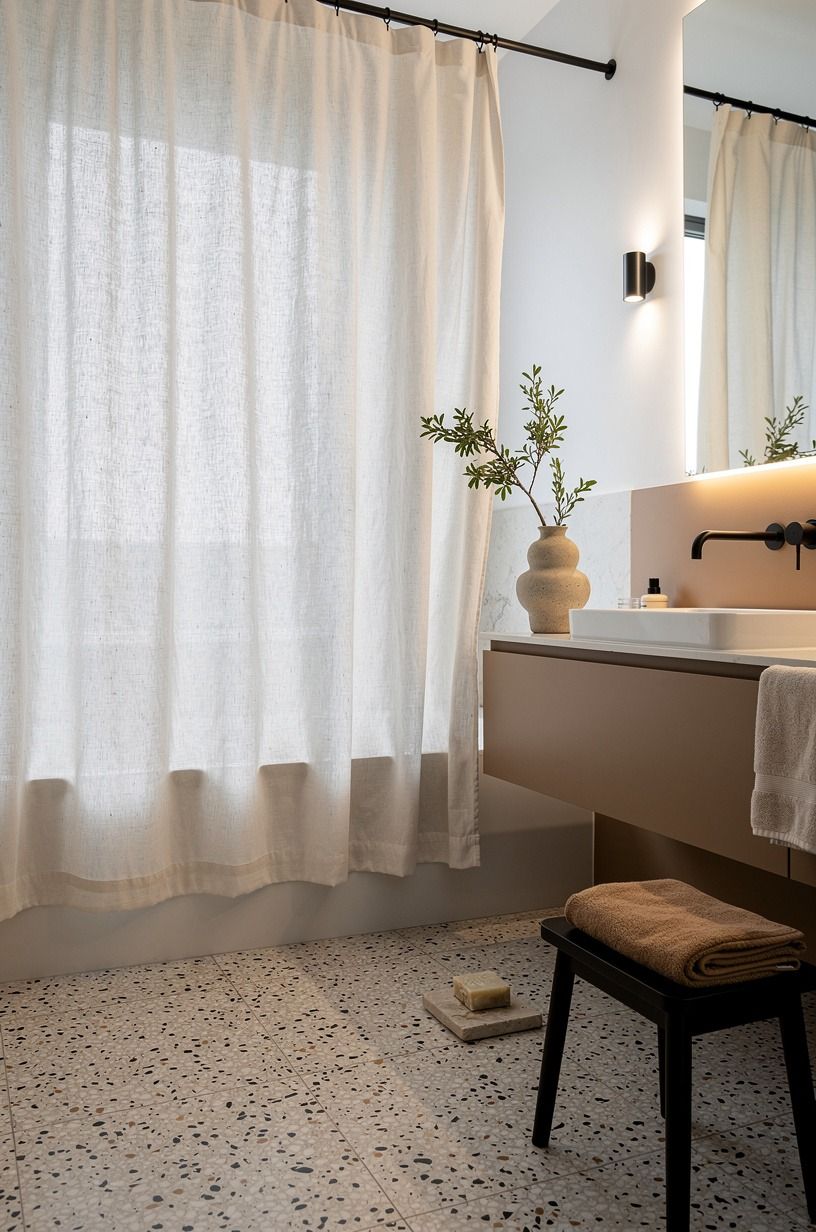
A full-length Belgian flax linen shower curtain changes the room more than a new toothbrush holder ever will. Hang it high, close to the ceiling, so your bathroom feels taller and more airy.
Your liner can stay hidden behind it. The visible fabric should have a relaxed weave and a slightly rumpled hem.
I’d skip gray polyester curtains. They’re practical, sure, but they pull limestone toward cold hotel lobby territory.
5Build The Two-Wood Rule around your mirror
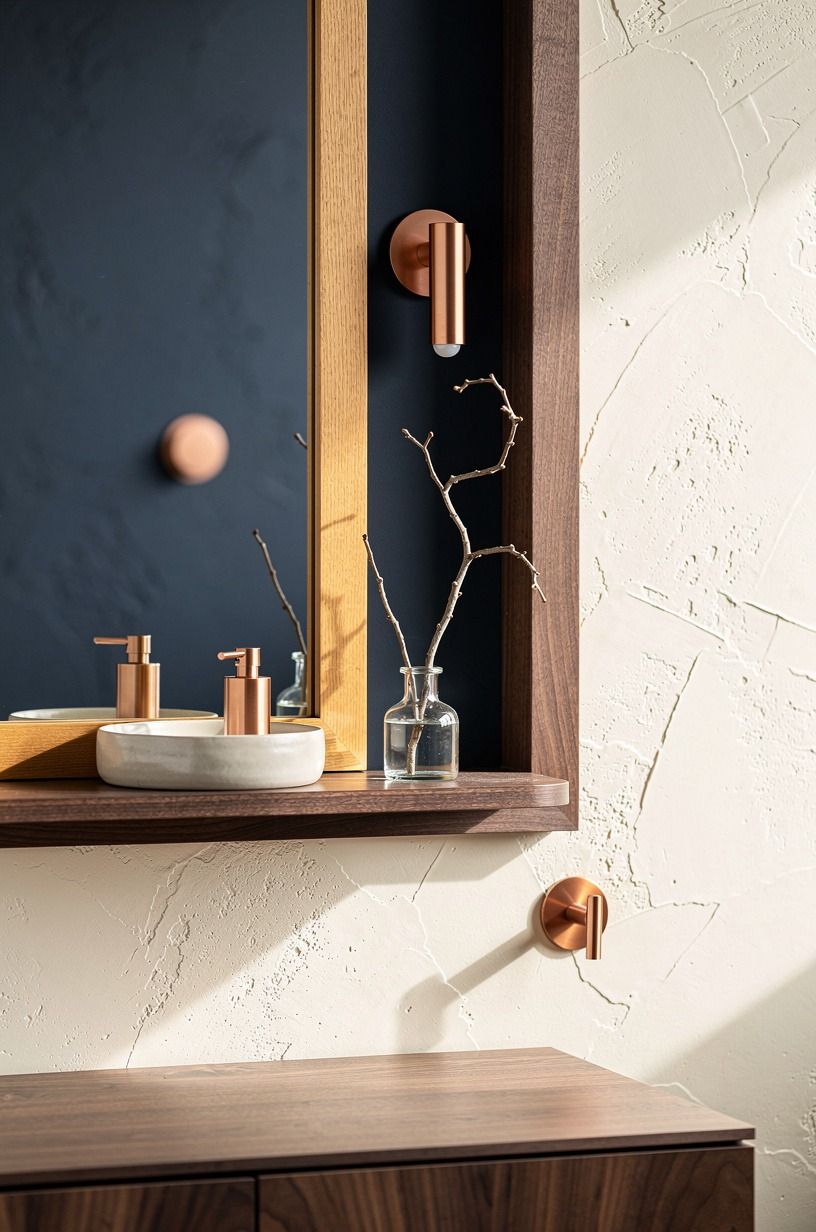
Use only two wood notes: one at the mirror and one lower in the room. A cerused white oak mirror plus a small teak stool gives your limestone bathroom a lived-in, calming rhythm.
You don’t need a matching vanity. In fact, matching wood everywhere feels heavy fast.
A narrow IKEA HEMNES stool works beside a tub if you’ve got the floor space. Folded towels.
A book. One amber glass candle.
Done!
6Choose a 32 to 36 inch vanity height that feels grown-up
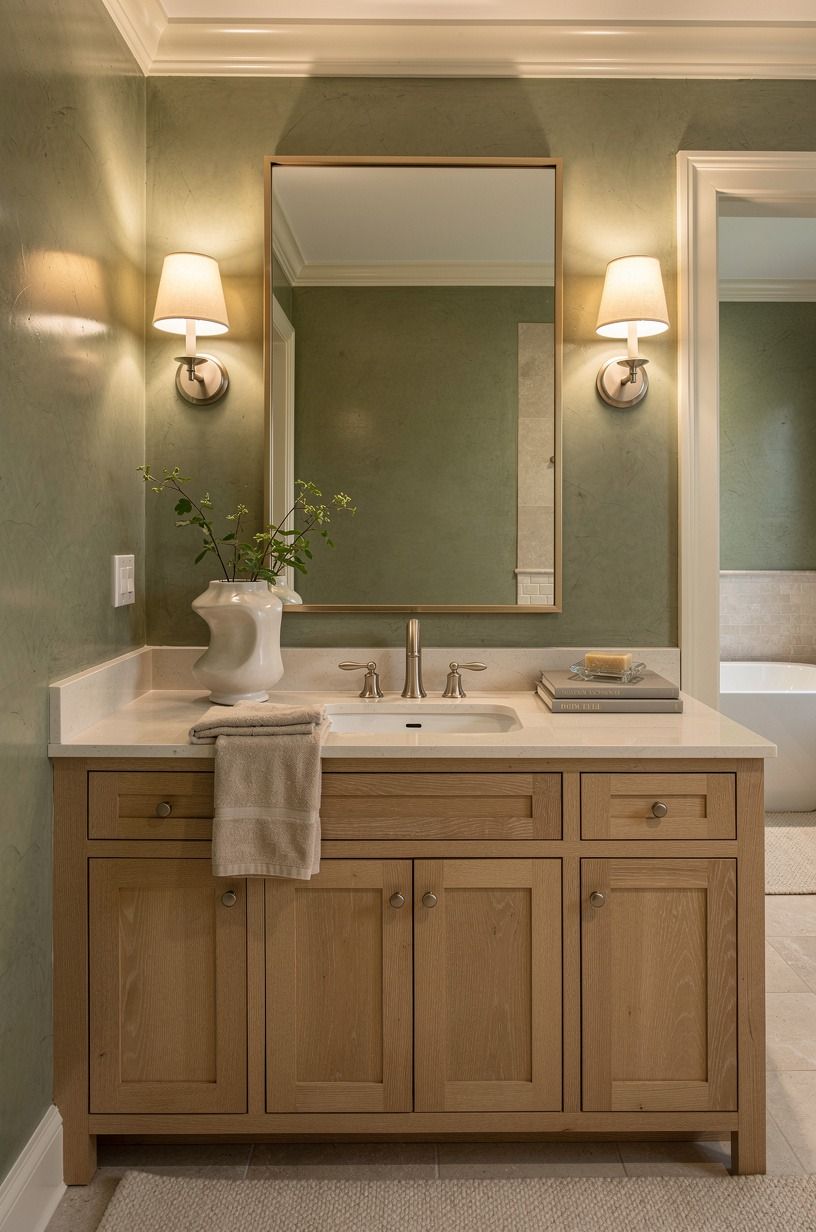
If you’re replacing a vanity, keep the top between 32 and 36 inches high. That range is typical, and it makes daily use less awkward when you’re washing your face or leaning in to do makeup.
Go for a white oak vanity with hand-applied Venetian plaster rather than fake gray wood grain. The textured finish feels much softer than a flat laminate surface.
Your faucet matters too. A brushed brass faucet usually runs $120 to $450, and it’s worth choosing the warmer finish over black if limestone is the main event.
7Can a dark wall make limestone feel warmer?
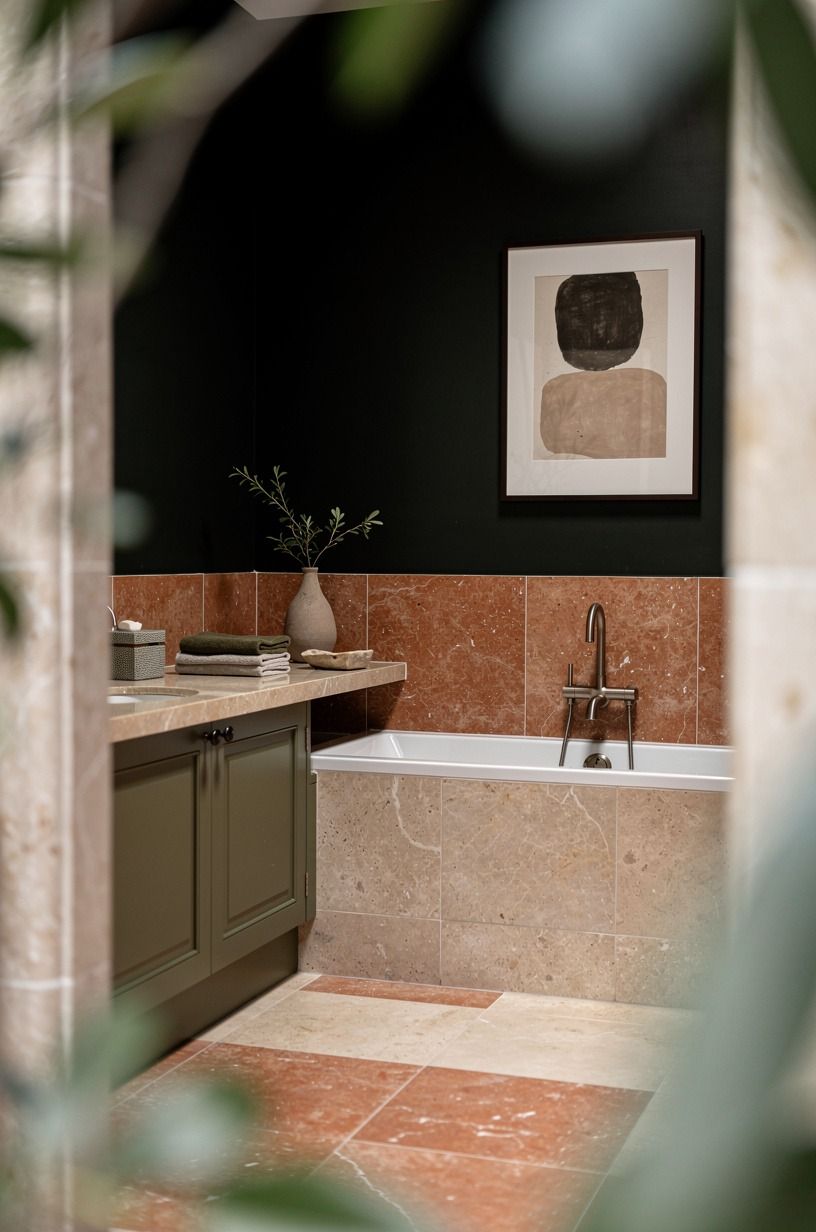
Yes, if you use it on one wall and let the stone stay light.
8Frame the sink with The Quiet Counter Strategy
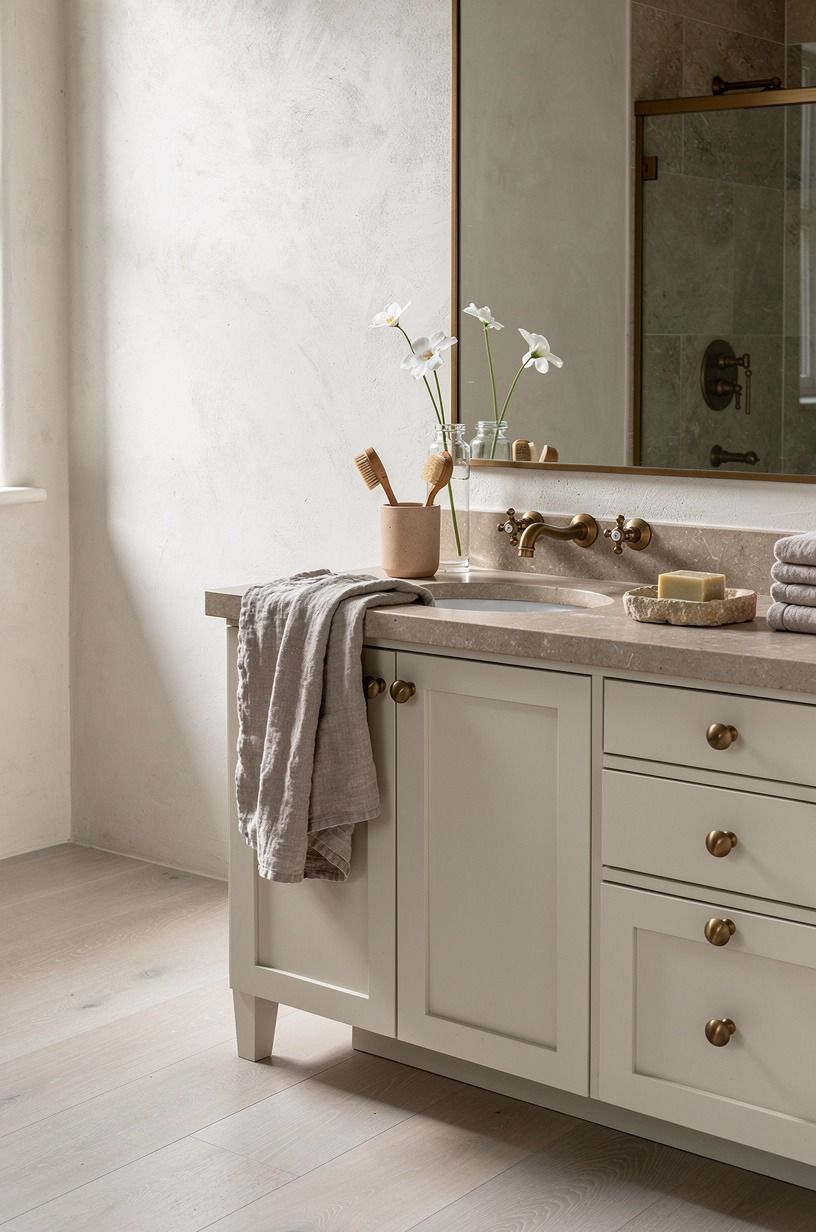
Clear most of the counter. Keep only what you reach for every day, then give those things a proper home.
A washed Belgian linen tray can hold a soap bottle, toothbrush cup, and tiny jar of cotton swabs. Your sink will still work hard, but it won’t look frantic.
I made the mistake of adding too many pretty bottles once. By day three, there were hair ties, toothpaste smears, and nowhere to set a glass of water.
9Float a teak stool beside a standard 60 by 30 inch tub
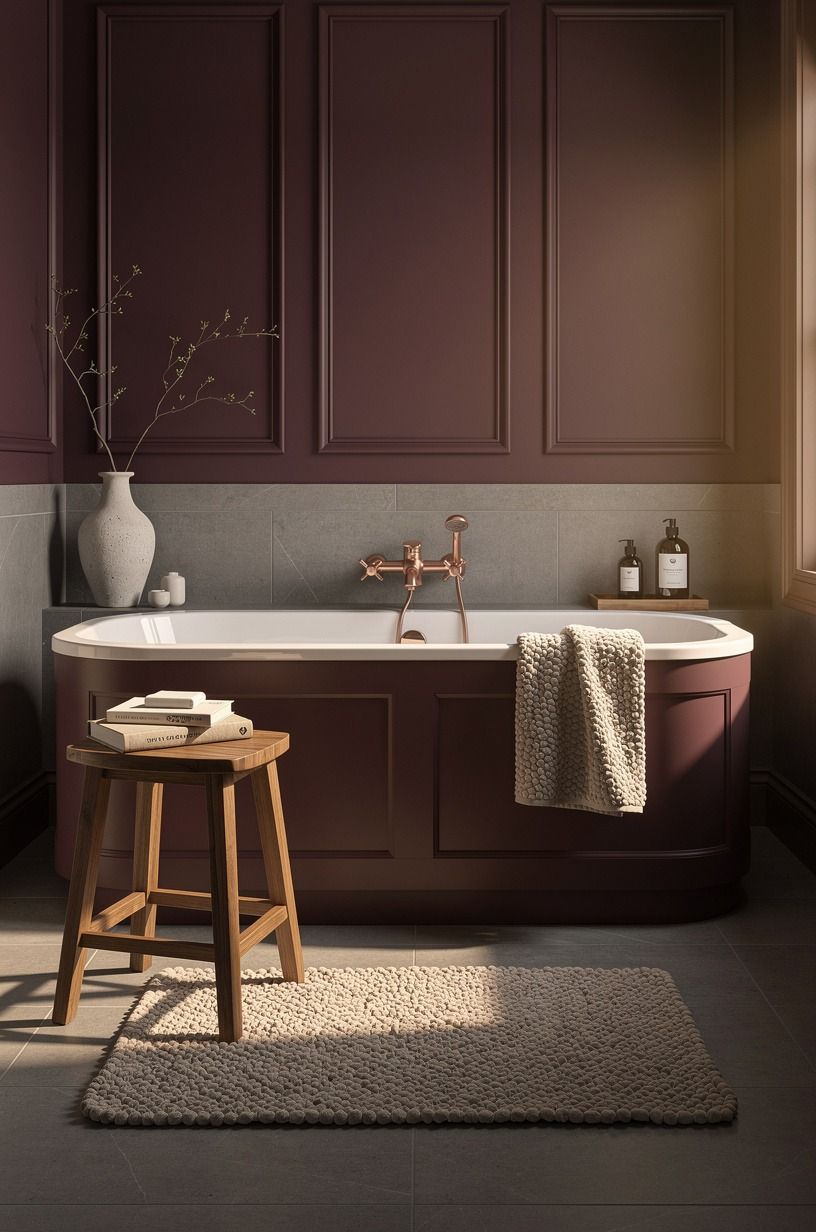
A standard tub measures about 60 by 30 inches, so a small stool gives you a useful landing spot without crowding the rim. Put it at the faucet end, where your towel and bath salts are easy to reach.
Use solid teak shower stool slats rather than a painted side table. Water will find every weak finish. Every time.
Your little ritual can stay simple: a folded towel, a dry brush, and a lidded bouclé canister.
10Use neutral zellige over flat subway tile
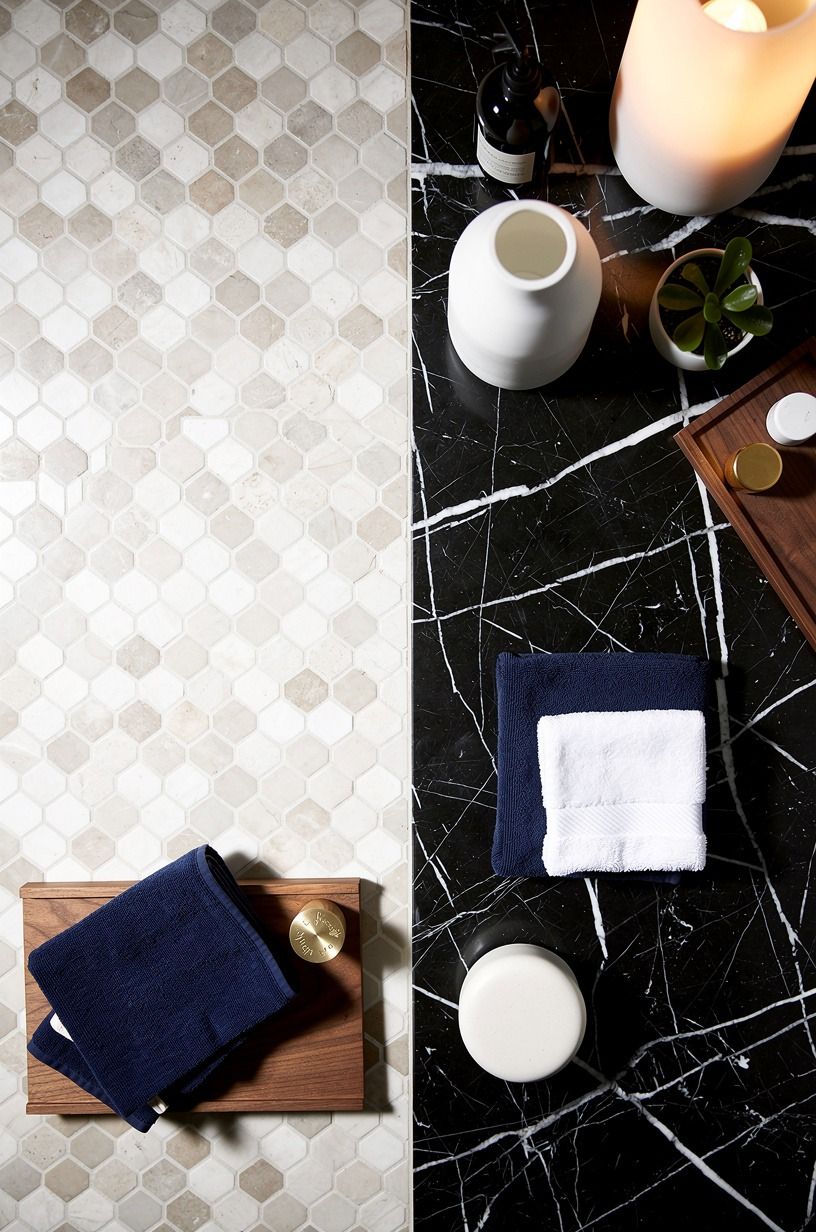
If you’re adding a small tile area, choose hand variation over a flawless grid. Hand-glazed neutral zellige catches light in uneven little flashes, which makes limestone feel more tactile.
Zellige typically costs $15 to $35 per square foot, while subway tile usually lands around $2 to $10 per square foot. You don’t need zellige across the whole bathroom.
Use it beside a Nero Marquina marble sink ledge or in one recessed niche. A small patch has more charm than a wall covered in it.
These neutral zellige bathroom looks make the contrast clearer.
11Skip overhead glare and stack three gentle lights
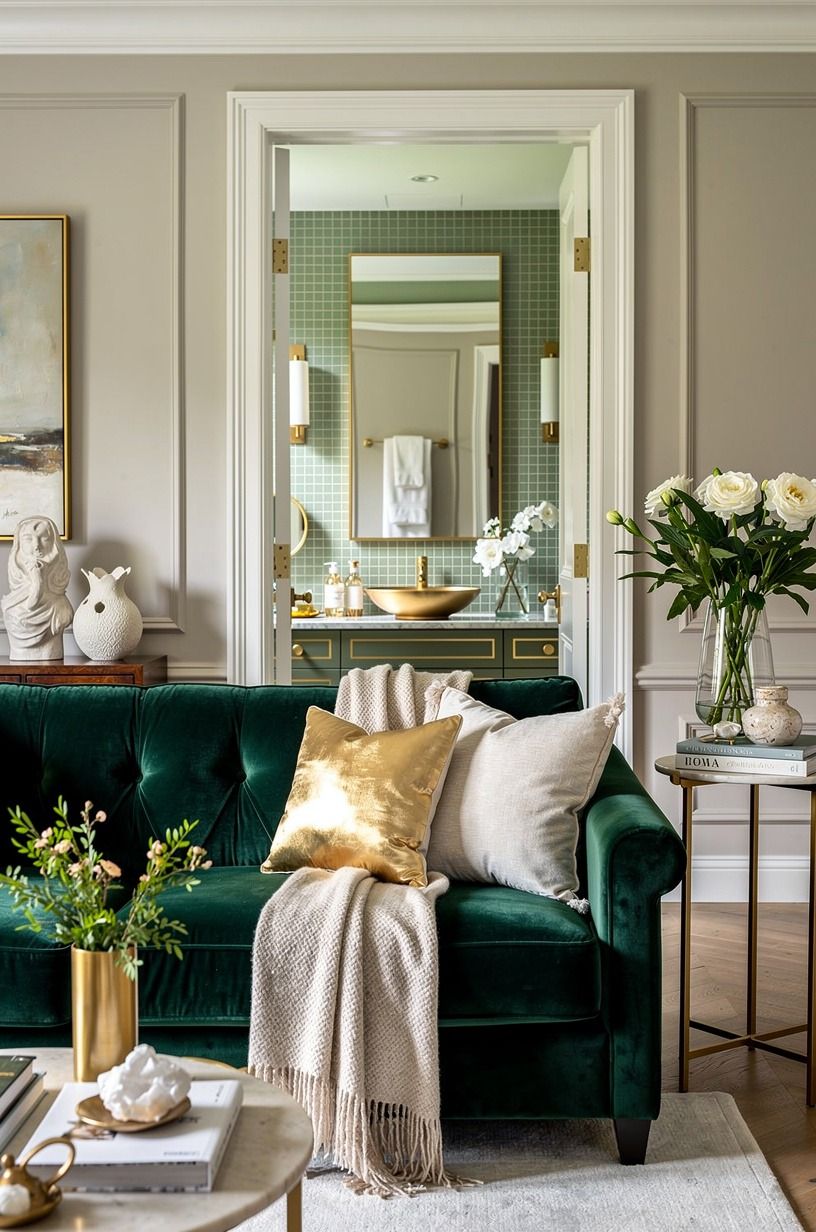
One ceiling fixture isn’t enough for luxury spa bathrooms. It throws light straight down, catches every shadow, and makes even good limestone look flat.
Use The Three-Height Light Stack: a ceiling fixture, mirror sconces, and one low glow near the tub. West Elm Linear Glass Sconces work well because their shade softens the bulb rather than exposing it.
But keep bulbs warm. A deep-pile mohair velvet stool or ottoman near the tub can make that evening light feel even softer.
12Add a 36 by 36 inch shower zone that feels open
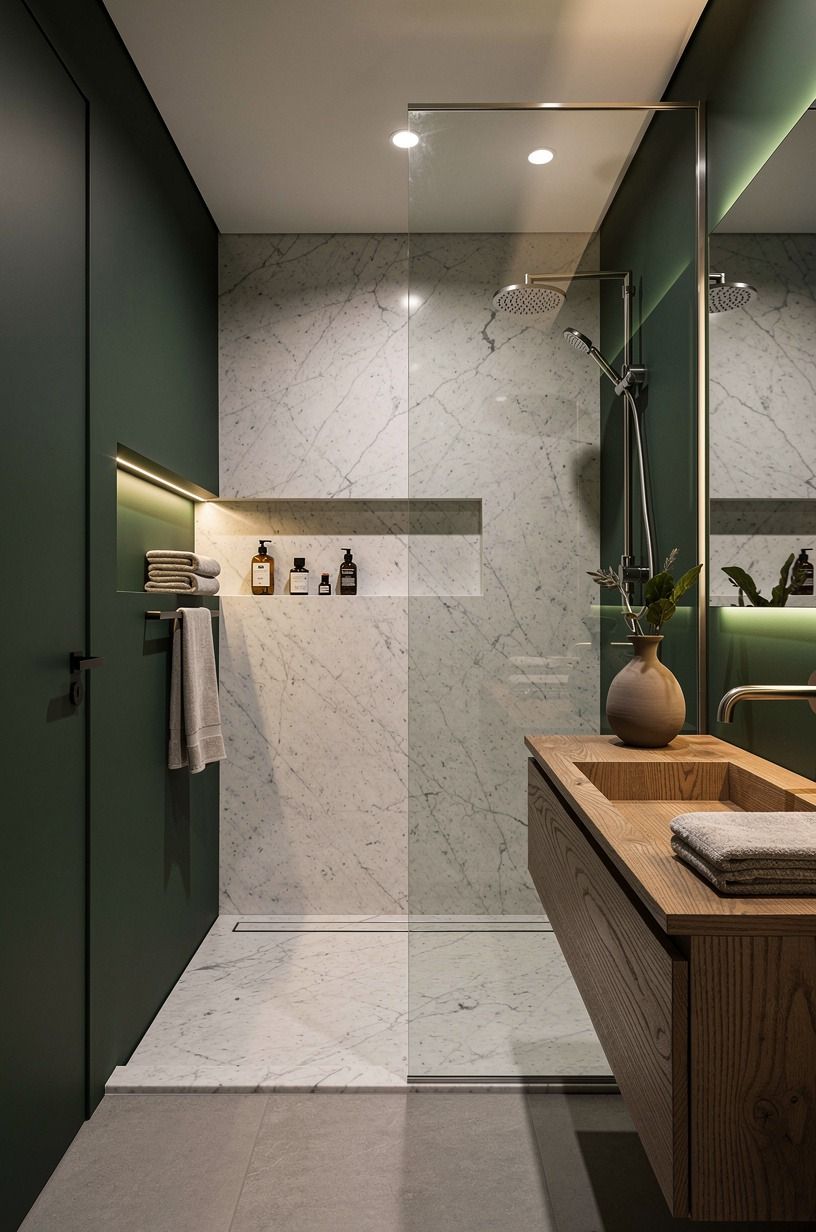
A comfortable shower needs at least 36 by 36 inches.
13Make your toilet zone disappear with warm texture
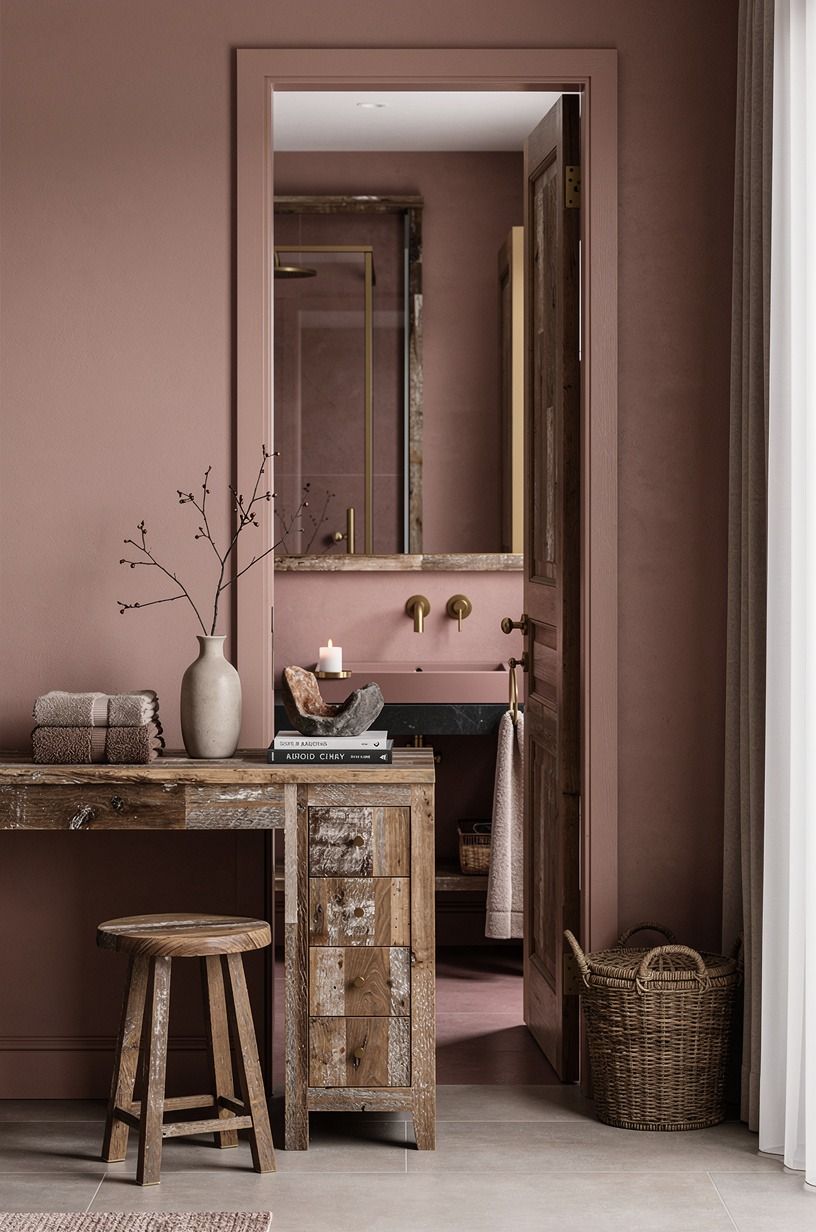
You need at least 21 inches of clearance in front of the toilet, so don’t use that zone as overflow storage. Keep it open, then soften what remains.
A 600gsm Turkish cotton bath towel on a simple hook gives the wall a plush note without adding furniture. Add a reclaimed teak basket only if your clearance stays comfortable.
Short. Useful. Your bathroom doesn’t need a decorative ladder in every empty corner.
For more pared-back finishes, browse these microcement bathroom ideas.
14Bring in one antique piece for a less sterile room
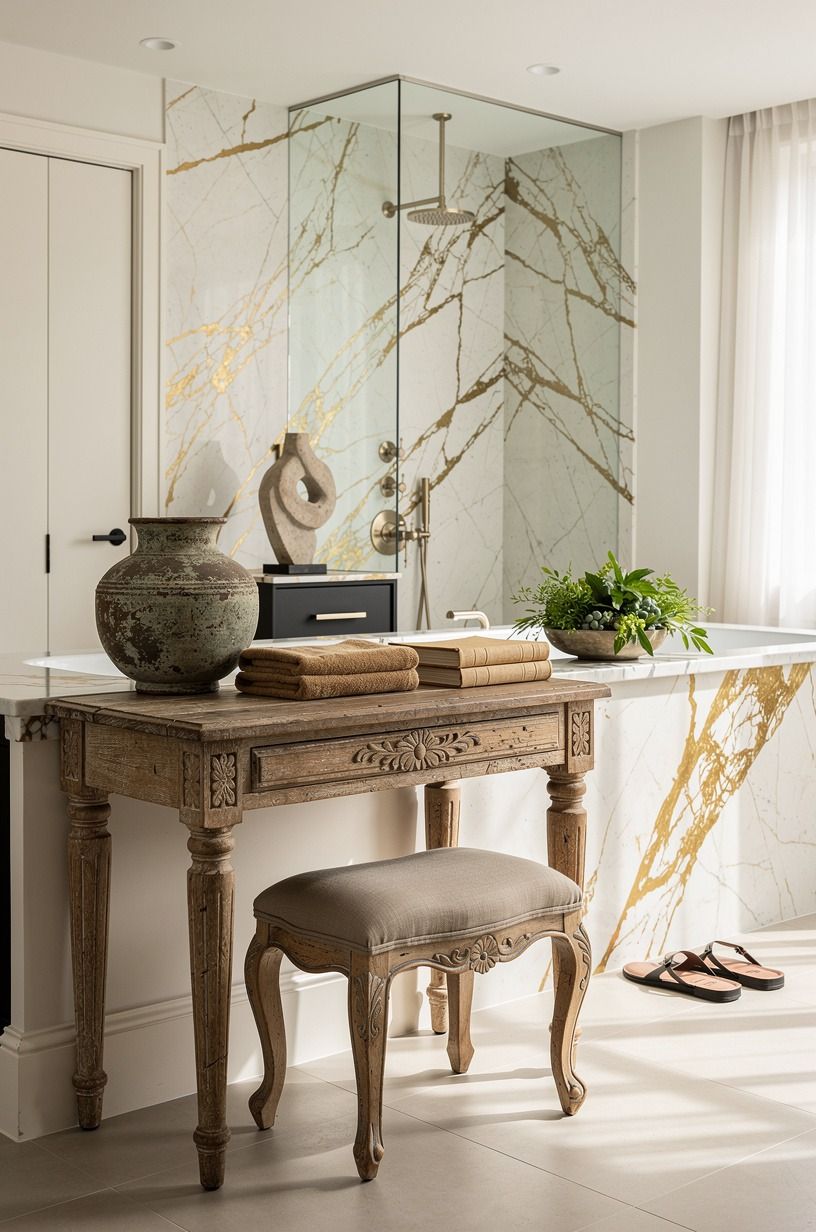
Limestone can look too new when everything around it comes from the same store. One old item gives your bathroom a little history.
Try a vintage brass picture frame beside the sink, or a worn wood stool under a window. You’ll want something with scratches, patina, or a slightly odd proportion.
And no, it doesn’t need to be precious. I’d rather see a $20 thrifted frame than another matching acrylic tray.
15Follow the towel palette, not the matching-set aisle
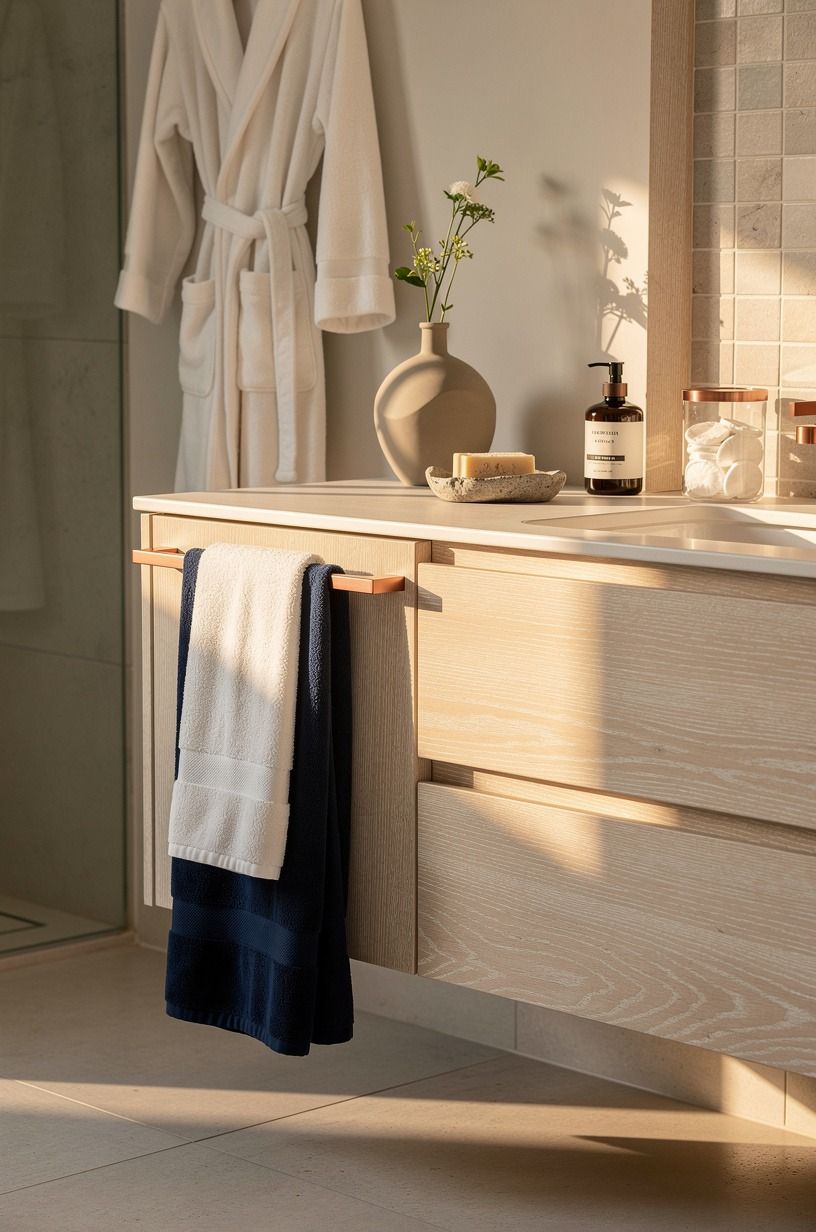
Pick two towel colors and repeat them loosely: cream plus tobacco, or soft flax plus faded olive. Your towels become part of the room instead of laundry waiting to happen.
A Target Threshold waffle-weave towel is a budget-friendly place to start. Then add one heavier Turkish cotton bath sheet for the person who always steals the good towel.
Keep the palette earthy. Bright aqua is the loser here because it makes limestone feel beachy instead of serene.
This tadelakt bathroom guide has more warm wall inspiration.
16Spend where your hand lands first
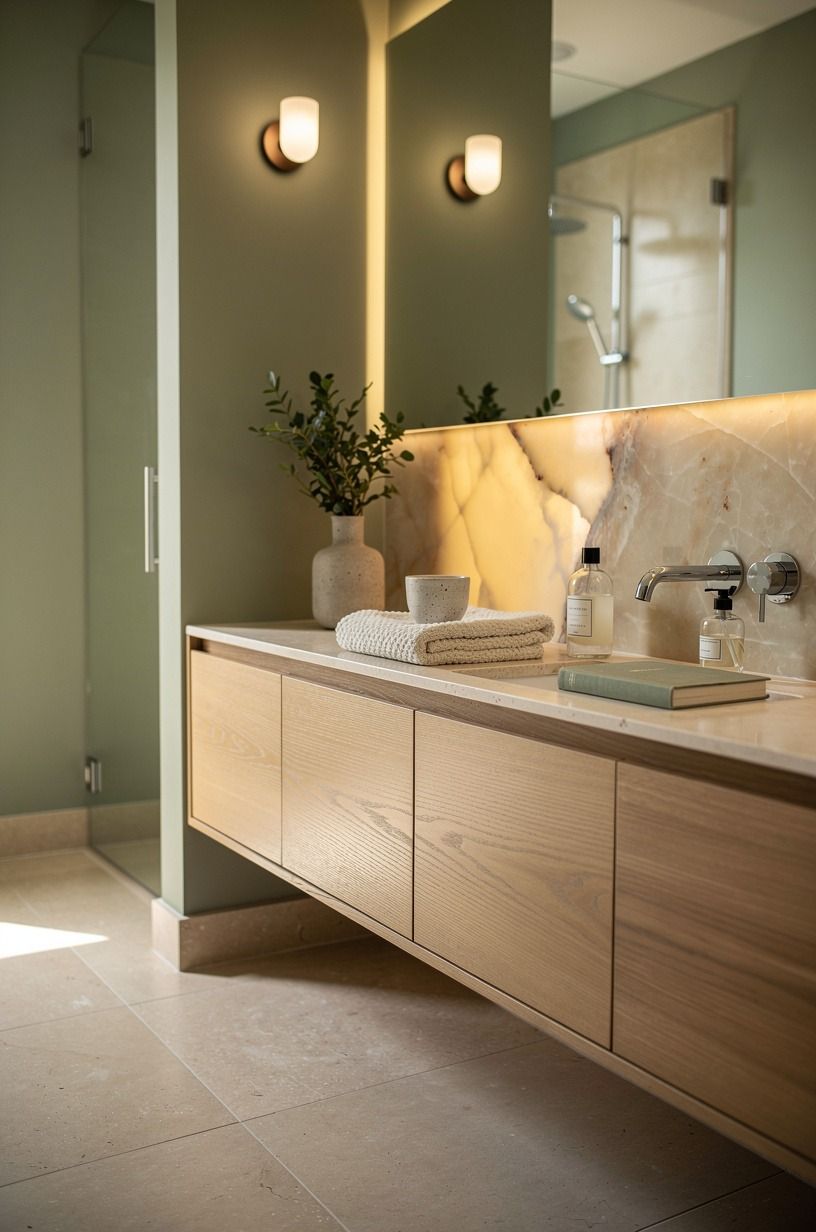
If you’re wondering how to create a spa-like bathroom without renovating, spend on the things you touch: faucet, towels, mirror, and light switch plate. Your hand notices quality before your eye has time to judge the room.
A CB2 brass-framed arched mirror can anchor a basic vanity, while a backlit translucent onyx switch plate makes an ordinary shower feel luxurious. That contrast is the whole point.
Don’t blow your budget on fake limestone wallpaper before fixing the hard, cold details. Your fingers will know.
What a limestone bathroom refresh typically costs
You can make a visible change for $200 to $1,200 if you focus on paint, mirror, faucet, and textiles. A bigger project costs more quickly, especially once plumbing or tile enters the picture.
I’d put the first dollars into lighting and a faucet. A new vanity is tempting, but your existing one can look surprisingly refined after paint, better hardware, and a mirror with some presence.
Why I keep coming back to limestone bathrooms
I’ve gone back and forth on limestone for years because it can be expensive, porous, and a little fussy in the wrong hands. I get why people choose crisp white tile instead.
White tile is easy to source, easy to clean, and it photographs well. But limestone has a softness that white tile rarely manages. It isn’t trying to look pristine all the time, which is useful in a room where toothpaste, water spots, and damp towels are part of normal life.
The part I love is how it changes through the day. In the morning, the surface can look pale and chalky. At night, with a warm sconce on, it leans honey-colored and almost velvety.
You don’t get that movement from a flat gray porcelain tile. You might get durability, yes, but not much feeling.
I also think people overdo the spa idea. A bathroom shouldn’t resemble a resort lobby where nobody has ever dropped a hair clip. Your version can include a chipped bowl, an old frame, a towel that’s slightly rumpled, and a candle with a label you peeled off months ago.
That’s the good stuff. It makes the room feel personal instead of borrowed.
If your budget is small, borrow limestone’s palette instead of copying the material exactly. Warm cream paint, teak, linen, aged metal, and a stone tray get you close. And honestly, that approach often feels more relaxed than a full stone remodel.
Read why limestone works so well in neutral bathrooms.
A Few Things Worth Answering
What is the best limestone bathroom idea for a small bathroom?
Start with a warm mirror and one travertine tray rather than covering every wall in stone. You’ll keep your small bathroom bright while giving the vanity area a grounded, calming focal point. An IKEA HEMNES stool can add storage without visual bulk.
Where can I buy limestone bathroom pieces on a budget?
Look at IKEA, Target Threshold, Wayfair, Facebook Marketplace, and local thrift stores. Your best budget finds are usually towels, frames, stools, and stone-look trays, not permanent finishes. Check these spa bathroom ideas before buying a matching set.
How much does a limestone bathroom makeover cost?
A light refresh can cost about $200 to $1,200, while a larger renovation often runs $3,000 to $9,000 or more. Paint and decluttering are free, and they’ll tell you what your bathroom needs before you spend on tile.
Can I create a limestone bathroom on a budget?
Yes, and you don’t need real limestone to get the feeling. Warm texture does the heavy lifting: cream paint, a thrifted wood stool, a linen curtain, and a stone-toned bath mat. Skip anything glossy or icy blue.
Is a limestone bathroom worth it in a small space?
Yes, because a small bathroom lets you use richer materials in smaller amounts. One focused surface can feel expensive without taking over the room. Keep your floor open and put the visual weight at the vanity wall.
Is a limestone bathroom a good idea for a rental?
Yes, if you focus on removable layers. No-damage swaps include a tension-rod linen curtain, peel-and-stick sconces, removable hooks, and a freestanding mirror. Your lease stays safe, and the room still feels far more welcoming.
For an outdoor version of that same retreat feeling, see these hot tub ideas.
Where I’d Start First
If I had to pick one, I’d start with the mirror. A warm wood or aged brass frame interrupts all that hard, reflective bathroom surface before towels and bottles start competing for attention. Pin the mirror idea for later and revisit your lighting next.