
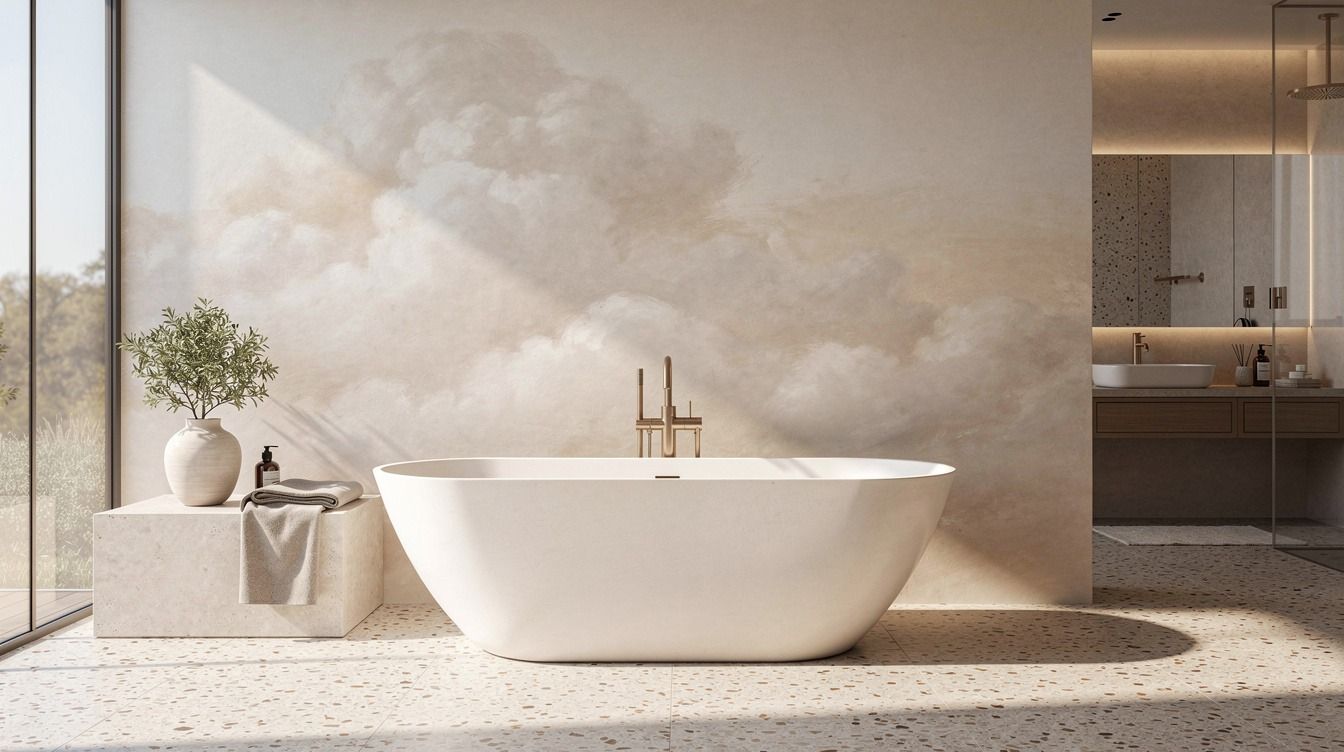
 by
by Limewash wall ideas for a bathroom with subtle movement can start with paint, a mirror swap, and better light, not a demolition crew. I limewashed before dealing with bad lighting once, and the wall looked flat by noon. Don’t blame the finish. Give it something warm to catch.
- Brush on a quiet cloud wash (the Soft-Edge Method)
- Layer warm white over cool tile
- Build the Two-Wood Rule around the vanity
- Skip stark white for Sherwin-Williams Sea Salt
- Frame a 60x30-inch tub with an uneven halo
- Hang a tall mirror through the movement
- Try the Three-Height Light Stack
- Make a moody corner, not a moody cave
- Float the vanity over a softer base
- Put plaster-like movement behind open shelves
- Mix matte limewash with one glossy tile band
- Use the Doorway Fade instead of a hard stop
- Choose brushed brass over polished chrome
- Plan your $200-$1,200 refresh before you buy tile
- Let one imperfect wall stay imperfect
1Brush on a quiet cloud wash (the Soft-Edge Method)
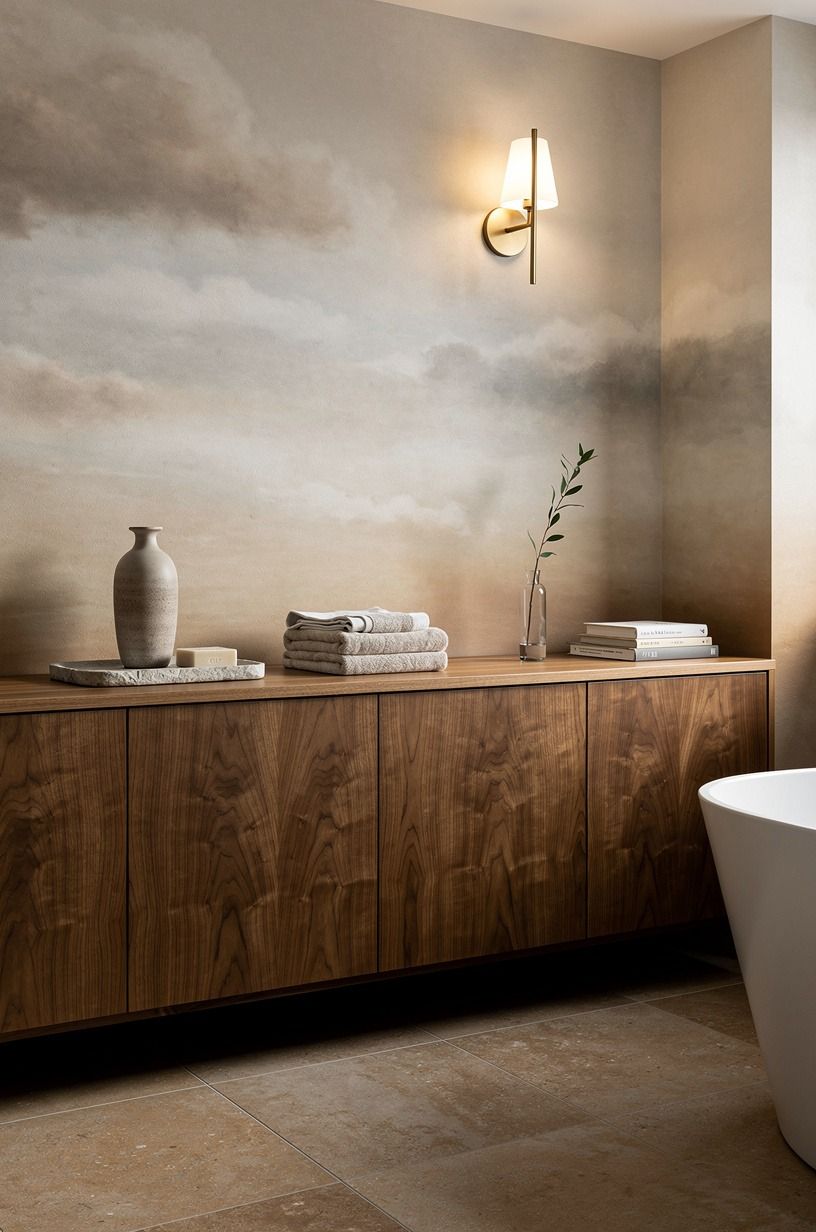
Start with a clay-toned, cloudy limewash wall bathroom finish if your room is small and your tile already has plenty going on. You’ll get movement without a loud pattern, especially beside Benjamin Moore Chestertown Buff HC-9 in a softened, chalky application.
Use overlapping X-shaped strokes instead of neat rows. I’d skip a crisp sponge effect because it reads like a 2004 faux finish, not an earthy wall with age.
A rounded book-matched walnut mirror helps the surface feel intentional. Keep your linens plain, your hardware in aged brass, and let the wall do the moving.
For more tonal examples, save these limewash bathroom walls with soft cloudy texture. You’ll see why low contrast wins here.
2Layer warm white over cool tile
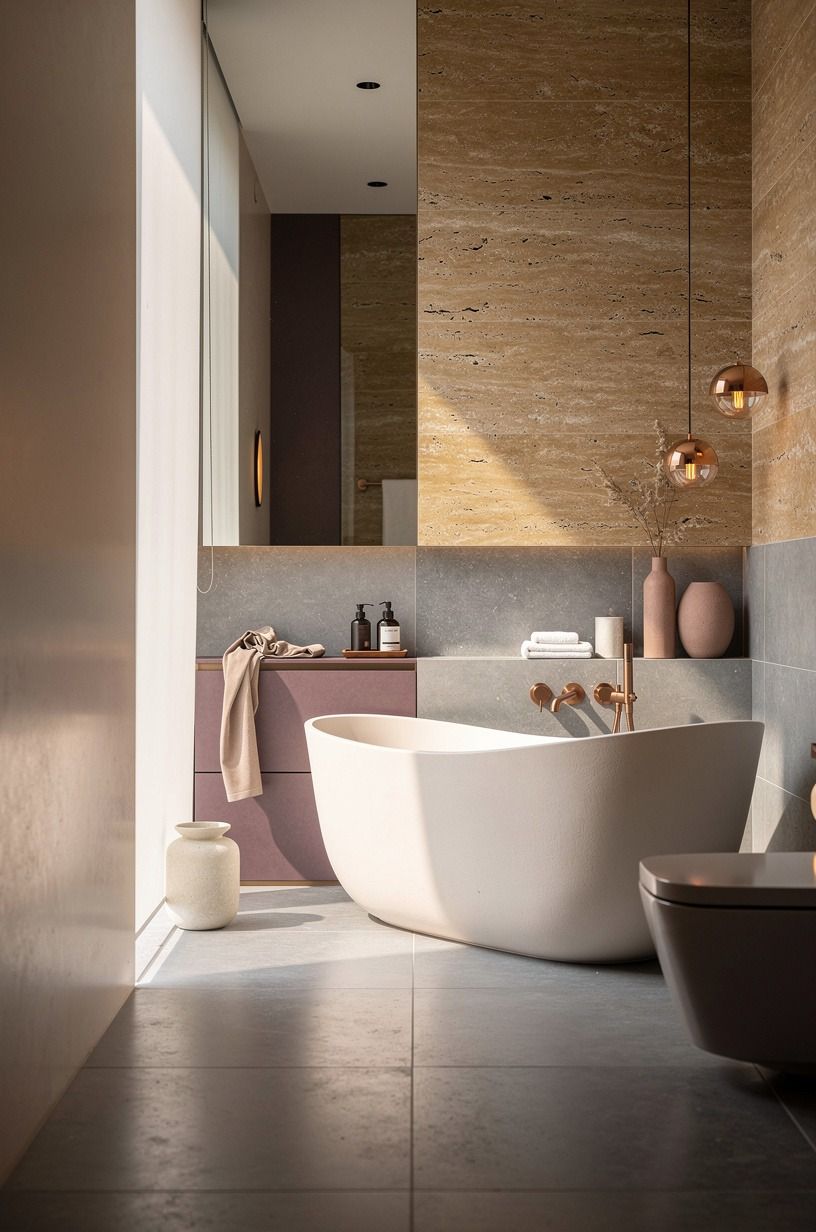
If your existing tile leans gray, choose a plum-toned limewashed bathroom wall rather than trying to match it. Farrow & Ball Joa’s White can soften the mix near warm travertine, and your bathroom won’t feel like a waiting room.
But don’t coat every surface. Stop at the vanity wall or the wall behind the tub, then leave the tile as a clean border.
A rose-gold faucet gives the mix a little glow. Typical faucet costs run $120-$450, which is far less painful than replacing a serviceable vanity.
Your eye needs one calm place to land. That’s the job.
3Build the Two-Wood Rule around the vanity
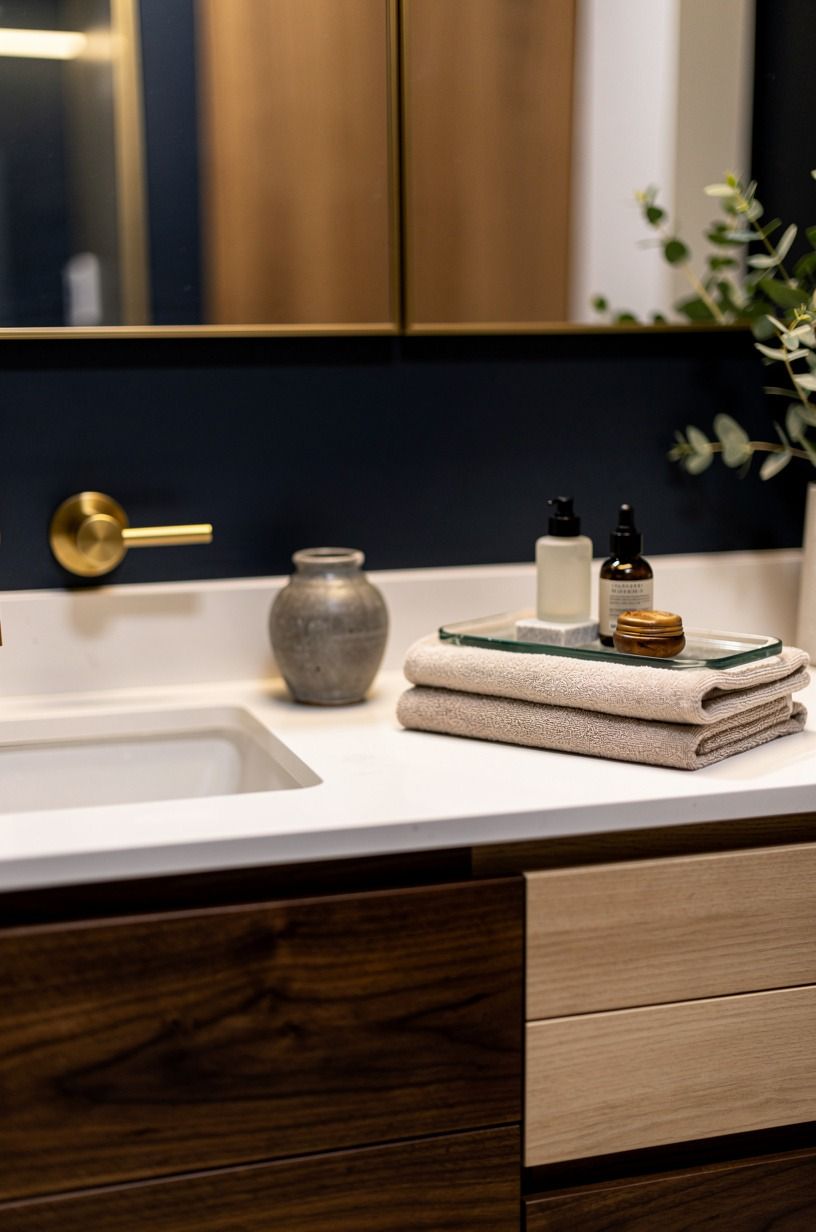
The Two-Wood Rule is simple: use one wood tone at the vanity and one darker or lighter tone in a smaller piece. You can pair a navy vanity with a walnut stool, but I wouldn’t add a third wood through shelving. Three tones gets busy fast.
Your limewash wall design should sit behind that contrast like a soft shadow. Pick a muted sand wash, then keep the shelf brackets in unlacquered brass developing soft patina.
I’ve found that a 32-36 inch vanity height already creates enough visual weight. You don’t need giant cabinets climbing the wall too.
A white Belgian linen shower curtain takes the edge off all that hard surface. It’s gentle, a little rumpled, and much more inviting than shiny polyester.
4Skip stark white for Sherwin-Williams Sea Salt
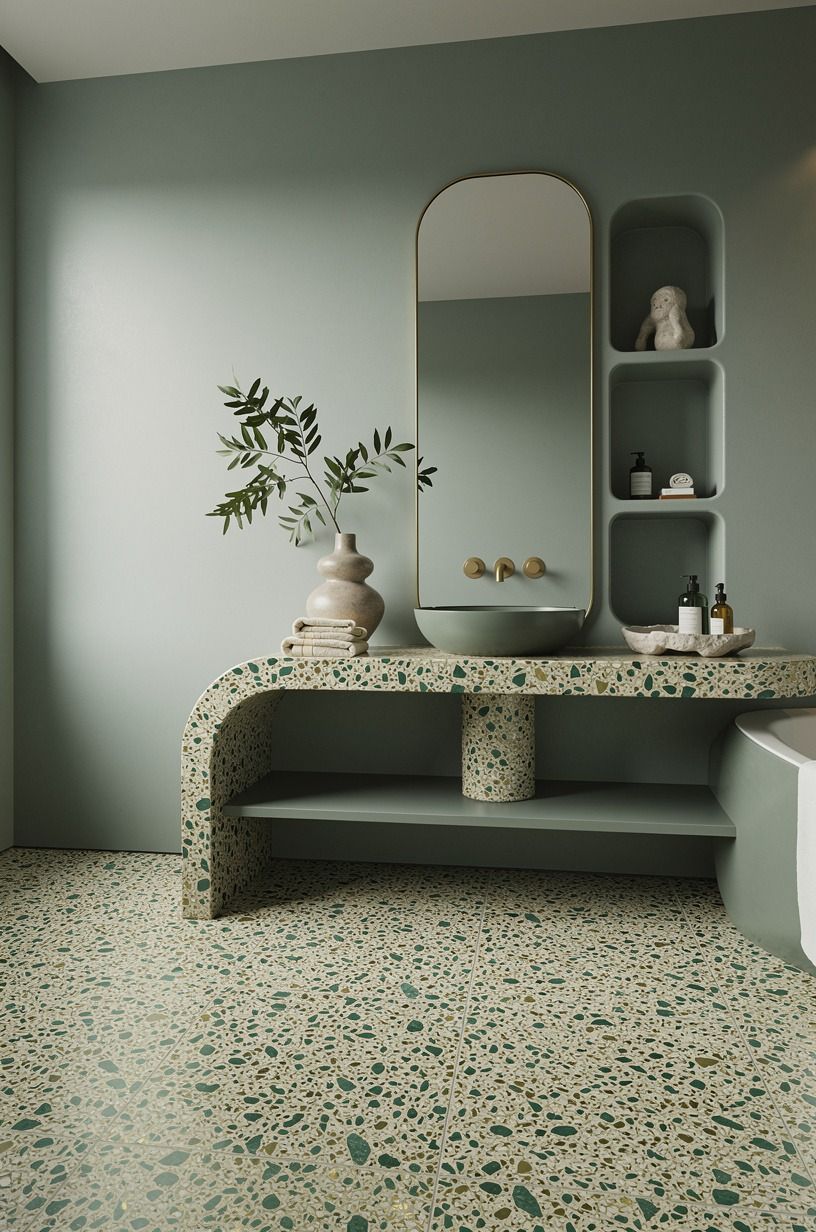
Try Sherwin-Williams Sea Salt SW 6204 as the color reference for a quiet green-gray limewash, especially if your bathroom gets morning sun. Pair it with cream accents, gold hardware, and an oversized-chip terrazzo surface so the room still feels warm rather than clinical.
5Frame a 60x30-inch tub with an uneven halo
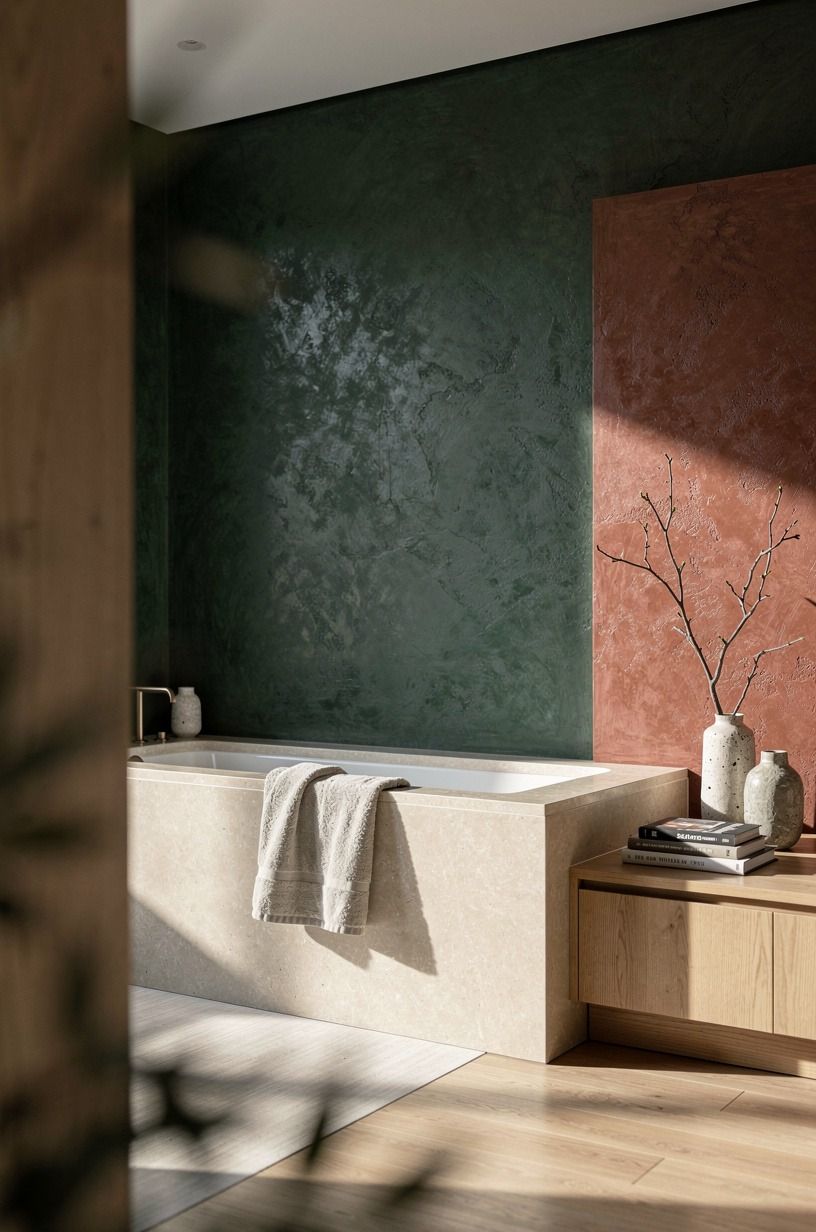
A standard tub is 60x30 inches, so use that generous horizontal line. Brush your limewash a touch darker behind it, then feather the edges outward until the color disappears into the adjacent wall.
You’ll make the tub feel built in without building anything. A natural oak bath tray works better than glossy white plastic because the finish needs something equally organic nearby.
Don’t over-style it. One rust-colored hand towel, a book, and a small amber bottle are enough.
I made the mistake of adding eucalyptus, candles, and five jars once. It looked like a hotel lobby trying too hard.
6Hang a tall mirror through the movement
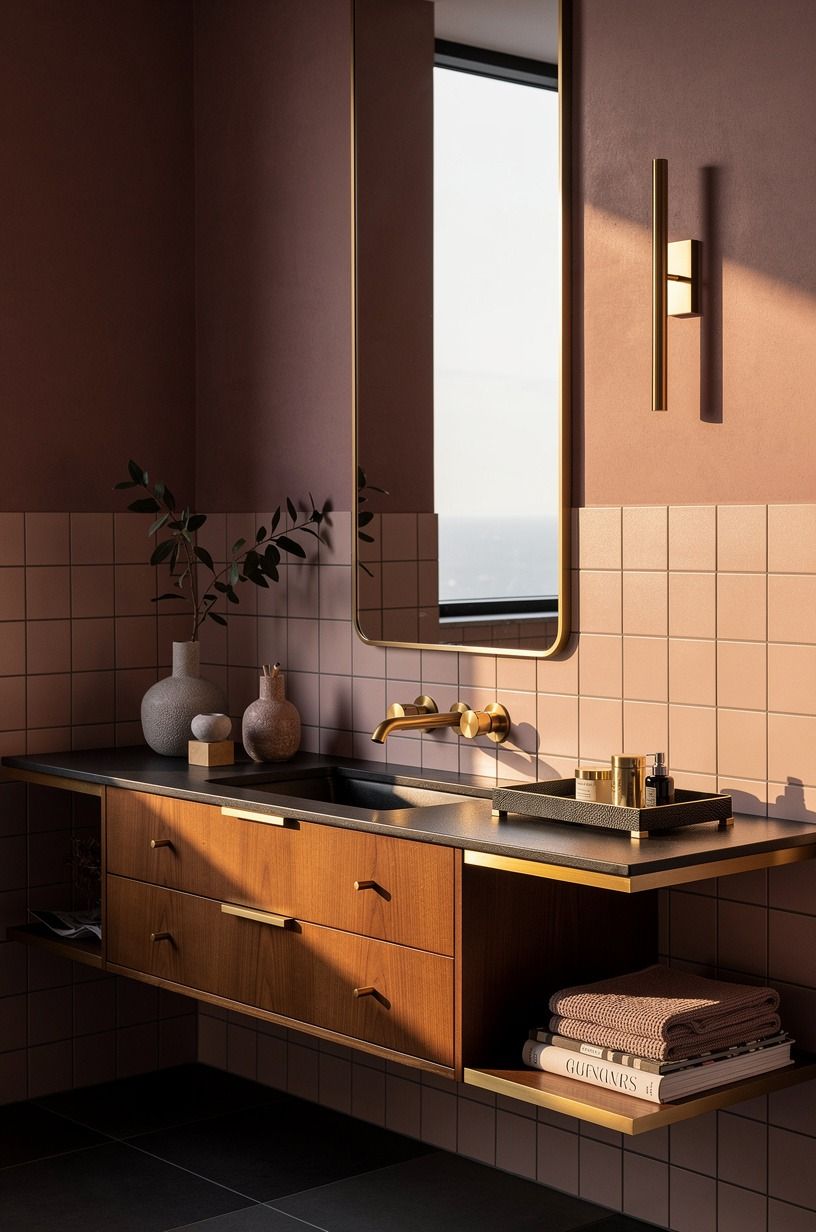
A vertical mirror interrupts a limewash wall in the best way. Choose one with a charcoal-toned surround or small shagreen accents so the dusty rose wall and brass details still feel collected.
7Try the Three-Height Light Stack
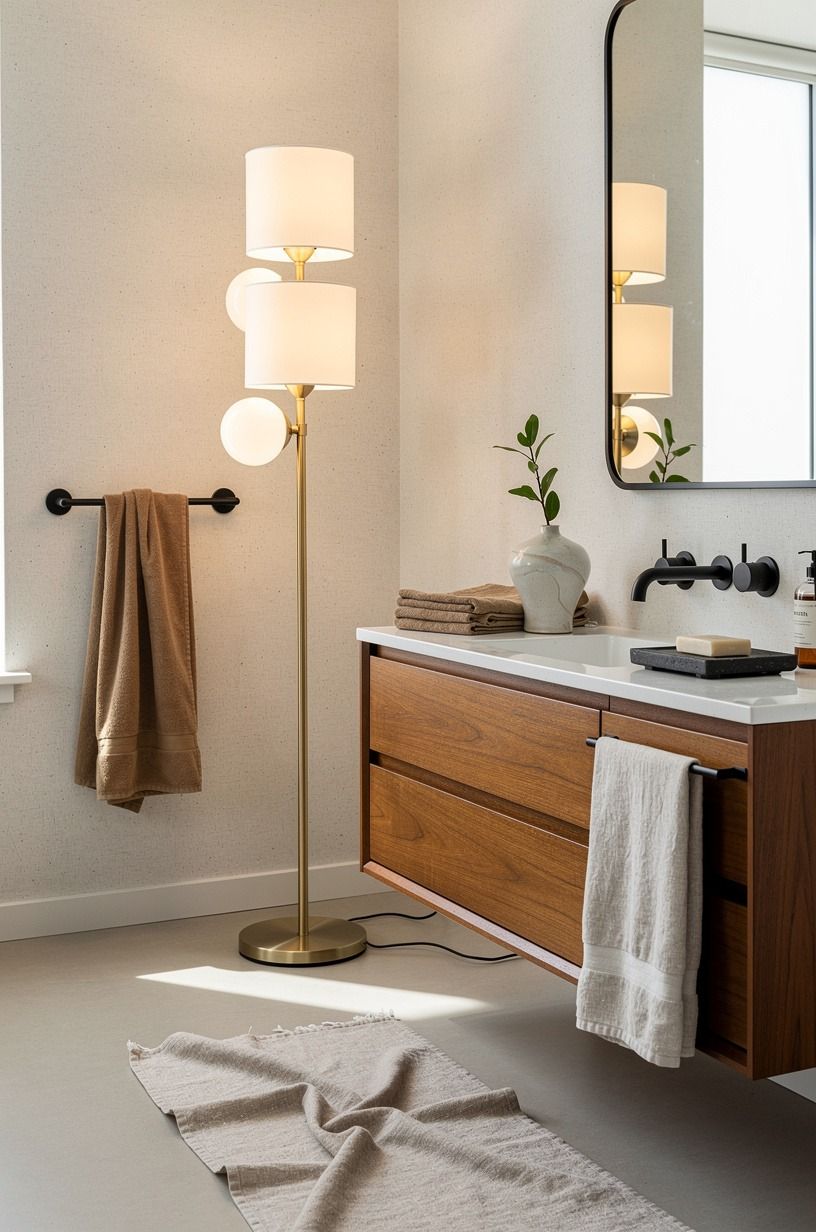
The Three-Height Light Stack means you give your bathroom light at three levels: ceiling, face height, and low glow. Your limewash needs that variation or it can look dusty and dull after sunset.
Place black-accented sconces at face height, then use a dim ceiling fixture and a small lamp on the counter if your outlets allow it. Warm bulbs only. Blue-white bulbs kill the whole effect.
But keep the fixture shapes clean. A complicated chandelier above a 36x36-inch shower is dramatic in the wrong way.
You’ll find more warm material pairings in these rustic limewash bathroom ideas. The light is doing half the work.
8Make a moody corner, not a moody cave
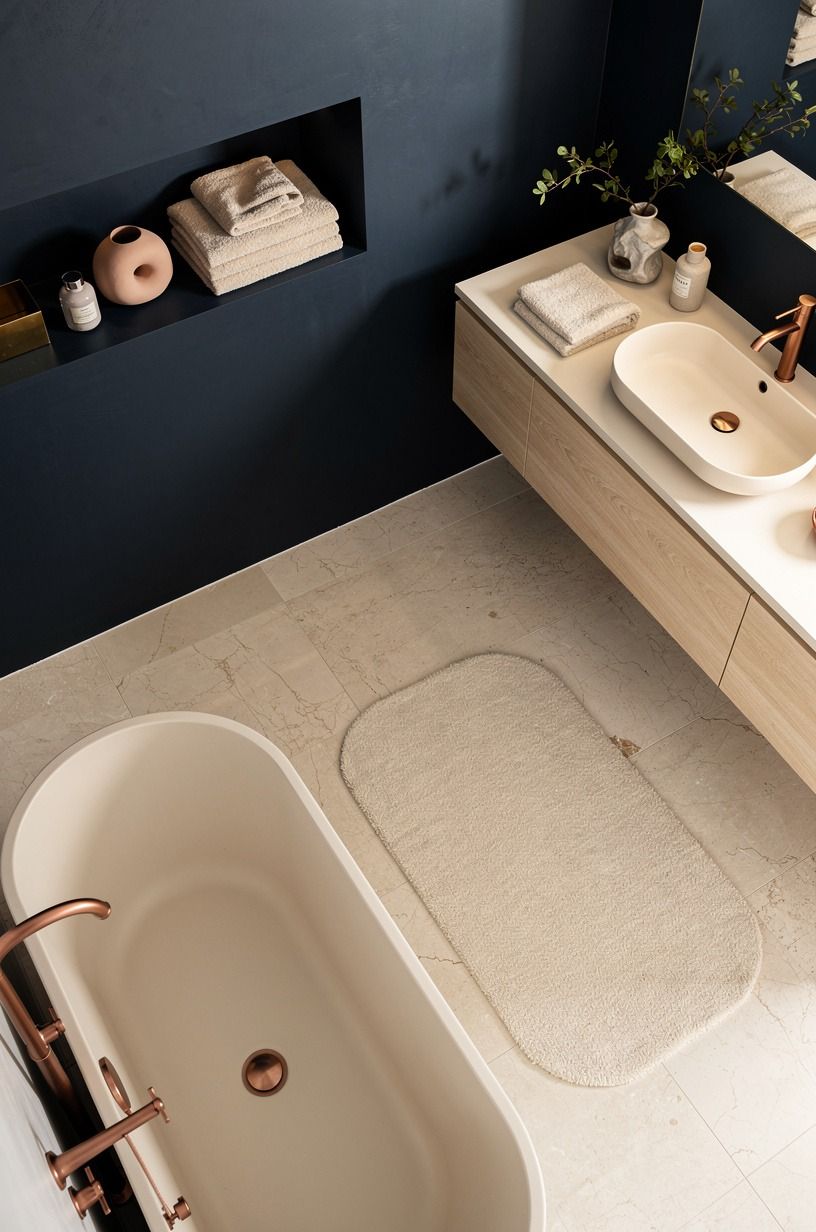
A deep midnight-blue limewash wall bathroom can look incredible behind a vanity, but don’t wrap a tiny room in dark color unless your natural light is seriously strong. An ivory organic bouclé stool and one copper detail will keep the corner from becoming heavy.
9Float the vanity over a softer base
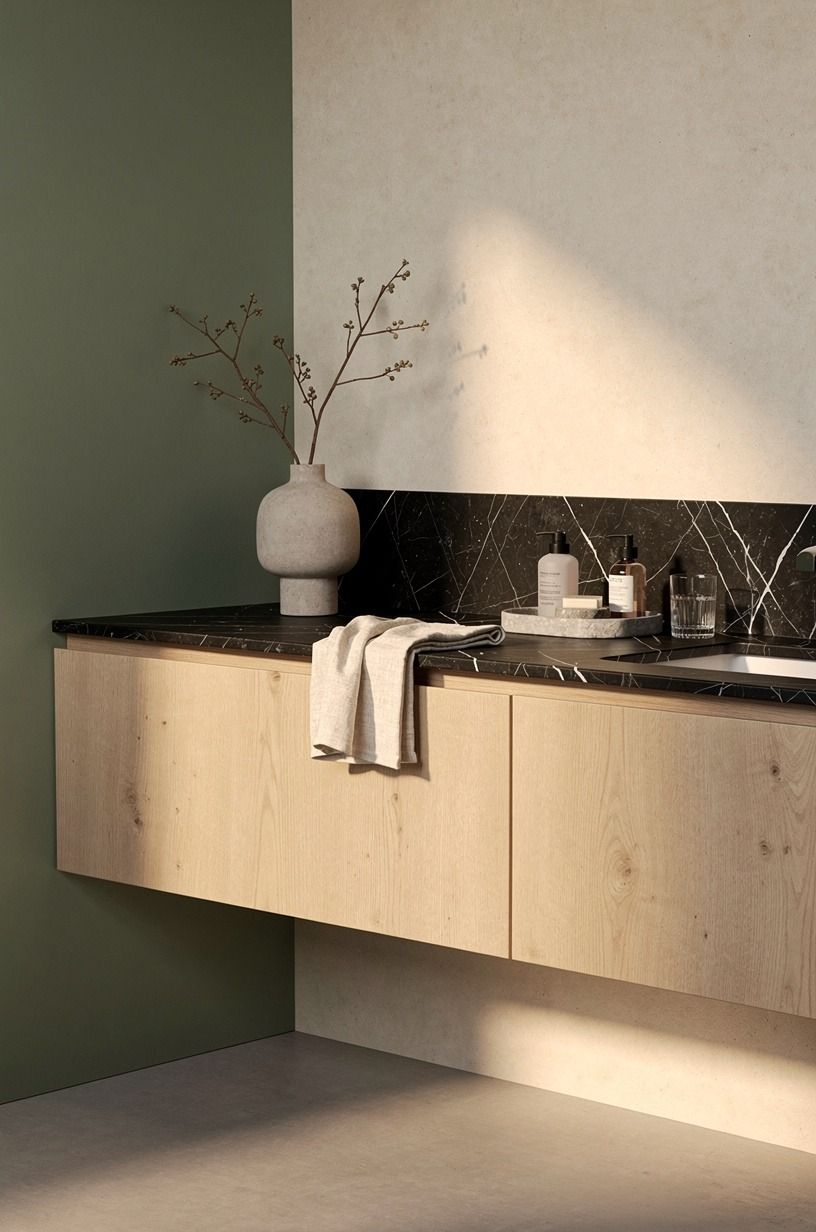
A floating vanity lets you see more floor, and your small bathroom will feel less boxed in. Paint or limewash the wall behind it a little deeper than the side walls, then let the shadow underneath do its quiet thing.
Choose a natural wood floating vanity if you like a clean, modern line, or copy the idea with a wall-mounted cabinet from a local salvage shop. Your feet need visual room more than another drawer.
A 21-inch clearance in front of the toilet is the minimum, so don’t let a deep vanity steal that path. Measure first. Every single time!
A Nero Marquina black marble backsplash with white veining can be lovely here, but I’d stop it below the mirror. Stone all the way up will compete with the wash.
10Put plaster-like movement behind open shelves
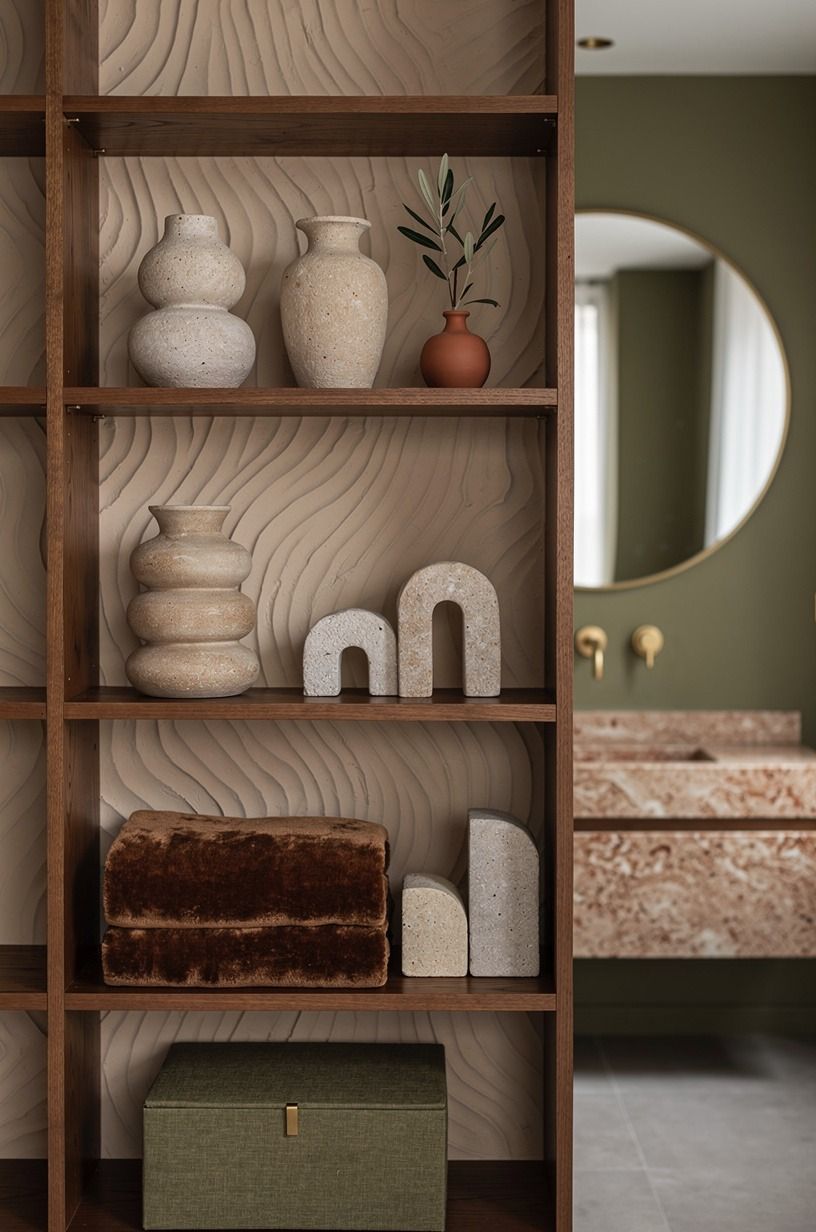
Open shelves work best on a limewashed bathroom wall when they hold useful things, not a tiny museum of objects. Your wall becomes the backdrop for folded towels, soap, and a few good bottles.
Use shelves in a warm olive or stone tone with simple brackets. That weight feels grounded against the soft texture, while thin MDF shelves tend to look apologetic.
I’d keep the shelves no wider than your vanity. Wider shelves can chop up the wall and make your sink zone feel crowded.
A stack of towels. A stoneware dish.
One deep-pile mohair velvet accent if you have room for it. Enough.
For handmade tile nearby, browse these zellige bathroom ideas with glossy character. Your finish doesn’t need to match, just belong in the same family.
11Mix matte limewash with one glossy tile band
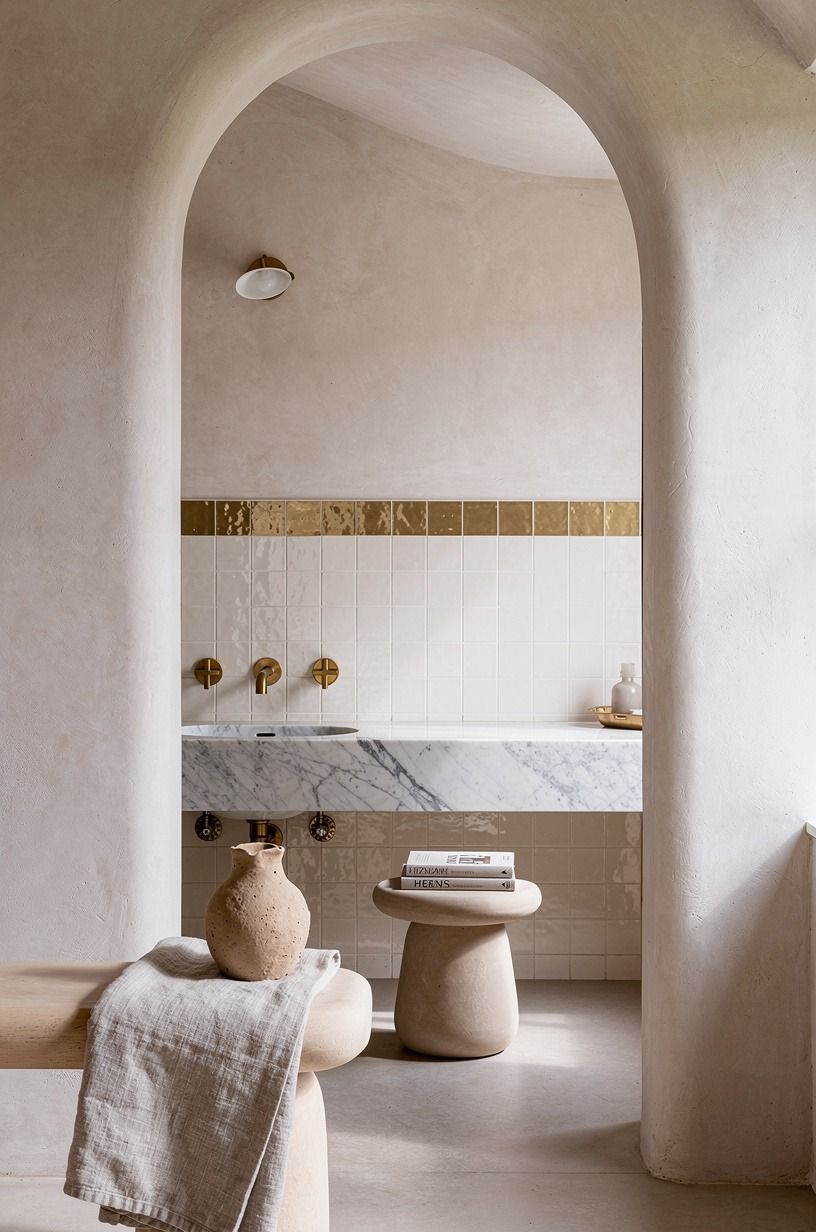
Gloss is useful when it’s scarce. Add a low band of Carrara marble or a narrow backsplash, then let the limewash above stay matte and a little uneven.
You’ll get a practical splash zone without sacrificing the wall’s soft, calming character. Typical subway tile runs $2-$10 per square foot, while zellige often lands at $15-$35 per square foot.
I’d choose a simple stone band if your walls already have a lot of brush movement. Zellige is charming, but two handmade-looking surfaces can start arguing.
An aged-brass soap dispenser adds shine without asking for attention. Small, but not meaningless.
And yes, grout color matters. Choose warm off-white, never bright refrigerator white.
12Use the Doorway Fade instead of a hard stop
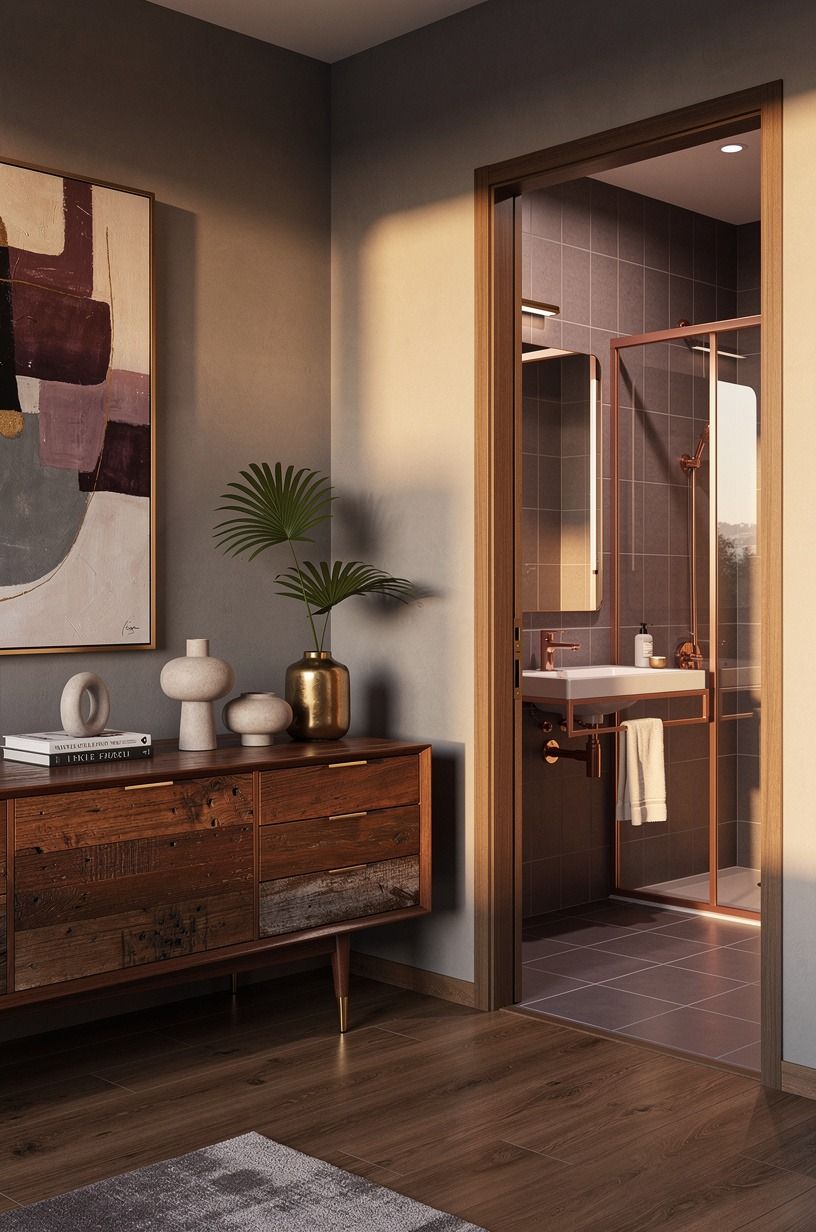
The Doorway Fade is for bathrooms where you only want limewash on one wall. Your color should thin out as it approaches the door trim, so the finish looks like it belongs to the room rather than stopping on a ruler line.
You can do this with less product and more water at the final edge. Practice on cardboard first, because your first pass may feel awkward.
A reclaimed weathered teak laundry hamper helps carry that relaxed texture outside the shower zone. I’d skip plastic woven baskets here. They’re practical, sure, but they make the wall feel like an afterthought.
Your trim can stay Benjamin Moore White Dove OC-17. Its warm white is far kinder than an icy bright white.
13Choose brushed brass over polished chrome
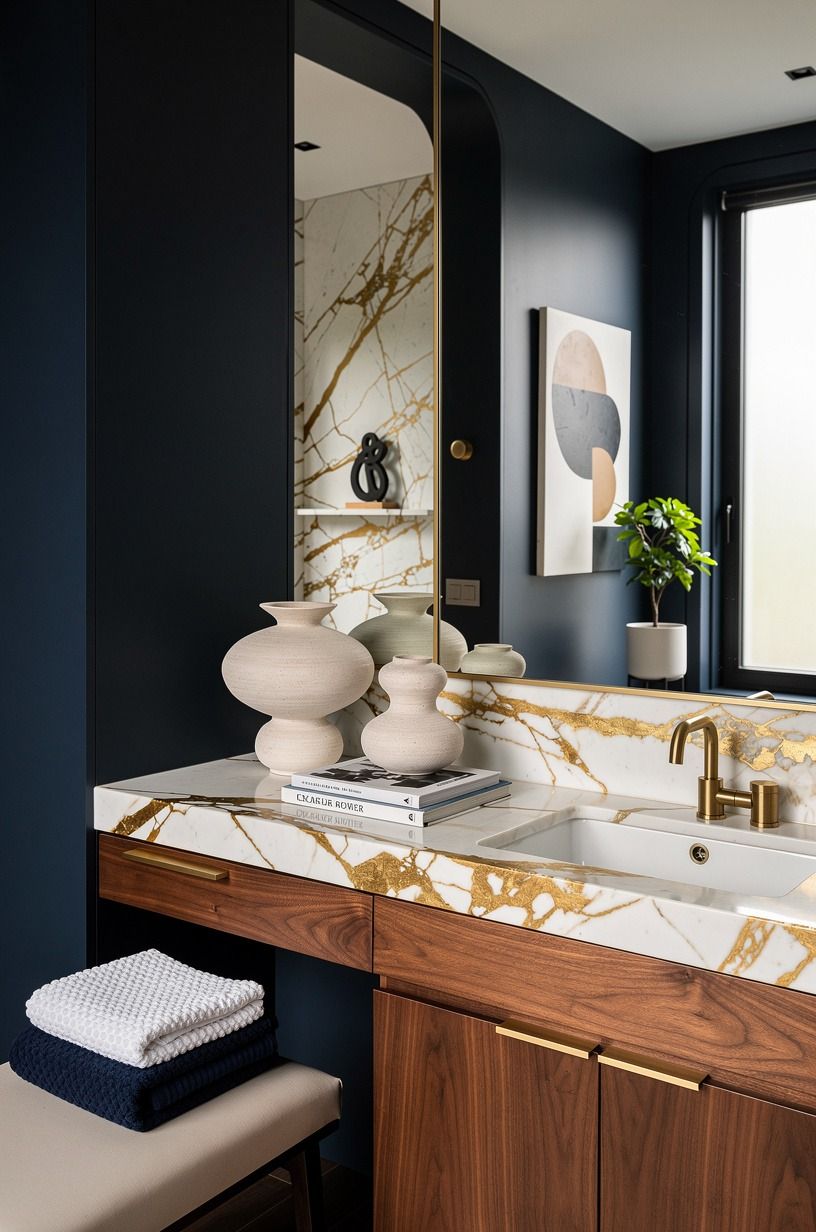
Brushed brass against limewash is the better call for most bathrooms. It has a muted, warm finish that doesn’t flash against the wall, while polished chrome can make your softly layered paint look strangely sterile.
Your faucet, towel hook, and mirror frame don’t all need to match exactly. Unlacquered brass developing soft patina is especially good beside a navy, white, and walnut mix because it changes gently with the room.
I’ve mixed aged bronze sconces with brushed brass plumbing before. It worked because both finishes were muted, not because mixing metals is automatically stylish.
Keep your counter simple. Calacatta marble with gold veining is enough contrast.
Want a more polished finish? These bathroom Venetian plaster ideas show the glossier direction without making you guess.
14Plan your $200-$1,200 refresh before you buy tile
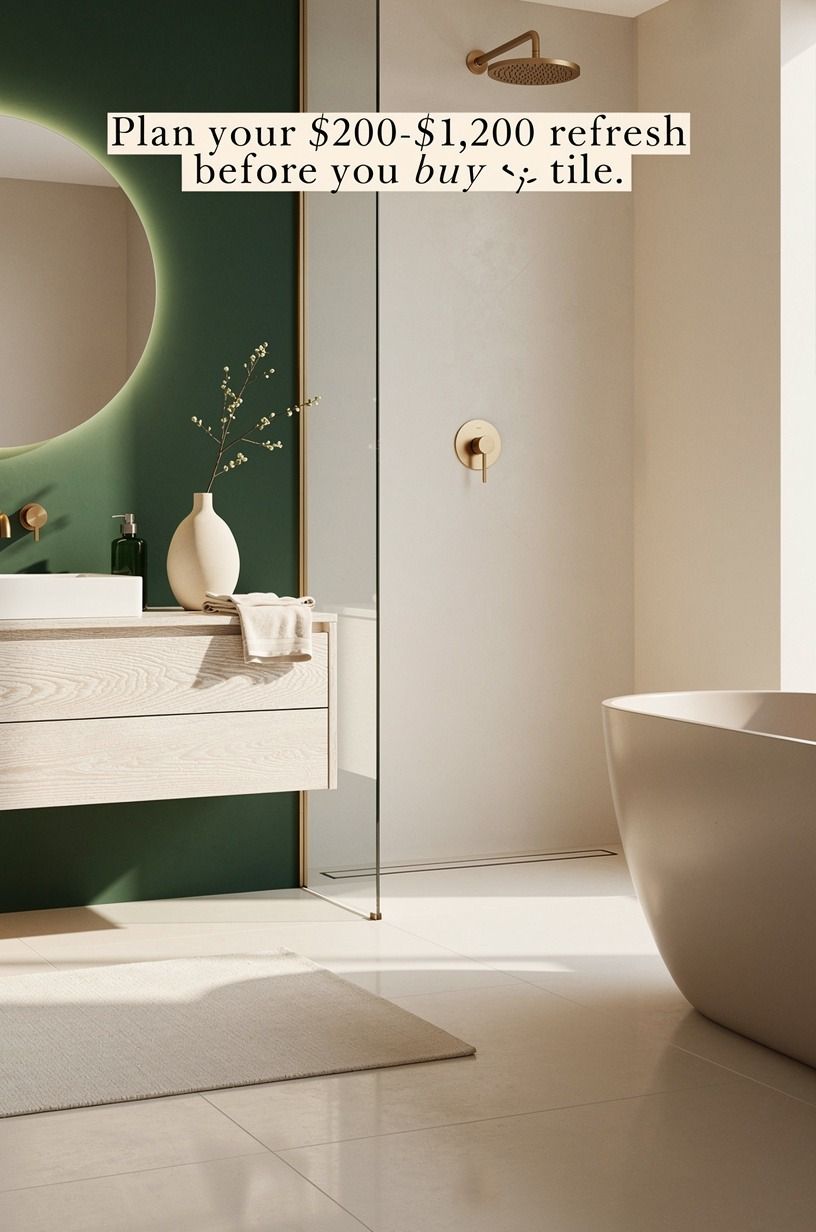
You don’t need a full renovation to make the wall feel new. If your plumbing works, paint, lighting, textiles, and a better mirror can do more for your daily mood than expensive tile ever will.
Here’s the typical US bathroom cost range, from a light refresh to a full rebuild:
Spend your first dollars on the wall finish and lighting. I’d skip replacing a fine vanity just because its color isn’t trending. Paint around it, change the hardware, and see what your room says back.
A cerused white oak arched mirror can give you the taller silhouette without a custom bill. Your bathroom deserves a little drama, not a second mortgage!
15Let one imperfect wall stay imperfect
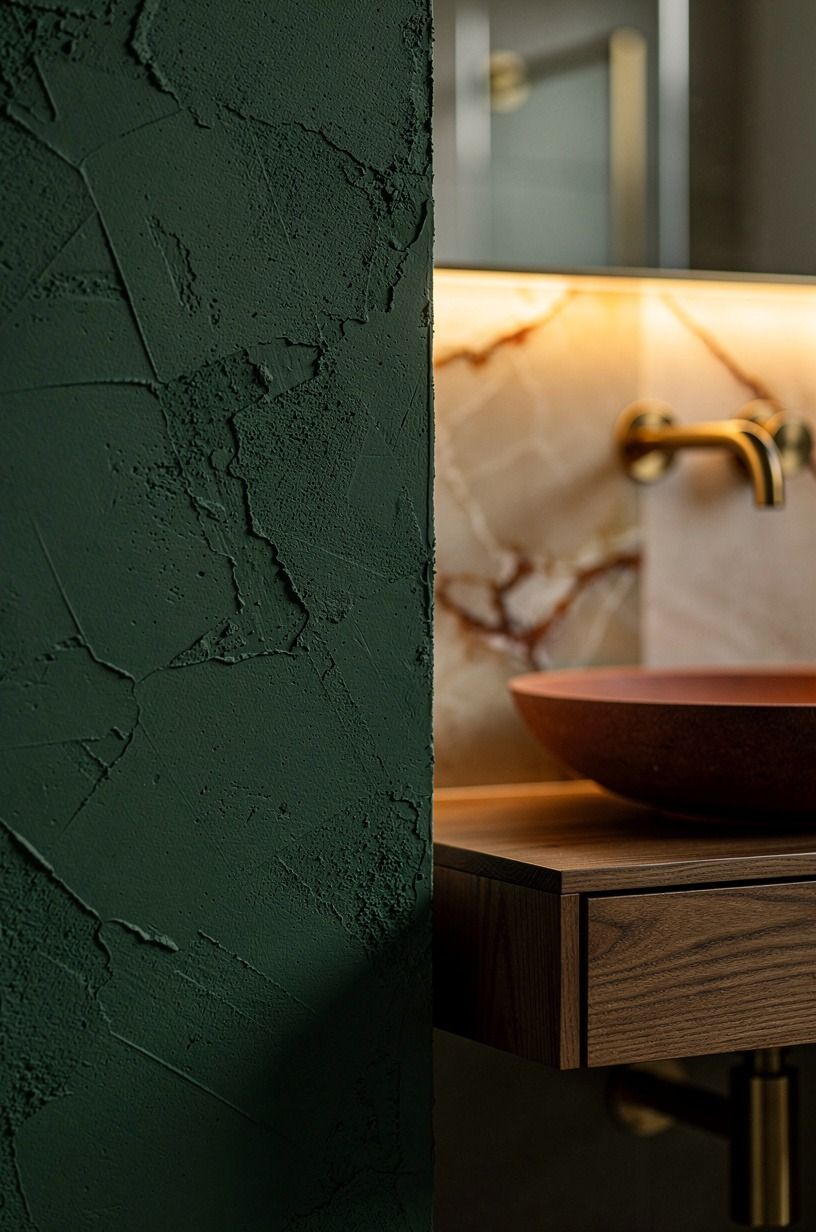
The best bathroom limewash walls aren’t perfectly even. A faint darker patch beside the mirror, a lighter sweep near the ceiling, the small evidence of a hand moving across plaster. That’s the point.
You should patch obvious damage first, but don’t chase total uniformity after the finish goes on. I’d rather see a slightly irregular wall than a sanded-to-death surface that looks like flat paint pretending.
Pair it with a backlit translucent onyx detail if your room has space, or just a natural oak bath mat if it doesn’t. Your materials can be quiet and still feel rich.
For a cleaner organic direction, save these limewash bathroom ideas for a calm retreat. You’ll get the same warmth with less contrast.
Why I Think Limewash Works Best in a Bathroom
I used to think a bathroom had to be spotless in a visual sense, too. White walls, white tile, a mirror with no personality, and towels folded like someone might inspect them. It looked fine in photos.
Living with it was another story. The room felt cold at 6 a.m., especially in winter, and every hard surface seemed to bounce light back at me.
I kept buying little fixes, a new bath mat, a prettier soap bottle, another basket. None of it mattered because the walls were still doing nothing.
Limewash changed how I think about that. Your bathroom doesn’t need to imitate a hotel suite, and it definitely doesn’t need every finish to be sleek.
The subtle movement gives your eye somewhere to rest. It softens the blank areas between practical things: toilet, tub, towel bar, outlet.
Those bits aren’t glamorous, but they’re real life.
I’m also firmly against treating limewash as a costume. If you add old-world texture, then pile on ornate mirrors, faux-vintage signs, and distressed furniture, the room starts performing.
Let the finish be the history. Everything else can be plain and useful.
The best version is restrained. A warm wall, a good light source, one real material like oak or brass, and a counter you can wipe clean.
That’s it. You’ll notice the wall most when you aren’t trying to admire it, when you’re brushing your teeth late at night and the room feels settled instead of sharp.
Small luxury. The kind you keep.
What People Always Want to Know
What is the best limewash wall idea for a small bathroom?
A pale, low-contrast wash behind your vanity is the best choice because it adds soft visual depth without shrinking the room. You’ll get more impact from a tall IKEA HOVET mirror and warm sconces than from covering every wall in dark color.
Where can I buy limewash bathroom pieces on a budget?
Start with IKEA, Target Threshold, and Wayfair for mirrors, baskets, and basic lighting. You can also check Facebook Marketplace for wood stools and framed mirrors. Your cheapest win is repainting what you already own, then adding one useful new piece.
How much does a limewash bathroom makeover cost?
A simple limewash bathroom makeover costs about $200-$1,200 when you keep the existing layout. Your free moves are decluttering, repainting a frame, and changing towel placement. A better-lit vanity wall usually matters more than a new cabinet.
Can I create limewashed bathroom walls on a budget?
Yes, and you don’t need new tile. Your low-cost plan: limewash one wall, use plain cotton towels, and change the mirror or hardware. A single focal wall gives you movement while leaving money for a faucet or better bulbs.
Is a limewash wall bathroom worth it in a small space?
Yes, it’s worth it because subtle variation makes a compact bathroom feel less flat. Keep your darkest wash behind the vanity, then leave the other walls lighter. Your room will feel more intimate without closing in on you.
Is limewash a good idea for a rental bathroom?
Yes, if your landlord allows paint, but removable options are safer. Try peel-and-stick wall covering with a cloudy pattern, tension-rod linen panels, or removable hooks for art. Your soft limewash wall inspiration can still guide the color direction.
Where I’d Start First
If I had to pick one, I’d start with the vanity wall limewash. You can’t warm up a bathroom with accessories while the biggest surface stays cold and blank. Pin the vanity wall for later and save these rustic limewash bathroom looks for your next paint day.