
 by
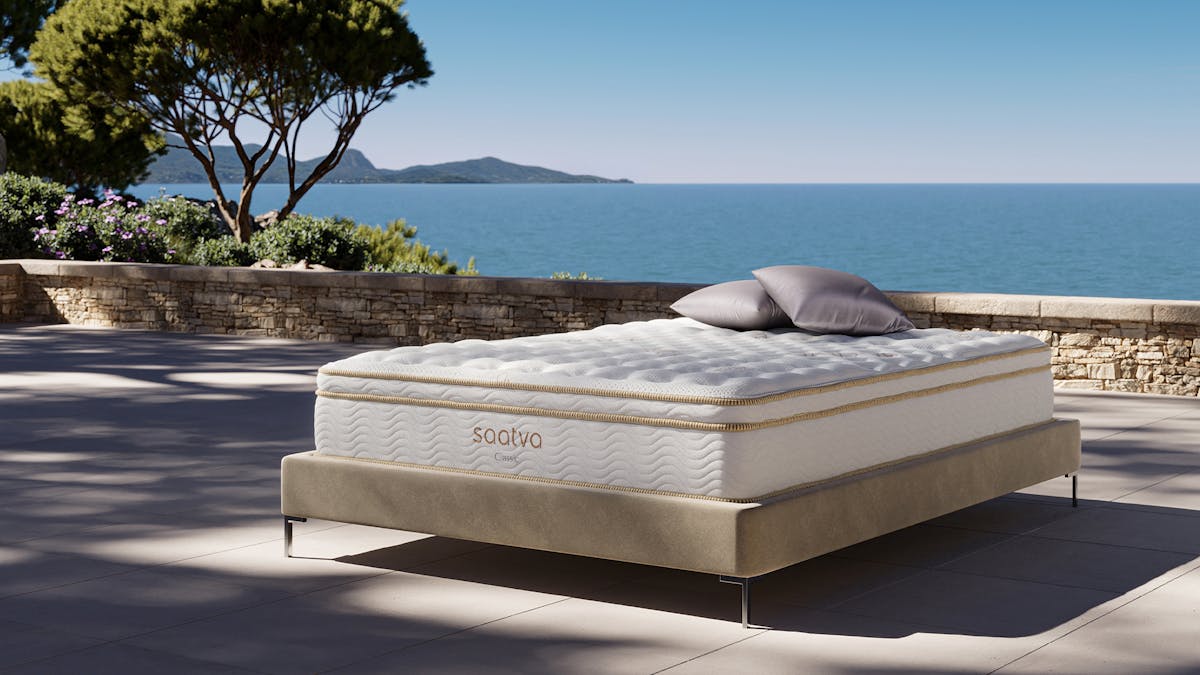
by Mattress firmness runs on a 1–10 scale. Most sleepers land in the medium to medium-firm range (5–7), and the Saatva Classic is our top pick: it is the only mattress that lets you choose firmness at checkout (Plush Soft ~4, Luxury Firm ~6, Firm ~8), so you never have to guess. The Amerisleep AS3 (medium 5/10) is the strongest all-foam alternative for side and combination sleepers who prefer a traditional foam feel.
Saatva Classic
9.3/10
- Choose firmness at checkout: Plush Soft (~4), Luxury Firm (~6), or Firm (~8)
- Dual coil-on-coil construction with a reinforced lumbar zone pad for active spinal support
- Outstanding edge support and a hotel-luxury Euro pillow-top feel
- Free white-glove delivery, setup, and old-mattress removal; 365-night trial; lifetime warranty
- Ships flat rather than compressed in a box; heavy once in the room
- $99 return fee during the trial window
The Saatva Classic is the clearest answer to the firmness question: pick exactly the level you want at checkout, and let the 365-night trial confirm it. No other mattress on this list covers soft, medium-firm, and firm under one model.
The mattress firmness scale, explained
Mattress firmness is rated on a 1–10 scale, 1 being completely plush, 10 being rigid. No universal standard governs how brands assign these numbers, so two mattresses labeled "medium" by different manufacturers can feel noticeably different. What the scale does give you is a rough map for matching construction to body type and sleep position.
| Firmness Level | Scale (1–10) | Feel | Best For |
|---|---|---|---|
| Ultra Soft | 1–2 | Cloud-like, deep sink | Lightweight side sleepers under 130 lb |
| Soft | 3 | Plush, significant contour | Side sleepers, lightweight bodies |
| Medium Soft | 4 | Gentle cradle, slight pushback | Side sleepers and combination sleepers under 180 lb |
| Medium | 5 | Balanced, contour plus support | Couples, combination sleepers, 130–230 lb |
| Medium Firm | 6 | Slight contour, firm pushback | Back sleepers, stomach sleepers, heavier side sleepers |
| Firm | 7 | Little contour, strong support | Back and stomach sleepers, 180–250 lb |
| Extra Firm | 8–9 | Minimal give, rigid surface | Stomach sleepers, very heavy bodies, orthopedic back support |
| Ultra Firm | 10 | Floor-like | Specialty only, orthopedic recommendation required |
Firmness by sleep position
Side sleepers
Side sleepers need soft to medium (3–5). The hips and shoulders are the widest points of the body, so they must sink in far enough to keep the spine in a straight horizontal line. A too-firm mattress creates pressure points at these bony areas, producing pain and numbness within an hour or two. Lighter side sleepers (under 130 lb) often need soft (3); heavier side sleepers (over 200 lb) compress foam more deeply and typically land well at medium (5).
Back sleepers
Back sleepers need medium to medium-firm (5–7). The lumbar region needs gentle support, enough contour to fill the natural inward curve of the lower back, and enough firmness to prevent the hips from sinking below the shoulders. A mattress too soft here allows the lower spine to drop, stressing the posterior ligaments overnight.
Stomach sleepers
Stomach sleepers need firm to extra firm (6–8). When the hips sink on a soft surface, the lower spine hyperextends, compressing the lumbar discs. A firmer surface keeps the pelvis level with the shoulders, maintaining a neutral spine. Stomach sleeping on anything below medium-firm is the fastest route to chronic morning back pain.
Combination sleepers
Combination sleepers move between positions during the night. Medium (5) is the most reliable compromise, it accommodates side sleeping without creating shoulder pressure points, and supports back sleeping without feeling too plush. It is the single most purchased firmness level for this reason.
Firmness by body weight
Body weight changes how deeply you compress a mattress's foam or coil layers. The same mattress will feel firmer to a 120 lb sleeper than to a 250 lb sleeper because the heavier person drives deeper into the support core. Adjust by one level from standard recommendations based on weight:
- Under 130 lb: Go one level softer than recommended. Lighter bodies don't compress foam enough on standard ratings, so a labeled "medium" often feels medium-firm in practice.
- 130–230 lb: Standard firmness recommendations apply directly.
- Over 230 lb: Go one level firmer. Heavier bodies compress deeper into the comfort layers and can bottom out on softer models within months.
Top picks by firmness level
| Mattress | Type | Firmness Options | Trial | Queen Price |
|---|---|---|---|---|
| Saatva Classic | Dual-coil hybrid | Plush Soft ~4, Luxury Firm ~6, Firm ~8 | 365 nights | From $1,395 |
| Amerisleep AS3 | All-foam (Bio-Pur) | Medium 5/10 | 100 nights | From $1,049 |
| PlushBeds Botanical Bliss | Natural latex | Medium ~5–6, Medium-Firm ~7 | 100 nights | From $1,800 |
| Puffy Original | All-foam | Medium / medium-firm ~6–7 | 101 nights | ~$1,499 |
| Sweetnight CoolNest | Hybrid (gel foam + coils) | Medium-firm ~6–7 | ~100 nights | Sub-$600 |
Amerisleep AS3
9.0/10
- Medium 5/10, the most versatile firmness for side, back, and combination sleepers
- HIVE 5-zone hex layer firms under the lumbar and softens under shoulders
- Bio-Pur partially plant-based foam, CertiPUR-US certified, made in the USA
- 100-night trial; 20-year warranty with full replacement in years 1–10
- All-foam construction means softer edges than a coil hybrid
- Sleepers over 230 lb often prefer the AS5 Hybrid for extra support
If you know medium (5/10) is your target and prefer a contouring all-foam feel over a coil-based one, the AS3's zoned construction is the strongest foam pick on this page.
PlushBeds Botanical Bliss
8.7/10
- Configurable firmness: order medium (~5–6) or medium-firm (~7) at checkout
- GOLS-certified organic Dunlop latex, highly durable and naturally cooling
- 25-year warranty, one of the longest in the industry
- Heavy and more expensive than most foam options
- Buoyant "on top of" feel that fans of slow-response memory foam may not prefer
For sleepers who want a firm or medium-firm feel from a certified natural material rather than synthetic foam or coils, the Botanical Bliss is the most credentialed latex option available.
Puffy Original
8.4/10
- Strong pressure relief and motion isolation for couples
- Lifetime warranty at a mid-range price point
- Sleeps slightly warm for hot sleepers
- Edges softer than coil-based alternatives
Puffy's medium feel and lifetime warranty make it a reliable in-a-box pick for side and combination sleepers who want solid pressure relief without the premium price of latex.
Sweetnight CoolNest
7.9/10
- Hybrid construction at a sub-$600 price point
- Good for guest rooms or a first mattress on a tight budget
- Durability and edge support in a different league than premium brands
- Not ideal as a long-term primary mattress for heavy daily use
If budget is the binding constraint, the Sweetnight gives you a hybrid construction with gel cooling at a price none of the premium picks above can match.
Firmness vs. support: they're not the same thing
One of the most common misunderstandings in mattress shopping: firmness describes surface feel; support describes the spine's alignment. A soft mattress can provide excellent support if it has a zoned construction that prevents the hips from sinking too far. A firm mattress can fail at support if it doesn't allow the lumbar curve to settle at all.
Zoned designs, such as the Saatva Classic's dual coil-on-coil system with a reinforced lumbar pad, or Amerisleep's HIVE 5-zone hex-cell layer, address both variables simultaneously. That is why both appear across multiple firmness categories rather than just one.
Common firmness mistakes
- Choosing firm for back pain: Most back pain responds better to medium-firm (6), not firm (7–8). A 2015 systematic review in Sleep Health (Radwan et al.) found medium-firm mattresses reduced chronic non-specific back pain significantly over 12 weeks.
- Ignoring your partner's needs: A split king with two different firmness options solves the couple's compromise problem cleanly. Saatva sells two mattresses that share a base so both partners sleep on their preferred feel.
- Trusting "medium" universally: Firmness ratings are not standardized across brands. A Saatva Luxury Firm (6) feels different from a Nectar Medium (5.5) even when both carry the same label. Check independent lab measurements, not just brand labels.
- Ignoring body weight when reading reviews: A reviewer at 140 lb rating a mattress "medium" may be experiencing what you would feel as "firm" at 210 lb. Weight context in reviews matters significantly.
Recommended mattresses by firmness level
- Soft (3): Amerisleep AS5, Puffy Lux Plush
- Medium Soft (4): Amerisleep AS4, Saatva Classic Plush Soft
- Medium (5): Amerisleep AS3, Sweetnight Dreamy
- Medium Firm (6): Saatva Classic Luxury Firm, PlushBeds Botanical Bliss Medium-Firm
- Firm (7–8): Saatva Classic Firm, Amerisleep AS1
Frequently asked questions
Is a firmer mattress always better for back pain?
No. Research shows medium-firm (6/10) is optimal for most back pain sufferers. Very firm mattresses can increase lumbar pressure by not filling the natural spinal curve when lying on your back.
What firmness is best for couples with different preferences?
Medium (5) is the best single-mattress compromise for most couples. For significant differences, the Saatva Classic covers three firmness options in one model, or a split king with separate sides is the cleanest solution.
Do firmness ratings mean the same thing across all brands?
No, there is no industry standard. A "medium" from one brand may feel like a "medium firm" from another. Always cross-reference independent reviews and test within the trial period.
How long does it take to adjust to a new firmness?
Most people adapt within 2–4 weeks. The body re-patterns its muscle and joint loading after sleeping on a different surface. If discomfort persists past 30 days, the firmness is probably wrong; use the trial to return or exchange.
The Saatva Classic is our top pick for firmness flexibility: choose Plush Soft (~4), Luxury Firm (~6), or Firm (~8) at checkout and confirm with a 365-night trial. For a medium (5/10) all-foam feel, the Amerisleep AS3 remains the strongest alternative.
This guide is part of our Mattress Buying Guide hub, compare all the top picks and narrow down your choice there.