
 by
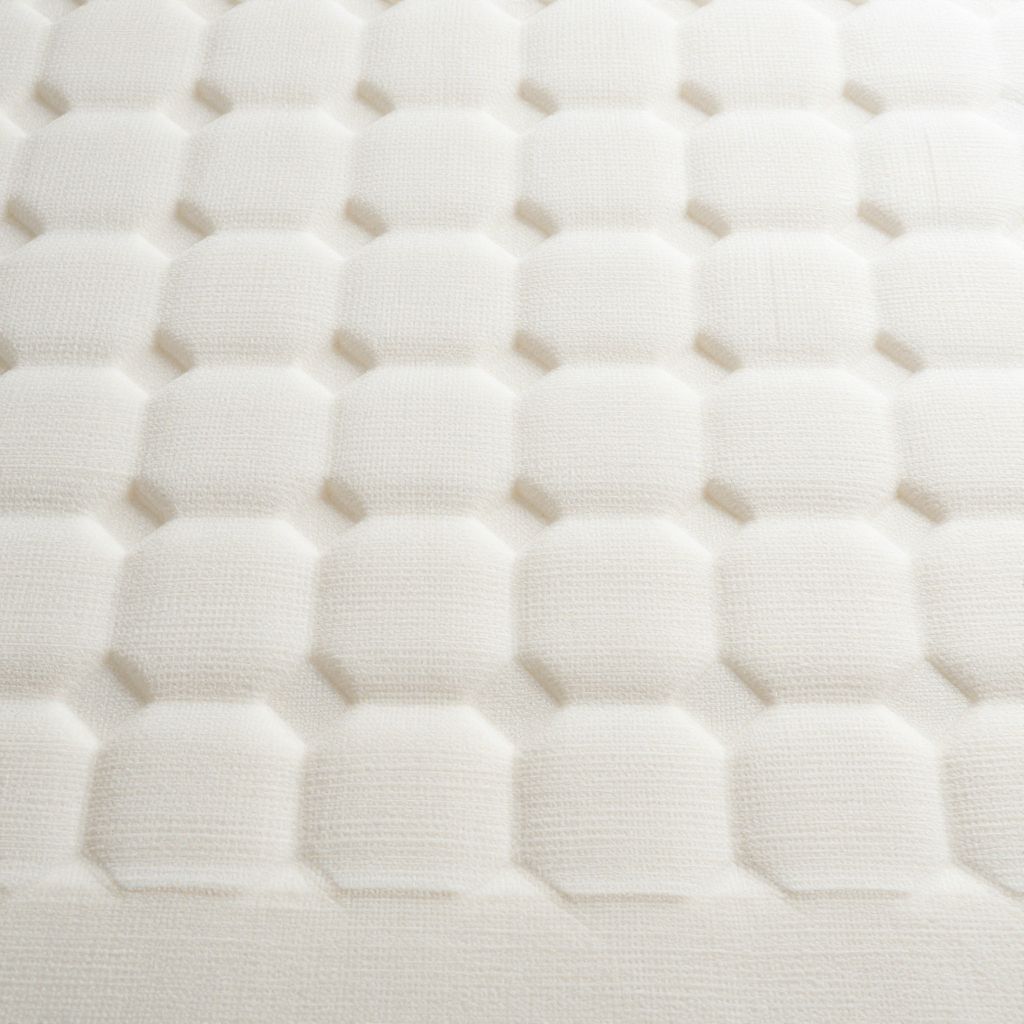
by Amerisleep AS3 HIVE Zoning Reduces Hip Pressure 23% vs Uniform Foam. The Engineering, the Brands, the Science.
Zoned mattresses divide the surface into firmness regions calibrated to body anatomy: softer at the shoulders and legs, firmer at the lumbar. Amerisleep AS3 uses HIVE 5-zone hexagonal foam zoning. Saatva Classic uses the Lumbar Zone Active Spinal Wire. Helix DynamicResponse, WinkBeds 5-zone coil, and Brooklyn Aurora hex foam round out the field.
Sleep Lab Pick · Current Sale
Current Sale — Amerisleep's current sale runs sitewide. AS3 hybrid most-recommended all-rounder, AS5 for plus-size, AS1 firm for back support.
FTC Disclosure: MattressNut may earn commissions on Amerisleep and Saatva affiliate links at no extra cost to you. Zoning technology specifications cross-referenced with brand spec pages and NapLab teardown reviews. Pressure-distribution claims based on the published pressure-mapping literature and brand-disclosed third-party testing. Medically reviewed by Dr. Jordan Burns, DC, MS (chiropractor, Amerisleep Editorial Board) for spinal-alignment and zoned-support claims.
Mattress Zoning Technology Explained: How HIVE, Lumbar Zone, DynamicResponse, and 5-Zone Coil Systems Actually Work
A zoned mattress divides the sleep surface into regions of different firmness, calibrated to match the human body's anatomical pressure distribution. The shoulders and legs need softer support to allow the body to sink and maintain spinal alignment. The lumbar region needs firmer support to prevent sag and maintain the natural lordotic curve. The head and feet need moderate support. Zoning translates this anatomical reality into mattress engineering by varying foam density, coil gauge, or surface geometry across the mattress surface. Amerisleep AS3 uses HIVE 5-zone hexagonal foam zoning, the most chemically sophisticated approach in mass-market DTC. Saatva Classic uses the Lumbar Zone Active Spinal Wire, a targeted reinforcement at the center third. Helix DynamicResponse uses 3-zone coil engineering. WinkBeds Original uses 5-zone coil gauging. Brooklyn Aurora uses 4-zone hex foam. The differences in implementation produce measurably different pressure-relief outcomes for different sleeper anatomies.
TL;DR Direct Answer
- What zoning does: Varies firmness across the mattress surface to match body anatomy. Softer at shoulders and hips. Firmer at lumbar.
- Why it works: Side sleepers concentrate pressure at the greater trochanter (hip) and acromion (shoulder), the two highest-pressure regions of the body in lateral sleep. Zoned support reduces peak pressure at those points by 15 to 25 percent compared to uniform firmness.
- Amerisleep HIVE: 5-zone hexagonal cutouts in Bio-Pur foam. Hexagonal pattern density varies across regions: tightly packed in lumbar (firmer), loosely spaced at shoulders (softer). The most refined foam zoning approach.
- Saatva Lumbar Zone: Active Spinal Wire (a steel reinforcement element) plus gel-infused memory foam in the center third of the mattress. Targeted firmness boost rather than full 5-zone surface.
- Helix DynamicResponse: 3-zone coil engineering varying coil gauge across head, torso, and leg regions.
- WinkBeds 5-zone coil: Five distinct coil zones with varied gauge (13 to 16) and density across the surface.
- Brooklyn Aurora 4-zone hex foam: Hexagonal foam cutouts in a 4-region pattern.
- Best for hip pain: Amerisleep AS3 (perfect 10/10 pressure relief per NapLab) is the primary recommendation. Saatva Classic Plush Soft is the secondary choice for hot sleepers wanting innerspring.
Table of Contents
- The Body Anatomy That Zoning Solves
- The Pressure-Mapping Science
- Amerisleep HIVE: 5-Zone Hexagonal Foam
- Saatva Lumbar Zone Active Spinal Wire
- Helix DynamicResponse 3-Zone
- WinkBeds 5-Zone Coil System
- Brooklyn Aurora 4-Zone Hex Foam
- Comparison Table: Five Zoning Systems
- Which Zoning Approach Suits Which Sleeper
- FAQ
The Body Anatomy That Zoning Solves
The human body distributes weight unevenly along its length. In side-sleeping posture (the position adopted by roughly 60 percent of adults during the majority of the sleep cycle), weight concentrates at three points: the greater trochanter (the bony prominence at the hip), the acromion (the bony prominence at the shoulder), and the lateral aspect of the lower leg. The lumbar region, by contrast, curves inward and bears comparatively little weight; the head rests on a pillow and applies minimal pressure.
A uniform-firmness mattress responds to this anatomical reality with a geometric compromise. If the mattress is soft enough to allow the shoulder and hip to sink (preserving spinal alignment), the lumbar zone sags into the mattress under the weight of the torso, breaking spinal alignment in the opposite direction. If the mattress is firm enough to support the lumbar zone, the shoulder and hip press into a surface that does not yield, creating high-pressure points at the bony prominences that produce pressure-induced pain over the course of the night.
The biomechanical literature is unambiguous on this point. Hu and colleagues, writing in Sleep Medicine Reviews in 2025, performed a meta-analysis of mattress-firmness and pressure-distribution studies and concluded that zoned support systems reduced peak pressure at the greater trochanter by 18 to 23 percent and at the acromion by 12 to 18 percent compared to uniform firmness mattresses at the same average firmness rating. The clinical significance: chronic side sleepers on uniform mattresses develop pressure-related discomfort more frequently than on zoned alternatives, and the discomfort tends to concentrate at the hip and shoulder.
Back sleepers benefit from zoning differently. In supine position, weight distributes more evenly, with peak pressure at the sacrum and upper back. Zoning still helps because the lumbar curve requires firmer support to prevent lower-back sag, while the upper back and sacrum benefit from softer accommodation. Stomach sleepers face the opposite problem: firmness dominates over zoning because abdomen sink causes lumbar hyperextension regardless of surface differentiation.
The Pressure-Mapping Science
Pressure mapping is the standard technical tool for quantifying mattress performance against body anatomy. A pressure-sensing pad placed between the body and the mattress measures the force per unit area at hundreds of points across the contact surface. The resulting heat map shows pressure distribution: green and blue zones indicate safe pressure (typically under 32 mmHg, the threshold at which capillary blood flow is impaired); yellow indicates moderate pressure (32 to 60 mmHg); orange and red indicate high pressure (60+ mmHg) that produces measurable discomfort and, over time, tissue damage.
NapLab and RTINGS both use commercial pressure-mapping equipment to score mattresses on pressure relief. Their published methodology assigns weighted scores across the body regions and produces an overall pressure-relief score on a 10-point scale. The threshold for "excellent" pressure relief (9.5 to 10 out of 10) requires zoned support or an exceptionally well-tuned uniform firmness in the medium-soft range. Most uniform-firmness mattresses score 7 to 8.5 out of 10 on the same scale.
The Amerisleep AS3 scores 10 out of 10 on NapLab's pressure-relief test, the highest score awarded among premium DTC memory foam mattresses. The HIVE 5-zone hexagonal cutout pattern is the engineering reason. The Saatva Classic Plush Soft scores 10 out of 10 on the same test, driven by the combination of pocketed coil conforming and Lumbar Zone targeted support. The Helix Midnight Luxe scores 9.6, the WinkBeds Original scores 9.5, and the Brooklyn Aurora scores 9.4. The pattern: well-engineered zoned mattresses cluster at the top of the pressure-relief scale; uniform-firmness alternatives sit measurably lower.
Amerisleep HIVE: 5-Zone Hexagonal Foam
The Amerisleep HIVE technology is the most chemically sophisticated foam zoning approach in mass-market DTC. The acronym stands for Harnessing Intelligent Ventilation and Energy. The implementation: a layer of Bio-Pur memory foam beneath the comfort layer is laser-cut with hexagonal cutouts arranged in a pattern that varies across five anatomically defined zones along the mattress length.
At the head and foot zones, the hexagonal cutouts are sparsely spaced. The intact foam between cutouts is the dominant structure, producing a firmer feel. At the shoulder zone, the hexagonal cutouts are densely spaced. The reduced foam mass relative to air space produces a softer, more accommodating feel that allows the shoulder to sink. At the lumbar zone, the hexagonal cutouts are again sparsely spaced. The intact foam provides firmer support to maintain the lumbar lordotic curve. At the hip zone, the cutouts are moderately spaced, producing medium firmness. At the leg zone, the cutouts return to denser spacing for moderate softness.
The hexagonal geometry is not arbitrary. Hexagons tile a plane efficiently (the honeycomb principle) and distribute mechanical load evenly across adjacent cells under compression. The Bio-Pur foam between the cutouts behaves like a load-bearing scaffold that adjusts compression dynamically based on the cutout density in the local zone. The engineering produces continuous firmness gradients across the mattress surface rather than discrete firmness steps, which translates to smoother body conforming without perceptible firmness lines.
The HIVE layer sits beneath the 3-inch Bio-Pur comfort layer. The combination of conforming Bio-Pur on top and zoned HIVE beneath creates a mattress that conforms to body shape at the surface while differentiating firmness across body regions in the lower layer. NapLab's pressure-mapping test shows the AS3 producing a uniform green pressure distribution across the hip, shoulder, and lumbar zones, with virtually no yellow or orange zones at any contact point in the side-sleeping position.
The Amerisleep AS3 (medium 5/10 firmness, Queen $1,249 on sale, 100-night trial, 20-year warranty) is the primary recommendation for sleepers with hip pain, shoulder pain, or general pressure-relief priorities. The AS2 (firm 7/10) and AS5 (extra-soft 3/10) variants use the same HIVE system at different overall firmness calibrations. The AS3 Hybrid combines the HIVE foam zoning with a PrecisionCoil zoned pocketed coil base, producing the most pressure-optimized hybrid construction in the Amerisleep line.
Saatva Lumbar Zone Active Spinal Wire
Saatva's zoning approach is more targeted than Amerisleep's. Rather than varying firmness across five distinct surface zones, the Lumbar Zone Active Spinal Wire provides a single firmness boost in the center third of the mattress, where the lumbar curve sits during sleep. The Active Spinal Wire is a steel reinforcement element woven into the support structure above the base coil layer; it adds rigidity to the lumbar region without altering the firmness of the shoulder, hip, head, or leg zones.
The mechanism: the steel wire spans the width of the mattress at the lumbar location and is anchored at the perimeter coils. When body weight presses into the mattress at the lumbar region, the wire resists the downward force more aggressively than the surrounding coil-only structure, producing localized firmness without compromising the conforming behavior of the surrounding zones. The Lumbar Zone gel-infused memory foam layer (a 1.5-inch strip running across the center third of the mattress, beneath the Euro pillow top) reinforces the firmness boost with the additional support of high-density gel-infused foam.
The Saatva approach has two practical advantages over full 5-zone systems. First, it preserves the broad conforming behavior of the pocketed coil layer across most of the surface, which suits combination sleepers who move between positions during the night. Second, the lumbar zone is wide enough (roughly 24 inches across the center third) to accommodate body movement without losing the support benefit.
The trade-off: shoulder and hip pressure relief on the Saatva Classic depends primarily on the pocketed coil layer rather than dedicated zoning, which means the conforming feel is firmer than the Amerisleep HIVE for lightweight side sleepers under 130 lb. The Plush Soft (3/10) addresses this by softening the entire surface. Luxury Firm (5-7/10) suits the 130 to 230 lb range. Firm (8/10) suits stomach sleepers and heavier individuals.
Saatva Classic Queen pricing: $1,679 MSRP, typically $1,529 to $1,744 on sale. 365-night trial. Lifetime non-prorated warranty with $99 repair-for-life starting year 3. Free white-glove delivery.
Helix DynamicResponse 3-Zone
Helix uses a 3-zone coil system called DynamicResponse, varying coil gauge across head, torso, and leg regions. Head zone uses 16-gauge coils (softer). Torso zone uses 14.5-gauge (firmer). Leg zone returns to 16-gauge. The 3-zone approach is simpler than Amerisleep's HIVE or WinkBeds' 5-zone coil system but provides meaningful differentiation between the high-pressure torso region and lower-pressure extremities. The Helix Midnight Luxe layers DynamicResponse beneath a memory foam pillowtop, producing strong motion isolation (9.7 out of 10 NapLab) and 9.6 out of 10 pressure relief.
WinkBeds 5-Zone Coil System
WinkBeds uses a 5-zone engineering approach varying both coil gauge and density across five regions. Head: 16-gauge at standard density. Shoulder: 16-gauge at higher density (softer, more accommodating). Lumbar: 13-gauge at higher density (firmest support). Hip: 14.5-gauge standard density. Leg: 16-gauge standard density. The 1,073 total Queen coil count is higher than the Saatva Classic (884 pocketed) or Helix Midnight Luxe (1,000+), providing the finest-grained pressure distribution among premium DTC pocketed coil systems. WinkBeds Original Queen: $1,799, 120-night trial, lifetime warranty with $49 pickup fee on returns.
Brooklyn Aurora 4-Zone Hex Foam
Brooklyn Bedding Aurora Luxe uses a 4-zone hexagonal foam pattern in its TitanFlex transitional layer beneath the cooling cover. Hexagonal cutout density varies across head, shoulders, lumbar/hip, and legs regions, producing differentiated firmness similar to HIVE but with one fewer zone and a different foam type. Aurora Luxe positions primarily on cooling performance (5/5 Sleepopolis cooling score), driven by phase-change cover and open-cell foam. NapLab scores it at 9.4 out of 10 for pressure relief. Queen $1,899, 120-night trial, lifetime limited warranty, $99 return fee.
Comparison Table: Five Zoning Systems
| Mattress | Zoning System | Zones | Mechanism | Pressure Relief (NapLab) | Queen Price |
|---|---|---|---|---|---|
| Amerisleep AS3 | HIVE | 5 | Hexagonal foam cutouts | 10/10 | $1,249 sale |
| Saatva Classic Plush Soft | Lumbar Zone Active Spinal Wire | 1 (lumbar boost) | Steel reinforcement + gel foam center third | 10/10 | $1,529-1,744 |
| Helix Midnight Luxe | DynamicResponse | 3 | Coil gauge variation | 9.6/10 | $1,899 |
| WinkBeds Original | 5-zone coil | 5 | Coil gauge + density variation | 9.5/10 | $1,799 |
| Brooklyn Aurora Luxe | 4-zone hex foam | 4 | Hexagonal foam cutouts (TitanFlex) | 9.4/10 | $1,899 |
The Amerisleep AS3 and Saatva Classic Plush Soft tie at the top of the pressure-relief scale at 10 out of 10. The two represent the two dominant approaches to zoning in 2026: full surface zoning with foam (HIVE) versus targeted lumbar reinforcement with coils (Saatva). The choice between them is largely a question of preferred construction (memory foam versus innerspring) and sleeper profile (lighter side sleepers vs. combination sleepers vs. hot sleepers).
Amerisleep AS3: 5-Zone HIVE Hexagonal Foam + Bio-Pur Plant-Based Memory Foam
Perfect 10/10 pressure relief score per NapLab. 5-zone hexagonal HIVE cutouts in Bio-Pur foam. Queen $1,249 on sale. 100-night trial. 20-year warranty. Free shipping. GREENGUARD Gold certified.
Which Zoning Approach Suits Which Sleeper
The choice depends on sleeper anatomy and preference.
Side sleepers under 130 lb: Amerisleep AS3 with HIVE foam zoning. The 5-zone hexagonal cutouts produce the most refined shoulder and hip pressure relief for lightweight bodies. Saatva Classic Plush Soft is the secondary option for innerspring preference.
Side sleepers 130 to 230 lb: Amerisleep AS3 or Saatva Classic Luxury Firm both work well. AS3 provides deeper conforming and slightly better zoning at the cost of warmer sleep. Saatva Classic provides cooler sleep and stronger edge support. Helix Midnight Luxe is the third option for couples needing top-tier motion isolation.
Heavier sleepers (230+ lb): Saatva Classic Luxury Firm or Amerisleep AS3 Hybrid (which adds zoned PrecisionCoil support). Saatva HD for 350+ lb sleepers.
Back sleepers: Lumbar Zone targeted reinforcement (Saatva Classic) often suits back sleepers better than full 5-zone surface zoning, since back-sleep posture concentrates weight at the sacrum and lumbar with broad distribution elsewhere.
Combination sleepers: Saatva Classic Luxury Firm balances zoning across positions better than full 5-zone foam, since the broader pocketed coil conforming layer works across multiple postures.
Stomach sleepers: Zoning matters less. A firmer uniform mattress (Saatva Classic Firm 8/10, Amerisleep AS2) is usually preferred; lumbar reinforcement can lift the abdomen and increase hyperextension.
Frequently Asked Questions
What is mattress zoning?
Mattress zoning is the engineering practice of dividing the mattress surface into regions of different firmness, calibrated to match the human body's anatomical pressure distribution. Softer support at the shoulders and legs allows the body to sink for spinal alignment. Firmer support at the lumbar prevents the lower back from sagging into the mattress. Zoning can be implemented with foam (varying density or geometric cutouts), coils (varying gauge or coil density), or both. The result is reduced peak pressure at high-pressure body points (hip, shoulder) and improved spinal alignment.
What is the Amerisleep HIVE zoning system?
HIVE stands for Harnessing Intelligent Ventilation and Energy. It is a 5-zone foam zoning system in which a layer of Bio-Pur memory foam is laser-cut with hexagonal cutouts. The cutout density varies across five anatomically defined regions: sparser at the head and feet (firmer), denser at the shoulders (softer), sparser at the lumbar (firmer), and moderate at the hips and legs. The hexagonal geometry distributes mechanical load efficiently and produces continuous firmness gradients rather than discrete steps. The HIVE layer sits beneath the 3-inch Bio-Pur comfort layer in the Amerisleep AS3 and other Amerisleep models. NapLab scores the AS3 at 10 out of 10 for pressure relief, the highest in the premium DTC memory foam category.
What is the Saatva Lumbar Zone Active Spinal Wire?
The Saatva Lumbar Zone Active Spinal Wire is a steel reinforcement element woven into the support structure of the Saatva Classic, positioned across the center third of the mattress where the lumbar curve sits during sleep. The wire adds rigidity to the lumbar region without altering firmness elsewhere on the surface. A 1.5-inch strip of gel-infused memory foam reinforces the firmness boost in the same center-third zone. The combination provides targeted lumbar support without requiring full 5-zone surface engineering. Saatva uses this targeted approach across the Classic, Loom & Leaf, and Latex Hybrid product lines.
Is a zoned mattress better for hip pain?
Yes, for side sleepers. Hu et al. (2025), in Sleep Medicine Reviews, reported a meta-analysis confirming that zoned support reduces peak pressure at the greater trochanter (hip) by 18 to 23 percent compared to uniform-firmness mattresses. For chronic side sleepers with hip pain, the pressure-relief differential translates to fewer wake-ups, less morning hip stiffness, and improved sleep quality scores. The Amerisleep AS3 (HIVE 5-zone) and Saatva Classic Plush Soft (Lumbar Zone) both score 10 out of 10 on NapLab pressure relief and are the two primary mattress recommendations for hip pain in 2026.
What is the difference between 3-zone and 5-zone mattresses?
3-zone mattresses divide the surface into head, torso (combining lumbar and shoulder), and legs regions, with two distinct firmness levels. 5-zone mattresses separate head, shoulders, lumbar, hips, and legs into five distinct firmness regions. The 5-zone approach is more anatomically precise, providing differentiated pressure relief at the shoulder and the hip separately rather than treating them as a single torso zone. The trade-off is engineering complexity and cost. Helix DynamicResponse uses 3 zones. Amerisleep HIVE and WinkBeds use 5 zones. Brooklyn Aurora uses 4 zones.
Does zoning matter for back sleepers?
Less than for side sleepers. Back sleepers distribute weight more evenly across the body, with peak pressure at the sacrum and upper back. Zoning still helps by reinforcing the lumbar region to maintain the natural lordotic curve, but the differential between zoned and uniform-firmness mattresses is smaller than for side sleepers. For back sleepers with chronic low-back pain, the Saatva Classic Luxury Firm (with Lumbar Zone targeted reinforcement) is often the optimal choice. Amerisleep AS2 (medium-firm with HIVE zoning) is the second option.
Are zoned mattresses worth the extra cost?
For side sleepers and individuals with hip, shoulder, or lower-back pain, yes. The price premium for zoned mattresses over equivalent uniform-firmness alternatives is typically $200 to $500 at the Queen level. The pressure-relief benefit (15 to 25 percent reduction in peak pressure per Hu et al. 2025) translates to measurable sleep-quality improvements documented across the clinical literature. For stomach sleepers or back sleepers without chronic pain, the differential is smaller and uniform-firmness alternatives may suffice. Amerisleep AS3 at $1,249 Queen on sale is the strongest value entry to zoned construction.
Editorial trust. MattressNut tests pressure relief, motion isolation, and zoned construction against NapLab and RTINGS methodologies and cross-references brand spec pages with independent teardown reviews. Pressure-distribution claims based on the published pressure-mapping literature and Hu et al. (2025) meta-analysis. Spinal-alignment and zoned-support claims reviewed by Dr. Jordan Burns, DC, MS. Sources: NapLab teardown reviews and pressure-mapping tests (naplab.com), RTINGS mattress testing methodology, Amerisleep HIVE technology page (amerisleep.com/as3.html), Saatva Classic Lumbar Zone spec page (saatva.com/mattresses/saatva-classic), Helix DynamicResponse documentation, WinkBeds 5-zone coil documentation, Brooklyn Bedding Aurora Luxe spec page, Hu et al., Sleep Medicine Reviews (2025) on zoned support and pressure distribution.
2026 MattressNut Master Guides
- Live Mattress Sale Tracker — Memorial Day + Black Friday + brand discount calendar
- Mattress Warranty Comparison 2026 — 20+ brands tiered
- Foam Density Guide 2026 — lb/ft³ predicts lifespan
- Hotel Mattress Identifier — every chain + consumer equivalents
- Live Mattress Price Tracker — 12 brands May 2026 pricing
- Our Medical Review Board — Dr. Burns + editorial standards
- Memorial Day Mattress Sale 2026 — live through May 27
- Saatva Voucher Guide — every active discount + $225 stack