
 by
Mediterranean & Italian limestone bathroom ideas for old-world soul work best with warm stone, imperfect texture, and light that changes through the day. I once chose a cold gray tile for a bathroom, then wondered why the room felt flat. Limestone taught me to slow down. You don't need a full renovation, either. A few grounded choices can shift everything!
- Layer limestone with warm plaster for bathrooms mediterranean
- The Floating Oak Vanity
- Use The Three-Texture Rule around the tub
- Frame the mirror with carved limestone
- Could a Soft Blue Ceiling Work above limestone?
- Mix aged bronze with pale limestone
- Anchor the floor with tumbled limestone
- Build a shower niche with The Stone Shelf Rule
- Open Storage, Closed Clutter
- Why Limestone Beats Glossy Tile for the Shower Wall
- Hang a linen shade beside the tub
- Paint the vanity in a warm mineral green
- Frame the tub with a low limestone ledge
- Add a plaster arch over the vanity
- Let the budget decide where limestone belongs
- The Three-Height Light Stack
- Mix old-world ceramics with modern plumbing
- Use limestone as the room’s visual anchor
1Layer limestone with warm plaster for bathrooms mediterranean
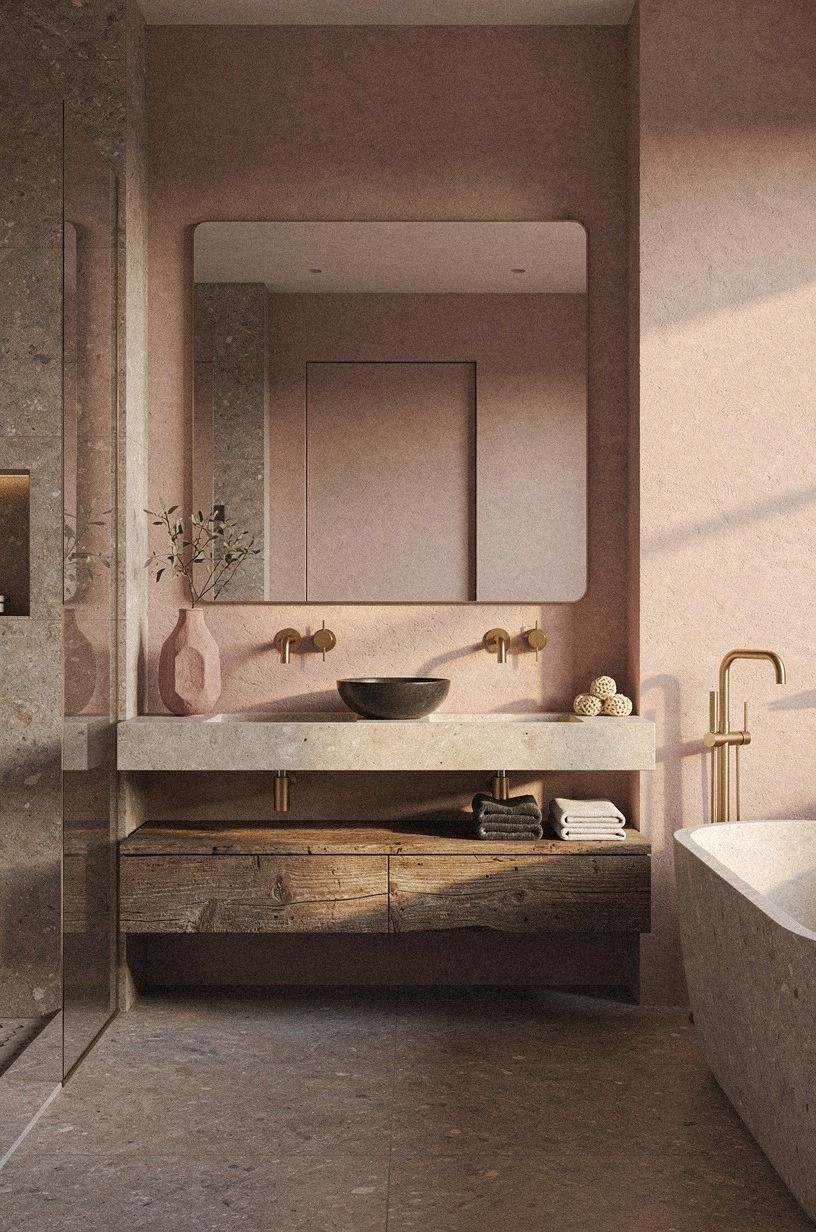
Limestone looks richest beside reclaimed weathered teak. Pair honed limestone with a teak vanity or stool, then let the grain bring warmth beneath the mirror.
You’ll see a softer contrast than a hard tile grid, which makes a narrow room feel calmer. I’d skip stark white paint because it makes the stone look yellow and disconnected.
Your walls don’t need a flawless finish. Dusty rose plaster can give the room an old villa feeling, especially beside a reclaimed weathered teak stool or woven basket.
If you’re working with drywall, use a mineral-style finish in a washable bathroom formula. My Mediterranean Venetian plaster bathroom ideas show how the texture changes around mirrors and wall lights.
Keep the palette quiet. Dusty rose plaster, limestone, and aged brass will give you an earthy base without making the room feel heavy. That warm, tactile combination feels instantly more welcoming!
2The Floating Oak Vanity
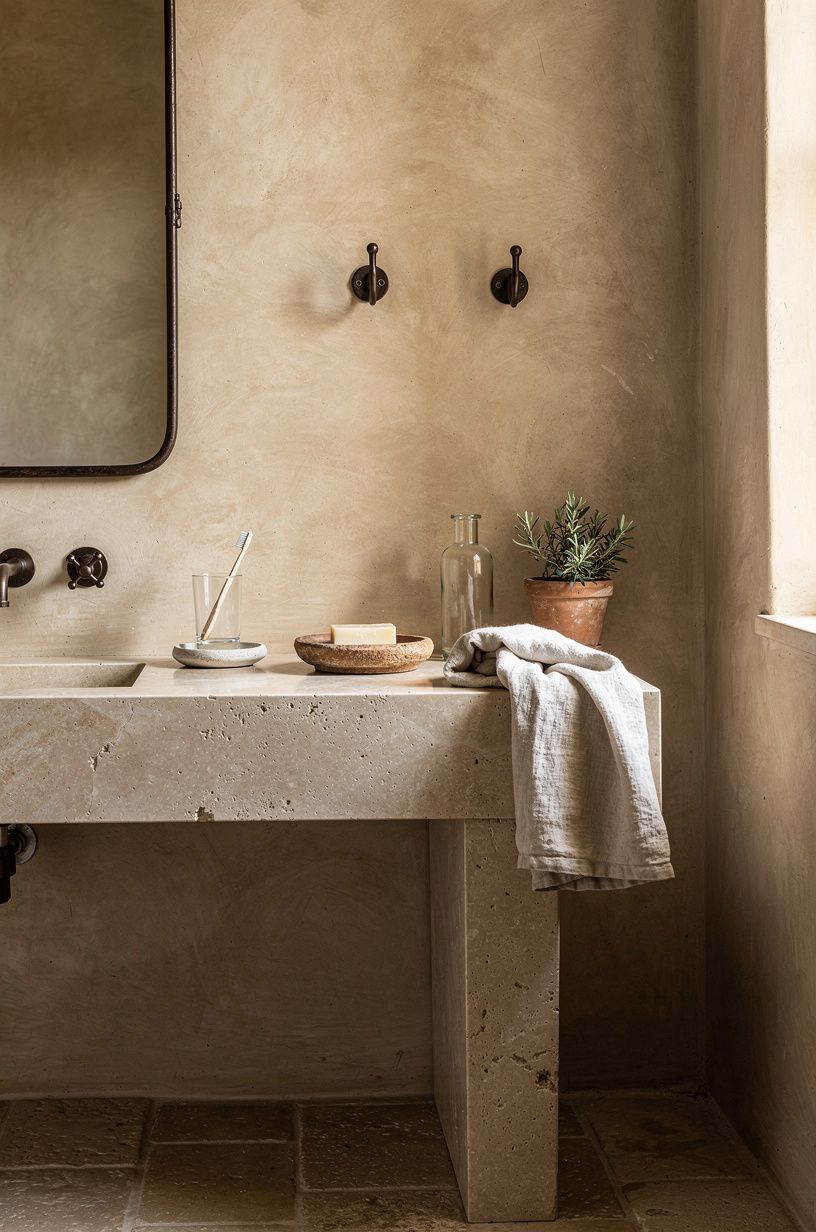
A floating vanity creates a small strip of visible floor, and that gap matters in a compact bathroom.
3Use The Three-Texture Rule around the tub
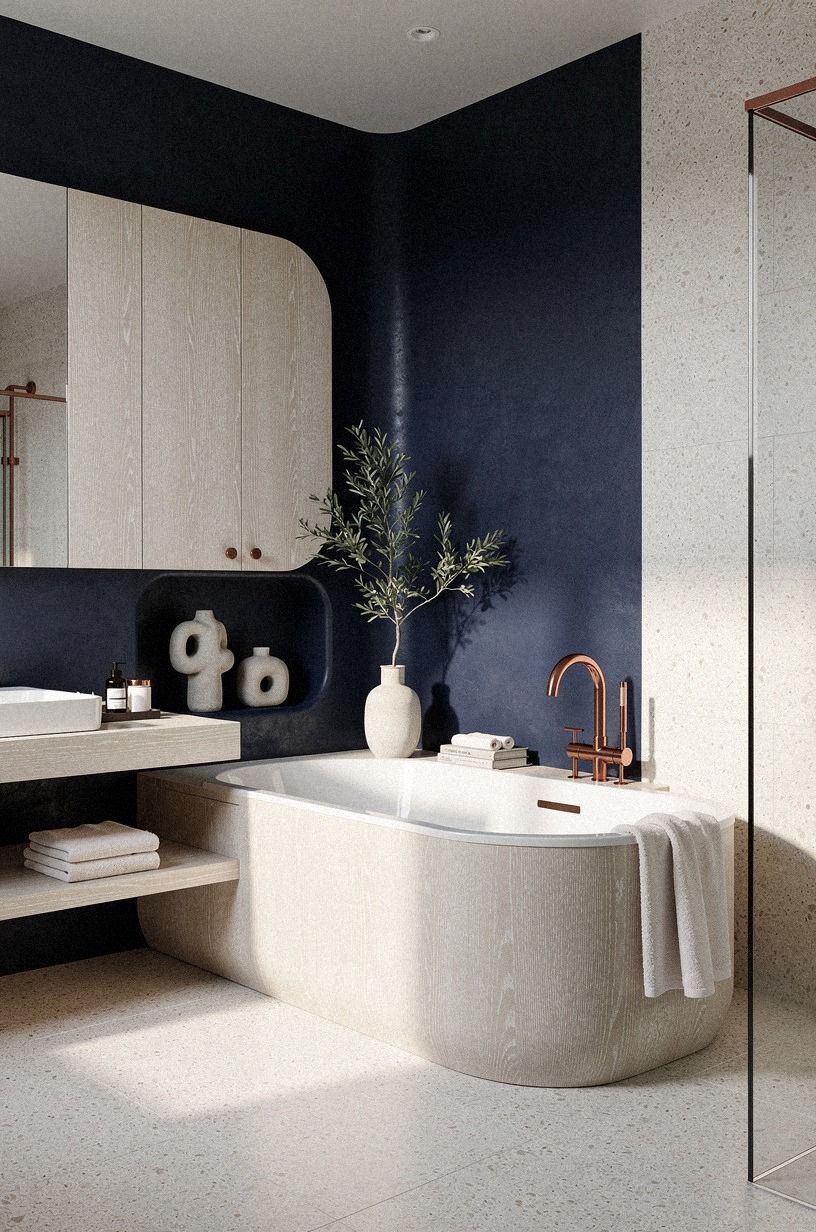
The Three-Texture Rule keeps an Italian style bathroom from becoming one flat block of beige. Use one rough surface, one smooth surface, and one soft surface. For example, cerused white oak on the vanity, polished plaster on the walls, and ivory Belgian flax linen for the window treatment.
You can use this rule around a standard 60x30 in tub without crowding the room. Let the floor carry the visual weight, then keep the tub surround simpler. I’d avoid glossy mosaic tile here because its shine competes with the stone and makes the room feel busy.
What should your soft layer do? It should absorb sound and add contrast.
A linen curtain, cotton bath mat, or small cerused oak stool works better than a pile of decorative objects. I tested too many hard finishes in one bathroom once, and every footstep sounded sharp.
Your eye needs somewhere quiet to land. Hand-loomed ivory cotton does that while still feeling useful. The result is soothing, practical, and wonderfully unfussy.
4Frame the mirror with carved limestone
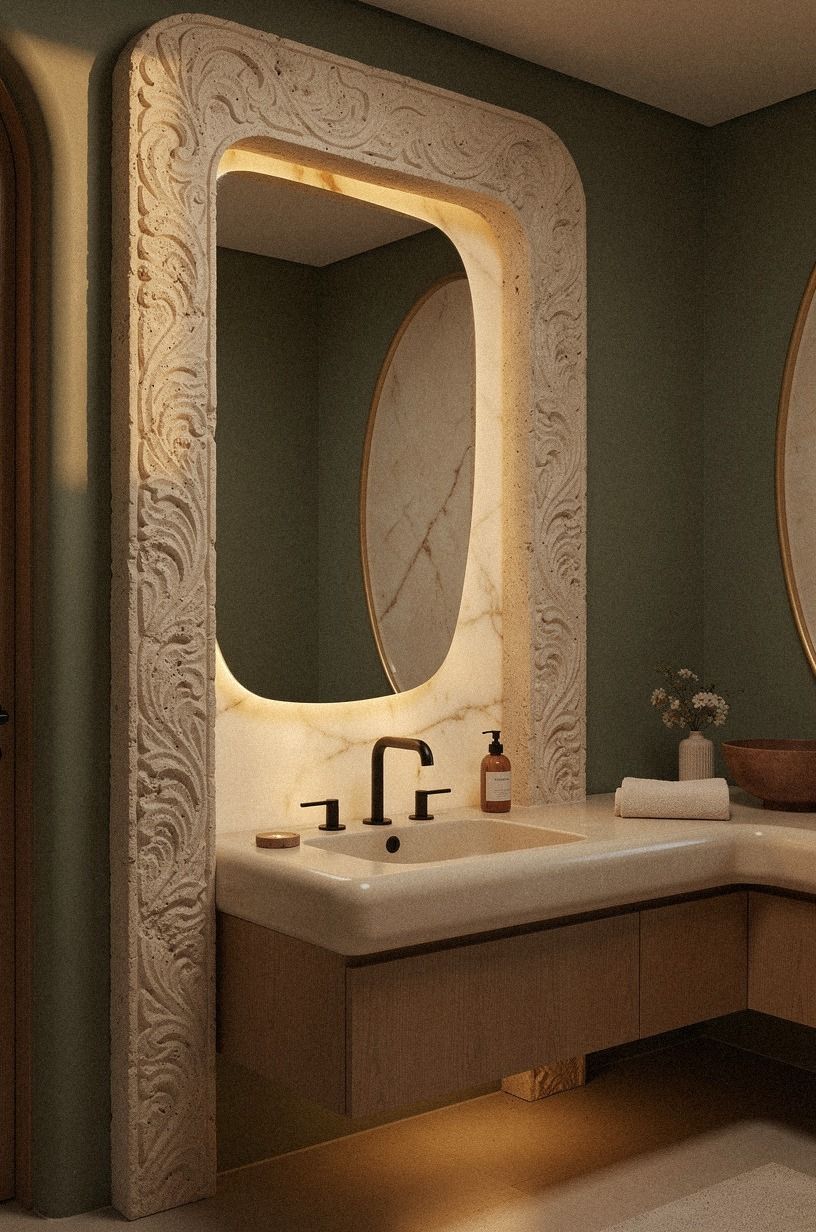
A mirror becomes more architectural when you frame it with a narrow ledge of backlit translucent onyx or a surround made from matching slab. Use a honed finish with natural variation, not a glossy edge that looks newly manufactured. The stone can run just 2 to 4 in beyond the mirror on each side, giving the wall a deliberate outline.
You’ll get the most impact above a simple vanity. A plain round mirror with backlit translucent onyx around it feels more collected than an ornate frame, especially if your bathroom is small. I’d skip a heavy carved border because it eats visual space and makes the mirror feel undersized.
Place sconces at eye level rather than directly above the glass. Your face will read more evenly in the morning, and the side light will bring out the stone’s subtle variation. If you’re planning the full lighting scheme, use the warm glow ideas in this natural stone bathroom guide.
The surround should feel like part of the wall, not an accessory hung on top of it. That restrained detail gives the room a memorable, old-world character.
5Could a Soft Blue Ceiling Work above limestone?
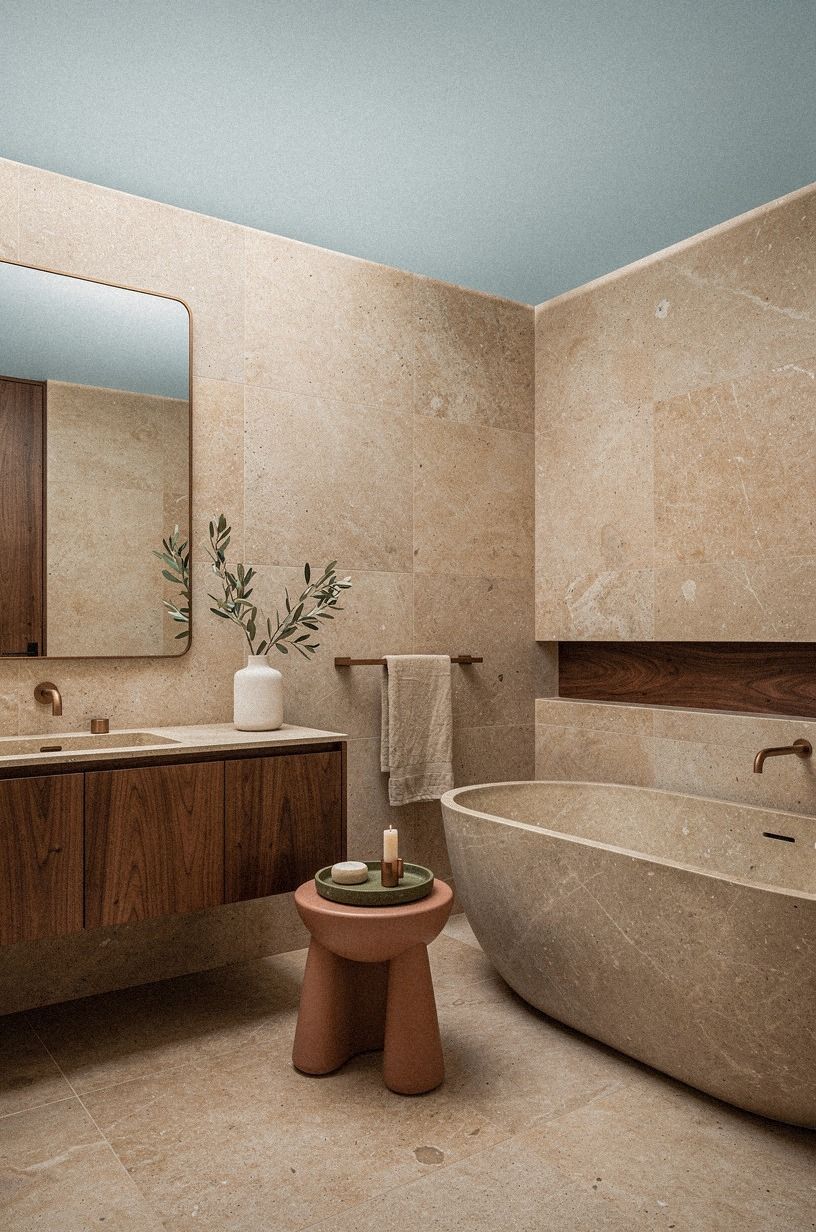
A ceiling can carry color without making the bathroom feel dark.
6Mix aged bronze with pale limestone
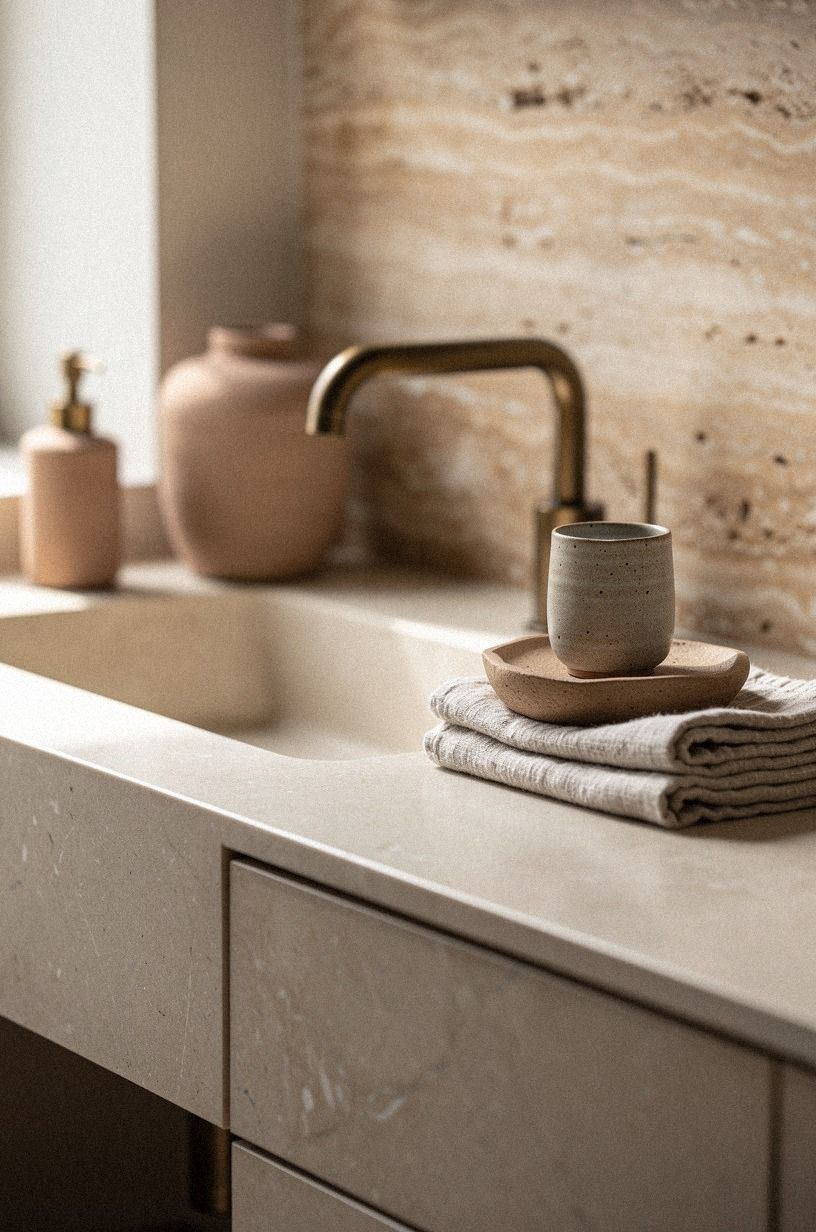
Aged brass gives pale limestone a more grounded edge than polished chrome. Use it for the faucet, mirror frame, towel hooks, and one small shelf. The finish should look slightly muted, with enough variation that it doesn’t read like a matching showroom set.
Your bathroom will feel more Italian if the metals aren’t identical. Pair an aged brass faucet with a linen stool or a small ceramic pendant.
I’d skip mixing five finishes, though. Two dominant metals are plenty for most rooms, and you’ll keep the eye from jumping around.
A brushed brass towel ring beside warm travertine can work if the stone appears in only one place. Its natural variation connects the metal to the surface, while the pale background keeps the room bright.
I once used bright chrome beside warm travertine, and it made the room feel colder than it was. If you’re unsure, hold your metal sample against the limestone before buying hardware. This tumbled limestone floor guide is also useful for studying warmer stone combinations.
7Anchor the floor with tumbled limestone
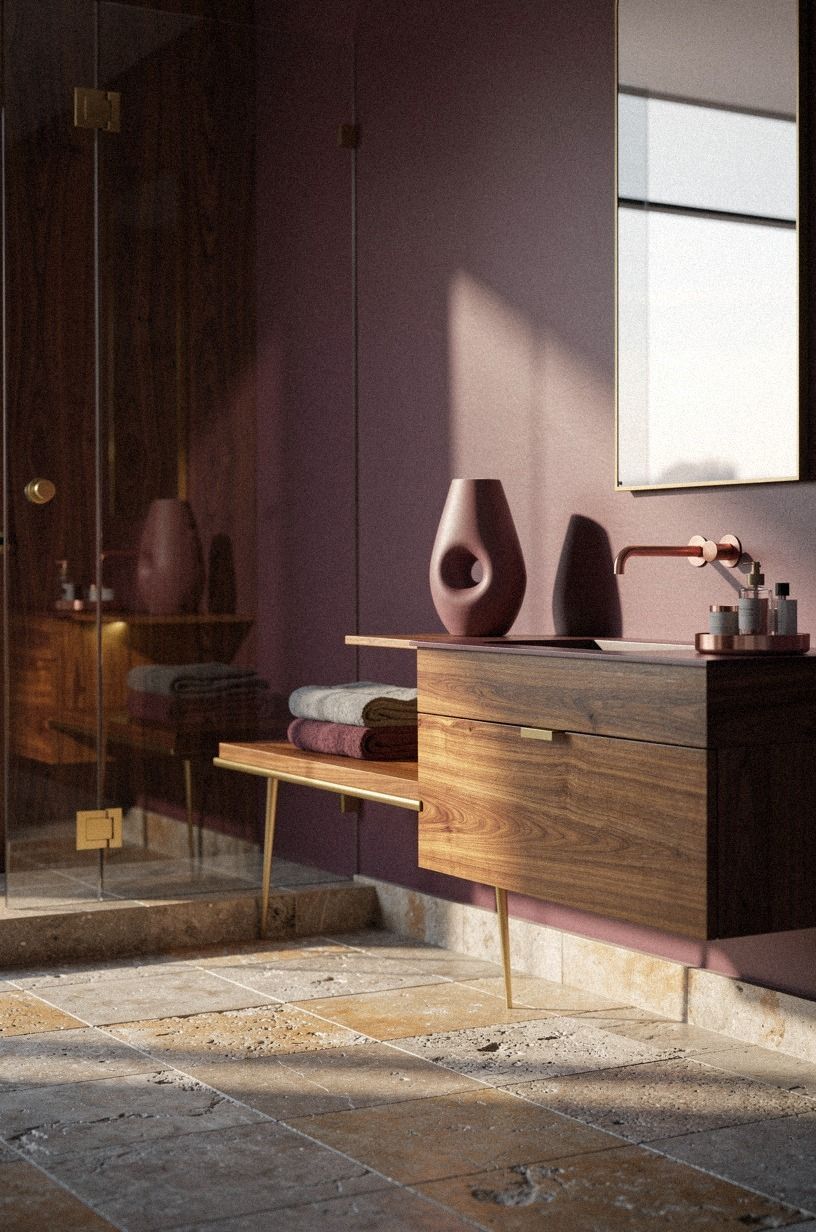
Tumbled limestone flooring gives your bathroom a worn-in foundation, especially when the edges are softened and the surface has natural variation. Choose smaller formats if you need more grout lines for traction, but don’t fill every inch with contrast. A warm grout close to the stone will keep the floor calm.
You’ll want to confirm the finish is suitable for wet areas. Honed or lightly textured stone is easier to live with than a slick polish, particularly near the shower. A comfortable shower needs at least 36x36 in, so let the flooring continue through that zone when the layout allows.
I’d choose a random-looking modular pattern over a rigid checkerboard. The floor should feel like it belongs to the building, not like it was installed from a template. This tumbled limestone floor guide has useful ideas for varied layouts.
Your feet should notice texture, not a sharp transition. Tumbled limestone with natural pitting pairs beautifully with unlacquered brass developing patina at the vanity. It’s durable, distinctive, and deeply comforting underfoot.
8Build a shower niche with The Stone Shelf Rule
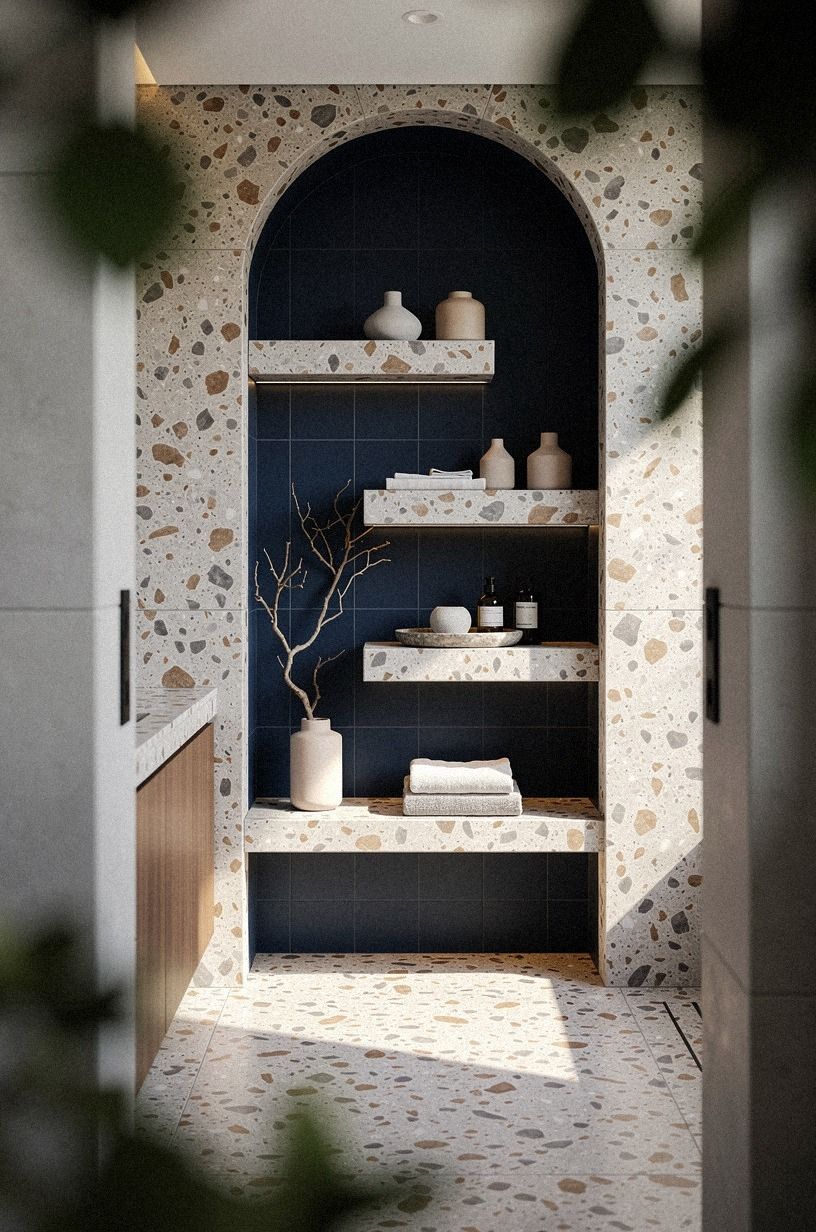
The Stone Shelf Rule is simple: use one thick piece of stone to make the niche feel architectural. A 1 to 2 in shelf in limestone can hold soap, a small bottle, and a folded washcloth without looking cluttered. Keep the back wall quieter so the shelf has room to register.
You’ll need proper waterproofing behind the surface, even if the niche looks like a small decorative detail. Ask your installer about the membrane, slope, and edge treatment before the stone is cut. I’d skip a deep niche if your wall cavity is narrow because it can steal space from plumbing and create a fussy recess.
A vertical niche works well in a 36x36 in shower. Use oversized-chip terrazzo as a small backing if you want texture, then let the limestone shelf soften its pattern. Navy, white, and walnut keep the arrangement grounded rather than busy.
Keep your bottles to two or three. The shelf should look useful when you’re standing in the shower, not styled for a photograph. If you love an earthy waterproof finish, these Moroccan tadelakt bathroom ideas offer another restrained direction.
9Open Storage, Closed Clutter
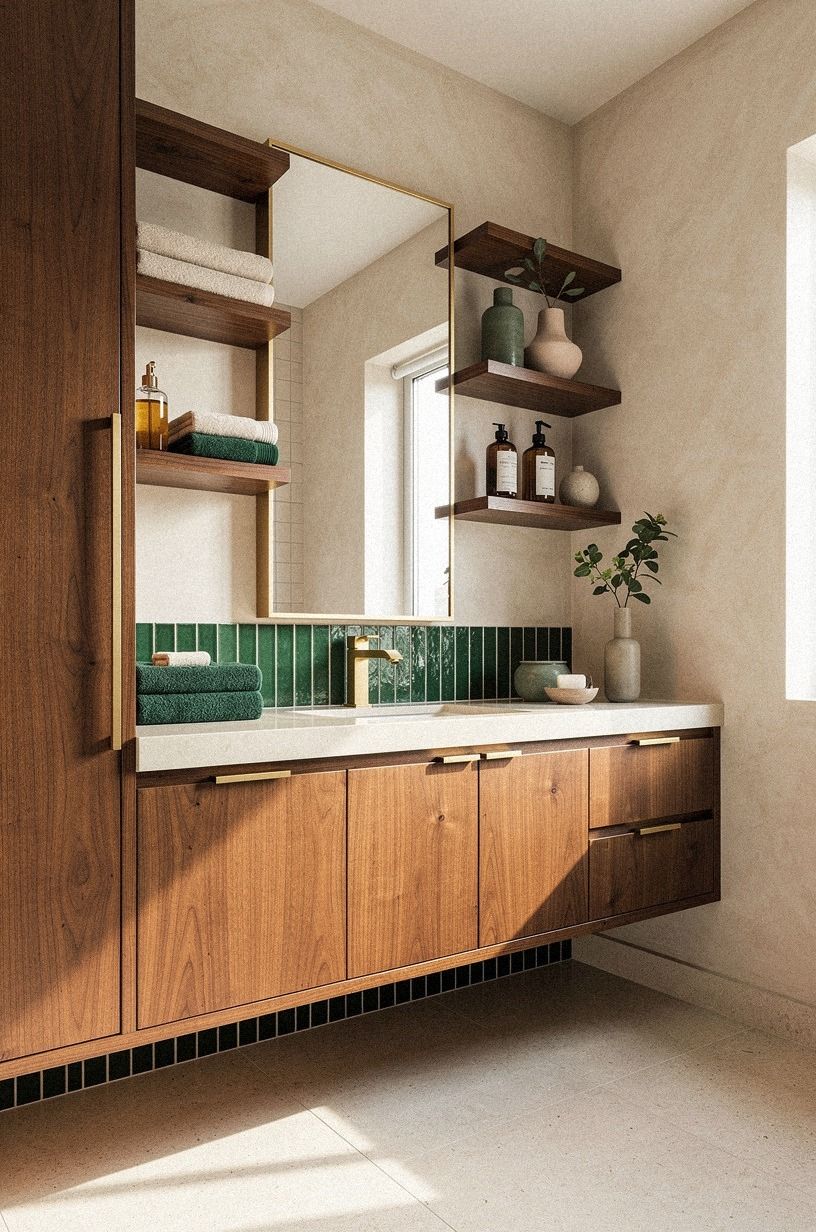
Open storage works when you give each object enough space to breathe. Use a narrow shelf against hand-applied Venetian plaster, a wall-mounted rail, or an antique stool for folded towels. Your bathroom will feel more relaxed if the storage looks like furniture rather than a utility cabinet.
A small walnut shelf can work outside the splash zone, especially if you add woven baskets and a limestone tray. I’d skip open shelves beside the toilet because dust and moisture collect there quickly. Choose the wall that stays driest and keep the shelves shallow.
You can make the arrangement feel old-world with useful objects: cream towels, a gold-toned stone soap dish, and a small emerald ceramic cup. Those materials add weight without making the room feel crowded.
And leave some space empty. The empty shelf is part of the composition, and you’ll appreciate it when you need somewhere to set a clean towel. Open storage should reduce friction, not create another surface to manage.
10Why Limestone Beats Glossy Tile for the Shower Wall
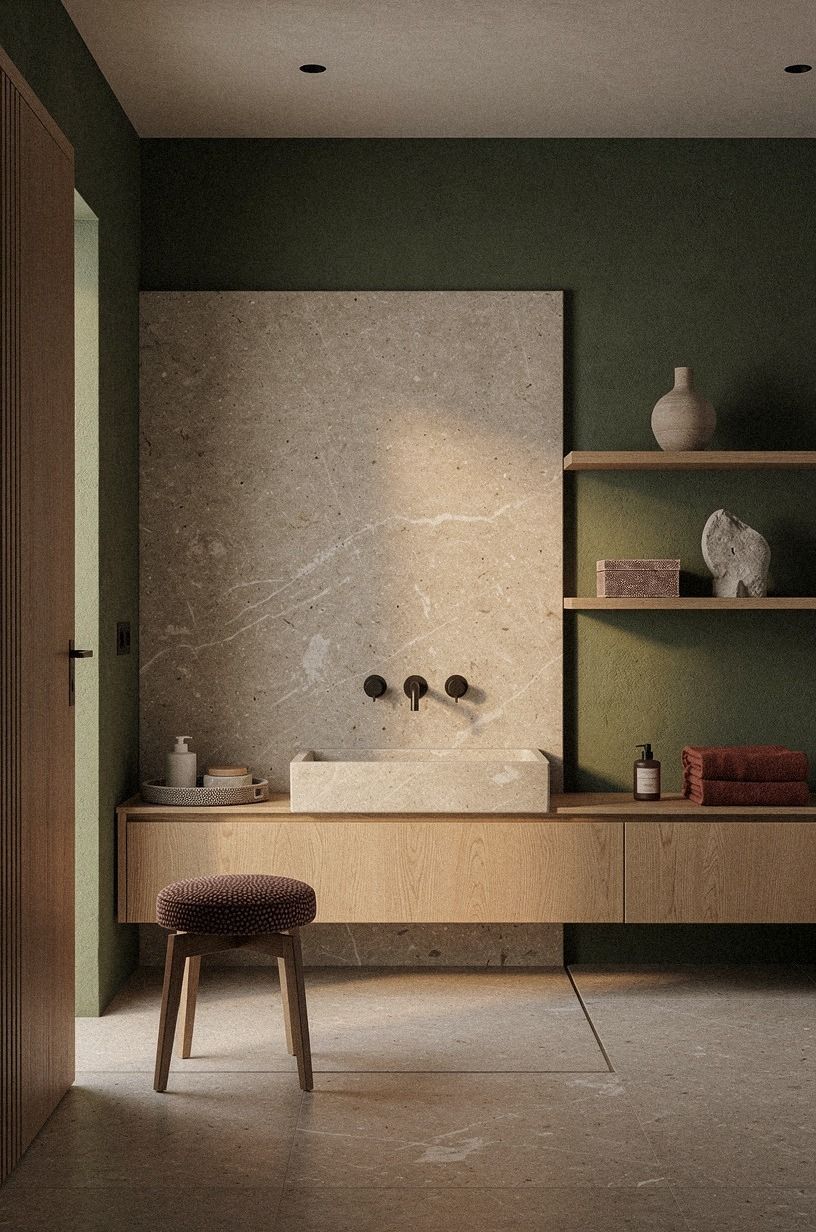
Limestone gives a shower wall a soft, mineral finish that glossy tile rarely matches. Small shagreen accents in forest green, rust, and natural oak can add depth without competing with the stone.
11Hang a linen shade beside the tub
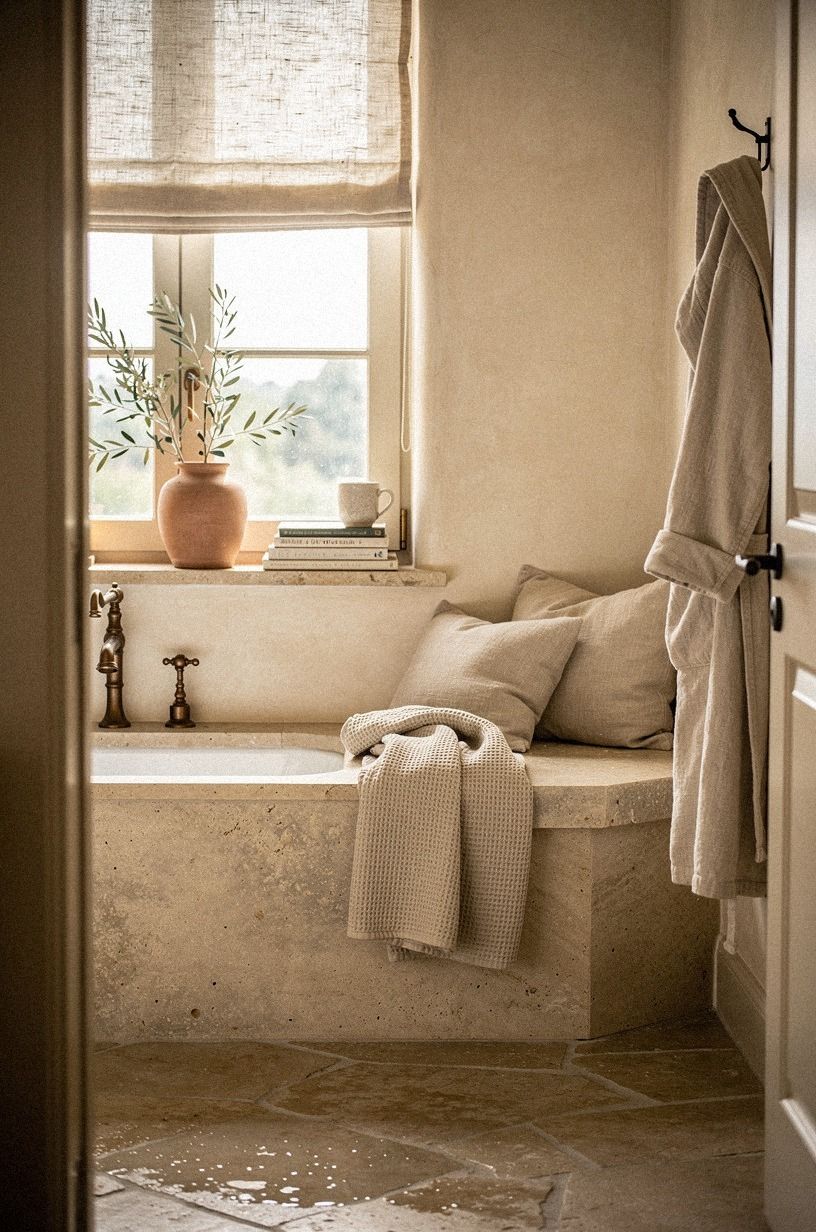
A linen shade softens the hard edges of limestone, tile, and glass. Choose a relaxed Roman shade in washed Belgian linen, with enough opacity for privacy but enough weave to let daylight filter through. The effect is gentle and practical, especially beside a freestanding tub.
You’ll want the fabric mounted high enough to clear the splash zone. A tension rod can work in a rental, but keep the textile away from direct spray. I’d skip floor-length curtains in a small bathroom because they can drag through moisture and make the space feel crowded.
Use dusty rose linen with charcoal trim and an aged brass rod to bring warmth beside the tub. The muted palette can connect to garden views without turning your bathroom into a themed room.
If you’re drawn to layered window treatments, start with the shade. One well-chosen textile will give your room more warmth than three decorative panels. For a related plaster-and-textile palette, these Mediterranean Venetian plaster bathroom ideas are worth saving.
12Paint the vanity in a warm mineral green
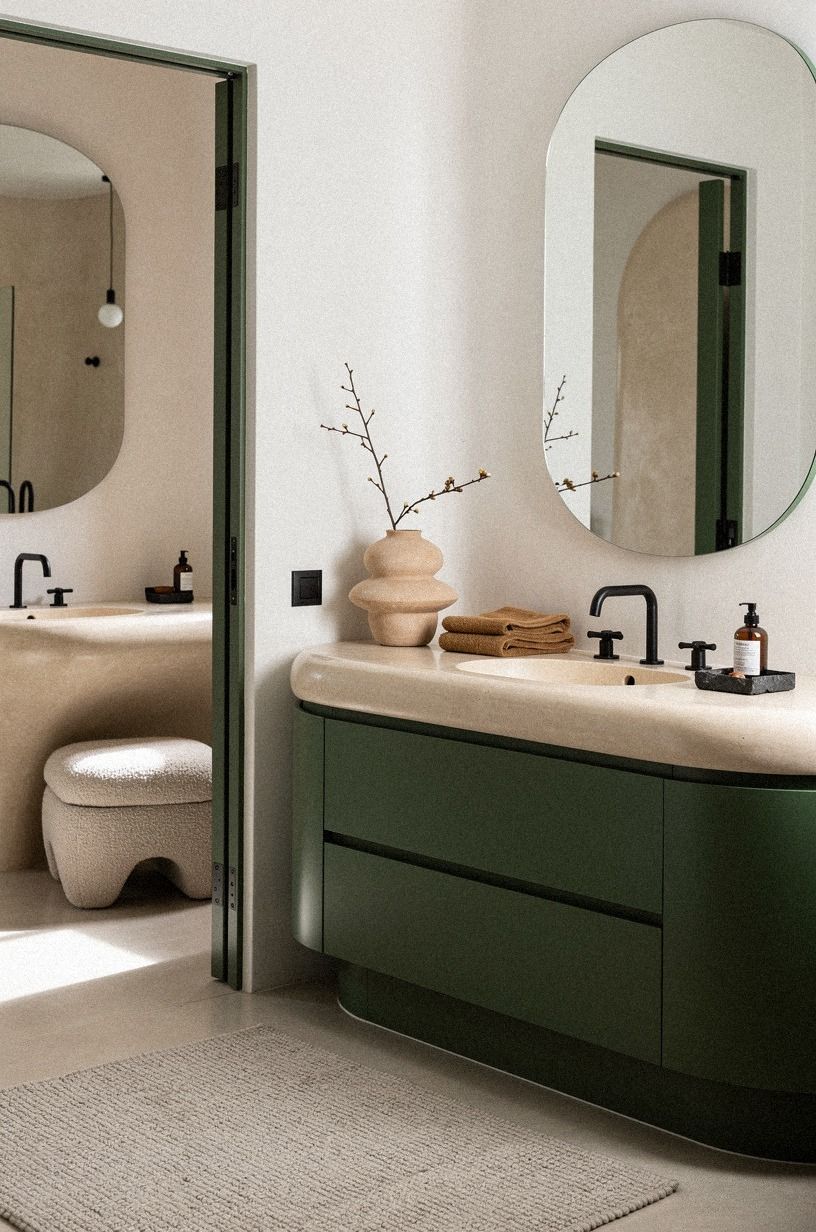
A painted vanity lets you introduce color without covering the limestone’s natural character. A soft warm white is a gentle option for a room with warm daylight, especially when camel and black accents give the vanity more definition. Test it against your stone before committing.
Your vanity doesn’t need to match the walls. A warm white cabinet beside creamy plaster gives the room a collected, Mediterranean homes bathroom feeling. I’d avoid a saturated emerald on both the vanity and tile because the room may lose the quiet quality that makes limestone work.
Use black hardware and an organic bouclé stool for softened contrast. The goal is a tactile composition, not a high-color statement. I once painted a vanity too blue, and the limestone looked muddy beside it.
Choose a durable bathroom paint and seal the cabinet edges carefully. Warm white paint should support your stone, not become the first thing you notice. If you like limewashed color, compare it with these rustic limewash bathroom ideas.
13Frame the tub with a low limestone ledge
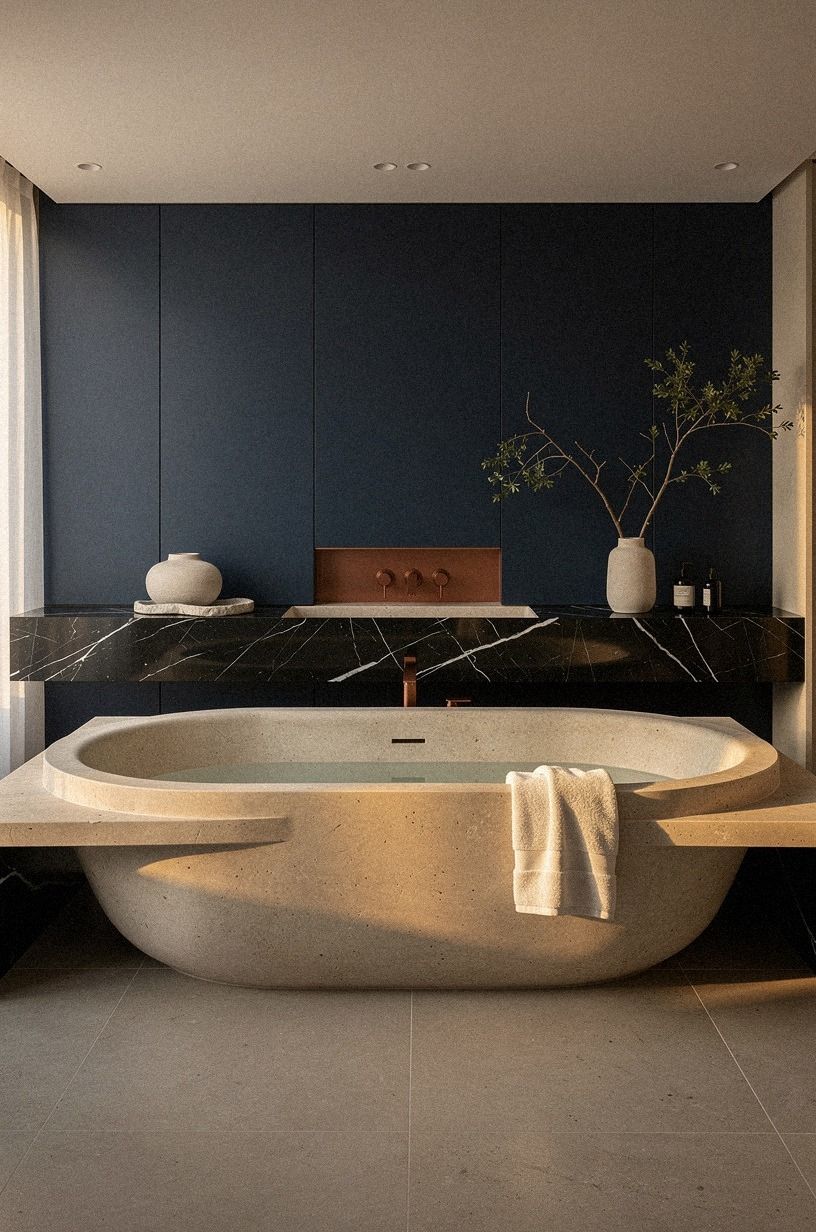
A low ledge around the tub can hold a candle, folded towel, or soap without adding a separate console. Keep the ledge broad enough to use, but don’t let it become a storage shelf for every product you own. A clean surface will make the whole bathroom feel more serene.
You’ll want to check the tub’s actual footprint before choosing the ledge depth. A standard tub is 60x30 in, and the surrounding clearance matters more than the decorative edge. I’d skip a thick platform in a small room because it can make the tub feel boxed in.
Use Nero Marquina black marble with white veins if you want more contrast than pale limestone provides. Its dark surface brings a dramatic quality, while midnight blue, copper, and ivory keep the arrangement balanced. This tumbled limestone floor guide has ideas for balancing both surfaces.
Your ledge should support the ritual of the bath. One towel and one small vessel are enough. The restraint feels elegant because it leaves room for the stone itself to speak.
14Add a plaster arch over the vanity
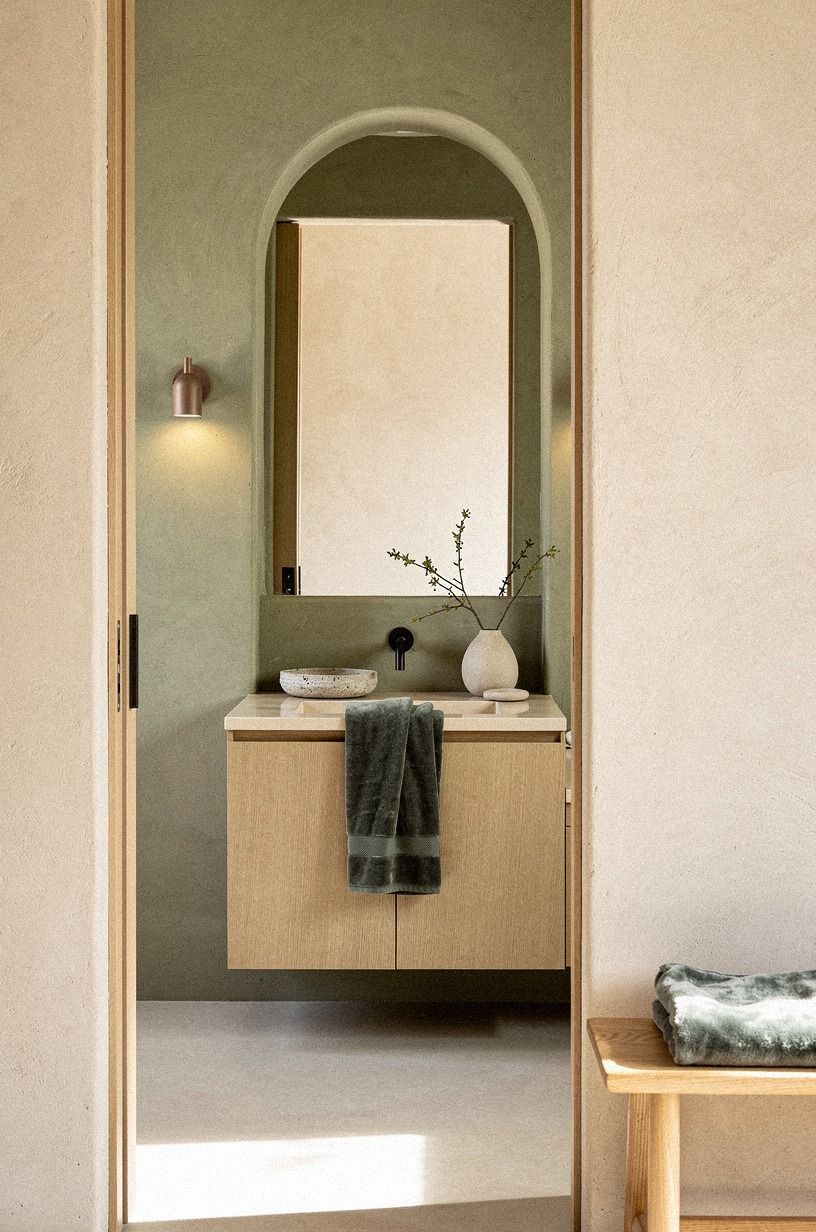
A shallow plaster arch can make a standard vanity feel built into the architecture. You can create the shape with a framed drywall detail, a painted arch, or a real plaster surround depending on your budget. The curve softens all the straight lines in a bathroom.
Your arch should be wide enough to frame the mirror without swallowing it. A narrow arch around a large mirror will feel cramped, so tape the outline on the wall first. I’d skip an arch around every opening because repetition can make the room feel like a set.
Use sage green inside the arch and a slightly deeper warm cream tone outside it. Add deep-pile mohair velvet on a small stool beyond the wet area if you want softness. That tonal shift will show the shape without needing trim.
And don’t add a decorative keystone. The quiet curve is the point.
Your limestone, plaster, and soft light will do more than extra ornament. For more ways to use textured wall finishes, see these Mediterranean Venetian plaster bathroom ideas.
15Let the budget decide where limestone belongs
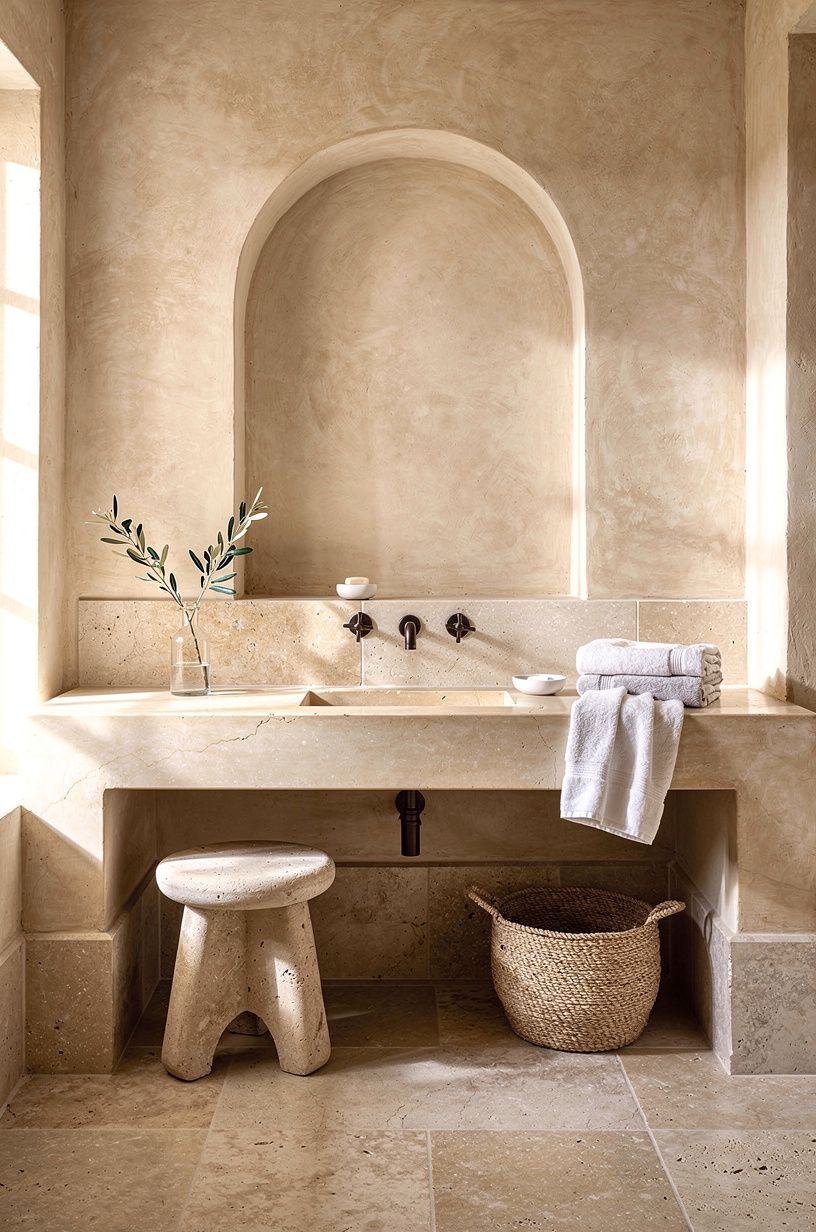
You don’t need limestone everywhere to get its old-world effect. Put the money where your eye and bare feet notice it first, then use paint, plaster, or a limestone-look surface elsewhere. A small vanity backsplash or shower ledge can carry the material farther than a scattered mix of samples.
Here are typical US renovation ranges to help you choose your starting point:
Material prices can guide the next decision:
If your budget is tight, start with natural limestone accessories, paint, and lighting. You’ll still get the warm visual language without taking on a full demolition. A small stone ledge paired with Carrara marble with subtle gray veining can feel more intentional than a rushed full-room installation.
For another low-commitment surface idea, compare these Moroccan tadelakt bathroom ideas.
16The Three-Height Light Stack
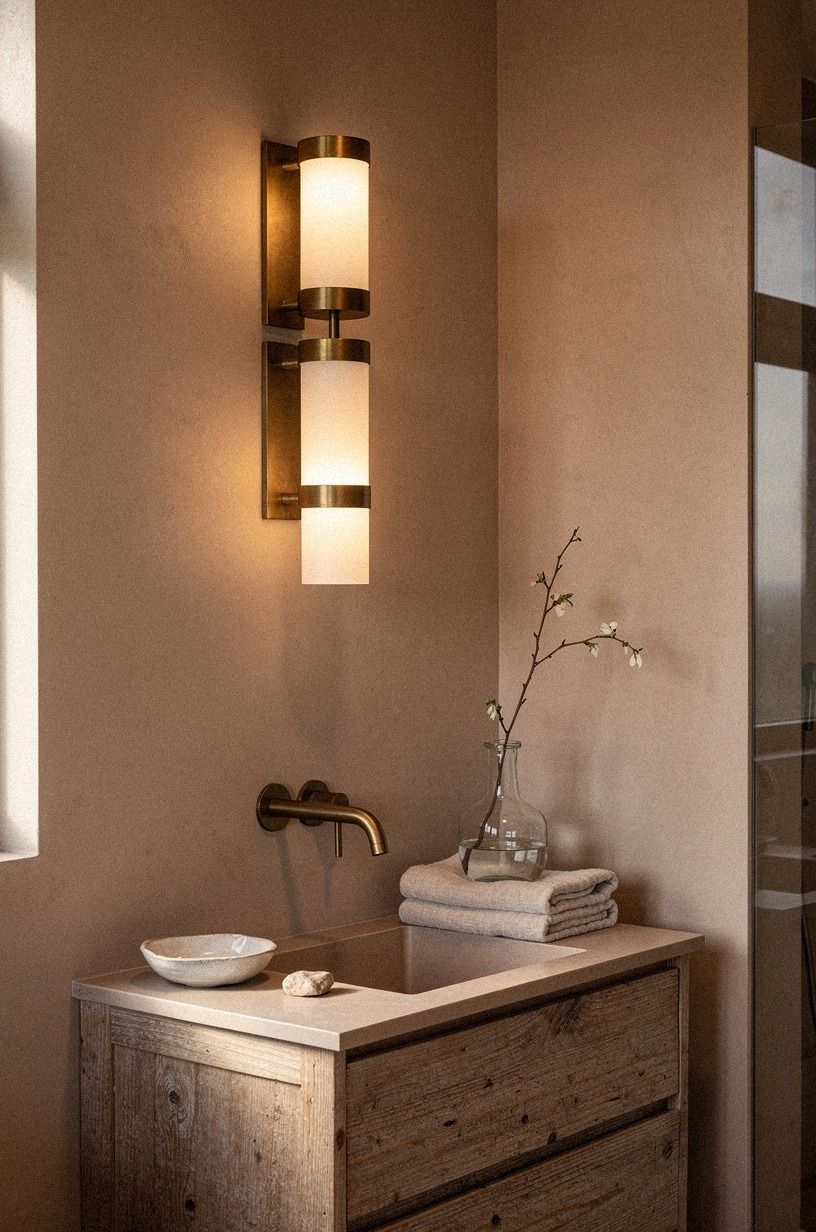
The Three-Height Light Stack uses low, middle, and high light to keep your bathroom from feeling like a clinic.
17Mix old-world ceramics with modern plumbing
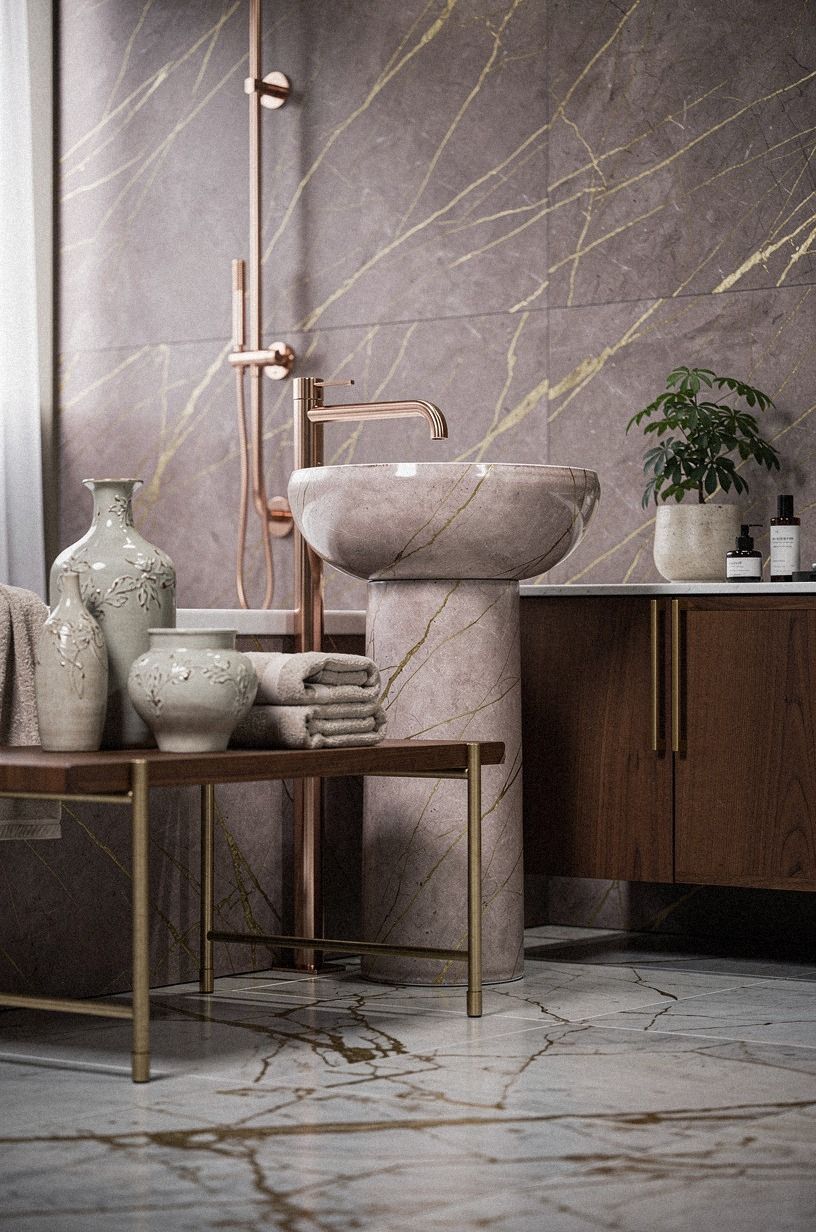
A bathroom can hold a modern faucet and an old-world ceramic basin without looking confused. The key is to repeat one color or material between them. A Calacatta marble vessel with gold veining beside a clean-lined vanity will make the room feel personal.
You’ll want the plumbing to stay reliable, especially around the sink and shower. Choose modern fittings with a rose gold finish that relates to your accessories, then let the ceramics provide the irregularity. I’d skip fake antique plumbing because poor function will annoy you every day.
Try plum and gray hand-thrown ceramics, a small olive jar, or a shallow bowl for rings. Keep the pieces useful and low enough that they don’t interfere with cleaning. Your bathroom should feel lived-in, not like a shop display.
If you like more texture, compare your options with these rustic limewash bathroom ideas. The same principle works here: one rough note beside several quiet ones.
18Use limestone as the room’s visual anchor
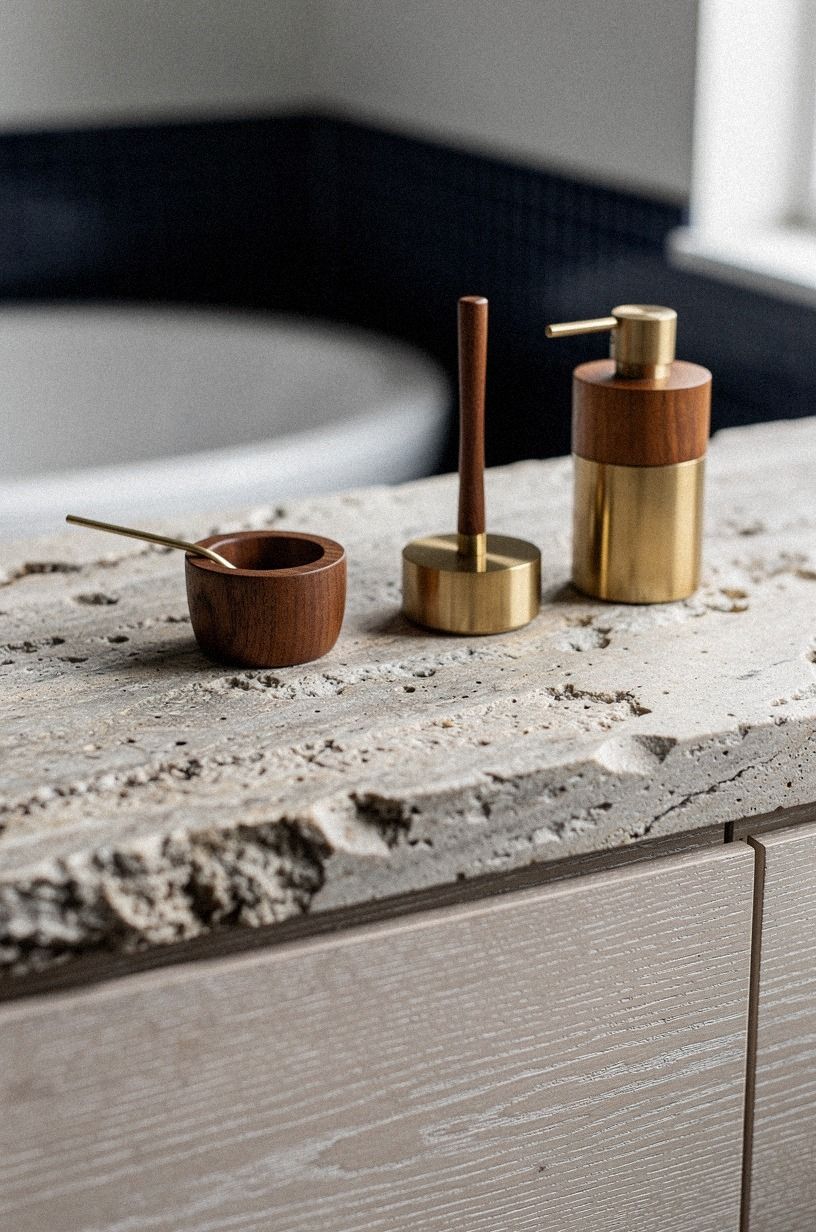
Limestone should be the material that makes your other choices easier. Pair it with cerused white oak, navy, and white when you want the room to feel grounded without becoming heavy.
Why limestone still feels right in 2026
I’ve watched bathroom design swing from glossy white to deep color and back again, but limestone keeps holding its ground because it doesn’t depend on a single trend. The surface has small shifts, soft edges, and a quiet relationship with daylight.
In the morning, it can look creamy. At night, it holds the amber glow from a sconce. That change is why the room feels lived-in instead of finished once and forgotten.
The part I care about most is restraint. A bathroom doesn’t need a dozen references to Italy, Morocco, or the Greek islands.
One limestone floor, a plaster wall, and a timber vanity can carry the idea. I’d rather see three convincing materials than ten decorative gestures competing for attention.
You’ll also find the room easier to clean and easier to update when the foundation stays calm.
I made the mistake of choosing materials from separate sample boards once. Each piece looked good alone, but together they felt noisy.
Now I place every sample under the actual bathroom light and wait a full day. If the limestone, paint, and metal still look comfortable together at 7 a.m. and 8 p.m., I know the palette has staying power.
For a closer look at warm wall texture, save these Mediterranean Venetian plaster bathroom ideas.
A Few Things Worth Answering
What is the best Mediterranean & Italian Limestone Bathroom Ideas for Old-World Soul for a small bathroom?
I’d choose a pale limestone floor with a floating IKEA TONSTAD-style vanity and warm wall plaster. A floating vanity saves visual space, while the stone adds texture without a busy pattern. Keep your mirror large, your hardware simple, and your grout close in color to the limestone.
Where can I buy Mediterranean & Italian Limestone Bathroom Ideas for Old-World Soul pieces on a budget?
I’d look at IKEA, Wayfair, and Target for vanities, towels, mirrors, and hardware. Second-hand stone and wood can lower costs, so check Facebook Marketplace and local thrift stores.
For more wall texture, browse these Moroccan tadelakt bathroom ideas. The look doesn’t require every surface to be natural stone.
How much does a Mediterranean & Italian Limestone Bathroom Ideas for Old-World Soul makeover cost?
I’d expect a small update to fall within the $200-$1,200 range for paint, a mirror, a faucet, and textiles. Paint and lighting offer the lowest-cost impact. A mid-range project with a vanity, partial tile, and lighting typically reaches $3,000-$9,000, while a full shower and floor renovation can rise much higher.
Can I create a Mediterranean & Italian Limestone Bathroom Ideas for Old-World Soul on a budget?
Yes, and I’d begin with three low-cost moves: paint the vanity, change the bulbs, and add textured towels. Reusing your mirror and hardware saves money.
Add limestone later at one focal point, such as a shelf, backsplash, or small stool. These rustic limewash bathroom ideas can also help you create depth with paint.
Is a Mediterranean & Italian Limestone Bathroom Ideas for Old-World Soul worth it in a small space?
Yes, because a small bathroom gives each material more visual impact. Repeated warm tones make the room feel larger, especially when the floor and vanity ledge share a stone family. Keep at least 21 in of clearance in front of the toilet, and avoid bulky decorative pieces that steal useful space.
Is a Mediterranean & Italian Limestone Bathroom Ideas for Old-World Soul a good idea for a rental?
Yes. I’d use removable wall paint where permitted, a tension rod with linen, a freestanding stool, and peel-and-stick accents outside wet areas.
No-damage lighting and textiles add warmth without changing plumbing. You can take the character with you when your lease ends, especially if you keep the palette adaptable.
Where I’d Start First
If I had to pick one, I’d start with the limestone floor. Its texture changes under bare feet and softens every hard surface above it.
Pin limestone flooring for later, then compare grout and paint samples in your own light before buying anything. That decision will make the rest of the room easier.
The payoff is warm, grounded, and lasting!