
 by
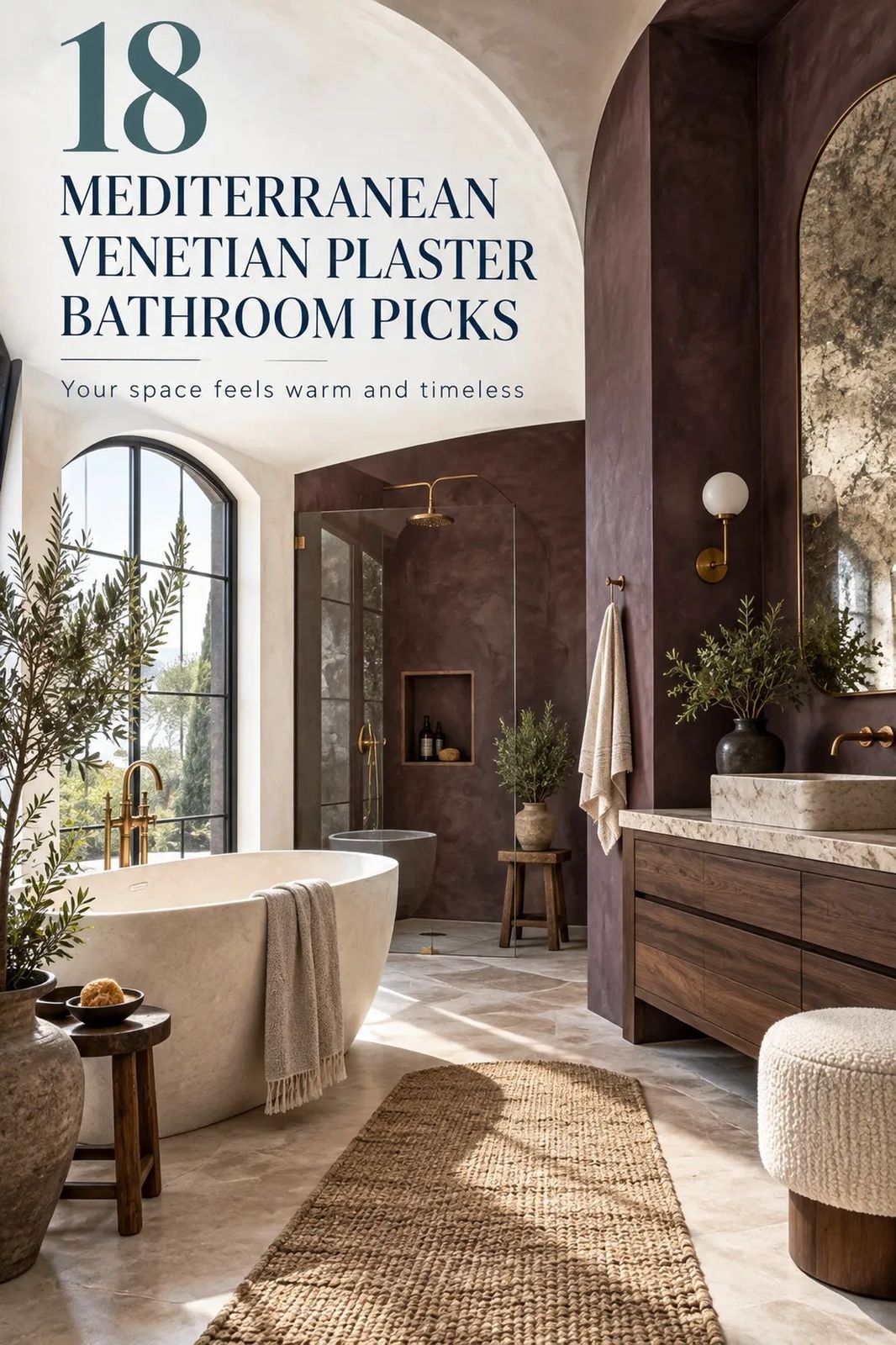
by A Mediterranean Venetian plaster bathroom gets old-world warmth from a breathable wall finish, quiet metals, and a few measured layers, not from covering every inch in ornament. I've learned that moisture planning matters more than decoration, especially in a small room where every surface gets noticed. Start calmly. Then build the character.
- Start with a moisture plan for the plaster
- Test the finish under real bathroom light
- Choose a grounded color before buying fixtures
- Set the budget before choosing the stone
- Build the Two-Wood Rule
- Add stone texture beside the smooth plaster
- Set the vanity at a comfortable height
- Swap bright chrome for aged metal
- Frame the sink with a generous mirror
- Layer the Three-Height Light Stack
- Hang textiles with a dry, natural hand
- Choose zellige where the water needs protection
- Mix old-world hardware with one modern line
- Carve out storage without losing the wall
- Add one Mediterranean art moment
- Check ventilation before styling the shelves
- Style the finish with the Patina Permission Rule
- Should you plaster every wall in a small bath?
1Start with a moisture plan for the plaster
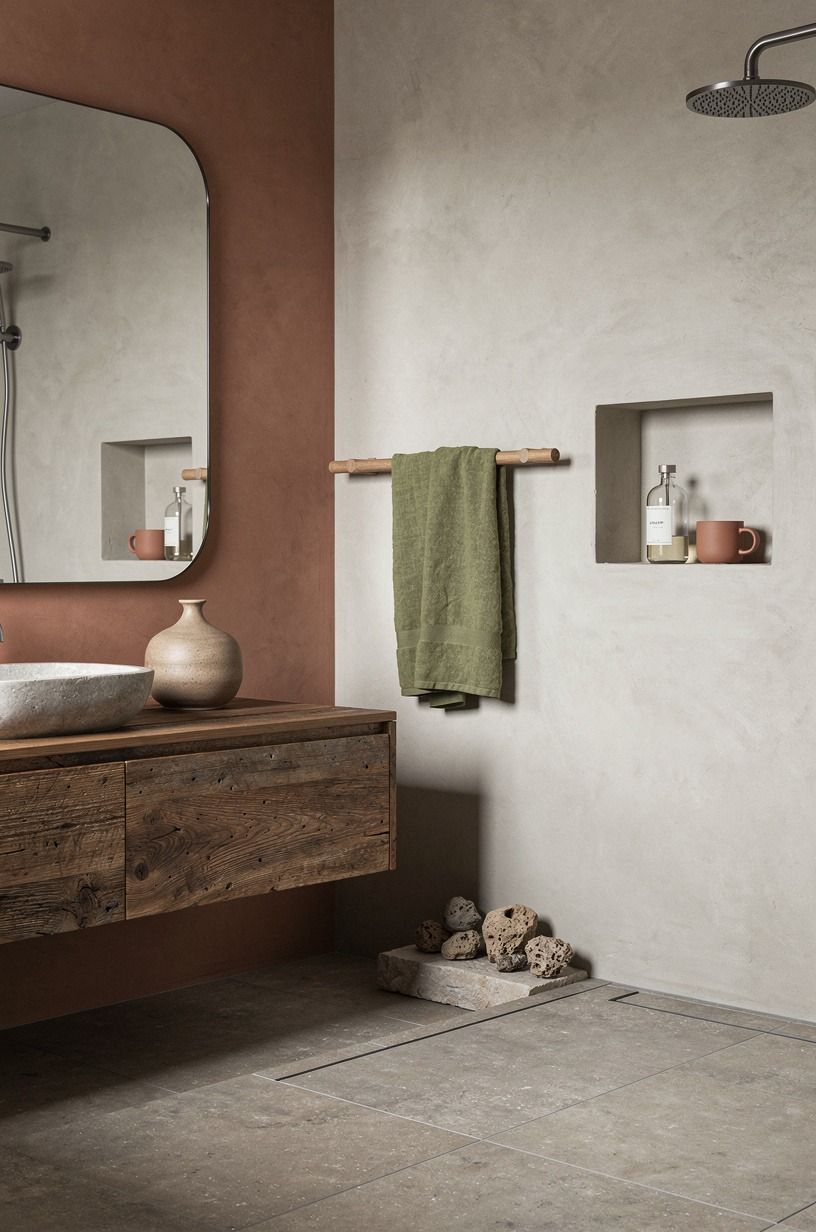
Before you choose a color, decide where water will land every day. Venetian plaster can look earthy and calming, but it isn't a substitute for waterproofing inside a shower enclosure.
Keep the plaster on dry walls, above the vanity, or outside the direct splash zone. You'll protect the finish and your budget at the same time.
For a shower wall, use a properly rated waterproof system beneath an approved surface. I prefer mineral Venetian plaster on the wall opposite the shower, with a reclaimed weathered teak shelf outside the splash zone.
If you're unsure about the boundary, mark the wet zone with painter's tape and ask your installer before buying materials. A beautiful finish in the wrong location won't stay beautiful for long.
2Test the finish under real bathroom light
Paint and plaster samples can look completely different at 7 a.m., noon, and after the overhead light comes on.
3Choose a grounded color before buying fixtures
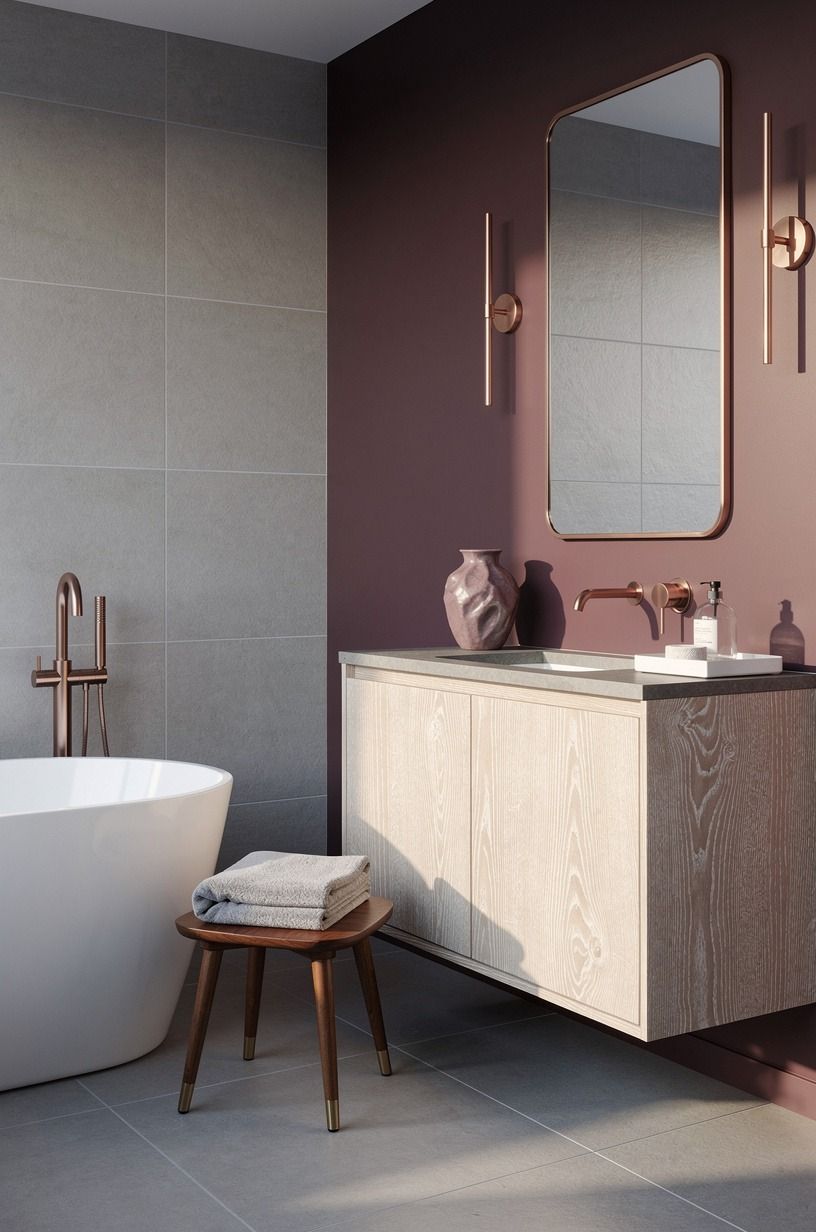
Mediterranean rooms rarely depend on one loud accent. Choose one wall color with a dusty, mineral quality, then let the fixtures support it. Farrow & Ball Brinjal No.222 works when you want a moody bathroom with old-world depth, particularly beside cerused white oak and rose-gold hardware.
If your room is narrow, use the deeper color on the longest wall and keep the ceiling lighter. You’ll create a sense of length without making the room feel closed in.
I’d skip icy gray here. It fights the plum tones in the plaster and makes white porcelain look harsh. A calm palette should feel warm at the first glance, not after you’ve added six accessories.
For a softer alternative, study these white beige Venetian plaster bathroom ideas before you settle on a sample.
4Set the budget before choosing the stone
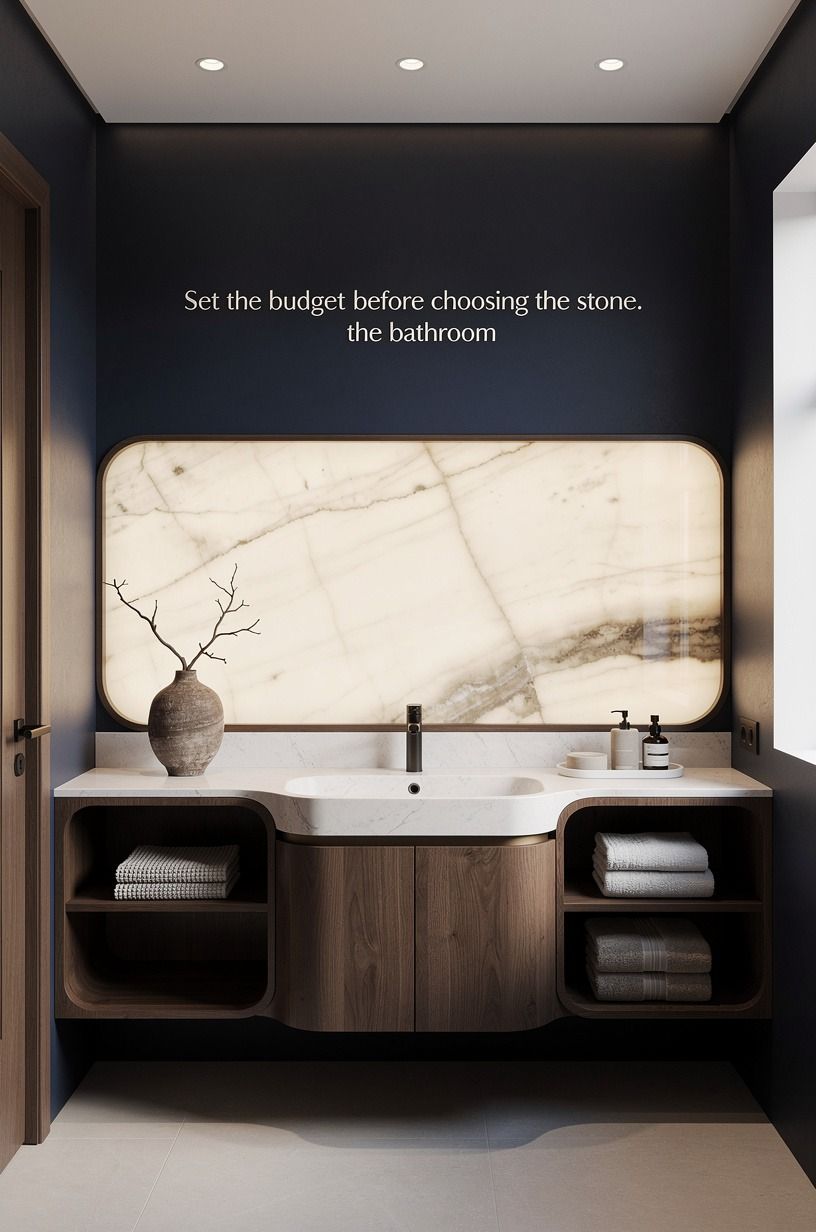
Write down the pieces that must stay, the pieces you can repaint, and the pieces you’re willing to replace. A small refresh can be inviting and affordable, but tile, plumbing, and a new vanity move the total quickly. You’ll make better choices if you know whether your room belongs in the first row or the last.
These figures are typical US guides, not a promise from a contractor. Backlit translucent onyx is a splurge material, so use it as a focused vanity or backsplash accent rather than covering every surface.
If you’re working with $200-$1,200, keep the plumbing where it is and spend on the wall finish, mirror, and lighting first. That order gives your eye the most warmth.
5Build the Two-Wood Rule
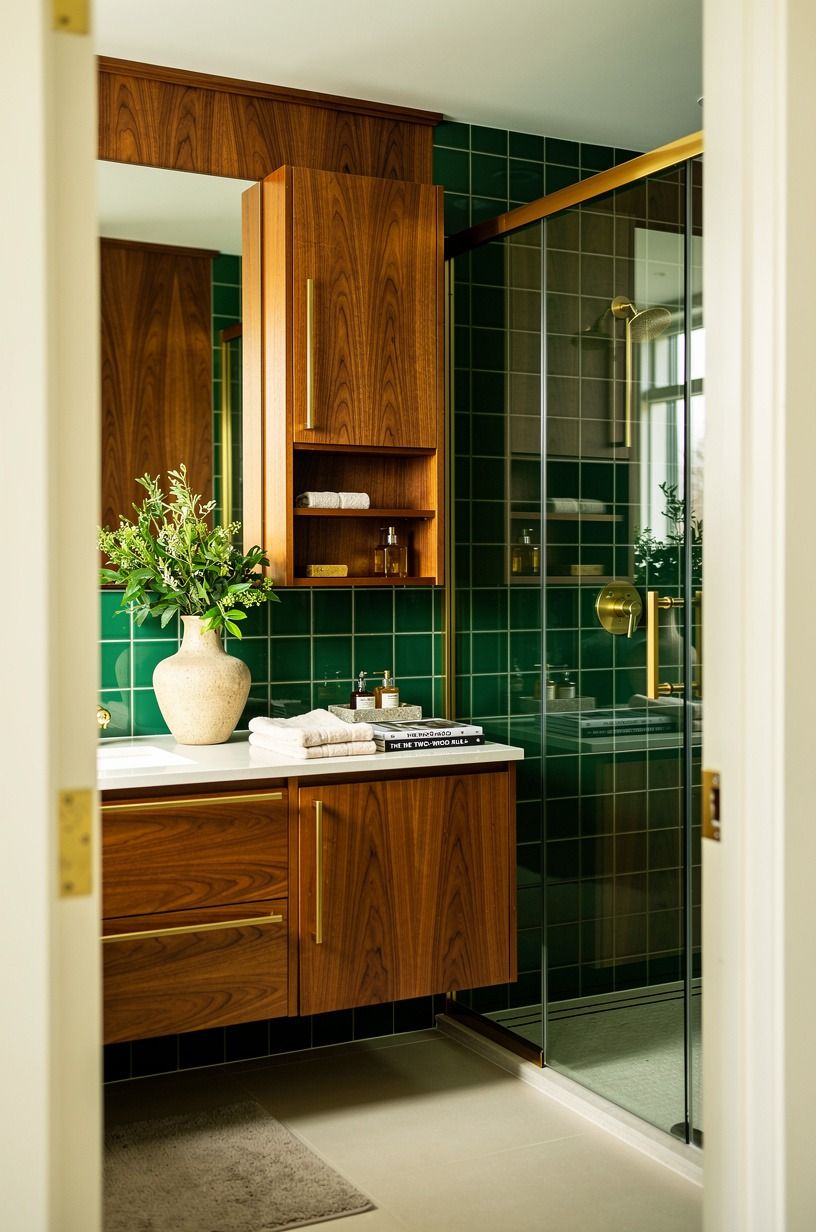
Choose two wood tones and stop there. The first can be a substantial vanity in book-matched walnut; the second can be a stool, frame, or small shelf in smoked oak. Your bathroom will feel gathered instead of busy when the grain has a clear relationship.
I made the mistake of mixing pale pine, orange oak, and reddish bamboo in one room. It looked accidental, not rustic. You’ll want one light wood and one deeper note, with similar undertones.
A 3/4-inch solid white oak shelf beside a darker walnut mirror frame gives you contrast without visual noise. And if your floor already has strong grain, make the vanity quieter.
The Two-Wood Rule is especially helpful in a serene organic modern Venetian plaster bathroom, where texture already does much of the decorating.
6Add stone texture beside the smooth plaster
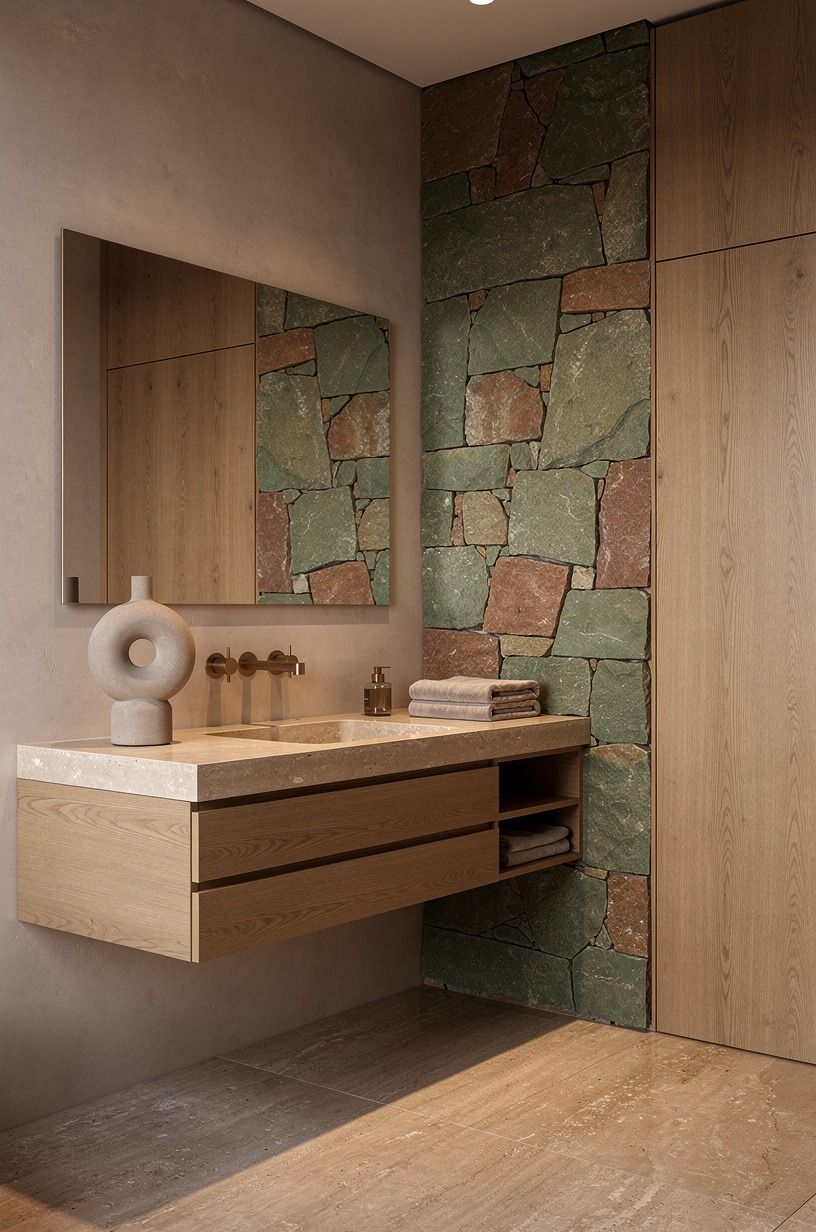
Venetian plaster has a soft movement, so it needs one rougher companion. Try warm honed travertine with natural pitting on a shelf, backsplash, or small ledge. The tiny cavities catch dust and shadow, which is exactly why I’d use it in a controlled location rather than across every wall.
Your stone texture bathroom will feel more authentic if the stone has variation instead of a printed pattern. Honed travertine beside a smooth basin creates a tactile pause, and you’ll notice it whenever your hand reaches for soap.
Skip highly polished marble if the room already has glossy tile. Too many reflective surfaces make the space feel bright but strangely flat.
A narrow stone ledge can hold a bar of soap, a folded cloth, and one small vessel. That’s enough. You don't need a display shelf crowded with objects.
7Set the vanity at a comfortable height
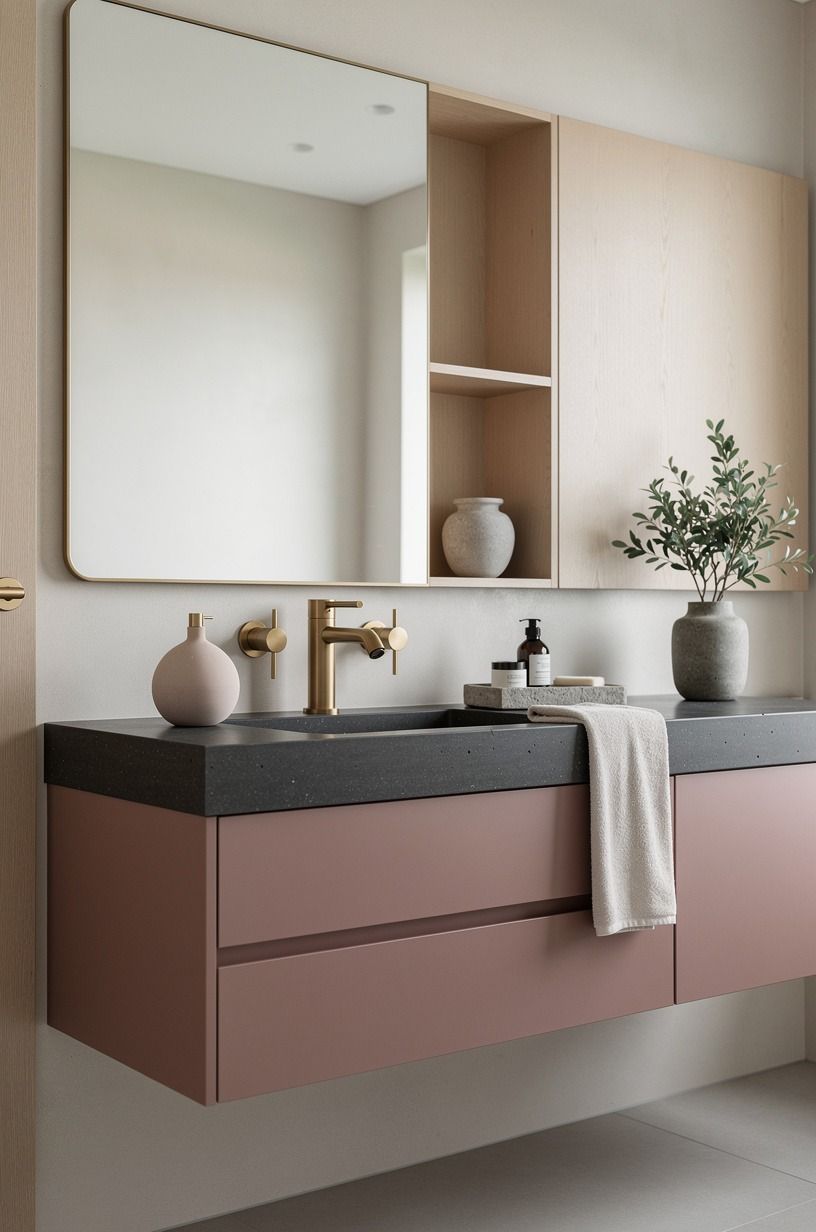
A standard vanity height sits around 32-36 inches, or 81-91 cm. Use that range as your starting point, then check the basin depth and your household's reach. Your sink should feel natural when you wash your hands, not like a restaurant basin mounted too high.
I like a simple vanity stool with an unlacquered brass footrest nearby when the room has space, but I’d avoid forcing a seat into a narrow bath. You’ll gain more comfort from a clear floor path than from one extra decorative piece.
If you're replacing the vanity, measure the door swing, drawer clearance, and toilet position before ordering. A gorgeous cabinet that blocks the drawer is a daily irritation.
For layout inspiration, these rustic limewash bathroom ideas show how modest cabinetry can still feel earthy and refined.
8Swap bright chrome for aged metal
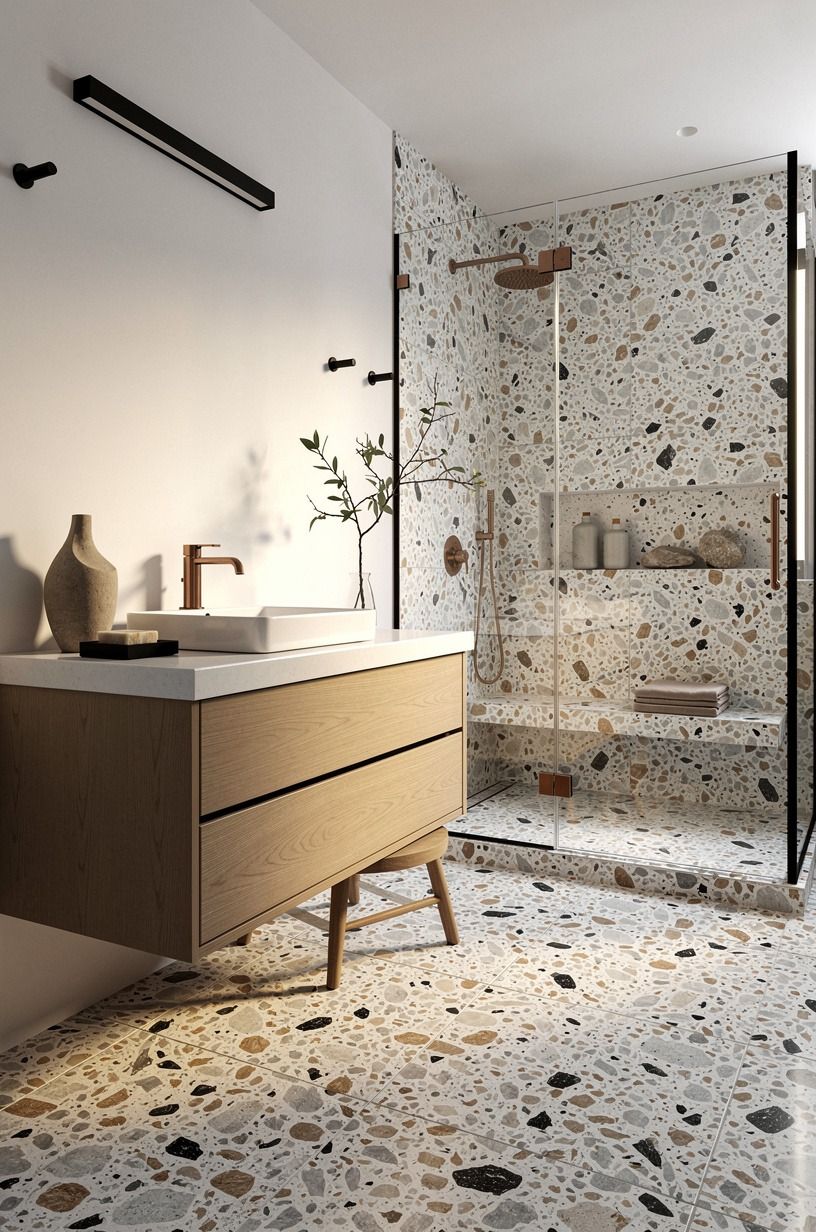
Chrome can look crisp, but it often pulls a Mediterranean bathroom toward a cooler hotel style. Choose aged bronze, brushed brass, or unlacquered brass with a finish that can soften over time. Oversized-chip terrazzo on a ledge or counter can anchor those aged metals and keep the room tactile rather than overly shiny.
You don't need to replace every fitting at once. Start with the faucet, then see whether the existing towel bar still bothers you.
I’d skip shiny yellow brass because it can compete with warm plaster and orange wood. Your better choice is a brushed or aged finish that catches light quietly.
For a budget refresh, keep the plumbing fixtures and change the mirror frame or cabinet pulls. That can keep you near the $200-$1,200 budget tier while giving the room a more charming, old-world edge. Small decisions matter here!
9Frame the sink with a generous mirror
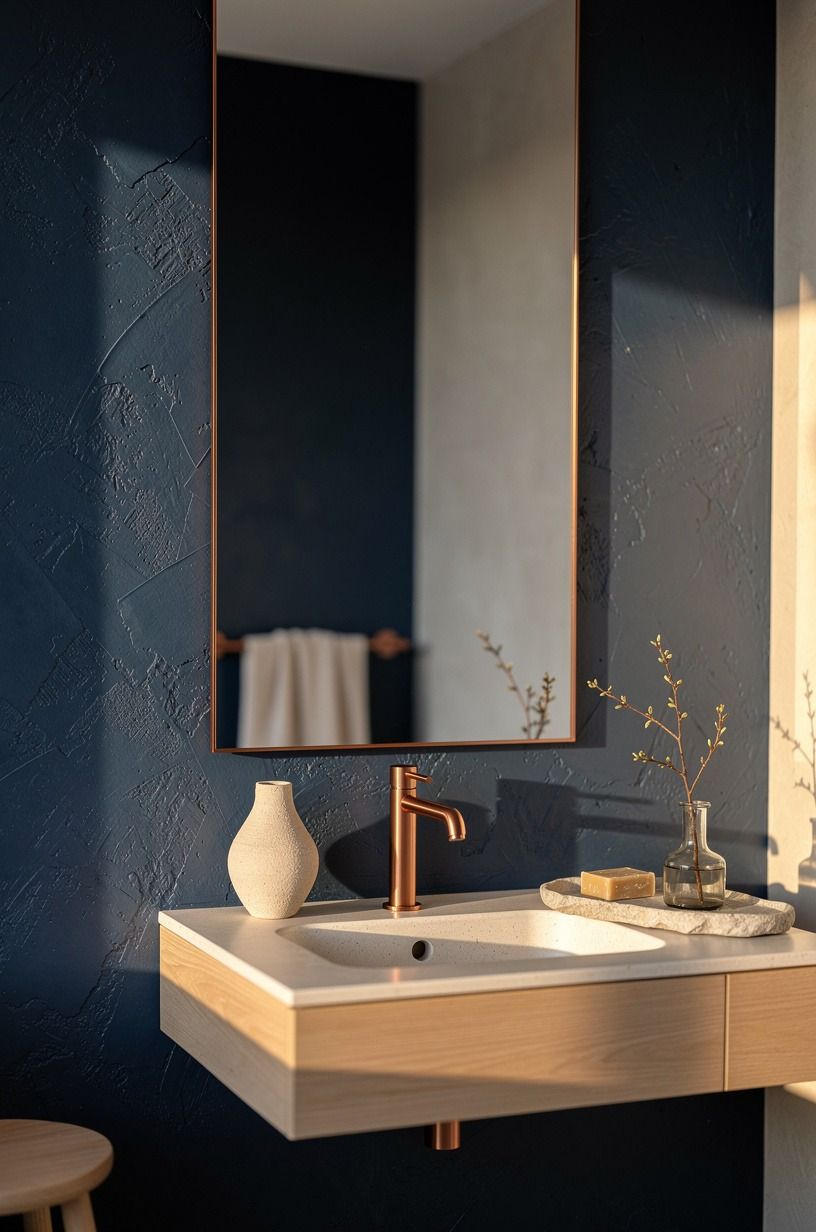
A bathroom mirror should give your face enough light and give the room enough reflection.
10Layer the Three-Height Light Stack
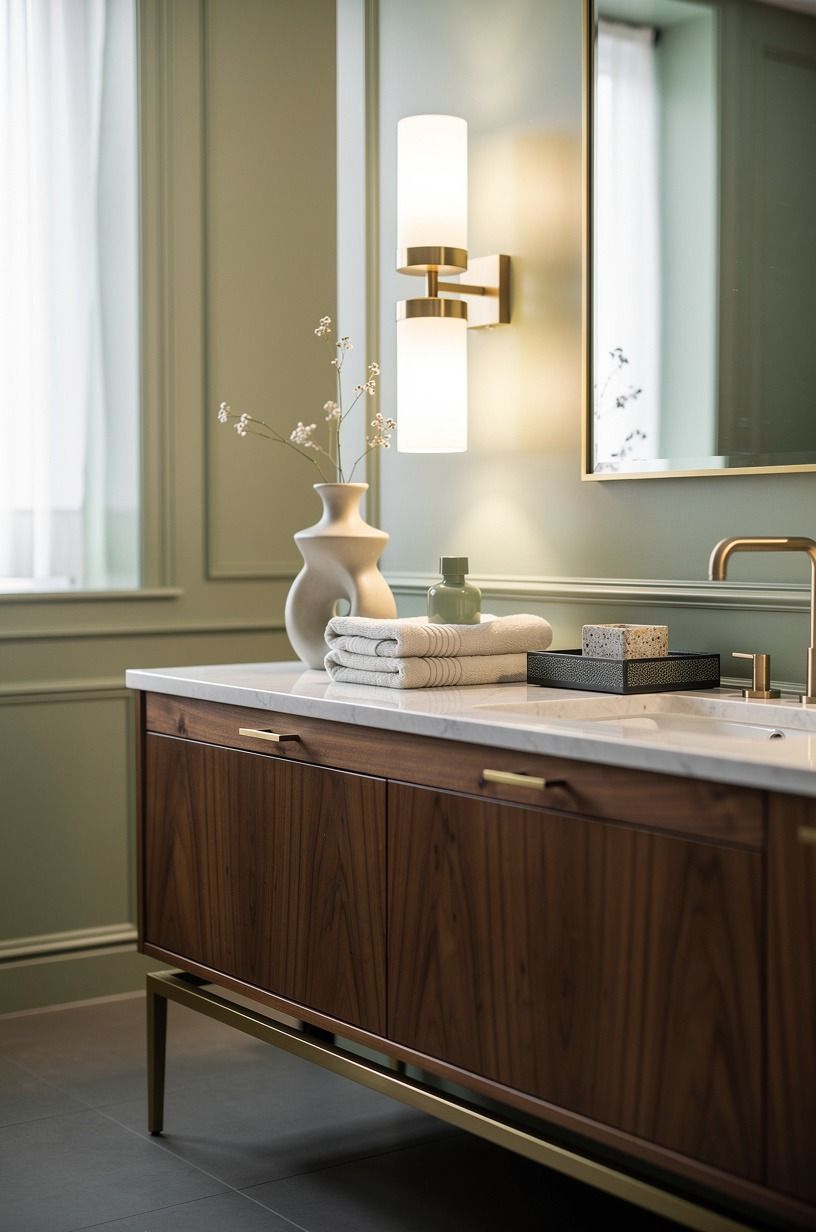
Use three light levels: a ceiling source, a face-level source, and a low glow. This is the Three-Height Light Stack, and it keeps plaster from looking dull after sunset. Your ceiling fixture handles general light, sconces handle grooming, and a small lamp or low night-light gives the room a tranquil evening layer.
Choose warm bulbs and dimmers wherever your wiring allows. Opal glass sconces soften shadows across the wall, while a small lamp with shagreen accents can sit safely outside splash areas.
You’ll want the face light on both sides of the mirror when possible, not only above it. I’d skip one harsh downlight over the sink. It puts every shadow under your eyes and makes the plaster look uneven.
And if you’re planning a full lighting update, this quiet luminous wall approach gives you a useful color reference.
11Hang textiles with a dry, natural hand
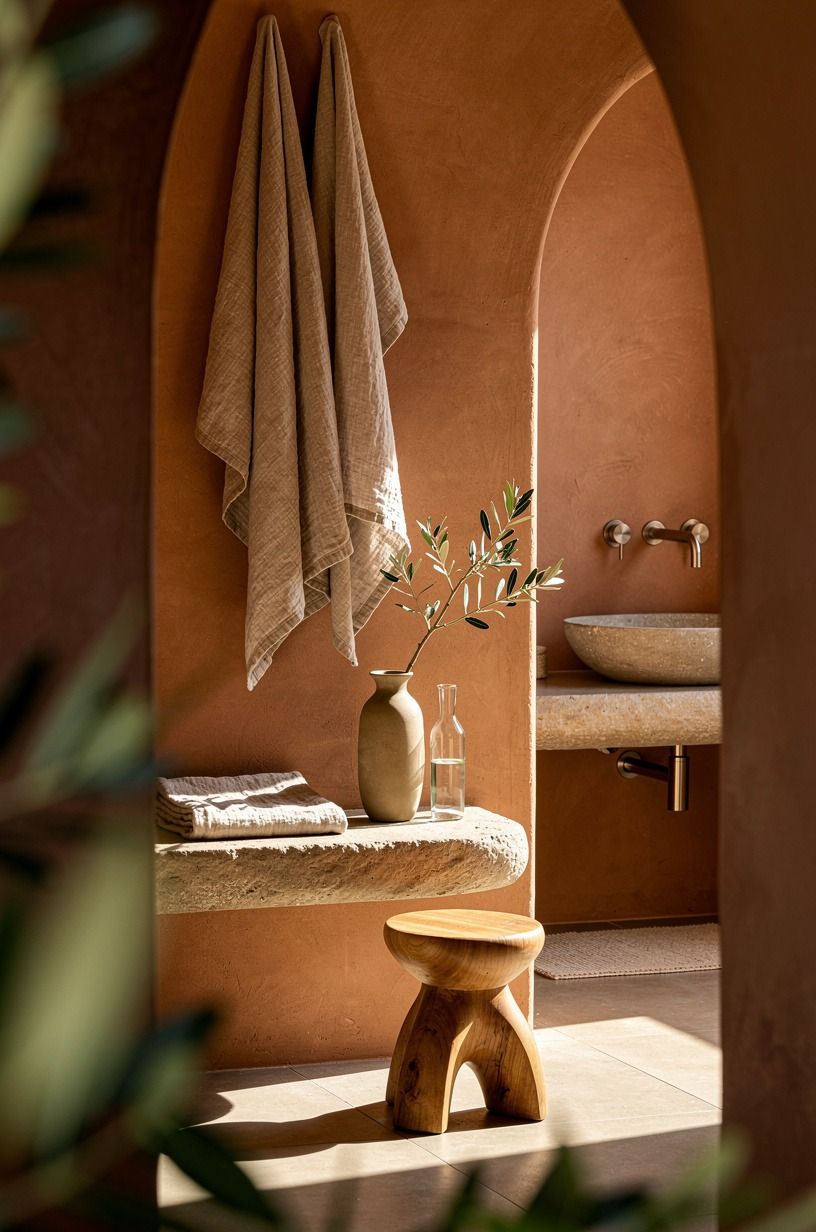
Textiles keep a hard bathroom from feeling clinical. Choose washed Belgian linen, Turkish cotton, or a washable cotton bath mat with enough weight to stay flat. 600gsm Turkish cotton towels feel soft and substantial without needing a complicated display.
Your palette can stay simple: cream, clay, faded olive, and one darker brown. I’d avoid matching towel sets with decorative borders because they can make the room look staged.
Hang one towel within reach and keep extras folded in a basket or cabinet. You’ll notice the difference when the fabric absorbs water quickly and doesn’t slide from the hook.
A narrow runner can work if your door swing allows it. Check the floor first, then choose the textile. And please leave a little bare floor around it so the room still feels airy!
12Choose zellige where the water needs protection
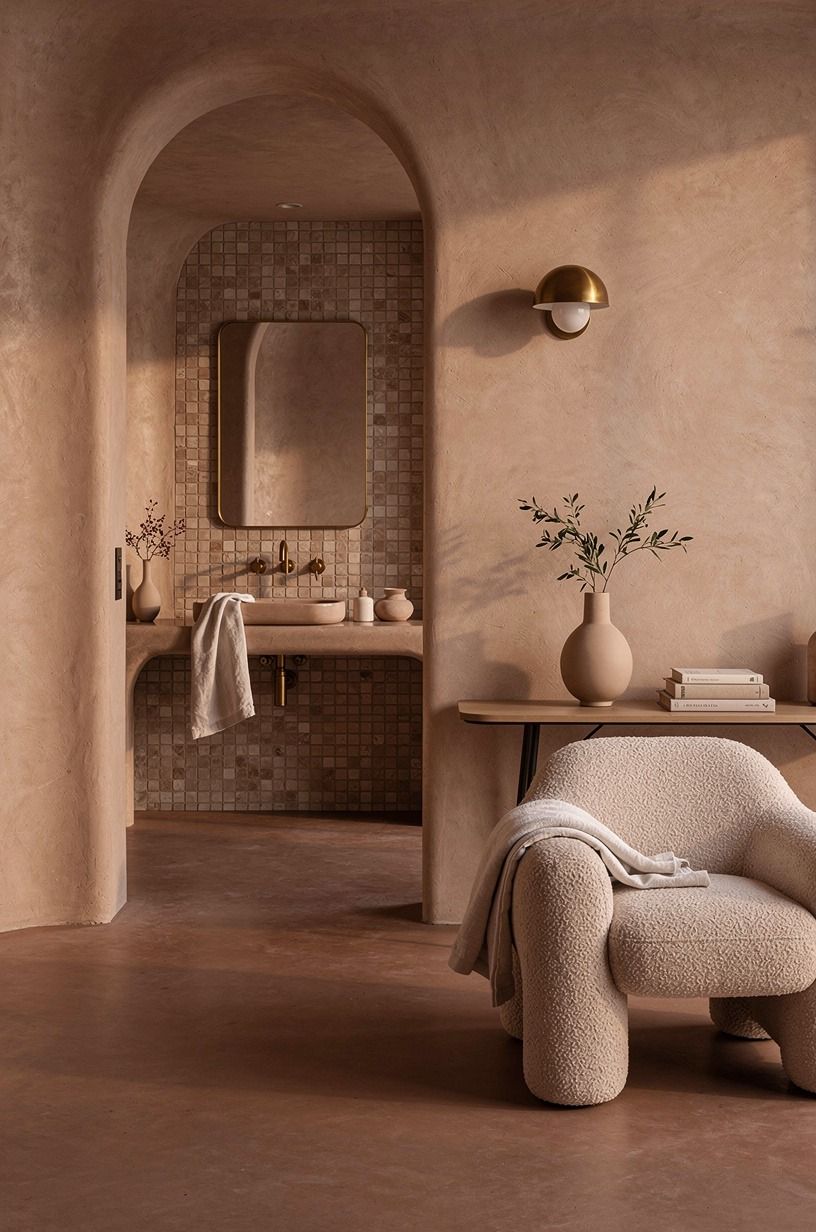
Use tile where water demands it, then let plaster carry the rest of the room.
13Mix old-world hardware with one modern line
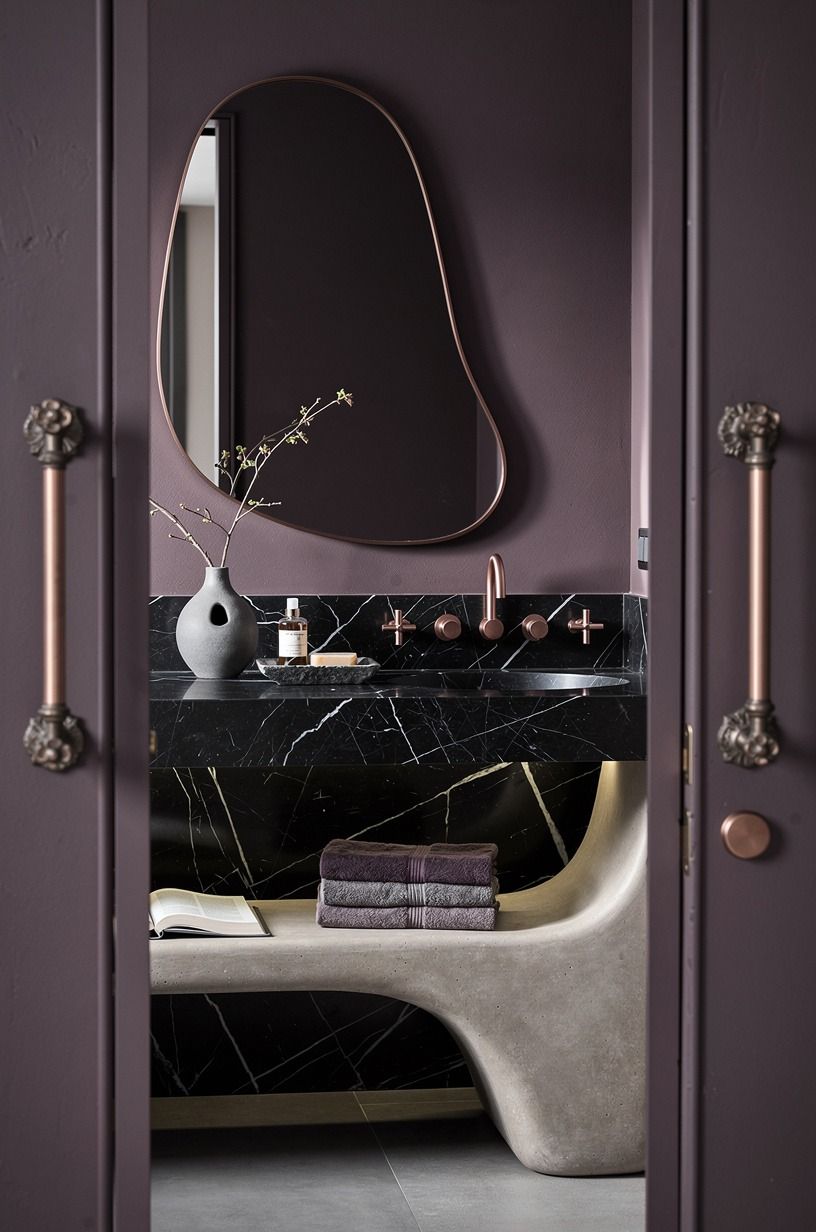
Old-world warmth doesn't require every object to look antique. Pair one aged feature, such as a carved wood stool or iron hook, with a clean modern faucet or linear shelf. Your room will feel current enough to live in, yet it won't lose the irregular character that makes Mediterranean interiors inviting.
Try a Nero Marquina black marble shelf with white veins beside a pale wall, or use a simple rail with rounded ends. I’d avoid faux-antique hardware with heavy distressing because it tends to look theatrical. A real material with a restrained shape has more staying power.
You’ll want the eye to notice the finish, not wonder whether it came from a costume set.
One reclaimed object is enough. A small brass tray, an old frame, or a vintage stool can provide history. And if you’re shopping secondhand, inspect the joints, finish, and underside before bringing it home.
14Carve out storage without losing the wall
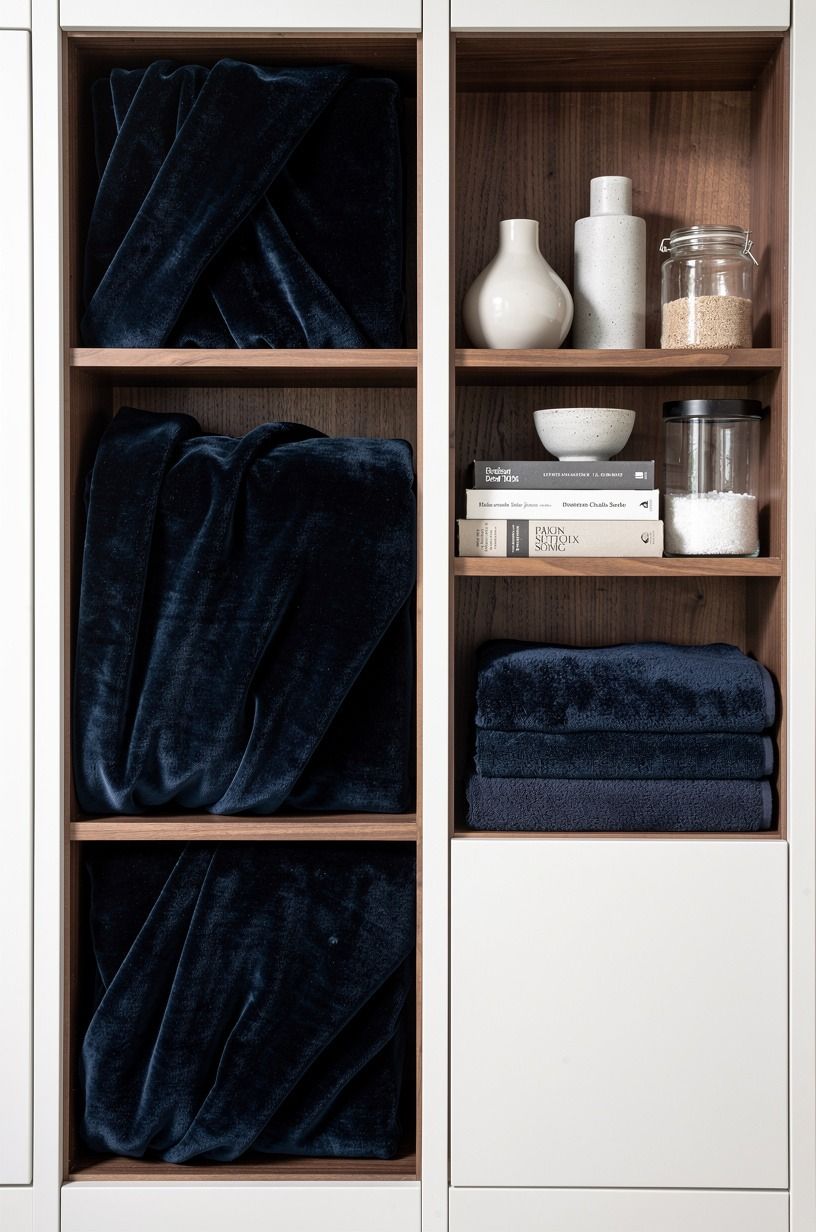
Storage should disappear into the architecture when possible. A recessed niche, shallow cabinet, or floating shelf can keep toiletries contained while leaving the plaster visible. Your goal isn't to hide every object; it’s to give everyday objects a calm place to land.
I like a compact storage bench upholstered in deep-pile mohair velvet only when it’s adapted carefully, perhaps with baskets and a wood top. In a small bathroom, a full cube unit can feel too deep.
Measure the toilet clearance first, keeping at least 21 inches, or 53 cm, in front of the bowl. You’ll move through the room more comfortably, and the open floor will make the plaster feel richer.
Use baskets in natural fiber, but don't fill every cubby. One open space gives your eye somewhere to rest. Storage can be functional and picturesque without becoming a wall of bins.
15Add one Mediterranean art moment
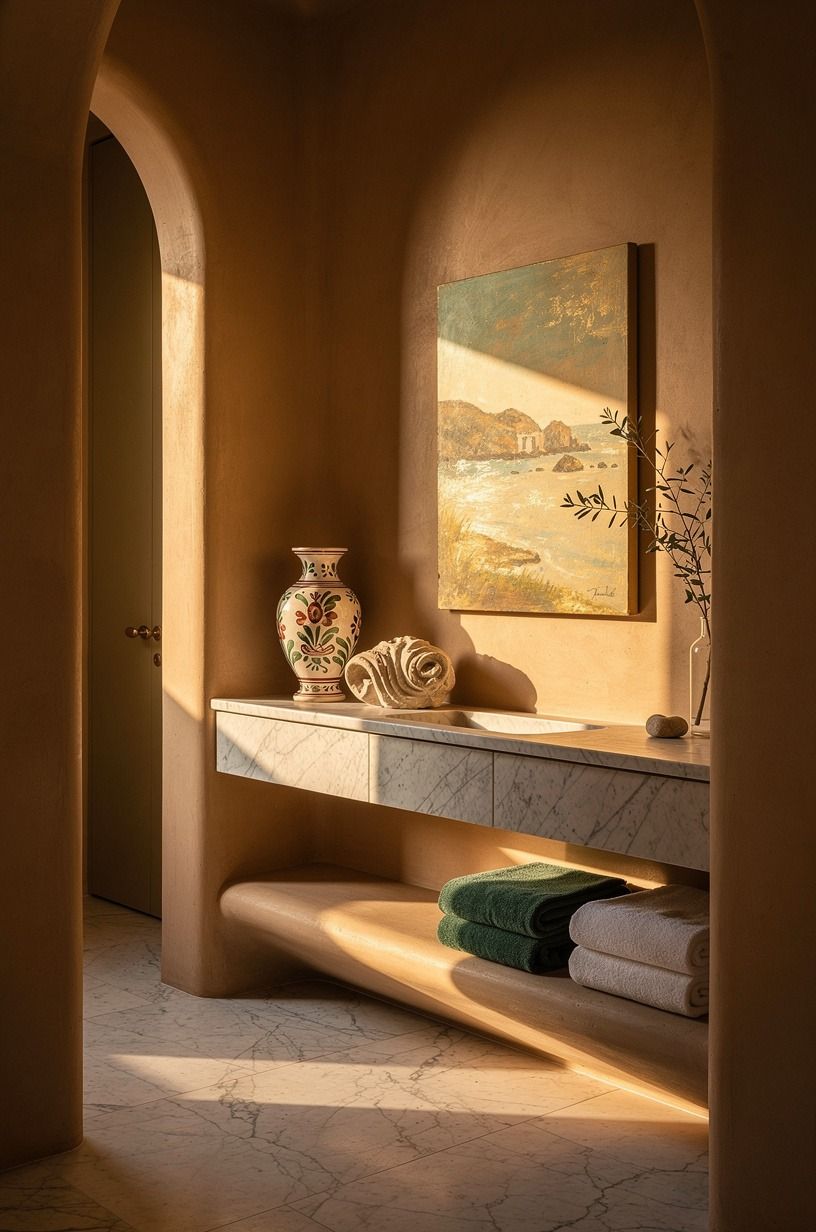
Art makes the room feel personal, but bathrooms need pieces that can handle humidity. Choose a sealed wood frame, a Carrara marble relief, or a print behind glass. A small landscape, olive branch drawing, or abstract shape can connect the room to a beach inspired interior without turning it into a theme set.
Carrara marble with subtle grey veining works especially well against Venetian plaster because both surfaces carry shadow. Hang it where it won't receive direct spray, and leave breathing room around it.
I’d skip a gallery wall in a compact bathroom. Your eyes need one clear focal point, not five competing rectangles.
A single framed piece can cost less than a new faucet and may give the room more character. You don't need a famous artist.
Choose something with a line, color, or texture that makes you pause while washing your hands. That small pause is the point.
16Check ventilation before styling the shelves
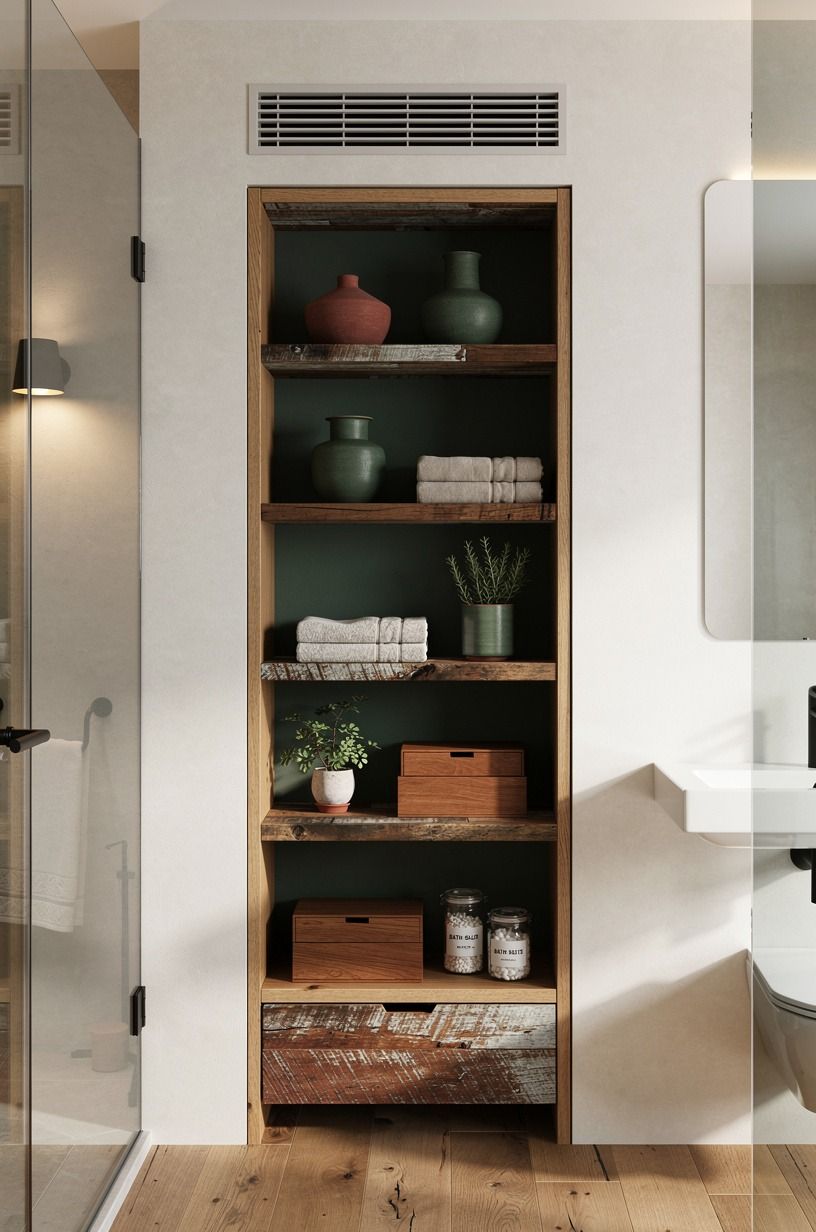
Good ventilation protects the plaster, the wood, and the textiles you’ve chosen. Run the fan during a shower and for a while afterward, then watch how quickly the mirror clears. If condensation lingers, styling won't solve the underlying problem.
Your bathroom can feel serene only when the materials are allowed to dry. Reclaimed weathered teak works well for a sealed shelf outside direct splash, while a moisture-resistant trim helps around doors and windows.
I’d rather spend on ventilation than on another decorative object. The room needs clean air more than it needs a fourth vase.
Keep plants away from constant splash and choose species suited to humidity if you use them. And if you're renting, a tension-mounted shower caddy and removable hooks can keep storage flexible without drilling into the wall.
17Style the finish with the Patina Permission Rule
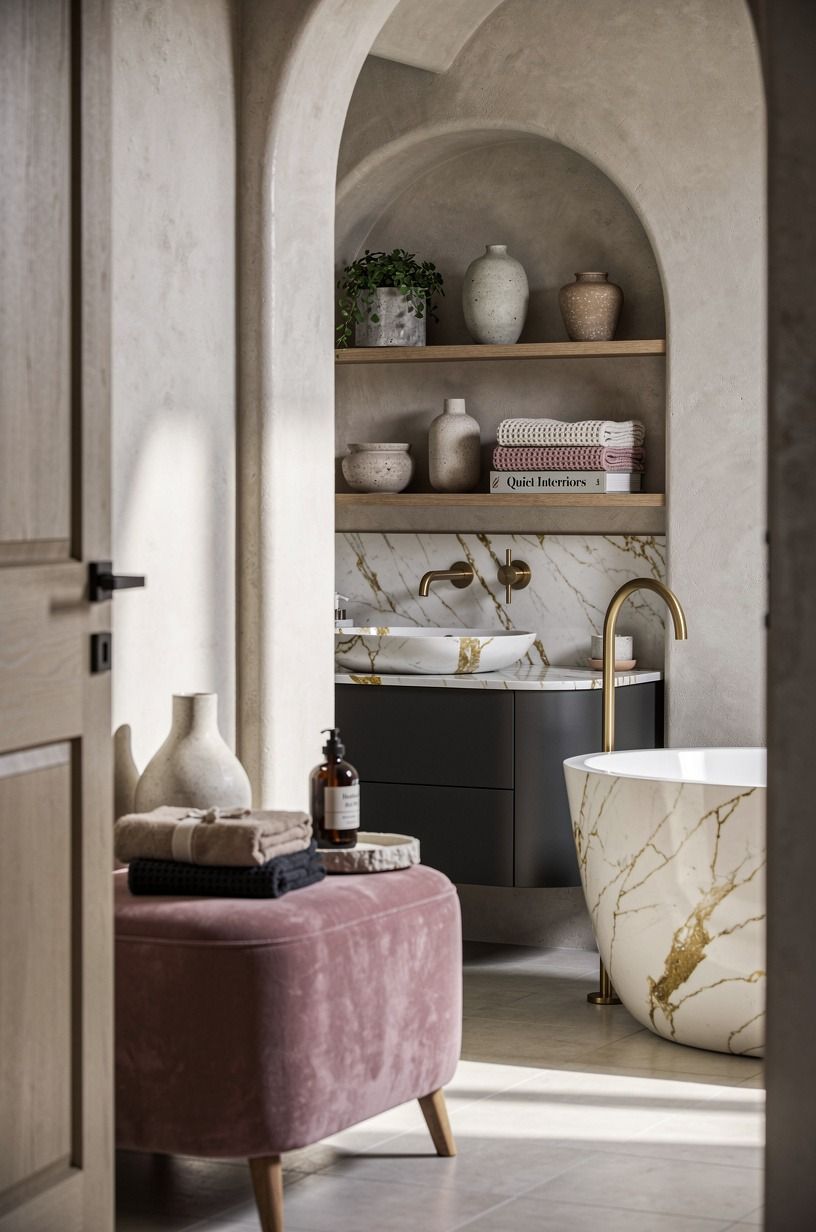
Let a few materials change with use. The Patina Permission Rule means you don't panic when unlacquered brass darkens, linen creases, or plaster develops slight tonal shifts. Those changes give your bathroom a lived-in, old-world quality that a factory-perfect room can't produce.
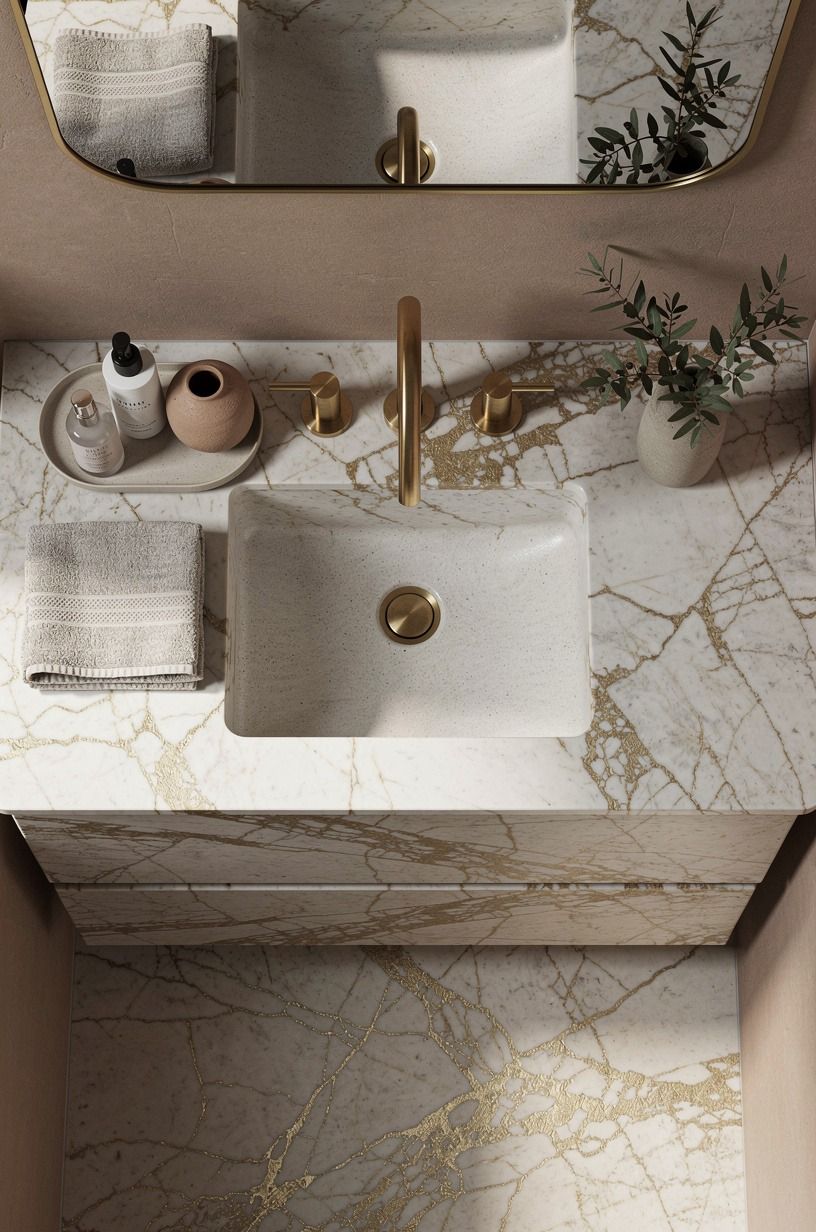
I’d choose Calacatta marble with gold veining for a small tray or ledge and let the aged bronze on the mirror or cabinet hardware gather a little variation. Your job is to clean gently, repair real damage, and leave ordinary wear alone.
Don't scrub every surface until it looks new again. A bathroom should support your life, not ask you to preserve a showroom.
Keep the final styling restrained: a soap dish, folded towels, one vessel, and perhaps a small branch. You’ll know the room is finished when removing one object makes it feel better. That’s a peaceful result, not an empty one.
18Should you plaster every wall in a small bath?
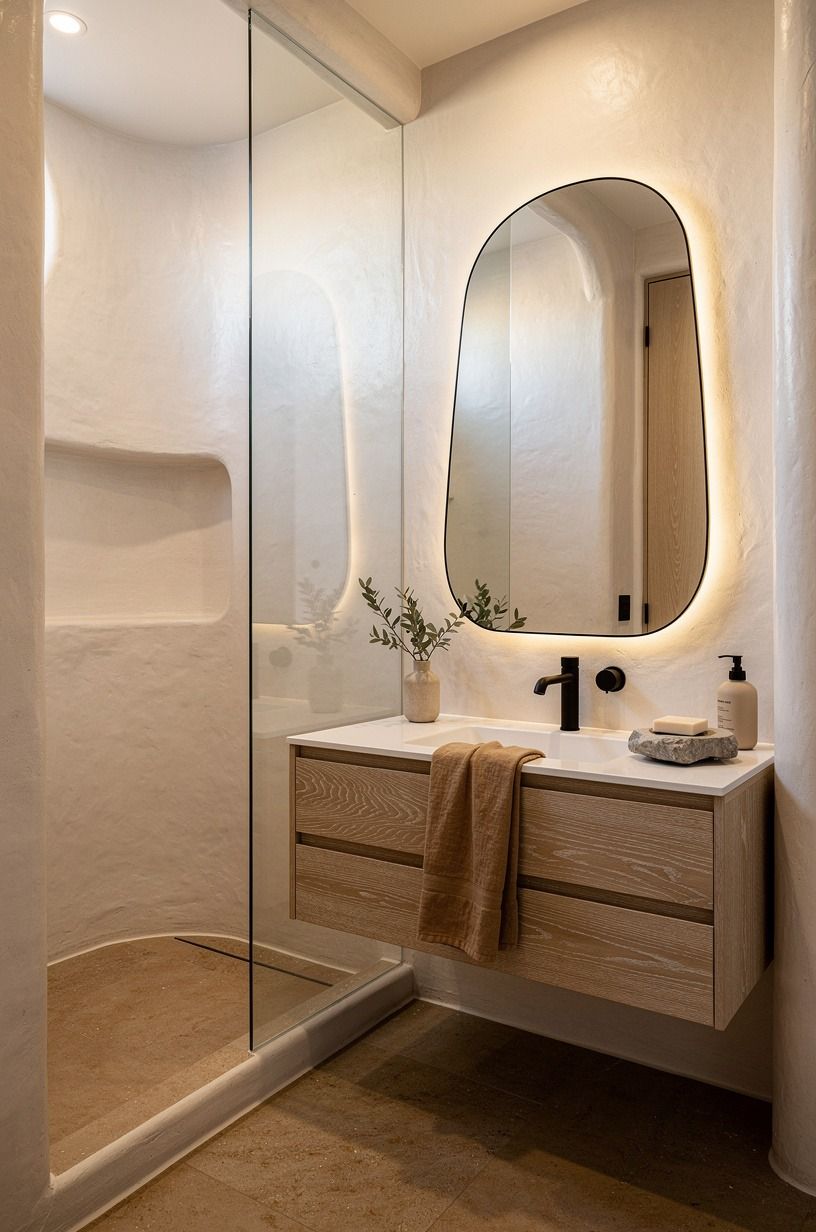
No, you don't need to plaster every wall. Use Venetian plaster on the vanity wall, the wall behind the toilet, or the longest uninterrupted surface, then use tile or moisture-rated paint where the room needs extra protection. Your eye will still read the finish as the room's main character.
For a small room, I’d choose Benjamin Moore White Dove OC-17 on the ceiling or adjacent walls and pair it with warm plaster, camel textiles, black accents, and a cerused white oak vanity. The pale warmth can feel soothing without turning the room cold. If you’re working with a standard 60x30-inch tub, or 152x76 cm, reserve the strongest protection for the tub surround and keep the decorative finish outside direct water.
This selective approach also works for rock wall ideas, where one textured surface has more impact than four competing ones. Less material can give your room more breathing room.
What I’ve Learned About Old-World Bathroom Warmth
I used to think a Mediterranean bathroom needed more objects: another basket, another framed print, another carved piece to make the room feel collected. Then I worked on a plaster room with one vanity, one mirror, and a single brass hook. The restraint made the wall finish visible.
That was the moment I stopped treating old-world style as a shopping list.
The real warmth comes from contrast. Smooth plaster beside pitted travertine. A cool basin beside cerused white oak.
A quiet towel beside a dark metal hook. You’ll notice those relationships before you notice the individual products, and that’s why the materials need to be chosen with care.
I’m also firmly against using Venetian plaster as a costume. If your house has modern trim, keep some of it.
If your budget is $200-$1,200, don't pretend you’re doing a full European renovation. Paint the trim, change the mirror, improve the lighting, and let the wall finish carry the emotional weight.
The best result isn't the most decorated room. It's the one where your hand finds the towel, your face gets even light, and the plaster still looks good after the first busy morning.
That’s a warm bathroom because it works, not because it performs. And yes, one imperfect edge can make the whole thing feel more human.
The Questions I Get Asked Most
What is the best Mediterranean Venetian Plaster Bathroom Ideas for Old-World Warmth for a small bathroom?
Use warm plaster on one main wall, an arched mirror, and a compact IKEA TONSTAD vanity or similarly shallow cabinet. That combination keeps the floor open and gives you visual depth without adding bulky furniture. Pale plaster works best when the room has limited natural light.
Where can I buy Mediterranean Venetian Plaster Bathroom Ideas for Old-World Warmth pieces on a budget?
Check IKEA, Wayfair, and Target first, then compare Facebook Marketplace and local thrift stores. Look for solid wood frames, ceramic vessels, and used mirrors with sound backing. You don't need a matching collection, and secondhand pieces often bring more character than new decor.
How much does a Mediterranean Venetian Plaster Bathroom Ideas for Old-World Warmth makeover cost?
A small refresh can fit within about $200-$1,200 for paint, a mirror, faucet, and textiles. A mid-level project with a new vanity, partial tile, and lighting may reach $3,000-$9,000. You can save by keeping the plumbing, layout, and existing cabinet.
Can I create a Mediterranean Venetian Plaster Bathroom Ideas for Old-World Warmth on a budget?
Yes, and you can begin with three low-cost moves: repaint the trim, replace harsh bulbs with warm dimmable ones, and style one shelf with towels you already own. Unlacquered brass pulls or a secondhand wood mirror can add warmth without changing the room's footprint.
Is a Mediterranean Venetian Plaster Bathroom Ideas for Old-World Warmth worth it in a small space?
Yes, because a small room lets one finish do more work. Keep the plaster on one uninterrupted wall, use a mirror that nearly matches the vanity width, and preserve at least 21 inches of toilet clearance. You’ll get more atmosphere per square foot without crowding the layout.
Is Mediterranean Venetian Plaster Bathroom Ideas for Old-World Warmth a good idea for a rental?
Yes, if you keep the finish removable or use it outside direct splash areas. Try peel-and-stick tile, a tension rod, removable hooks, and a freestanding Article Sven tan leather stool. You can create a warm Mediterranean feeling without drilling into every wall.
Where I’d Start First
If I had to pick one step, I'd start with the wall finish. Venetian plaster changes how every metal, towel, and mirror reads because its small tonal shifts keep the room from looking flat. Test it beside your real light first.
Then pin this guide for your renovation weekend and build outward from that surface.