
 by
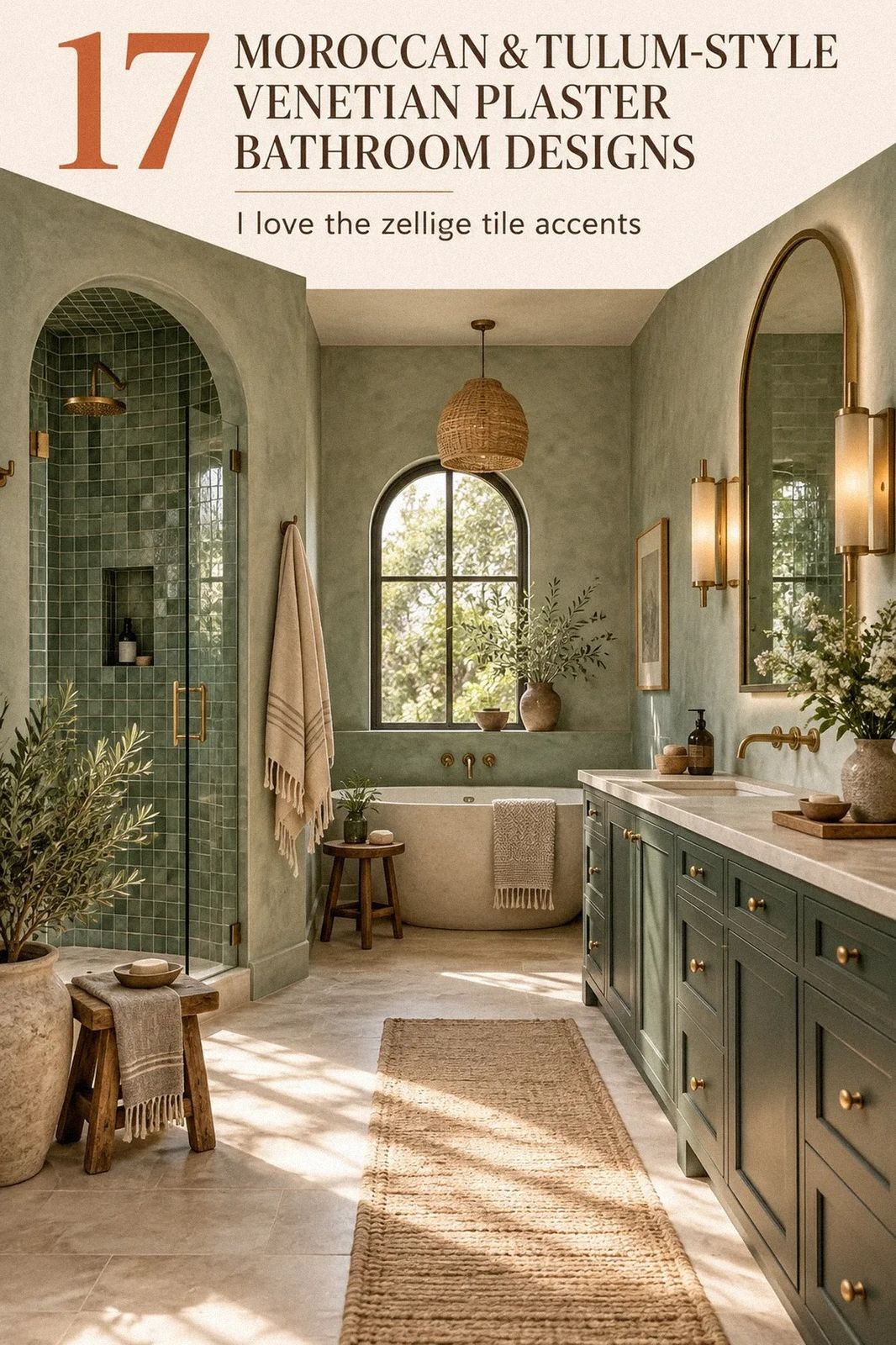
by Moroccan and Tulum-style Venetian plaster bathroom ideas work best when soft plaster meets one grounded material, warm light, and a little restraint. I learned that after pairing too many glossy finishes in one bathroom. Your walls don't need more decoration. They need texture, shadow, and room to breathe.
- Layer the Limewash Halo Around the Mirror
- What Makes a Rounded Vanity Work Under Tadelakt Walls?
- The Two-Wood Rule for a Tulum-Inspired Home
- Frame the Shower With Hand-Glazed Zellige
- Farrow & Ball Hague Blue Above the Plaster
- Build the Three-Height Light Stack
- Chrome or Unlacquered Brass?
- Anchor the Room With a Moroccan Plaster Alcove
Start here! Pick one plaster color, one wood tone, and one aged metal. That simple edit gives you a realistic budget before you shop, and it helps you decide which upgrades are worth the investment.
- Layer the Limewash Halo Around the Mirror
- What Makes a Rounded Vanity Work Under Tadelakt Walls?
- The Two-Wood Rule for a Tulum-Inspired Home
- Frame the Shower With Hand-Glazed Zellige
- Farrow & Ball Hague Blue Above the Plaster
- Build the Three-Height Light Stack
- Chrome or Unlacquered Brass?
- Anchor the Room With a Moroccan Plaster Alcove
- Hang a Reeded Glass Shower Screen
- Pair Pink Tadelakt With Dark Walnut
- Choose Sea Salt for a Coastal Tulum Bathroom
- Mix the Five-Texture Countertop Edit
- Can a Stone Basin Float Over Terracotta Plaster?
- Paint One Door in Benjamin Moore White Dove
- Turn a Tub Wall Into the Tadelakt Focal Point
- Why Add a Three-Inch Shadow Gap Around the Vanity?
- Finish With the Quiet Lantern Rule
1Layer the Limewash Halo Around the Mirror
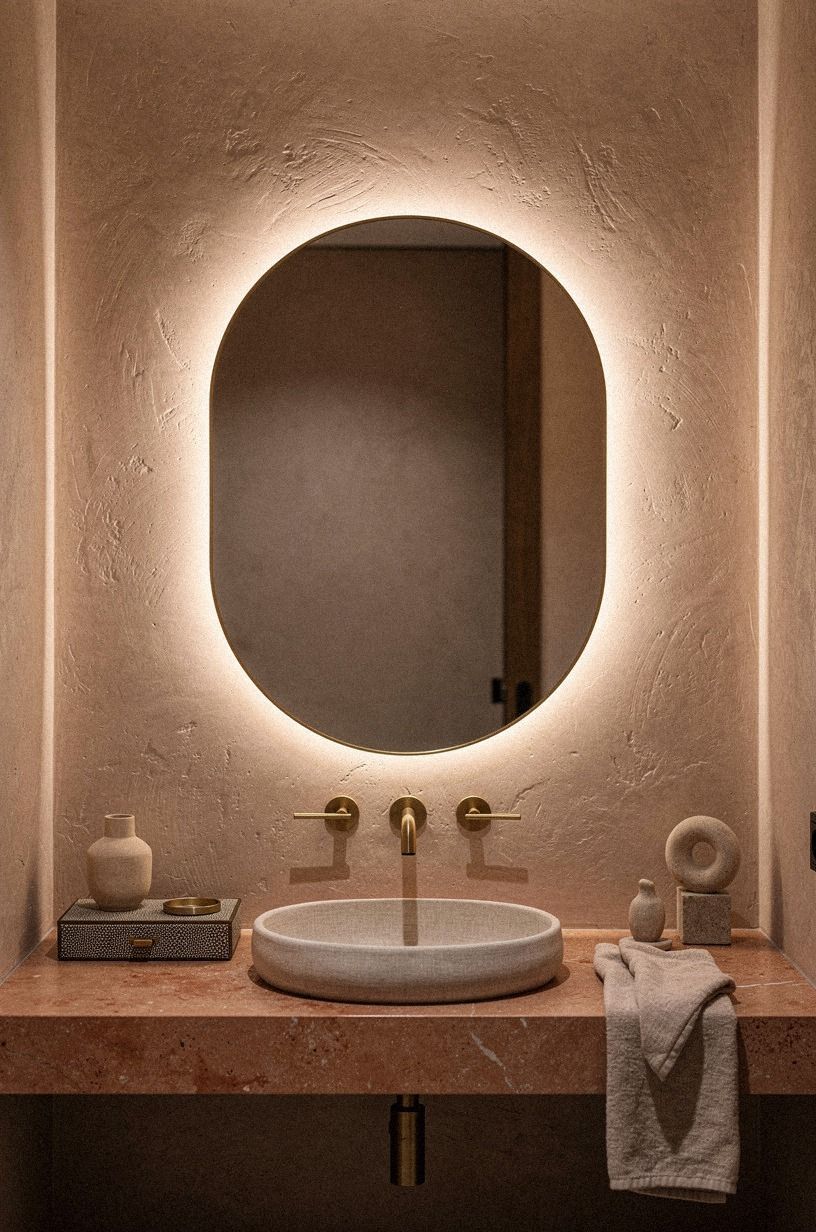
A plastered vanity wall creates the strongest Moroccan plaster bathroom moment when the mirror sits inside the texture instead of floating over a blank surface. Choose a warm clay mineral base with subtle cloudy movement, then frame it with a rounded mirror in aged brass. The finish should catch the light softly, not sparkle like polished stone.
I’d use Benjamin Moore Chestertown Buff HC-9 as the color reference if you’re painting nearby trim or a ceiling. It gives the plaster a sun-warmed partner without turning orange. Keep the vanity between 32 and 36 inches high, so the mirror and wall treatment feel intentional.
For the counter, keep the surface quiet and add a shagreen accent on a drawer front or small tray. Its pebbled texture makes the room feel collected without competing with the plaster. If you’re unsure about the wall finish, start with this Venetian plaster bathroom guide for soft luminous walls, then compare the material cost with a painted refresh.
You can save money by keeping the existing plumbing and changing only the mirror, sconces, and wall finish. That approach gives you more value than replacing a functional vanity simply because the room needs a new mood.
2What Makes a Rounded Vanity Work Under Tadelakt Walls?
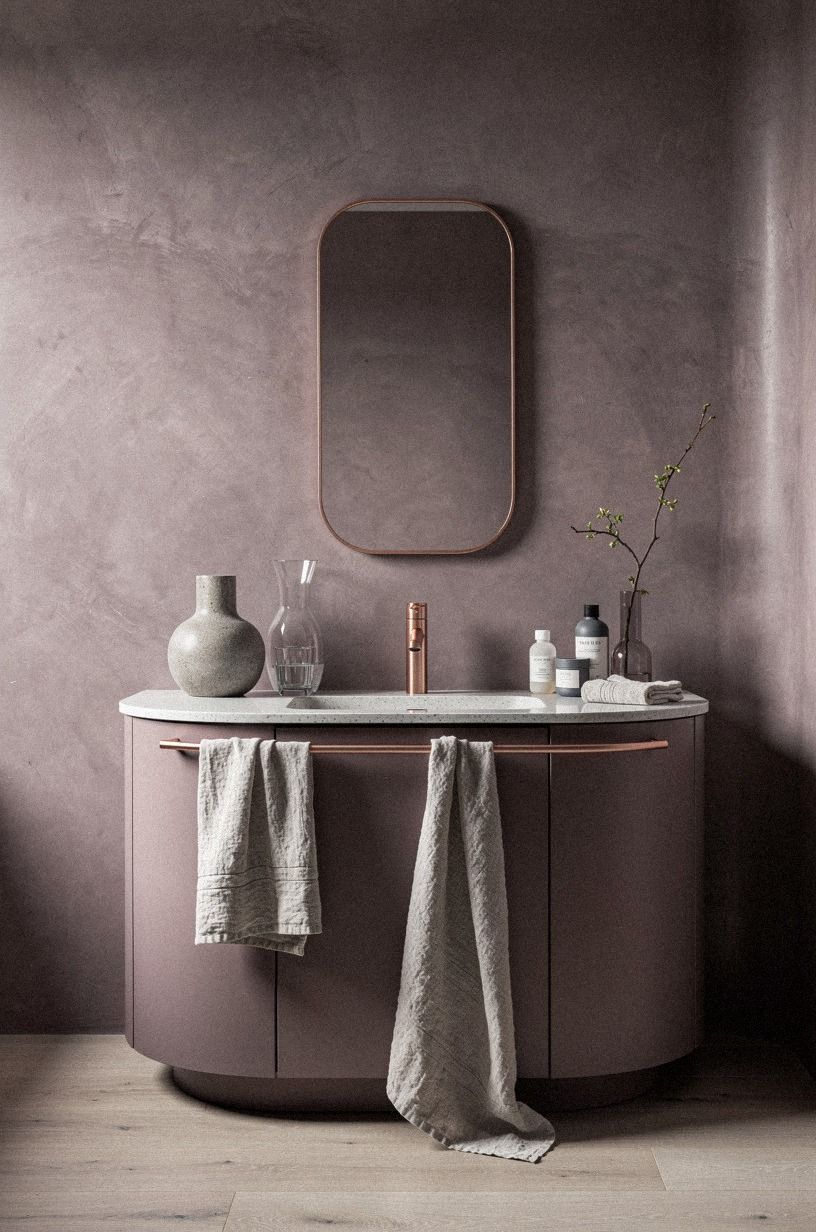
A floating vanity is one of the easiest ways to make a small bathroom feel airy.
3The Two-Wood Rule for a Tulum-Inspired Home
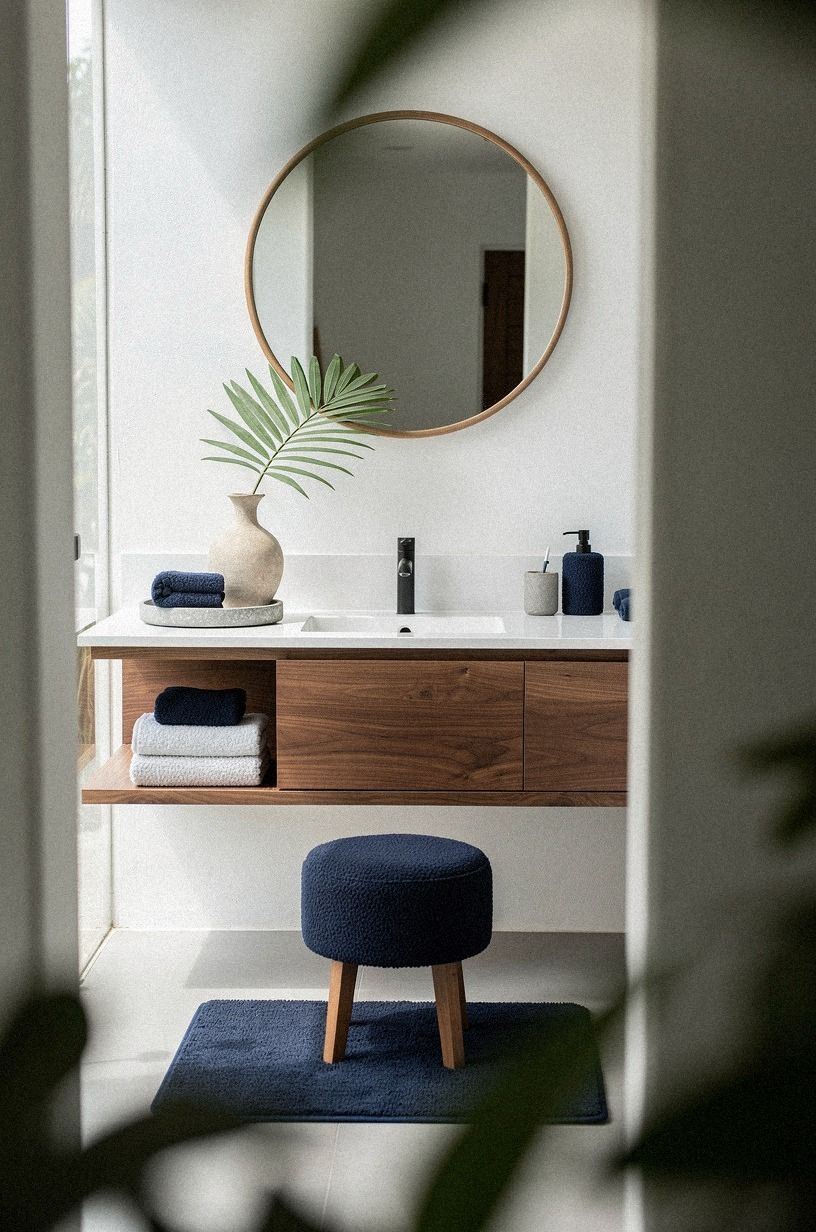
The Two-Wood Rule keeps a plaster bathroom from becoming visually flat. Use one wood for the vanity and a second, related wood for a stool, frame, or ceiling detail.
Two is enough. Three starts to look like a flooring showroom.
I’d pair white-painted oak with walnut on the vanity and a small stool. The contrast gives your eye somewhere to land, while the plaster keeps both woods from feeling heavy. You’re aiming for earthy and relaxed, and you don’t need a large furniture budget to get there.
I made the mistake of matching every wood tone once. The room looked tidy, but it had no pulse. A darker Article Lenia walnut stool with an organic bouclé cushion fixed the problem because its small footprint added depth without crowding the shower.
Seal wood near the sink with a matte moisture-resistant finish, and keep untreated timber away from direct spray. If you want more organic color ideas, browse this serene organic modern plaster bathroom collection, then compare the price of a stool with a full vanity replacement.
4Frame the Shower With Hand-Glazed Zellige
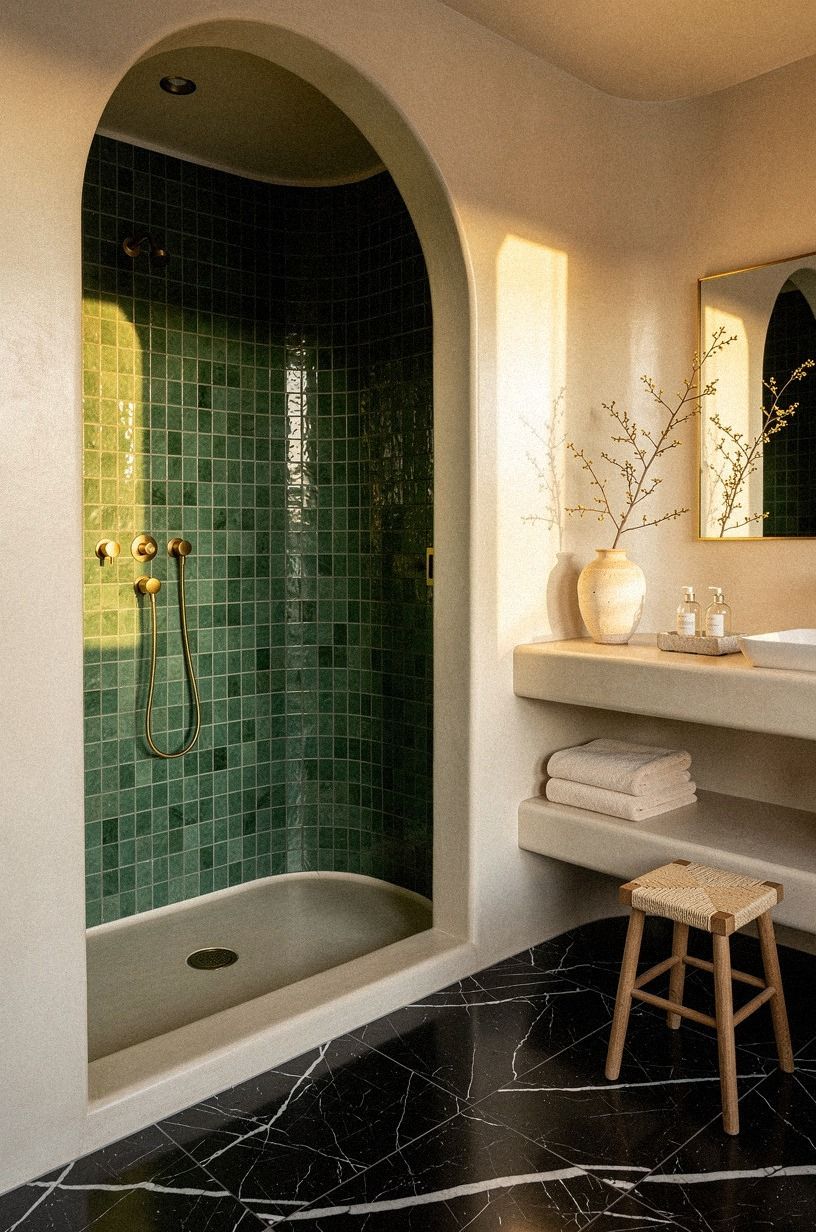
Hand-glazed tile inside the shower gives your plaster walls a practical counterpoint. Use emerald, cream, and gold notes, then reserve Nero Marquina black marble with sparse white veins for the curb or niche.
5Farrow & Ball Hague Blue Above the Plaster
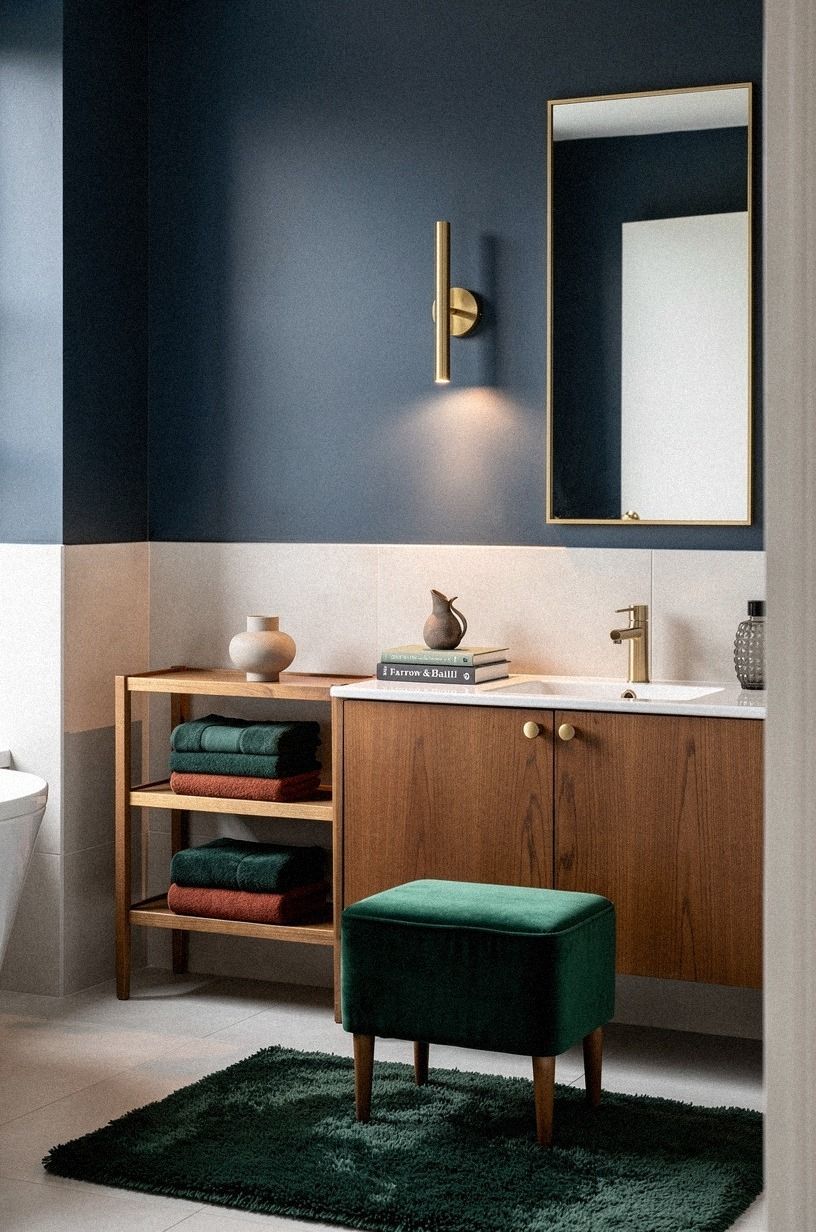
A forest-green ceiling can make a plaster bathroom feel intimate instead of unfinished. Farrow & Ball Studio Green No.93 gives the room a moody, enveloping top plane, especially when the walls are warm beige or pale clay.
Use forest green on the ceiling and carry it down only a few inches at the wall line. You’ll create a quiet border without making the whole room dark. I’d skip painting every surface this color unless your bathroom gets generous daylight.
Add natural oak and one rust-colored accent in deep-pile mohair velvet. The wood keeps the green grounded, while the velvet brings softness without making the room feel sweet. If your room faces north, test the paint first because it can read nearly charcoal by late afternoon.
The paint itself may be a modest cost, but the lighting choice changes how much value you get from it. These old-world Mediterranean plaster bathroom ideas use a similar relationship between dark color and natural materials.
For a lower-cost version, paint only the ceiling and replace the bulb temperature. You’ll get a noticeable mood shift without touching the shower or vanity.
6Build the Three-Height Light Stack
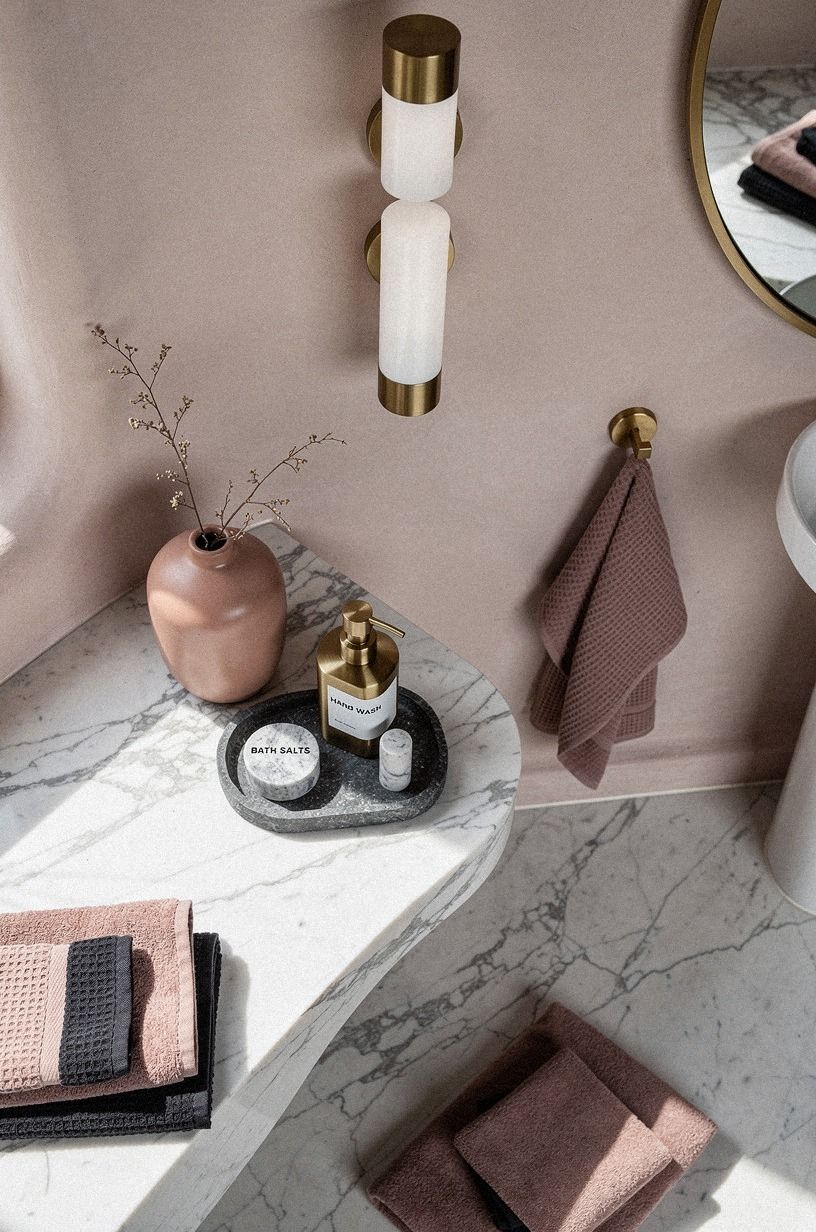
The Three-Height Light Stack uses a ceiling fixture, mirror-level sconces, and one low glow near the floor. You need all three because plaster changes dramatically as the light moves across it. One overhead fixture will flatten the texture and make the room feel like a utility space.
Start with opalescent glass sconces at eye level, then add a small lamp or rechargeable light on a Carrara marble shelf. Keep the ceiling fixture simple, preferably in brass or plaster. You’re creating pools of light, not one bright wash.
The low light can sit near a towel basket or under a floating vanity. I’d avoid blue-white bulbs, even if the package promises clarity. 2700K warm bulbs bring out the hand-worked variation in the walls and make a modest finish feel more intentional.
If you’re paying for an electrician, combine the work with any vanity or ceiling changes. That gives you better value than opening the wall twice. For a softer color direction, see these pink Venetian plaster bathroom ideas for grown-up warmth.
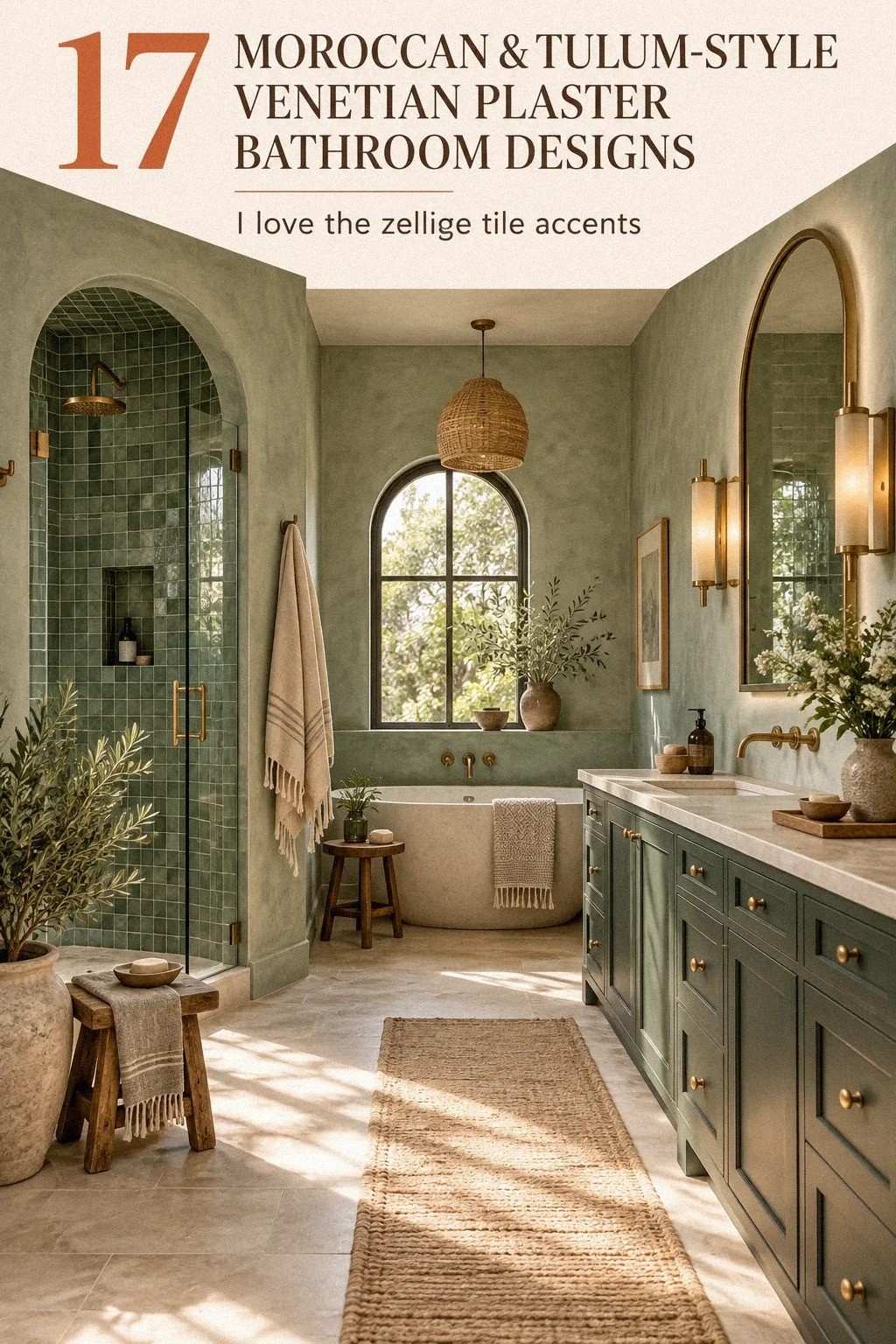
7Chrome or Unlacquered Brass?
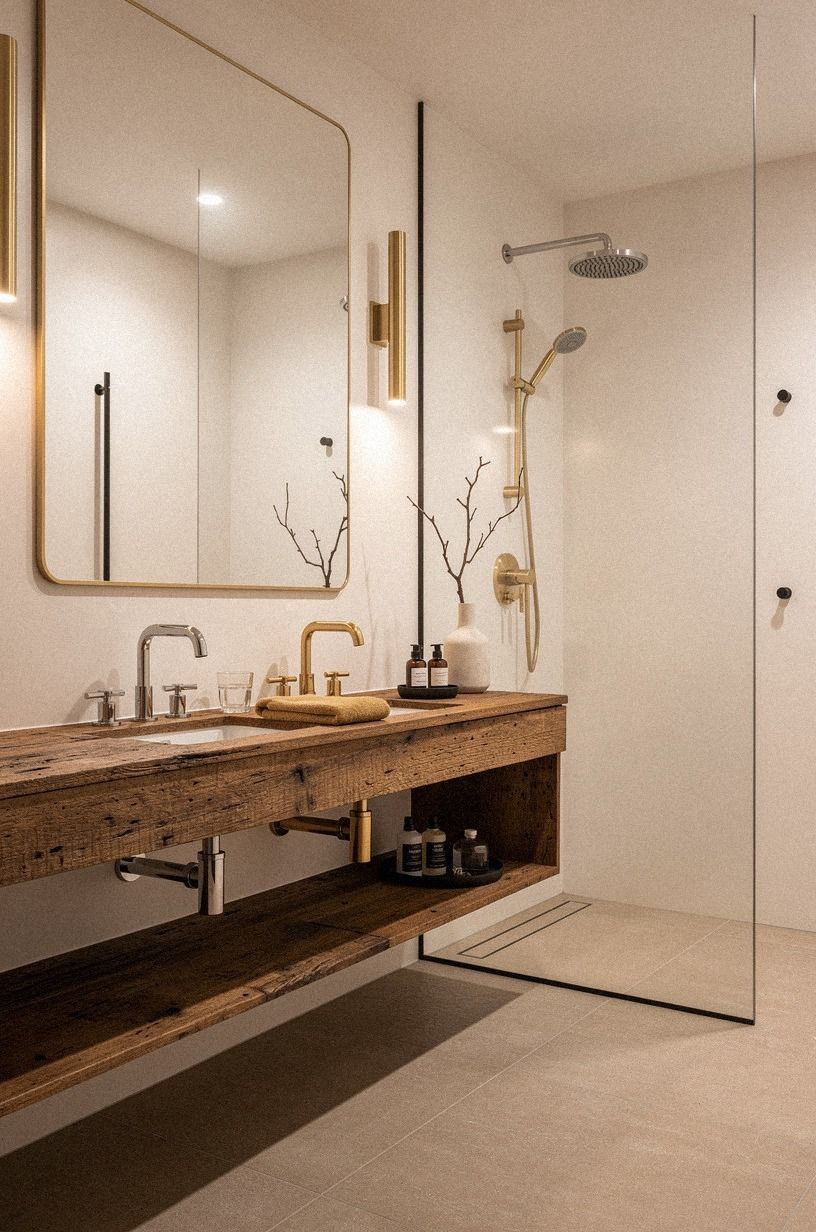
Chrome is clean, but it often makes a warm white and camel bathroom feel colder than intended, especially beside reclaimed weathered teak.
8Anchor the Room With a Moroccan Plaster Alcove
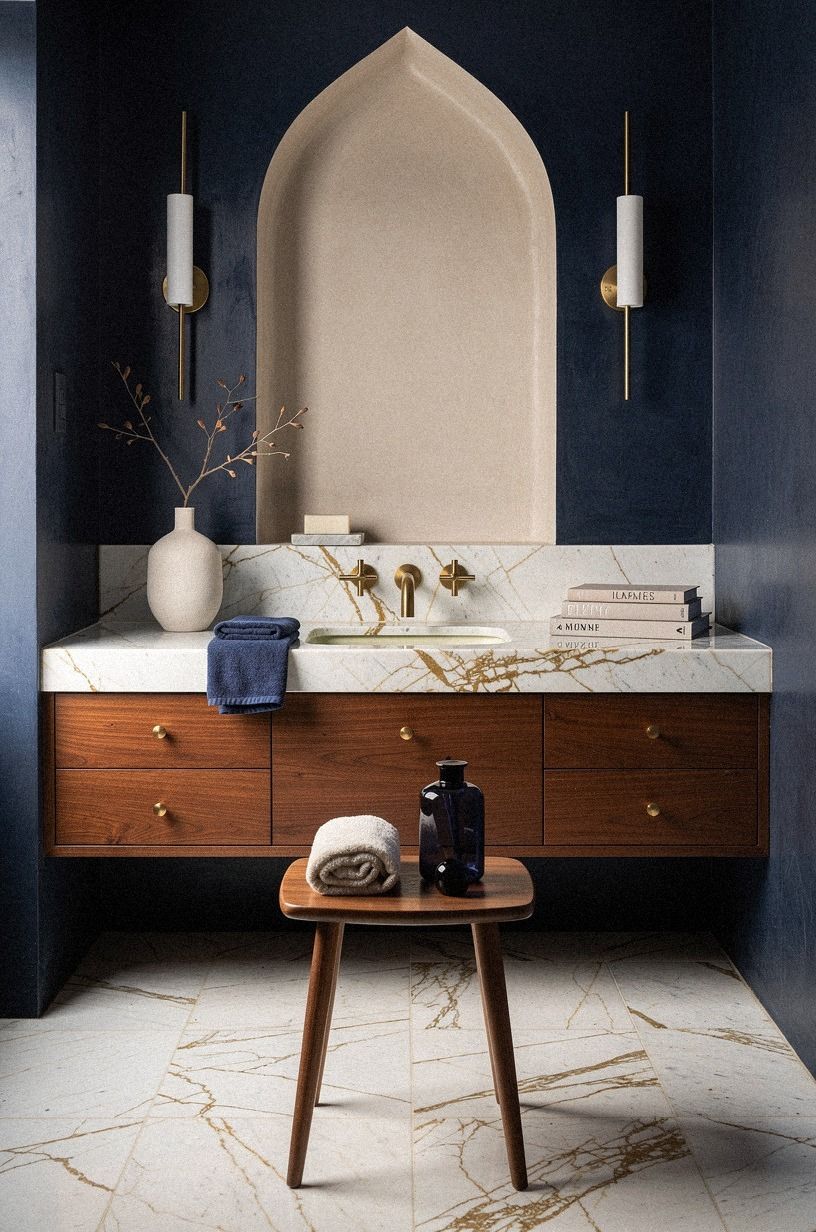
A shallow wall alcove adds function without interrupting the plaster surface. Use one above the vanity for folded towels or a small ceramic vessel, or place a recessed niche near the shower for soap and shampoo.
Line the niche with Calacatta marble with restrained gold veining, keeping the pattern calm. The pale stone will sharpen the soft plaster, and it gives you a wipeable surface where you need one. Your niche should be deep enough for bottles but not so deep that it becomes a shadowy storage hole.
But don’t fill every shelf. One copper vessel, an ivory folded towel, and a small branch are enough.
I’d rather see an empty section of plaster than a row of matching containers. The restraint makes the alcove feel architectural rather than decorative.
A custom niche can raise labor costs, especially after waterproofing begins. If the budget doesn’t support construction, use a slim ivory-painted shelf outside the splash zone. You’ll still get storage value and a warmer composition.
For more direction, compare this approach with Mediterranean Venetian plaster bathroom ideas and the quiet white and beige plaster bathroom guide.
9Hang a Reeded Glass Shower Screen
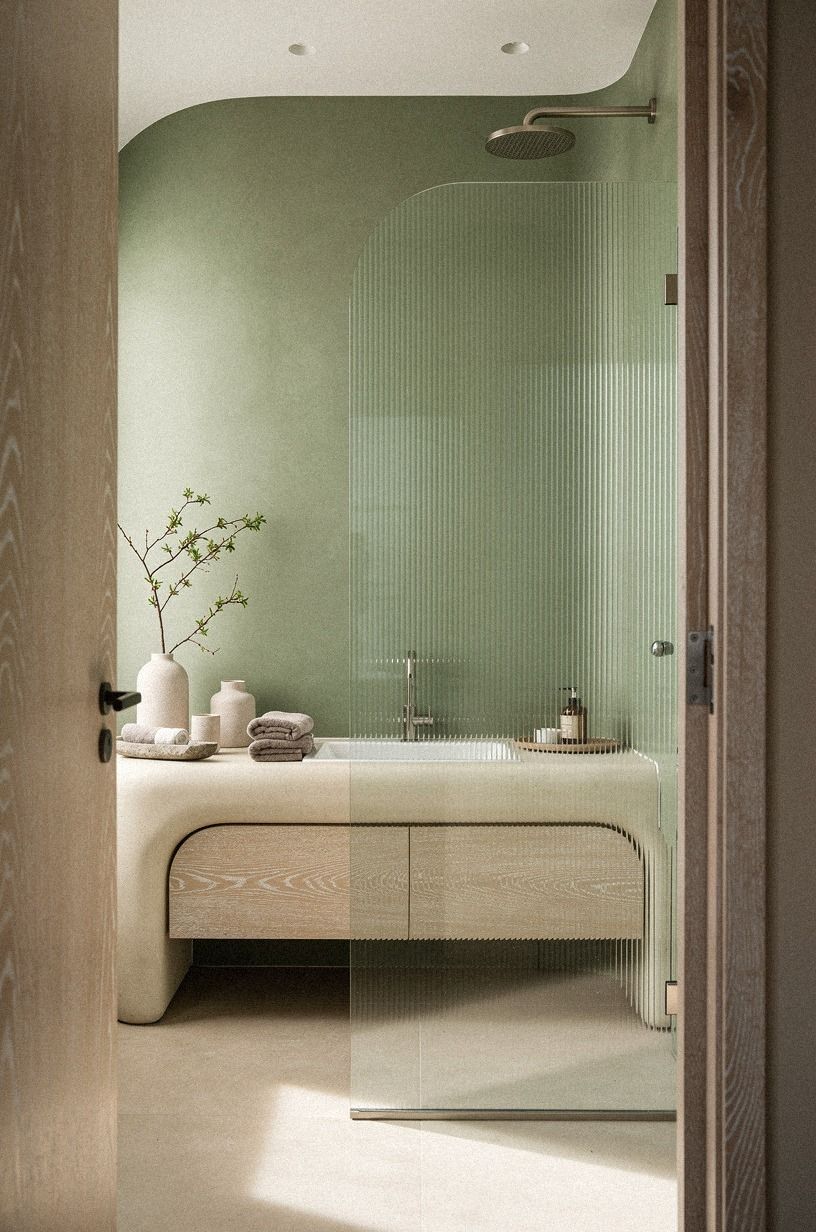
A reeded glass screen gives a small bathroom privacy while allowing sage green walls, warm cream details, and cerused white oak to remain visible.
10Pair Pink Tadelakt With Dark Walnut
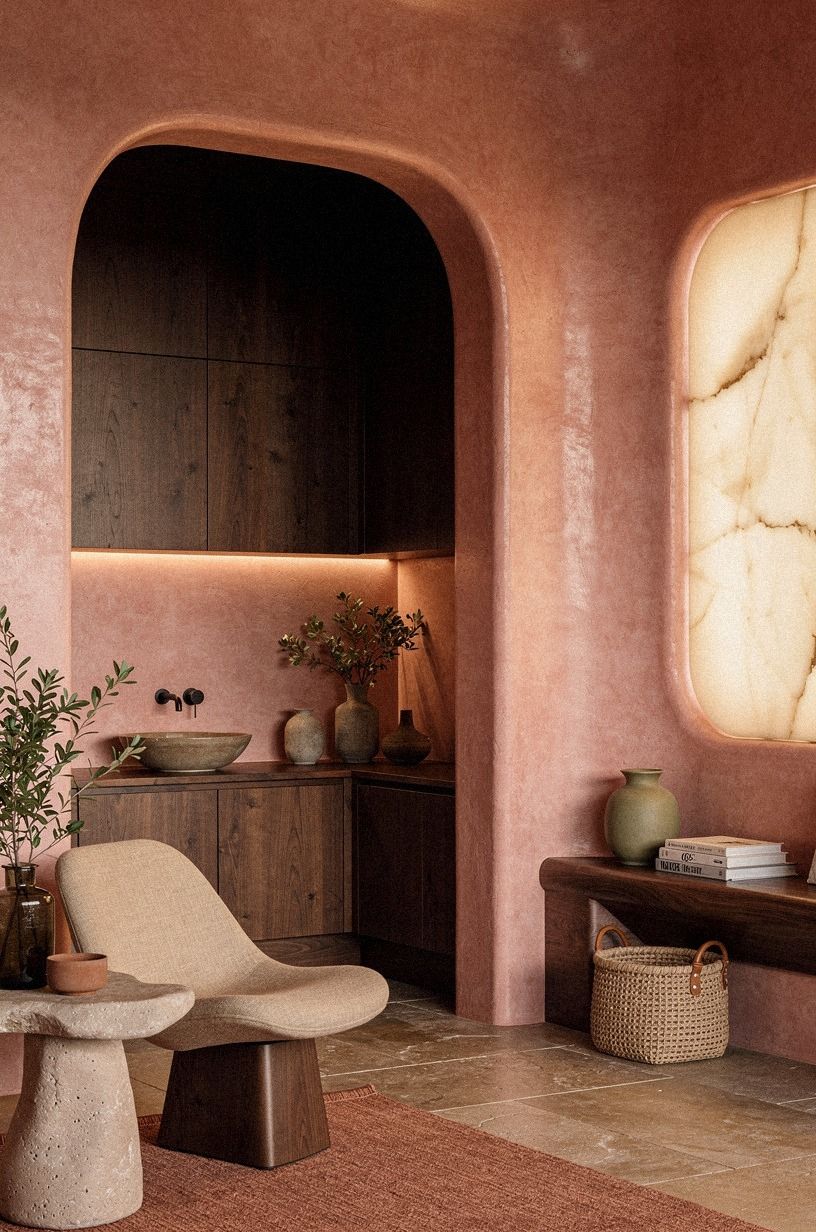
Pink tadelakt doesn’t have to feel sugary. Let it lean toward terracotta, then balance it with stone and olive so the room feels earthy, intimate, and surprisingly sophisticated. Choose a dusty clay pink with gray or brown undertones rather than a bright blush.
An olive stool adds a soft green note that keeps pink plaster grounded. Use a backlit translucent onyx vanity top or shelf to bring a warm, luminous stone element into the room.
And don’t add rose-gold hardware. It will push the room toward a matching color story and remove the tension that makes the palette interesting. Your better choice is quiet, stone-toned hardware, which lets the terracotta feel sun-washed rather than overly polished.
Tadelakt can be worth the investment when you want a continuous, tactile surface, but the installer matters more than the color name. Ask about the lime-based sealer and maintenance before you approve the quote.
This pink Venetian plaster bathroom guide offers another way to keep the palette grown-up and useful.
11Choose Sea Salt for a Coastal Tulum Bathroom
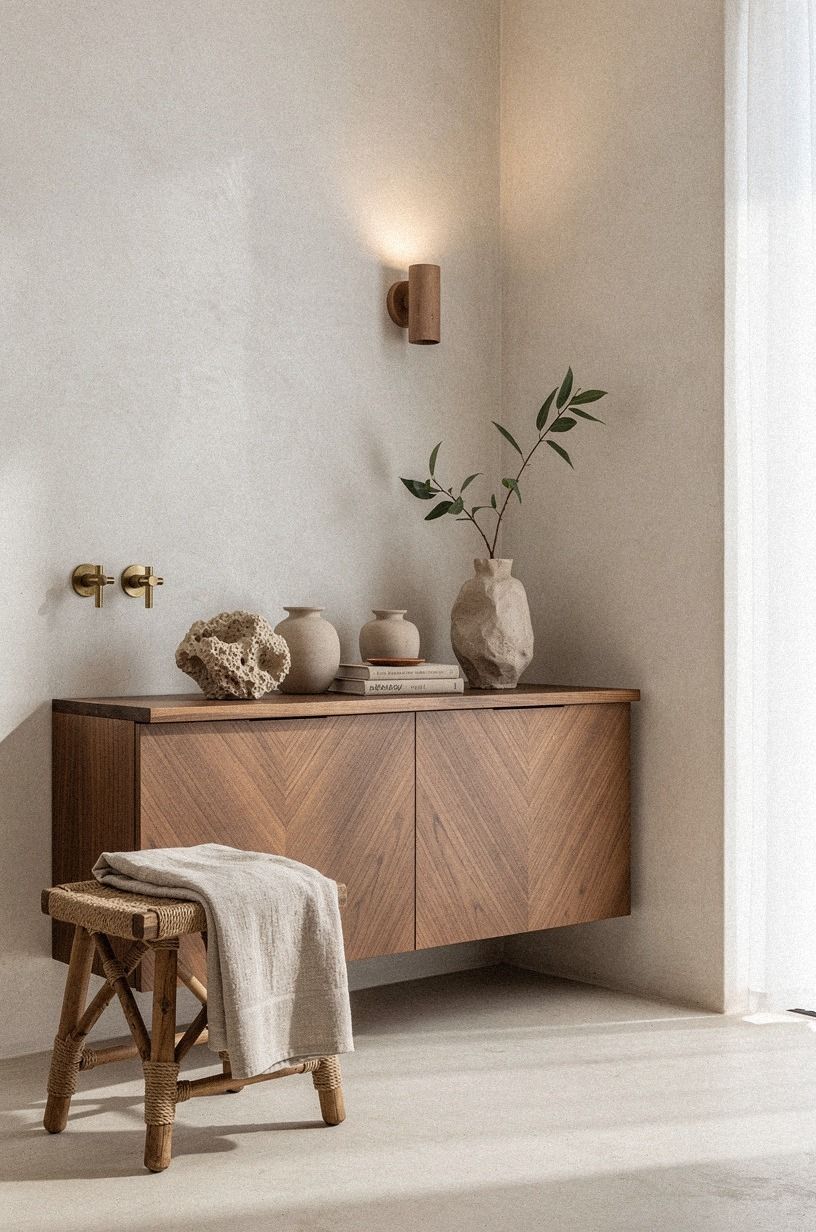
A clay-toned finish works when you want the bathroom to feel warm, grounded, and lightly coastal without turning nautical. It has enough softness to sit beside plaster and enough variation to keep the walls from looking sterile.
Use a warm clay paint on trim, cabinetry, or a nearby painted wall, then pair it with a linen-toned plaster finish and aged brass. Add book-matched walnut at the vanity or on a narrow shelf.
The surfaces should be related, and they don’t need to match. You’ll get a layered effect instead of a single flat color block.
For textiles, choose washed linen towels in cream or natural flax. They feel relaxed, dry well, and bring softness to all the mineral surfaces. The cost table below gives you a realistic starting point before you decide how far to renovate.
If you’re deciding between a cosmetic refresh and a bigger project, this quiet white and beige plaster bathroom guide will help you compare the mood before you spend.
My own rule is to buy the best paint and lighting you can afford first. Those choices often create more value than expensive accessories.
12Mix the Five-Texture Countertop Edit
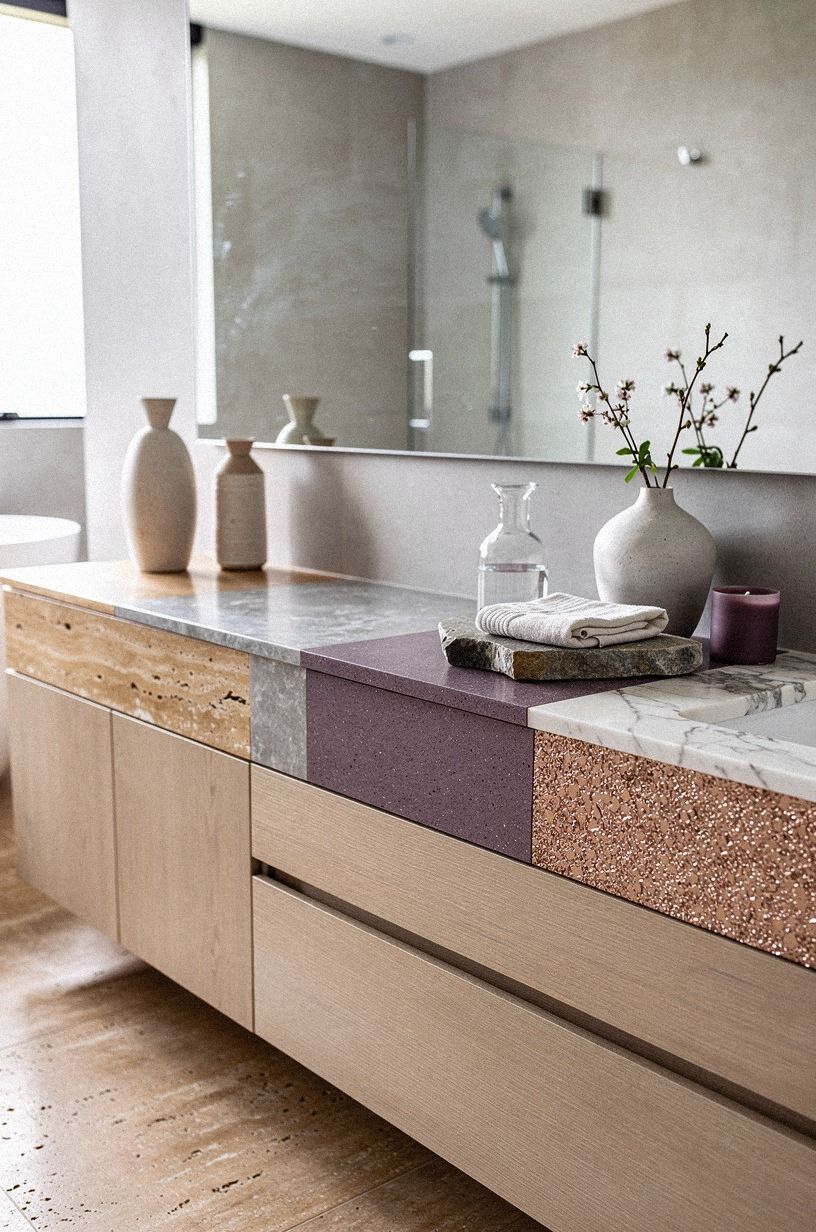
A Tulum-inspired bathroom needs texture, but it doesn’t need clutter. The Five-Texture Countertop Edit uses plaster, warm travertine, wood, ceramic, and textile in small, controlled doses, with plum, gray, and a restrained rose-gold note.
Set a honed travertine tray beside a ceramic soap dish, then add one folded linen hand towel and a small wood brush. The differences will show up in the changing light. You’re giving your hands and eyes several quiet surfaces to register.
I’d skip a whole collection of decorative jars. They take up counter space and make cleaning harder. One Belgian flax linen towel can do more for the room than five accessories because its loose weave softens the hard edge of the sink.
If you’re shopping on a budget, choose one useful object in each texture instead of buying a complete matching set. You’ll spend less and have more flexibility when your taste changes.
13Can a Stone Basin Float Over Terracotta Plaster?
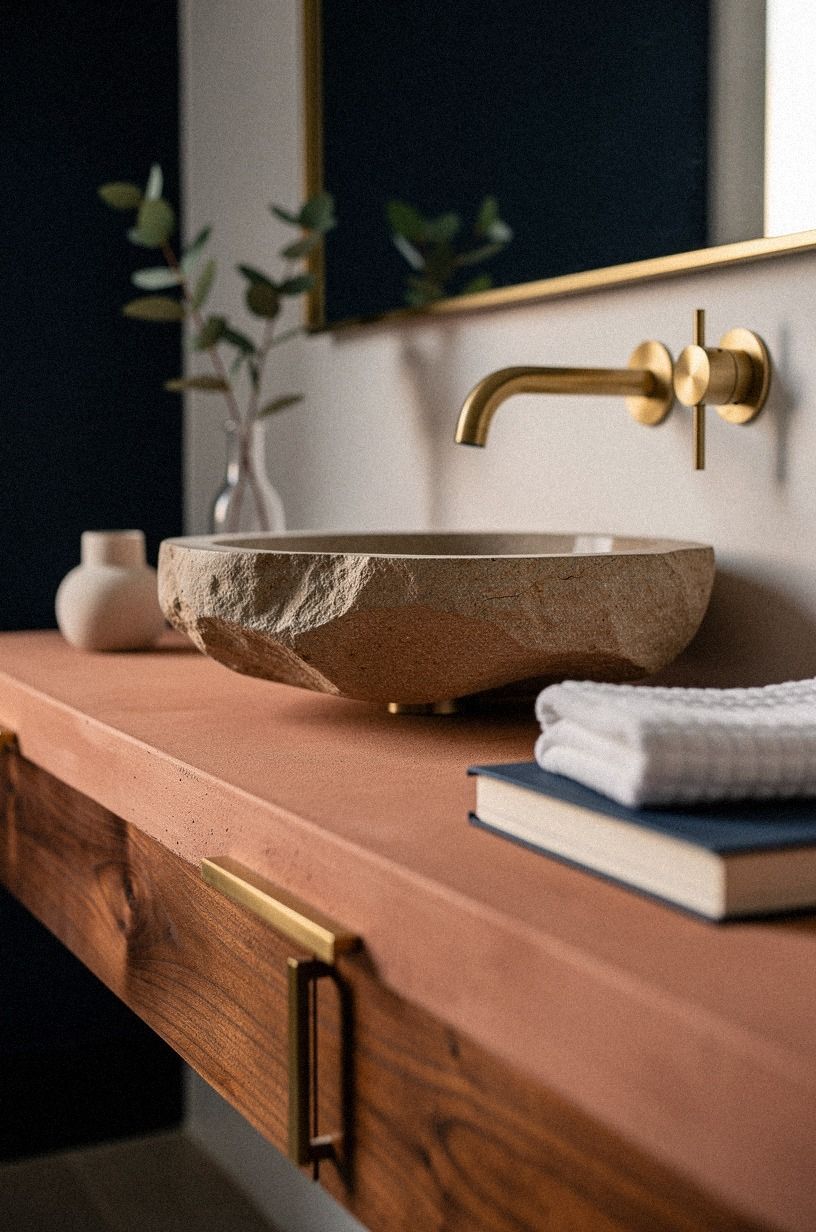
A shallow stone basin over navy plaster creates a warm, sculptural focal point. Repeat the tone with walnut and use unlacquered brass that can develop a soft patina.
14Paint One Door in Benjamin Moore White Dove
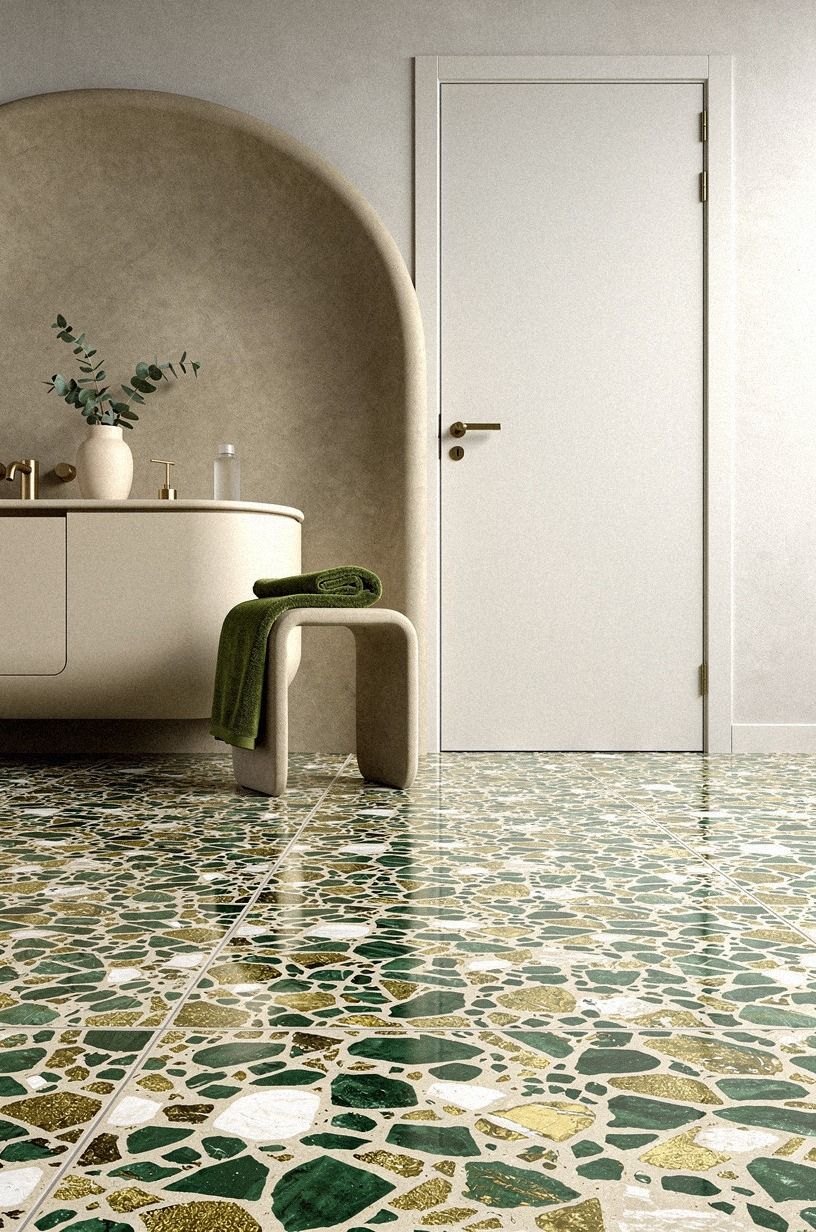
White Dove can make an emerald bathroom feel cleaner without erasing its character. Use it on the door, trim, or a built-in cabinet rather than covering every plaster wall.
Benjamin Moore White Dove OC-17 is warm enough to sit beside emerald walls, gold hardware, and cream surfaces. It gives your eye a pause between the textured wall and an oversized-chip terrazzo floor. I’d avoid a bright blue-white because it will make the plaster look yellow by comparison.
Try oversized-chip terrazzo on a cabinet top or floor if you need ventilation and texture. It adds a Moroccan note without requiring patterned tile. Keep it away from the shower spray if the surface is not rated for constant moisture, since maintenance will become annoying.
A painted door is one of the cheapest ways to change the room’s balance. If you’re saving for a new vanity, this small project can still make the bathroom feel considered.
15Turn a Tub Wall Into the Tadelakt Focal Point
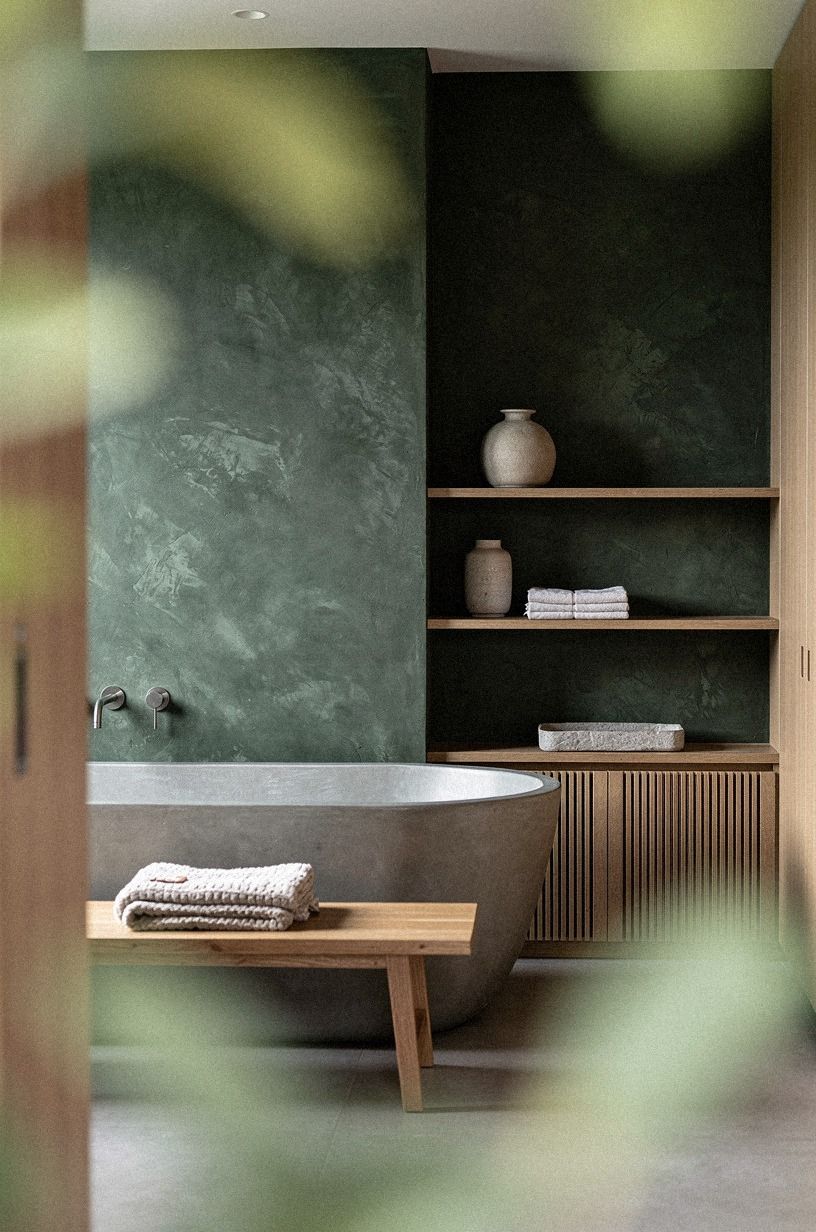
A tub wall is a natural place to concentrate the strongest plaster finish. Cover the wall behind the tub in a deeper forest green, then keep the side walls lighter so the room still feels open.
A standard tub is 60 by 30 inches, so you’ll need to plan the surround carefully. Use a water-rated, hand-applied Venetian plaster system only where the product is designed for wet conditions, and confirm the installer understands the sealing process. Your material choice matters more here than the color name.
I’d choose a simple sculptural tub over a clawfoot model. The clawfoot shape can make a compact bathroom feel visually busy, while a clean deep soaking tub lets the plaster carry the drama. Add a natural oak stool or shelf for a warmer counterpoint.
A proper membrane, careful slope, and durable floor finish protect the long-term value of the renovation. This sun-baked Tulum-style tadelakt bathroom guide has a useful direction for balancing the wall and tub.
If you’re comparing the cost of a full surround with a single focal wall, I’d choose the focal wall when the rest of the bathroom is already functional.
16Why Add a Three-Inch Shadow Gap Around the Vanity?
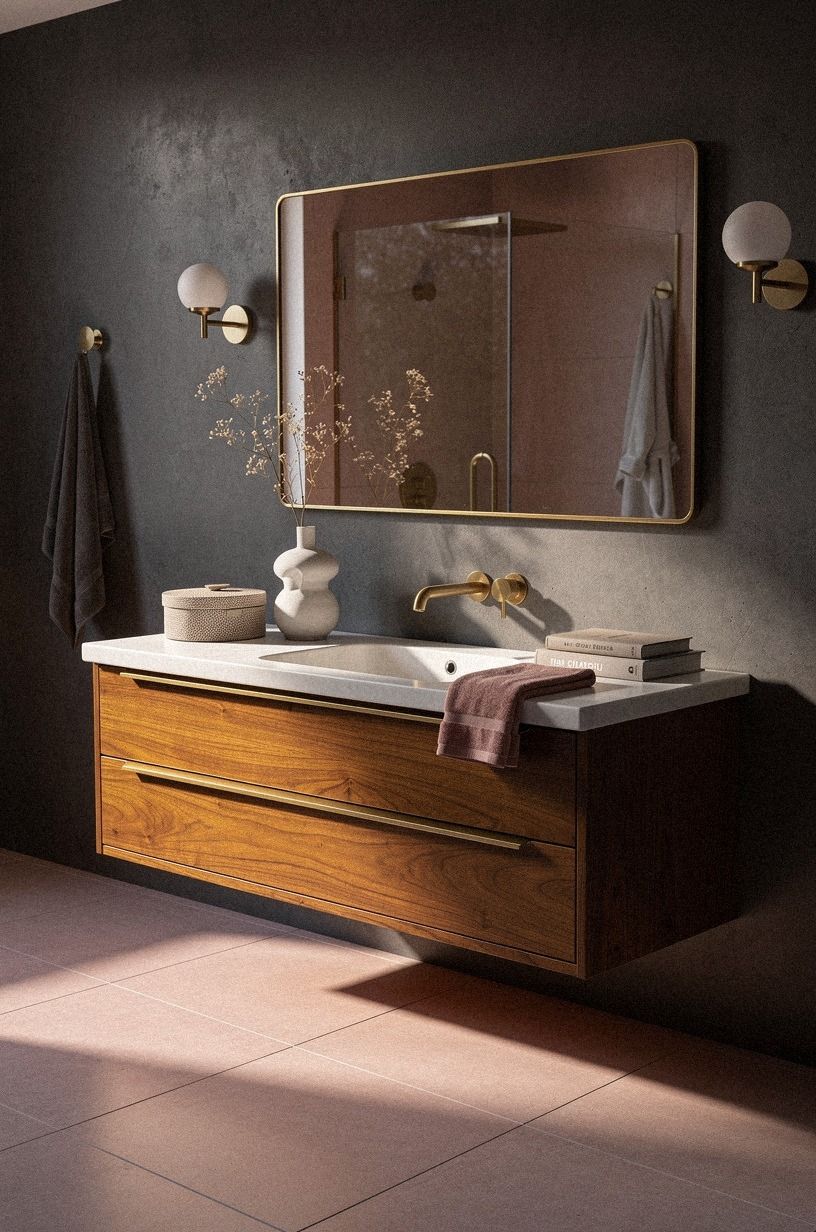
A small shadow gap keeps the vanity from sitting flush against the plaster and gives the wall a crisp architectural edge.
17Finish With the Quiet Lantern Rule
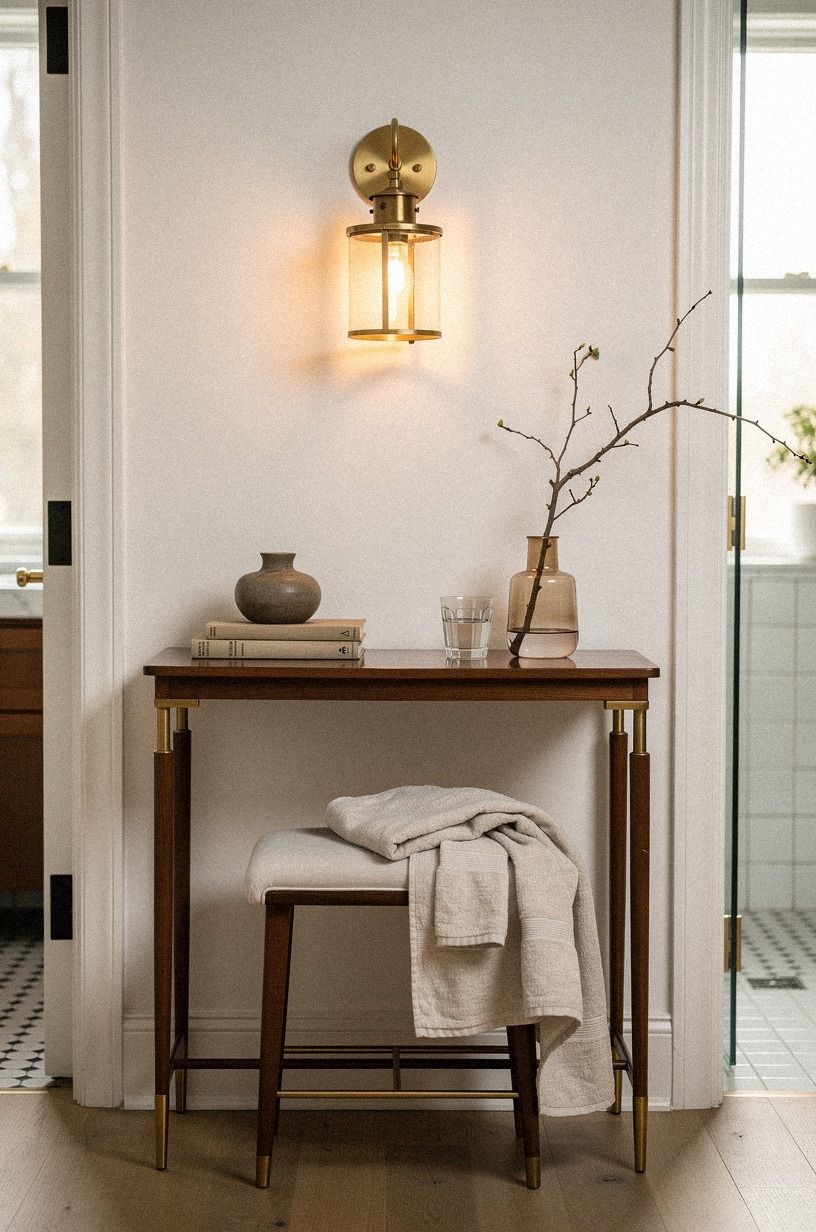
The Quiet Lantern Rule is simple: choose one light fixture that looks handmade and let everything around it stay calm. A perforated lantern or plaster pendant can bring Moroccan character without covering the room in motifs.
Hang a washed Belgian linen pendant shade where it won’t interfere with the mirror or shower door. The loose weave will soften the light on the plaster, especially after sunset. You’ll get the feeling of a lantern without a collection of decorative lanterns competing overhead.
And keep your floor almost plain. A warm-white porcelain tile, one camel mat, and black cotton bath textiles are enough. I’d rather see a restrained floor beneath a textured ceiling than another patterned surface fighting for attention.
For a small budget, replace the existing shade and bulb before changing the electrical box. The room can gain atmosphere immediately, and you’ll have time to decide whether a larger fixture is worth the price.
Why I’d Choose Texture Before Trend
I’ve watched bathroom design cycle through shiny marble, hard white subway tile, and overly matched brass. Venetian plaster feels different because it gives a room a surface with memory. It catches steam, afternoon light, and the small shadows made by a towel or a person crossing the doorway.
That variation is why Moroccan and Tulum references work so well together.
The mistake is treating plaster as a costume. Add a pointed arch, five carved stools, patterned tile, woven baskets, and a dozen clay vessels, and your bathroom stops feeling lived-in.
It starts explaining itself. I prefer one strong plaster surface, one useful wood element, and one material with age built into it.
I learned this after over-styling a guest bathroom for a photo shoot. The room looked impressive for ten minutes, then the counter became impossible to clean and the wall texture disappeared behind objects.
Your bathroom needs empty space to show its best qualities. That’s why I’d spend more on prep and sealing than on accessories.
For renters, the same idea still works. You can use removable sconces, a wood-framed mirror, linen towels, and a small stool to create the mood without touching the walls.
For homeowners, a proper plaster system can be worth the investment when the substrate is sound and the installer knows wet-area detailing. The difference is restraint.
If you’re deciding between a warm beige and a deeper clay, place samples beside your actual tile and view them at morning, noon, and night. Farrow & Ball Studio Green can feel dramatic, while Benjamin Moore Chestertown Buff stays welcoming.
Neither is automatically right. Your daylight gets the deciding vote.
I’d also protect the room’s practical needs. Keep at least 21 inches of clearance in front of the toilet, allow the vanity to sit between 32 and 36 inches high, and don’t shrink the shower below 36 by 36 inches just to force in another decorative feature. A getaway still needs to function when you’re late for work.
Before you approve a quote, separate the cosmetic cost from the structural cost. Paint, hardware, and textiles can change the atmosphere quickly. Waterproofing, plumbing, and substrate preparation determine whether the room remains a good investment.
For another palette direction, compare the organic modern Venetian plaster bathroom ideas with the old-world Mediterranean plaster bathroom ideas. I’d save those references before ordering tile.
The Questions I Get Asked Most
What is the best Moroccan and Tulum-style Venetian plaster idea for a small bathroom?
A floating vanity with pale plaster walls is the strongest small-space choice because it reveals more floor and keeps the room visually open. Try an IKEA GODMORGON profile with a rounded mirror and warm sconces. You’ll get an airy, calming effect without adding bulky furniture.
Where can I buy Moroccan and Tulum-style bathroom pieces on a budget?
Start with IKEA, Wayfair, and Target for mirrors, stools, towels, and simple lighting. Facebook Marketplace and thrift stores can turn up wood stools and ceramic vessels for less. Look for solid materials and skip anything with peeling veneer or damaged finishes.
I’d spend on the pieces you touch every day.
How much does a Moroccan and Tulum-style Venetian plaster bathroom makeover cost?
A cosmetic update can run about $200 to $1,200 for paint, a mirror, a faucet, and textiles. A mid-range project often reaches $3,000 to $9,000 when you add a vanity, partial tile, and lighting. A larger renovation can exceed $30,000 once plumbing and waterproofing are included, so compare the expected value with the work your room actually needs.
Can I create this bathroom style on a budget?
Yes! Start with three low-cost moves: replace cool bulbs with warm ones, add textured cotton towels, and swap one shiny accessory for a wood or ceramic piece.
A terracotta vessel from a thrift shop can shift the room faster than a full accessory haul. I’d keep the existing plumbing until you know the layout is holding you back.
Is this style worth it in a small space?
Yes, because a small room gives plaster, light, and one strong material more impact. Keep the vanity shallow, use a floating profile, and choose one large mirror instead of several small objects. The limited footprint helps your palette stay focused, and the restrained approach can improve the value of a modest renovation.
Is Moroccan and Tulum-style bathroom design a good idea for a rental?
Yes! Use a removable mirror, a tension-mounted shelf, peel-and-stick tile behind the sink, and textiles in clay, cream, or sage. A woven basket and rechargeable sconces can add warmth without drilling into the walls or changing permanent fixtures.
You’ll create the atmosphere while keeping your deposit and future flexibility in mind.
Where I’d Start First
If I had to pick one, I’d start with the floating vanity and pale plaster wall. It exposes the floor, improves the light, and gives every later choice a calmer background. Pin this idea for later, then compare it with our organic modern Venetian plaster bathroom ideas before you buy anything.
If the vanity is already functional, I’d spend first on warm lighting, a rounded mirror, and one beautiful material with a realistic budget. Those changes give you the strongest visual return without forcing a full renovation.