
 by
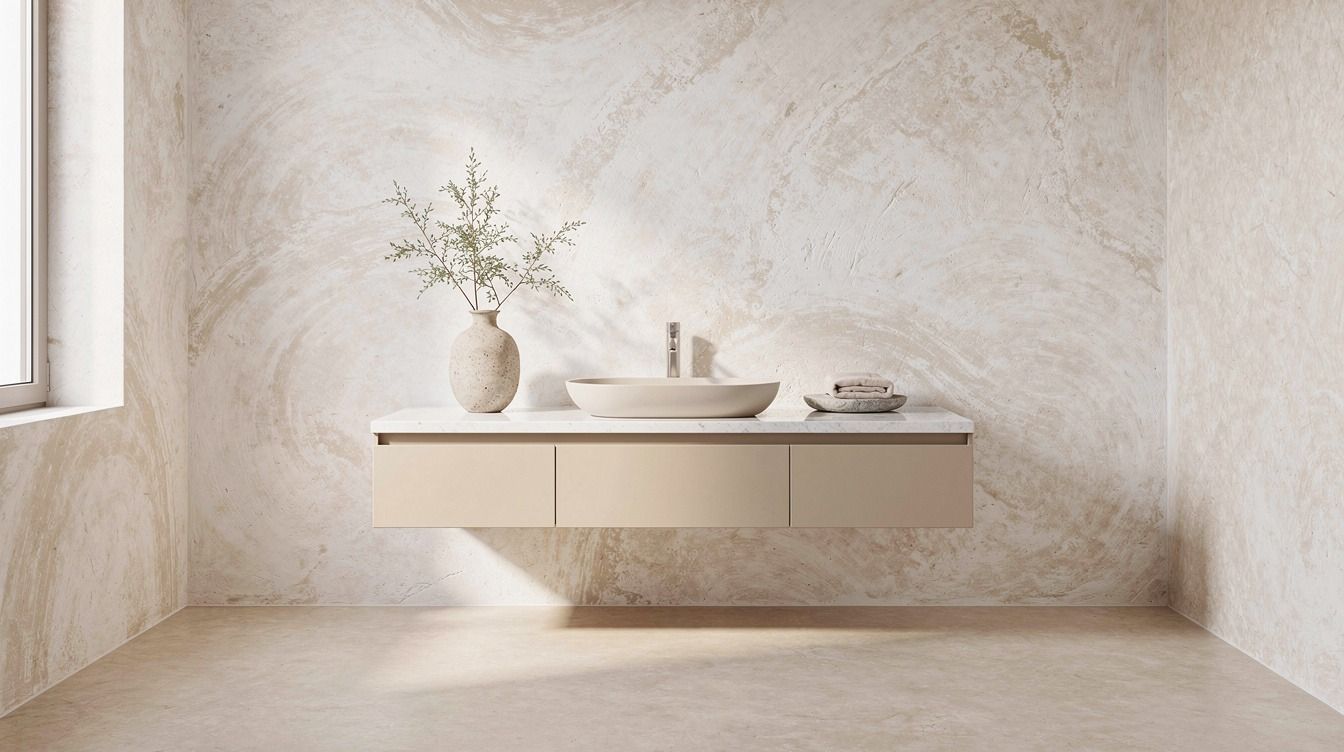
by White and beige Venetian plaster bathroom ideas can make a tired room feel calm with paint, texture, and a few careful swaps. I once chose a flat beige that looked yellow by evening, and it taught me that soft walls still need contrast. You don't need demolition. You need better layers.
- Layer a Beige Limewash Bathroom Base
- Could a Soft White Ceiling Change the Whole Room?
- Float an IKEA HAVBÄCK Vanity Under the Plaster
- Frame the Mirror With a Quiet Plaster Border
- Build The Three-Sheen Rule With Plaster, Linen, and Glass
- Swap Chrome for Unlacquered Brass
- Anchor the Floor With Cerused White Oak
- Price the Calm Before You Buy Anything
- Choose a White Microcement Bathroom Mood
- Soften the Shower Edge With Warm White Tile
- Hang The Three-Height Light Stack
- Choose White Plaster Over Beige Tile
- Use The Renter’s Quiet Edge
- Instead of Replacing the Vanity, Restyle Its Surface
- Mix Towels by Weight, Not by Color
- Repeat The Two-Tone Drift
1Layer a Beige Limewash Bathroom Base
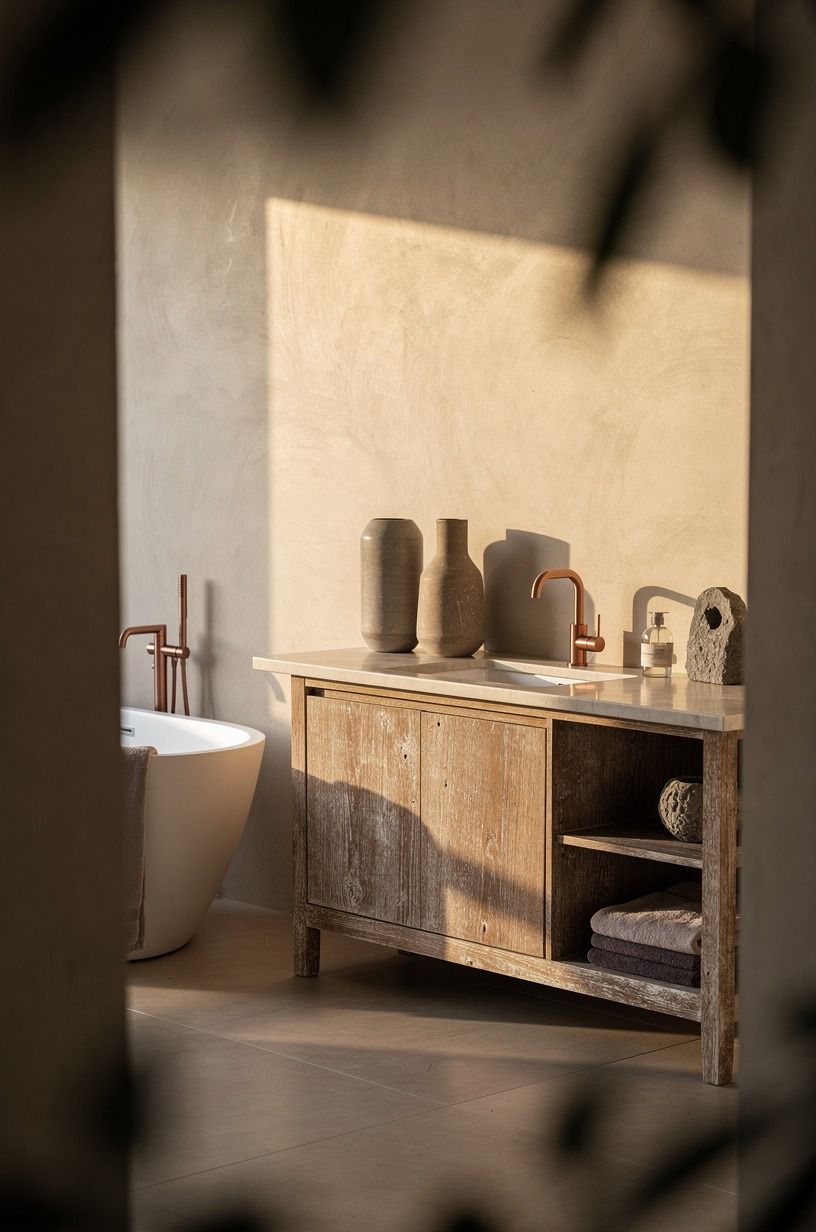
Start with a plaster color that catches light instead of swallowing it. A muted plum finish can bring depth to the walls, while grey and rose gold keep the palette from feeling heavy. If your bathroom faces north, you'll want a little warmth because cool daylight can make pale surfaces feel gray.
I’ve found that two imperfect coats look more convincing than one heavy, polished layer. Leave small tonal shifts where your brush changes direction. Your eye will read those marks as hand-finished, not messy, especially beside a reclaimed weathered teak shelf.
Keep the fixtures quiet. A rose gold faucet, a cream ceramic basin, and one reclaimed teak object are enough.
If you’re unsure about the wall treatment, compare it with these soft luminous Venetian plaster bathroom ideas. The room should feel warm before you add decoration.
Typical cost by tier (US averages):
2Could a Soft White Ceiling Change the Whole Room?
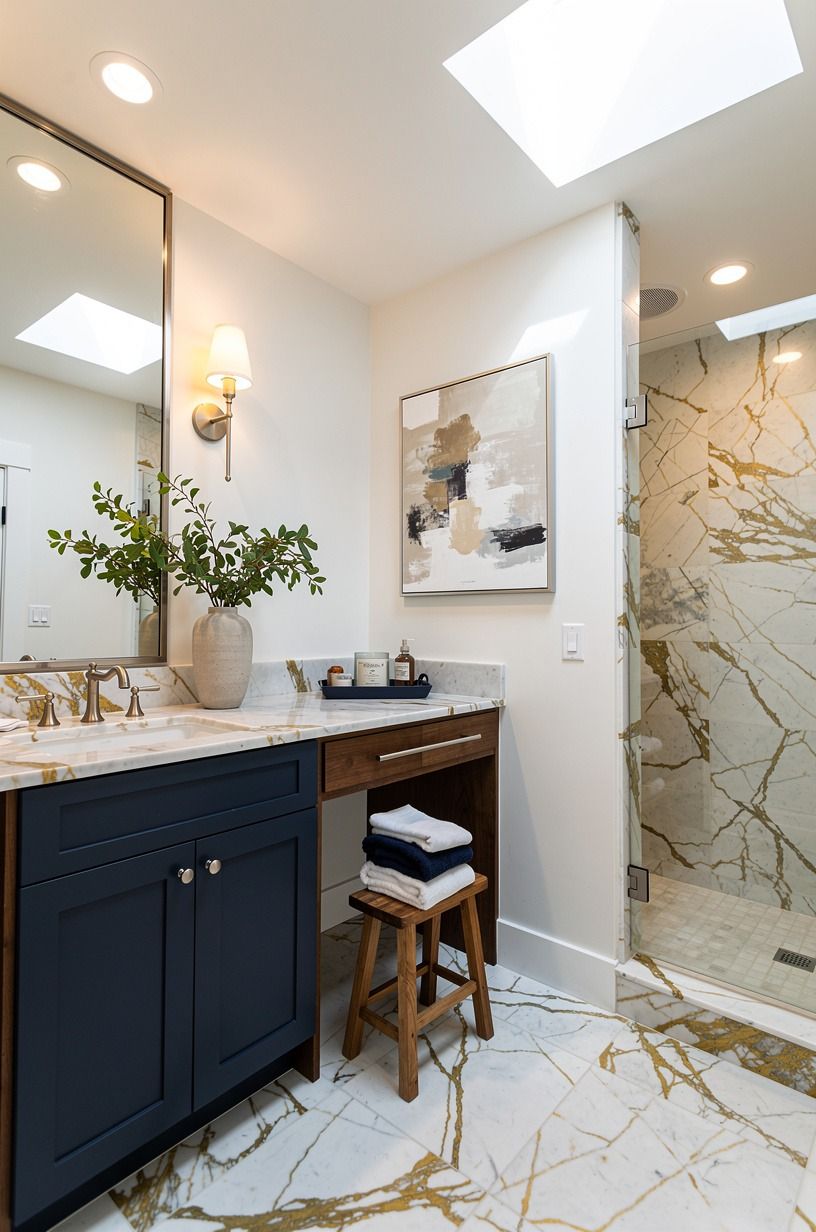
Yes, and the ceiling is where many navy-and-white bathrooms lose their balance. Paint it a softened white instead of stark builder white, then let the wall finish stop just below the crown molding. Benjamin Moore White Dove OC-17 gives you a clean surface without the blue glare that can make plaster look chilly.
If your room is narrow, a lighter ceiling gives your eye somewhere to travel. You’ll notice the difference when the vanity light is off and morning light spreads across the upper wall. It isn’t dramatic in a theatrical way.
It’s more like opening a curtain.
Your trim can stay simple. I’d skip glossy white enamel because it makes the walls look dusty by comparison.
Choose eggshell on the walls and satin on the trim, then bring in walnut at the vanity or shelving. A small note of Calacatta marble with gold veining will add warmth without making the room feel slick.
3Float an IKEA HAVBÄCK Vanity Under the Plaster
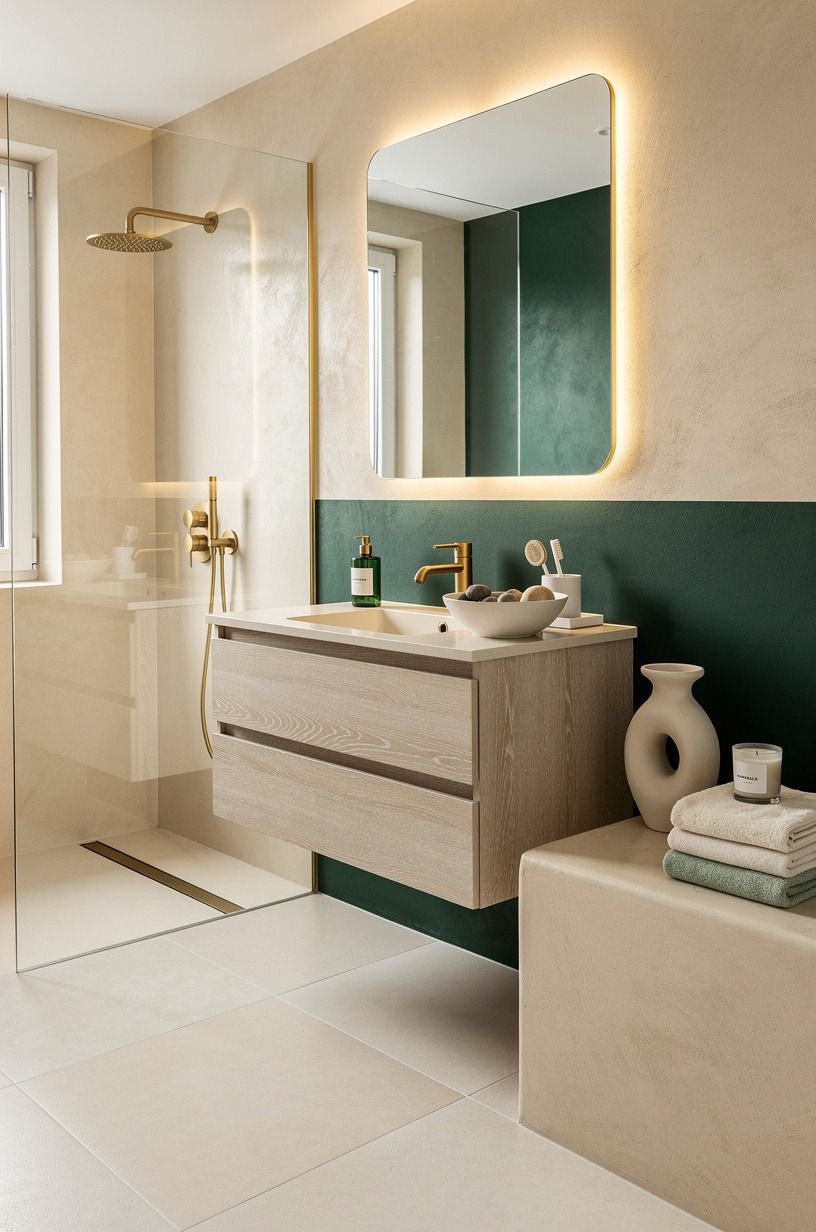
A floating vanity gives an emerald, cream, and gold bathroom more breathing room, especially when the floor is small. The IKEA HAVBÄCK vanity has a clean profile that lets the wall finish remain the main event. Mount the cabinet high enough for comfortable use, keeping vanity height within the standard 32 to 36 inches.
You’ll want the bottom edge to stay visually light. A recessed toe area, cream ceramic basin, and one long drawer will make your morning routine easier than a cabinet packed with tiny compartments. I’d choose cerused white oak over glossy white because the grain prevents the plaster from feeling flat.
Keep your counter nearly empty. Hand soap, a small cup, and one folded towel are plenty. If you’re planning a broader room update, these serene organic modern Venetian plaster ideas show how warm wood can keep pale walls from feeling clinical.
4Frame the Mirror With a Quiet Plaster Border
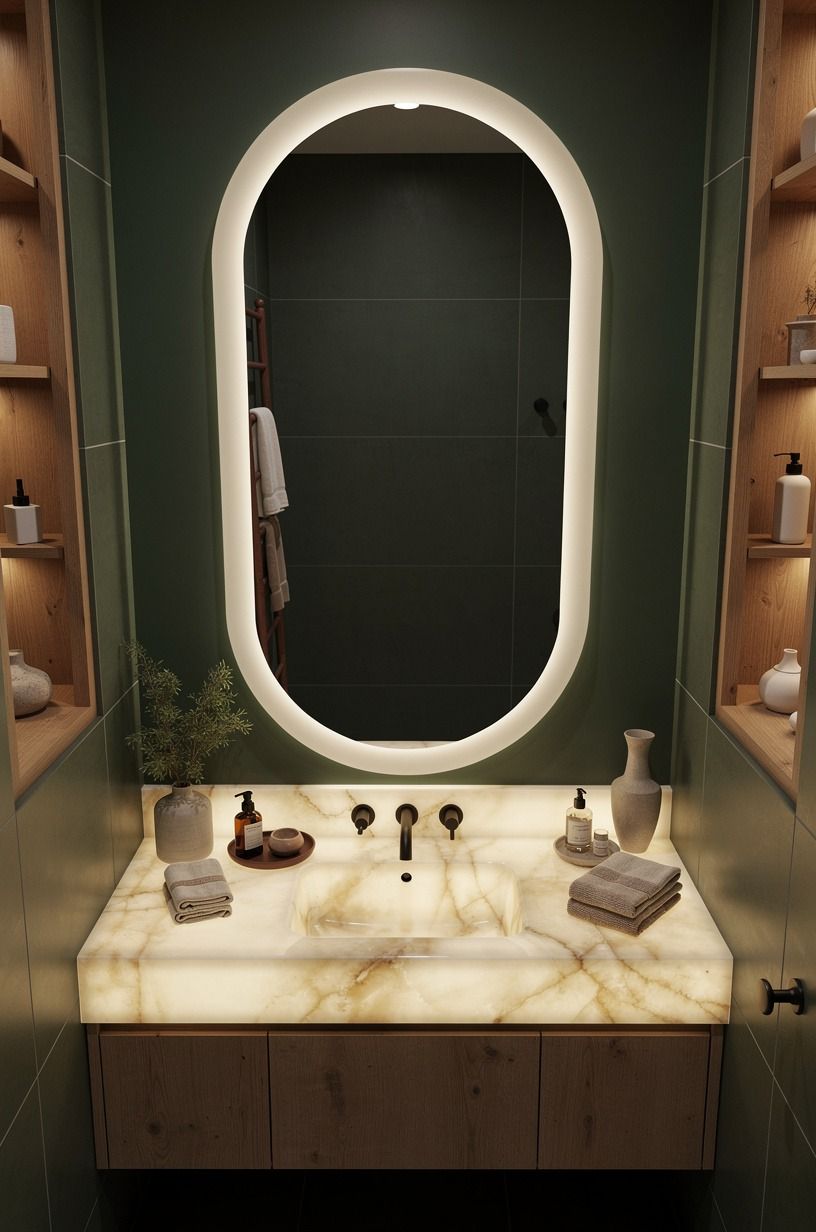
A mirror needs a little breathing room around it, or your wall texture can look like visual noise.
Use a restrained plaster border around a mirror with backlit translucent onyx, letting the material provide the glow. Forest green, rust, and natural oak will keep the arrangement grounded without making the bathroom feel ornate.
5Build The Three-Sheen Rule With Plaster, Linen, and Glass
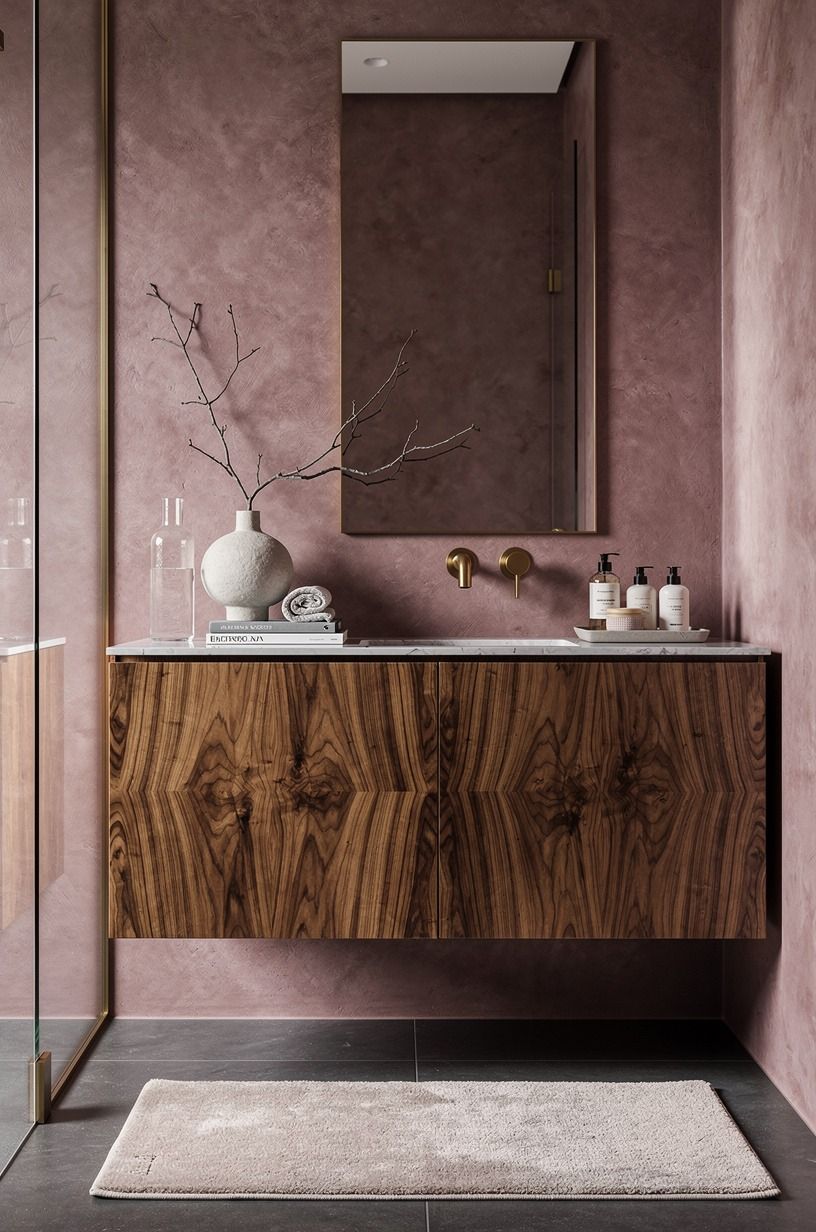
The Three-Sheen Rule keeps a dusty rose and charcoal bathroom from becoming visually sleepy. Pair one matte surface, one softly textured surface, and one reflective surface. Your Venetian plaster can be matte, book-matched walnut can add depth, and a brass detail can bring the smallest flash of light.
This combination works because each material responds differently as you move through the room. The plaster absorbs the afternoon glow, the book-matched walnut creates a richer surface, and the brass catches a warm line near the sink. It’s subtle, but it gives your eye a route to follow.
If you’re styling a rental, you can make the same move with removable hooks, a linen hand towel, and a secondhand brass tumbler. I’d avoid matching every finish. A room full of identical dusty rose surfaces won’t feel serene, it’ll feel unfinished.
6Swap Chrome for Unlacquered Brass
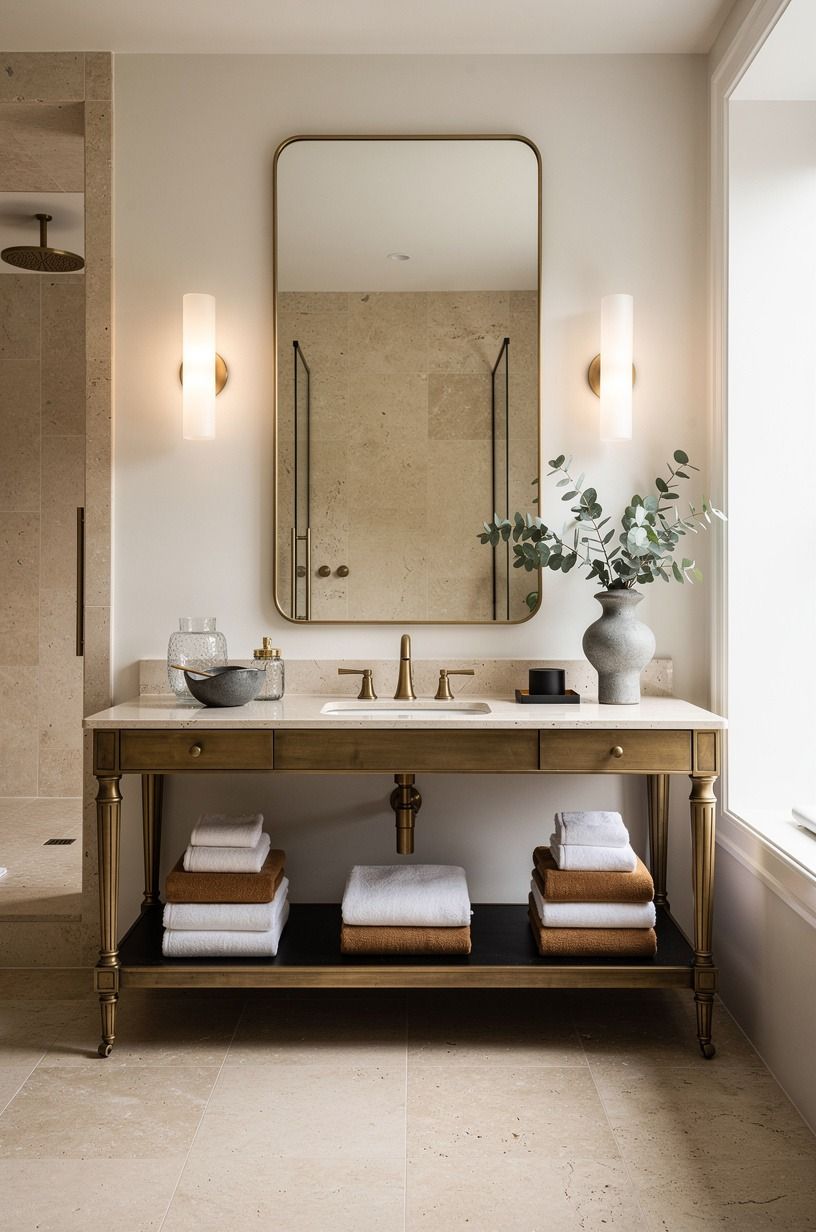
Chrome can look sharp against warm white plaster, but it often introduces a cold blue reflection. Unlacquered brass develops a softer patina over time, and that change gives your bathroom a lived-in quality that polished metal can’t fake. Set it against warm travertine, camel textiles, or one black accent.
You don’t need to replace every fixture. Start with the item closest to your face, usually the faucet or mirror. You’ll notice the warmth each morning, and the older pieces can recede instead of competing for attention.
A brushed brass faucet with a simple lever will feel calmer than a heavily sculpted design. It doesn’t need ornament. If your existing hardware is still useful, keep it and add a brass tray or towel ring instead.
The goal is a warm punctuation mark, not a showroom display.
7Anchor the Floor With Cerused White Oak
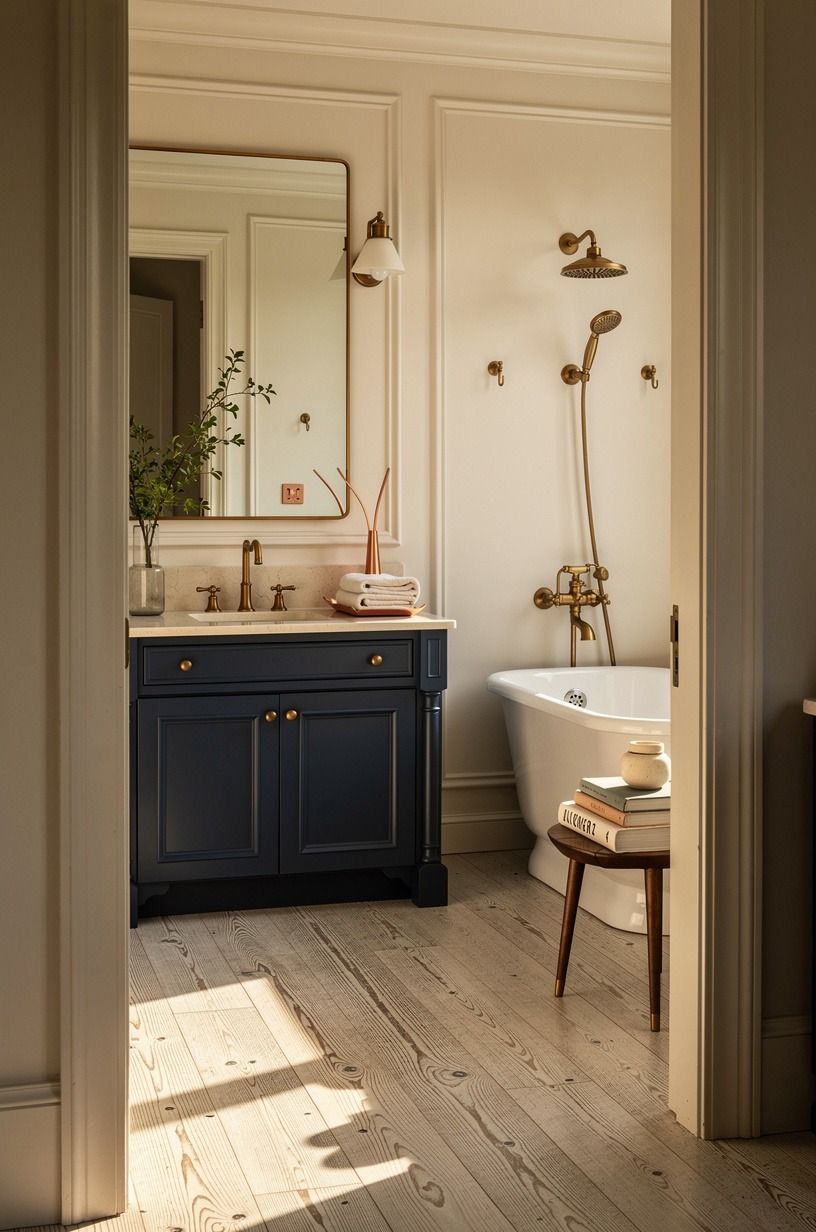
Midnight blue walls feel balanced when something grounded sits below them. If you can change the floor, choose porcelain that resembles cerused white oak, then soften it with ivory textiles and a copper-toned detail. The pale grain gives your bathroom a natural note without making the room feel themed.
But moisture changes the rules. Your floor needs a bathroom-rated surface, and you’ll want the grain direction to lead toward the shower or window.
I’d skip small mosaic shapes in a tiny room if your walls already have movement. Too many grout lines will compete with the plaster.
For a no-renovation version, use a washable cotton runner in warm ivory. Repeat the warmth with unlacquered brass that can develop its own patina over time. Your feet should meet something soft when you step out of the shower, and that practical comfort matters.
8Price the Calm Before You Buy Anything
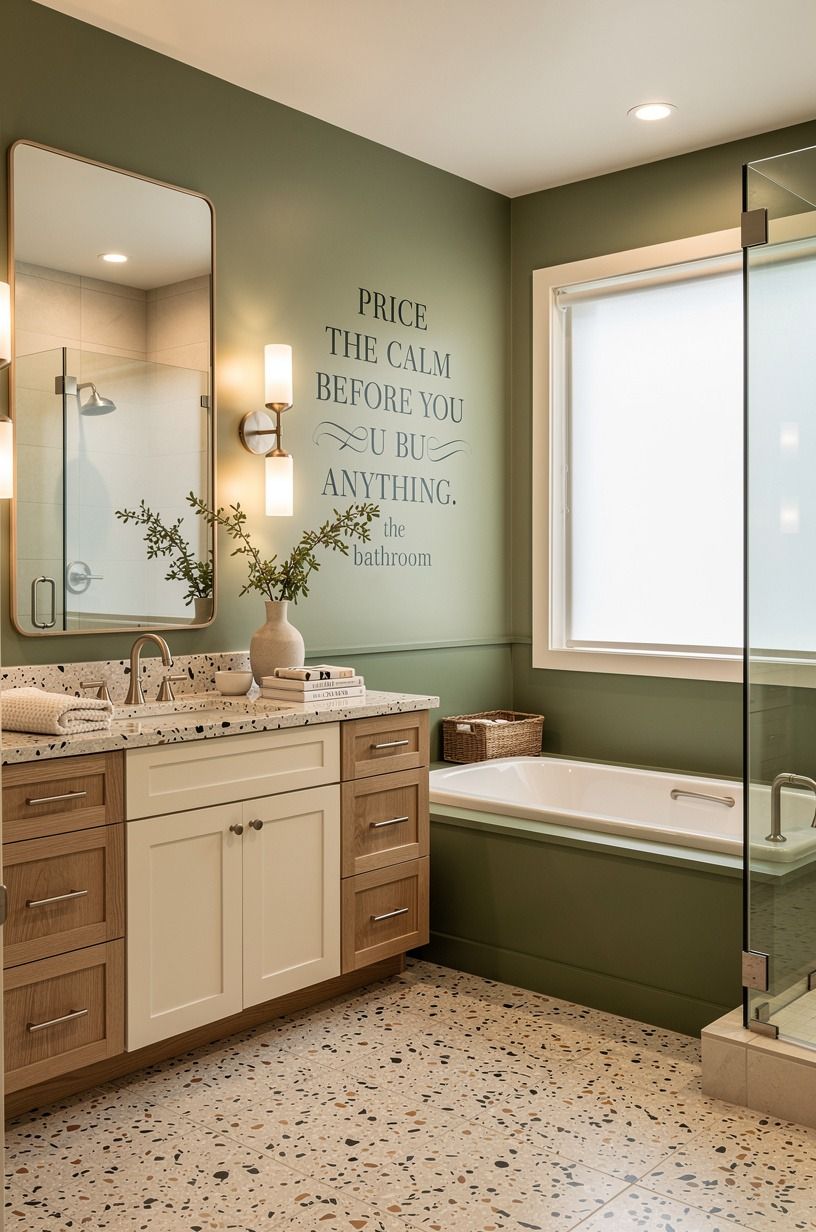
A sage green, warm cream, and natural wood bathroom can be a modest refresh or part of a full bathroom renovation.
Typical cost by tier (US averages):
If you’re drawn to oversized-chip terrazzo, price the surface before committing. A small sample can look manageable, while a full floor or vanity surround changes the budget quickly.
9Choose a White Microcement Bathroom Mood
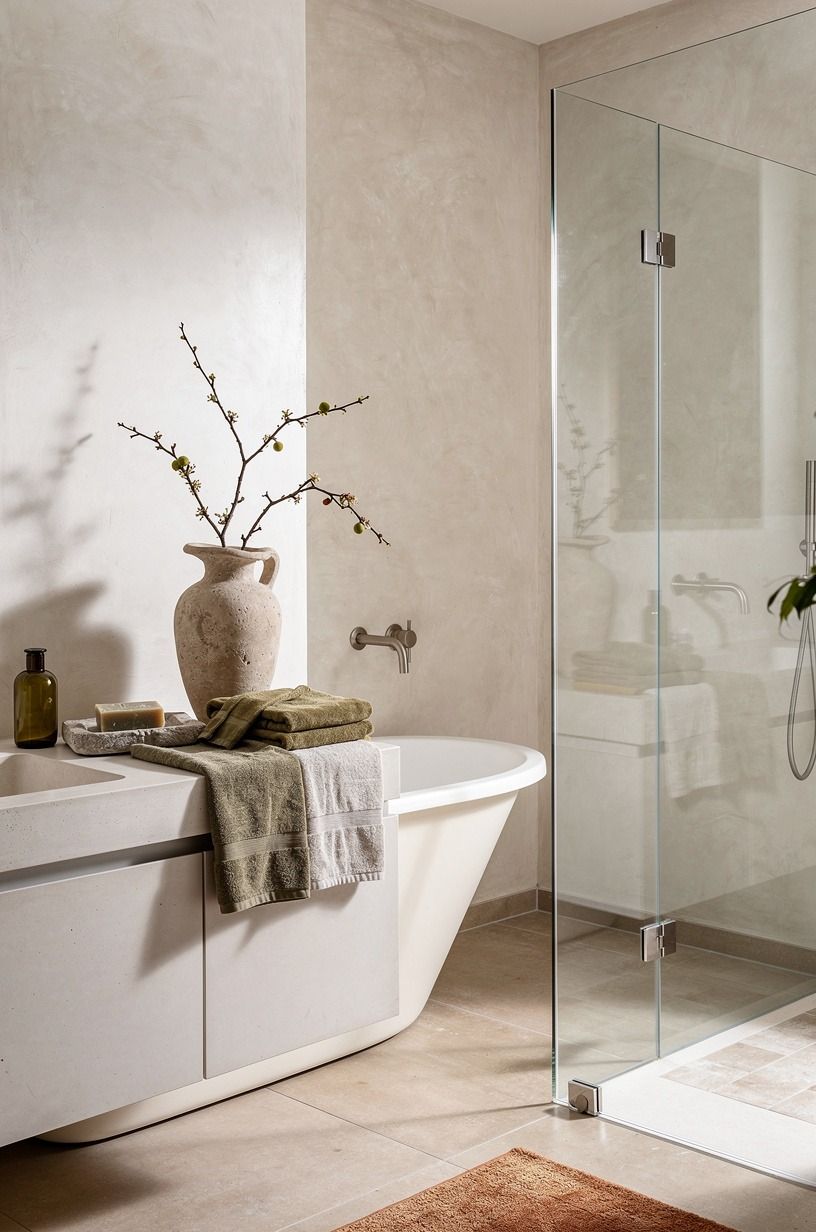
A hand-applied Venetian plaster bathroom with terracotta, stone, and olive notes has a more layered look than a completely white shell. It suits you if you prefer visible movement around the sink and shower. The plaster can create a calm base, but it needs warmth from stone, fabric, or aged wood.
I’ve gone back and forth between plaster and microcement because plaster has more hand movement, while microcement feels more architectural. Your choice depends on whether you want the room to whisper or look intentionally graphic. Neither finish should be chosen only because it looks polished.
Add one earthy counter object, such as a honed stone cup or terracotta soap dish. You’ll keep the palette restrained while giving your bathroom a small note of color. For another direction, compare these white microcement bathroom ideas before committing to the surface.
10Soften the Shower Edge With Warm White Tile
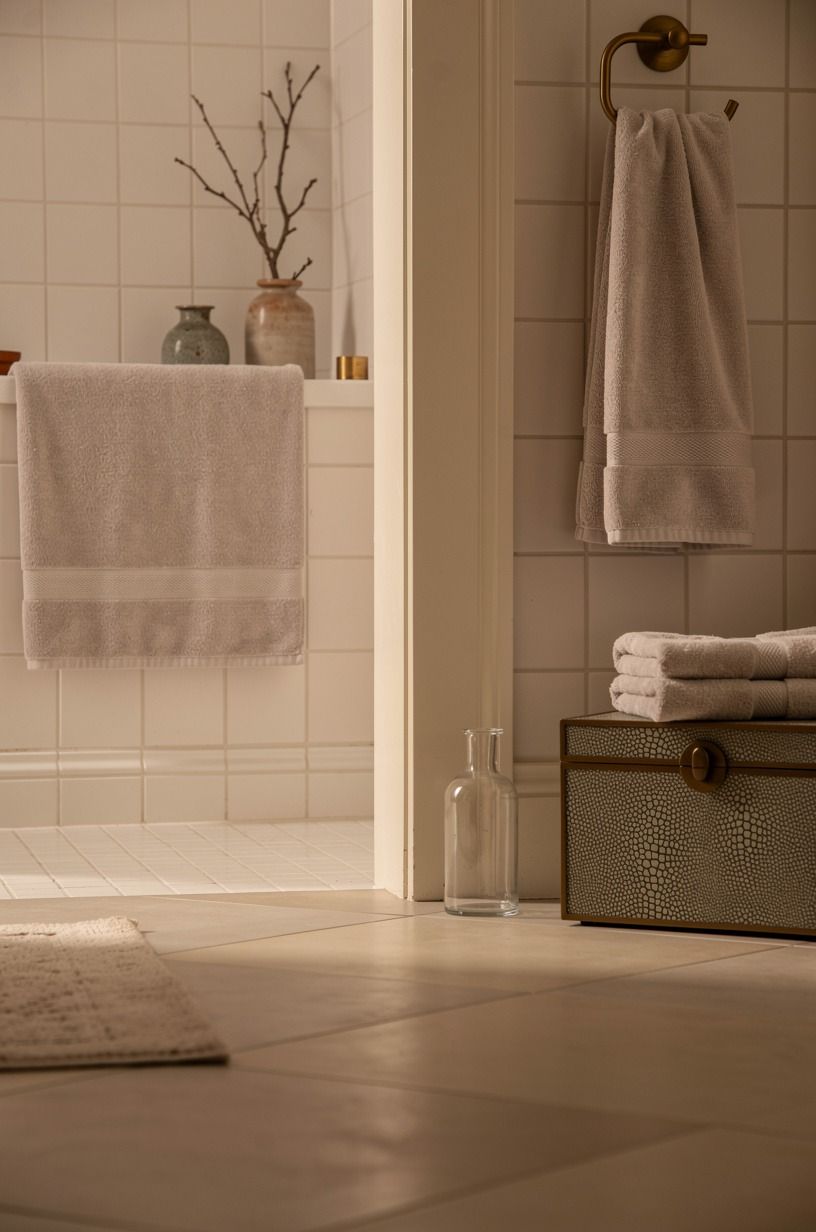
A plaster wall outside the wet zone can meet a tiled shower without looking chopped in half. Choose a handmade-looking clay tile with slight tonal variation, and keep the grout close to the tile color. The soft clay tone will echo your plaster without copying it.
Your comfortable shower needs at least 36 by 36 inches, so let that dimension guide the layout before you buy anything. You’re better off with a simple finish in a workable shower than an elaborate tile pattern that makes the space feel cramped.
I’d skip a bright white subway tile with dark grout here. It’s clean, but the contrast pulls the room toward a graphic kitchen look.
Instead, use linen-toned grout, an aged brass fitting, and a quiet niche with a small shagreen accent nearby. You won’t need much decoration when the surface itself has a soft rhythm.
11Hang The Three-Height Light Stack
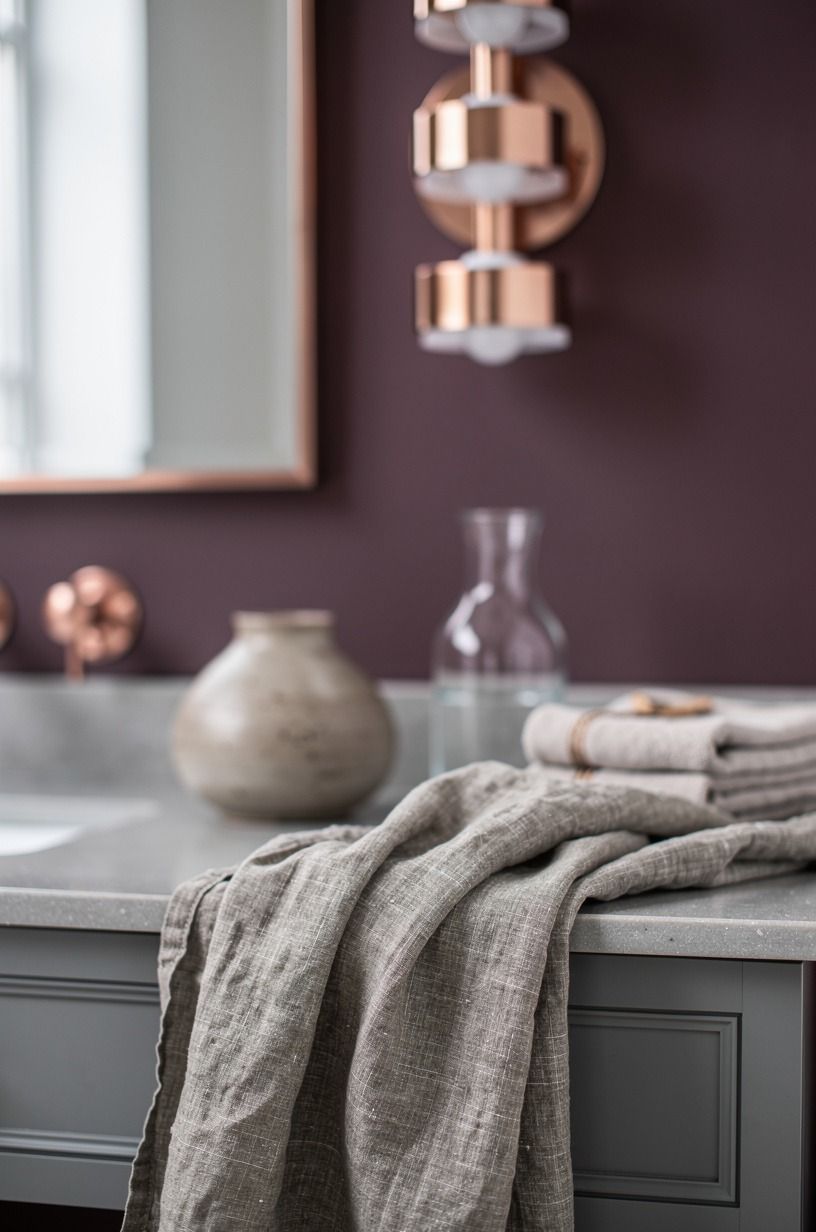
The Three-Height Light Stack gives a plum, grey, and rose gold bathroom depth without adding clutter.
Use washed Belgian linen around the lights or window to soften the arrangement. Keep the rose gold finish consistent across the smallest details, so the room feels intentional rather than busy.
12Choose White Plaster Over Beige Tile
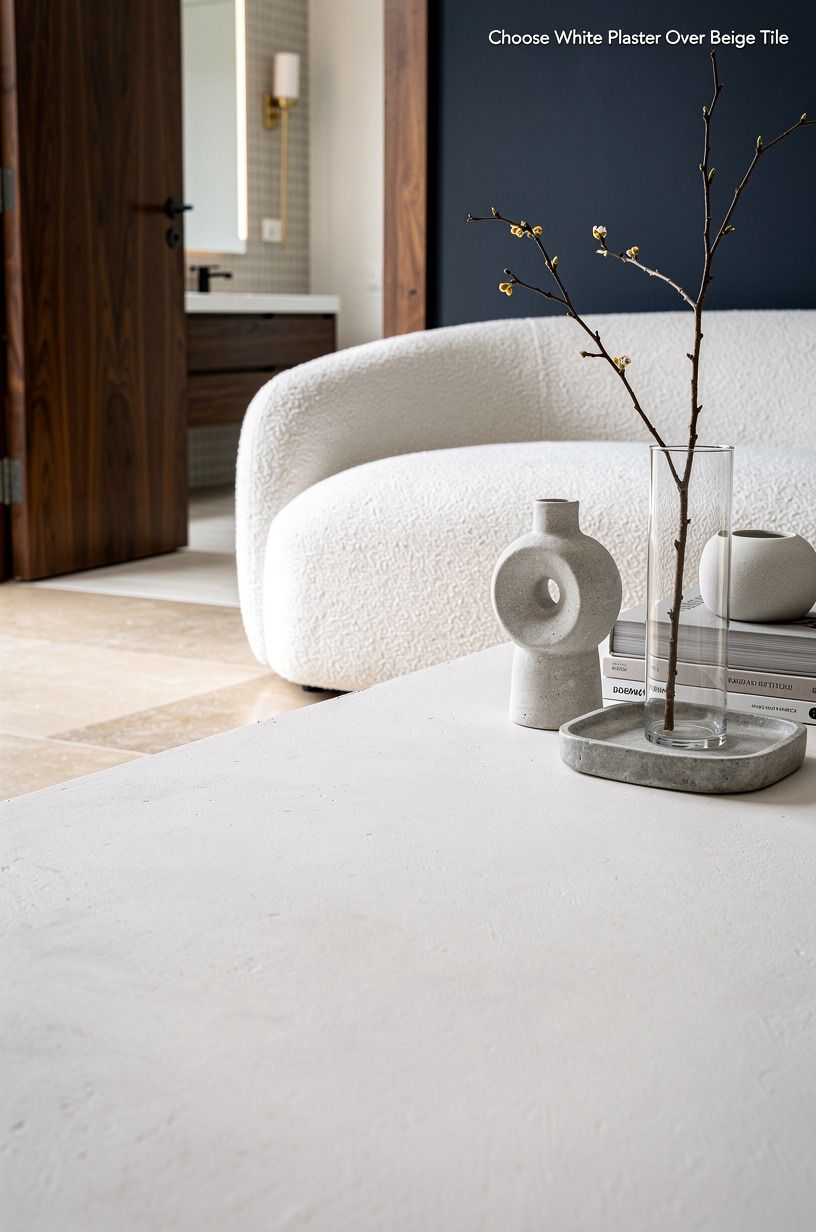
White plaster over navy tile is a useful contrast when your existing floor or shower surround has a deep undertone. Keep the walls lighter and let the navy remain below or behind the wet zone, so the room feels lifted without losing its richer base. Organic bouclé can soften the transition without adding another hard surface.
This approach is especially helpful if you’re not replacing the floor. Your wall color can connect to the tile through a creamy undertone, while a white basin keeps the sink zone fresh. I’d choose this over forcing every surface to match.
The room won’t need many accessories. A walnut stool or small fabric shade can add softness, but keep the rest quiet. If you’re comparing tile-led options, these white zellige bathroom ideas show how texture can replace extra decoration.
13Use The Renter’s Quiet Edge
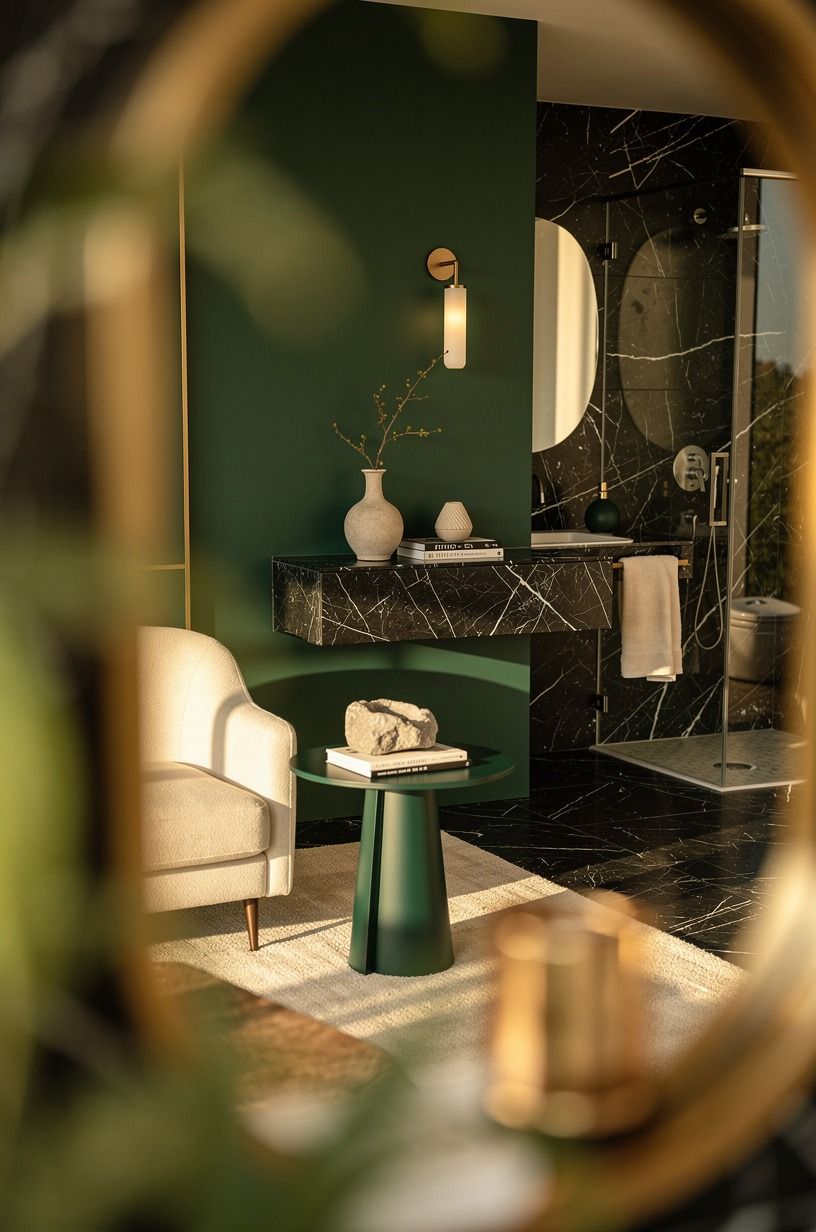
You can get the Venetian plaster feeling without touching the drywall. Choose a removable wall covering with an emerald and cream pattern, add a tension rod with a linen curtain, and replace only the hardware you can take with you. Removable wallpaper gives your rental the layered surface your eye wants.
And if you’re working around a landlord’s white vanity, use contrast below the counter. A Nero Marquina-style tray, warm towel, and small cream stool can make the fixed pieces feel intentional. Your room doesn’t need to be permanent to feel personal.
I’d avoid adhesive panels in the shower zone because moisture can loosen the edges. Keep your removable finish on dry walls, then use a washable curtain for softness. A renter-friendly bathroom can still feel calm, organic, and warm without pretending it’s a custom renovation.
14Instead of Replacing the Vanity, Restyle Its Surface
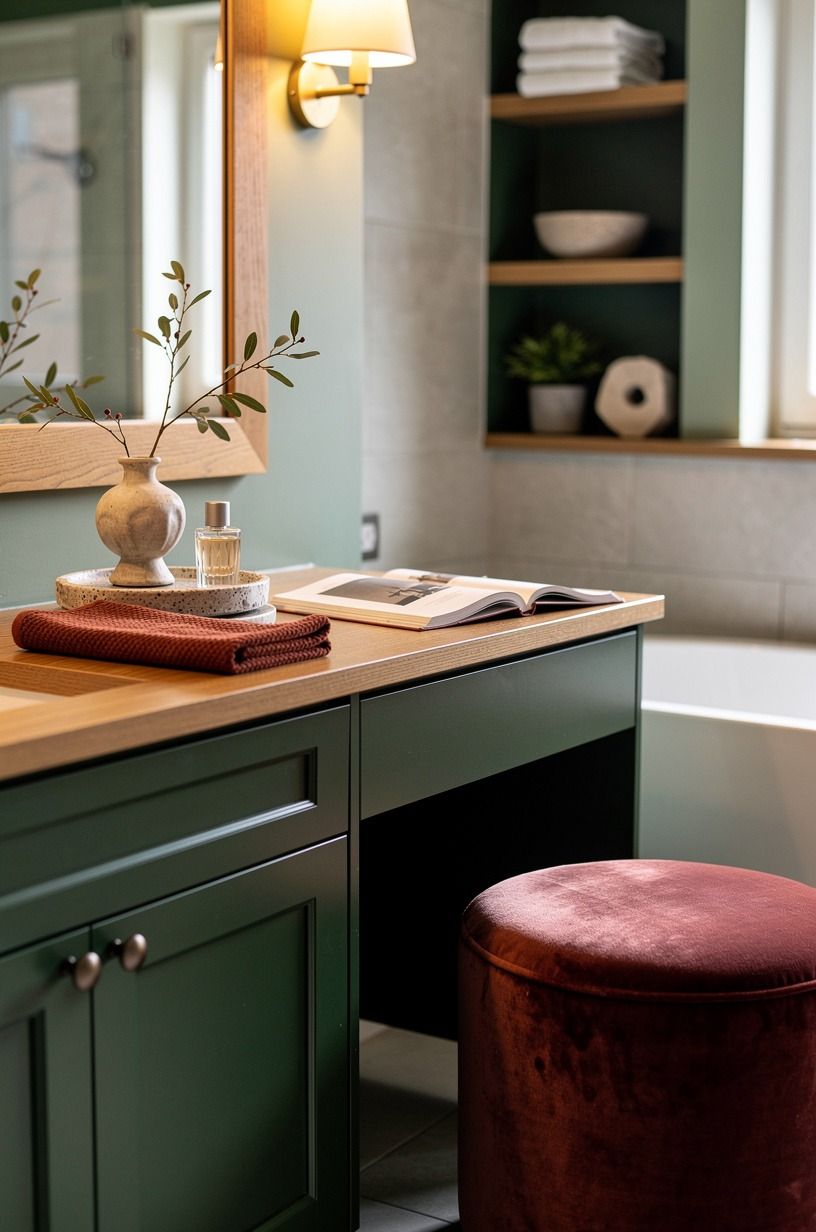
A dated vanity can look less distracting when you reduce what surrounds it. Remove duplicate bottles, add a shallow natural oak tray, and bring in one rust-colored accent that repeats the wall tone. A CB2 Primitivo stool in deep-pile mohair velvet can add softness without making the cabinet itself the focus.
You’ll want your daily products within reach, but not spread across every inch of counter. Keep skincare in one lidded container and leave the rest of the surface open. I’d rather see one good soap dispenser than six small packages competing with the plaster.
If the hardware looks tired, change the pulls before changing the cabinet. Your vanity may need less work than you think. A warm metal pull and a new mirror can make an old unit feel settled, especially when the forest green wall and natural oak give the room a stronger background.
15Mix Towels by Weight, Not by Color
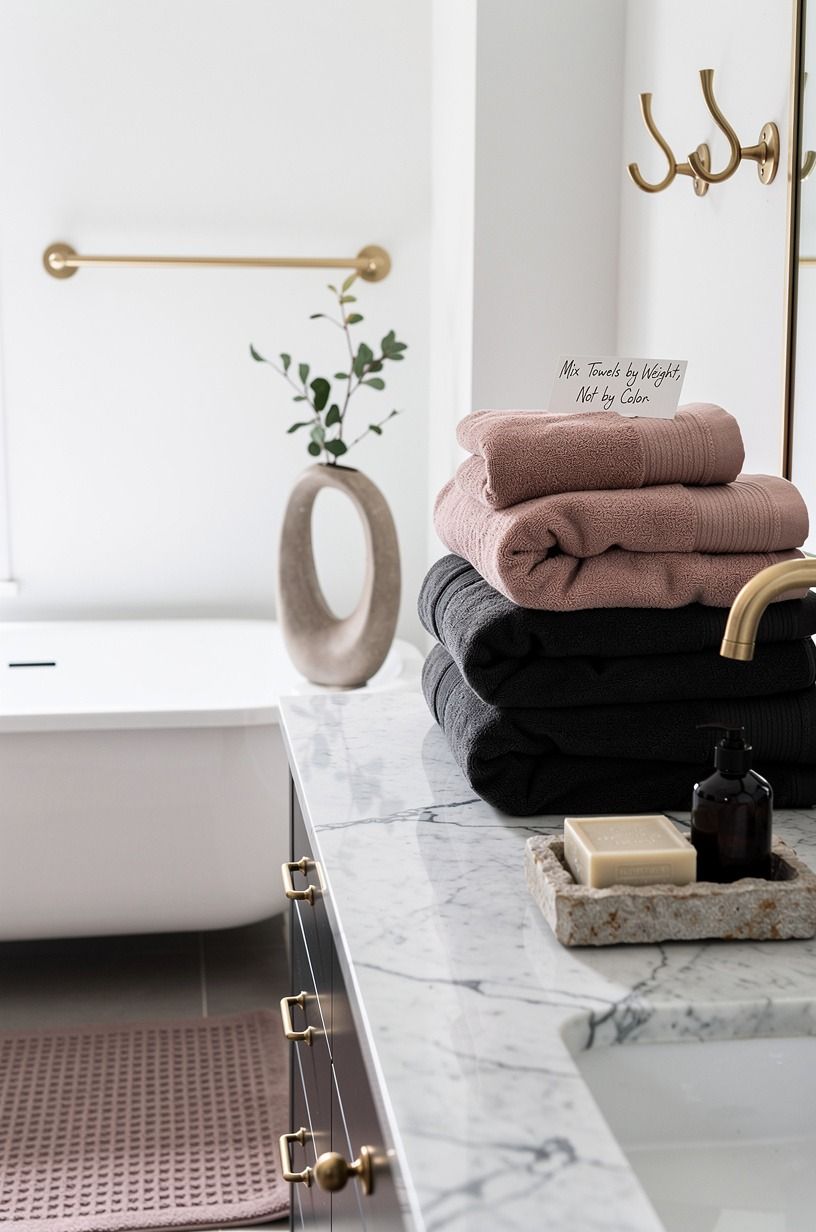
But a bathroom can still feel flat when every textile is the same thin cotton. Mix weights instead.
Use a 600gsm Turkish cotton bath towel, a lighter waffle hand towel, and one linen piece near the sink. Your palette can stay dusty rose and charcoal while brass and Carrara marble add warmth.
I’ve found that texture matters more than adding another color. You’ll feel the difference when you reach for the towel, and your eye will notice the folds against the smooth wall. Keep the shades close, but let the surfaces disagree a little.
Choose dusty rose, charcoal, and warm ivory rather than several nearly identical gray-beiges. A Carrara marble ledge with subtle grey veining can give the sink area a quiet foundation. A casually draped hand towel will make your bathroom feel welcoming, and that small imperfection keeps the room from feeling overly formal.
16Repeat The Two-Tone Drift
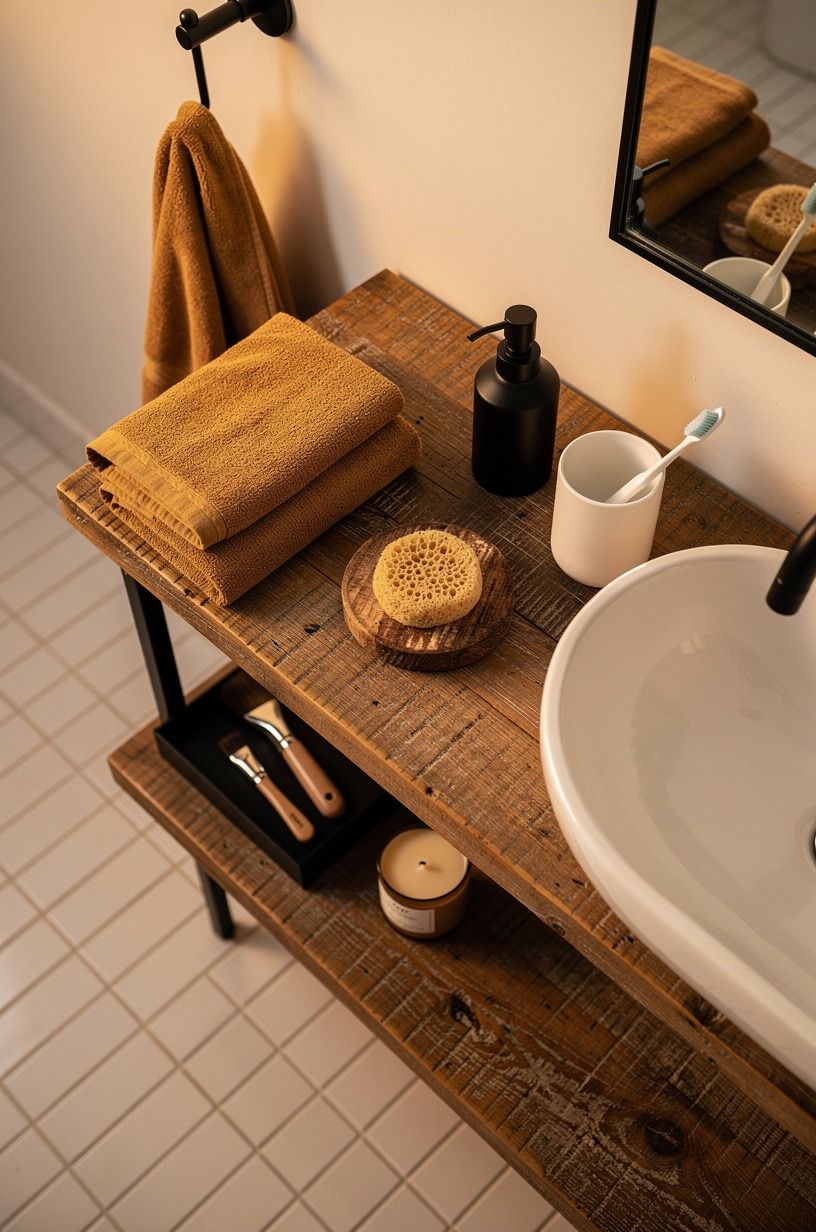
The Two-Tone Drift means allowing warm white and camel to move gently through the room instead of dividing it into strict zones. Start with warm white on the upper wall, camel plaster below, and reclaimed weathered teak at the vanity or shelf. Your eye will notice a slow shift rather than a hard stripe.
You can repeat that drift with a black accent in a tiny framed print or painted stool, but use it sparingly. I’d skip using dark color on every accessory because it would turn a quiet bathroom into a contrast exercise. One black note is enough.
If you’re styling a compact room, keep the strongest color near the floor or vanity. Your ceiling will feel higher, and the plaster will remain the visual anchor. Pin the room before you buy anything, then check whether each new item supports the calm you wanted.
Why I Keep Coming Back to Quiet Walls
I’ve painted enough bathrooms to know that white and beige are not automatically peaceful. Sometimes pale walls are merely empty walls with expensive language around them. The difference comes from temperature, touch, and the way the finish responds when the room moves from bright morning to artificial evening light.
That shift is why I keep returning to plaster.
Venetian plaster has a human quality because it refuses to look identical from every angle. One patch catches the window, another sinks into shadow, and a third looks warmer beside brass.
You’re not decorating around a blank surface anymore. You’re working with a surface that changes.
I like that imperfection because it gives even a small bathroom a little patience.
My own mistake was choosing a beige based on a tiny sample under a cool store light. It looked refined there, then turned yellow beside my existing floor.
I should’ve tested it beside the tile, vanity, and light source at home. If you’re making one decision carefully, make it the undertone.
A warm beige beside cold gray tile can feel accidental, while a creamy white beside honeyed wood can feel settled.
I also don’t think every bathroom needs a full plaster treatment. If the shower is awkward, the floor is damaged, or the lighting is poor, surface color won’t solve the real problem.
Spend first on the change you’ll feel every day. For some rooms, that’s a better light.
For others, it’s a quieter wall behind the mirror. The best result isn’t the most expensive finish.
It’s the one that makes your existing room make more sense.
What People Always Want to Know
What is the best White & Beige Venetian Plaster Bathroom Ideas for Quiet Calm for a small bathroom?
A warm white plaster wall and a floating IKEA HAVBÄCK vanity work well in a small bathroom because they keep the floor visible. Add one rounded mirror and pale linen, then avoid heavy contrast. Your room will feel more open without losing the gentle, earthy texture.
Where can I buy White & Beige Venetian Plaster Bathroom Ideas for Quiet Calm pieces on a budget?
Look at IKEA, Wayfair, and Target for neutral bathroom pieces, then check Facebook Marketplace or a local thrift store for mirrors and stools. This site uses display advertising and no affiliate links. You can save more by buying one strong secondhand piece instead of several small decorations.
How much does a White & Beige Venetian Plaster Bathroom Ideas for Quiet Calm makeover cost?
A small refresh usually runs about $100 to $300 if you keep the vanity and use paint, textiles, and a secondhand mirror. A broader budget bathroom update may fall within the typical $200 to $1,200 range, depending on fixtures and materials.
Can I create a White & Beige Venetian Plaster Bathroom Ideas for Quiet Calm on a budget?
Yes, and you can begin with three low-cost moves: repaint the walls, change the light temperature, and edit the counter. Add a linen hand towel, a thrifted mirror, and one wood accent. Your existing bathroom may need less replacement than you expect.
Is a White & Beige Venetian Plaster Bathroom Ideas for Quiet Calm worth it in a small space?
Yes, because a small room gives the plaster fewer competing surfaces. Use one continuous wall color, a compact floating vanity, and a mirror that reaches close to the sink width. The uninterrupted finish will make your room feel calmer and more generous.
Is a White & Beige Venetian Plaster Bathroom Ideas for Quiet Calm a good idea for a rental?
Yes. Keep the finish on dry walls and use removable wallpaper, a tension rod, and peel-and-stick accessories. Removable hooks can hold linen towels without permanent holes.
You’ll get the layered effect while keeping the shower, plumbing, and original vanity untouched.
Where I’d Start First
If I had to pick one, I’d start with the warm plaster wall behind the mirror. It changes the light before you buy anything else, and every fixture looks calmer against it. Pin the soft luminous plaster guide for later, then test your color at night.