
 by
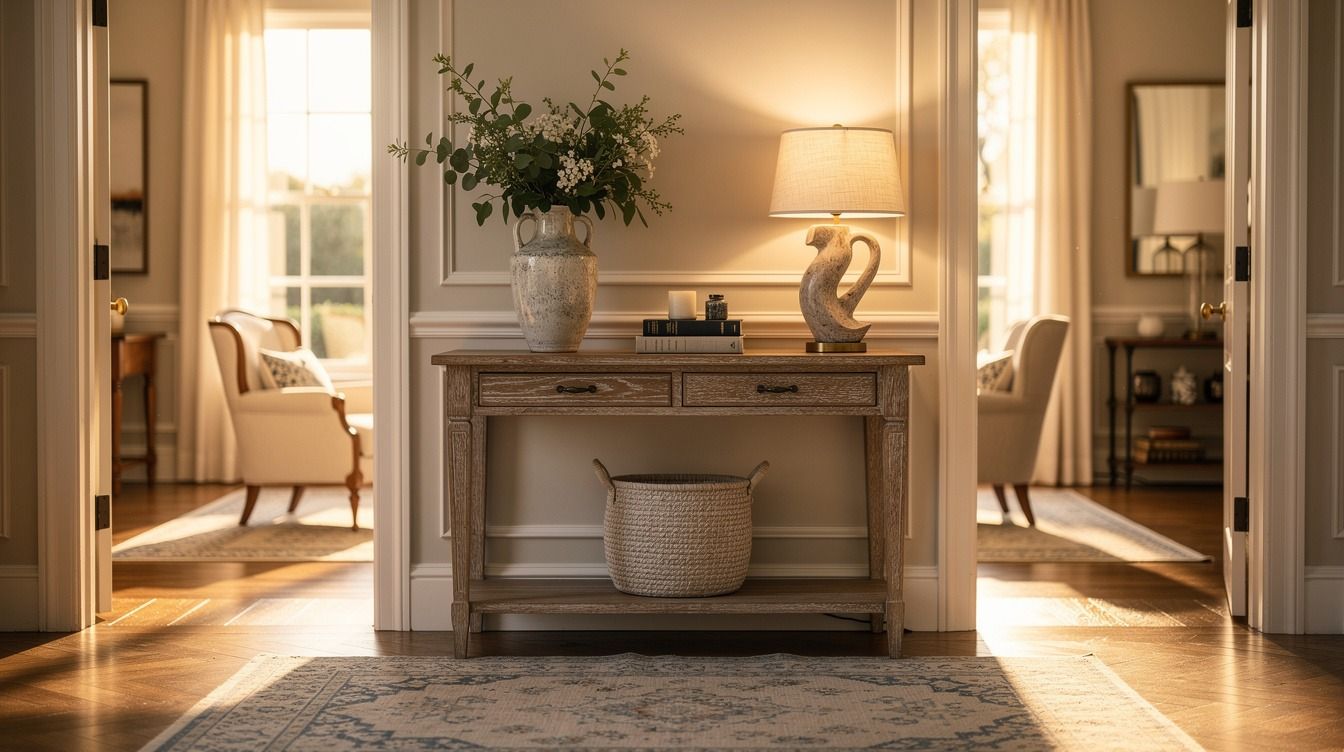
by Nancy Meyers entryway ideas work because they make your front door feel lived-in before anyone takes off a coat. I used to think a grand console was the answer, then watched mine collect mail and guilt. The better move is simpler: warm wood, useful storage, and light that flatters your real life.
- Anchor the front entrance inside with a weathered oak console
- Hang a hallway table with mirror at the right height
- Use The Two-Wood Rule for a colonial entryway
- Layer a wool runner, not a tiny doormat
- Build The Three-Height Light Stack
- Paint the door zone in Farrow & Ball Railings
- Could a bench solve your shoe pile?
- Frame the wall with collected, imperfect art
- Choose brass hooks over a freestanding coat rack
- Let a basket hold the things you can’t style
- Mix Naval walls with a soft cream ceiling
- Spend where hands and feet notice it first
- Pick patina over polished perfection
1Anchor the front entrance inside with a weathered oak console
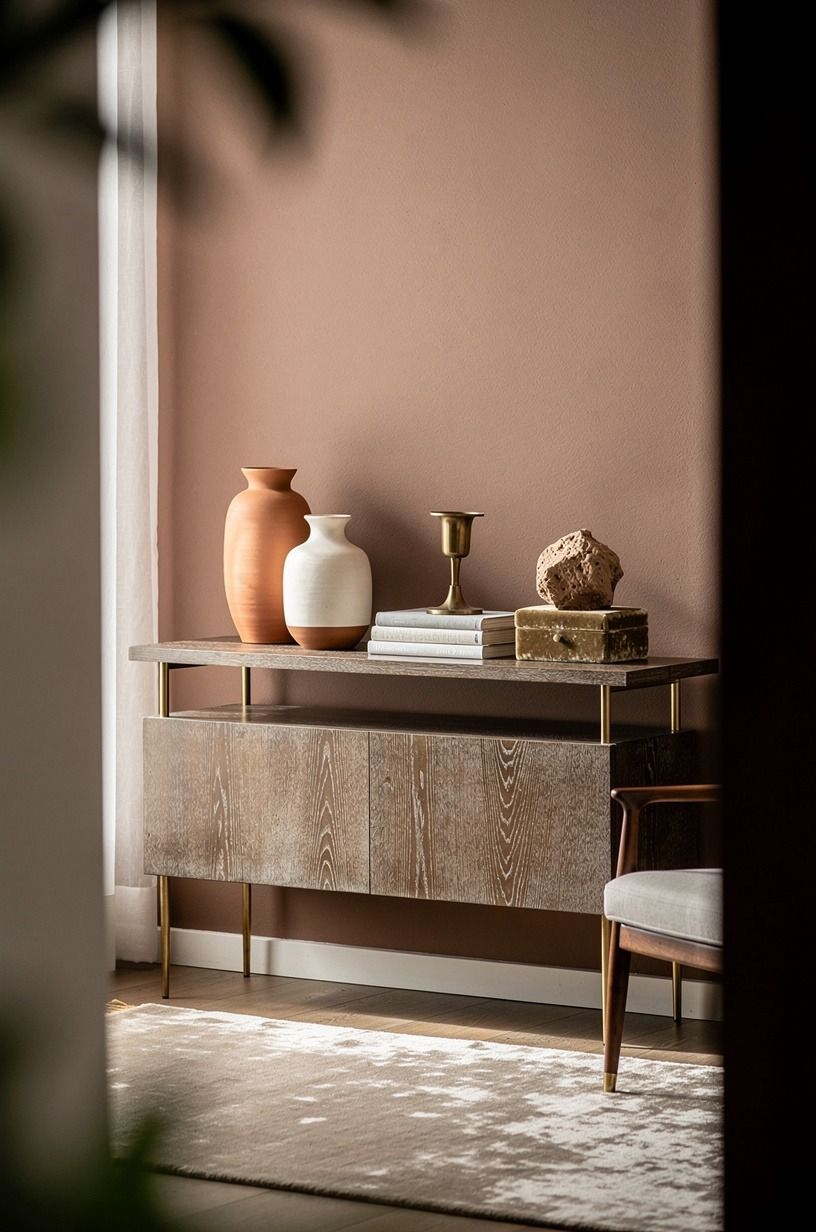
Start with a 3/4-inch solid white oak console at 30 to 34 inches high, so you’ve got a proper landing strip without blocking your walk in. You’ll want a drawer for keys and a shelf for the shoes you kick off every day.
I’d skip a skinny acrylic table. It disappears, sure, but it also makes your entryway feel like a waiting room. Article Lenia oak console has the low, grounded shape that gives a narrow hall some quiet weight.
A clay ceramic bowl. Your worn paperback. One aged brass tray for loose change.
A deep-pile mohair velvet cushion nearby makes the wood feel less severe.
And if your living room needs the same warm, gathered feeling, borrow a few cues from these Nancy Meyers living room ideas. You don’t need matching rooms, but you do want them to speak to each other.
2Hang a hallway table with mirror at the right height
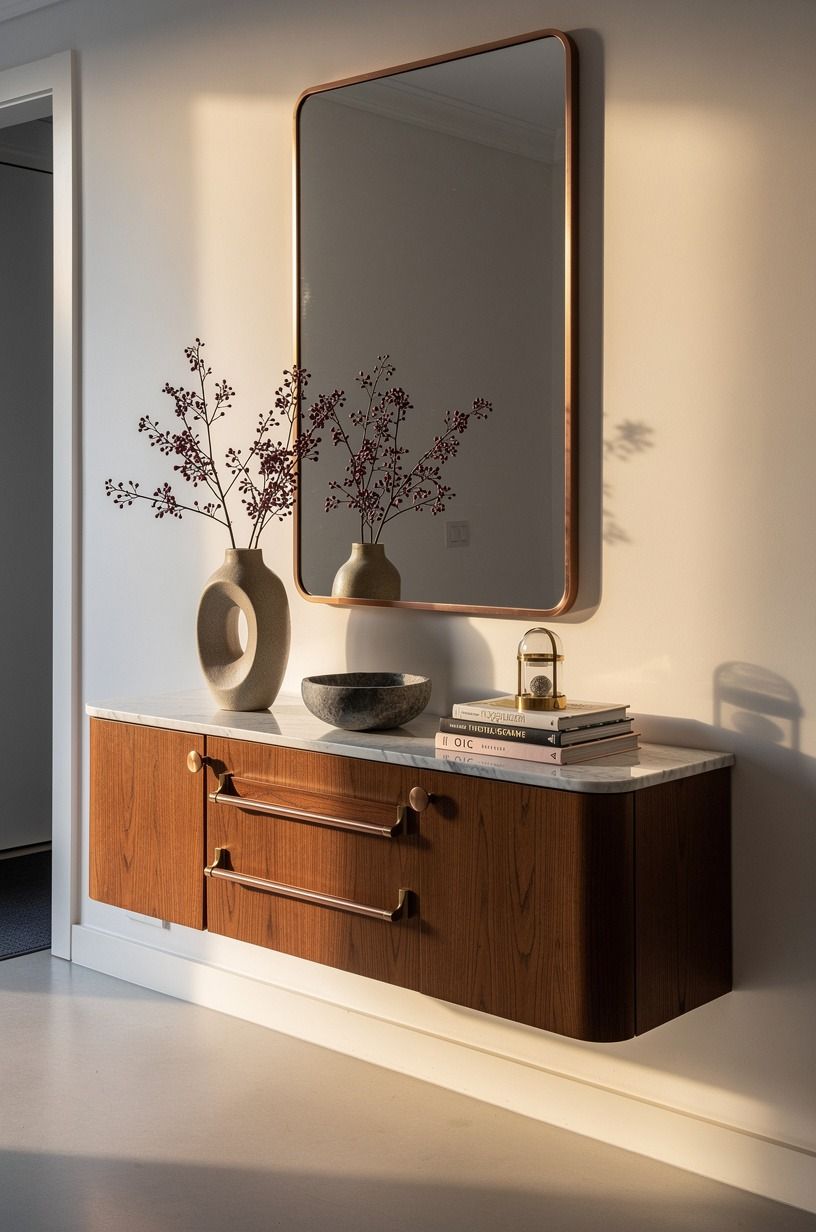
Center your mirror around 57 inches from the floor, then let the console sit beneath it with a little breathing room. You’ll see your face before you leave, and your guests won’t feel like they’ve walked into a dark tunnel.
Choose an antiqued glass mirror over a sharp-edged, frameless one, then pair it with a Carrara marble-topped table. The subtle grey veining and softened reflection are more forgiving in morning light, especially when your hair has other plans.
I made the mistake of hanging one too high once. It looked fine from the ladder and absurd from the floor.
Try a Target Studio McGee brass arch mirror if you need an easy starting point. It’s refined without looking precious, which matters when you’re dropping bags below it every afternoon.
3Use The Two-Wood Rule for a colonial entryway
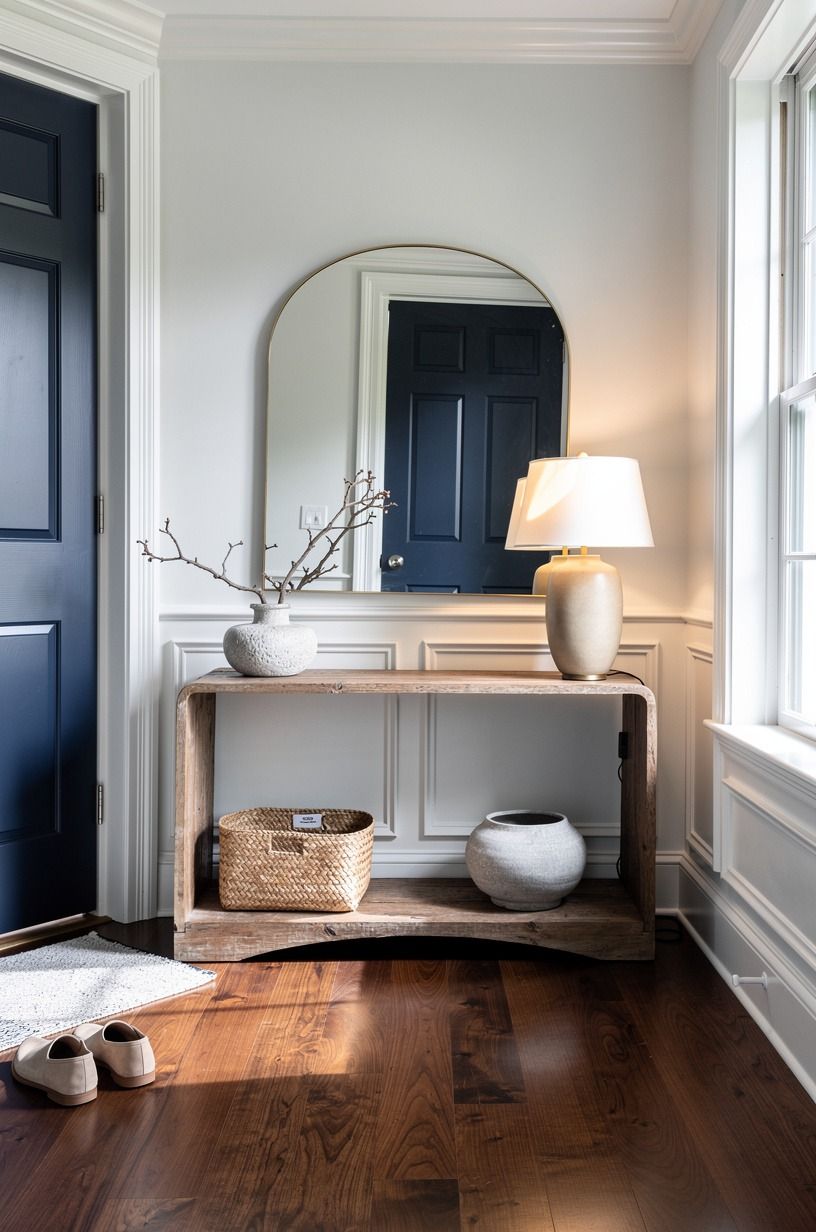
Pair two wood tones, not five. Your entryway can handle reclaimed weathered teak beside a deeper walnut-stained bench, because the contrast looks collected rather than accidental.
You should repeat each wood once somewhere else: a teak frame, a walnut coat hook, maybe the dark legs of a lamp. But don’t add espresso, gray wash, and orange pine just because they’re already in the house. That’s where the room gets fussy.
A woven Belgian flax linen shade helps bridge the tones. Soft light, visible grain, and a little unevenness. Very forgiving!
For more rooms that use patina well, I keep coming back to these French farmhouse-inspired interiors. You’ll notice the woods never match exactly, and that’s the point.
4Layer a wool runner, not a tiny doormat
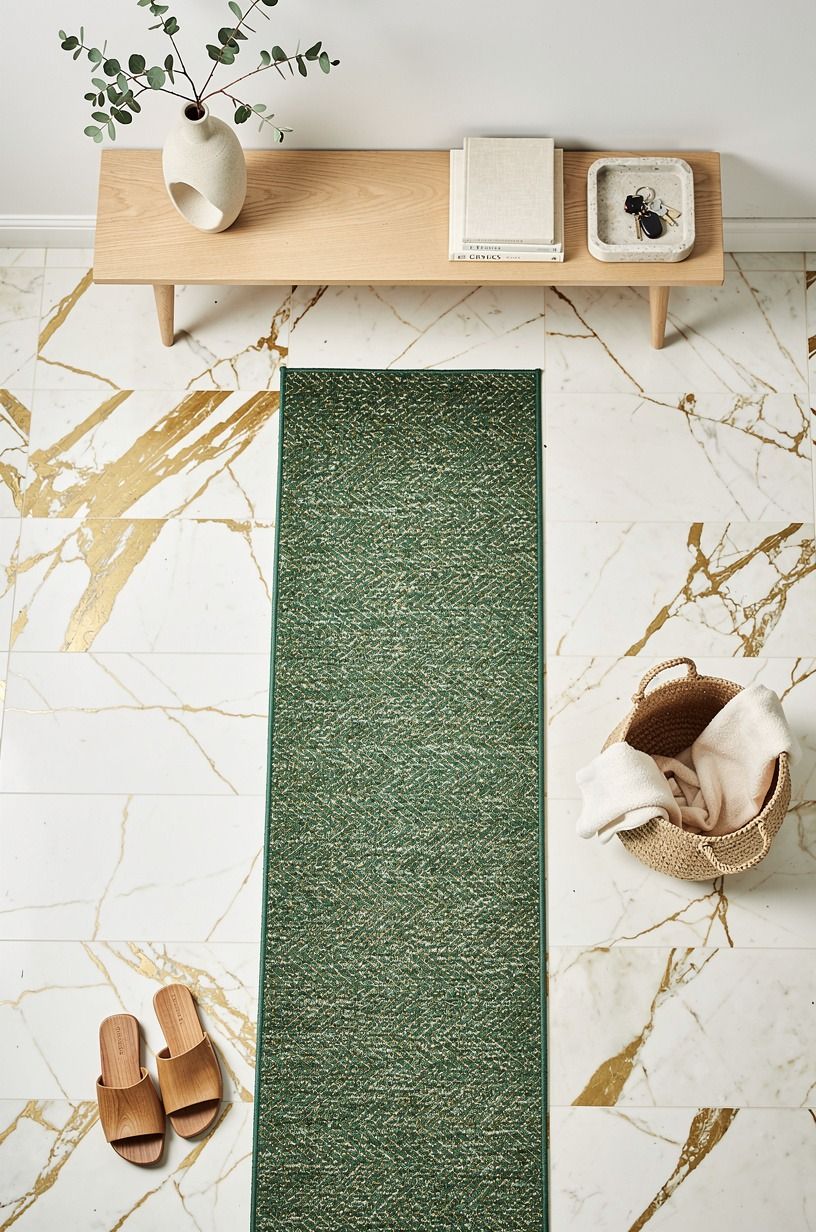
Your front entry rug ideas should start with scale.
5Build The Three-Height Light Stack
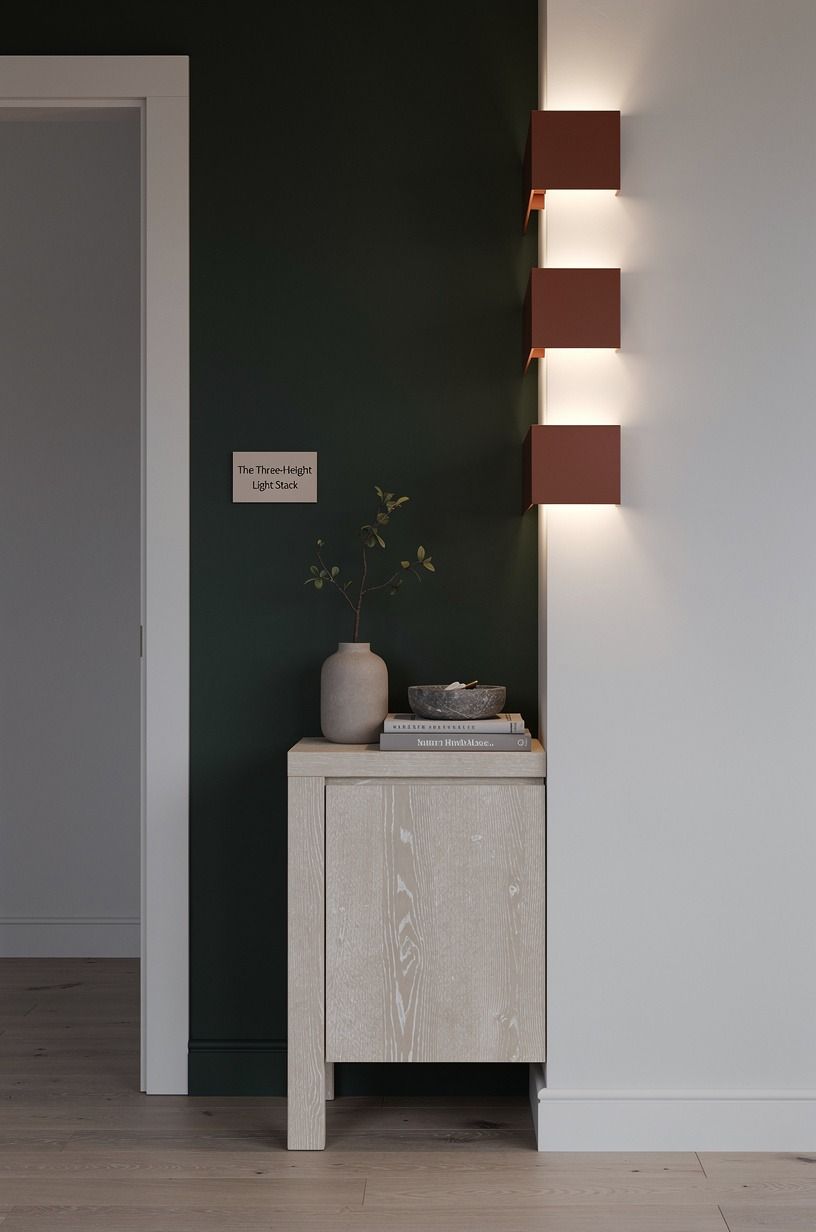
Give your eye three places to land: an overhead fixture, a table lamp, and a lower glow from a sconce or candle. You don’t have to turn on all three every night, but your entryway won’t feel flat when you do.
A small linen-shaded lamp on a cerused white oak console is the non-negotiable piece. It throws a pool of amber light onto the keys, the wall, and the edge of your runner. Suddenly, coming home feels gentler.
But skip exposed Edison bulbs if you want Nancy Meyers warmth. They can read more restaurant patio than front hall.
Try Visual Comfort Bryant sconces when wiring is possible, or use rechargeable picture lights above art when it isn’t. Your front entrance inside deserves light after sunset, not one harsh ceiling glare.
6Paint the door zone in Farrow & Ball Railings
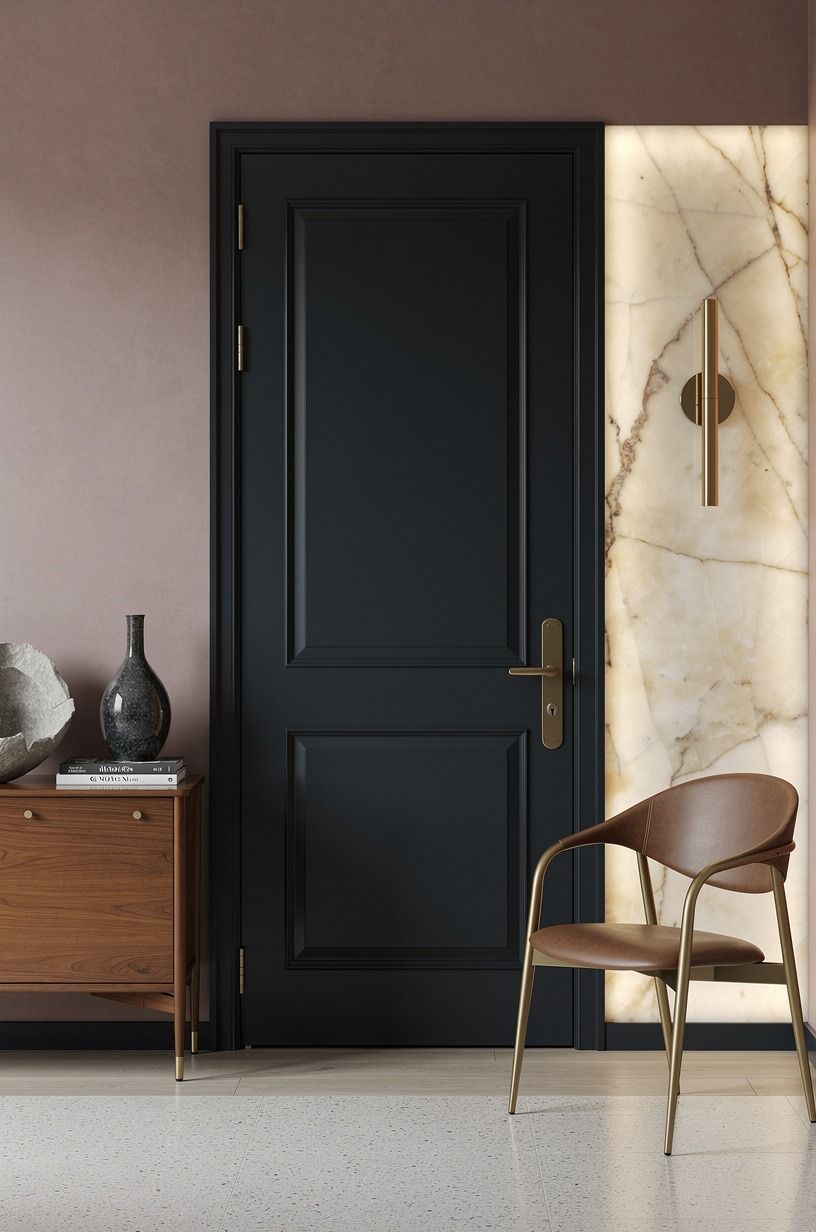
Paint the inside of your front door in a dusty rose such as Farrow & Ball Setting Plaster No. 231 when you want warmth without making the whole hall gloomy. It sits beautifully beside charcoal details, brass, and the soft glow of translucent onyx, while pale walls still bounce daylight around.
You can keep trim in Benjamin Moore White Dove OC-17 for a softer edge. That pairing feels elegant because neither color is screaming for attention.
I’d avoid pure black in a north-facing entry. It turns chalky by late afternoon and can make your brass look yellow.
A painted door costs far less than replacing one, and you’ll notice it every single time you come home! Use a satin finish, not high gloss, unless you enjoy seeing every fingerprint.
7Could a bench solve your shoe pile?
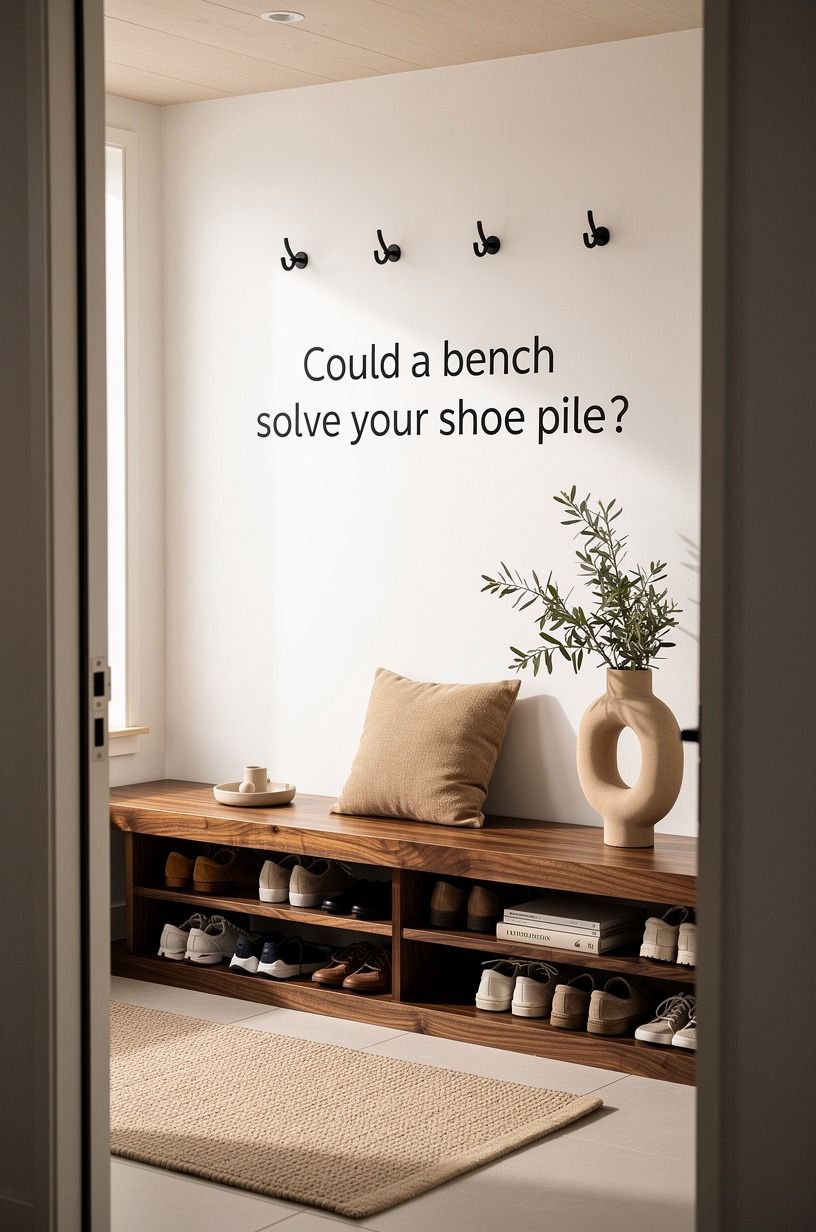
Yes, if you choose one that earns its footprint. A storage bench gives you somewhere to sit while pulling on boots, while your everyday shoes disappear under the lid instead of spreading into the hallway.
Go for a book-matched walnut bench if your space is tight. You’ll want at least enough depth to sit comfortably, but not so much that your door catches it.
A folded 600gsm Turkish cotton throw over one end. A cane basket underneath. One cushion in mossy green.
I tried an open bench first, thinking it would look airier. It did, until three pairs of sneakers and a soccer bag moved in. Closed storage wins here because your entry is the last place you need visual clutter.
8Frame the wall with collected, imperfect art
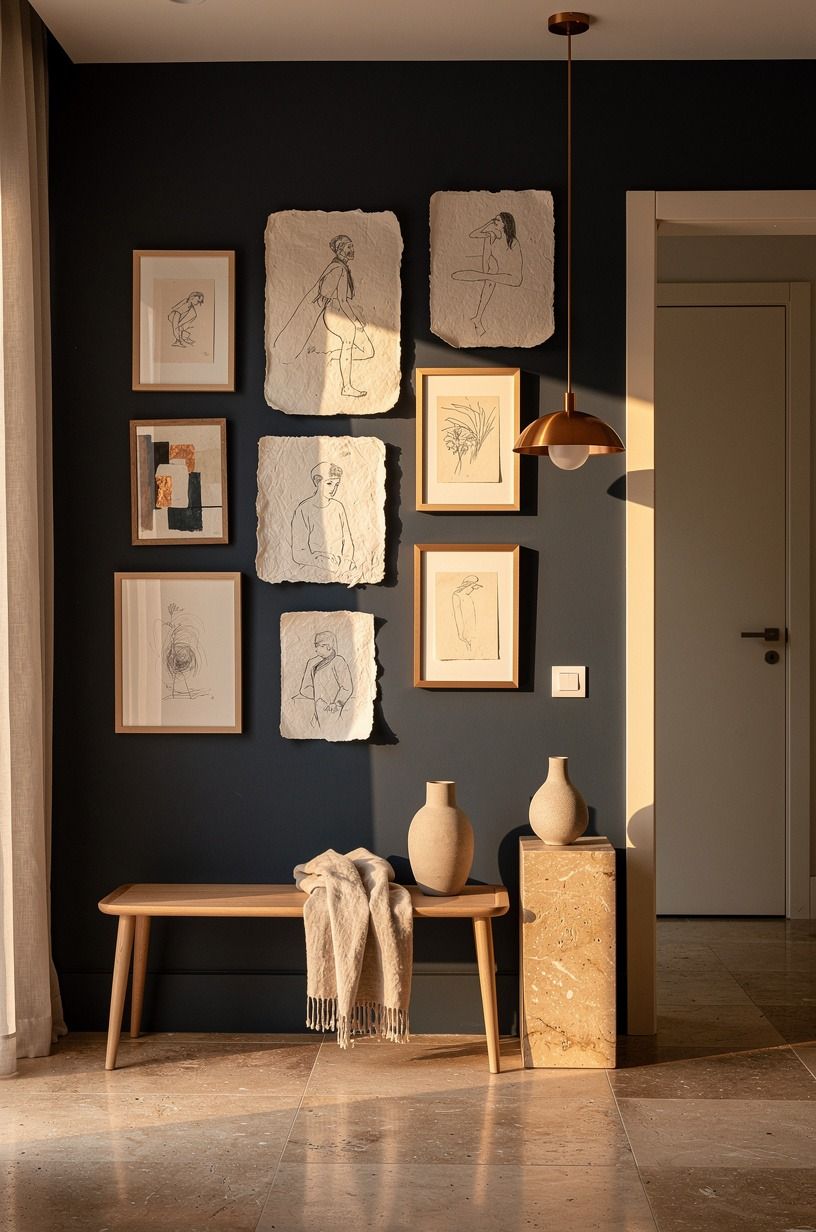
Build a small gallery wall from art you’d keep even if nobody saw it.
9Choose brass hooks over a freestanding coat rack
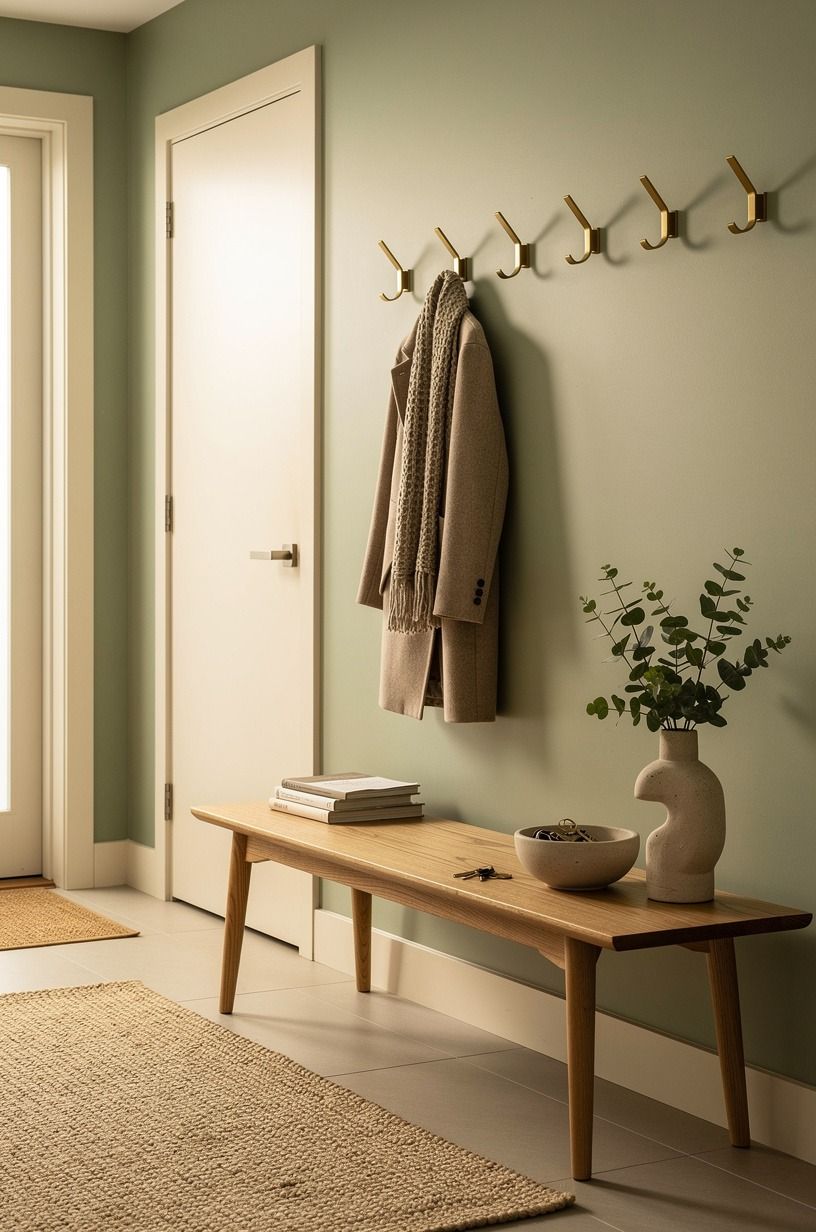
Mount hooks 60 to 66 inches from the floor, with enough spacing that your bags and coats don’t become one damp lump. Unlacquered brass hooks are worth choosing because they deepen and dull with use rather than looking worn out.
You’ll need fewer than you think. Four good hooks beat eight tiny ones that bend under a winter coat.
I’d skip the freestanding rack unless your entry is genuinely wide. It eats floor space, catches scarves, and somehow always leans a little sad.
Rejuvenation solid brass hooks typically run $10 to $40 each, so this is one of the rare entry upgrades that feels substantial without demanding a renovation budget. Your daily clutter gets a home. A useful kind of luxury.
10Let a basket hold the things you can’t style
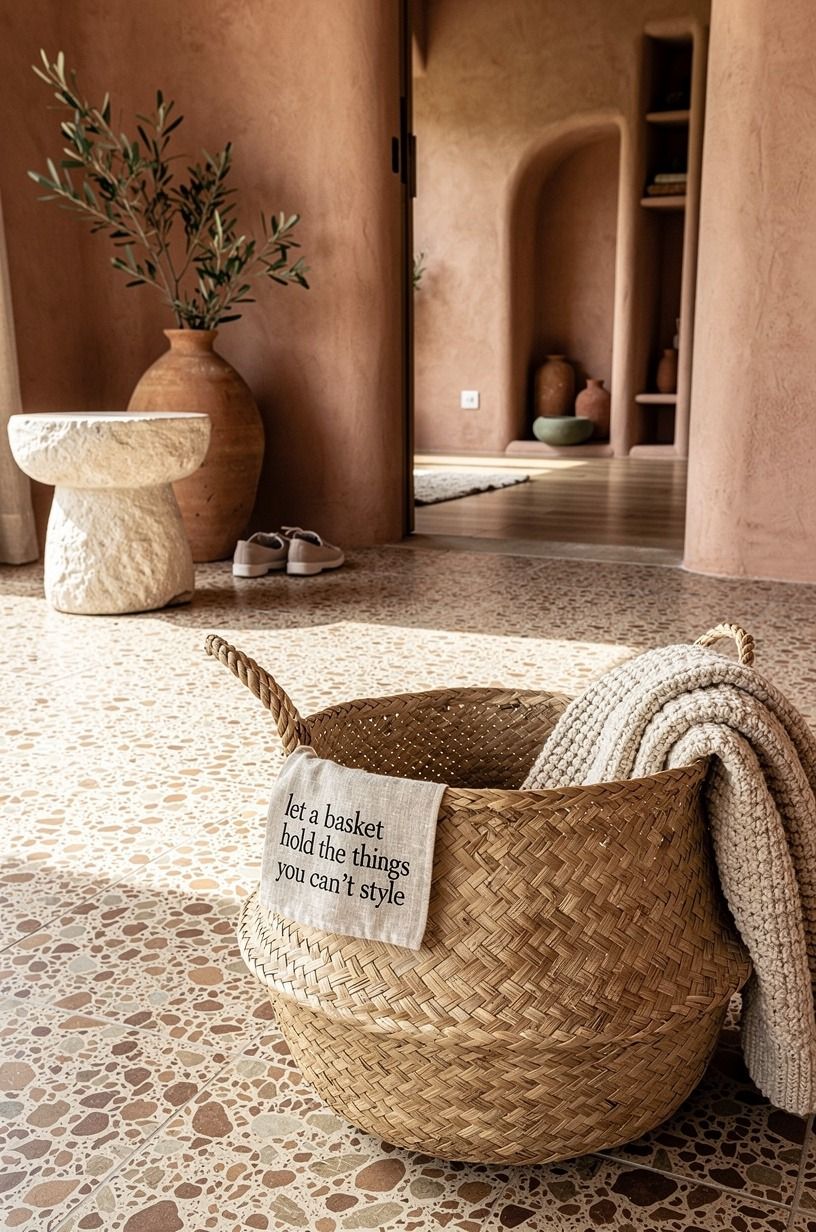
The basket is where you put the dog leash, the extra tote, the library books, and the umbrella that’s still dripping.
11Mix Naval walls with a soft cream ceiling
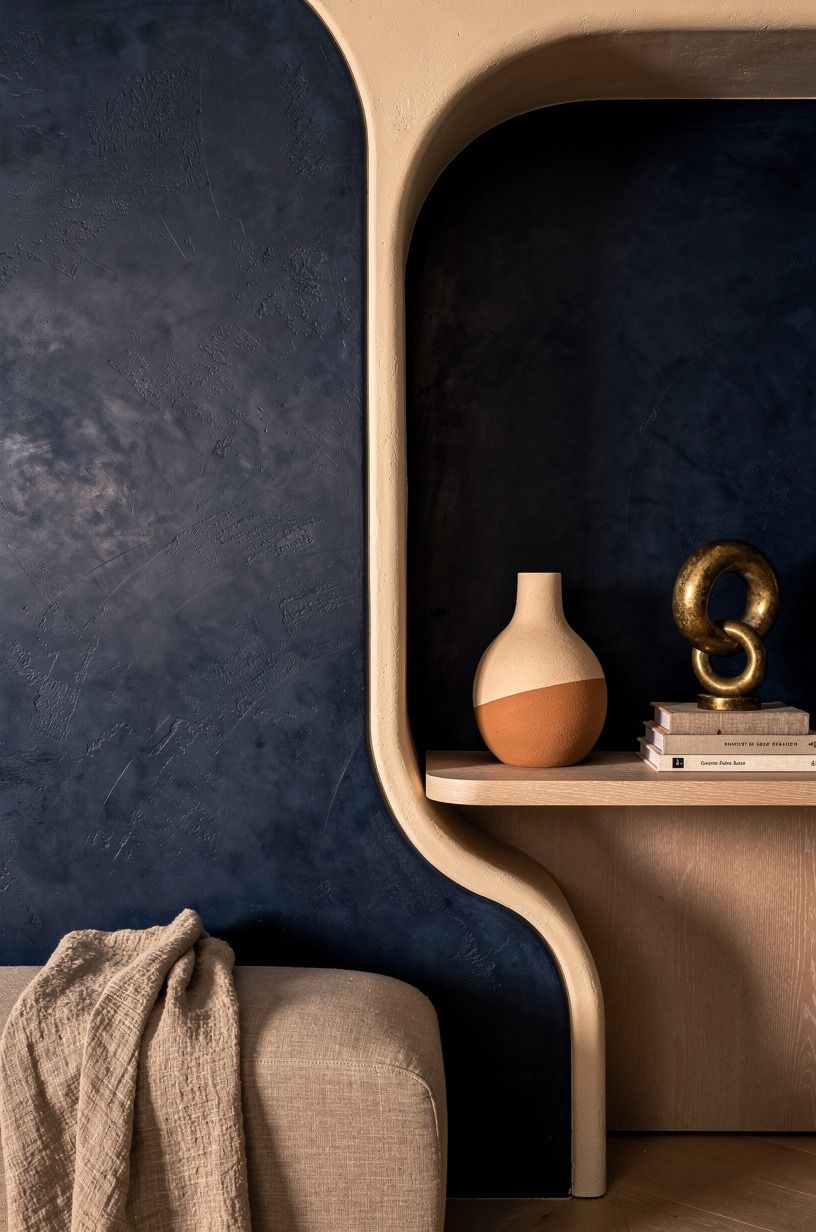
For a bolder front entrance inside, try a clay-toned paint such as Farrow & Ball Red Earth No. 64 on the lower wall or paneling and keep the ceiling a warm cream. You’ll get warmth at shoulder height while the ceiling still feels bright and open.
This is especially good if your foyer has old trim you can’t replace. Paint makes the profile look intentional, and you don’t need to apologize for a modest entryway anymore.
A mohair velvet lumbar pillow on the bench can echo the warmth without turning the space into a color scheme.
I went back and forth on darker paint in my own hall because the room was narrow. Turns out, the richer lower half made the pale upper wall look lighter. Strange, but true.
And very inviting!
12Spend where hands and feet notice it first
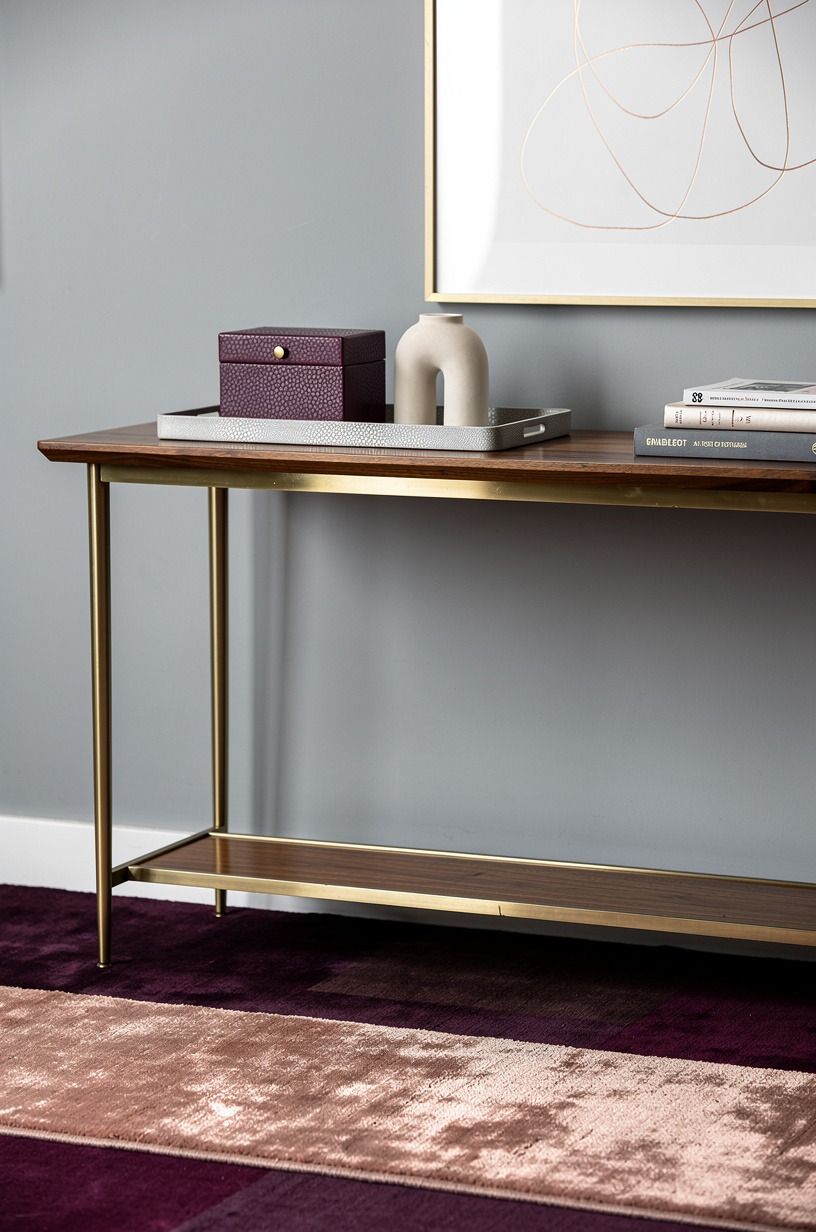
Here’s the honest cost picture for a Nancy Meyers-style entryway. You can do a useful refresh with paint, hooks, and a runner, or put more money into storage that keeps your household from spilling into the hall.
If you’re choosing one investment, make it a solid oak console or a bench with real storage. An oak console typically costs $200 to $800, while a wool runner usually lands around $120 to $500.
You should save on accessories first. A cheap vase can look fine; a wobbly bench never does.
A small shagreen accent is worth considering where hands notice it most, like a tray or catchall. For ideas on making practical rooms feel warm, these Nancy Meyers home office ideas get the balance right.
13Pick patina over polished perfection
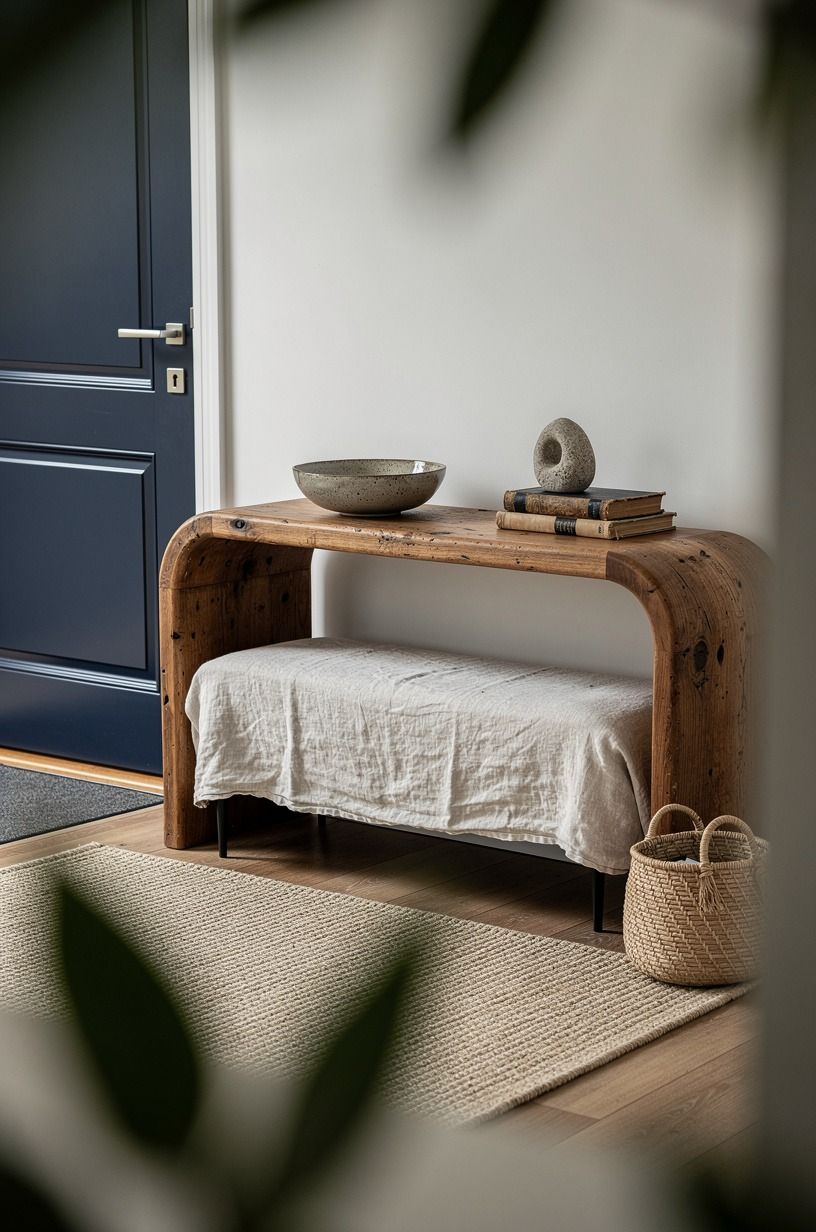
Let your entryway show a little life. Aged bronze picture lights, a scuffed oak tray, and a brass hook developing soft patina will feel more welcoming than everything new and mirror-bright.
You don’t need faux distressing. Real wear arrives soon enough, especially near a front door.
A damp umbrella, a child’s backpack, that one grocery bag with a leaking lime. All of it leaves evidence.
I’d choose a vintage-looking washed Belgian linen catchall over a glossy acrylic tray, even though linen can feel unexpectedly soft in an entry. Its texture gives keys and mail a place to land without looking office-like.
Why fight the lived-in part? Your entrance should suggest that people are expected, not that nobody is allowed to touch anything.
Why the Nancy Meyers Entryway Still Works
I think this look is having a real moment because people are tired of entryways that behave like tiny hotel lobbies. For years, the default answer was pale walls, a black metal console, one graphic print, and a plant trying very hard to make it feel friendly. It was clean.
It was also a little chilly. You could walk through it without learning one thing about the people who lived there.
The Nancy Meyers version asks more of an entryway. Not more money, necessarily.
More evidence. You see the basket that holds the dog leash, the slightly faded runner, the lamp left on for someone coming home late.
That’s why it feels comforting. It isn’t trying to impress you from six feet away; it’s trying to make the first thirty seconds of your day easier.
I’ve learned that the best entryways don’t rely on one expensive centerpiece. They rely on a chain of small decisions that support each other.
The mirror lets you check your face. The bench gives you somewhere to sit.
The hooks catch the coat before it lands on a chair. The lamp makes the whole arrangement feel soft at night.
You notice the room because it works, not because it announces itself.
And there’s a limit. I wouldn’t stuff an entry with antique furniture just to prove it has character.
A crowded hall is still a crowded hall, even with lovely objects in it. Keep the path clear, choose materials that age well, and let one or two personal things do the talking.
That’s the part I’d copy.
The Questions Worth Answering First
What is the best Nancy Meyers entryway idea for a small entryway?
A wall-mounted mirror and narrow IKEA HEMNES shoe cabinet are the best small-space pairing because you gain storage without giving up your path. You’ll get a warmer first impression with a runner and lamp than with a bulky console.
- Slim shoe storage - Soft lamp glow - One framed print
Where can I buy Nancy Meyers entryway pieces on a budget?
Start with IKEA, Target, and Wayfair, then check Facebook Marketplace for solid wood consoles and old frames. You can buy the practical pieces new and let secondhand finds add character to your entryway.
- IKEA storage - Target lamps - Marketplace oak furniture
For more useful, warm-room inspiration, browse these Nancy Meyers kitchen ideas. You’ll find the same mix of function and softness.
How much does a Nancy Meyers entryway makeover cost?
A basic makeover usually costs about $150 to $600 if you paint, add hooks, buy a mirror, and use a basket you already own. Your biggest savings come from keeping the existing layout and changing the visible layers.
- Paint and supplies - Brass hooks - Wool-blend runner
Can I create a Nancy Meyers entryway on a budget?
Yes, and you should begin with what your entry already has: edit the clutter, move in a lamp, and paint the inside of the door. Warm lighting does more for your first impression than expensive decor.
- Rearranged furniture - Secondhand frames - Fresh door paint
Is a Nancy Meyers entryway worth it in a small space?
Yes, because a small entry lets you make a strong impression with fewer pieces. You’ll need one hardworking surface, a mirror, and storage that closes. Closed storage keeps your limited square footage from feeling busy.
- Narrow console - Lidded bench - Wall-mounted hooks
Is this look a good idea for a rental?
Yes, if you use removable layers and keep your upgrades portable. You can add peel-and-stick wallpaper, a tension rod for a small curtain, and rechargeable lighting without changing the structure of your rental.
- Removable hooks - Freestanding mirror - Peel-and-stick color
Where I’d Start First
If I had to pick one, I’d start with the lamp. You can’t make a hard overhead light feel welcoming by adding more objects beneath it. Pin the lamp idea for later and pair it with these Nancy Meyers bathroom ideas when you want the whole house to feel softer.