
 by
by |
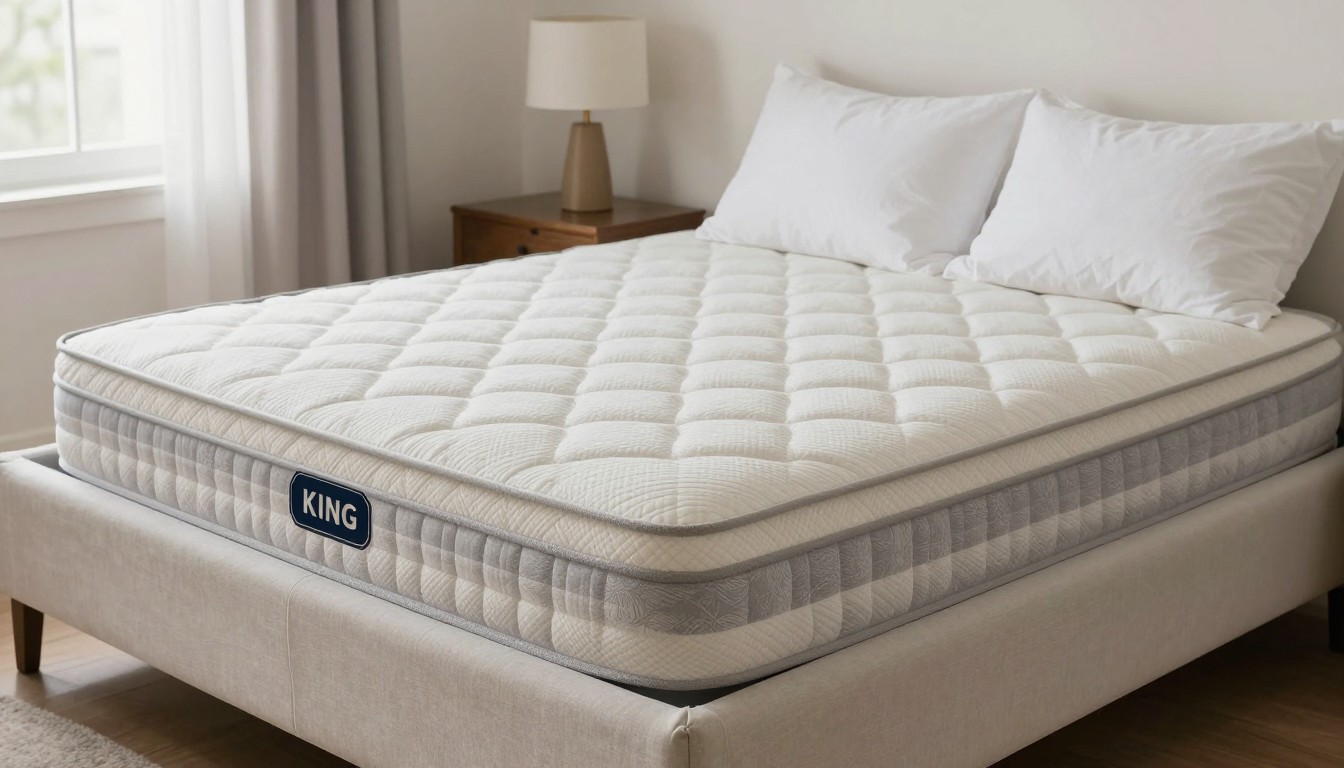
Quick answer: Treat “Original RV Mattress king” as a fit question before you treat it as a product choice. Measure the bare platform, usable clearance, and delivery route. Then compare the listing’s exact dimensions, construction, foundation requirements, and return terms with your notes.
|
If you searched for an Original RV Mattress king, the label alone won’t tell you whether a mattress belongs in your coach. RV manufacturers, mattress sellers, and owners may use similar size names for beds that do not share the same footprint.
My verdict is straightforward: the right RV king is the mattress that fits the actual sleeping platform without blocking storage, windows, cabinetry, or movement around the bed. Comfort matters, but a comfort comparison is wasted effort until the physical fit is settled.
I would also separate product facts from category assumptions. Foam, hybrid, and latex are broad construction families. None tells you the exact feel, weight, durability, or edge behavior of a particular mattress without a useful layer description from the manufacturer.
Measure the Bare RV Platform, Not the Old Mattress
The platform is the fixed reference point. An old mattress can bow, compress, curl at the corners, or extend beyond its intended support area, so copying its measurements can carry an existing fit problem into the replacement.
Remove the bedding and, if practical, move the old mattress enough to expose the full support surface. Measure the usable width and length at several points. Record the narrowest usable area when walls or built-in furniture make the space uneven.
Look closely at the corners. RV bedroom walls can curve, cabinets can project into the bed area, and trim can reduce the space available to the mattress. If the platform is not a clean rectangle, sketch its shape and mark every obstruction that could touch the mattress.
- Platform footprint: Record the usable surface rather than the outside dimensions of the bed frame.
- Corner shape: Note curves, cutouts, hinges, trim, and wall projections.
- Vertical clearance: Check windows, shelves, cabinets, and the space needed to sit up comfortably.
- Moving parts: Confirm that slides, storage lids, and lifting mechanisms can operate with the mattress in place.
Measure the support surface in its normal sleeping position. If the bed sits in a slide, also check the clearances while the slide moves. A mattress that fits after deployment may still interfere with another part of the RV when the room is retracted.
Keep the measurements in writing while shopping. Comparing a listing directly with a worksheet is more dependable than relying on memory or assuming that every seller defines RV king the same way.
Why the RV King Label Is Not Enough
Two mattresses can carry an RV king description without being interchangeable. Sellers may also use terms such as short king, narrow king, camper king, or custom RV king. Those names are filters, not proof of fit.
Compare the manufacturer’s stated width and length with the bare platform measurements. Do not substitute a standard household king or California king because the names sound close. The mattress must match the RV’s actual support area and surrounding clearance.
The same caution applies to bedding. A fitted sheet made for one king format may pull loose, bunch at the corners, or fail to cover another. Confirm the mattress footprint and profile before replacing sheets, protectors, or encasements.
| Label or detail | How I use it | What settles the decision |
|---|---|---|
| RV king | A starting category for searching | The listed dimensions compared with the platform |
| Short or narrow | A clue that the footprint differs from a residential bed | The seller’s written specifications |
| Custom RV size | A reason to examine ordering and return restrictions carefully | The exact configuration and current policy |
Residential comparisons answer a different question. My queen-versus-king mattress comparison explains household formats, while the split king mattress guide and split king mattress set overview cover divided residential setups. Use those guides for format context, but do not transfer their assumptions to an RV platform without measuring.
Construction Matters More Than the Comfort Name
The support core tells me more than words such as plush, luxury, or premium. Start by identifying whether the mattress is built from foam alone, uses springs beneath its comfort layers, or relies on latex. Then look for the order and purpose of the layers.
An all-foam mattress uses foam for both cushioning and underlying support. Memory foam may create a closer-contouring surface, while polyurethane foam covers a broad range of formulations and feels. The category name does not reveal foam quality, so disclosure of layer materials and density is useful when the manufacturer provides it.
A hybrid places comfort materials over a spring system. Springs can change responsiveness and edge behavior, but the word hybrid does not establish how supportive or durable the finished mattress is. Coil design, surrounding foam, cover construction, and platform compatibility all affect the result.
| Construction | Useful RV consideration | Detail to verify |
|---|---|---|
| Foam | Contour, flexibility, edge feel, and ease of handling can vary by build. | Foam types, layer order, cover, and support requirements |
| Hybrid | The spring unit may alter bounce, motion, and perimeter response. | Spring description, comfort layers, border design, and total weight |
| Latex | Latex generally feels more responsive than slow-contouring memory foam and can make handling more demanding. | Latex type, layer arrangement, mattress weight, and foundation rules |
Latex is a separate material family, not another name for memory foam. It tends to respond more quickly when pressure changes. Its suitability in an RV still comes down to the complete build, the support beneath it, and whether the mattress can be moved safely through the coach.
I am cautious when a listing emphasizes cooling gel, orthopedic comfort, or luxury support without explaining the underlying construction. Marketing language cannot replace a layer breakdown. If the support core and comfort materials remain unclear, there is not enough information for a materials-based judgment.
- Look for the stated cover material and whether it can be removed.
- Identify every disclosed comfort and support layer.
- Check whether the manufacturer states a compatible foundation.
- Verify certification claims, including any CertiPUR-US language, in the official documentation for the exact model.
Profile and Clearance Can Make a Good Mattress Unusable
A replacement can match the platform’s width and length yet still be too tall for the room. Mattress profile affects access to windows, overhead cabinets, bedside controls, and the space available between the bed and ceiling.
Measure upward from the platform rather than from the top of the worn mattress. Add the expected bedding bulk and think about how you enter and leave the bed. A higher sleeping surface can also change the usefulness of a step, ledge, or neighboring piece of furniture.
Under-bed storage deserves its own check. If the platform lifts, a heavier or less flexible mattress may change how easily the mechanism operates. Follow the RV maker’s and mattress manufacturer’s instructions instead of assuming the existing hardware is suitable for every replacement.
- Open every cabinet and storage lid near the bed.
- Check the mattress area with the slide in each operating position.
- Test the full arc of any hinged or lifting platform.
- Allow space for bedding, mattress protection, and normal movement.
The delivery route is a separate measurement problem. Trace the path from the RV entrance to the platform, including turns around furniture, hallway restrictions, door frames, and bedroom corners. The shipping description should tell you whether the mattress arrives compressed or at its usable size.
Do not assume that compressed shipping settles the question. A boxed mattress still has to clear every turn, and the opened mattress may be difficult to reposition in a tight bedroom. Plan where it can be unpacked without trapping it against cabinetry or blocking the exit.
Match the Mattress to the Existing Foundation
A rigid deck, slatted base, adjustable platform, and hinged storage panel do not support a mattress in the same way. The foundation beneath the bed can affect feel, ventilation, and how evenly the support core is loaded.
Inspect the platform for sagging, broken hardware, sharp edges, moisture damage, or uneven joints before covering it. Replacing the mattress without addressing a damaged base can leave the new surface feeling uneven and may conflict with the manufacturer’s support requirements.
If the RV uses slats, compare the slat arrangement with the mattress maker’s foundation instructions. If it uses a solid deck, check whether the manufacturer gives ventilation guidance. I would not improvise structural changes without confirming that they are appropriate for the coach and mattress.
| Foundation check | Reason |
|---|---|
| Flatness and structural condition | An uneven base can distort the mattress and its feel. |
| Manufacturer compatibility | Support requirements can differ by construction. |
| Lift or hinge operation | The platform must remain practical after the replacement is installed. |
| Ventilation guidance | The official instructions should determine how the mattress is supported and aired. |
Choose Comfort Without Guessing From “Plush” or “Firm”
A firmness word is not standardized across every manufacturer. One seller’s medium-feeling mattress can differ substantially from another seller’s version because the foam formulation, layer thickness, cover tension, and support core are different.
Side sleepers often favor enough surface cushioning for the shoulder and hip, while back sleepers may prefer a flatter, steadier response. Stomach sleepers commonly pay closer attention to how much the middle of the body settles. These are starting considerations, not promises about personal comfort.
Body shape, pillow choice, bedding, and the RV platform can all change the perceived feel. A mattress placed on a rigid deck may not feel the same as a similar mattress on a more flexible foundation, which is another reason to examine compatibility before relying on a firmness label.
| Comfort question | Construction detail behind it |
|---|---|
| Will it contour closely? | Comfort material, formulation, and layer arrangement |
| Will it feel lively or slow-moving? | Foam response, latex content, or spring support |
| Can both sleepers use the full surface? | Perimeter construction and usable platform area |
| How much movement may cross the bed? | Spring design, foam layers, and foundation stability |
Couples should discuss where each person sleeps and which tradeoffs matter most. If one sleeper stays near the edge or regularly sits there while dressing, perimeter feel deserves more attention than it would for a solo sleeper who stays near the center.
Motion behavior also comes from the complete build. Foam can absorb movement differently from a spring system, but neither category guarantees a quiet or motion-free bed. Verified owner reviews may reveal recurring comments, though individual reports should be treated as personal experiences.
Return terms are part of the comfort decision. If the size has special restrictions, a vague firmness label becomes a larger risk. Read the exact policy for the selected configuration rather than assuming that general mattress terms apply.
Cooling Claims Need a Construction Explanation
An RV bedroom’s temperature depends on the coach climate, ventilation, bedding, cover, and mattress materials. A cooling word in a product name cannot establish how the complete setup will feel.
Breathable covers, open-cell foam descriptions, springs, and other airflow-oriented features can be relevant when they are actually disclosed. I still want to know where each material sits in the construction and what lies beneath it. A cooling additive in the comfort layer says little about the support core.
Mattress protection can alter the result too. A thick or poorly breathable protector may change the surface feel and airflow of the bed beneath it. Compare protection and bedding choices after selecting the mattress rather than evaluating the mattress in isolation.
The Nut’s read: Treat cooling language as a feature description, not a comfort outcome. The complete material stack, room conditions, and bedding determine more than a single marketing term.
Durability Begins With Material Disclosure
A clear layer description gives you something concrete to assess over time. If a seller does not identify the support core or comfort materials, I cannot tell whether the price reflects a substantial build or mostly polished marketing.
Foam density, coil construction, latex type, cover quality, and the relationship between the layers can all matter to long-term performance. If those specifications are absent, do not fill the gaps with assumptions based on the product name.
Pay attention to the areas likely to receive concentrated use. Couples using nearly the full width may care more about the perimeter. An owner who frequently sits on one side while dressing may place different demands on that edge than someone who uses the bed only for sleeping.
- Good disclosure: The listing identifies the cover, comfort materials, support core, and intended foundation.
- Incomplete disclosure: The page relies on feel words but does not explain the build.
- Useful feedback: Verified owners repeatedly describe fit, installation, or a specific construction-related behavior.
- Weak evidence: A single enthusiastic comment is treated as proof for every RV and sleeper.
Care instructions also matter. Follow the manufacturer’s guidance on rotation, cleaning, support, and storage. RV conditions can differ from a stationary bedroom, so the exact maintenance instructions are more useful than a generic mattress-care habit.
Shipping, Returns, and Warranty Terms Affect Real Value
An RV-size mattress can be harder to move, repack, or hand back than an ordinary parcel. Before paying, identify the delivery method and where responsibility transfers to you. Do not assume the carrier will place the mattress inside the bedroom.
Read the return policy for the exact size and configuration. RV-specific or custom options may be governed by terms that differ from standard sizes. Check eligibility, condition requirements, collection arrangements, and possible charges directly on the seller’s current policy pages.
Warranty language needs the same attention. A long-sounding warranty is not automatically broad coverage. Look at what the policy defines as a defect, what it excludes, which foundation it requires, and what the owner must do to make a claim.
| Policy item | Question to answer before checkout |
|---|---|
| Delivery | How does the mattress arrive, and where will the carrier leave it? |
| Returns | Does the exact RV configuration qualify, and who handles removal? |
| Warranty | What is covered, excluded, and required of the foundation? |
| Packaging | Are there instructions about opening, inspection, or retained materials? |
Value is the combination of fit, disclosed construction, useful comfort information, and workable policies. A lower checkout total does not help if the mattress blocks a cabinet or cannot be returned after a sizing mistake.
Use a Fit-First Decision Sequence
The cleanest buying process moves from fixed constraints to personal preferences. This keeps an attractive comfort claim from distracting you from a platform or access mismatch.
- Document the platform. Measure its usable footprint, shape, condition, and moving parts.
- Map the route. Check the entrance, hallway, turns, and unpacking area.
- Set the profile limit. Account for cabinetry, windows, storage, and sitting clearance.
- Compare construction. Identify the cover, comfort layers, support core, and foundation requirements.
- Assess personal fit. Consider sleeping position, edge use, motion, temperature, and partner preferences.
- Read the exact policies. Confirm delivery, returns, and warranty terms for the chosen configuration.
If a listing fails an early fit check, stop there. There is no reason to debate firmness or cooling features for a mattress that does not suit the available space.
Who Should Buy an Original RV Mattress King?
This category makes sense for an owner with a measured RV king platform who wants a replacement shaped for that space. It is especially relevant when a residential king would conflict with the platform footprint, clearance, or route into the bedroom.
Pause if you have only the RV’s marketing brochure, the old mattress label, or a remembered size. Also pause when the platform has unusual corners, slide interference, or structural damage that has not been assessed.
| Proceed with comparison | Pause and verify |
|---|---|
| The bare platform has been measured. | The size comes only from an old label or memory. |
| The delivery and unpacking route is clear. | Doorway or bedroom turns remain uncertain. |
| The construction and foundation rules are disclosed. | The listing relies mainly on comfort adjectives. |
| The exact return terms are workable. | The selected configuration’s eligibility is unclear. |
FAQ
What size is an Original RV Mattress king?
There is no size I would assume from the name alone. Use the dimensions stated for the exact configuration and compare them with measurements taken from the bare RV platform.
Will a standard king mattress fit an RV king platform?
It may fit only if its actual footprint, profile, foundation requirements, and delivery route match the RV. Standard king, California king, and RV king labels should not be treated as interchangeable.
How should I measure an RV mattress platform?
Measure the usable support surface at several points and record the narrowest width and length. Note curved corners, trim, cabinets, hinges, slide mechanisms, and anything else that reduces the mattress area.
Is foam, hybrid, or latex better for an RV?
No construction family is automatically best. Foam can offer a simpler build, hybrids add a spring support system, and latex has a more responsive character. The better fit depends on the disclosed layers, foundation, handling constraints, preferred feel, and current policies.
How do I choose the right mattress profile?
Measure upward from the platform and account for windows, cabinets, bedding, sitting room, and under-bed mechanisms. Compare that limit with the profile stated on the exact product listing.
Optional Product Context
|
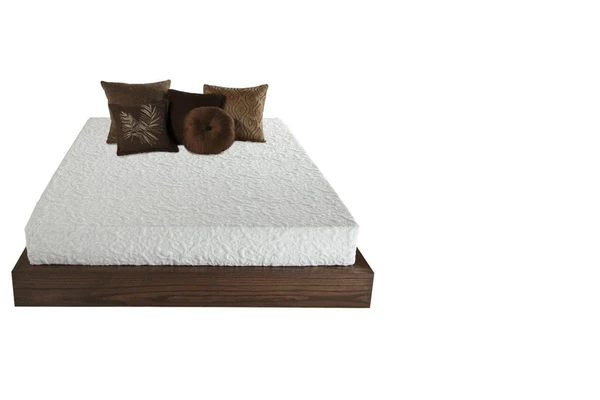
After completing the fit worksheet, the PlushBeds MobilePlush RV mattress listing is one place to apply it. Treat the live page as the source for its available configurations, materials, shipping method, and policies, then compare those details with your RV rather than assuming a match from the name. |
ONE OPTION WORTH COMPARING
Shopping as well as reading? Here is one current option worth comparing: the Plushbeds Mobileplush Rv. Check today’s price, sizing and return terms on the official product page before you order.
Plushbeds Mobileplush Rv
- Optional Product Context After completing the fit worksheet, the PlushBeds MobilePlush RV mattress listing is one place to apply it
The Nut’s Verdict
An Original RV Mattress king should solve a measured space problem. Start with the bare platform, profile limit, delivery route, and foundation. Construction and comfort come next, followed by the exact return and warranty terms.
If the written product details match your worksheet, you have a defensible basis for choosing. If the label is doing more work than the specifications, keep looking until the fit and construction are clear.