
 by
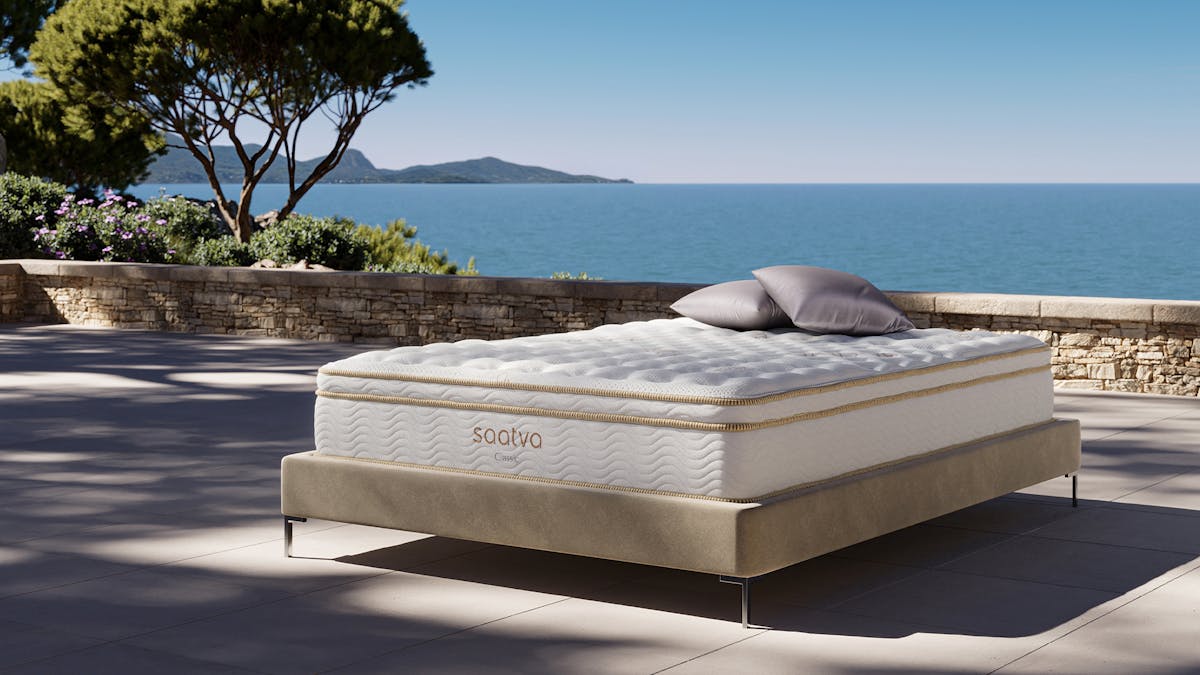
by For back support and joint relief, choose a mattress with verified zoned construction, not a label. "Orthopedic" is an unregulated term, and "high-density foam" describes durability, not support quality. The Saatva Classic is our top pick: its dual-coil system with a dedicated lumbar zone pad delivers genuine orthopedic-level support, free white-glove delivery, and a 365-night trial. The Amerisleep AS3 is the best all-foam alternative, with a 5-zone HIVE layer that targets lumbar reinforcement.
Saatva Classic
9.2/10
- Dual-coil construction with a dedicated lumbar zone foam pad reinforcing the center third of the mattress
- Outstanding edge support (10/10 NapLab) -- critical for people with hip, knee, or back pain who sit on the bed before standing
- Three firmness options (Plush Soft, Luxury Firm, Firm) to match different back conditions and sleeping positions
- Free white-glove in-room delivery and old mattress removal; 365-night trial and lifetime warranty
- Moderate motion isolation -- coil bounce transfers some partner movement
- Heavy and ships flat (not compressed); $99 return fee during the trial
The Saatva Classic delivers structured lumbar support backed by real coil zoning -- not just a marketing label. In Luxury Firm, it hits the medium-firm sweet spot the research points to for non-specific back pain, with the added advantage of cooling airflow from the open coil system and a hotel-quality feel.
What is an orthopedic mattress?
An orthopedic mattress is designed to distribute body weight evenly, reduce pressure on joints, and keep the spine in a neutral alignment during sleep. The category grew out of hospital-grade beds developed for post-operative patients, but "orthopedic" is now an unregulated marketing term in the consumer mattress industry. Any manufacturer can apply the label without clinical validation.
That matters when you are shopping. The meaningful question is not whether the label says "orthopedic" but whether the construction delivers three things: a medium-firm base (roughly 5 to 7 on a 10-point scale), zoned support that provides more resistance under the lumbar and pelvis than under the shoulders, and adequate pressure relief so joints are not compressed against a rigid surface.
Orthopedic mattresses are typically built from memory foam layers, latex, pocketed coils, or a combination of these. Our guide to orthopedic mattress materials covers each construction in detail, and our list of 7 benefits of an orthopedic mattress explains what to expect from a well-made one.
What is a high-density foam mattress?
A high-density foam mattress is made from polyurethane foam with a density typically above 1.8 pounds per cubic foot (PCF). Higher density generally means more durability and slower degradation, not a specific feel or support profile. A 2.5 PCF foam can be soft or firm depending on its ILD (indentation load deflection) rating, which is a separate measurement from density.
The confusion between "high-density" and "firm" is common. Density = durability; firmness = feel. A high-density foam mattress can feel quite soft. Conversely, a low-density foam can be compressed to feel firm. What this means practically: buying a mattress labeled "high-density foam" does not automatically mean you are getting orthopedic-quality support. Many budget foam mattresses use that language without zoning, without pressure-relief layers, and without the construction that orthopedic use actually requires.
Orthopedic vs. high-density: how they compare
| Feature | Orthopedic mattress | High-density foam |
|---|---|---|
| Primary goal | Spinal alignment + pressure relief | Durability + even weight support |
| Firmness | Usually medium-firm (5-7/10), may vary by zone | Depends on ILD; not defined by density |
| Zoned support | Common in quality models (lumbar zone reinforced) | Rarely included in budget foam models |
| Heat retention | Depends on materials (coil/latex = cooler) | Dense foam traps more heat than open-coil designs |
| Motion isolation | Excellent in foam/latex versions | Good in all-foam, poor in bonnel-coil |
| Price range | $600 to $2,500+ for quality builds | $150 to $800 for most models |
| Best for | Back pain, joint pain, spinal alignment | Guest rooms, camping, budget replacement |
For chronic back pain or joint issues, a quality orthopedic-style mattress with verified zoning is worth the price difference. A back pain-specific guide can help you narrow down the right firmness level for your sleeping position.
Amerisleep AS3
9.1/10
- HIVE 5-zone layer firms under the lumbar and softens at the shoulders, mimicking what a true orthopedic design aims for
- Plant-based Bio-Pur open-cell foam relieves pressure at hips and joints without deep sinkage
- CertiPUR-US certified, made in the USA, 20-year warranty covers sag above 1.5 inches
- Exceptional motion isolation
- Softer perimeter than a coil hybrid, so edge support is average
- Sleepers over 230 lb may need the firmer AS5 Hybrid for long-term support
Based on the brand's published specs, the AS3 is marketed as a clinically sound orthopedic mattress in an all-foam design: the zoned support is real, the materials are verified, and the 100-night trial gives you enough time to confirm spinal alignment actually improves.
Evidence-based features that actually matter for orthopedic support
Because "orthopedic" is unregulated, focus on construction specifications rather than the label. Here is what the evidence points to:
- Medium-firm support (5 to 7 out of 10): A 2015 systematic review in Sleep Health (Radwan et al.) found that medium-firm mattresses reduced chronic non-specific back pain significantly over 12 weeks. Softer beds allow the pelvis to sink below the lumbar, creating a reverse arch; extra-firm beds stop the pelvis from settling at all, compressing the discs.
- Zoned support: Reinforcing the lumbar zone while allowing shoulders to sink addresses both the support failure (too soft) and the pressure failure (too firm) simultaneously. The Saatva Classic lumbar pad and the Amerisleep HIVE system both use this approach.
- Responsive surface: A mattress that allows easy repositioning reduces the effort needed to shift position during the night, which matters for people with joint pain or limited mobility. Coil-on-coil designs like the Saatva Classic score very high here (NapLab bounce: 12.53 inches).
- Edge support: Critical for people with hip, knee, or back pain who need to sit on the edge of the bed before standing. The Saatva Classic (10/10 NapLab) leads in this category for orthopedic use.
For seniors with orthopedic concerns, our guide to orthopedic mattresses for elderly sleepers covers additional considerations around edge support and bed height. If sciatica is the issue, our article on orthopedic beds for sciatica pain goes deeper.
Who should choose each type
Choose an orthopedic-quality mattress if you have:
- Chronic lower back pain or disc issues
- Joint pain (hips, knees, shoulders) that worsens after sleep
- Post-surgery recovery that requires a specific support level
- A partner with different support needs (motion isolation matters)
A high-density foam mattress may work if you need:
- A durable replacement for a guest room or occasional use
- A portable option for camping or a temporary setup
- A budget-friendly starting point with normal soreness (not chronic pain)
If temperature is a concern, note that dense closed-cell foam retains heat more than open-coil or latex designs. A coil-based orthopedic mattress like the Saatva Classic or a latex model like the PlushBeds Botanical Bliss will sleep significantly cooler than a solid high-density foam block.
PlushBeds Botanical Bliss
8.4/10
- All-natural Dunlop latex is responsive, pressure-relieving, and significantly cooler than dense foam
- Configurable firmness (Medium, Medium-Firm) lets you customize support level
- GOLS-certified organic latex, 25-year warranty, no synthetic foam layers
- Naturally buoyant feel keeps the spine from sinking unevenly
- Heavy and difficult to reposition once placed
- Buoyant latex feel is less "huggy" than memory foam; not for everyone
- Higher price than foam alternatives
If you want orthopedic support without synthetic foam, the PlushBeds Botanical Bliss is the most credible natural-materials option. The GOLS-certified latex is durable, responsive, and avoids the heat-retention problem that dense foam creates.
What to consider when choosing
Your primary pain type
Lower back pain typically responds best to medium-firm support with active lumbar zoning (Saatva Classic, Amerisleep AS3). Hip and shoulder pain often responds better to a softer comfort layer above a firm support core. Joint pain in general benefits from pressure relief and motion isolation, which favor foam and latex designs over innerspring.
Sleep position
Back sleepers generally need a firmer surface that holds the lumbar in natural lordosis. Side sleepers need the hip and shoulder to sink enough to keep the spine lateral. Stomach sleepers need a firm surface to avoid lumbar extension. Our best mattress for back pain guide maps firmness to position in more detail.
Temperature
Dense high-density foam traps body heat because the closed-cell structure limits airflow. If you sleep warm, an innerspring or latex orthopedic mattress will perform better. The Saatva Classic scored 10/10 for cooling in NapLab testing; the Amerisleep AS3 uses open-cell Bio-Pur foam that is above average for an all-foam design.
Budget
Quality orthopedic construction typically starts around $900 to $1,100 for an all-foam model and $1,300 to $1,800 for a coil hybrid with white-glove delivery. High-density foam mattresses can be found from $200 to $600, which suits a guest room or temporary need. For daily use over multiple years, the durability and health impact of a properly built orthopedic mattress tends to justify the price difference.
If insurance coverage is a concern, our article on whether orthopedic mattresses are covered by insurance covers what to expect and how to document a medical need.
For genuine orthopedic support, choose a mattress with verified zoned construction rather than a generic label. The Saatva Classic is our top pick: real lumbar zoning, a 365-night trial, and free white-glove delivery. The Amerisleep AS3 is the best all-foam alternative with HIVE 5-zone support and a 100-night trial. High-density foam alone is a durability spec, not a support guarantee.
Frequently asked questions
Is an orthopedic mattress the same as a high-density foam mattress?
No. "Orthopedic" describes a support goal (spinal alignment, joint relief), while "high-density foam" describes a material spec (foam above a certain PCF rating). A high-density foam mattress can be orthopedic-quality if it also has zoned support and appropriate firmness, but many high-density foam mattresses are plain blocks of uniform foam without zoning.
What firmness is best for orthopedic support?
Medium-firm, roughly 5 to 7 out of 10. The evidence consistently points to this range for reducing non-specific back pain. Softer beds let the pelvis sink too far; extra-firm beds prevent the natural lordotic curve from settling, which compresses the lumbar discs. If you are a strict side sleeper, a true medium (5/10) like the AS3 may serve you better than a 7/10.
Can a high-density foam mattress cause back pain?
It can, if the foam is too firm for your body type or if it lacks the zoning needed to distribute weight appropriately. A 2011 study published in the Journal of the Pakistan Medical Association found that back pain was most prevalent in firm mattress users. Uniform firmness without pressure relief forces the body into positions that strain the lumbar ligaments and discs.
How long should an orthopedic mattress last?
A well-made orthopedic mattress typically lasts 7 to 10 years. High-density foam (above 2.0 PCF) generally outlasts low-density foam, but coil-based orthopedic mattresses tend to hold their support profile the longest. Warranties covering sagging above 1.5 inches, like Amerisleep's 20-year policy, are a good proxy for quality commitment.
Are orthopedic mattresses covered by insurance?
Rarely in a straightforward way. Some flexible spending accounts (FSA) or health savings accounts (HSA) may cover a portion if a doctor prescribes a specific mattress type for a diagnosed condition. Our orthopedic mattress insurance guide explains the documentation typically required.
Saatva Classic
9.2/10
Dual-coil construction with a dedicated lumbar zone pad, three firmness options, free white-glove delivery, a 365-night trial, and a lifetime warranty. The most complete orthopedic pick in our 2026 testing for back pain, joint relief, and spinal alignment.