
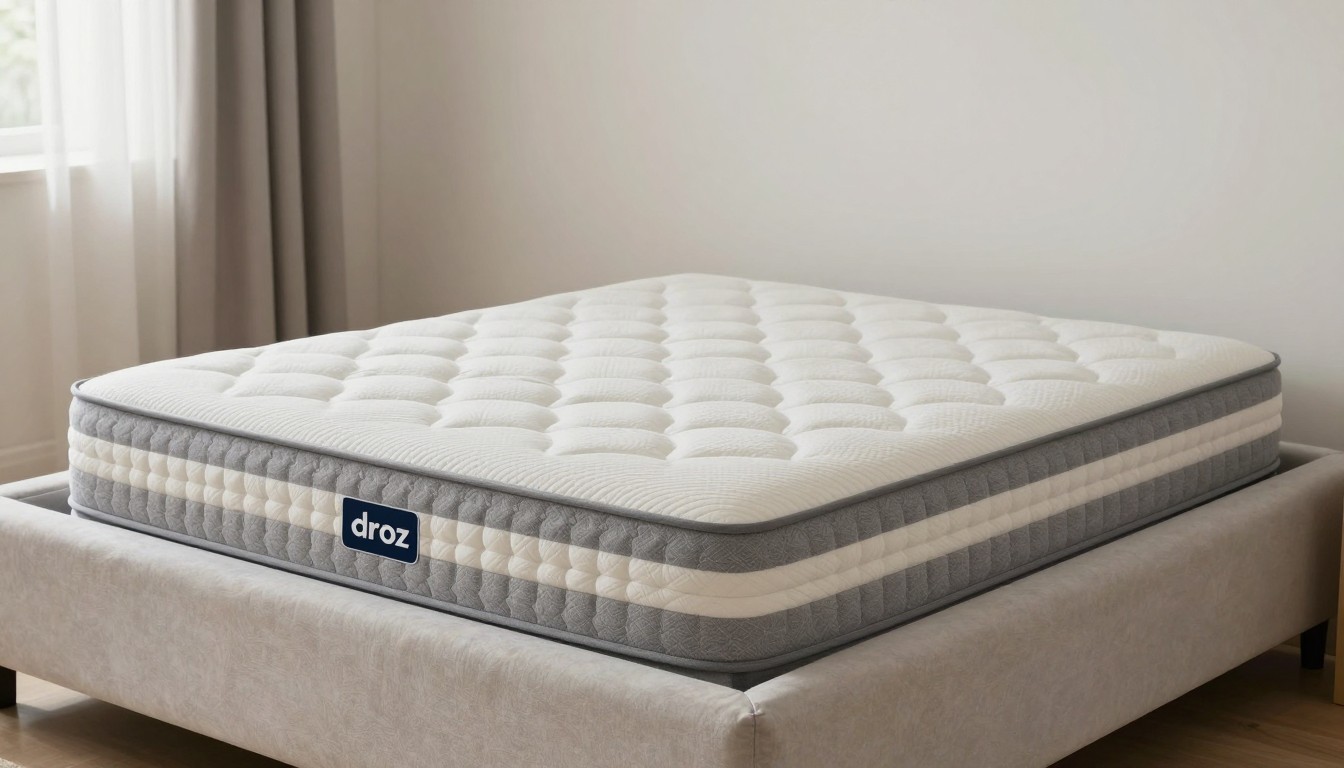
 by
by Quick answer: I’d skip the droz mattress unless the seller provides a complete construction sheet, clear product identity, and written purchase protections. The missing information does not prove the mattress is poorly made, but it leaves too much uncertainty for a confident buying decision.
- No manufacturer-backed layer breakdown is confirmed.
- The support core, comfort materials, and edge design remain unclear.
- Product-specific return, trial, and warranty terms need to be obtained in writing.
- The seller and the business responsible for after-sale problems should be identified before payment.
Updated July 2026 · Documentation-based review, not a hands-on test
My verdict: I would pass on the droz mattress for now. I cannot verify how it is built, how it is supposed to feel, or which business stands behind its policies. A simple mattress can be a sensible purchase, but a mattress with an unexplained build is impossible to assess responsibly.
This is not a claim that Droz is uncomfortable or destined to fail. There is not enough product-specific evidence to support either praise or criticism. My decision is based on the information gap itself, because materials and written remedies are part of what you are buying.
The Nut’s take: An honest “I don’t know” is more useful than a firmness score built from marketing adjectives. Until the construction and policies are documented, this review has to remain a risk assessment rather than a comfort verdict.
The evidence gap decides this Droz review
A layer list, an identifiable responsible business, and product-specific policies are the minimum file I want before evaluating a mattress. None of those basics is confirmed clearly enough here to support a normal materials review of Droz.
The distinction between a seller name and a manufacturer matters. A storefront may process the order while another business makes the product or handles defects. Before paying, I would want to know which company performs each role and where a written support request should be sent.
Model identity matters too. A broad family name is not enough if several beds, firmnesses, or constructions are sold under similar wording. The model shown at checkout should match the model named on the specification sheet, return policy, warranty, receipt, and delivered label.
- Product identity: Get the exact model name and the name of the manufacturer.
- Construction identity: Ask for every layer in order, including the support core.
- Seller identity: Confirm which legal business charges you and handles a return.
- Policy identity: Make sure the written terms apply to the same model and seller.
A polished product description does not fill these gaps. Words such as “premium,” “supportive,” or “orthopedic” are positioning language unless they are connected to an explained material or design. They do not reveal the foam quality, coil system, perimeter construction, or likely response under load.
I would also separate certifications from construction details. If a seller cites a certification, ask what material it covers and request the exact supporting document. Even a relevant certification would not, by itself, tell you the mattress firmness, layer thickness, support design, or expected durability.
A useful standard: Every important claim should lead to a specific material, policy clause, or accountable business. If the explanation ends with another adjective, the question has not been answered.
The construction details I would require
The support core is the first construction detail I would request. It carries most of the sleeper’s load and strongly influences stability, bounce, motion behavior, and how the bed changes with use. I cannot confirm whether Droz uses base foam, coils, or another support design.
If the mattress is foam-based, the seller should identify each foam by type and purpose. Density is also useful because two layers described with the same broad foam name can have very different durability characteristics. Any density supplied should be tied to a particular layer rather than presented as an unexplained figure.
If Droz is described as a hybrid, I would ask what kind of coil unit it uses, whether the springs are individually wrapped, and how the perimeter is built. Coil gauge, coil arrangement, and zoning can add context, but those details must apply to the exact model being purchased.
- What material touches the sleeper beneath the cover?
- Which layers provide cushioning, and which layer provides primary support?
- Does the perimeter use a distinct reinforcement method?
- What material forms the fire barrier?
- Is the cover removable, and does the care label permit washing?
- What base or foundation does the manufacturer require?
The cover deserves a real description rather than a fabric-themed product name. A removable cover is not automatically washable, and a zipper does not necessarily mean the cover should be taken off. The care instructions should state what the owner can safely remove or clean.
I would ask about the fire barrier for the same reason. The seller should identify the material rather than relying on a vague safety claim. This is a request for product transparency, not evidence that Droz uses any particular barrier material.
Layer order is just as important as the material names. A deep contouring foam placed near the surface behaves differently from a thin layer buried beneath firmer padding. The complete stack explains more than a list of ingredients presented without their positions or functions.
Durability checkpoint: I would not infer service life from the mattress category alone. A foam bed, hybrid, or traditional coil design can be built well or built cheaply. The quality and role of the individual components are what matter.
Comfort claims need a usable reference point
Words such as “medium,” “plush,” and “firm” need a construction explanation. A firmness label can help organize a product range, but it does not reveal how deeply the sleeper sinks, how quickly the surface responds, or how the support changes beneath heavier parts of the body.
For a Droz mattress, I would want the claimed feel tied directly to its layers. Slow-moving foam usually creates a different experience from springy foam or a lightly padded coil surface. Without knowing which design is present, there is no sound basis for predicting contour, bounce, or ease of movement.
Side sleepers generally pay close attention to cushioning around the shoulder and hip. Back sleepers often need the pelvis to remain supported without an abrupt hard spot beneath the lower body. Stomach sleepers tend to have less tolerance for a surface that lets the middle settle too far. Those are fit considerations, not a diagnosis or a promise of comfort.
- If the seller says “pressure relieving”: Ask which material creates the contour and how it is positioned.
- If the seller says “responsive”: Ask whether the response comes from foam, coils, or both.
- If the seller says “firm support”: Ask what keeps the heavier areas from sinking.
- If the seller mentions zoning: Request a diagram showing where the zones sit on the exact model.
Body weight, sleep position, and preference all change how a given surface feels. That is why a bare comfort adjective cannot substitute for a material description. The seller should explain the intended use without pretending that one feel works equally well for every sleeper.
Owner comments can add context, but I would read them selectively. Look for feedback that names the exact model, identifies the seller, describes the sleeper’s usual position, and distinguishes an initial impression from an issue that developed later. A star average without that context says little about construction.
My comfort rule: Do not translate an unexplained firmness word into a personal fit prediction. First identify what creates the feel, then decide whether that construction suits the way you sleep.
Support, edges, and motion depend on the core
The core, not the decorative cover, determines most of the mattress’s structural behavior. In a foam design, the base layer must resist excessive compression beneath the softer materials. In a coil design, the spring unit performs most of that work. I cannot tell which description applies to Droz.
Edge support deserves its own answer. It affects people who sit on the side while dressing, sleep near the perimeter, or share a surface and need to use more of its width. The seller should explain whether the edge uses firmer foam, altered coils, another reinforcement method, or no separate reinforcement.
Motion behavior is also construction-dependent. Conforming foams tend to damp movement, while springs tend to add rebound. A hybrid may combine both qualities, but the balance depends on the spring unit and the type and amount of material above it.
- Primary support: Identify whether foam, coils, or another structure carries the sleeper.
- Surface response: Identify the materials responsible for sink, contour, and rebound.
- Perimeter stability: Ask whether the sides use a distinct support design.
- Partner movement: Ask how the comfort layers and support unit are intended to manage motion.
A broad category name cannot answer these questions. Two mattresses sold as hybrids can behave differently if one has thick, slow-moving comfort layers and the other has a shallow, springier surface. The same problem applies to foam beds with different base quality and transition layers.
Foundation instructions belong in this discussion because support continues below the mattress. Ask which bases are compatible and whether slat spacing, center support, or another setup condition affects coverage. The answer should come from the policy that applies to the exact product.
Noise cannot be predicted confidently without knowing the internal build. A foam core has no spring unit, while a coil mattress introduces moving metal components and additional structural connections. That does not make either category automatically quiet or noisy.
Practical test of the description: You should be able to point to the component responsible for support, edge stability, surface feel, and motion control. If every answer is simply “advanced technology,” the description is not useful enough.
Cooling needs a material explanation
A breathable cover and a ventilated support core do different jobs. The cover affects the immediate surface, while open space deeper in the mattress can affect airflow through the build. A seller should say which part of the Droz design is supposed to manage heat.
Close-conforming foam can hold warmth near the body for some sleepers. Coils can leave more open space than a solid foam core. Those material tendencies still do not establish how this particular mattress performs because its layer arrangement has not been confirmed.
Cooling additives also need context. If a listing mentions gel, a cool-touch treatment, perforations, or another feature, ask where it appears and what material contains it. A named additive does not explain the entire thermal behavior of the mattress.
For warm sleepers: Request the cover composition, comfort-layer materials, and support-core design. Those details are more informative than a large “cooling” badge with no construction explanation.
Bedding and room conditions can also change how warm a sleep surface feels. That does not relieve the mattress seller of explaining the product. It simply means a cooling claim should be treated as one part of the decision rather than a universal outcome.
I would not assign Droz a positive or negative cooling verdict from the current level of detail. The responsible answer is that its temperature behavior remains unknown until the materials and their positions are disclosed.
Returns and warranty terms are part of the product
A retailer’s return policy and a manufacturer’s defect warranty serve different purposes. One governs a purchase you do not want to keep, while the other addresses stated defects under specified conditions. Both should name the responsible business and the exact Droz model covered.
Start with the return policy for the actual seller processing the order. Check whether an opened mattress is eligible, who arranges transportation, what condition is required, and whether any delivery or handling costs are withheld. Do not assume a marketplace-wide summary overrides seller-specific terms.
The sleep-trial wording also needs to explain when the trial begins, how a return is initiated, and what happens after approval. Since no Droz-specific trial is confirmed here, I would not rely on a general banner or an answer given only in an informal message.
- Save the policy that appears at checkout.
- Confirm that opened-mattress returns are addressed explicitly.
- Identify who pays or arranges return transportation.
- Check how damage at delivery must be reported.
- Match the warranty document to the exact model and seller.
- Keep the receipt, specification sheet, and written seller answers together.
Warranty language should define covered defects, exclusions, claim requirements, and the remedy offered. A phrase such as “quality assurance” is not a substitute for those terms. I would also check whether use on an incompatible base can affect a claim.
Seller accountability matters if the storefront name differs from the manufacturer. Ask which business receives a defect claim and where that business can be contacted in writing. A support channel that exists only inside a temporary product page offers less clarity than a named company and durable contact route.
If a salesperson supplies useful answers, ask for them in a document connected to the order. Verbal reassurance can be difficult to reconcile later with a restrictive written policy. The written terms should control the buying decision.
Stop sign: If the model name, seller name, or policy holder changes between the product page and checkout, pause the transaction. Resolve the mismatch before treating any stated protection as applicable.
How I would verify a Droz offer before paying
The model name shown at checkout should become the reference point for every other document. A disciplined verification process keeps similar product names and broad marketing claims from being mistaken for evidence about the mattress being ordered.
- Record the exact product name. Include any firmness, construction, or version wording attached to it.
- Identify the parties. Determine who manufactures the mattress, who sells it, and who handles after-sale claims.
- Request the full build. Get the cover, comfort layers, transition materials, support core, edge design, and barrier material in order.
- Obtain the policies. Save the return, trial, warranty, delivery, and cancellation terms that apply to the order.
- Reconcile conflicts. Ask for clarification if the checkout details differ from the specification or policy documents.
- Keep a durable copy. Save the material in a form that remains available if the sales page later changes.
A clear seller should be able to answer direct construction questions without substituting another slogan. It is reasonable for some proprietary details to remain confidential, but the product category, layer roles, support type, care instructions, and purchase protections should still be understandable.
If the seller cannot answer, I would not try to reverse-engineer the mattress from photographs. Tufting, quilting, and side-panel styling reveal little about the hidden support unit. Packaging language is equally weak evidence of what is inside.
The decision threshold: Proceed only when the exact model, complete build, responsible businesses, and applicable policies agree across the written documents. A discount or attractive photo does not repair a conflict between them.
My buying decision for a Droz mattress
The decision point is written proof. If Droz supplies a coherent layer specification and the seller provides clear terms tied to the exact order, the mattress can be reconsidered on its construction merits. Without those documents, I would spend elsewhere.
This stance is deliberately narrower than saying the bed is bad. I do not have grounds for a negative performance claim, just as I do not have grounds for a positive one. The unresolved risk is paying for a mattress whose feel, support system, durability factors, and remedies cannot be evaluated beforehand.
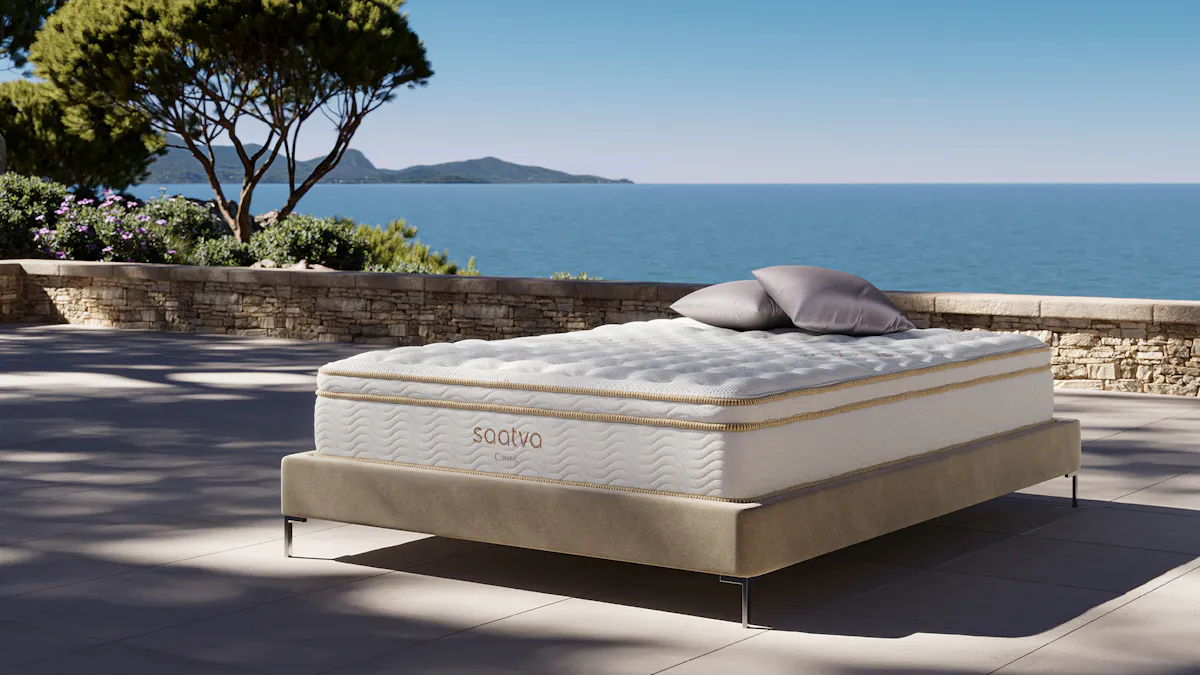
Optional commercial context: The Saatva Classic can serve as a documentation benchmark, not as evidence about Droz. Use the manufacturer’s product page to examine its current construction, price, and policies, then apply the same disclosure standard to any mattress under consideration.
For more context on the questions behind mixed foam-and-coil beds, this guide to hybrid mattress construction explains why the support unit and comfort layers must be considered together. If a seller emphasizes a zipper or removable cover, this overview of mattress cover and material concerns helps separate cover access from the composition of the inner mattress.
Bottom line: Droz does not need a famous name to deserve consideration. It does need an identifiable build, accountable seller, and usable written policies. Until those pieces are available for the exact mattress being sold, my answer is to wait.
ONE OPTION WORTH COMPARING
Shopping as well as reading? Here is one current option worth comparing: the Saatva Classic. Check today’s price, sizing and return terms on the official product page before you order.
Saatva Classic
- 365-night home trial and lifetime warranty, per saatva.com
- Handcrafted in the USA, free white-glove delivery
- Flexible financing available
FAQ
Is a Droz mattress worth buying?
I would not buy the droz mattress without a manufacturer-backed layer description and seller-specific policies. If those documents become available, judge the bed by its actual support core, comfort materials, edge design, and written purchase protections rather than its marketing labels.
What should I ask before buying a Droz mattress?
Ask for the exact model name, manufacturer, complete layer order, support-core type, cover composition, barrier material, care instructions, and compatible foundation guidance. Separately obtain the return, trial, warranty, delivery, and defect-claim terms from the business responsible for fulfilling them.
Can I tell whether Droz will sleep cool?
No reliable cooling verdict can be reached from an unexplained feature claim. You would need to know the cover material, the type and placement of the comfort layers, and whether the core contains open space intended to support airflow.
Is a mattress listing enough to judge durability?
Only if it identifies the components that bear load and the materials most likely to soften with use. Product photos and broad category names cannot reveal foam quality, spring construction, layer order, or perimeter reinforcement.
What is the safer response to an unclear mattress offer?
Pause and request the missing documents before paying. A sound decision requires the exact product identity, a construction description you can understand, and written terms that name the business responsible if the order or mattress becomes a problem.