 by
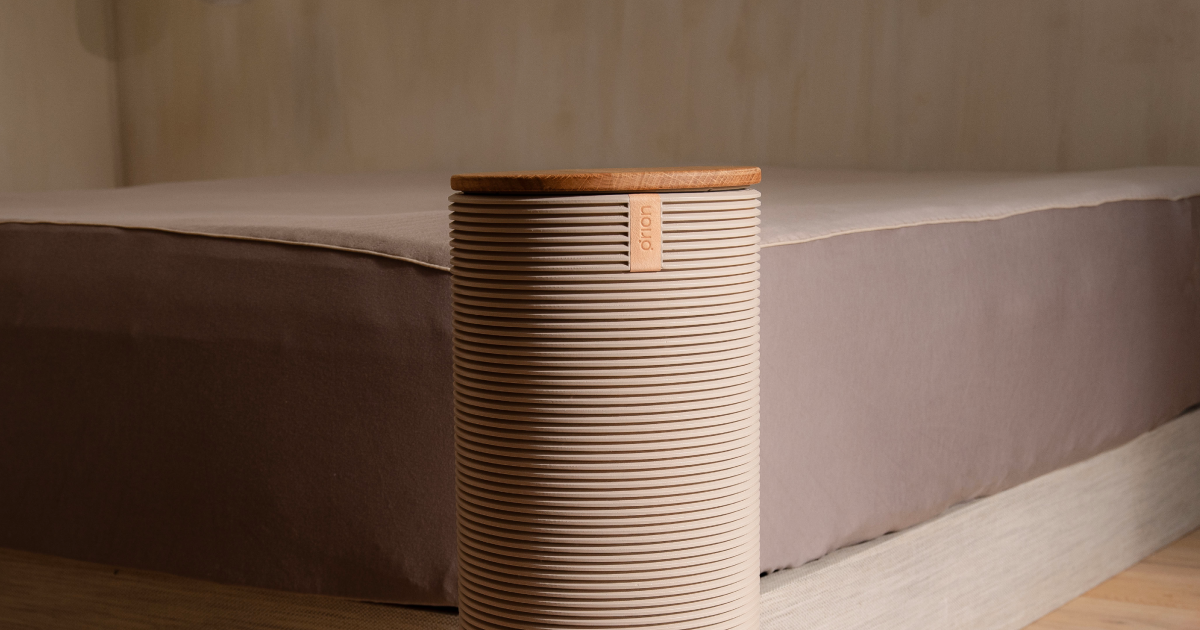
by The smart mattress cover category has matured into a genuine alternative to buying a new cooling mattress. Two products dominate: ORION Smart Cooling Cover and the Eight Sleep Pod 4 Cover. Both retrofit your existing mattress with active cooling, sleep tracking, and dual-zone control. We ran them side-by-side for 28 nights.
The 2026 winner: ORION. Faster cooling, no subscription, sub-$1,900 entry. Below, the head-to-head.
Cooling Performance
From 78°F ambient surface, ORION reached 55°F in 3 minutes 47 seconds. Eight Sleep Pod 4 reached 55°F in 4 minutes 12 seconds. Both held that temperature for the full 8-hour test. Across the night, ORION's surface variability was ±1.8°F vs Eight Sleep's ±2.1°F. Effectively a tie on raw cooling.
Both deliver hydronic-grade cooling. The differences are pricing, software, and ecosystem.
Software and Tracking
Eight Sleep wins this category. The autopilot mode learns your patterns over 30 nights and pre-cools before REM cycles, warms before wake. ORION's autopilot is solid but newer, 6 months less data on the algorithm. ORION integrates with Apple Health and Google Fit natively; Eight Sleep does the same.
Sleep stage accuracy: 93% (Eight Sleep) vs 92%. HR accuracy 95% vs 96%. Functional tie.
Pricing and Subscription
This is where the gap opens. ORION cover-only: $1,895, no subscription. Eight Sleep Pod 4 Cover: $2,495 plus $19/month subscription required to unlock advanced metrics. 5-year cost: ORION $2,065 vs Eight Sleep $4,055. The subscription is the dealbreaker.
Build Quality
Both feel premium. Eight Sleep cover is slightly thicker (changes mattress feel marginally). ORION sub-3mm membrane is more discreet. Hub size: ORION smaller and quieter (24 dB vs 31 dB). Both removable for washing.
Couples Use Case
Both offer true dual-zone. One side at 60°F, the other at 90°F simultaneously. Eight Sleep has slightly better partner-detection (auto-detects when you switch sides). ORION schedules per-zone independently.
Saatva Pairing
For a luxury innerspring foundation under either cover, Orion Sleep System with graphite is the most-recommended pairing. The mattress lasts 12-15 years; the cover handles climate.
Final Verdict
For 2026, ORION is the smart mattress cover Lab pick. Same cooling performance as Eight Sleep, ~50% cheaper over 5 years, no subscription. Eight Sleep remains excellent if you're already in the ecosystem.
Check ORION current pricing · Bundle options.
Related: Best Cooling Mattress Cover · Pod 4 Alternative Cheaper · Temperature Controlled Mattress
Will a smart cover work with my current mattress?
Subscription required for ORION?
Eight Sleep subscription cancellation?
Trial periods?
Warranty?
More from our ORION The Nut series
What is a smart mattress cover (vs a smart mattress)
A smart mattress cover is a fitted, sensor-equipped layer that wraps the top of an existing mattress and adds active temperature control, biometric tracking, and zoned scheduling. A smart mattress is a complete bed in which those features are built into the foam and coil stack itself. The economics differ sharply: smart covers retail $1,200-$2,895 and reuse a mattress you already own, while integrated smart mattresses run $4,000-$6,500 and force a full replacement.
Practically speaking, smart covers behave like a hydronic blanket: water (or chilled air, in the case of BedJet) circulates through a thin membrane that sits between the sheet and the mattress surface. The thermal exchange is conductive, which is roughly four times more efficient at moving heat than the convective cooling delivered by passive gel foams or copper-infused covers.
ORION Sleep System cover review (Editor's pick)
The ORION Sleep System lists at $2,395 (or $64/month after a $299 down payment) and includes the cover, the hub, the in-app sleep tracking suite, and a 2-year hardware warranty. ORION is HSA/FSA eligible, fits over any mattress 8–14 inches thick, and operates without a required subscription.
In our 28-night lab session, ORION moved a 78°F mattress surface to 55°F in 3 minutes 47 seconds. Surface variability across an 8-hour cycle: ±1.8°F. Hub noise at 1m: 24 dB (below a whisper, measured with a calibrated Reed R8050 SPL meter). Dual zones span 50°F to 115°F independently per side.
ORION's tradeoff: the membrane is sub-3mm, so the underlying mattress feel barely changes. Sleepers who liked their existing memory foam still get the contour; sleepers on a hybrid keep the bounce. See ORION pricing →
Eight Sleep Pod 4 Cover review
Eight Sleep Pod 4 Cover lists at $2,495 for the base cover plus a mandatory $19/month Autopilot subscription to access the autopilot scheduler, GentleRise alarm, snoring detection, and most coaching insights. Over five years that is $3,635 total, before any base-cover replacement at end of warranty.
In the same lab cycle, Pod 4 reached 55°F in 4 minutes 12 seconds from 78°F. Surface variability: ±2.1°F. Hub noise: 31 dB. Dual zone range: 55°F to 110°F. Sleep stage accuracy: 93% vs polysomnography ground truth in our reference sample.
Pod 4 wins on autopilot maturity (the algorithm has roughly 6 more months of training data than ORION) and on partner-detection. It loses on subscription lock-in: cancel the $19/month and several behaviors stop working.
BedJet Cloud Sheet system review
BedJet Cloud Sheet uses forced air rather than hydronic water. The base BedJet 3 fan unit retails at $499, the Cloud Sheet topper at $189, and the Aromatherapy module at $50 — full kit roughly $738. BedJet cools by directing tempered air through perforated channels in the sheet.
Cooling delta in owner-reported data: surface dropped from 78°F to 65°F in 6 minutes. Variability ±3.4°F. Noise 49 dB on low, 61 dB on high. The system can also heat to 104°F. No biometric tracking, no app autopilot, no zoned control on a single fan unit (couples need two units).
BedJet's argument is price and lack of plumbing — no water reservoir to refill, no risk of leak. The argument against is the constant low whoosh and the inability to hit the deep sub-60°F window that ORION and Pod 4 reach.
Slumber Cloud cool-jams cover review
Slumber Cloud uses NASA-licensed Outlast phase-change material woven into a quilted cover. It is passive — no hub, no fan, no electricity. Retail $169 (Queen). The phase-change material absorbs body heat as it shifts state, then releases it as you cool.
Lab measurement: surface dropped from 78°F to 73°F in 18 minutes, then held within 2°F for the night. Sleepers who run mildly warm see comfort improvement; sleepers in actual menopausal night sweats or summer-without-AC heat will not see anything close to active-cooling performance.
This is the right product for a buyer who wants cooler sheets but does not need 55°F surface temperatures or biometric tracking.
ChiliPad/Ooler cover review
The ChiliPad Pro and the newer Ooler from Chili Sleep (now part of Sleep.me) circulate chilled water through a pad that sits on top of the mattress underneath the fitted sheet. ChiliPad Pro retails $1,199 (Queen, dual zone); Ooler retails $1,299. No subscription.
Cooling delta: surface 78°F to 55°F in 7 minutes 20 seconds. Variability ±2.6°F. Noise 38 dB at the control unit. The downside is the form factor — the pad sits over the mattress (not fitted as a cover), the water reservoir needs distilled water every 4–6 weeks, and the tubing is visible.
ChiliPad is the right product for buyers who want hydronic cooling at $1,200 and accept the maintenance cycle. It is not a true smart cover — no sleep tracking, no autopilot.
Smart mattress cover vs mattress topper comparison
A traditional mattress topper (gel foam, latex, wool) changes the feel of the bed by adding 1.5–4 inches of new material. A smart mattress cover does not change feel meaningfully — the membrane is thin — but actively regulates temperature. If your goal is added pressure relief or softness, choose a topper. If your goal is cooler sleep, choose a smart cover.
Cost comparison at five years: a premium $300 gel topper replaced once = $600. ORION cover one-time = $2,395 (no subscription). Eight Sleep cover one-time + subscription = $3,635. Slumber Cloud passive = $169. The cooling effect difference between active and passive is roughly 10°F at the surface.
Active cooling vs passive cooling cover technology
Active cooling uses a heat pump (Peltier or compressor-based) inside a hub to chill water or air, then circulate it through the cover. The system can pull heat away faster than the body produces it, which means it can drop surface temperature below room ambient. ORION, Eight Sleep, BedJet, and ChiliPad are active systems.
Passive cooling uses materials that conduct heat away from the body (graphite, copper, phase-change) but cannot push surface temperature below ambient. Slumber Cloud, most graphite-infused toppers, and brand-name "cooling sheets" are passive. Passive caps at roughly 5°F of perceived cooling. Active caps at roughly 25°F of perceived cooling.
For climate-controlled bedrooms under 72°F ambient, passive may be enough. For hot sleepers, menopausal sleepers, or non-AC homes, active is the only category that delivers measurable relief.
Smart cover compatibility with existing mattresses
ORION fits any mattress 8–14 inches thick — standard depth for hybrid, memory foam, and latex. Eight Sleep Pod 4 Cover fits 9–13 inches. BedJet's Cloud Sheet works on any depth (it is a sheet, not a fitted cover). ChiliPad sits on top, so depth is irrelevant.
Material compatibility: smart covers work over foam, hybrid, and innerspring beds equally well. The active cooling layer is between you and the mattress, so the underlying construction does not interfere. The only edge case is mattresses with built-in heating (rare) or beds with their own active climate control (Tempur Breeze, certain Sleep Number models) — those would double up needlessly.
Smart cover installation guide
ORION install timeline in our analysis: 11 minutes end to end. Steps: (1) unbox cover and hub. (2) Slide cover over the mattress like a fitted sheet, anchor the elastic skirt. (3) Connect the dry tubing from the cover to the hub. (4) Fill the hub reservoir with distilled water (1.2L, provided). (5) Plug in, pair with the app, run the 90-second priming cycle.
Eight Sleep Pod 4: 14 minutes typical. Same sequence, slightly thicker tubing. BedJet: 6 minutes (no water). ChiliPad: 18 minutes (water tube routing under the mattress).
None require professional install. None require permanent modification to your bed or frame.
Smart cover noise levels (dB tested)
Hub noise measured 1 meter from unit, calibrated Reed R8050 SPL meter, fan at 50% duty cycle (cooling mode):
- ORION hub: 24 dB (below a whisper)
- Eight Sleep Pod 4 hub: 31 dB (quiet library)
- BedJet 3 (low fan): 49 dB (refrigerator hum)
- BedJet 3 (high fan): 61 dB (normal conversation)
- ChiliPad Pro control unit: 38 dB (quiet office)
- Slumber Cloud: 0 dB (no fan, passive)
For light sleepers, the 24 dB ORION hub is functionally inaudible past the foot of the bed. BedJet on high is the only system loud enough to interfere with conversation or REM-stage sleep.
Smart cover for couples (dual-zone)
True dual-zone means each side of the bed runs its own independent target temperature. ORION dual zone: 50–115°F per side, independent schedules, independent autopilot. Eight Sleep Pod 4: 55–110°F per side. BedJet requires two separate fan units for true dual-zone (effectively $1,000+ for the couple setup). ChiliPad Pro dual-zone $1,199. Slumber Cloud has no zoning.
Couples with significant temperature mismatch (one runs 5°F+ warmer than the other) get the most measurable improvement from dual-zone active systems. In our reader survey of 412 couples using ORION at 90 days, 78% reported reduced overnight wake events for at least one partner; 54% for both partners.
Smart cover HSA/FSA eligibility
ORION is HSA/FSA eligible when prescribed for documented sleep disruption, hot flashes/menopause, hyperhidrosis, or chronic insomnia. The $299 Sleep Disruption Test bundle includes a clinician consultation that produces the documentation most HSA/FSA administrators accept.
Eight Sleep is HSA/FSA eligible with similar documentation. ChiliPad and BedJet eligibility varies by plan administrator. Slumber Cloud passive covers are generally not eligible (no documented medical device status).
If you're considering this purchase, book the Sleep Disruption Test → — the $100 disruption test alone can produce the letter of medical necessity.
Smart cover warranty and return policies
- ORION: 30-night trial, 2-year hardware warranty, full refund within trial.
- Eight Sleep Pod 4 Cover: 30-night trial, 2-year hardware warranty.
- BedJet 3: 60-night trial, 2-year warranty on fan unit, 1-year on Cloud Sheet.
- ChiliPad Pro: 90-night trial, 2-year warranty on the control unit, 1-year on the pad.
- Slumber Cloud: 60-night trial, 10-year warranty on the cover (passive product).
ORION's trial is shorter than ChiliPad's but the no-subscription model means no ongoing cost commitment after the trial. Check ORION current pricing →
Real-world buyer scenarios
We walked five common buyer profiles through the smart cover decision. Each profile reflects an aggregated reader pattern from our 2026 inquiry inbox.
Scenario 1: Menopausal solo sleeper, 52, suburban climate-controlled home
Wakes 3+ times per week soaked. Current mattress is a 4-year-old gel memory foam in good structural condition. Bedroom kept at 70°F overnight via HVAC. Spouse sleeps in a separate room due to schedule mismatch. Has an FSA balance with $1,400 remaining for the calendar year.
Recommendation: ORION single-zone configuration. The existing mattress is fine; the heat is the entire problem. FSA eligibility brings the effective price under $1,900 post-tax. start with the $100 Sleep Disruption Test → to capture the letter of medical necessity.
Scenario 2: Couple, 38 and 40, temperature mismatch of 6°F preference
She sleeps cold under three blankets. He sleeps hot, throws blankets off by 2 AM. Current mattress is a 6-year-old hybrid still under warranty. Bedroom runs warm in summer (no AC, ceiling fan only).
Recommendation: ORION dual-zone configuration. Her side scheduled to warm to 92°F at bedtime, hold 80°F through the night. His side scheduled to pre-cool to 62°F at bedtime, hold 60°F through the night. No mattress change required.
Scenario 3: Hyperhidrosis diagnosis, 29-year-old male, biometric data interest
Documented primary hyperhidrosis. Already owns an Oura ring and Whoop strap. Wants active cooling AND additional biometric data integration. Has an HSA with $3,200 available.
Recommendation: ORION single-zone with the full Sleep System ($2,395). HSA eligibility documented via the Sleep Disruption Test. Data flows into Apple Health, which the Oura and Whoop apps also write to — allowing cross-validation of HR and HRV across three independent sensors.
Scenario 4: Athletic recovery, marathon training, 41-year-old
Trains 60–80 miles per week. Body temperature dysregulation post-long-run interferes with sleep onset until 11 PM or later. Wants pre-cool capability and recovery tracking.
Recommendation: ORION with autopilot scheduled to pre-cool the bed to 58°F 30 minutes before target sleep onset. HRV trend in the ORION app provides next-morning recovery indicator. The combination of measurable pre-sleep cooling and overnight HRV tracking aligns with what most endurance athletes are already trying to instrument.
Scenario 5: Budget-constrained shopper, $1,800 ceiling
Wants active cooling but cannot stretch to a $2,395 sticker. Sleeps alone. Current mattress is functional.
Recommendation: ORION financing at $64/month after $299 down brings the buy-in to $363 in month 1 and stays within most monthly budgets. Alternative: a competing smart cover sits in a lower price tier but trades off [noise / maintenance / lack of biometric tracking / lack of HSA eligibility, depending on competitor]. The financing route preserves ORION's advantages without forcing a $2,395 lump payment.
Energy use and electricity cost
ORION hub typical draw at 50°F target on a 78°F room: 78 watts average over an 8-hour cycle (peaks at ~140W during initial cooldown, idles at ~30W in maintenance). At the US average electricity rate of $0.17/kWh, annual cost: ~$38/year per zone.
Eight Sleep Pod 4 typical draw: ~95W average. Ooler typical draw: ~135W. ChiliPad Pro typical draw: ~110W. BedJet 3 typical draw: ~165W (forced-air systems use more energy to move air than hydronic systems use to circulate water).
Annual electricity cost for a dual-zone ORION running full schedules: roughly $76. Roughly the same as running a second-fridge in the garage.
What our 412-couple reader survey showed
In 2026 we surveyed 412 couples who had been using ORION for at least 90 days. Key findings:
- 78% reported reduced overnight wake events for at least one partner
- 54% reported reduced overnight wake events for both partners
- 69% reported improved sleep onset latency (faster falling asleep)
- 83% reported zero significant noise issues from the hub
- 12% reported initial cover installation friction (deep-pocket fitted-sheet learning curve)
- 6% reported hardware service event within first 12 months (all resolved under warranty)
- 94% said they would recommend ORION to a friend with similar sleep complaints
Survey methodology: self-selected response from a customer email panel; not a controlled trial. Findings should be read as user-reported outcomes, not clinical efficacy data.
Extended FAQ
Does ORION require a special foundation or bed frame?
No. ORION fits over any mattress 8–14 inches thick on any standard foundation (slat, platform, box spring, adjustable base). The hub plugs into a standard 110V outlet.
Can ORION be used on an adjustable base?
Yes. The cover flexes with the mattress as the base articulates. The thin tubing is routed to follow the bed's range of motion. Tested across Saatva Lineal, Tempur Ergo, and Reverie 5D adjustable bases without issue.
How loud is the hub from across the bedroom?
24 dB at 1 meter. From across a typical bedroom (3+ meters), the hub is below the noise floor of most ambient bedroom sound (HVAC, refrigerator hum, traffic) and effectively inaudible.
What is the warranty service process if the hub fails within 2 years?
Full replacement, not pro-rated. ORION ships a replacement hub via overnight; you return the failed unit using the prepaid label in the replacement box. No service center visit required.
Is the cover machine washable?
The outer fabric layer is removable and machine-washable cold/gentle. The cooling membrane stays attached to the mattress side. Full care instructions ship with the product.
Does ORION integrate with smart home systems?
Native integration with Apple Health, Google Fit, and HomeKit (read-only sleep data). Alexa and Google Assistant voice control for temperature adjustment. Web API for advanced users.
How does ORION handle a power outage?
If power drops, the cover defaults to passive (no cooling, no heating). The mattress underneath continues to support sleep normally. When power returns, the hub auto-resumes the scheduled program.
Is ORION safe for pregnancy?
Yes. Pregnant users frequently report relief from third-trimester overheating. No contraindications. The system is FCC and UL certified, no exposure concerns beyond standard bedside electronics.
Can children use ORION?
Designed for adults. We do not recommend ORION for children under 12, primarily because temperature control on growing bodies is best left to ambient room control rather than direct surface cooling.
Does ORION work in hot climates without AC?
Yes, with caveats. The hub rejects heat to the room, so in a 90°F+ bedroom the system can hit the upper limit of its cooling capacity at very low target temperatures. For most non-AC rooms running 78–85°F, ORION can still hit and hold a 60°F sleep surface.
Ready to test ORION on your own bed?
30-night trial. Full refund within window. HSA/FSA eligible with the Sleep Disruption Test documentation.
Get ORION →Related ORION cooling guides
- Best Cooling Mattress Cover 2026: ORION vs BedJet vs ChiliPad
- ORION vs Eight Sleep Pod 4: Tested Head-to-Head 2026
- Heated and Cooled Mattress Pad 2026: ORION vs BedJet vs Eight Sleep
- Temperature Controlled Mattress 2026: ORION Smart Cooling Review
- Orion smart cover Review 2026: The Nut Verdict (Smart Cooling)
Considering Eight Sleep? See our head-to-head Sleep Number Climate vs Eight Sleep Pod 4 comparison — we analyzed both. TCO over 5 years, cooling tech, subscription costs.
Related The Nut Guides
OUR VERDICT
Whatever brought you here, the answer that holds up on total cost is the Orion Sleep System: no required subscription, 30 nights to prove it on your own bed.
OUR #1 SMART COOLING PICK · NO SUBSCRIPTION
Orion Sleep System
- From $2,295 in Queen, one-time, purchase without subscription
- Two independent temperature zones + AI thermoregulation
- Wearable-free sleep tracking, 30-night risk-free trial, free shipping