
 by
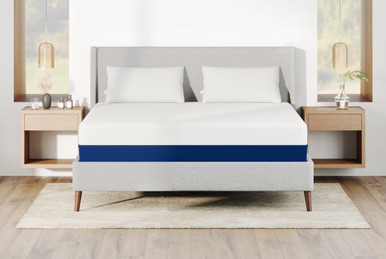
Amerisleep AS3
The AS3 is our top pick in the Amerisleep vs Tempur-Pedic matchup. At $850 less than the TEMPUR-Cloud, it delivers near-identical motion isolation, superior cooling from open-cell Bio-Pur foam, and a 20-year warranty — double Tempur-Pedic’s coverage.
Medium 5/10 firmness
365-night trial
20-year warranty
The Amerisleep AS3 is our top pick in this matchup: it costs $850 less than the TEMPUR-Cloud price shown here, has open-cell foam that sleeps cooler (NapLab: 9/10 for cooling), and ships with a 20-year warranty versus Tempur-Pedic's 10. The Tempur-Pedic TEMPUR-Cloud earns a spot for strict side sleepers who want the deepest slow-response contouring and plan to keep a mattress for a decade or more at heavier body weights.
Amerisleep AS3
9.2/10
- 10/10 motion isolation in NapLab's lab tests
- HIVE 5-zone zoned support keeps the lumbar in line for back and side sleepers
- Partially plant-based Bio-Pur foam, open-cell construction for breathability, CertiPUR-US certified
- 20-year warranty, double Tempur-Pedic's coverage at $850 less
- Open-cell Bio-Pur sleeps cooler than dense TEMPUR foam (NapLab: 9/10 for cooling)
- Less bounce than a coil hybrid
- Less dense than TEMPUR material, so heavier sleepers over 220 lb may see earlier wear over 10-plus years
For most shoppers comparing Amerisleep with Tempur-Pedic, the AS3 wins on value. You get nearly identical motion isolation at $850 less, better cooling, and a longer warranty.
Quick comparison: Amerisleep AS3 vs Tempur-Pedic TEMPUR-Cloud
| Metric | Amerisleep AS3 | Tempur-Pedic TEMPUR-Cloud |
|---|---|---|
| Queen price | From $1,149 | From $1,999 |
| Foam type | Bio-Pur (partially plant-based), open-cell | Proprietary TEMPUR, ~4 PCF density |
| Firmness | Medium 5/10 | Medium 6/10 |
| Height | 12 in | 10 in |
| Motion isolation | Excellent (9.4/10) | Very good (8.7/10) |
| Cooling | Better, open-cell Bio-Pur sheds heat faster | Dense foam traps more heat |
| Trial | 365 nights, free returns | 90 nights, $175 return fee |
| Warranty | 20 years | 10 years |
| Best for | Couples, hot sleepers, value buyers | Deep contouring, heavy long-term owners |
Amerisleep vs Tempur-Pedic: who should buy which
The AS3 is the right call if you share a bed and one person is a light sleeper. Motion isolation is the most meaningful metric for couples, and the AS3 scores 10/10 for motion isolation in NapLab's lab tests. Both mattresses are excellent isolators, but the AS3 costs roughly $850 less at queen size, and that gap alone decides most comparisons.
Tempur-Pedic justifies its price on foam density and long-term durability. TEMPUR material runs around 4 lb per cubic foot, which resists body impressions longer than most plant-based foams, particularly for sleepers over 200 lb who keep a mattress for 10 or more years. If that describes your situation, the durability advantage is real and the premium makes sense.
Cooling is where the AS3 pulls ahead clearly. Its open-cell Bio-Pur foam sheds heat faster than dense TEMPUR material; NapLab gives the AS3 a 9/10 cooling score. Dense TEMPUR material traps body heat, which is the most common long-term complaint in owner reviews. Hot sleepers should weigh that difference seriously.
Firmness and feel
Amerisleep rates the AS3 medium at 5/10, suitable for side and back sleepers under 220 lb. The TEMPUR-Cloud measures around 6/10, with the distinctive initial softness that firms progressively as the material responds to body heat. That slow-response feel is Tempur-Pedic's signature; some sleepers love it, others find it makes repositioning feel sluggish.
For back sleepers, the AS3's HIVE zoned layer keeps the lumbar supported without pressing into the lower back. The TEMPUR-Cloud holds the spine in alignment through deep, even contouring. In our ratings, lumbar support is close: 8.9 for the AS3 versus 8.6 for the TEMPUR-Cloud.
Strict side sleepers with hip sensitivity may genuinely prefer the TEMPUR-Cloud. Its denser foam distributes weight over a larger surface area, reducing peak pressure at the hip point. We rate it 9.0 for hip pressure relief versus 8.9 for the AS3, a marginal difference; NapLab gives the AS3 10/10 for pressure relief.
Our picks in this comparison
Saatva Classic
9.1/10
- Best cooling in this comparison, dual-coil airflow that neither all-foam model can match
- Exceptional edge support, 10/10 in NapLab's lab tests
- Free white-glove delivery with in-room setup and old mattress removal
- 365-night trial matching Amerisleep's and a lifetime warranty
- Three firmness options: Plush Soft, Luxury Firm, and Firm
- Moderate motion isolation due to coil bounce, not ideal for very light sleepers
- Heavy and not compressible, delivery only, not compressed in a box
- $99 return fee applies during the trial
If all-foam feels too warm or too body-hugging, the Saatva Classic is the natural alternative in this price range. At 9.1 overall it scores higher than the TEMPUR-Cloud in our ratings, and the 365-night trial matches Amerisleep's.
Tempur-Pedic TEMPUR-Cloud
7.9/10
- Best-in-class pressure relief (9.0/10), no notable pressure points across sleep positions
- Proprietary TEMPUR foam resists impressions longer, better long-term durability for heavy sleepers
- Classic deep-contouring slow-response feel, quiet with very low motion transfer
- Made in USA (Duffield, VA)
- $1,999 queen, $850 more than the AS3 sale price
- Dense foam traps more heat than the open-cell AS3
- Very slow response time; some sleepers feel stuck when repositioning
- $175 return fee during the 90-night trial
- 10-year warranty versus Amerisleep's 20-year coverage
The TEMPUR-Cloud earns its spot for strict side sleepers who want the deepest possible contouring and for heavier sleepers who need a mattress built to last 10-plus years. For most other buyers, the value gap against the AS3 is difficult to justify.
Motion isolation: the key metric for couples
Both mattresses isolate motion well. NapLab gives the AS3 a 10/10 motion isolation score, and dense TEMPUR foam also absorbs movement well. The difference in practice is negligible. If motion isolation is your only reason to compare these two, choose the AS3 on value.
Price and long-term value
The AS3 queen is $1,149 on sale ($1,749 regular) with code BFCM ($600 off the AS2, AS3, AS5 and Organica through December 9). Tempur-Pedic holds pricing more firmly, with the TEMPUR-Cloud queen at $1,999 and modest discounts during sale events. The AS3 costs $850 less than that TEMPUR-Cloud price.
Durability partially closes the gap. TEMPUR material at around 4 PCF density resists sagging longer than lighter plant-based foams, particularly for sleepers over 200 lb who keep a mattress for 10 or more years. Below 200 lb and under 8 years of planned ownership, the AS3 wins on value without question.
Cooling: Amerisleep wins clearly
Dense TEMPUR material is the main reason Tempur-Pedic owners complain about sleeping hot. The foam traps body heat at the contact surface. NapLab's lab tests give the AS3 a 9/10 cooling score, with a peak surface temperature of 85.4°F.
The AS3's open-cell Bio-Pur construction lets air move through the material. It won't match the airflow of a coil hybrid, but for an all-foam mattress it's among the more breathable options. Hot sleepers choosing between these two brands should weight this difference heavily.
Warranty and trial: Amerisleep wins both
Amerisleep's 20-year warranty splits into two decades: years 1 through 10 cover repair or full replacement for manufacturing defects and sagging over 1.5 inches at no charge; labor and transport are not covered. Years 11 through 20 provide a prorated replacement coverage discount. For a mattress with a practical lifespan of 10 to 15 years, the Amerisleep warranty covers the full useful life.
The TEMPUR-Cloud comes with a 10-year warranty. The trial is 90 nights with a $175 return fee. The AS3 offers 365 nights with a 30-night minimum and free returns. On every single policy metric, Amerisleep comes out ahead.
Long-term durability: where Tempur-Pedic makes the case
TEMPUR material at around 4 PCF density resists body impressions over time better than lighter foams, particularly for sleepers over 200 lb. Over a 10-year-plus ownership window, the denser foam maintains its shape more consistently. That's the one area where Tempur-Pedic's premium is doing real work rather than paying for brand marketing. If you're over 200 lb and planning to keep the mattress for 12 or more years, the durability argument is legitimate.
For sleepers under 200 lb and those replacing on a 7-to-10-year cycle, the durability gap closes considerably. The AS3's 20-year warranty covers sagging impressions over 1.5 inches, so if wear occurs at that level before year 10, Amerisleep replaces it free; labor and transport are not covered.
The honest verdict
Buy the Amerisleep AS3 if you want the best motion isolation per dollar, run hot at night, or care about partially plant-based materials. It sleeps cooler than the TEMPUR-Cloud and comes with a 20-year warranty at $850 less than the $1,999 TEMPUR-Cloud. For most couples comparing these two brands, the AS3 is the cleaner decision.
Buy the TEMPUR-Cloud if you weigh over 220 lb and plan to keep a mattress for a decade, or if you genuinely need the deepest possible slow-response contouring for hip or shoulder pain. Dense TEMPUR foam provides durability that lighter foams cannot match at the same price point over the long run.
If foam as a category does not feel right, the Saatva Classic adds coil airflow, a 365-night trial, and stronger edge support, the best non-foam alternative in this comparison.
For value, cooling, and warranty length, the Amerisleep AS3 wins this comparison on a 365-night trial. The TEMPUR-Cloud suits strict side sleepers and heavy long-term owners who need dense foam durability. The Saatva Classic is the alternative for anyone who wants coil airflow and a 365-night trial.
Frequently asked questions
Is Amerisleep as good as Tempur-Pedic?
In our 2026 ratings, the Amerisleep AS3 scores 9.2 overall versus 7.9 for the TEMPUR-Cloud. The AS3 wins on cooling, warranty length, and value per dollar. The TEMPUR-Cloud scores better on long-term durability for heavier sleepers and on depth of contouring for strict side sleepers. For most shoppers, the AS3 represents better value.
What is the main difference between Amerisleep and Tempur-Pedic foam?
Amerisleep uses a partially plant-based Bio-Pur foam with an open-cell structure that breathes better. Tempur-Pedic uses proprietary TEMPUR material at around 4 PCF density, which contours more deeply and lasts longer under heavy use. The trade-off is that TEMPUR foam runs warmer and has a slow response time that some sleepers find uncomfortable when repositioning.
Does Tempur-Pedic have a better warranty than Amerisleep?
No. Amerisleep offers a 20-year warranty: full replacement years 1 through 10, a prorated replacement coverage years 11 through 20. Tempur-Pedic's TEMPUR-Cloud covers 10 years. Amerisleep also offers a 365-night trial with free returns, versus Tempur-Pedic's 90 nights with a $175 return fee.
Which is better for hot sleepers?
The Amerisleep AS3. Its open-cell Bio-Pur foam allows air to move through the material, which NapLab rates 9/10 for cooling. Dense TEMPUR material traps body heat more, which is the most common long-term complaint from Tempur-Pedic owners. For the best cooling of all three options, the Saatva Classic's dual-coil construction outperforms both foam models.
Amerisleep AS3
9.2/10
Best value in the Amerisleep vs Tempur-Pedic comparison. Medium firmness, HIVE 5-zone support, partially plant-based Bio-Pur foam, 365-night trial, and a 20-year warranty at $850 less than the $1,999 TEMPUR-Cloud.