
 by
by Tuft & Needle Mattress Review for 2026
Tuft & Needle was founded in 2012 around a deliberately simple bed-in-a-box idea. Its defining material is Adaptive Foam, a responsive polyfoam designed to feel quicker and less enveloping than conventional memory foam.
That construction remains the main reason to consider the brand. Adaptive Foam does not hold you in a slow-moving cradle. It compresses under pressure and rebounds relatively quickly, which can make turning over easier for combination sleepers. The downside is equally clear: it does not provide the deep shoulder and hip contouring some side sleepers expect.
The Nut’s take is straightforward. Tuft & Needle still offers a credible entry point into foam mattresses, but it is no longer competing in an empty field. Buyers should judge the foam density, support design, edge reinforcement, trial policy, warranty, and current model specifications rather than relying on the brand’s early disruptor reputation.
A More Substantial Alternative to Compare
The Tuft & Needle mattress has genuine strengths, especially if you want responsive foam at a restrained price. Before ordering, I would also compare it with the Saatva Classic. Saatva uses an innerspring-based design rather than an all-foam core, so it offers a different balance of edge support, airflow, and ease of movement.
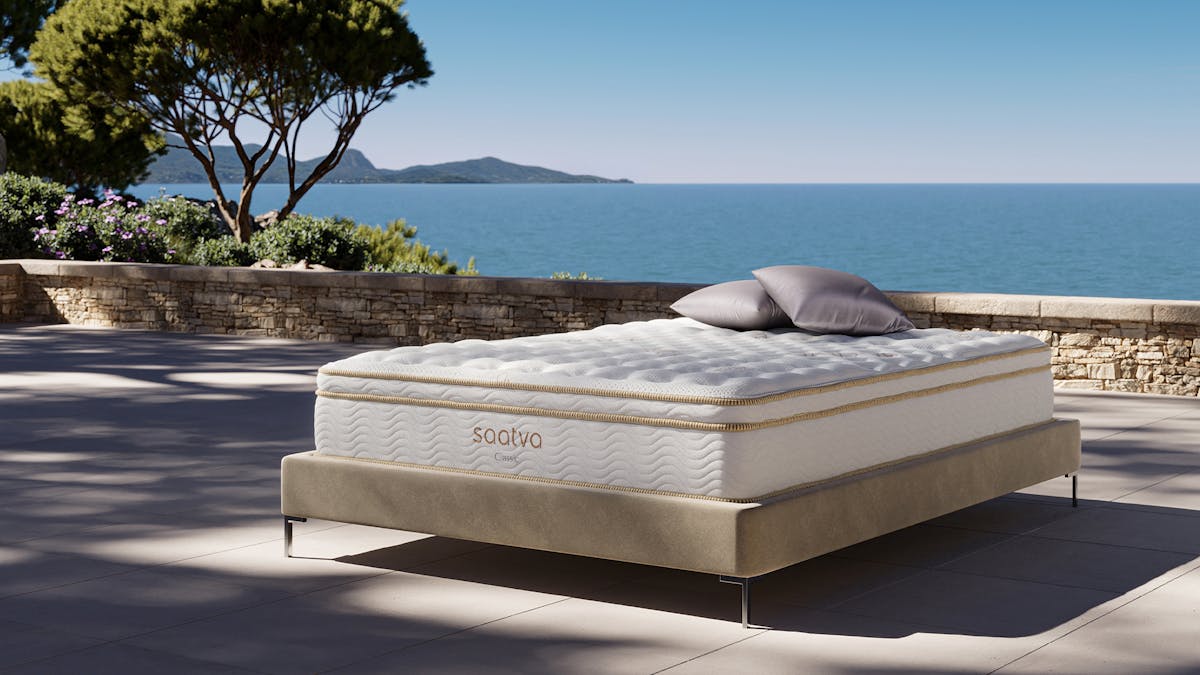
Saatva Classic
- Innerspring-hybrid construction with a more reinforced perimeter
- Three firmness choices and two available heights
- 365-night home trial, lifetime warranty, and white-glove delivery, according to Saatva’s published policies
- A stronger fit for shoppers who prioritize edge stability and delivery service
Check the Saatva Classic offer
That does not make the Saatva Classic an automatic winner for every shopper. Tuft & Needle remains the simpler choice if you specifically want a compact foam mattress without the bounce or bulk of an innerspring. The comparison is useful because the two constructions solve different problems.
“I spent ten years sleeping on a $250 mattress. I told myself it was fine. My back disagreed, every single morning.”
Read why our editor finally switched to Saatva
Original, Mint, and Hybrid Compared
Tuft & Needle’s lineup is easier to understand than many sprawling online mattress catalogs, but the construction differences matter. The Original is an all-foam model built around the brand’s responsive comfort material. The Mint is also all-foam, with additional cushioning and perimeter reinforcement. The Hybrid introduces pocketed coils beneath the foam layers.
| Model | Construction | Feel | Best fit |
|---|---|---|---|
| T&N Original | All-foam | Medium-firm and responsive | Back, stomach, and combination sleepers seeking simplicity |
| T&N Mint | All-foam with added comfort material | Medium and more cushioned | Side sleepers and shoppers wanting greater pressure relief |
| T&N Hybrid | Foam over pocketed coils | Medium with more bounce | Combination sleepers and people prioritizing edge support |
The Original is the value-led model. Its uncomplicated foam construction keeps the feel predictable: moderate contouring, quick response, and limited perimeter reinforcement. I see it as the clearest expression of what Tuft & Needle does well, but also where the brand’s tradeoffs are easiest to notice.
The Mint is the better place to start if the Original sounds too firm or shallow around the shoulders and hips. Extra comfort material can spread pressure over a larger area, while reinforced edges address one of the common limitations of basic all-foam beds.
The Hybrid is the structural step up. Pocketed coils typically improve airflow, responsiveness, and edge behavior compared with a basic foam support core. They also introduce more bounce and can transmit more movement than a foam-only mattress. The Hybrid therefore makes sense for mobility and perimeter support, not automatically for sleepers seeking maximum motion isolation.
Which Tuft & Needle Model Would I Choose?
I would choose the Original for a back sleeper who wants a firm, straightforward foam bed and does not depend heavily on the perimeter. I would steer a side sleeper toward the Mint because its added cushioning is more relevant than the Original’s lower cost. I would reserve the Hybrid for someone who wants coil response, easier movement, and a more usable edge.
These are construction-based recommendations, not promises that every sleeper will experience the firmness in the same way. Body weight, shoulder width, hip shape, foundation rigidity, and room temperature can all change how foam feels.
How T&N Adaptive Foam Feels
T&N Adaptive Foam is the brand’s proprietary alternative to traditional memory foam. According to Tuft & Needle’s published material description, it uses an open-cell polyfoam formulation with graphite and cooling-gel components.
From a materials standpoint, the important feature is response speed. Traditional memory foam usually softens gradually under heat and pressure, creating a slower, deeper contour. Adaptive Foam behaves more like responsive polyfoam. It compresses without producing the same prolonged, body-hugging sensation.
That faster response helps combination sleepers change positions without fighting the mattress. It can also feel less confining to people who dislike sinking into memory foam. The tradeoff is reduced contour depth, particularly around prominent shoulders and hips.
Graphite and gel should not be mistaken for active refrigeration. They may help manage heat within the foam, but the mattress remains an all-foam design unless you choose the Hybrid. A coil unit generally provides more open space for air movement than a solid foam core.
Adaptive Foam Versus Memory Foam
| Characteristic | T&N Adaptive Foam | Traditional memory foam |
|---|---|---|
| Response | Quicker rebound | Slower recovery |
| Contour | Shallower and more buoyant | Deeper and more enveloping |
| Position changes | Generally easier | Can feel restrictive in softer builds |
| Pressure relief | Moderate | Potentially stronger around shoulders and hips |
| Motion absorption | Good | Often stronger in dense, slow-response formulations |
If you like the slow “sinking in” quality of memory foam, Tuft & Needle may feel too springy. If you dislike being held in place, Adaptive Foam is the more appealing material. Shoppers wanting a premium, deeper memory-foam contour could also compare the Saatva Saatva Classic, while keeping in mind that it occupies a different construction and service tier.
Support and Pressure Relief
The T&N Original leans toward firm, even support rather than plush pressure relief. Its foam surface should suit many back sleepers because it allows some contouring without letting the midsection settle excessively. Stomach sleepers may also appreciate the flatter, more responsive surface, provided the mattress is firm enough for their body weight.
Side sleepers face the clearest compromise. A shoulder and hip need enough surface compression to prevent concentrated pressure. The Original’s shallower contour can feel unforgiving, especially for sleepers with pronounced pressure points. The Mint’s added comfort material makes it the more logical all-foam choice for this group.
Support is not the same as firmness. A mattress can feel firm while still allowing the pelvis to dip if the support foam is weak or fatigued. Long-term performance depends on foam density and layer thickness, specifications shoppers should verify against the manufacturer’s current product details before purchasing.
| Category | T&N Original assessment | Construction note |
|---|---|---|
| Pressure relief | 6/10 | Limited contouring for some side sleepers at the shoulder and hip |
| Support | 8/10 | Medium-firm surface is better aligned with back and stomach sleeping |
| Cooling | 7.5/10 | Open-cell foam and added materials help, but it remains an all-foam bed |
| Motion isolation | 7/10 | Good absorption, though the responsive foam is not completely dead-feeling |
| Edge support | 6/10 | Basic foam edges compress more than reinforced or coil-supported perimeters |
| Value | 9/10 | Simple construction remains competitive for shoppers prioritizing cost |
These scores come from MattressNut’s published evaluation framework and should be read as comparative guidance, not medical measurements. The underlying methodology is explained in The Nut methodology.
Motion Isolation for Couples
The Original’s all-foam construction is naturally useful for absorbing partner movement. Adaptive Foam is more responsive than slow memory foam, however, so it does not erase movement as thoroughly as some deeply conforming foam beds.
For most couples, the Original should be reasonably quiet and controlled. A very light sleeper sharing the bed with a restless partner may prefer a mattress with thicker, slower comfort layers. The Mint has more comfort material available to absorb movement, while the Hybrid’s coils add bounce even though individually wrapped springs are designed to move more independently than connected coils.
Edge behavior also matters to couples because a weak perimeter reduces the portion of the mattress that feels secure. The Original’s unreinforced foam edge is adequate for lying down, but it can compress noticeably while sitting. The Mint and Hybrid are more sensible candidates if both sleepers need to use the full width.
See how we test mattresses for the criteria MattressNut uses when comparing motion control, edge stability, cooling, and comfort.
Cooling and Temperature Control
Tuft & Needle positions Adaptive Foam as cooler than conventional memory foam, based on its open-cell structure and added graphite and gel. Those features are relevant, but bedding, room temperature, body heat, and mattress protectors can have an equally noticeable effect on comfort.
The Original should feel less enveloping than slow memory foam because more of the body remains near the surface. That can reduce the sense of trapped heat. Still, its solid foam support core does not move air as freely as a pocket-coil assembly.
The Hybrid is the model I would favor for a hot sleeper who wants to remain within the Tuft & Needle lineup. The coil cavity gives air more room to circulate. Buyers who sleep exceptionally hot should also inspect the cover material and avoid thick, non-breathable protectors that can blunt the effect of the mattress’s cooling features.
Edge Support and Ease of Movement
Edge support is one of the Original’s weaker areas. Foam along the perimeter can compress when you sit to put on shoes or push yourself out of bed. This does not necessarily mean the whole mattress lacks support, but it does make the usable edge feel less secure.
The Mint adds edge reinforcement, making it more suitable for sleepers who drift toward the side. The Hybrid gains additional structural help from its coil system. People with limited mobility should pay particular attention to this difference because a stable perimeter can make getting in and out of bed easier.
Adaptive Foam’s quick response is a positive for movement across the center of the mattress. Combination sleepers should not experience the same slow, stuck sensation associated with deeply conforming memory foam. The Original therefore performs better for repositioning than its basic edge construction might suggest.
Who the Tuft & Needle Mattress Suits
Good Matches
- Back sleepers who prefer an even, medium-firm foam surface
- Stomach sleepers who do not want a deep comfort-layer cradle
- Combination sleepers who value quick foam response
- Budget shoppers seeking a simple all-foam construction
- People who dislike the slow recovery of conventional memory foam
Think Twice If You Are
- A side sleeper who needs deep shoulder and hip cushioning
- A hot sleeper expecting active cooling from an all-foam mattress
- A sleeper who regularly sits or pushes off from the perimeter
- A couple needing exceptionally strong motion isolation
- A shopper who wants white-glove setup and old-mattress removal included
For side sleepers, the Mint is the more defensible Tuft & Needle choice. For strong perimeter support and easier movement, the Hybrid has the more appropriate architecture. The Original works best when its simple, responsive construction directly matches the sleeper’s priorities.
Alternatives at Different Construction Levels
Sweetnight offers budget-oriented foam mattresses that may appeal to shoppers comparing cooling features and firmness options. Model details can change, so confirm the current layer design and policy directly with the manufacturer.
Compare the Sweetnight Island mattress
Amerisleep’s AS3 is another all-foam alternative with a more contour-focused design. According to Amerisleep’s published policy, its mattress warranty runs for 20 years. The important comparison is not the headline warranty length alone, but what defects are covered and how coverage changes over time.
The Saatva Classic is the larger construction change. It uses coils, offers multiple firmness choices, and includes delivery service that boxed-foam brands commonly leave to the buyer. Saatva lists a 365-night trial and lifetime warranty in its published policies.
Saatva Classic as the Mainstream Hybrid Benchmark
The Saatva Classic is the mainstream luxury hybrid I use as a benchmark when a basic foam bed seems too limited. Its three firmness choices make the fit less dependent on accepting one universal feel. Its coil-based support and reinforced edge also address two of the Original’s clearest compromises.
Check the current Saatva Classic price
Tuft & Needle still wins if the goal is a simpler foam mattress with less bounce and a lower entry cost. Saatva is the stronger structural comparison for shoppers prioritizing the edge, airflow, firmness choice, and in-home setup.
Tuft & Needle Original Versus Casper Element
The T&N Original and Casper Element target similar shoppers: people seeking an uncomplicated all-foam mattress without premium materials or elaborate zoning. Both use foam comfort and support layers, and both have historically been positioned as accessible bed-in-a-box options.
The practical distinction is feel. Tuft & Needle’s Adaptive Foam is responsive and moderately firm. Casper Element uses a more conventional polyfoam approach and may feel slightly softer, depending on the version currently sold. Because manufacturers revise model names and specifications, confirm the live product sheet rather than assuming an older comparison remains exact.
| Feature | T&N Original | Casper Element |
|---|---|---|
| Construction | Responsive all-foam design | Conventional all-foam design |
| Height | 10 inches | 10 inches |
| Firmness impression | About 6/10 | About 5.5/10 |
| Trial | 100 nights | 100 nights |
| Warranty | 10 years | 10 years |
I would lean toward Tuft & Needle for a sleeper who wants quicker response and a firmer surface. A shopper wanting a softer first impression may prefer the Casper design. Neither basic foam model should be expected to match the edge reinforcement of a well-built hybrid.
Durability and Long-Term Value
Foam durability is governed less by branding than by material density, layer thickness, sleeper weight, foundation support, and how much strain is concentrated in one area. Softer comfort layers usually show impressions before firmer support layers fail.
The Original has fewer layers and fewer moving parts, which makes its construction easy to understand. Simplicity can be a virtue, but it does not guarantee longevity. The most useful missing specification for many foam shoppers is density, because denser polyfoam generally resists softening better than low-density material of the same type.
The Mint adds cushioning, but extra comfort foam also creates another layer whose long-term behavior matters. The Hybrid’s coils can preserve support and edge stability, although its foam comfort layers can still soften with use. A coil unit does not make the foam above it immune to wear.
As a broad category guide, natural latex may last 15-20 years, pocketed-coil hybrids around 10-15, high-density all-foam beds around 7-10, low-density all-foam beds around 3-5, and basic innersprings around 5-8. These are general material ranges, not guaranteed lifespans for an individual Tuft & Needle mattress.
Check the foundation requirements as well. An unsupported center or widely spaced slats can allow any foam mattress to bow and may affect warranty eligibility. Rotate the mattress if the manufacturer permits it, and use a breathable protector that does not substantially change the surface feel.
MattressNut Scorecard
| MattressNut measure | Published score |
|---|---|
| MCI, MattressNut Comfort Index | 79/100 |
| MCS, MattressNut Cooling Score | 62/100 |
| MES, MattressNut Edge Stability Rating | 62/100 |
| MIC, MattressNut Motion Isolation Coefficient | 86/100 |
| Overall The Nut Score | 72.2/100 |
These are MattressNut’s published comparative scores for the Tuft & Needle Original. They are based on the site’s stated evaluation framework and should not be read as clinical findings. The scoring process is described in the The Nut methodology, which references 47 comparison mattresses evaluated across 2024-2026 under lead reviewer Romain Renard.
Buying Terms to Verify Before Ordering
Tuft & Needle has offered a 100-night sleep trial with returns under its published policies. Policies can change, so read the current terms before buying. Pay attention to where the mattress was purchased because a third-party retailer may apply different return procedures from the manufacturer.
- Trial period: Confirm when the trial starts, how returns are initiated, and whether any waiting period applies.
- Warranty: Read the definition of a covered indentation and check whether transportation costs or prorated terms apply.
- Return policy: Verify that the refund goes back to the original payment method rather than becoming store credit.
- Foundation rules: Check the required slat spacing and center support for the mattress size you buy.
- Foam certification: Look for current CertiPUR-US documentation for polyurethane foam.
- Fabric certification: OEKO-TEX Standard 100 can provide additional textile-related information where applicable.
- Organic claims: GOLS and GOTS are relevant to certified organic latex and textiles, but they should not be assumed for conventional polyfoam.
- Shipping: Determine whether setup and old-mattress removal are included or left to the customer.
For the broader framework I use to compare construction, policies, and sleeper fit, see the 2026 best mattress buying guide.
Tuft & Needle Mattress FAQ
Is Tuft & Needle a Good Mattress?
Yes, for the right sleeper. The Original is a reliable budget-oriented mattress for people who want responsive foam, medium-firm support, and less of the slow memory-foam hug. It is less suitable for side sleepers needing deep contouring or anyone relying heavily on edge support.
How Does Tuft & Needle Compare With Casper?
Tuft & Needle generally feels firmer and more responsive than the basic Casper foam alternative described in the original comparison. T&N is the clearer choice for sleepers who want quick rebound, while a softer Casper build may appeal to someone seeking more surface give. Confirm current specifications with each manufacturer because model details can be revised.
Does Tuft & Needle Have a Sleep Trial?
Tuft & Needle has published a 100-night trial with returns. Verify the live policy before ordering, especially if you purchase through a retailer rather than directly from the manufacturer.
Is Tuft & Needle Good for Back Pain?
No mattress can be guaranteed to treat back pain. The Original’s medium-firm, even support may suit some back sleepers, while the Mint and Hybrid offer different balances of cushioning and structure.
Does T&N Sleep Hot?
It should not feel as enveloping as slow memory foam, and Tuft & Needle attributes temperature-management benefits to the open-cell foam, graphite, and gel. It is still an all-foam mattress, however, so a coil-based Hybrid is the more logical choice for shoppers prioritizing airflow.
Original or Mint?
Choose the Original for a firmer, simpler, more responsive surface. Choose the Mint for extra shoulder and hip cushioning plus a more reinforced edge. Side sleepers are the group most likely to benefit from the Mint’s additional comfort material.
How Long Does T&N Last?
Expect durability to depend on foam density, body weight, foundation support, and normal softening rather than the model name alone. The Original and Mint rely on foam for both comfort and support, while the Hybrid adds coils without eliminating wear in its upper foam layers.
T&N or Saatva?
Choose T&N for a simpler foam feel and a lower-cost route into an online mattress. Choose Saatva if you want hand-tufted construction, coils, stronger edge support, multiple firmness choices, and white-glove delivery, based on Saatva’s published product description.
Is the Tuft & Needle Original Good for Couples?
It can be. The all-foam construction absorbs ordinary movement well, and the responsive surface makes repositioning easier. Couples who are highly sensitive to motion or need every inch of mattress width may prefer thicker comfort foam or a model with reinforced edges.
Can You Sit Comfortably on the Edge?
The Original’s edge is usable but compresses under concentrated seated weight. The Mint’s reinforcement and the Hybrid’s coil structure make those models more appropriate for frequent edge sitting or mobility support.
Does Adaptive Foam Feel Like Memory Foam?
Only partly. Both materials contour under pressure, but Adaptive Foam rebounds faster and creates a shallower cradle. It is better described as responsive polyfoam than as a direct copy of slow memory foam.
Related Mattress Reviews
- Brooklyn Bedding Mattress Review (2026)
- Emma Mattress Review: 2026 Honest Verdict
- Nectar Promo Code 2026: Current Deals
Related Buying Tips
Before purchasing a Tuft & Needle mattress or a competing bed-in-a-box, check the policies against the way you actually sleep. A generous trial is useful only if you understand how to return the mattress, and a long warranty matters only if it covers the type of wear you are concerned about.
- Trial period: 100 nights is a practical minimum, while 365 nights gives seasonal temperature changes more time to show themselves.
- Warranty: Look for 10 years or longer on a mattress and read the exclusions rather than relying on the headline term.
- Return policy: Confirm that returns are free and refunded, not limited to store credit.
- Certifications: CertiPUR-US applies to polyurethane foam, GOLS and GOTS address qualifying organic materials, and OEKO-TEX Standard 100 concerns tested textiles and components.
- Shipping: Check whether room setup and old-mattress removal are included or available for an additional charge.
Before committing to Tuft & Needle: compare the Original’s responsive foam and basic perimeter with the Saatva Classic’s coil support, firmness choices, and published 365-night trial.
The Nut’s Final Verdict
The Tuft & Needle Original remains a sensible foam mattress for back, stomach, and combination sleepers who want a firmer, responsive feel without complicated construction. Its strongest qualities are simplicity, quick rebound, and respectable motion control. Its weak points are shallow pressure relief, average cooling, and limited edge reinforcement.
I would not buy it on brand recognition alone. I would buy it if the material profile matches what I need: buoyant polyfoam instead of slow memory foam, moderate contouring instead of a deep hug, and an all-foam support core instead of coils.
The Mint is the better Tuft & Needle option for side sleepers and shoppers who want more cushioning. The Hybrid is the better choice for edge stability, airflow, and easier movement. If service, firmness selection, and a more substantial innerspring build matter most, the Saatva Classic deserves a direct comparison.
The Mattress I Would Compare Before Deciding
The Saatva Classic uses an innerspring-hybrid construction, comes in three firmness levels and two heights, and includes a 365-night home trial, lifetime warranty, and white-glove delivery under Saatva’s published policies. It costs more than a basic foam bed, but the added structure and service address several of the Original’s limitations.
Bottom line: Tuft & Needle is still competitive for shoppers who deliberately want firm, responsive foam. The Original is not the best universal mattress, and it does not need to be. It works when its construction fits the sleeper, and it becomes a poor value when pressure relief, edge support, or coil-driven airflow are the real priorities.