
 by
by A giant paper spider door can stay near $5 when you use paper, leftover paint, and the doorway you already have. My first one sagged like a wet napkin. The fix wasn't more stuff; it was layered shadows, odd legs, and a little restraint. You'll find 12 warm, budget-minded ways to build it here.
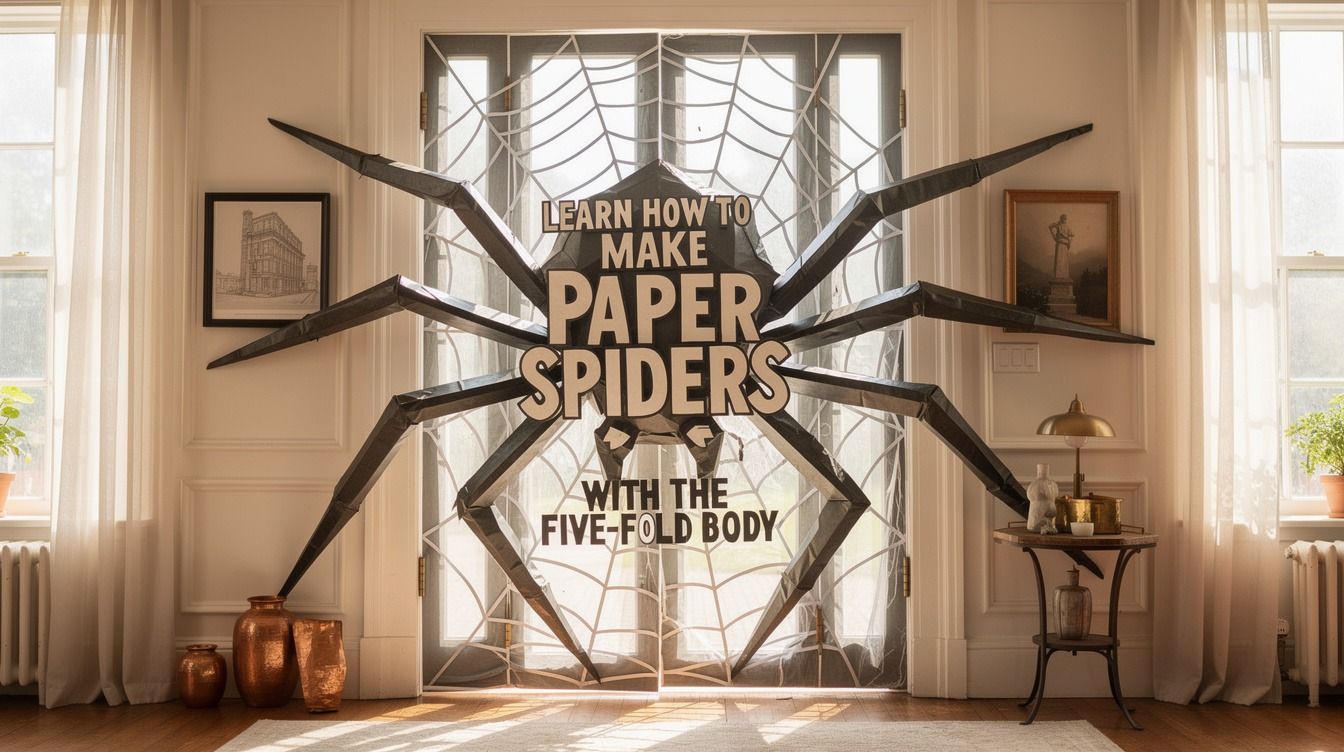
- Learn How to Make Paper Spiders with the Five-Fold Body
- Layer a Spider Web on the Door with the Shadow-Lace Rule
- Frame a Large Paper Spider Decoration at the 57-Inch Sightline
- Build DIY Halloween Door Ideas Around the Five-Leg Rhythm
- Swap Plastic for a DIY Paper Spider Craft with the Paper-Shadow Test
- Paint a Halloween Front Door Cover in Warm Charcoal
- Hang Halloween Screen Door Decorations with the Three-Height Light Stack
- Which Small-Porch Spider Door Ideas Work Best?
- Choose a Halloween Door Decoration with Balloon over a Plastic Cluster
- Anchor the Entry with the Two-Texture Threshold Rule
- Budget the Haunted-House Effect with the Three-Tier Cost Check
- Make the Rental-Safe Giant Paper Spider Door with the No-Damage Map
1Learn How to Make Paper Spiders with the Five-Fold Body
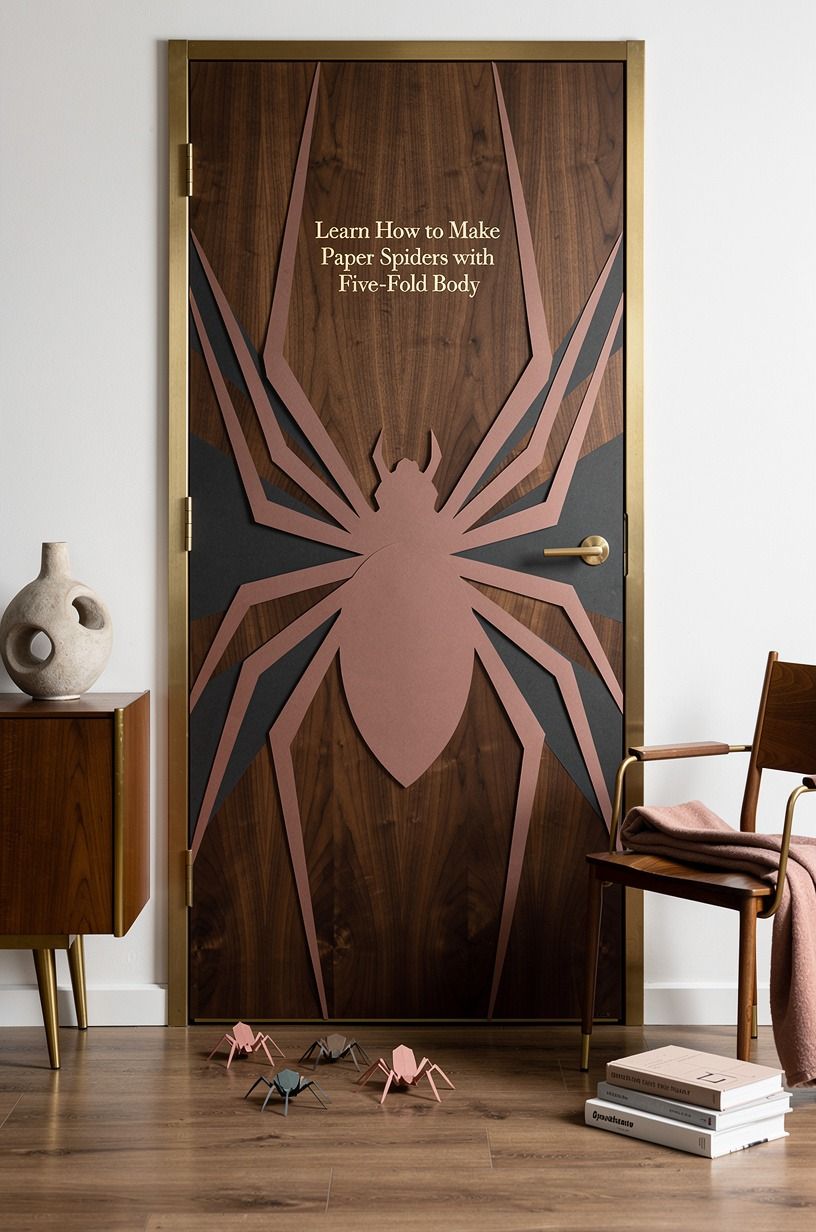
Start with a broad oval body cut from charcoal kraft paper, then give the legs a soft accordion bend before you open them. You'll get a shadow with broken edges, not the stiff outline a plastic prop gives you. Keep the silhouette slightly crooked against a dusty-rose backing.
It looks more alive.
Your best paper spider doesn't need a complicated pattern. Trace a rounded body on matte charcoal cardstock, cut the legs as long tapered strips, and leave a little paper between each joint. The folded edge catches porch light while the flat center stays dark against book-matched walnut.
I've made the mistake of cutting every leg the same width, and the result looked like a logo. Use wider roots and thinner tips; that difference gives your spider a charming, organic shape.
Small brass paper fasteners let you move the creature after you see it on the door. Don't glue until you like the pose.
And if you want the project to feel more like a scene, borrow the layered-door instinct from these Halloween classroom door ideas, then keep your own version quieter. A white chalk pencil can mark fold lines on the back, so you do not leave visible guides on the front.
2Layer a Spider Web on the Door with the Shadow-Lace Rule
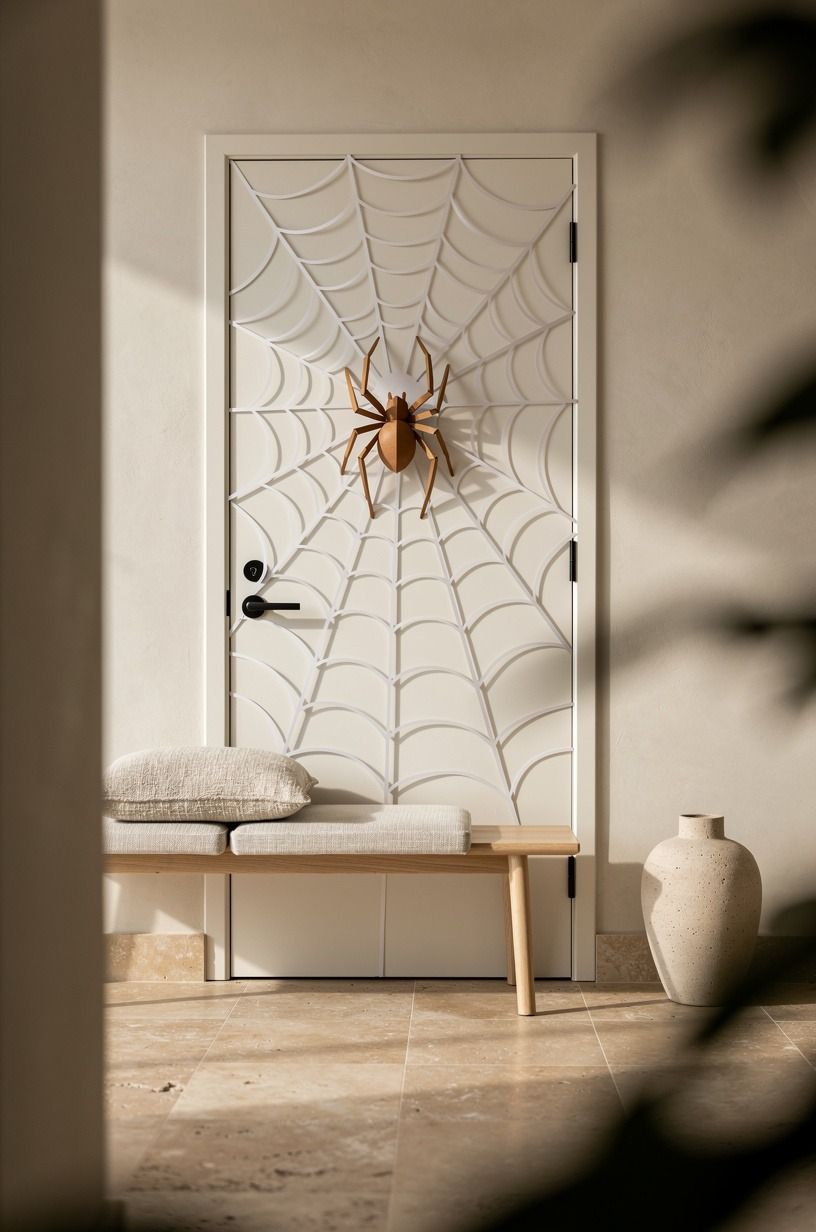
A spider web on the door works best when it has air between the lines. You're creating a moody frame, not wrapping the whole entry in string. Use camel-colored linen twine for a soft, earthy line that looks handmade instead of glossy.
Anchor the first strands near the top corners and let them drift toward the body. Keep the center open around the spider, because that empty patch makes the silhouette feel bold. Black waxed cord gives a sharper edge if your door is pale, but I prefer twine for a warmer porch.
I've tried a full, dense web, and it swallowed the body within a few minutes. Leave loose gaps and let the wall show through.
You can't get that airy effect from a solid plastic web. Removable clear hooks keep the lines suspended without turning your doorway into a repair project.
For a more inviting fall entry, borrow the framing idea from DIY Halloween front-door wreaths that survive wind and rain. A warm travertine door surround or old-looking handle gives the web somewhere visual to land without adding another large prop.
3Frame a Large Paper Spider Decoration at the 57-Inch Sightline
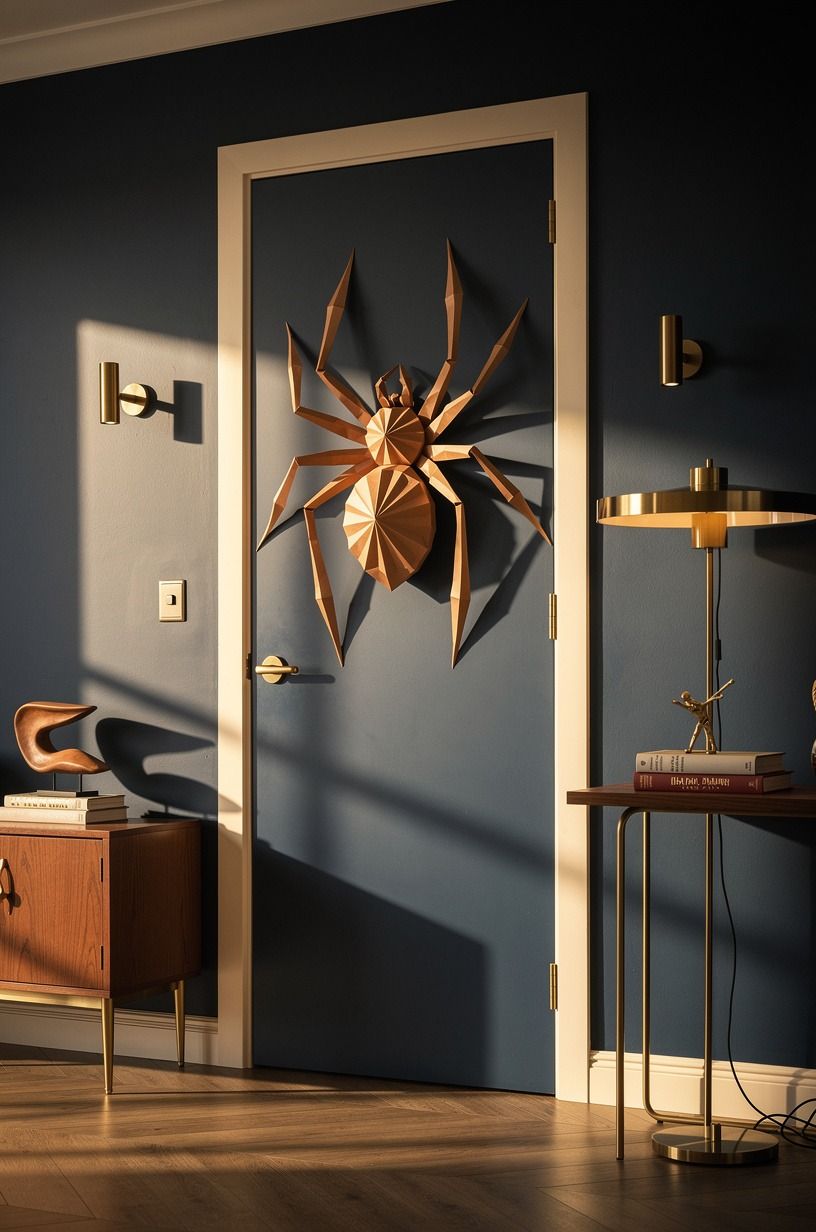
A large paper spider decoration reads best when the body sits near eye level. Place the center around 57-60 in (145-152 cm) from the floor, then let the legs travel above and below that point. If you're styling a family entry, your eye will still catch the shape before the taller trim takes over.
Use matte midnight-blue poster board for the body if the door gets damp air or regular handling. It has enough structure to stay crisp, but it still folds into gentle curves. A little bend along each leg creates a soft, dramatic shadow that flat paper alone cannot give you.
I hung one too high the first time, and the spider disappeared into the transom area. The fix was simple: move it down, then angle two legs toward the handle. Unlacquered brass framing strips can make the whole display feel intentional when your door sits beside a blank wall.
If you like small furniture projects, study the color-blocking in this painted nightstand makeover, then repeat its restraint at your entry. A copper-toned linen ribbon around the handle connects the dark paper to the rest of your porch.
4Build DIY Halloween Door Ideas Around the Five-Leg Rhythm
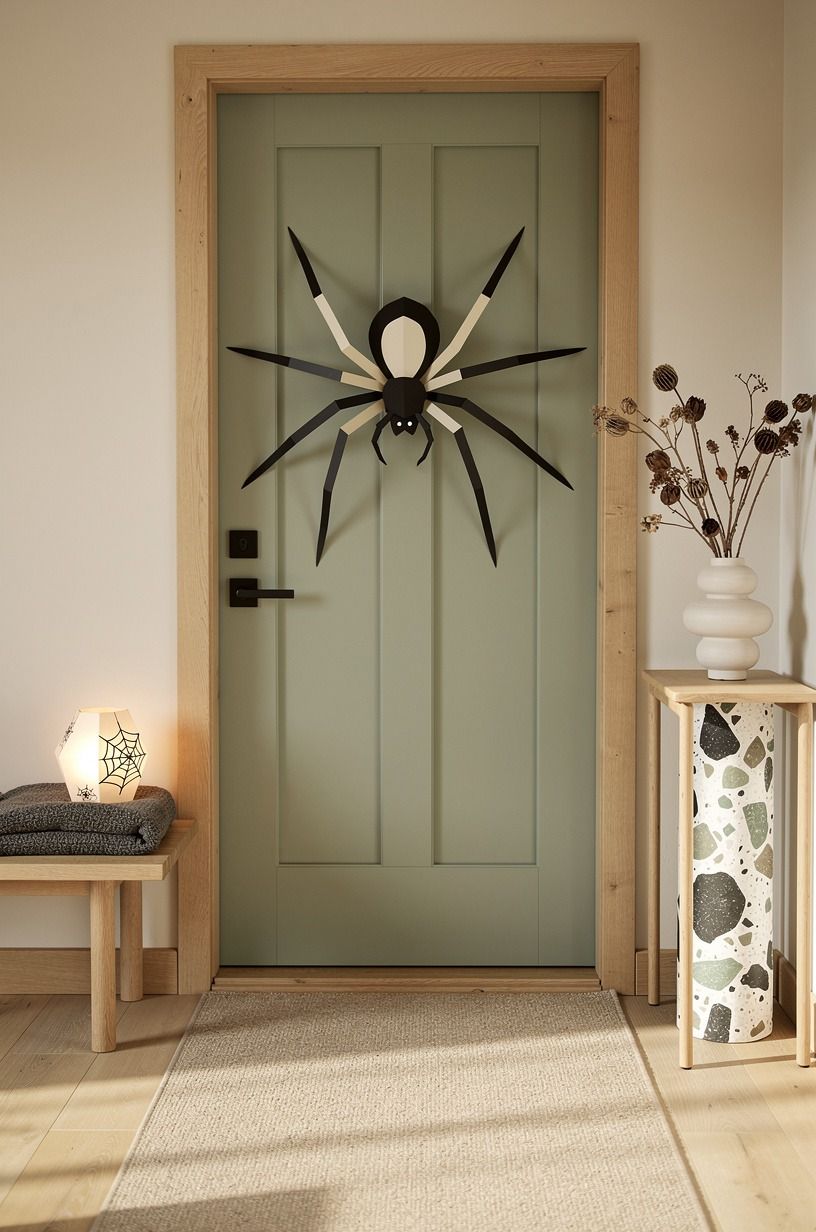
The Five-Leg Rhythm keeps your spider from looking like a flat sticker. Give the body a strong center, then let each side carry a different curve.
You're aiming for movement, not perfect balance. A slightly uneven pose feels more captivating because your eye keeps following it.
Tie one lower leg back with sage-green cotton ribbon so it lifts from the surface. The soft texture adds a luxurious note beside rough paper, especially if your porch has natural wood or an oversized-chip terrazzo threshold. Keep the ribbon dark, since bright trim can pull attention away from the face.
For a gentler background, use Farrow & Ball Lichen (No.19) on a removable board behind the spider. I'd choose a warm-cream backdrop over bright orange because it keeps the shadows readable and the whole display from feeling loud. The green paint gives you a sophisticated fall color without losing the Halloween mood.
You can borrow the layering rhythm from Halloween classroom door ideas you can finish in one prep period, but reduce the number of layers for a home entry. Your doorway needs one clear focal point, not a competition between paper legs, signs, pumpkins, and lights.
5Swap Plastic for a DIY Paper Spider Craft with the Paper-Shadow Test
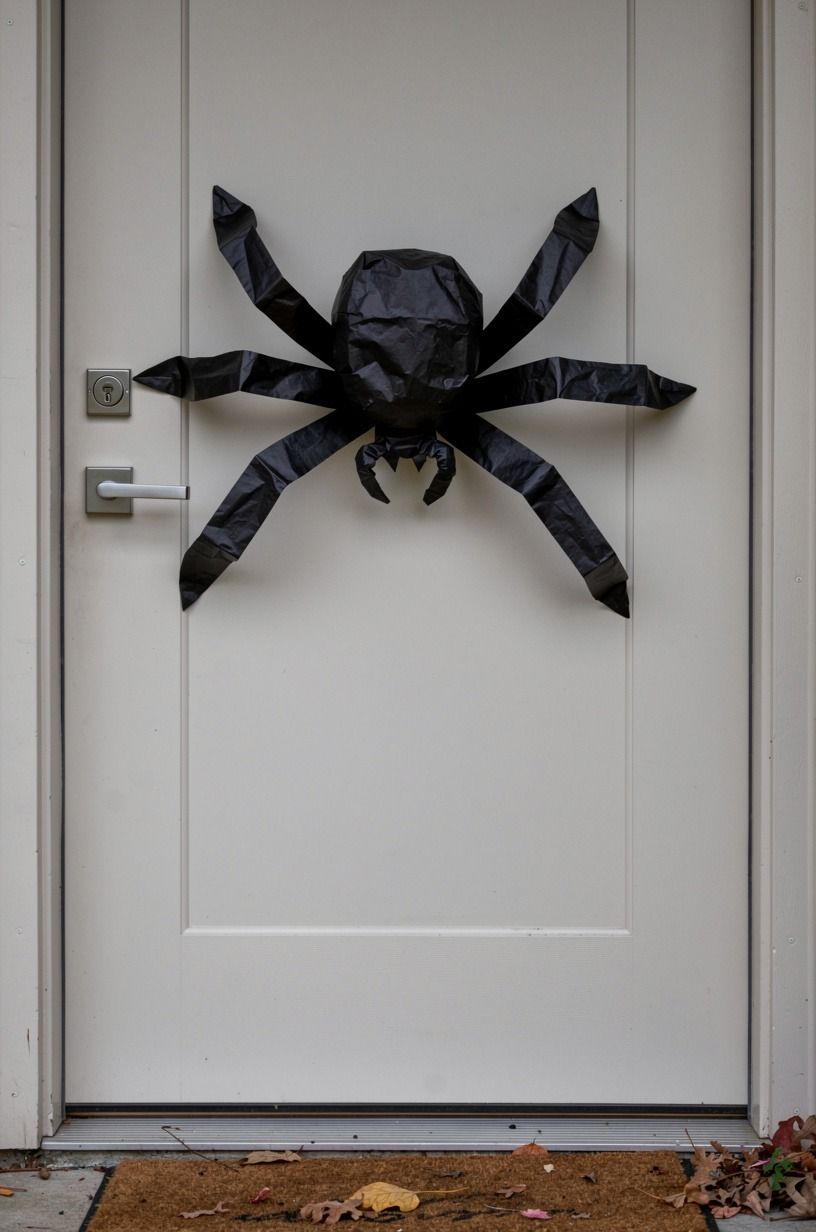
A DIY paper spider craft feels richer when every layer earns its place.
6Paint a Halloween Front Door Cover in Warm Charcoal
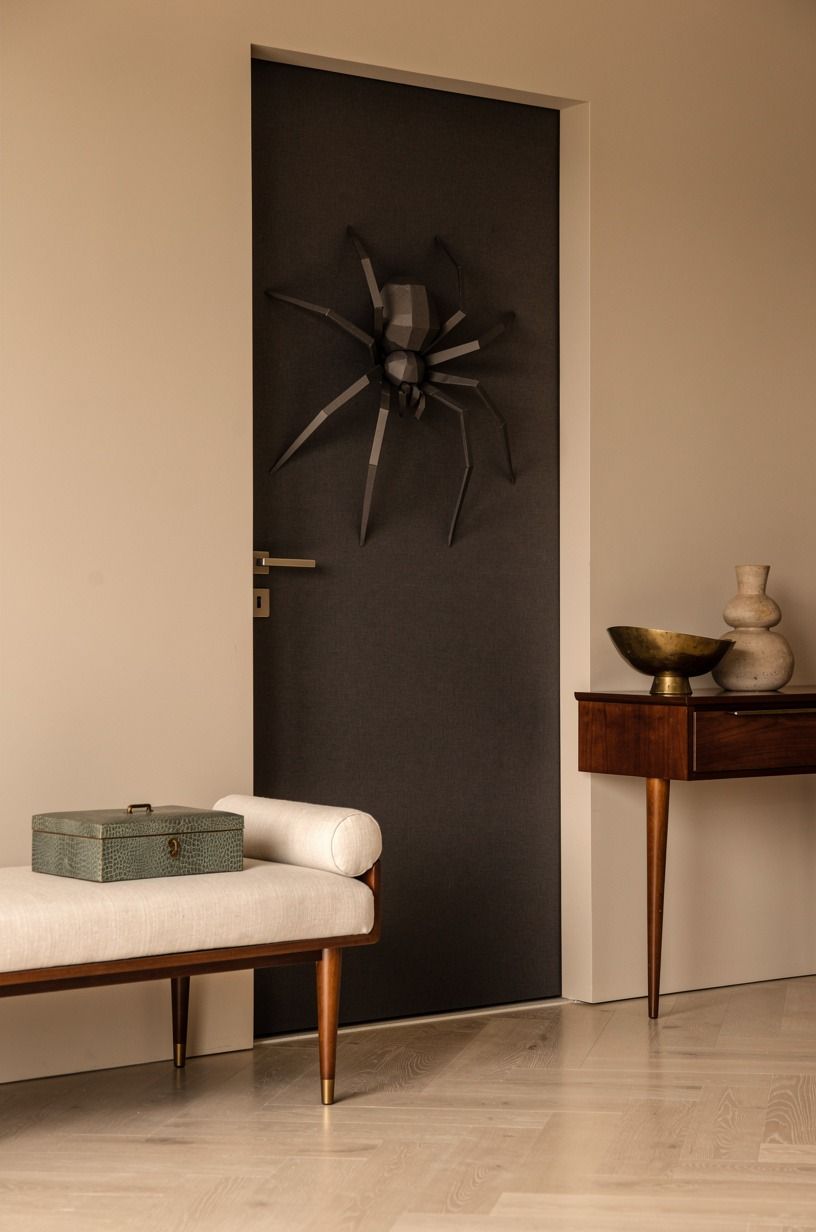
A Halloween front door cover should frame the entry, not seal it shut. Keep the handle, lock, and hinges clear, then build a removable paper panel around the spider. Benjamin Moore Muslin (OC-12) works well on a trim board because its soft linen tone makes dark paper look warm instead of harsh.
Paint the backing panel with water-based gouache in muted clay, leaving a little paper grain visible. That surface gives the web something to disappear into while the body stays readable. If your door is already light, use less paint and let the natural finish act as the contrast.
I wouldn't coat a rental door or cover a historic finish for a seasonal display. Use a board, paper, or fabric layer instead. Removable shagreen-textured vinyl can sharpen one border, but it often looks flatter than painted paper, so use it only where you need a clean edge.
For more color direction, compare front-door colors for a red brick house with heart-shaped wreaths that made a front door feel like a love letter. Your cover can be dramatic without becoming gloomy, especially beside aged brass hardware.
7Hang Halloween Screen Door Decorations with the Three-Height Light Stack
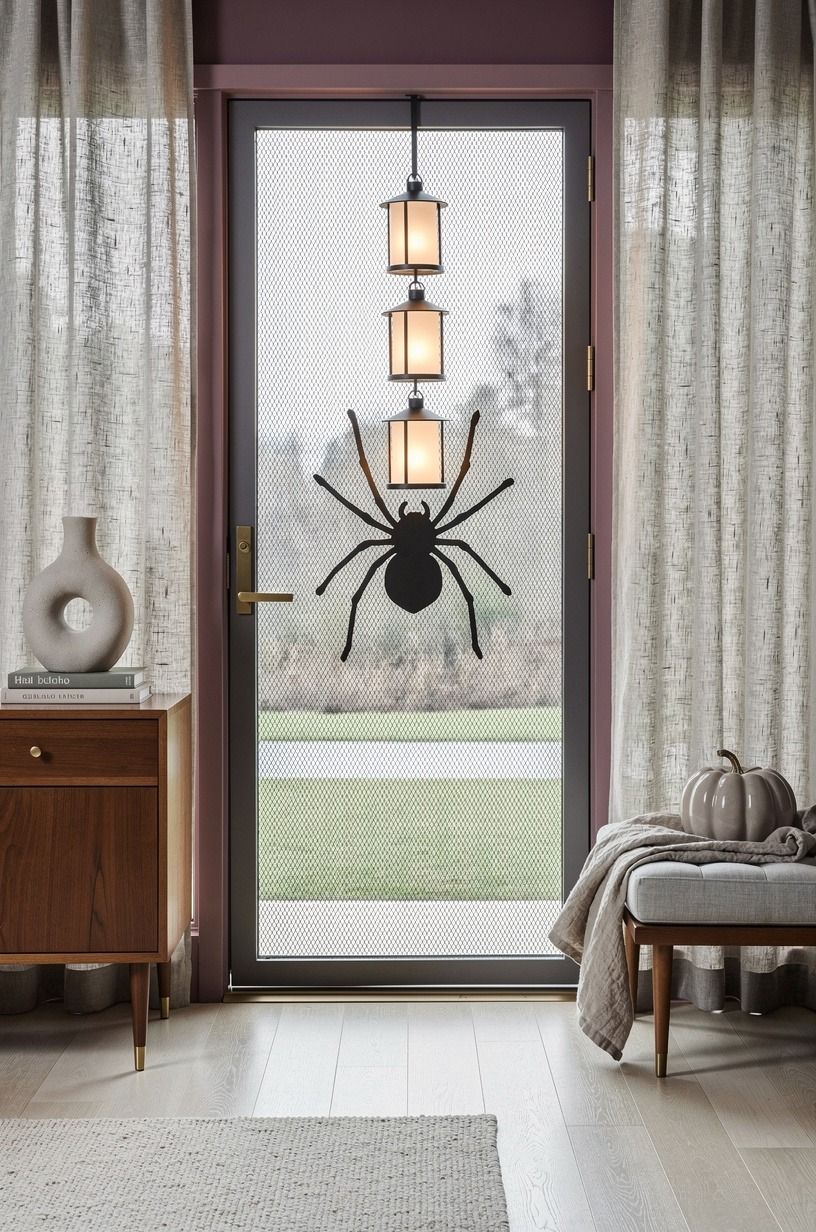
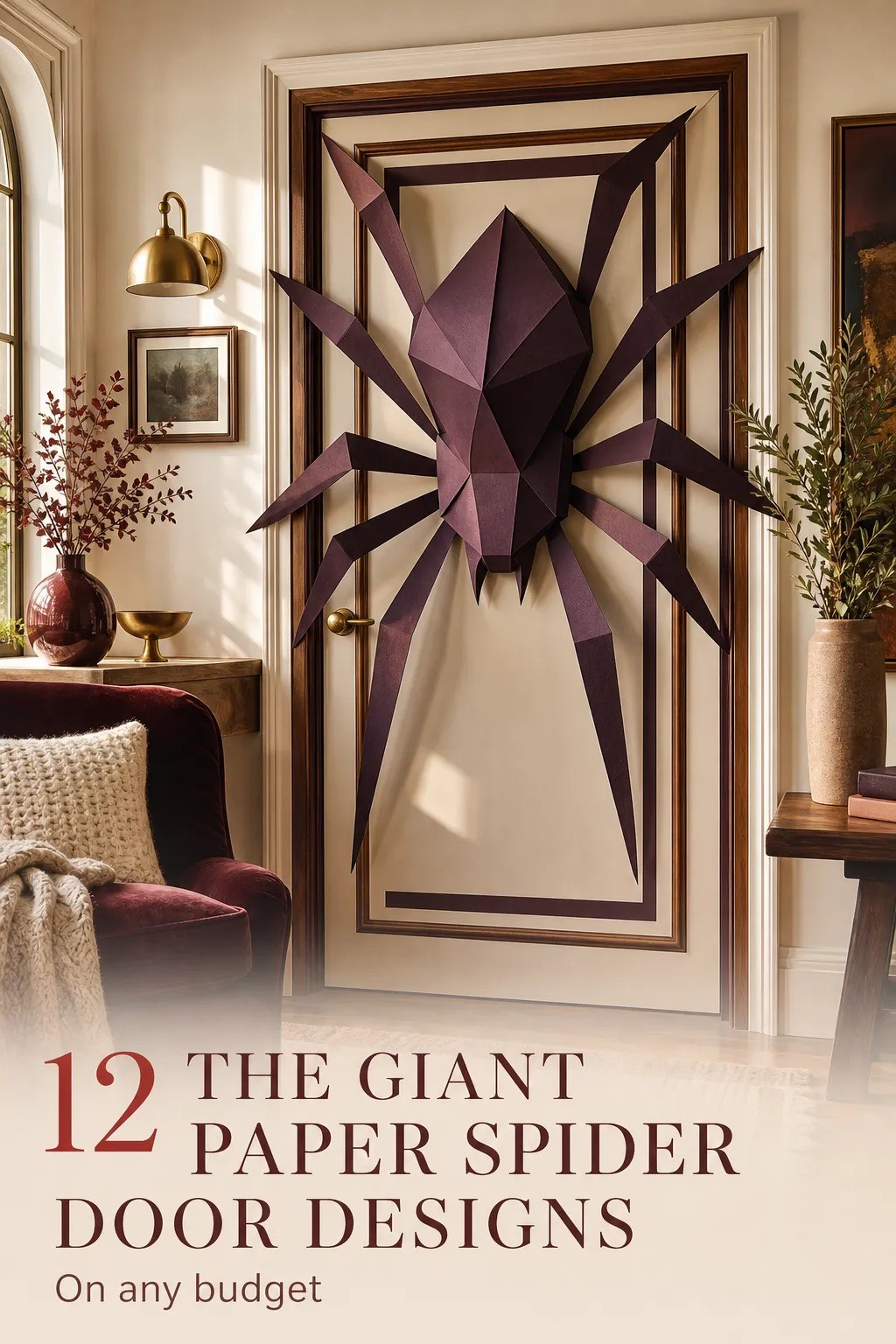
Halloween screen door decorations need to stay light, thin, and easy to move. Use warm-white LED string lights with rose-gold wire behind the paper spider, not directly across its face. You'll get a gentle glow through the gaps, and the legs will cast shadows instead of disappearing into the screen.
The standard lighting plan is three sources per room: overhead, task, and ambient. On a porch, think overhead fixture, side light, and a low glow near the threshold.
Don't use a cold blue light here. It makes black paper look gray and turns an inviting entry cold.
I've seen the best results with one low light and one higher glow, rather than a bright strip around every edge. A washed Belgian linen lantern shade can soften the porch while keeping the spider crisp. Your display should feel calming from the sidewalk, not like a store window.
For a softer approach to layered lighting, browse modern coastal bedrooms that feel like a beach house. The same restrained glow works outdoors. A moody door can still feel warm when your light has a gentle color and a clear stopping point.
8Which Small-Porch Spider Door Ideas Work Best?
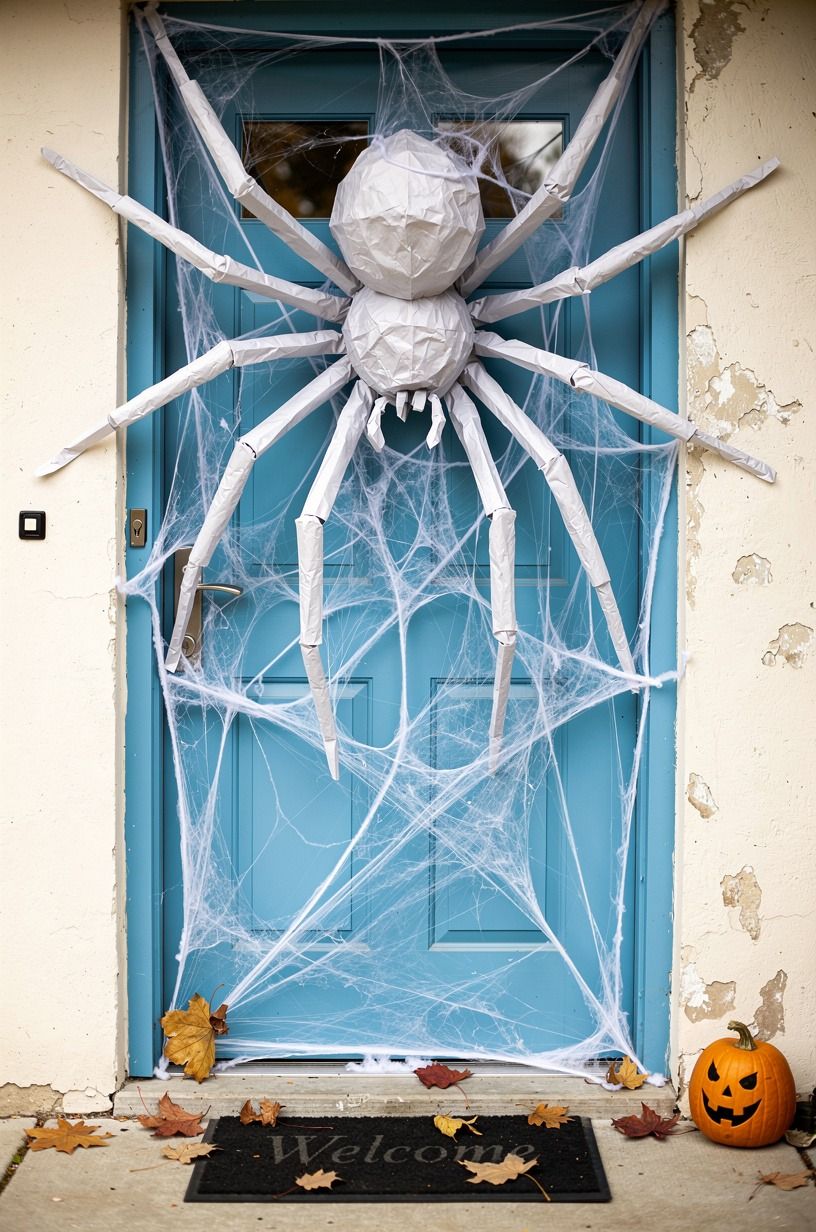
The best small-porch spider door idea is a flat silhouette with open space around it. You've already got limited floor area, so use the vertical plane and keep the body high enough for shoes, packages, and bags. Navy butcher paper with a soft matte finish gives you presence without bulk.
Why fill the whole porch when your eye needs one clean silhouette? Add a low-pile mat in an organic bouclé texture beneath the door, then stop. The soft texture grounds the paper spider and gives your feet a practical landing place without adding another Halloween character.
I'd skip a large freestanding prop on a narrow porch. It makes the entry feel crowded and forces your spider into the background. A hand-turned walnut planter can work if you already own one, especially with a small branch or dried stem that echoes the spider legs.
And if you're refreshing the rest of the outdoor area, borrow the compact thinking from cozy DIY backyard projects you can build on a budget. Your door will feel more peaceful when every object has breathing room. That restraint is enough!
9Choose a Halloween Door Decoration with Balloon over a Plastic Cluster
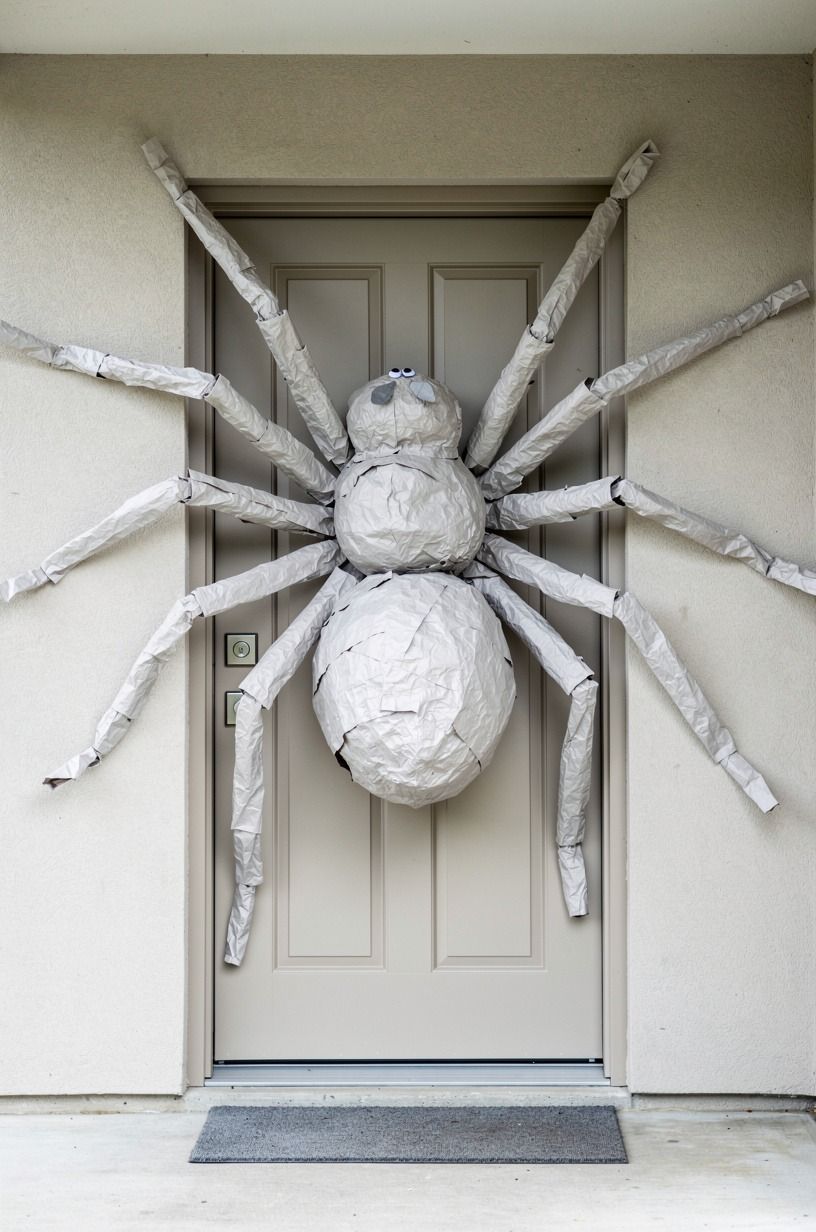
A Halloween door decoration with balloon can give your paper spider a rounded body without buying a large prop. Choose one matte emerald latex balloon and place it behind the paper shape, leaving a narrow edge visible against a Nero Marquina marble surround. You're adding volume, not replacing the handmade silhouette.
Cover the balloon tie with gold crepe paper fringe, then tuck the paper legs behind it. The fringe breaks the hard line where the two materials meet. Keep the balloon away from the handle, because a swinging door will pull at it and your display won't stay tidy.
I've used balloon clusters before, and they made the entry feel more like a birthday table than a haunted house. One balloon is enough. Cream Belgian flax linen ribbon on the handle gives the dark paper a soft counterpoint and makes the whole arrangement feel charming.
Protect the paper from rain and strong wind by keeping the display under a covered porch. A little movement is welcome, but a balloon whipping against the door will ruin the calm shape. Pair the idea with DIY Halloween front-door wreaths when you want an alternate seasonal layer.
That little shift sells the illusion!
10Anchor the Entry with the Two-Texture Threshold Rule
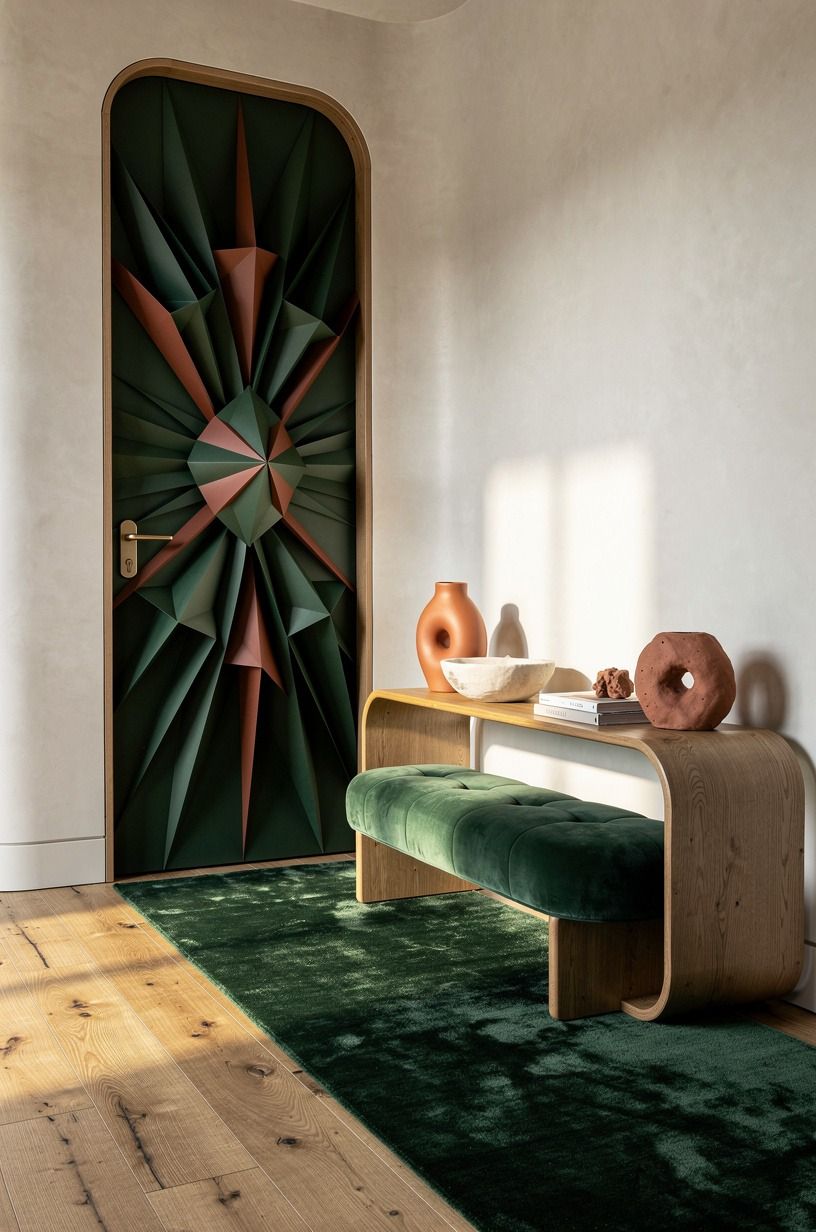
The Two-Texture Threshold Rule keeps your door from floating in empty space.
11Budget the Haunted-House Effect with the Three-Tier Cost Check
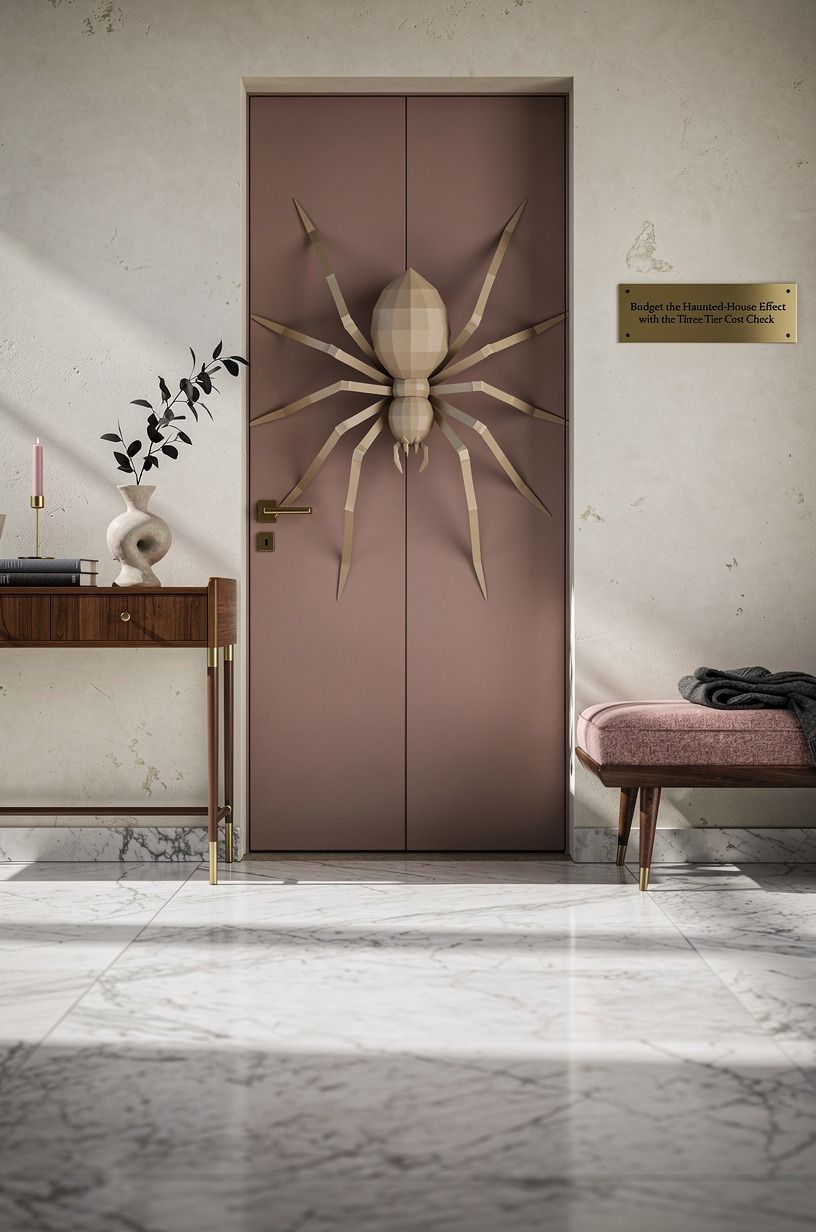
The door itself is the low-cost win. A paper-and-paint setup can create a bold focal point while your existing mat and light handle the rest. The table below is useful if you decide to carry the warm, earthy look into a larger room.
If you've got leftover supplies, stay with the paper version and let the entry do the work. Farrow & Ball Setting Plaster (No.231) on a backing board, recycled paper, and a warm light can make the display feel intentional without turning a small craft into a room renovation.
The money is better spent on one material you will keep using, such as Carrara marble with subtle grey veining for a nearby ledge or small table. You don't need a collection of seasonal props. One well-cut silhouette will look more refined than a cart full of objects that all compete for attention.
For more low-cost outdoor projects, compare cozy DIY backyard projects you can build on a budget with 15 cozy DIY backyard projects you can build on a budget. I'd put your effort into shape and lighting first. Unlacquered brass with a soft patina is a better small upgrade than another plastic figure.
12Make the Rental-Safe Giant Paper Spider Door with the No-Damage Map
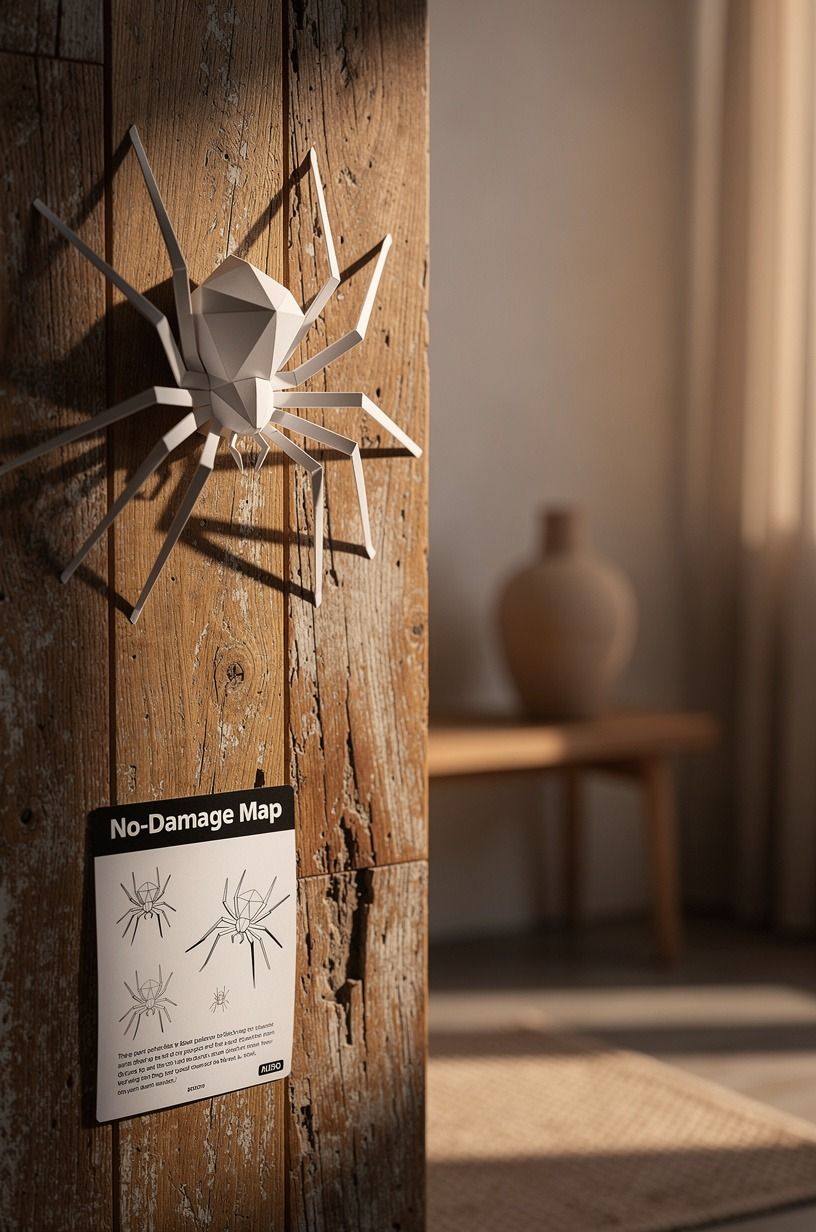
A rental-safe giant paper spider door starts with the attachment plan. Removable poster strips should hold the light paper pieces, while the web can hang from temporary hooks or existing hardware. You'll protect the finish and make cleanup less stressful after the season.
Draw the No-Damage Map on the back of your paper before you cut. Mark the handle, lock, peephole, and opening edge, then keep every leg inside that safe area. Recycled black cardstock is sturdy enough for the body and cheap enough to replace if a corner bends.
I've rented homes with delicate paint, and one careless piece of tape can leave a shiny patch. Test your adhesive on an unseen section first. Reclaimed weathered teak makes a handsome indoor backing, but paper is better for a covered exterior because it stays lighter and does not pull as hard.
If you're planning another removable display, study front-door wreath ideas that survive wind and rain for attachment thinking. Your spider should come down in one calm pass. Camel-colored cotton twine and paper hooks keep the final setup gentle, warm, and easy to store.
The Door Mistake I Won't Repeat
I used to think a Halloween door needed more objects to feel finished. I would add pumpkins, signs, lights, and a second decoration until the original idea disappeared. The giant spider works because it gives your eye one strong shape.
Black kraft paper lets that shape stay bold while the rest of the entry remains quiet.
The first body I made was too symmetrical. Every leg curved at the same angle, and the whole thing looked like a logo printed for a school worksheet. I cut a new version with wider roots, narrow tips, and one leg turned slightly inward.
Cotton butcher's twine softened the web, and the crooked pose suddenly felt more alive.
My second mistake was covering the entire door. The paper buckled near the hinge, the handle became awkward, and the display lost its airy quality. I rebuilt it as a framed silhouette instead.
Benjamin Moore White Dove (OC-17) on a backing board gave the dark paper a warm edge without forcing me to paint the door.
Now I decide where the shadow should land before I decide how many decorations to buy. That one choice makes the project feel more sophisticated and less crowded.
A warm light, a rough textile, and a little empty space do more than a pile of matching props. Warm-white paper lantern light is my favorite finishing touch because it makes the doorway feel inviting after sunset.
The current fall look is leaning toward handmade texture, quiet color, and objects that can live beyond one holiday. I like that shift. It gives you room to make a spider that feels charming instead of disposable.
If I were starting over, I'd build the body first, test it at night, and let these front-door color ideas guide the supporting palette.
The Questions Worth Answering First
What is the best giant paper spider door style for a small space?
The best small-space style is a flat, high-contrast silhouette with open web lines. A floating black body keeps your walkway clear, and you do not need a deep prop. Use matte paper, warm light, and your existing door color for the strongest effect.
Where can I buy giant paper spider door pieces on a budget?
Look at IKEA, Wayfair, Target, Facebook Marketplace, and local thrift shops for plain paper, removable hooks, and warm lights. You can also reuse packaging. For more classroom-friendly supply ideas, browse these Halloween door projects.
How much does a giant paper spider door makeover cost?
The paper spider itself can stay near $5, while a broader entry update may cost about 100 to 300 dollars. Reuse creates the biggest savings: leftover paper, paint, lights, twine, and a mat you already own.
Can I create a giant paper spider door on a budget?
Yes, and you can keep it lean with free packaging paper, leftover black paint, and removable strips. Borrow lights, cut the body from a box, and use twine for the web. Buy only the silhouette supplies first, then stop.
What color works best for this door in 2026?
Warm charcoal is my 2026 pick, with Farrow & Ball Pigeon (No.25) for a soft gray-blue edge and Benjamin Moore White Dove for trim. The contrast reads after sunset, and you do not need glitter to make the entry festive.
Is a giant paper spider door worth it in a small space?
Yes, because a flat silhouette uses vertical space without stealing your walkway. Open negative space makes the porch feel larger, so keep the body high and the legs loose. For more compact styling, see these modern coastal bedrooms.
Is a giant paper spider door a good idea for a rental?
Yes, if every attachment is removable. Removable poster strips, tension-mounted twine, and paper hooks protect the finish; keep paint on a separate board, not the landlord's door. If you're renting, test one corner first and borrow ideas from these heart-shaped wreaths.
Where I'd Start First
If I had to pick one, I'd start with the layered paper spider body. It throws a real shadow across the door, so it still reads after sunset when flat webbing disappears. Pin the body for later and save these DIY Halloween front-door wreath ideas for your next seasonal swap.