
 by
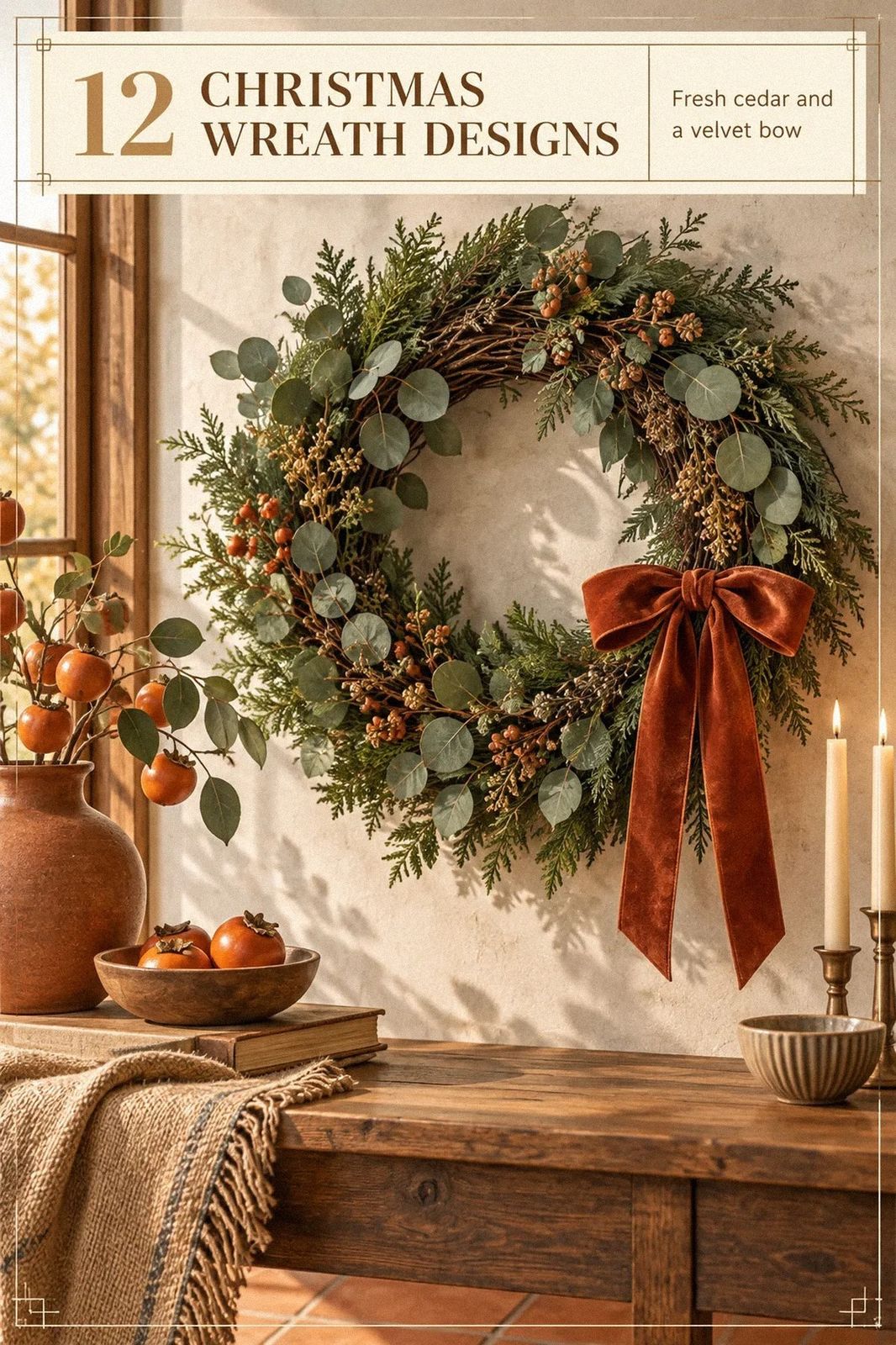
by Christmas wreath ideas that skip pine can still feel warm, festive, and wonderfully familiar. I once bought a huge evergreen wreath that shed needles across the porch for weeks, and I swore off the obvious choice. The better answer was a dried citrus wreath with a velvet ribbon. It looked lighter, lasted longer, and didn't fight the architecture. These twelve ideas bring holiday color without repeating the same green circle.
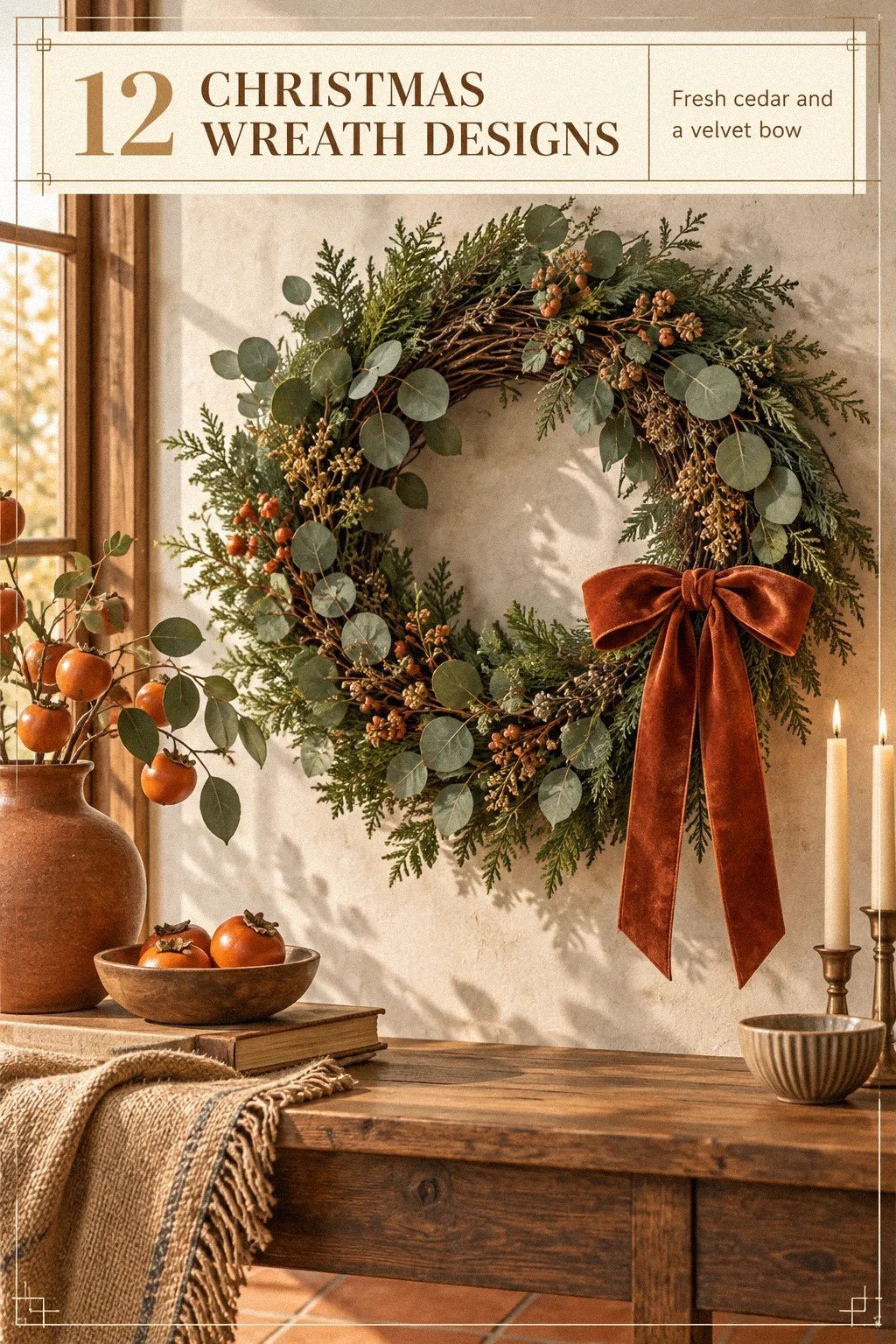
- Layer eucalyptus over a grapevine base
- Tie dried oranges with velvet ribbon
- Build the Two-Wood Rule with birch and cedar
- Hang a paper star wreath for a lighter look
- Swap evergreen for a dried flower halo
- Frame the door with a ribbon-only wreath
- Paint a wooden hoop in Farrow & Ball Pigeon
- Use the Three-Texture Loop with wool, bells, and bark
- Choose velvet bows over shiny tinsel
- Layer ceramic ornaments on a branch circle
- Paint a straw wreath with Sherwin-Williams Agreeable Gray
- Mix dried cotton with one bold red fruit
1Layer eucalyptus over a grapevine base
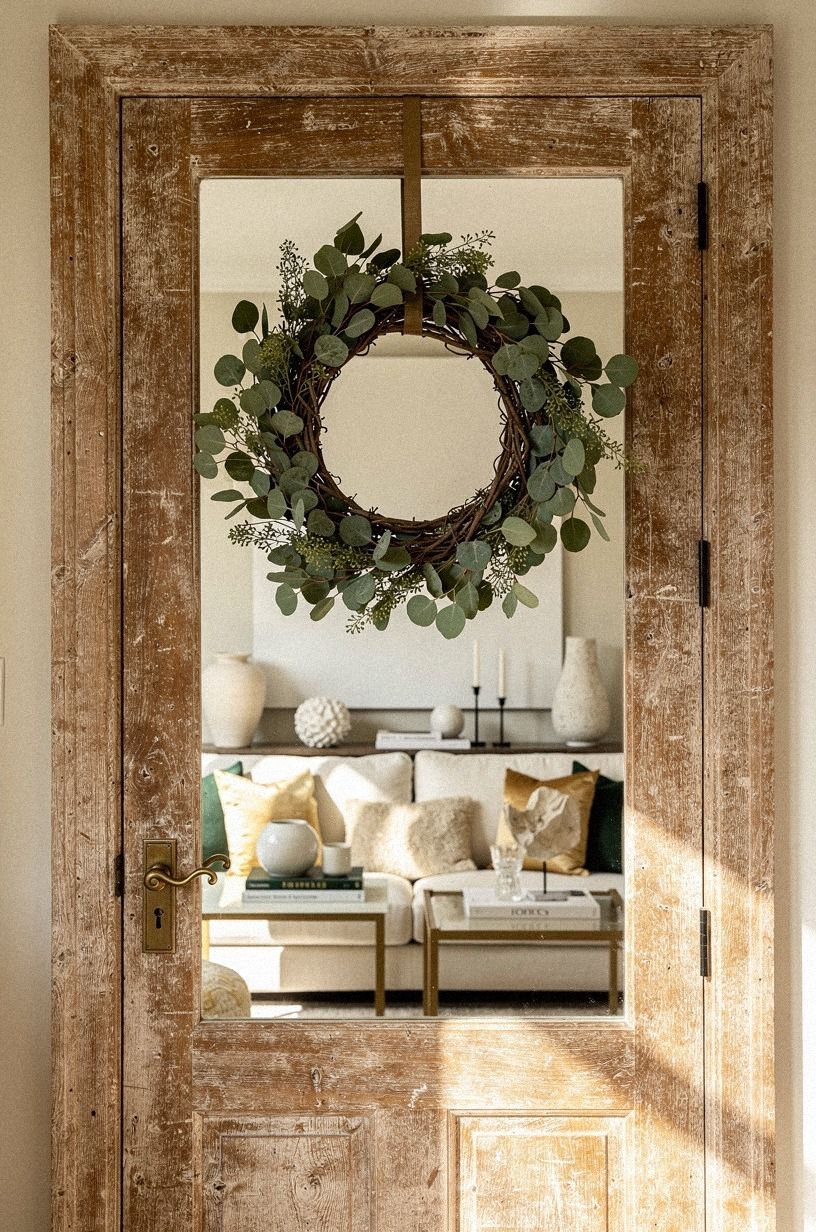
A eucalyptus wreath gives you that soft, earthy shape without making your front door look like every other December entry. Start with a reclaimed weathered teak base and tuck in greenery, gold details, and a few cream accents. The emerald palette feels festive without becoming heavy, and the wood keeps the arrangement connected to the door.
Choose a base with visible grain rather than a tightly packed one. The weathered teak should still show through, because that texture keeps the arrangement from looking like a store display. If you're styling a narrow apartment door, leave one side slightly open so the shape feels airy.
I made mine too symmetrical the first time. It looked polite, not personal. You’ll get a more inviting result if your greenery gathers heavily at the lower left and fades toward the upper right.
For an easy seasonal connection, pair the wreath with a small lantern and a winter fireplace decor arrangement. You don’t need matching greenery everywhere. A few repeated warm brass tones are enough.
2Tie dried oranges with velvet ribbon
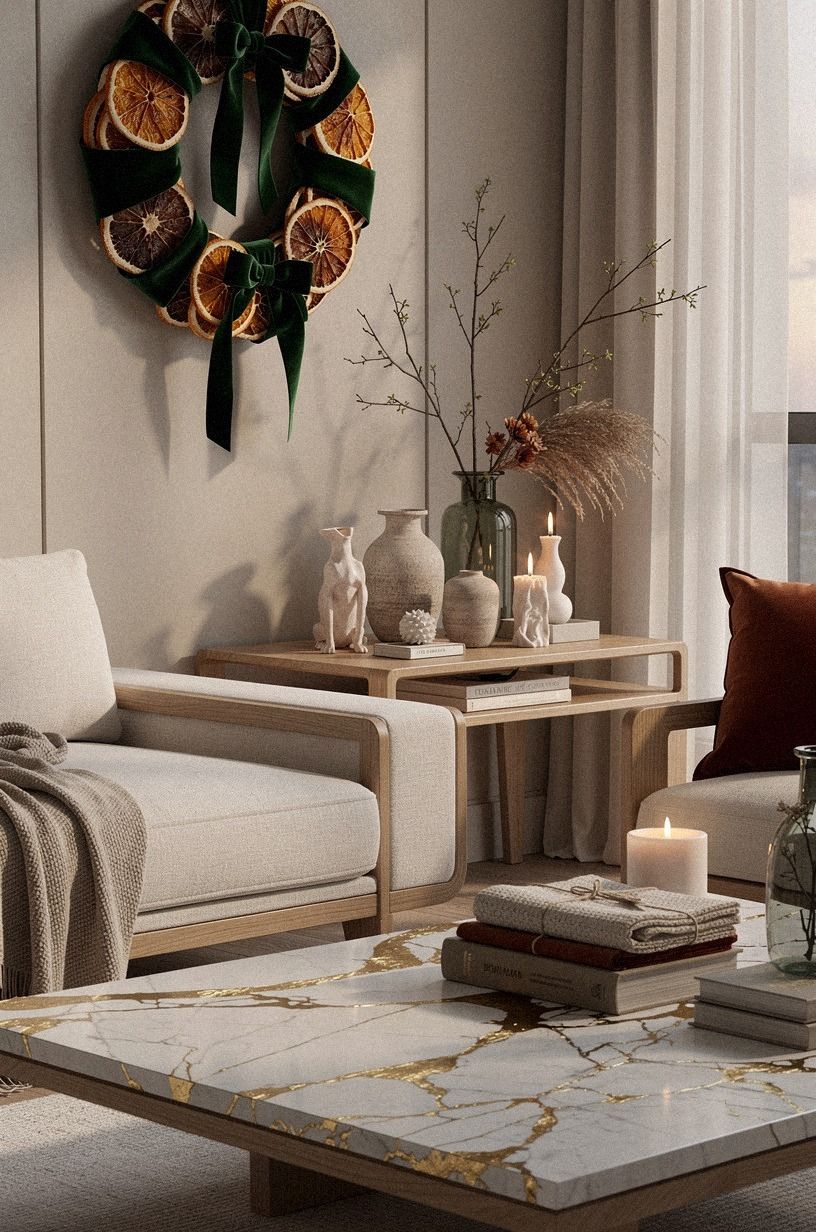
Dried oranges bring a bright, rustic note to a wreath without relying on needles or plastic berries. Pair them with forest green, rust, and natural oak, then repeat a little gold through the ribbon or hardware. The Calacatta marble look, with its fine gold veining, adds a polished reference without making the wreath feel formal.
3Build the Two-Wood Rule with birch and cedar
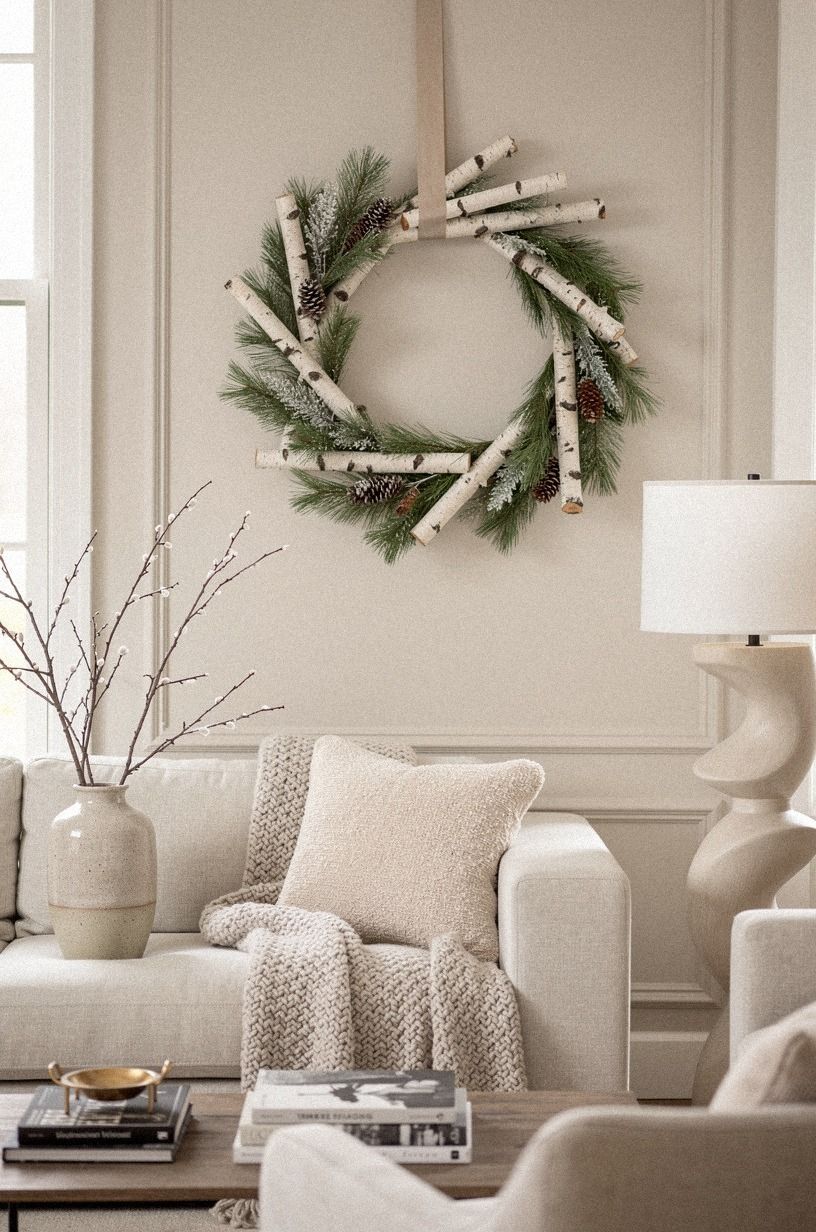
The Two-Wood Rule works beautifully with a cerused white oak base when you want something rustic but not overly red and green. The pale grain keeps the arrangement light, while dusty rose, charcoal, and brass give it a more considered seasonal depth.
The Two-Wood Rule is simple: use one pale wood and one deeper, warmer branch, then repeat each material only a few times. Too many wood tones make the circle look busy.
I’d use cerused white oak as the main structure and small brass details as the accent. The oak gives you a soft natural foundation, while the charcoal notes keep the dusty rose from becoming too sweet. You’re aiming for a quiet woodland effect, not a miniature forest.
Add a few dried seed pods or small pinecones if you like, but skip the glitter. Glitter catches on bark and ends up on your coat, your dog, and somehow your kitchen floor. A cerused white oak surface has enough character without extra shine.
For a small-space variation, hang the wreath inside a glass-paneled door and keep the entry bench clear. You can borrow more ideas from these small black cat decor details if you want one playful black accent among the pale branches.
4Hang a paper star wreath for a lighter look
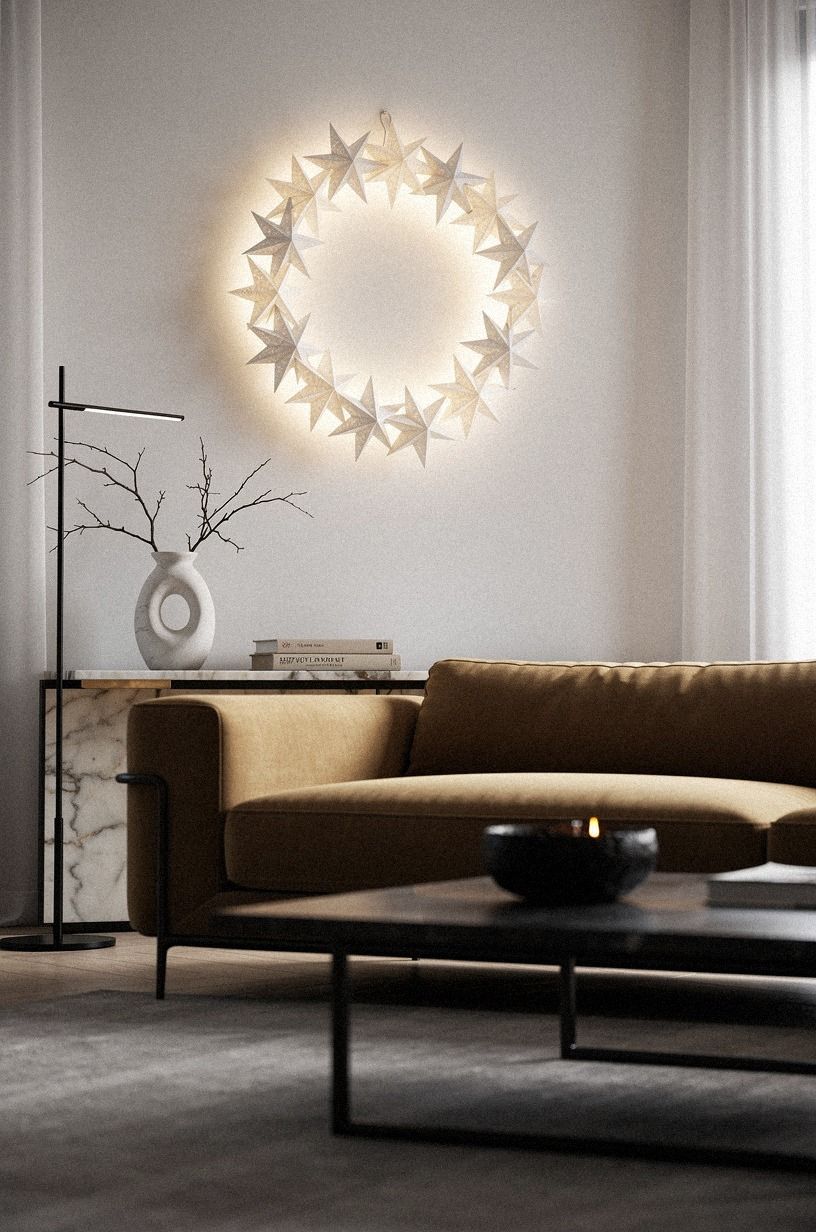
A paper star wreath is the best option when you want holiday impact without adding visual weight. Keep the palette warm white with camel and black accents, then introduce the glow of backlit translucent onyx through a nearby lamp, wall detail, or small decorative element. The result feels softer than a bright metallic wreath.
5Swap evergreen for a dried flower halo
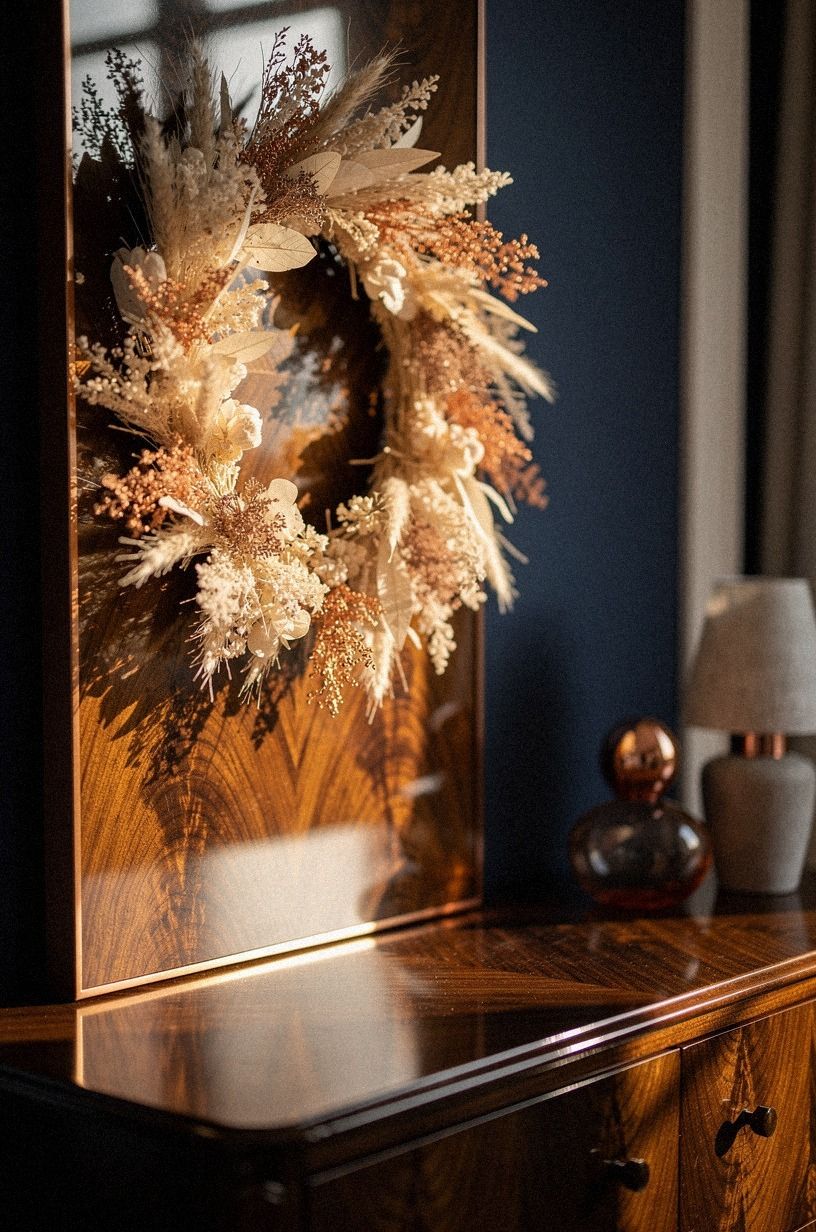
A dried flower halo brings a soft, romantic feeling to Christmas decorating. Use midnight blue, copper, and ivory around a loose hoop, with the richness of book-matched walnut as the grounding material. The open center keeps the arrangement from feeling heavy, especially on a small apartment door.
The strongest version uses one dominant shade and two quiet supporting colors. I like midnight blue with ivory and copper. Book-matched walnut adds a warm, graphic grain beside the softer dried materials.
You don’t need a full circle of flowers. A crescent arrangement across the lower half can feel more modern, while a fuller halo reads traditional. My preference is the crescent because you can see the wall or door behind it, and that negative space makes the wreath feel intentional.
But don’t put dried flowers where they’ll be hit by constant rain. A covered porch is ideal. If your wreath is near a bedroom entry, keep the surrounding textiles simple with ideas from where to find cooler bedding.
The two spaces will feel connected without matching exactly.
6Frame the door with a ribbon-only wreath
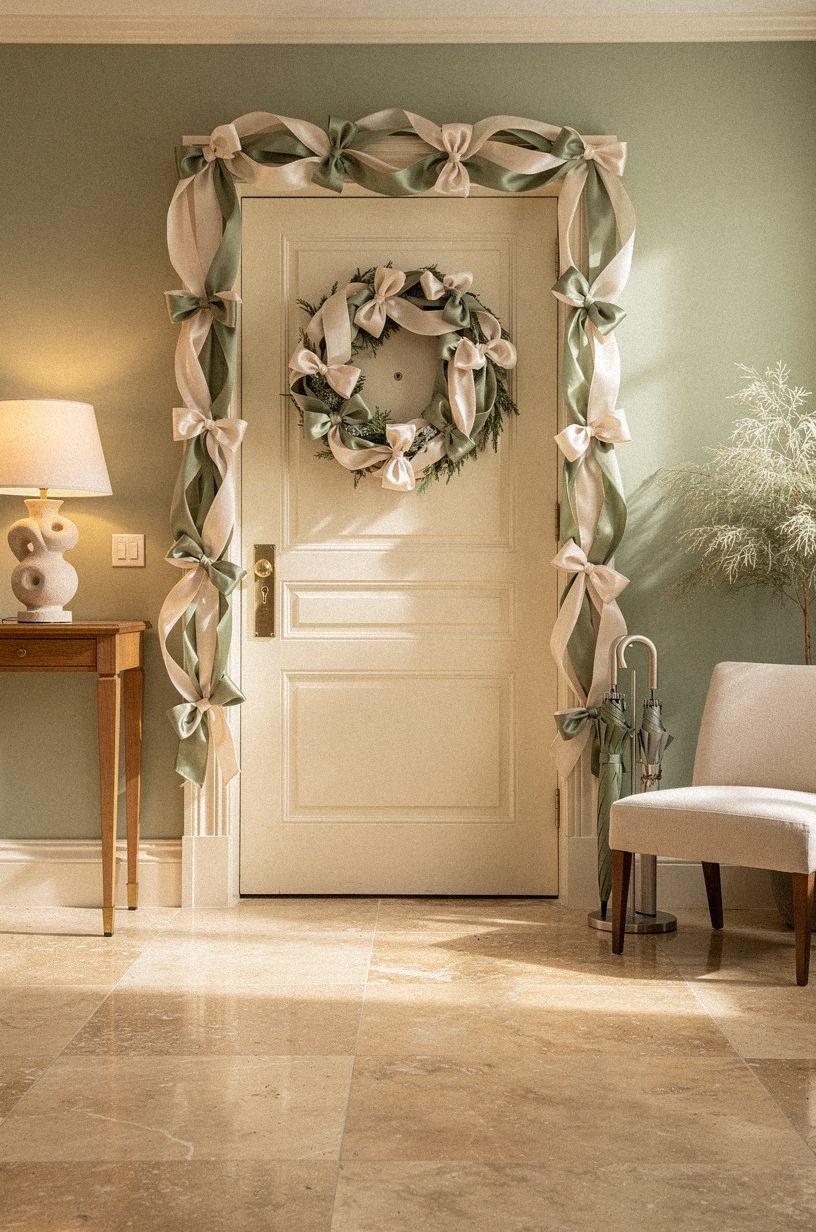
Sometimes the strongest wreath has almost no decoration. Wrap a simple hoop with warm cream ribbon, then add one cluster of natural wood, a small branch, or a single sage green detail. This ribbon frame feels modern and works beautifully when your home already has strong architectural details.
Choose natural wood and warm cream rather than thin craft ribbon. The quieter palette gives the circle enough presence to read from the street. You’ll want the bow to sit off-center, because a centered bow can make the wreath feel too formal.
I’d skip plastic ribbon with wired edges here. It holds a crisp loop, sure, but it also reflects light in a way that makes the wreath feel temporary. A slightly rumpled tie looks warmer and more lived-in.
For a budget version, use fabric from an old table runner or curtain panel. One thoughtful strip is enough. If your entry opens into a room with a sofa, the Article Sven tan leather color family can inspire a natural wood and cream palette, though you shouldn’t try to match it exactly.
7Paint a wooden hoop in Farrow & Ball Pigeon
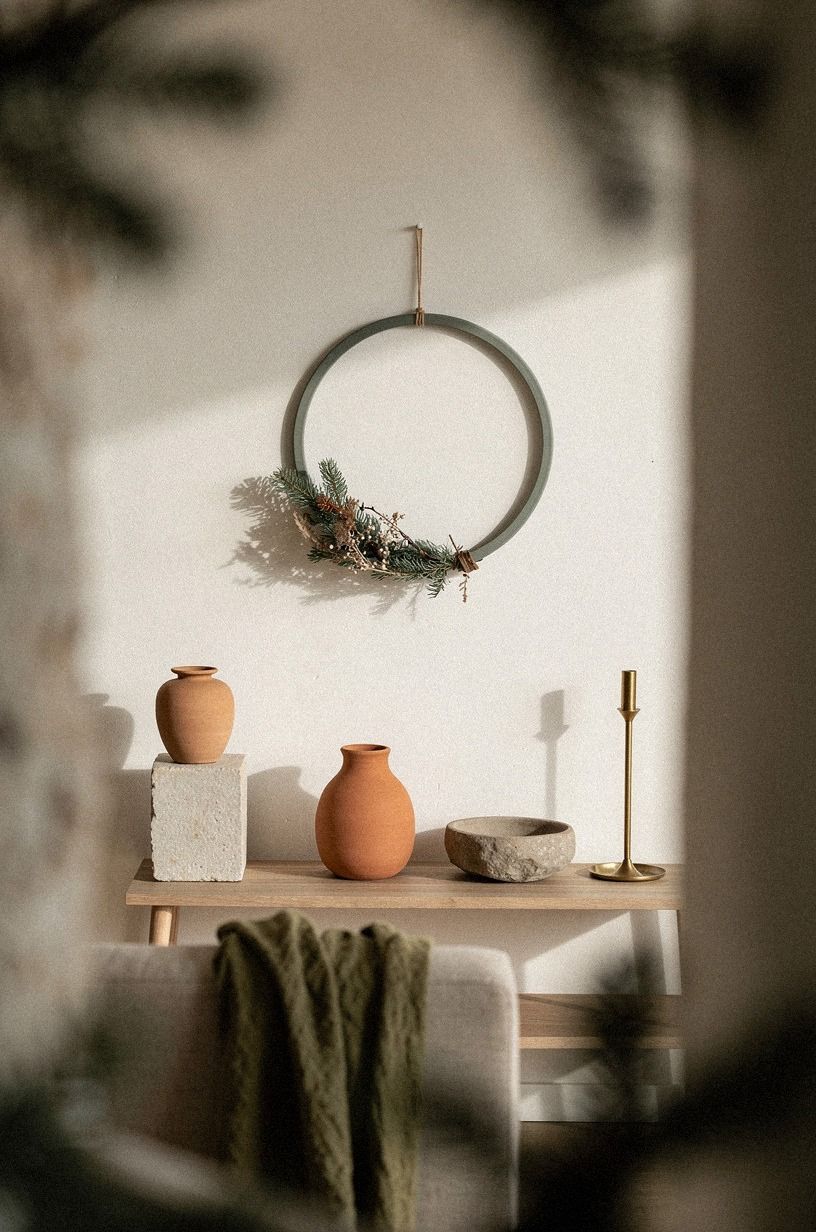
A painted wooden hoop gives you a non-pine wreath with a real color story. Build the arrangement around terracotta, stone, and olive, then add unlacquered brass so the finish can develop a gentle patina over time. The palette feels earthy in daylight and warmer after sunset.
Paint the hoop before adding anything, and let the grain show through in a few places. The stone color gives the base a calm middle note, while terracotta and olive add enough seasonal warmth. Keep the finish matte so the materials remain the focus.
Keep the decoration restrained. One olive branch, a few stone-toned elements, and a narrow brass tie will do more than a crowded collection. You’re creating a frame, not covering every inch.
And if your wall color is warm beige, don’t assume these earthy tones will disappear. I tested a similar pairing beside an IKEA KALLAX birch-effect console, and the olive and brass made the wood look richer. For another room refresh, browse where Saatva mattresses are manufactured for a different kind of material-focused comparison.
8Use the Three-Texture Loop with wool, bells, and bark
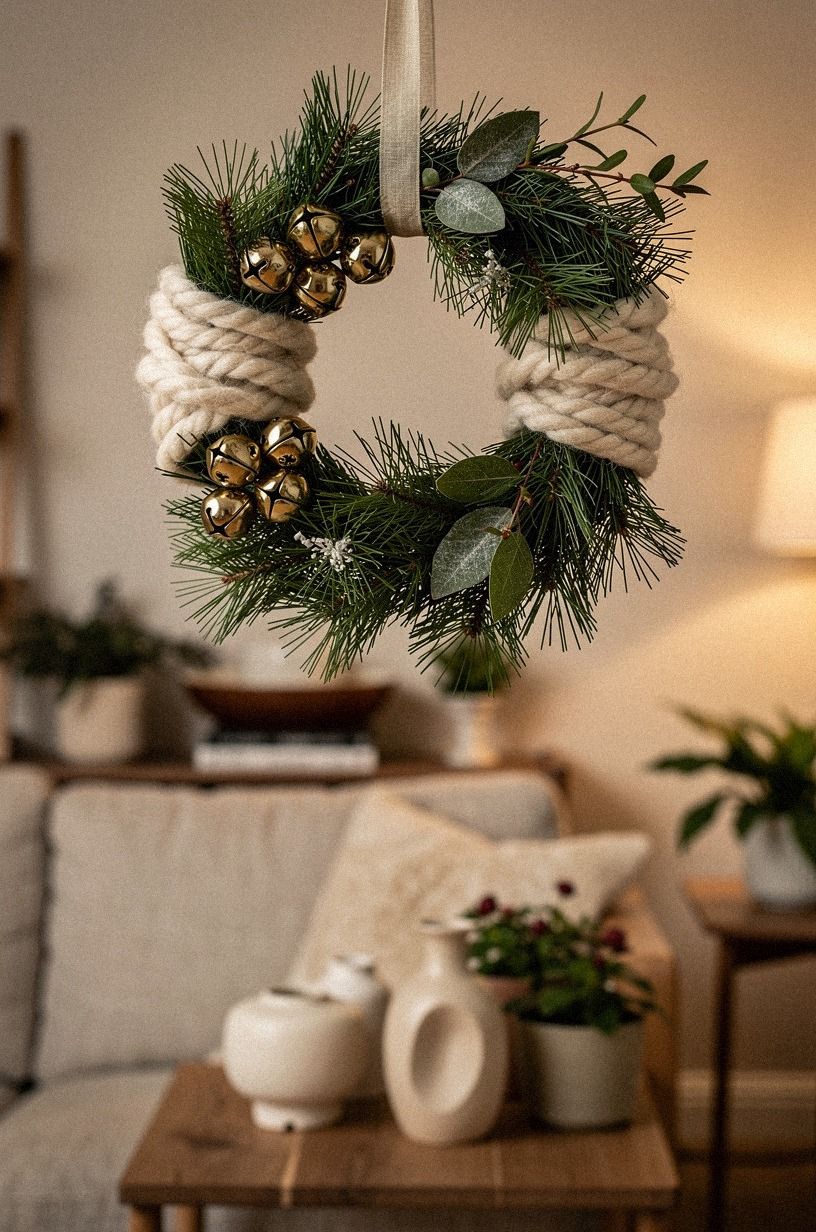
The Three-Texture Loop works because it gives your eye three different surfaces to read. Combine clay-colored elements, natural linen, and aged brass on one circular base. The oversized-chip terrazzo texture adds the holiday feeling while keeping the palette grounded.
I’d choose clay, soft linen, and brass with a brushed finish. Oversized-chip terrazzo gives the arrangement a stronger material presence than synthetic fleece or shiny plastic, and the irregular chips keep the wreath from feeling flat.
Place the linen on one side, the brass details at the bottom, and the terrazzo-inspired element on the opposite side. You’re building a gentle triangle rather than a perfect ring. A little imbalance makes the arrangement feel more relaxed.
A wreath like this looks wonderful near a fireplace, especially if the mantel uses only two or three related textures. You can continue the idea with these winter fireplace decorating suggestions.
Don’t add red just because it’s December. Clay and aged brass can carry the season on their own.
9Choose velvet bows over shiny tinsel
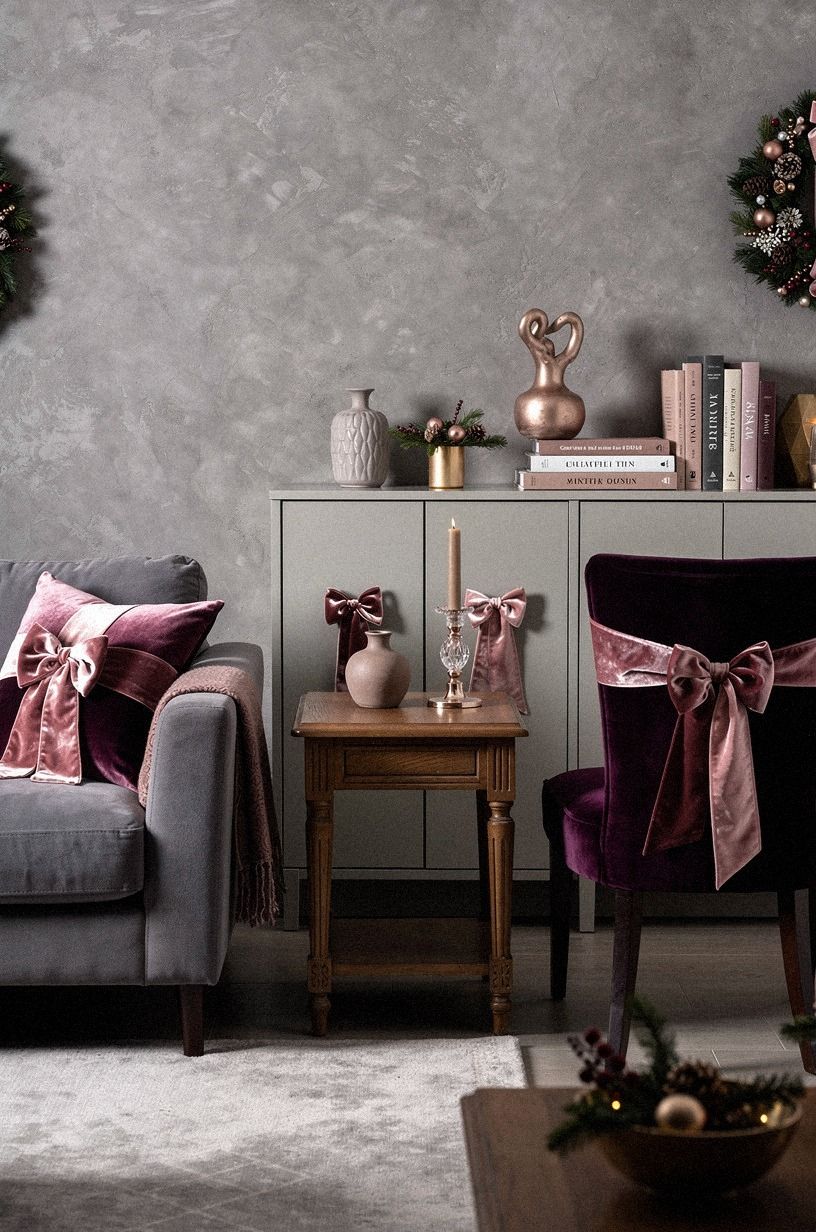
Velvet bows make a wreath feel rich without adding a lot of objects. Choose plum velvet with grey details and a small amount of rose gold, then let the hand-applied Venetian plaster texture nearby echo the soft, irregular finish. The palette feels festive without looking glossy.
10Layer ceramic ornaments on a branch circle
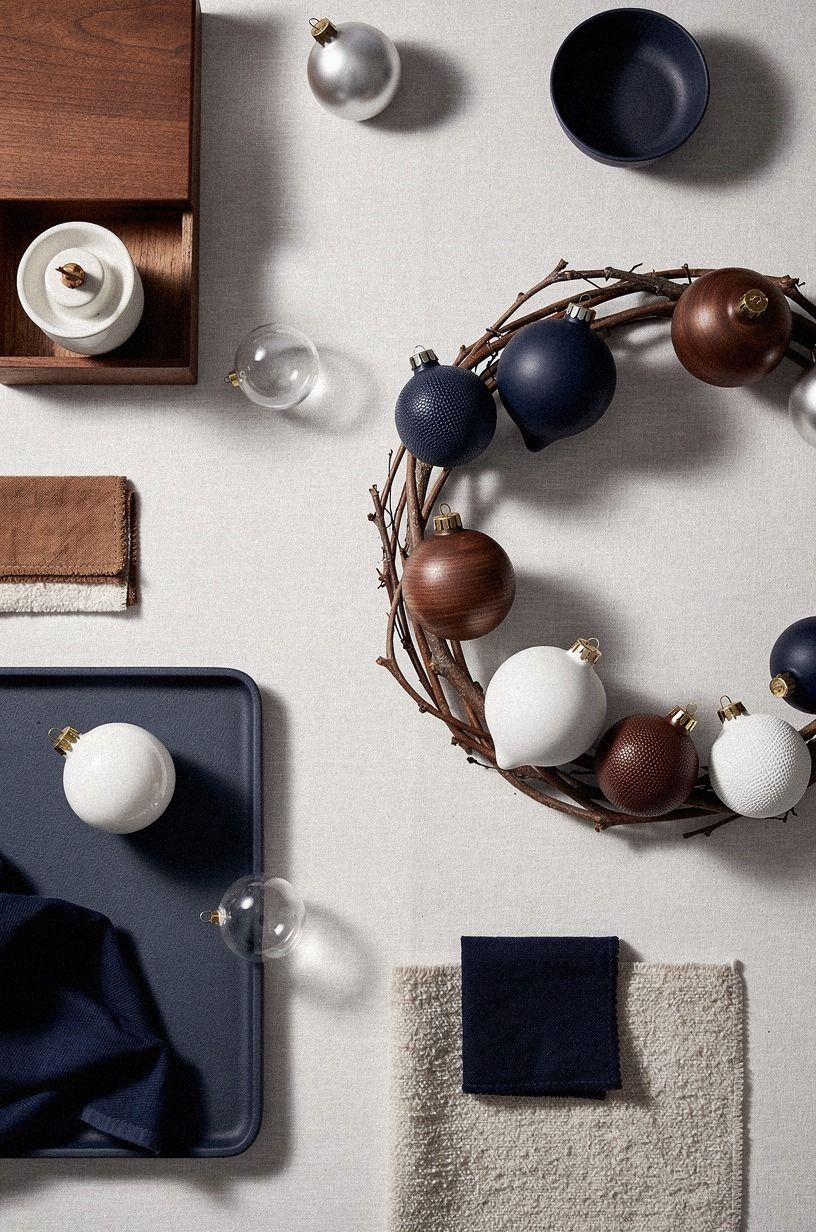
Ceramic ornaments bring a handmade quality to a wreath and give you plenty of color options beyond evergreen. Arrange small houses, moons, stars, or bells in navy and white around a walnut-toned branch circle, leaving enough space for each piece to breathe. Add a few shagreen accents if you want a subtle textural contrast.
Use matte finishes instead of high-gloss glaze. Hand-painted ceramic ornaments in white, muted navy, and walnut will feel collected over time. You’ll want the heaviest pieces near the bottom so the arrangement stays balanced when the door moves.
This is one of the few wreaths where a little imperfection helps. A crooked star or uneven brushstroke gives the piece personality. I’d skip identical ornament sets because they make the wreath look like a display window.
And if you have children, keep the lowest pieces firmly secured with strong cotton cord. The wreath can be decorative and practical at the same time. For another odd little design question, you can read why dreams are so strange while you’re waiting for the paint to dry.
11Paint a straw wreath with Sherwin-Williams Agreeable Gray
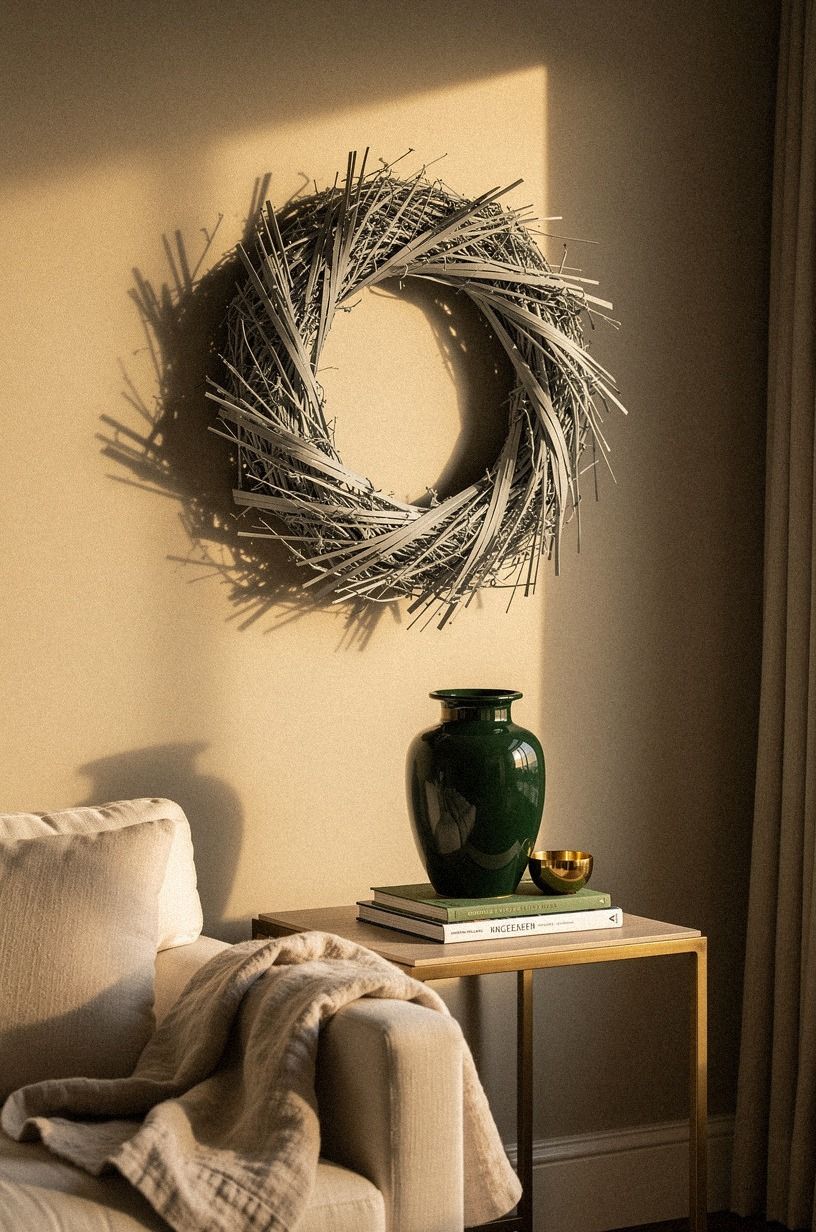
A straw wreath painted in a warm neutral can look sculptural, calm, and completely different from a traditional holiday ring. Build the surrounding palette with emerald, gold, and cream, then soften the arrangement with washed Belgian linen. The contrast keeps the wreath from becoming flat.
Cover only part of the straw so the fibers remain visible. The washed Belgian linen gives the wreath a relaxed finish beside the painted ridges, while small gold details add seasonal warmth. Add a narrow cream tie or a few emerald stems if you want more contrast.
You don’t need to fill the center. The open straw texture is the decoration. I’d use this idea on a painted front door, where the wreath can act almost like a small piece of wall art.
For a darker entry, pair it with a narrow console and warm wood. If you’re changing the room around it, consider when to stop using an old mattress as a reminder that seasonal decorating works best when the useful pieces get attention too. Practical, but still festive.
12Mix dried cotton with one bold red fruit
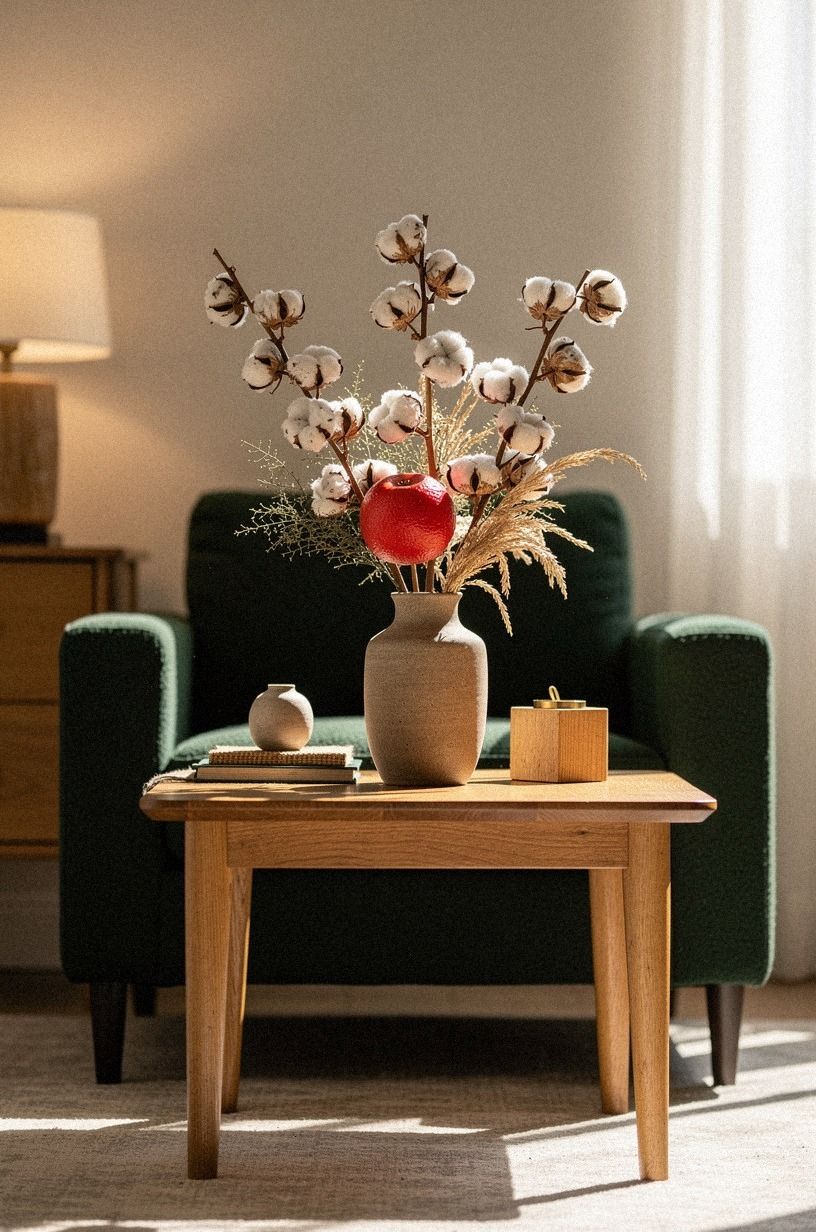
Dried cotton bolls make a wreath feel snowy without using white plastic or artificial flocking. Combine forest green, rust, and natural oak with a soft organic bouclé detail on a natural vine frame. The earthy palette keeps the whole piece from becoming washed out.
Use organic bouclé sparingly so the wreath doesn’t look too soft. Tuck the green and rust elements into the lower left and upper right, then place the oak detail near the center of that visual triangle. You’ll get contrast without losing the warm, organic mood.
A small wreath like this can also work on an interior cabinet or pantry door. Hang it at eye level, keeping artwork centers around 57 to 60 inches from the floor if it shares the wall. That height will make the arrangement feel deliberate.
Here’s the cost picture for related room materials, since your wreath may be part of a larger seasonal refresh:
You can keep the wreath itself modest while spending more carefully on the pieces you use every day. If you’re planning a bedroom refresh too, these DreamCloud mattress manufacturing details may help you compare materials before buying.
Why These Wreaths Feel Fresh in 2026
The move away from pine isn’t about rejecting tradition. It’s about making holiday decorating fit the room you already have.
A dried flower halo works in a soft, collected home. A painted hoop suits a cleaner space.
Ceramic ornaments bring personality where a standard green wreath might feel too predictable.
I’ve noticed that the most successful seasonal rooms now use fewer repeated symbols. One wreath, one ribbon color, and a little candlelight can feel more festive than greenery on every surface. You’ll get a warmer result if you let the door breathe around the wreath instead of filling the whole entry.
That shift also helps renters and small-space decorators. A paper star ring, linen frame, or cotton arrangement can be stored easily and hung without much hardware. If your home has an open plan, repeat one material indoors, such as unlacquered brass, rather than repeating the entire wreath.
And yes, a non-pine wreath can still read immediately as Christmas. The signal comes from color, texture, and a little ceremony at the door, not from one specific branch. For more ideas after the holidays, see this post-holiday bedroom reset.
Can a Non-Pine Wreath Still Look Traditional?
Yes, it can look traditional if you keep one familiar holiday cue, such as red fruit, a velvet bow, bells, or warm candlelight. A dried orange wreath with cranberry ribbon will read more classic than contemporary, even without a single evergreen needle.
The important choice is restraint. Aged bronze bells and a deep red ribbon will carry more seasonal weight than six different decorations competing around the frame. You’ll want one clear focal point, especially if your front door has panels or glass.
I’ve tried adding too many nostalgic pieces, and the wreath quickly looked like a craft table. Choose one traditional detail and let the material do the rest. Bark linen, straw, and ceramic all have enough character to keep the arrangement from feeling plain.
For a nearby living room, you might continue the material story with CB2 Primitivo bouclé or a simple wood stool. If your decorating mood changes after December, you can also revisit winter fireplace decor for the post-holiday season.
My Honest Take on Buying Versus Making One
A handmade wreath is worth the effort when you care about the exact materials and want a shape that suits your door. A bought wreath is reasonable when you’re short on time or need something durable for weather. I don’t think one choice is morally better than the other.
For a budget project, start with a secondhand grapevine base and add one new element, such as Belgian flax linen ribbon. That gives you a personal result without purchasing every component at once. You can also repaint a tired wreath in a warm neutral.
If you buy one, look closely at the back. Loose wire, brittle dried stems, and heavy decorations near the top are signs the wreath won’t hang well. You’ll want the weight distributed around the lower half, where gravity can help rather than pull the piece forward.
The real question is this: will you enjoy seeing it every morning? If the answer is yes, the wreath has done its job. A seasonal object should make your routine feel a little more intentional, not create another chore.
For a broader bedroom refresh, you can compare the textures in this cozy winter bedroom guide.
The Questions Worth Answering First
What is the best non-pine wreath idea for a small door?
A paper star wreath or narrow dried flower halo is the best pick for a small door because the open center keeps the entry light. IKEA has simple seasonal materials, while a small rattan base from a thrift shop can give you more texture for less money.
Where can I buy non-pine wreath pieces on a budget?
Look at IKEA, Wayfair, and Target for ribbon, hoops, bells, and dried materials, then check Facebook Marketplace or a local thrift shop for grapevine bases. You don’t need one matching collection. Secondhand frames often provide the strongest texture.
How much does a non-pine wreath makeover cost?
A simple wreath refresh usually costs about $100 to $300 if you buy new ribbon, dried materials, and a base. You can spend nothing on the frame if you already have one, and dried materials from a craft store, paper, and garden branches can cover much of the decoration.
Can I create a non-pine wreath on a budget?
Yes, and you can start with three inexpensive moves: reuse a wire base or grapevine base, dry citrus from your kitchen, and cut ribbon from an old textile. A painted branch circle can look warm and custom without a full shopping trip.
Is a non-pine wreath worth it in a small space?
Yes, because a lighter wreath gives you seasonal color without making a narrow entry feel crowded. Choose an open hoop, paper stars, or a crescent of dried flowers. You’ll want the surrounding wall to remain visible so the door area feels calm.
Is a non-pine wreath a good idea for a rental?
Yes, especially if you use a removable hook, tension rod, or over-the-door hanger. A lightweight paper or ribbon design reduces stress on the hardware. No-drill hanging also makes it easier to move the wreath between an entry door and an interior cabinet.
What I’d Choose After Making All Twelve
I’ve made enough wreaths to know that the most expensive-looking option isn’t always the most memorable. My favorite is the dried citrus wreath with velvet ribbon because the slices glow in low light, and the scent changes as the season moves on. It feels festive without pretending to be a forest.
The broader lesson is simple: choose one strong material, one seasonal color, and one texture that makes you want to touch it. You’ll get a more personal result than you would from piling on every ornament in the bin. Dried citrus also stores well if you keep it away from damp air.
If you’re styling the rest of your home, repeat one small detail instead of copying the whole wreath. A rust ribbon on the mantel or a ceramic star beside the entry bench is enough. I’d rather see one thoughtful connection than a matching holiday set everywhere.
And when the wreath comes down, the door shouldn’t feel empty. That’s how you know the natural vine choice worked.
Where I’d Start First
If I had to pick one, I’d start with the dried citrus wreath. The fruit catches winter light, and the velvet ribbon keeps it from looking crafty. Pin it for later, then save your orange peels before the next holiday meal.