
 by
by Trundle beds win for guest rooms and smaller spaces: when the pull-out is tucked away, the footprint equals a single bed. Bunk beds win for permanent shared kids' rooms with high ceilings: they stack two full sleeping areas vertically without claiming extra floor space. The right mattress matters for both, thin enough to fit safely (under 8 inches for bunk tops), supportive enough for real rest.
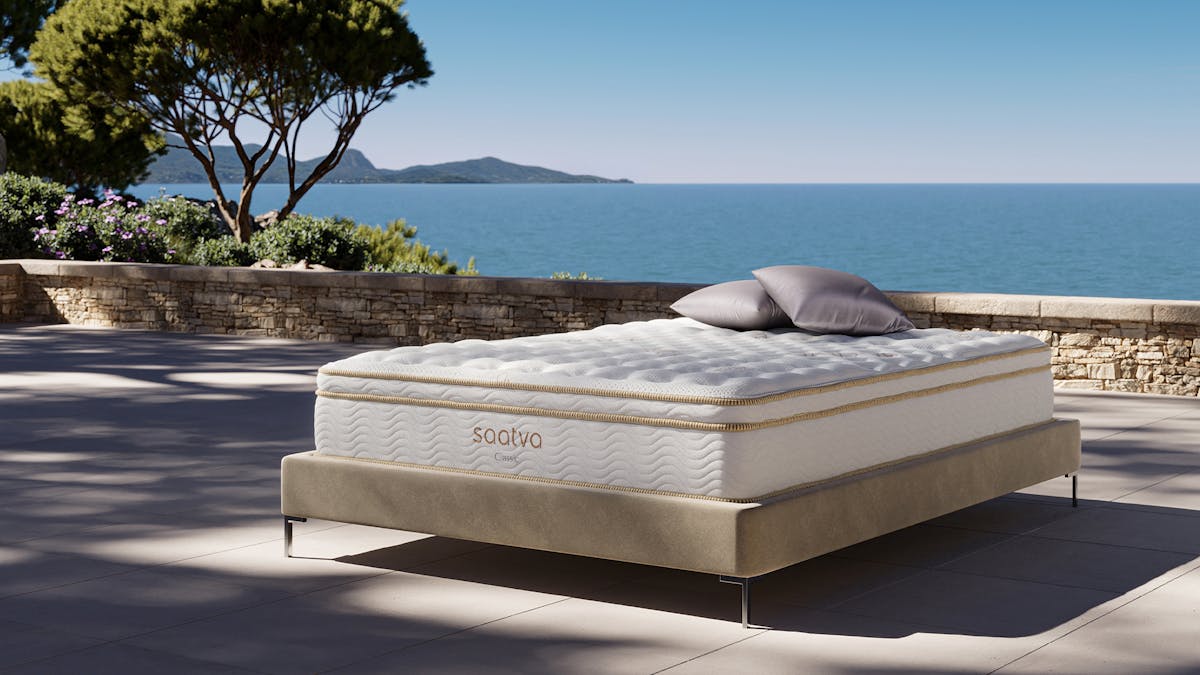
Saatva Youth
9.0/10
- Dual-sided design: firmer side for younger children, softer for teens
- Low-profile option fits safely within bunk-bed guardrail clearance
- CertiPUR-US certified foam, no fiberglass
- 1-year trial, lifetime warranty, unusual for kids' mattresses
- Available in twin only (standard for bunk and trundle setups)
- Not the cheapest option if budget is the primary concern
Whether you go trundle or bunk, the mattress has to fit the frame and hold up to years of kids. The Saatva Youth covers both: it flips from firm to softer as kids grow, and its profile keeps it well within safe bunk-top clearance without compromising spinal support.
What is a trundle bed?
A trundle bed is an extra bed stored beneath a regular bed on casters, rolling out when needed and tucking away when not in use. When the lower portion is hidden, the whole unit occupies the footprint of a single bed, making it one of the most space-efficient sleeping arrangements available.
Trundle beds come in two main formats. In the standard pop-out version, the lower mattress stays close to the floor. In the pop-up version, the lower frame rises to the same height as the parent bed, creating a practical king-size surface for couples or for when a guest wants a proper sleeping height. Most trundle mattresses are twin-size, though full-size options exist for larger frames.
Because the trundle rolls in and out repeatedly, its mechanism is subject to more wear than a standard bed frame. Trundle beds are best suited to guest rooms or occasional use rather than permanent primary beds.
What is a bunk bed?
A bunk bed stacks two separate sleeping surfaces vertically in a single frame. The most common configuration is twin over twin, but twin-over-full and full-over-full options exist for rooms that need a larger lower berth. Some models include built-in storage drawers, a trundle underneath, or even a loft conversion where the upper bunk is retained and the lower space opens up for a desk or play area.
Bunk beds require adequate ceiling height: the upper sleeper needs roughly 33 to 38 inches of clearance from the top mattress surface to the ceiling to sit up without hitting their head. The upper bunk also has strict mattress height requirements, ASTM safety standards recommend the mattress surface sit at least 5 inches below the top guardrail, which effectively limits bunk-top mattresses to 6 to 8 inches in profile.
Trundle bed vs. bunk bed: direct comparison
| Factor | Trundle Bed | Bunk Bed |
|---|---|---|
| Floor space when in use | Requires pull-out clearance (~44 in. for twin) | Equals one bed footprint, no extra floor needed |
| Floor space when stored | Single-bed footprint | Single-bed footprint |
| Ceiling height needed | Standard (no special requirement) | Minimum 8–9 ft recommended |
| Mattress thickness limit | Trundle: 6–8 in. max; parent bed: standard | Top bunk: 6–8 in. max (ASTM safety) |
| Best for ages | All ages, especially guests and adults | Children 6+; adult use possible with weight-rated models |
| Safety notes | Low to ground, safe for young kids | Guardrail required; top-bunk fall risk |
| Durability | Caster mechanism wears with frequent use | Solid frame, more durable for permanent use |
| Privacy | Both sleepers at ground level | Defined upper/lower zones |
| Cost range | ~$200–$800 for the frame | ~$200–$900+ depending on features |
| Typical best use | Guest room, occasional use, limited floor space | Permanent shared kids' room with adequate ceilings |
Trundle bed: strengths and weaknesses
The defining advantage of a trundle bed is its flexibility. By day it reads as a single bed; a guest or a child's friend shows up and within seconds there is a second sleeping surface available at floor level. The low profile also makes trundle beds accessible: no ladder, no risk of rolling off an elevated bunk, no ceiling height requirement.
The limitations are practical. Because the trundle rolls in and out, the casters and frame mechanism experience more stress than a fixed bed. Used nightly as a permanent primary bed, a trundle will wear faster than a bunk frame. The pull-out also demands floor clearance, a twin trundle needs roughly 44 inches of open space to roll out, which means the room has to be large enough to accommodate that depth when the trundle is in use.
The person sleeping on the trundle is very low to the ground, which can be uncomfortable for adults with mobility issues or back pain. Studies on older adults show that rising from a low sleeping surface increases postural strain, which is worth considering if the trundle will regularly house adults rather than children.
Bunk bed: strengths and weaknesses
Bunk beds are the most space-efficient permanent sleeping solution for two people sharing a room. Both sleepers have a defined, fixed area without requiring any extra floor space, the vertical stacking means the floor plan stays compact regardless of whether both beds are in use simultaneously. That separation also gives children a degree of privacy in a shared room, which matters more as they get older.
The main limitation is the ceiling height requirement. Standard bunk beds need 8 to 9 feet of clearance to be safe and comfortable; in rooms with lower ceilings, the upper bunk becomes cramped or outright unusable. The ladder or stairs are a safety consideration for young children and for getting up in the middle of the night. Making the upper bunk is also inconvenient, which tends to be a long-term minor irritant.
Weight capacity on the upper bunk is another factor. Most consumer bunk beds rate the upper bunk at 150 to 200 pounds. Heavier adults using the top bunk need to verify the manufacturer's rated capacity, as exceeding it can compromise structural integrity over time.
Which is better for kids' rooms?
For a permanent shared kids' room with adequate ceiling height, bunk beds are the stronger choice. Children enjoy the defined upper and lower territories, the ladder is a manageable physical challenge for most kids over six, and the fixed frame is durable enough for years of daily use. Bunk beds also leave more floor space open for playing.
Trundle beds are the better option for a child who regularly has friends sleep over but does not share a room permanently. The trundle pulls out for sleepovers and disappears for everyday use, keeping the room functional without a permanent second bed taking up space.
Safety note: the CPSC recommends that children under six years old do not use upper bunk beds. Guardrails are required on all sides of the upper bunk, and the mattress must sit at least 5 inches below the top of the guardrail. This is the primary reason the mattress profile on the top bunk matters, a thick mattress raises the sleeper above safe guardrail height.
Which is better for adults and guest rooms?
Trundle beds have a clear advantage for adult guest rooms. They function as a regular, accessible bed at normal height (the parent bed), and the pull-out provides a second sleeping area that is easy to get in and out of for guests of any age. Pop-up trundle models, where the lower frame rises to the same level as the parent bed, are especially useful for adult guests who find sleeping at floor level uncomfortable.
Bunk beds can accommodate adults, but with caveats. The top bunk ladder is not practical for everyone, the weight capacity limits heavier adults, and the ceiling clearance when lying in the upper bunk can feel tight. If adults will regularly use the top bunk, look specifically for adult-rated bunk beds with higher weight capacities and wider ladders or built-in stairs.
Mattress considerations for both bed types
Both trundle beds and bunk beds impose a ceiling on mattress thickness that standard mattresses often exceed. A typical consumer mattress today runs 10 to 14 inches, which is too tall for a trundle drawer and exceeds safe guardrail clearance on a bunk top.
For the trundle and the bunk top, a 6 to 8 inch profile is the practical target. Dual-sided kids' mattresses like the Saatva Youth are designed with this in mind, slim enough to fit the clearance requirements, with enough support for long-term use rather than the compressed-foam-only construction of the cheapest bunk mattresses.
For the parent bed in a trundle setup, or the lower bunk in a bunk bed, standard mattress thickness guidelines apply. This is where investing in real support matters most, since this sleeping position is likely used more regularly and by heavier adults.
Choose a trundle bed for guest rooms, occasional use, or single kids who host sleepovers. Choose a bunk bed for two kids sharing a room permanently with sufficient ceiling height. Either way, confirm the mattress profile clears the safety requirements for the frame before buying.
Frequently asked questions
Can you use a regular mattress on a trundle bed?
Only if it fits the height clearance. Most trundle frames have a maximum mattress height of 6 to 8 inches because the drawer has to slide under the parent bed. Standard mattresses (10 to 14 inches) will not fit. Check the clearance dimension on your specific frame before purchasing a mattress for the trundle portion.
Are bunk beds safe for adults?
They can be, with the right model. Adult-rated bunk beds exist with weight capacities up to 400 pounds on the upper bunk and sturdier ladder or stair systems. Standard consumer bunk beds rate the upper bunk at 150 to 200 pounds, which is insufficient for many adults. Always check the manufacturer's weight rating for the specific bunk configuration you are buying.
How much ceiling clearance does a bunk bed need?
The general guideline is 33 to 38 inches from the top of the upper mattress surface to the ceiling, so a person can sit up comfortably. With a standard 8-inch mattress and a typical bunk frame height of around 60 to 65 inches, this means a minimum ceiling height of 8 feet is needed, and 9 feet is more comfortable.
Can you add a trundle to an existing bed?
You can, if your existing bed frame has sufficient clearance from the floor. A standalone trundle unit (frame on casters, no mattress) typically needs about 14 to 16 inches of clearance to fit underneath. The bed must also be structurally compatible, platform beds with solid platforms or storage drawers will not work. Check the under-bed clearance measurement before purchasing a separate trundle unit.
Is a trundle bed or bunk bed better for a small room?
Both can work in small rooms, but in different ways. A trundle requires floor space to pull out, so the room needs enough open area beside or in front of the bed to extend the trundle fully when in use. A bunk bed stacks vertically, so it uses no extra floor space, but requires ceiling height. The better choice depends on your room dimensions: low ceilings favor the trundle, small floor area with adequate ceiling height favors the bunk.